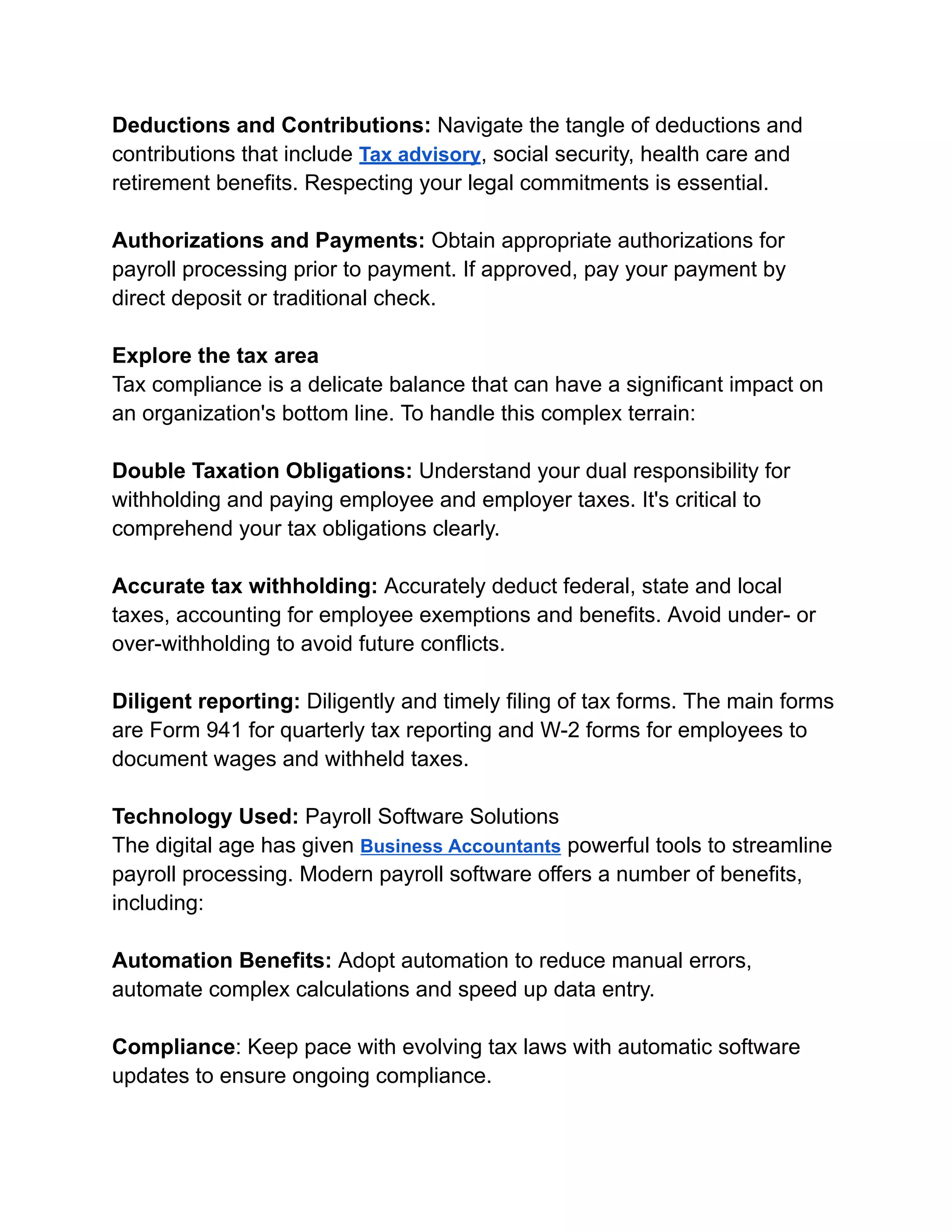
Payroll processing and reporting is a cornerstone of organizational
sustainability. This guide will show you the skills to master these critical
skills to ensure employee satisfaction, legal compliance and financial
transparency.
The Core of Payroll Processing
Payroll processing is a multifaceted effort to ensure that employees are
properly compensated. The journey goes through several key stages.
Data collection: Start by collecting necessary employee data, including
hours worked, salary, bonuses and discounts. Further computations are
made using this data as the foundation.
Accurate calculations: Accurate calculations are key to payroll.
Accurately calculate gross wages, taxes withheld, deductions and net
payments. It is important to carefully consider tax laws, overtime rules and
benefits.
Deductions and Contributions: Navigate the tangle of deductions and
contributions that include Tax advisory, social security, health care and
retirement benefits. Respecting your legal commitments is essential.
Authorizations and Payments: Obtain appropriate authorizations for
payroll processing prior to payment. If approved, pay your payment by
direct deposit or traditional check.
Explore the tax area
Tax compliance is a delicate balance that can have a significant impact on
an organization's bottom line. To handle this complex terrain:
Double Taxation Obligations: Understand your dual responsibility for
withholding and paying employee and employer taxes. It's critical to
comprehend your tax obligations clearly.
Accurate tax withholding: Accurately deduct federal, state and local
taxes, accounting for employee exemptions and benefits. Avoid under- or
over-withholding to avoid future conflicts.
Diligent reporting: Diligently and timely filing of tax forms. The main forms
are Form 941 for quarterly tax reporting and W-2 forms for employees to
document wages and withheld taxes.
Technology Used: Payroll Software Solutions
The digital age has given Business Accountants powerful tools to streamline
payroll processing. Modern payroll software offers a number of benefits,
including:
Automation Benefits: Adopt automation to reduce manual errors,
automate complex calculations and speed up data entry.
Compliance: Keep pace with evolving tax laws with automatic software
updates to ensure ongoing compliance.
Employee Empowerment: Extend the benefits of payroll software to your
employees with a self-service portal that grants them access to pay stubs,
tax forms and benefit information.
Compliance with pay and time compliance
Wage and hour laws are a cornerstone of fair employment practices. To
comply:
Accurate Classification: Clearly classify employees as exempt or
non-exempt based on job function and compensation and determine
eligibility for overtime pay.
Overtime Compliance: Understand and comply with overtime regulations
in your jurisdiction. Accurately calculate and compensate for overtime
hours.
Manageability: Reduce HR workload by giving employees independent
access to information.
Meticulous Reporting: Review and verify year-end payroll reports to
ensure accuracy before submission.
Integrity Audit and Assurance
Internal auditing is critical to maintaining process integrity.
Audit Trail: Maintain detailed records of payroll transactions for future
reference and verification.
Fraud Prevention: Payroll Process
Data Integrity Protection
Employee data protection is not just a legal requirement. It is a sign of trust.
We prioritize data security by:
Powerful Storage: Safely store sensitive payroll data by adhering to
industry standards and protecting it from unauthorized access.
Access control: Restrict access to payroll data to authorized employees to
ensure confidential information remains confidential.
Enrich financial reporting with payroll data
Payroll data is the basis for accurate financial reporting.
Income Statement Accuracy: Payroll data helps create accurate income
statements that reflect payroll, salaries, and employee benefits.
Balance sheet impact: Employee deductions and benefits affect an
organization's financial position, affecting equity and liabilities.
Increased transparency through self-service
Increase transparency and reduce administrative burden with an employee
self-service portal.
Employee Empowerment: Build trust and engagement by giving
employees access to payment histories, tax forms and benefit details.
year-end tax settlement
Due diligence is required to navigate end-of-year payroll complications.
Fill out tax forms: Distribute W-2 and 1099 forms to employees for tax
filing purposes.
Meticulous Reporting: Review and verify year-end payroll reports to
ensure accuracy before submission.
Integrity Audit and Assurance
Internal auditing is critical to maintaining process integrity.
Audit Trail: Maintain detailed records of payroll transactions for future
reference and verification.
Fraud Prevention: Implement controls to prevent and detect fraudulent
activity in the payroll process.
Continuous Learning: Train your payroll team regularly to keep up to date
and adapt to change.
Conclusion: The Path to Mastery
Mastering Payroll processing & reporting in New York is a dynamic journey
that requires dedication, knowledge and adaptability. It's about going
beyond numbers and building employee confidence and organizational
resilience. We will pave the way to excellence by unraveling complexity,
embracing technology, being compliant and valuing transparency. This
guide will serve as a compass for navigating the complexities of payroll,
improving business operational efficiency and strengthening its
fundamental integrity.

Mastering Payroll Processing and Reporting.pdf

  • 1.
    Payroll processing andreporting is a cornerstone of organizational sustainability. This guide will show you the skills to master these critical skills to ensure employee satisfaction, legal compliance and financial transparency. The Core of Payroll Processing Payroll processing is a multifaceted effort to ensure that employees are properly compensated. The journey goes through several key stages. Data collection: Start by collecting necessary employee data, including hours worked, salary, bonuses and discounts. Further computations are made using this data as the foundation. Accurate calculations: Accurate calculations are key to payroll. Accurately calculate gross wages, taxes withheld, deductions and net payments. It is important to carefully consider tax laws, overtime rules and benefits.
  • 2.
    Deductions and Contributions:Navigate the tangle of deductions and contributions that include Tax advisory, social security, health care and retirement benefits. Respecting your legal commitments is essential. Authorizations and Payments: Obtain appropriate authorizations for payroll processing prior to payment. If approved, pay your payment by direct deposit or traditional check. Explore the tax area Tax compliance is a delicate balance that can have a significant impact on an organization's bottom line. To handle this complex terrain: Double Taxation Obligations: Understand your dual responsibility for withholding and paying employee and employer taxes. It's critical to comprehend your tax obligations clearly. Accurate tax withholding: Accurately deduct federal, state and local taxes, accounting for employee exemptions and benefits. Avoid under- or over-withholding to avoid future conflicts. Diligent reporting: Diligently and timely filing of tax forms. The main forms are Form 941 for quarterly tax reporting and W-2 forms for employees to document wages and withheld taxes. Technology Used: Payroll Software Solutions The digital age has given Business Accountants powerful tools to streamline payroll processing. Modern payroll software offers a number of benefits, including: Automation Benefits: Adopt automation to reduce manual errors, automate complex calculations and speed up data entry. Compliance: Keep pace with evolving tax laws with automatic software updates to ensure ongoing compliance.
  • 3.
    Employee Empowerment: Extendthe benefits of payroll software to your employees with a self-service portal that grants them access to pay stubs, tax forms and benefit information. Compliance with pay and time compliance Wage and hour laws are a cornerstone of fair employment practices. To comply: Accurate Classification: Clearly classify employees as exempt or non-exempt based on job function and compensation and determine eligibility for overtime pay. Overtime Compliance: Understand and comply with overtime regulations in your jurisdiction. Accurately calculate and compensate for overtime hours. Manageability: Reduce HR workload by giving employees independent access to information. Meticulous Reporting: Review and verify year-end payroll reports to ensure accuracy before submission. Integrity Audit and Assurance Internal auditing is critical to maintaining process integrity. Audit Trail: Maintain detailed records of payroll transactions for future reference and verification. Fraud Prevention: Payroll Process Data Integrity Protection Employee data protection is not just a legal requirement. It is a sign of trust. We prioritize data security by:
  • 4.
    Powerful Storage: Safelystore sensitive payroll data by adhering to industry standards and protecting it from unauthorized access. Access control: Restrict access to payroll data to authorized employees to ensure confidential information remains confidential. Enrich financial reporting with payroll data Payroll data is the basis for accurate financial reporting. Income Statement Accuracy: Payroll data helps create accurate income statements that reflect payroll, salaries, and employee benefits. Balance sheet impact: Employee deductions and benefits affect an organization's financial position, affecting equity and liabilities. Increased transparency through self-service Increase transparency and reduce administrative burden with an employee self-service portal. Employee Empowerment: Build trust and engagement by giving employees access to payment histories, tax forms and benefit details. year-end tax settlement Due diligence is required to navigate end-of-year payroll complications. Fill out tax forms: Distribute W-2 and 1099 forms to employees for tax filing purposes. Meticulous Reporting: Review and verify year-end payroll reports to ensure accuracy before submission. Integrity Audit and Assurance Internal auditing is critical to maintaining process integrity. Audit Trail: Maintain detailed records of payroll transactions for future reference and verification.
  • 5.
    Fraud Prevention: Implementcontrols to prevent and detect fraudulent activity in the payroll process. Continuous Learning: Train your payroll team regularly to keep up to date and adapt to change. Conclusion: The Path to Mastery Mastering Payroll processing & reporting in New York is a dynamic journey that requires dedication, knowledge and adaptability. It's about going beyond numbers and building employee confidence and organizational resilience. We will pave the way to excellence by unraveling complexity, embracing technology, being compliant and valuing transparency. This guide will serve as a compass for navigating the complexities of payroll, improving business operational efficiency and strengthening its fundamental integrity.