Managing with
Agility: A Project
Management Guide
This presentation provides an overview of Agile project management
principles and best practices. It will cover key concepts, practical
tools, and strategies to help you adopt Agile methodologies for
successful project delivery.
Key Principles and Practices of Agile
1 Iterative Development
Projects are broken down into smaller iterations,
allowing for flexibility and quick feedback.
2 Customer Collaboration
Continuous communication with stakeholders
ensures alignment and a clear understanding of
requirements.
3 Team Empowerment
Self-organizing teams are responsible for making
decisions and implementing solutions.
4 Embrace Change
Agile methods adapt to changing needs and
priorities throughout the project lifecycle.
Agile Project Planning and Execution
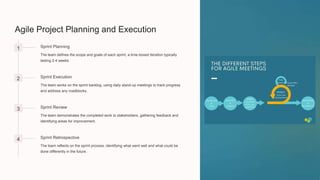
1 Sprint Planning
The team defines the scope and goals of each sprint, a time-boxed iteration typically
lasting 2-4 weeks.
2 Sprint Execution
The team works on the sprint backlog, using daily stand-up meetings to track progress
and address any roadblocks.
3 Sprint Review
The team demonstrates the completed work to stakeholders, gathering feedback and
identifying areas for improvement.
4 Sprint Retrospective
The team reflects on the sprint process, identifying what went well and what could be
done differently in the future.
Agile Team Collaboration and Communication
Open Communication
Regular communication and
transparent sharing of information
is essential for team success.
Shared Understanding
Effective communication ensures
everyone is on the same page and
working towards a common goal.
Conflict Resolution
Constructive conflict resolution
techniques are vital for maintaining
a healthy and productive team
environment.
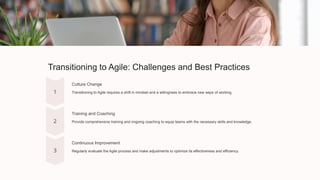
Transitioning to Agile: Challenges and Best Practices
Culture Change
Transitioning to Agile requires a shift in mindset and a willingness to embrace new ways of working.
Training and Coaching
Provide comprehensive training and ongoing coaching to equip teams with the necessary skills and knowledge.
Continuous Improvement
Regularly evaluate the Agile process and make adjustments to optimize its effectiveness and efficiency.

Managing-with-Agility-A-Project-Management-Guide.pptx

  • 1.
    Managing with Agility: AProject Management Guide This presentation provides an overview of Agile project management principles and best practices. It will cover key concepts, practical tools, and strategies to help you adopt Agile methodologies for successful project delivery.
  • 2.
    Key Principles andPractices of Agile 1 Iterative Development Projects are broken down into smaller iterations, allowing for flexibility and quick feedback. 2 Customer Collaboration Continuous communication with stakeholders ensures alignment and a clear understanding of requirements. 3 Team Empowerment Self-organizing teams are responsible for making decisions and implementing solutions. 4 Embrace Change Agile methods adapt to changing needs and priorities throughout the project lifecycle.
  • 3.
    Agile Project Planningand Execution 1 Sprint Planning The team defines the scope and goals of each sprint, a time-boxed iteration typically lasting 2-4 weeks. 2 Sprint Execution The team works on the sprint backlog, using daily stand-up meetings to track progress and address any roadblocks. 3 Sprint Review The team demonstrates the completed work to stakeholders, gathering feedback and identifying areas for improvement. 4 Sprint Retrospective The team reflects on the sprint process, identifying what went well and what could be done differently in the future.
  • 4.
    Agile Team Collaborationand Communication Open Communication Regular communication and transparent sharing of information is essential for team success. Shared Understanding Effective communication ensures everyone is on the same page and working towards a common goal. Conflict Resolution Constructive conflict resolution techniques are vital for maintaining a healthy and productive team environment.
  • 5.
    Transitioning to Agile:Challenges and Best Practices Culture Change Transitioning to Agile requires a shift in mindset and a willingness to embrace new ways of working. Training and Coaching Provide comprehensive training and ongoing coaching to equip teams with the necessary skills and knowledge. Continuous Improvement Regularly evaluate the Agile process and make adjustments to optimize its effectiveness and efficiency.