MACHINE LEARNING
GROUP MEMBERS
Irfan Abbas 14-ARID-1410
Hamza Wilayat 14-ARID-1409
Hammad Ashraf 14-ARID-1407
Kamran Saleem 14-ARID-1412
WHAT IS MACHINE LEARNING..
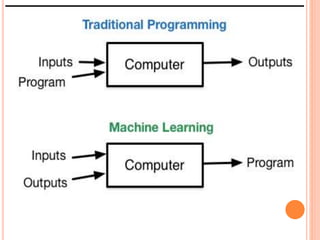
o Machine learning is an application of artificial
intelligence (AI) that provides systems the ability to
automatically learn and improve from experience
without being explicitly programmed. Machine
learning focuses on the development of computer
programs that can access data and use it learn for
themselves.
o Examples: Chess game, suggestion product in e-
commerce
HAVE YOU EVER WONDERED
How Google classify your
email as spam/Non Spam.
How Google translate
translate to more then 100
languages
CONT….
 Indigent voice assistant
 Siri for IOS
 Cortana for windows
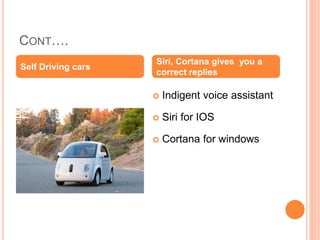
Self Driving cars
Siri, Cortana gives you a
correct replies
WHY DO WE NEED MACHINE LEARNING
 Fast working(xerox carbon copy)
 Handle complex task
 Accuracy rate
 Example
 Stanford student
 Radio helicopter
 Sort of amazing stuns
 Flips & hovering upside, down
7 STEPS OF MACHINE LEARNING
GATHERING DATA
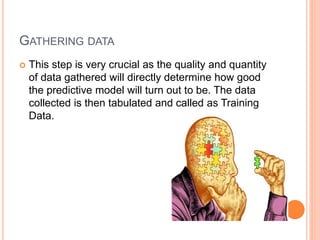
 This step is very crucial as the quality and quantity
of data gathered will directly determine how good
the predictive model will turn out to be. The data
collected is then tabulated and called as Training
Data.
DATA PREPARATION
 The data is loaded into a suitable place
 Prepared for use in machine learning training
 The order is randomized
CHOOSING A MODEL
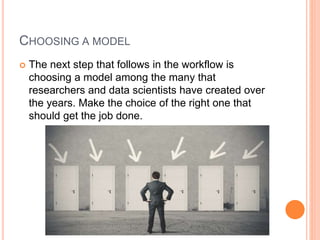
 The next step that follows in the workflow is
choosing a model among the many that
researchers and data scientists have created over
the years. Make the choice of the right one that
should get the job done.
TRAINING
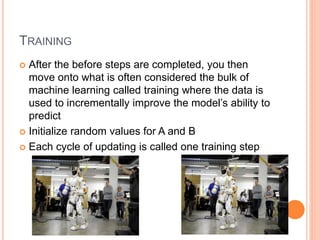
 After the before steps are completed, you then
move onto what is often considered the bulk of
machine learning called training where the data is
used to incrementally improve the model’s ability to
predict
 Initialize random values for A and B
 Each cycle of updating is called one training step
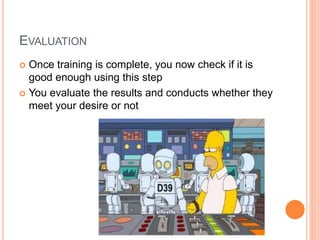
EVALUATION
 Once training is complete, you now check if it is
good enough using this step
 You evaluate the results and conducts whether they
meet your desire or not
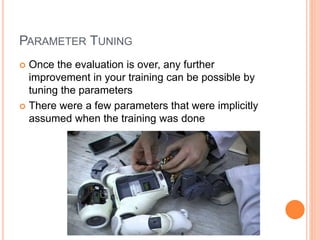
PARAMETER TUNING
 Once the evaluation is over, any further
improvement in your training can be possible by
tuning the parameters
 There were a few parameters that were implicitly
assumed when the training was done
PREDICTION
 So this is the final step where you get to answer few
questions
 This is the point where the value of machine learning is
realized
GROWTH OF MACHINE LEARNING
By Hammad Ashraf
MACHINE LEARNING APPROACH'S
 Speech recognition
 Natural language processing
 Computational biology
 Robot control
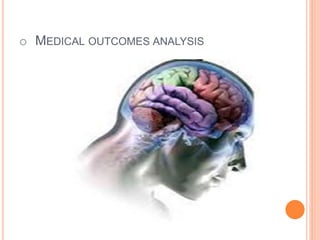
o MEDICAL OUTCOMES ANALYSIS
TREND ACCELERATING
 Improve machine learning through improve
algorithms
 Improve data gathering
 Networking
TREND ACCELERATING
COUNT…
 New sponsors/ IO devices
 Faster computer
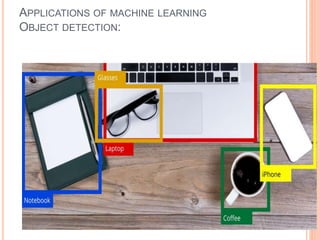
APPLICATIONS OF MACHINE LEARNING
OBJECT DETECTION:
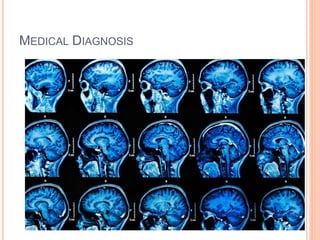
MEDICAL DIAGNOSIS
BRAIN MACHINE INTERFACE
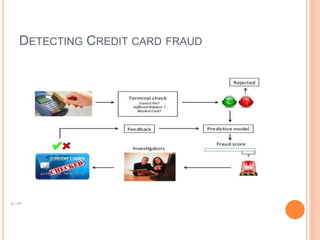
DETECTING CREDIT CARD FRAUD
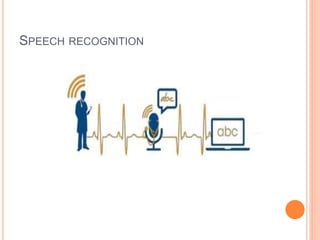
SPEECH RECOGNITION
PEDESTRIAN DETECTION
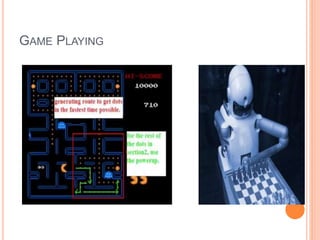
GAME PLAYING
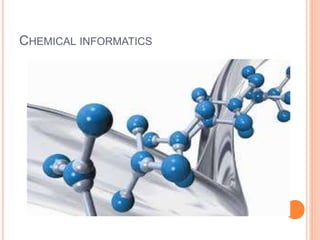
CHEMICAL INFORMATICS
Machine learning by AI

Machine learning by AI

  • 2.
  • 3.
    GROUP MEMBERS Irfan Abbas14-ARID-1410 Hamza Wilayat 14-ARID-1409 Hammad Ashraf 14-ARID-1407 Kamran Saleem 14-ARID-1412
  • 4.
    WHAT IS MACHINELEARNING.. o Machine learning is an application of artificial intelligence (AI) that provides systems the ability to automatically learn and improve from experience without being explicitly programmed. Machine learning focuses on the development of computer programs that can access data and use it learn for themselves. o Examples: Chess game, suggestion product in e- commerce
  • 5.
    HAVE YOU EVERWONDERED How Google classify your email as spam/Non Spam. How Google translate translate to more then 100 languages
  • 6.
    CONT….  Indigent voiceassistant  Siri for IOS  Cortana for windows Self Driving cars Siri, Cortana gives you a correct replies
  • 7.
    WHY DO WENEED MACHINE LEARNING  Fast working(xerox carbon copy)  Handle complex task  Accuracy rate  Example  Stanford student  Radio helicopter  Sort of amazing stuns  Flips & hovering upside, down
  • 9.
    7 STEPS OFMACHINE LEARNING
  • 10.
    GATHERING DATA  Thisstep is very crucial as the quality and quantity of data gathered will directly determine how good the predictive model will turn out to be. The data collected is then tabulated and called as Training Data.
  • 11.
    DATA PREPARATION  Thedata is loaded into a suitable place  Prepared for use in machine learning training  The order is randomized
  • 12.
    CHOOSING A MODEL The next step that follows in the workflow is choosing a model among the many that researchers and data scientists have created over the years. Make the choice of the right one that should get the job done.
  • 13.
    TRAINING  After thebefore steps are completed, you then move onto what is often considered the bulk of machine learning called training where the data is used to incrementally improve the model’s ability to predict  Initialize random values for A and B  Each cycle of updating is called one training step
  • 14.
    EVALUATION  Once trainingis complete, you now check if it is good enough using this step  You evaluate the results and conducts whether they meet your desire or not
  • 15.
    PARAMETER TUNING  Oncethe evaluation is over, any further improvement in your training can be possible by tuning the parameters  There were a few parameters that were implicitly assumed when the training was done
  • 16.
    PREDICTION  So thisis the final step where you get to answer few questions  This is the point where the value of machine learning is realized
  • 17.
    GROWTH OF MACHINELEARNING By Hammad Ashraf
  • 18.
    MACHINE LEARNING APPROACH'S Speech recognition  Natural language processing  Computational biology  Robot control
  • 19.
  • 20.
    TREND ACCELERATING  Improvemachine learning through improve algorithms  Improve data gathering  Networking
  • 21.
    TREND ACCELERATING COUNT…  Newsponsors/ IO devices  Faster computer
  • 22.
    APPLICATIONS OF MACHINELEARNING OBJECT DETECTION:
  • 23.
  • 24.
  • 25.
  • 26.
  • 27.
  • 28.
  • 29.