Presentation by Clement Udedi at Mobile for Development
Conference in Senegal at Cheikh Anta Diop University
Better decisions save lives
Mobile Health Improving Decision Making
Process of Community Based Workers in Hard
to Reach Areas in Malawi
D-tree background
An NGO dedicated to improving the quality of
health care available to the world’s poor
Our vision is a world in which every person has
access to high-quality health care
Problems we solve
Shortages of doctors and nurses in poor countries
means critical decisions are made by health
workers with limited training which can lead to:
Inconsistency in adhering to clinical protocols
Problems in diagnosis and treatment
Lack of adequate information for care provision
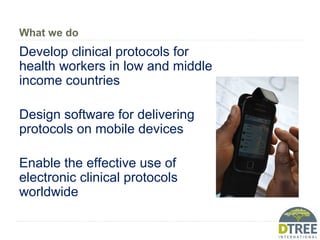
What we do
Develop clinical protocols for
health workers in low and middle
income countries
Design software for delivering
protocols on mobile devices
Enable the effective use of
electronic clinical protocols
worldwide
1. Chronic disease
 HIV/AIDS
 Diabetes
 Hypertension
 TB
2. Child health
 IMCI
 Malaria
 Newborn
 HIV/AIDS
 Nutrition
3. Preventive
Care
 Antenatal
 Immunizations
 Care and
support
4. Reproductive
Health
 Family Planning
 Labor &
Delivery
 Newborn
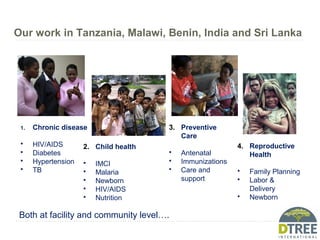
Our work in Tanzania, Malawi, Benin, India and Sri Lanka
Both at facility and community level….
Integrated Community Case Management Project
(iCCM)
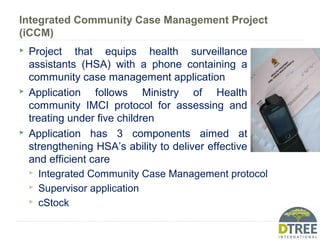
 Project that equips health surveillance
assistants (HSA) with a phone containing a
community case management application
 Application follows Ministry of Health
community IMCI protocol for assessing and
treating under five children
 Application has 3 components aimed at
strengthening HSA’s ability to deliver effective
and efficient care
 Integrated Community Case Management protocol
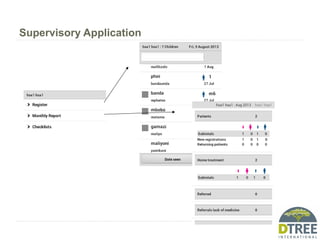
 Supervisor application
 cStock
What has been done so far
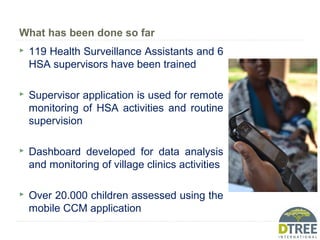
 119 Health Surveillance Assistants and 6
HSA supervisors have been trained
 Supervisor application is used for remote
monitoring of HSA activities and routine
supervision
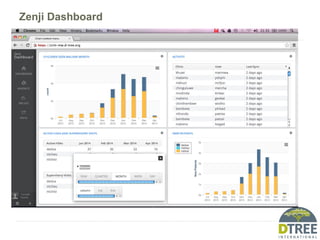
 Dashboard developed for data analysis
and monitoring of village clinics activities
 Over 20.000 children assessed using the
mobile CCM application
Overview of the CCM application
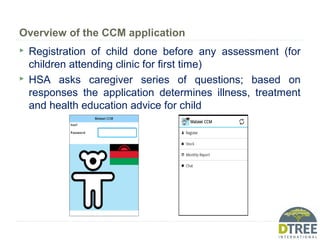
 Registration of child done before any assessment (for
children attending clinic for first time)
 HSA asks caregiver series of questions; based on
responses the application determines illness, treatment
and health education advice for child
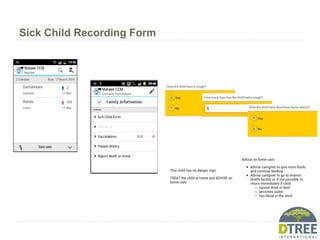
Sick Child Recording Form
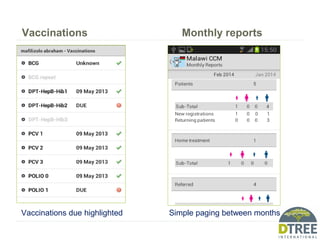
Vaccinations Monthly reports
Simple paging between monthsVaccinations due highlighted
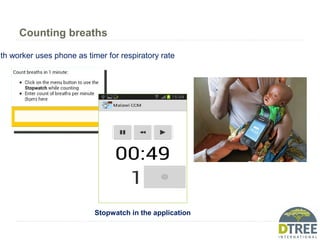
Counting breaths
lth worker uses phone as timer for respiratory rate
Stopwatch in the application
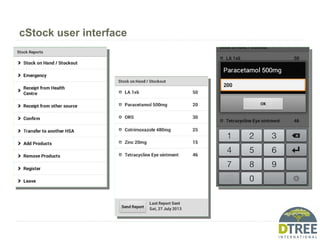
cStock user interface
Supervisory Application
Zenji Dashboard
Lessons learned
 Improved access to information compared to village
clinic register
 Better adherence to stipulated guidelines
 Automatically generated monthly reports
 Easier follow up because of reminders
 Reduced workload of reregistering children
 Improved confidence caregivers in ability HSA
 Respect community because of technological
advancement
 Concern caregivers about increase assessment time
 Competence in using application comes with
practice
Implementation challenges
 Stock outs of drugs
 Maintenance application and equipment
 Poor network affecting synchronization data
 Paper vs. mobile phone
 Reporting and supervision
 Eyesight problems
Way forward
 Project to be expanded to other areas
 Malaria Rapid Diagnostic Testing
functionality
 Resource mobilization to train more HSAs in
using CCM application
 Identification of sustainability measures
beyond project duration
Contact us
Offices in Boston, Tanzania and Malawi
Clement udedi
cudedi@d-tree.org
http://www.d-tree.org
Better Decisions Save Lives

m4d presentation

  • 1.
    Presentation by ClementUdedi at Mobile for Development Conference in Senegal at Cheikh Anta Diop University Better decisions save lives Mobile Health Improving Decision Making Process of Community Based Workers in Hard to Reach Areas in Malawi
  • 2.
    D-tree background An NGOdedicated to improving the quality of health care available to the world’s poor Our vision is a world in which every person has access to high-quality health care
  • 3.
    Problems we solve Shortagesof doctors and nurses in poor countries means critical decisions are made by health workers with limited training which can lead to: Inconsistency in adhering to clinical protocols Problems in diagnosis and treatment Lack of adequate information for care provision
  • 4.
    What we do Developclinical protocols for health workers in low and middle income countries Design software for delivering protocols on mobile devices Enable the effective use of electronic clinical protocols worldwide
  • 5.
    1. Chronic disease HIV/AIDS  Diabetes  Hypertension  TB 2. Child health  IMCI  Malaria  Newborn  HIV/AIDS  Nutrition 3. Preventive Care  Antenatal  Immunizations  Care and support 4. Reproductive Health  Family Planning  Labor & Delivery  Newborn Our work in Tanzania, Malawi, Benin, India and Sri Lanka Both at facility and community level….
  • 6.
    Integrated Community CaseManagement Project (iCCM)  Project that equips health surveillance assistants (HSA) with a phone containing a community case management application  Application follows Ministry of Health community IMCI protocol for assessing and treating under five children  Application has 3 components aimed at strengthening HSA’s ability to deliver effective and efficient care  Integrated Community Case Management protocol  Supervisor application  cStock
  • 7.
    What has beendone so far  119 Health Surveillance Assistants and 6 HSA supervisors have been trained  Supervisor application is used for remote monitoring of HSA activities and routine supervision  Dashboard developed for data analysis and monitoring of village clinics activities  Over 20.000 children assessed using the mobile CCM application
  • 8.
    Overview of theCCM application  Registration of child done before any assessment (for children attending clinic for first time)  HSA asks caregiver series of questions; based on responses the application determines illness, treatment and health education advice for child
  • 9.
  • 10.
    Vaccinations Monthly reports Simplepaging between monthsVaccinations due highlighted
  • 11.
    Counting breaths lth workeruses phone as timer for respiratory rate Stopwatch in the application
  • 12.
  • 13.
  • 14.
  • 15.
    Lessons learned  Improvedaccess to information compared to village clinic register  Better adherence to stipulated guidelines  Automatically generated monthly reports  Easier follow up because of reminders  Reduced workload of reregistering children  Improved confidence caregivers in ability HSA  Respect community because of technological advancement  Concern caregivers about increase assessment time  Competence in using application comes with practice
  • 16.
    Implementation challenges  Stockouts of drugs  Maintenance application and equipment  Poor network affecting synchronization data  Paper vs. mobile phone  Reporting and supervision  Eyesight problems
  • 17.
    Way forward  Projectto be expanded to other areas  Malaria Rapid Diagnostic Testing functionality  Resource mobilization to train more HSAs in using CCM application  Identification of sustainability measures beyond project duration
  • 18.
    Contact us Offices inBoston, Tanzania and Malawi Clement udedi cudedi@d-tree.org http://www.d-tree.org Better Decisions Save Lives

Editor's Notes

  • #5 Make sure you explain about the application on the phone (Android, standalone, GPRS required for synching, etc.)
  • #7 - community health workers locally known as health surveillance assistants (HSA) Briefly explain three components Integrated Community Case Management protocol: Application used for assessment and treatment of under-five children Supervisor application: used by supervisors for routine quarterly supervision of HSA’s and monitoring of HSA work cStock: Logistical management tool developed by John Snow Inc. (JSI) to effectively manage drug stock levels at the village clinics. D-tree collaborated with JSI to establish a link between the CCM tool and cStock so that HSA’s can be using one integrated tool with one user interface for the different functionalities
  • #8 Dashboard displays village clinic activities and details of encounters quarterly, monthly, weekly and daily
  • #15 Make sure to explain the screenshot a bit and also explain that under ‘reports’ there are custom reports for a particular application.
  • #17 Maintenance application and equipments: - CCM application being deleted from the phone by some users - Solar panel chargers breaking down