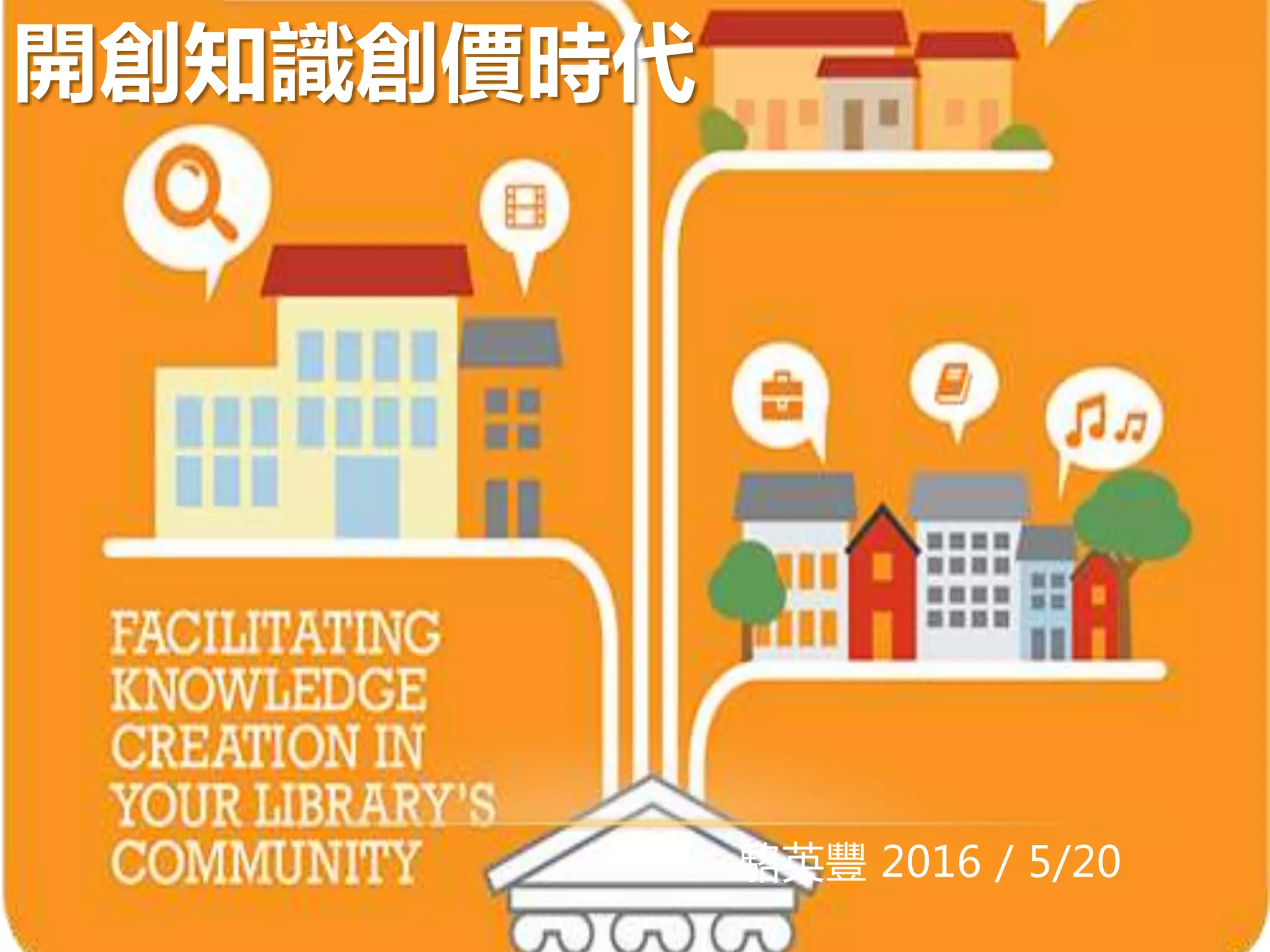
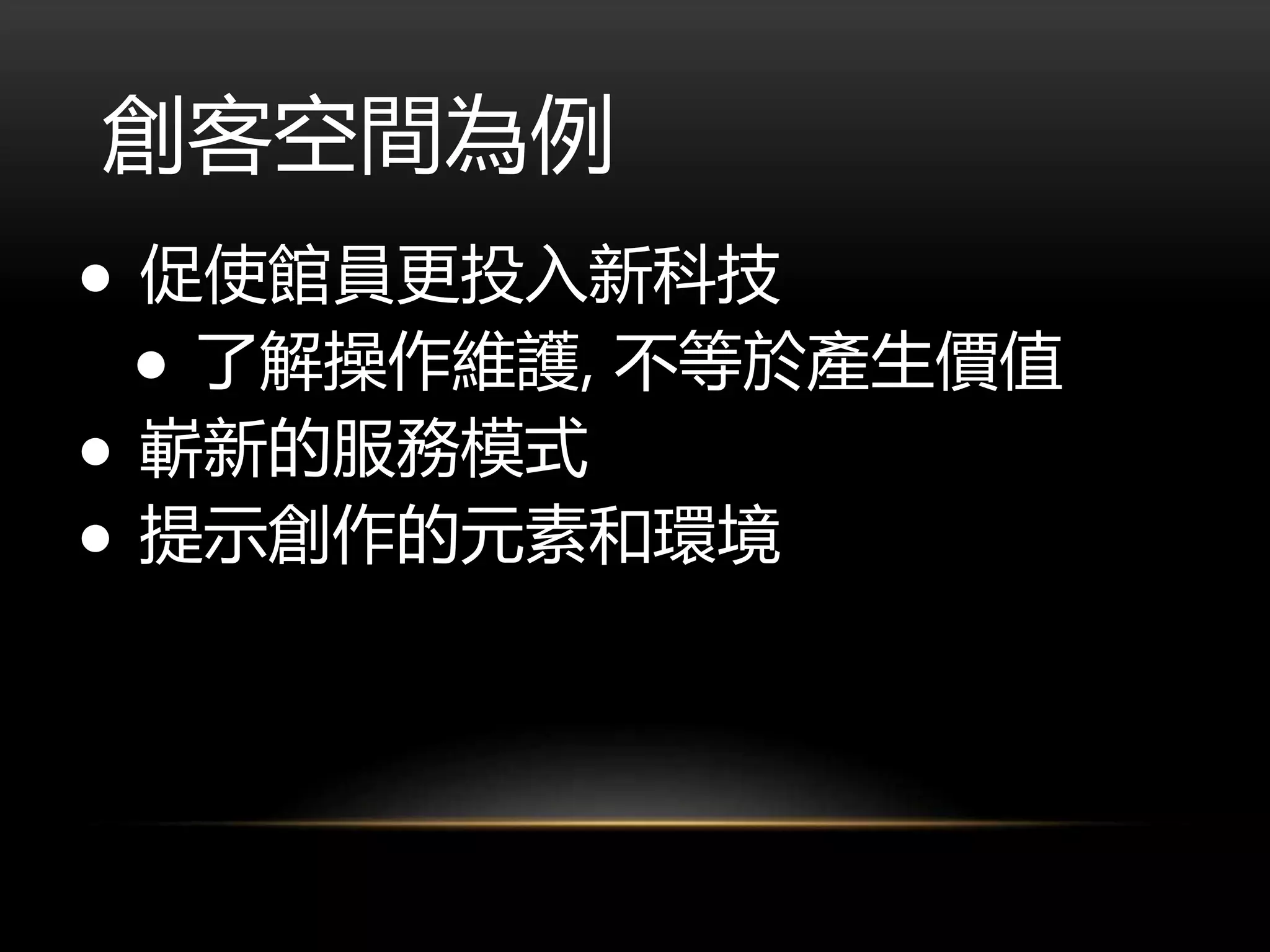
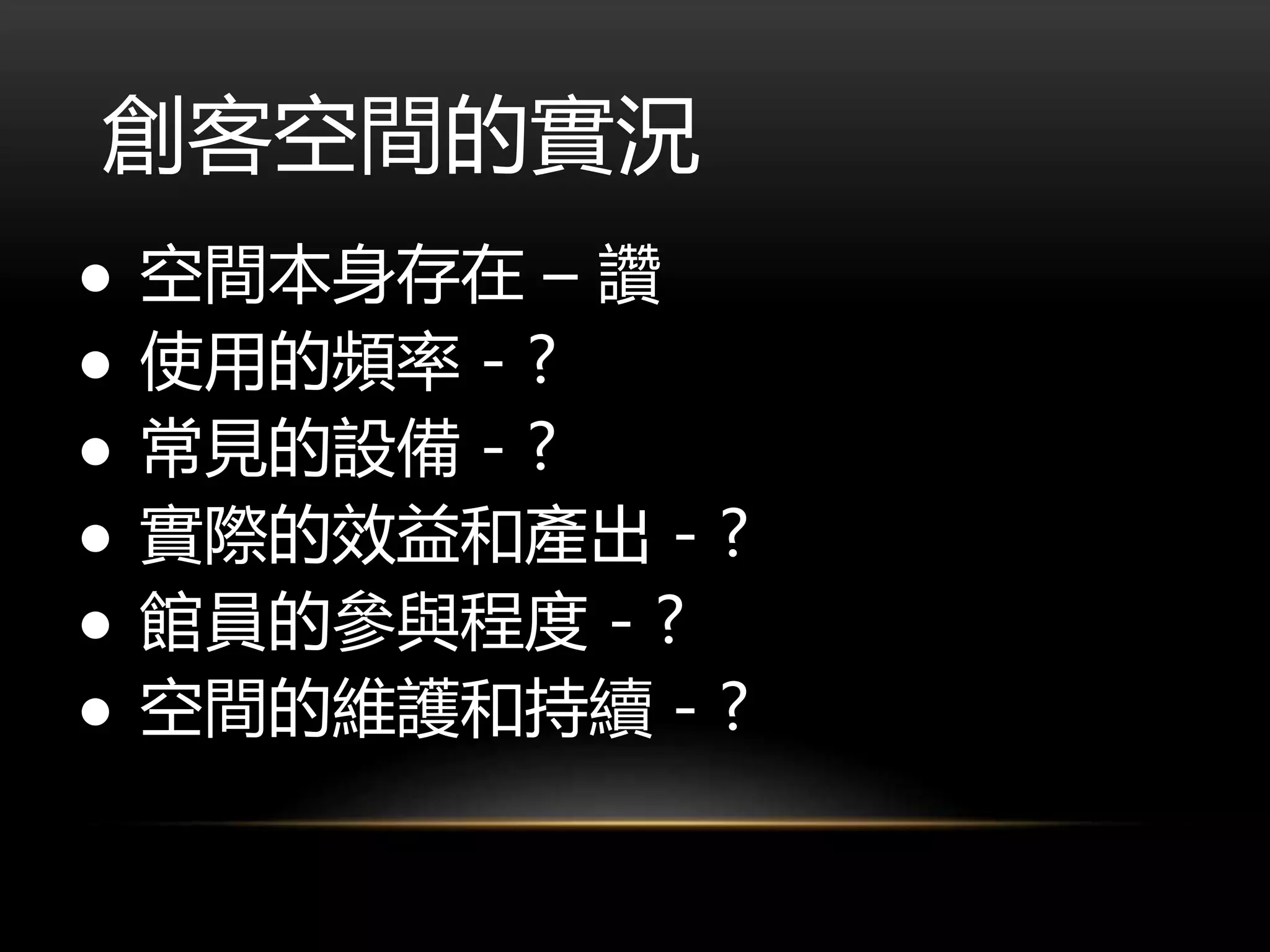
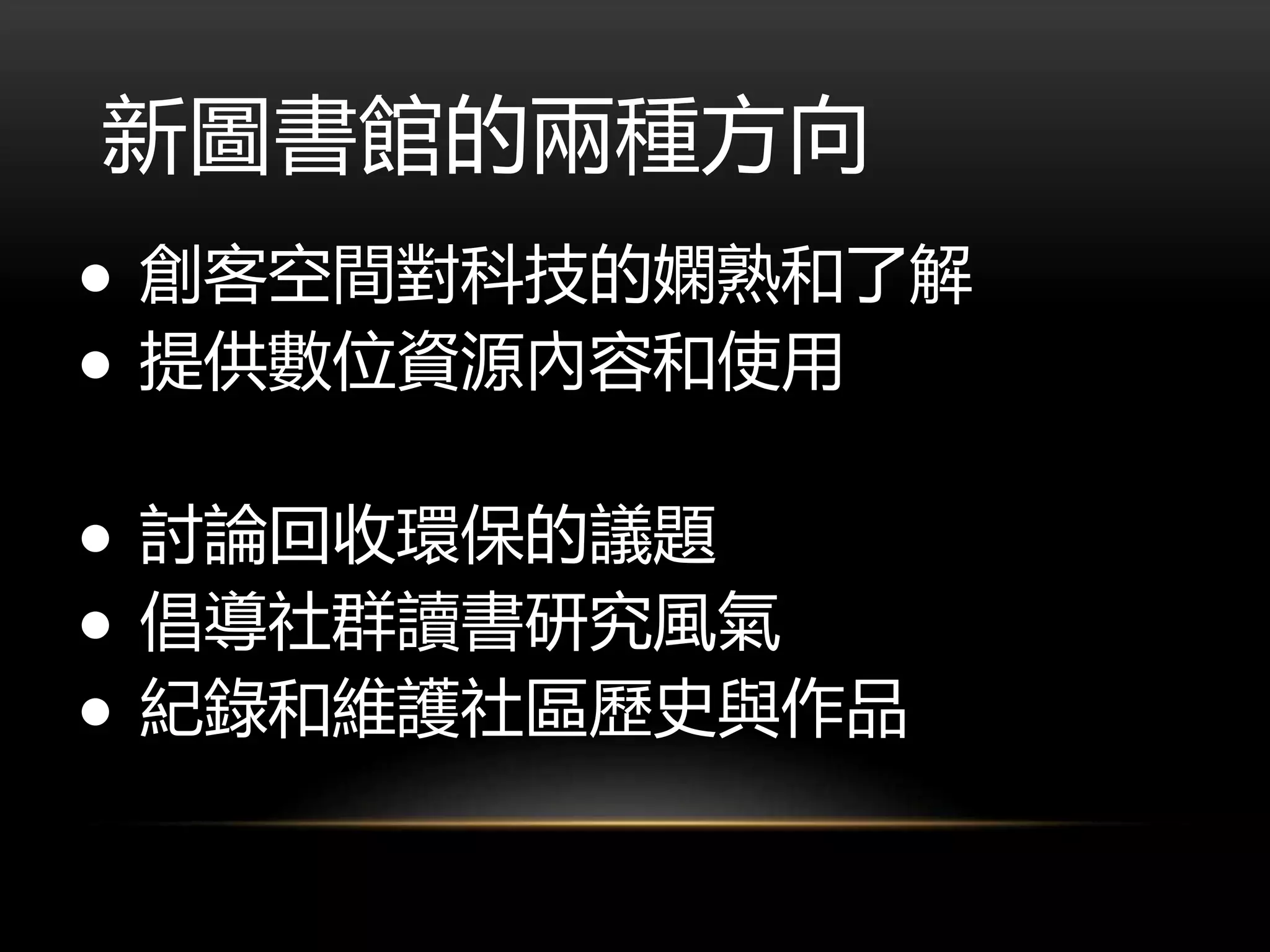
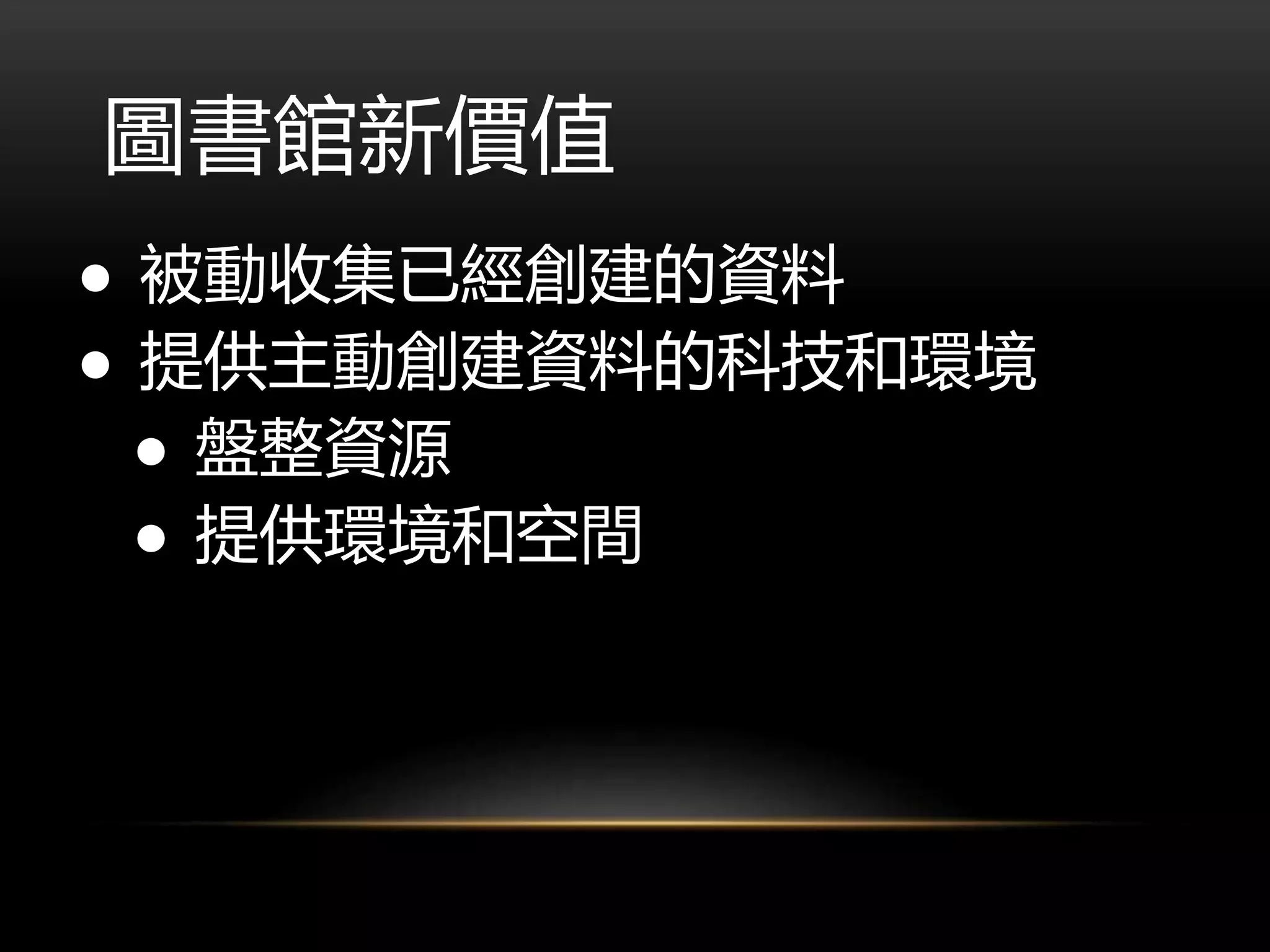
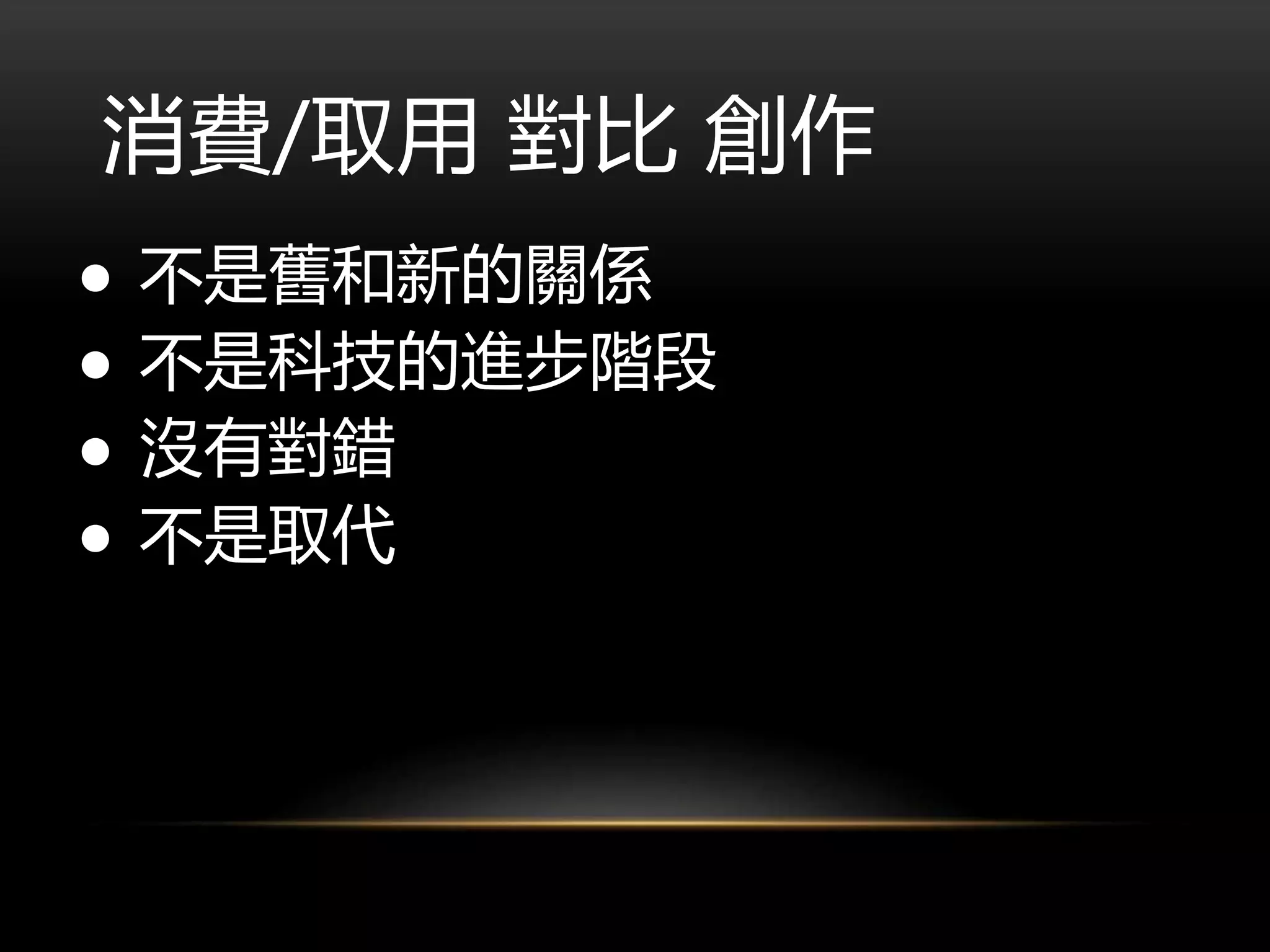
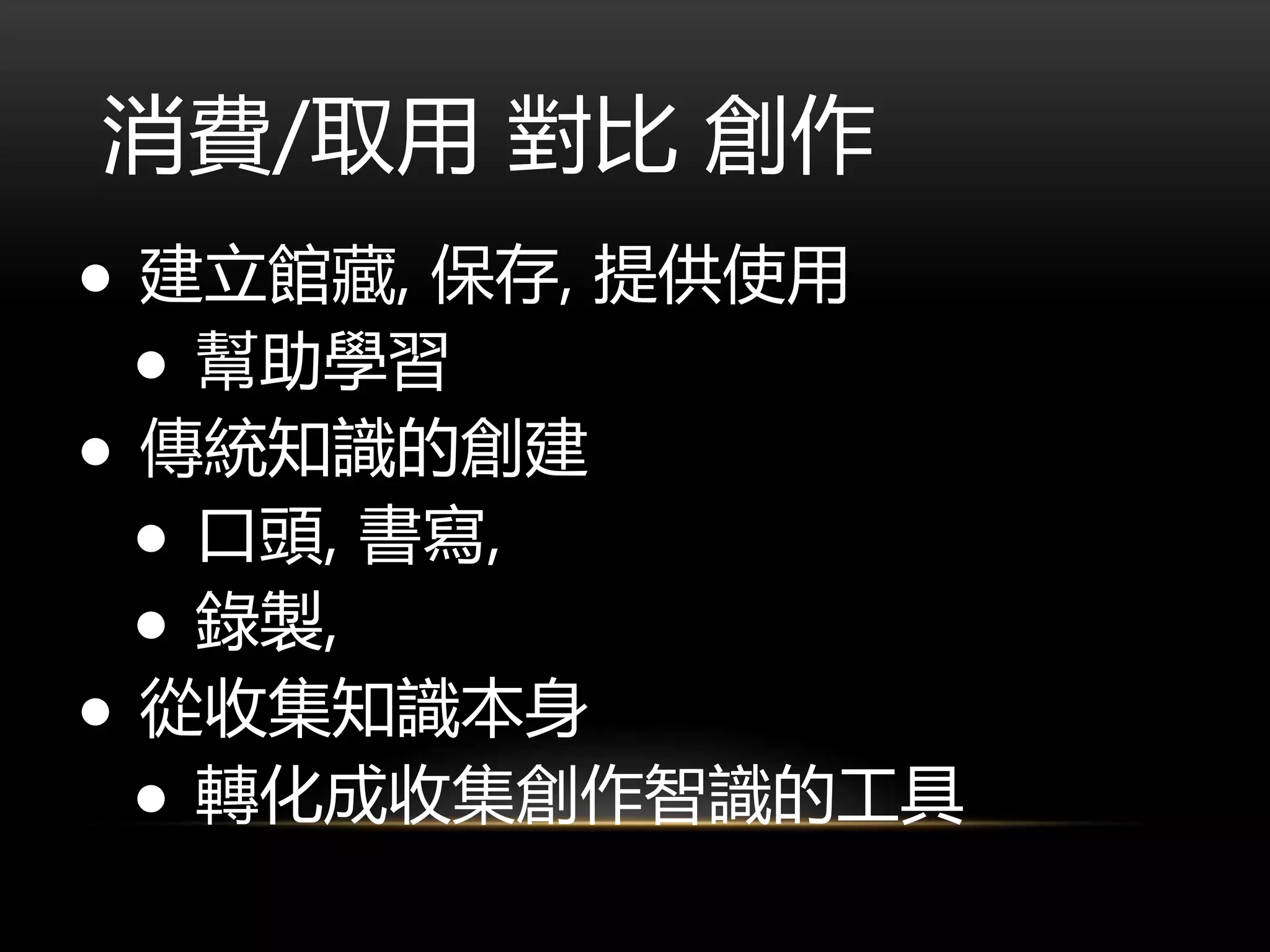
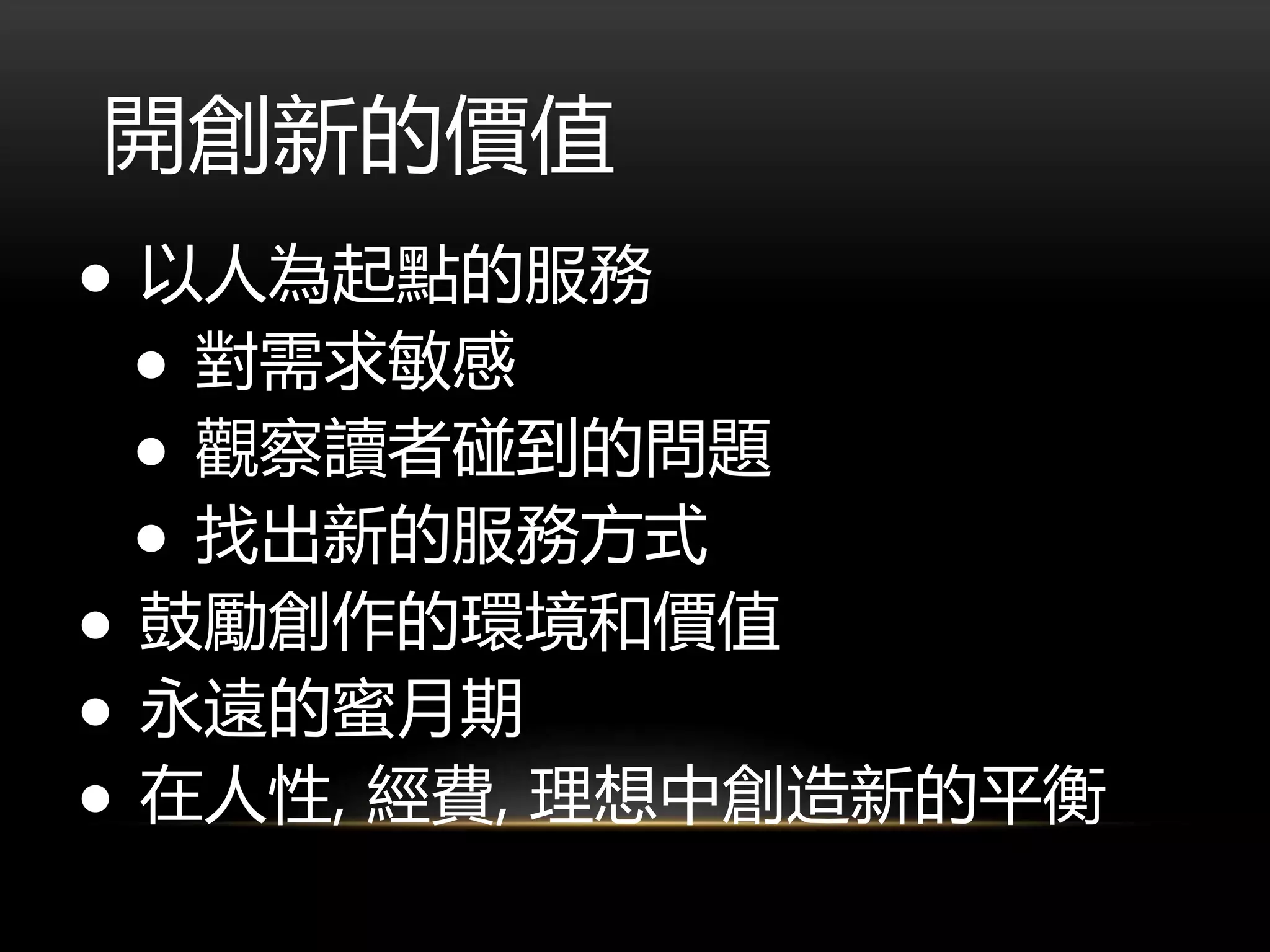
#13 Traditionally, libraries have invested mostly in the collection, preservation, and provision of access to certain types of information and certain types of cultural objects (i.e., literature) all for the purposes of self-directed learning and/or enculturation. But, in the future, libraries will need to invest more heavily in providing their communities with the tools needed to create technologically-mediated cultural objects and information. It’s not that creation and consumption are opposed to one another, rather, the balance is simply shifting away from collecting information and shifting towards collecting the tools required to process information.
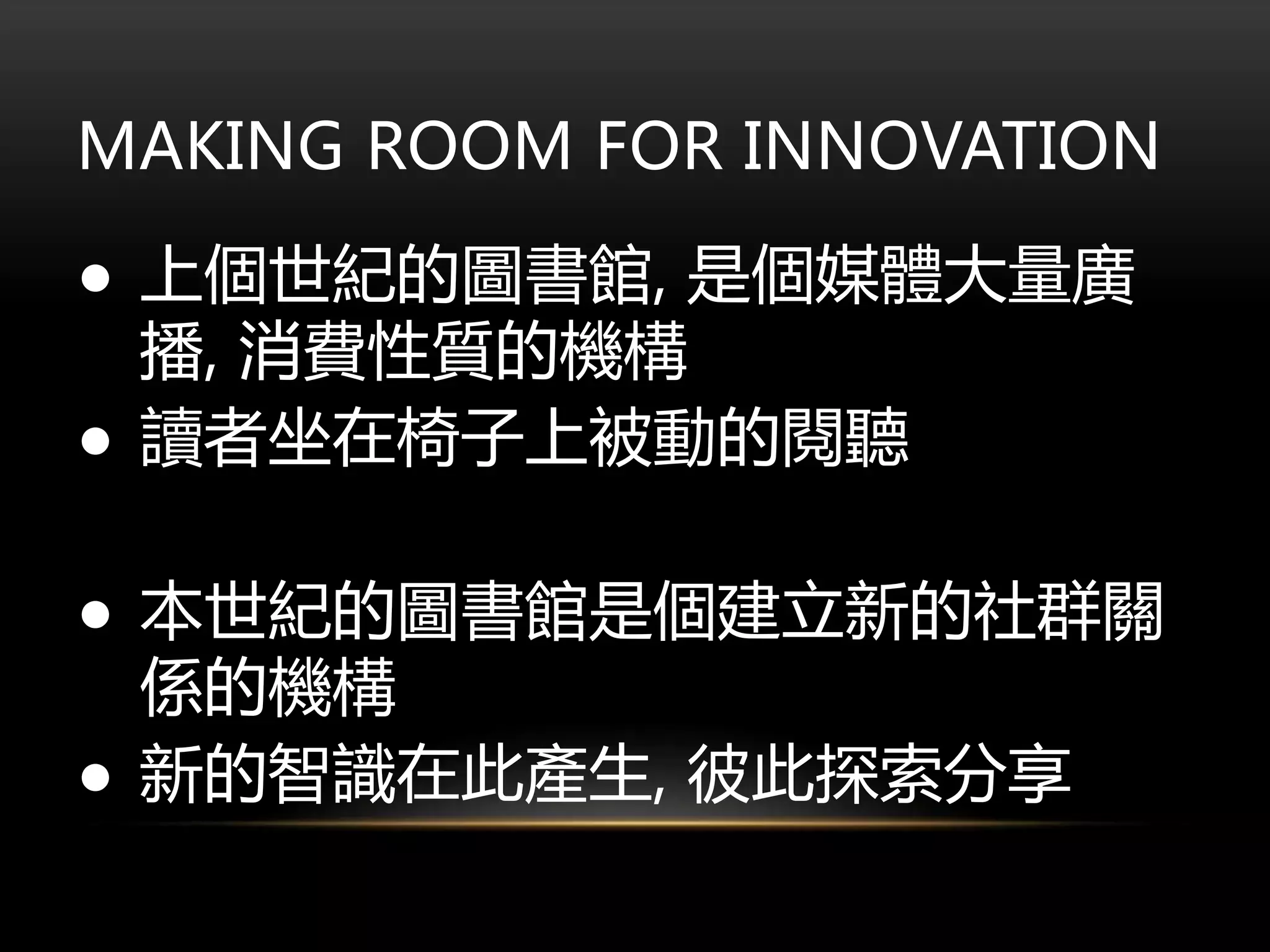
#22 We believe the library of the last century is the library of consumption, an institution that reflects the broadcast era of media, the place where you watch, read, and listen passively from an armchair. The library of this century is the place where new social relationships are forged and knowledge is created, explored, and shared.” (Nate Hill & Jeff Goldenson, “Making Room for Innovation”, Library Journal, May 16, 2013 [link])
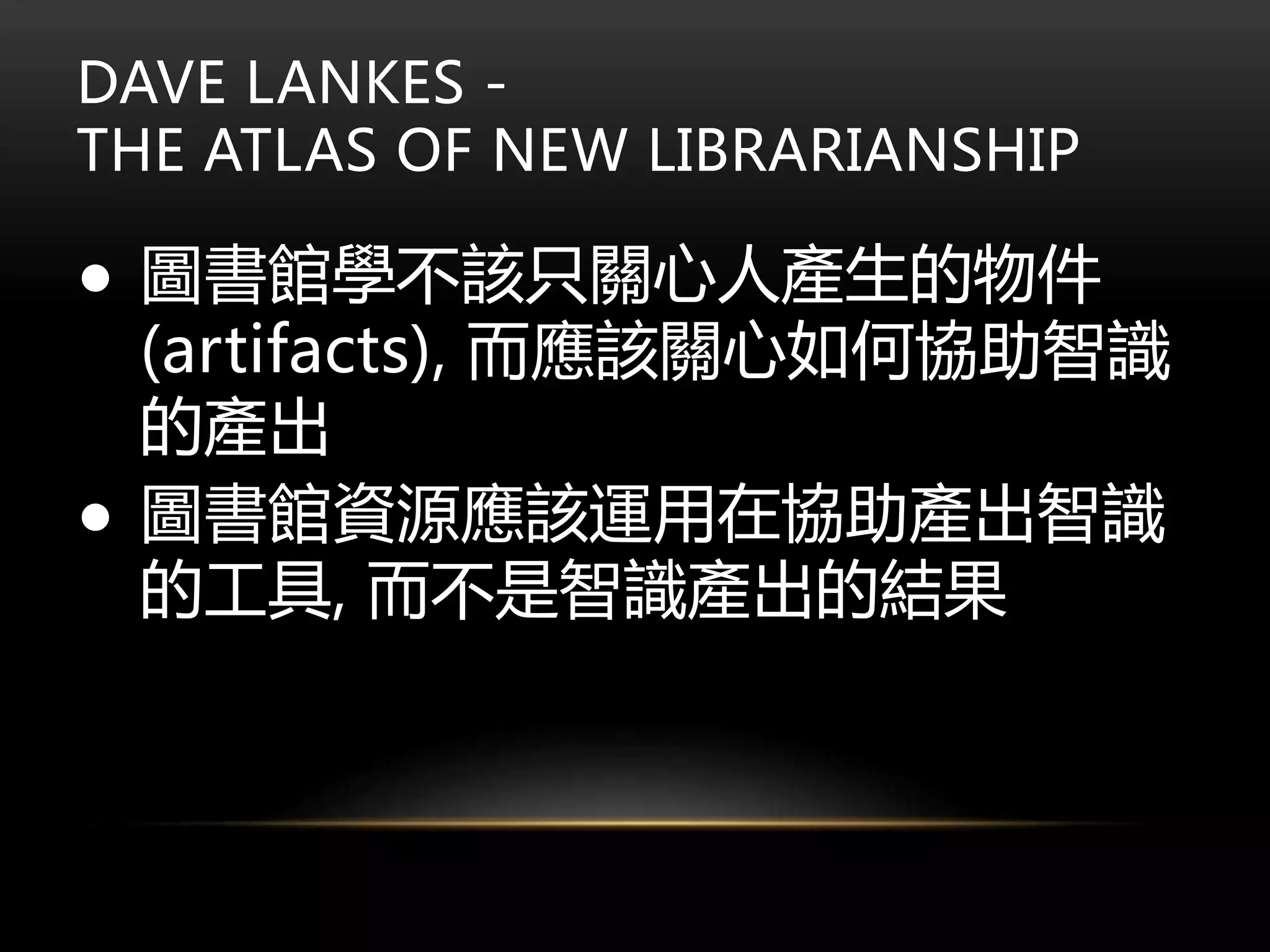
#23 Librarianship is not about artifacts, it is about knowledge and facilitating knowledge creation. So what should we be spending our precious resources on? Knowledge creation tools, not the results of knowledge creation.” (Dave Lankes, The Atlas of New Librarianship, p. 43)
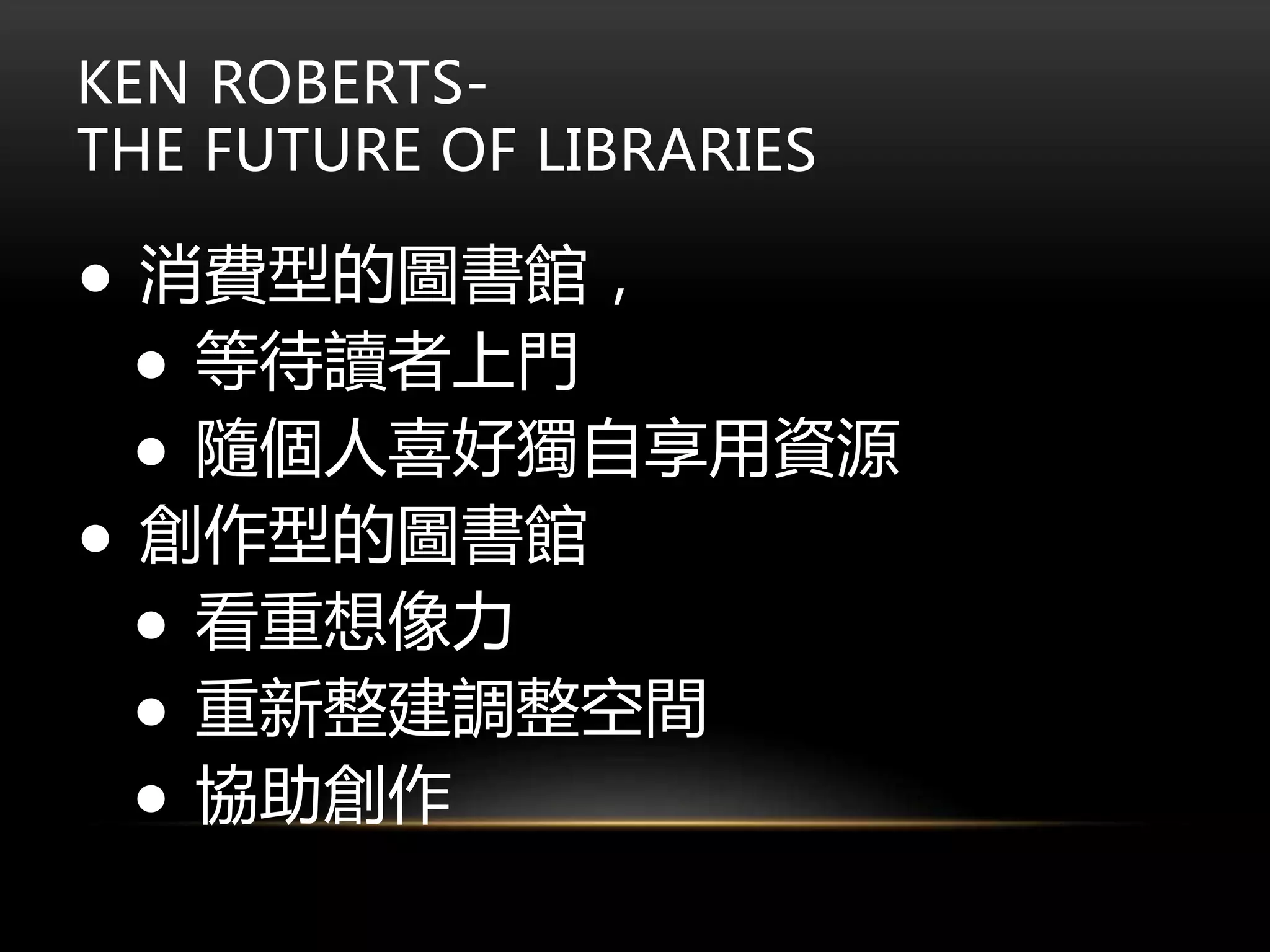
#24 The consumption library, to me, is the library that sort of sits back and waits for people to come inside of its doors, to discover what they have, to take it home, to consume it in the privacy of their own home, to consume it one as a time as individuals. Whereas the creation library is the library that sort of embraces that idea of imagination and begins to redesign even its physical space in terms of creation.” (Ken Roberts, “The Future of Libraries”, Dec. 6, 2012 [link])
#26 Traditionally, libraries have invested mostly in the collection, preservation, and provision of access to certain types of information and certain types of cultural objects (i.e., literature) all for the purposes of self-directed learning and/or enculturation. But, in the future, libraries will need to invest more heavily in providing their communities with the tools needed to create technologically-mediated cultural objects and information. It’s not that creation and consumption are opposed to one another, rather, the balance is simply shifting away from collecting information and shifting towards collecting the tools required to process information.





![Kaohsiung09 Yuen [Chinese]](https://cdn.slidesharecdn.com/ss_thumbnails/kaohsiung09-yuenchinese-090518065758-phpapp01-thumbnail.jpg?width=640&height=640&fit=bounds)


