Lungs
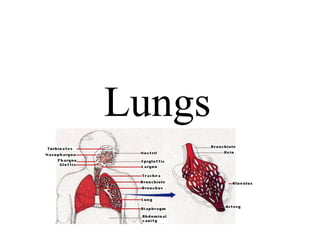
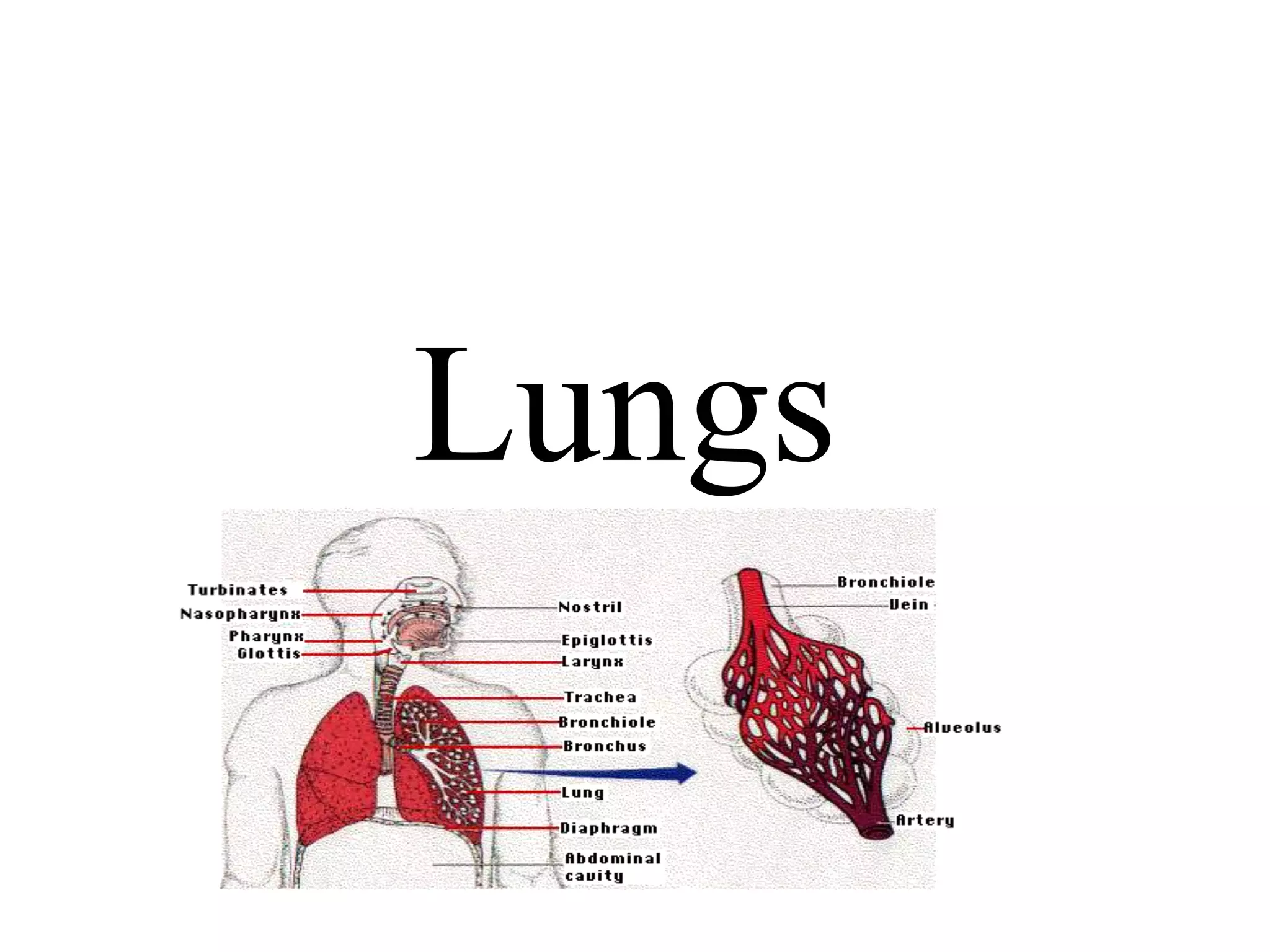
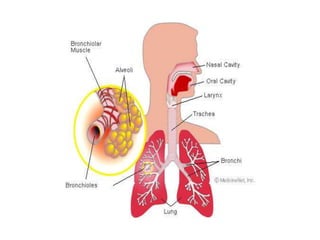
Respiratory The lungs are the largest portion of the respiratory system.They are responsible for the exchange of gasses, mainly oxygen and carbon dioxide.The lungs also function whether you are awake or sleep so that your body gets the oxygen that it needs.
ProtectionThe nose acts as a filter to prevent large pollutant particles from entering the lungs.
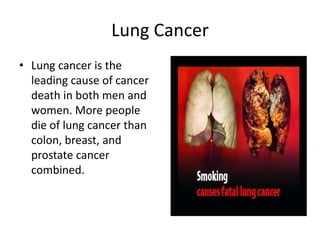
Lung CancerLung cancer is the leading cause of cancer death in both men and women. More people die of lung cancer than colon, breast, and prostate cancer combined.
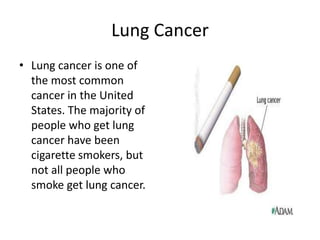
Lung CancerLung cancer is one of the most common cancer in the United States. The majority of people who get lung cancer have been cigarette smokers, but not all people who smoke get lung cancer.
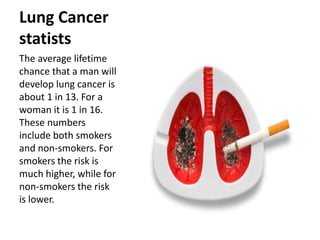
Lung Cancerstatists The average lifetime chance that a man will develop lung cancer is about 1 in 13. For a woman it is 1 in 16. These numbers include both smokers and non-smokers. For smokers the risk is much higher, while for non-smokers the risk is lower.
PreventionChanging your life style can over time reduce the chance of you getting lung cancer.Quitting smoking reduce your chance of getting cancer and your risk can continue to decrease as long as you don’t smoke.The benefit of quitting smoking is greater the younger you are.
Need HelpMedicated nicotine inhalers, nicotine patches, and oral medicines such as varenicline (Chantix) or bupropion are available to help you to quit smoking.
Work citedCancer.org, 2011 American Cancer Society, 	Inc.Fremgen Frucht, Medical Terminology: A 	Living Language 4th ed. New Jersey: 	Pearson Education , 2009.

Lungs bio120

  • 1.
    Lungs
  • 2.
    Respiratory The lungsare the largest portion of the respiratory system.They are responsible for the exchange of gasses, mainly oxygen and carbon dioxide.The lungs also function whether you are awake or sleep so that your body gets the oxygen that it needs.
  • 3.
    ProtectionThe nose actsas a filter to prevent large pollutant particles from entering the lungs.
  • 5.
    Lung CancerLung canceris the leading cause of cancer death in both men and women. More people die of lung cancer than colon, breast, and prostate cancer combined.
  • 6.
    Lung CancerLung canceris one of the most common cancer in the United States. The majority of people who get lung cancer have been cigarette smokers, but not all people who smoke get lung cancer.
  • 7.
    Lung Cancerstatists Theaverage lifetime chance that a man will develop lung cancer is about 1 in 13. For a woman it is 1 in 16. These numbers include both smokers and non-smokers. For smokers the risk is much higher, while for non-smokers the risk is lower.
  • 8.
    PreventionChanging your lifestyle can over time reduce the chance of you getting lung cancer.Quitting smoking reduce your chance of getting cancer and your risk can continue to decrease as long as you don’t smoke.The benefit of quitting smoking is greater the younger you are.
  • 9.
    Need HelpMedicated nicotineinhalers, nicotine patches, and oral medicines such as varenicline (Chantix) or bupropion are available to help you to quit smoking.
  • 10.
    Work citedCancer.org, 2011American Cancer Society, Inc.Fremgen Frucht, Medical Terminology: A Living Language 4th ed. New Jersey: Pearson Education , 2009.