Day Four
Day Five
Day Six
Parts of...
How it works:
Our examples
Parts of...
How it works:
Our examples
Kinds of...
How it works:
Our examples
How to...
How it works:
Our examples
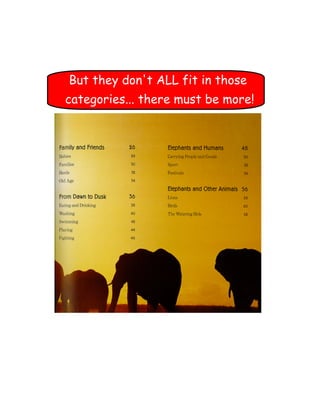
But they don't ALL fit in those
categories... there must be more!
Day Seven
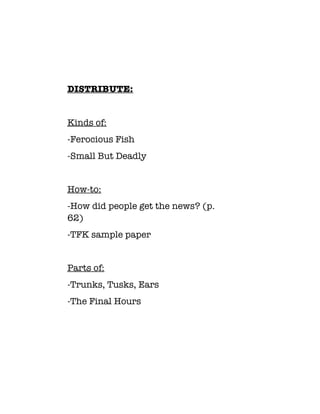
DISTRIBUTE:
Kinds of:
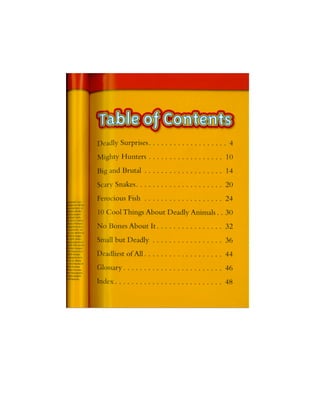
-Ferocious Fish
-Small But Deadly
How-to:
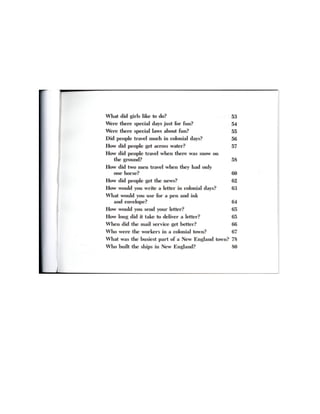
-How did people get the news? (p.
62)
-TFK sample paper
Parts of:
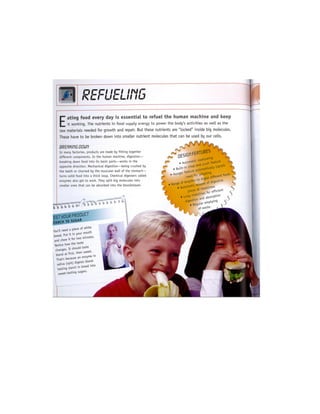
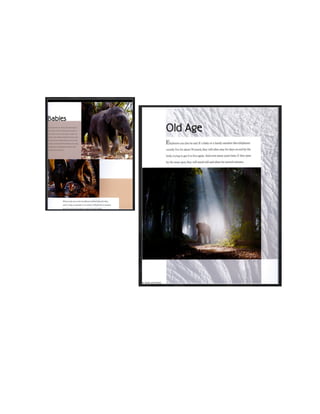
-Trunks, Tusks, Ears
-The Final Hours
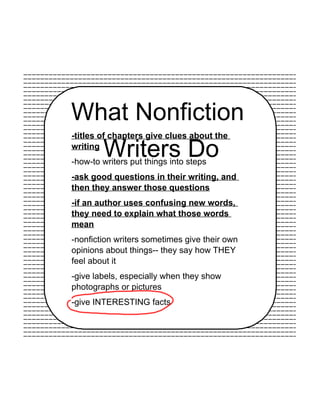
What Nonfiction
Writers Do
What Nonfiction
Writers Do
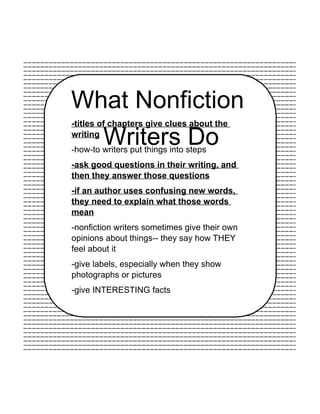
-titles of chapters give clues about the
writing
-how-to writers put things into steps
-ask good questions in their writing, and
then they answer those questions
-if an author uses confusing new words,
they need to explain what those words
mean
-nonfiction writers sometimes give their own
opinions about things-- they say how THEY
feel about it
-give labels, especially when they show
photographs or pictures
-give INTERESTING facts
What Nonfiction
Writers Do
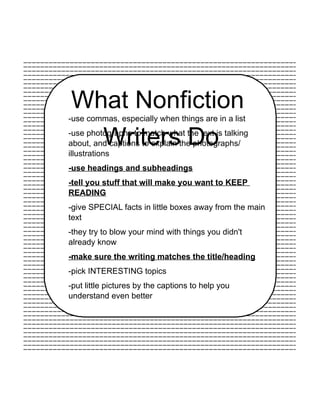
-use commas, especially when things are in a list
-use photographs to match what the text is talking
about, and captions to explain the photographs/
illustrations
-use headings and subheadings
-tell you stuff that will make you want to KEEP
READING
-give SPECIAL facts in little boxes away from the main
text
-they try to blow your mind with things you didn't
already know
-make sure the writing matches the title/heading
-pick INTERESTING topics
-put little pictures by the captions to help you
understand even better
Day Eight
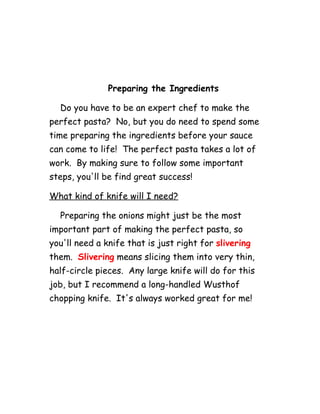
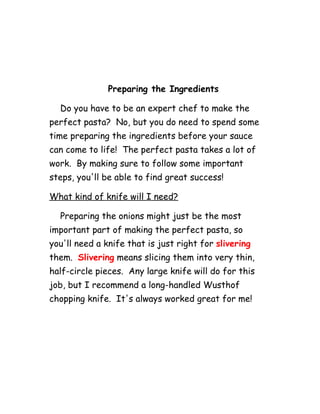
Preparing the Ingredients
Do you have to be an expert chef to make the
perfect pasta? No, but you do need to spend some
time preparing the ingredients before your sauce
can come to life! The perfect pasta takes a lot of
work. By making sure to follow some important
steps, you'll be find great success!
What kind of knife will I need?
Preparing the onions might just be the most
important part of making the perfect pasta, so
you'll need a knife that is just right for slivering
them. Slivering means slicing them into very thin,
half-circle pieces. Any large knife will do for this
job, but I recommend a long-handled Wusthof
chopping knife. It's always worked great for me!
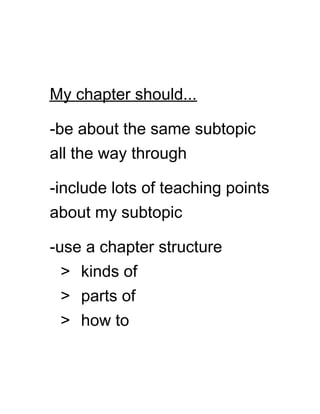
My chapter should...
-be about the same subtopic
all the way through
-include lots of teaching points
about my subtopic
-use a chapter structure
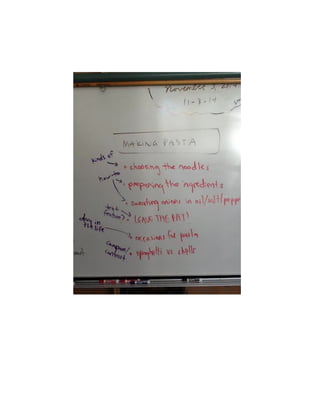
> kinds of
> parts of
> how to
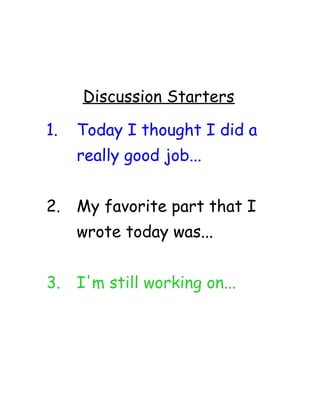
Discussion Starters
1. Today I thought I did a
really good job...
2. My favorite part that I
wrote today was...
3. I'm still working on...
Day Nine
Day Ten
Preparing the Ingredients
Do you have to be an expert chef to make the
perfect pasta? No, but you do need to spend some
time preparing the ingredients before your sauce
can come to life! The perfect pasta takes a lot of
work. By making sure to follow some important
steps, you'll be find great success!
What kind of knife will I need?
Preparing the onions might just be the most
important part of making the perfect pasta, so
you'll need a knife that is just right for slivering
them. Slivering means slicing them into very thin,
half-circle pieces. Any large knife will do for this
job, but I recommend a long-handled Wusthof
chopping knife. It's always worked great for me!
Interesting fact:
Question:
Short burst:
Day Eleven
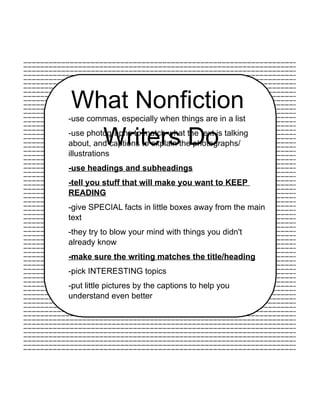
What Nonfiction
Writers Do
-use commas, especially when things are in a list
-use photographs to match what the text is talking
about, and captions to explain the photographs/
illustrations
-use headings and subheadings
-tell you stuff that will make you want to KEEP
READING
-give SPECIAL facts in little boxes away from the main
text
-they try to blow your mind with things you didn't
already know
-make sure the writing matches the title/heading
-pick INTERESTING topics
-put little pictures by the captions to help you
understand even better
What Nonfiction
Writers Do
-titles of chapters give clues about the
writing
-how-to writers put things into steps
-ask good questions in their writing, and
then they answer those questions
-if an author uses confusing new words,
they need to explain what those words
mean
-nonfiction writers sometimes give their own
opinions about things-- they say how THEY
feel about it
-give labels, especially when they show
photographs or pictures
-give INTERESTING facts
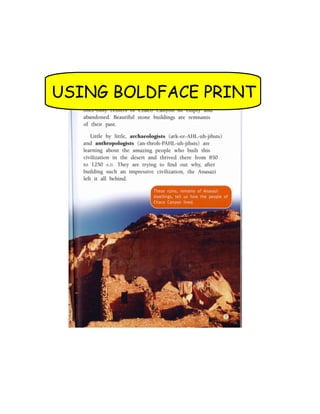
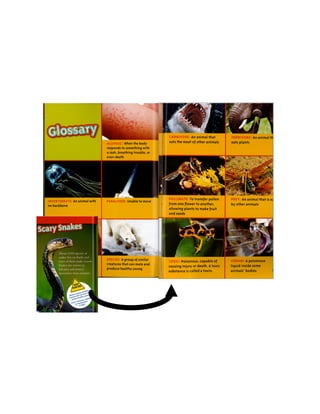
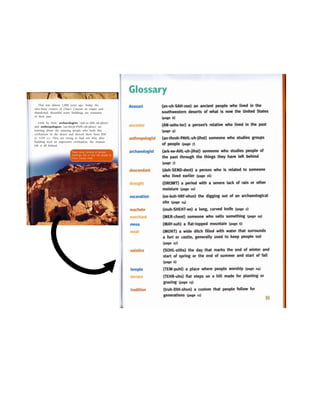
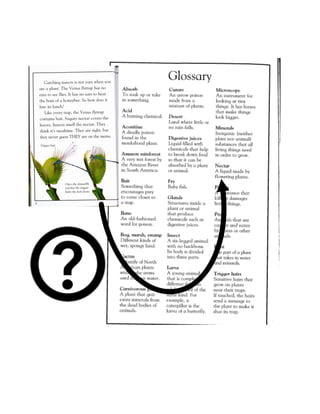
USING BOLDFACE PRINT
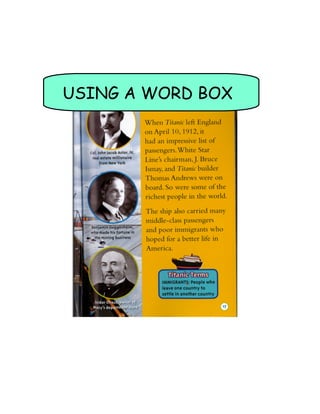
USING A WORD BOX
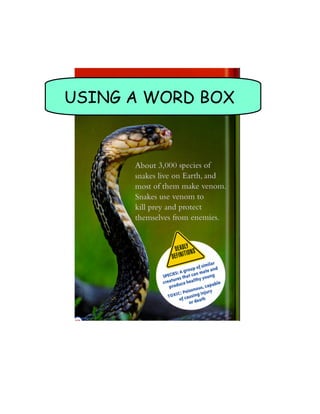
USING A WORD BOX
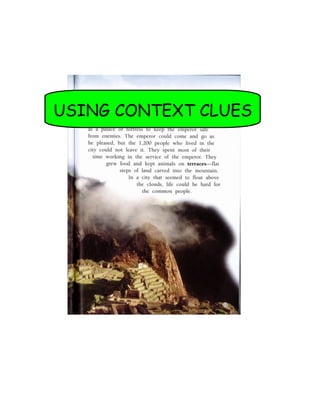
USING CONTEXT CLUES
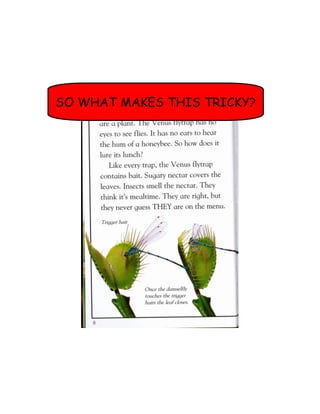
SO WHAT MAKES THIS TRICKY?
Day Twelve
Preparing the Ingredients
Do you have to be an expert chef to make the
perfect pasta? No, but you do need to spend some
time preparing the ingredients before your sauce
can come to life! The perfect pasta takes a lot of
work. By making sure to follow some important
steps, you'll be able to find great success!
What kind of knife will I need?
Preparing the onions might just be the most
important part of making the perfect pasta, so
you'll need a knife that is just right for slivering
them. Slivering means slicing them into very thin,
half-circle pieces. Any large knife will do for this
job, but I recommend a long-handled Wusthof
chopping knife. It's always worked great for me!
Day Thirteen
Day Fourteen
Day in the Life
How it works:
Our examples
Life Cycle
How it works:
Our examples
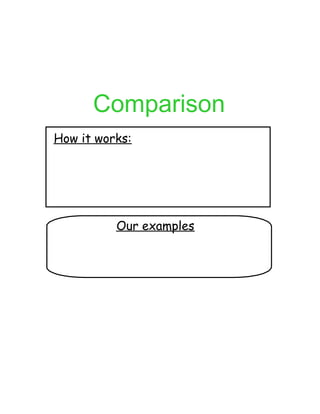
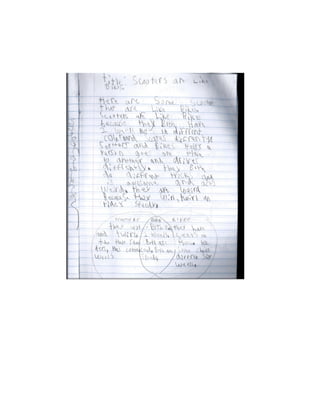
Comparison
How it works:
Our examples
Chapter Four Contract
By signing my name, I hereby promise to write a fourth chapter at home, the very
best I can. As a result, I will have no other homework on Monday, Tuesday and
Wednesday of next week. A parent email will be sent home, so my family will
know I have this responsibility. If your teacher determines that I did not give my
best effort, I will have to complete all the homework that I missed.
Day Fifteen
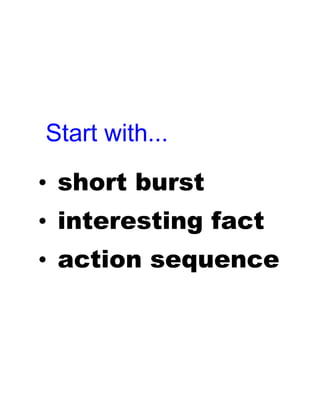
• short burst
• interesting fact
• action sequence
Start with...
• preview
statement
Next...
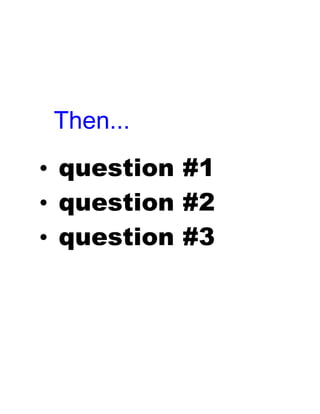
• question #1
• question #2
• question #3
Then...
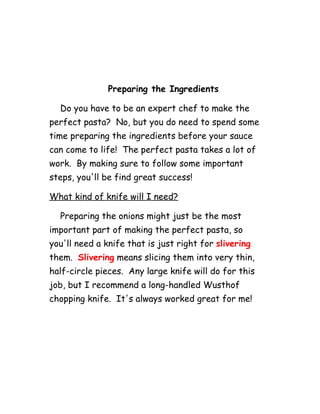
Preparing the Ingredients
Do you have to be an expert chef to make the
perfect pasta? No, but you do need to spend some
time preparing the ingredients before your sauce
can come to life! The perfect pasta takes a lot of
work. By making sure to follow some important
steps, you'll be find great success!
What kind of knife will I need?
Preparing the onions might just be the most
important part of making the perfect pasta, so
you'll need a knife that is just right for slivering
them. Slivering means slicing them into very thin,
half-circle pieces. Any large knife will do for this
job, but I recommend a long-handled Wusthof
chopping knife. It's always worked great for me!
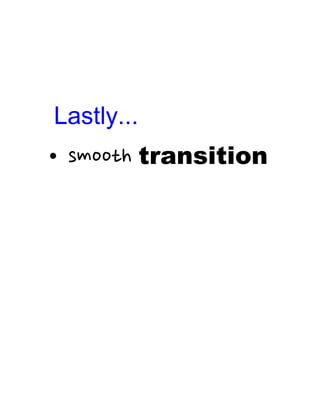
• smooth
 transition
Lastly...
Smooth
 Transition
Collection
Putting it all
together
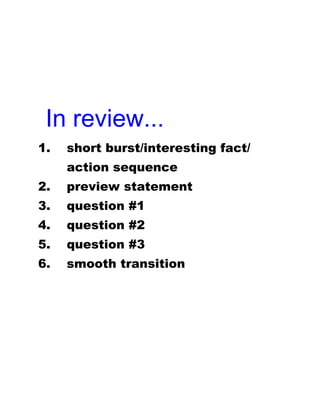
1. short burst/interesting fact/
action sequence
2. preview statement
3. question #1
4. question #2
5. question #3
6. smooth transition
In review...
Day Sixteen
It should FEEL like
the end without SAYING
THE END
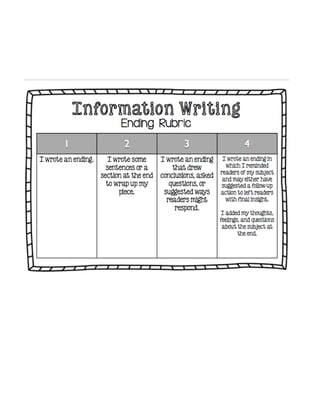
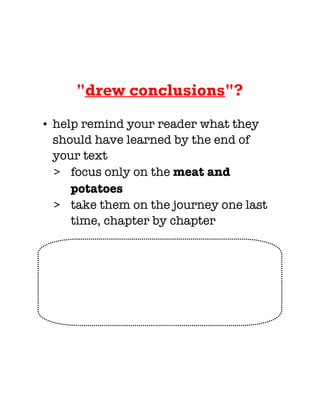
drew conclusions?
• help remind your reader what they
should have learned by the end of
your text
 focus only on the meat and
potatoes
 take them on the journey one last
time, chapter by chapter
suggested ways readers
might respond?
• suggest to your reader what he/she
should do now that he/she has
learned all this new information
 So the next time...
 Now that you...
Putting it all
together
Day Seventeen
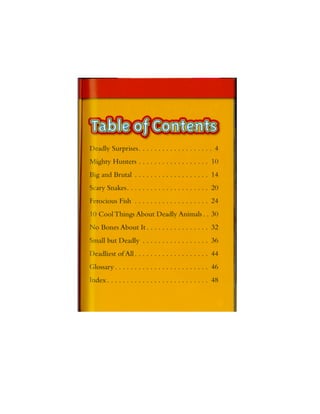
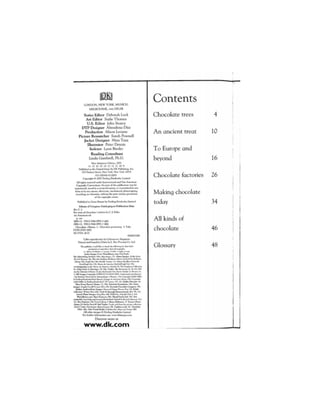
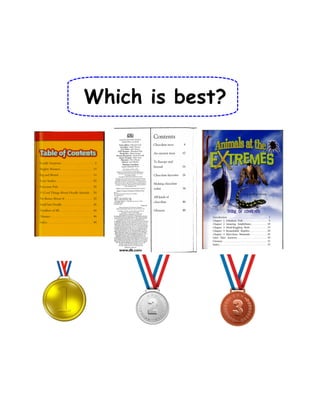
Which is best?
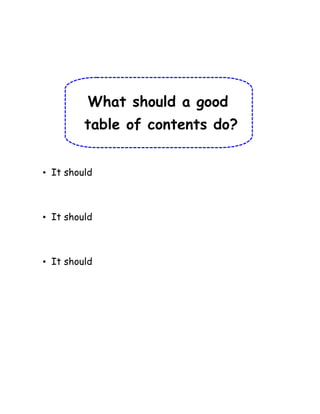
What should a good
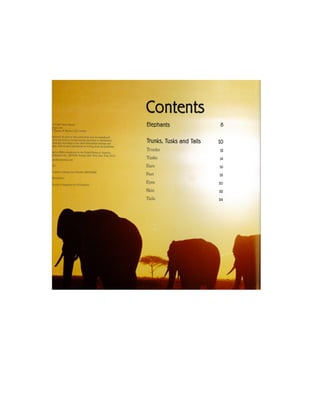
table of contents do?
• It should
• It should
• It should
Untaught
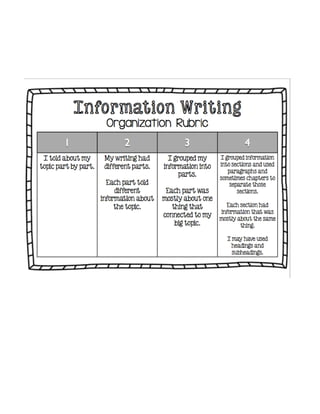
Rubrics
Lucy Informational Unit 15-16

Lucy Informational Unit 15-16

  • 1.
  • 4.
  • 8.
  • 10.
    Parts of... How itworks: Our examples
  • 11.
    Parts of... How itworks: Our examples
  • 12.
    Kinds of... How itworks: Our examples
  • 13.
    How to... How itworks: Our examples
  • 15.
    But they don'tALL fit in those categories... there must be more!
  • 20.
  • 21.
    DISTRIBUTE: Kinds of: -Ferocious Fish -SmallBut Deadly How-to: -How did people get the news? (p. 62) -TFK sample paper Parts of: -Trunks, Tusks, Ears -The Final Hours
  • 23.
  • 24.
    What Nonfiction Writers Do -titlesof chapters give clues about the writing -how-to writers put things into steps -ask good questions in their writing, and then they answer those questions -if an author uses confusing new words, they need to explain what those words mean -nonfiction writers sometimes give their own opinions about things-- they say how THEY feel about it -give labels, especially when they show photographs or pictures -give INTERESTING facts
  • 25.
    What Nonfiction Writers Do -usecommas, especially when things are in a list -use photographs to match what the text is talking about, and captions to explain the photographs/ illustrations -use headings and subheadings -tell you stuff that will make you want to KEEP READING -give SPECIAL facts in little boxes away from the main text -they try to blow your mind with things you didn't already know -make sure the writing matches the title/heading -pick INTERESTING topics -put little pictures by the captions to help you understand even better
  • 26.
  • 28.
    Preparing the Ingredients Doyou have to be an expert chef to make the perfect pasta? No, but you do need to spend some time preparing the ingredients before your sauce can come to life! The perfect pasta takes a lot of work. By making sure to follow some important steps, you'll be find great success! What kind of knife will I need? Preparing the onions might just be the most important part of making the perfect pasta, so you'll need a knife that is just right for slivering them. Slivering means slicing them into very thin, half-circle pieces. Any large knife will do for this job, but I recommend a long-handled Wusthof chopping knife. It's always worked great for me!
  • 29.
    My chapter should... -beabout the same subtopic all the way through -include lots of teaching points about my subtopic -use a chapter structure > kinds of > parts of > how to
  • 31.
    Discussion Starters 1. TodayI thought I did a really good job... 2. My favorite part that I wrote today was... 3. I'm still working on...
  • 32.
  • 37.
  • 46.
    Preparing the Ingredients Doyou have to be an expert chef to make the perfect pasta? No, but you do need to spend some time preparing the ingredients before your sauce can come to life! The perfect pasta takes a lot of work. By making sure to follow some important steps, you'll be find great success! What kind of knife will I need? Preparing the onions might just be the most important part of making the perfect pasta, so you'll need a knife that is just right for slivering them. Slivering means slicing them into very thin, half-circle pieces. Any large knife will do for this job, but I recommend a long-handled Wusthof chopping knife. It's always worked great for me!
  • 47.
  • 48.
  • 50.
    What Nonfiction Writers Do -usecommas, especially when things are in a list -use photographs to match what the text is talking about, and captions to explain the photographs/ illustrations -use headings and subheadings -tell you stuff that will make you want to KEEP READING -give SPECIAL facts in little boxes away from the main text -they try to blow your mind with things you didn't already know -make sure the writing matches the title/heading -pick INTERESTING topics -put little pictures by the captions to help you understand even better
  • 51.
    What Nonfiction Writers Do -titlesof chapters give clues about the writing -how-to writers put things into steps -ask good questions in their writing, and then they answer those questions -if an author uses confusing new words, they need to explain what those words mean -nonfiction writers sometimes give their own opinions about things-- they say how THEY feel about it -give labels, especially when they show photographs or pictures -give INTERESTING facts
  • 55.
  • 56.
  • 57.
  • 58.
  • 61.
    SO WHAT MAKESTHIS TRICKY?
  • 64.
  • 66.
    Preparing the Ingredients Doyou have to be an expert chef to make the perfect pasta? No, but you do need to spend some time preparing the ingredients before your sauce can come to life! The perfect pasta takes a lot of work. By making sure to follow some important steps, you'll be able to find great success! What kind of knife will I need? Preparing the onions might just be the most important part of making the perfect pasta, so you'll need a knife that is just right for slivering them. Slivering means slicing them into very thin, half-circle pieces. Any large knife will do for this job, but I recommend a long-handled Wusthof chopping knife. It's always worked great for me!
  • 69.
  • 71.
  • 72.
    Day in theLife How it works: Our examples
  • 74.
    Life Cycle How itworks: Our examples
  • 76.
  • 78.
    Chapter Four Contract Bysigning my name, I hereby promise to write a fourth chapter at home, the very best I can. As a result, I will have no other homework on Monday, Tuesday and Wednesday of next week. A parent email will be sent home, so my family will know I have this responsibility. If your teacher determines that I did not give my best effort, I will have to complete all the homework that I missed.
  • 79.
  • 83.
    • short burst •interesting fact • action sequence Start with...
  • 84.
  • 85.
    • question #1 •question #2 • question #3 Then...
  • 86.
    Preparing the Ingredients Doyou have to be an expert chef to make the perfect pasta? No, but you do need to spend some time preparing the ingredients before your sauce can come to life! The perfect pasta takes a lot of work. By making sure to follow some important steps, you'll be find great success! What kind of knife will I need? Preparing the onions might just be the most important part of making the perfect pasta, so you'll need a knife that is just right for slivering them. Slivering means slicing them into very thin, half-circle pieces. Any large knife will do for this job, but I recommend a long-handled Wusthof chopping knife. It's always worked great for me!
  • 87.
  • 88.
  • 89.
  • 90.
  • 91.
  • 92.
    1. short burst/interestingfact/ action sequence 2. preview statement 3. question #1 4. question #2 5. question #3 6. smooth transition In review...
  • 93.
  • 99.
    It should FEELlike the end without SAYING THE END
  • 100.
    drew conclusions? • helpremind your reader what they should have learned by the end of your text focus only on the meat and potatoes take them on the journey one last time, chapter by chapter
  • 101.
    suggested ways readers mightrespond? • suggest to your reader what he/she should do now that he/she has learned all this new information So the next time... Now that you...
  • 102.
  • 103.
  • 107.
  • 108.
    What should agood table of contents do? • It should • It should • It should
  • 109.