LRR FMGE
SURGERY
Part-1
Dr Pritesh Kumar Singh
MBBS (MAMC), MS (Surgery), FMAS, FIAGES
Author of SURGERY ESSENCE, AIIMS ESSENCE,
NEET ESSENCE, Quick Review of Surgery, INI-CET ESSENCE
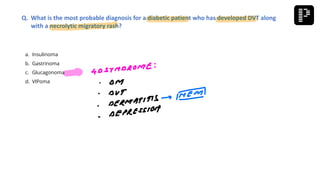
a. Insulinoma
b. Gastrinoma
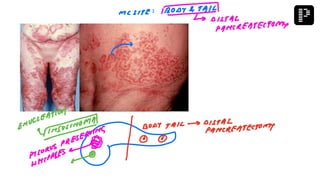
c. Glucagonoma
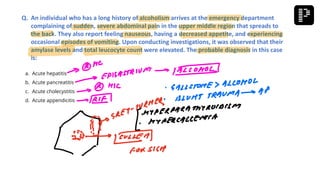
d. VIPoma
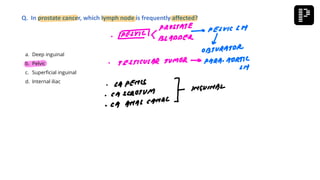
Q. What is the most probable diagnosis for a diabetic patient who has developed DVT along
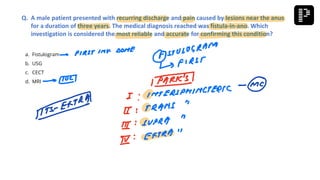
with a necrolytic migratory rash?
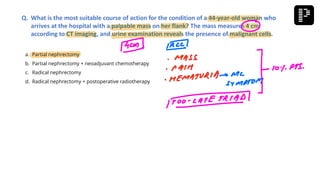
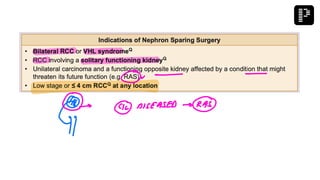
a. Partial nephrectomy
b. Partial nephrectomy + neoadjuvant chemotherapy
c. Radical nephrectomy
d. Radical nephrectomy + postoperative radiotherapy
Q. What is the most suitable course of action for the condition of a 44-year-old woman who
arrives at the hospital with a palpable mass on her flank? The mass measures 4 cm
according to CT imaging, and urine examination reveals the presence of malignant cells.
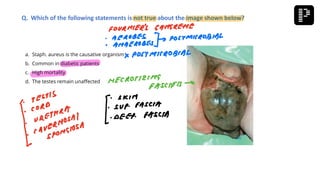
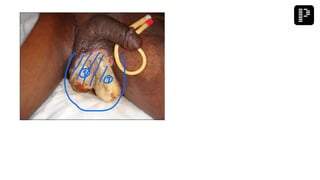
a. Staph. aureus is the causative organism
b. Common in diabetic patients
c. High mortality
d. The testes remain unaffected
Q. Which of the following statements is not true about the image shown below?
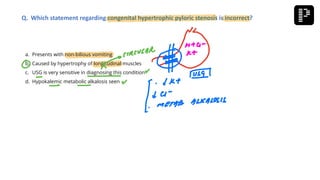
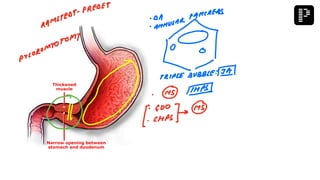
a. Presents with non-bilious vomiting
b. Caused by hypertrophy of longitudinal muscles
c. USG is very sensitive in diagnosing this condition
d. Hypokalemic metabolic alkalosis seen
Q. Which statement regarding congenital hypertrophic pyloric stenosis is incorrect?
a. Acute hepatitis
b. Acute pancreatitis
c. Acute cholecystitis
d. Acute appendicitis
Q. An individual who has a long history of alcoholism arrives at the emergency department
complaining of sudden, severe abdominal pain in the upper middle region that spreads to
the back. They also report feeling nauseous, having a decreased appetite, and experiencing
occasional episodes of vomiting. Upon conducting investigations, it was observed that their
amylase levels and total leucocyte count were elevated. The probable diagnosis in this case
is:
a. Deep inguinal
b. Pelvic
c. Superficial inguinal
d. Internal iliac
Q. In prostate cancer, which lymph node is frequently affected?
a. Fistulogram
b. USG
c. CECT
d. MRI
Q. A male patient presented with recurring discharge and pain caused by lesions near the anus
for a duration of three years. The medical diagnosis reached was fistula-in-ano. Which
investigation is considered the most reliable and accurate for confirming this condition?
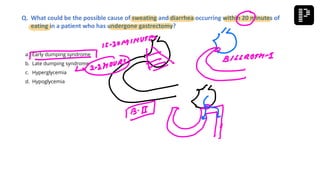
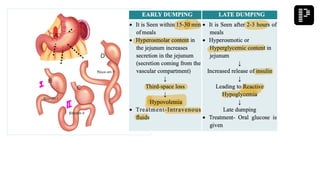
a. Early dumping syndrome
b. Late dumping syndrome
c. Hyperglycemia
d. Hypoglycemia
Q. What could be the possible cause of sweating and diarrhea occurring within 20 minutes of
eating in a patient who has undergone gastrectomy?
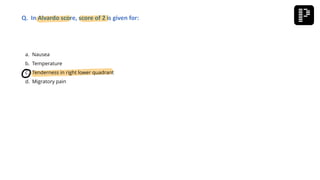
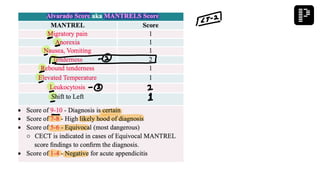
a. Nausea
b. Temperature
c. Tenderness in right lower quadrant
d. Migratory pain
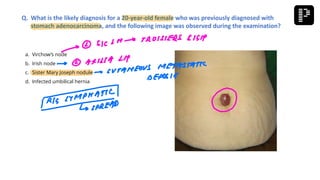
Q. In Alvardo score, score of 2 is given for:
a. Virchow’s node
b. Irish node
c. Sister Mary Joseph nodule
d. Infected umbilical hernia
Q. What is the likely diagnosis for a 20-year-old female who was previously diagnosed with
stomach adenocarcinoma, and the following image was observed during the examination?
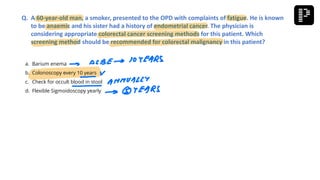
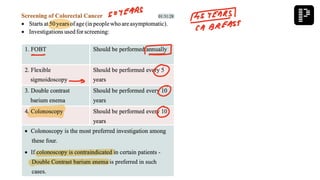
a. Barium enema
b. Colonoscopy every 10 years
c. Check for occult blood in stool
d. Flexible Sigmoidoscopy yearly
Q. A 60-year-old man, a smoker, presented to the OPD with complaints of fatigue. He is known
to be anaemic and his sister had a history of endometrial cancer. The physician is
considering appropriate colorectal cancer screening methods for this patient. Which
screening method should be recommended for colorectal malignancy in this patient?
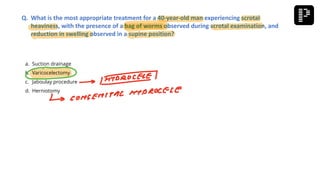
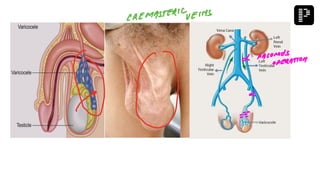
a. Suction drainage
b. Varicocelectomy
c. Jaboulay procedure
d. Herniotomy
Q. What is the most appropriate treatment for a 40-year-old man experiencing scrotal
heaviness, with the presence of a bag of worms observed during scrotal examination, and
reduction in swelling observed in a supine position?
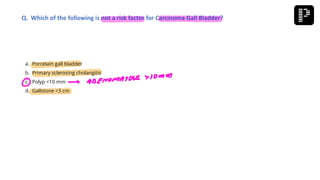
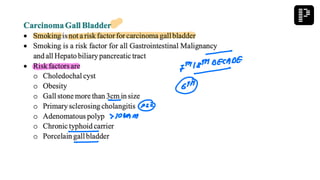
a. Porcelain gall bladder
b. Primary sclerosing cholangitis
c. Polyp <10 mm
d. Gallstone >3 cm
Q. Which of the following is not a risk factor for Carcinoma Gall Bladder?
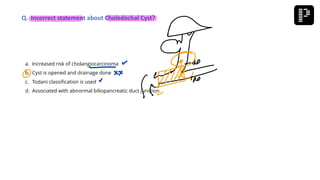
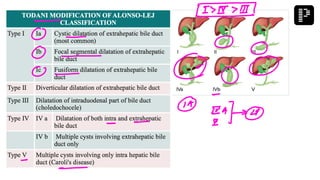
a. Increased risk of cholangiocarcinoma
b. Cyst is opened and drainage done
c. Todani classification is used
d. Associated with abnormal biliopancreatic duct junction
Q. Incorrect statement about Choledochal Cyst?
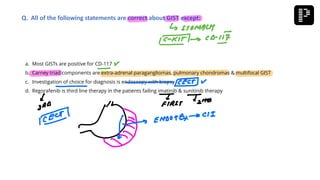
a. Most GISTs are positive for CD-117
b. Carney triad components are extra-adrenal paragangliomas, pulmonary chondromas & multifocal GIST
c. Investigation of choice for diagnosis is endoscopy with biopsy
d. Regorafenib is third line therapy in the patients failing imatinib & sunitinib therapy
Q. All of the following statements are correct about GIST except:
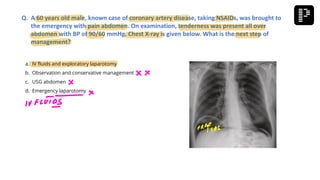
a. IV fluids and exploratory laparotomy
b. Observation and conservative management
c. USG abdomen
d. Emergency laparotomy
Q. A 60 years old male, known case of coronary artery disease, taking NSAIDs, was brought to
the emergency with pain abdomen. On examination, tenderness was present all over
abdomen with BP of 90/60 mmHg. Chest X-ray is given below. What is the next step of
management?
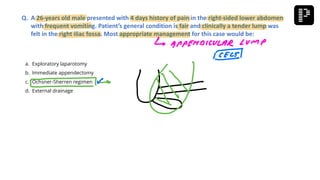
a. Exploratory laparotomy
b. Immediate appendectomy
c. Ochsner-Sherren regimen
d. External drainage
Q. A 26-years old male presented with 4 days history of pain in the right-sided lower abdomen
with frequent vomiting. Patient’s general condition is fair and clinically a tender lump was
felt in the right iliac fossa. Most appropriate management for this case would be:
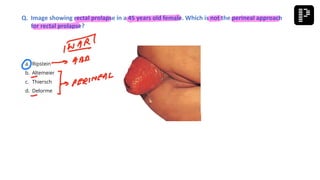
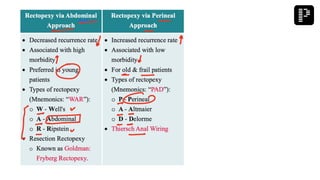
a. Ripstein
b. Altemeier
c. Thiersch
d. Delorme
Q. Image showing rectal prolapse in a 45 years old female. Which is not the perineal approach
for rectal prolapse?
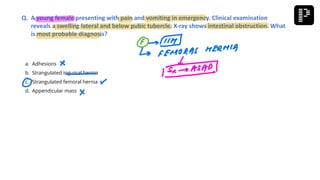
a. Adhesions
b. Strangulated inguinal hernia
c. Strangulated femoral hernia
d. Appendicular mass
Q. A young female presenting with pain and vomiting in emergency. Clinical examination
reveals a swelling lateral and below pubic tubercle. X-ray shows intestinal obstruction. What
is most probable diagnosis?
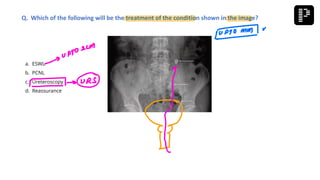
a. ESWL
b. PCNL
c. Ureteroscopy
d. Reassurance
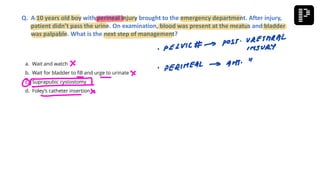
Q. Which of the following will be the treatment of the condition shown in the image?
a. Wait and watch
b. Wait for bladder to fill and urge to urinate
c. Suprapubic cystostomy
d. Foley’s catheter insertion
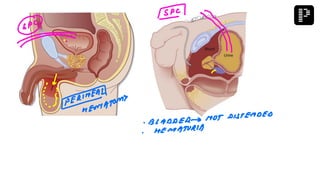
Q. A 10 years old boy with perineal injury brought to the emergency department. After injury,
patient didn’t pass the urine. On examination, blood was present at the meatus and bladder
was palpable. What is the next step of management?
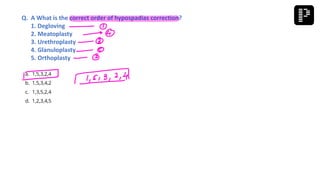
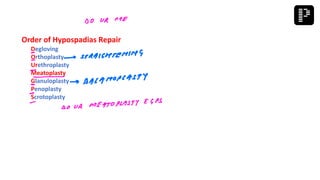
a. 1,5,3,2,4
b. 1,5,3,4,2
c. 1,3,5,2,4
d. 1,2,3,4,5
Q. A What is the correct order of hypospadias correction?
1. Degloving
2. Meatoplasty
3. Urethroplasty
4. Glanuloplasty
5. Orthoplasty
Order of Hypospadias Repair
Degloving
Orthoplasty
Urethroplasty
Meatoplasty
Glanuloplasty
Penoplasty
Scrotoplasty
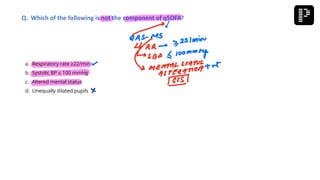
a. Respiratory rate ≥22/min
b. Systolic BP ≤ 100 mmHg
c. Altered mental status
d. Unequally dilated pupils
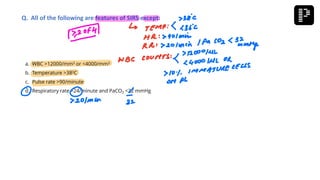
Q. Which of the following is not the component of qSOFA?
a. WBC >12000/mm3 or <4000/mm3
b. Temperature >380C
c. Pulse rate >90/minute
d. Respiratory rate >24/minute and PaCO2 <22 mmHg
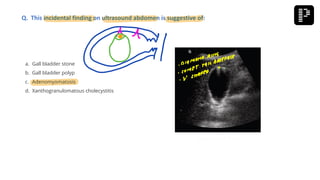
Q. All of the following are features of SIRS except:
a. Gall bladder stone
b. Gall bladder polyp
c. Adenomyomatosis
d. Xanthogranulomatous cholecystitis
Q. This incidental finding on ultrasound abdomen is suggestive of:
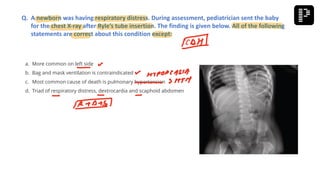
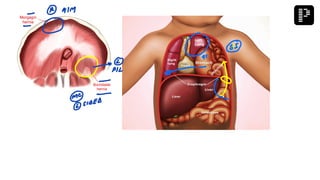
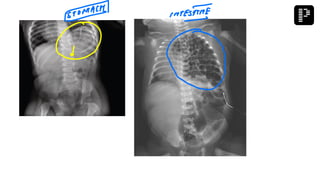
a. More common on left side
b. Bag and mask ventilation is contraindicated
c. Most common cause of death is pulmonary hypertension
d. Triad of respiratory distress, dextrocardia and scaphoid abdomen
Q. A newborn was having respiratory distress. During assessment, pediatrician sent the baby
for the chest X-ray after Ryle’s tube insertion. The finding is given below. All of the following
statements are correct about this condition except:
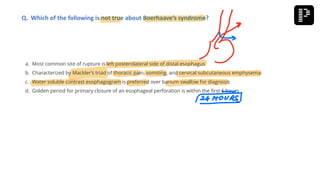
a. Most common site of rupture is left posterolateral side of distal esophagus
b. Characterized by Mackler’s triad of thoracic pain, vomiting, and cervical subcutaneous emphysema
c. Water soluble contrast esophagogram is preferred over barium swallow for diagnosis
d. Golden period for primary closure of an esophageal perforation is within the first 6 hours
Q. Which of the following is not true about Boerhaave’s syndrome?
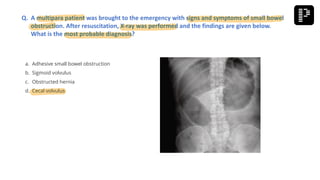
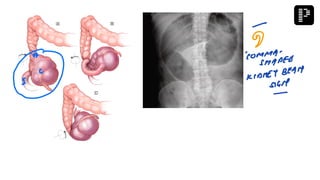
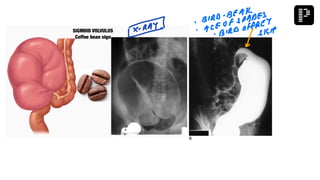
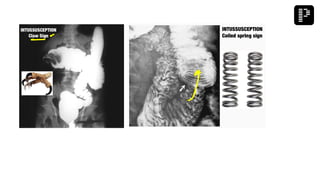
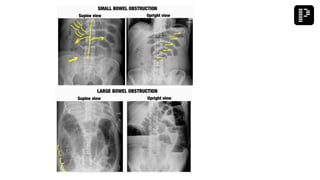
a. Adhesive small bowel obstruction
b. Sigmoid volvulus
c. Obstructed hernia
d. Cecal volvulus
Q. A multipara patient was brought to the emergency with signs and symptoms of small bowel
obstruction. After resuscitation, X-ray was performed and the findings are given below.
What is the most probable diagnosis?
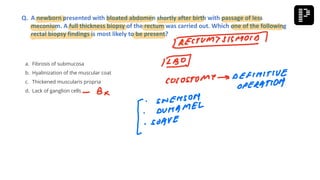
a. Fibrosis of submucosa
b. Hyalinization of the muscular coat
c. Thickened muscularis propria
d. Lack of ganglion cells
Q. A newborn presented with bloated abdomen shortly after birth with passage of less
meconium. A full thickness biopsy of the rectum was carried out. Which one of the following
rectal biopsy findings is most likely to be present?
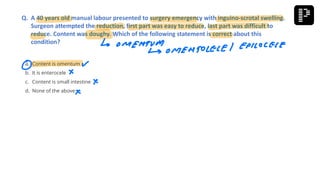
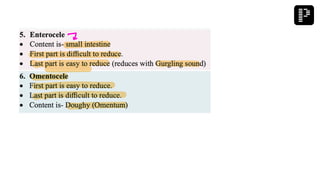
a. Content is omentum
b. It is enterocele
c. Content is small intestine
d. None of the above
Q. A 40 years old manual labour presented to surgery emergency with inguino-scrotal swelling.
Surgeon attempted the reduction, first part was easy to reduce, last part was difficult to
reduce. Content was doughy. Which of the following statement is correct about this
condition?
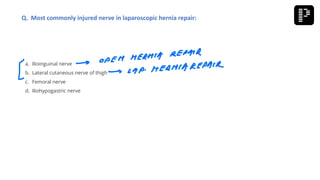
a. Ilioinguinal nerve
b. Lateral cutaneous nerve of thigh
c. Femoral nerve
d. Iliohypogastric nerve
Q. Most commonly injured nerve in laparoscopic hernia repair:
THANKS

LRR%20FMGE%20Surgeryeducation%20Part%201.pdf

  • 1.
    LRR FMGE SURGERY Part-1 Dr PriteshKumar Singh MBBS (MAMC), MS (Surgery), FMAS, FIAGES Author of SURGERY ESSENCE, AIIMS ESSENCE, NEET ESSENCE, Quick Review of Surgery, INI-CET ESSENCE
  • 2.
    a. Insulinoma b. Gastrinoma c.Glucagonoma d. VIPoma Q. What is the most probable diagnosis for a diabetic patient who has developed DVT along with a necrolytic migratory rash?
  • 4.
    a. Partial nephrectomy b.Partial nephrectomy + neoadjuvant chemotherapy c. Radical nephrectomy d. Radical nephrectomy + postoperative radiotherapy Q. What is the most suitable course of action for the condition of a 44-year-old woman who arrives at the hospital with a palpable mass on her flank? The mass measures 4 cm according to CT imaging, and urine examination reveals the presence of malignant cells.
  • 6.
    a. Staph. aureusis the causative organism b. Common in diabetic patients c. High mortality d. The testes remain unaffected Q. Which of the following statements is not true about the image shown below?
  • 8.
    a. Presents withnon-bilious vomiting b. Caused by hypertrophy of longitudinal muscles c. USG is very sensitive in diagnosing this condition d. Hypokalemic metabolic alkalosis seen Q. Which statement regarding congenital hypertrophic pyloric stenosis is incorrect?
  • 10.
    a. Acute hepatitis b.Acute pancreatitis c. Acute cholecystitis d. Acute appendicitis Q. An individual who has a long history of alcoholism arrives at the emergency department complaining of sudden, severe abdominal pain in the upper middle region that spreads to the back. They also report feeling nauseous, having a decreased appetite, and experiencing occasional episodes of vomiting. Upon conducting investigations, it was observed that their amylase levels and total leucocyte count were elevated. The probable diagnosis in this case is:
  • 11.
    a. Deep inguinal b.Pelvic c. Superficial inguinal d. Internal iliac Q. In prostate cancer, which lymph node is frequently affected?
  • 12.
    a. Fistulogram b. USG c.CECT d. MRI Q. A male patient presented with recurring discharge and pain caused by lesions near the anus for a duration of three years. The medical diagnosis reached was fistula-in-ano. Which investigation is considered the most reliable and accurate for confirming this condition?
  • 14.
    a. Early dumpingsyndrome b. Late dumping syndrome c. Hyperglycemia d. Hypoglycemia Q. What could be the possible cause of sweating and diarrhea occurring within 20 minutes of eating in a patient who has undergone gastrectomy?
  • 16.
    a. Nausea b. Temperature c.Tenderness in right lower quadrant d. Migratory pain Q. In Alvardo score, score of 2 is given for:
  • 18.
    a. Virchow’s node b.Irish node c. Sister Mary Joseph nodule d. Infected umbilical hernia Q. What is the likely diagnosis for a 20-year-old female who was previously diagnosed with stomach adenocarcinoma, and the following image was observed during the examination?
  • 19.
    a. Barium enema b.Colonoscopy every 10 years c. Check for occult blood in stool d. Flexible Sigmoidoscopy yearly Q. A 60-year-old man, a smoker, presented to the OPD with complaints of fatigue. He is known to be anaemic and his sister had a history of endometrial cancer. The physician is considering appropriate colorectal cancer screening methods for this patient. Which screening method should be recommended for colorectal malignancy in this patient?
  • 21.
    a. Suction drainage b.Varicocelectomy c. Jaboulay procedure d. Herniotomy Q. What is the most appropriate treatment for a 40-year-old man experiencing scrotal heaviness, with the presence of a bag of worms observed during scrotal examination, and reduction in swelling observed in a supine position?
  • 23.
    a. Porcelain gallbladder b. Primary sclerosing cholangitis c. Polyp <10 mm d. Gallstone >3 cm Q. Which of the following is not a risk factor for Carcinoma Gall Bladder?
  • 25.
    a. Increased riskof cholangiocarcinoma b. Cyst is opened and drainage done c. Todani classification is used d. Associated with abnormal biliopancreatic duct junction Q. Incorrect statement about Choledochal Cyst?
  • 27.
    a. Most GISTsare positive for CD-117 b. Carney triad components are extra-adrenal paragangliomas, pulmonary chondromas & multifocal GIST c. Investigation of choice for diagnosis is endoscopy with biopsy d. Regorafenib is third line therapy in the patients failing imatinib & sunitinib therapy Q. All of the following statements are correct about GIST except:
  • 28.
    a. IV fluidsand exploratory laparotomy b. Observation and conservative management c. USG abdomen d. Emergency laparotomy Q. A 60 years old male, known case of coronary artery disease, taking NSAIDs, was brought to the emergency with pain abdomen. On examination, tenderness was present all over abdomen with BP of 90/60 mmHg. Chest X-ray is given below. What is the next step of management?
  • 29.
    a. Exploratory laparotomy b.Immediate appendectomy c. Ochsner-Sherren regimen d. External drainage Q. A 26-years old male presented with 4 days history of pain in the right-sided lower abdomen with frequent vomiting. Patient’s general condition is fair and clinically a tender lump was felt in the right iliac fossa. Most appropriate management for this case would be:
  • 30.
    a. Ripstein b. Altemeier c.Thiersch d. Delorme Q. Image showing rectal prolapse in a 45 years old female. Which is not the perineal approach for rectal prolapse?
  • 32.
    a. Adhesions b. Strangulatedinguinal hernia c. Strangulated femoral hernia d. Appendicular mass Q. A young female presenting with pain and vomiting in emergency. Clinical examination reveals a swelling lateral and below pubic tubercle. X-ray shows intestinal obstruction. What is most probable diagnosis?
  • 33.
    a. ESWL b. PCNL c.Ureteroscopy d. Reassurance Q. Which of the following will be the treatment of the condition shown in the image?
  • 34.
    a. Wait andwatch b. Wait for bladder to fill and urge to urinate c. Suprapubic cystostomy d. Foley’s catheter insertion Q. A 10 years old boy with perineal injury brought to the emergency department. After injury, patient didn’t pass the urine. On examination, blood was present at the meatus and bladder was palpable. What is the next step of management?
  • 36.
    a. 1,5,3,2,4 b. 1,5,3,4,2 c.1,3,5,2,4 d. 1,2,3,4,5 Q. A What is the correct order of hypospadias correction? 1. Degloving 2. Meatoplasty 3. Urethroplasty 4. Glanuloplasty 5. Orthoplasty
  • 37.
    Order of HypospadiasRepair Degloving Orthoplasty Urethroplasty Meatoplasty Glanuloplasty Penoplasty Scrotoplasty
  • 38.
    a. Respiratory rate≥22/min b. Systolic BP ≤ 100 mmHg c. Altered mental status d. Unequally dilated pupils Q. Which of the following is not the component of qSOFA?
  • 39.
    a. WBC >12000/mm3or <4000/mm3 b. Temperature >380C c. Pulse rate >90/minute d. Respiratory rate >24/minute and PaCO2 <22 mmHg Q. All of the following are features of SIRS except:
  • 40.
    a. Gall bladderstone b. Gall bladder polyp c. Adenomyomatosis d. Xanthogranulomatous cholecystitis Q. This incidental finding on ultrasound abdomen is suggestive of:
  • 41.
    a. More commonon left side b. Bag and mask ventilation is contraindicated c. Most common cause of death is pulmonary hypertension d. Triad of respiratory distress, dextrocardia and scaphoid abdomen Q. A newborn was having respiratory distress. During assessment, pediatrician sent the baby for the chest X-ray after Ryle’s tube insertion. The finding is given below. All of the following statements are correct about this condition except:
  • 44.
    a. Most commonsite of rupture is left posterolateral side of distal esophagus b. Characterized by Mackler’s triad of thoracic pain, vomiting, and cervical subcutaneous emphysema c. Water soluble contrast esophagogram is preferred over barium swallow for diagnosis d. Golden period for primary closure of an esophageal perforation is within the first 6 hours Q. Which of the following is not true about Boerhaave’s syndrome?
  • 45.
    a. Adhesive smallbowel obstruction b. Sigmoid volvulus c. Obstructed hernia d. Cecal volvulus Q. A multipara patient was brought to the emergency with signs and symptoms of small bowel obstruction. After resuscitation, X-ray was performed and the findings are given below. What is the most probable diagnosis?
  • 50.
    a. Fibrosis ofsubmucosa b. Hyalinization of the muscular coat c. Thickened muscularis propria d. Lack of ganglion cells Q. A newborn presented with bloated abdomen shortly after birth with passage of less meconium. A full thickness biopsy of the rectum was carried out. Which one of the following rectal biopsy findings is most likely to be present?
  • 51.
    a. Content isomentum b. It is enterocele c. Content is small intestine d. None of the above Q. A 40 years old manual labour presented to surgery emergency with inguino-scrotal swelling. Surgeon attempted the reduction, first part was easy to reduce, last part was difficult to reduce. Content was doughy. Which of the following statement is correct about this condition?
  • 53.
    a. Ilioinguinal nerve b.Lateral cutaneous nerve of thigh c. Femoral nerve d. Iliohypogastric nerve Q. Most commonly injured nerve in laparoscopic hernia repair:
  • 54.