A HISTORY OF DRAMA
Drama began in
ancient Greece dating
back to 543 B.C.
It started as choral
performances of
dancing and singing
honoring the Greek
god, Dionysus, the god
of wine.
The Greeks held their dramas in outdoor
theaters called amphitheaters, the largest
seating 14,000 people.
Theater at
Delphi
550-534 BC
Located at the
bottom of the
Acropolis in
Athens.
Orchestra
Chorus Proskenion
Skene
Theater of Dionysos
DRAMA
AND
THEATER
Drama
Prose or verse telling a story intended
for representation by actors through
dialogue or action.
The Play
Script : printed copy of a play.
Acts : the major sections of a play.
Playwright : person who writes plays.
Scene : small section or portion of a play.
The People
Actor: male performer
Actress: female performer
Cast: all performers selected to portray
characters.
Director: instructs actors on how to portray
characters.
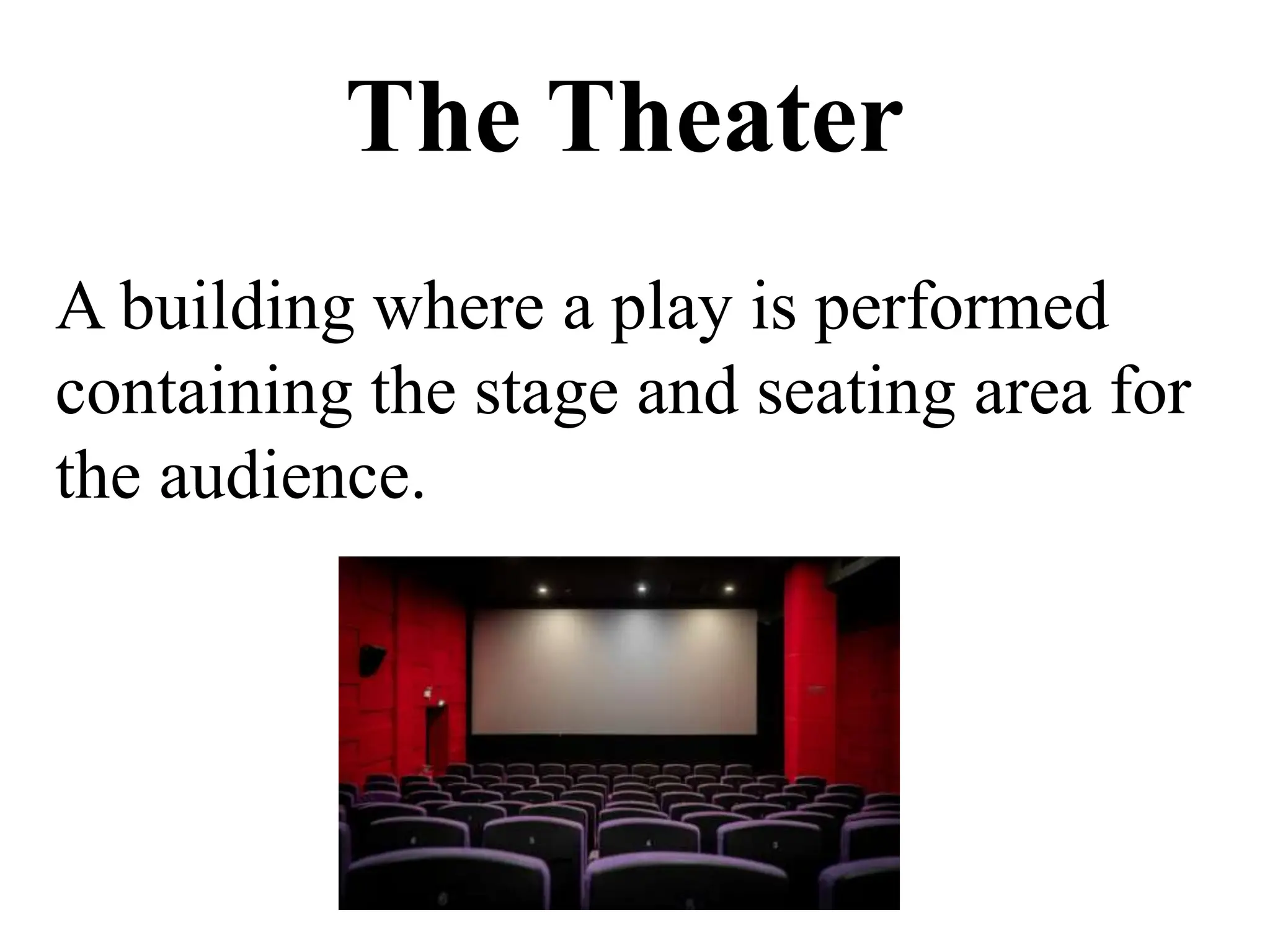
The Theater
A building where a play is performed
containing the stage and seating area for
the audience.
Areas of the Stage
Backstage: area behind scenery not visible
to audience.
Center stage: area in the center of the stage.
Downstage: area closest to the audience.
Stage left/right: area to actor’s left or right
as he/she faces the audience.
Upstage: area furthest away from the
audience.
Backdrop: painted curtain without fullness.
Set: all sets and props that help define the
action.
Flats: canvas-covered wooden frames used
for scenery.
Upstage
B
A
C
K
ST
A
G
E
BA
CK
ST
AG
E
Down Stage
Center Stage Stage Left
Stage Right
Audience
Stage Directions
Cue: something that precedes the next
action.
Cut: to stop the action.
Exit: to leave the stage.
Elements of Drama
Plot: the main storyline
Theme: the basic idea of the play
Character: person, animal or thing in the
story
Language: formal setting or dialect
Spectacle: visuals involved on stage
Dialogue: conversation between two or
more characters.
Monologue: one person speaking
Costumes: clothing worn by an actor
on stage to help represent characters.
Props: items used on stage to help
actors tell a story
Creative Dramatics
Improvisation: to make up or perform
without preparation.
Pantomime: to communicate without
speaking using only facial and body
gestures.
Mimicry: to copy or imitate something very
closely.
Role Playing : to take on the characteristics
of someone or something.
Types of Greek Drama
Tragedy: character is confronted with a
difficult moral choice and usually ends in
his or her death.
Comedy: a humorous entertaining
performance with a happy ending.

Literature- Drama Elements and Techniques.ppt

  • 1.
    A HISTORY OFDRAMA Drama began in ancient Greece dating back to 543 B.C. It started as choral performances of dancing and singing honoring the Greek god, Dionysus, the god of wine.
  • 2.
    The Greeks heldtheir dramas in outdoor theaters called amphitheaters, the largest seating 14,000 people. Theater at Delphi
  • 3.
    550-534 BC Located atthe bottom of the Acropolis in Athens. Orchestra Chorus Proskenion Skene Theater of Dionysos
  • 4.
  • 7.
    Drama Prose or versetelling a story intended for representation by actors through dialogue or action.
  • 8.
    The Play Script :printed copy of a play. Acts : the major sections of a play. Playwright : person who writes plays. Scene : small section or portion of a play.
  • 9.
    The People Actor: maleperformer Actress: female performer Cast: all performers selected to portray characters. Director: instructs actors on how to portray characters.
  • 10.
    The Theater A buildingwhere a play is performed containing the stage and seating area for the audience.
  • 11.
    Areas of theStage Backstage: area behind scenery not visible to audience. Center stage: area in the center of the stage. Downstage: area closest to the audience. Stage left/right: area to actor’s left or right as he/she faces the audience.
  • 12.
    Upstage: area furthestaway from the audience. Backdrop: painted curtain without fullness. Set: all sets and props that help define the action. Flats: canvas-covered wooden frames used for scenery.
  • 13.
  • 14.
    Stage Directions Cue: somethingthat precedes the next action. Cut: to stop the action. Exit: to leave the stage.
  • 15.
    Elements of Drama Plot:the main storyline Theme: the basic idea of the play Character: person, animal or thing in the story
  • 16.
    Language: formal settingor dialect Spectacle: visuals involved on stage Dialogue: conversation between two or more characters. Monologue: one person speaking
  • 17.
    Costumes: clothing wornby an actor on stage to help represent characters. Props: items used on stage to help actors tell a story
  • 18.
    Creative Dramatics Improvisation: tomake up or perform without preparation. Pantomime: to communicate without speaking using only facial and body gestures.
  • 19.
    Mimicry: to copyor imitate something very closely. Role Playing : to take on the characteristics of someone or something.
  • 20.
    Types of GreekDrama Tragedy: character is confronted with a difficult moral choice and usually ends in his or her death. Comedy: a humorous entertaining performance with a happy ending.