England’s NHS in 2013
John Lister May 2013
Disunited Kingdom
Since 1999, devolved government in Wales and
Scotland and later Northern Ireland have meant
diverging health care systems
England: testing ground for experimental market-
style reforms
Fragmentation, competition, privatisation
Wales & Scotland: moving back towards
integration – market model rejected, services
brought back ‘in house’
Free prescriptions
2
Since 2000
3
Labour govt’s NHS Plan starting point for 10
years of major increases in funding
More staff – nurses doctors, professionals
More beds
Reduced waits to maximum 18 weeks
New hospitals (privately financed through PFI)
New structures for commissioners and
providers
2008: hit the wall with banking crash
2008 to 2013
4
2009 McKinsey report – target of £20bn savings
by 2014 to bridge gap between needs & resources
2010 last year of above inflation increases
2010 onwards: Tory coalition govt. New drive for
cuts and closures (“reconfiguration”)
A&E under pressure: failure of primary and
community health care services & social care
Beds and jobs cut
Mental health budget cut
High profile cuts
5
3 year pay freeze for 1 million+ NHS staff
Attempts to break up national pay agreement
South London Healthcare bankrupt:
“unsustainable provider regime” invoked
Mid Staffordshire hospitals – scandal followed by
administration & cuts. But 55,000 protest
NW London hospitals, etc
Social care cuts (local government cutbacks)
Pressure for mergers/ impeded by “reforms”
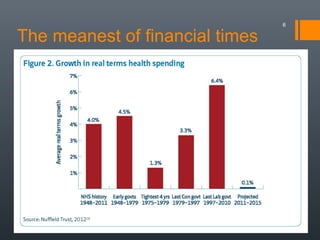
The meanest of financial times
6
Moving towards a market model
Under Tony Blair, Labour combined increased
spending with market-style “reforms”:
PFI to finance new hospitals & health centres
Foundation Trusts
Payment by Results
Independent Sector Treatment Centres
“World Class Commissioning” – break up
community services for private, social enterprise,
“any willing provider”
Increasing bureaucratic costs of market
7
Tories crank up the pace
Health & Social Care Bill/Act: Far-reaching change
Massive Bill (400 pages), Complex
Removes duty of Secretary of State to provide services
Confusing language (e.g. amendment from “Any Willing
Provider” to “Any Qualified Provider” – but no definition
of “qualified”.
New structure: NHS England leading 200+ Clinical
Commissioning Groups ostensibly “led by GPs” but
steered by Commissioning Support Services
National Commissioning Board (NHS England) with
sweeping powers & Local Area Teams
8
Creating a competitive market
NHS Trusts to become Foundations (pressure
towards takeovers/mergers etc: BUT OFT
intervention creates problems)
Foundation Trusts free to make up to 49% of
revenue from private medicine & deals with
private sector
Regulator and “Cooperation & Competition
Panel” to enforce competition (+ integration!)
Regulations to compel CCGs to open up
services to competitive tender/AQP
9
Regulation and Competition
Care Quality Commission
Monitor
NICE
Professional bodies (NMC, GMC etc)
Cooperation & Competition Panel (Monitor)
Office of Fair Trading
Competition Commission
EU Competition Law – “right to provide”
10
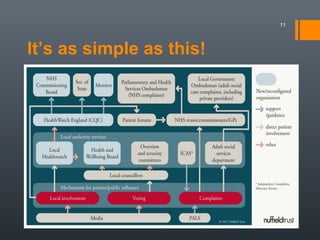
It’s as simple as this!
11
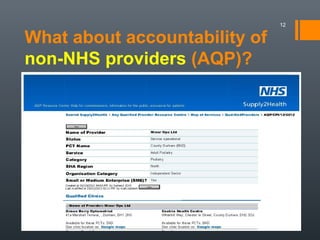
What about accountability of
non-NHS providers (AQP)?
12
Plans to go much further
13
Cameron’s new health advisor Nick Seddon is leading
neoliberal from ‘Reform’ group, on record as wanting to
hand over NHS budgets to private insurance
Plans to enforce charges for “immigrants” using
accident & emergency and other health services open
way for wider imposition of charges
Personal health budgets and budgets for social care in
mental health and elderly care open way to top-up fees
– and health insurance
NHS beds filled with emergencies, now delaying
elective treatment: will increase use of private care
How long will NHS remain “free at point of use?”

England's NHS in 2013

  • 1.
    England’s NHS in2013 John Lister May 2013
  • 2.
    Disunited Kingdom Since 1999,devolved government in Wales and Scotland and later Northern Ireland have meant diverging health care systems England: testing ground for experimental market- style reforms Fragmentation, competition, privatisation Wales & Scotland: moving back towards integration – market model rejected, services brought back ‘in house’ Free prescriptions 2
  • 3.
    Since 2000 3 Labour govt’sNHS Plan starting point for 10 years of major increases in funding More staff – nurses doctors, professionals More beds Reduced waits to maximum 18 weeks New hospitals (privately financed through PFI) New structures for commissioners and providers 2008: hit the wall with banking crash
  • 4.
    2008 to 2013 4 2009McKinsey report – target of £20bn savings by 2014 to bridge gap between needs & resources 2010 last year of above inflation increases 2010 onwards: Tory coalition govt. New drive for cuts and closures (“reconfiguration”) A&E under pressure: failure of primary and community health care services & social care Beds and jobs cut Mental health budget cut
  • 5.
    High profile cuts 5 3year pay freeze for 1 million+ NHS staff Attempts to break up national pay agreement South London Healthcare bankrupt: “unsustainable provider regime” invoked Mid Staffordshire hospitals – scandal followed by administration & cuts. But 55,000 protest NW London hospitals, etc Social care cuts (local government cutbacks) Pressure for mergers/ impeded by “reforms”
  • 6.
    The meanest offinancial times 6
  • 7.
    Moving towards amarket model Under Tony Blair, Labour combined increased spending with market-style “reforms”: PFI to finance new hospitals & health centres Foundation Trusts Payment by Results Independent Sector Treatment Centres “World Class Commissioning” – break up community services for private, social enterprise, “any willing provider” Increasing bureaucratic costs of market 7
  • 8.
    Tories crank upthe pace Health & Social Care Bill/Act: Far-reaching change Massive Bill (400 pages), Complex Removes duty of Secretary of State to provide services Confusing language (e.g. amendment from “Any Willing Provider” to “Any Qualified Provider” – but no definition of “qualified”. New structure: NHS England leading 200+ Clinical Commissioning Groups ostensibly “led by GPs” but steered by Commissioning Support Services National Commissioning Board (NHS England) with sweeping powers & Local Area Teams 8
  • 9.
    Creating a competitivemarket NHS Trusts to become Foundations (pressure towards takeovers/mergers etc: BUT OFT intervention creates problems) Foundation Trusts free to make up to 49% of revenue from private medicine & deals with private sector Regulator and “Cooperation & Competition Panel” to enforce competition (+ integration!) Regulations to compel CCGs to open up services to competitive tender/AQP 9
  • 10.
    Regulation and Competition CareQuality Commission Monitor NICE Professional bodies (NMC, GMC etc) Cooperation & Competition Panel (Monitor) Office of Fair Trading Competition Commission EU Competition Law – “right to provide” 10
  • 11.
    It’s as simpleas this! 11
  • 12.
    What about accountabilityof non-NHS providers (AQP)? 12
  • 13.
    Plans to gomuch further 13 Cameron’s new health advisor Nick Seddon is leading neoliberal from ‘Reform’ group, on record as wanting to hand over NHS budgets to private insurance Plans to enforce charges for “immigrants” using accident & emergency and other health services open way for wider imposition of charges Personal health budgets and budgets for social care in mental health and elderly care open way to top-up fees – and health insurance NHS beds filled with emergencies, now delaying elective treatment: will increase use of private care How long will NHS remain “free at point of use?”