1
Daniel Yu
5/3/2016
Lightwave Logic Inc. (LWLG) [3643 words]
Summary
Lightwave Logic Inc. was founded based on the realization that silicon and
copper circuitry would soon reach their physical limits. Lightwave Logic is a
development stage company which exists to improve data communications and
telecommunication infrastructures with their organic polymer material based devices. It
engages primarily in the research and development of its electro-optic organic polymer
materials technologies and potential products using their organic polymers.
Lightwave Logic designed and built their organic polymers with the intention of
replacing the current inorganic polymers used in systems in order to drastically reduce
cost of production as well as significantly increasing the speed of data transferring.
Their polymer technology has solved the problem of melding high electro-optical activity
with thermal stability and can be applied to many devices that process data. They
market their technology around the fact that organic polymers have the potential to
exceed the physical limitations current inorganic polymers have, and that their organic
polymers are less expensive and more environmentally friendly. Lightwave Logic’s
polymer technology is meant to increase data speeds and expand bandwidth while
simultaneously lowering costs and power consumption. These improved polymers are
more environmentally friendly and have the ability to provide the dynamic needs of the
telecommunication, military, and high speed computing industries. The polymers are
also inexpensive to make and selling them for a higher price is possible since the
polymers have the ability to be changed for future developments instead of having to
buy entirely new polymers.
Business Model
Lightwave Logic’s objective is to be a leading supplier of exclusive technology
and knowledge in the electro-optic device market. Their business model includes a
combination of technology licensing for specific product application, joint venture
relationships with significant industry leaders, or the production and direct sale of
Lightwave Logic’s own electro-optic device components (Annual Report (10-K)).
By licensing their technology to potentially large companies who could use
similar technology to improve processing speeds, such as IBM, Lightwave Logic allows
themselves to potentially enter and even larger market. If Lightwave Logic were to focus
more on producing and selling their own electro-optic devices, they could work with a
larger variety of companies; however, it would be harder to market themselves
compared to a licensing deal. The problem with creating a joint venture with another
industry leader is the size of market in which Lightwave Logic operates. Currently, the
market for organic polymers is very small with little to no competition available. Even if
Lightwave Logic were to temporarily work with their competitors, the impact of that
would be minimal due to the lack of attention the market receives.
2
The most feasible option seems to be licensing their organic polymers to a larger
company. If IBM were to form a licensing deal with Lightwave Logic, the scale of
production of their organic polymers would greatly increase and it would likely be easier
for Lightwave Logic to gain traction with the companies in their target market. Each part
of this business model hinges on one aspect of the entire company, the success of their
organic polymers. If the organic polymers underperform, compared to the current
inorganic polymers, Lightwave Logic would essentially collapse.
Products and Applications
Lightwave Logic designs and builds their organic polymer around their goal to be
one of the leading suppliers in electro-optic devices based on their technology, which
they consider to be the future of data processing. The technology behind Lightwave
logic is called Application Specific Electro-Optic Polymers (ASEOP) and organic Non-
Linear All-Optical Polymers (NLAOP) (Lightwave Logic | Technology). These organic
polymers have high electro-optic and optical activity, and the materials used to build
these polymers are thermally and photo-chemically stable, allowing Lightwave Logic to
“address markets such as telecommunications, data communications, high speed
computing, and photovoltaic cells” (Bloomberg). Lightwave logic also uses these
polymers to develop their own electro-optical devices. Lightwave Logic’s electro-optic
devices convert data from electric signals into optical (light) signals for high speed data
transfers in communications systems.
Lightwave Logic’s goal is to create an organic polymer that can transfer data
faster, cheaper, and greener than the current inorganic polymers used in nearly every
computing device. An important part of Lightwave Logic’s products is the characteristic
that organic polymers can be modified after installation. This will prove to be useful to
many of their customers as the customers will not need to completely replace the
devices and will end up saving money. Additionally, devices that implement these
organic polymers have the advantage of being smaller, so more devices can be used in
the same area of confined space while processing more data at a faster rate as well.
The primary outlet for Lightwave Logic to scale their business is to work with
telecommunication companies, data communication companies, cloud computing
companies, and data centers due to the large amount of data that is required for them to
transfer and process. As mentioned before, technology licensing may be the best way
to achieve this goal as Lightwave Logic will be able to work with a large company and
eventually branch out. If Lightwave Logic’s technology is successfully integrated into a
well-known telecommunication company, the opportunities for their electro-optic devices
to be implemented in other companies will greatly increase.
Other than using their organic polymers for data centers, and large data
communication companies, Lightwave Logic Inc. can apply their organic polymers to
other fields such as, photovoltaic cells, satellite reconnaissance, and radar applications.
Photovoltaic cells are primarily used for solar energy. The primary advantage of having
organic polymers would be an increase in efficiency of converting solar energy into
electricity. Satellite reconnaissance would be a joint effort with the Department of
Defense in order to increase national security by having the fastest bandwidth possible.
3
Radar applications would likely consist of working with the military to increase land mine
detection as well as developing LADAR, similar to radar, but it uses light instead of radio
waves, and is therefore faster.
Competition
The area of science Lightwave Logic specializes in is a newer field and has been
under development for the past 20 years. Due to the long time it has taken to develop a
product, many of Lightwave Logic’s competitors have moved on to different fields that
are not as ground breaking but results are more easily seen. Lightwave logic states that
their primary polymer competitor is GigOptix who have designed and patented a
potentially commercially feasible electro-optic polymer. GigOptix has not decided to
develop polymers that are organic, but both companies have yet to make significant
progress that will soon lead to commercialization ("Securities Registration Statement.").
Another potential competitor would be IBM since they develop various kinds of
polymers. Due to IBM’s resources being significantly larger than Lightwave Logic, it is
possible that they would be able to develop an organic polymer as well and likely at a
faster rate. Fortunately for Lightwave Logic, there has not been any rumors of organic
polymer development from within IBM.
Customers
Lightwave Logic Inc.’s customers are cloud computing and data center firms who
are undergoing exponential growth due to the increase in cloud computing applications
and the demand of devices that make it easier to share files, pictures, and videos
between groups. Companies that deal with a high amount of data traffic are potential
customers that would benefit from Lightwave Logic’s organic polymers as the pent up
demand for a solution to the increase in data traffic is desperately being sought out (The
Wall Street Transcript). Other areas that Lightwave Logic claims they can provide service
for are military as well as optical computing. Theoretically, military involvement is
feasible, but for now it is unlikely since Lightwave Logic’s technology is not originally
intended for military purposes nor is there as large of a need as data and
telecommunication companies. However, optical computing could be a nice market for
them since people are demanding faster computers with all of the images and videos
they can now share. Another reason optical computing may be a good fit for Lightwave
Logic is because with the current growth in popularity of Electronic Sports (E-Sports),
faster computers are more desired to ensure less obstacles when playing a game.
What Lightwave Logic Inc. can offer is “significant performance advancements,
reduced component size, cost reduction, ease of processing, with thermal and temporal
stability” (Lightwave Logic | About Us). Performance advancements include reducing
data traffic times, therefore making it faster to process and transfer data in a data
center. With a reduction in component size, there is more room for more traffic.
“Currently, data centers are struggling to regulate their internal traffic and this results in
nearly 25% of the industry is outsourced, and this percentage continues to grow,”
(Lightwave Logic | Target Markets).The only ways to reduce this percentage and make
demand effective and profitable is to lower the cost per gigabit of transmission as well
4
as the power requirements. Lightwave Logic’s polymers are able to reduce the cost of
dollars per gigabyte price point to pennies per gigabyte due to the low cost of Lightwave
Logic’s organic polymers ("Lightwave Logic | Target Markets."). Lightwave Logic’s organic
polymers also reduce the amount of heat produced when transferring data, so data
centers can spend less on cooling costs. Additionally, due to the unique nature of an
organic polymer to be modified and improved without replacing the entire polymer,
customers will no longer need to dispose of the current inorganic polymers that are
insufficient of performing to certain standards. Instead, the organic polymers can be
used without replacement by updating and modifying.
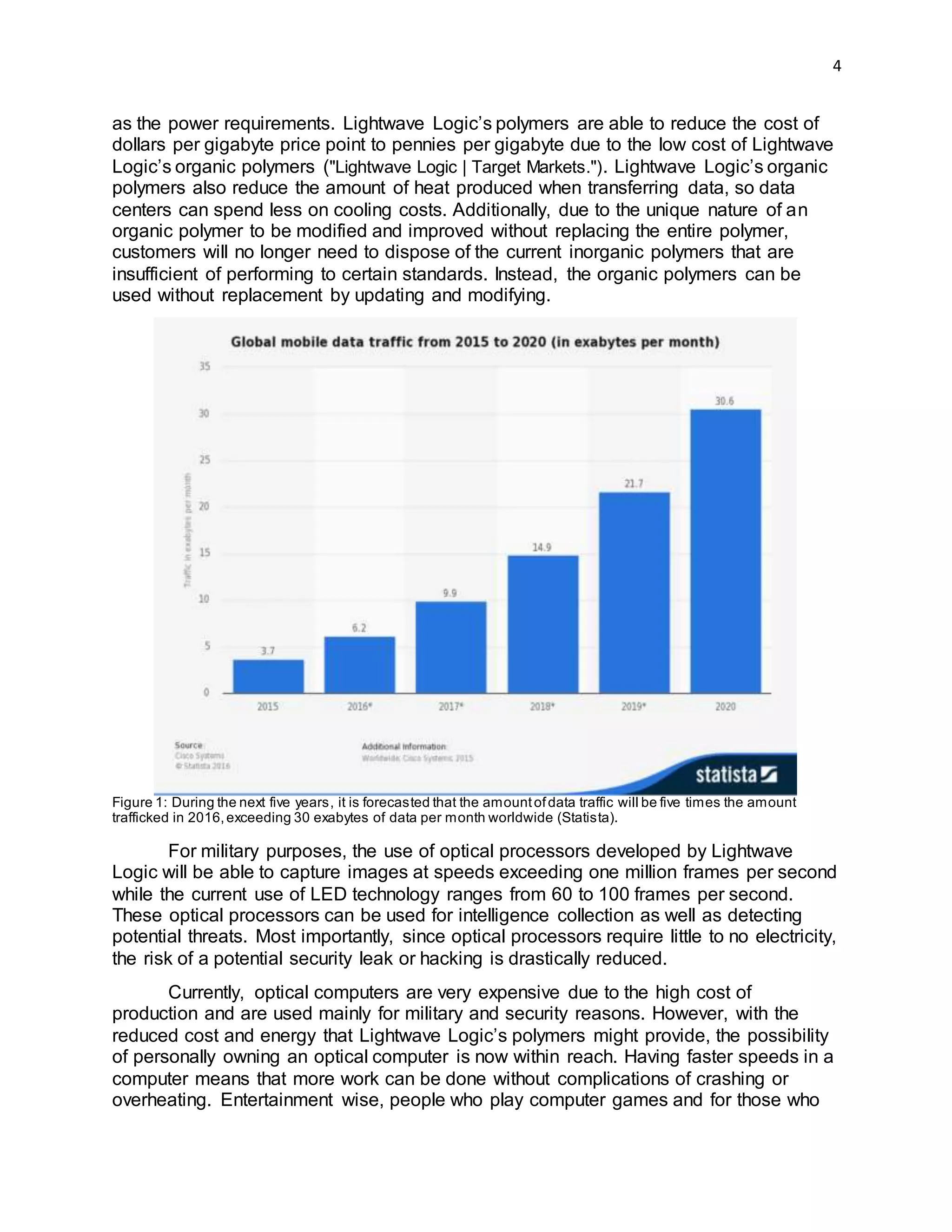
Figure 1: During the next five years, it is forecasted that the amountofdata traffic will be five times the amount
trafficked in 2016,exceeding 30 exabytes of data per month worldwide (Statista).
For military purposes, the use of optical processors developed by Lightwave
Logic will be able to capture images at speeds exceeding one million frames per second
while the current use of LED technology ranges from 60 to 100 frames per second.
These optical processors can be used for intelligence collection as well as detecting
potential threats. Most importantly, since optical processors require little to no electricity,
the risk of a potential security leak or hacking is drastically reduced.
Currently, optical computers are very expensive due to the high cost of
production and are used mainly for military and security reasons. However, with the
reduced cost and energy that Lightwave Logic’s polymers might provide, the possibility
of personally owning an optical computer is now within reach. Having faster speeds in a
computer means that more work can be done without complications of crashing or
overheating. Entertainment wise, people who play computer games and for those who
5
stream a high amount of content can now have a better experience without needing to
pay a high price.
Team
The Lightwave Logic team currently consists of nine fulltime and seven part-time
employees. Their team is very small as they are mostly conducting R&D and do not
need a large team to facilitate commercialization and production. Lightwave Logic’s
leadership comes with a mixed variety of backgrounds with their CEO having extensive
military experience and COO being heavily involved in startup companies and
nanotechnology. Slow progress may also be attributed to the team’s small size and
progress will likely not grow due to the specialization of their organic polymers.
Lightwave Logic’s leadership does not seem to have any significant advantage, but this
is not to say that they will not be successful. However, due to the small size of the team,
a loss of one their sixteen members would greatly hurt Lightwave Logic and hinder the
development of their organic polymers even further.
If Lightwave Logic wants to make more advancements in their research and
development of their organic polymers, they will likely need a larger team or an
additional person who has experience with technology startups.
Risks
There are many possible risks concerning the success of Lightwave Logic Inc.,
but none more important than the success of their organic polymers. If their organic
polymers cannot be successfully integrated into devices or the polymers seem to
underperform, then Lightwave Logic will likely suffer greatly.
Additionally, since there is essentially no competition in the organic polymer
market, Lightwave Logic’s foremost competitors are large companies who have been
developing inorganic polymers for years and may block Lightwave Logic from entering
the market. An example would be IBM. IBM currently has various types of polymers that
are applied to different fields. Even the slightest development in their technology gains a
tremendous amount of coverage compared to what Lightwave Logic does. It’s not so
much about the quality of IBM’s inorganic polymers being better than Lightwave Logic’s
polymers, but more so about the polymer market share that IBM controls. Another risk
following the organic polymer technology is the uncertain timetable on which the
technology is being developed. Lightwave Logic is still researching and conducting test
on their polymers so the retention of customers is very hard. They seem to have broken
ground, but the speed of progress is very minimal as tests take months. Since the
technology being developed is very complex and specialized there will likely be bugs
and defects that come along and hiring employees who understand the technology that
is trying to be developed will be rare to come by as well. With such a small team, it is
also hard to see how Lightwave Logic will be able to scale properly if their technology
does work.
Financially, Lightwave Logic has been losing money since inception and believe
that they will continue to incur substantial operating losses for the foreseeable future.
6
They even state that there is the possibility that they will never be profitable (Annual
Report (10-K)). Furthermore, Lightwave Logic received a 20 million dollar purchase of
common stock by Lincoln Park Capital Fund (LLC) so stock will likely be heavily diluted.
Due to the large amount of debt accumulated from years of being unprofitable,
this may force Lightwave Logic to sell their patents and patents pending, therefore
making investors lose their entire investment in the company. Additionally, Lightwave
Logic may be susceptible to patent infringement claims that would obstruct them from
commercializing potential products in the future. (Annual Report(10-K)).
On the surface, Lightwave Logic Inc. seems like the next big thing in terms of
data processing and transferring. Not only are their organic polymers hundreds of times
faster than the current inorganic ones, but they are also cheaper, more environmentally
friendly, and reusable. There seems to be no downside until the finances of the
company are observed. Lightwave Logic Inc. has been losing money since the
beginning and does not seem to be even breaking even anytime soon. They aren’t
losing money because the organic polymer technology doesn’t work, but because the
progress of product development is very slow and the steps needed to make
breakthroughs take time and money. A consequence of slow progress means a lack of
data to prove the effectiveness of their organic polymers and electro-optical device
components.
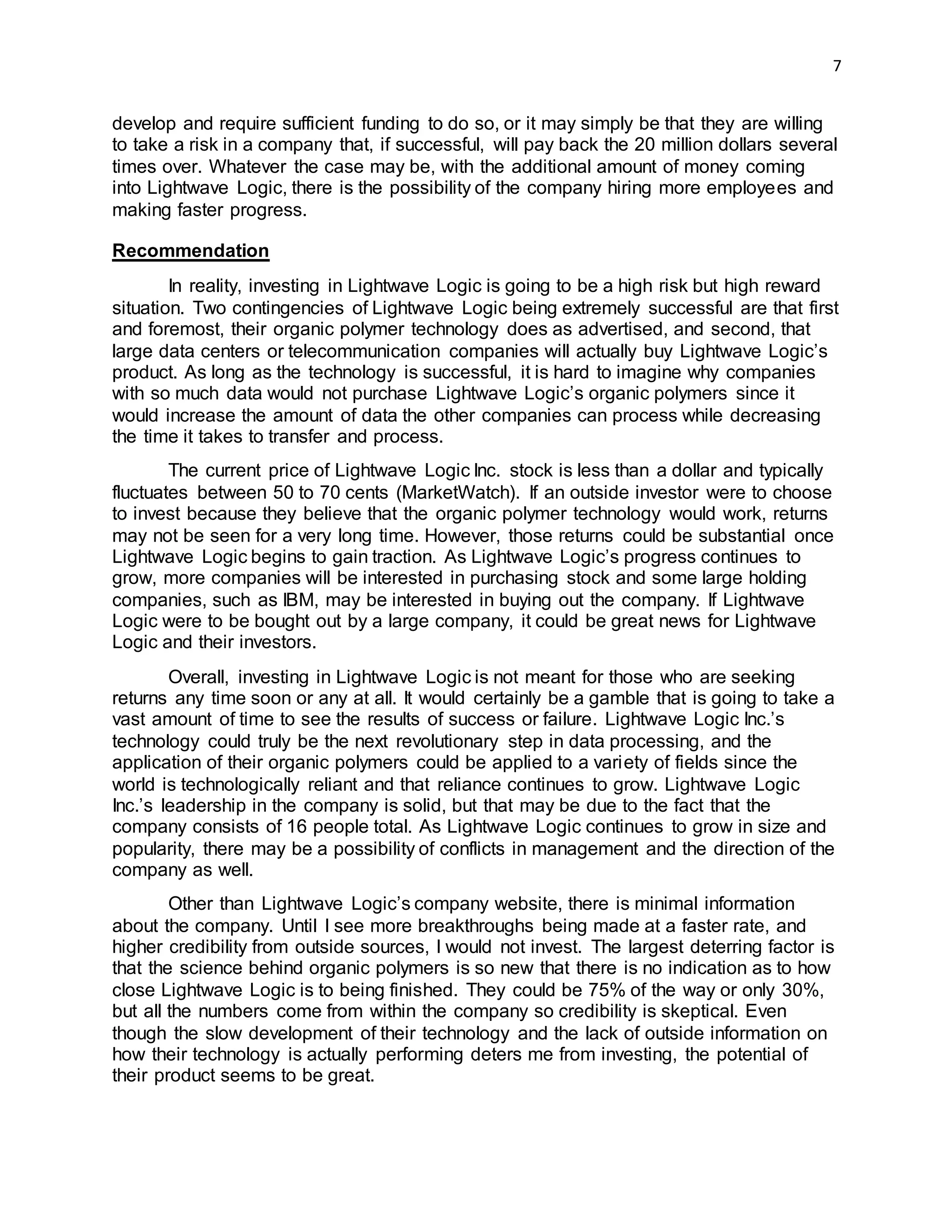
Figure 2: Timeline of major developments Lightwave Logic has made over the past5 years shows an increase in
development,butthe rate is still too slow to commercialize the organic polymer technologysoon (Press Releases).
The combination of insufficient data and slow progress is fairly unappealing yet
they received a 20 million dollar purchase of common stock from Lincoln Park Capital
Fund (Cordovano). This raises the question, why invest 20 million dollars into a company
that has been losing money since day one? It is possible that Lincoln Park investors
understand that companies heavily involved in research and development take time to
2011-2013
•LightwaveLogic& UniversityofColorado,Boulder (UCB) CompleteFirst Optical Structures for Integrated OpticalDevices
•LightwaveLogicSuccessfully Demonstrates Operating Silicon OrganicHybrid (SOH) PrototypeModulator DeviceAchieves
GreaterElectro-OpticalActivity and Lower DriveVoltage than Industry Standard Legacy InorganicModulators
2014
•LightwaveLogicDevelops Unique Methodologyto CombineMultipleChromophores into a Single Polymer Host
•LightwaveLogicAnnounces SuccessfulTest ofFirstIn-House PhotonicDevice
2015
•LightwaveLogic's AdvancedOrganicElectro-OpticPolymers Surpass 2,000Hours OfThermal Aging At 110Degrees Celsius
With LittleTo No Degradation OfMaterial Properties
•LightwaveLogicSuccessfully Fabricates OrganicPolymer RidgeWaveguide Structures
2016
•LightwaveLogicSuccessfully Achieves Modulation in All-OrganicPolymer RidgeWaveguideModulatorPrototype
•LightwaveLogicSuccessfully Guides Laser Light Through All-Organic,PassivePolymer RidgeWaveguides
7
develop and require sufficient funding to do so, or it may simply be that they are willing
to take a risk in a company that, if successful, will pay back the 20 million dollars several
times over. Whatever the case may be, with the additional amount of money coming
into Lightwave Logic, there is the possibility of the company hiring more employees and
making faster progress.
Recommendation
In reality, investing in Lightwave Logic is going to be a high risk but high reward
situation. Two contingencies of Lightwave Logic being extremely successful are that first
and foremost, their organic polymer technology does as advertised, and second, that
large data centers or telecommunication companies will actually buy Lightwave Logic’s
product. As long as the technology is successful, it is hard to imagine why companies
with so much data would not purchase Lightwave Logic’s organic polymers since it
would increase the amount of data the other companies can process while decreasing
the time it takes to transfer and process.
The current price of Lightwave Logic Inc. stock is less than a dollar and typically
fluctuates between 50 to 70 cents (MarketWatch). If an outside investor were to choose
to invest because they believe that the organic polymer technology would work, returns
may not be seen for a very long time. However, those returns could be substantial once
Lightwave Logic begins to gain traction. As Lightwave Logic’s progress continues to
grow, more companies will be interested in purchasing stock and some large holding
companies, such as IBM, may be interested in buying out the company. If Lightwave
Logic were to be bought out by a large company, it could be great news for Lightwave
Logic and their investors.
Overall, investing in Lightwave Logic is not meant for those who are seeking
returns any time soon or any at all. It would certainly be a gamble that is going to take a
vast amount of time to see the results of success or failure. Lightwave Logic Inc.’s
technology could truly be the next revolutionary step in data processing, and the
application of their organic polymers could be applied to a variety of fields since the
world is technologically reliant and that reliance continues to grow. Lightwave Logic
Inc.’s leadership in the company is solid, but that may be due to the fact that the
company consists of 16 people total. As Lightwave Logic continues to grow in size and
popularity, there may be a possibility of conflicts in management and the direction of the
company as well.
Other than Lightwave Logic’s company website, there is minimal information
about the company. Until I see more breakthroughs being made at a faster rate, and
higher credibility from outside sources, I would not invest. The largest deterring factor is
that the science behind organic polymers is so new that there is no indication as to how
close Lightwave Logic is to being finished. They could be 75% of the way or only 30%,
but all the numbers come from within the company so credibility is skeptical. Even
though the slow development of their technology and the lack of outside information on
how their technology is actually performing deters me from investing, the potential of
their product seems to be great.
8
Works Cited
"Annual Report(10-K)." N.p., 18 Mar. 2016. Web. 28 Mar. 2016.
Cordovano, Steven. "News Releases." N.p., 1 Feb. 2016. Web. 28 Mar. 2016.
"Global Mobile Traffic from 2015 to 2020 (in Exabytes per Month)." Statista. N.p., 2015.
Web. 27 Mar. 2016.
"Lightwave Logic | About Us." Lightwave Logic. N.p., n.d. Web. 28 Mar. 2016.
"Lightwave Logic | Target Markets." Lightwave Logic. N.p., n.d. Web. 28 Mar. 2016.
"Lightwave Logic | Technology." Lightwave Logic. N.p., n.d. Web. 02 May 2016.
"Lightwave Logic Inc." LWLG Stock Quote. MarketWatch, n.d. Web. 28 Mar. 2016.
"LIGHTWAVE LOGIC INC (LWLG:OTC US): Company Description." Bloomberg.com.
Bloomberg, n.d. Web. 28 Mar. 2016.
"Press Releases." Press Releases. Lightwave Logic Inc., n.d. Web. 30 Apr. 2016.
"Securities Registration Statement." Lightwave Logic. N.p., 25 Mar. 2016. Web. 27 Mar.
2016.
"The Wall Street Transcript." EBSCOhost. N.p., 14 Sept. 2015. Web. 26 Mar. 2016.

LightwaveLogicAnalysis

  • 1.
    1 Daniel Yu 5/3/2016 Lightwave LogicInc. (LWLG) [3643 words] Summary Lightwave Logic Inc. was founded based on the realization that silicon and copper circuitry would soon reach their physical limits. Lightwave Logic is a development stage company which exists to improve data communications and telecommunication infrastructures with their organic polymer material based devices. It engages primarily in the research and development of its electro-optic organic polymer materials technologies and potential products using their organic polymers. Lightwave Logic designed and built their organic polymers with the intention of replacing the current inorganic polymers used in systems in order to drastically reduce cost of production as well as significantly increasing the speed of data transferring. Their polymer technology has solved the problem of melding high electro-optical activity with thermal stability and can be applied to many devices that process data. They market their technology around the fact that organic polymers have the potential to exceed the physical limitations current inorganic polymers have, and that their organic polymers are less expensive and more environmentally friendly. Lightwave Logic’s polymer technology is meant to increase data speeds and expand bandwidth while simultaneously lowering costs and power consumption. These improved polymers are more environmentally friendly and have the ability to provide the dynamic needs of the telecommunication, military, and high speed computing industries. The polymers are also inexpensive to make and selling them for a higher price is possible since the polymers have the ability to be changed for future developments instead of having to buy entirely new polymers. Business Model Lightwave Logic’s objective is to be a leading supplier of exclusive technology and knowledge in the electro-optic device market. Their business model includes a combination of technology licensing for specific product application, joint venture relationships with significant industry leaders, or the production and direct sale of Lightwave Logic’s own electro-optic device components (Annual Report (10-K)). By licensing their technology to potentially large companies who could use similar technology to improve processing speeds, such as IBM, Lightwave Logic allows themselves to potentially enter and even larger market. If Lightwave Logic were to focus more on producing and selling their own electro-optic devices, they could work with a larger variety of companies; however, it would be harder to market themselves compared to a licensing deal. The problem with creating a joint venture with another industry leader is the size of market in which Lightwave Logic operates. Currently, the market for organic polymers is very small with little to no competition available. Even if Lightwave Logic were to temporarily work with their competitors, the impact of that would be minimal due to the lack of attention the market receives.
  • 2.
    2 The most feasibleoption seems to be licensing their organic polymers to a larger company. If IBM were to form a licensing deal with Lightwave Logic, the scale of production of their organic polymers would greatly increase and it would likely be easier for Lightwave Logic to gain traction with the companies in their target market. Each part of this business model hinges on one aspect of the entire company, the success of their organic polymers. If the organic polymers underperform, compared to the current inorganic polymers, Lightwave Logic would essentially collapse. Products and Applications Lightwave Logic designs and builds their organic polymer around their goal to be one of the leading suppliers in electro-optic devices based on their technology, which they consider to be the future of data processing. The technology behind Lightwave logic is called Application Specific Electro-Optic Polymers (ASEOP) and organic Non- Linear All-Optical Polymers (NLAOP) (Lightwave Logic | Technology). These organic polymers have high electro-optic and optical activity, and the materials used to build these polymers are thermally and photo-chemically stable, allowing Lightwave Logic to “address markets such as telecommunications, data communications, high speed computing, and photovoltaic cells” (Bloomberg). Lightwave logic also uses these polymers to develop their own electro-optical devices. Lightwave Logic’s electro-optic devices convert data from electric signals into optical (light) signals for high speed data transfers in communications systems. Lightwave Logic’s goal is to create an organic polymer that can transfer data faster, cheaper, and greener than the current inorganic polymers used in nearly every computing device. An important part of Lightwave Logic’s products is the characteristic that organic polymers can be modified after installation. This will prove to be useful to many of their customers as the customers will not need to completely replace the devices and will end up saving money. Additionally, devices that implement these organic polymers have the advantage of being smaller, so more devices can be used in the same area of confined space while processing more data at a faster rate as well. The primary outlet for Lightwave Logic to scale their business is to work with telecommunication companies, data communication companies, cloud computing companies, and data centers due to the large amount of data that is required for them to transfer and process. As mentioned before, technology licensing may be the best way to achieve this goal as Lightwave Logic will be able to work with a large company and eventually branch out. If Lightwave Logic’s technology is successfully integrated into a well-known telecommunication company, the opportunities for their electro-optic devices to be implemented in other companies will greatly increase. Other than using their organic polymers for data centers, and large data communication companies, Lightwave Logic Inc. can apply their organic polymers to other fields such as, photovoltaic cells, satellite reconnaissance, and radar applications. Photovoltaic cells are primarily used for solar energy. The primary advantage of having organic polymers would be an increase in efficiency of converting solar energy into electricity. Satellite reconnaissance would be a joint effort with the Department of Defense in order to increase national security by having the fastest bandwidth possible.
  • 3.
    3 Radar applications wouldlikely consist of working with the military to increase land mine detection as well as developing LADAR, similar to radar, but it uses light instead of radio waves, and is therefore faster. Competition The area of science Lightwave Logic specializes in is a newer field and has been under development for the past 20 years. Due to the long time it has taken to develop a product, many of Lightwave Logic’s competitors have moved on to different fields that are not as ground breaking but results are more easily seen. Lightwave logic states that their primary polymer competitor is GigOptix who have designed and patented a potentially commercially feasible electro-optic polymer. GigOptix has not decided to develop polymers that are organic, but both companies have yet to make significant progress that will soon lead to commercialization ("Securities Registration Statement."). Another potential competitor would be IBM since they develop various kinds of polymers. Due to IBM’s resources being significantly larger than Lightwave Logic, it is possible that they would be able to develop an organic polymer as well and likely at a faster rate. Fortunately for Lightwave Logic, there has not been any rumors of organic polymer development from within IBM. Customers Lightwave Logic Inc.’s customers are cloud computing and data center firms who are undergoing exponential growth due to the increase in cloud computing applications and the demand of devices that make it easier to share files, pictures, and videos between groups. Companies that deal with a high amount of data traffic are potential customers that would benefit from Lightwave Logic’s organic polymers as the pent up demand for a solution to the increase in data traffic is desperately being sought out (The Wall Street Transcript). Other areas that Lightwave Logic claims they can provide service for are military as well as optical computing. Theoretically, military involvement is feasible, but for now it is unlikely since Lightwave Logic’s technology is not originally intended for military purposes nor is there as large of a need as data and telecommunication companies. However, optical computing could be a nice market for them since people are demanding faster computers with all of the images and videos they can now share. Another reason optical computing may be a good fit for Lightwave Logic is because with the current growth in popularity of Electronic Sports (E-Sports), faster computers are more desired to ensure less obstacles when playing a game. What Lightwave Logic Inc. can offer is “significant performance advancements, reduced component size, cost reduction, ease of processing, with thermal and temporal stability” (Lightwave Logic | About Us). Performance advancements include reducing data traffic times, therefore making it faster to process and transfer data in a data center. With a reduction in component size, there is more room for more traffic. “Currently, data centers are struggling to regulate their internal traffic and this results in nearly 25% of the industry is outsourced, and this percentage continues to grow,” (Lightwave Logic | Target Markets).The only ways to reduce this percentage and make demand effective and profitable is to lower the cost per gigabit of transmission as well
  • 4.
    4 as the powerrequirements. Lightwave Logic’s polymers are able to reduce the cost of dollars per gigabyte price point to pennies per gigabyte due to the low cost of Lightwave Logic’s organic polymers ("Lightwave Logic | Target Markets."). Lightwave Logic’s organic polymers also reduce the amount of heat produced when transferring data, so data centers can spend less on cooling costs. Additionally, due to the unique nature of an organic polymer to be modified and improved without replacing the entire polymer, customers will no longer need to dispose of the current inorganic polymers that are insufficient of performing to certain standards. Instead, the organic polymers can be used without replacement by updating and modifying. Figure 1: During the next five years, it is forecasted that the amountofdata traffic will be five times the amount trafficked in 2016,exceeding 30 exabytes of data per month worldwide (Statista). For military purposes, the use of optical processors developed by Lightwave Logic will be able to capture images at speeds exceeding one million frames per second while the current use of LED technology ranges from 60 to 100 frames per second. These optical processors can be used for intelligence collection as well as detecting potential threats. Most importantly, since optical processors require little to no electricity, the risk of a potential security leak or hacking is drastically reduced. Currently, optical computers are very expensive due to the high cost of production and are used mainly for military and security reasons. However, with the reduced cost and energy that Lightwave Logic’s polymers might provide, the possibility of personally owning an optical computer is now within reach. Having faster speeds in a computer means that more work can be done without complications of crashing or overheating. Entertainment wise, people who play computer games and for those who
  • 5.
    5 stream a highamount of content can now have a better experience without needing to pay a high price. Team The Lightwave Logic team currently consists of nine fulltime and seven part-time employees. Their team is very small as they are mostly conducting R&D and do not need a large team to facilitate commercialization and production. Lightwave Logic’s leadership comes with a mixed variety of backgrounds with their CEO having extensive military experience and COO being heavily involved in startup companies and nanotechnology. Slow progress may also be attributed to the team’s small size and progress will likely not grow due to the specialization of their organic polymers. Lightwave Logic’s leadership does not seem to have any significant advantage, but this is not to say that they will not be successful. However, due to the small size of the team, a loss of one their sixteen members would greatly hurt Lightwave Logic and hinder the development of their organic polymers even further. If Lightwave Logic wants to make more advancements in their research and development of their organic polymers, they will likely need a larger team or an additional person who has experience with technology startups. Risks There are many possible risks concerning the success of Lightwave Logic Inc., but none more important than the success of their organic polymers. If their organic polymers cannot be successfully integrated into devices or the polymers seem to underperform, then Lightwave Logic will likely suffer greatly. Additionally, since there is essentially no competition in the organic polymer market, Lightwave Logic’s foremost competitors are large companies who have been developing inorganic polymers for years and may block Lightwave Logic from entering the market. An example would be IBM. IBM currently has various types of polymers that are applied to different fields. Even the slightest development in their technology gains a tremendous amount of coverage compared to what Lightwave Logic does. It’s not so much about the quality of IBM’s inorganic polymers being better than Lightwave Logic’s polymers, but more so about the polymer market share that IBM controls. Another risk following the organic polymer technology is the uncertain timetable on which the technology is being developed. Lightwave Logic is still researching and conducting test on their polymers so the retention of customers is very hard. They seem to have broken ground, but the speed of progress is very minimal as tests take months. Since the technology being developed is very complex and specialized there will likely be bugs and defects that come along and hiring employees who understand the technology that is trying to be developed will be rare to come by as well. With such a small team, it is also hard to see how Lightwave Logic will be able to scale properly if their technology does work. Financially, Lightwave Logic has been losing money since inception and believe that they will continue to incur substantial operating losses for the foreseeable future.
  • 6.
    6 They even statethat there is the possibility that they will never be profitable (Annual Report (10-K)). Furthermore, Lightwave Logic received a 20 million dollar purchase of common stock by Lincoln Park Capital Fund (LLC) so stock will likely be heavily diluted. Due to the large amount of debt accumulated from years of being unprofitable, this may force Lightwave Logic to sell their patents and patents pending, therefore making investors lose their entire investment in the company. Additionally, Lightwave Logic may be susceptible to patent infringement claims that would obstruct them from commercializing potential products in the future. (Annual Report(10-K)). On the surface, Lightwave Logic Inc. seems like the next big thing in terms of data processing and transferring. Not only are their organic polymers hundreds of times faster than the current inorganic ones, but they are also cheaper, more environmentally friendly, and reusable. There seems to be no downside until the finances of the company are observed. Lightwave Logic Inc. has been losing money since the beginning and does not seem to be even breaking even anytime soon. They aren’t losing money because the organic polymer technology doesn’t work, but because the progress of product development is very slow and the steps needed to make breakthroughs take time and money. A consequence of slow progress means a lack of data to prove the effectiveness of their organic polymers and electro-optical device components. Figure 2: Timeline of major developments Lightwave Logic has made over the past5 years shows an increase in development,butthe rate is still too slow to commercialize the organic polymer technologysoon (Press Releases). The combination of insufficient data and slow progress is fairly unappealing yet they received a 20 million dollar purchase of common stock from Lincoln Park Capital Fund (Cordovano). This raises the question, why invest 20 million dollars into a company that has been losing money since day one? It is possible that Lincoln Park investors understand that companies heavily involved in research and development take time to 2011-2013 •LightwaveLogic& UniversityofColorado,Boulder (UCB) CompleteFirst Optical Structures for Integrated OpticalDevices •LightwaveLogicSuccessfully Demonstrates Operating Silicon OrganicHybrid (SOH) PrototypeModulator DeviceAchieves GreaterElectro-OpticalActivity and Lower DriveVoltage than Industry Standard Legacy InorganicModulators 2014 •LightwaveLogicDevelops Unique Methodologyto CombineMultipleChromophores into a Single Polymer Host •LightwaveLogicAnnounces SuccessfulTest ofFirstIn-House PhotonicDevice 2015 •LightwaveLogic's AdvancedOrganicElectro-OpticPolymers Surpass 2,000Hours OfThermal Aging At 110Degrees Celsius With LittleTo No Degradation OfMaterial Properties •LightwaveLogicSuccessfully Fabricates OrganicPolymer RidgeWaveguide Structures 2016 •LightwaveLogicSuccessfully Achieves Modulation in All-OrganicPolymer RidgeWaveguideModulatorPrototype •LightwaveLogicSuccessfully Guides Laser Light Through All-Organic,PassivePolymer RidgeWaveguides
  • 7.
    7 develop and requiresufficient funding to do so, or it may simply be that they are willing to take a risk in a company that, if successful, will pay back the 20 million dollars several times over. Whatever the case may be, with the additional amount of money coming into Lightwave Logic, there is the possibility of the company hiring more employees and making faster progress. Recommendation In reality, investing in Lightwave Logic is going to be a high risk but high reward situation. Two contingencies of Lightwave Logic being extremely successful are that first and foremost, their organic polymer technology does as advertised, and second, that large data centers or telecommunication companies will actually buy Lightwave Logic’s product. As long as the technology is successful, it is hard to imagine why companies with so much data would not purchase Lightwave Logic’s organic polymers since it would increase the amount of data the other companies can process while decreasing the time it takes to transfer and process. The current price of Lightwave Logic Inc. stock is less than a dollar and typically fluctuates between 50 to 70 cents (MarketWatch). If an outside investor were to choose to invest because they believe that the organic polymer technology would work, returns may not be seen for a very long time. However, those returns could be substantial once Lightwave Logic begins to gain traction. As Lightwave Logic’s progress continues to grow, more companies will be interested in purchasing stock and some large holding companies, such as IBM, may be interested in buying out the company. If Lightwave Logic were to be bought out by a large company, it could be great news for Lightwave Logic and their investors. Overall, investing in Lightwave Logic is not meant for those who are seeking returns any time soon or any at all. It would certainly be a gamble that is going to take a vast amount of time to see the results of success or failure. Lightwave Logic Inc.’s technology could truly be the next revolutionary step in data processing, and the application of their organic polymers could be applied to a variety of fields since the world is technologically reliant and that reliance continues to grow. Lightwave Logic Inc.’s leadership in the company is solid, but that may be due to the fact that the company consists of 16 people total. As Lightwave Logic continues to grow in size and popularity, there may be a possibility of conflicts in management and the direction of the company as well. Other than Lightwave Logic’s company website, there is minimal information about the company. Until I see more breakthroughs being made at a faster rate, and higher credibility from outside sources, I would not invest. The largest deterring factor is that the science behind organic polymers is so new that there is no indication as to how close Lightwave Logic is to being finished. They could be 75% of the way or only 30%, but all the numbers come from within the company so credibility is skeptical. Even though the slow development of their technology and the lack of outside information on how their technology is actually performing deters me from investing, the potential of their product seems to be great.
  • 8.
    8 Works Cited "Annual Report(10-K)."N.p., 18 Mar. 2016. Web. 28 Mar. 2016. Cordovano, Steven. "News Releases." N.p., 1 Feb. 2016. Web. 28 Mar. 2016. "Global Mobile Traffic from 2015 to 2020 (in Exabytes per Month)." Statista. N.p., 2015. Web. 27 Mar. 2016. "Lightwave Logic | About Us." Lightwave Logic. N.p., n.d. Web. 28 Mar. 2016. "Lightwave Logic | Target Markets." Lightwave Logic. N.p., n.d. Web. 28 Mar. 2016. "Lightwave Logic | Technology." Lightwave Logic. N.p., n.d. Web. 02 May 2016. "Lightwave Logic Inc." LWLG Stock Quote. MarketWatch, n.d. Web. 28 Mar. 2016. "LIGHTWAVE LOGIC INC (LWLG:OTC US): Company Description." Bloomberg.com. Bloomberg, n.d. Web. 28 Mar. 2016. "Press Releases." Press Releases. Lightwave Logic Inc., n.d. Web. 30 Apr. 2016. "Securities Registration Statement." Lightwave Logic. N.p., 25 Mar. 2016. Web. 27 Mar. 2016. "The Wall Street Transcript." EBSCOhost. N.p., 14 Sept. 2015. Web. 26 Mar. 2016.