THE LIFE CYCLE OF PUBLIC ISSUE
PRESENTED BY JUDITH PLANAS-AGUILAR
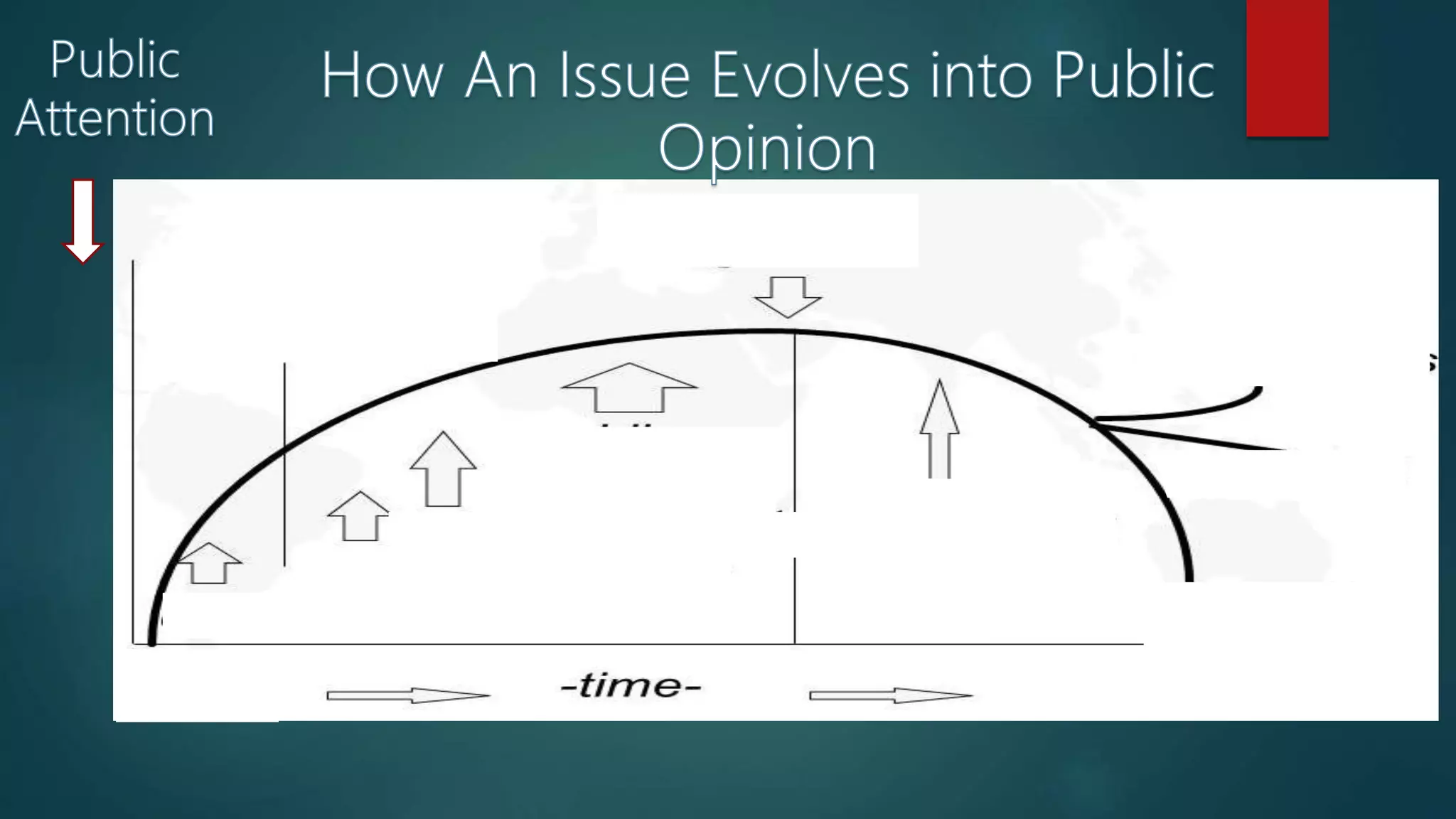
Public Issue Life Cycle
1. Definition of the Issue –
 various groups raise a protest regarding an
 issue affecting their interest
1. Opinion Leader—
 Knwoledgeable
 discuss the issue publicly
 point / organize action/s
 Public awareness—as the issue is elevated to public awareness
through extensive discussion and debates, generating media
coverage, more people become involved, raising collective, factions
of opinions.
Public Issue Life Cycle
3. Public awareness
 issue is elevated
 public awareness -- extensive discussion and debates,
 generates media coverage,
 more people become involved, r
 raising collective opinion, or factions of opinions.
Public Issue Life Cycle
4. Government/regulatory involvement—public
consensus is formed demanding for government
to act.
5. Resolution
 action is taken that satisfies the public,
 the issue dies.
Otherwise the cycle may happen again with greater
intensity.
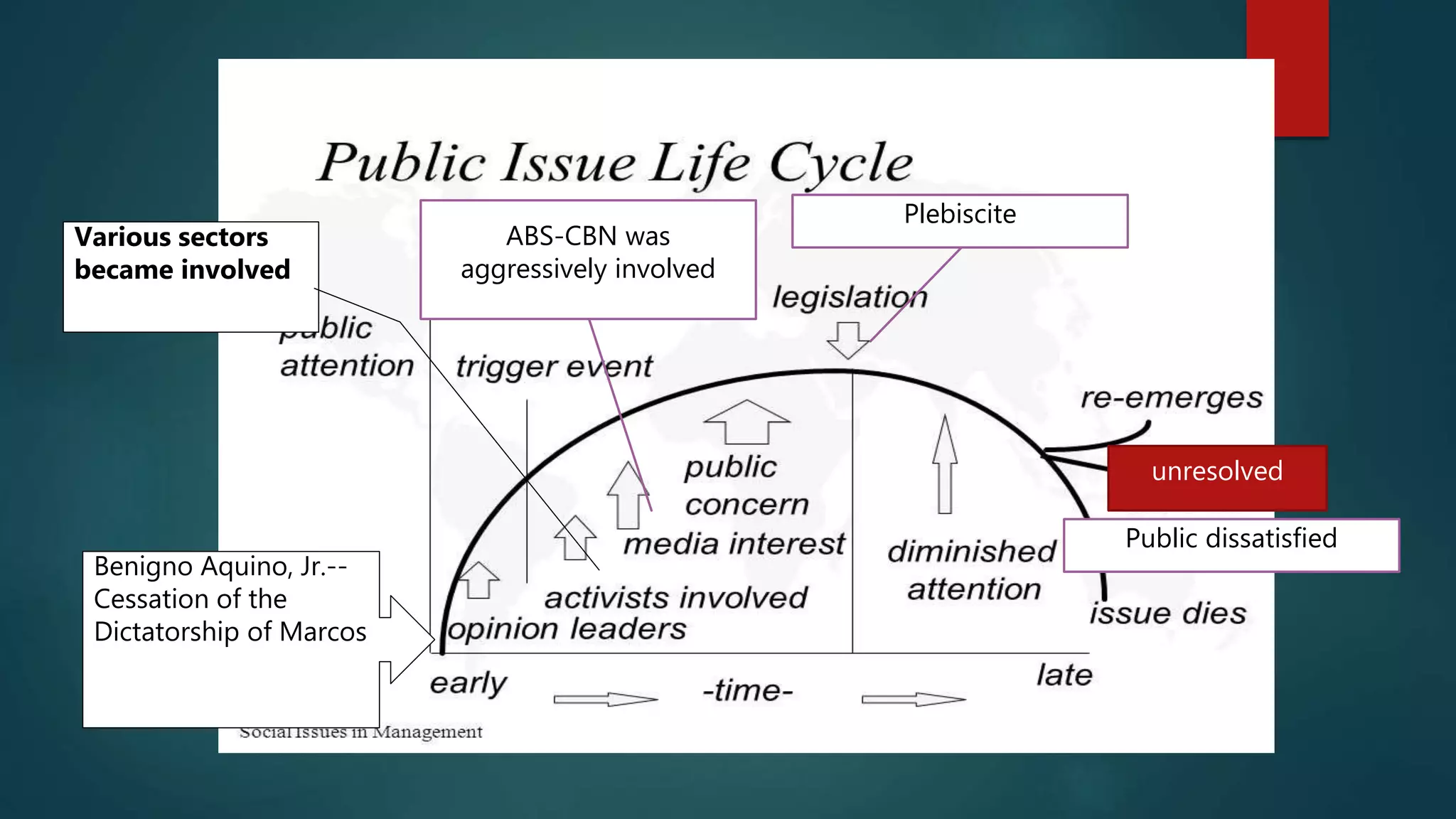
Benigno Aquino, Jr.--
Cessation of the
Dictatorship of Marcos
Various sectors
became involved
ABS-CBN was
aggressively involved
Plebiscite
Public dissatisfied
unresolved
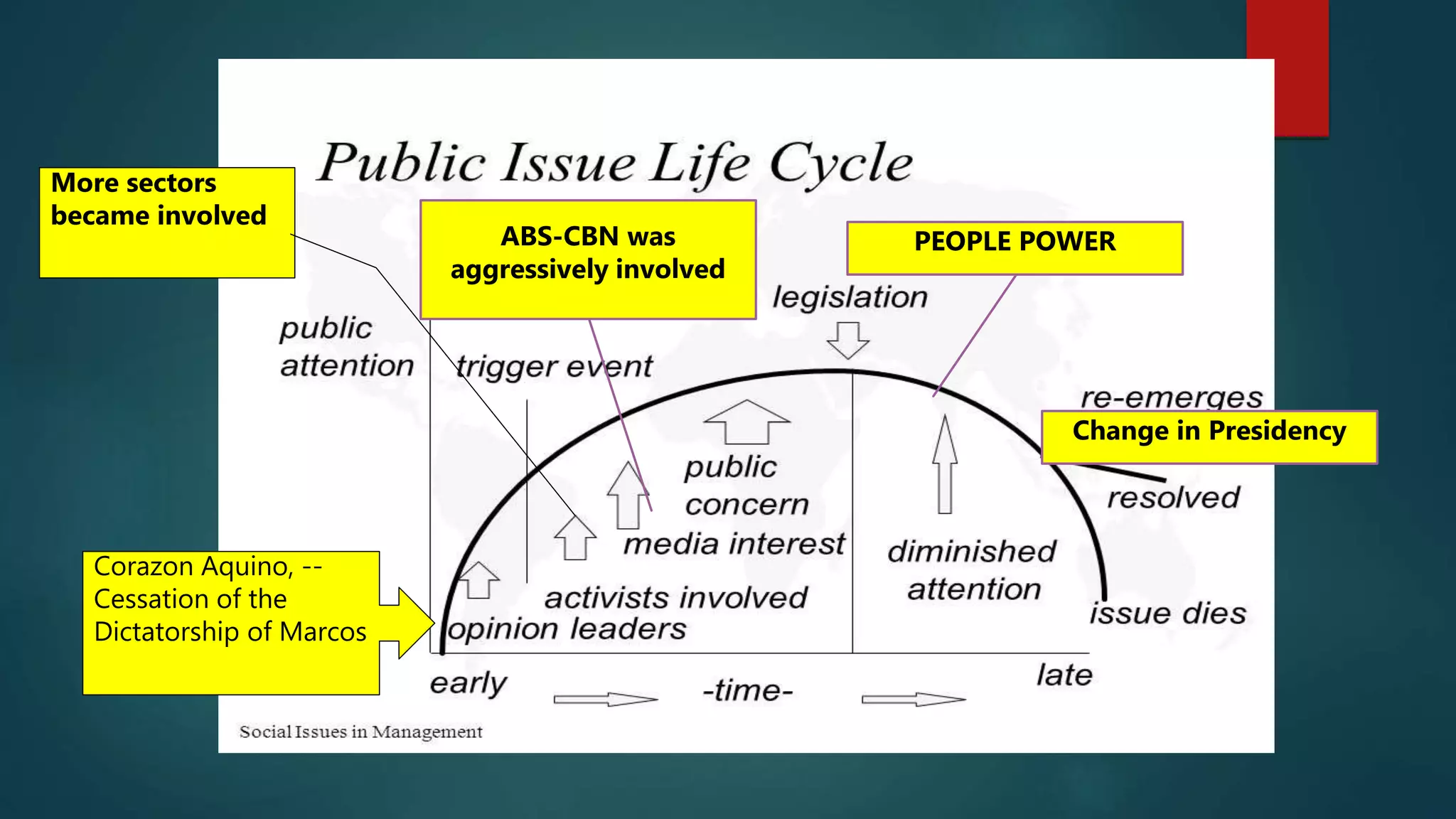
Corazon Aquino, --
Cessation of the
Dictatorship of Marcos
More sectors
became involved
ABS-CBN was
aggressively involved
Change in Presidency
PEOPLE POWER
People rarely make decisions on their own but are
influenced by peers, friends, colleagues, educators,
supervisors, church leaders, physicians, pubic officials,
celebrities and the media.
Public relations consultants seek these leaders to
influence the public’s opinion.
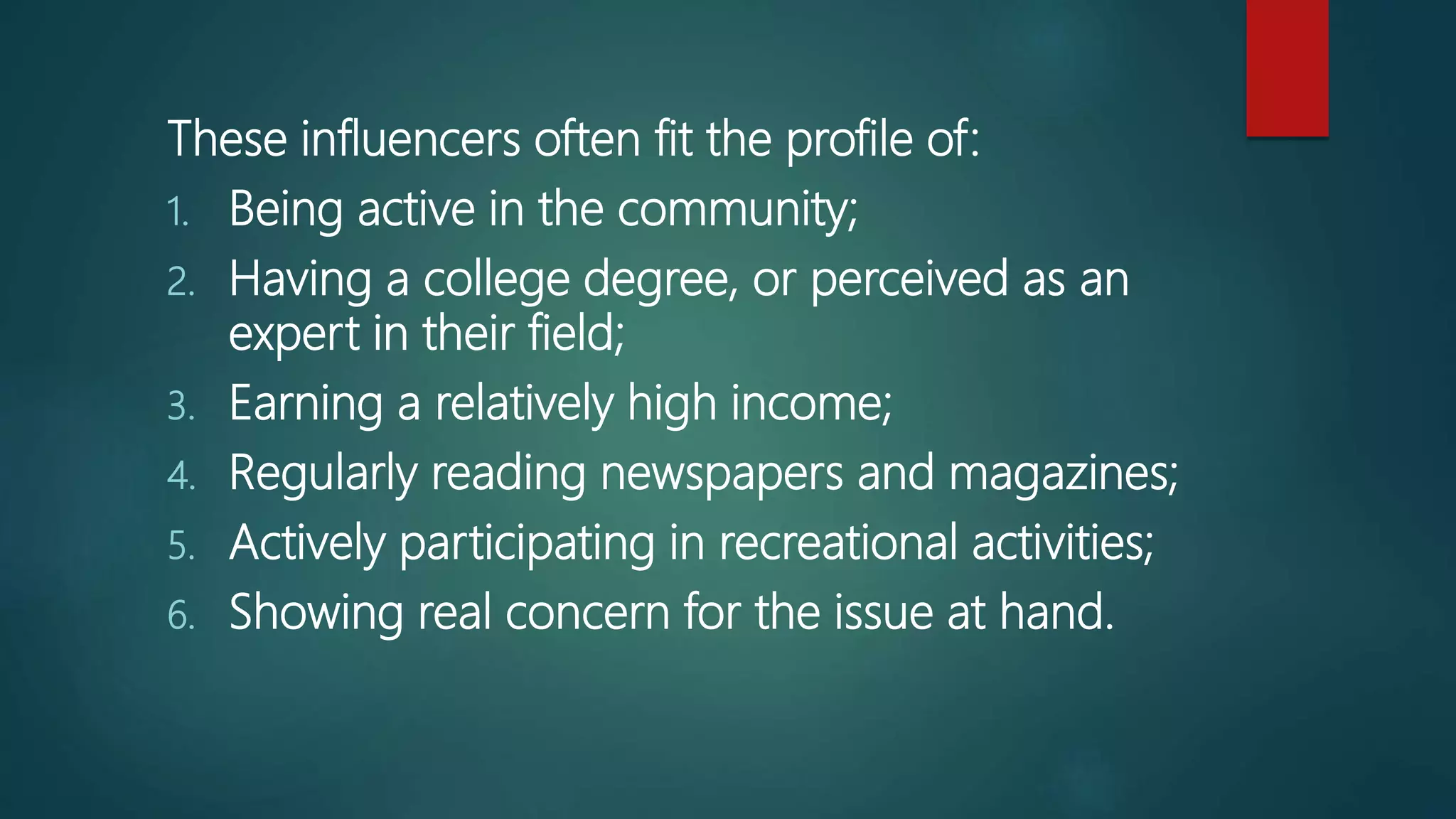
These influencers often fit the profile of:
1. Being active in the community;
2. Having a college degree, or perceived as an
expert in their field;
3. Earning a relatively high income;
4. Regularly reading newspapers and magazines;
5. Actively participating in recreational activities;
6. Showing real concern for the issue at hand.

Life cycle of an issue

  • 1.
    THE LIFE CYCLEOF PUBLIC ISSUE PRESENTED BY JUDITH PLANAS-AGUILAR
  • 3.
    Public Issue LifeCycle 1. Definition of the Issue –  various groups raise a protest regarding an  issue affecting their interest 1. Opinion Leader—  Knwoledgeable  discuss the issue publicly  point / organize action/s  Public awareness—as the issue is elevated to public awareness through extensive discussion and debates, generating media coverage, more people become involved, raising collective, factions of opinions.
  • 4.
    Public Issue LifeCycle 3. Public awareness  issue is elevated  public awareness -- extensive discussion and debates,  generates media coverage,  more people become involved, r  raising collective opinion, or factions of opinions.
  • 5.
    Public Issue LifeCycle 4. Government/regulatory involvement—public consensus is formed demanding for government to act. 5. Resolution  action is taken that satisfies the public,  the issue dies. Otherwise the cycle may happen again with greater intensity.
  • 6.
    Benigno Aquino, Jr.-- Cessationof the Dictatorship of Marcos Various sectors became involved ABS-CBN was aggressively involved Plebiscite Public dissatisfied unresolved
  • 7.
    Corazon Aquino, -- Cessationof the Dictatorship of Marcos More sectors became involved ABS-CBN was aggressively involved Change in Presidency PEOPLE POWER
  • 8.
    People rarely makedecisions on their own but are influenced by peers, friends, colleagues, educators, supervisors, church leaders, physicians, pubic officials, celebrities and the media. Public relations consultants seek these leaders to influence the public’s opinion.
  • 9.
    These influencers oftenfit the profile of: 1. Being active in the community; 2. Having a college degree, or perceived as an expert in their field; 3. Earning a relatively high income; 4. Regularly reading newspapers and magazines; 5. Actively participating in recreational activities; 6. Showing real concern for the issue at hand.