Presented by: ASPIRA
Financial Education Program on Insurance
Introduction to Insurance
Presented by: ASPIRA
RISK: WHAT IS IT?
Risk = the possibility of financial loss
Why is risk important for insurance?
Risk is what makes you decide whether or not you
need insurance.
Risk is what insurance companies measure when
determining whether to offer you insurance and
how much it will cost.
What is Insurance?
Insurance is a legal contract that
transfers risk from a policyholder to an
insurance provider.
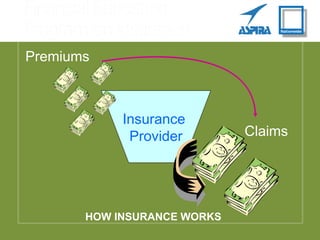
Insurance
Provider
Premiums
Claims
HOW INSURANCE WORKS
Risk factors determine whether you will be able to
buy a policy and how much it will cost.
Generally speaking:
> Risk = > Cost
Risk Factors: Life Insurance
Age
Gender
Height & Weight
Medical record
Personal habits (smoker, drinker, drug use)
Occupation
Credit rating of policyholder
**Amount of coverage required**
HOW DO WE HANDLE RISK?
1.  Avoidance: Choosing not to participate in an activity because of
the risk involved, e.g. not getting a driver’s license;
2.  Retention: Saving money in case of future losses, e.g. putting
$1000 in a savings account in case of a car accident;
3. Transfer: Passing the risk on to an insurance company, e.g.
paying a monthly fee for an insurance policy and expecting the
insurance company to protect your assets.
In the event of your death, a life insurance policy could:
• Provide income to your family members so they can maintain
their lifestyle.
• Pay off your mortgage so that the house is free and clear of
debt.
• Provide for your children’s college education.
• Pay for the final expenses of a funeral or estate settlement
costs.
• Provide an emergency fund to handle an unexpected financial
crisis.
• Provide for settlement of your personal debts.
CHOOSING THE BEST LIFE INSURANCE POLICY
FOR YOU:
YOUR OPTIONS
TERM INSURANCE
• Less $ buys you a larger amount (very affordable
for young policyholders)
• Set period of coverage called “term”
• Most policies can be cancelled or renewed at end of
term
• Usually more expensive each time you renew
• Does not earn cash value
• Usually can be converted into permanent policy
PERMANENT INSURANCE
• More costly
• Offers lifetime coverage
• Earns cash value (which can be borrowed
against)
• Usually cannot be converted into different policy
UNDER PERMANENT INSURANCE THERE ARE
TWO OPTIONS:
WHOLE LIFE
• Less complicated option for permanent insurance
• Premiums do not change
• Benefits do not change while policy in effect
• Accumulates cash value more slowly
UNIVERSAL LIFE
• Flexible payment options for premium
• You can make changes to your benefits based on
your needs and lifestyle, or keep the death benefit
level
• Accumulates cash value at a guaranteed rate
• Policy features many options to tailor it to your
needs
LIFE EVENT CHALLENGES
Become a driver
Get married
Graduate from high school
Get engaged
Buy a home
Move to own apartment
Have a baby
Graduate from college
Turn 25
Get a new job
Buy a car
Move to a new city
Practice Shopping for a Policy
http://www.nationwide.com

Life

  • 1.
    Presented by: ASPIRA FinancialEducation Program on Insurance
  • 2.
  • 3.
    RISK: WHAT ISIT? Risk = the possibility of financial loss
  • 4.
    Why is riskimportant for insurance? Risk is what makes you decide whether or not you need insurance. Risk is what insurance companies measure when determining whether to offer you insurance and how much it will cost.
  • 5.
    What is Insurance? Insuranceis a legal contract that transfers risk from a policyholder to an insurance provider.
  • 6.
  • 7.
    Risk factors determinewhether you will be able to buy a policy and how much it will cost. Generally speaking: > Risk = > Cost
  • 8.
    Risk Factors: LifeInsurance Age Gender Height & Weight Medical record Personal habits (smoker, drinker, drug use) Occupation Credit rating of policyholder **Amount of coverage required**
  • 9.
    HOW DO WEHANDLE RISK? 1.  Avoidance: Choosing not to participate in an activity because of the risk involved, e.g. not getting a driver’s license; 2.  Retention: Saving money in case of future losses, e.g. putting $1000 in a savings account in case of a car accident; 3. Transfer: Passing the risk on to an insurance company, e.g. paying a monthly fee for an insurance policy and expecting the insurance company to protect your assets.
  • 10.
    In the eventof your death, a life insurance policy could: • Provide income to your family members so they can maintain their lifestyle. • Pay off your mortgage so that the house is free and clear of debt. • Provide for your children’s college education. • Pay for the final expenses of a funeral or estate settlement costs. • Provide an emergency fund to handle an unexpected financial crisis. • Provide for settlement of your personal debts.
  • 11.
    CHOOSING THE BESTLIFE INSURANCE POLICY FOR YOU: YOUR OPTIONS
  • 12.
    TERM INSURANCE • Less$ buys you a larger amount (very affordable for young policyholders) • Set period of coverage called “term” • Most policies can be cancelled or renewed at end of term • Usually more expensive each time you renew • Does not earn cash value • Usually can be converted into permanent policy
  • 13.
    PERMANENT INSURANCE • Morecostly • Offers lifetime coverage • Earns cash value (which can be borrowed against) • Usually cannot be converted into different policy
  • 14.
    UNDER PERMANENT INSURANCETHERE ARE TWO OPTIONS:
  • 15.
    WHOLE LIFE • Lesscomplicated option for permanent insurance • Premiums do not change • Benefits do not change while policy in effect • Accumulates cash value more slowly
  • 16.
    UNIVERSAL LIFE • Flexiblepayment options for premium • You can make changes to your benefits based on your needs and lifestyle, or keep the death benefit level • Accumulates cash value at a guaranteed rate • Policy features many options to tailor it to your needs
  • 17.
    LIFE EVENT CHALLENGES Becomea driver Get married Graduate from high school Get engaged Buy a home Move to own apartment Have a baby Graduate from college Turn 25 Get a new job Buy a car Move to a new city
  • 18.
    Practice Shopping fora Policy http://www.nationwide.com