Corporate Communication
Internal Communications
Lecture 3
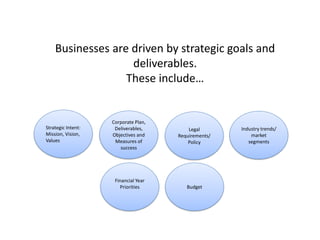
Businesses are driven by strategic goals and
deliverables.
These include…
Strategic Intent:
Mission, Vision,
Values
Corporate Plan,
Deliverables,
Objectives and
Measures of
success
Legal
Requirements/
Policy
Budget
Financial Year
Priorities
Industry trends/
market
segments
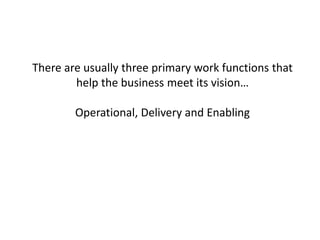
There are usually three primary work functions that
help the business meet its vision…
Operational, Delivery and Enabling
Operational and Delivery areas oversee the
business vision and manage the business’s core
functions.
These two areas are supported by the business
Enabling areas.
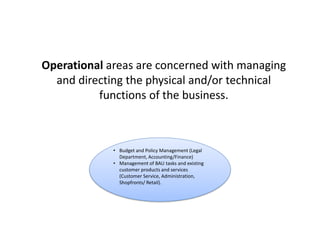
Operational areas are concerned with managing
and directing the physical and/or technical
functions of the business.
• Budget and Policy Management (Legal
Department, Accounting/Finance)
• Management of BAU tasks and existing
customer products and services
(Customer Service, Administration,
Shopfronts/ Retail).
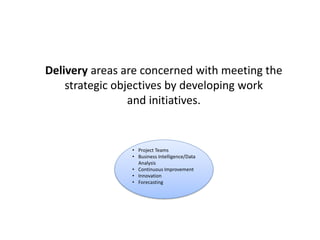
Delivery areas are concerned with meeting the
strategic objectives by developing work
and initiatives.
• Project Teams
• Business Intelligence/Data
Analysis
• Continuous Improvement
• Innovation
• Forecasting
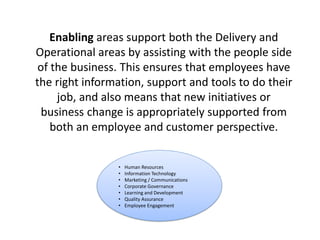
Enabling areas support both the Delivery and
Operational areas by assisting with the people side
of the business. This ensures that employees have
the right information, support and tools to do their
job, and also means that new initiatives or
business change is appropriately supported from
both an employee and customer perspective.
• Human Resources
• Information Technology
• Marketing / Communications
• Corporate Governance
• Learning and Development
• Quality Assurance
• Employee Engagement
(Both Internal and External Communication are
enabling functions)
The relationship between the Delivery,
Operational and Enabling areas depends
on communication.
Employees need to know when things
change or what upcoming initiatives might
influence their work or the way they work.
All three work areas can influence business
change or share news about their work.
Customer feedback might signal the need for
IT change, legislation might mean a HR policy
change, and a project might impact the BAU
work of a particular team…
Employees react differently to the
information and communication they receive
about their work and their
work environment.
Their reaction is based on their motivation,
level of engagement, and belief in
business messages.
The average business is motivated by two
primary goals: to provide a service to its
existing customers and to maximise its profit
in a particular market segment.
However, a customer is not motivated by
the same reasons…
Nor are the employees who work for
the business…
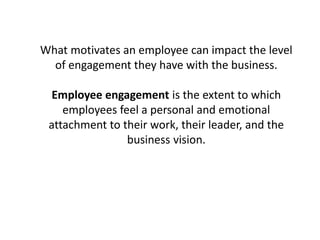
What motivates an employee can impact the level
of engagement they have with the business.
Employee engagement is the extent to which
employees feel a personal and emotional
attachment to their work, their leader, and the
business vision.
Poor levels of employee engagement means
two things for a business: work is not
performed to a high standard and there are
high rates of employee turnover.
This in turn impacts the quality of products
and services that are designed and delivered
to customers; including the ongoing support
of these items.
Internal Communication largely focuses on
communicating the vision of the business,
the work in progress that is contributing to
that vision, advising employees of business
change, and providing employees with
information relating to other enabling areas
that support the employee’s work.
Internal Communication cannot function
without engaged employees who are a result
of engaged and competent leaders.
This is why Internal Communication has its
foundations in employee engagement
and leadership.
What is internal communications?
• Strategic management of information flows to ensure the optimal level of
employee engagement (morale and productivity)
• Top-down, bottom-up, side-to-side communications harnessed as a means of
delivering messages, listening to concerns and motivating staff
• Reinforces the vision, values and culture among employees, who can then
communicate it to internal & external audiences
• Assists in change management
• Ensuring employee alignment with strategy
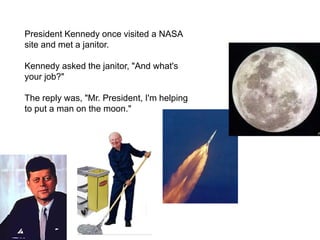
President Kennedy once visited a NASA
site and met a janitor.
Kennedy asked the janitor, "And what's
your job?"
The reply was, "Mr. President, I'm helping
to put a man on the moon."
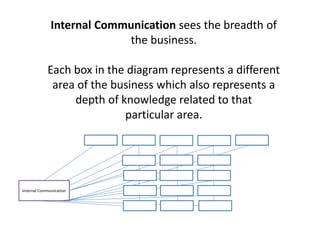
Internal Communication sees the breadth of
the business.
Each box in the diagram represents a different
area of the business which also represents a
depth of knowledge related to that
particular area.
Internal Communication
Leaders provide information and updates to
the Internal Communication team, and may
also seek communication advice for how to
inform staff of business changes and
business messages.
Communicating across the entire business
allows Internal Communication to deliver on
its roles and functions:
• tell employees what they need to know about the company’s projects, business
decisions, and business direction
• gives employees a general awareness of upcoming initiatives and updates to
customer products and services
• helps keep employees on the same page by providing corporate messages about
leadership decisions and deliverables
• lets the various business areas know what is happening in another team or
department
• ensures that frontline employees are aware of what customers might call and ask
questions about in relation to new or changed services
• helps give line-of-sight to the business’s strategic direction and corporate plan;
often outlining why work is being performed as well as sharing the success of
completed projects.
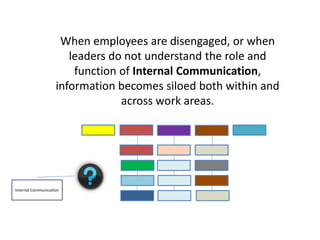
When employees are disengaged, or when
leaders do not understand the role and
function of Internal Communication,
information becomes siloed both within and
across work areas.
Internal Communication
Poor Internal Communication means…
work is not completed to a desired standard
because information is not shared; resulting in
work that is finalised without consideration of
competing priorities, and eventually impacting
employees and the customer experience.
To understand how the customer experience
and employee engagement is impacted by
poor Internal Communication, we can look
at how, when, and why customers interact
with the business…
How do customers know or find out about
the business?
• General marketing / advertising of the business
• Media and News coverage
• Word-of-mouth
• Interaction/historical knowledge based on
experience
• Shopfronts/ retail stores
• Active research/ ‘pull’ themselves towards
information
• Direct marketing/information ‘pushed’ to them
Why do they interact with the business?
• Access to products, services and/or information
• Legal requirement to interact (i.e. government agency)
• Purchase of items
• Payment of services
• Complaints
When and how do they interact with
the business?
• When they need to
• When they have to
• When they want to
Interaction takes place via customer service (F2F and
telephony), shopfronts, retail stores, and on digital
channels such as the website and social media.
The type of enquiry, and communication preference, can
influence what method a customer chooses to interact
with the business.
This means that the knowledge and trust
that a customer has of a business is
determined by the quality of products and
services they use, their customer service
experience, the medium they communicate
with the business, and the perceptions their
peers have of the business…
Any direct message a customer receives from
the business comes directly from
internal sources…
If the internal sources (the employees) do
not have the right tools, information or
interest in aiding the customer experience,
the entire business’s brand, image and
reputation suffers.
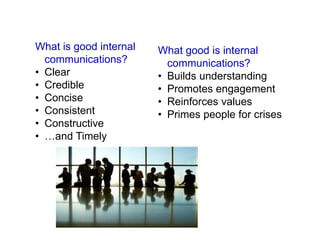
What is good internal
communications?
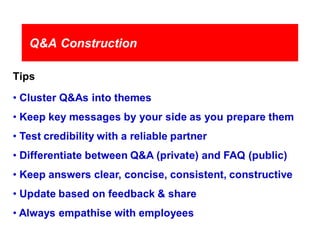
• Clear
• Credible
• Concise
• Consistent
• Constructive
• …and Timely
What good is internal
communications?
• Builds understanding
• Promotes engagement
• Reinforces values
• Primes people for crises
Checklist
CLEAR
• Have you removed all jargon?
• Is there any ambiguity in the messages?
• Can people read between the lines?
• Are all technical terms explained?
Checklist
CREDIBLE
• Does your message make sense?
• Is there anything that might undermine your
message?
• Have you checked the facts?
• Have you tested the message with an
employee?
Checklist
CONCISE
• Is there anything you can remove?
• Can you shorten any sentences or paragraphs?
• Have you limited yourself to delivering the
agreed key messages?
• Have you succeeded to illustrating your point?
Checklist
CONSISTENT
• Is the message in line with previous
messages?
• Are you using the right kind of language?
• Does the message fit with audience
perception?
• Is the message internally consistent?
Checklist
CONSTRUCTIVE
• Have you delivered a new piece of
information?
• Is it expressed positively and actively (no
passives)?
• Have you linked it to the strategic goals?
• Does the message have a “human” voice?
Dialogue
• Open dialogue between staff & upper management
• Facilitates flow of information through organisation
Crisis & Change
• Channels in place in disseminate critical information
• Credibility in delivering messages
Decision-making
• Access to employee input improves decisions
• Promotes inclusivity – greater buy-in to decisions
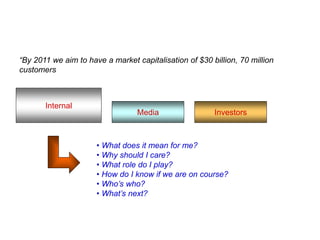
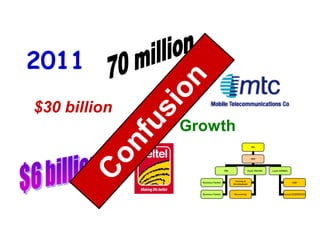
“By 2011 we aim to have a market capitalisation of $30 billion, 70 million
customers
Internal
Media Investors
• What does it mean for me?
• Why should I care?
• What role do I play?
• How do I know if we are on course?
• Who’s who?
• What’s next?
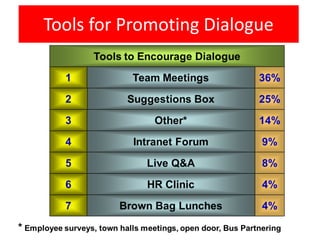
Tools for Promoting Dialogue
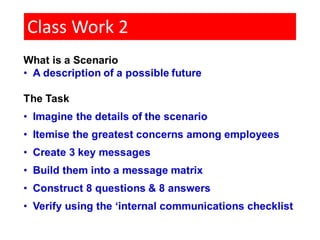
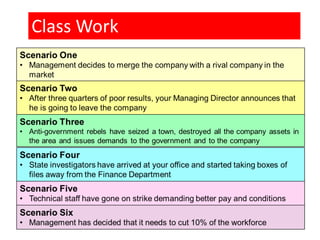
Class Work 2
lecture 3 Internal Comm.pdf

lecture 3 Internal Comm.pdf

  • 1.
  • 2.
    Businesses are drivenby strategic goals and deliverables. These include… Strategic Intent: Mission, Vision, Values Corporate Plan, Deliverables, Objectives and Measures of success Legal Requirements/ Policy Budget Financial Year Priorities Industry trends/ market segments
  • 3.
    There are usuallythree primary work functions that help the business meet its vision… Operational, Delivery and Enabling
  • 4.
    Operational and Deliveryareas oversee the business vision and manage the business’s core functions. These two areas are supported by the business Enabling areas.
  • 5.
    Operational areas areconcerned with managing and directing the physical and/or technical functions of the business. • Budget and Policy Management (Legal Department, Accounting/Finance) • Management of BAU tasks and existing customer products and services (Customer Service, Administration, Shopfronts/ Retail).
  • 6.
    Delivery areas areconcerned with meeting the strategic objectives by developing work and initiatives. • Project Teams • Business Intelligence/Data Analysis • Continuous Improvement • Innovation • Forecasting
  • 7.
    Enabling areas supportboth the Delivery and Operational areas by assisting with the people side of the business. This ensures that employees have the right information, support and tools to do their job, and also means that new initiatives or business change is appropriately supported from both an employee and customer perspective. • Human Resources • Information Technology • Marketing / Communications • Corporate Governance • Learning and Development • Quality Assurance • Employee Engagement
  • 8.
    (Both Internal andExternal Communication are enabling functions)
  • 9.
    The relationship betweenthe Delivery, Operational and Enabling areas depends on communication. Employees need to know when things change or what upcoming initiatives might influence their work or the way they work.
  • 10.
    All three workareas can influence business change or share news about their work. Customer feedback might signal the need for IT change, legislation might mean a HR policy change, and a project might impact the BAU work of a particular team…
  • 11.
    Employees react differentlyto the information and communication they receive about their work and their work environment. Their reaction is based on their motivation, level of engagement, and belief in business messages.
  • 12.
    The average businessis motivated by two primary goals: to provide a service to its existing customers and to maximise its profit in a particular market segment.
  • 13.
    However, a customeris not motivated by the same reasons… Nor are the employees who work for the business…
  • 14.
    What motivates anemployee can impact the level of engagement they have with the business. Employee engagement is the extent to which employees feel a personal and emotional attachment to their work, their leader, and the business vision.
  • 15.
    Poor levels ofemployee engagement means two things for a business: work is not performed to a high standard and there are high rates of employee turnover. This in turn impacts the quality of products and services that are designed and delivered to customers; including the ongoing support of these items.
  • 16.
    Internal Communication largelyfocuses on communicating the vision of the business, the work in progress that is contributing to that vision, advising employees of business change, and providing employees with information relating to other enabling areas that support the employee’s work.
  • 17.
    Internal Communication cannotfunction without engaged employees who are a result of engaged and competent leaders. This is why Internal Communication has its foundations in employee engagement and leadership.
  • 18.
    What is internalcommunications? • Strategic management of information flows to ensure the optimal level of employee engagement (morale and productivity) • Top-down, bottom-up, side-to-side communications harnessed as a means of delivering messages, listening to concerns and motivating staff • Reinforces the vision, values and culture among employees, who can then communicate it to internal & external audiences • Assists in change management • Ensuring employee alignment with strategy
  • 19.
    President Kennedy oncevisited a NASA site and met a janitor. Kennedy asked the janitor, "And what's your job?" The reply was, "Mr. President, I'm helping to put a man on the moon."
  • 20.
    Internal Communication seesthe breadth of the business. Each box in the diagram represents a different area of the business which also represents a depth of knowledge related to that particular area. Internal Communication
  • 21.
    Leaders provide informationand updates to the Internal Communication team, and may also seek communication advice for how to inform staff of business changes and business messages.
  • 22.
    Communicating across theentire business allows Internal Communication to deliver on its roles and functions: • tell employees what they need to know about the company’s projects, business decisions, and business direction • gives employees a general awareness of upcoming initiatives and updates to customer products and services • helps keep employees on the same page by providing corporate messages about leadership decisions and deliverables • lets the various business areas know what is happening in another team or department • ensures that frontline employees are aware of what customers might call and ask questions about in relation to new or changed services • helps give line-of-sight to the business’s strategic direction and corporate plan; often outlining why work is being performed as well as sharing the success of completed projects.
  • 23.
    When employees aredisengaged, or when leaders do not understand the role and function of Internal Communication, information becomes siloed both within and across work areas. Internal Communication
  • 24.
    Poor Internal Communicationmeans… work is not completed to a desired standard because information is not shared; resulting in work that is finalised without consideration of competing priorities, and eventually impacting employees and the customer experience.
  • 25.
    To understand howthe customer experience and employee engagement is impacted by poor Internal Communication, we can look at how, when, and why customers interact with the business…
  • 26.
    How do customersknow or find out about the business? • General marketing / advertising of the business • Media and News coverage • Word-of-mouth • Interaction/historical knowledge based on experience • Shopfronts/ retail stores • Active research/ ‘pull’ themselves towards information • Direct marketing/information ‘pushed’ to them
  • 27.
    Why do theyinteract with the business? • Access to products, services and/or information • Legal requirement to interact (i.e. government agency) • Purchase of items • Payment of services • Complaints
  • 28.
    When and howdo they interact with the business? • When they need to • When they have to • When they want to Interaction takes place via customer service (F2F and telephony), shopfronts, retail stores, and on digital channels such as the website and social media. The type of enquiry, and communication preference, can influence what method a customer chooses to interact with the business.
  • 29.
    This means thatthe knowledge and trust that a customer has of a business is determined by the quality of products and services they use, their customer service experience, the medium they communicate with the business, and the perceptions their peers have of the business…
  • 30.
    Any direct messagea customer receives from the business comes directly from internal sources… If the internal sources (the employees) do not have the right tools, information or interest in aiding the customer experience, the entire business’s brand, image and reputation suffers.
  • 31.
    What is goodinternal communications? • Clear • Credible • Concise • Consistent • Constructive • …and Timely What good is internal communications? • Builds understanding • Promotes engagement • Reinforces values • Primes people for crises
  • 32.
    Checklist CLEAR • Have youremoved all jargon? • Is there any ambiguity in the messages? • Can people read between the lines? • Are all technical terms explained?
  • 33.
    Checklist CREDIBLE • Does yourmessage make sense? • Is there anything that might undermine your message? • Have you checked the facts? • Have you tested the message with an employee?
  • 34.
    Checklist CONCISE • Is thereanything you can remove? • Can you shorten any sentences or paragraphs? • Have you limited yourself to delivering the agreed key messages? • Have you succeeded to illustrating your point?
  • 35.
    Checklist CONSISTENT • Is themessage in line with previous messages? • Are you using the right kind of language? • Does the message fit with audience perception? • Is the message internally consistent?
  • 36.
    Checklist CONSTRUCTIVE • Have youdelivered a new piece of information? • Is it expressed positively and actively (no passives)? • Have you linked it to the strategic goals? • Does the message have a “human” voice?
  • 37.
    Dialogue • Open dialoguebetween staff & upper management • Facilitates flow of information through organisation Crisis & Change • Channels in place in disseminate critical information • Credibility in delivering messages Decision-making • Access to employee input improves decisions • Promotes inclusivity – greater buy-in to decisions
  • 39.
    “By 2011 weaim to have a market capitalisation of $30 billion, 70 million customers Internal Media Investors • What does it mean for me? • Why should I care? • What role do I play? • How do I know if we are on course? • Who’s who? • What’s next?
  • 44.
  • 53.