Trace sulfur compounds in light fractions can be
determined by a calorimetric method.
Sulfur compounds in the gasoline range are harmful
since they change under engine conditions to corrosive
sulfur compounds which reduce the lifetime of the
engine.
Ash content
Tests for ash content show the amount of ash left after burning
all the liquid and volatile material in a crude oil or a product. The
ash is usually metallic salts, metal oxides or silicon oxides and
salts.
Aniline point
It is the lowest temperature at which the oil is completely miscible
with an equal volume of aniline.
It is used to determination of aromatics and naphthens content in
oils or fuels.
Aniline point increases rapidly with paraffinisty.
Petroleum Products
Liquefied Petroleum Gas (L. P. G.) is light hydrocarbons
(propane and butanes) which are gaseous at atmospheric
pressure and temperature. It can be liquefied and maintained in
the liquid state under pressure to facilitate storage, handling and
transport. Commercial L. P. G. is principally composed of butanes
and propane (Butagas).
Crude oil: The material obtained from the well.
Sour Crude: it is the crude containing H2S, RSH in great
amounts.
Gasoline: Liquid petroleum product boiling blew 200°C “Motor
spirit” and ‘petrol’ are also used.
Aviation Gasoline: It is a special type of gasoline used for
aircrafts.
Naphtha: The term is used for the higher boiling fractions up to
220 °C (heavy gasoline).
Kerosene: It is the illuminating oil fraction, also used in stoves
and heaters.
Gas Oil (Solar): It is described as distilled fuel oil.
Diesel Fuel: Fuel for Diesel engines. It is also called heavy gas
oil.
Lubricating Oils (Lube Oils): Oil used for lubrication of engines.
Lubricating Grease: Greases are semisolid lubricants made of
lube oil and soap to have a plastic consistency. The soap
constituent forms a network in the oil and causes the
phenomenon of plasticity. Lubrication is mainly due to the oil
present in the grease.
Petrolatum or Petroleum Jelly: It is a microcrystalline wax with
some lubricating oil. It is sometimes called mineral jelly or
Vaseline.
Asphaltic Bitumen: The dark semisolid residual product
obtained from petroleum by distillation under reduced pressure.
The word is abbreviated to Bitumen.
Asphalt: This is a mixture of asphaltic bitumen + minerals.
Natural Gas
Natural gas is a naturally occurring mixture of light
hydrocarbons accompanied by some non-hydrocarbon
compounds.
Non-associated natural gas is found in reservoirs
containing no oil (dry wells).
It contains a higher ratio of methane than associated
gas.
Associated gas, is natural gas with crude oil and is
co-produced with it. The principal component of most
natural gases is methane. Higher molecular weight
paraffinic hydrocarbons (C2-C7) are usually present in
smaller amounts with the natural gas mixture, and their
ratios vary considerably from one gas field to another.
The non-hydrocarbon constituents in natural gas vary
appreciably from one gas field to another. Some of
these compounds are weak acids, such as hydrogen
sulfide and carbon dioxide. Others are inert, such as
nitrogen, helium and argon.
Raw natural gases contain variable amounts of carbon
dioxide, hydrogen sulfide, and water vapor.
Acid Gas Treatment
Acid gases can be reduced or removed by one or
more of the following methods:
1- Physical absorption
In these processes, no chemical reaction occurs
between the acid gas and the solvent. The solvent, is a
liquid that selectively absorbs the acid gases and leaves
out the hydrocarbons.
Solvents such as Fluor and Selexol.
2- Physical adsorption
In these processes, a solid with a high surface area is
used. Molecular sieves (zeolites) are widely used and
are capable of adsorbing large amounts of gases.
Molecular sieves are used only when the quantities of
hydrogen sulfide and carbon disulfide are low. Molecular
sieves are also capable of adsorbing water in addition to
the acid gases.
3- Chemical absorption (Chemisorption)
It is used a solution of a weak base such as mono- and
diethanolamines. The acid gas forms a weak bond with
the base which can be regenerated easily. Natural gas
is passed through the amine solution where sulfides,
carbonates, and bicarbonates are formed.
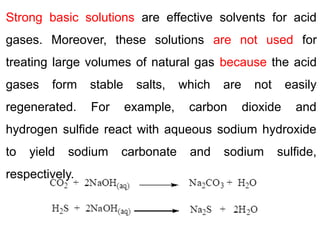
Strong basic solutions are effective solvents for acid
gases. Moreover, these solutions are not used for
treating large volumes of natural gas because the acid
gases form stable salts, which are not easily
regenerated. For example, carbon dioxide and
hydrogen sulfide react with aqueous sodium hydroxide
to yield sodium carbonate and sodium sulfide,
respectively.
Strong caustic solution is used to remove mercaptans
from gas and liquid streams.
In the Merox Process, a caustic solvent containing a
catalyst such as cobalt, which is capable of converting
mercaptans (RSH) to caustic insoluble disulfides
(RSSR), is used for streams rich in mercaptans after
removal of H2S. Air is used to oxidize the mercaptans to
disulfides.
Water removal
Moisture must be removed from natural gas to reduce
corrosion problems and to prevent hydrate formation.
Hydrates are solid white compounds formed from a
physical-chemical reaction between hydrocarbons and
water under the high pressures and low temperatures
used to transport natural gas via pipeline. Hydrates
reduce pipeline efficiency.
Methods to prevent hydrate formation
1- Natural gas was treated with glycols, ethylene glycol
(EG), diethylene glycol (DEG) and triethylene glycol
(TEG) which dissolve water efficiently.
2- Methanol was Injected into gas lines to lower the
hydrate-formation temperature below ambient.
3- Using solid adsorbents such as molecular sieves or
silica gel.

Lecture 2bpptxpetroleumffgggbbbbbbhhhhhhhhh

  • 1.
    Trace sulfur compoundsin light fractions can be determined by a calorimetric method. Sulfur compounds in the gasoline range are harmful since they change under engine conditions to corrosive sulfur compounds which reduce the lifetime of the engine.
  • 2.
    Ash content Tests forash content show the amount of ash left after burning all the liquid and volatile material in a crude oil or a product. The ash is usually metallic salts, metal oxides or silicon oxides and salts. Aniline point It is the lowest temperature at which the oil is completely miscible with an equal volume of aniline. It is used to determination of aromatics and naphthens content in oils or fuels. Aniline point increases rapidly with paraffinisty.
  • 3.
    Petroleum Products Liquefied PetroleumGas (L. P. G.) is light hydrocarbons (propane and butanes) which are gaseous at atmospheric pressure and temperature. It can be liquefied and maintained in the liquid state under pressure to facilitate storage, handling and transport. Commercial L. P. G. is principally composed of butanes and propane (Butagas). Crude oil: The material obtained from the well. Sour Crude: it is the crude containing H2S, RSH in great amounts. Gasoline: Liquid petroleum product boiling blew 200°C “Motor spirit” and ‘petrol’ are also used.
  • 4.
    Aviation Gasoline: Itis a special type of gasoline used for aircrafts. Naphtha: The term is used for the higher boiling fractions up to 220 °C (heavy gasoline). Kerosene: It is the illuminating oil fraction, also used in stoves and heaters. Gas Oil (Solar): It is described as distilled fuel oil. Diesel Fuel: Fuel for Diesel engines. It is also called heavy gas oil. Lubricating Oils (Lube Oils): Oil used for lubrication of engines.
  • 5.
    Lubricating Grease: Greasesare semisolid lubricants made of lube oil and soap to have a plastic consistency. The soap constituent forms a network in the oil and causes the phenomenon of plasticity. Lubrication is mainly due to the oil present in the grease. Petrolatum or Petroleum Jelly: It is a microcrystalline wax with some lubricating oil. It is sometimes called mineral jelly or Vaseline. Asphaltic Bitumen: The dark semisolid residual product obtained from petroleum by distillation under reduced pressure. The word is abbreviated to Bitumen. Asphalt: This is a mixture of asphaltic bitumen + minerals.
  • 6.
    Natural Gas Natural gasis a naturally occurring mixture of light hydrocarbons accompanied by some non-hydrocarbon compounds. Non-associated natural gas is found in reservoirs containing no oil (dry wells). It contains a higher ratio of methane than associated gas.
  • 7.
    Associated gas, isnatural gas with crude oil and is co-produced with it. The principal component of most natural gases is methane. Higher molecular weight paraffinic hydrocarbons (C2-C7) are usually present in smaller amounts with the natural gas mixture, and their ratios vary considerably from one gas field to another.
  • 8.
    The non-hydrocarbon constituentsin natural gas vary appreciably from one gas field to another. Some of these compounds are weak acids, such as hydrogen sulfide and carbon dioxide. Others are inert, such as nitrogen, helium and argon.
  • 9.
    Raw natural gasescontain variable amounts of carbon dioxide, hydrogen sulfide, and water vapor. Acid Gas Treatment Acid gases can be reduced or removed by one or more of the following methods:
  • 10.
    1- Physical absorption Inthese processes, no chemical reaction occurs between the acid gas and the solvent. The solvent, is a liquid that selectively absorbs the acid gases and leaves out the hydrocarbons. Solvents such as Fluor and Selexol.
  • 11.
    2- Physical adsorption Inthese processes, a solid with a high surface area is used. Molecular sieves (zeolites) are widely used and are capable of adsorbing large amounts of gases. Molecular sieves are used only when the quantities of hydrogen sulfide and carbon disulfide are low. Molecular sieves are also capable of adsorbing water in addition to the acid gases.
  • 12.
    3- Chemical absorption(Chemisorption) It is used a solution of a weak base such as mono- and diethanolamines. The acid gas forms a weak bond with the base which can be regenerated easily. Natural gas is passed through the amine solution where sulfides, carbonates, and bicarbonates are formed.
  • 13.
    Strong basic solutionsare effective solvents for acid gases. Moreover, these solutions are not used for treating large volumes of natural gas because the acid gases form stable salts, which are not easily regenerated. For example, carbon dioxide and hydrogen sulfide react with aqueous sodium hydroxide to yield sodium carbonate and sodium sulfide, respectively.
  • 14.
    Strong caustic solutionis used to remove mercaptans from gas and liquid streams. In the Merox Process, a caustic solvent containing a catalyst such as cobalt, which is capable of converting mercaptans (RSH) to caustic insoluble disulfides (RSSR), is used for streams rich in mercaptans after removal of H2S. Air is used to oxidize the mercaptans to disulfides.
  • 15.
    Water removal Moisture mustbe removed from natural gas to reduce corrosion problems and to prevent hydrate formation. Hydrates are solid white compounds formed from a physical-chemical reaction between hydrocarbons and water under the high pressures and low temperatures used to transport natural gas via pipeline. Hydrates reduce pipeline efficiency.
  • 16.
    Methods to preventhydrate formation 1- Natural gas was treated with glycols, ethylene glycol (EG), diethylene glycol (DEG) and triethylene glycol (TEG) which dissolve water efficiently. 2- Methanol was Injected into gas lines to lower the hydrate-formation temperature below ambient. 3- Using solid adsorbents such as molecular sieves or silica gel.