Lecture 2
Lecture 2
Lecture 2
Lecture 2
Lecture 2
Lecture 2
Lecture 2
Lecture 2
Lecture 2
Lecture 2
Lecture 2
Lecture 2
Lecture 2
Lecture 2
Lecture 2
Lecture 2
Lecture 2
Lecture 2
Lecture 2
Lecture 2
Lecture 2
Lecture 2
Lecture 2
Lecture 2
Lecture 2
Lecture 2
Lecture 2
Lecture 2
Lecture 2
Lecture 2
Lecture 2
Lecture 2
Lecture 2
Lecture 2
Lecture 2
Lecture 2

Editor's Notes

  • #4  FINISHED WITH THIS SLIDE, LECTURE 3 2007
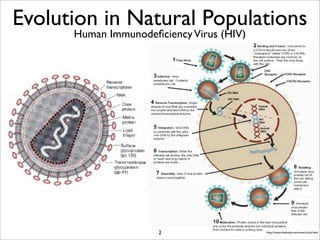
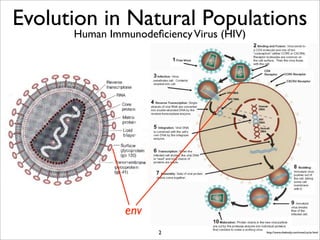
  • #5  HIV: A retrovirus (virus particle carries RNA, not DNA) that causes AIDS in humans
  • #7  As we know, HIV has a very high mutation rate, allowing it to quickly thwart the defenses of the immune system and drugs.
  • #9  env gene encodes surface glycoprotein of virus
  • #11  Seems very likely to be involved in very early stages of infection of a cell
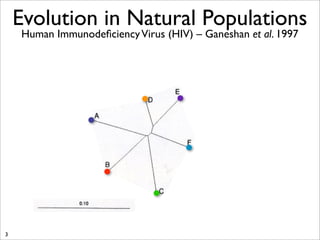
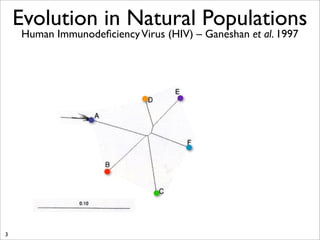
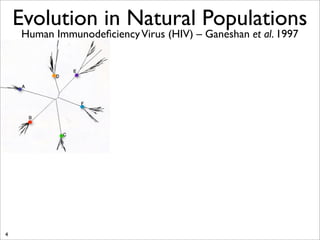
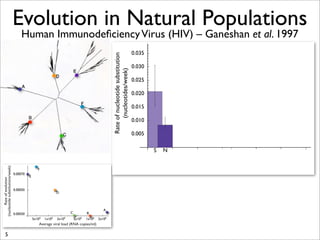
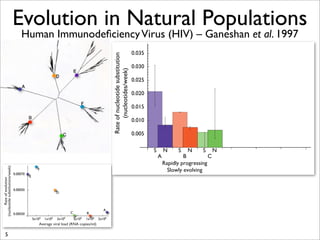
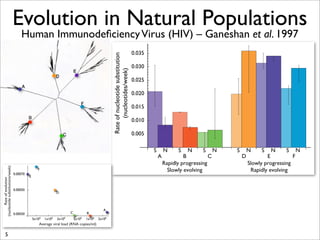
  • #12  Sequenced regions of the env gene from six children who were infected with HIV during pregnancy
  • #13  Sequences were determined at four different time points from ~12 viral clones each time
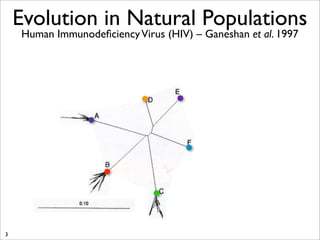
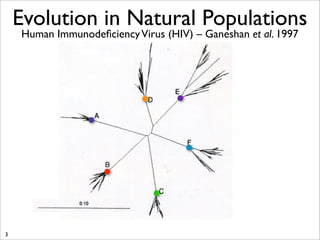
  • #14  Initially, all viruses within a child were similar. Over time, however, the viral sequences changed
  • #15  Ganeshan et al. illustrated these changes using a phylogenetic tree, which places sequences that are similar to one another close together
  • #16  (Branch distance between two sequences on the tree is related to the number of sequence differences between them.)
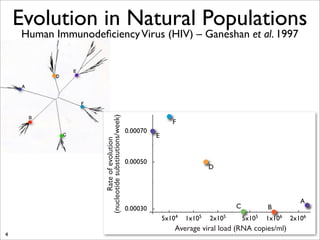
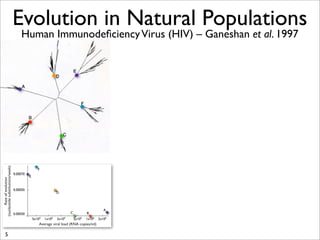
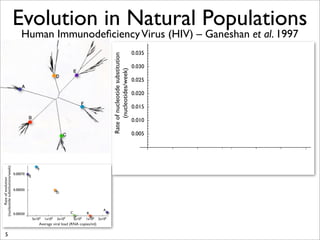
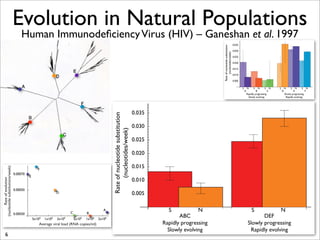
  • #18  D, E, F appeared to have a stronger immune response.
  • #20  How might we explain the faster rate of evolution in D, E, F?
  • #21  Selection
  • #22  Higher mutation rate
  • #24  How can we tease these apart?
  • #26  FINISHED HERE, LECTURE 3 2008
  • #27  Sequenced regions of the env gene from six children who were infected with HIV during pregnancy
  • #28  Sequences were determined at four different time points from ~12 viral clones each time
  • #29  Initially, all viruses within a child were similar. Over time, however, the viral sequences changed
  • #30  Ganeshan et al. illustrated these changes using a phylogenetic tree, which places sequences that are similar to one another close together
  • #31  (Branch distance between two sequences on the tree is related to the number of sequence differences between them.)
  • #33  D, E, F appeared to have a stronger immune response.
  • #35  How might we explain the faster rate of evolution in D, E, F?
  • #36  Selection
  • #37  Higher mutation rate