Experimental Designs
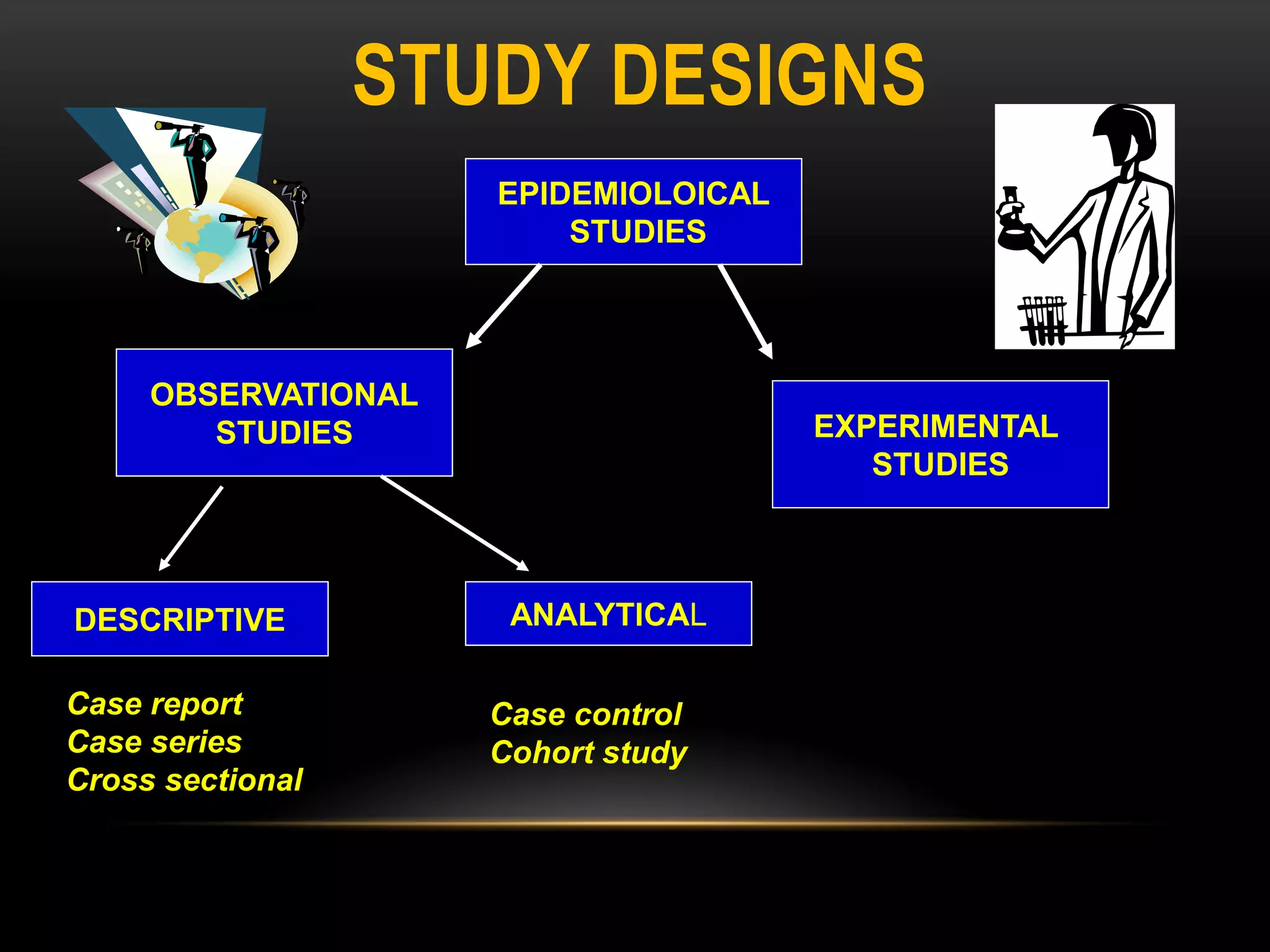
STUDY DESIGNS
STUDY DESIGNS
EPIDEMIOLOICAL
STUDIES
EXPERIMENTAL
STUDIES
OBSERVATIONAL
STUDIES
Case report
Case series
Cross sectional
Case control
Cohort study
DESCRIPTIVE ANALYTICAL
Experimental studies
• In experimental research, the study subjects are
observed under predetermined conditions using carefully
designed approaches to data & specimens
• The gold standard of clinical research
The experimental study designs differ from
the analytical study designs
1. The conditions in which the study is carried are under direct
control of the investigator
2. The experimental studies involve some action or
intervention or manipulation in the experiment group while
making no change in the control group
3. In analytical studies, no action but only observation of the
natural course of events or outcomes
The aims of experimental studies
1. To provide scientific evidence of etiological or risk
factors to permit modification or control of disease
2. To provide a method of measuring the
effectiveness or efficiency of the health services
for prevention, control & treatment of disease and
to improve the health of the community
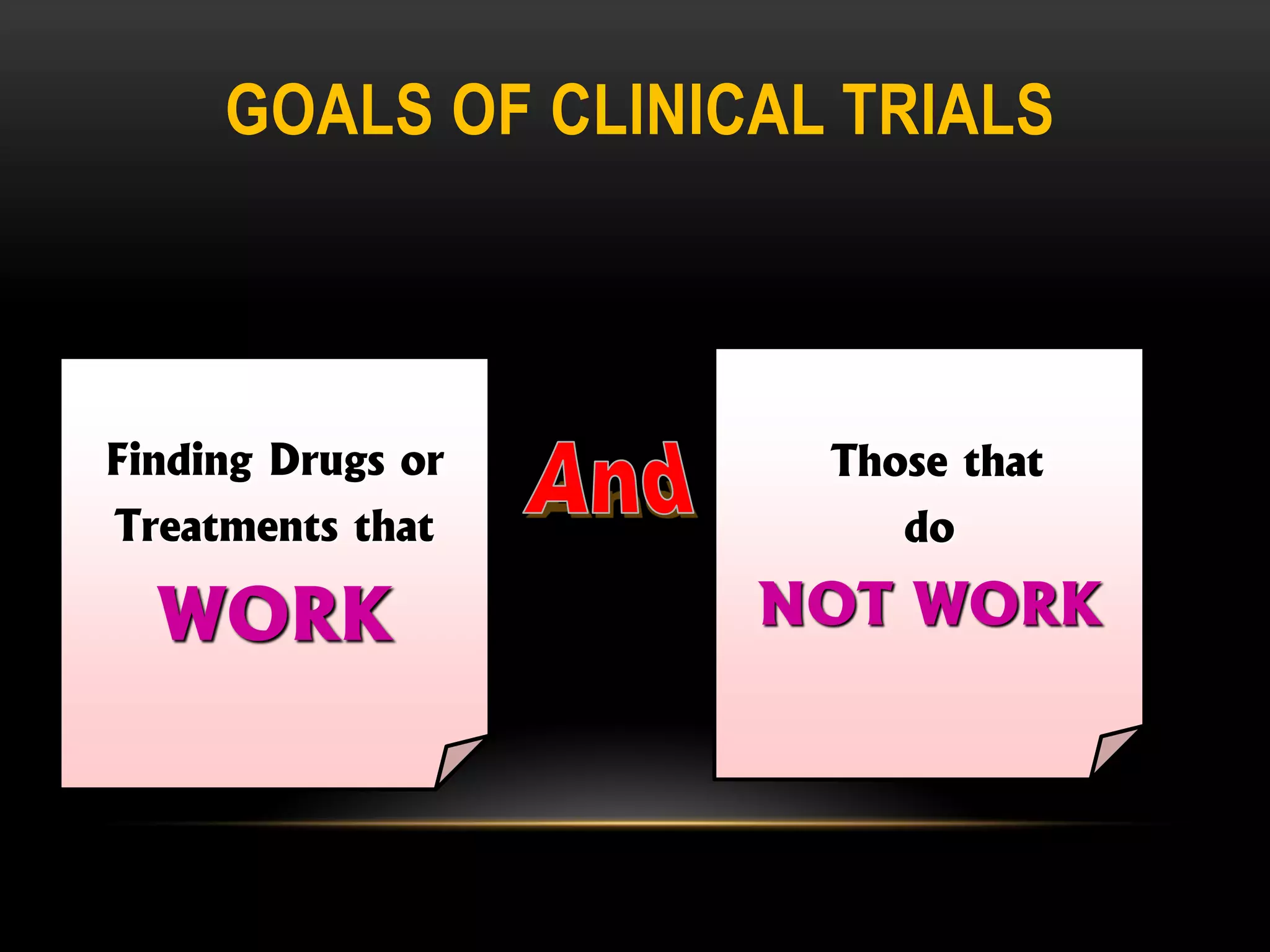
GOALS OF CLINICAL TRIALS
Finding Drugs or
Treatments that
WORK
Those that
do
NOT WORK
USES OF CLINICAL TRIALS
• Treatment: test experimental treatments, combinations of
drugs, new approaches
• Prevention: look for better way to prevent disease or its
recurrence
• Diagnostic: develop better tests
• Screening: to detect diseases or health conditions
• Quality of Life (or Supportive Care): improve comfort and
QOL in chronic disease states
The disadvantages of the experimental studies
•They are costly
• Ethical problems
• Feasibility
CLINICAL TRIAL DESIGN
• In early smaller studies, where the drug is
being tested for safety and dose, each
person who participates gets the new drug
being tested
• In the following larger trials, doctors
compare the new drug with another
treatment to see which works better on
participants
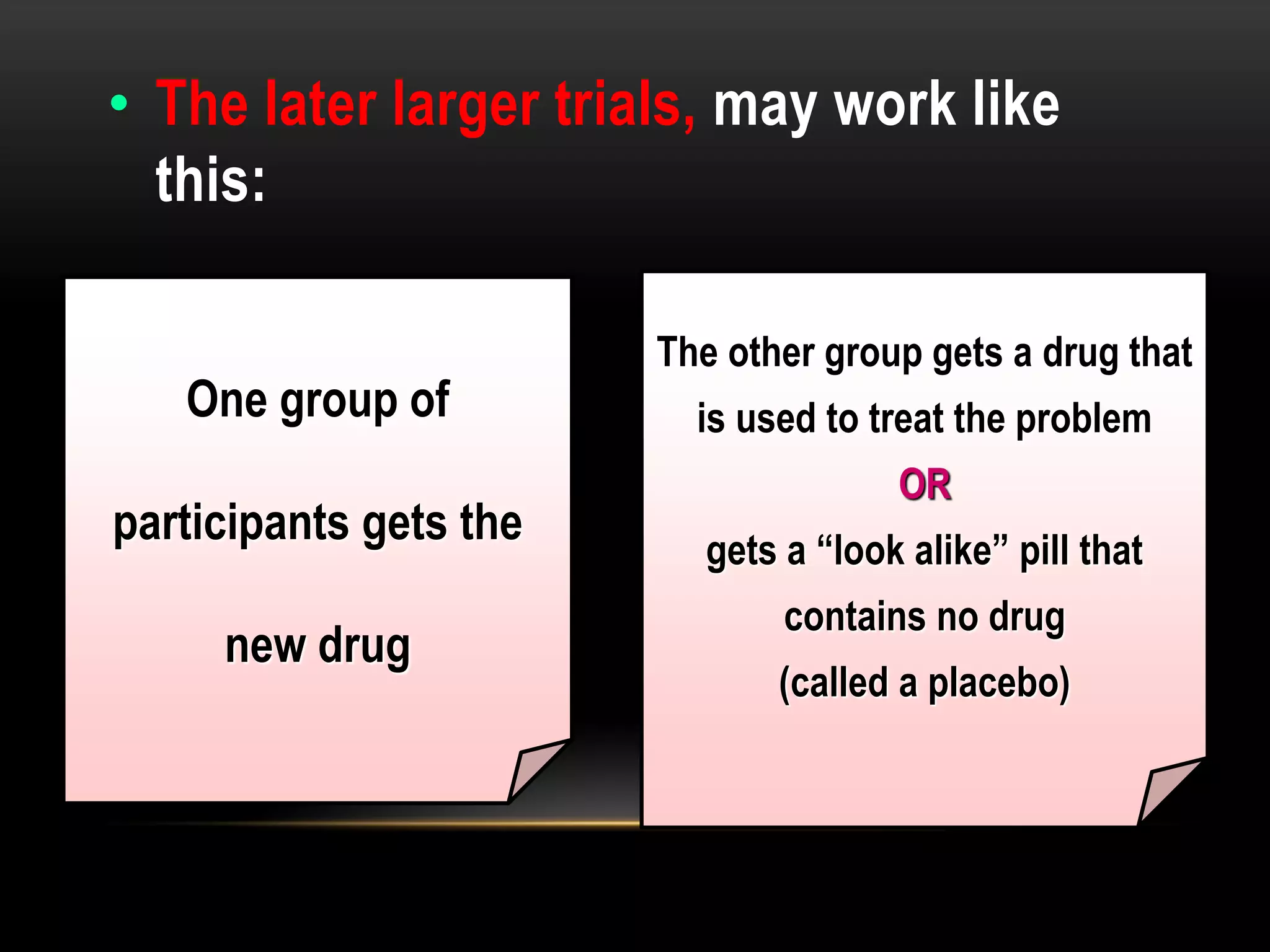
• The later larger trials, may work like
this:
One group of
participants gets the
new drug
The other group gets a drug that
is used to treat the problem
OR
gets a “look alike” pill that
contains no drug
(called a placebo)
COMMON CLINICAL TRIAL TERMS
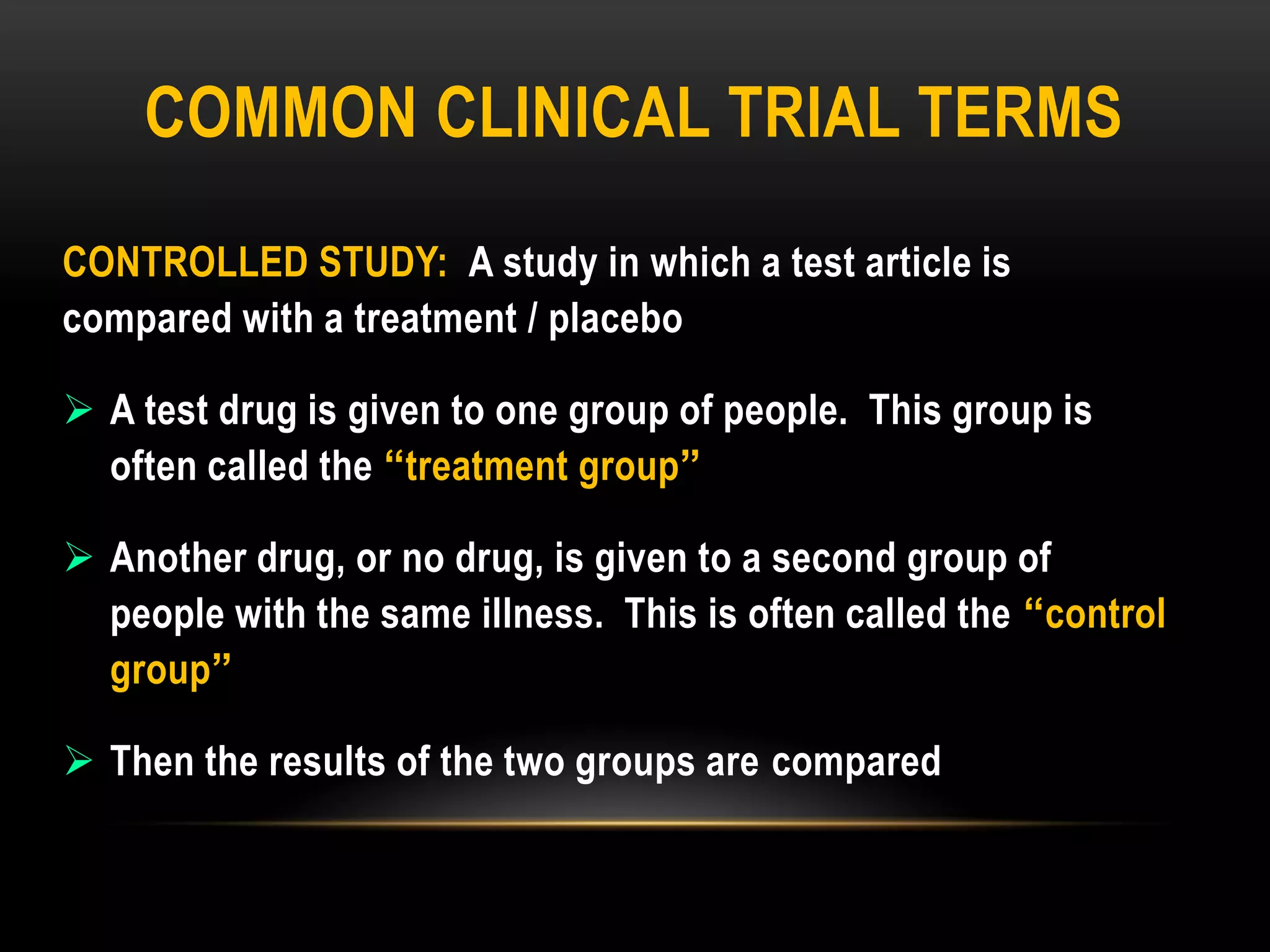
CONTROLLED STUDY: A study in which a test article is
compared with a treatment / placebo
 A test drug is given to one group of people. This group is
often called the “treatment group”
 Another drug, or no drug, is given to a second group of
people with the same illness. This is often called the “control
group”
 Then the results of the two groups are compared
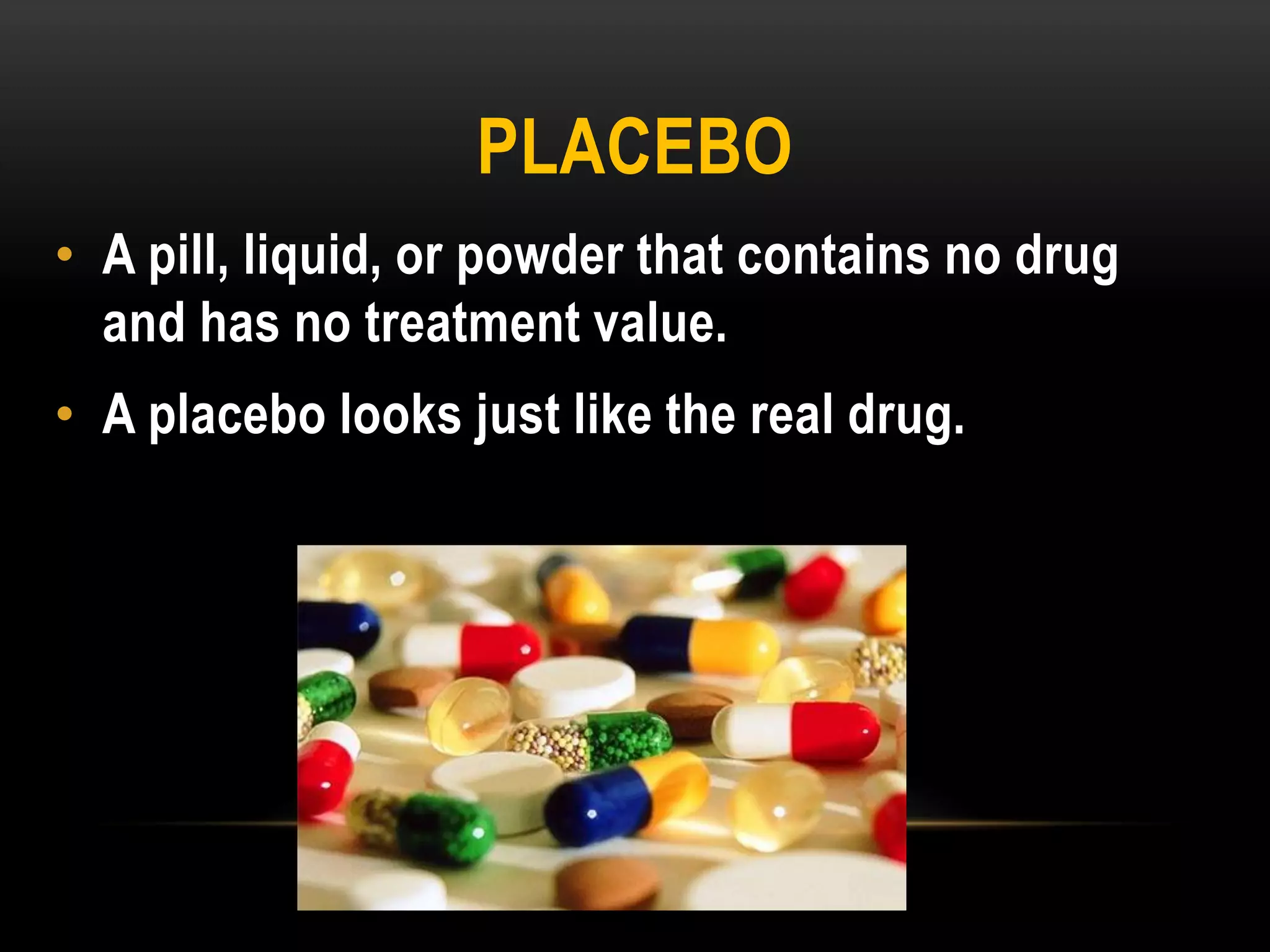
PLACEBO
• A pill, liquid, or powder that contains no drug
and has no treatment value.
• A placebo looks just like the real drug.
RANDOMIZED STUDY
• Involves randomly allocating the Research Participants
across the treatment groups
BLINDED STUDY
• A study in which the research subject or the investigator (or
both) are unaware of what trial product the subject is taking
 Single-Blinded: Subjects do not know what treatment they
are getting but their research doctor and team do.
 Double-Blinded: Neither the subject nor the research doctor
knows which treatment the subject is getting
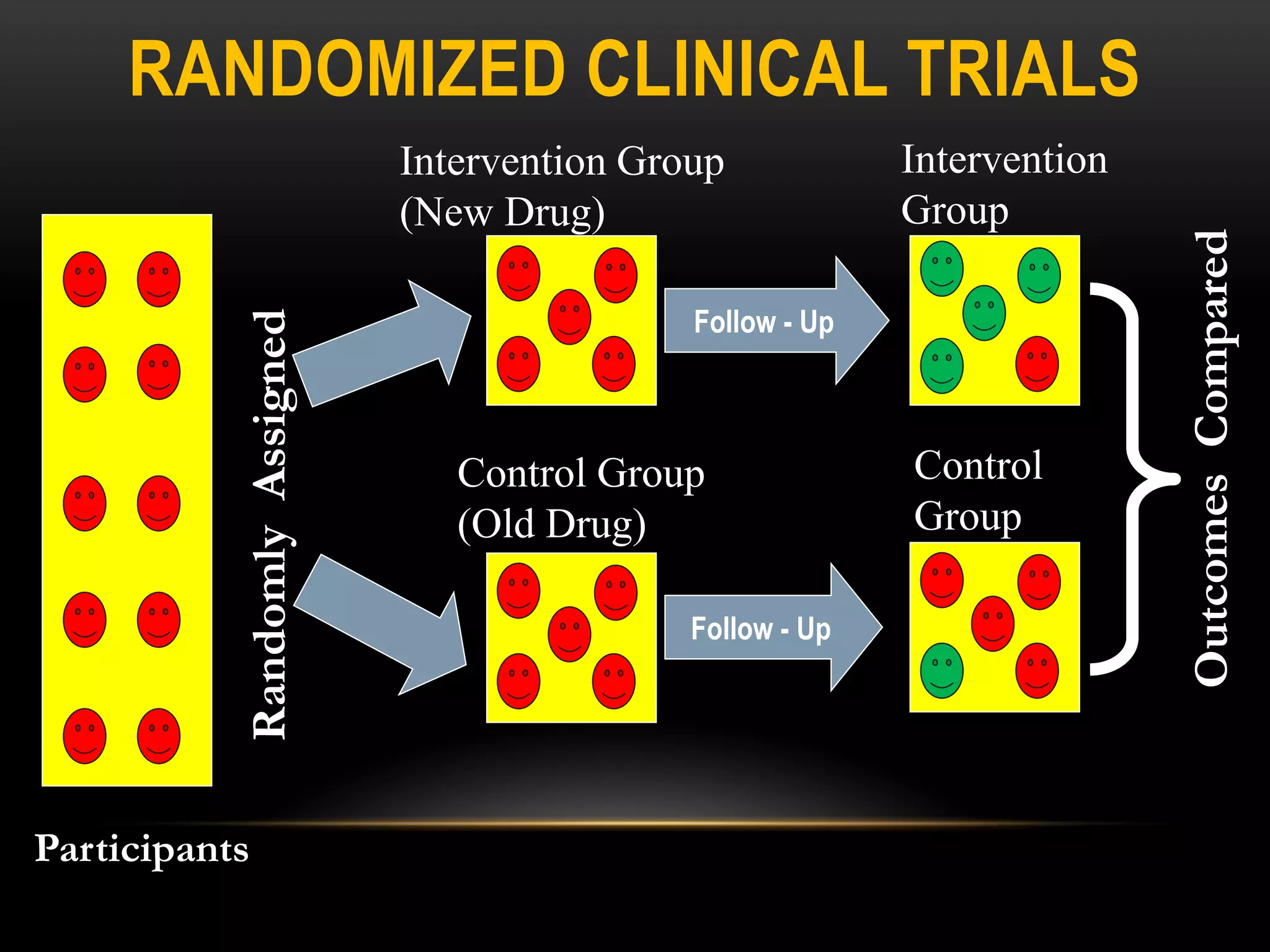
RANDOMIZED CLINICAL TRIALS
Participants
Randomly
Assigned
Follow - Up
Follow - Up
Outcomes
Compared
Intervention Group
(New Drug)
Control Group
(Old Drug)
Intervention
Group
Control
Group
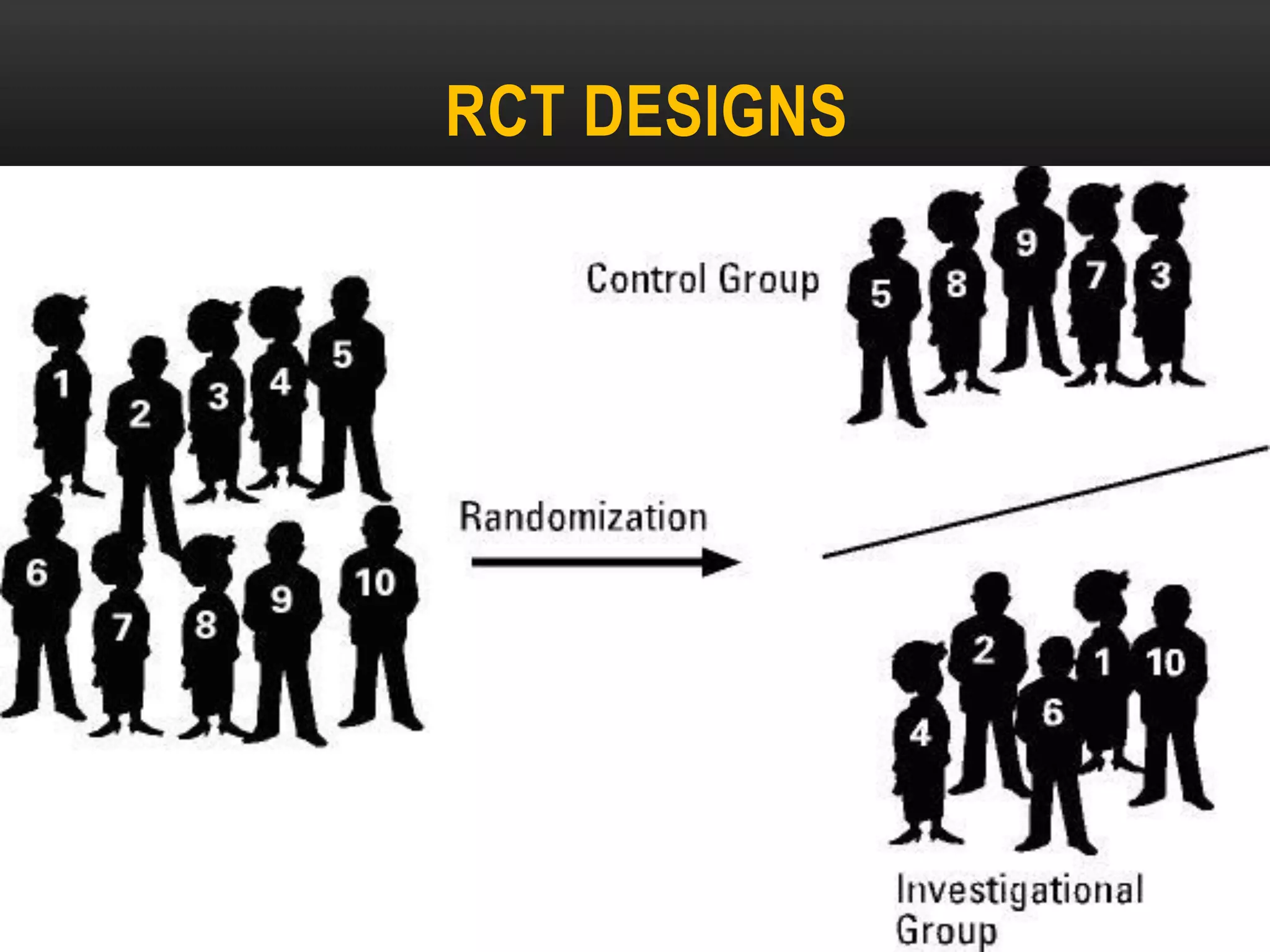
RCT DESIGNS
RCT DESIGNS
[1] According to exposure to intervention:
 Parallel design Each group is subjected one
intervention ( the most common design)
Group A
Group B
TREATMENT A
TREATMENT B / Placebo
RCT DESIGNS
[1] According to exposure to intervention:
 Cross – Over design Each participant is given
both interventions in successive periods. Each
participant acts as his or her own control.
Treatment Placebo
TREATMENT A TREATMENT B
RCT DESIGNS
[1] According to exposure to intervention
 Factorial design: When interventions are
compared separately, in combination and
against a control in different groups.
TREATMENT A
TREATMENT B
TREATMENT A +B
PLACEBO
Group A
Group B
Group C
Group D
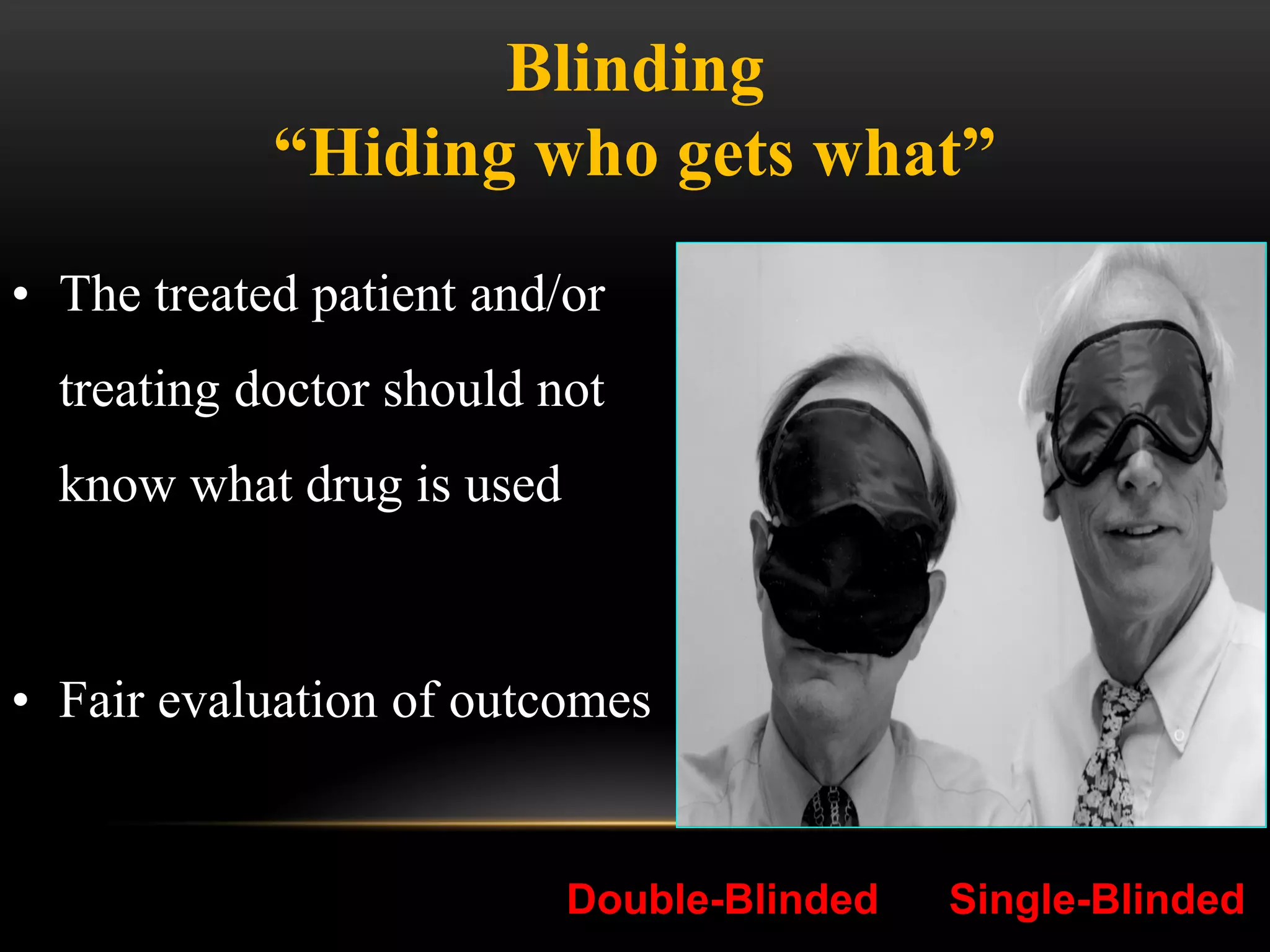
Double-Blinded Single-Blinded
Blinding
“Hiding who gets what”
• The treated patient and/or
treating doctor should not
know what drug is used
• Fair evaluation of outcomes
RCT DESIGNS
[2] According to “Blindness” to the interventions
 Open RCT everybody involved in the trial knows which
intervention is given to each participant
 Single blind RCT either the participants or the investigators do
not know the identity of interventions
 Double blind RCT Both the participants or the investigators do
not know the identity of the interventions
 Triple blinded RCT: Participant, investigators or person who
evaluates do not know the identity of the intervention
Non-randomized trials
Those departing from strict randomization for
practical purposes but in such a manner that non-
randomization does not seriously affect the
theoretical basis of conclusions
The quasi-experimental study designs
In this design the control over the external
factors is not possible and this might alter the
outcome variables
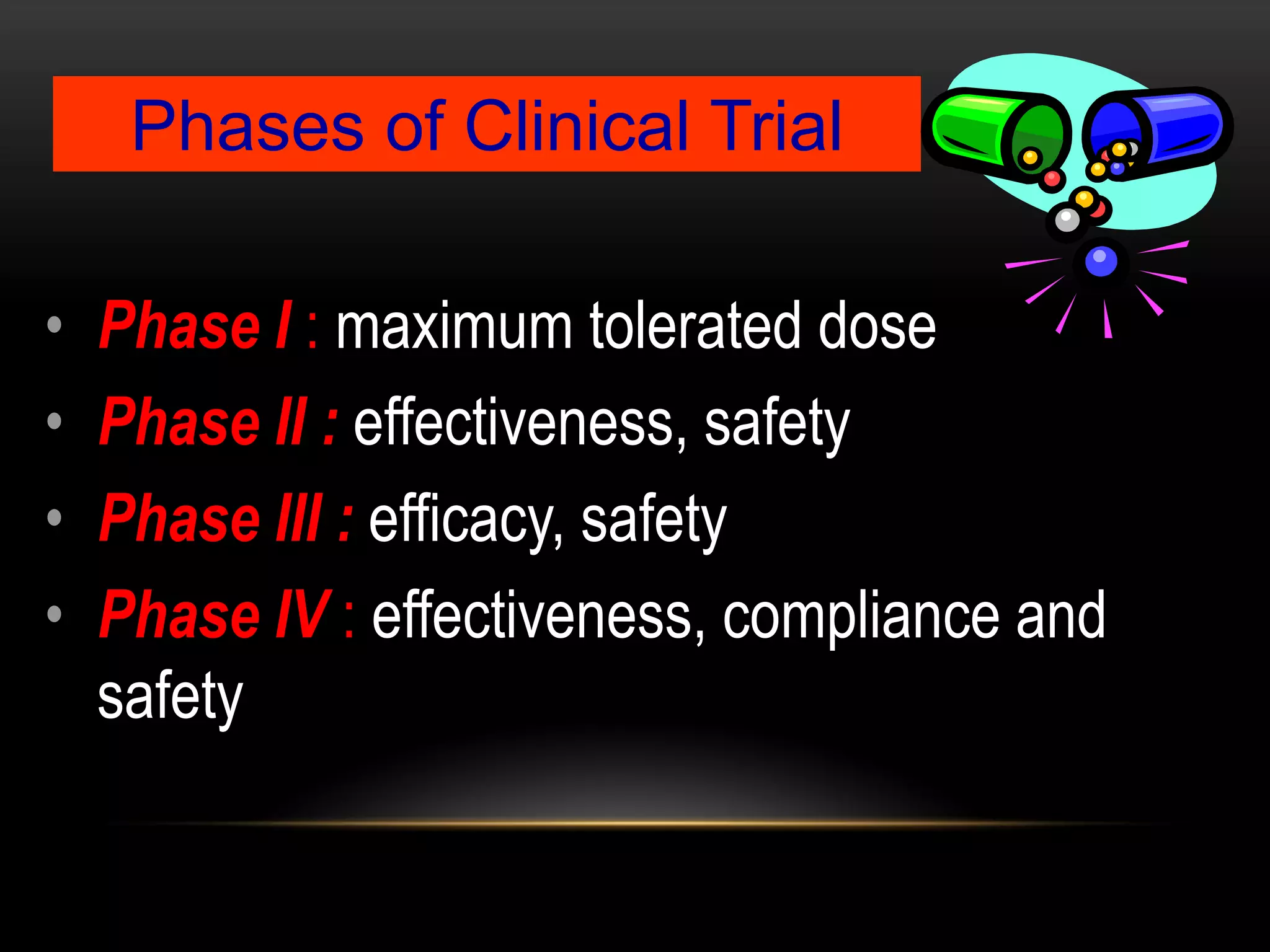
Phases of Clinical Trial
• Phase I : maximum tolerated dose
• Phase II : effectiveness, safety
• Phase III : efficacy, safety
• Phase IV : effectiveness, compliance and
safety
RISKS AND BENEFITS OF CLINICAL TRIALS
• Risks:
• Unpleasant or serious side effects
• You may receive a placebo
• No guarantee that the experimental drug will be an effective
treatment for you
• Benefits:
• May experience health benefits from a new treatment
• Free lab tests and expert treatment
• Contributing to the development of a new medication
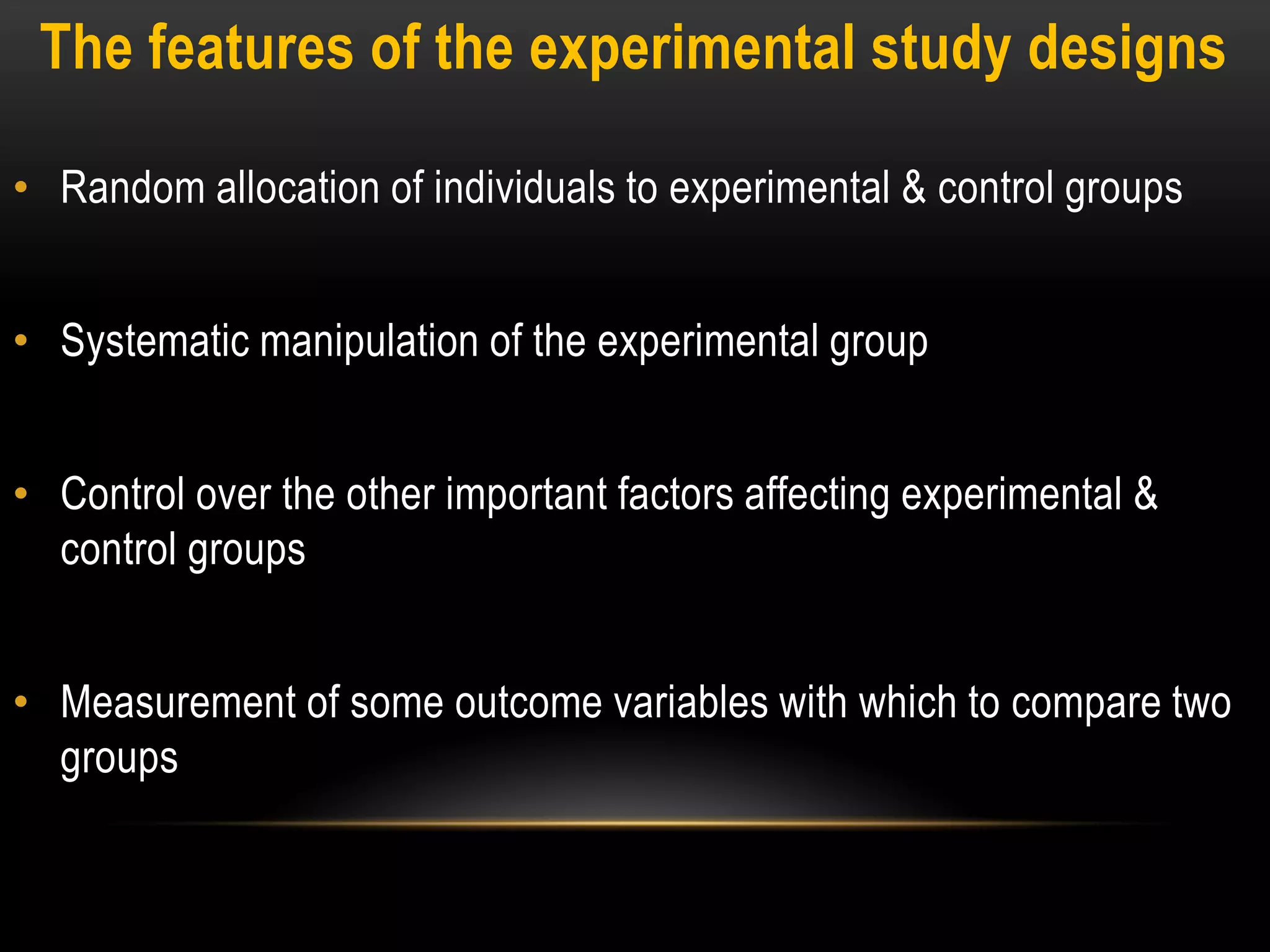
The features of the experimental study designs
• Random allocation of individuals to experimental & control groups
• Systematic manipulation of the experimental group
• Control over the other important factors affecting experimental &
control groups
• Measurement of some outcome variables with which to compare two
groups
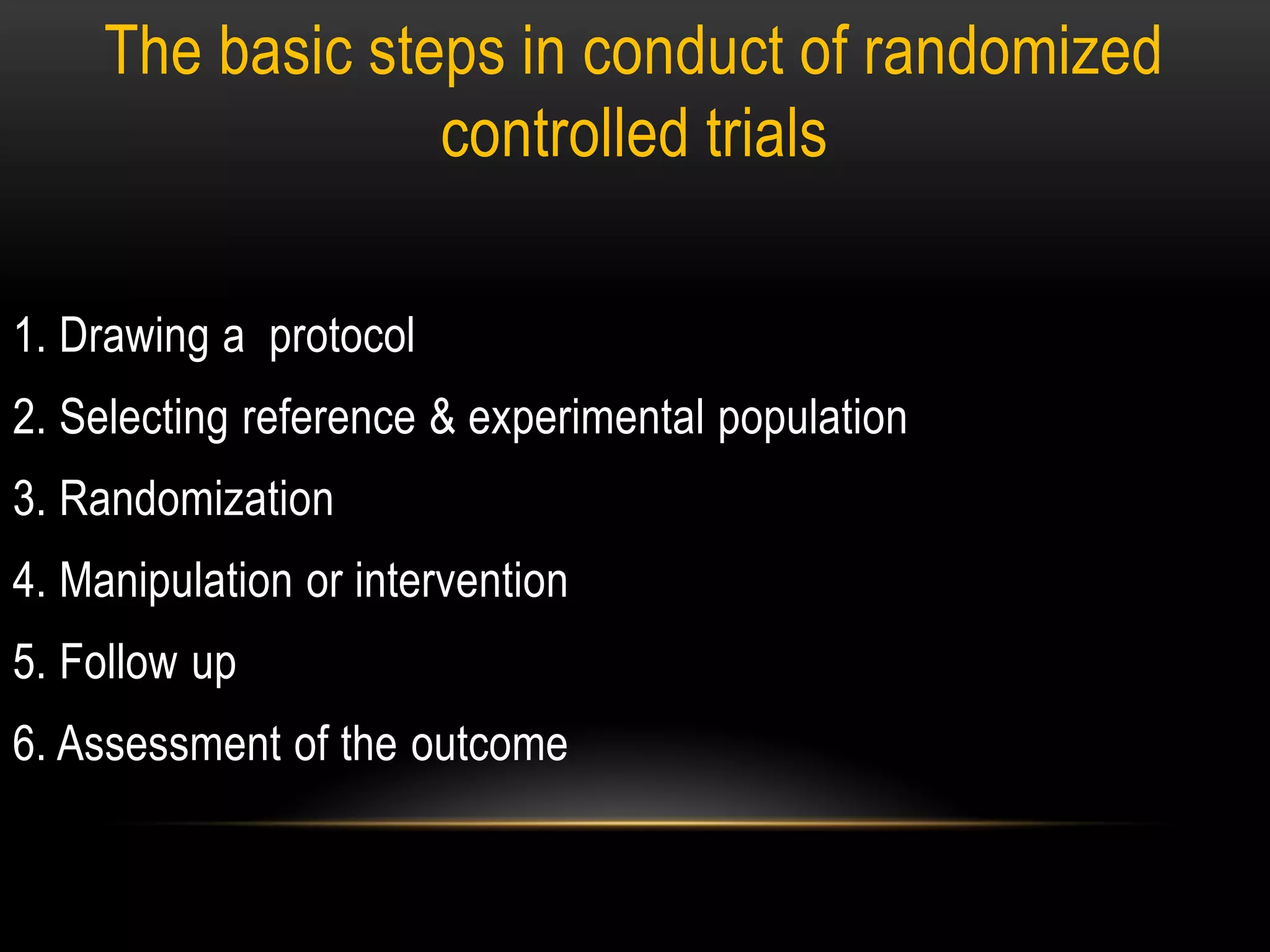
The basic steps in conduct of randomized
controlled trials
1. Drawing a protocol
2. Selecting reference & experimental population
3. Randomization
4. Manipulation or intervention
5. Follow up
6. Assessment of the outcome
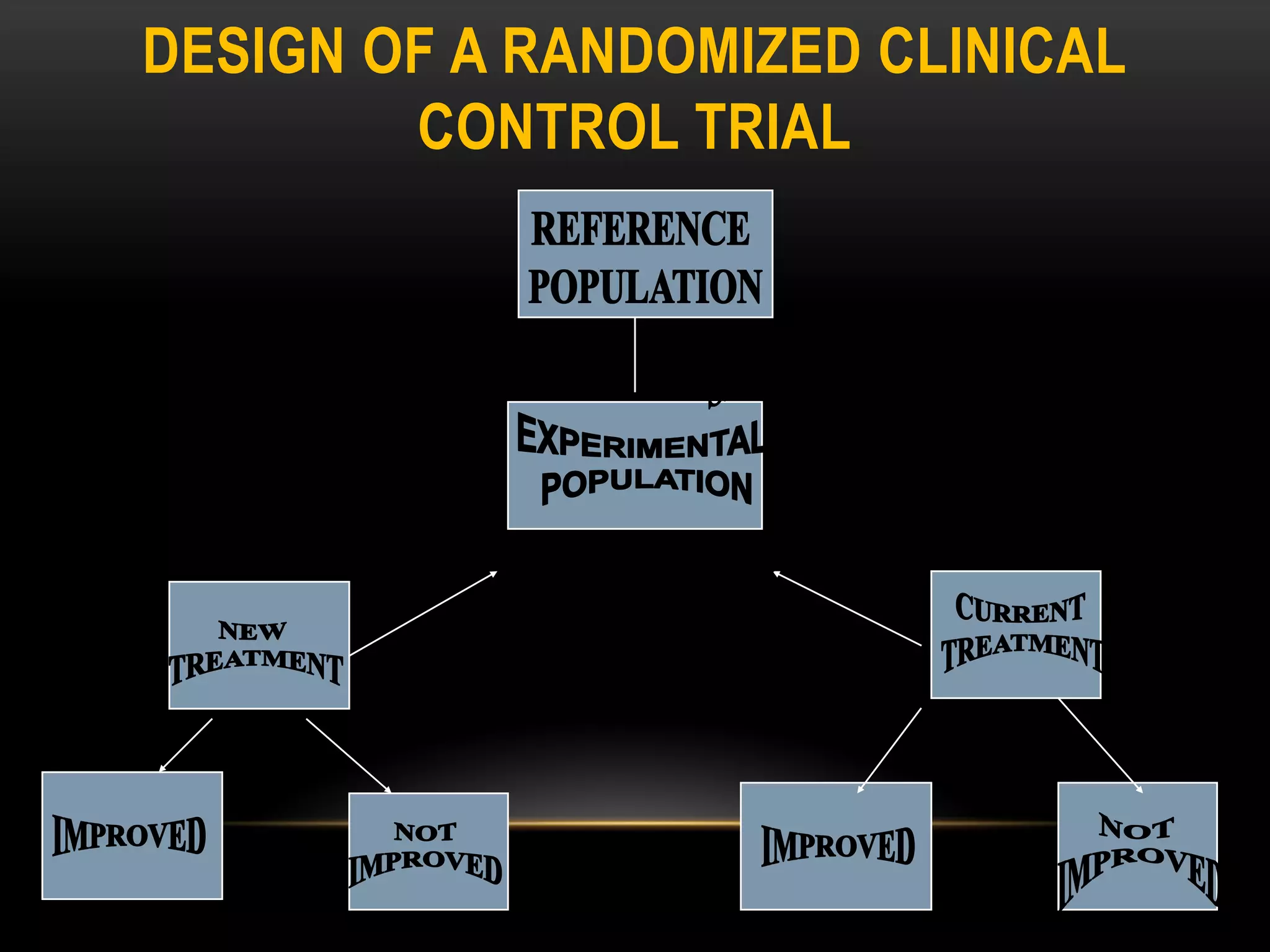
DESIGN OF A RANDOMIZED CLINICAL
CONTROL TRIAL
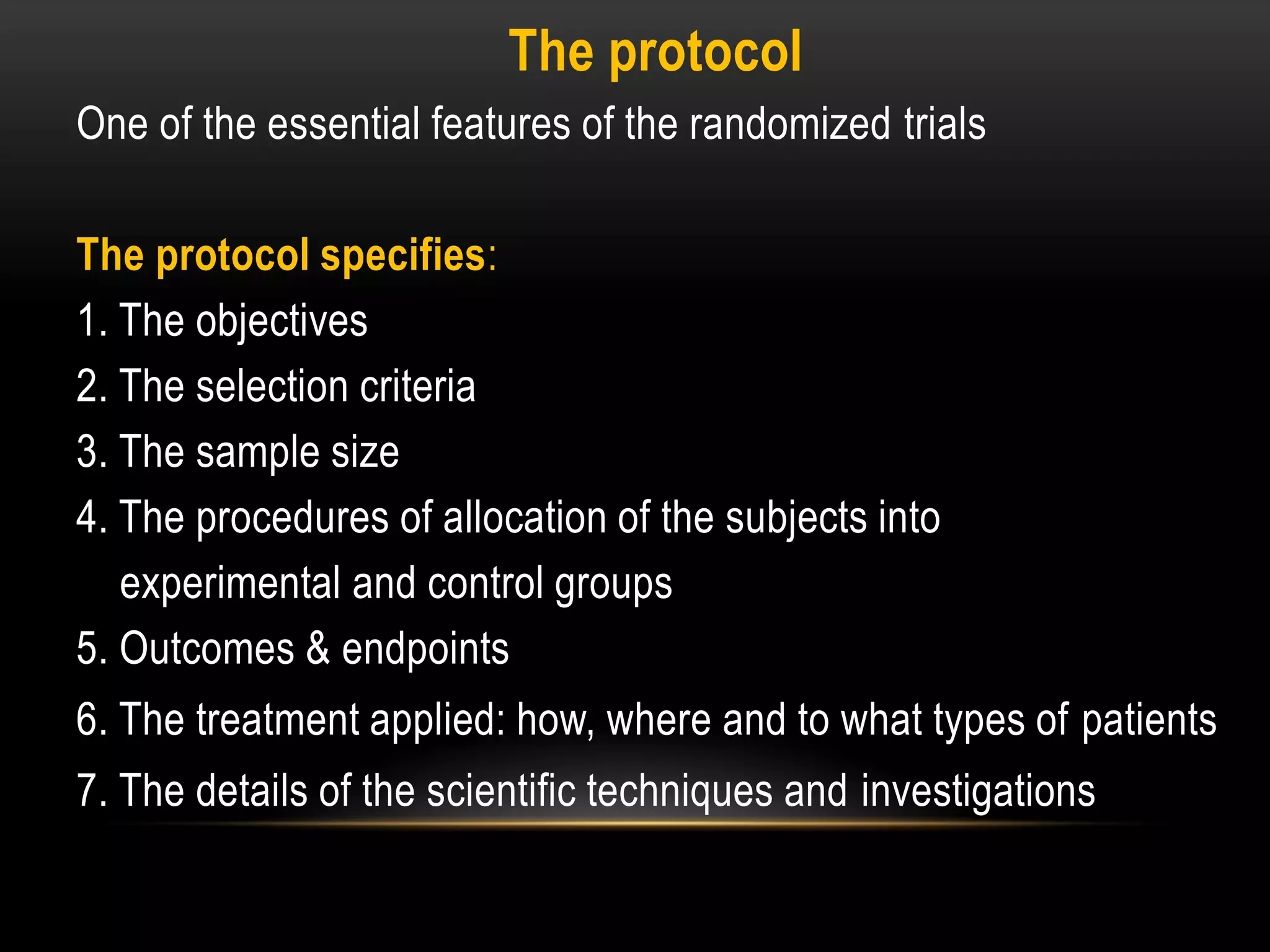
The protocol
One of the essential features of the randomized trials
The protocol specifies:
1. The objectives
2. The selection criteria
3. The sample size
4. The procedures of allocation of the subjects into
experimental and control groups
5. Outcomes & endpoints
6. The treatment applied: how, where and to what types of patients
7. The details of the scientific techniques and investigations
Once a protocol has been evolved, it
should be strictly adhered to
throughout the study
(Protocol Violation)
Selection of the reference & the
experimental populations
The reference population:
• It is the population to which the findings of the trial, if
found to be successful, are expected to be applicable
The experimental population:
• The experimental (study) population is derived from the
reference population
• It is the actual population that participates in the experimental
study
• It should be randomly selected from the reference population
• If the study population differs from the reference population, it
may not be possible to generalize the findings to the reference
population
Participants or the volunteers of the experiment must fulfill
the following criteria:
• They must give informed consent
•They should be representative of the reference population
• They should be eligible or qualified for the trial
Randomization
• Randomization is the statistical procedure by
which the participants are allocated into groups
usually called study & control groups to receive
or not to receive an experimental or therapeutic
procedure or intervention.
• Randomization aims to make the groups comparable
• Randomization ensures that the investigator has no
control over the allocation of the participants to either the
study or control group, thus eliminating the selection
bias
• Every individual has an equal chance of being allocated
into either group
• Randomization is best done by using statistical random
table
The essential difference between a randomized trial and analytical
study is that:
• In the latter there is no randomization because differentiation
into cases & controls exposed and non-exposed groups has
already taken place
• Thus the only option left to ensure comparability in analytical
studies is by matching
MANIPULATION
• Manipulation or intervention is usually done by application or
withdrawal of the suspected factor e.g. drugs, vaccine or
dietary factor
• This manipulation creates an independent variable (drug,
vaccine or new procedure) whose effect is then determined
by the measurement of the final outcome which constitutes
the dependent variable e.g. incidence of disease, recovery
FOLLOW UP
• This includes examination of the study & control
groups subjects at defined intervals of time in
standard manner under the same conditions in the
same time frame till the final assessment
Main difficulties encountered in the follow up process
include:
• Attrition, death, migration, displacement and loss of
interest
Assessment
The final assessment of the trial is carried in terms of:
• Positive results: these include the benefits of the
experimental study such as reduced incidence of the
disease or severity of the disease, cost of health
services or other appropriate outcome
• Negative results: these include the severity
& frequency of side-effects and complications
• The incidence of positive/negative results is
compared in both groups and the differences
are tested statistically
BIAS
Bias is the systematic difference between observed results
and the actual results
Sources of bias:
1. participant’s bias:
The participants report subjectively that they feel better or
improved if they knew that they were receiving new
treatment
2. Observer’s bias:
The influence of the investigator measuring the
outcome of the trial if he knew beforehand the
particular procedure to which the patient has been
subjected
3. Evaluation bias:
There may be bias in evaluation as the investigator
may involuntarily give favorable report of the
outcome of the study
How to reduce the sources of bias?
1. Randomization
2. Blinding
Blinding is carried in three ways:
1. Single blind trial: the trial is so planned that the
participant is not aware whether he belongs to the
study or control group.
2. Double blind trial: the trial is so planned that
neither the doctor nor the participant is aware of
the group allocation and treatment received.
3. Triple-blind trial:
• The trial is so planned that the participant, the
investigator& the person analyzing the data are
all blind.
• This is the ideal but double-blinding is the
most commonly used.
PHASES OF CLINICAL TRIALS
• A properly planned and implemented clinical trial is a
powerful technique for assessing the effectiveness of an
intervention
• A clinical trial is a prospective study comparing the effect
of intervention(s) against a control in human beings
• A clinical trial is prospective rather than retrospective
• Study participants must be followed foreword in
time.
• Follow up of the study subjects overtime without
active intervention may measure the natural
history of disease but this is not a clinical trial
Clinical trials Phases
Phase (I):
• The first step or phase is to understand how well the
intervention can be tolerated in a small number of healthy
individuals or sometimes patients
• It does not meet the standard definition of a clinical trial
• Most phase I designs are relatively simple
• Evaluating drugs, needs first step is to estimate how a dose can
be administered before unacceptable toxicity is experienced by
patients
• This dose is usually called maximally tolerated dose (MTD)
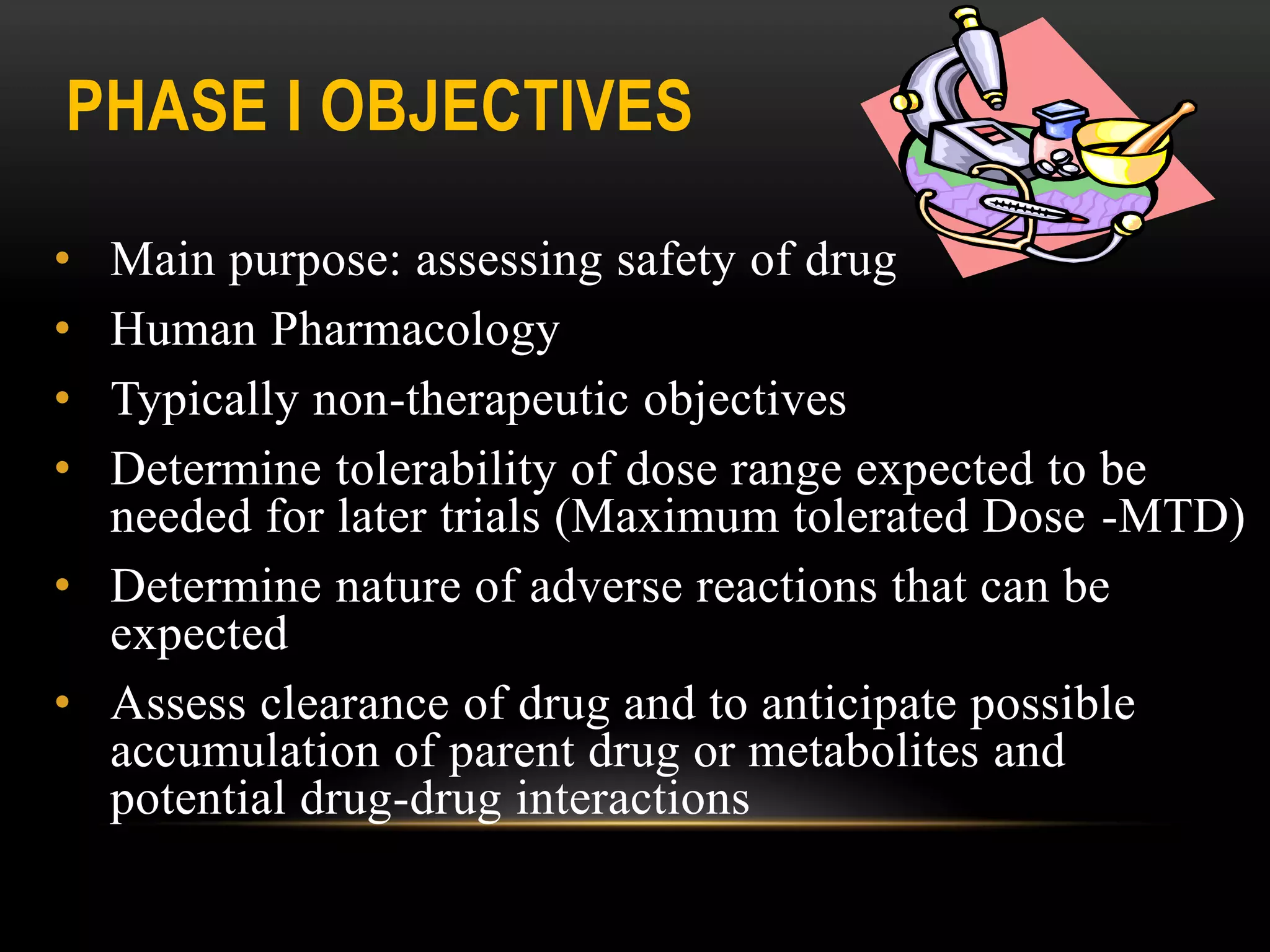
PHASE I OBJECTIVES
• Main purpose: assessing safety of drug
• Human Pharmacology
• Typically non-therapeutic objectives
• Determine tolerability of dose range expected to be
needed for later trials (Maximum tolerated Dose -MTD)
• Determine nature of adverse reactions that can be
expected
• Assess clearance of drug and to anticipate possible
accumulation of parent drug or metabolites and
potential drug-drug interactions
PHASE I DEMOGRAPHICS
• Usually healthy volunteers or certain types of patients (e.g.
new chemotherapeutic agent for cancer patients with end
stage disease)
• Often conducted in a medical setting
• 20-100 patients
• Trials can last up to several months
• Open label –everyone knows what they are getting.
• 70% of drugs successfully complete Phase I and continue
on to Phase II
Phase (II) trials
• Once the MTD is established: the next step is to
evaluate whether the drug has any biological
effect and to estimate the rate of adverse effects.
• If the design of phase I has not been adequate, the
investigator may evaluate the dose
• phase II design depends on the quality of adequacy of
phase I
• The design usually encounters a limited number of
patients and then the response rate is estimated
• If the response rate is less than the 20%: the drug is
omitted.
• If the response is greater than 20%: more patients
are recruited according to the precision desired:
usually 10-20
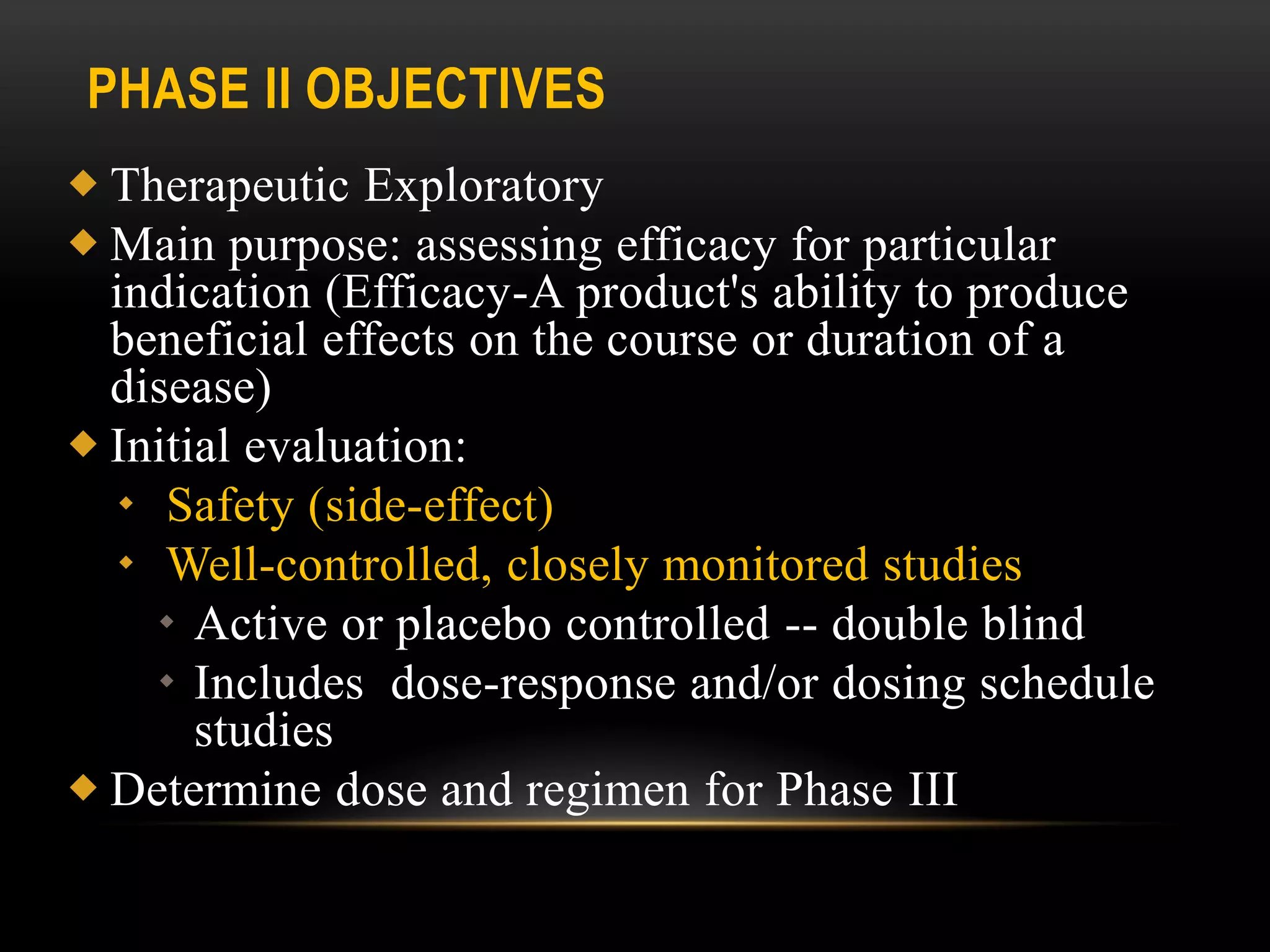
PHASE II OBJECTIVES
 Therapeutic Exploratory
 Main purpose: assessing efficacy for particular
indication (Efficacy-A product's ability to produce
beneficial effects on the course or duration of a
disease)
 Initial evaluation:
 Safety (side-effect)
 Well-controlled, closely monitored studies
 Active or placebo controlled -- double blind
 Includes dose-response and/or dosing schedule
studies
 Determine dose and regimen for Phase III
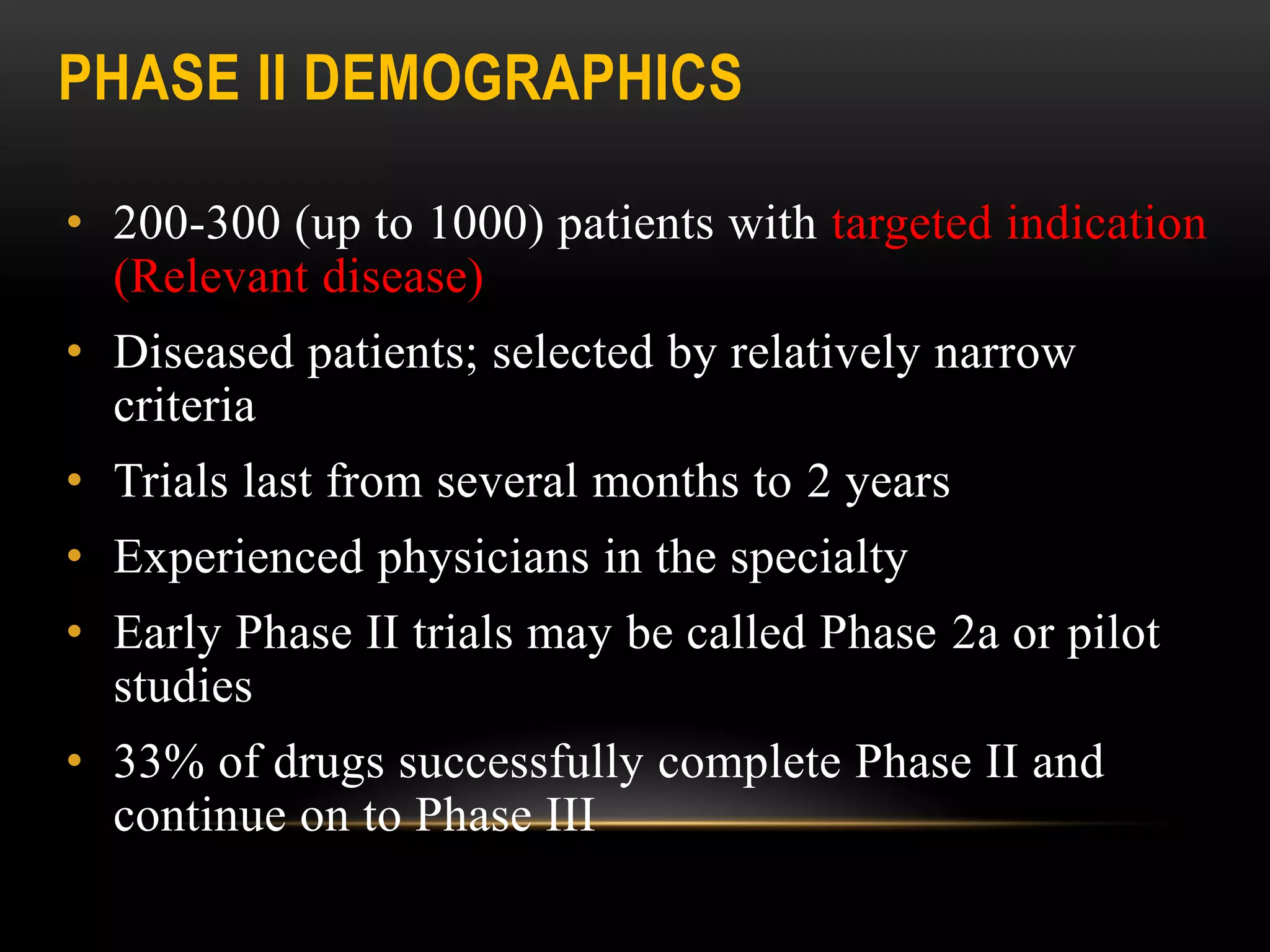
PHASE II DEMOGRAPHICS
• 200-300 (up to 1000) patients with targeted indication
(Relevant disease)
• Diseased patients; selected by relatively narrow
criteria
• Trials last from several months to 2 years
• Experienced physicians in the specialty
• Early Phase II trials may be called Phase 2a or pilot
studies
• 33% of drugs successfully complete Phase II and
continue on to Phase III
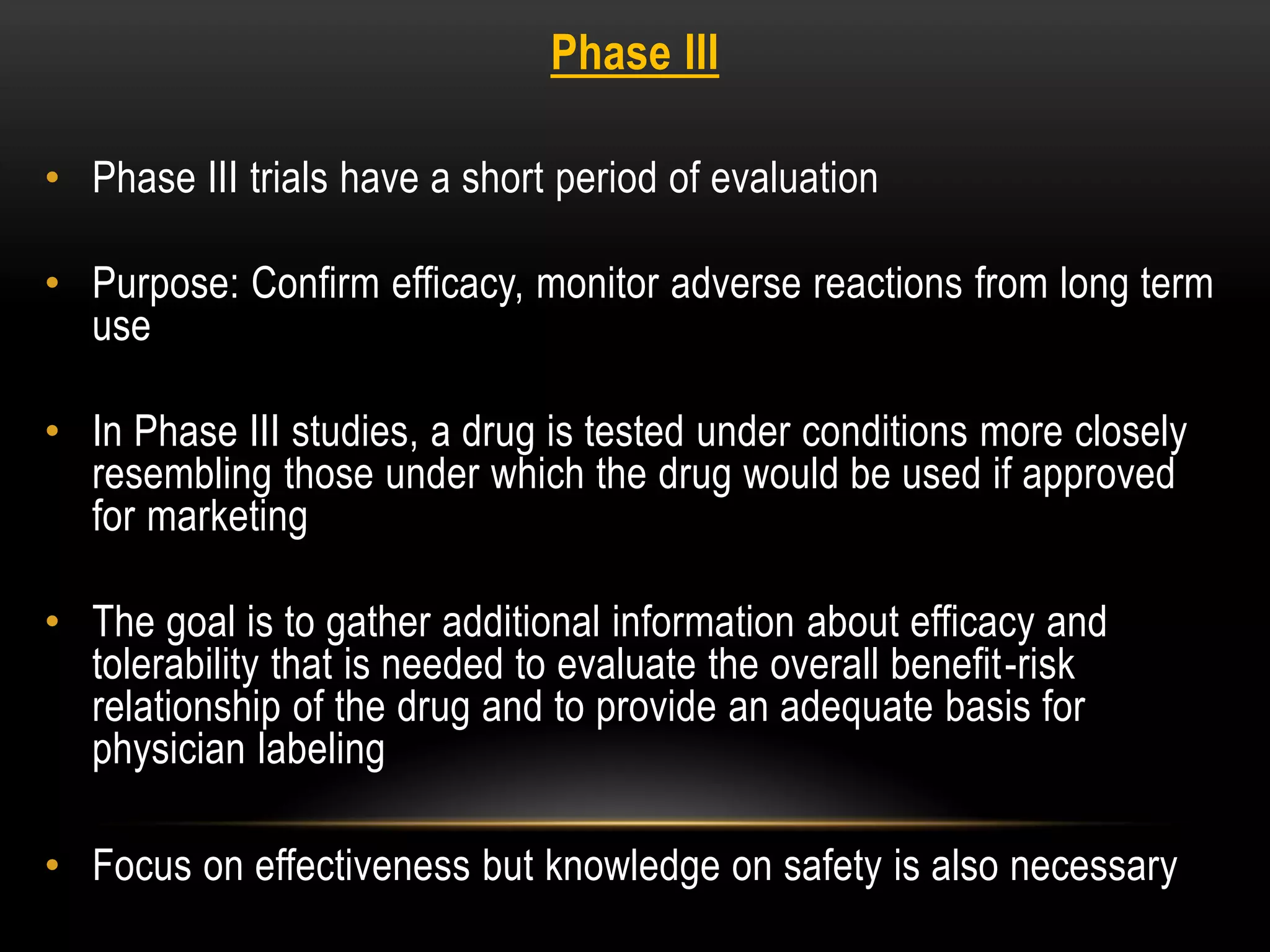
Phase III
• Phase III trials have a short period of evaluation
• Purpose: Confirm efficacy, monitor adverse reactions from long term
use
• In Phase III studies, a drug is tested under conditions more closely
resembling those under which the drug would be used if approved
for marketing
• The goal is to gather additional information about efficacy and
tolerability that is needed to evaluate the overall benefit-risk
relationship of the drug and to provide an adequate basis for
physician labeling
• Focus on effectiveness but knowledge on safety is also necessary
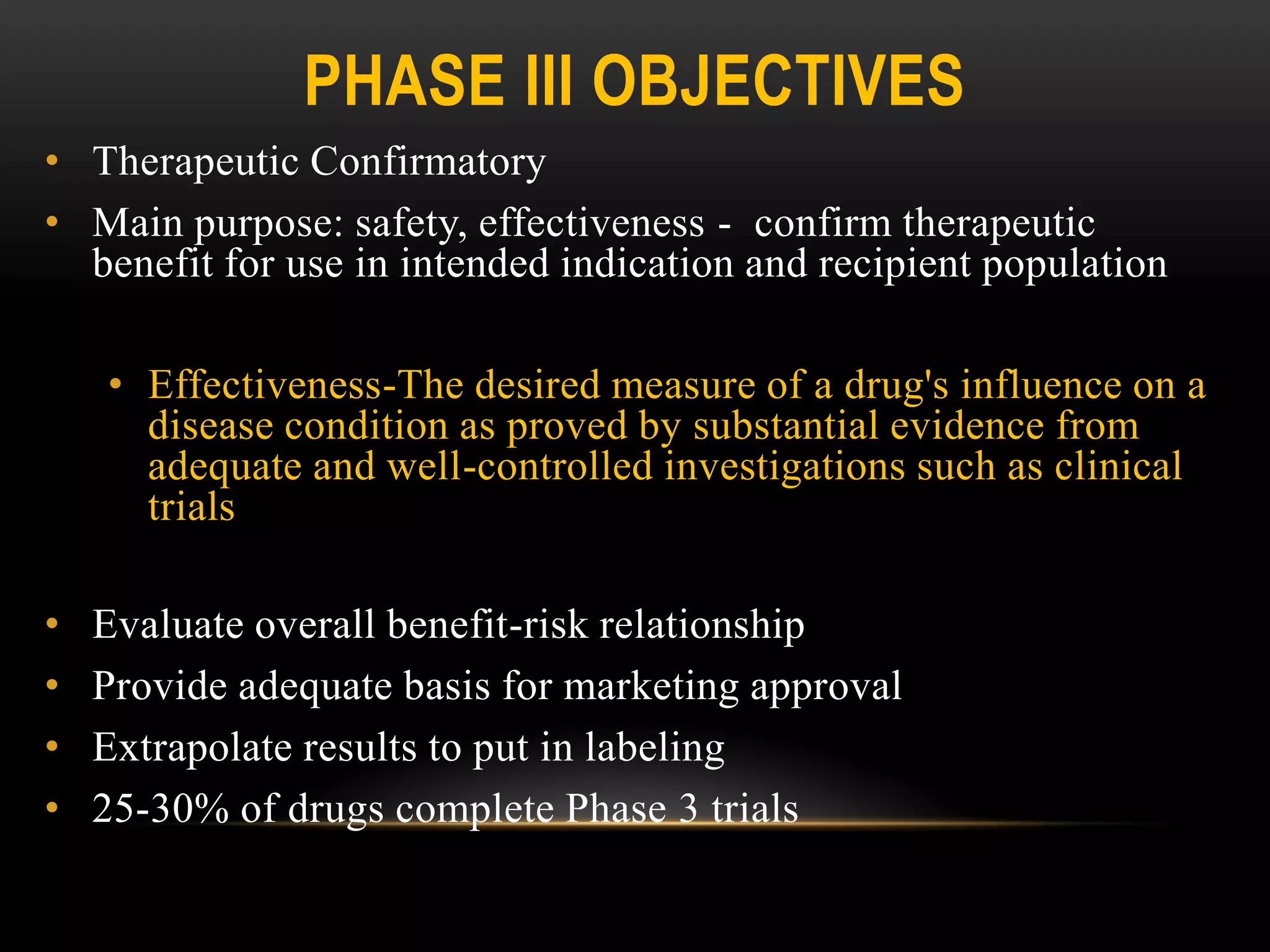
PHASE III OBJECTIVES
• Therapeutic Confirmatory
• Main purpose: safety, effectiveness - confirm therapeutic
benefit for use in intended indication and recipient population
• Effectiveness-The desired measure of a drug's influence on a
disease condition as proved by substantial evidence from
adequate and well-controlled investigations such as clinical
trials
• Evaluate overall benefit-risk relationship
• Provide adequate basis for marketing approval
• Extrapolate results to put in labeling
• 25-30% of drugs complete Phase 3 trials
PHASE 3 DEMOGRAPHICS
• Several hundred to several thousand
patients (250 – 1000 patients)
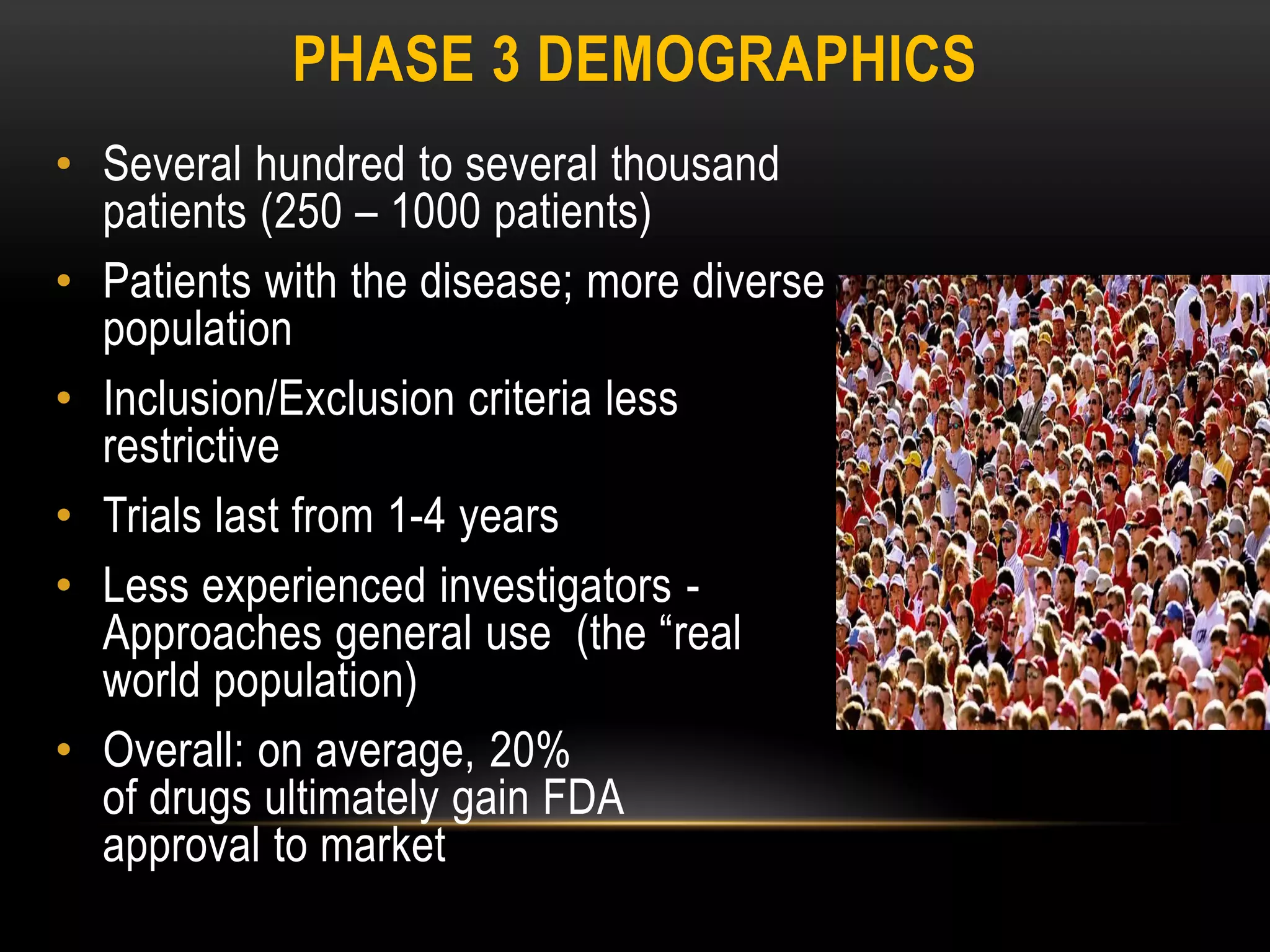
• Patients with the disease; more diverse
population
• Inclusion/Exclusion criteria less
restrictive
• Trials last from 1-4 years
• Less experienced investigators -
Approaches general use (the “real
world population)
• Overall: on average, 20%
of drugs ultimately gain FDA
approval to market
PHASE IV OR POST MARKETING
SURVEILLANCE
• No fixed duration / patient population
• Starts immediately after marketing
• Report all acute adverse reactions (ADRs)
• Helps to detect
• Rare ADRs
• Drug interactions
• Also new uses for drugs [Sometimes called Phase V]
• Do not involve control groups to evaluate properly the
proper role of an intervention
2. PREVENTIVE TRIALS
• In general the term preventive trials implies trials of
primary preventive measures.
• The trials are designed to prevent or eliminate disease
on an experimental basis.
• The most frequently occurring type of preventive trials
are the trials of vaccines and chemoprophylaxis.
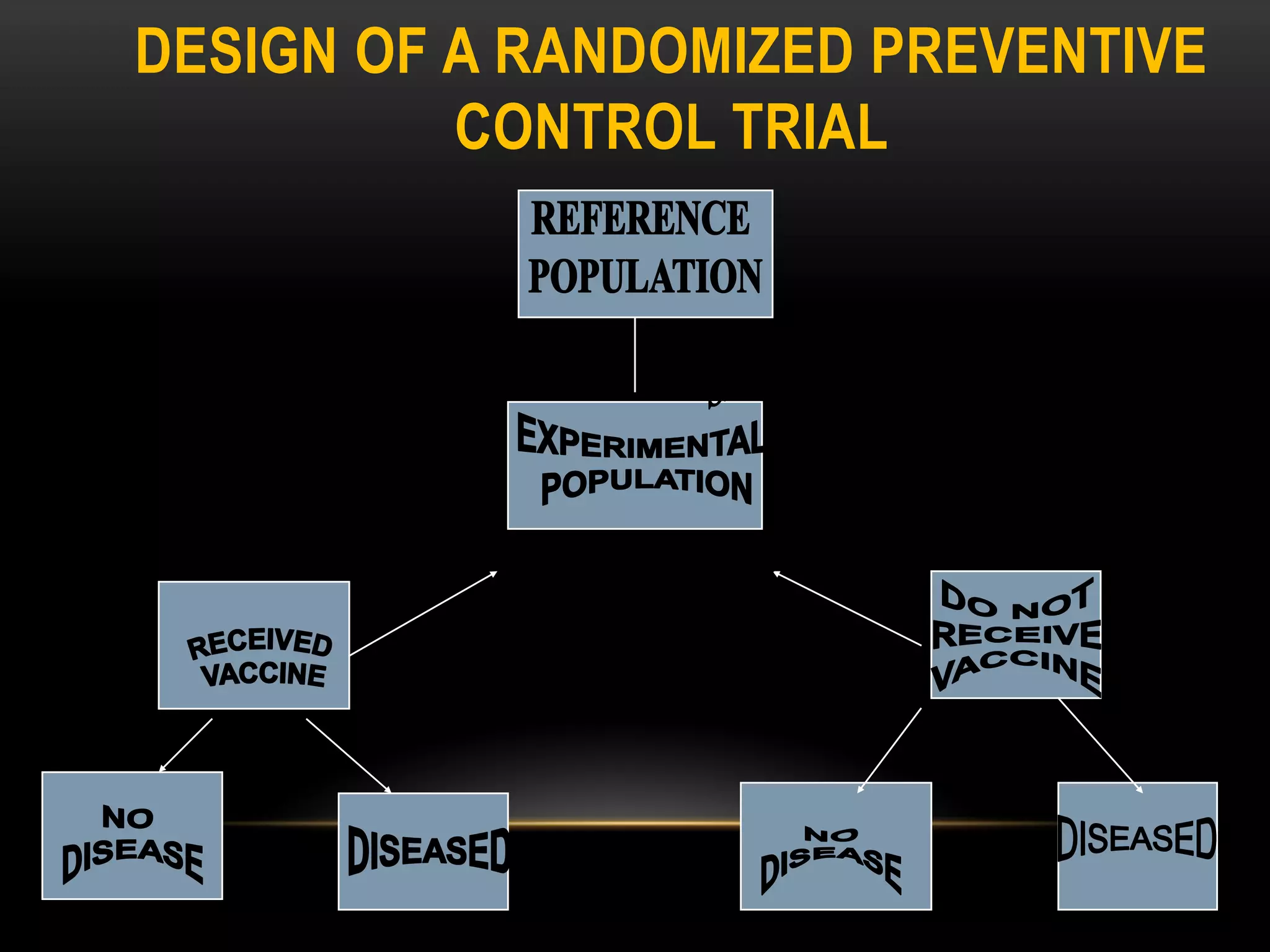
DESIGN OF A RANDOMIZED PREVENTIVE
CONTROL TRIAL
Lecture 10 Experimental study-1.pdf

Lecture 10 Experimental study-1.pdf

  • 1.
  • 2.
    STUDY DESIGNS EPIDEMIOLOICAL STUDIES EXPERIMENTAL STUDIES OBSERVATIONAL STUDIES Case report Caseseries Cross sectional Case control Cohort study DESCRIPTIVE ANALYTICAL
  • 3.
    Experimental studies • Inexperimental research, the study subjects are observed under predetermined conditions using carefully designed approaches to data & specimens • The gold standard of clinical research
  • 4.
    The experimental studydesigns differ from the analytical study designs 1. The conditions in which the study is carried are under direct control of the investigator 2. The experimental studies involve some action or intervention or manipulation in the experiment group while making no change in the control group 3. In analytical studies, no action but only observation of the natural course of events or outcomes
  • 5.
    The aims ofexperimental studies 1. To provide scientific evidence of etiological or risk factors to permit modification or control of disease 2. To provide a method of measuring the effectiveness or efficiency of the health services for prevention, control & treatment of disease and to improve the health of the community
  • 6.
    GOALS OF CLINICALTRIALS Finding Drugs or Treatments that WORK Those that do NOT WORK
  • 7.
    USES OF CLINICALTRIALS • Treatment: test experimental treatments, combinations of drugs, new approaches • Prevention: look for better way to prevent disease or its recurrence • Diagnostic: develop better tests • Screening: to detect diseases or health conditions • Quality of Life (or Supportive Care): improve comfort and QOL in chronic disease states
  • 8.
    The disadvantages ofthe experimental studies •They are costly • Ethical problems • Feasibility
  • 9.
    CLINICAL TRIAL DESIGN •In early smaller studies, where the drug is being tested for safety and dose, each person who participates gets the new drug being tested • In the following larger trials, doctors compare the new drug with another treatment to see which works better on participants
  • 10.
    • The laterlarger trials, may work like this: One group of participants gets the new drug The other group gets a drug that is used to treat the problem OR gets a “look alike” pill that contains no drug (called a placebo)
  • 11.
    COMMON CLINICAL TRIALTERMS CONTROLLED STUDY: A study in which a test article is compared with a treatment / placebo  A test drug is given to one group of people. This group is often called the “treatment group”  Another drug, or no drug, is given to a second group of people with the same illness. This is often called the “control group”  Then the results of the two groups are compared
  • 12.
    PLACEBO • A pill,liquid, or powder that contains no drug and has no treatment value. • A placebo looks just like the real drug.
  • 13.
    RANDOMIZED STUDY • Involvesrandomly allocating the Research Participants across the treatment groups
  • 14.
    BLINDED STUDY • Astudy in which the research subject or the investigator (or both) are unaware of what trial product the subject is taking  Single-Blinded: Subjects do not know what treatment they are getting but their research doctor and team do.  Double-Blinded: Neither the subject nor the research doctor knows which treatment the subject is getting
  • 15.
    RANDOMIZED CLINICAL TRIALS Participants Randomly Assigned Follow- Up Follow - Up Outcomes Compared Intervention Group (New Drug) Control Group (Old Drug) Intervention Group Control Group
  • 16.
  • 17.
    RCT DESIGNS [1] Accordingto exposure to intervention:  Parallel design Each group is subjected one intervention ( the most common design) Group A Group B TREATMENT A TREATMENT B / Placebo
  • 18.
    RCT DESIGNS [1] Accordingto exposure to intervention:  Cross – Over design Each participant is given both interventions in successive periods. Each participant acts as his or her own control. Treatment Placebo TREATMENT A TREATMENT B
  • 19.
    RCT DESIGNS [1] Accordingto exposure to intervention  Factorial design: When interventions are compared separately, in combination and against a control in different groups. TREATMENT A TREATMENT B TREATMENT A +B PLACEBO Group A Group B Group C Group D
  • 20.
    Double-Blinded Single-Blinded Blinding “Hiding whogets what” • The treated patient and/or treating doctor should not know what drug is used • Fair evaluation of outcomes
  • 21.
    RCT DESIGNS [2] Accordingto “Blindness” to the interventions  Open RCT everybody involved in the trial knows which intervention is given to each participant  Single blind RCT either the participants or the investigators do not know the identity of interventions  Double blind RCT Both the participants or the investigators do not know the identity of the interventions  Triple blinded RCT: Participant, investigators or person who evaluates do not know the identity of the intervention
  • 22.
    Non-randomized trials Those departingfrom strict randomization for practical purposes but in such a manner that non- randomization does not seriously affect the theoretical basis of conclusions
  • 23.
    The quasi-experimental studydesigns In this design the control over the external factors is not possible and this might alter the outcome variables
  • 24.
    Phases of ClinicalTrial • Phase I : maximum tolerated dose • Phase II : effectiveness, safety • Phase III : efficacy, safety • Phase IV : effectiveness, compliance and safety
  • 25.
    RISKS AND BENEFITSOF CLINICAL TRIALS • Risks: • Unpleasant or serious side effects • You may receive a placebo • No guarantee that the experimental drug will be an effective treatment for you • Benefits: • May experience health benefits from a new treatment • Free lab tests and expert treatment • Contributing to the development of a new medication
  • 26.
    The features ofthe experimental study designs • Random allocation of individuals to experimental & control groups • Systematic manipulation of the experimental group • Control over the other important factors affecting experimental & control groups • Measurement of some outcome variables with which to compare two groups
  • 27.
    The basic stepsin conduct of randomized controlled trials 1. Drawing a protocol 2. Selecting reference & experimental population 3. Randomization 4. Manipulation or intervention 5. Follow up 6. Assessment of the outcome
  • 28.
    DESIGN OF ARANDOMIZED CLINICAL CONTROL TRIAL
  • 29.
    The protocol One ofthe essential features of the randomized trials The protocol specifies: 1. The objectives 2. The selection criteria 3. The sample size 4. The procedures of allocation of the subjects into experimental and control groups 5. Outcomes & endpoints 6. The treatment applied: how, where and to what types of patients 7. The details of the scientific techniques and investigations
  • 30.
    Once a protocolhas been evolved, it should be strictly adhered to throughout the study (Protocol Violation)
  • 31.
    Selection of thereference & the experimental populations The reference population: • It is the population to which the findings of the trial, if found to be successful, are expected to be applicable
  • 32.
    The experimental population: •The experimental (study) population is derived from the reference population • It is the actual population that participates in the experimental study • It should be randomly selected from the reference population • If the study population differs from the reference population, it may not be possible to generalize the findings to the reference population
  • 33.
    Participants or thevolunteers of the experiment must fulfill the following criteria: • They must give informed consent •They should be representative of the reference population • They should be eligible or qualified for the trial
  • 34.
    Randomization • Randomization isthe statistical procedure by which the participants are allocated into groups usually called study & control groups to receive or not to receive an experimental or therapeutic procedure or intervention.
  • 35.
    • Randomization aimsto make the groups comparable • Randomization ensures that the investigator has no control over the allocation of the participants to either the study or control group, thus eliminating the selection bias • Every individual has an equal chance of being allocated into either group • Randomization is best done by using statistical random table
  • 36.
    The essential differencebetween a randomized trial and analytical study is that: • In the latter there is no randomization because differentiation into cases & controls exposed and non-exposed groups has already taken place • Thus the only option left to ensure comparability in analytical studies is by matching
  • 37.
    MANIPULATION • Manipulation orintervention is usually done by application or withdrawal of the suspected factor e.g. drugs, vaccine or dietary factor • This manipulation creates an independent variable (drug, vaccine or new procedure) whose effect is then determined by the measurement of the final outcome which constitutes the dependent variable e.g. incidence of disease, recovery
  • 38.
    FOLLOW UP • Thisincludes examination of the study & control groups subjects at defined intervals of time in standard manner under the same conditions in the same time frame till the final assessment Main difficulties encountered in the follow up process include: • Attrition, death, migration, displacement and loss of interest
  • 39.
    Assessment The final assessmentof the trial is carried in terms of: • Positive results: these include the benefits of the experimental study such as reduced incidence of the disease or severity of the disease, cost of health services or other appropriate outcome
  • 40.
    • Negative results:these include the severity & frequency of side-effects and complications • The incidence of positive/negative results is compared in both groups and the differences are tested statistically
  • 41.
    BIAS Bias is thesystematic difference between observed results and the actual results Sources of bias: 1. participant’s bias: The participants report subjectively that they feel better or improved if they knew that they were receiving new treatment
  • 42.
    2. Observer’s bias: Theinfluence of the investigator measuring the outcome of the trial if he knew beforehand the particular procedure to which the patient has been subjected 3. Evaluation bias: There may be bias in evaluation as the investigator may involuntarily give favorable report of the outcome of the study
  • 43.
    How to reducethe sources of bias? 1. Randomization 2. Blinding
  • 44.
    Blinding is carriedin three ways: 1. Single blind trial: the trial is so planned that the participant is not aware whether he belongs to the study or control group. 2. Double blind trial: the trial is so planned that neither the doctor nor the participant is aware of the group allocation and treatment received.
  • 45.
    3. Triple-blind trial: •The trial is so planned that the participant, the investigator& the person analyzing the data are all blind. • This is the ideal but double-blinding is the most commonly used.
  • 46.
    PHASES OF CLINICALTRIALS • A properly planned and implemented clinical trial is a powerful technique for assessing the effectiveness of an intervention • A clinical trial is a prospective study comparing the effect of intervention(s) against a control in human beings • A clinical trial is prospective rather than retrospective
  • 47.
    • Study participantsmust be followed foreword in time. • Follow up of the study subjects overtime without active intervention may measure the natural history of disease but this is not a clinical trial
  • 48.
    Clinical trials Phases Phase(I): • The first step or phase is to understand how well the intervention can be tolerated in a small number of healthy individuals or sometimes patients • It does not meet the standard definition of a clinical trial • Most phase I designs are relatively simple
  • 49.
    • Evaluating drugs,needs first step is to estimate how a dose can be administered before unacceptable toxicity is experienced by patients • This dose is usually called maximally tolerated dose (MTD)
  • 50.
    PHASE I OBJECTIVES •Main purpose: assessing safety of drug • Human Pharmacology • Typically non-therapeutic objectives • Determine tolerability of dose range expected to be needed for later trials (Maximum tolerated Dose -MTD) • Determine nature of adverse reactions that can be expected • Assess clearance of drug and to anticipate possible accumulation of parent drug or metabolites and potential drug-drug interactions
  • 51.
    PHASE I DEMOGRAPHICS •Usually healthy volunteers or certain types of patients (e.g. new chemotherapeutic agent for cancer patients with end stage disease) • Often conducted in a medical setting • 20-100 patients • Trials can last up to several months • Open label –everyone knows what they are getting. • 70% of drugs successfully complete Phase I and continue on to Phase II
  • 52.
    Phase (II) trials •Once the MTD is established: the next step is to evaluate whether the drug has any biological effect and to estimate the rate of adverse effects.
  • 53.
    • If thedesign of phase I has not been adequate, the investigator may evaluate the dose • phase II design depends on the quality of adequacy of phase I • The design usually encounters a limited number of patients and then the response rate is estimated
  • 54.
    • If theresponse rate is less than the 20%: the drug is omitted. • If the response is greater than 20%: more patients are recruited according to the precision desired: usually 10-20
  • 55.
    PHASE II OBJECTIVES Therapeutic Exploratory  Main purpose: assessing efficacy for particular indication (Efficacy-A product's ability to produce beneficial effects on the course or duration of a disease)  Initial evaluation:  Safety (side-effect)  Well-controlled, closely monitored studies  Active or placebo controlled -- double blind  Includes dose-response and/or dosing schedule studies  Determine dose and regimen for Phase III
  • 56.
    PHASE II DEMOGRAPHICS •200-300 (up to 1000) patients with targeted indication (Relevant disease) • Diseased patients; selected by relatively narrow criteria • Trials last from several months to 2 years • Experienced physicians in the specialty • Early Phase II trials may be called Phase 2a or pilot studies • 33% of drugs successfully complete Phase II and continue on to Phase III
  • 57.
    Phase III • PhaseIII trials have a short period of evaluation • Purpose: Confirm efficacy, monitor adverse reactions from long term use • In Phase III studies, a drug is tested under conditions more closely resembling those under which the drug would be used if approved for marketing • The goal is to gather additional information about efficacy and tolerability that is needed to evaluate the overall benefit-risk relationship of the drug and to provide an adequate basis for physician labeling • Focus on effectiveness but knowledge on safety is also necessary
  • 58.
    PHASE III OBJECTIVES •Therapeutic Confirmatory • Main purpose: safety, effectiveness - confirm therapeutic benefit for use in intended indication and recipient population • Effectiveness-The desired measure of a drug's influence on a disease condition as proved by substantial evidence from adequate and well-controlled investigations such as clinical trials • Evaluate overall benefit-risk relationship • Provide adequate basis for marketing approval • Extrapolate results to put in labeling • 25-30% of drugs complete Phase 3 trials
  • 59.
    PHASE 3 DEMOGRAPHICS •Several hundred to several thousand patients (250 – 1000 patients) • Patients with the disease; more diverse population • Inclusion/Exclusion criteria less restrictive • Trials last from 1-4 years • Less experienced investigators - Approaches general use (the “real world population) • Overall: on average, 20% of drugs ultimately gain FDA approval to market
  • 60.
    PHASE IV ORPOST MARKETING SURVEILLANCE • No fixed duration / patient population • Starts immediately after marketing • Report all acute adverse reactions (ADRs) • Helps to detect • Rare ADRs • Drug interactions • Also new uses for drugs [Sometimes called Phase V] • Do not involve control groups to evaluate properly the proper role of an intervention
  • 61.
    2. PREVENTIVE TRIALS •In general the term preventive trials implies trials of primary preventive measures. • The trials are designed to prevent or eliminate disease on an experimental basis. • The most frequently occurring type of preventive trials are the trials of vaccines and chemoprophylaxis.
  • 62.
    DESIGN OF ARANDOMIZED PREVENTIVE CONTROL TRIAL