THEME ONE
ASSESMENT
TERMINOLOGY
By: Danilo Chimborazo
ASSESSMENT AND
TESTING
Definition: A broad term encompassing various methods to evaluate,
measure, and document the academic readiness, learning progress, and
skill acquisition of students.
The Test is a Method
A specific tool or
instrument used
within the broader
process of
assessment.
The Test Must Measure
Accuracy and reliability in
evaluating knowledge, skills,
or abilities.
Alignment with learning
objectives and outcomes.
MEASUREMENT AND
EVALUATION
Measurement
Definition: The process of quantifying a
learner's performance or abilities
through numerical scores or data.
Evaluation
Definition: The process of interpreting
measurement data to make informed
judgments about the quality of performance
or progress.
01
FORMAL AND INFORMAL
ASSESSMENT
Informal Assessment
Definition: Unstructured,
spontaneous methods to
gauge understanding
and skills, such as
observations, discussions,
and ungraded activities.
Examples: Classroom
observations, casual
questioning, and student
feedback.
Formal Assessment
Definition: Structured,
standardized methods
with specific criteria for
evaluation.
Examples: Quizzes,
standardized tests, and
final exams.
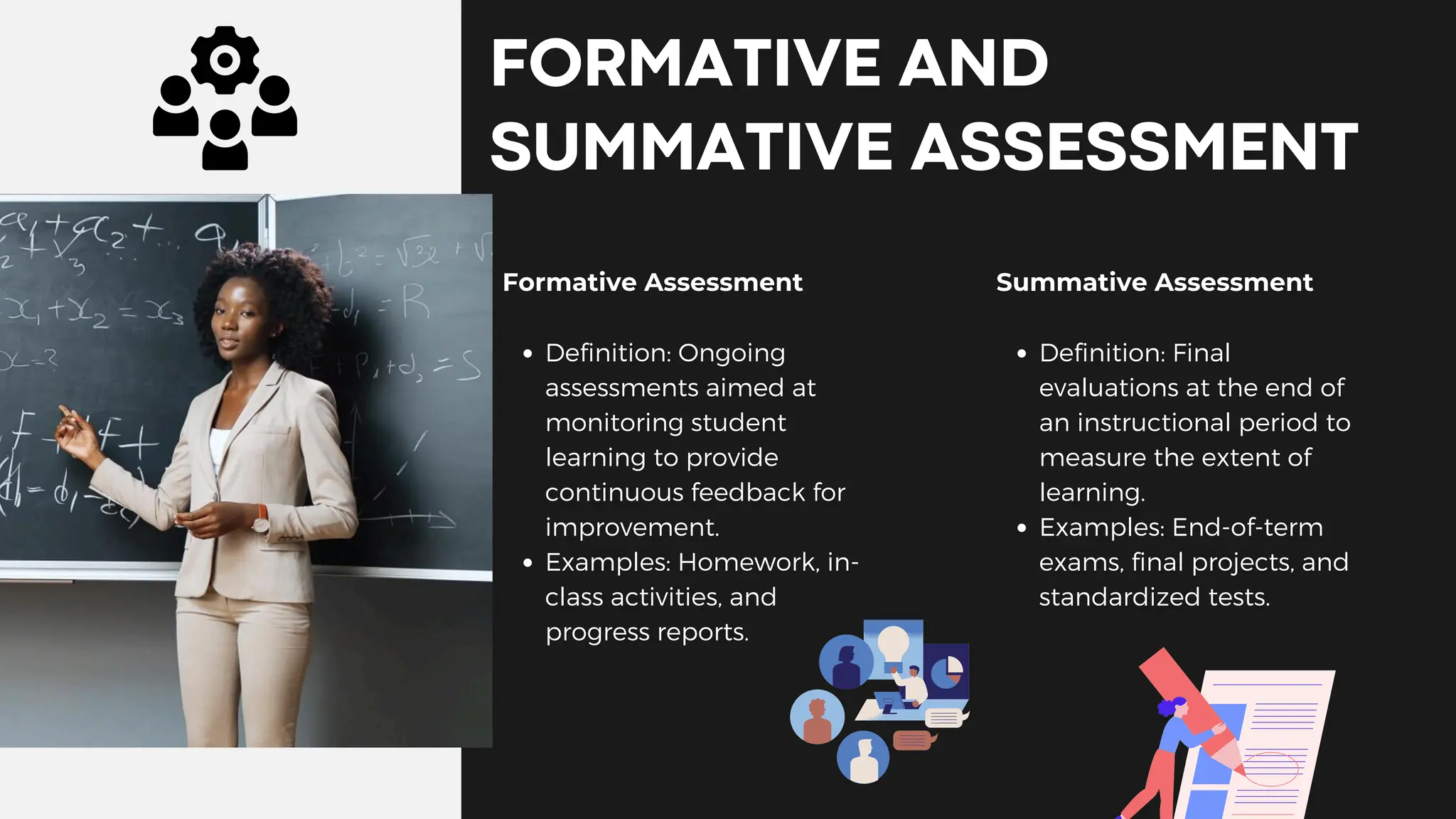
Formative Assessment
Definition: Ongoing
assessments aimed at
monitoring student
learning to provide
continuous feedback for
improvement.
Examples: Homework, in-
class activities, and
progress reports.
FORMATIVE AND
SUMMATIVE ASSESSMENT
Summative Assessment
Definition: Final
evaluations at the end of
an instructional period to
measure the extent of
learning.
Examples: End-of-term
exams, final projects, and
standardized tests.
2.1 Achievement Tests
Definition: Assess
students' knowledge and
skills in a specific area
after instruction.
Purpose: Measure
learning outcomes and
effectiveness of
instruction.
Examples: End-of-course
exams, standardized
achievement tests.
2.2 Diagnostic Tests
Definition: Identify
students' strengths and
weaknesses before
instruction.
Purpose: Inform
instructional planning
and address learning
gaps.
Examples: Pre-tests, skill
assessments.
TYPES OF TESTS
2.3 Placement Tests
Definition: Determine the
appropriate level or
course for students.
Purpose: Place students
in classes that match
their skill levels.
Examples: Language
placement tests, math
placement exams.
2.4 Proficiency Tests
Definition: Measure
overall ability in a subject
regardless of specific
instruction.
Purpose: Assess readiness
for specific tasks or
courses.
Examples: TOEFL, IELTS.
2.5 Aptitude Tests
Definition: Predict
students' ability to learn
or succeed in a specific
area.
Purpose: Inform decisions
about student potential
and appropriate learning
paths.
Examples: SAT, GRE.
3.2 Reliability
Definition: The consistency and stability of test
results over time.
Types:
Learner-Related Reliability: Consistency of
learners' performance.
Inter-Rater Reliability: Consistency among
different raters/scorers.
Test Administration Reliability: Consistency in
test administration conditions.
Test Reliability: Overall stability and
consistency of test scores.
3.1 Practicality
Definition: The ease with
which a test can be
designed, administered,
and scored.
Factors: Cost, time,
resources, and simplicity.
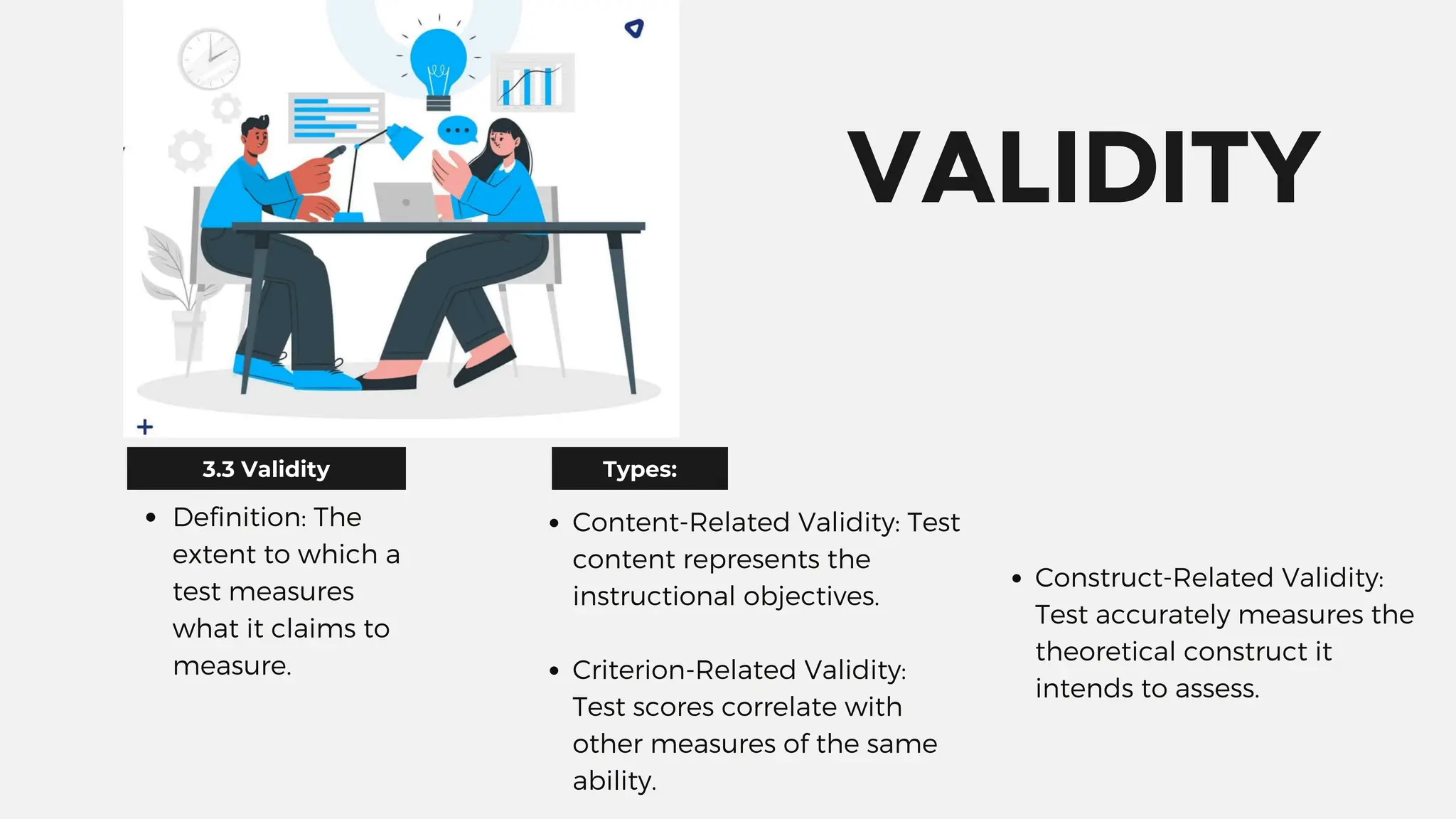
3.3 Validity Types:
VALIDITY
Definition: The
extent to which a
test measures
what it claims to
measure.
Content-Related Validity: Test
content represents the
instructional objectives.
Criterion-Related Validity:
Test scores correlate with
other measures of the same
ability.
Construct-Related Validity:
Test accurately measures the
theoretical construct it
intends to assess.
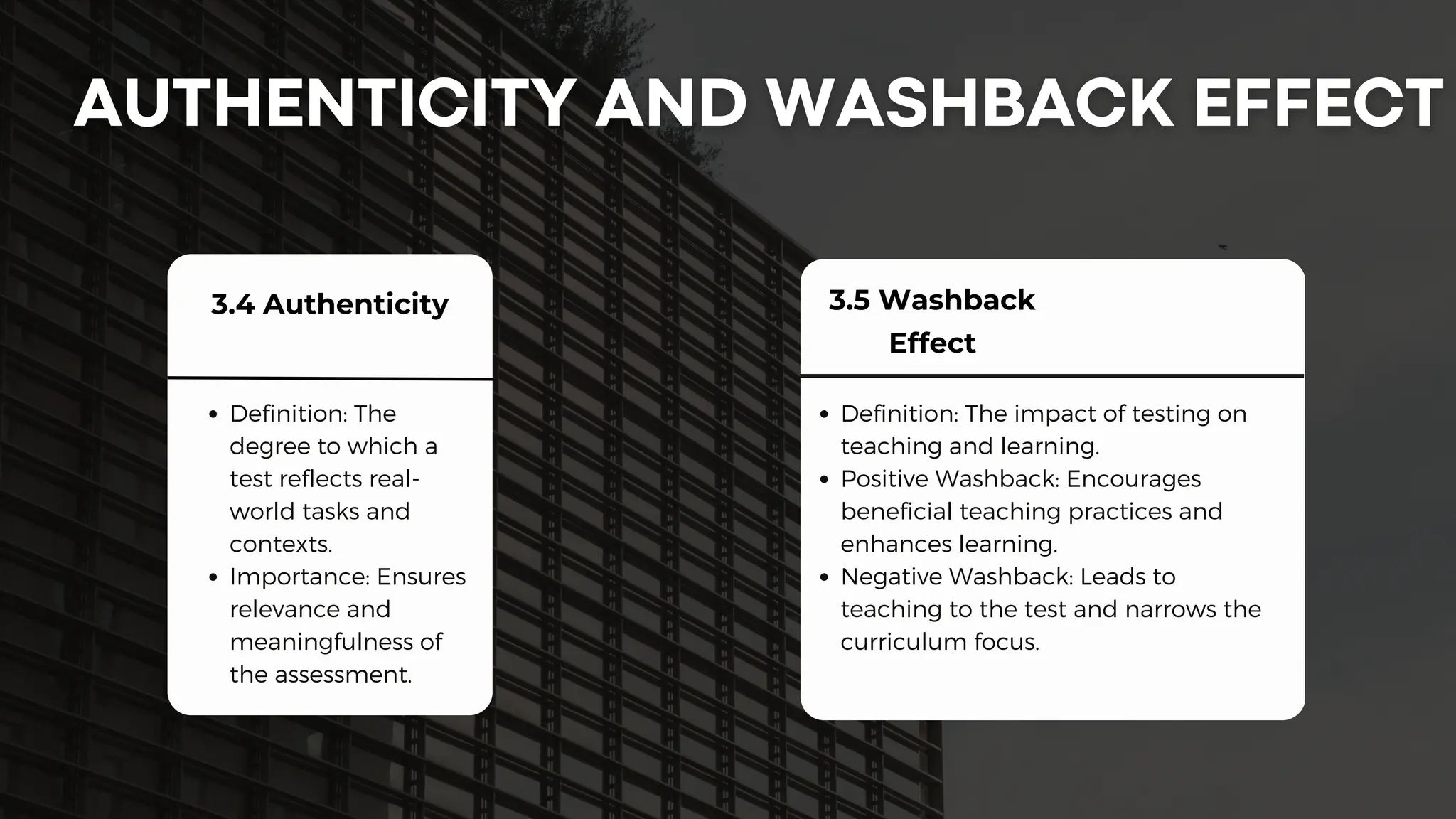
3.4 Authenticity
Definition: The
degree to which a
test reflects real-
world tasks and
contexts.
Importance: Ensures
relevance and
meaningfulness of
the assessment.
3.5 Washback
Effect
Definition: The impact of testing on
teaching and learning.
Positive Washback: Encourages
beneficial teaching practices and
enhances learning.
Negative Washback: Leads to
teaching to the test and narrows the
curriculum focus.
Learning_activity1_Chimborazo_Danilo.pdf

Learning_activity1_Chimborazo_Danilo.pdf

  • 1.
  • 2.
    ASSESSMENT AND TESTING Definition: Abroad term encompassing various methods to evaluate, measure, and document the academic readiness, learning progress, and skill acquisition of students. The Test is a Method A specific tool or instrument used within the broader process of assessment. The Test Must Measure Accuracy and reliability in evaluating knowledge, skills, or abilities. Alignment with learning objectives and outcomes.
  • 3.
    MEASUREMENT AND EVALUATION Measurement Definition: Theprocess of quantifying a learner's performance or abilities through numerical scores or data. Evaluation Definition: The process of interpreting measurement data to make informed judgments about the quality of performance or progress.
  • 4.
    01 FORMAL AND INFORMAL ASSESSMENT InformalAssessment Definition: Unstructured, spontaneous methods to gauge understanding and skills, such as observations, discussions, and ungraded activities. Examples: Classroom observations, casual questioning, and student feedback. Formal Assessment Definition: Structured, standardized methods with specific criteria for evaluation. Examples: Quizzes, standardized tests, and final exams.
  • 5.
    Formative Assessment Definition: Ongoing assessmentsaimed at monitoring student learning to provide continuous feedback for improvement. Examples: Homework, in- class activities, and progress reports. FORMATIVE AND SUMMATIVE ASSESSMENT Summative Assessment Definition: Final evaluations at the end of an instructional period to measure the extent of learning. Examples: End-of-term exams, final projects, and standardized tests.
  • 6.
    2.1 Achievement Tests Definition:Assess students' knowledge and skills in a specific area after instruction. Purpose: Measure learning outcomes and effectiveness of instruction. Examples: End-of-course exams, standardized achievement tests. 2.2 Diagnostic Tests Definition: Identify students' strengths and weaknesses before instruction. Purpose: Inform instructional planning and address learning gaps. Examples: Pre-tests, skill assessments. TYPES OF TESTS
  • 7.
    2.3 Placement Tests Definition:Determine the appropriate level or course for students. Purpose: Place students in classes that match their skill levels. Examples: Language placement tests, math placement exams. 2.4 Proficiency Tests Definition: Measure overall ability in a subject regardless of specific instruction. Purpose: Assess readiness for specific tasks or courses. Examples: TOEFL, IELTS. 2.5 Aptitude Tests Definition: Predict students' ability to learn or succeed in a specific area. Purpose: Inform decisions about student potential and appropriate learning paths. Examples: SAT, GRE.
  • 8.
    3.2 Reliability Definition: Theconsistency and stability of test results over time. Types: Learner-Related Reliability: Consistency of learners' performance. Inter-Rater Reliability: Consistency among different raters/scorers. Test Administration Reliability: Consistency in test administration conditions. Test Reliability: Overall stability and consistency of test scores. 3.1 Practicality Definition: The ease with which a test can be designed, administered, and scored. Factors: Cost, time, resources, and simplicity.
  • 9.
    3.3 Validity Types: VALIDITY Definition:The extent to which a test measures what it claims to measure. Content-Related Validity: Test content represents the instructional objectives. Criterion-Related Validity: Test scores correlate with other measures of the same ability. Construct-Related Validity: Test accurately measures the theoretical construct it intends to assess.
  • 10.
    3.4 Authenticity Definition: The degreeto which a test reflects real- world tasks and contexts. Importance: Ensures relevance and meaningfulness of the assessment. 3.5 Washback Effect Definition: The impact of testing on teaching and learning. Positive Washback: Encourages beneficial teaching practices and enhances learning. Negative Washback: Leads to teaching to the test and narrows the curriculum focus.