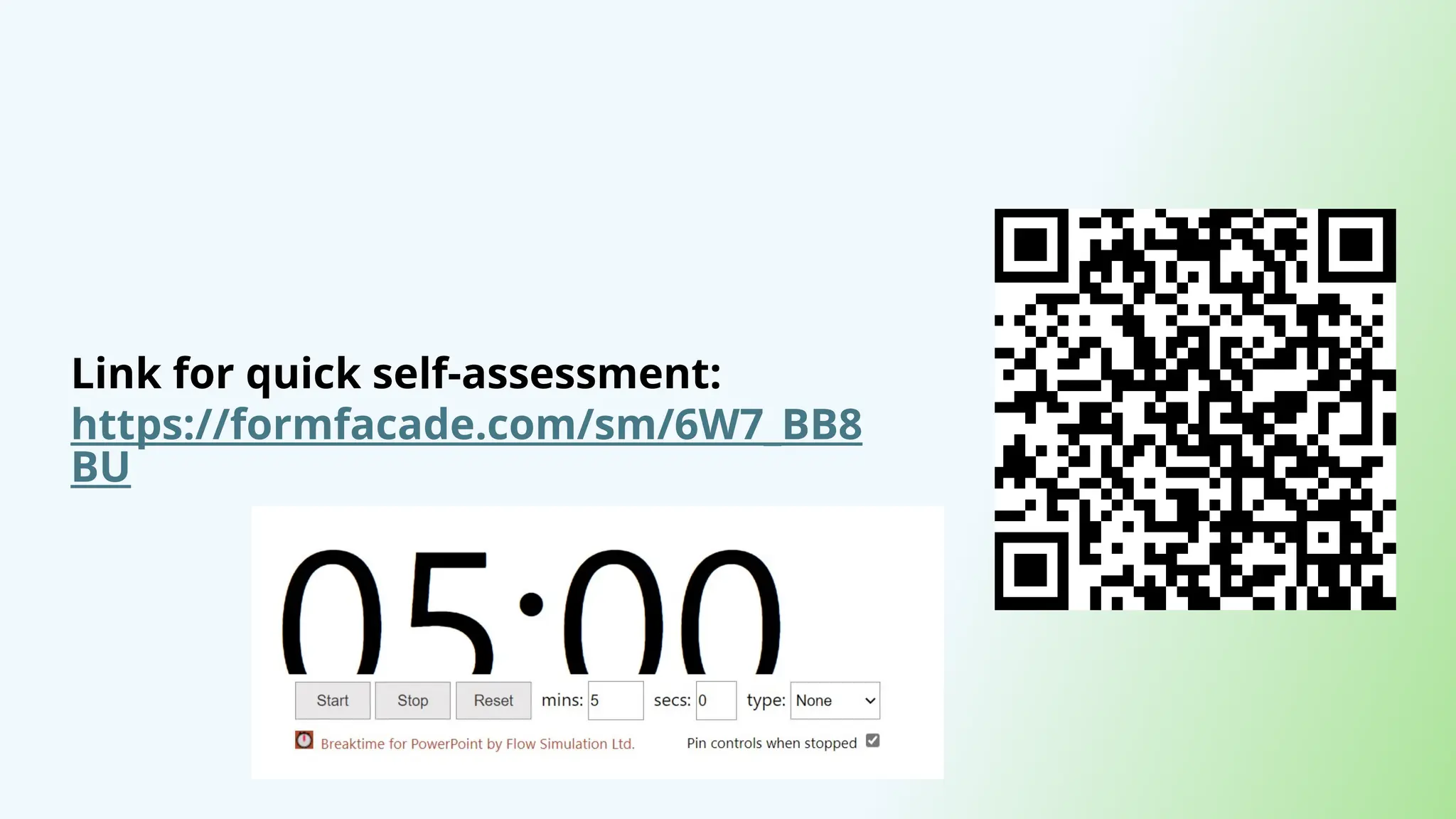
Link for quick self-assessment:
https://formfacade.com/sm/6W7_BB8
BU
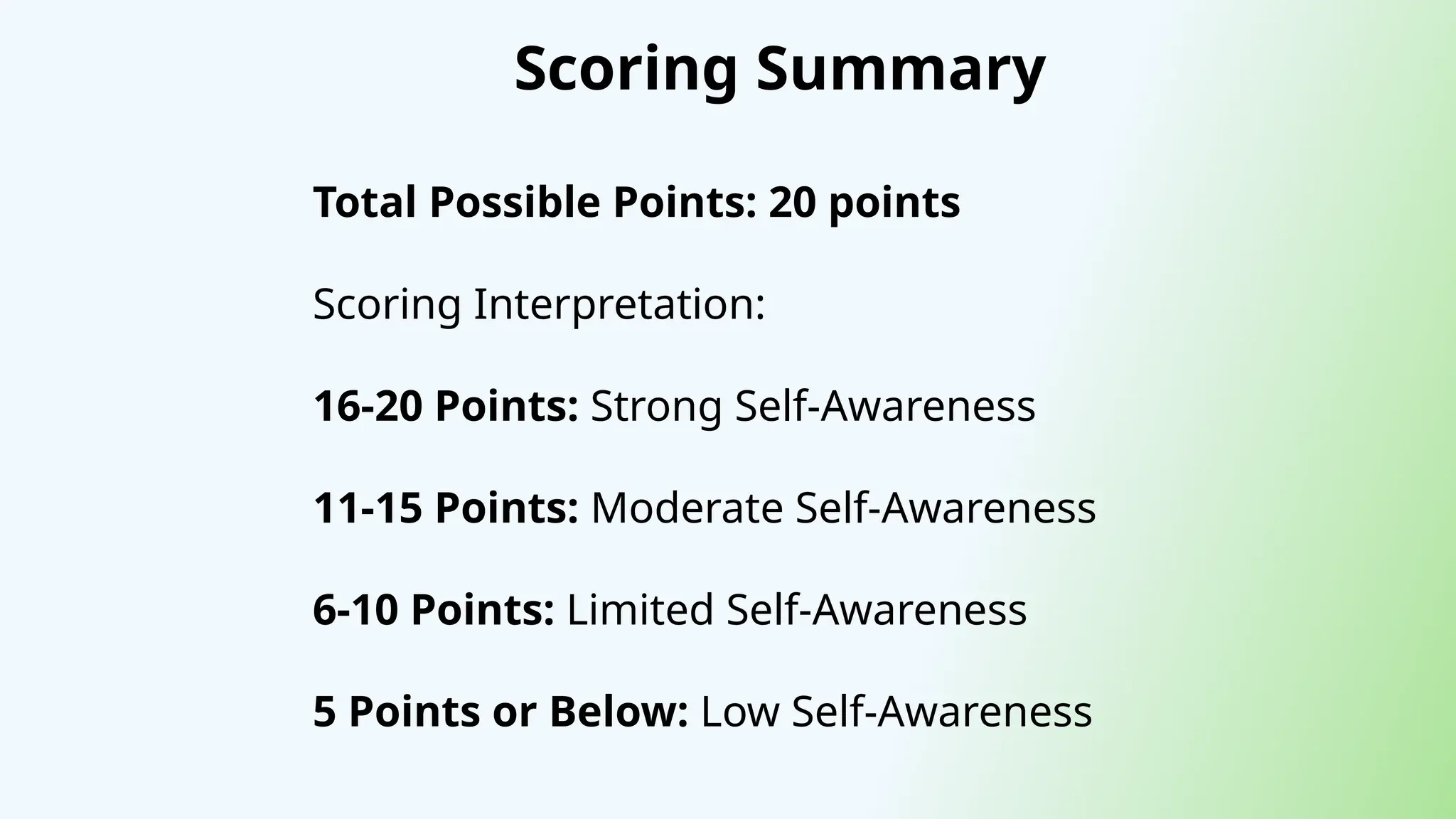
Scoring Summary
Total Possible Points: 20 points
Scoring Interpretation:
16-20 Points: Strong Self-Awareness
11-15 Points: Moderate Self-Awareness
6-10 Points: Limited Self-Awareness
5 Points or Below: Low Self-Awareness
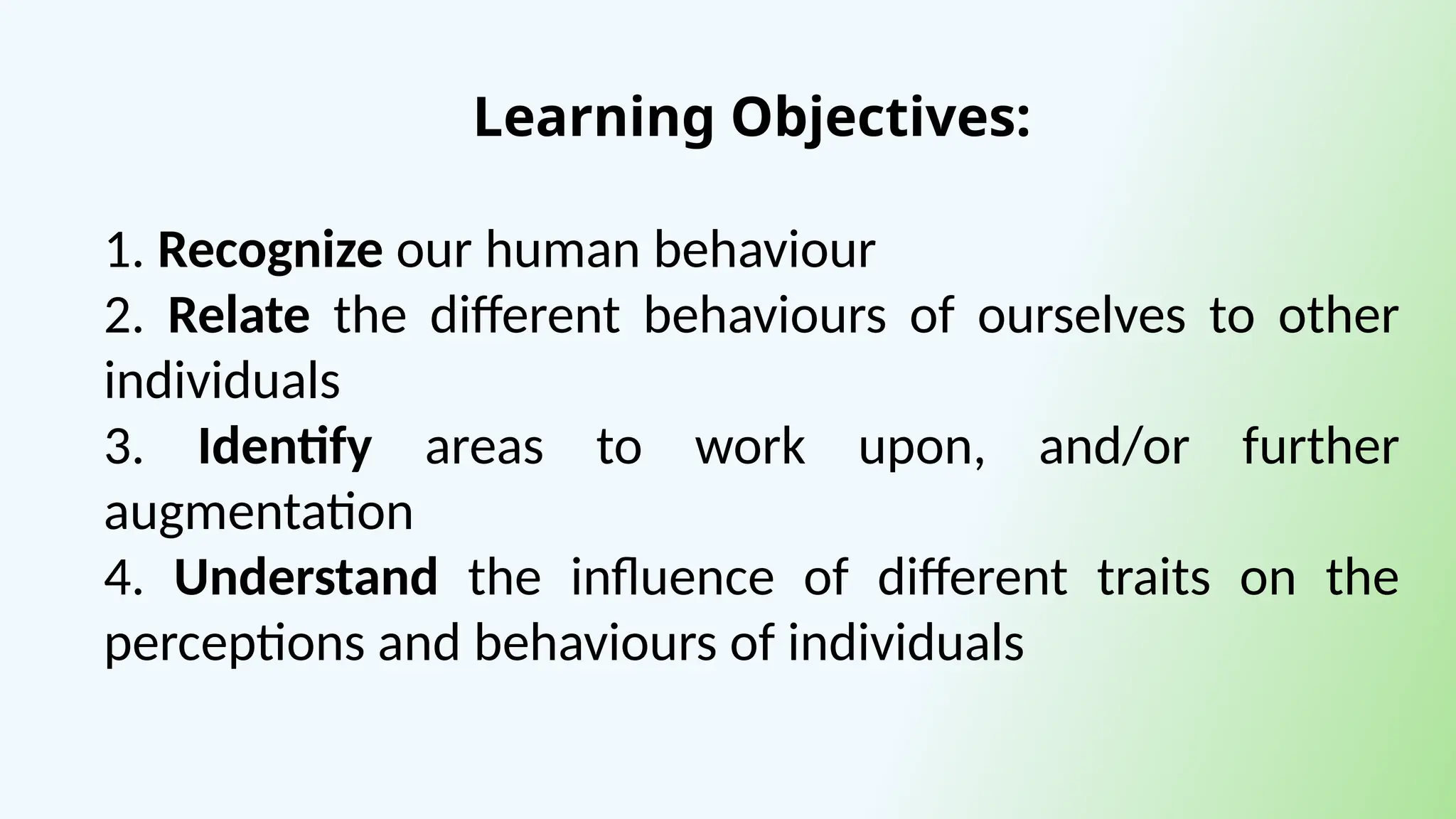
Learning Objectives:
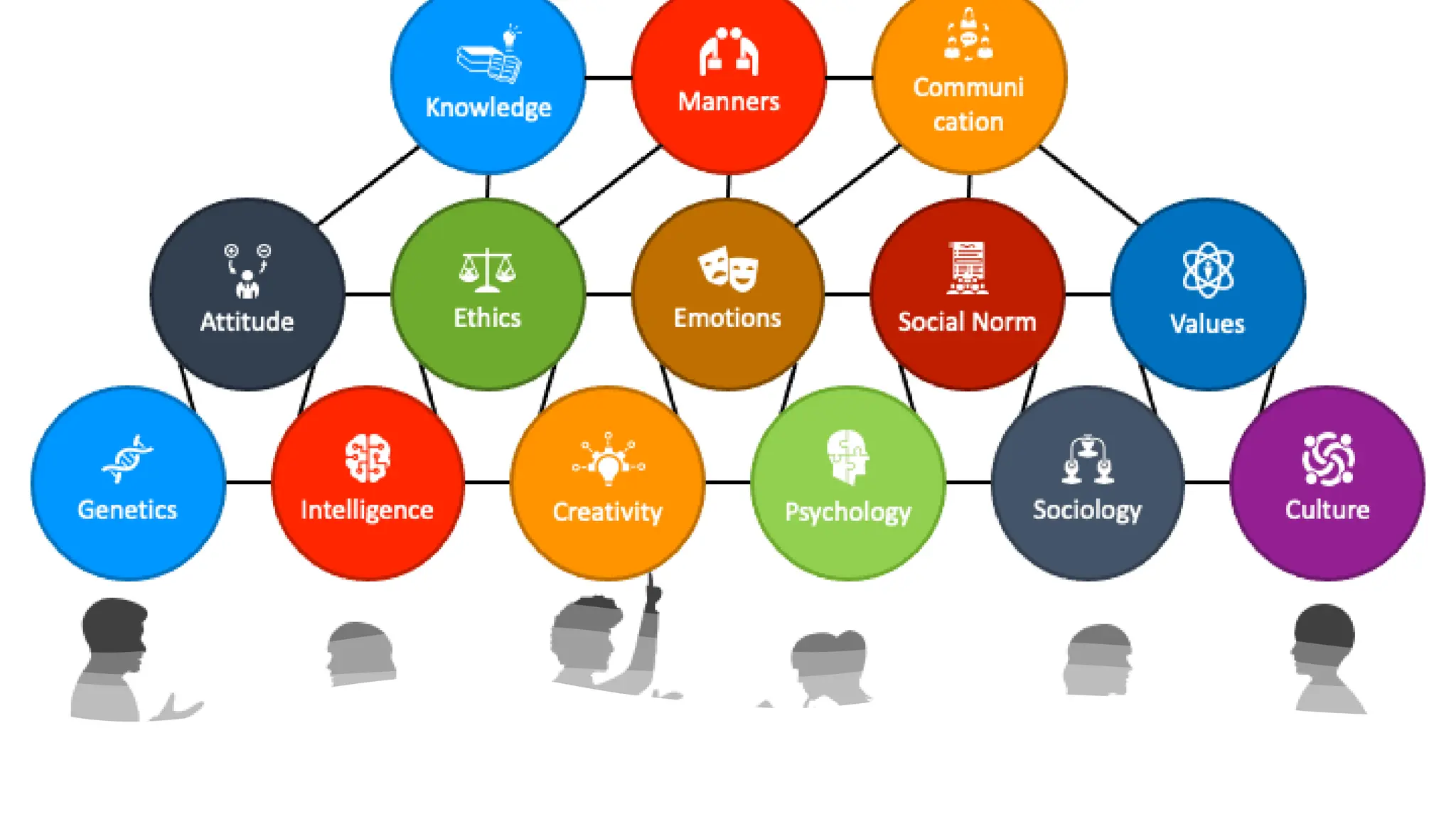
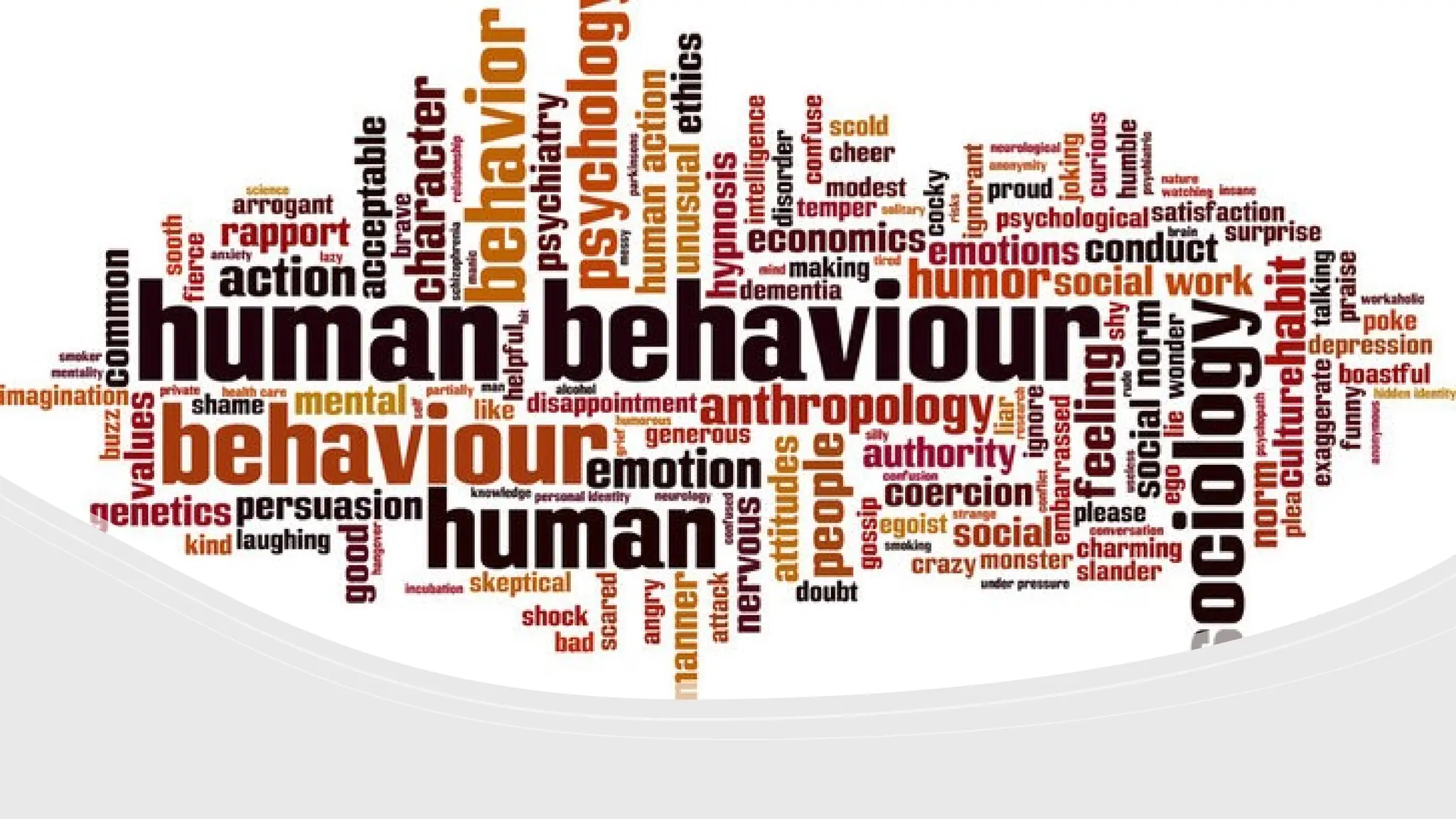
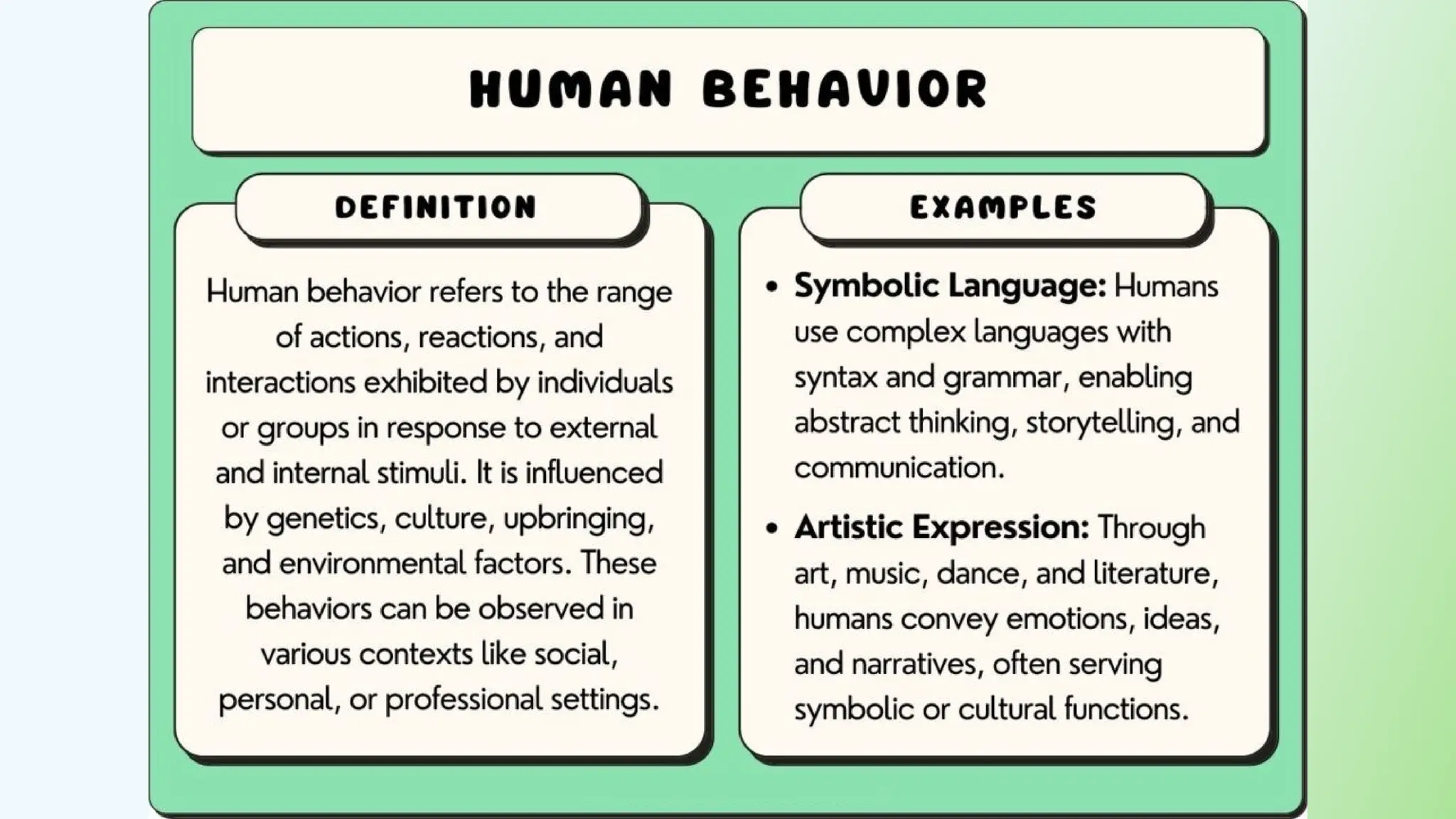
1. Recognize our human behaviour
2. Relate the different behaviours of ourselves to other
individuals
3. Identify areas to work upon, and/or further
augmentation
4. Understand the influence of different traits on the
perceptions and behaviours of individuals
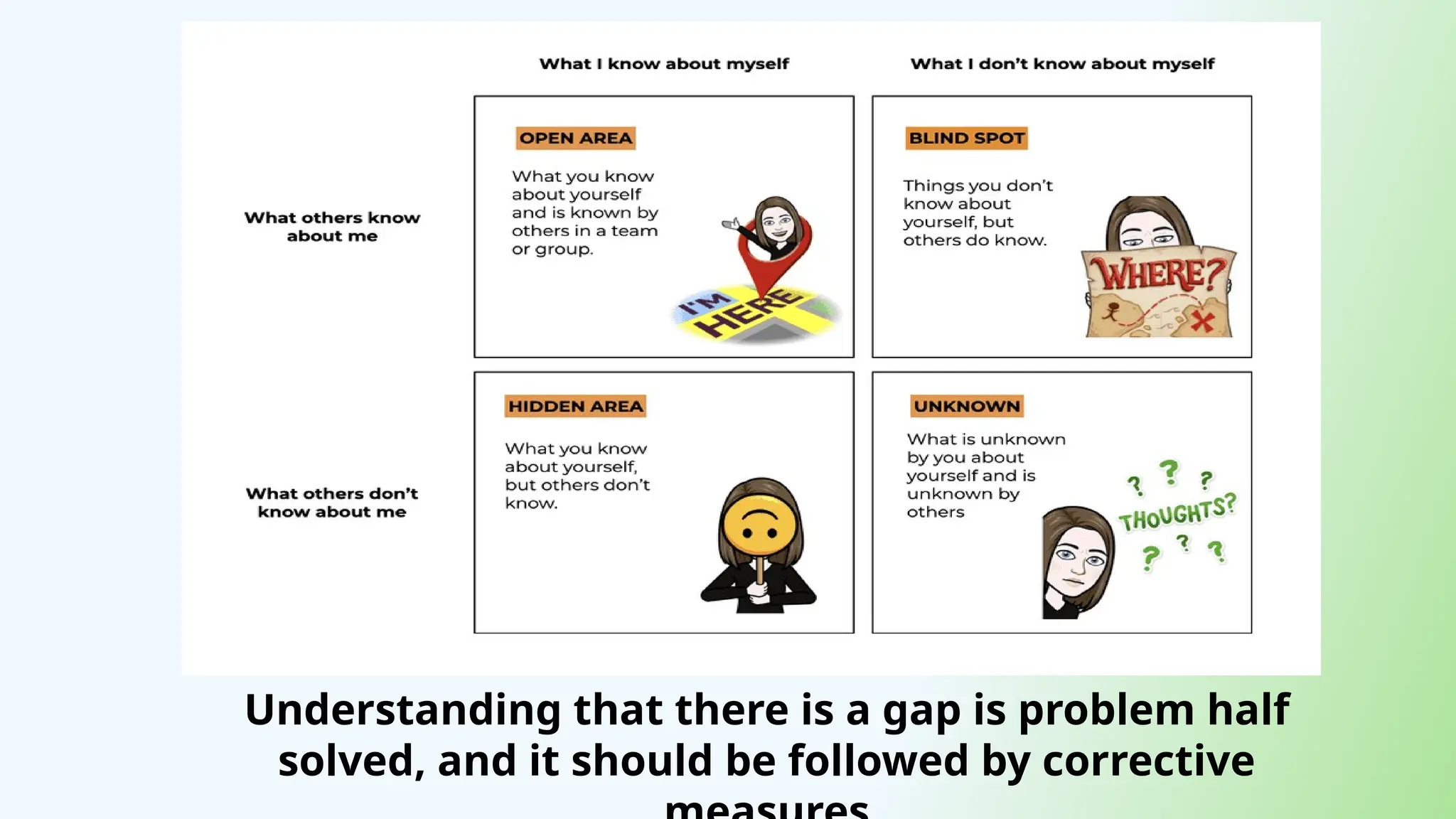
Understanding that there is a gap is problem half
solved, and it should be followed by corrective
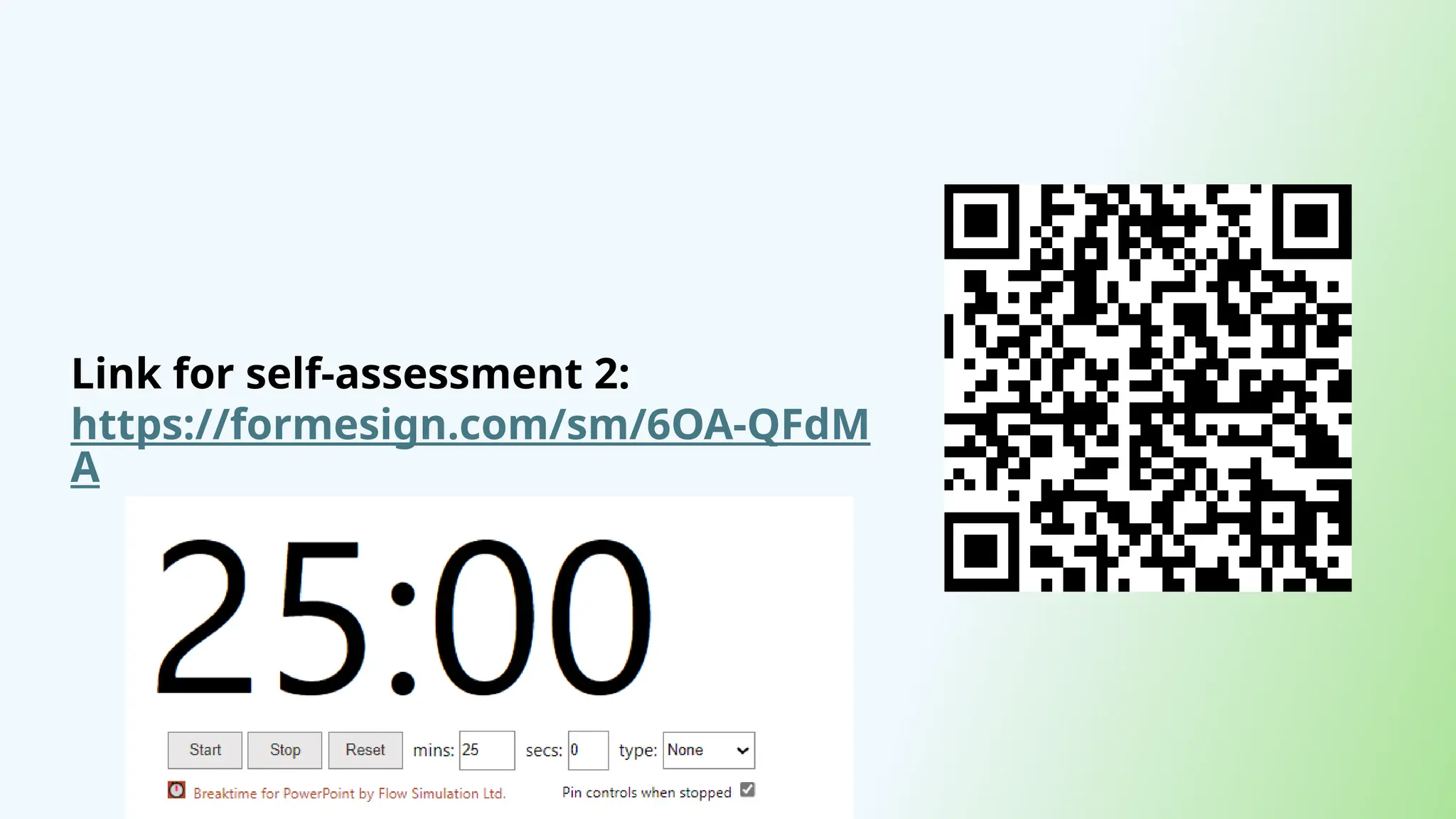
Link for self-assessment 2:
https://formesign.com/sm/6OA-QFdM
A
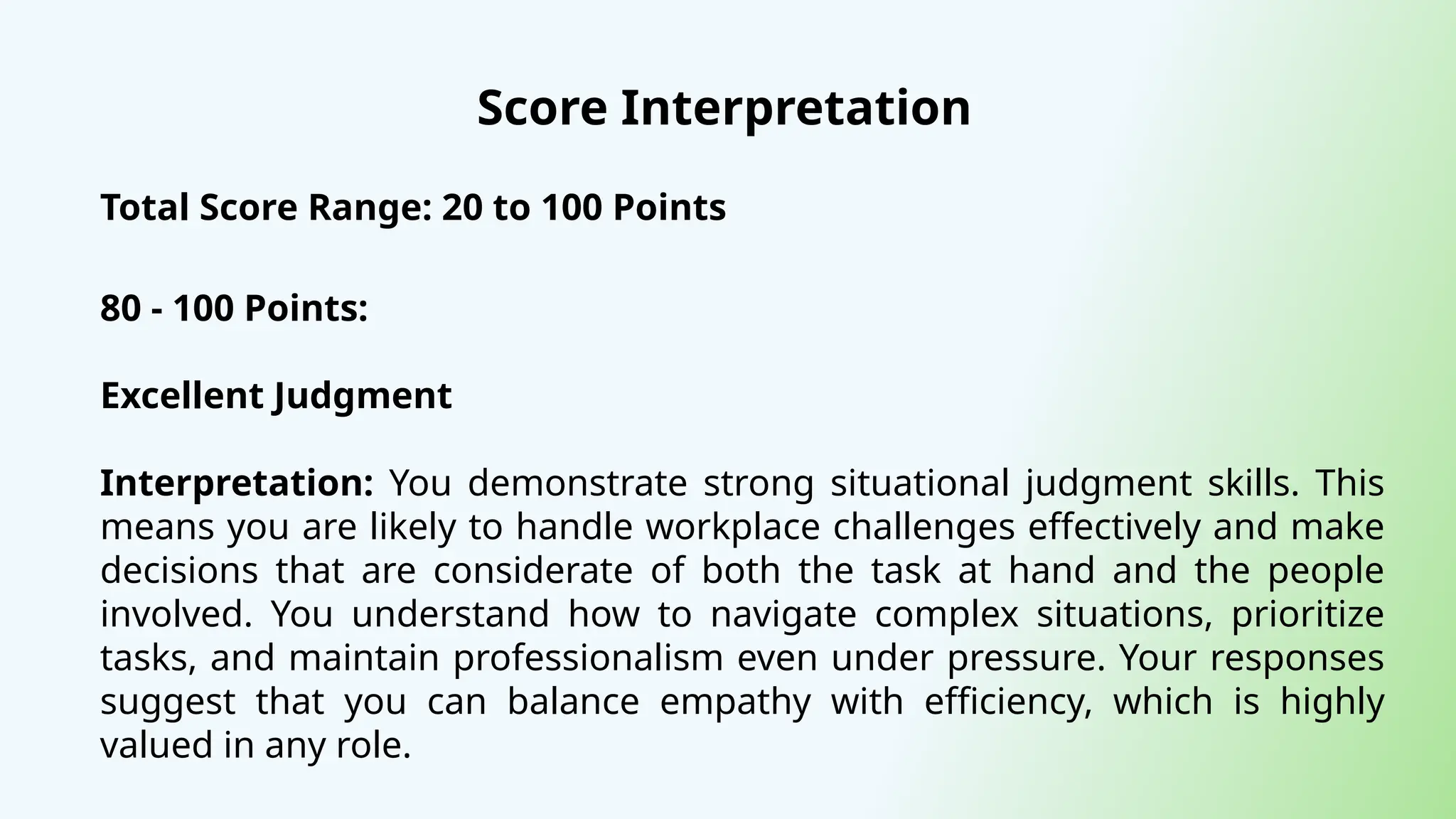
Score Interpretation
Total Score Range: 20 to 100 Points
80 - 100 Points:
Excellent Judgment
Interpretation: You demonstrate strong situational judgment skills. This
means you are likely to handle workplace challenges effectively and make
decisions that are considerate of both the task at hand and the people
involved. You understand how to navigate complex situations, prioritize
tasks, and maintain professionalism even under pressure. Your responses
suggest that you can balance empathy with efficiency, which is highly
valued in any role.
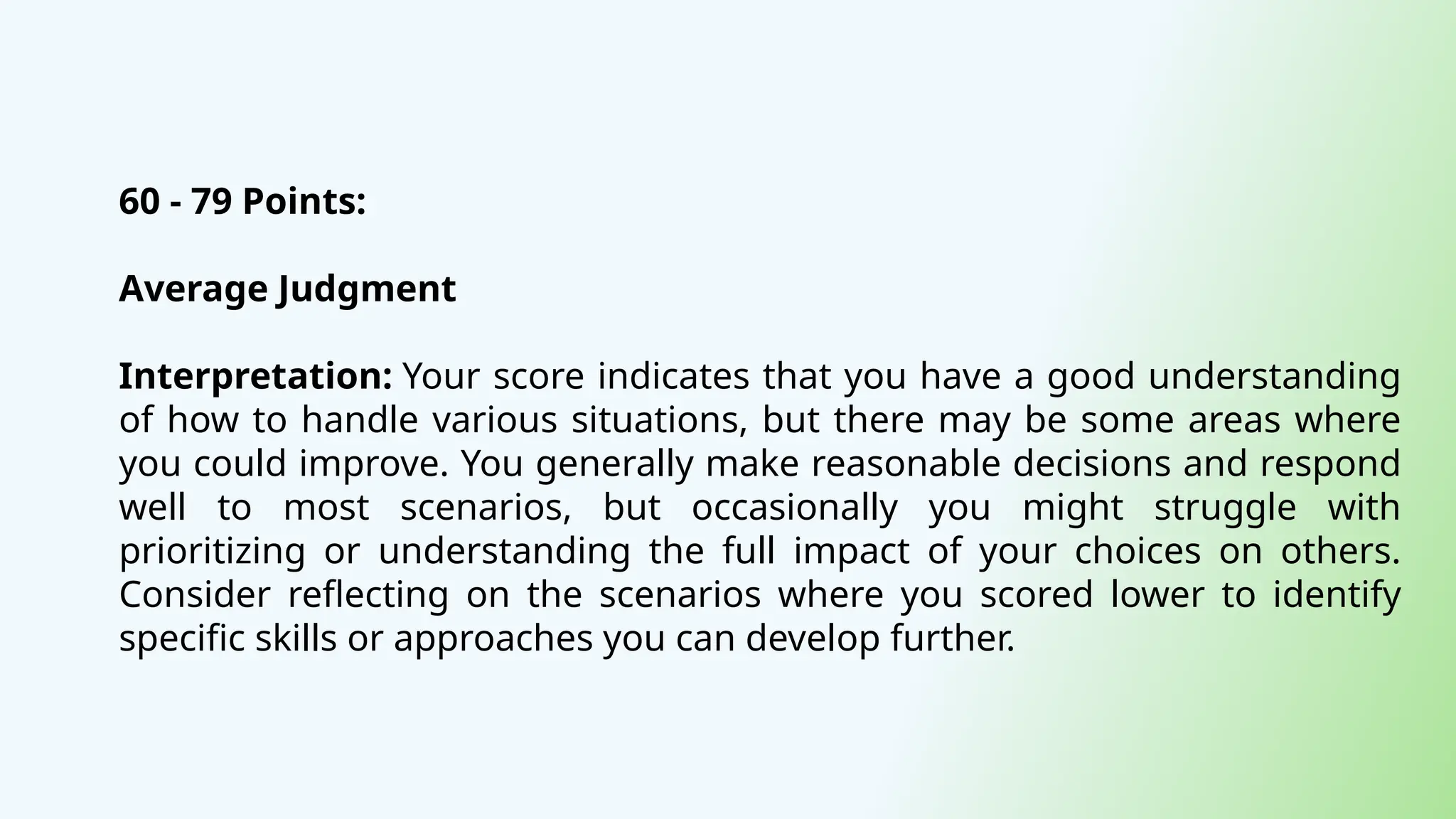
60 - 79 Points:
Average Judgment
Interpretation: Your score indicates that you have a good understanding
of how to handle various situations, but there may be some areas where
you could improve. You generally make reasonable decisions and respond
well to most scenarios, but occasionally you might struggle with
prioritizing or understanding the full impact of your choices on others.
Consider reflecting on the scenarios where you scored lower to identify
specific skills or approaches you can develop further.
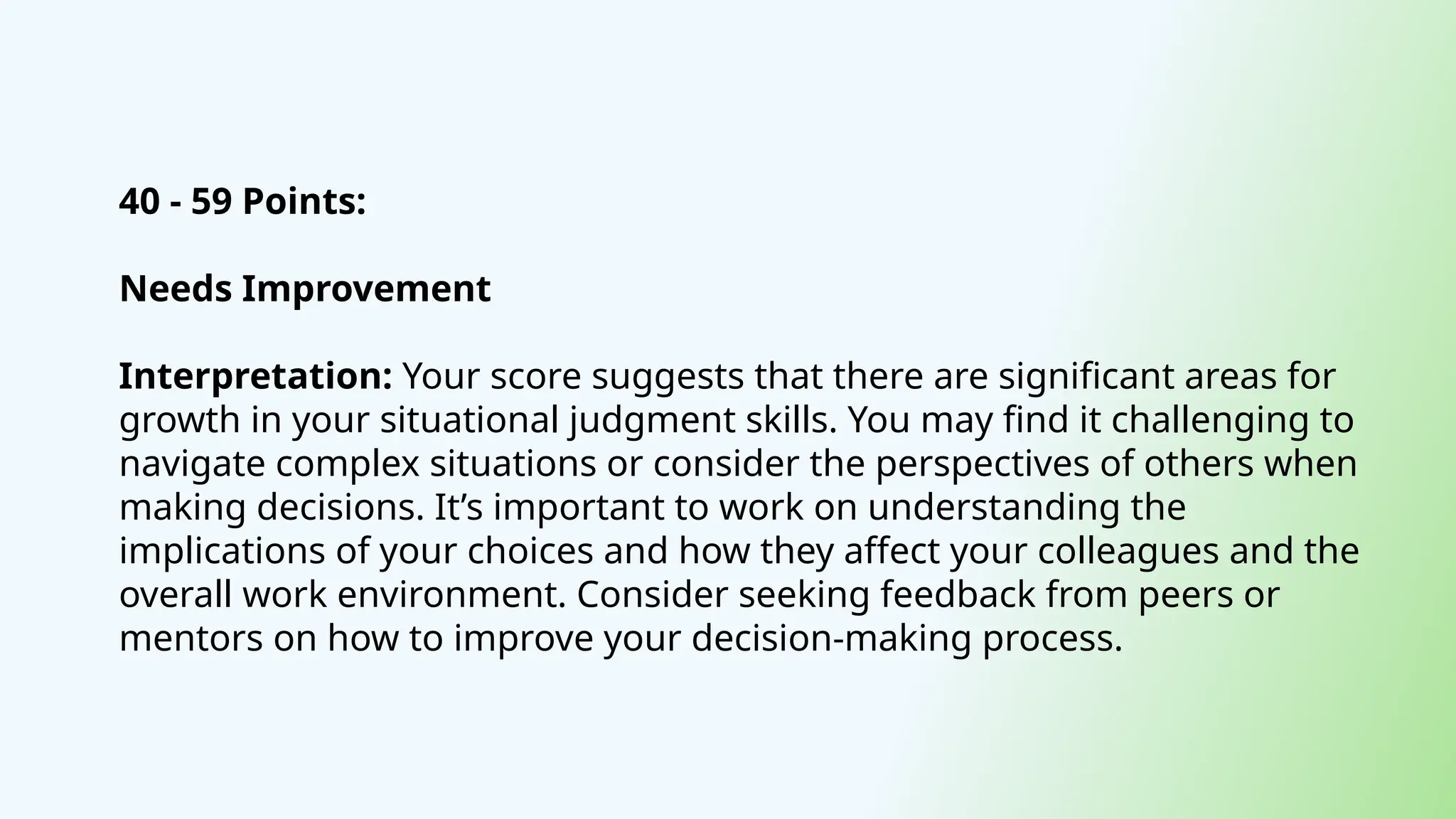
40 - 59 Points:
Needs Improvement
Interpretation: Your score suggests that there are significant areas for
growth in your situational judgment skills. You may find it challenging to
navigate complex situations or consider the perspectives of others when
making decisions. It’s important to work on understanding the
implications of your choices and how they affect your colleagues and the
overall work environment. Consider seeking feedback from peers or
mentors on how to improve your decision-making process.
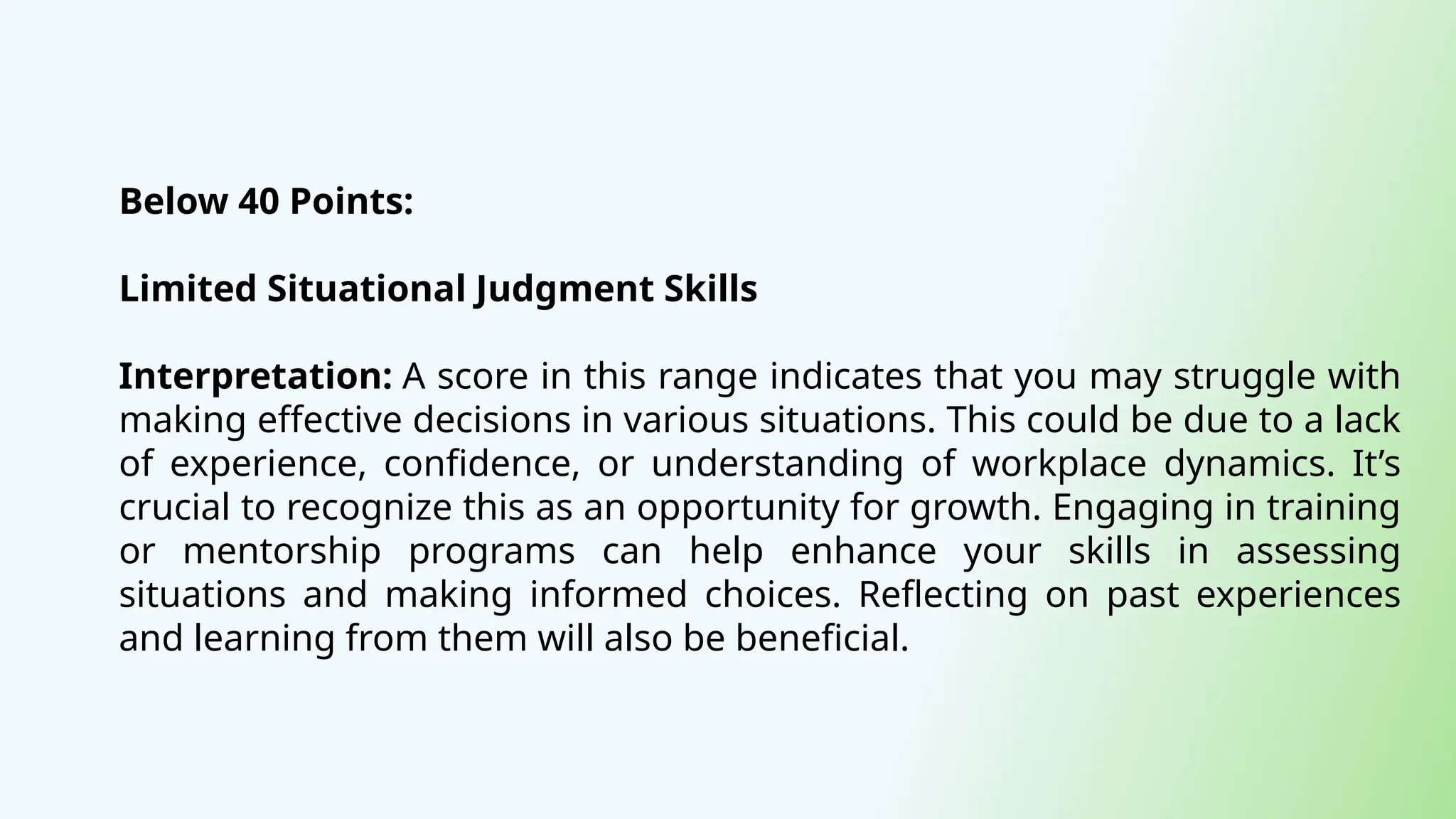
Below 40 Points:
Limited Situational Judgment Skills
Interpretation: A score in this range indicates that you may struggle with
making effective decisions in various situations. This could be due to a lack
of experience, confidence, or understanding of workplace dynamics. It’s
crucial to recognize this as an opportunity for growth. Engaging in training
or mentorship programs can help enhance your skills in assessing
situations and making informed choices. Reflecting on past experiences
and learning from them will also be beneficial.
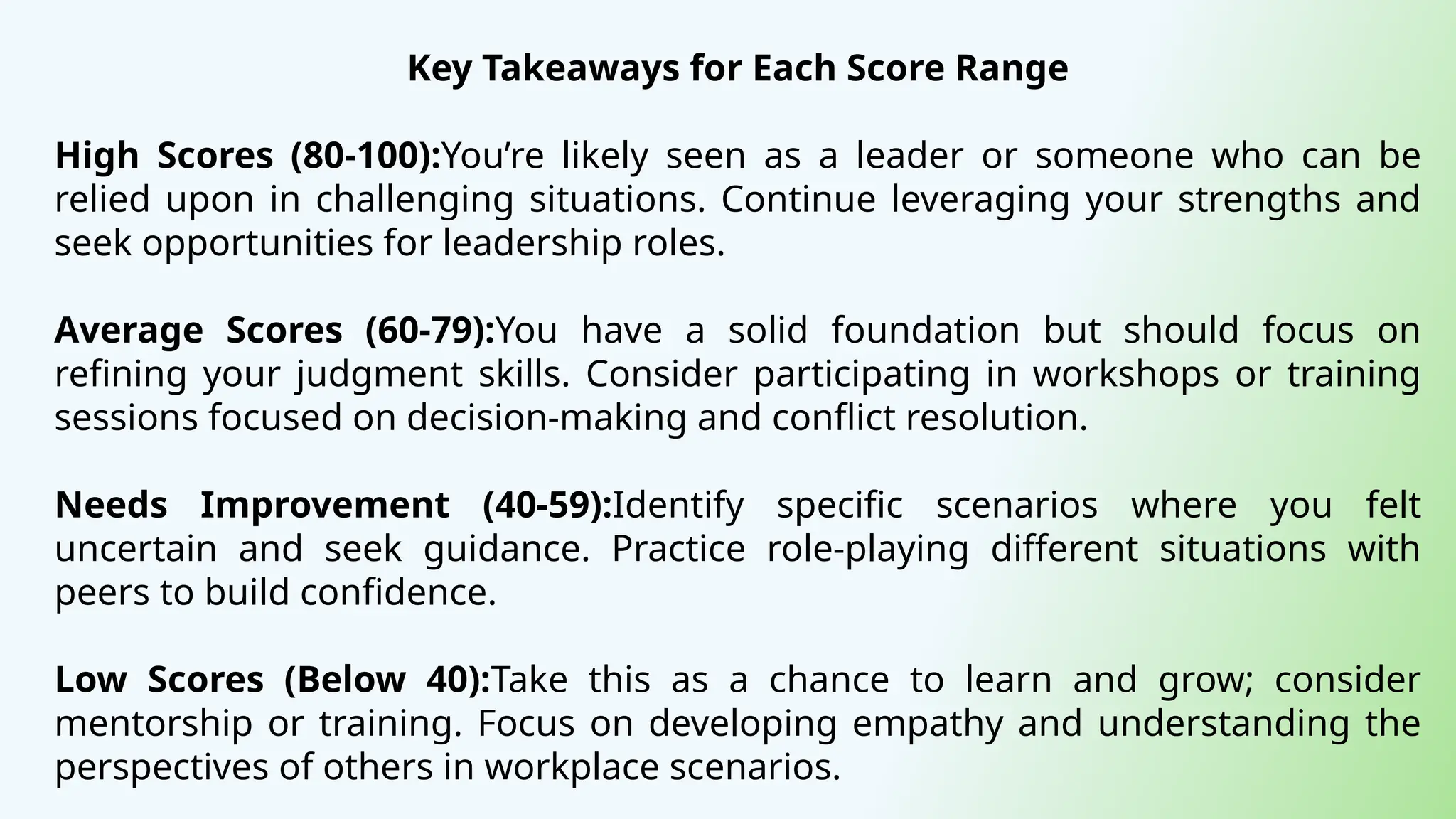
Key Takeaways for Each Score Range
High Scores (80-100):You’re likely seen as a leader or someone who can be
relied upon in challenging situations. Continue leveraging your strengths and
seek opportunities for leadership roles.
Average Scores (60-79):You have a solid foundation but should focus on
refining your judgment skills. Consider participating in workshops or training
sessions focused on decision-making and conflict resolution.
Needs Improvement (40-59):Identify specific scenarios where you felt
uncertain and seek guidance. Practice role-playing different situations with
peers to build confidence.
Low Scores (Below 40):Take this as a chance to learn and grow; consider
mentorship or training. Focus on developing empathy and understanding the
perspectives of others in workplace scenarios.
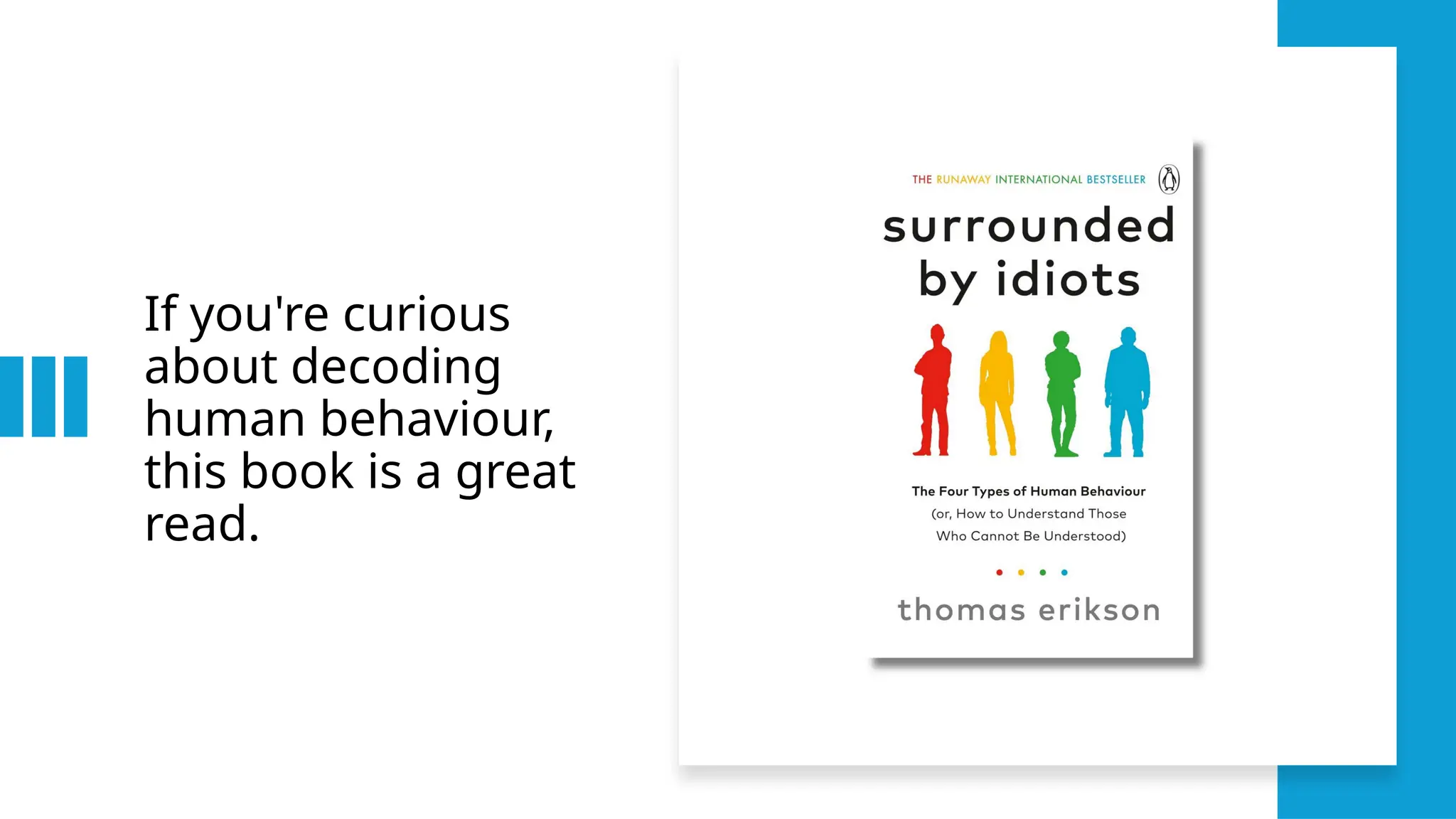
If you're curious
about decoding
human behaviour,
this book is a great
read.
Thank You

Learning and development interventions in HR domain

  • 4.
    Link for quickself-assessment: https://formfacade.com/sm/6W7_BB8 BU
  • 5.
    Scoring Summary Total PossiblePoints: 20 points Scoring Interpretation: 16-20 Points: Strong Self-Awareness 11-15 Points: Moderate Self-Awareness 6-10 Points: Limited Self-Awareness 5 Points or Below: Low Self-Awareness
  • 6.
    Learning Objectives: 1. Recognizeour human behaviour 2. Relate the different behaviours of ourselves to other individuals 3. Identify areas to work upon, and/or further augmentation 4. Understand the influence of different traits on the perceptions and behaviours of individuals
  • 7.
    Understanding that thereis a gap is problem half solved, and it should be followed by corrective
  • 8.
    Link for self-assessment2: https://formesign.com/sm/6OA-QFdM A
  • 9.
    Score Interpretation Total ScoreRange: 20 to 100 Points 80 - 100 Points: Excellent Judgment Interpretation: You demonstrate strong situational judgment skills. This means you are likely to handle workplace challenges effectively and make decisions that are considerate of both the task at hand and the people involved. You understand how to navigate complex situations, prioritize tasks, and maintain professionalism even under pressure. Your responses suggest that you can balance empathy with efficiency, which is highly valued in any role.
  • 10.
    60 - 79Points: Average Judgment Interpretation: Your score indicates that you have a good understanding of how to handle various situations, but there may be some areas where you could improve. You generally make reasonable decisions and respond well to most scenarios, but occasionally you might struggle with prioritizing or understanding the full impact of your choices on others. Consider reflecting on the scenarios where you scored lower to identify specific skills or approaches you can develop further.
  • 11.
    40 - 59Points: Needs Improvement Interpretation: Your score suggests that there are significant areas for growth in your situational judgment skills. You may find it challenging to navigate complex situations or consider the perspectives of others when making decisions. It’s important to work on understanding the implications of your choices and how they affect your colleagues and the overall work environment. Consider seeking feedback from peers or mentors on how to improve your decision-making process.
  • 12.
    Below 40 Points: LimitedSituational Judgment Skills Interpretation: A score in this range indicates that you may struggle with making effective decisions in various situations. This could be due to a lack of experience, confidence, or understanding of workplace dynamics. It’s crucial to recognize this as an opportunity for growth. Engaging in training or mentorship programs can help enhance your skills in assessing situations and making informed choices. Reflecting on past experiences and learning from them will also be beneficial.
  • 13.
    Key Takeaways forEach Score Range High Scores (80-100):You’re likely seen as a leader or someone who can be relied upon in challenging situations. Continue leveraging your strengths and seek opportunities for leadership roles. Average Scores (60-79):You have a solid foundation but should focus on refining your judgment skills. Consider participating in workshops or training sessions focused on decision-making and conflict resolution. Needs Improvement (40-59):Identify specific scenarios where you felt uncertain and seek guidance. Practice role-playing different situations with peers to build confidence. Low Scores (Below 40):Take this as a chance to learn and grow; consider mentorship or training. Focus on developing empathy and understanding the perspectives of others in workplace scenarios.
  • 14.
    If you're curious aboutdecoding human behaviour, this book is a great read.
  • 15.