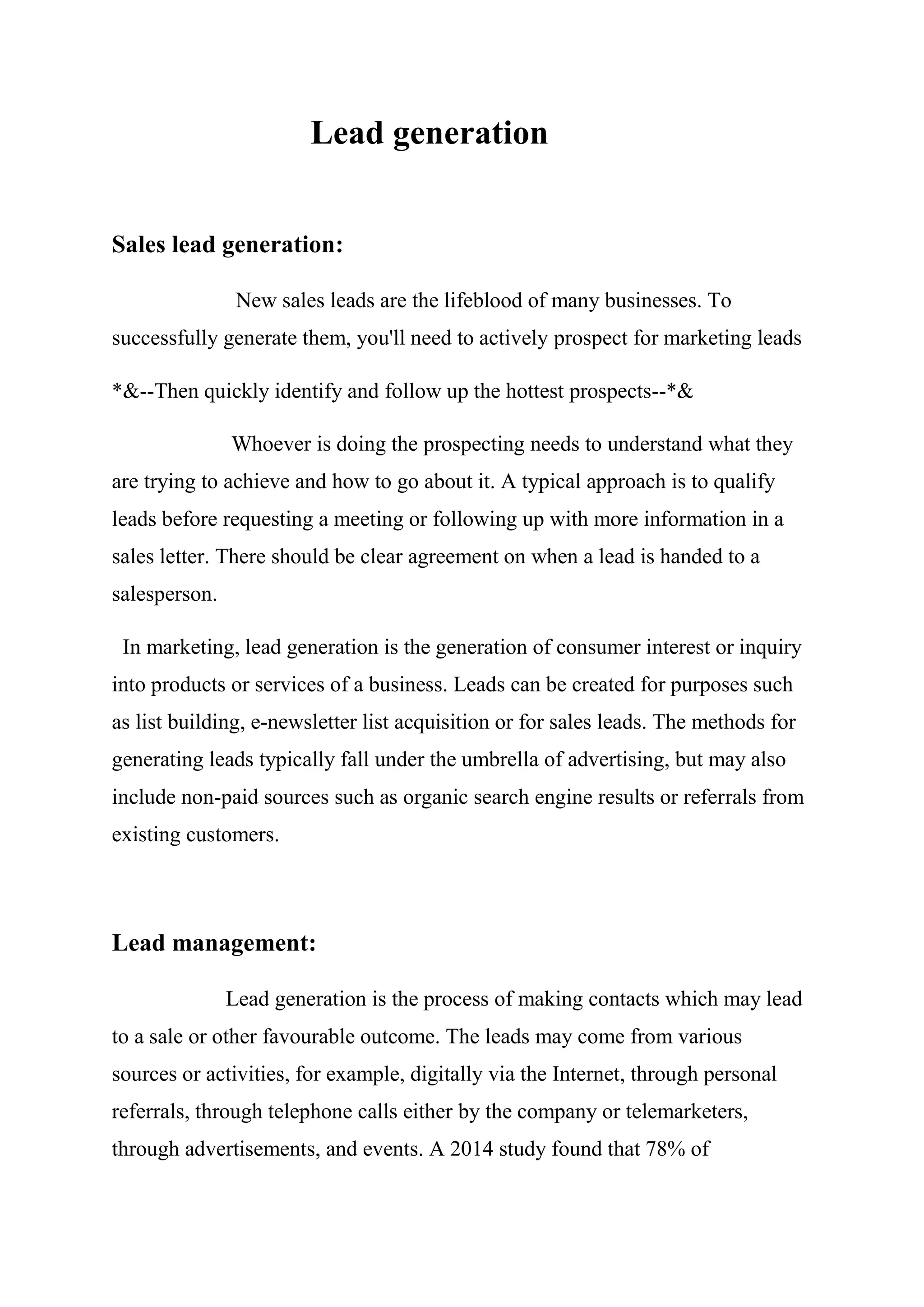
Lead generation
Sales lead generation:
New sales leads are the lifeblood of many businesses. To
successfully generate them, you'll need to actively prospect for marketing leads
*&--Then quickly identify and follow up the hottest prospects--*&
Whoever is doing the prospecting needs to understand what they
are trying to achieve and how to go about it. A typical approach is to qualify
leads before requesting a meeting or following up with more information in a
sales letter. There should be clear agreement on when a lead is handed to a
salesperson.
In marketing, lead generation is the generation of consumer interest or inquiry
into products or services of a business. Leads can be created for purposes such
as list building, e-newsletter list acquisition or for sales leads. The methods for
generating leads typically fall under the umbrella of advertising, but may also
include non-paid sources such as organic search engine results or referrals from
existing customers.
Lead management:
Lead generation is the process of making contacts which may lead
to a sale or other favourable outcome. The leads may come from various
sources or activities, for example, digitally via the Internet, through personal
referrals, through telephone calls either by the company or telemarketers,
through advertisements, and events. A 2014 study found that 78% of
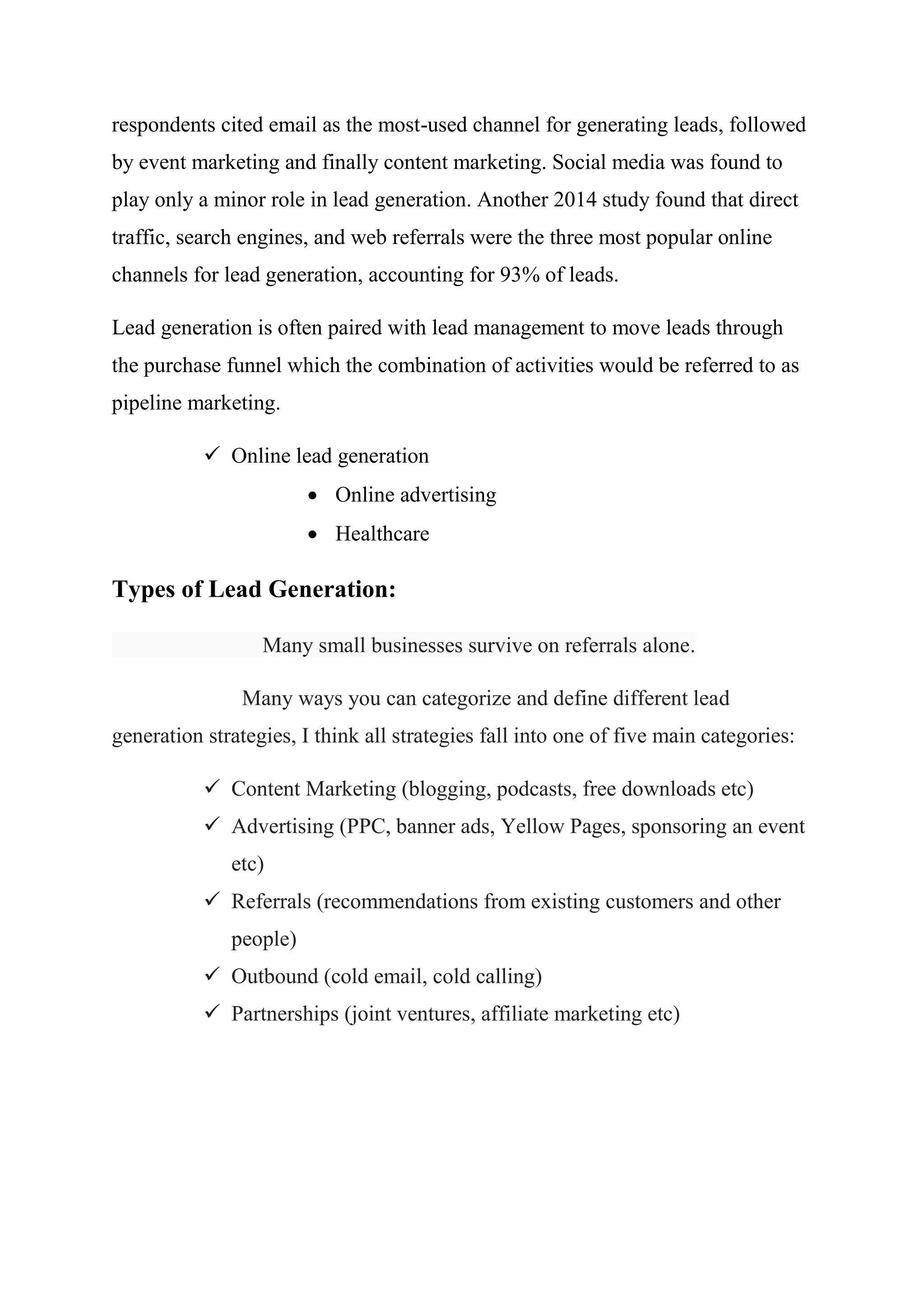
respondents cited email as the most-used channel for generating leads, followed
by event marketing and finally content marketing. Social media was found to
play only a minor role in lead generation. Another 2014 study found that direct
traffic, search engines, and web referrals were the three most popular online
channels for lead generation, accounting for 93% of leads.
Lead generation is often paired with lead management to move leads through
the purchase funnel which the combination of activities would be referred to as
pipeline marketing.
 Online lead generation
 Online advertising
 Healthcare
Types of Lead Generation:
Many small businesses survive on referrals alone.
Many ways you can categorize and define different lead
generation strategies, I think all strategies fall into one of five main categories:
 Content Marketing (blogging, podcasts, free downloads etc)
 Advertising (PPC, banner ads, Yellow Pages, sponsoring an event
etc)
 Referrals (recommendations from existing customers and other
people)
 Outbound (cold email, cold calling)
 Partnerships (joint ventures, affiliate marketing etc)
Referrals
Referrals are an excellent source of new customers.
Need to do two things.
 Make sure your current customers are happy.
 Ask for referrals.
You should concentrate on referrals first because making your
customers happy is the foundation of any business, it takes very little time and
effort to ask for referrals and you don’t have to have a fantastic sales process to
close leads generated by referrals.
Content marketing
Content marketing is a very long-term investment. It can take years
to get going (especially for a smaller business with limited resources and
experience), and is unlikely to be a consistent source of new customers for some
time.
Many businesses go straight to content marketing or advertising when
trying to grow their business beyond just referrals. While they can both be great
sources of new customers, they have significant disadvantages
Expenditure before you can profitably generate customers through advertising.
Outbound
After mastering the basics with referrals, implementing an outbound
strategy will provide you with the most benefits for the least effort.
Compared to advertising, it is much cheaper. There is nothing to spend money
on except perhaps a virtual assistant
Compared to content marketing, it pays off much sooner. You can
put in place an automated email strategy in a week, or less if you already have
an assistant who can manage the process.

Lead generation

  • 1.
    Lead generation Sales leadgeneration: New sales leads are the lifeblood of many businesses. To successfully generate them, you'll need to actively prospect for marketing leads *&--Then quickly identify and follow up the hottest prospects--*& Whoever is doing the prospecting needs to understand what they are trying to achieve and how to go about it. A typical approach is to qualify leads before requesting a meeting or following up with more information in a sales letter. There should be clear agreement on when a lead is handed to a salesperson. In marketing, lead generation is the generation of consumer interest or inquiry into products or services of a business. Leads can be created for purposes such as list building, e-newsletter list acquisition or for sales leads. The methods for generating leads typically fall under the umbrella of advertising, but may also include non-paid sources such as organic search engine results or referrals from existing customers. Lead management: Lead generation is the process of making contacts which may lead to a sale or other favourable outcome. The leads may come from various sources or activities, for example, digitally via the Internet, through personal referrals, through telephone calls either by the company or telemarketers, through advertisements, and events. A 2014 study found that 78% of
  • 2.
    respondents cited emailas the most-used channel for generating leads, followed by event marketing and finally content marketing. Social media was found to play only a minor role in lead generation. Another 2014 study found that direct traffic, search engines, and web referrals were the three most popular online channels for lead generation, accounting for 93% of leads. Lead generation is often paired with lead management to move leads through the purchase funnel which the combination of activities would be referred to as pipeline marketing.  Online lead generation  Online advertising  Healthcare Types of Lead Generation: Many small businesses survive on referrals alone. Many ways you can categorize and define different lead generation strategies, I think all strategies fall into one of five main categories:  Content Marketing (blogging, podcasts, free downloads etc)  Advertising (PPC, banner ads, Yellow Pages, sponsoring an event etc)  Referrals (recommendations from existing customers and other people)  Outbound (cold email, cold calling)  Partnerships (joint ventures, affiliate marketing etc)
  • 3.
    Referrals Referrals are anexcellent source of new customers. Need to do two things.  Make sure your current customers are happy.  Ask for referrals. You should concentrate on referrals first because making your customers happy is the foundation of any business, it takes very little time and effort to ask for referrals and you don’t have to have a fantastic sales process to close leads generated by referrals. Content marketing Content marketing is a very long-term investment. It can take years to get going (especially for a smaller business with limited resources and experience), and is unlikely to be a consistent source of new customers for some time. Many businesses go straight to content marketing or advertising when trying to grow their business beyond just referrals. While they can both be great sources of new customers, they have significant disadvantages Expenditure before you can profitably generate customers through advertising. Outbound After mastering the basics with referrals, implementing an outbound strategy will provide you with the most benefits for the least effort. Compared to advertising, it is much cheaper. There is nothing to spend money on except perhaps a virtual assistant Compared to content marketing, it pays off much sooner. You can put in place an automated email strategy in a week, or less if you already have an assistant who can manage the process.