LDR DARKNESS SENSOR
CIRCUIT PROJECT
By
BEERLA USHARANI
24UP5A0403
2nd year ECE
AIM:
The aim of an LDR (Light Dependent Resistor) darkness sensor circuit is
to detect the presence or intensity of darkness by utilizing the property
of an LDR, where its resistance changes based on the amount of light it
receives; essentially, when darkness increases, the LDR's resistance rises,
allowing a circuit to activate a response like turning on a light when it gets
dark.
COMPONENTS REQUIRED
1.Transistor BC547-1No
2.LDR(light dependent Resistor)-1No
3.Resistors- 220ohm,10k ohm
4.LED (5mm)-1No
5.1N4007 Diode-1No
6.SPDT Relay(5v)-1No
7.Bulb(220v)-1No
8.Battery(5v)-1No
9.Breadboard-1No
MAIN COMPONENT:
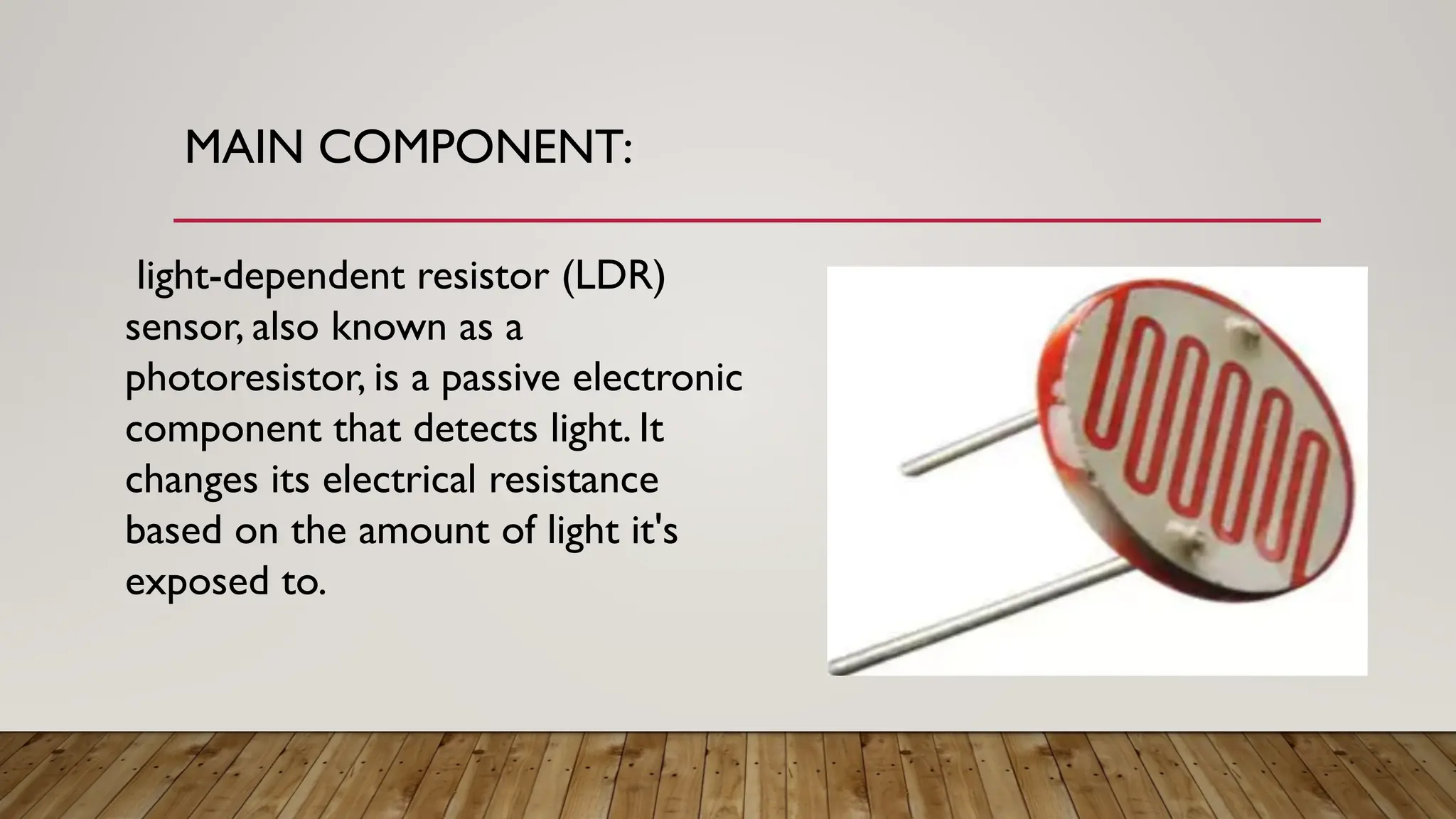
light-dependent resistor (LDR)
sensor, also known as a
photoresistor, is a passive electronic
component that detects light. It
changes its electrical resistance
based on the amount of light it's
exposed to.
Working:
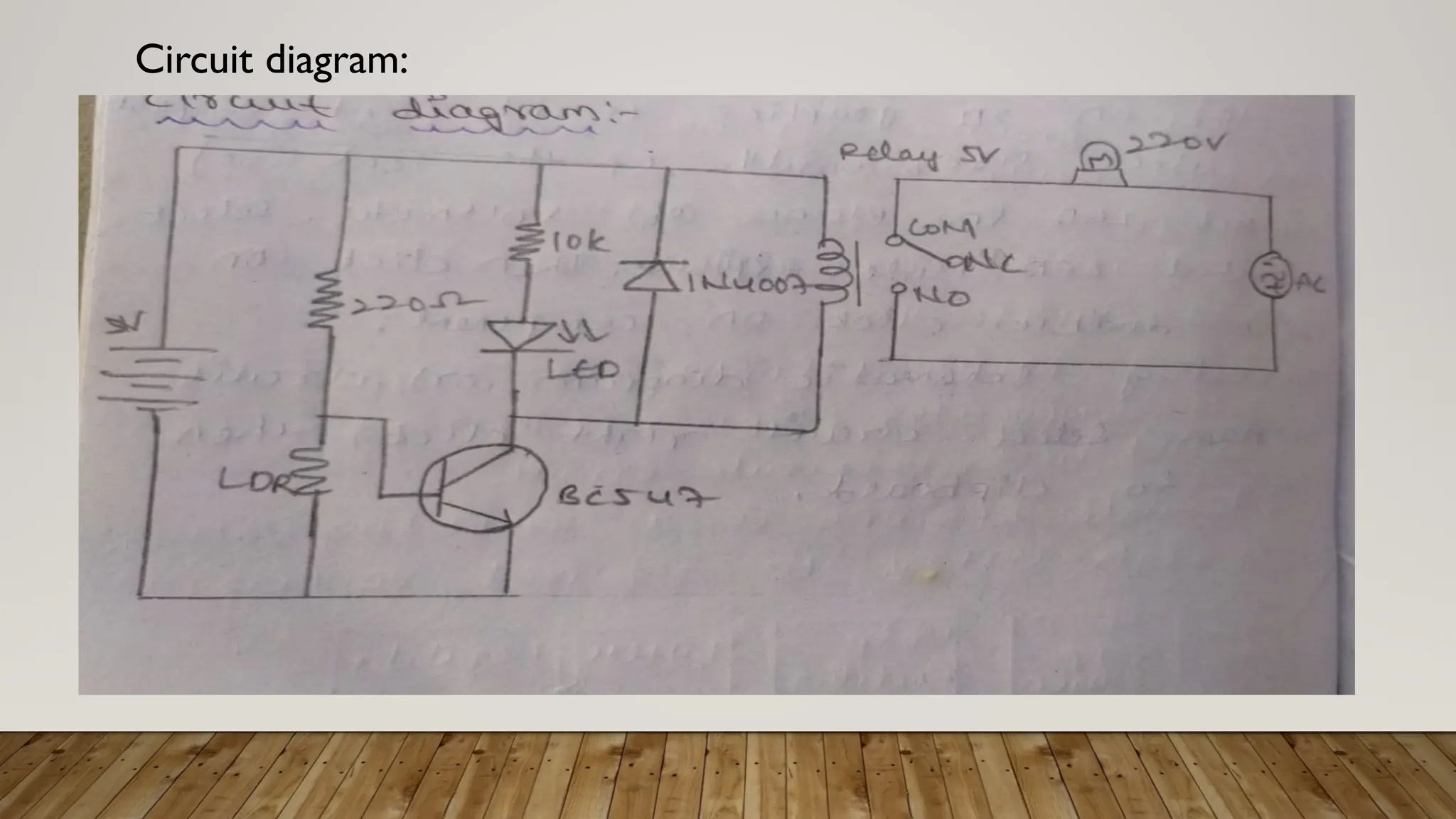
In the Light Sensor Circuit (first diagram) when the brightness of light
increases, the LDR’s resistance reduces and so the voltage at the base of
transistor increases (because if LDR resistance reduces, the voltage
drop(gap) across the LDR, towards positive side decreases). Once this
voltage increases above the required threshold voltage at the base, the LED
turns on.
Circuit diagram:
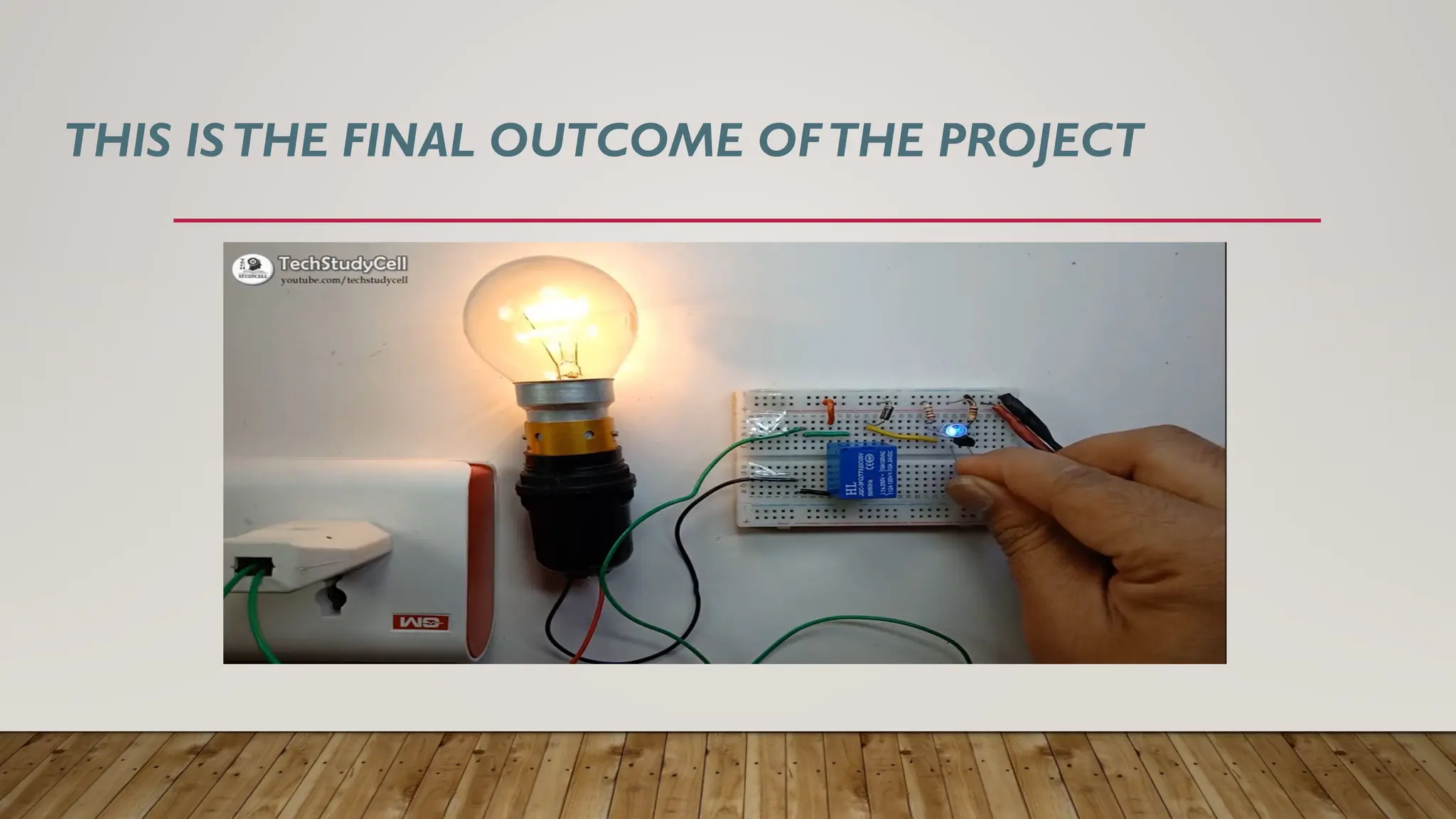
THIS ISTHE FINAL OUTCOME OFTHE PROJECT
Advantages:
1.Simple design and low cost
2.Easy to implement
3.Effective light level detection
4.Energy-efficient potential
Applications:
1.securitty lights
2.Indoor lighting
3.Automatic night lights
4.Photography light meters
5.Alarm systems
6.Industrial automation
CONCLUSION:
this LDR darkness sensor circuit will be further developed to incorporate
advanced features like adjustable sensitivity levels, ambient light
compensation mechanisms, and potential integration with smart home
systems, allowing for more refined control of lighting based on precise
darkness detection in various environments, leading to enhanced energy
efficiency and user convenience.
THANKYOU

ldr darkness sensor circuit.pptx for engineers

  • 1.
    LDR DARKNESS SENSOR CIRCUITPROJECT By BEERLA USHARANI 24UP5A0403 2nd year ECE
  • 2.
    AIM: The aim ofan LDR (Light Dependent Resistor) darkness sensor circuit is to detect the presence or intensity of darkness by utilizing the property of an LDR, where its resistance changes based on the amount of light it receives; essentially, when darkness increases, the LDR's resistance rises, allowing a circuit to activate a response like turning on a light when it gets dark.
  • 3.
    COMPONENTS REQUIRED 1.Transistor BC547-1No 2.LDR(lightdependent Resistor)-1No 3.Resistors- 220ohm,10k ohm 4.LED (5mm)-1No 5.1N4007 Diode-1No 6.SPDT Relay(5v)-1No 7.Bulb(220v)-1No 8.Battery(5v)-1No 9.Breadboard-1No
  • 4.
    MAIN COMPONENT: light-dependent resistor(LDR) sensor, also known as a photoresistor, is a passive electronic component that detects light. It changes its electrical resistance based on the amount of light it's exposed to.
  • 5.
    Working: In the LightSensor Circuit (first diagram) when the brightness of light increases, the LDR’s resistance reduces and so the voltage at the base of transistor increases (because if LDR resistance reduces, the voltage drop(gap) across the LDR, towards positive side decreases). Once this voltage increases above the required threshold voltage at the base, the LED turns on.
  • 6.
  • 7.
    THIS ISTHE FINALOUTCOME OFTHE PROJECT
  • 8.
    Advantages: 1.Simple design andlow cost 2.Easy to implement 3.Effective light level detection 4.Energy-efficient potential
  • 9.
    Applications: 1.securitty lights 2.Indoor lighting 3.Automaticnight lights 4.Photography light meters 5.Alarm systems 6.Industrial automation
  • 10.
    CONCLUSION: this LDR darknesssensor circuit will be further developed to incorporate advanced features like adjustable sensitivity levels, ambient light compensation mechanisms, and potential integration with smart home systems, allowing for more refined control of lighting based on precise darkness detection in various environments, leading to enhanced energy efficiency and user convenience.
  • 11.