laravel
INTRODUCTION
Laravel is a popular PHP web application framework designed to simplify
web development with a modular structure, elegant syntax, and built-in-
features. It was created by Taylor otwell in 2011
WHY LARAVEL ?
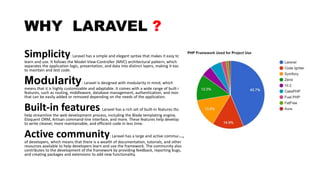
Simplicity: Laravel has a simple and elegant syntax that makes it easy to
learn and use. It follows the Model-View-Controller (MVC) architectural pattern, which
separates the application logic, presentation, and data into distinct layers, making it easier
to maintain and test code.
Modularity: Laravel is designed with modularity in mind, which
means that it is highly customizable and adaptable. It comes with a wide range of built-in
features, such as routing, middleware, database management, authentication, and more,
that can be easily added or removed depending on the needs of the application.
Built-in features: Laravel has a rich set of built-in features that
help streamline the web development process, including the Blade templating engine,
Eloquent ORM, Artisan command-line interface, and more. These features help developers
to write cleaner, more maintainable, and efficient code in less time.
Active community: Laravel has a large and active community
of developers, which means that there is a wealth of documentation, tutorials, and other
resources available to help developers learn and use the framework. The community also
contributes to the development of the framework by providing feedback, reporting bugs,
and creating packages and extensions to add new functionality.
Laravel Features
• Routing
• Middleware
• Blade template engine
• Eloquent ORM
• Artisan command line interface
• Security features
Getting Started with Laravel
Installation
First, download the Laravel installer using Composer:
~ composer global require laravel/installer
~ laravel new test
~cd example-app
~php artisan serve
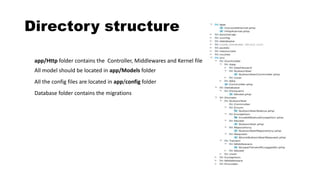
Directory structure
app/Http folder contains the Controller, Middlewares and Kernel file
All model should be located in app/Models folder
All the config files are located in app/config folder
Database folder contains the migrations
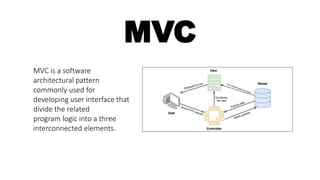
MVC
MVC is a software
architectural pattern
commonly used for
developing user interface that
divide the related
program logic into a three
interconnected elements.
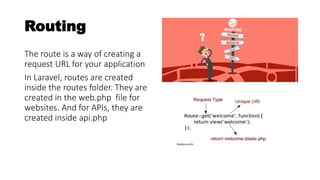
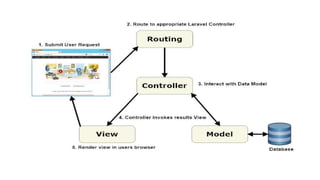
Routing
The route is a way of creating a
request URL for your application
In Laravel, routes are created
inside the routes folder. They are
created in the web.php file for
websites. And for APIs, they are
created inside api.php
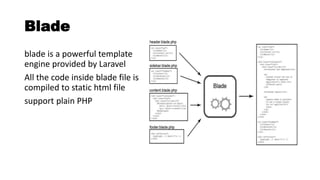
Blade
blade is a powerful template
engine provided by Laravel
All the code inside blade file is
compiled to static html file
support plain PHP
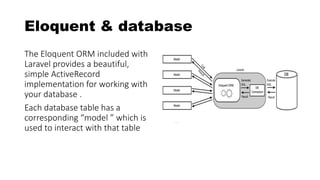
Eloquent & database
The Eloquent ORM included with
Laravel provides a beautiful,
simple ActiveRecord
implementation for working with
your database .
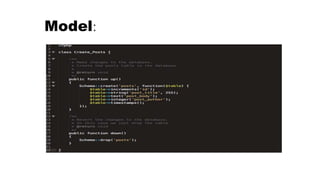
Each database table has a
corresponding “model ” which is
used to interact with that table
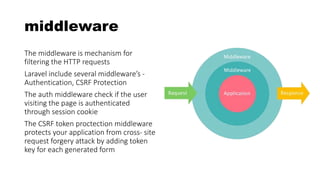
middleware
The middleware is mechanism for
filtering the HTTP requests
Laravel include several middleware’s -
Authentication, CSRF Protection
The auth middleware check if the user
visiting the page is authenticated
through session cookie
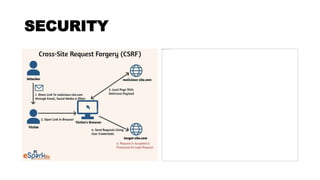
The CSRF token proctection middleware
protects your application from cross- site
request forgery attack by adding token
key for each generated form
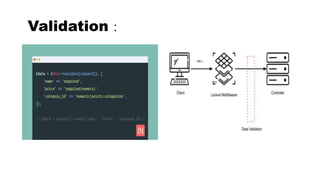
Validation :
Model:
Artisan
Artisan is the command-line
interface included with Laravel. It
provides a number of helpful
commands that can assist you
while you build your application.
This tool allows us to perform the
majority of those repetitive and
tedious programming tasks that
most of the developers avoid
performing manually.
SECURITY
SECURITY
***

laravel.pptx

  • 1.
  • 2.
    INTRODUCTION Laravel is apopular PHP web application framework designed to simplify web development with a modular structure, elegant syntax, and built-in- features. It was created by Taylor otwell in 2011
  • 3.
    WHY LARAVEL ? Simplicity:Laravel has a simple and elegant syntax that makes it easy to learn and use. It follows the Model-View-Controller (MVC) architectural pattern, which separates the application logic, presentation, and data into distinct layers, making it easier to maintain and test code. Modularity: Laravel is designed with modularity in mind, which means that it is highly customizable and adaptable. It comes with a wide range of built-in features, such as routing, middleware, database management, authentication, and more, that can be easily added or removed depending on the needs of the application. Built-in features: Laravel has a rich set of built-in features that help streamline the web development process, including the Blade templating engine, Eloquent ORM, Artisan command-line interface, and more. These features help developers to write cleaner, more maintainable, and efficient code in less time. Active community: Laravel has a large and active community of developers, which means that there is a wealth of documentation, tutorials, and other resources available to help developers learn and use the framework. The community also contributes to the development of the framework by providing feedback, reporting bugs, and creating packages and extensions to add new functionality.
  • 4.
    Laravel Features • Routing •Middleware • Blade template engine • Eloquent ORM • Artisan command line interface • Security features
  • 5.
    Getting Started withLaravel Installation First, download the Laravel installer using Composer: ~ composer global require laravel/installer ~ laravel new test ~cd example-app ~php artisan serve
  • 6.
    Directory structure app/Http foldercontains the Controller, Middlewares and Kernel file All model should be located in app/Models folder All the config files are located in app/config folder Database folder contains the migrations
  • 7.
    MVC MVC is asoftware architectural pattern commonly used for developing user interface that divide the related program logic into a three interconnected elements.
  • 8.
    Routing The route isa way of creating a request URL for your application In Laravel, routes are created inside the routes folder. They are created in the web.php file for websites. And for APIs, they are created inside api.php
  • 10.
    Blade blade is apowerful template engine provided by Laravel All the code inside blade file is compiled to static html file support plain PHP
  • 11.
    Eloquent & database TheEloquent ORM included with Laravel provides a beautiful, simple ActiveRecord implementation for working with your database . Each database table has a corresponding “model ” which is used to interact with that table
  • 12.
    middleware The middleware ismechanism for filtering the HTTP requests Laravel include several middleware’s - Authentication, CSRF Protection The auth middleware check if the user visiting the page is authenticated through session cookie The CSRF token proctection middleware protects your application from cross- site request forgery attack by adding token key for each generated form
  • 13.
  • 14.
  • 15.
    Artisan Artisan is thecommand-line interface included with Laravel. It provides a number of helpful commands that can assist you while you build your application. This tool allows us to perform the majority of those repetitive and tedious programming tasks that most of the developers avoid performing manually.
  • 17.
  • 18.
  • 19.