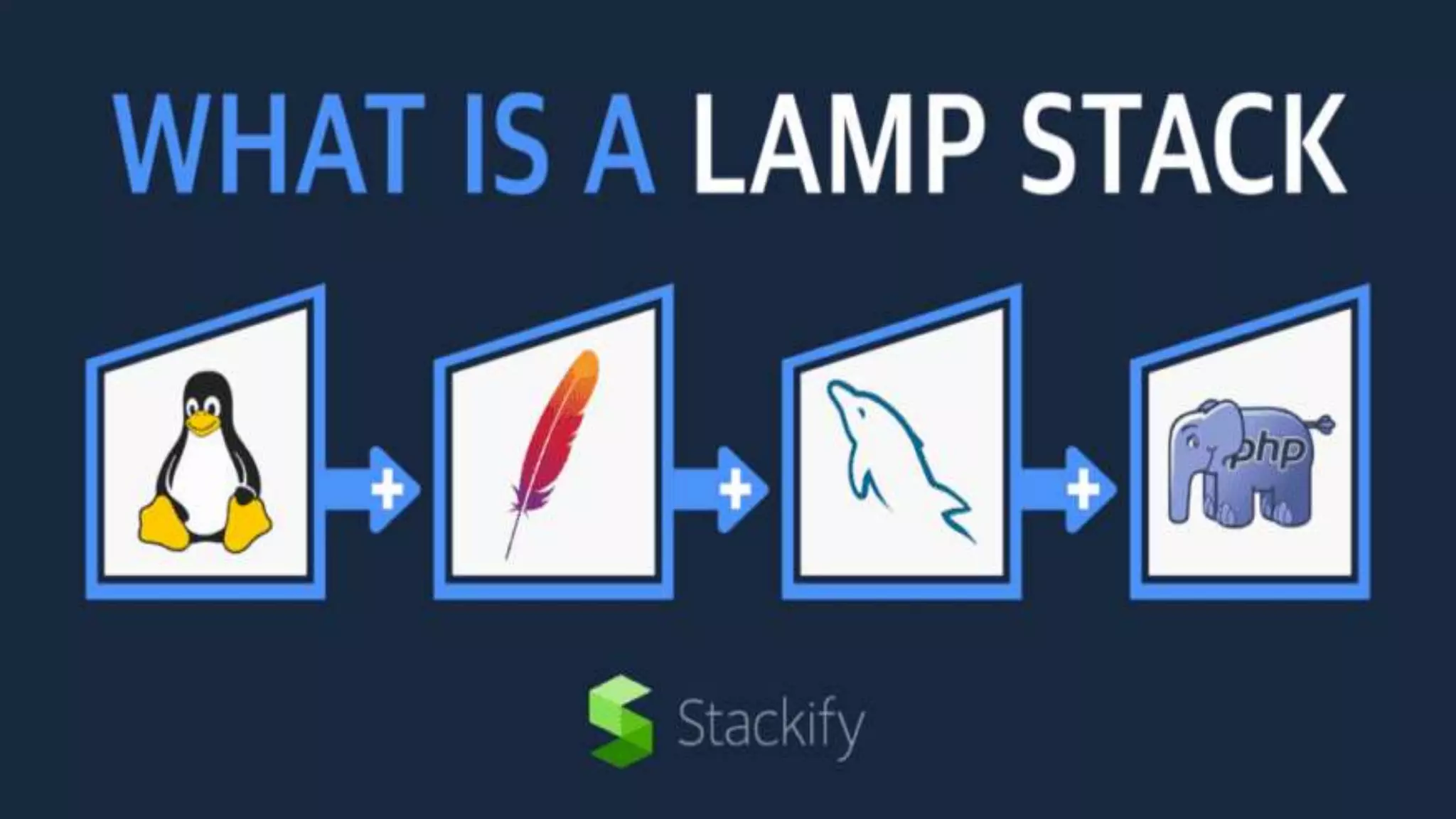
LAMP (Linux, Apache, MySQL, PHP/Perl/Python) is an acronym denoting one of the most
common solution stacks for many of the web's most popular applications. However, LAMP now refers to
a generic software stack model and its components are largely interchangeable.[1]
Each letter in the acronym stands for one of its four open-source building blocks:
•Linux for the operating system
•Apache HTTP Server
•MySQL for the relational database management system
•PHP, Perl, or Python programming language
What is LAMP ?
In LAMP Stack each level derives off its base layer. Your operating system, Linux, is the base
layer. Then Apache, your web daemon sits on top of your OS. Then your database stores all
the information served by your web daemon, and PHP (or any P* scripting language) is used
to drive and display all the data, and allow for user interaction.
A high-level look at the LAMP stack order of execution shows how the elements interoperate. The process starts when the
Apache web server receives requests for web pages from a user’s browser. If the request is for a PHP file, Apache passes the
request to PHP, which loads the file and executes the code contained in the file. PHP also communicates with MySQL to
fetch any data referenced in the code.
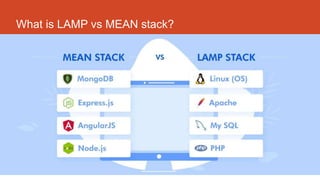
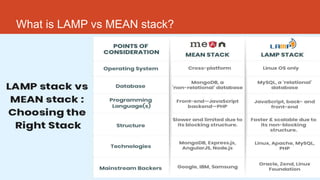
What is LAMP vs MEAN stack?
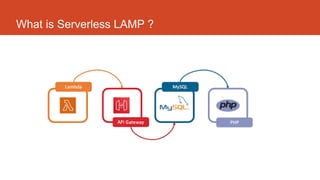
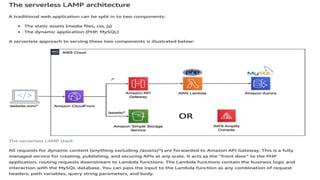
What is Serverless LAMP ?
LAMP Stack Tutorial by  jeetendra mandal

LAMP Stack Tutorial by jeetendra mandal

  • 2.
    LAMP (Linux, Apache,MySQL, PHP/Perl/Python) is an acronym denoting one of the most common solution stacks for many of the web's most popular applications. However, LAMP now refers to a generic software stack model and its components are largely interchangeable.[1] Each letter in the acronym stands for one of its four open-source building blocks: •Linux for the operating system •Apache HTTP Server •MySQL for the relational database management system •PHP, Perl, or Python programming language What is LAMP ?
  • 3.
    In LAMP Stackeach level derives off its base layer. Your operating system, Linux, is the base layer. Then Apache, your web daemon sits on top of your OS. Then your database stores all the information served by your web daemon, and PHP (or any P* scripting language) is used to drive and display all the data, and allow for user interaction. A high-level look at the LAMP stack order of execution shows how the elements interoperate. The process starts when the Apache web server receives requests for web pages from a user’s browser. If the request is for a PHP file, Apache passes the request to PHP, which loads the file and executes the code contained in the file. PHP also communicates with MySQL to fetch any data referenced in the code.
  • 4.
    What is LAMPvs MEAN stack?
  • 5.
    What is LAMPvs MEAN stack?
  • 6.