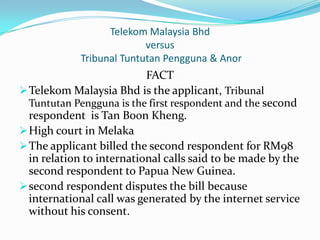
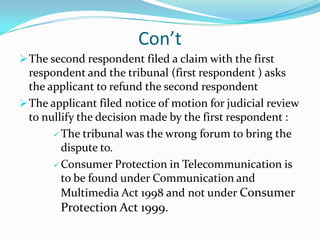
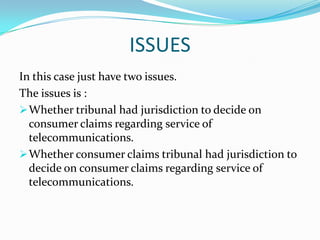
1.  HaslindabteHamzah versus Kumon Method of Learning Centre   2. Telekom Malaysia Bhd versus Tribunal TuntutanPengguna & AnorNUR IDIENTEE BINTI ABD HALIM  (806092)ATHIRAH MOHD TAN 		   (806265)ROSLAN BIN RIDZUAN		   (806481)
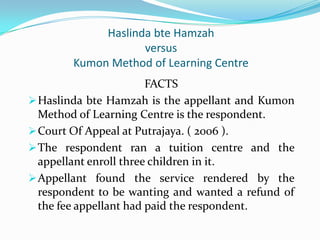
HaslindabteHamzahversusKumon Method of Learning Centre FACTSHaslindabteHamzah is the appellant and Kumon Method of Learning Centre is the respondent.
Court Of Appeal at Putrajaya. ( 2006 ).
The respondent ran a tuition centre and the appellant enroll three children in it.
Appellant found the service rendered by the respondent to be wanting and wanted a refund of the fee appellant had paid the respondent. Con’tShe filed the claim with the Tribunal.
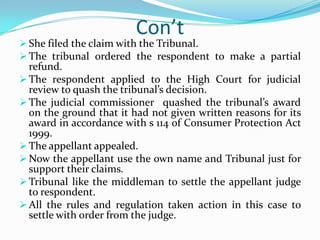
The tribunal ordered the respondent to make a partial refund.
The respondent applied to the High Court for judicial review to quash the tribunal’s decision.
The judicial commissioner  quashed the tribunal’s award on the ground that it had not given written reasons for its award in accordance with s 114 of Consumer Protection Act 1999.
The appellant appealed.
Now the appellant use the own name and Tribunal just for support their claims.
Tribunal like the middleman to settle the appellant judge to respondent.
All the rules and regulation taken action in this case to settle with order from the judge.ISSUESIn this case just have three issues.The issues is : Whether award must be in writing.
Whether tribunal could order partial refund.
Whether awards should not be struck down save in the rarest of cases – Consumer Protection Act 1999 s 114.ARGUMENT BY APPELLANT1. Whether award must be in writing.The s 114 says is that the Tribunal must give reasons for making its award. The section does not say that the reasons must be in writing.2. Whether tribunal could order partial refund.The tribunal is a specially constituted body to speedily deal with consumer’s complaints. Tribunal has the power to direct a refund, so there is no error of law at all here.ARGUMENT BY RESPONDENT1. Whether award must be in writing.The award must be in writing and appellant not has the writing award in this case.2. Whether tribunal could order partial refund.The tribunal committed an error of law because it ordered a partial refund of the consideration paid by the appellant to the respondent when there was absent here a total failure of consideration.JUDGE OPINIONWhether awards should not be struck down save in the rarest of cases – Consumer Protection Act 1999 s 114.
Tribunal has been conferred with extraordinary powers to do speedy justice for customers. Its awards should not be struck down save in the rarest of cases. Where it has misinterpreted some provision of the Act in such a way to produce an injustice. Court should be ever remindful that certiorari is not a remedy that is available as of right. It is not every error of law committed by an inferior tribunal that entitles the High Court to issues certiorari.
The High Courts do not, and should not, act as courts of appeal under art 226.
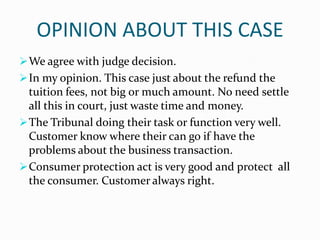
The appellant win in this case because more their evidence and support by the Tribunal and Consumer Protection Act 1999.

Kumon n telekom

  • 1.
    1. HaslindabteHamzahversus Kumon Method of Learning Centre 2. Telekom Malaysia Bhd versus Tribunal TuntutanPengguna & AnorNUR IDIENTEE BINTI ABD HALIM (806092)ATHIRAH MOHD TAN (806265)ROSLAN BIN RIDZUAN (806481)
  • 2.
    HaslindabteHamzahversusKumon Method ofLearning Centre FACTSHaslindabteHamzah is the appellant and Kumon Method of Learning Centre is the respondent.
  • 3.
    Court Of Appealat Putrajaya. ( 2006 ).
  • 4.
    The respondent rana tuition centre and the appellant enroll three children in it.
  • 5.
    Appellant found theservice rendered by the respondent to be wanting and wanted a refund of the fee appellant had paid the respondent. Con’tShe filed the claim with the Tribunal.
  • 6.
    The tribunal orderedthe respondent to make a partial refund.
  • 7.
    The respondent appliedto the High Court for judicial review to quash the tribunal’s decision.
  • 8.
    The judicial commissioner quashed the tribunal’s award on the ground that it had not given written reasons for its award in accordance with s 114 of Consumer Protection Act 1999.
  • 9.
  • 10.
    Now the appellantuse the own name and Tribunal just for support their claims.
  • 11.
    Tribunal like themiddleman to settle the appellant judge to respondent.
  • 12.
    All the rulesand regulation taken action in this case to settle with order from the judge.ISSUESIn this case just have three issues.The issues is : Whether award must be in writing.
  • 13.
    Whether tribunal couldorder partial refund.
  • 14.
    Whether awards shouldnot be struck down save in the rarest of cases – Consumer Protection Act 1999 s 114.ARGUMENT BY APPELLANT1. Whether award must be in writing.The s 114 says is that the Tribunal must give reasons for making its award. The section does not say that the reasons must be in writing.2. Whether tribunal could order partial refund.The tribunal is a specially constituted body to speedily deal with consumer’s complaints. Tribunal has the power to direct a refund, so there is no error of law at all here.ARGUMENT BY RESPONDENT1. Whether award must be in writing.The award must be in writing and appellant not has the writing award in this case.2. Whether tribunal could order partial refund.The tribunal committed an error of law because it ordered a partial refund of the consideration paid by the appellant to the respondent when there was absent here a total failure of consideration.JUDGE OPINIONWhether awards should not be struck down save in the rarest of cases – Consumer Protection Act 1999 s 114.
  • 15.
    Tribunal has beenconferred with extraordinary powers to do speedy justice for customers. Its awards should not be struck down save in the rarest of cases. Where it has misinterpreted some provision of the Act in such a way to produce an injustice. Court should be ever remindful that certiorari is not a remedy that is available as of right. It is not every error of law committed by an inferior tribunal that entitles the High Court to issues certiorari.
  • 16.
    The High Courtsdo not, and should not, act as courts of appeal under art 226.
  • 17.
    The appellant winin this case because more their evidence and support by the Tribunal and Consumer Protection Act 1999.