Gathering Information and
Scanning the Environment
Marketing Management, 13th ed
3
Copyright © 2009 Pearson Education, Inc. Publishing as Prentice Hall 3-2
Chapter Questions
• What are the components of a modern
marketing information system?
• What are useful internal records?
• What is involved in a marketing intelligence
system?
• What are the key methods for tracking and
identifying opportunities in the macro
environment?
• What are some important macro environment
developments?
Copyright © 2009 Pearson Education, Inc. Publishing as Prentice Hall 3-3
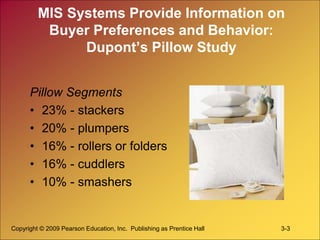
MIS Systems Provide Information on
Buyer Preferences and Behavior:
Dupont’s Pillow Study
Pillow Segments
• 23% - stackers
• 20% - plumpers
• 16% - rollers or folders
• 16% - cuddlers
• 10% - smashers
Copyright © 2009 Pearson Education, Inc. Publishing as Prentice Hall 3-4
What is a
Marketing Information System (MIS)?
A marketing information system
consists of people, equipment, and
procedures to gather, sort, analyze,
evaluate, and distribute needed, timely,
and accurate information to
marketing decision makers.
Copyright © 2009 Pearson Education, Inc. Publishing as Prentice Hall 3-5
Table 3.1 Information Needs Probes
• What decisions do you regularly make?
• What information do you need to make these
decisions?
• What information do you regularly get?
• What special studies do you periodically
request?
• What information would you want that you
are not getting now?
• What are the four most helpful improvements
that could be made in the present marketing
information system?
Copyright © 2009 Pearson Education, Inc. Publishing as Prentice Hall 3-6
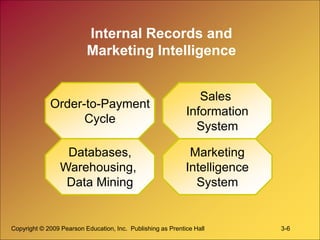
Internal Records and
Marketing Intelligence
Order-to-Payment
Cycle
Databases,
Warehousing,
Data Mining
Marketing
Intelligence
System
Sales
Information
System
Copyright © 2009 Pearson Education, Inc. Publishing as Prentice Hall 3-7
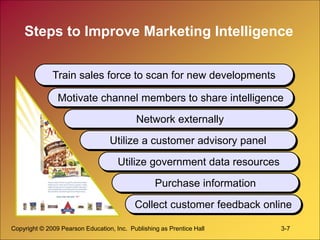
Steps to Improve Marketing Intelligence
Train sales force to scan for new developments
Motivate channel members to share intelligence
Network externally
Utilize a customer advisory panel
Utilize government data resources
Purchase information
Collect customer feedback online
Copyright © 2009 Pearson Education, Inc. Publishing as Prentice Hall 3-8
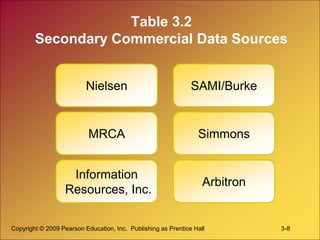
Table 3.2
Secondary Commercial Data Sources
Nielsen
Information
Resources, Inc.
MRCA
Arbitron
Simmons
SAMI/Burke
Copyright © 2009 Pearson Education, Inc. Publishing as Prentice Hall 3-9
Sources of Competitive Information
• Independent customer goods and service
review forums
• Distributor or sales agent feedback sites
• Combination sites offering customer reviews
and expert opinions
• Customer complaint sites
• Public blogs
Copyright © 2009 Pearson Education, Inc. Publishing as Prentice Hall 3-10
Trends Shaping the
Business Landscape
• Profound shifts in
centers of economic
activity
• Increases in public-
sector activity
• Change in consumer
landscape
• Technological
connectivity
• Scarcity of well-trained
talent
• Increase in demand for
natural resources
• Emergence of new
global industry
structures
• Ubiquitous access to
information
• Management shifts
from art to science
• Increase in scrutiny of
big business practices
Copyright © 2009 Pearson Education, Inc. Publishing as Prentice Hall 3-11
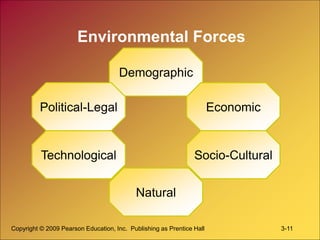
Environmental Forces
Demographic
Economic
Political-Legal
Socio-Cultural
Technological
Natural
Copyright © 2009 Pearson Education, Inc. Publishing as Prentice Hall 3-12
Population and Demographics
• Population growth
• Population age mix
• Ethnic markets
• Educational groups
• Household patterns
• Geographical shifts
Copyright © 2009 Pearson Education, Inc. Publishing as Prentice Hall 3-13
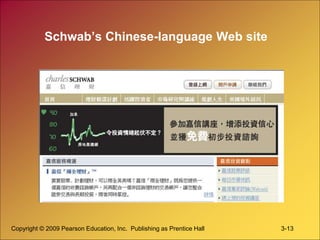
Schwab’s Chinese-language Web site
Copyright © 2009 Pearson Education, Inc. Publishing as Prentice Hall 3-14
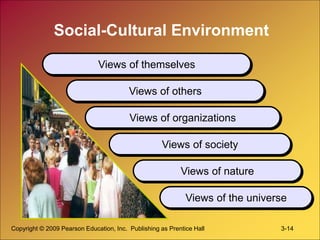
Social-Cultural Environment
Views of themselves
Views of others
Views of nature
Views of organizations
Views of society
Views of the universe
Copyright © 2009 Pearson Education, Inc. Publishing as Prentice Hall 3-15
Table 3.3 Most Popular
American Leisure Activities
• Reading
• TV watching
• Spending time with
family
• Going to movies
• Fishing
• Computer activities
• Gardening
• Renting movies
• Walking
• Exercise
• Listening to music
Copyright © 2009 Pearson Education, Inc. Publishing as Prentice Hall 3-16
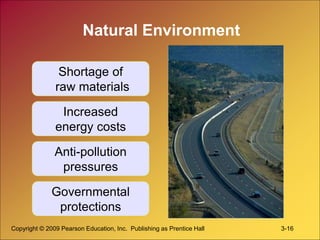
Natural Environment
Shortage of
raw materials
Increased
energy costs
Anti-pollution
pressures
Governmental
protections
Copyright © 2009 Pearson Education, Inc. Publishing as Prentice Hall 3-17
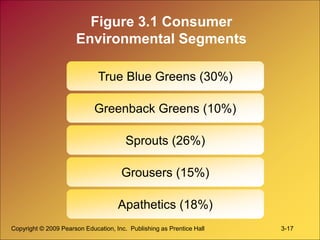
Figure 3.1 Consumer
Environmental Segments
True Blue Greens (30%)
Greenback Greens (10%)
Sprouts (26%)
Apathetics (18%)
Grousers (15%)
Copyright © 2009 Pearson Education, Inc. Publishing as Prentice Hall 3-18
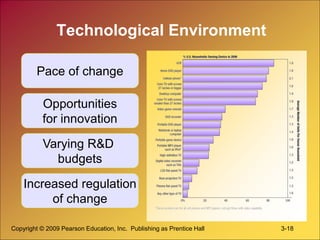
Technological Environment
Pace of change
Opportunities
for innovation
Varying R&D
budgets
Increased regulation
of change
Copyright © 2009 Pearson Education, Inc. Publishing as Prentice Hall 3-19
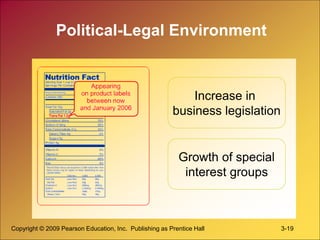
Political-Legal Environment
Increase in
business legislation
Growth of special
interest groups

Kotler_MM_13e_Overheads_03.ppt

  • 1.
    Gathering Information and Scanningthe Environment Marketing Management, 13th ed 3
  • 2.
    Copyright © 2009Pearson Education, Inc. Publishing as Prentice Hall 3-2 Chapter Questions • What are the components of a modern marketing information system? • What are useful internal records? • What is involved in a marketing intelligence system? • What are the key methods for tracking and identifying opportunities in the macro environment? • What are some important macro environment developments?
  • 3.
    Copyright © 2009Pearson Education, Inc. Publishing as Prentice Hall 3-3 MIS Systems Provide Information on Buyer Preferences and Behavior: Dupont’s Pillow Study Pillow Segments • 23% - stackers • 20% - plumpers • 16% - rollers or folders • 16% - cuddlers • 10% - smashers
  • 4.
    Copyright © 2009Pearson Education, Inc. Publishing as Prentice Hall 3-4 What is a Marketing Information System (MIS)? A marketing information system consists of people, equipment, and procedures to gather, sort, analyze, evaluate, and distribute needed, timely, and accurate information to marketing decision makers.
  • 5.
    Copyright © 2009Pearson Education, Inc. Publishing as Prentice Hall 3-5 Table 3.1 Information Needs Probes • What decisions do you regularly make? • What information do you need to make these decisions? • What information do you regularly get? • What special studies do you periodically request? • What information would you want that you are not getting now? • What are the four most helpful improvements that could be made in the present marketing information system?
  • 6.
    Copyright © 2009Pearson Education, Inc. Publishing as Prentice Hall 3-6 Internal Records and Marketing Intelligence Order-to-Payment Cycle Databases, Warehousing, Data Mining Marketing Intelligence System Sales Information System
  • 7.
    Copyright © 2009Pearson Education, Inc. Publishing as Prentice Hall 3-7 Steps to Improve Marketing Intelligence Train sales force to scan for new developments Motivate channel members to share intelligence Network externally Utilize a customer advisory panel Utilize government data resources Purchase information Collect customer feedback online
  • 8.
    Copyright © 2009Pearson Education, Inc. Publishing as Prentice Hall 3-8 Table 3.2 Secondary Commercial Data Sources Nielsen Information Resources, Inc. MRCA Arbitron Simmons SAMI/Burke
  • 9.
    Copyright © 2009Pearson Education, Inc. Publishing as Prentice Hall 3-9 Sources of Competitive Information • Independent customer goods and service review forums • Distributor or sales agent feedback sites • Combination sites offering customer reviews and expert opinions • Customer complaint sites • Public blogs
  • 10.
    Copyright © 2009Pearson Education, Inc. Publishing as Prentice Hall 3-10 Trends Shaping the Business Landscape • Profound shifts in centers of economic activity • Increases in public- sector activity • Change in consumer landscape • Technological connectivity • Scarcity of well-trained talent • Increase in demand for natural resources • Emergence of new global industry structures • Ubiquitous access to information • Management shifts from art to science • Increase in scrutiny of big business practices
  • 11.
    Copyright © 2009Pearson Education, Inc. Publishing as Prentice Hall 3-11 Environmental Forces Demographic Economic Political-Legal Socio-Cultural Technological Natural
  • 12.
    Copyright © 2009Pearson Education, Inc. Publishing as Prentice Hall 3-12 Population and Demographics • Population growth • Population age mix • Ethnic markets • Educational groups • Household patterns • Geographical shifts
  • 13.
    Copyright © 2009Pearson Education, Inc. Publishing as Prentice Hall 3-13 Schwab’s Chinese-language Web site
  • 14.
    Copyright © 2009Pearson Education, Inc. Publishing as Prentice Hall 3-14 Social-Cultural Environment Views of themselves Views of others Views of nature Views of organizations Views of society Views of the universe
  • 15.
    Copyright © 2009Pearson Education, Inc. Publishing as Prentice Hall 3-15 Table 3.3 Most Popular American Leisure Activities • Reading • TV watching • Spending time with family • Going to movies • Fishing • Computer activities • Gardening • Renting movies • Walking • Exercise • Listening to music
  • 16.
    Copyright © 2009Pearson Education, Inc. Publishing as Prentice Hall 3-16 Natural Environment Shortage of raw materials Increased energy costs Anti-pollution pressures Governmental protections
  • 17.
    Copyright © 2009Pearson Education, Inc. Publishing as Prentice Hall 3-17 Figure 3.1 Consumer Environmental Segments True Blue Greens (30%) Greenback Greens (10%) Sprouts (26%) Apathetics (18%) Grousers (15%)
  • 18.
    Copyright © 2009Pearson Education, Inc. Publishing as Prentice Hall 3-18 Technological Environment Pace of change Opportunities for innovation Varying R&D budgets Increased regulation of change
  • 19.
    Copyright © 2009Pearson Education, Inc. Publishing as Prentice Hall 3-19 Political-Legal Environment Increase in business legislation Growth of special interest groups