Kitchen Stewarding
Layout: A
Comprehensive Guide
Designing a kitchen stewarding layout is a crucial step in creating a safe, efficient, and hygienic environment for your commercial
kitchen. By strategically planning the space, equipment, and workflow, you can optimize productivity, reduce costs, and ensure
compliance with health and safety regulations. This guide will provide a comprehensive overview of key considerations for
designing an exceptional kitchen stewarding area.
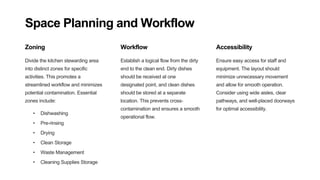
Space Planning and Workflow
Zoning
Divide the kitchen stewarding area
into distinct zones for specific
activities. This promotes a
streamlined workflow and minimizes
potential contamination. Essential
zones include:
• Dishwashing
• Pre-rinsing
• Drying
• Clean Storage
• Waste Management
• Cleaning Supplies Storage
Workflow
Establish a logical flow from the dirty
end to the clean end. Dirty dishes
should be received at one
designated point, and clean dishes
should be stored at a separate
location. This prevents cross-
contamination and ensures a smooth
operational flow.
Accessibility
Ensure easy access for staff and
equipment. The layout should
minimize unnecessary movement
and allow for smooth operation.
Consider using wide aisles, clear
pathways, and well-placed doorways
for optimal accessibility.
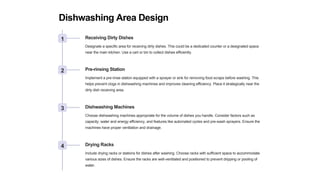
Dishwashing Area Design
1 Receiving Dirty Dishes
Designate a specific area for receiving dirty dishes. This could be a dedicated counter or a designated space
near the main kitchen. Use a cart or bin to collect dishes efficiently.
2 Pre-rinsing Station
Implement a pre-rinse station equipped with a sprayer or sink for removing food scraps before washing. This
helps prevent clogs in dishwashing machines and improves cleaning efficiency. Place it strategically near the
dirty dish receiving area.
3 Dishwashing Machines
Choose dishwashing machines appropriate for the volume of dishes you handle. Consider factors such as
capacity, water and energy efficiency, and features like automated cycles and pre-wash sprayers. Ensure the
machines have proper ventilation and drainage.
4 Drying Racks
Include drying racks or stations for dishes after washing. Choose racks with sufficient space to accommodate
various sizes of dishes. Ensure the racks are well-ventilated and positioned to prevent dripping or pooling of
water.
Storage Considerations
Clean Dish Storage
Allocate ample space for storing
clean dishes, utensils, and
cookware. Use shelves or
cabinets that are easily
accessible and organized.
Consider using labeled
containers or dividers for
specific items to maintain order.
Cleaning Supply Storage
Designate a separate, secure
storage area for cleaning
chemicals and supplies. Ensure
the area is well-ventilated,
lockable, and clearly labeled to
prevent accidental mixing or
misuse. Choose shelves or
cabinets that can safely
accommodate various
containers and sizes.
Storage Accessibility
Ensure that all storage areas
are easily accessible for staff.
Consider using adjustable
shelves, pull-out drawers, or
rolling carts for heavy items.
Clear pathways and adequate
lighting are crucial for safe and
efficient access.
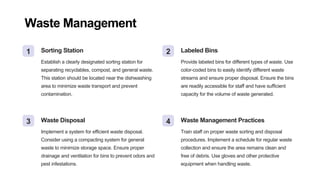
Waste Management
1 Sorting Station
Establish a clearly designated sorting station for
separating recyclables, compost, and general waste.
This station should be located near the dishwashing
area to minimize waste transport and prevent
contamination.
2 Labeled Bins
Provide labeled bins for different types of waste. Use
color-coded bins to easily identify different waste
streams and ensure proper disposal. Ensure the bins
are readily accessible for staff and have sufficient
capacity for the volume of waste generated.
3 Waste Disposal
Implement a system for efficient waste disposal.
Consider using a compacting system for general
waste to minimize storage space. Ensure proper
drainage and ventilation for bins to prevent odors and
pest infestations.
4 Waste Management Practices
Train staff on proper waste sorting and disposal
procedures. Implement a schedule for regular waste
collection and ensure the area remains clean and
free of debris. Use gloves and other protective
equipment when handling waste.
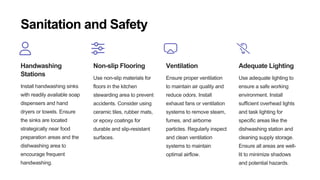
Sanitation and Safety
Handwashing
Stations
Install handwashing sinks
with readily available soap
dispensers and hand
dryers or towels. Ensure
the sinks are located
strategically near food
preparation areas and the
dishwashing area to
encourage frequent
handwashing.
Non-slip Flooring
Use non-slip materials for
floors in the kitchen
stewarding area to prevent
accidents. Consider using
ceramic tiles, rubber mats,
or epoxy coatings for
durable and slip-resistant
surfaces.
Ventilation
Ensure proper ventilation
to maintain air quality and
reduce odors. Install
exhaust fans or ventilation
systems to remove steam,
fumes, and airborne
particles. Regularly inspect
and clean ventilation
systems to maintain
optimal airflow.
Adequate Lighting
Use adequate lighting to
ensure a safe working
environment. Install
sufficient overhead lights
and task lighting for
specific areas like the
dishwashing station and
cleaning supply storage.
Ensure all areas are well-
lit to minimize shadows
and potential hazards.
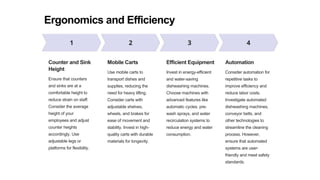
Ergonomics and Efficiency
Counter and Sink
Height
Ensure that counters
and sinks are at a
comfortable height to
reduce strain on staff.
Consider the average
height of your
employees and adjust
counter heights
accordingly. Use
adjustable legs or
platforms for flexibility.
Mobile Carts
Use mobile carts to
transport dishes and
supplies, reducing the
need for heavy lifting.
Consider carts with
adjustable shelves,
wheels, and brakes for
ease of movement and
stability. Invest in high-
quality carts with durable
materials for longevity.
Efficient Equipment
Invest in energy-efficient
and water-saving
dishwashing machines.
Choose machines with
advanced features like
automatic cycles, pre-
wash sprays, and water
recirculation systems to
reduce energy and water
consumption.
Automation
Consider automation for
repetitive tasks to
improve efficiency and
reduce labor costs.
Investigate automated
dishwashing machines,
conveyor belts, and
other technologies to
streamline the cleaning
process. However,
ensure that automated
systems are user-
friendly and meet safety
standards.
Thankyou

Kitchen-Stewarding-Layout-A-Comprehensive-Guide (1).pdf

  • 1.
    Kitchen Stewarding Layout: A ComprehensiveGuide Designing a kitchen stewarding layout is a crucial step in creating a safe, efficient, and hygienic environment for your commercial kitchen. By strategically planning the space, equipment, and workflow, you can optimize productivity, reduce costs, and ensure compliance with health and safety regulations. This guide will provide a comprehensive overview of key considerations for designing an exceptional kitchen stewarding area.
  • 2.
    Space Planning andWorkflow Zoning Divide the kitchen stewarding area into distinct zones for specific activities. This promotes a streamlined workflow and minimizes potential contamination. Essential zones include: • Dishwashing • Pre-rinsing • Drying • Clean Storage • Waste Management • Cleaning Supplies Storage Workflow Establish a logical flow from the dirty end to the clean end. Dirty dishes should be received at one designated point, and clean dishes should be stored at a separate location. This prevents cross- contamination and ensures a smooth operational flow. Accessibility Ensure easy access for staff and equipment. The layout should minimize unnecessary movement and allow for smooth operation. Consider using wide aisles, clear pathways, and well-placed doorways for optimal accessibility.
  • 3.
    Dishwashing Area Design 1Receiving Dirty Dishes Designate a specific area for receiving dirty dishes. This could be a dedicated counter or a designated space near the main kitchen. Use a cart or bin to collect dishes efficiently. 2 Pre-rinsing Station Implement a pre-rinse station equipped with a sprayer or sink for removing food scraps before washing. This helps prevent clogs in dishwashing machines and improves cleaning efficiency. Place it strategically near the dirty dish receiving area. 3 Dishwashing Machines Choose dishwashing machines appropriate for the volume of dishes you handle. Consider factors such as capacity, water and energy efficiency, and features like automated cycles and pre-wash sprayers. Ensure the machines have proper ventilation and drainage. 4 Drying Racks Include drying racks or stations for dishes after washing. Choose racks with sufficient space to accommodate various sizes of dishes. Ensure the racks are well-ventilated and positioned to prevent dripping or pooling of water.
  • 4.
    Storage Considerations Clean DishStorage Allocate ample space for storing clean dishes, utensils, and cookware. Use shelves or cabinets that are easily accessible and organized. Consider using labeled containers or dividers for specific items to maintain order. Cleaning Supply Storage Designate a separate, secure storage area for cleaning chemicals and supplies. Ensure the area is well-ventilated, lockable, and clearly labeled to prevent accidental mixing or misuse. Choose shelves or cabinets that can safely accommodate various containers and sizes. Storage Accessibility Ensure that all storage areas are easily accessible for staff. Consider using adjustable shelves, pull-out drawers, or rolling carts for heavy items. Clear pathways and adequate lighting are crucial for safe and efficient access.
  • 5.
    Waste Management 1 SortingStation Establish a clearly designated sorting station for separating recyclables, compost, and general waste. This station should be located near the dishwashing area to minimize waste transport and prevent contamination. 2 Labeled Bins Provide labeled bins for different types of waste. Use color-coded bins to easily identify different waste streams and ensure proper disposal. Ensure the bins are readily accessible for staff and have sufficient capacity for the volume of waste generated. 3 Waste Disposal Implement a system for efficient waste disposal. Consider using a compacting system for general waste to minimize storage space. Ensure proper drainage and ventilation for bins to prevent odors and pest infestations. 4 Waste Management Practices Train staff on proper waste sorting and disposal procedures. Implement a schedule for regular waste collection and ensure the area remains clean and free of debris. Use gloves and other protective equipment when handling waste.
  • 6.
    Sanitation and Safety Handwashing Stations Installhandwashing sinks with readily available soap dispensers and hand dryers or towels. Ensure the sinks are located strategically near food preparation areas and the dishwashing area to encourage frequent handwashing. Non-slip Flooring Use non-slip materials for floors in the kitchen stewarding area to prevent accidents. Consider using ceramic tiles, rubber mats, or epoxy coatings for durable and slip-resistant surfaces. Ventilation Ensure proper ventilation to maintain air quality and reduce odors. Install exhaust fans or ventilation systems to remove steam, fumes, and airborne particles. Regularly inspect and clean ventilation systems to maintain optimal airflow. Adequate Lighting Use adequate lighting to ensure a safe working environment. Install sufficient overhead lights and task lighting for specific areas like the dishwashing station and cleaning supply storage. Ensure all areas are well- lit to minimize shadows and potential hazards.
  • 7.
    Ergonomics and Efficiency Counterand Sink Height Ensure that counters and sinks are at a comfortable height to reduce strain on staff. Consider the average height of your employees and adjust counter heights accordingly. Use adjustable legs or platforms for flexibility. Mobile Carts Use mobile carts to transport dishes and supplies, reducing the need for heavy lifting. Consider carts with adjustable shelves, wheels, and brakes for ease of movement and stability. Invest in high- quality carts with durable materials for longevity. Efficient Equipment Invest in energy-efficient and water-saving dishwashing machines. Choose machines with advanced features like automatic cycles, pre- wash sprays, and water recirculation systems to reduce energy and water consumption. Automation Consider automation for repetitive tasks to improve efficiency and reduce labor costs. Investigate automated dishwashing machines, conveyor belts, and other technologies to streamline the cleaning process. However, ensure that automated systems are user- friendly and meet safety standards.
  • 8.