Moving from Knowing to Doing
A Non-Keynote Keynote
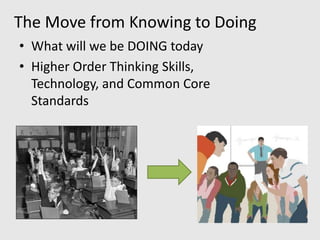
The Move from Knowing to Doing
• What will we be DOING today
• Higher Order Thinking Skills,
  Technology, and Common Core
  Standards
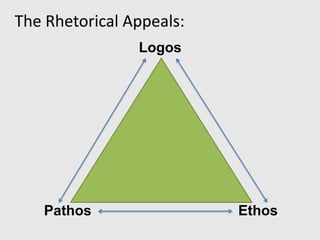
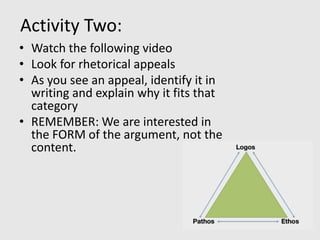
The Rhetorical Appeals:
                Logos


   Pathos                 Ethos
Logos
• WHAT IS IT: An appeal to logic
• WHAT DOES IT LOOK LIKE:
  Facts, figures, statistics, concrete
  evidence
• WHY IT’S EFFECTIVE: Objective, fact-
  based, tangible
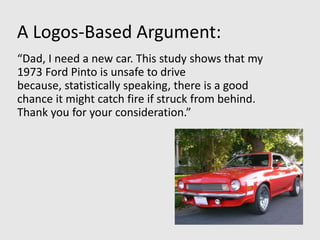
A Logos-Based Argument:
“Dad, I need a new car. This study shows that my
1973 Ford Pinto is unsafe to drive
because, statistically speaking, there is a good
chance it might catch fire if struck from behind.
Thank you for your consideration.”
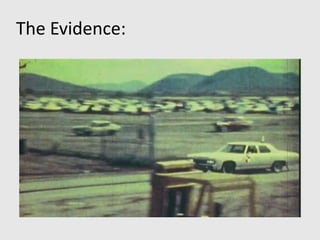
The Evidence:
Ethos
• WHAT IS IT: An appeal to the authority of
  the speaker
• WHAT DOES IT LOOK LIKE:
  Qualifications, institutional
  support, education, credentials
• WHY IT’S EFFECTIVE: Assures the audience
  that the speaker is qualified to speak
  knowledgeably about the subject
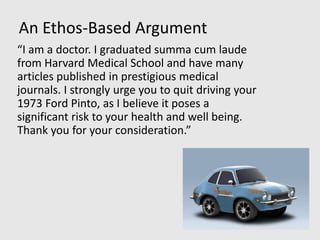
An Ethos-Based Argument
“I am a doctor. I graduated summa cum laude
from Harvard Medical School and have many
articles published in prestigious medical
journals. I strongly urge you to quit driving your
1973 Ford Pinto, as I believe it poses a
significant risk to your health and well being.
Thank you for your consideration.”
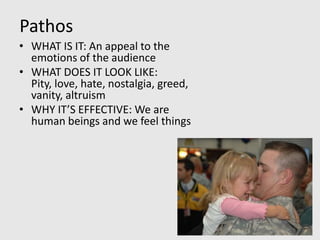
Pathos
• WHAT IS IT: An appeal to the
  emotions of the audience
• WHAT DOES IT LOOK LIKE:
  Pity, love, hate, nostalgia, greed,
  vanity, altruism
• WHY IT’S EFFECTIVE: We are
  human beings and we feel things
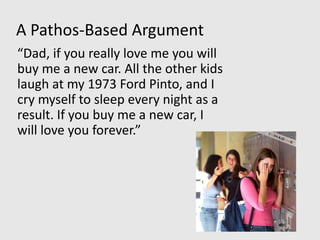
A Pathos-Based Argument
“Dad, if you really love me you will
buy me a new car. All the other kids
laugh at my 1973 Ford Pinto, and I
cry myself to sleep every night as a
result. If you buy me a new car, I
will love you forever.”
Activity One:
• Find a partner
• Using your notes, explain one of the
  rhetorical appeals to your partner
• Make sure you and your partner explain
  different appeals
Activity Two:
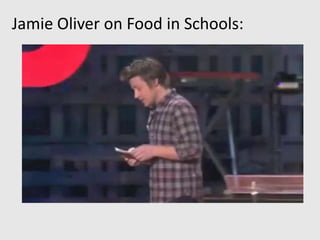
• Watch the following video
• Look for rhetorical appeals
• As you see an appeal, identify it in
  writing and explain why it fits that
  category
• REMEMBER: We are interested in
  the FORM of the argument, not the
  content.
Jamie Oliver on Food in Schools:
Activity Three:
• In your groups, share the appeals you
  saw in the video (one appeal per
  participant)
• Then compare the effectiveness of two
  appeals you saw, using specific
  evidence from the video to support
  your collective opinion
Activity Four:
• In your groups, choose one appeal to
  discuss and write a brief paragraph in
  which you do ALL of the following:
1) Identify the type of appeal
2) Make a specific value judgment
   about the effectiveness of the appeal
3) Provide specific evidence from the
   video to support your opinion
Activity Five:
• In your groups, propose an idea of
  where this lesson could go—what
  would be the next step in a classroom?
Some Ideas:
-At the secondary level students could write
a persuasive speech on the topic of their
choice, record themselves delivering the
speech, and upload the video to Edmodo or
YouTube.
-At the elementary level students could
create a commercial that uses the appeals.
Classmates could then analyze the
commercials and evaluate their
effectiveness.
What Did We Just Do?
•   This will be Kathleen’s slide
•   Cite specific anchor standards here
•   Talk about technology?
•   Stefan and Becca’s real-life roles

Keynote presentation1

  • 1.
    Moving from Knowingto Doing A Non-Keynote Keynote
  • 2.
    The Move fromKnowing to Doing • What will we be DOING today • Higher Order Thinking Skills, Technology, and Common Core Standards
  • 3.
    The Rhetorical Appeals: Logos Pathos Ethos
  • 4.
    Logos • WHAT ISIT: An appeal to logic • WHAT DOES IT LOOK LIKE: Facts, figures, statistics, concrete evidence • WHY IT’S EFFECTIVE: Objective, fact- based, tangible
  • 5.
    A Logos-Based Argument: “Dad,I need a new car. This study shows that my 1973 Ford Pinto is unsafe to drive because, statistically speaking, there is a good chance it might catch fire if struck from behind. Thank you for your consideration.”
  • 6.
  • 7.
    Ethos • WHAT ISIT: An appeal to the authority of the speaker • WHAT DOES IT LOOK LIKE: Qualifications, institutional support, education, credentials • WHY IT’S EFFECTIVE: Assures the audience that the speaker is qualified to speak knowledgeably about the subject
  • 8.
    An Ethos-Based Argument “Iam a doctor. I graduated summa cum laude from Harvard Medical School and have many articles published in prestigious medical journals. I strongly urge you to quit driving your 1973 Ford Pinto, as I believe it poses a significant risk to your health and well being. Thank you for your consideration.”
  • 9.
    Pathos • WHAT ISIT: An appeal to the emotions of the audience • WHAT DOES IT LOOK LIKE: Pity, love, hate, nostalgia, greed, vanity, altruism • WHY IT’S EFFECTIVE: We are human beings and we feel things
  • 10.
    A Pathos-Based Argument “Dad,if you really love me you will buy me a new car. All the other kids laugh at my 1973 Ford Pinto, and I cry myself to sleep every night as a result. If you buy me a new car, I will love you forever.”
  • 11.
    Activity One: • Finda partner • Using your notes, explain one of the rhetorical appeals to your partner • Make sure you and your partner explain different appeals
  • 12.
    Activity Two: • Watchthe following video • Look for rhetorical appeals • As you see an appeal, identify it in writing and explain why it fits that category • REMEMBER: We are interested in the FORM of the argument, not the content.
  • 13.
    Jamie Oliver onFood in Schools:
  • 14.
    Activity Three: • Inyour groups, share the appeals you saw in the video (one appeal per participant) • Then compare the effectiveness of two appeals you saw, using specific evidence from the video to support your collective opinion
  • 15.
    Activity Four: • Inyour groups, choose one appeal to discuss and write a brief paragraph in which you do ALL of the following: 1) Identify the type of appeal 2) Make a specific value judgment about the effectiveness of the appeal 3) Provide specific evidence from the video to support your opinion
  • 16.
    Activity Five: • Inyour groups, propose an idea of where this lesson could go—what would be the next step in a classroom?
  • 17.
    Some Ideas: -At thesecondary level students could write a persuasive speech on the topic of their choice, record themselves delivering the speech, and upload the video to Edmodo or YouTube. -At the elementary level students could create a commercial that uses the appeals. Classmates could then analyze the commercials and evaluate their effectiveness.
  • 18.
    What Did WeJust Do? • This will be Kathleen’s slide • Cite specific anchor standards here • Talk about technology? • Stefan and Becca’s real-life roles