Summary: Key Skills You Learn in a Good Data Analyst Course
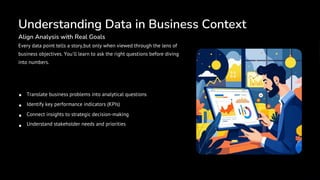
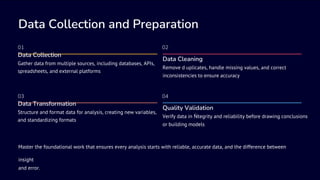
A good data analyst course helps learners develop both technical and analytical skills needed to work with data effectively. It begins by teaching how to understand data within a business context, ensuring analysis is aligned with real-world goals. Learners gain hands-on experience in collecting, cleaning, and preparing data, which is essential for accurate results.
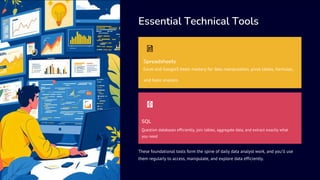
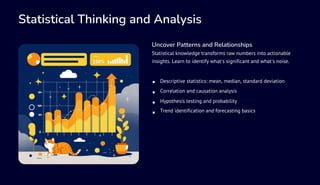
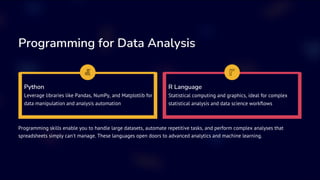
The course builds strong foundations in tools such as spreadsheets and SQL, enabling efficient data handling and database querying. It also introduces statistical thinking to help interpret trends, patterns, and relationships within data. Programming skills using languages like Python or R are often included to automate analysis and handle large datasets.
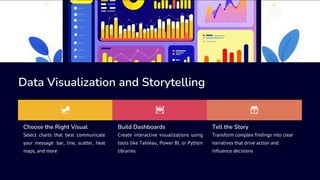
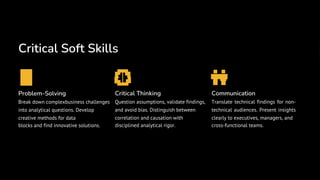
Another important focus is data visualization and storytelling, which helps present insights clearly through charts, dashboards, and reports. Alongside technical abilities, learners develop problem-solving, critical thinking, and communication skills that are necessary for working with stakeholders. Real-world projects provide practical experience and help learners apply their knowledge in professional scenarios.
Overall, a good data analyst course prepares individuals to transform raw data into meaningful insights that support informed decision-making.