Introduction
• A DataAnalyst collects, processes, and analyzes data to help
organizations make better decisions. They turn raw data into
meaningful insights.
3.
Importance of DataAnalysis
• • Helps businesses make informed decisions
• • Identifies trends and opportunities
• • Improves efficiency and performance
• • Reduces risks through predictive analysis
4.
Types of DataAnalysis
• • Descriptive – What happened?
• • Diagnostic – Why did it happen?
• • Predictive – What will happen?
• • Prescriptive – What should we do?
5.
Key Responsibilities
• •Collecting and cleaning data
• • Performing statistical analysis
• • Creating visualizations and dashboards
• • Presenting insights to stakeholders
6.
Technical Skills
• •Excel for quick analysis
• • SQL for querying databases
• • Python/R for advanced analysis
• • Tableau/Power BI for visualization
7.
Soft Skills
• •Communication – Explain results clearly
• • Problem-solving – Find solutions from data
• • Critical Thinking – Interpret data correctly
• • Collaboration – Work with teams effectively
8.
Popular Tools
• •Excel, Google Sheets
• • SQL (MySQL, PostgreSQL)
• • Tableau, Power BI
• • Python, R
• • Jupyter Notebook, Google Data Studio
9.
Data Collection
• •Sources: Databases, APIs, surveys, logs
• • Methods: Web scraping, manual entry, automated pipelines
• • Ensures accurate and reliable data for analysis
10.
Data Cleaning &Preparation
• • Handling missing values
• • Removing duplicates
• • Standardizing formats
• • Ensuring data quality for accurate results
11.
Exploratory Data Analysis(EDA)
• • Summarizing datasets
• • Identifying patterns and correlations
• • Spotting outliers and anomalies
• • Using graphs and statistics for insights
12.
Data Visualization
• •Charts: Bar, Line, Pie, Histogram
• • Dashboards: Interactive reports
• • Storytelling with data: Making results easy to understand
13.
Case Study Example
•E-commerce company used data analysis to:
• • Identify most popular products
• • Reduce delivery delays
• • Improve customer satisfaction
• Result: 20% sales growth in 6 months
14.
Data Analyst vsOthers
• • Data Analyst: Focus on insights from data
• • Data Scientist: Builds models, uses ML
• • Data Engineer: Manages data infrastructure
15.
Career Path
• •Entry-level: Junior Analyst
• • Mid-level: Data Analyst / Business Analyst
• • Senior-level: Senior Analyst / Analytics Manager
• • Specialist: Data Scientist, Data Engineer
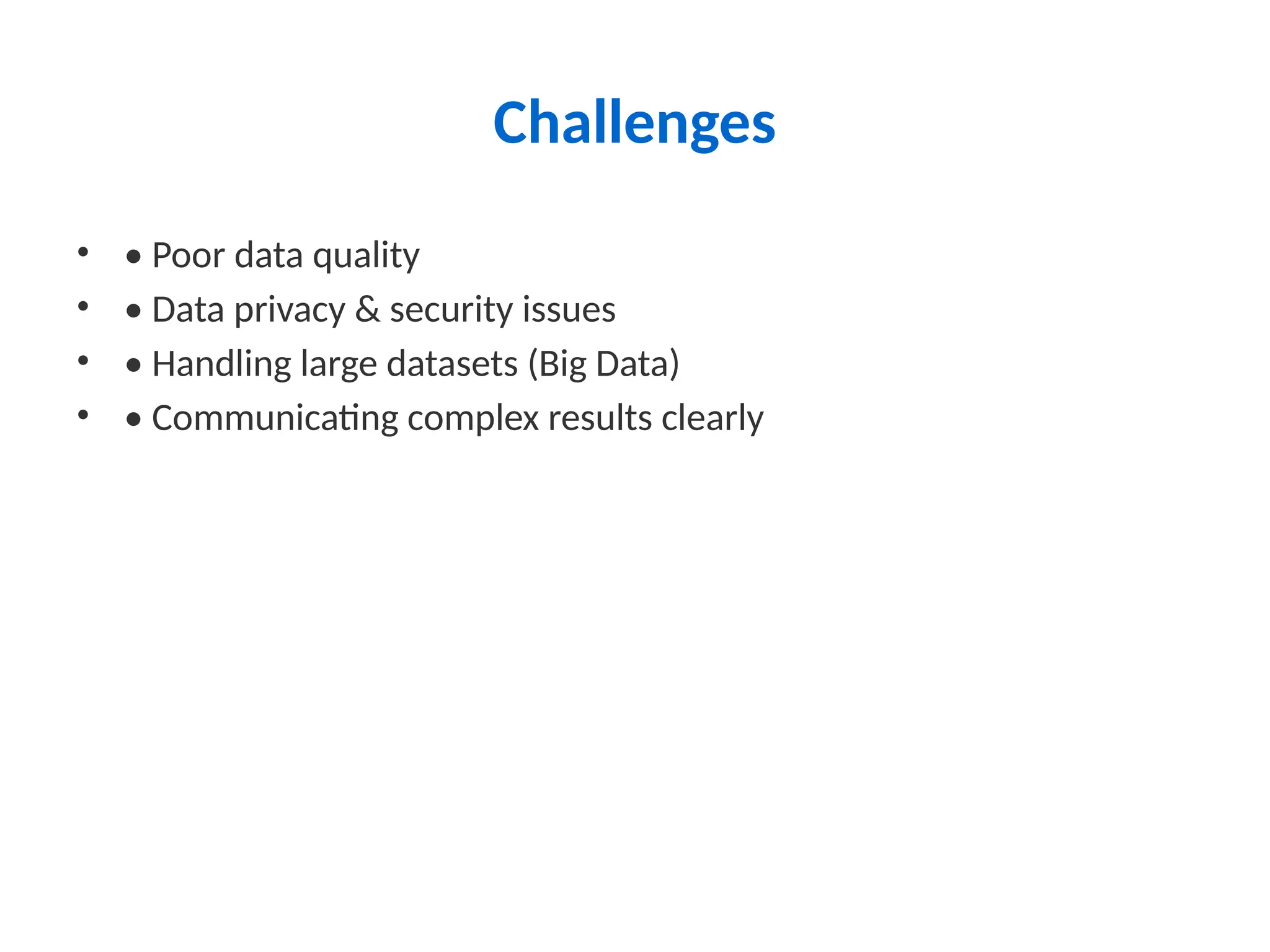
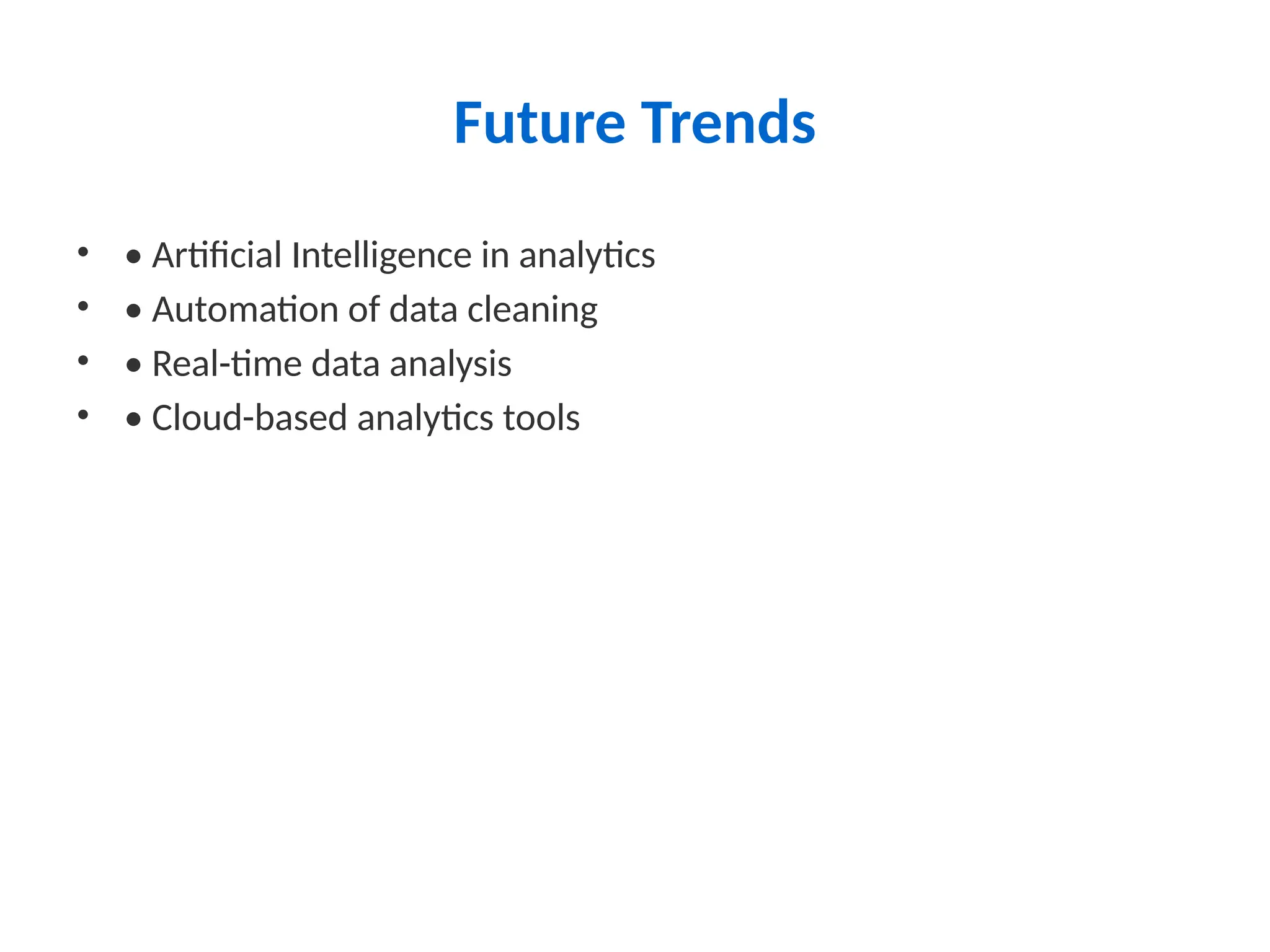
Future Trends
• •Artificial Intelligence in analytics
• • Automation of data cleaning
• • Real-time data analysis
• • Cloud-based analytics tools
19.
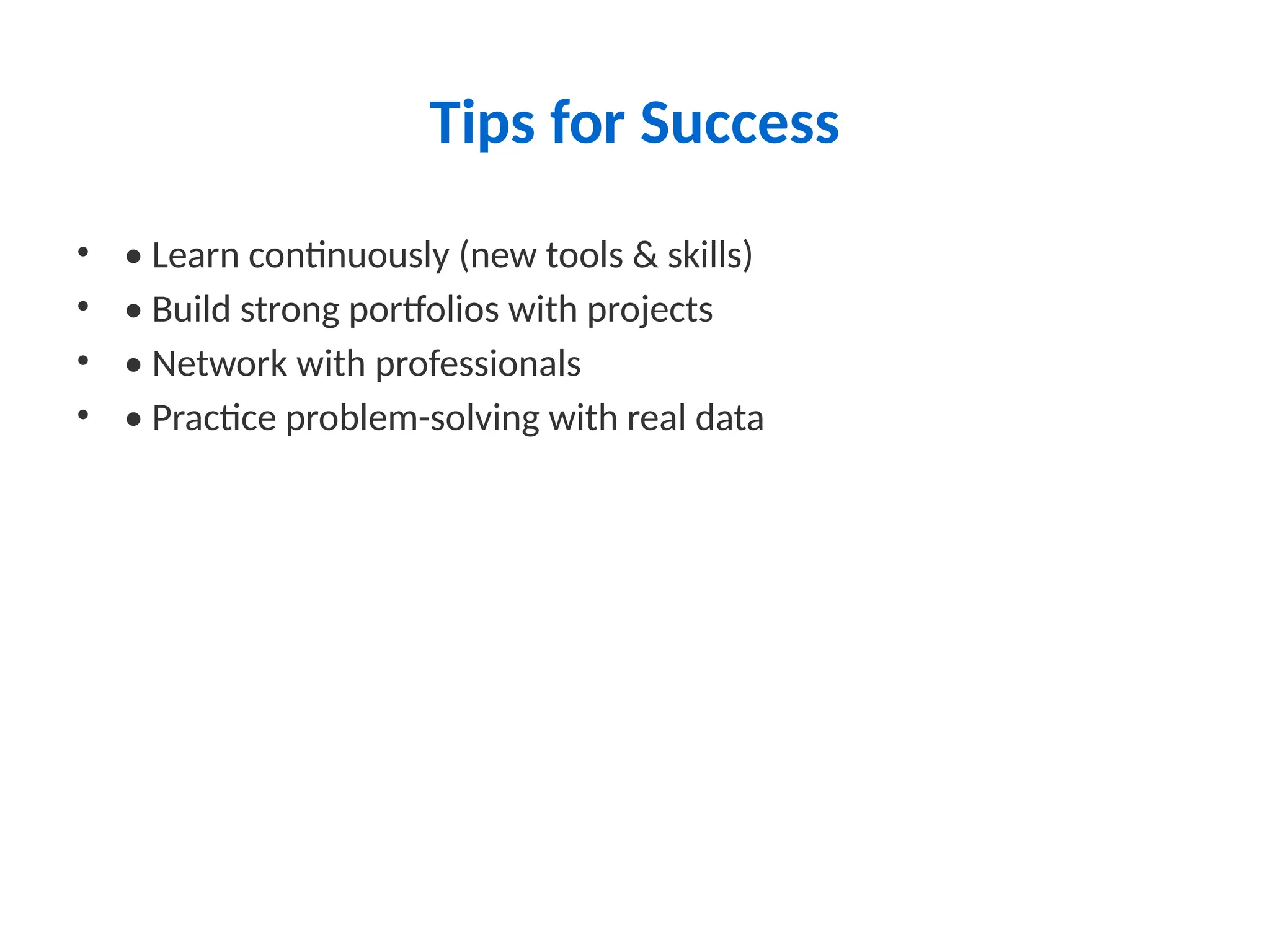
Tips for Success
•• Learn continuously (new tools & skills)
• • Build strong portfolios with projects
• • Network with professionals
• • Practice problem-solving with real data
20.
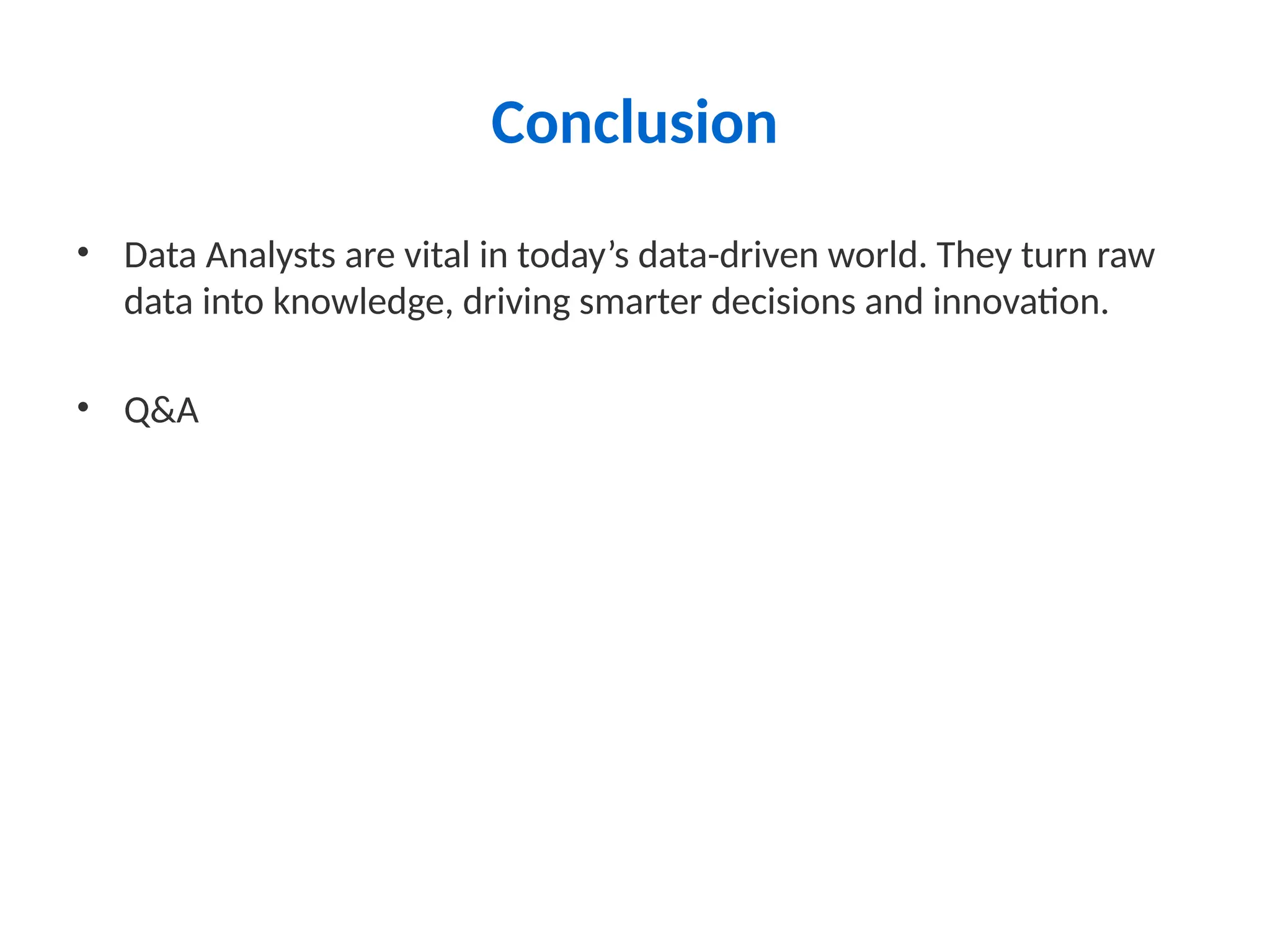
Conclusion
• Data Analystsare vital in today’s data-driven world. They turn raw
data into knowledge, driving smarter decisions and innovation.
• Q&A