CERTIFIED
DATA
ANALYTICS
YOUR PATH TO SUCCESS!
@iabac.org
@iabac.org
Introduction to Data Analytics
Data analytics involves examining datasets to draw meaningful conclusions,
uncover patterns, and inform decisions.
Importance:
Businesses rely on data analytics for strategic planning, customer insights, and improving
operational efficiency.
Cross-industry application: Finance, healthcare, marketing, e-commerce, etc.
Career Opportunities:
Growing demand for data analysts, data scientists, business intelligence analysts,
and more.
@iabac.org
Required Skills for Data Analystics
Technical Skills:
SQL: Essential for managing and querying databases.
Python/R: Widely used for statistical analysis and data manipulation.
Excel: Critical for data organization, analysis, and visualization.
Data Visualization Tools: Proficiency in tools like Tableau and Power BI
to present data effectively.
Analytical Skills:
Strong critical thinking and problem-solving capabilities are essential for
interpreting complex datasets.
Soft Skills:
Excellent communication skills to convey findings to non-technical stakeholders.
Collaboration skills to work effectively in teams.
@iabac.org
Education and Training
Formal Education:
Bachelor’s degree in Data Science, Statistics,
Mathematics, Computer Science, or a related field.
Advanced degrees (Master’s or Ph.D.) for specialized
roles.
Certifications:
Overview of popular certifications including
Google Data Analytics, Microsoft Certified
Data Analyst Associate, and SAS Certified Data
Scientist.
@iabac.org
Certification Options
Popular Certifications:
Certified Data Analyst
Certified HR Analytics
Certified Analytics Professional :
Certified Healthcare Analytics Professional
Benefits of Certification:
Validates your skills and knowledge in data
analytics.
Enhances job opportunities and can lead to
higher salary potential.
@iabac.org
Preparing for Certification Exams
Study Materials:
Practice Exams:
Time Management Strategies:
Utilize official certification guides and
resources available on the certification
websites.
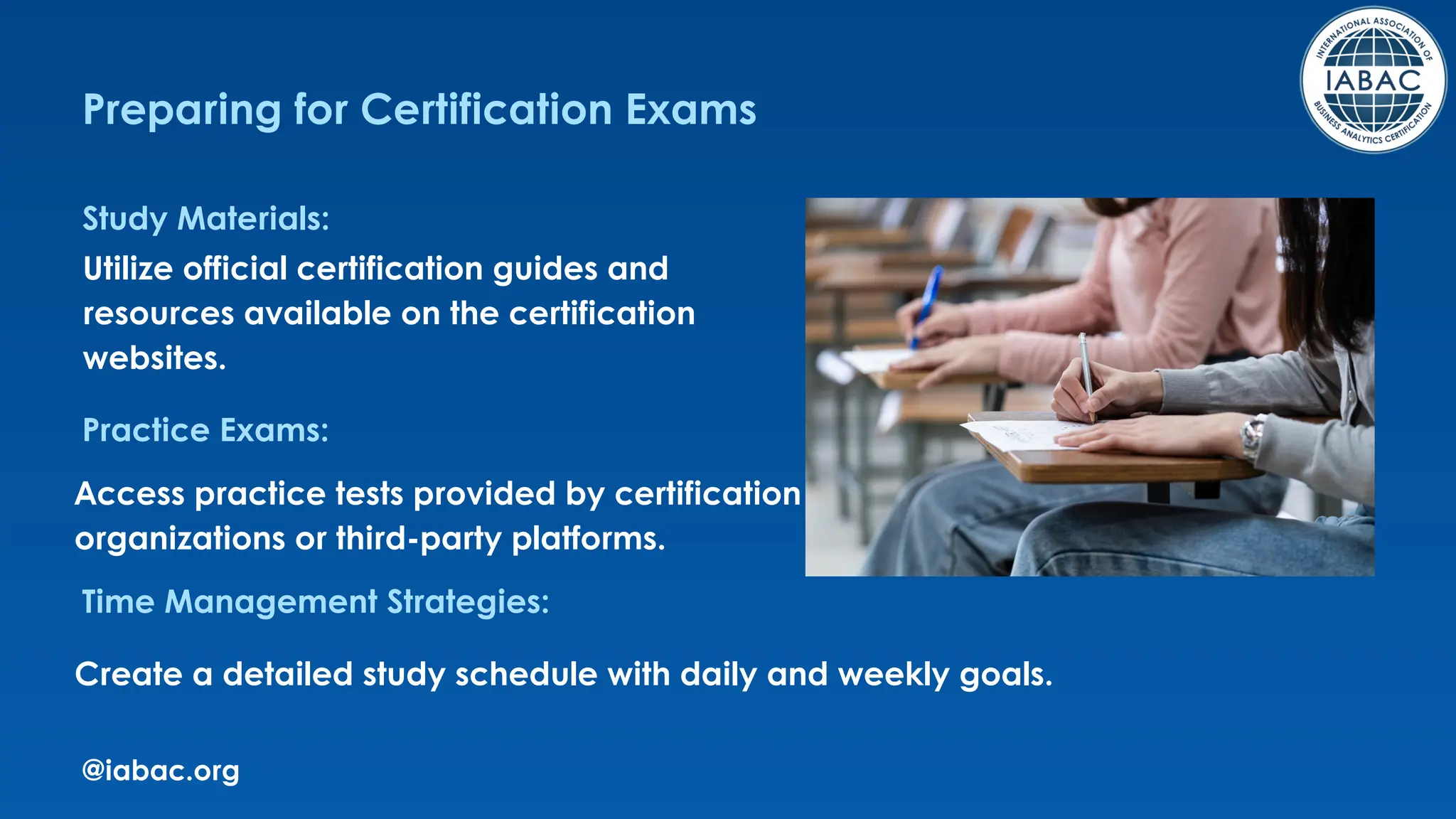
Access practice tests provided by certification
organizations or third-party platforms.
Create a detailed study schedule with daily and weekly goals.
@iabac.org
Gaining Practical Experience
Internships:
Actively seek internships or co-op positions
during or after education for practical, hands-
on experience in real-world scenarios.
Real-World Projects:
Participate in online competitions (Kaggle) or
hackathons to apply your skills in challenging
environments.
Networking Opportunities:
Join local meetups, webinars, or online
forums focused on data analytics (LinkedIn
groups, Reddit).
@iabac.org
Building Your Portfolio
Importance:
Showcases skills to employers.
Project Types:
Data cleaning, visualizations, and
real-world problem-solving.
Tools: GitHub, personal websites.
@iabac.org
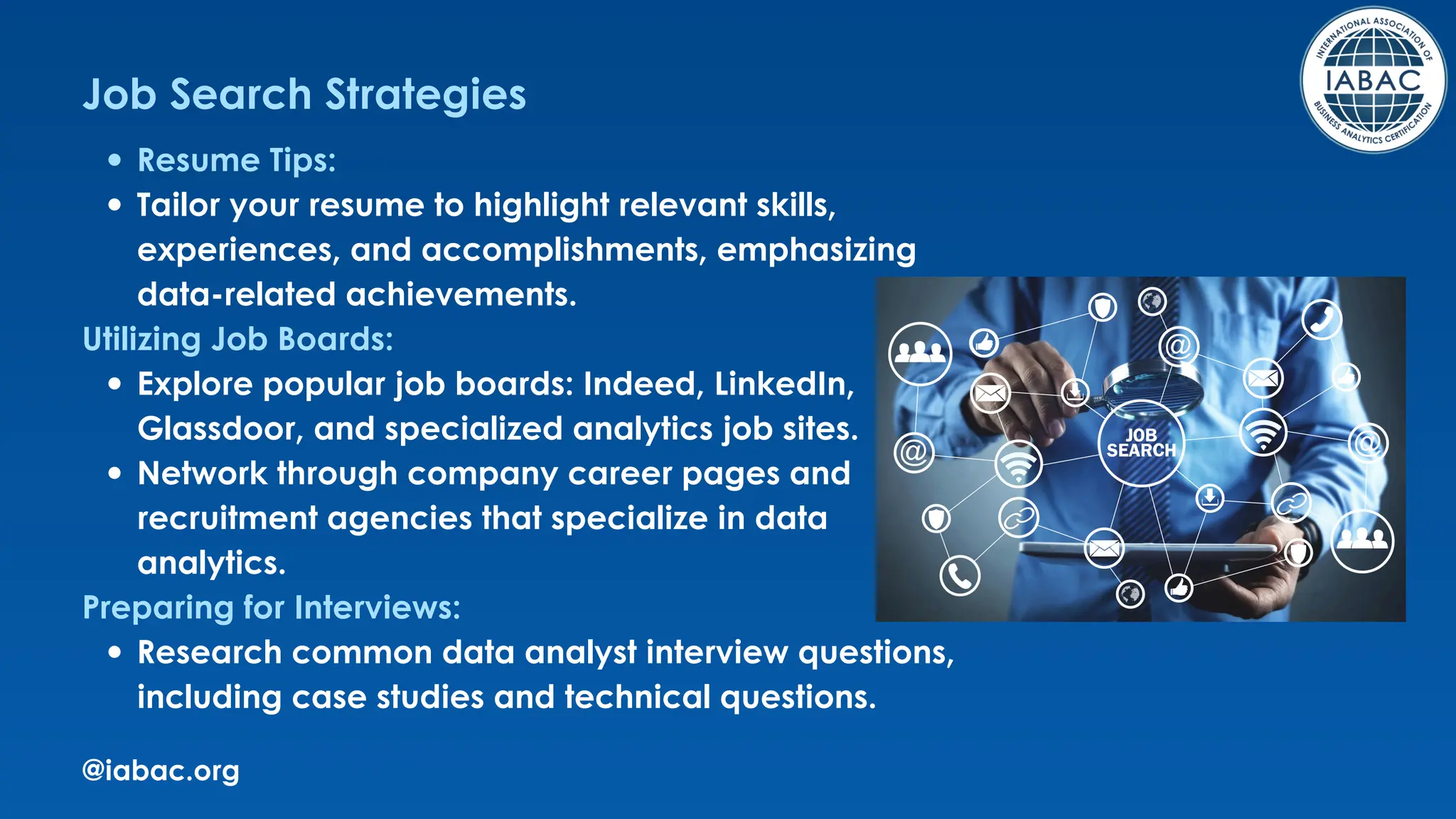
Job Search Strategies
Resume Tips:
Tailor your resume to highlight relevant skills,
experiences, and accomplishments, emphasizing
data-related achievements.
Utilizing Job Boards:
Explore popular job boards: Indeed, LinkedIn,
Glassdoor, and specialized analytics job sites.
Network through company career pages and
recruitment agencies that specialize in data
analytics.
Preparing for Interviews:
Research common data analyst interview questions,
including case studies and technical questions.
@iabac.org
Continuing Education and Growth
Importance of Lifelong Learning:
The field of data analytics is continually
evolving; staying updated with new
technologies and methodologies is crucial.
Advanced Certifications and Specializations:
Consider pursuing specializations in areas
such as machine learning, big data analytics,
or data engineering to enhance your skill set.
Staying Updated:
Follow industry blogs, podcasts, and webinars
to keep abreast of trends and emerging tools
in data analytics.
@iabac.org
Thank You

How do I become a Certified Data Analytics?

  • 1.
  • 2.
    @iabac.org Introduction to DataAnalytics Data analytics involves examining datasets to draw meaningful conclusions, uncover patterns, and inform decisions. Importance: Businesses rely on data analytics for strategic planning, customer insights, and improving operational efficiency. Cross-industry application: Finance, healthcare, marketing, e-commerce, etc. Career Opportunities: Growing demand for data analysts, data scientists, business intelligence analysts, and more.
  • 3.
    @iabac.org Required Skills forData Analystics Technical Skills: SQL: Essential for managing and querying databases. Python/R: Widely used for statistical analysis and data manipulation. Excel: Critical for data organization, analysis, and visualization. Data Visualization Tools: Proficiency in tools like Tableau and Power BI to present data effectively. Analytical Skills: Strong critical thinking and problem-solving capabilities are essential for interpreting complex datasets. Soft Skills: Excellent communication skills to convey findings to non-technical stakeholders. Collaboration skills to work effectively in teams.
  • 4.
    @iabac.org Education and Training FormalEducation: Bachelor’s degree in Data Science, Statistics, Mathematics, Computer Science, or a related field. Advanced degrees (Master’s or Ph.D.) for specialized roles. Certifications: Overview of popular certifications including Google Data Analytics, Microsoft Certified Data Analyst Associate, and SAS Certified Data Scientist.
  • 5.
    @iabac.org Certification Options Popular Certifications: CertifiedData Analyst Certified HR Analytics Certified Analytics Professional : Certified Healthcare Analytics Professional Benefits of Certification: Validates your skills and knowledge in data analytics. Enhances job opportunities and can lead to higher salary potential.
  • 6.
    @iabac.org Preparing for CertificationExams Study Materials: Practice Exams: Time Management Strategies: Utilize official certification guides and resources available on the certification websites. Access practice tests provided by certification organizations or third-party platforms. Create a detailed study schedule with daily and weekly goals.
  • 7.
    @iabac.org Gaining Practical Experience Internships: Activelyseek internships or co-op positions during or after education for practical, hands- on experience in real-world scenarios. Real-World Projects: Participate in online competitions (Kaggle) or hackathons to apply your skills in challenging environments. Networking Opportunities: Join local meetups, webinars, or online forums focused on data analytics (LinkedIn groups, Reddit).
  • 8.
    @iabac.org Building Your Portfolio Importance: Showcasesskills to employers. Project Types: Data cleaning, visualizations, and real-world problem-solving. Tools: GitHub, personal websites.
  • 9.
    @iabac.org Job Search Strategies ResumeTips: Tailor your resume to highlight relevant skills, experiences, and accomplishments, emphasizing data-related achievements. Utilizing Job Boards: Explore popular job boards: Indeed, LinkedIn, Glassdoor, and specialized analytics job sites. Network through company career pages and recruitment agencies that specialize in data analytics. Preparing for Interviews: Research common data analyst interview questions, including case studies and technical questions.
  • 10.
    @iabac.org Continuing Education andGrowth Importance of Lifelong Learning: The field of data analytics is continually evolving; staying updated with new technologies and methodologies is crucial. Advanced Certifications and Specializations: Consider pursuing specializations in areas such as machine learning, big data analytics, or data engineering to enhance your skill set. Staying Updated: Follow industry blogs, podcasts, and webinars to keep abreast of trends and emerging tools in data analytics.
  • 11.