Keeping Tenses
Consistent
The instructor explains the diagram to
students who asked questions during the
lecture.
What’s wrong with the sentence above?
The instructor explains the diagram to
students who ask questions during the
lecture.
Three Main Forms
There are three main verb forms for showing time or tense:
Simple Tense
Perfect Tense
Progressive Tense
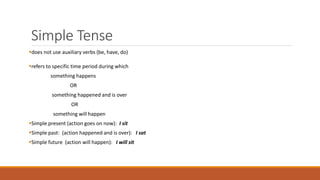
Simple Tense
does not use auxiliary verbs (be, have, do)
refers to specific time period during which
something happens
OR
something happened and is over
OR
something will happen
Simple present (action goes on now): I sit
Simple past: (action happened and is over): I sat
Simple future (action will happen): I will sit
Perfect Tense
Uses have, has, or had as auxiliary verb
Allows action to continue over time
Present perfect (action happened and may still be going on): I have sat
Past perfect (action happened before something happened in the past): I had sat
Future perfect (action will be considered in the future, by which time it will have
already happened): I will have sat
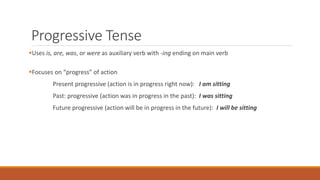
Progressive Tense
Uses is, are, was, or were as auxiliary verb with -ing ending on main verb
Focuses on “progress” of action
Present progressive (action is in progress right now): I am sitting
Past: progressive (action was in progress in the past): I was sitting
Future progressive (action will be in progress in the future): I will be sitting
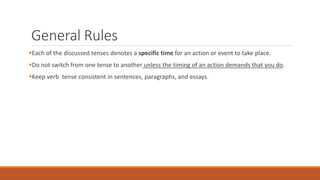
General Rules
Each of the discussed tenses denotes a specific time for an action or event to take place.
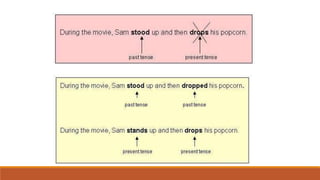
Do not switch from one tense to another unless the timing of an action demands that you do.
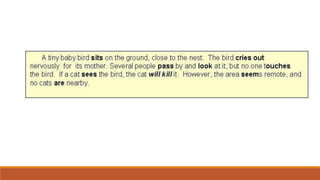
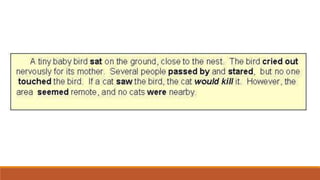
Keep verb tense consistent in sentences, paragraphs, and essays.
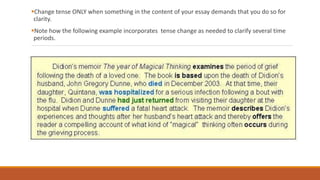
Change tense ONLY when something in the content of your essay demands that you do so for
clarity.
Note how the following example incorporates tense change as needed to clarify several time
periods.

Keeping Tenses Consistent.pptx

  • 1.
  • 2.
    The instructor explainsthe diagram to students who asked questions during the lecture. What’s wrong with the sentence above? The instructor explains the diagram to students who ask questions during the lecture.
  • 3.
    Three Main Forms Thereare three main verb forms for showing time or tense: Simple Tense Perfect Tense Progressive Tense
  • 4.
    Simple Tense does notuse auxiliary verbs (be, have, do) refers to specific time period during which something happens OR something happened and is over OR something will happen Simple present (action goes on now): I sit Simple past: (action happened and is over): I sat Simple future (action will happen): I will sit
  • 5.
    Perfect Tense Uses have,has, or had as auxiliary verb Allows action to continue over time Present perfect (action happened and may still be going on): I have sat Past perfect (action happened before something happened in the past): I had sat Future perfect (action will be considered in the future, by which time it will have already happened): I will have sat
  • 6.
    Progressive Tense Uses is,are, was, or were as auxiliary verb with -ing ending on main verb Focuses on “progress” of action Present progressive (action is in progress right now): I am sitting Past: progressive (action was in progress in the past): I was sitting Future progressive (action will be in progress in the future): I will be sitting
  • 7.
    General Rules Each ofthe discussed tenses denotes a specific time for an action or event to take place. Do not switch from one tense to another unless the timing of an action demands that you do. Keep verb tense consistent in sentences, paragraphs, and essays.
  • 11.
    Change tense ONLYwhen something in the content of your essay demands that you do so for clarity. Note how the following example incorporates tense change as needed to clarify several time periods.

Editor's Notes

  • #3 Explains is present tense, referring to a current state; asked is past, but should be present ( ask ) because the students are currently continuing to ask questions during the lecture period.
  • #10 What’s wrong in this paragraph?