
“A never-ending journey”
Sources: KAIZEN Institute
The Monk Who Sold His Ferrari
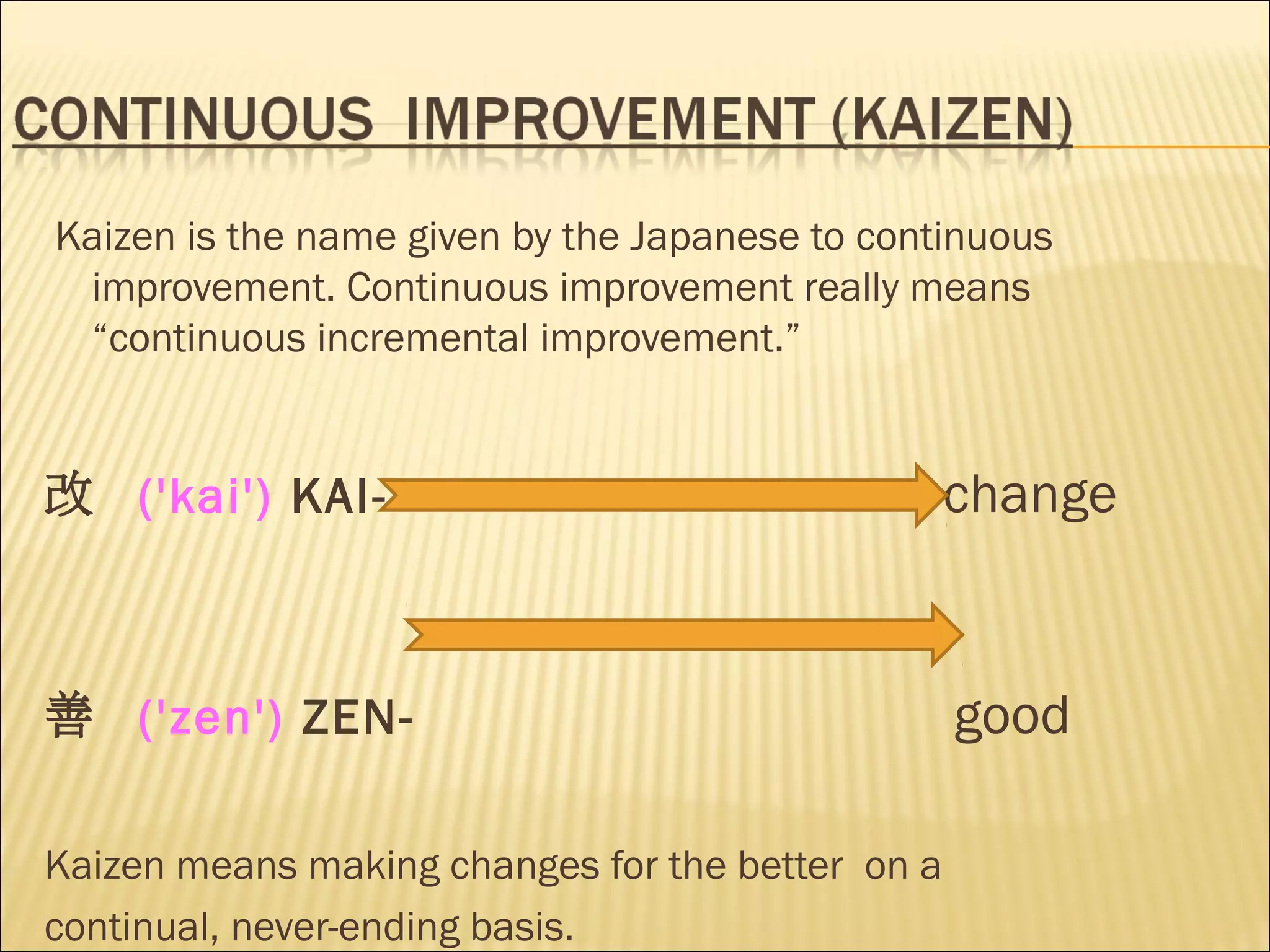
Kaizen is the name given by the Japanese to continuous
improvement. Continuous improvement really means
“continuous incremental improvement.”
改 ('kai') KAI- change
善 ('zen') ZEN- good
Kaizen means making changes for the better on a
continual, never-ending basis.
Overview of tools -
Kaizen
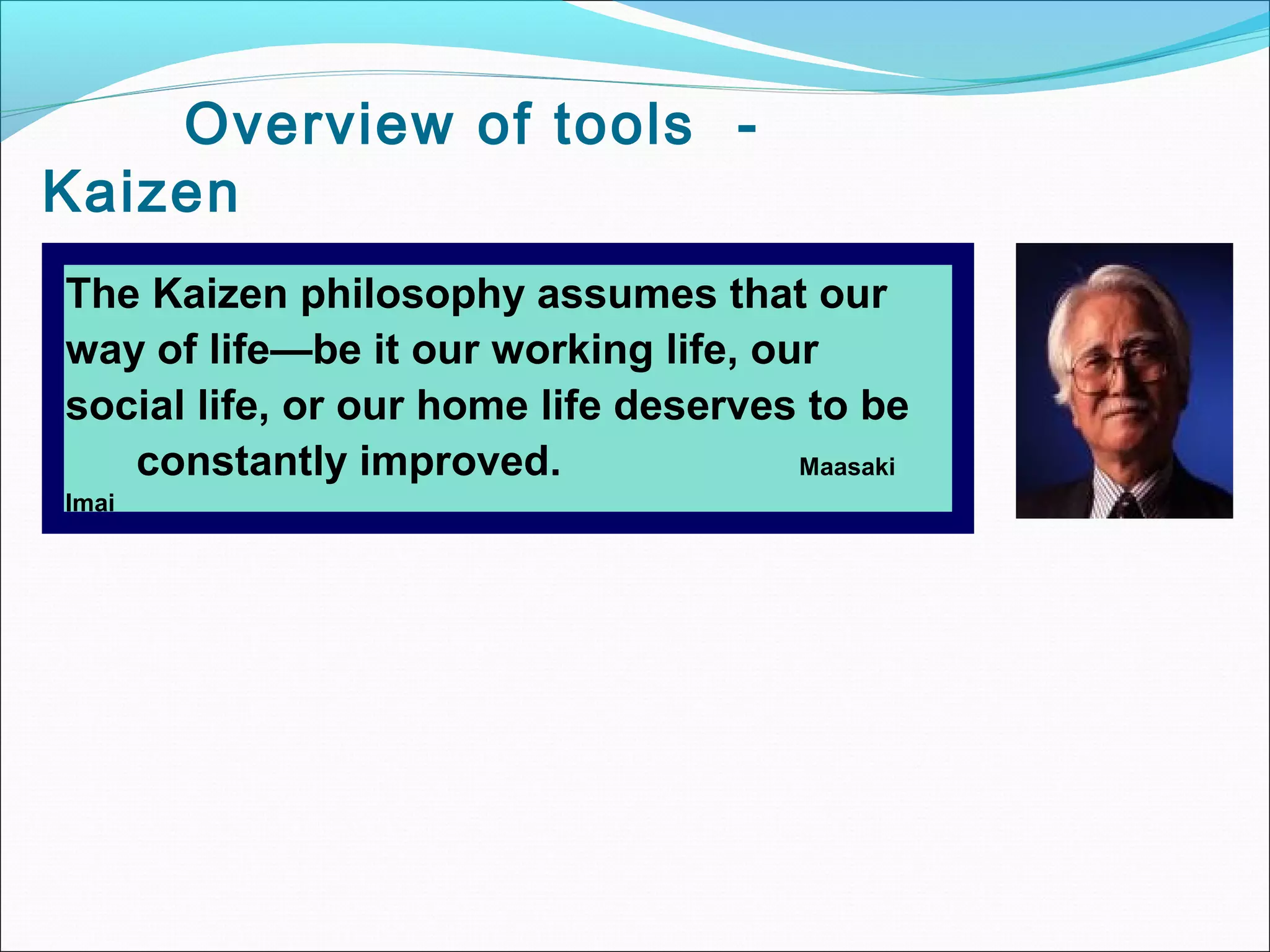
The Kaizen philosophy assumes that our
way of life—be it our working life, our
social life, or our home life deserves to be
constantly improved. Maasaki
Imai
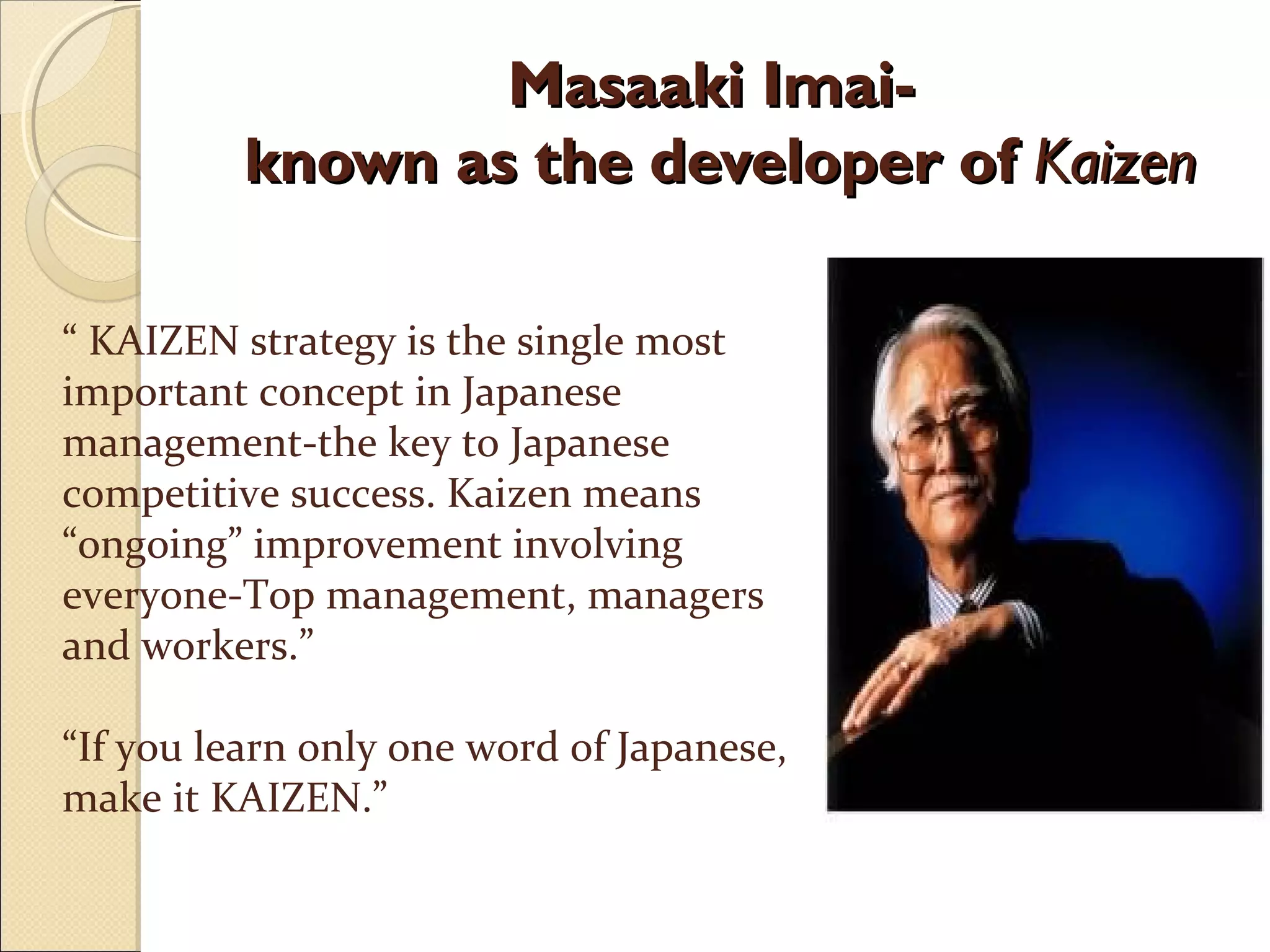
Masaaki Imai-Masaaki Imai-
known as the developer ofknown as the developer of KaizenKaizen
“ KAIZEN strategy is the single most
important concept in Japanese
management-the key to Japanese
competitive success. Kaizen means
“ongoing” improvement involving
everyone-Top management, managers
and workers.”
“If you learn only one word of Japanese,
make it KAIZEN.”
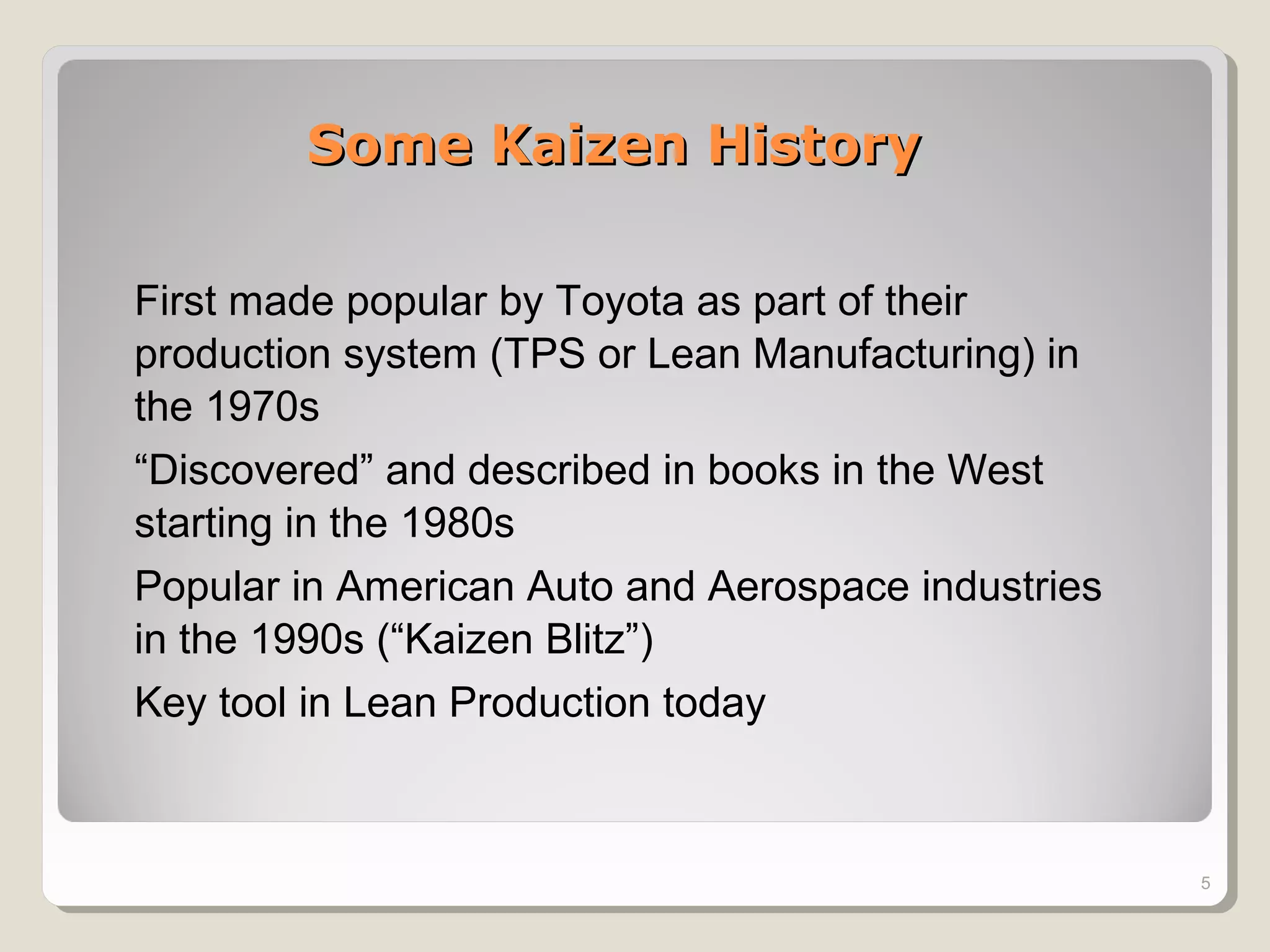
Some Kaizen HistorySome Kaizen History
5
First made popular by Toyota as part of their
production system (TPS or Lean Manufacturing) in
the 1970s
“Discovered” and described in books in the West
starting in the 1980s
Popular in American Auto and Aerospace industries
in the 1990s (“Kaizen Blitz”)
Key tool in Lean Production today
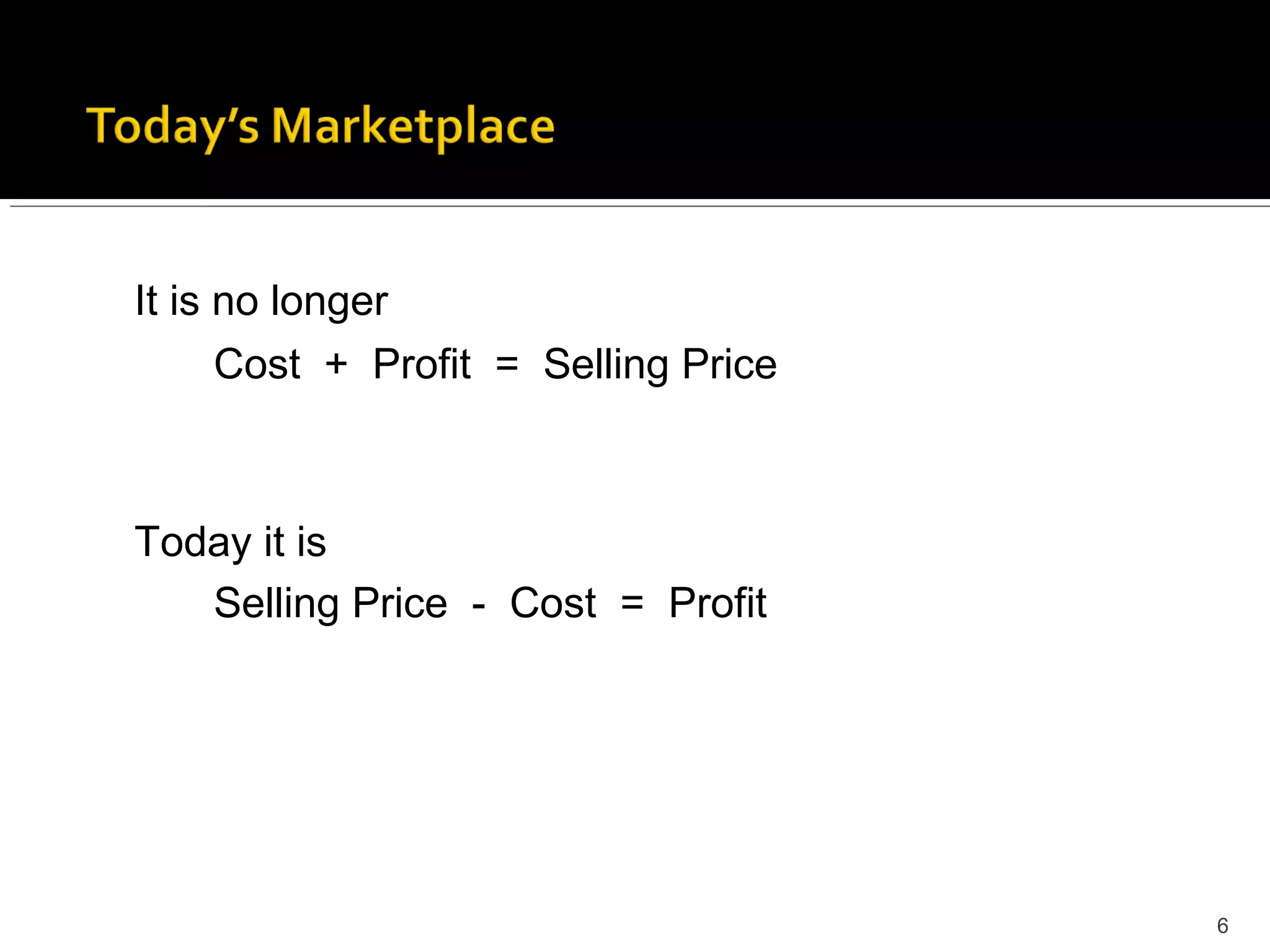
6
It is no longer
Cost + Profit = Selling Price
Today it is
Selling Price - Cost = Profit
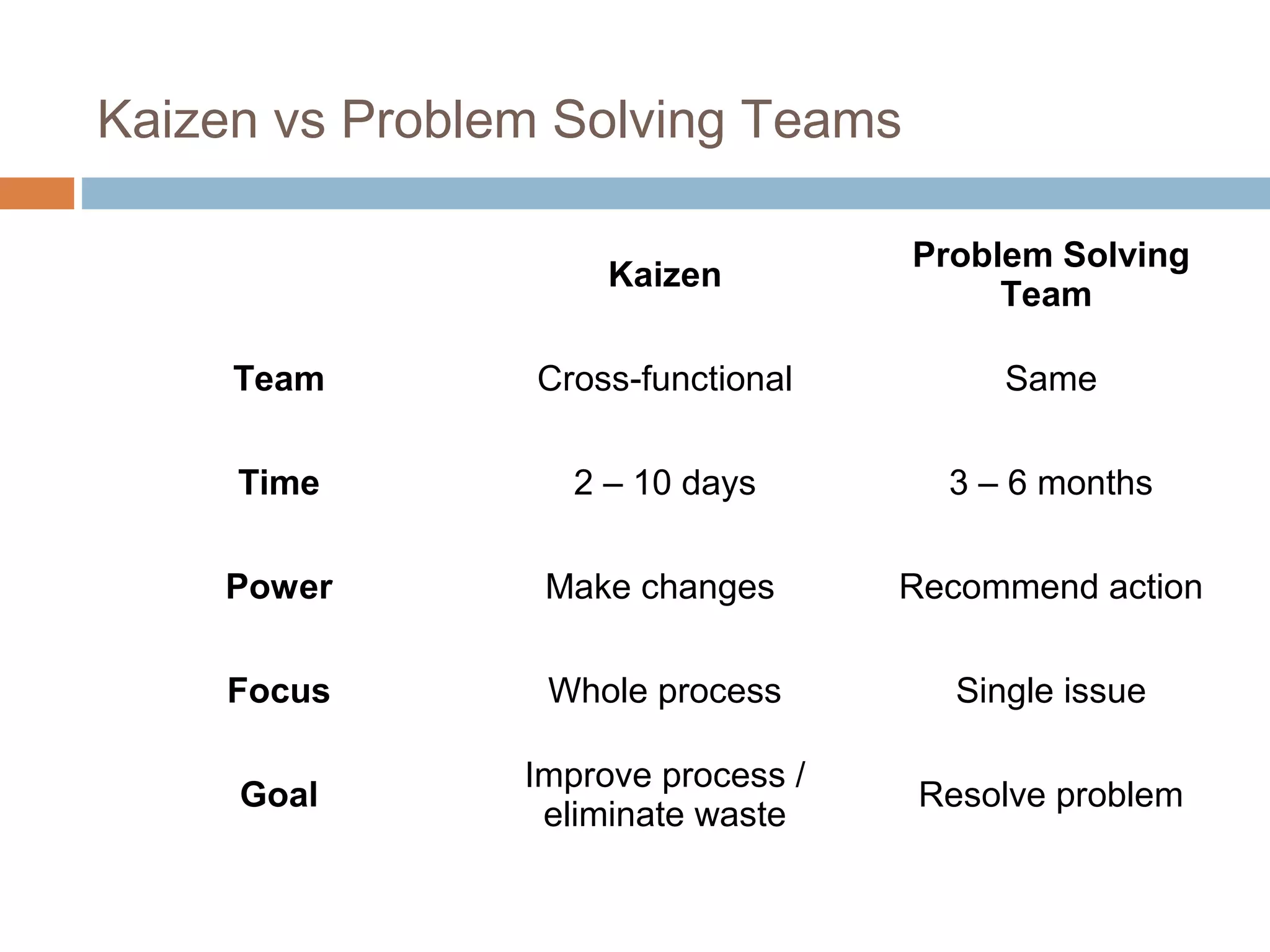
Kaizen vs Problem Solving Teams
Kaizen
Problem Solving
Team
Team Cross-functional Same
Time 2 – 10 days 3 – 6 months
Power Make changes Recommend action
Focus Whole process Single issue
Goal
Improve process /
eliminate waste
Resolve problem
7
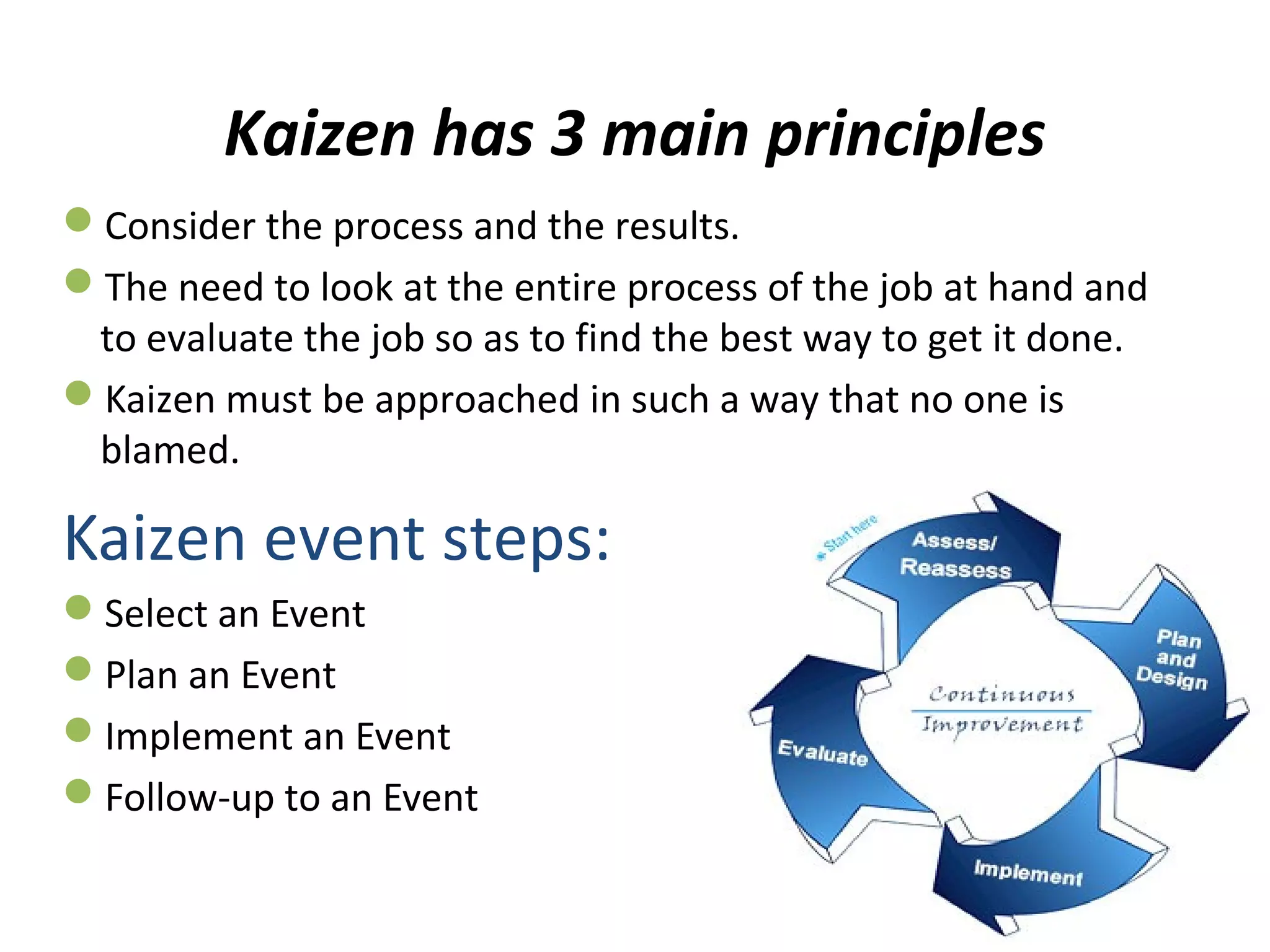
Kaizen has 3 main principles
Consider the process and the results.
The need to look at the entire process of the job at hand and
to evaluate the job so as to find the best way to get it done.
Kaizen must be approached in such a way that no one is
blamed.
Kaizen event steps:
Select an Event
Plan an Event
Implement an Event
Follow-up to an Event
CONTINUOUS IMPROVEMENT
• Kaizen refers to improvement of both
processes and people.
• In fact Kaizen philosophy aims at
improving all aspects of an organization all
the time.
• Good is never good enough; kaizen is a
never-ending journey to excellence.
Kaizen ChecklistsKaizen Checklists
HOW CANTHIS BE IMPROVED ?
Factors which may need improvement:
1. personnel 9. software
2. work techniques 10. tools
3. work methods 11. materials
4. work procedures 12. plant layout
5. time 13. production levels
6. facilities 14. inventory
7. equipment 15. paradigms (mindset)
8. systems
Kaizen
 Value and non-value added work activities
 Muda-seven classes of waste
 Principles of motion study and work-cell use
 Principles of materials handling and use of
one-piece flow
 Documentation of standard operating
procedures
 The 5S’s
 Visual displays for communicating to factory
personnel
 JIT- to produce right quantities at right
time and with right resources
 Poka-yoke to prevent or detect errors
 Team dynamics – problem solving
,communication skills, conflict resolving.
12
Kaizen Training
Different Types of Activities
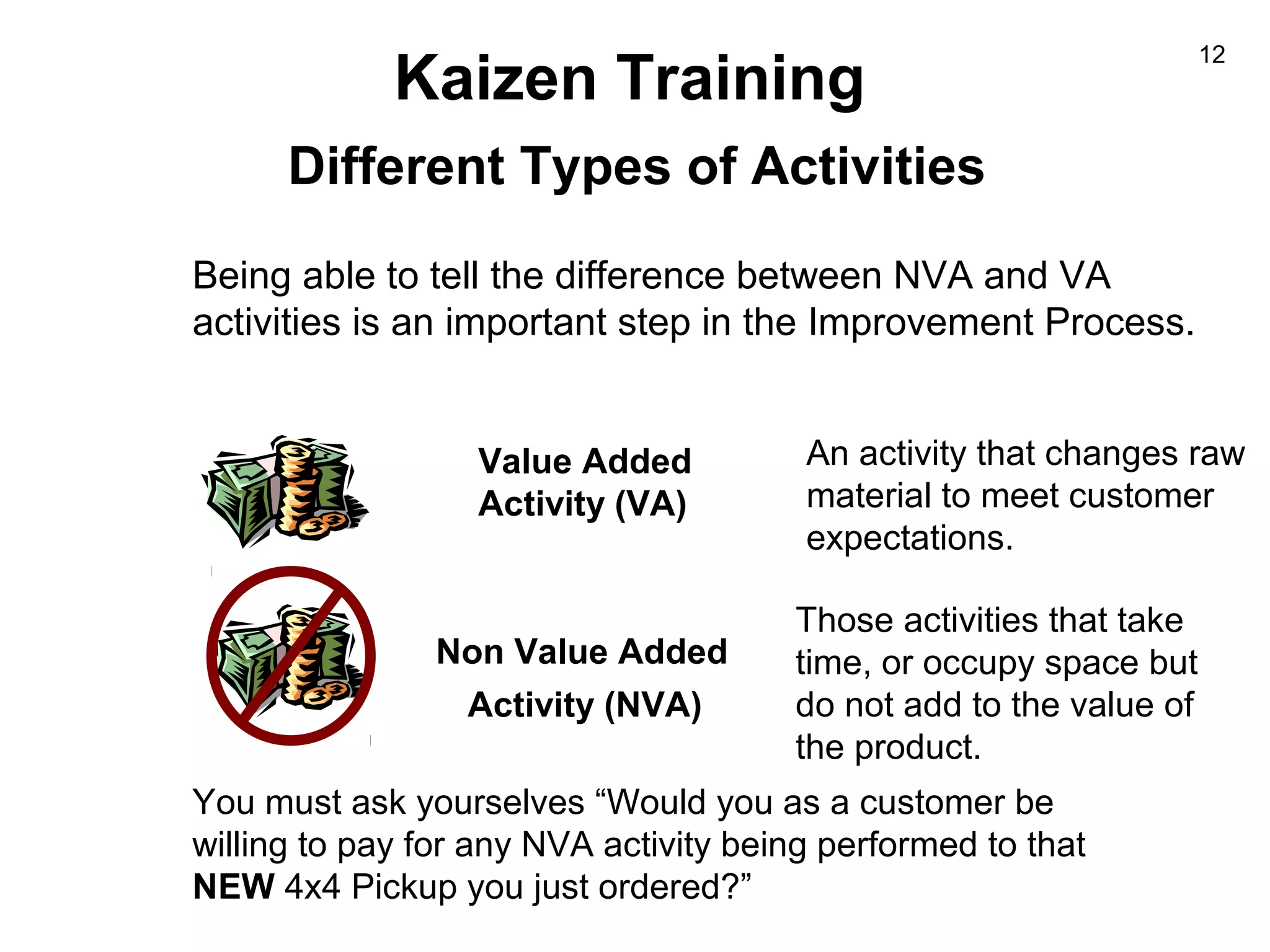
Being able to tell the difference between NVA and VA
activities is an important step in the Improvement Process.
Value Added
Activity (VA)
An activity that changes raw
material to meet customer
expectations.
Non Value Added
Activity (NVA)
Those activities that take
time, or occupy space but
do not add to the value of
the product.
You must ask yourselves “Would you as a customer be
willing to pay for any NVA activity being performed to that
NEW 4x4 Pickup you just ordered?”
13
Kaizen Training
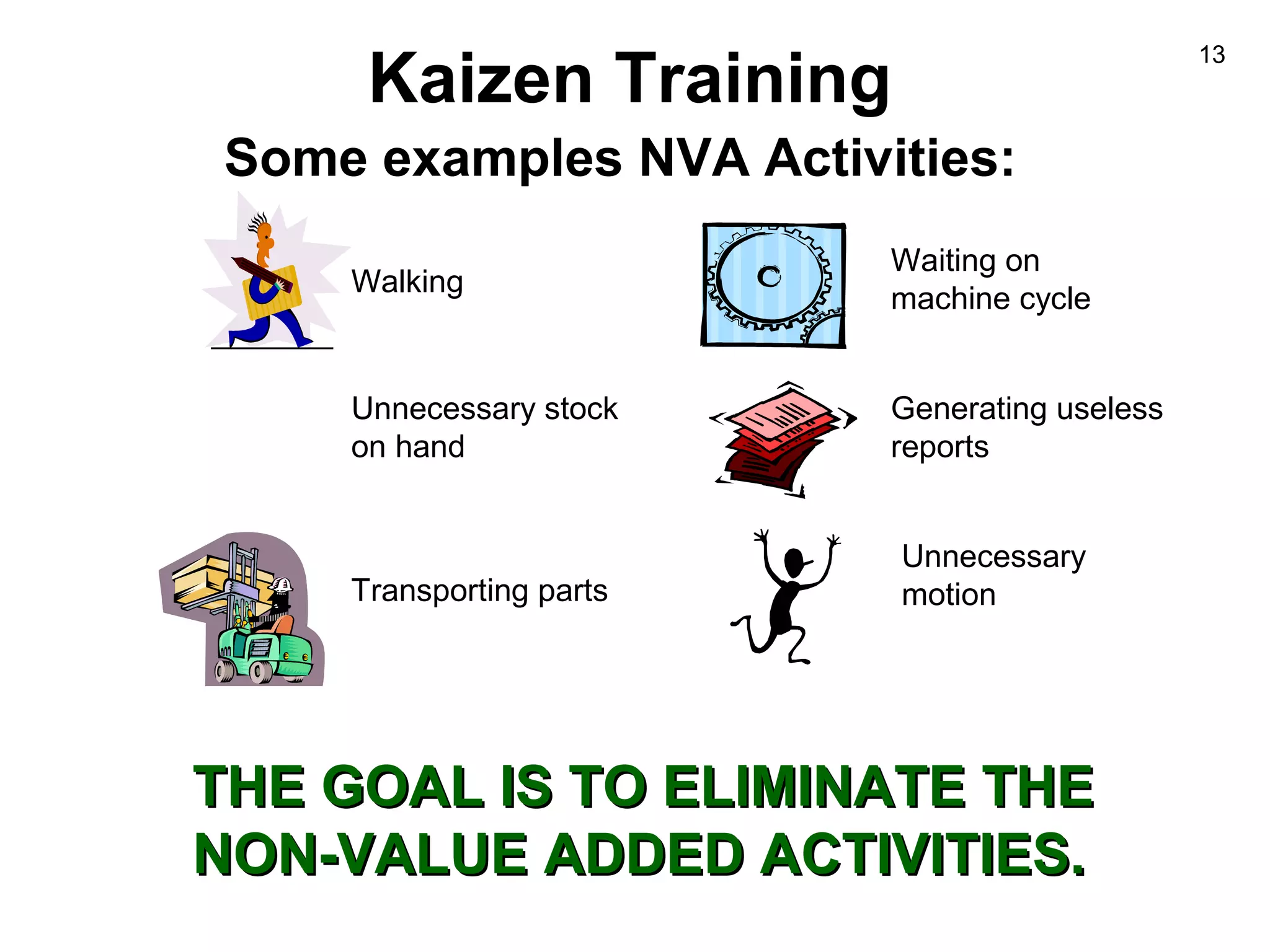
Some examples NVA Activities:
Walking
Waiting on
machine cycle
Transporting parts
Generating useless
reports
THE GOAL IS TO ELIMINATE THETHE GOAL IS TO ELIMINATE THE
NON-VALUE ADDED ACTIVITIES.NON-VALUE ADDED ACTIVITIES.
Unnecessary
motion
Unnecessary stock
on hand
Kaizen’s Basic Goal
14
Discover and Eliminate all Waste in a process
Waste (“Muda”) – anything that the customer does
not pay for
Some waste is necessary or required by law
(personnel files, financial records, meetings,
maintenance)
THE SEVEN TYPES OF WASTE
15
Overproduction
Waiting
Over processing
Inventory
Motion
Defects
Transportation
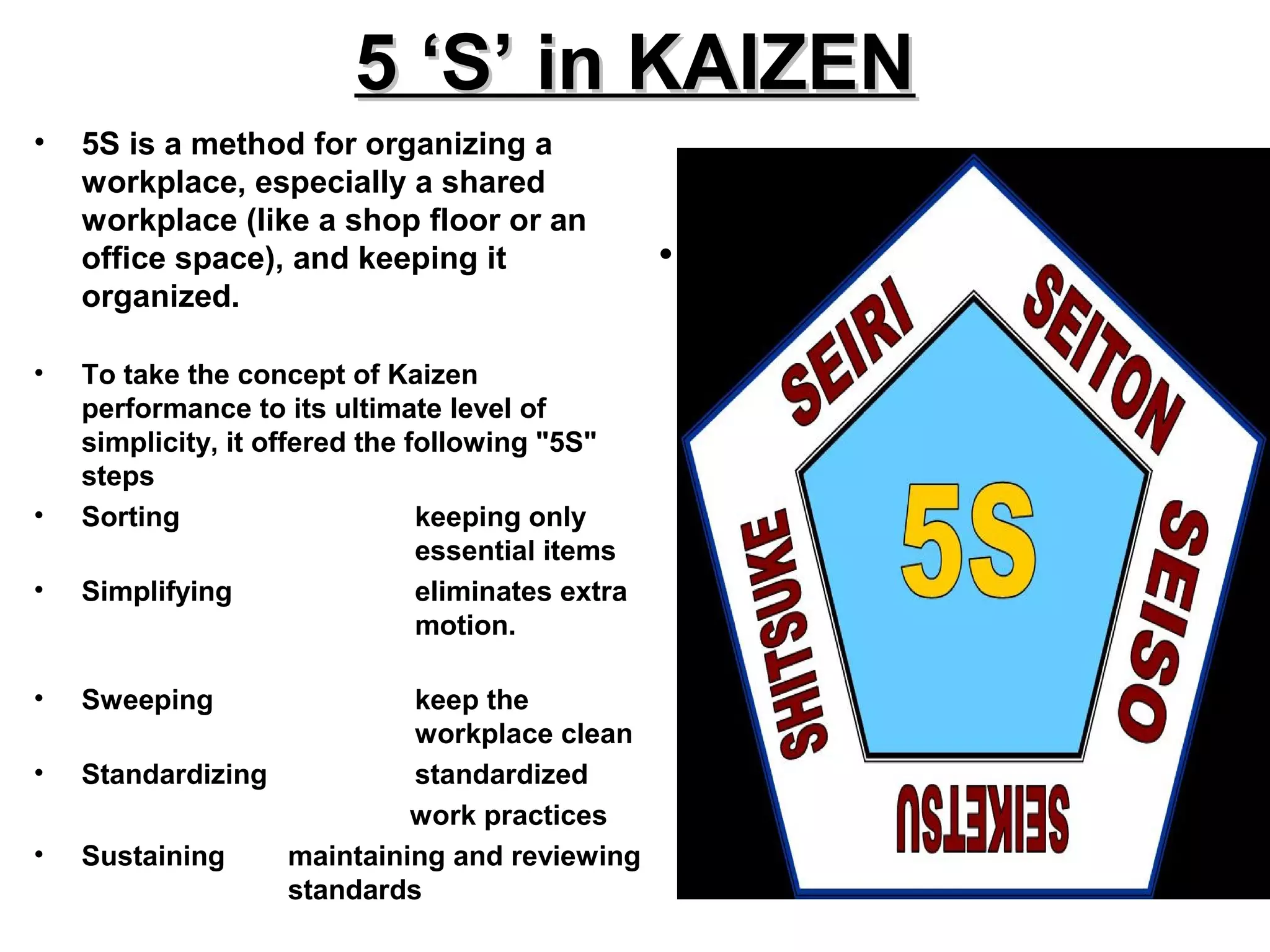
5 ‘S’ in KAIZEN5 ‘S’ in KAIZEN
• 5S is a method for organizing a
workplace, especially a shared
workplace (like a shop floor or an
office space), and keeping it
organized.
• To take the concept of Kaizen
performance to its ultimate level of
simplicity, it offered the following "5S"
steps
• Sorting keeping only
essential items
• Simplifying eliminates extra
motion.
• Sweeping keep the
workplace clean
• Standardizing standardized
work practices
• Sustaining maintaining and reviewing
standards
• .
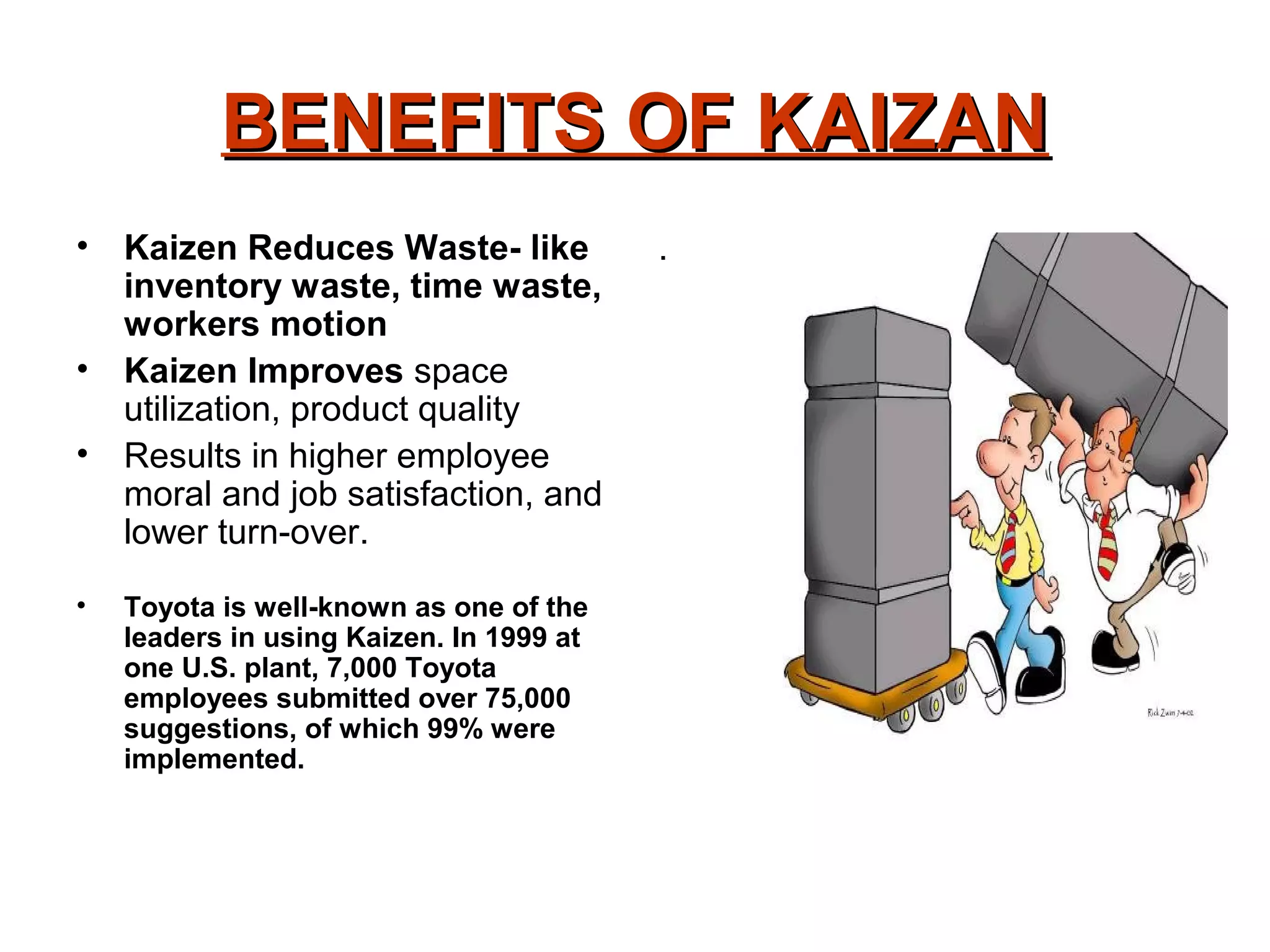
BENEFITS OF KAIZANBENEFITS OF KAIZAN
• Kaizen Reduces Waste- like
inventory waste, time waste,
workers motion
• Kaizen Improves space
utilization, product quality
• Results in higher employee
moral and job satisfaction, and
lower turn-over.
• Toyota is well-known as one of the
leaders in using Kaizen. In 1999 at
one U.S. plant, 7,000 Toyota
employees submitted over 75,000
suggestions, of which 99% were
implemented.
.
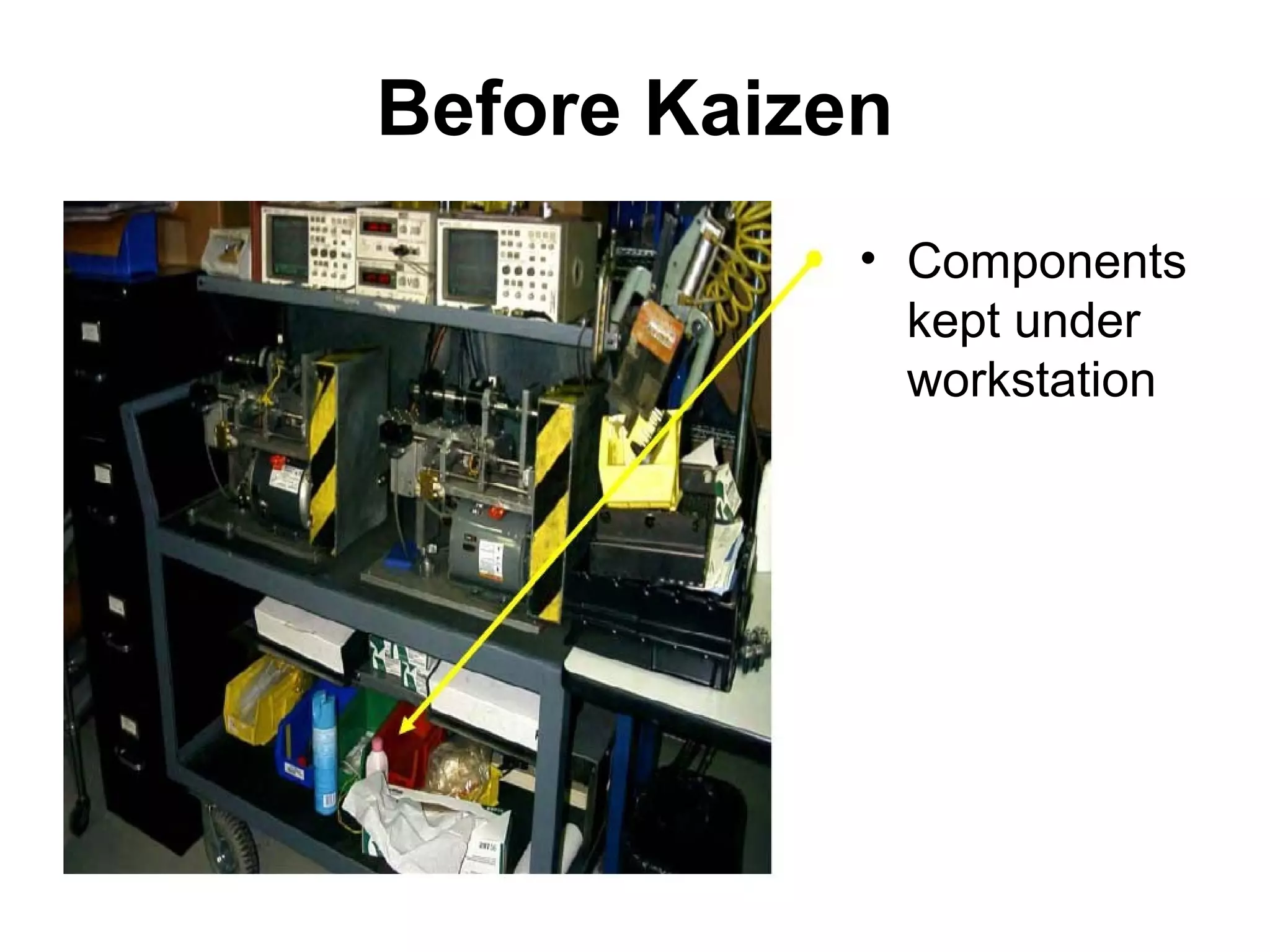
Before Kaizen
• Components
kept under
workstation
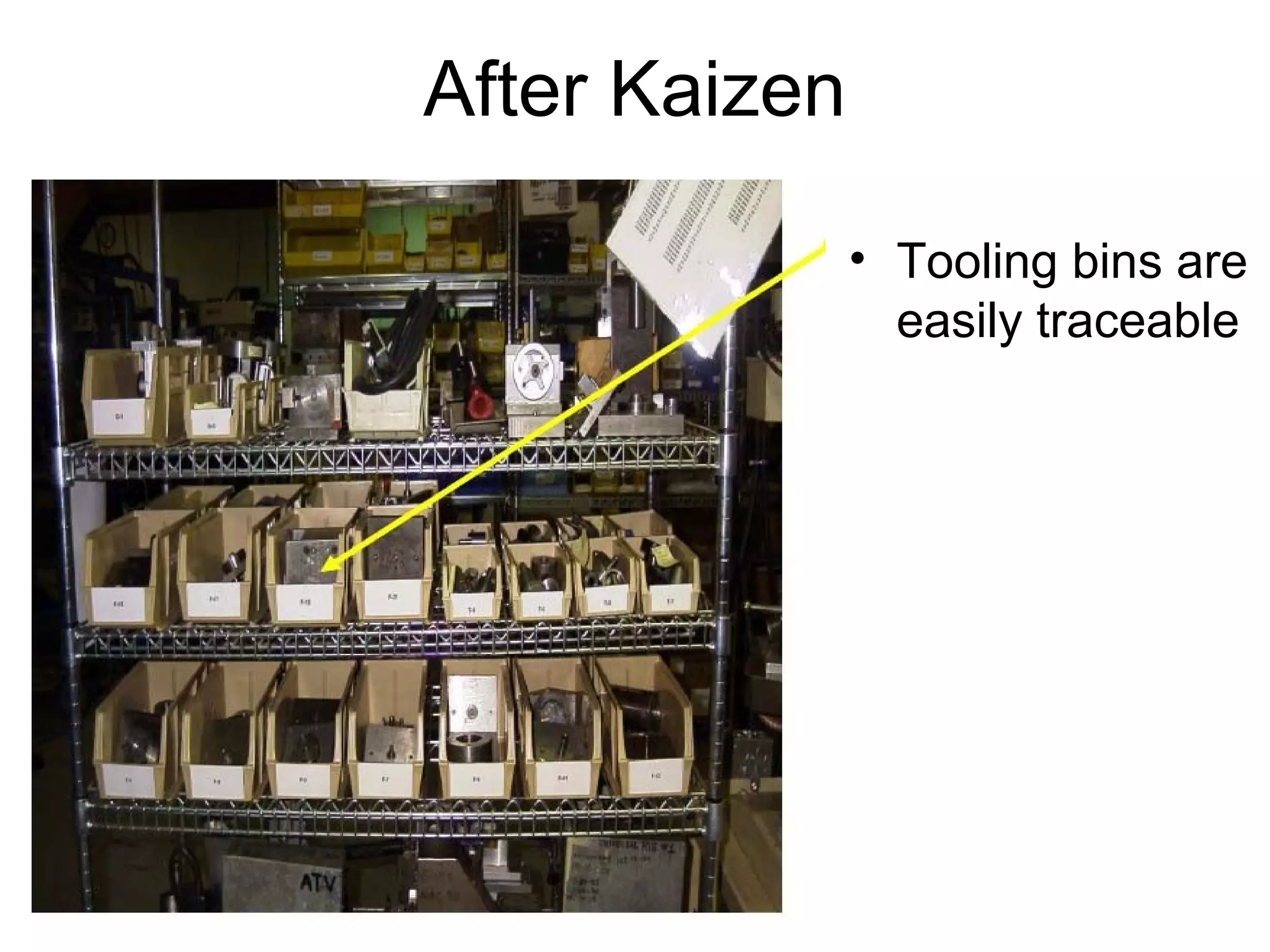
After Kaizen
• Tooling bins are
easily traceable
Pitfalls in KAIZENPitfalls in KAIZEN
Resistance to change
Lack of proper procedure to implement
Too much suggestion may lead to confusion and
time wastage
Good is never good enough, kaizen is a never-ending
journey to excellence.
ARIGATO!!!
,

Kaizen

  • 1.
    “A never-ending journey” Sources:KAIZEN Institute The Monk Who Sold His Ferrari
  • 2.
    Kaizen is thename given by the Japanese to continuous improvement. Continuous improvement really means “continuous incremental improvement.” 改 ('kai') KAI- change 善 ('zen') ZEN- good Kaizen means making changes for the better on a continual, never-ending basis.
  • 3.
    Overview of tools- Kaizen The Kaizen philosophy assumes that our way of life—be it our working life, our social life, or our home life deserves to be constantly improved. Maasaki Imai
  • 4.
    Masaaki Imai-Masaaki Imai- knownas the developer ofknown as the developer of KaizenKaizen “ KAIZEN strategy is the single most important concept in Japanese management-the key to Japanese competitive success. Kaizen means “ongoing” improvement involving everyone-Top management, managers and workers.” “If you learn only one word of Japanese, make it KAIZEN.”
  • 5.
    Some Kaizen HistorySomeKaizen History 5 First made popular by Toyota as part of their production system (TPS or Lean Manufacturing) in the 1970s “Discovered” and described in books in the West starting in the 1980s Popular in American Auto and Aerospace industries in the 1990s (“Kaizen Blitz”) Key tool in Lean Production today
  • 6.
    6 It is nolonger Cost + Profit = Selling Price Today it is Selling Price - Cost = Profit
  • 7.
    Kaizen vs ProblemSolving Teams Kaizen Problem Solving Team Team Cross-functional Same Time 2 – 10 days 3 – 6 months Power Make changes Recommend action Focus Whole process Single issue Goal Improve process / eliminate waste Resolve problem 7
  • 8.
    Kaizen has 3main principles Consider the process and the results. The need to look at the entire process of the job at hand and to evaluate the job so as to find the best way to get it done. Kaizen must be approached in such a way that no one is blamed. Kaizen event steps: Select an Event Plan an Event Implement an Event Follow-up to an Event
  • 9.
    CONTINUOUS IMPROVEMENT • Kaizenrefers to improvement of both processes and people. • In fact Kaizen philosophy aims at improving all aspects of an organization all the time. • Good is never good enough; kaizen is a never-ending journey to excellence.
  • 10.
    Kaizen ChecklistsKaizen Checklists HOWCANTHIS BE IMPROVED ? Factors which may need improvement: 1. personnel 9. software 2. work techniques 10. tools 3. work methods 11. materials 4. work procedures 12. plant layout 5. time 13. production levels 6. facilities 14. inventory 7. equipment 15. paradigms (mindset) 8. systems
  • 11.
    Kaizen  Value andnon-value added work activities  Muda-seven classes of waste  Principles of motion study and work-cell use  Principles of materials handling and use of one-piece flow  Documentation of standard operating procedures  The 5S’s  Visual displays for communicating to factory personnel  JIT- to produce right quantities at right time and with right resources  Poka-yoke to prevent or detect errors  Team dynamics – problem solving ,communication skills, conflict resolving.
  • 12.
    12 Kaizen Training Different Typesof Activities Being able to tell the difference between NVA and VA activities is an important step in the Improvement Process. Value Added Activity (VA) An activity that changes raw material to meet customer expectations. Non Value Added Activity (NVA) Those activities that take time, or occupy space but do not add to the value of the product. You must ask yourselves “Would you as a customer be willing to pay for any NVA activity being performed to that NEW 4x4 Pickup you just ordered?”
  • 13.
    13 Kaizen Training Some examplesNVA Activities: Walking Waiting on machine cycle Transporting parts Generating useless reports THE GOAL IS TO ELIMINATE THETHE GOAL IS TO ELIMINATE THE NON-VALUE ADDED ACTIVITIES.NON-VALUE ADDED ACTIVITIES. Unnecessary motion Unnecessary stock on hand
  • 14.
    Kaizen’s Basic Goal 14 Discoverand Eliminate all Waste in a process Waste (“Muda”) – anything that the customer does not pay for Some waste is necessary or required by law (personnel files, financial records, meetings, maintenance)
  • 15.
    THE SEVEN TYPESOF WASTE 15 Overproduction Waiting Over processing Inventory Motion Defects Transportation
  • 16.
    5 ‘S’ inKAIZEN5 ‘S’ in KAIZEN • 5S is a method for organizing a workplace, especially a shared workplace (like a shop floor or an office space), and keeping it organized. • To take the concept of Kaizen performance to its ultimate level of simplicity, it offered the following "5S" steps • Sorting keeping only essential items • Simplifying eliminates extra motion. • Sweeping keep the workplace clean • Standardizing standardized work practices • Sustaining maintaining and reviewing standards • .
  • 17.
    BENEFITS OF KAIZANBENEFITSOF KAIZAN • Kaizen Reduces Waste- like inventory waste, time waste, workers motion • Kaizen Improves space utilization, product quality • Results in higher employee moral and job satisfaction, and lower turn-over. • Toyota is well-known as one of the leaders in using Kaizen. In 1999 at one U.S. plant, 7,000 Toyota employees submitted over 75,000 suggestions, of which 99% were implemented. .
  • 18.
  • 19.
    After Kaizen • Toolingbins are easily traceable
  • 20.
    Pitfalls in KAIZENPitfallsin KAIZEN Resistance to change Lack of proper procedure to implement Too much suggestion may lead to confusion and time wastage
  • 21.
    Good is nevergood enough, kaizen is a never-ending journey to excellence. ARIGATO!!!
  • 22.