Presented By
Dr. Arun Kumar Tripathi
Dean, CA
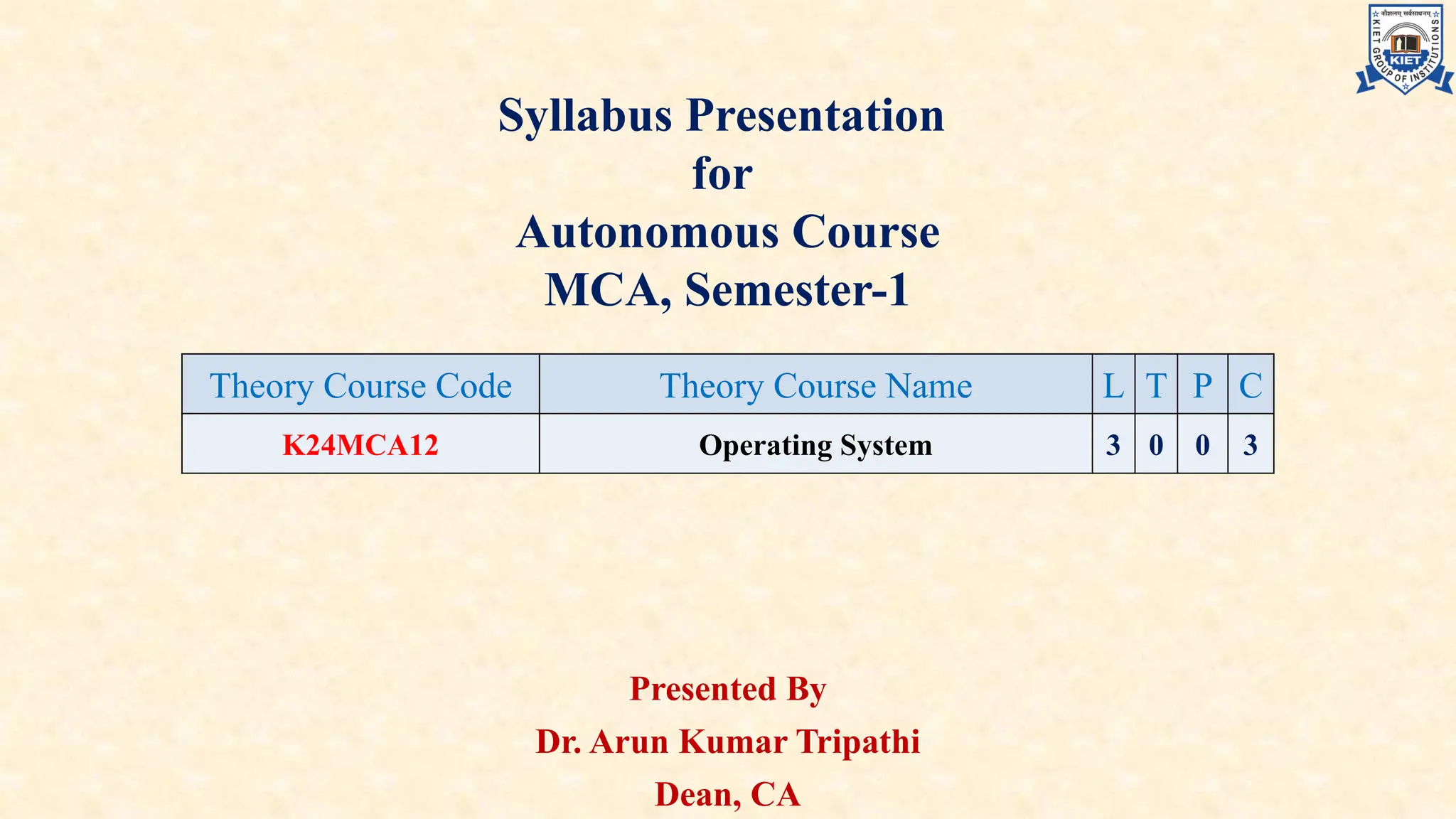
Theory Course Code Theory Course Name L T P C
K24MCA12 Operating System 3 0 0 3
Syllabus Presentation
for
Autonomous Course
MCA, Semester-1
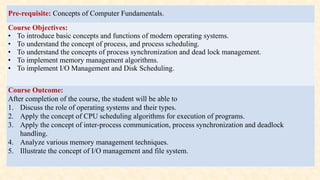
Pre-requisite: Concepts of Computer Fundamentals.
Course Objectives:
• To introduce basic concepts and functions of modern operating systems.
• To understand the concept of process, and process scheduling.
• To understand the concepts of process synchronization and dead lock management.
• To implement memory management algorithms.
• To implement I/O Management and Disk Scheduling.
Course Outcome:
After completion of the course, the student will be able to
1. Discuss the role of operating systems and their types.
2. Apply the concept of CPU scheduling algorithms for execution of programs.
3. Apply the concept of inter-process communication, process synchronization and deadlock
handling.
4. Analyze various memory management techniques.
5. Illustrate the concept of I/O management and file system.
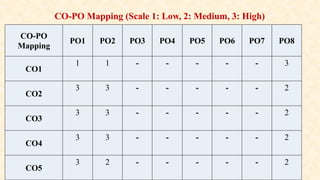
CO-PO
Mapping
PO1 PO2 PO3 PO4 PO5 PO6 PO7 PO8
CO1
1 1 - - - - - 3
CO2
3 3 - - - - - 2
CO3
3 3 - - - - - 2
CO4
3 3 - - - - - 2
CO5
3 2 - - - - - 2
CO-PO Mapping (Scale 1: Low, 2: Medium, 3: High)
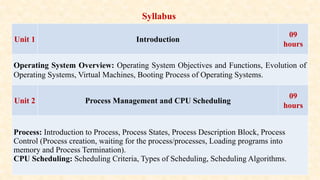
Unit 1 Introduction
09
hours
Operating System Overview: Operating System Objectives and Functions, Evolution of
Operating Systems, Virtual Machines, Booting Process of Operating Systems.
Unit 2 Process Management and CPU Scheduling
09
hours
Process: Introduction to Process, Process States, Process Description Block, Process
Control (Process creation, waiting for the process/processes, Loading programs into
memory and Process Termination).
CPU Scheduling: Scheduling Criteria, Types of Scheduling, Scheduling Algorithms.
Syllabus
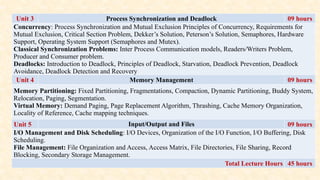
Unit 3 Process Synchronization and Deadlock 09 hours
Concurrency: Process Synchronization and Mutual Exclusion Principles of Concurrency, Requirements for
Mutual Exclusion, Critical Section Problem, Dekker’s Solution, Peterson’s Solution, Semaphores, Hardware
Support, Operating System Support (Semaphores and Mutex).
Classical Synchronization Problems: Inter Process Communication models, Readers/Writers Problem,
Producer and Consumer problem.
Deadlocks: Introduction to Deadlock, Principles of Deadlock, Starvation, Deadlock Prevention, Deadlock
Avoidance, Deadlock Detection and Recovery
Unit 4 Memory Management 09 hours
Memory Partitioning: Fixed Partitioning, Fragmentations, Compaction, Dynamic Partitioning, Buddy System,
Relocation, Paging, Segmentation.
Virtual Memory: Demand Paging, Page Replacement Algorithm, Thrashing, Cache Memory Organization,
Locality of Reference, Cache mapping techniques.
Unit 5 Input/Output and Files 09 hours
I/O Management and Disk Scheduling: I/O Devices, Organization of the I/O Function, I/O Buffering, Disk
Scheduling.
File Management: File Organization and Access, Access Matrix, File Directories, File Sharing, Record
Blocking, Secondary Storage Management.
Total Lecture Hours 45 hours
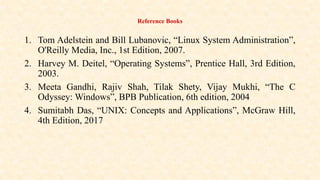
Reference Books
1. Tom Adelstein and Bill Lubanovic, “Linux System Administration”,
O'Reilly Media, Inc., 1st Edition, 2007.
2. Harvey M. Deitel, “Operating Systems”, Prentice Hall, 3rd Edition,
2003.
3. Meeta Gandhi, Rajiv Shah, Tilak Shety, Vijay Mukhi, “The C
Odyssey: Windows”, BPB Publication, 6th edition, 2004
4. Sumitabh Das, “UNIX: Concepts and Applications”, McGraw Hill,
4th Edition, 2017
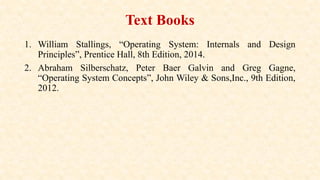
Text Books
1. William Stallings, “Operating System: Internals and Design
Principles”, Prentice Hall, 8th Edition, 2014.
2. Abraham Silberschatz, Peter Baer Galvin and Greg Gagne,
“Operating System Concepts”, John Wiley & Sons,Inc., 9th Edition,
2012.
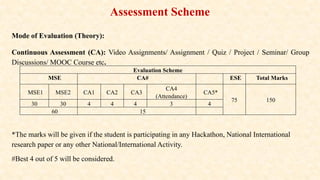
Assessment Scheme
Mode of Evaluation (Theory):
Continuous Assessment (CA): Video Assignments/ Assignment / Quiz / Project / Seminar/ Group
Discussions/ MOOC Course etc.
*The marks will be given if the student is participating in any Hackathon, National International
research paper or any other National/International Activity.
#Best 4 out of 5 will be considered.
Evaluation Scheme
MSE CA# ESE Total Marks
MSE1 MSE2 CA1 CA2 CA3
CA4
(Attendance)
CA5*
75 150
30 30 4 4 4 3 4
60 15
THANK YOU

K24MCA12 (OS) syllabus for MCA Students

  • 1.
    Presented By Dr. ArunKumar Tripathi Dean, CA Theory Course Code Theory Course Name L T P C K24MCA12 Operating System 3 0 0 3 Syllabus Presentation for Autonomous Course MCA, Semester-1
  • 2.
    Pre-requisite: Concepts ofComputer Fundamentals. Course Objectives: • To introduce basic concepts and functions of modern operating systems. • To understand the concept of process, and process scheduling. • To understand the concepts of process synchronization and dead lock management. • To implement memory management algorithms. • To implement I/O Management and Disk Scheduling. Course Outcome: After completion of the course, the student will be able to 1. Discuss the role of operating systems and their types. 2. Apply the concept of CPU scheduling algorithms for execution of programs. 3. Apply the concept of inter-process communication, process synchronization and deadlock handling. 4. Analyze various memory management techniques. 5. Illustrate the concept of I/O management and file system.
  • 3.
    CO-PO Mapping PO1 PO2 PO3PO4 PO5 PO6 PO7 PO8 CO1 1 1 - - - - - 3 CO2 3 3 - - - - - 2 CO3 3 3 - - - - - 2 CO4 3 3 - - - - - 2 CO5 3 2 - - - - - 2 CO-PO Mapping (Scale 1: Low, 2: Medium, 3: High)
  • 4.
    Unit 1 Introduction 09 hours OperatingSystem Overview: Operating System Objectives and Functions, Evolution of Operating Systems, Virtual Machines, Booting Process of Operating Systems. Unit 2 Process Management and CPU Scheduling 09 hours Process: Introduction to Process, Process States, Process Description Block, Process Control (Process creation, waiting for the process/processes, Loading programs into memory and Process Termination). CPU Scheduling: Scheduling Criteria, Types of Scheduling, Scheduling Algorithms. Syllabus
  • 5.
    Unit 3 ProcessSynchronization and Deadlock 09 hours Concurrency: Process Synchronization and Mutual Exclusion Principles of Concurrency, Requirements for Mutual Exclusion, Critical Section Problem, Dekker’s Solution, Peterson’s Solution, Semaphores, Hardware Support, Operating System Support (Semaphores and Mutex). Classical Synchronization Problems: Inter Process Communication models, Readers/Writers Problem, Producer and Consumer problem. Deadlocks: Introduction to Deadlock, Principles of Deadlock, Starvation, Deadlock Prevention, Deadlock Avoidance, Deadlock Detection and Recovery Unit 4 Memory Management 09 hours Memory Partitioning: Fixed Partitioning, Fragmentations, Compaction, Dynamic Partitioning, Buddy System, Relocation, Paging, Segmentation. Virtual Memory: Demand Paging, Page Replacement Algorithm, Thrashing, Cache Memory Organization, Locality of Reference, Cache mapping techniques. Unit 5 Input/Output and Files 09 hours I/O Management and Disk Scheduling: I/O Devices, Organization of the I/O Function, I/O Buffering, Disk Scheduling. File Management: File Organization and Access, Access Matrix, File Directories, File Sharing, Record Blocking, Secondary Storage Management. Total Lecture Hours 45 hours
  • 6.
    Reference Books 1. TomAdelstein and Bill Lubanovic, “Linux System Administration”, O'Reilly Media, Inc., 1st Edition, 2007. 2. Harvey M. Deitel, “Operating Systems”, Prentice Hall, 3rd Edition, 2003. 3. Meeta Gandhi, Rajiv Shah, Tilak Shety, Vijay Mukhi, “The C Odyssey: Windows”, BPB Publication, 6th edition, 2004 4. Sumitabh Das, “UNIX: Concepts and Applications”, McGraw Hill, 4th Edition, 2017
  • 7.
    Text Books 1. WilliamStallings, “Operating System: Internals and Design Principles”, Prentice Hall, 8th Edition, 2014. 2. Abraham Silberschatz, Peter Baer Galvin and Greg Gagne, “Operating System Concepts”, John Wiley & Sons,Inc., 9th Edition, 2012.
  • 8.
    Assessment Scheme Mode ofEvaluation (Theory): Continuous Assessment (CA): Video Assignments/ Assignment / Quiz / Project / Seminar/ Group Discussions/ MOOC Course etc. *The marks will be given if the student is participating in any Hackathon, National International research paper or any other National/International Activity. #Best 4 out of 5 will be considered. Evaluation Scheme MSE CA# ESE Total Marks MSE1 MSE2 CA1 CA2 CA3 CA4 (Attendance) CA5* 75 150 30 30 4 4 4 3 4 60 15
  • 9.