Journey with the vineyard
Japanese Raspberry Pi Users Group
Masafumi Ohta
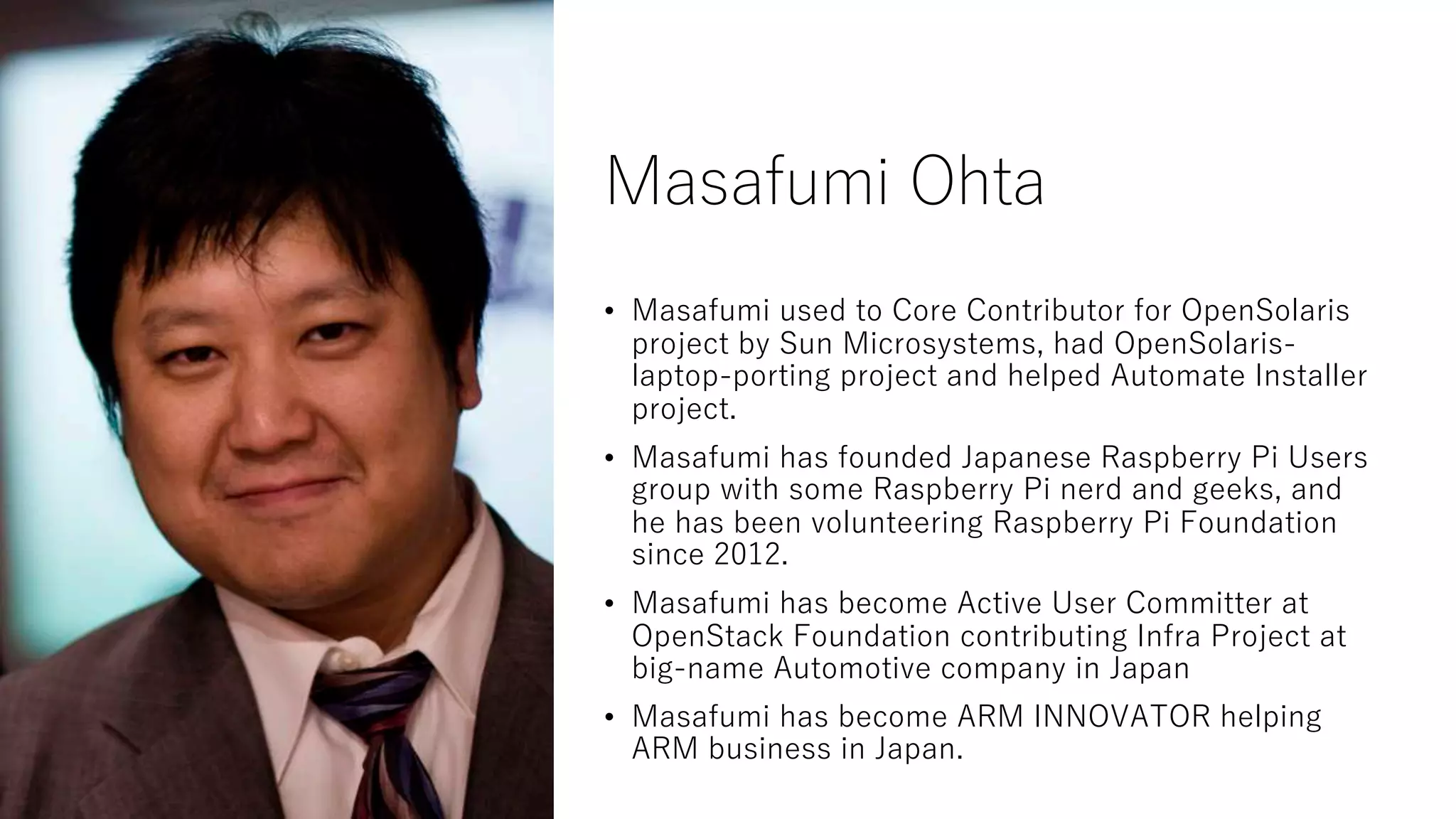
Masafumi Ohta
• Masafumi used to Core Contributor for OpenSolaris
project by Sun Microsystems, had OpenSolaris-
laptop-porting project and helped Automate Installer
project.
• Masafumi has founded Japanese Raspberry Pi Users
group with some Raspberry Pi nerd and geeks, and
he has been volunteering Raspberry Pi Foundation
since 2012.
• Masafumi has become Active User Committer at
OpenStack Foundation contributing Infra Project at
big-name Automotive company in Japan
• Masafumi has become ARM INNOVATOR helping
ARM business in Japan.
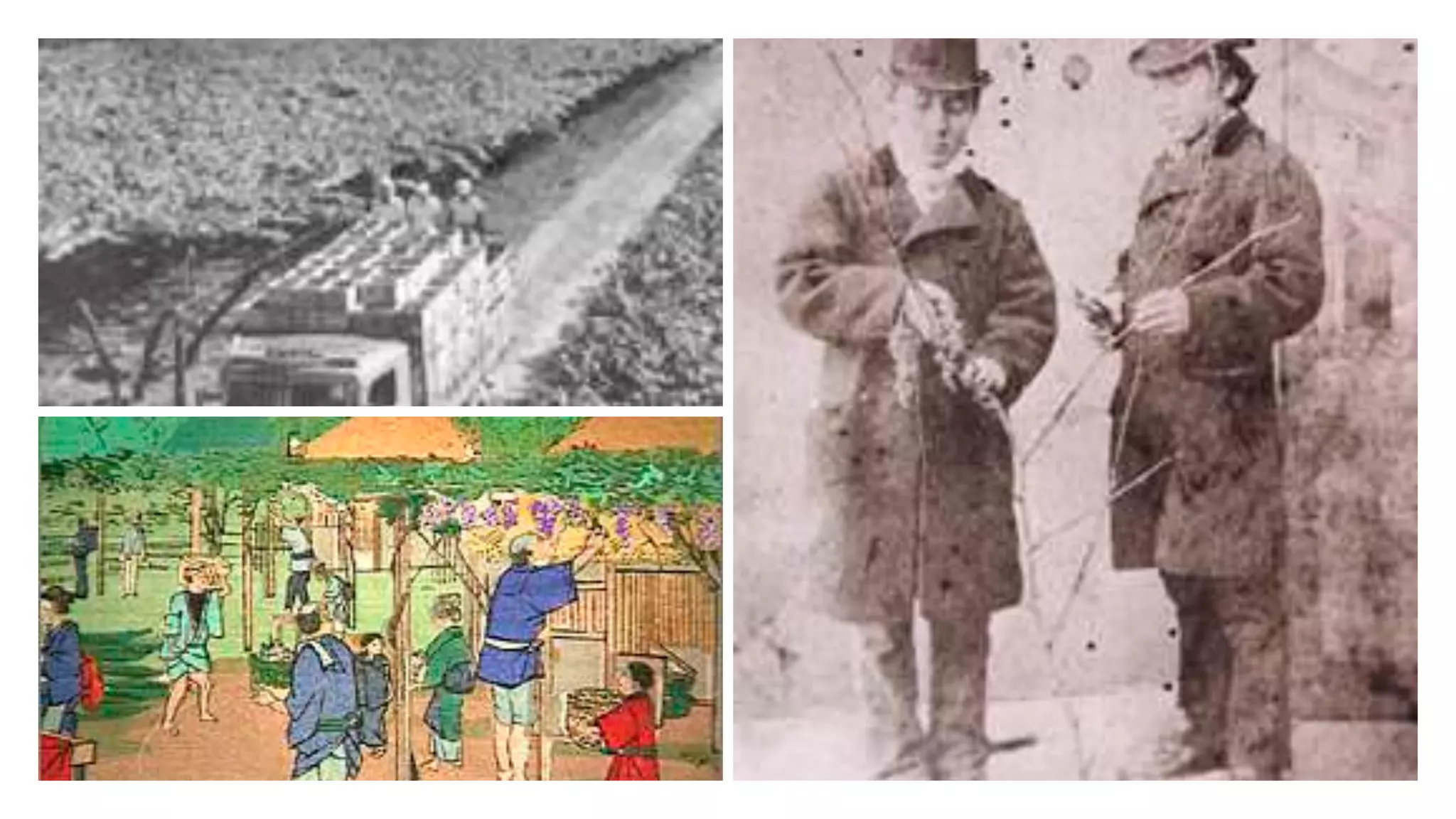
About Katsunuma Vineyard
Located Yamanashi, is very near to Tokyo
About Vineyard Kikushima
Why Kikushima-san met Raspberry Pi
The
opportunities
to develop
the system
• Doing viniculture in Japan depends on the
breed, though, because of relatively high
temperature and humidity, Grapes are prone
to diseases and those conditions affect not
only the yield amount but also the quality.
• Any idea how to grow healthy grapes? And
don't want to use any agricultural chemicals
as possible.
• Is it possible to reduce the number of spray
control times and agricultural chemical
concentration by its efficient control at the
timing of prone disease?
• it has occurred to collect the temperature and
humidity data in the field.
Hinno IoT
system:
project
requirements
• Check the timing of high humidity continuous,
etc, collecting the temperature and humidity
data measured automatically at regular
intervals.
• Check those data in real time through the
network because fields are scattered and far
away from my office.
• Need solar + battery electric power. It might
be better to share the solar+ battery for an
electric fence to use the system.
• Reduce initial and communication costs
because of my poor peasant (called Hinno)
life that I can't pay much more expenses.
Hinno IoT
system
overview
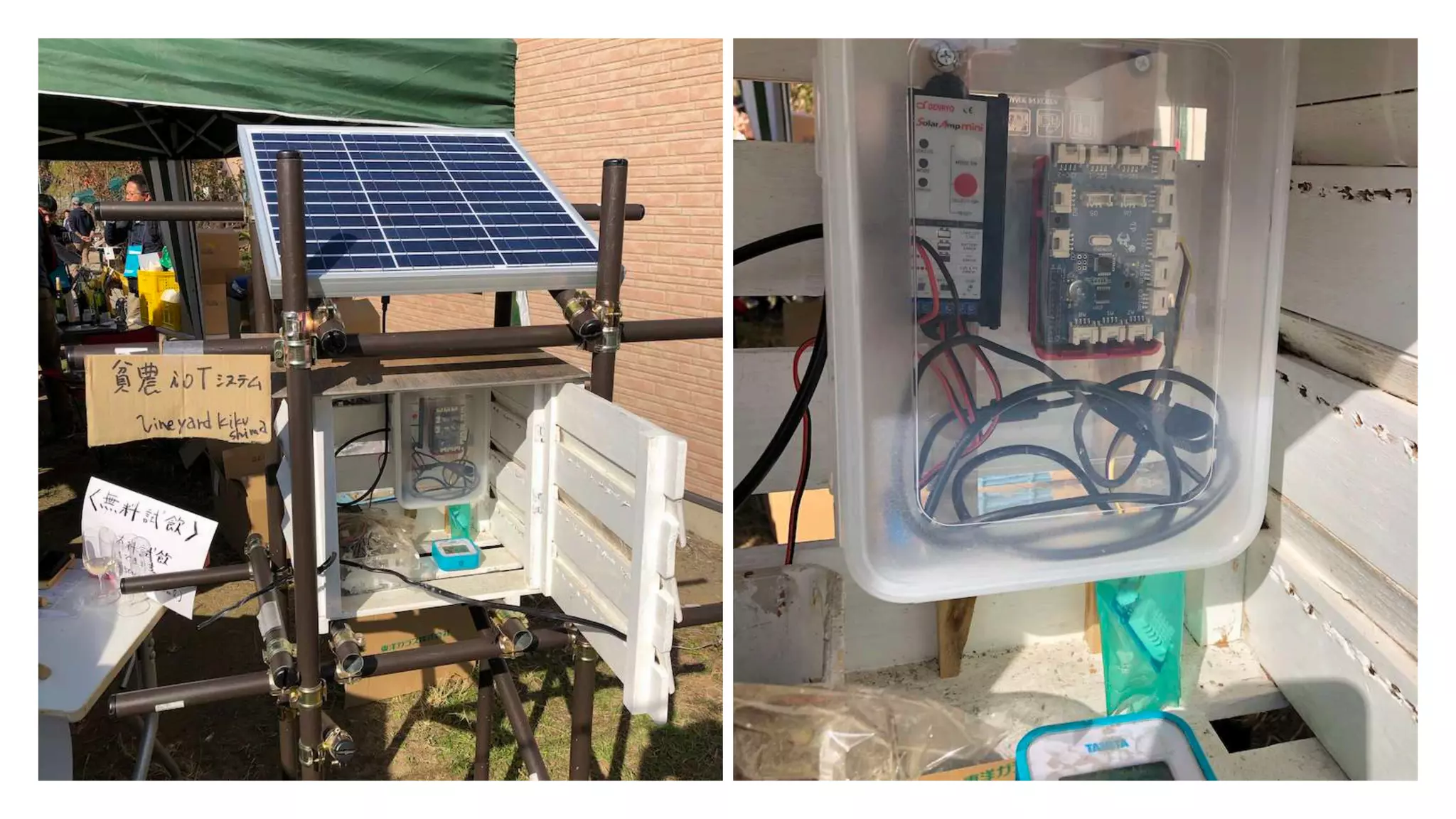
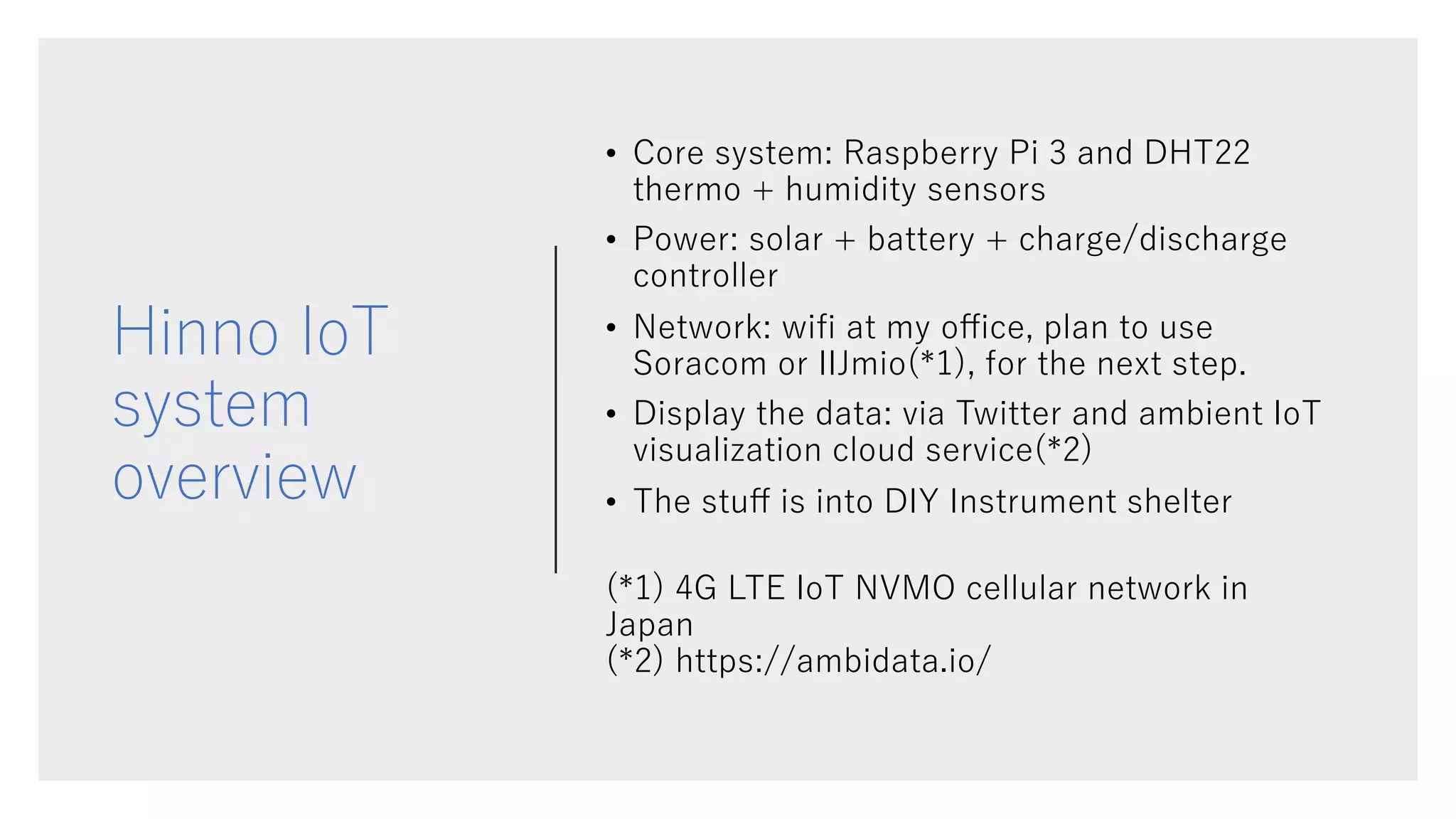
• Core system: Raspberry Pi 3 and DHT22
thermo + humidity sensors
• Power: solar + battery + charge/discharge
controller
• Network: wifi at my office, plan to use
Soracom or IIJmio(*1), for the next step.
• Display the data: via Twitter and ambient IoT
visualization cloud service(*2)
• The stuff is into DIY Instrument shelter
(*1) 4G LTE IoT NVMO cellular network in
Japan
(*2) https://ambidata.io/
Current
project status
(now running
2 systems)
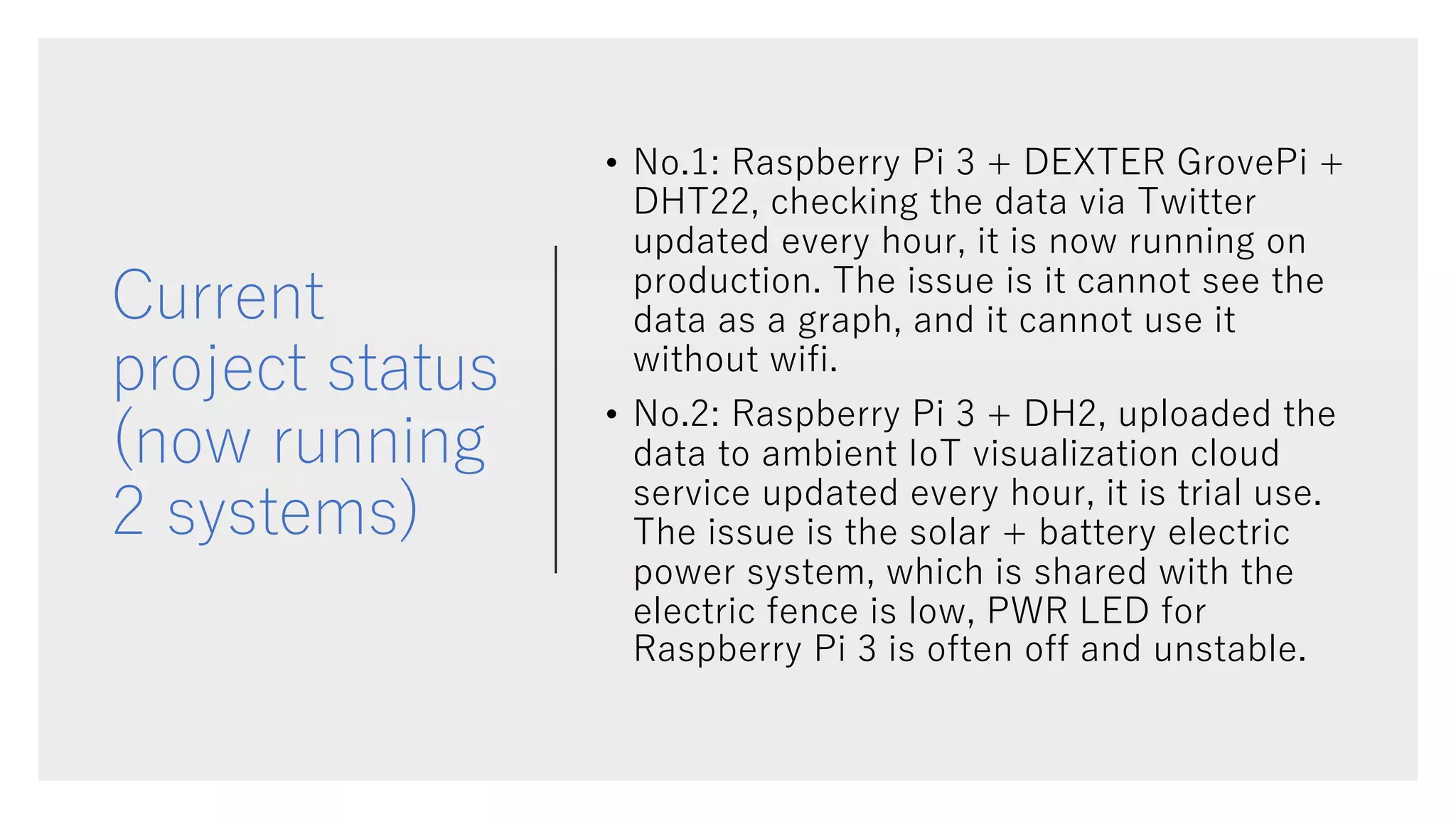
• No.1: Raspberry Pi 3 + DEXTER GrovePi +
DHT22, checking the data via Twitter
updated every hour, it is now running on
production. The issue is it cannot see the
data as a graph, and it cannot use it
without wifi.
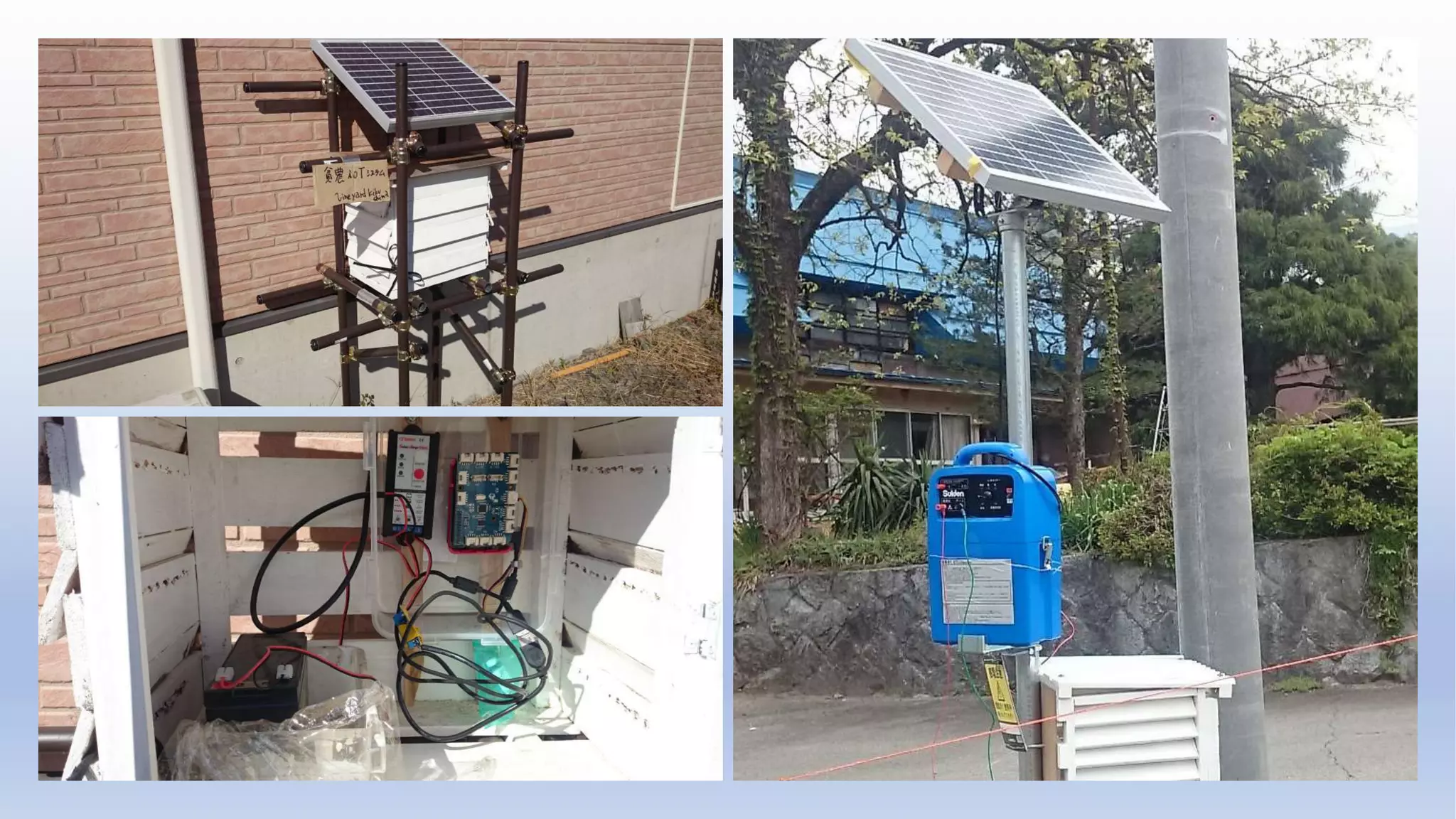
• No.2: Raspberry Pi 3 + DH2, uploaded the
data to ambient IoT visualization cloud
service updated every hour, it is trial use.
The issue is the solar + battery electric
power system, which is shared with the
electric fence is low, PWR LED for
Raspberry Pi 3 is often off and unstable.
Next step
• Try to run ambient IoT cloud service on
No.1 and try to run No.2 stably.
• Try to change cellular network with wifi to
use the same system at the other of his
vineyards that are far away from my office.
Total cost
• Now the system is the trial phase, though,
one is used for the field test, another is
for the system development, the other is
reserved.
• The total cost is 30,000-40,000JPY (is
about 205-275GBP) included solar system.
I am planning to add 3G dongles to my
system, so the total expected cost will be
50,000-60,000JPY (is about 340-410GBP).
Raspberry Pi
is very easy to
use and apply
• It is easy to get Raspberry Pi at the store
in Akihabara and online shops. Even
though the project may not going well, the
loss should be minimal.
• There are a ton of various use cases, and
tips we can see on the internet, and we
can reach with search listings. It might be
something like 'illusion' to make it without
any programming skills on Linux.
• It is really fun to assemble by 'watching
and imitating.'
Why not using
Raspberry Pi
for vineyard
business?
• If the electronic display and
measurement of temperature and
humidity in the vineyards are going
well, it could be applied to the other
uses with the same platform.
• The wine must be delicious with
Raspberry Pi :-)
My comment
• Kikushima-san worked for a big-name
Japanese manufacturer, but he didnʼt
have any experience for programming. He
tried to build the system with search
listings. It is a good activity to make some
with Raspberry Pi.
• Less chemical is very important for a
small winery in Japan. It makes more
homemade wine than a big-name one
to compete with them
• I am looking forward to his next step for
the project. I will continue to help him to
provide some useful information, etc.
Thank you!
Masafumi Ohta
Tweet: @masafumiohta mailto:masafumi@pid0.org

Journey with the vineyard compressed

  • 1.
    Journey with thevineyard Japanese Raspberry Pi Users Group Masafumi Ohta
  • 2.
    Masafumi Ohta • Masafumiused to Core Contributor for OpenSolaris project by Sun Microsystems, had OpenSolaris- laptop-porting project and helped Automate Installer project. • Masafumi has founded Japanese Raspberry Pi Users group with some Raspberry Pi nerd and geeks, and he has been volunteering Raspberry Pi Foundation since 2012. • Masafumi has become Active User Committer at OpenStack Foundation contributing Infra Project at big-name Automotive company in Japan • Masafumi has become ARM INNOVATOR helping ARM business in Japan.
  • 3.
    About Katsunuma Vineyard LocatedYamanashi, is very near to Tokyo
  • 7.
    About Vineyard Kikushima WhyKikushima-san met Raspberry Pi
  • 11.
    The opportunities to develop the system •Doing viniculture in Japan depends on the breed, though, because of relatively high temperature and humidity, Grapes are prone to diseases and those conditions affect not only the yield amount but also the quality. • Any idea how to grow healthy grapes? And don't want to use any agricultural chemicals as possible. • Is it possible to reduce the number of spray control times and agricultural chemical concentration by its efficient control at the timing of prone disease? • it has occurred to collect the temperature and humidity data in the field.
  • 12.
    Hinno IoT system: project requirements • Checkthe timing of high humidity continuous, etc, collecting the temperature and humidity data measured automatically at regular intervals. • Check those data in real time through the network because fields are scattered and far away from my office. • Need solar + battery electric power. It might be better to share the solar+ battery for an electric fence to use the system. • Reduce initial and communication costs because of my poor peasant (called Hinno) life that I can't pay much more expenses.
  • 13.
    Hinno IoT system overview • Coresystem: Raspberry Pi 3 and DHT22 thermo + humidity sensors • Power: solar + battery + charge/discharge controller • Network: wifi at my office, plan to use Soracom or IIJmio(*1), for the next step. • Display the data: via Twitter and ambient IoT visualization cloud service(*2) • The stuff is into DIY Instrument shelter (*1) 4G LTE IoT NVMO cellular network in Japan (*2) https://ambidata.io/
  • 14.
    Current project status (now running 2systems) • No.1: Raspberry Pi 3 + DEXTER GrovePi + DHT22, checking the data via Twitter updated every hour, it is now running on production. The issue is it cannot see the data as a graph, and it cannot use it without wifi. • No.2: Raspberry Pi 3 + DH2, uploaded the data to ambient IoT visualization cloud service updated every hour, it is trial use. The issue is the solar + battery electric power system, which is shared with the electric fence is low, PWR LED for Raspberry Pi 3 is often off and unstable.
  • 16.
    Next step • Tryto run ambient IoT cloud service on No.1 and try to run No.2 stably. • Try to change cellular network with wifi to use the same system at the other of his vineyards that are far away from my office.
  • 17.
    Total cost • Nowthe system is the trial phase, though, one is used for the field test, another is for the system development, the other is reserved. • The total cost is 30,000-40,000JPY (is about 205-275GBP) included solar system. I am planning to add 3G dongles to my system, so the total expected cost will be 50,000-60,000JPY (is about 340-410GBP).
  • 18.
    Raspberry Pi is veryeasy to use and apply • It is easy to get Raspberry Pi at the store in Akihabara and online shops. Even though the project may not going well, the loss should be minimal. • There are a ton of various use cases, and tips we can see on the internet, and we can reach with search listings. It might be something like 'illusion' to make it without any programming skills on Linux. • It is really fun to assemble by 'watching and imitating.'
  • 19.
    Why not using RaspberryPi for vineyard business? • If the electronic display and measurement of temperature and humidity in the vineyards are going well, it could be applied to the other uses with the same platform. • The wine must be delicious with Raspberry Pi :-)
  • 20.
    My comment • Kikushima-sanworked for a big-name Japanese manufacturer, but he didnʼt have any experience for programming. He tried to build the system with search listings. It is a good activity to make some with Raspberry Pi. • Less chemical is very important for a small winery in Japan. It makes more homemade wine than a big-name one to compete with them • I am looking forward to his next step for the project. I will continue to help him to provide some useful information, etc.
  • 21.
    Thank you! Masafumi Ohta Tweet:@masafumiohta mailto:masafumi@pid0.org