Contract Act, 1872
Section: 43
Joint Promisors
Presented by: UMAIR IFTIKHAR
EMAIL: UMAIRIFTIKHAR559@GMAIL.COM
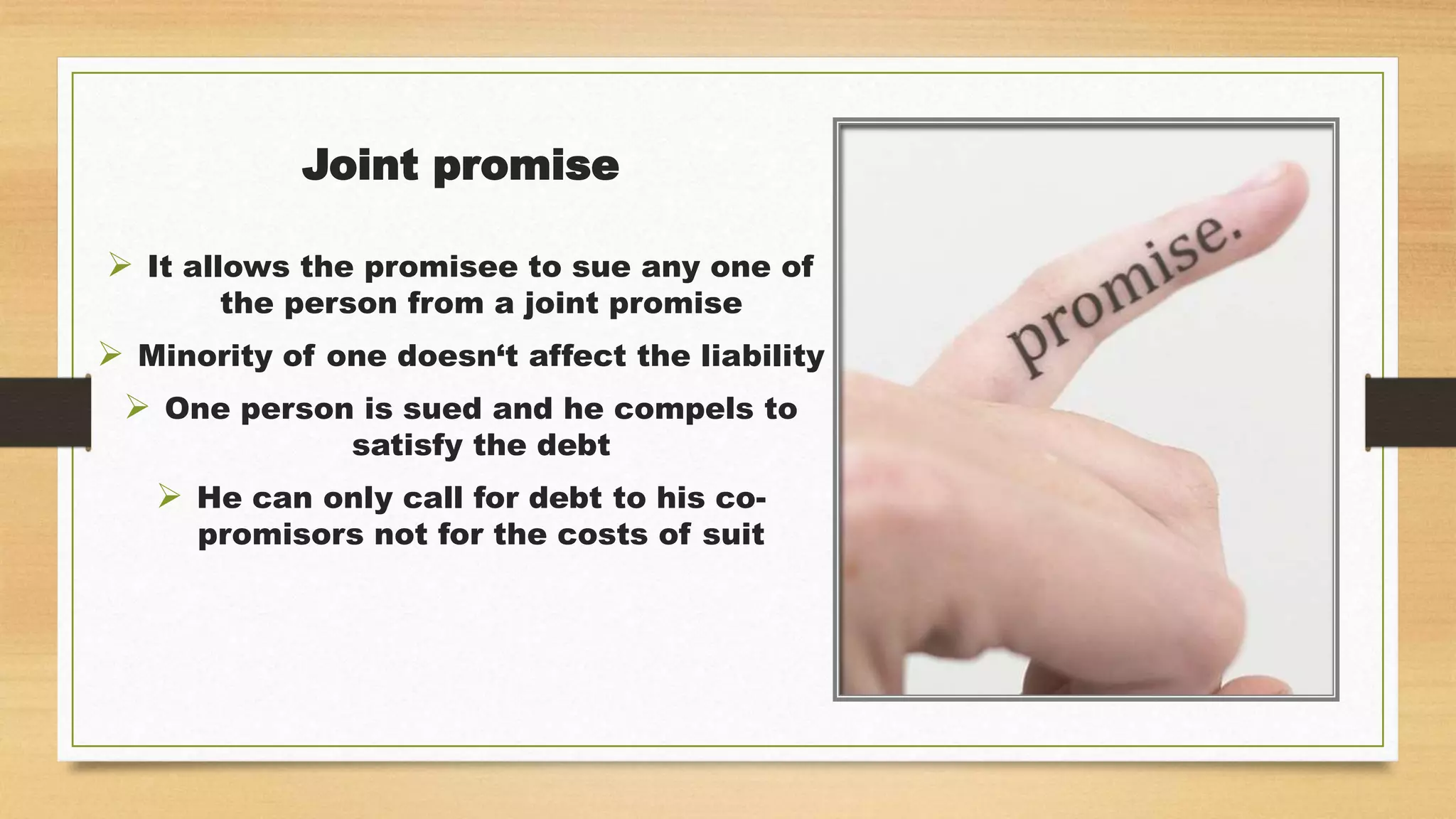
Joint promise
 It allows the promisee to sue any one of
the person from a joint promise
 Minority of one doesn‘t affect the liability
 One person is sued and he compels to
satisfy the debt
 He can only call for debt to his co-
promisors not for the costs of suit
Section 43:
Any one of joint promisors may be compelled to perform
43. When two or more persons make a joint promise, the promisee
may, in the absence of express agreement to the contrary, compel
any one or more of such joint promisors to perform the whole of
the promise.
Cont.
Each of two or more joint promisors may compel every other joint
promisor to contribute equally with himself to the performance of
the promise, unless a contrary intention appears from the contract.
If any one of two or more joint promisors makes default in such
contribution, the remaining joint promisors must bear the loss
arising from such default in equal shares.
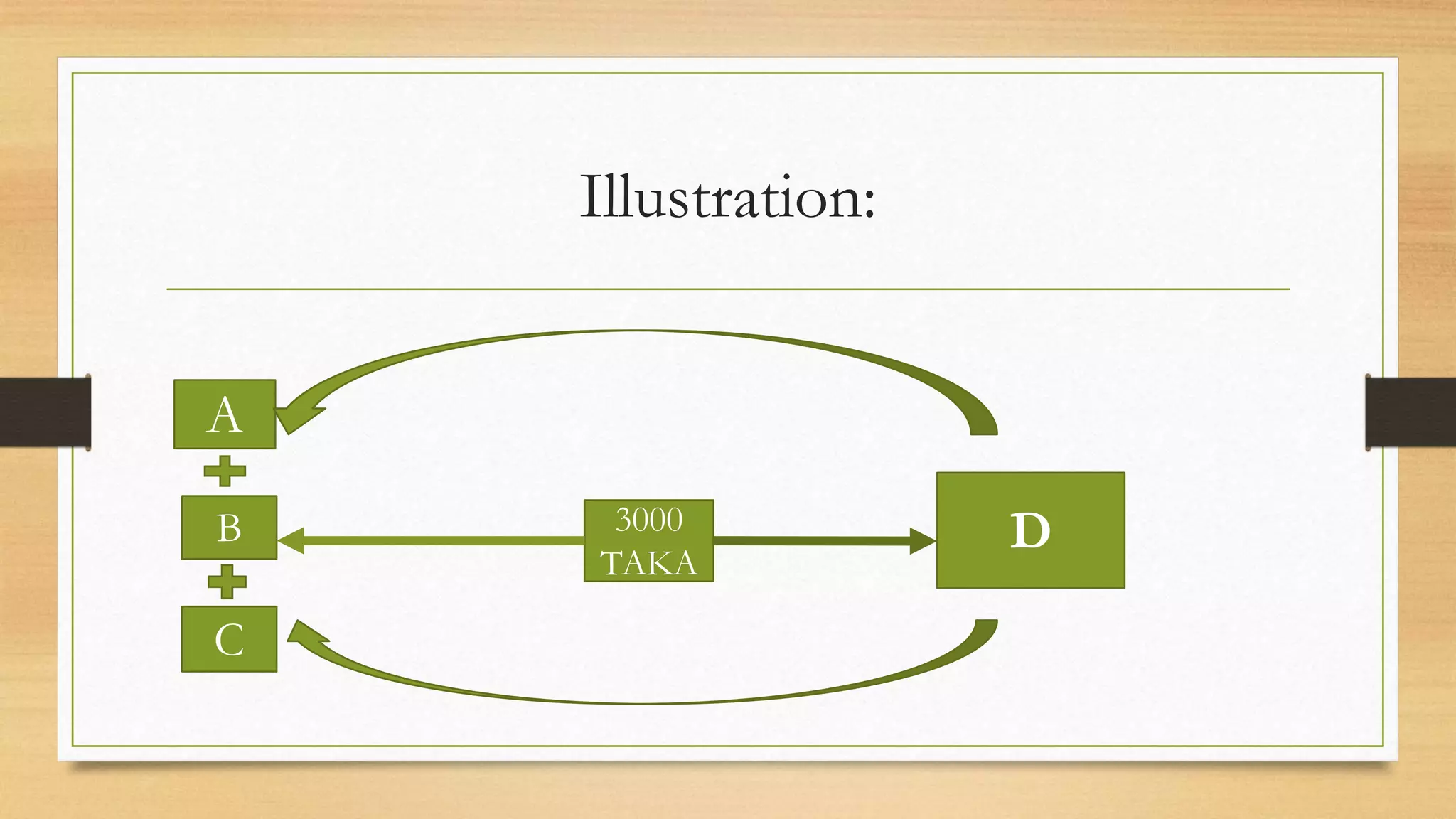
Illustration:
A
B
C
3000
TAKA
D
Illustration:
A
B
C
3000
TAKA
D
Insolvent
Assets
one-
half
A+B+C
500+1250+1250
Compel to pay
Case: 1997 CAL, C 1339 (KARACHI)
• Before HAMID ALI MINA (J)
• SHAIKH ABDE ALI , TAYYAB ALI LOTIA . Petitioner
VS
• SHABBIR and others
• Civil revision application number 49 of 1993 and revision application no.
279, decided on 27th February, 1996.
M. Zia Qureshi for Petitioner. Ghulam Abbas
Pishori for Respondents.
Date of hearing: 27th February, 1996.
• This is a Civil Revision Application under section 115 of Code of Civil
Procedure directed against an order dated 27-2-1993 passed by learned IIIrd
Senior Civil Judge, Karachi-South, in Execution Application No. 28 of 1992,
Suit No. 5027 of 1985, Shaikh Abdeali v. Shabbir and others whereby an
application moved by respondents/judgments-debtors Nos. 2, 3 and 4 was
allowed with the direction to them to deposit the decretal amount according
to their share out of the total decretal amount, hence the present Revision.
Civil procedure code (V of 1908)
• S 43. Execution of decree
• Debtors were directed to deposit decretal amount according to their share out of total
decretal amount.
• Validity: anyone of the decree holder could recover entire decretal amount from any one of
judgment debtor .
• Claim of the decree: holder was based on acknowledgement receipt jointly executed by
judgment
• Debt and liability would be incurred jointly and liability of each would be for the whole
amount under S 43
Main facts of the case
• The amount of Rs. 1,00,000 was passed against the respondents – debtors
jointly who had executed the receipt for the sum of Rs. 1,00,000 as friendly
loan payable jointly by the signori ties, therefore the debt and liability having
been incurred jointly.
• If any one of two or more joint promisor makes defaults in such
contribution, the remaining joint promisiors must bear the loss arising from
such defaults in equal shares
Precedents
• In KANNAYYA REDDI VS MUTHU REDDI case it was held that when
the claim was based on the joint decree, one partner had to pay the entire
amount under due the decree.
• In such a case the law of partnership does not prohibit a claim for
contribution against the other partners and the other partners.
• One partner paying whole decretal amount can claim contribution by suit
against others
Judgement
• In the light above cited case that was based on the claim of partners against co-
partners
• In instant case One decree holder could recover the entire amount from any of the
judgment debtors who is turn could recover amount from others.
• In view of the above reasoning and case-law the finding of the learned Senior Civil
Judge is legally erroneous which is hereby set aside, consequently revision
application is allowed with no order as to costs.
Revision accepted.

Joint Promise

  • 1.
    Contract Act, 1872 Section:43 Joint Promisors Presented by: UMAIR IFTIKHAR EMAIL: UMAIRIFTIKHAR559@GMAIL.COM
  • 2.
    Joint promise  Itallows the promisee to sue any one of the person from a joint promise  Minority of one doesn‘t affect the liability  One person is sued and he compels to satisfy the debt  He can only call for debt to his co- promisors not for the costs of suit
  • 3.
    Section 43: Any oneof joint promisors may be compelled to perform 43. When two or more persons make a joint promise, the promisee may, in the absence of express agreement to the contrary, compel any one or more of such joint promisors to perform the whole of the promise.
  • 4.
    Cont. Each of twoor more joint promisors may compel every other joint promisor to contribute equally with himself to the performance of the promise, unless a contrary intention appears from the contract. If any one of two or more joint promisors makes default in such contribution, the remaining joint promisors must bear the loss arising from such default in equal shares.
  • 5.
  • 6.
  • 7.
    Case: 1997 CAL,C 1339 (KARACHI) • Before HAMID ALI MINA (J) • SHAIKH ABDE ALI , TAYYAB ALI LOTIA . Petitioner VS • SHABBIR and others • Civil revision application number 49 of 1993 and revision application no. 279, decided on 27th February, 1996.
  • 8.
    M. Zia Qureshifor Petitioner. Ghulam Abbas Pishori for Respondents. Date of hearing: 27th February, 1996. • This is a Civil Revision Application under section 115 of Code of Civil Procedure directed against an order dated 27-2-1993 passed by learned IIIrd Senior Civil Judge, Karachi-South, in Execution Application No. 28 of 1992, Suit No. 5027 of 1985, Shaikh Abdeali v. Shabbir and others whereby an application moved by respondents/judgments-debtors Nos. 2, 3 and 4 was allowed with the direction to them to deposit the decretal amount according to their share out of the total decretal amount, hence the present Revision.
  • 9.
    Civil procedure code(V of 1908) • S 43. Execution of decree • Debtors were directed to deposit decretal amount according to their share out of total decretal amount. • Validity: anyone of the decree holder could recover entire decretal amount from any one of judgment debtor . • Claim of the decree: holder was based on acknowledgement receipt jointly executed by judgment • Debt and liability would be incurred jointly and liability of each would be for the whole amount under S 43
  • 10.
    Main facts ofthe case • The amount of Rs. 1,00,000 was passed against the respondents – debtors jointly who had executed the receipt for the sum of Rs. 1,00,000 as friendly loan payable jointly by the signori ties, therefore the debt and liability having been incurred jointly. • If any one of two or more joint promisor makes defaults in such contribution, the remaining joint promisiors must bear the loss arising from such defaults in equal shares
  • 11.
    Precedents • In KANNAYYAREDDI VS MUTHU REDDI case it was held that when the claim was based on the joint decree, one partner had to pay the entire amount under due the decree. • In such a case the law of partnership does not prohibit a claim for contribution against the other partners and the other partners. • One partner paying whole decretal amount can claim contribution by suit against others
  • 12.
    Judgement • In thelight above cited case that was based on the claim of partners against co- partners • In instant case One decree holder could recover the entire amount from any of the judgment debtors who is turn could recover amount from others. • In view of the above reasoning and case-law the finding of the learned Senior Civil Judge is legally erroneous which is hereby set aside, consequently revision application is allowed with no order as to costs. Revision accepted.

Editor's Notes