Jewellery
By Jyoti katewa
TYPES OF
SETTING
A jewelry setting is the metal base a diamond
or gemstone sits in. Jewelry settings weren't
needed in the early ages of jewelry design,
because the metal band was able to hold
much, much smaller gemstones or diamonds.
As these stones became bigger and were
crafted in different shapes, the jewelry setting
was created to support them. Jewelry
settings are typically created from the same
precious metal as the band but can be mixed
and matched when creating a custom ring
with a jewelry designer.
CHANNEL SETTING
6
1 CLAW SETTING
2 BEZEL SETTING
3 TRILOGY SETTING
4 CLUSTER SETTING
5 HALO SETTING
8 MICRO PAVE SETTING
PAVE SETTING
7
9 FLUSH SETTING
10 TENSION SETTING
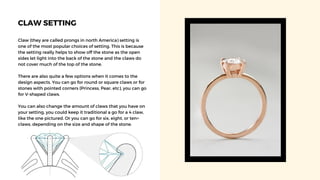
CLAW SETTING
Claw (they are called prongs in north America) setting is
one of the most popular choices of setting. This is because
the setting really helps to show off the stone as the open
sides let light into the back of the stone and the claws do
not cover much of the top of the stone.
There are also quite a few options when it comes to the
design aspects. You can go for round or square claws or for
stones with pointed corners (Princess, Pear, etc), you can go
for V-shaped claws.
You can also change the amount of claws that you have on
your setting, you could keep it traditional a go for a 4 claw,
like the one pictured. Or you can go for six, eight, or ten+
claws, depending on the size and shape of the stone.
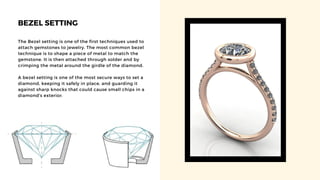
BEZEL SETTING
The Bezel setting is one of the first techniques used to
attach gemstones to jewelry. The most common bezel
technique is to shape a piece of metal to match the
gemstone. It is then attached through solder and by
crimping the metal around the girdle of the diamond.
A bezel setting is one of the most secure ways to set a
diamond, keeping it safely in place, and guarding it
against sharp knocks that could cause small chips in a
diamond's exterior.
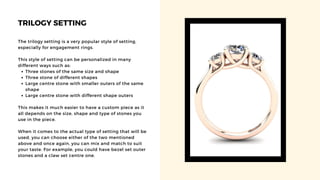
TRILOGY SETTING
Three stones of the same size and shape
Three stone of different shapes
Large centre stone with smaller outers of the same
shape
Large centre stone with different shape outers
The trilogy setting is a very popular style of setting,
especially for engagement rings.
This style of setting can be personalized in many
different ways such as:
This makes it much easier to have a custom piece as it
all depends on the size, shape and type of stones you
use in the piece.
When it comes to the actual type of setting that will be
used, you can choose either of the two mentioned
above and once again, you can mix and match to suit
your taste. For example, you could have bezel set outer
stones and a claw set centre one.
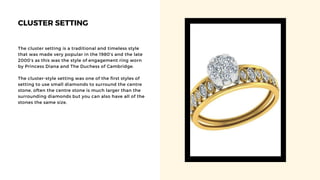
CLUSTER SETTING
The cluster setting is a traditional and timeless style
that was made very popular in the 1980’s and the late
2000’s as this was the style of engagement ring worn
by Princess Diana and The Duchess of Cambridge.
The cluster-style setting was one of the first styles of
setting to use small diamonds to surround the centre
stone, often the centre stone is much larger than the
surrounding diamonds but you can also have all of the
stones the same size.
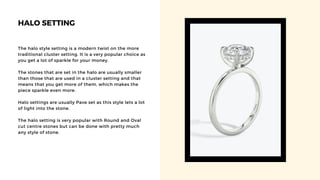
HALO SETTING
The halo style setting is a modern twist on the more
traditional cluster setting. It is a very popular choice as
you get a lot of sparkle for your money.
The stones that are set in the halo are usually smaller
than those that are used in a cluster setting and that
means that you get more of them, which makes the
piece sparkle even more.
Halo settings are usually Pave set as this style lets a lot
of light into the stone.
The halo setting is very popular with Round and Oval
cut centre stones but can be done with pretty much
any style of stone.
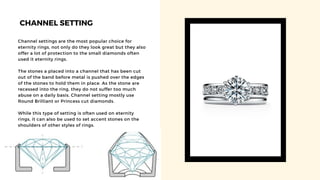
CHANNEL SETTING
Channel settings are the most popular choice for
eternity rings, not only do they look great but they also
offer a lot of protection to the small diamonds often
used it eternity rings.
The stones a placed into a channel that has been cut
out of the band before metal is pushed over the edges
of the stones to hold them in place. As the stone are
recessed into the ring, they do not suffer too much
abuse on a daily basis. Channel setting mostly use
Round Brilliant or Princess cut diamonds.
While this type of setting is often used on eternity
rings, it can also be used to set accent stones on the
shoulders of other styles of rings.
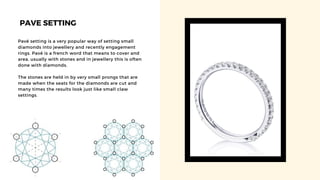
PAVE SETTING
Pavé setting is a very popular way of setting small
diamonds into jewellery and recently engagement
rings. Pavé is a french word that means to cover and
area, usually with stones and in jewellery this is often
done with diamonds.
The stones are held in by very small prongs that are
made when the seats for the diamonds are cut and
many times the results look just like small claw
settings.
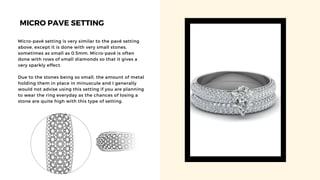
MICRO PAVE SETTING
Micro-pavé setting is very similar to the pavé setting
above, except it is done with very small stones,
sometimes as small as 0.5mm. Micro-pavé is often
done with rows of small diamonds so that it gives a
very sparkly effect.
Due to the stones being so small, the amount of metal
holding them in place in minuscule and I generally
would not advise using this setting if you are planning
to wear the ring everyday as the chances of losing a
stone are quite high with this type of setting.
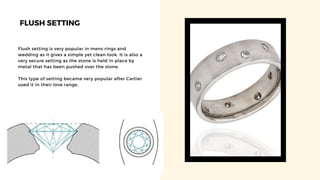
FLUSH SETTING
Flush setting is very popular in mens rings and
wedding as it gives a simple yet clean look. It is also a
very secure setting as the stone is held in place by
metal that has been pushed over the stone.
This type of setting became very popular after Cartier
used it in their love range.
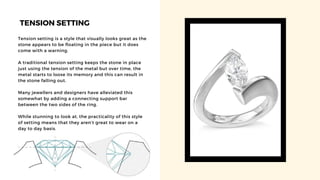
TENSION SETTING
Tension setting is a style that visually looks great as the
stone appears to be floating in the piece but it does
come with a warning.
A traditional tension setting keeps the stone in place
just using the tension of the metal but over time, the
metal starts to loose its memory and this can result in
the stone falling out.
Many jewellers and designers have alleviated this
somewhat by adding a connecting support bar
between the two sides of the ring.
While stunning to look at, the practicality of this style
of setting means that they aren’t great to wear on a
day to day basis.
THANKS
FOR
WATCHING

Settings in Jewellery.pdf

  • 1.
  • 2.
    TYPES OF SETTING A jewelrysetting is the metal base a diamond or gemstone sits in. Jewelry settings weren't needed in the early ages of jewelry design, because the metal band was able to hold much, much smaller gemstones or diamonds. As these stones became bigger and were crafted in different shapes, the jewelry setting was created to support them. Jewelry settings are typically created from the same precious metal as the band but can be mixed and matched when creating a custom ring with a jewelry designer. CHANNEL SETTING 6 1 CLAW SETTING 2 BEZEL SETTING 3 TRILOGY SETTING 4 CLUSTER SETTING 5 HALO SETTING 8 MICRO PAVE SETTING PAVE SETTING 7 9 FLUSH SETTING 10 TENSION SETTING
  • 3.
    CLAW SETTING Claw (theyare called prongs in north America) setting is one of the most popular choices of setting. This is because the setting really helps to show off the stone as the open sides let light into the back of the stone and the claws do not cover much of the top of the stone. There are also quite a few options when it comes to the design aspects. You can go for round or square claws or for stones with pointed corners (Princess, Pear, etc), you can go for V-shaped claws. You can also change the amount of claws that you have on your setting, you could keep it traditional a go for a 4 claw, like the one pictured. Or you can go for six, eight, or ten+ claws, depending on the size and shape of the stone.
  • 4.
    BEZEL SETTING The Bezelsetting is one of the first techniques used to attach gemstones to jewelry. The most common bezel technique is to shape a piece of metal to match the gemstone. It is then attached through solder and by crimping the metal around the girdle of the diamond. A bezel setting is one of the most secure ways to set a diamond, keeping it safely in place, and guarding it against sharp knocks that could cause small chips in a diamond's exterior.
  • 5.
    TRILOGY SETTING Three stonesof the same size and shape Three stone of different shapes Large centre stone with smaller outers of the same shape Large centre stone with different shape outers The trilogy setting is a very popular style of setting, especially for engagement rings. This style of setting can be personalized in many different ways such as: This makes it much easier to have a custom piece as it all depends on the size, shape and type of stones you use in the piece. When it comes to the actual type of setting that will be used, you can choose either of the two mentioned above and once again, you can mix and match to suit your taste. For example, you could have bezel set outer stones and a claw set centre one.
  • 6.
    CLUSTER SETTING The clustersetting is a traditional and timeless style that was made very popular in the 1980’s and the late 2000’s as this was the style of engagement ring worn by Princess Diana and The Duchess of Cambridge. The cluster-style setting was one of the first styles of setting to use small diamonds to surround the centre stone, often the centre stone is much larger than the surrounding diamonds but you can also have all of the stones the same size.
  • 7.
    HALO SETTING The halostyle setting is a modern twist on the more traditional cluster setting. It is a very popular choice as you get a lot of sparkle for your money. The stones that are set in the halo are usually smaller than those that are used in a cluster setting and that means that you get more of them, which makes the piece sparkle even more. Halo settings are usually Pave set as this style lets a lot of light into the stone. The halo setting is very popular with Round and Oval cut centre stones but can be done with pretty much any style of stone.
  • 8.
    CHANNEL SETTING Channel settingsare the most popular choice for eternity rings, not only do they look great but they also offer a lot of protection to the small diamonds often used it eternity rings. The stones a placed into a channel that has been cut out of the band before metal is pushed over the edges of the stones to hold them in place. As the stone are recessed into the ring, they do not suffer too much abuse on a daily basis. Channel setting mostly use Round Brilliant or Princess cut diamonds. While this type of setting is often used on eternity rings, it can also be used to set accent stones on the shoulders of other styles of rings.
  • 9.
    PAVE SETTING Pavé settingis a very popular way of setting small diamonds into jewellery and recently engagement rings. Pavé is a french word that means to cover and area, usually with stones and in jewellery this is often done with diamonds. The stones are held in by very small prongs that are made when the seats for the diamonds are cut and many times the results look just like small claw settings.
  • 10.
    MICRO PAVE SETTING Micro-pavésetting is very similar to the pavé setting above, except it is done with very small stones, sometimes as small as 0.5mm. Micro-pavé is often done with rows of small diamonds so that it gives a very sparkly effect. Due to the stones being so small, the amount of metal holding them in place in minuscule and I generally would not advise using this setting if you are planning to wear the ring everyday as the chances of losing a stone are quite high with this type of setting.
  • 11.
    FLUSH SETTING Flush settingis very popular in mens rings and wedding as it gives a simple yet clean look. It is also a very secure setting as the stone is held in place by metal that has been pushed over the stone. This type of setting became very popular after Cartier used it in their love range.
  • 12.
    TENSION SETTING Tension settingis a style that visually looks great as the stone appears to be floating in the piece but it does come with a warning. A traditional tension setting keeps the stone in place just using the tension of the metal but over time, the metal starts to loose its memory and this can result in the stone falling out. Many jewellers and designers have alleviated this somewhat by adding a connecting support bar between the two sides of the ring. While stunning to look at, the practicality of this style of setting means that they aren’t great to wear on a day to day basis.
  • 13.