Jacob Boehme 
MYSTERIUM MAGNUM 
part two 
Free electronic text edition
Mysterium 
Magnum 
PART TWO 
An Exposition of 
the First Book of Moses 
called 
Genesis 
written Anno 1623 by 
Jacob Boehme 
Translated by 
John Sparrow 
Free electronic text edition, 2010 
Introduction to the electronic edition of Mysterium Magnum 
It is with great pleasure that I offer this electronic edition of Jacob 
Boehme's work "Mysterium Magnum, part two". 
It was his last great book before his death. It contains an explanation of 
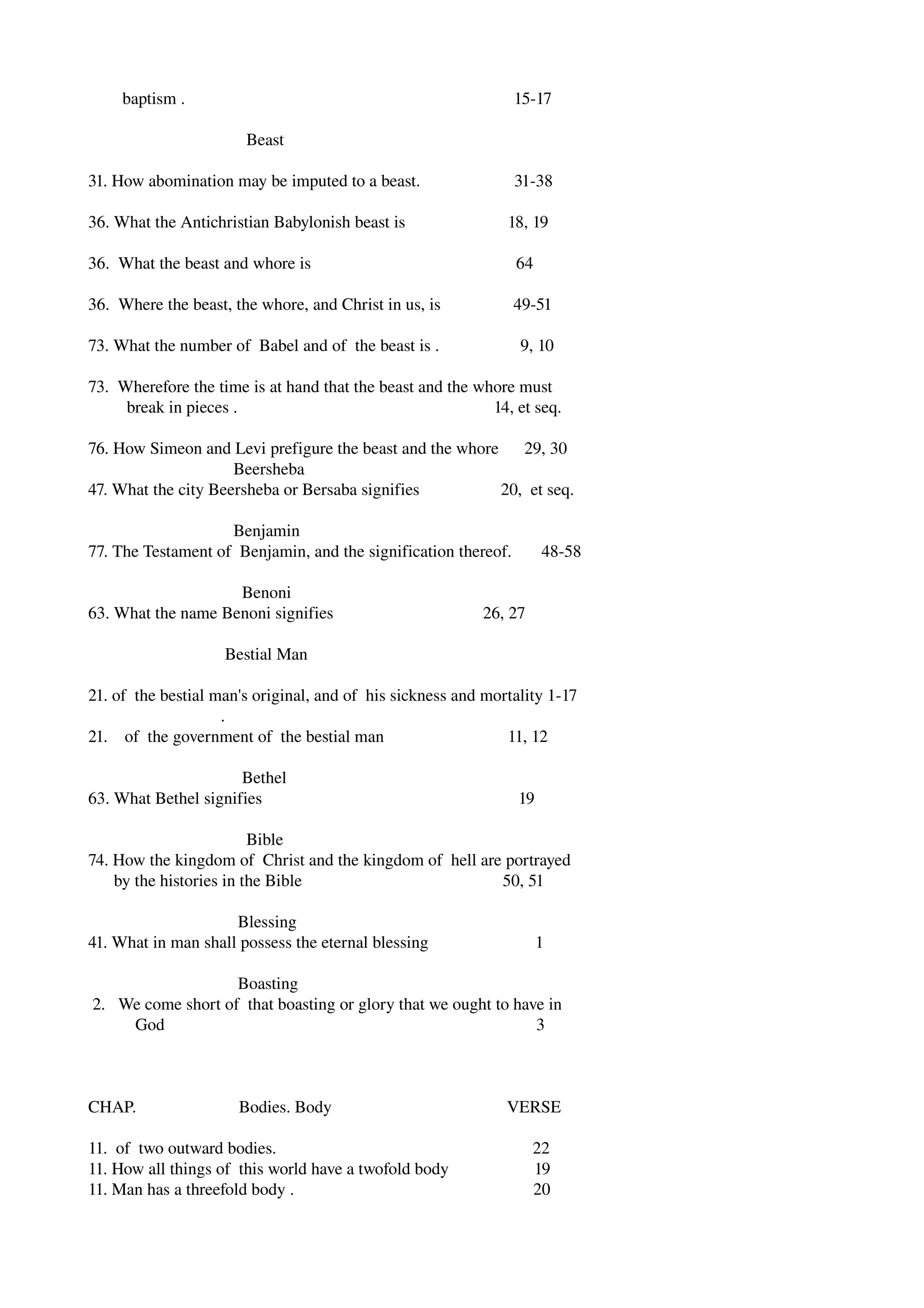
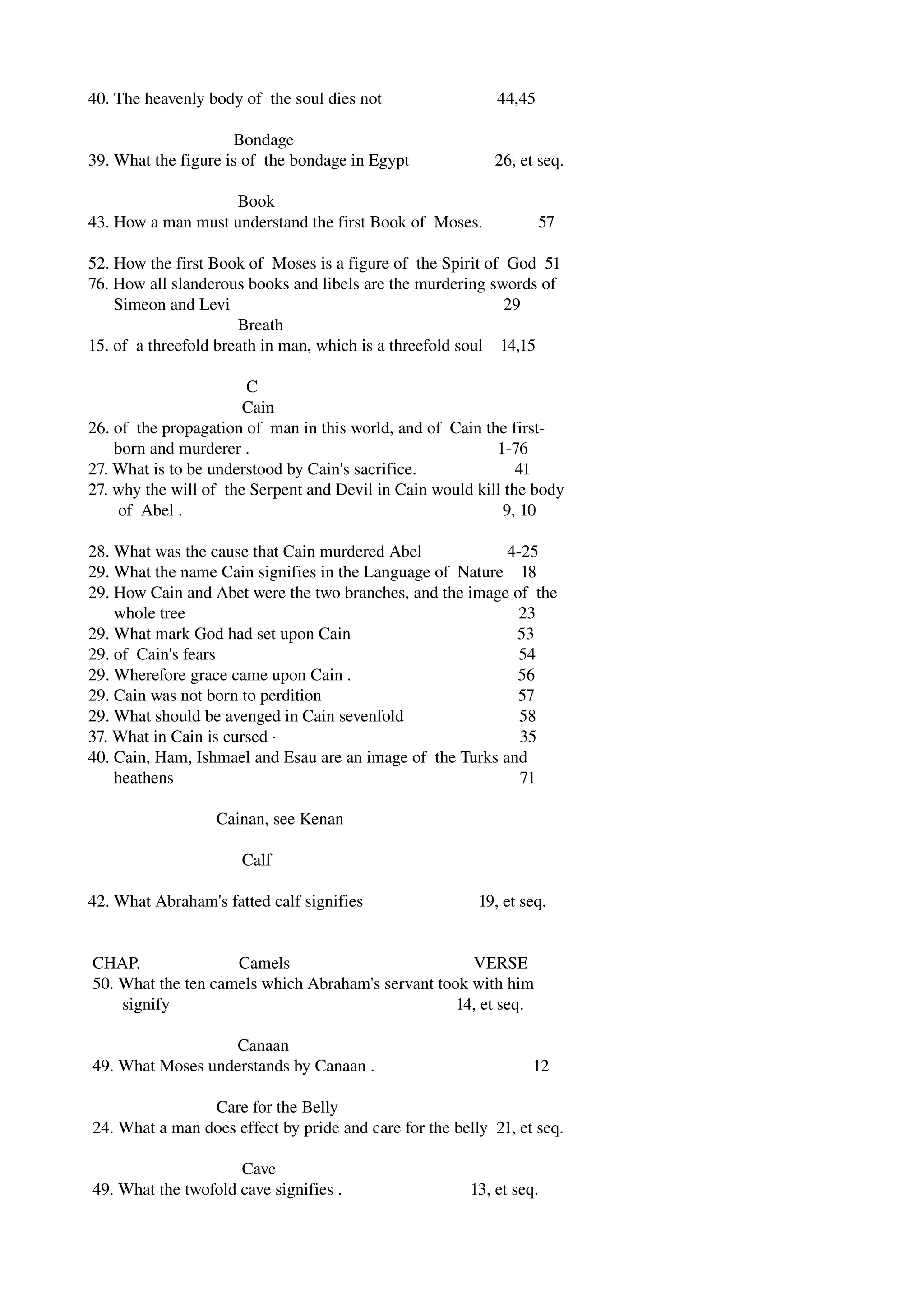
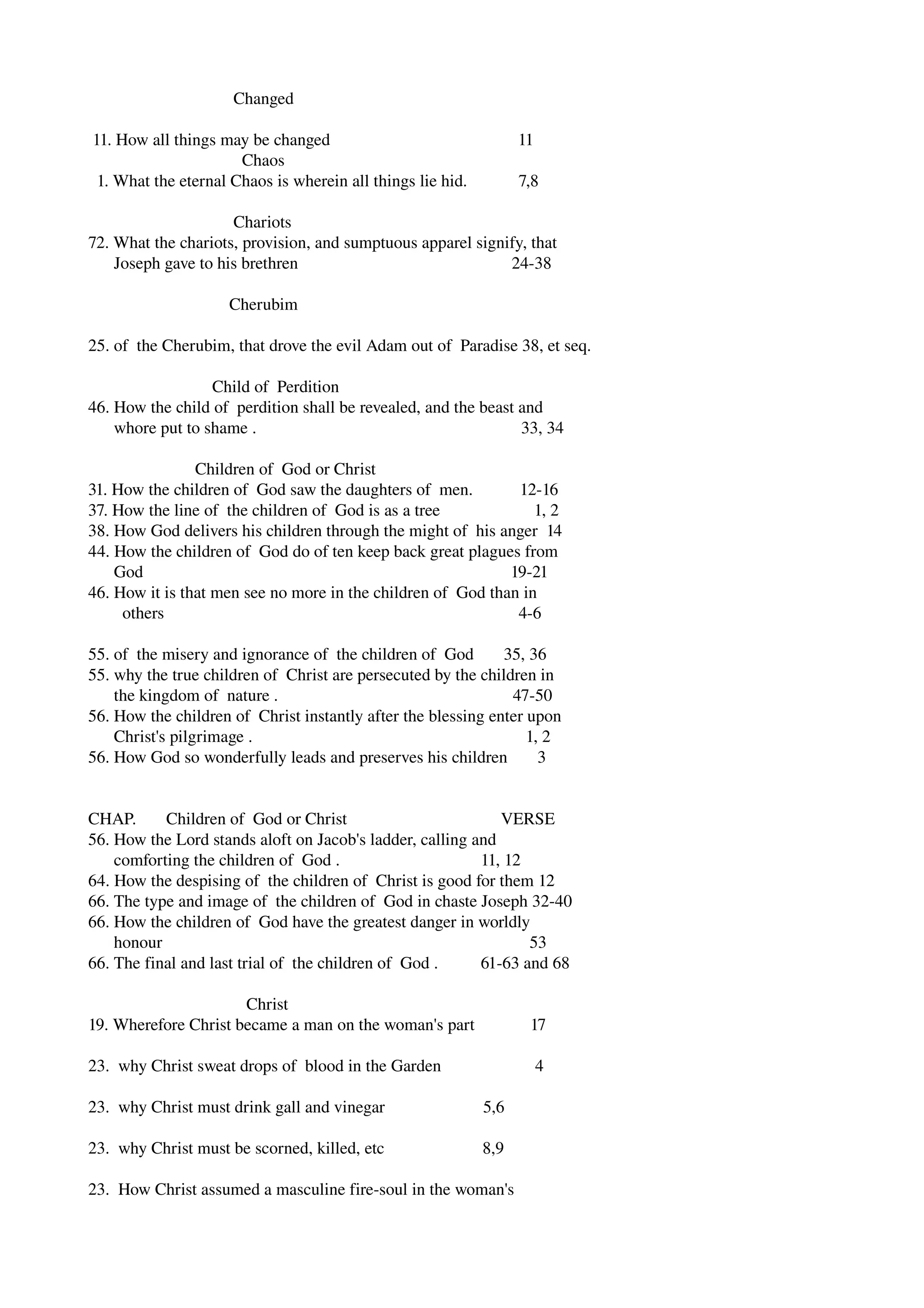
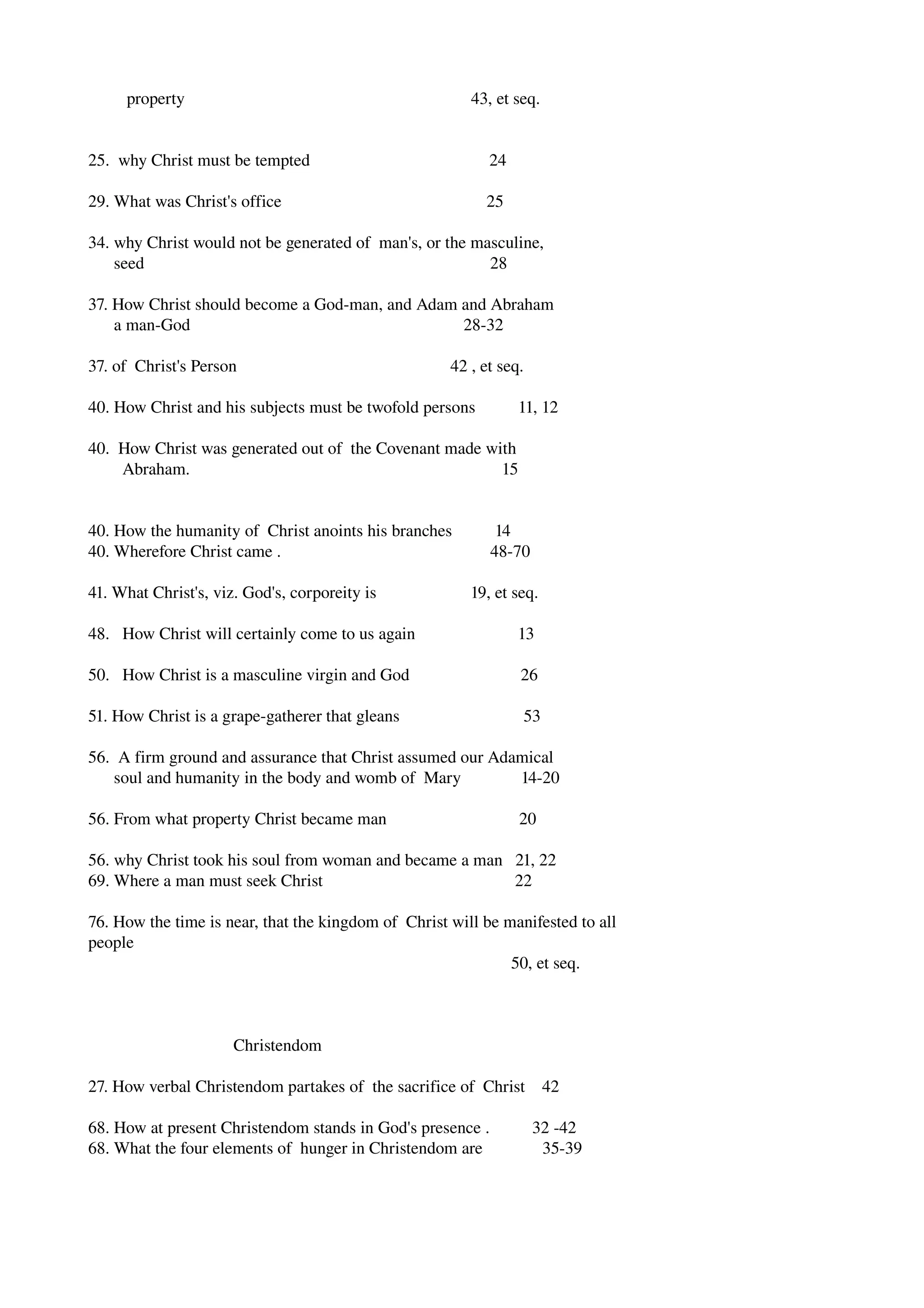
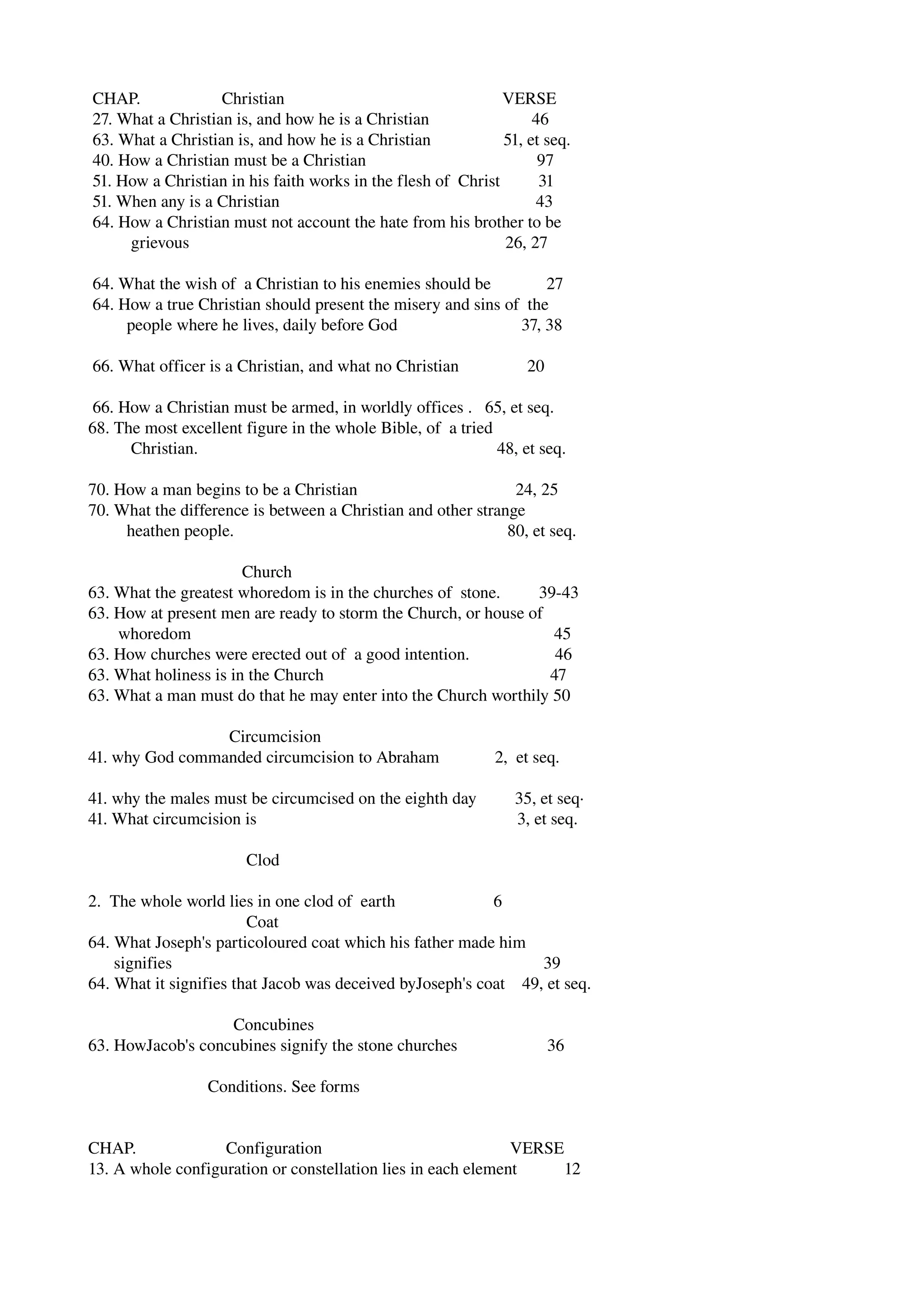
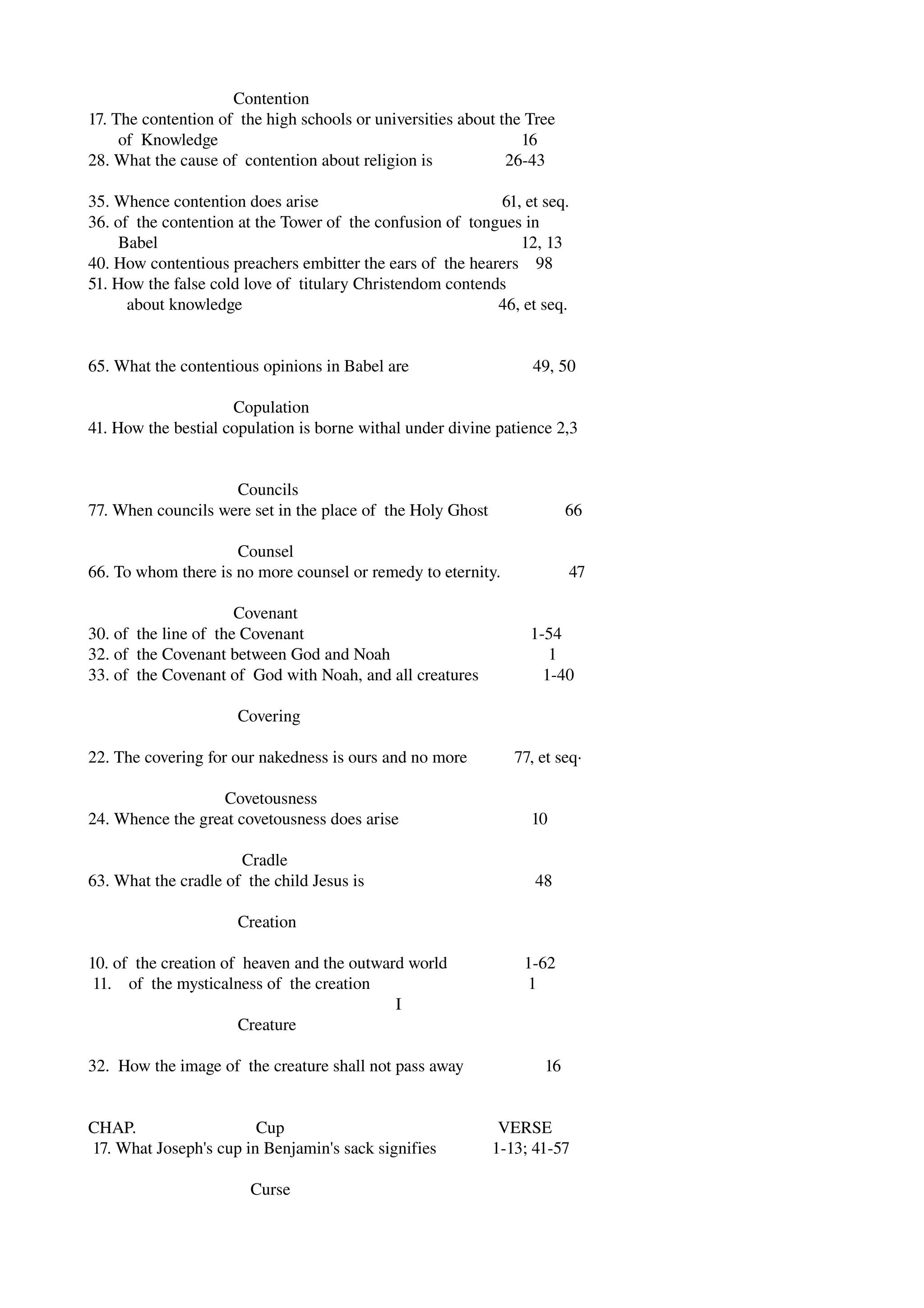
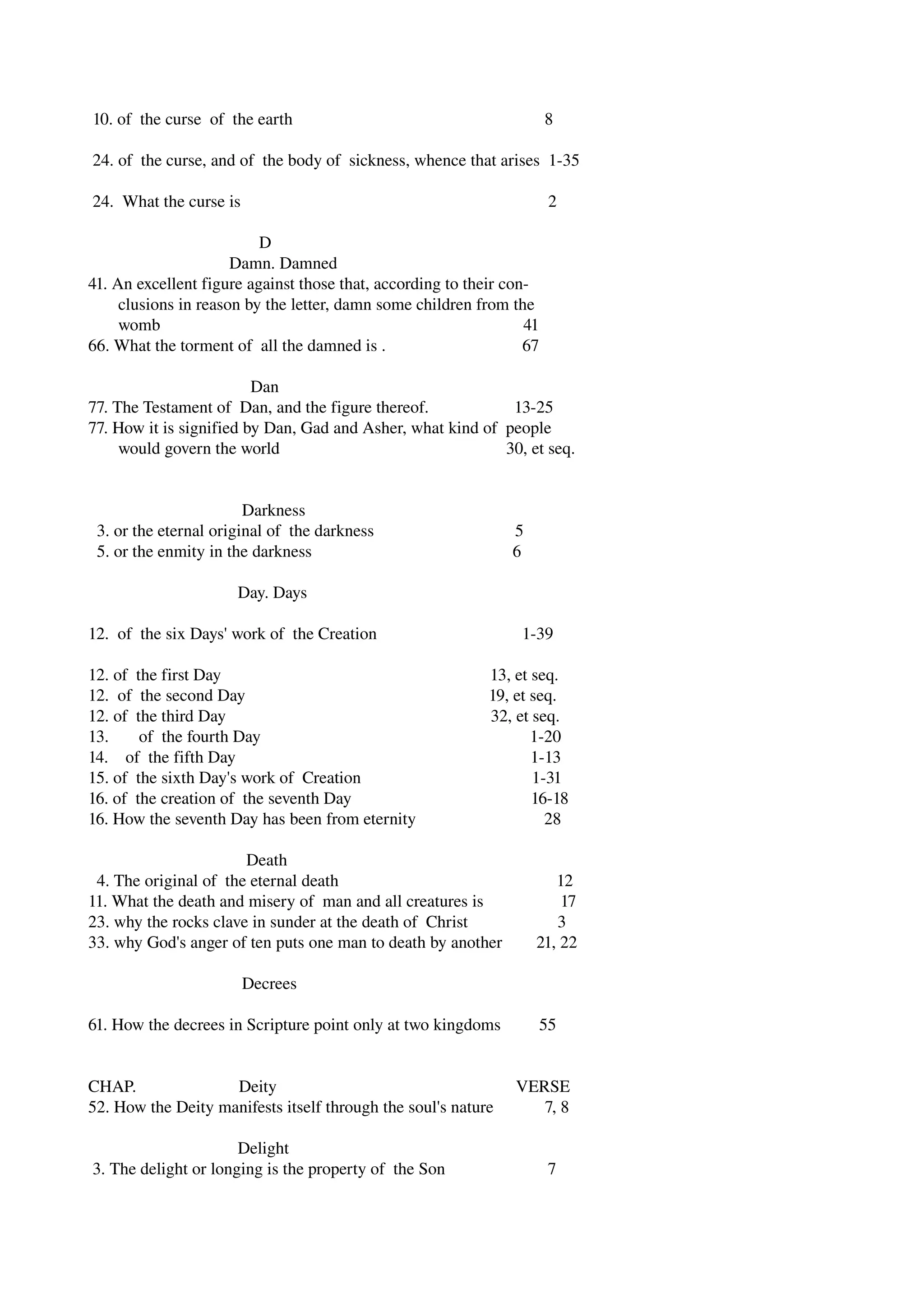
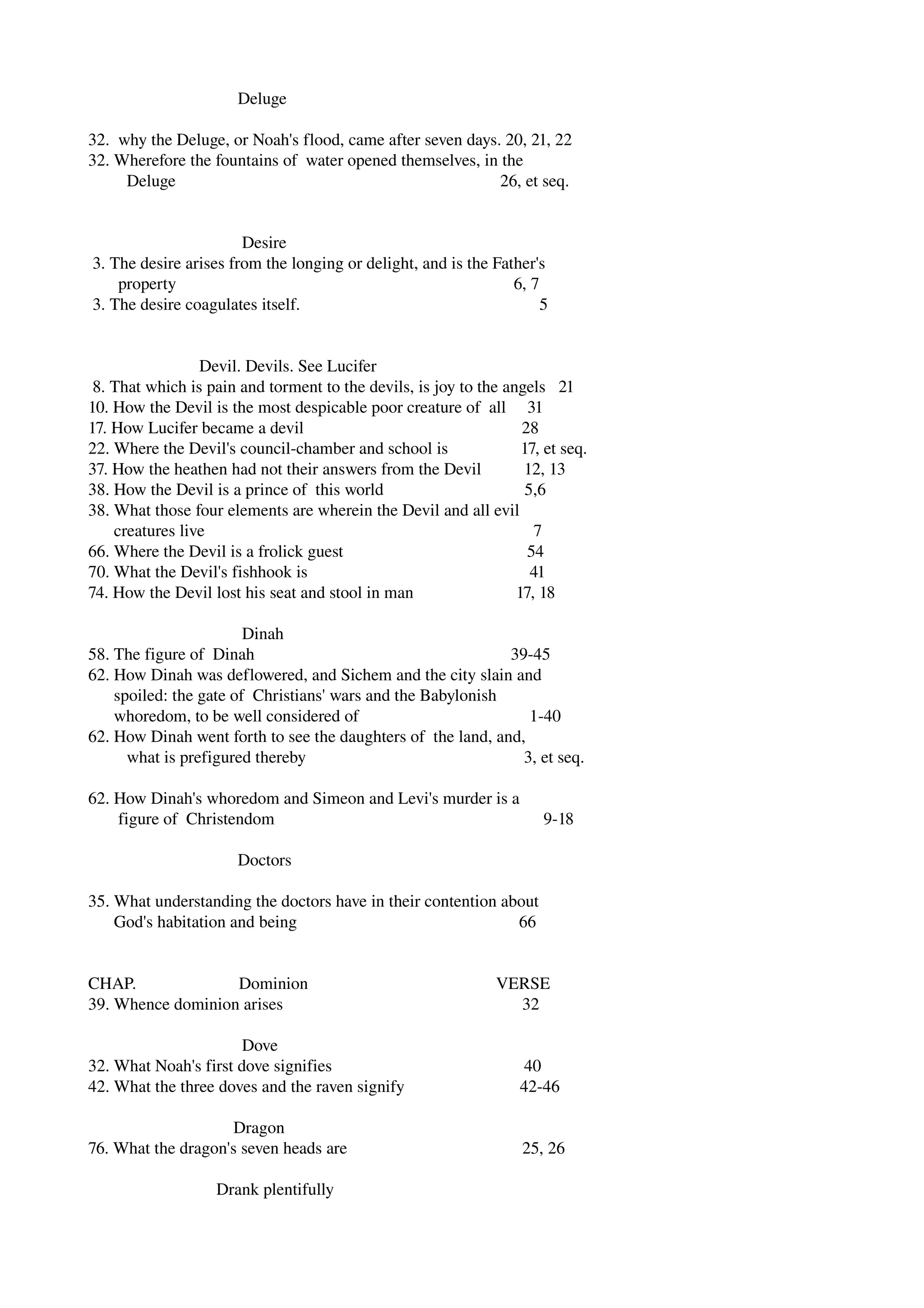
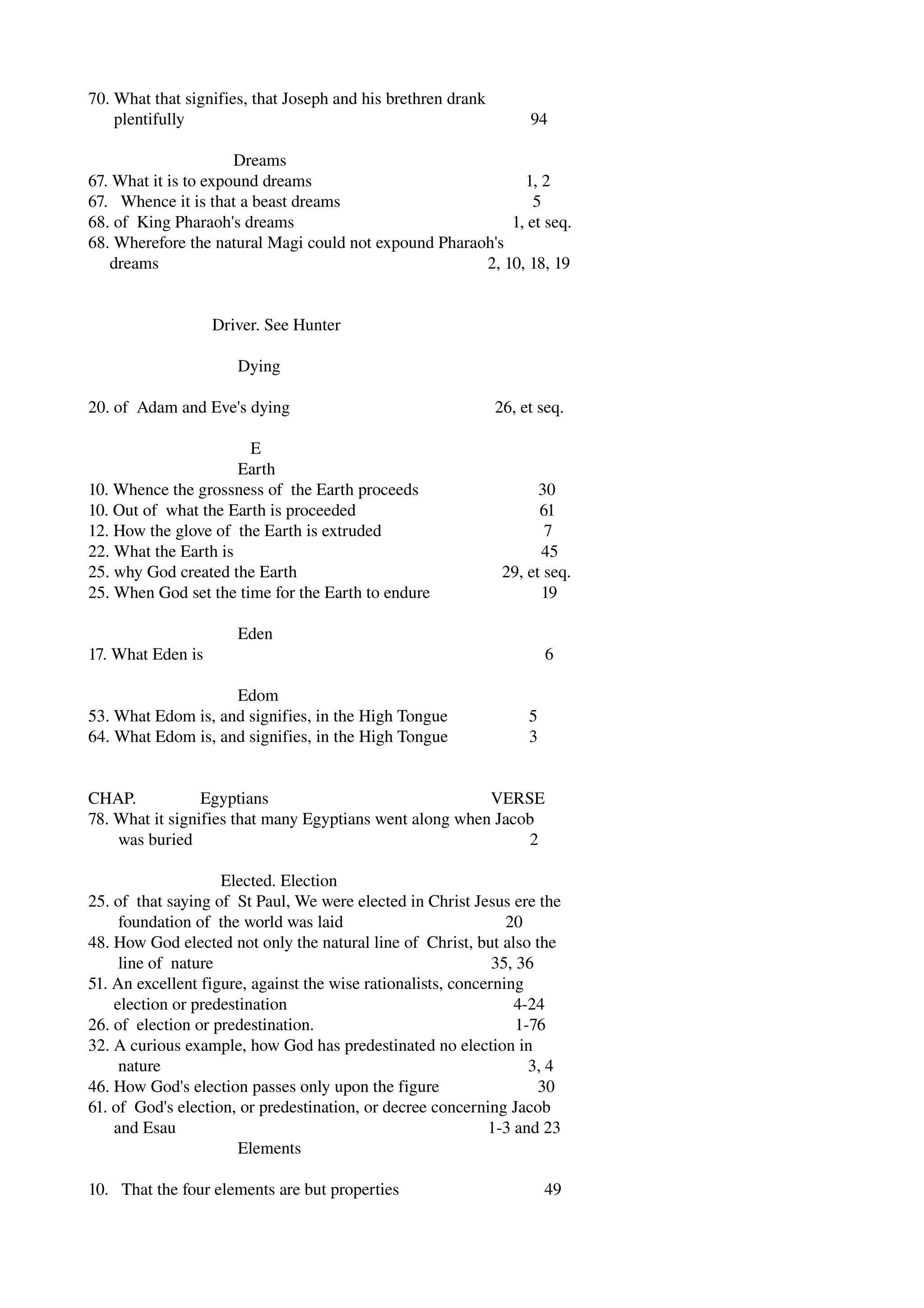
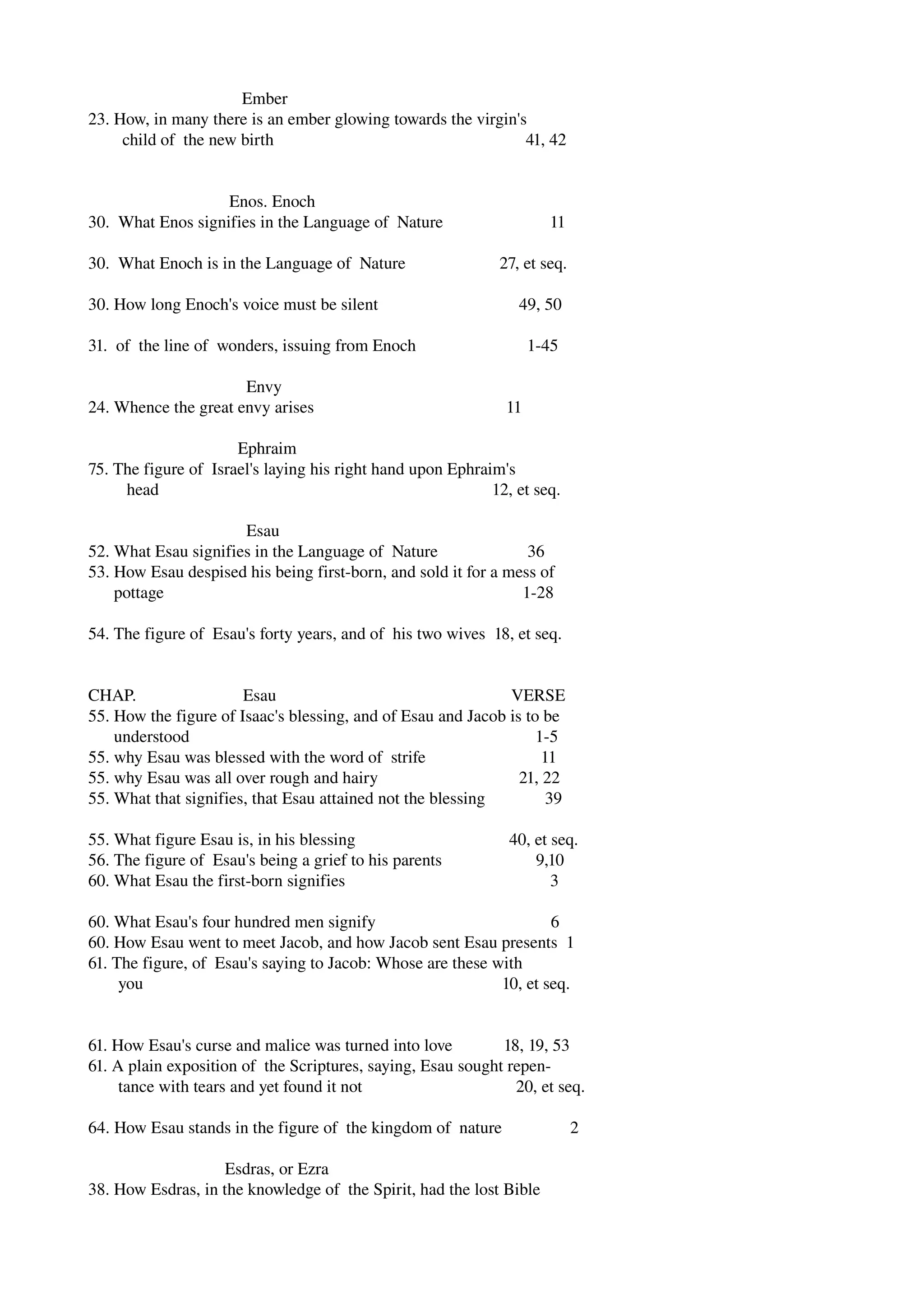
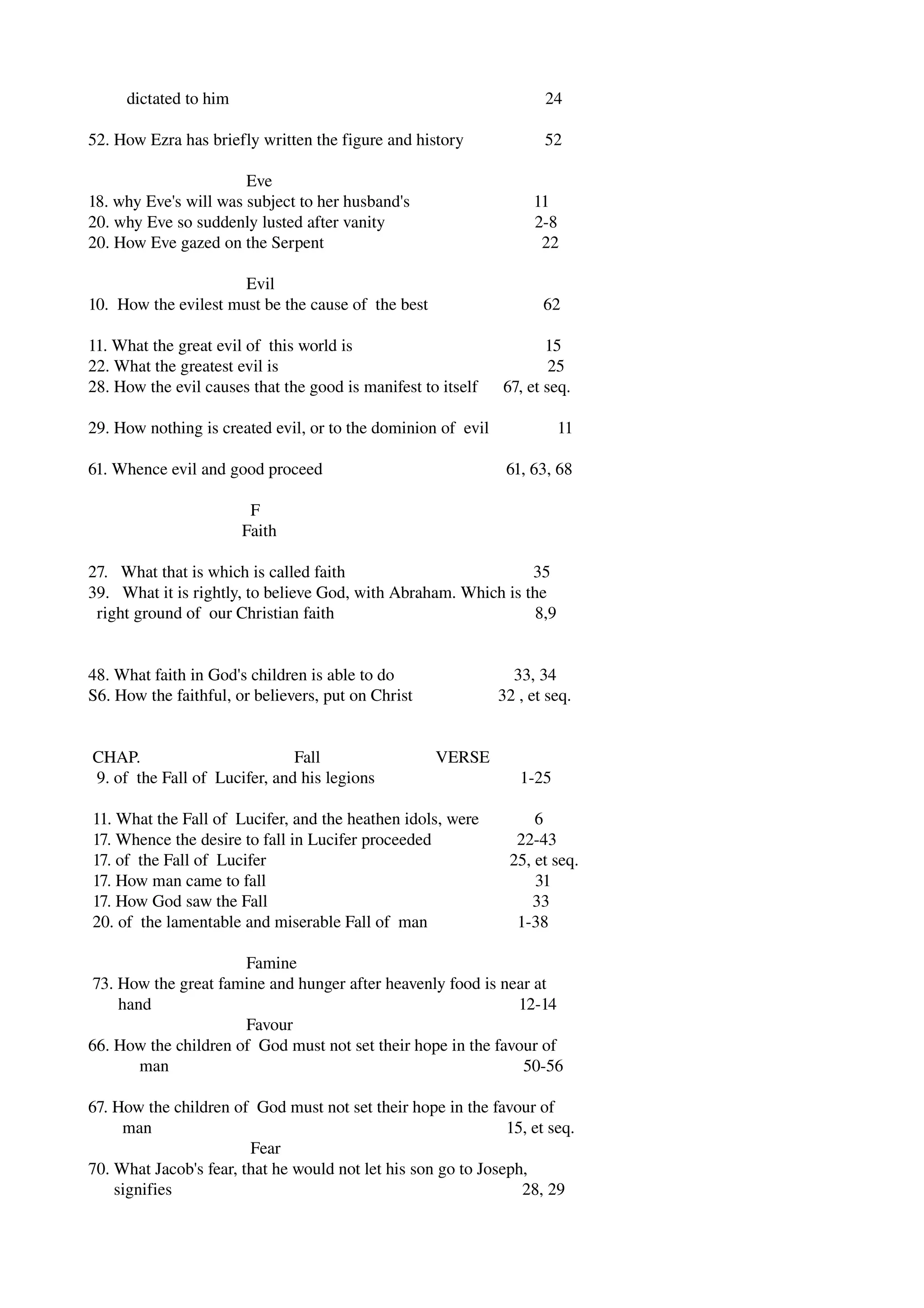
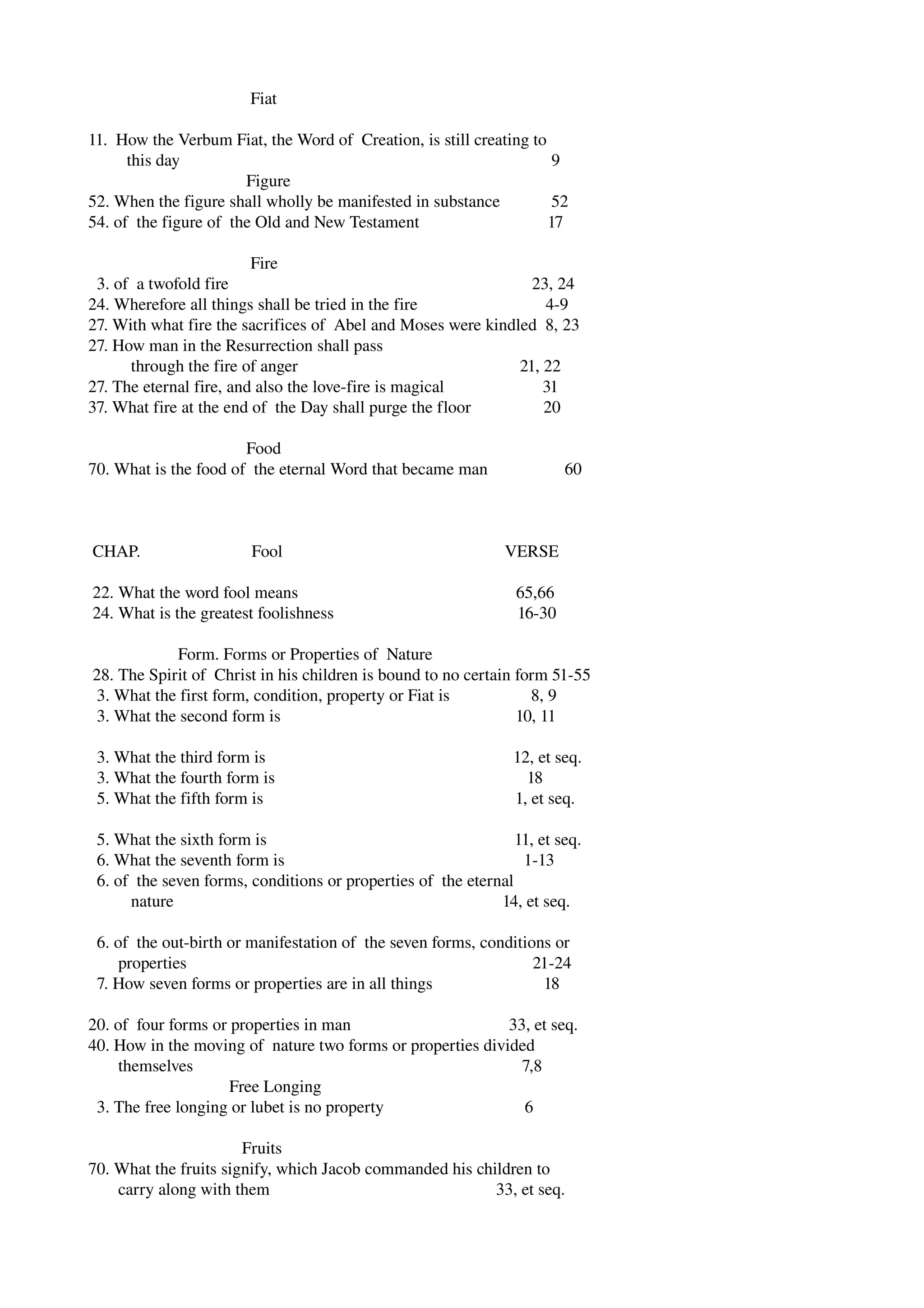
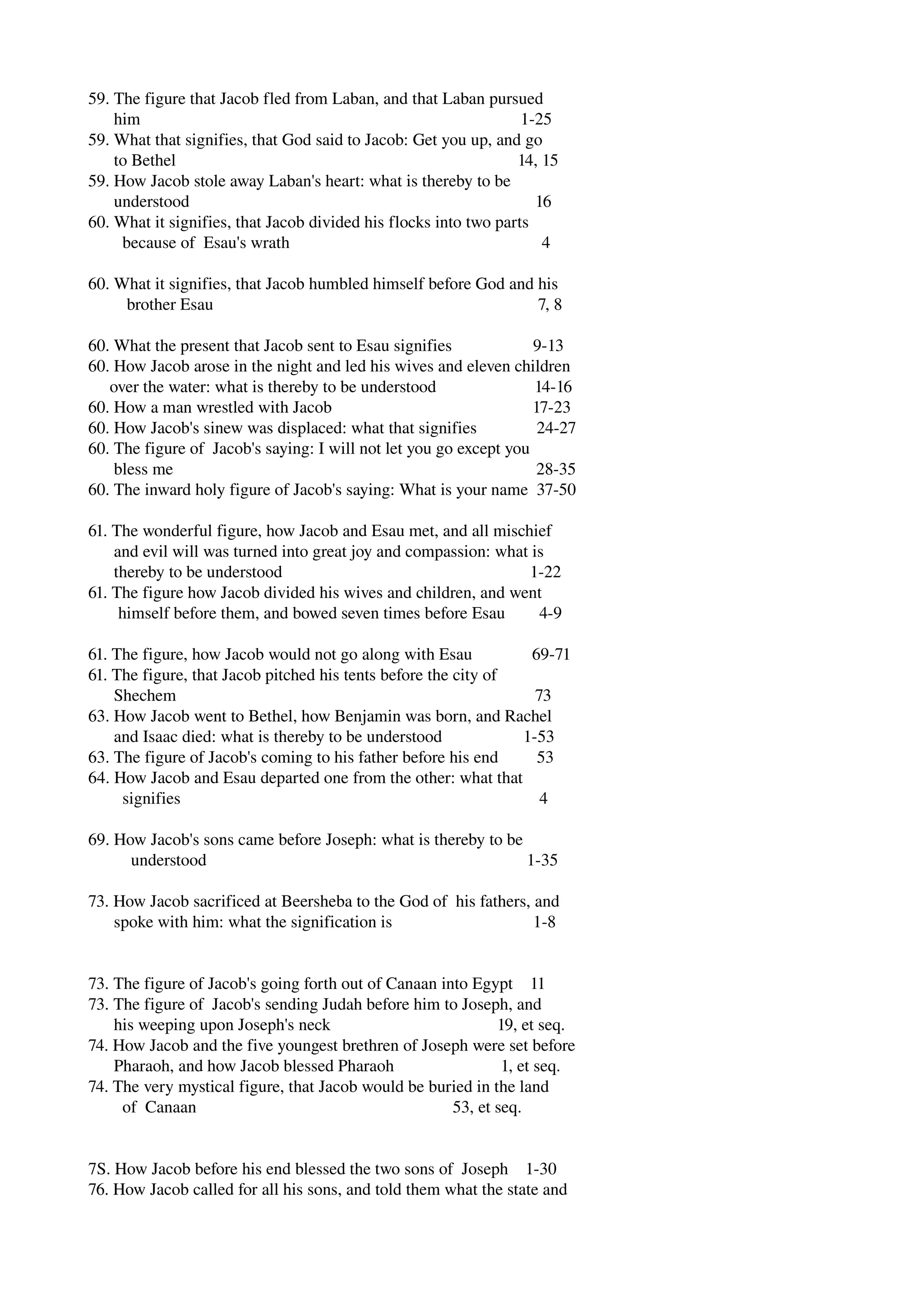
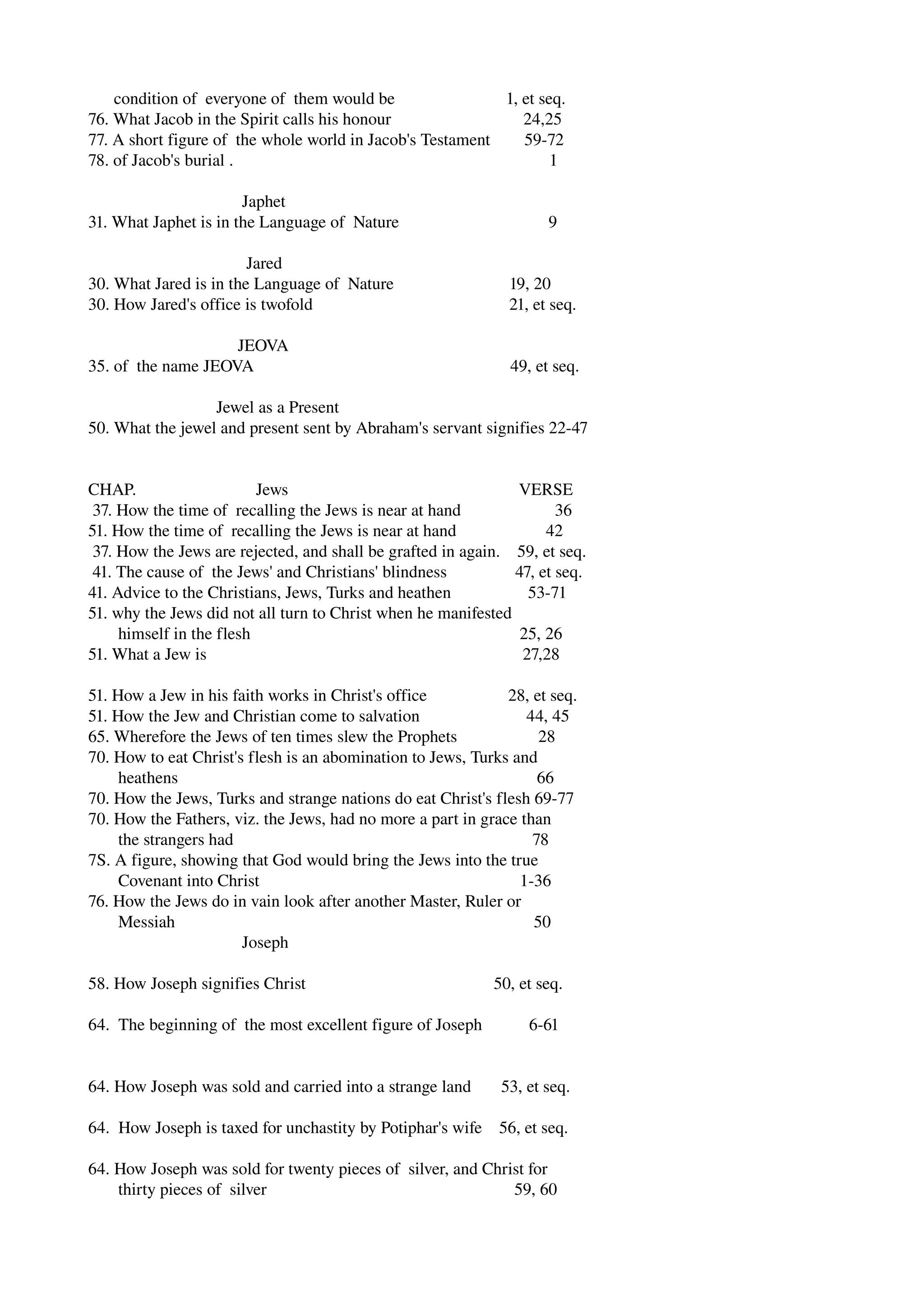
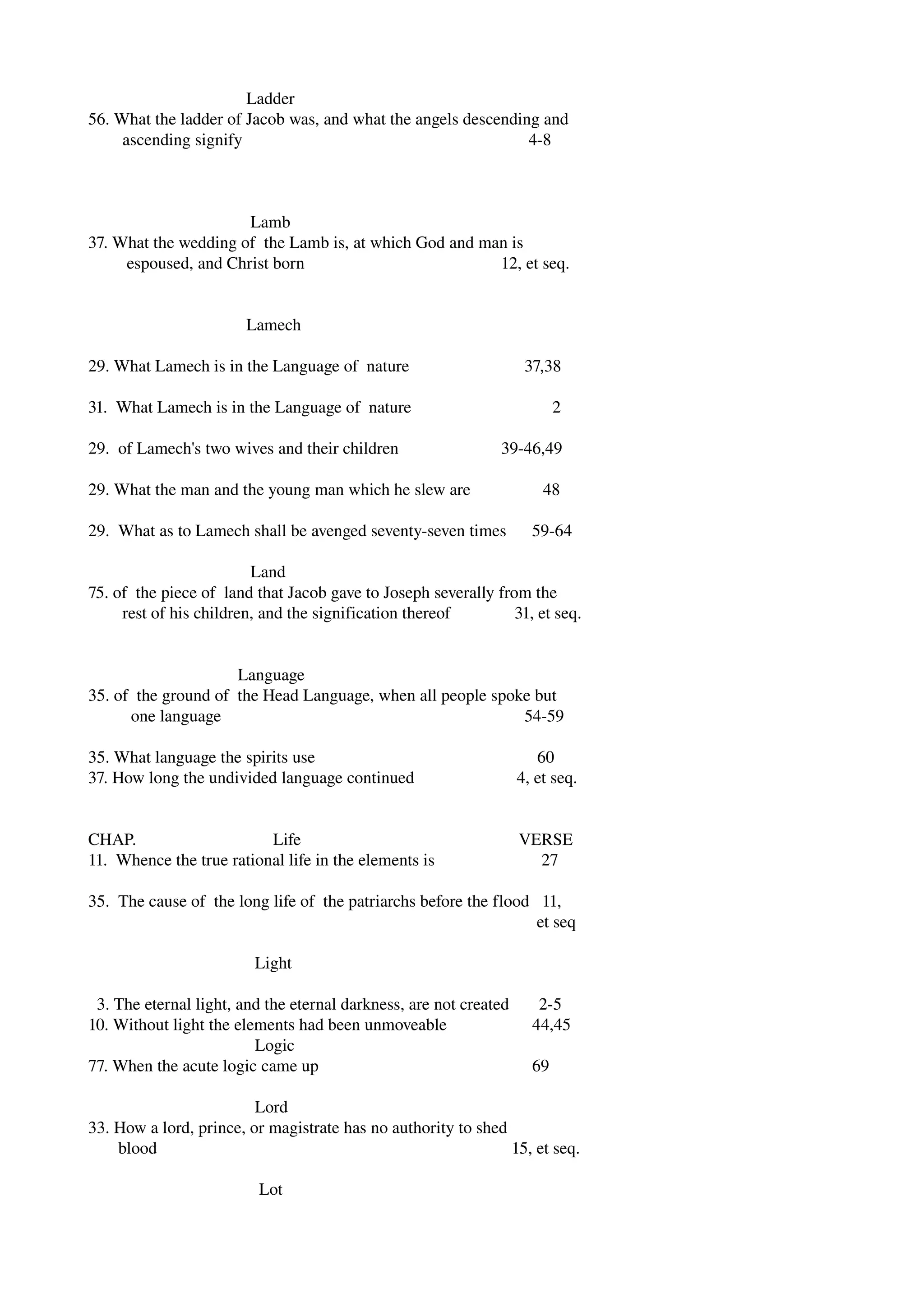
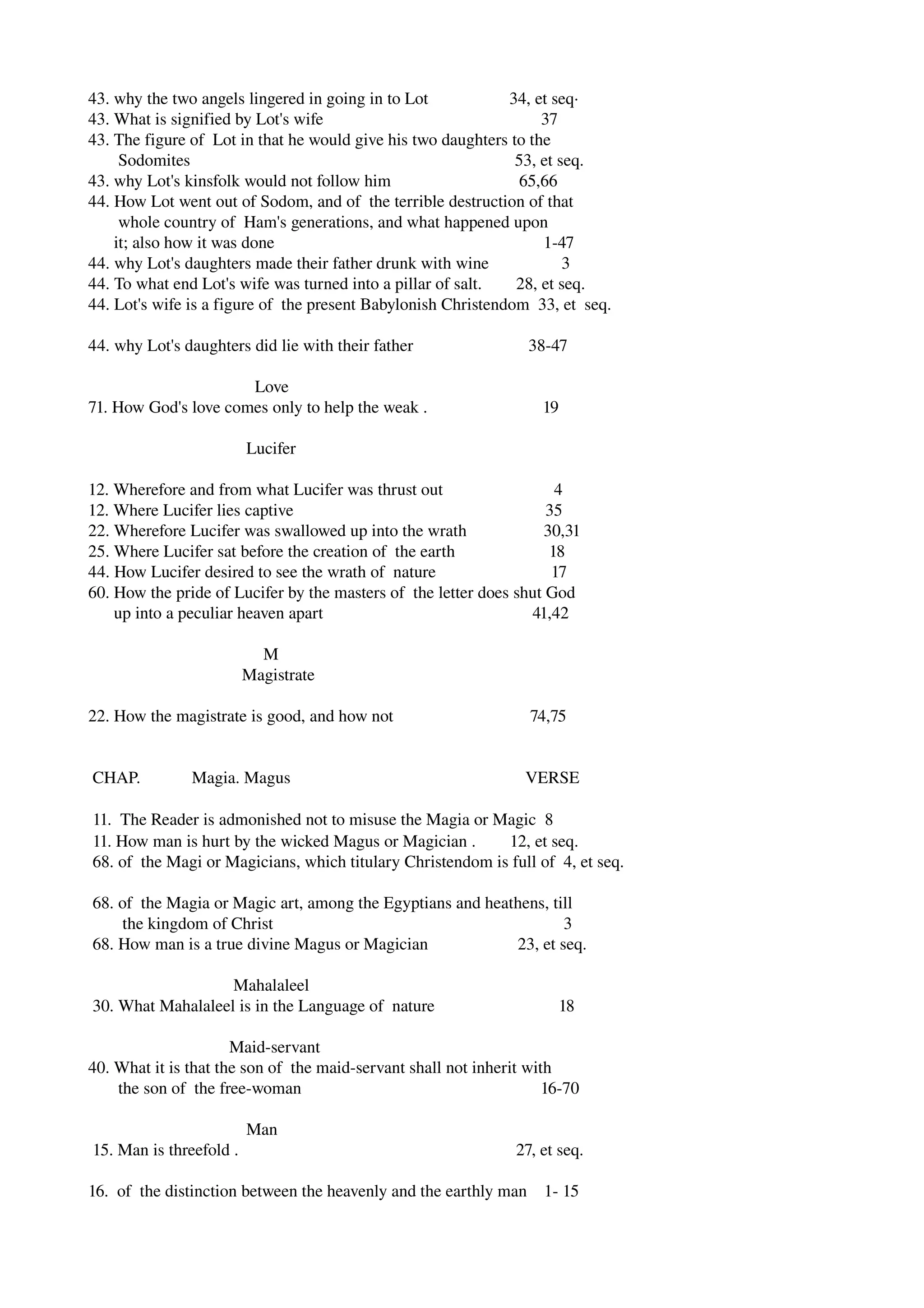
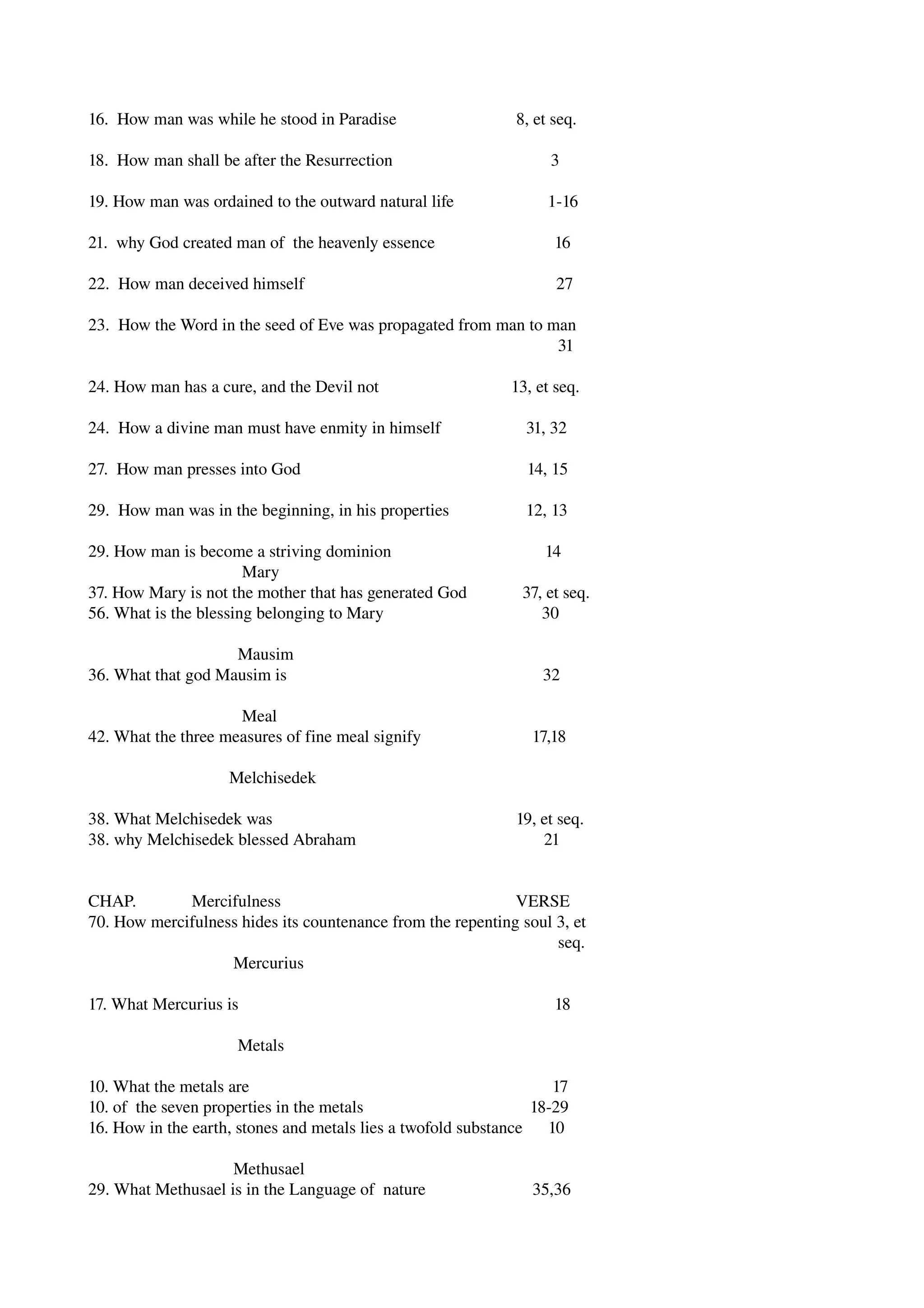
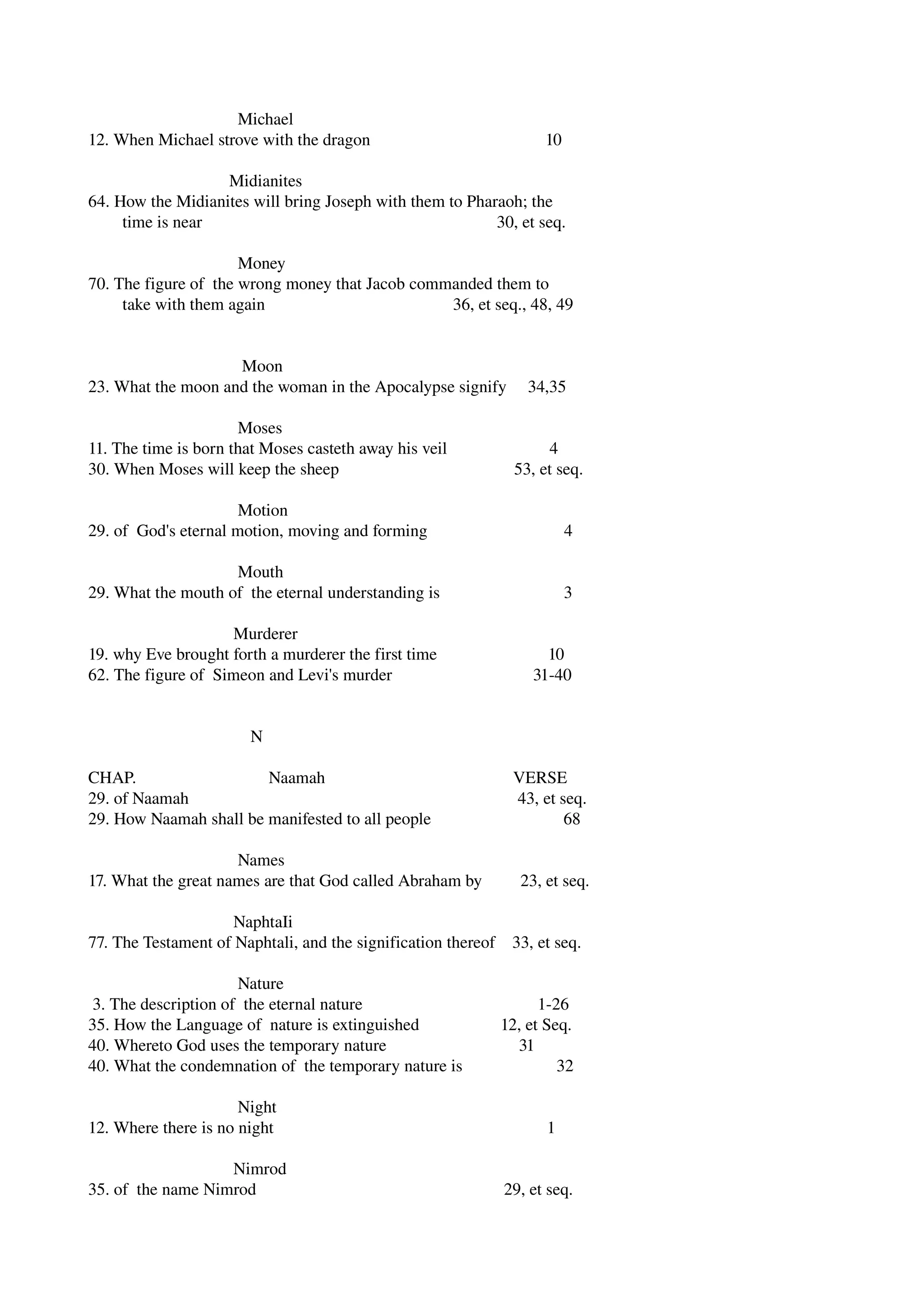
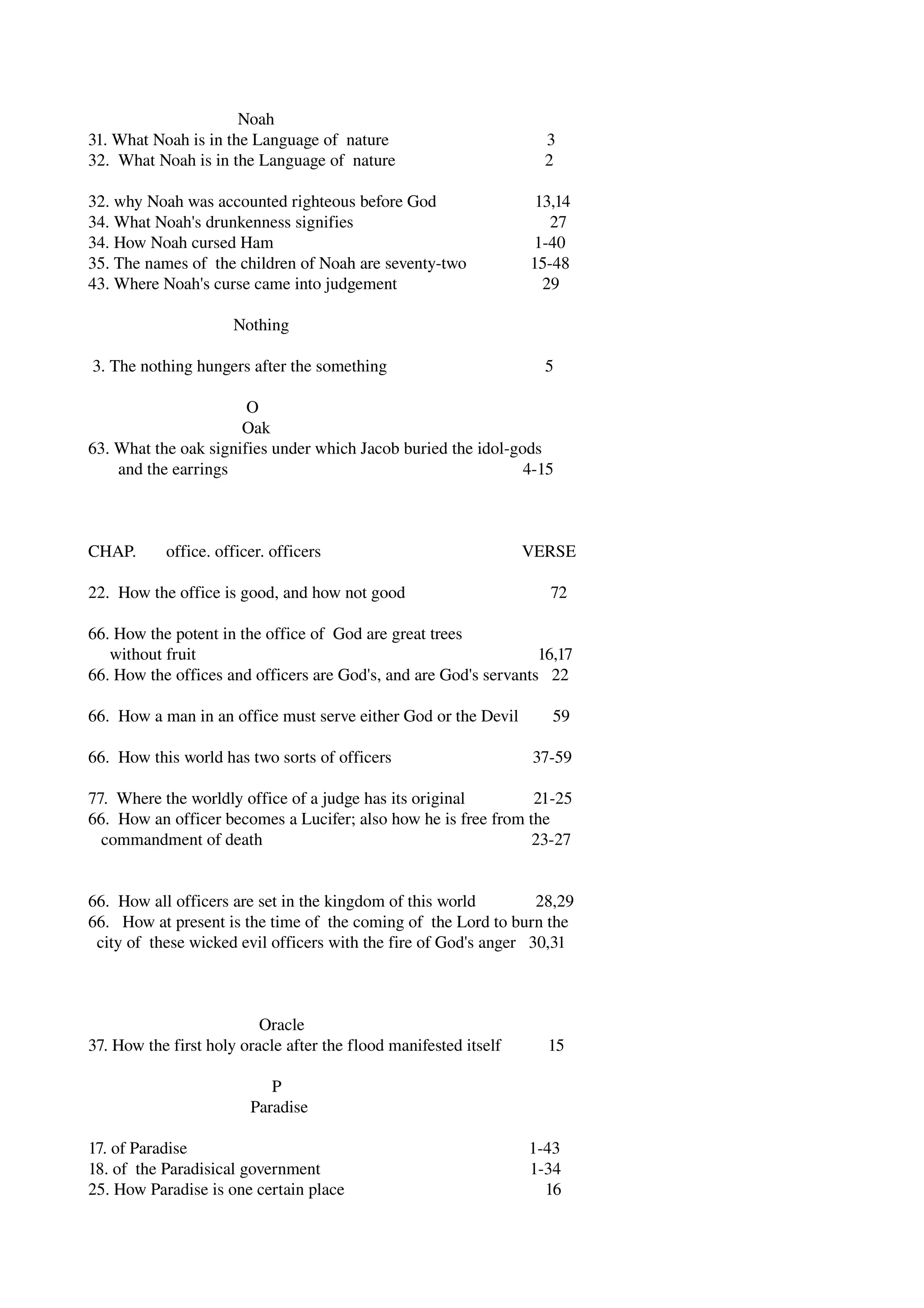
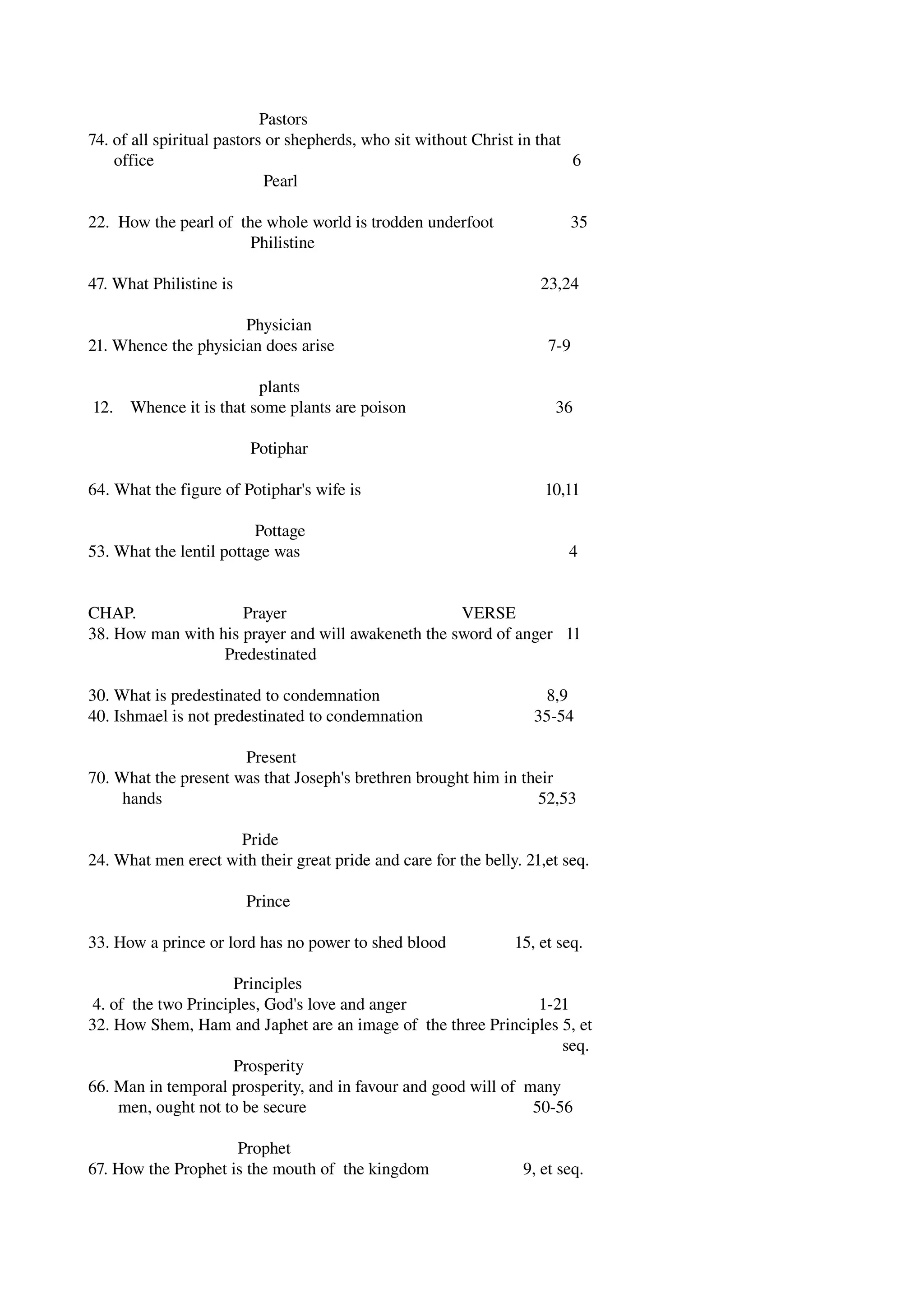
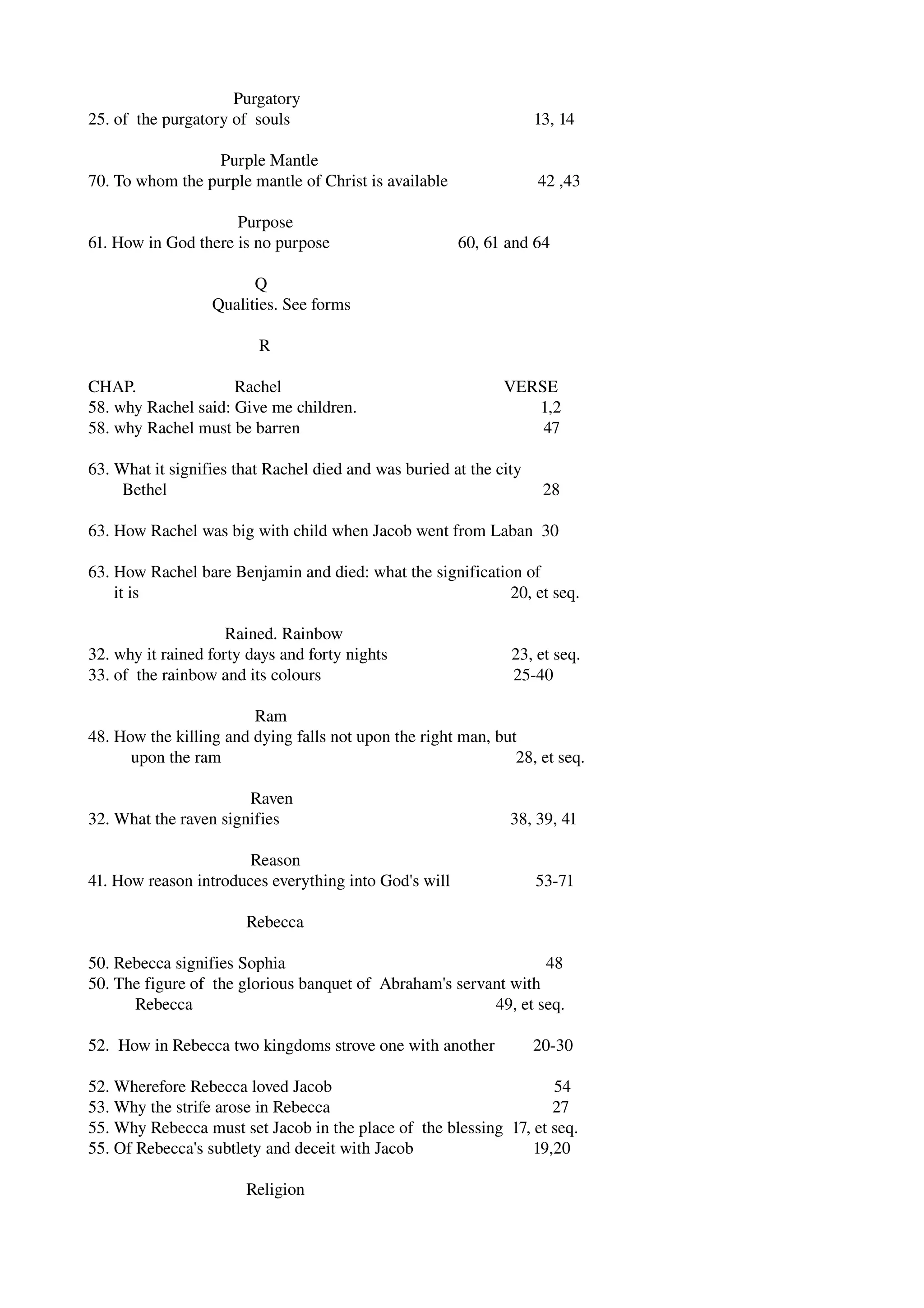
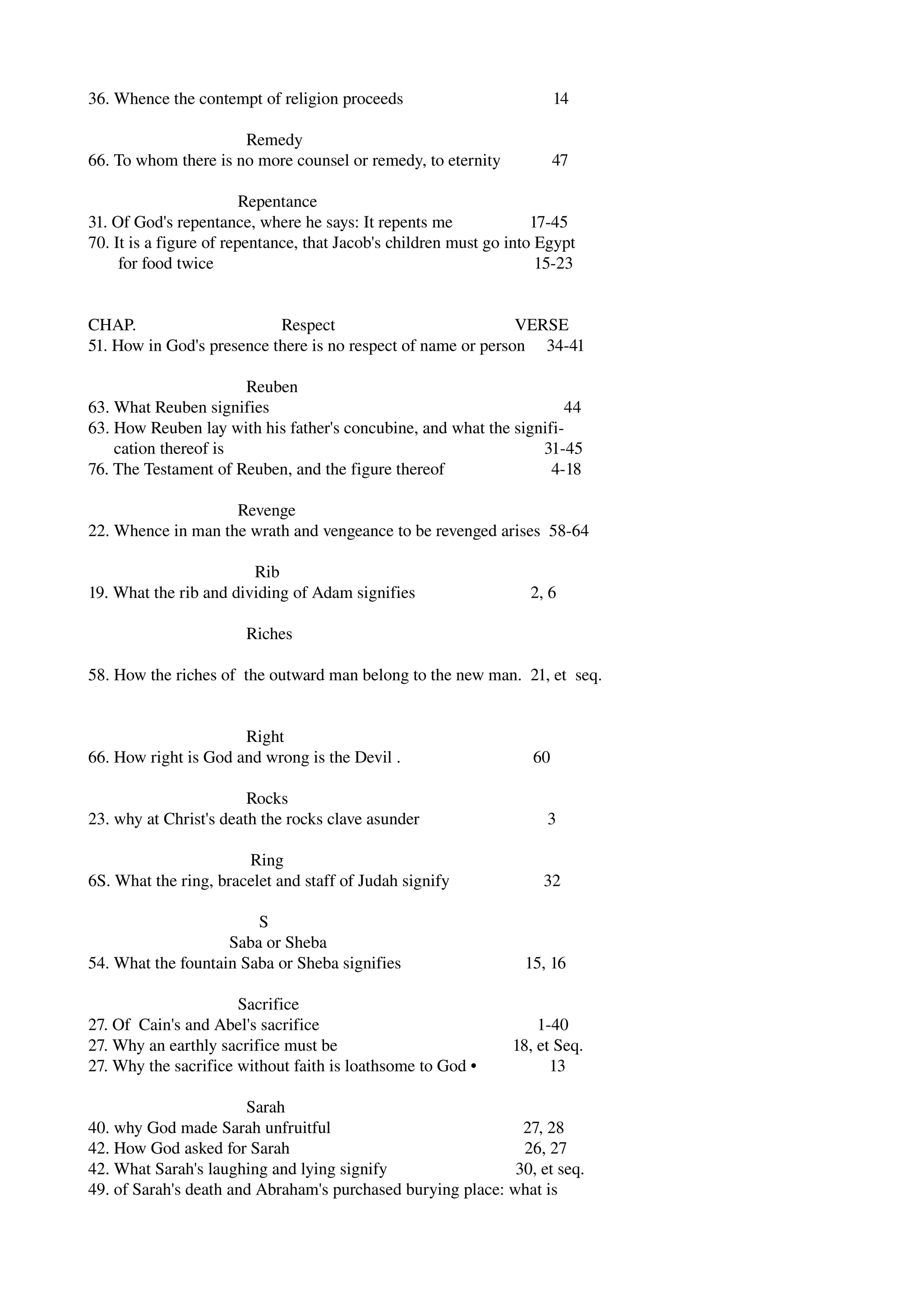
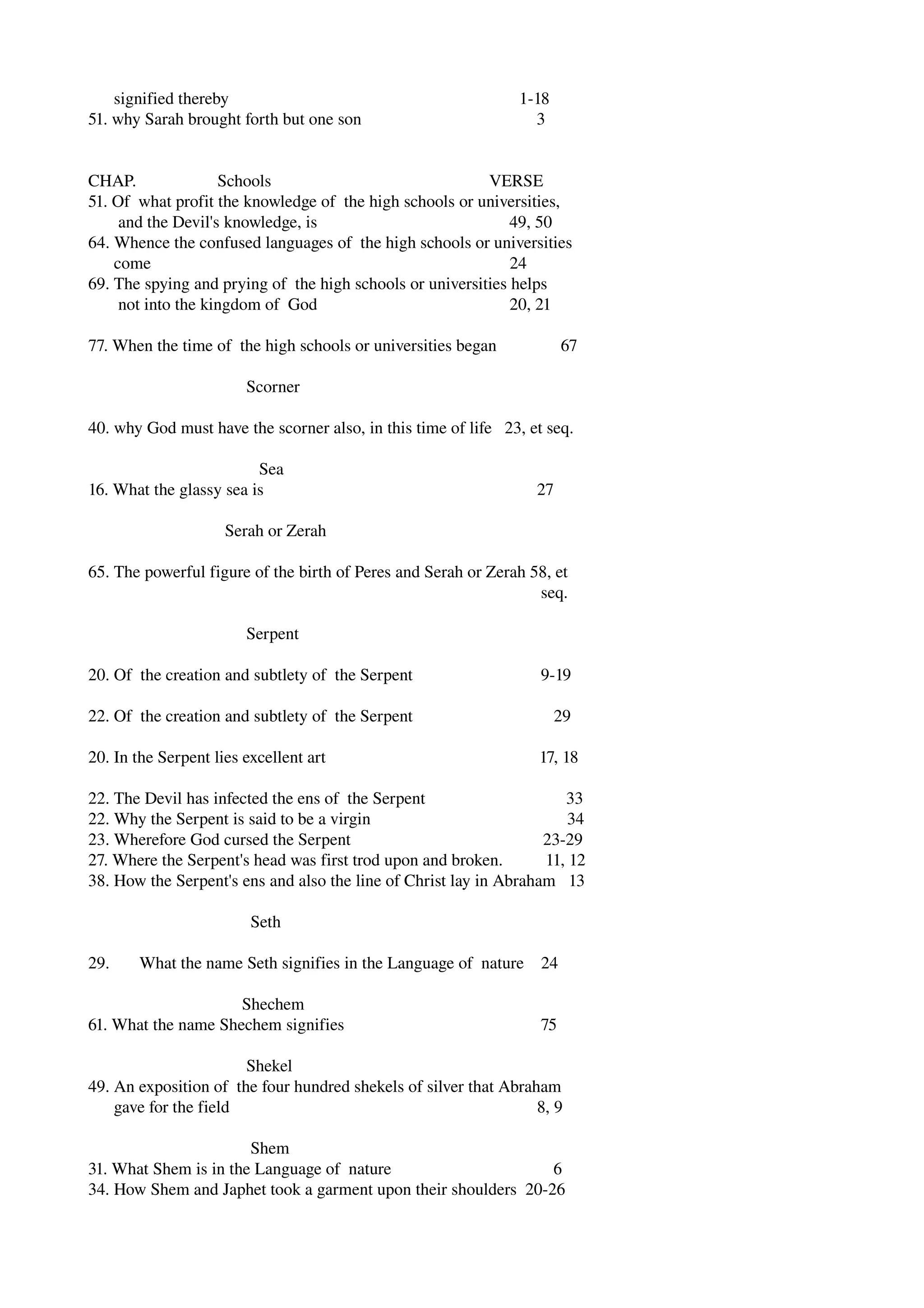
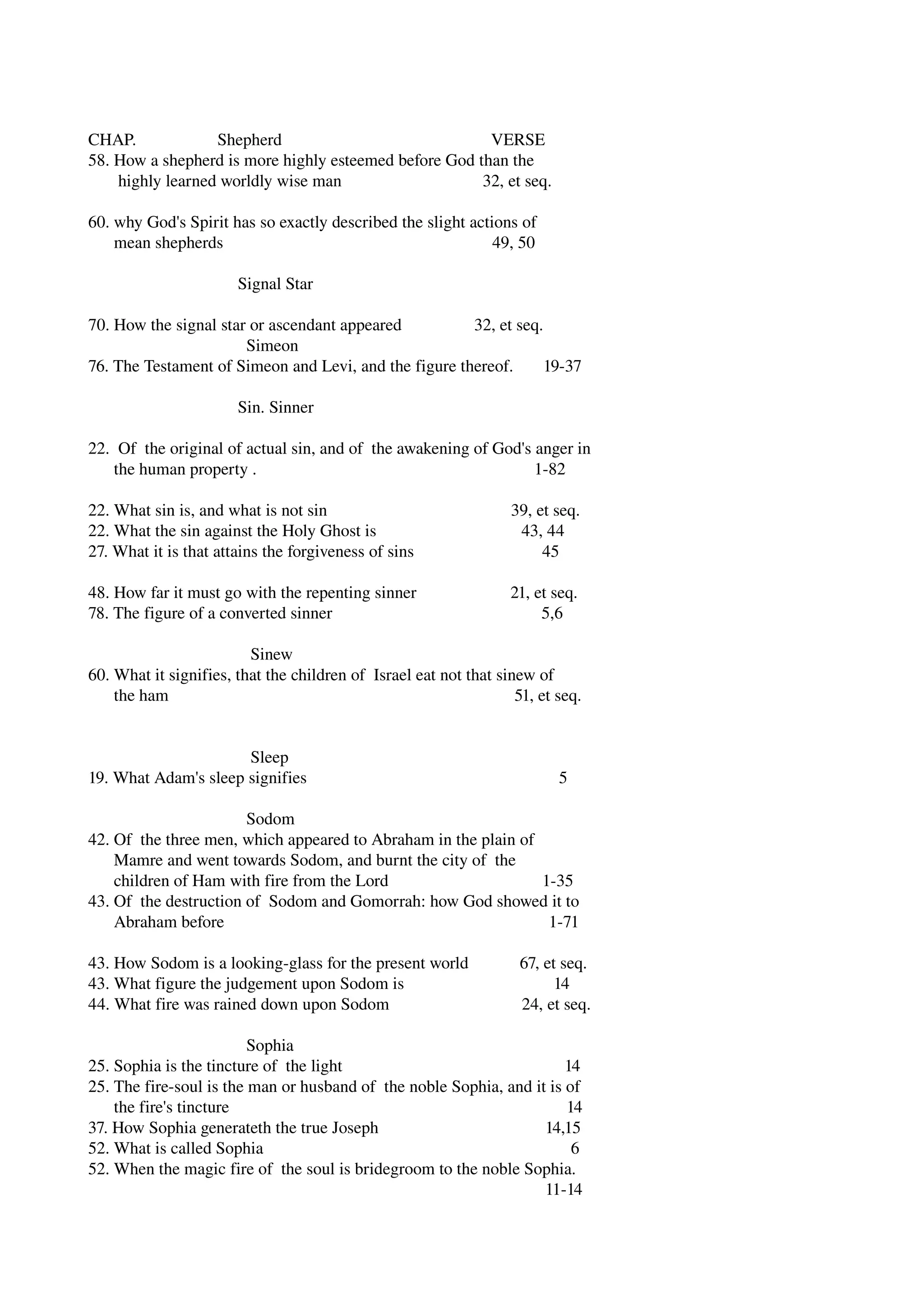
the allegories found in Genesis. From the alphabetical list of topics, 
names and places, appended to this part, one can see how much ground 
Jacob Boehme has covered. 
Some of his other books, available on www.scribd.com/meuser, and in 
the internet archive (search for gnostic researcher), are: The Aurora,
Election of Grace, "The Three Principles of the Divine Essence", and 
"Threefold Life of Man". Four Tables of Divine Revelation and Franz 
Hartmann's study of Jacob Boehme are also available at those places. 
There are many themes in common with the theosophical neo­platonic 
tradition of Ammonius Saccas, Plotinus, Porphyry, Iamblichus and 
Proclus, as well as with the Kabbalistic tradition. Hierarchies, the 
emanational generation of Cosmos, angelic kingdoms, trinities, 
signatura, ideation, duality, transformation can all be found with 
Boehme, as with the other traditions. Keep in mind that Jacob Boehme 
uses a very veiled style of writing. He had to do that, in order to survive 
the narrow­minded 
world of the fundamentalist Christians, at war with 
each other at that time. 
He certainly acknowledged the idea of the potential Christ within the 
human being (indeed, the New Testament refers to this possibility too), 
a transformation and realization possible for those oriented to the right 
way of life. 
The main purpose of this edition is to provide a searchable text for the 
researcher and student of Boehme and enable search­engines 
to index Boehme's writings, in order to make his texts easily retrievable. 
It is a complete text, including the preface of John Sparrow, Jacob 
Boehme's preface (see part one) and an extensive alphabetical index of 
names and places dealt with in this book. The spelling of conjugated 
verbs has been modernized for easier reading. Italics are from 
Sparrow's hand. 
Boehme's work deserves to be available freely, after about four hundred 
years. It is still relevant today, because it is process oriented and process 
philosophy (Whitehead, Peirce, etc.) is getting more attention now, 
promising some solutions to philosophical problems, like ontological 
ones, that have plagued science for a long time since quantum 
mechanics started to be developed. 
Psychologists can also benefit greatly from the insights into human 
nature that Boehme offers to the careful reader. 
Many more valuable documents (of Boehme and other theosophical­kabbalistic 
sources, like my ebook on integrative spirituality and 
holistic science) can be found at my main site: 
meuser.awardspace.com 
An older site, but with a nice search facility and blog: 
members.tripod.com/m_euser 
My writers corner can be found at scribd: www.scribd.com/meuser 
My ebook at scribd is here. 
Lastly, I wish you an inspirative study of this great work. 
Martin Euser
Contents 
Chapter 35: How the human tree spread forth 
Chapter 36: The antichristian Babylonical whore 
Chapter 37: Of Abraham and his seed 
Chapter 38: The beginning of the heathenish war 
Chapter 39: How God appeared to Abraham in a vision 
Chapter 40: The type of Hagar and Ishmael 
Chapter 41: Circumcision and baptism 
Chapter 42: Three men which appeared to Abraham 
Chapter 43: The ruin of Sodom and Gomorrah 
Chapter 44: How Lot departed out of Sodom 
Chapter 45: How God led Abraham very wonderfully 
Chapter 46: Of Isaac's birth 
Chapter 47: Of the covenant of Abimelech and Abraham 
Chapter 48: How God tried Abraham 
Chapter 49: Of the death of Sarah 
Chapter 50: Of Isaac taking a wife 
Chapter 51: How Abraham took another wife 
Chapter 52: Of the history of Isaac 
Chapter 53: How Esau contemned his birthright 
Chapter 54: How Isaac went to Abimelech 
Chapter 55: Of Isaac's blessing Jacob 
Chapter 56: Of Jacob's ladder 
Chapter 57: How Jacob came to Laban 
Chapter 58: How Jacob served his father­in­law 
Chapter 59: How Jacob departed from Laban 
Chapter 60: How Esau went to meet Jacob 
Chapter 61: Showing how Jacob and Esau met 
Chapter 62: Of Dinah, Jacob's daughter 
Chapter 63: Jacob to depart from Shechem 
Chapter 64: Of Esau's genealogy 
Chapter 65: Of Judah and Tamar 
Chapter 66: The most excellent history of Joseph 
Chapter 67: How Joseph expounded dreams 
Chapter 68: Of the dreams of king pharaoh 
Chapter 69: How this famine went through all lands 
Chapter 70: How Jacob's sons went into Egypt 
Chapter 71: Joseph's brethren's sacks filled 
Chapter 72: How Joseph manifested himself 
Chapter 73: How Jacob went into Egypt 
Chapter 74: How Jacob was set before pharaoh 
Chapter 75: How Jacob blessed Joseph's two sons 
Chapter 76: How Jacob called all his sons before his end 
Chapter 77: Further exposition of Jacob's testament 
Chapter 78: Of Jacob's burial in land of Canaan 
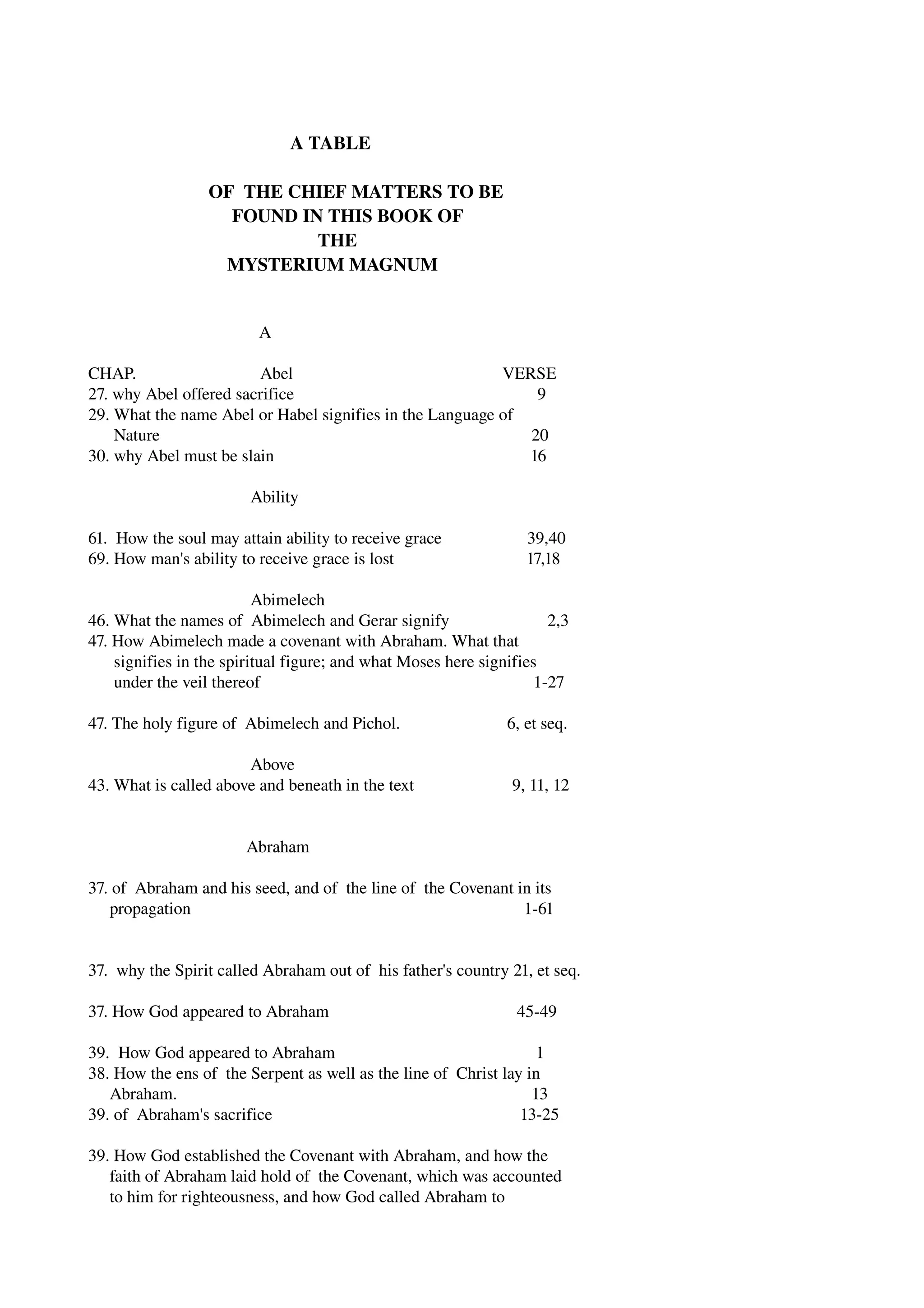
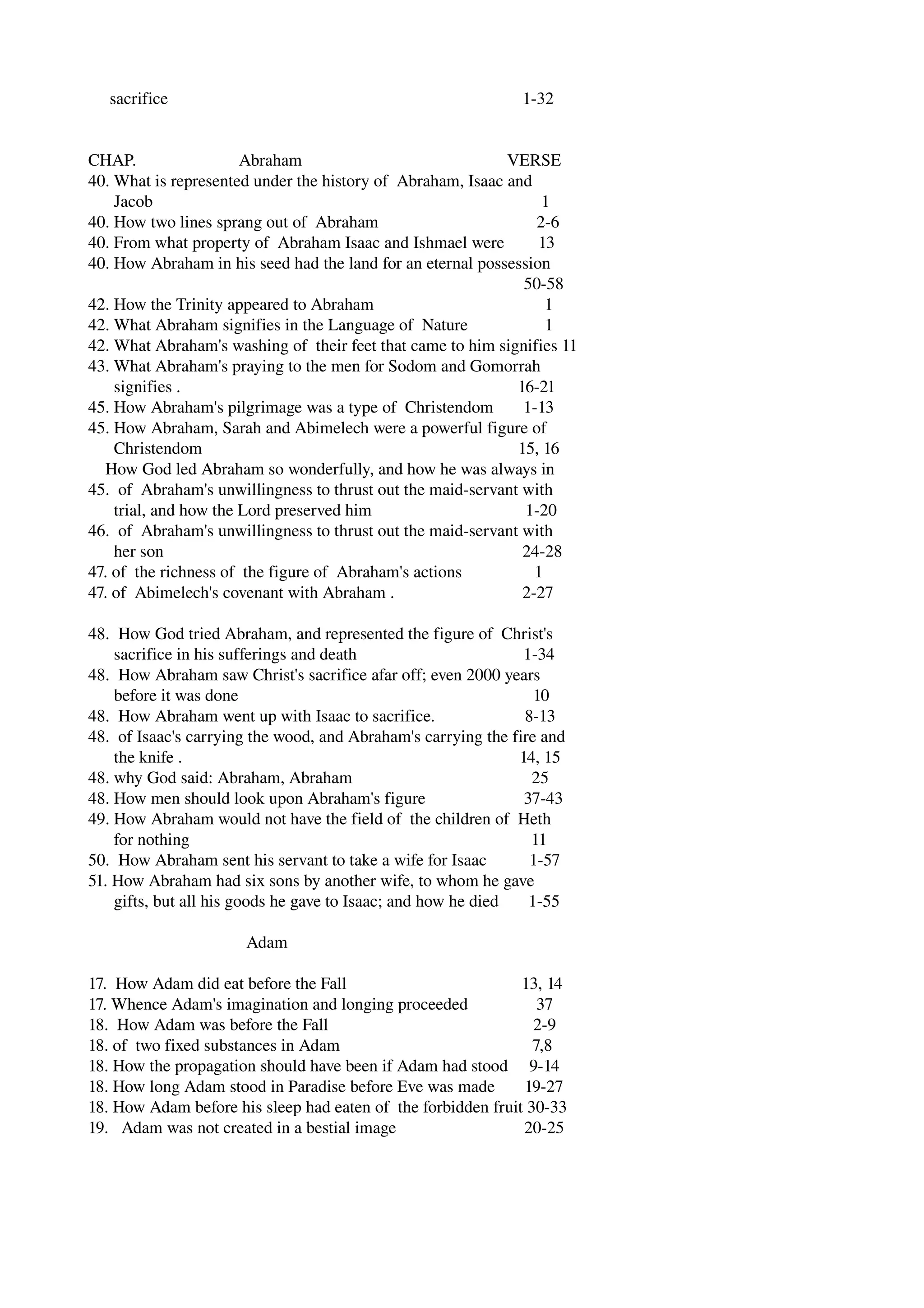
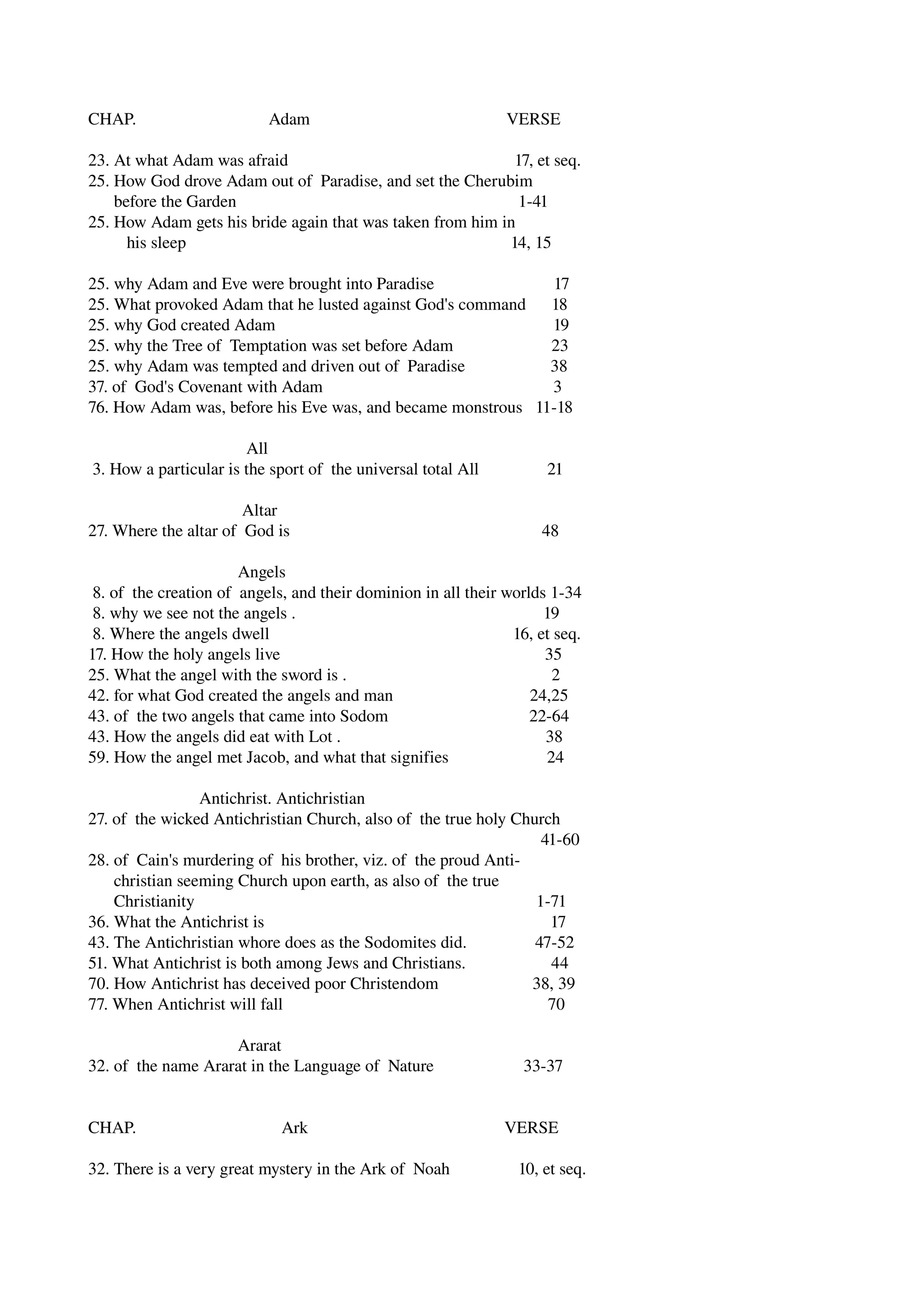
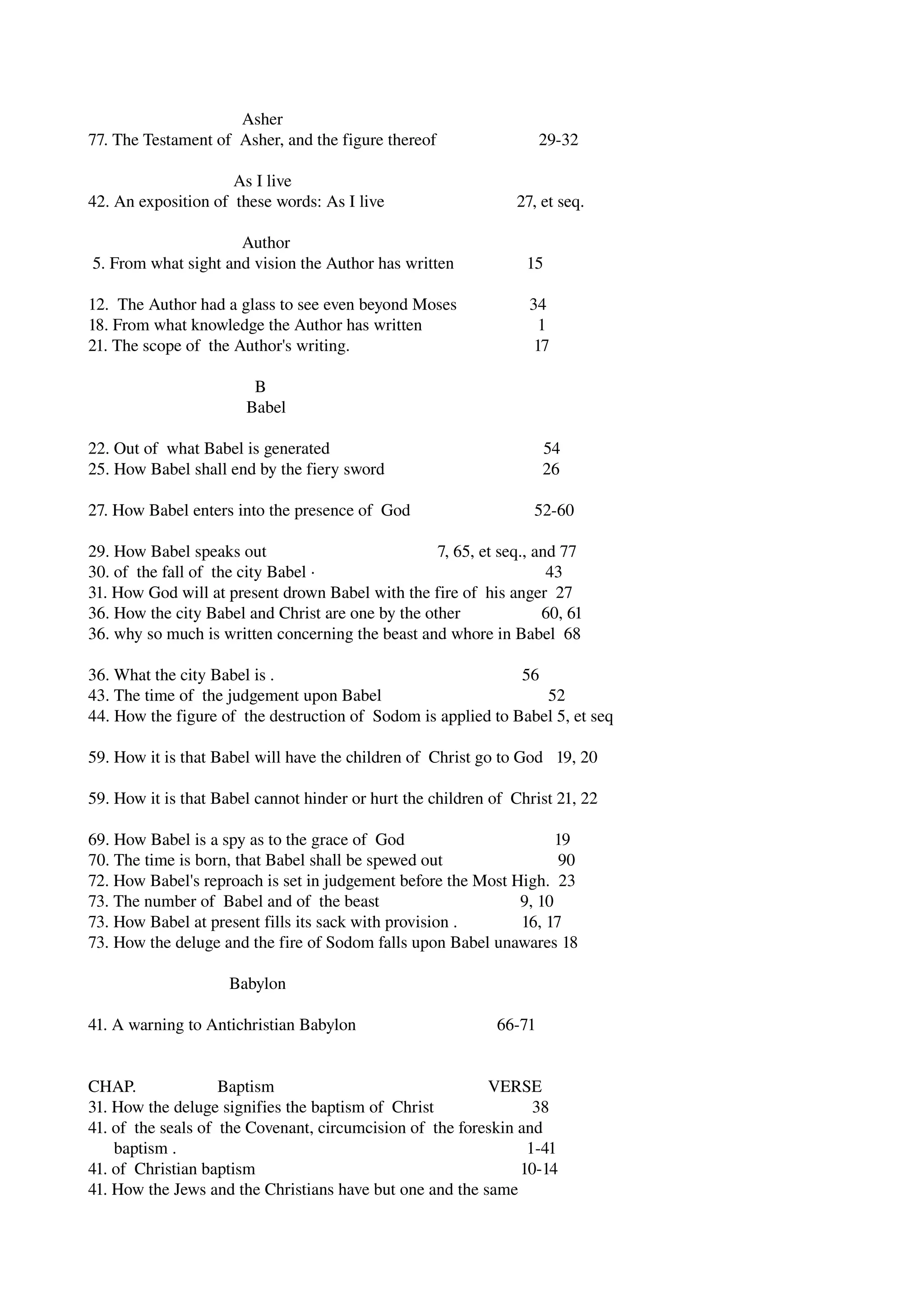
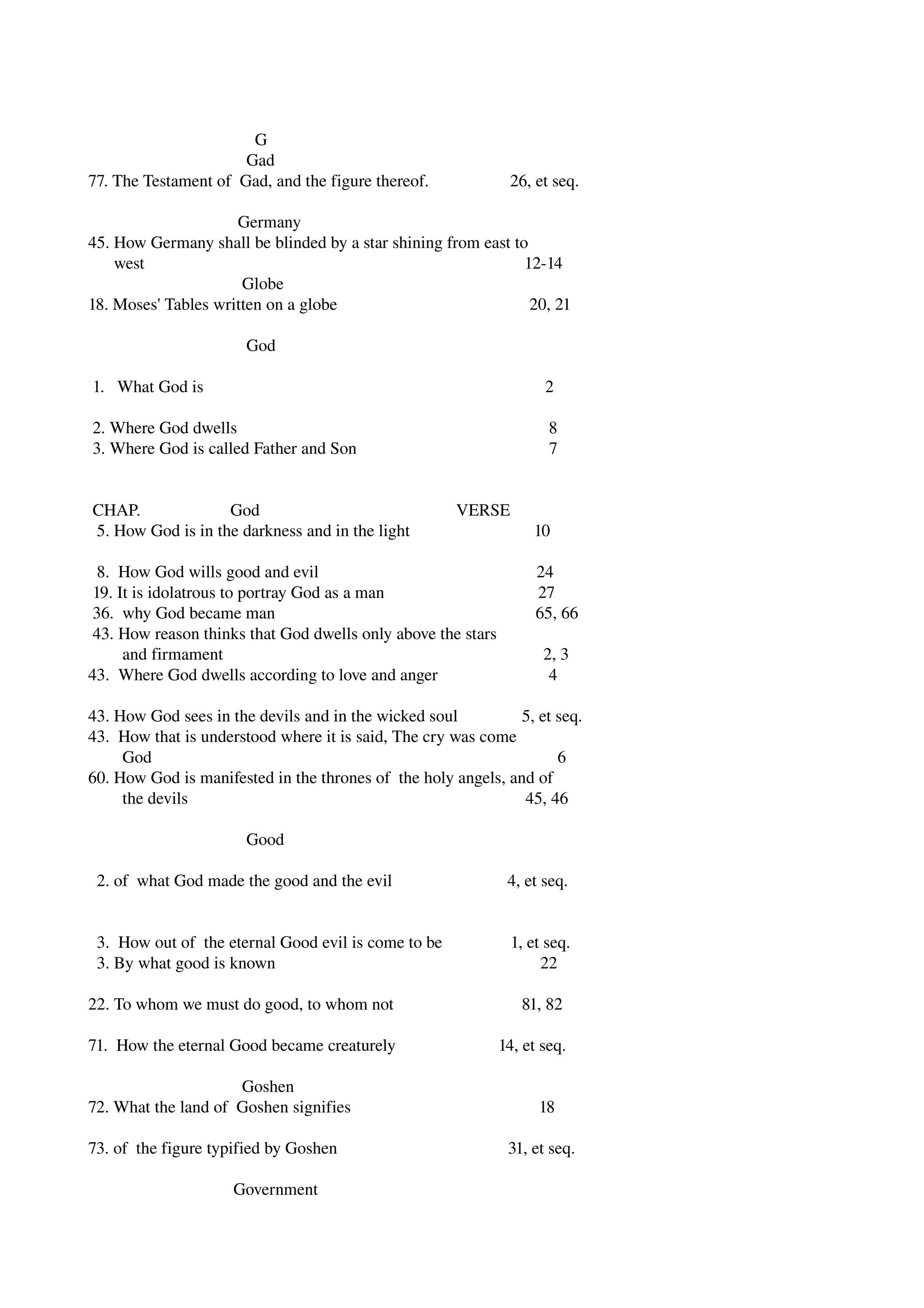
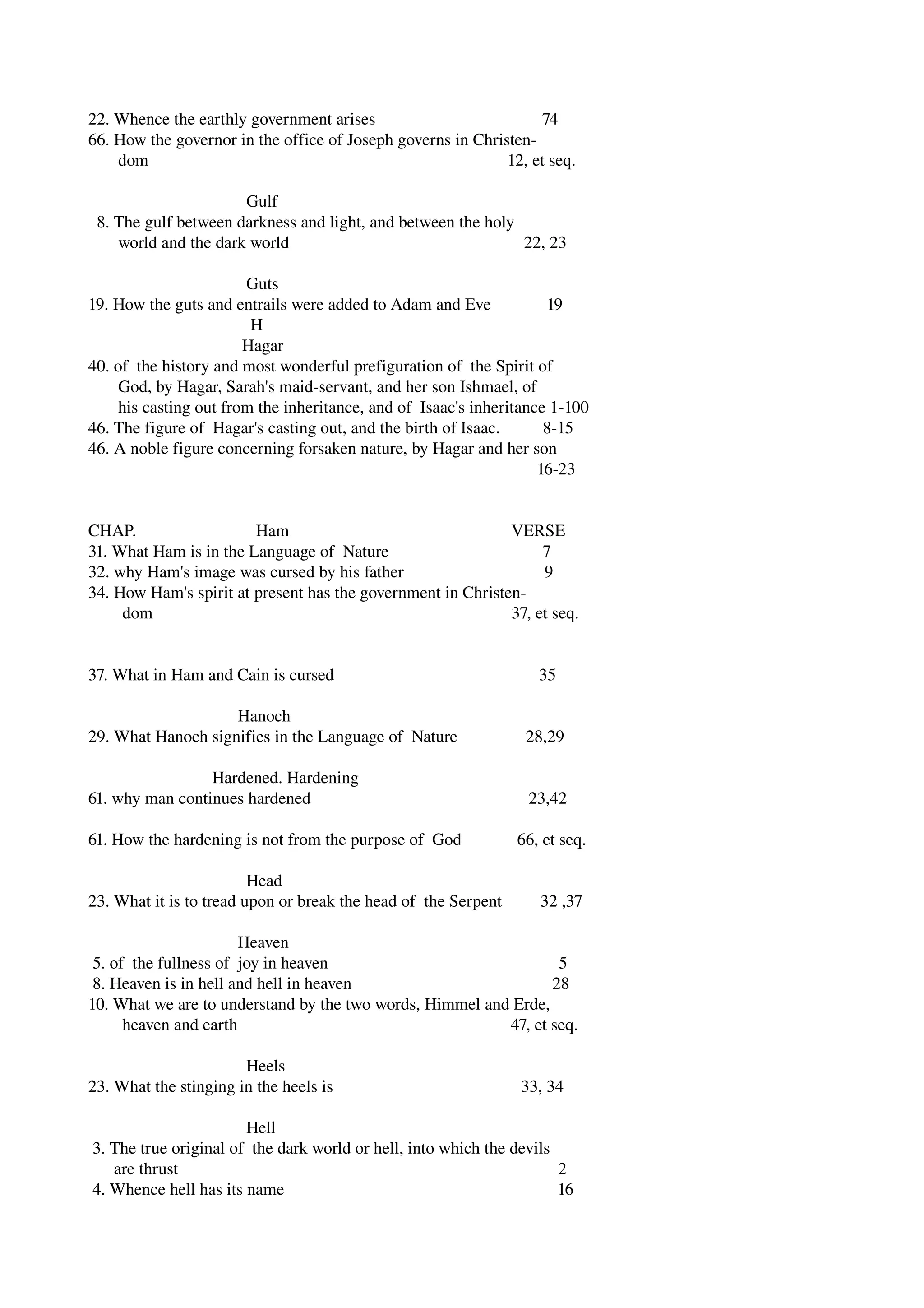
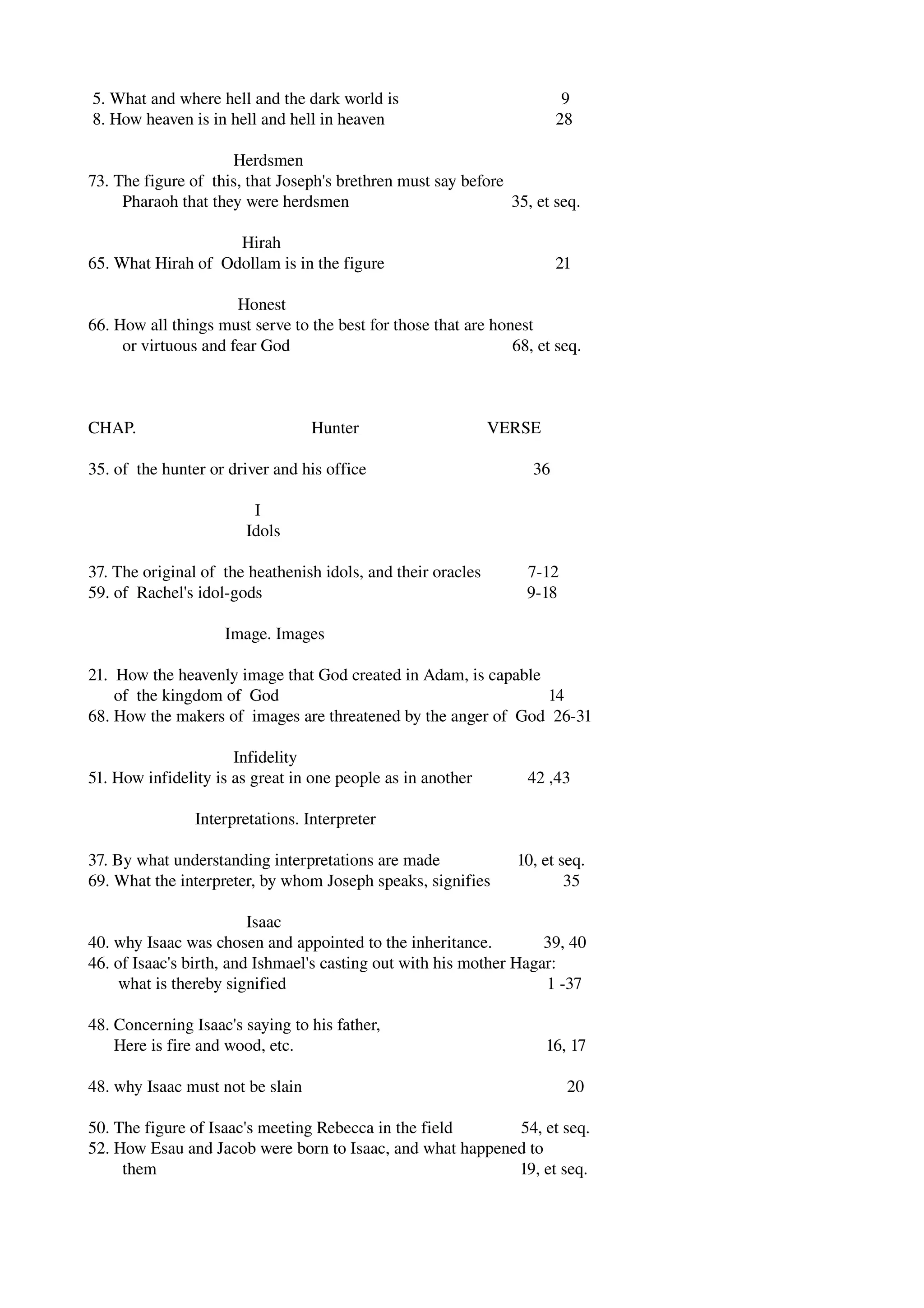
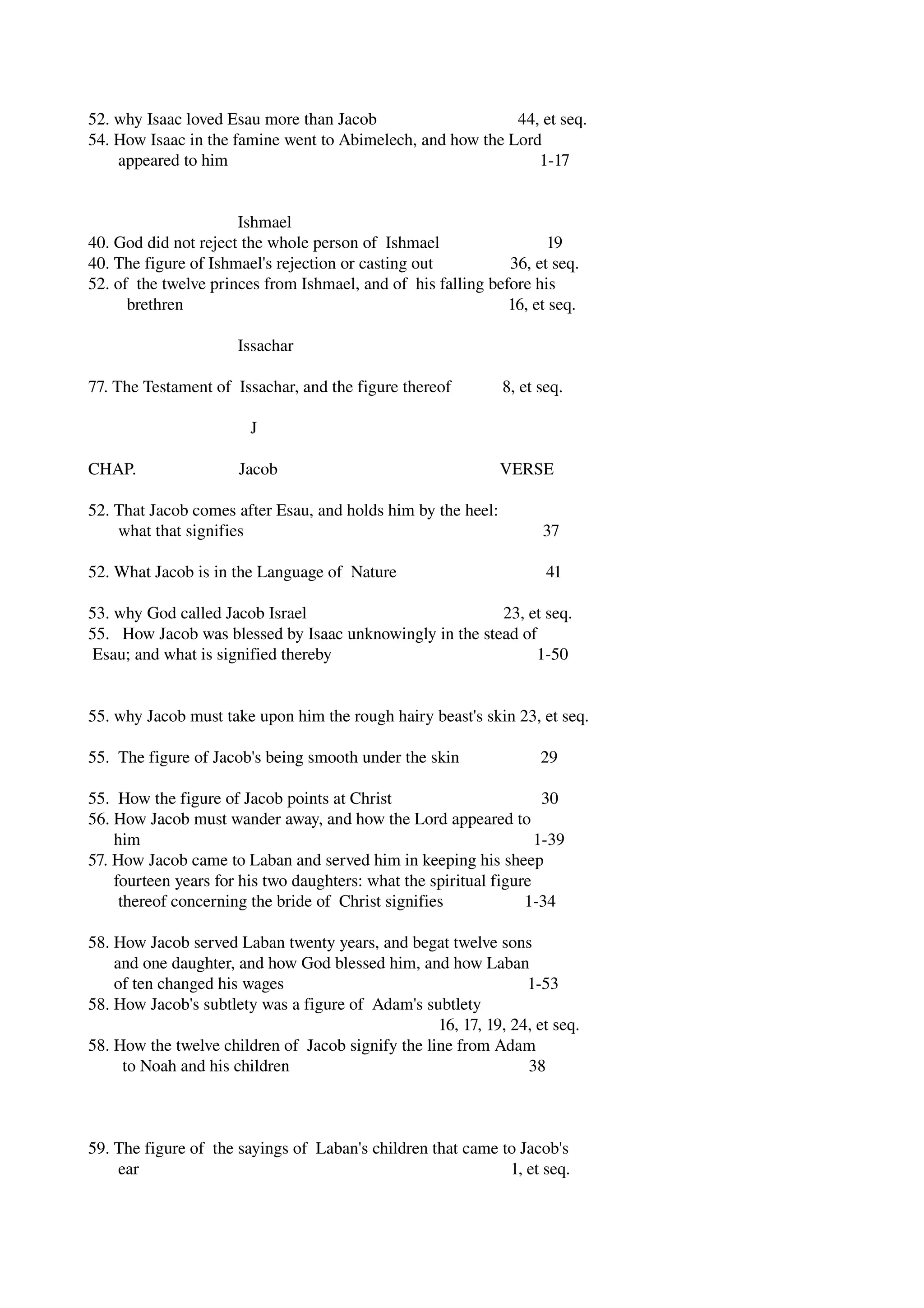
Alphabetical index of names, places, etc.
THE 
SECOND PART 
of the 
Mysterium Magnum 
Begins with the Propagation of the Humane 
Tree through Noahs Children. 
AND 
The building of the Tower of Babel 
and Confusion of the Speeches and their Division into 
Several Nations 
This is 
The other Tree 
Wherein the Powers of the Properties unfold 
and form themselves into the Languages; 
even out of One into many 
Languages Tongues and Speeches. 
Beginning with the X. Chapter of Genesis 
and the 35 th Chapter 
of the Mysterium Magnum: 
and ending with the XXXV. Chapter of Genesis 
and the 64. Chapter of the Mysterium Magnum, 
at the 5 th verse. 
Written by 
JACOB BEHM 
Teutonicus. 
LONDON, 
Printed by M. Simmons for H. Blunden, 
at the Castle in Corn­hill. 
1654.
The Thirty­Fifth 
Chapter 
Shows how the Human Tree l has spread 
forth itself in its properties by the children 
of Noah; and how they were divided and 
severed at the Tower of Babel in their 
properties, by the confusion of the Tongues 
into distinct Nations 
1. EVERY tree grows first 2 (after that it shoots out of its 
pregnant seed) 3 into a stock, afterwards into branches and 
boughs; and brings forth further out of its ens the blossom and 
fruit. Thus also we are to understand of the human tree, according to 
its virtue and manifestation of its hidden wonders of the divine 
wisdom, which lay hid in the human ens, and put itself forth in time 
out of each degree of the properties. 
2. Adam was the first ens to the grain [or pregnant fruitful seed of 
mankind], and this same ens, which produced the human life, was in 
the divine wisdom in the Word of the divine power of the divine 
understanding. The spirit of God brought this holy ens out of the 
divine wisdom and lubet into the Verbum Fiat, viz. into the desire of 
the forming word, viz. into nature; and therein the spirit of God 
figured the ens of divine wisdom, through the speaking Word, into a 
formal life; and the nature of the three Principles into a body; into 
which body (understand the ens of nature) the spirit of God breathed 
this same figured, shaped, creatural life of divine understanding. 
3. And hence man had his rise, and became a living soul, both out 
of the heavenly spiritual ens, and out of the temporal ens of the earth 
and four elements; both out of the constellation or astrum of the 
divine magic, and [out of the] natural magic; a complete, perfect like­ness 
of God; a delightful tree of the life of divine wisdom and con­templation, 
engrafted into the Paradise of God, viz. into heaven, and 
into the time of this world, standing in both; fit to regenerate 4 and 
form his like out of himself: like as out of one tree many twigs, 
1 Or Tree of Mankind. 2 Gen. x. 3 Grain, kernel, pippin. 
4 Generate again, or propagate. 
boughs, branches and fruits do grow; where every fruit has a grain, 
kernel or pippin in it, fit to produce a new stock and tree: The like we 
are also to understand concerning the tree of mankind. 
4. The inward spiritual ens grew in its power in Adam's life, until 
the outward earthly natural [one] overcame him by the infectious 
persuasion of the devil; and then the natural ens put itself forcibly 
forth in the powers of the wonders of nature; and brought forth its 
branches and boughs out of the essence of nature.
5. And though the holy ens of the heavenly world's essence and 
being did disappear in Adam by his infection and poisonful imagina­tion, 
yet the Word of divine power did give itself again thereinto by 
Covenant; so that this ens of the heavenly world was propagated all 
along in this tree, until the time of its now springing forth in the ens 
of Mary, where the Covenant was accomplished [stood at its aim and 
limit]. 
6. Adam's spiritual holy stem grew until his fall, and there it stood 
still; and then the Word freely gave itself by the Covenant thereinto, 
as into a disappeared [expired] ens, to regenerate it again in its true 
entity; and the outward natural stem obtained the power and the self­growing 
life, in the fall, where then the elements, each of them in its 
property, became sensible and full of its own self­full 
power and 
operation, and grew so unto the flood, especially before the flood, in 
its boughs and branches, and did show itself as a full­grown 
tree, 
according to all the properties in evil and good. 
7. But the powers had not as yet unfolded and explicated them­selves 
therein, for all men had only one language; the languages were 
not made manifest out of the properties before the flood. 
8. They indeed understood the Language of Nature, viz. the 
formed word in its difference; but this difference or distinct variety 
was not as yet formed and framed into tongues, until the stock of the 
human tree, did, after the flood, bring its power into the branches. 
Whereupon the tree of mankind began to bloom and blossom forth 
out of the properties of the powers of the formed natural word, viz. 
out of the blessing, wherewith God blessed Noah and his children, viz. 
the branches of the tree, and bade them be fruitful, and fill and 
replenish the earth, and gave them the Covenant of grace. 
9. For in Cain this tree was cursed, but in Noah it was again 
blessed, that the properties of the formed natural word should put 
forth themselves with the tongues through the property of nature, as 
a wonder of many words or gods in the only living Word. 
10. The image of God in the formed word should bring forth the 
formation of the only Word, out of the first ens, into many formations 
or forms of tongues and speeches, according to the nature and manner 
of the princely dominions of the high spirits, which also are in their 
distinct degrees and differences in the formed word; and in the deep of 
this world do rule in the properties of nature above the four elements, 
yea, also above the operation of the stars in the soul of the great world; 
which also bear the names of God in the formed word of nature, as an 
instrument of God, whereby he, in a formal manner, rules in his 
dominion and love­delight 
or harmony. 
11. That the Ancient Fathers 1 lived so long before the flood, was
because that the powers of the formed word of the divine property 
were yet undivided and un­manifested 
and un­explicated 
in them. As 
a young tree, which is full of power, virtue and sap, does excellently 
manifest and display itself in its branches and spreading growth, but 
when it begins to bloom, then the good power goes into the blossoms 
and fruits. 
12. The like also we are to understand concerning the first age of 
mankind. When the powers were couched in one property in the 
stock, then men did understand the Language of Nature, for all lan­guages 
did lie therein; but when this tree of the one only tongue did 
divide itself in its properties and powers among the children of 
Nimrod, then the Language of Nature (whence Adam gave names to 
all things, naming each from its property) did cease, and the stem of 
nature became faint, feeble and weak, by reason of the divided 
properties in the word of the powerful understanding. 
13. Thus they did not any longer live so long, for the true power of 
the human life, whence the understanding flows, is come 2 out of the 
Word of God. But seeing that the understanding did divide itself into 
many tongues and properties, Nature grew weaker and weaker; and 
the high understanding of the properties of the spirits of the letters 
did fall, for the internal brought itself into an external, in manner and 
wise as a man relates and speaks of a thing which he has by hear­say, 
and yet has no right understanding of the same, also is not able 
to see it. 
1 Patriarchs. 2 Or proceeded. 
14. Of such a gift [as the understanding of the Language of nature] 
mankind was deprived of at Babel, when as they so highly exalted 
nature, and would by the outward nature build them a tower, whose 
top should reach even to heaven; which has a very subtle, hidden 
and innate understanding; and it lies very excellently and emphati­cally 
in the names of Noah's children, and childrens' children; which 
the spirit in Moses has set down in the line of their forth­spreading 
generations; wherein the properties of the division of the only under­standing 
and language may be understood, [for they do entirely 
intimate], how the properties of the understanding do give forth and 
unfold themselves one out of another, and how each mutually brings 
itself into a sundry particular speech, as into a peculiar selfly word. 
15. For the names of the children of Noah, and their children (from 
whom the second monarchy had its rise upon the earth), are seventy­two; 
which the spirit in Moses doth point out; and herein lies the 
great mystery of the Tower of BabeI, viz. the division of the tongues. 
16. For seventy­seven 
is the whole number of the divine manifesta­tion 
through the formed word; seventy­two, 
are Babel, viz. the
tongues of the wonders; the other five are holy, and lie hidden under 
the seventy­two, 
and they take their original out of JOTH, and the 
JOTH stands in the viz. in the One, which is the eye of eternity 
without ground and number. 
17. Through the five holy speeches proceeding from JOTH, the 
spirit in the formed word of nature speaks holy divine words in the 
children of the saints; and through the seventy­two 
tongues he 
speaks through the nature of the wonders, both from the evil and 
the good, according as the word does form and amass itself in an ens. 
18. The five speeches belong to the spirit of God, who speaks by 
his children, when and how he pleases, but the seventy­two 
belong 
to man's selfness and particular ownhood, whence man's self­full 
understanding speaks lies and truth. Therefore the seventy­two 
languages, viz. Babel, must pass through the judgement of God, and 
the pure shall be separated from the impure, and tried in the fire. 
19. For him, who is taken under, and capable of this knowledge, 
we will give a short direction and manuduction, to trace out our sense 
and meaning, (which yet we in this place will keep to ourselves), and 
thereby intimate unto him, how he may search out all mysteries and 
secrets which lie couched under these names, which the holy spirit, in 
Moses, has marked out. 
20. The spirit in Moses sets down seven names in Japheth's line, 
viz. the seven sons which he begat; which are these: Gomer, Magog, 
Madai, Javan, Tubal, Meshech, and Tiras. Now Japheth is the first, 
and betokens the first Principle, and therein the kingdom of nature; 
intimating how, even out of nature, the seven free arts or liberal 
sciences should be found under a natural philosopby; and these were 
found out in this Japheth's line in a natural manner, by the heathenish 
philosopby. For this was the twig which should dwell in Shem's tent, 
as Noah foretold. 
21. For the seven sons of Japheth signify and point out the seven 
properties of nature, and under their seven names lies the great 
mystery of the Japhethical lines in the kingdom of nature, [intimating 
to us] what kind of people and kingdoms should arise from them, even 
unto the end of the world; concerning the manifestation and writing 
of which our speech is stopped and taken from us; but it shall be freely 
and fully manifested to our school­fellows 
in its time; and be wholly 
made known and revealed. 
22. After this the spirit mentioneth only two sons of Japheth which 
begat children, viz. Gomer and Javan; he passes over the other 
children of Japheth in silence, and mentions not at all what children 
they begat. And this is not without cause. The spirit points at the 
two sorts of men among the Gentiles in the kingdom of nature, viz. 
under Gomer he sets three names, Ashkenaz, Riphas and
Togarmah; these were the sons of Gomer, who do thus manifest 
themselves in the Language of Nature, viz. they form [conceive or 
amass] the ens of nature, viz. the formed word, into an ens, and bring 
it into a contemplation, that is, into an acute speculating reason, and 
make a figure out of it, viz. a dominion (or form of a government of 
self will) according to the kingdom of nature, for temporal glory and 
renown. 
23. And under the other son, Javan, he sets four names, viz. 
Elishah, Tarshish, Kittim, and Dodanim; and he says, that of these 
fourteen names all the isles and languages of the Gentiles were filled, 
and that they had their rise and original from hence. These four names 
do intimate out of the properties of nature, thus much, viz. by the 
first a good half­angelical 
will; by the second an introduction of the 
good will into the wrath of nature, from whence an evil warlike self­ness 
arises; by the third a false understanding, whereby the angelical 
good will is brought in the selfhood of reason even to be a fool, and 
sets forth itself with a strange outside lustre; and it signifies the 
heathenish idolatry whereinto they brought themselves through 
reason, without God's light, and thereby did set up heathenish idols, 
and made themselves great kingdoms; so that the spirit of nature has 
brought them under its power and might, into its own form. And 
under the name DODANIM the spirit intimates the kingdom of 
nature in selfhood with its selfly divine service, viz. an external visible 
God, which may be shown by the pointing of the finger. 
24. And under these fourteen names in ]apheth's line the human 
kingdom of nature is wholly portrayed and typified; and we are in an 
especial manner to observe, that the angelical will is therein con­cluded, 
betokening the wise and deep understanding heathen in the 
light of nature, in whom the inward holy kingdom did behold itself 
who (notwithstanding they lay shut up in the true divine under­standing, 
and saw by an external light [or reflex]), in the restitution of 
all beings, shall, when the covering is taken away, live in Shem's tent, 
viz. in the formed word of nature, yet in their property. 
25. Out of this fourteenth number of the fourteen names of 
]apheth came the prophetical and apocaliptical numbers. From which 
the spirit prophesied how the wonders of nature should open them­selves 
one after another, and what should happen in each degree of 
their manifestation; which we will here pass over in silence, and 
mention it in its due place. 
26. Under Ham, the spirit brings the greatest intimation of the 
kingdom of nature, for he fully sets forth the external form of reason, 
for he says, Ham begat Cush, Mizraim, Put and Canaan. CUSH 
gives, in the ens of the pregnant generating nature, a signification of 
a form of sudden conceived, swift ascending lust in selfhood, like to a 
running, or far and wide domineering and reigning might; and it is 
the root of the princely government according to the third Principle;
but Japheth is the same ground [or work] according to the first Prin­ciple. 
27. MIZRAIM signifies a forth­driving 
power, which does 
forthwith comprehend itself again in the lust, in which the centre of 
nature does go forth all along in a strong through­breaking 
lust and 
desire, and breaks open the form of the lust. Intimating unto us the 
original of the divided tongues, and how the power of the only formed 
word of the understanding should be divided. 
28. The name PUT shows forth, even from the ens of nature, a 
high city or place whereby the will [of these men] would advance 
itself on high, in contriving and framing how to build them a high 
tower. CANAAN signifies a land of lowliness and humility; show­ing 
that God would be found in the lowly and humble; and it especially 
signifies, that this high­flown 
aspiring will shall be overthrown and 
cast down. 
29. Although the Reader may not be able to understand us in this 
tongue, yet I set this down only to the end that he may learn to 
consider and meditate on the great mystery which the spirit of God 
has signified under these names, from whence such a purpose of a few 
men did arise, that it is even wholly a mere wonder whence the 
tongues and speeches do take their rise and original: for the spirit in 
Moses does set down afterwards, that Cush begat Nimrod, who hegan 
to be a mighty lord upon the earth; and war a mighty hunter before the 
Lord. 
Who would now understand what kind of mighty lord and hunter he 
was before God, without the understanding of the Language of 
Nature? which, seeing it is not every man's gift to understand, we 
will only intimate the sense and meaning, even what the spirit does 
thereby understand in the word of the essence. 
30. Nimrod became a mighty lord, and was a hunter before the Lord. 
Now if I be able to see the spirit in its essence, in the formation of the 
word, then I see what a lord and hunter Nimrod was; for the spirit does 
herein signify and point at the properties of nature, showing how the 
same have opened themselves in man's nature, and brought them­selves 
into an external form to a contrived framed government among 
men. The spirit signifies by the name how the human free will has 
formed itself in the nature of the understanding; and imagined such a 
model and platform into its mind, out of which imagination and fancy 
the outward work arose. 
31. For the name NIMROD does give a very clear signification, 
in open understanding, that he came from Cush, for he is in himself a 
taking, apprehending or an arrogation of power and might out of 
nature; intimating how nature does form and frame itself into a govern­
ment in the mind; and has put itself forth with power, and has 
hunted, suppressed and oppressed the inferior properties; therefore 
the spirit says, a hunter before the Lord; for the nature is before the 
Lord, therefore the spirit speaks here of a hunter before the Lord; 
for look as a hunter does hunt, drive, take and tame wild beasts, even 
so the spirit intimates, that out of this self­advanced 
human nature, 
such evil beasts would arise, who would live only to the outward 
nature. 
32. Now out of the wrath of nature arose, over these foolish bestial 
men, the hunter, viz. the outward domination; which should hunt, 
catch, kill and keep them in awe, so that the hunter might tame them, 
and hold them under a government; else there would be only a 
general raving, raging, biting, tearing, devouring and eating up of 
each other, among the bestial men. Seeing they would not suffer the 
Spirit of God to rule and guide them, they must suffer the office of 
nature to rule them; for otherwise what need has the Lord of a 
hunter, that the spirit in Moses says, that he was a mighty hunter before 
the Lord: that which hunts before the Lord of all beings does not 
hunt hares or other beasts. 
33. Moses has a veil before his clear shining eyes. The spirit does 
hereby hint at the government of nature, showing how the human 
government has formed and contrived itself in the soul of the out­ward 
world; and how it should afterwards be among them; and what 
hunters would arise over them; and compares the human dominion 
to a hunter, who hunts for beasts to catch and slay them; and thus 
it would be also among them, that these hunters would hunt after 
men, to take them and bring them under slavery and servitude, and 
chase and course them to and fro by their bloodhounds; bite, tear, 
slay and devour them by war and murderous acts; and tame and bring 
under all, with force, fury and violence, and excellently well manage 
the government of the hunter in their own self­assumed 
power. 
34. For man was fallen under the possession of God's wrath in 
nature; the same forced forth itself now with its desire, and formed 
itself into a government according to the outward constellations and 
the four elements, as they do build up and break down: even so did 
this hunter do with his beasts in his sport. 
35. Here the world may take an exact looking­glass 
to behold itself 
in; it is the true original ground of the worldly dominion and rule. 1 
And although the same ground of government has an internal 
spiritual original, yet it is, in the outward form only, before God, as a 
bestial huntsmanship among the beast­men, 
who must be bound and 
tamed. 
1 Lordship. 
36. For the inward spiritual government stands in great
humility in an angelical form; whereunto God also created man. If he 
had but remained in Paradise, then he would have had no need of 
the hunter; but seeing he would be a beast, God ordained him also a 
hunter, who might keep under the wild unruly bestial men. And the 
hunter and [the] beast are both alike before God in this world's bestial 
property; but seeing it may not be any otherwise, God holds it for 
his natural order; for he has given every thing its government 
[station and order]. 
37. But it is to be lamented that this hunter does hunt, slay and 
devour the tame human beasts, which do not belong to his game. But 
what shall we say, or wherewith shall the children of God excuse 
themselves, or quit themselves of this hunter, before God? Seeing 
every man bears externally the hunter's hind on him, over which the 
hunter of nature has power, the inward spiritual man must leave his 
outward beast unto the hunter; for his outward beast is also evil. 
38. The spirit of Moses sets under Ham's lineage twenty­nine 
names, which came from Ham. Which intimate the twenty­nine 
properties proceeding from the third Principle, viz. From the spirit of 
the outward world; hinting how the formed word would be mani­fested 
through the outward nature; both in tongues and properties, 
whence the governments and orders of countries and nations have had 
their rise; albeit each property has again its extern birth, like as one 
branch or sprout of a tree does produce and bring forth other twigs. 
Yet the spirit in Moses does point at the chief head­root, 
and the 
properties under these names; showing what kind of people would 
arise from thence, and what their alterations and their final con­clusions 
would be; all this lies hidden under their names. 
39. Thus Ham has twenty­nine 
names of his children, and he is 
the thirtieth, twenty­nine 
is the set number of his children and 
childrens' children, under which the number of the end lies in Ham's 
government and dominion. Thirty is his whole number, whereof the 
prophet speaks, that this Ham would sell the Righteous One for 
thirty pieces of silver; and give the same for a potter's field. As a pot is 
accounted of in reference to its maker, even so is the fleshly man Ham 
in regard of God. He takes his thirtieth number, which he ought to 
bring into God's kingdom, and gives it for an earthly vessel, which 
does resemble a field, and in that, does sell the Righteous One, who 
lies hid under the thirtieth number in the Word of power. Thus the 
Righteous One, under the thirtieth number, does, by the death or 
mortification of Ham's flesh, sever himself from the twenty­nine 
numbers of these properties, which have gotten the upper hand in 
Ham. For in the thirtieth year the Righteous One, viz. Christ, did 
separate himself unto his office, and in the thirtieth number lies this 
same mystery. This is understood by our fellow­scholars, 
and only 
hinted at in this place. 
40. Shem has in his line of propagation twenty­six 
names, and he
is the twenty­seventh. 
And the spirit in Moses speaks very 
hiddenly, saying, that he was the father of all the children of Eber; and 
Eber begat two sons, the name of one was Peleg, for at his days the 
world was divided; and the other was named Joktan 1 
(Gen. x. 21­25). 
All whatsoever the spirit in Moses speaks of the 
outward acts of the patriarchs, he has under them a single inward eye 
upon the line of Christ; for he says that Shem was the father of all the 
children of Eber. Although Eber be first in the third degree after Shem, 
yet the spirit looks so punctually upon the Word in the Covenant, 
wheresoever it does open itself in a line. 
41. For EBER signifies in the forming of the word, as much as a 
sound or manifestation of the Word out of the centre; and says 
further, that he begat Peleg, and called him so by reason of the division 
[of the earth]. The spirit doth not only look upon the outward 
division of lands and countries, but much rather upon the line in 
which stood the limit 2 of the Covenant; for in Eber the limit of the 
Covenant did open itself in the Word, as in the sound or manifesta­tion, 
and went all along in the seed upon Peleg. And the line of Adam 
and Christ did there sever itself in the two brethren; as afterwards it 
did among the children of Abraham and Isaac: with Isaac and Ishmael; 
and with Jacob and Esau. Thus likewise it was here with Peleg and 
Joktan. Externally the world was divided, and internally the kingdom 
of Christ, and the kingdom of the world. Not that we are to under­stand 
that Joktan did not remain in the Covenant; only the spirit does 
here look upon the motion of the seed, in which line the limit or mark 
of the Covenant was to be moved, wherein the Word would again 
move itself in the disappeared humanity of the heavenly ens, and 
manifest itself in the humanity. 
42. The names of Shem's children and grand­children 
are mere 
intimations and significations of the properties out of the wonderful 
line of the prophetical spirit of Enoch; where these same properties 
were brought forth out of the stock into boughs; but here into 
branches. 
43. The spirit in Moses (Gen. x. 26­30) 
sets fourteen names 
under Joktan's line, which are the wonderful number of this bough in 
the tree's property, being the kingdom of Christ according to the 
property of nature. And of Peleg he says no more but of one son, 
which he calls Reu, whom he begat when he was thirty years old 
(Gen. xi. 18). Intimating and pointing at the line of Christ, wherein 
the main limit and eye­mark 
of the Covenant stood. The spirit 
denotes only one, for by One the Covenant should be opened; for 
the spirit looked with the one upon the kingdom of grace; and with 
his brothers' fourteen names it hinted at the human kingdom. 
1 Or Jaketan. 2 Or mark.
44. And in that he says, that he begat Reil, when he was thirty years 
old, the spirit therein looks forwards upon Christ, who should arise 
and come forth out of this stock, and manifest himself the thirtieth 
year of his age in his office; as also likewise all the ages under the line 
of Christ, which Moses has set down, have a very certain intimation 
and prophecy, and point at the times of the motion in the Covenant; 
as [may be seen] through the prophets and other saints in whom the 
Covenant has moved itself. 
45. The spirit of Moses sets five names of the children of Shem, 
which came forth of his loins. And though he did beget more for 
Moses says that he begat sons and daughters (Gen. xi. 11), yet the spirit 
minds only the properties of the formed Word in the Covenant of 
the human property. These five names do figure out and set forth, as 
in a type, the five head speeches of the spiritual tongue through the 
formed word, proceeding from the high name of God; out of which 
tongues the prophetical and apostolical spirit speaks. 1 
1 Or spoke. 
46. And though we could set down a form of the same, yet we 
should be but as senseless or dumb to the Reader who understands 
not the Language of Nature; and therefore we have but given a hint 
of it to our school­fellows. 
For the spirit does also, under the names, 
point at the kingdoms and dominions, and they are God's, who with 
his name does order, govern, guide and lead every kingdom, accord­ing 
to the property of his name. As the property of each kingdom is, 
even such is the tongue, language, phrase, and manners of the same; 
as it is written, Such as the nation is, such a God it also has. 
47. Not that there is more than one God; only, we understand 
therein the divine manifestation, how God does give himself forth, in 
his manifestation in the formed Word, to all nations, according to 
every nation's and people's property; so that every nation and people 
does use or bear forth the same only Word according to its property; 
the external form and division of which is Babel; for (Gen. xi. 6) all 
people had only one tongue and language, and dwelt together. 
48. The only tongue was the Language of Nature, out of which 
they all spoke; for they had it in one form, and understood in the 
language and speech the sense, viz. the ens, even how the will formed 
the ens; for so also was the spirit in the ens. of which we will give a 
short intimation and manuduction, to the understanding and illumi­nated 
mind to consider of, to prove, exercise and make trial of it in 
himself; not that a man can express it, and bring it into a certain form. 
No, that cannot be, for it is the spirit of the wisdom of God, his 
manifestation. 
49. The spirits of the letters in the Alphabet are the form of the
one spirit in the Language of Nature; the five vowels bear forth the 
holy tongue of the five holy languages out of the name Jehovah, from 
whence the Holy Spirit speaks; for the five vowels are the holy name 
of God, according to his holiness. For the name Jehova has nothing in 
it, save only the five vowels A, E, I, 0, V. The other letters signify and 
express the nature, even what the name of God in the formed word is 
in nature, both in love and anger, in darkness and light. But the five 
vowels do signify only and alone what he is in the light of holiness; for 
nature is tinctured with the five vowels, so that it becomes full of joy 
and delight. 1 
50. But that the ancient wise men, skilful in this tongue, did inter­pose 
an H in the name JEOVA, and called it JEHOVA, the same was 
done with great understanding, for the H makes the holy name with 
the five vowels even manifest in the outward nature. It shows how 
the holy name of God does breath forth and manifest itself even in the 
creature. The five vowels are the hidden name of God, who dwells 
alone in himself; but the H signifies the divine lubet or wisdom, 
showing how the divine lubet doth breath forth itselfout of itself. 
51. The inward understanding in the five vowels is this: 
I is the name JESUS. 
E is the name Engel 2 (Angel). 
O is the formed WISDOM or lubet or the I, viz. of JESUS, and 
is the centre or the HEART of God. 
V is the SPIRIT, viz. the sus 3 in JESUS, which proceeds 
forth out of the lubet. 
A is der Anfang 4 und das Ende (the beginning and the end), viz. 
the will of the whole comprehension, and it is the FATHER. 
52. And these five do fold themselves up with the comprehension 
or formation into three, viz. into such a Word, , that is, A, 0, V, 
Father, Son, Holy Ghost. The triangle denotes the Trinity of the 
properties of the Persons, and the V on the triangle denotes the spirit 
in the H, viz. in the breathing, where the universal God does manifest 
himself spiritually with his own proceeding forth or procession out of 
himself 5 
1 Text, a kingdom of joy. 2 German. Engel. 
3 Viz. the sweetness. 
4 Germ. Anfang. 
5 IHVH (Jod, He, Vau, He, or tetragrammaton) 
53. The other letters without the five vowels, do all proceed from 
the name TETRAGRAMMATON, viz. out of the centre of the 
eternal nature, out of the Principle; and do denote and speak forth 
the differences 1 of the formed wisdom, viz. of the formed word in the 
three Principles, wherein the whole creation lies; they are the sense 
of the creation, viz. the property of the powers, and the true revealed 
God in the word of nature. Understand this further thus:
54. When as the lubet of man, viz. the free will of man, does con­ceive 
or form itself into a desire, then it conceives the whole 
Alphabet; for the desire is the Fiat, and the lubet to the desire, is the 
contemplation of the free will, viz. the formed word of wisdom, 
wherein the free will does behold itself and contemplate whereinto it 
will introduce the lubet of the wisdom, either into evil or good; and 
when the free will has thus beheld itself, it does conceive with the 
lubet in the letters, viz. in the sense of nature, and composes the 
senses of the letters together, and forms the lubet into a word; 
the same stands in an internal form, viz. in a conceived thought. 
55. And even then the free will takes the H, viz. the spirit of the 
forth­breathing, 
and brings the formed thought before the counsel 
of the five senses, who behold the formed word, and prove the same, 
whether it be apt or not; if it does but please them, then the H, viz. 
the breathing spirit, takes the word, and brings it upon the tongue 
into the mouth; there is the chief framer, viz. the Fiat, which is the 
divine instrument, and figures the senses of the properties out of the 
letters, as the free will has set and composed them into a substance to 
the sounding or pronouncing, manifestation or expression. 
56. Now mark and observe us here, very exactly; how every word 
is formed or brought in the mouth to substance, 2 viz. to the ex­pression; 
how the chiefworker and contriver, viz. the Fiat which is in 
the senses, does shape and figure it; and how the tongue co­operates 
or frames itself therewith, when it takes it; and by what way it brings 
it forth, whether through the teeth, or above, or with open mouth; 
also how the tongue does frame itself in the conjunction of the word; 
which sense it does again draw back, and will not wholly cast forth, as 
there is many a sense which is not half put forth, but many, fully, and 
many again are drawn halfbackwards towards the heart. And now as 
the word was formed, so is also the thing in its form and property 
which is named by the word, (provided that the free will gives it also 
a right name, and does not impose a strange name on it, out of malice 
or ignorance); so it is externally noted, and internally in the compac­tion 
of the senses it has such a virtue, or ill malignant property. 
1 Varieties. 
2 Note, when a word is formed or expressed, it is brought to substance. 
57. Now whosoever has the understanding of the senses, viz. of 
the spirits of the letters, so that he does understand how the senses 
are set or compounded in the lubet, he understands it in the framing 
of the word, when the same is formed or brought forth to substance; 
and is able to understand the sensual [natural or essential] language of 
the whole creation, and understands whence Adam gave names unto 
all things; and from whence the spirit of God has prophesied in the 
Ancient.
58. This is now the ground of the head languages. When as all 
people spoke in one language, then they understood one another. But 
when they would not use the natural 1 genuine tongue; then the true 
and right understanding was put out in them; for they brought the 
spirits of the genuine tongue of sense into an external gross form, and 
framed the subtle spirit of the understanding into a gross form, and 
learnt to speak out of the form only; as at this day all nations speak 
only from this same form of their contrived sensual tongue. 
1 Text, sensual. 
59. Now no people do any more understand the language of sense, 
and yet the birds in the air, and the beasts in the fields, understand it 
according to their property. 
60. Therefore man may well think and consider, what he is 
deprived of ; and what he shall again obtain in the new birth; although 
[perhaps] not here upon the earth, yet in the spiritual world; for in 
the language of sense all spirits speak one with another; they use no 
other language, for it is the Language of nature. 
61. Our learned ones do term themselves doctors and masters, and 
yet none of them understands his mother tongue. They understand 
no more of the spirit than the country man does of his tool to the 
tillage of his ground; they use only the bare contrived form of the 
gross compounded words, and understand not what the word is in its 
sense; hence arises the contention and strife wherewith men contend 
and jangle about God and his will; men will teach what God is, and 
yet understand not the least of God. 
62. The five holy speeches in the language of sense are God's 
Word; they are his operation through the sense tongue, viz. through 
the properties; as it cannot be denied that God gives power, virtue 
and life to all creatures and vegetables, for his holy name is through 
all. And Adam had this holy name as a proper possession, working, 
ruling and sensibly efficacious in his senses; and even this jewel he 
lost; which is now again restored and enkindled in the holy name 
JESUS. 
63. Therefore none can with right be called a divine, or learned in 
the holy Scripture, much less a doctor of the same, unless that he 
understands the sensual tongue, and knows how the Holy Spirit has 
spoken by the sensual tongue in the holy penmen of the Scripture. If 
he understands not the divine sense in the holy Scripture, let him not 
undertake to be a master over it, to censure or interpret it, he is not at 
all learned therein; he is only a changer of letters [a chop­logic 
in the 
Scriptures], and understands not one letter in its sense.
64. Thus understand us herein concerning the children of Noah, 
viz. Japheth, Shem, and Ham, and their children and grand­children. 
They had lost the sensual language, and had made themselves a 
formed contrived one; and so spoke in a formed language which they 
themselves understood not in the true sense. Therefore God was 
hidden to them; for they understood no more the voice of the 
Holy Spirit in their language, viz. the mental tongue of the five 
vowels. 
65. And they looked about or imagined where God should be; and 
supposed that he must needs be something with form, and dwelling 
apart from them; and seeing they could not understand anything of 
God upon the earth, either what, or where, he was (and yet had heard 
so much of God spoken by their forefathers), thereupon they thought 
that he must needs dwell on high above the stars, and thought them 
not able to reach thither; therefore they undertook to build them a 
tower, whose top should reach to heaven, that so they might ascend 
up to him. Also they would thereby make themselves a great 
name, that [it might be said] they had built a tower even unto 
heaven. 
66. Such a knowledge the formed understanding had of God; as 
still to this day such doctors are to be found, who know and under­stand 
no more of God's habitation and being, than these builders of 
the tower knew; and build in their art altogether (except the true 
genuine understanding ones) upon this high tower, and can never 
ascend up to God, and therefore they contend about the building. 
Everyone says how it might be built sooner and better, and yet they 
could never agree; for they have all built themselves even to death 
thereon, until the Lord sends a watchman, and shows them that it is 
in vain; that they shall not find him on high, but that he is even 
among them, under the letter, and they have not known him. 
67. At this we do exceedingly rejoice, that the time is born that we 
are lead from the Tower of BabeI, and are able to see the holy God in 
the sensual language, Hallelujah! The Tower is broken, and fallen 
down at which our fathers have built themselves to death; and yet 
have not built it up; the foundation thereofshall not be any more laid, 
while the earth stands: says the spirit of wonders. 
68. The hidden mystery of the Tower, and the divided languages, 
is this: Mankind had framed the sensual language of the holy Spirit 
into a dumb form; and used the formed word of the human under­standing, 
only in a form, as in a contrived vessel or vehiculum; they 
spoke only with the outward contrived vessel, and understood not the 
word in its own proper language of sense; they understood not that 
God was in the speaking Word of the understanding; as at this day the 
like comes to pass, and is.
69. But seeing God had, in the beginning of the creation, incor­porated 
himself with his word into man's image, viz. into the 
properties of the senses, and would not be without sense, or in one 
only conceived form: and likewise seeing that all things do stand in 
growth, seeding and harvest, even now was the time of the human 
tree's blooming, where the spirit of the senses did put forth itself in its 
properties with blossoms; and manifested the properties through the 
blossoms, and out of the blossoms brought forth the fruit; and like as 
every blossom does open and put forth itself at the outmost part, or 
highest of the stalk or branches of the tree or stock, even so the spirit 
[of nature] drove the children of men to the extremest height, that 
they also would build them a high tower, like to a high tree or tall 
stalk; for it would manifest its blossom, and fruits also, in the highest 
of the stalk; and upon the tower which they would build up unto 
heaven the sensual spirit opened itselfwith the blossom. 
70. For man's will was, that they would ascend up to God; and the 
God of [nature, or] sense put forth himself in the same desire and will, 
for they sought him only in a circumscribed [local, outward] manner; 
and even so he applied himself to them in a conceived form of sense, 
out of the contrived formed tongues and languages, wherein not­withstanding 
they were dumb and knew him not. 
71. They were entered with the sense, viz. with the mental spirit, l 
into nature, and nature had captivated them in the understanding. 
1 Or the spirit of their mind. 
Therefore God also manifested himself to them with the sensual spirit 
in the contrived form of the tongues, out of the seventy­two 
pro­perties, 
through the three Principles, viz. through a threefold sensual 
Alphabet, according to the three worlds' property; viz. through three 
times four and twenty letters; and they brought the sensual spirit of 
the letters, in their contrived form, through the tongue out of each 
letter, through the three Principles, viz. into three properties of 
tongues and languages, according to the property of the Trinity of the 
Deity. 
72. And hence arise seventy­two 
languages out of one only sensual 
tongue, wherein all speeches and languages are contained, and each 
tongue and language fell upon its people; according as every family of 
the stock of the human tree had a property out of the formed word, 
even such a language befell them out of their sense, viz. out of the 
same property of the formed word. 
73. For the sense of man's speech, that he is able to speak, does 
come unto him originally out of the divine Word, which introduced 
itself with the Verbum Fiat into a creation. Now this Word brought 
forth itself through the compacted properties according to their com­paction, 
nature, kind, form and property; for so distinct and various
also are the senses in the quality even in the place of this world; far 
otherwise in one country than in another. And even so God did like­wise 
form the languages according to the property of every land and 
country. 
74. For seeing that people were to be dispersed into every country 
and climate, he opened to each people a language, according as it 
should be in a land; which did apply itself unto the same quality [of 
sense], and accord therewith; so that the quality of the country did 
not introduce toe turba into it, if they, with the word of their voice, 
agreed to the sound of the formed spirit in the soul of the great world 
in that place. 
75. For, as the manifestation of the formed word was in the spirit 
of the world in every place, even so the spirit of God did form, 
through the nature of the properties, the language and speech in 
every country. First the seventy­two 
head languages out of nature, 
and afterward the collateral affinities, l proceeding from the senses of 
every head language; as we plainly see, that a man doth scarce find, in 
any place of the world, among all the head languages, one and the 
same sense in any head language, within the compass of fifteen or 
eighteen miles: 2 they alter and change almost every fifteen or eighteen 
miles, all according as the properties of that pole, or elevation, are: 
[Look] what kind of property the lubet has in its predominant 
constellation, even such a property the vulgar people have in their 
language and speech. 
1 Or dialects of language. 
2 Fifteen or eighteen miles. According to the elevation of the pole, 
climate, or zenith and nadir. 
The Thirty­Sixth 
Chapter 
Of the Antichristian Babylonical Whore 
of all Nations, Tongues and Speeches; 
showing what is contained under 
the Languages and Tower of Babel 
AN OPEN GATE OF THE MYSTERY 
OF THE GREAT BABYLON 
1. COURTEOUS reader, I desire to warn you in love, that you 
would not understand our sense and meaning according to 
partial affections, to detract, revile, or especially to contemn or despise 
any, as from us; much less to set upon them, in their office, function 
and dignities, out of passion; but we shall speak in general. Let every
one prove himself; he shall indeed find the great mystery of the 
Babylonical tower in himself; and also the number of the false beast. 
Let him but read our meaning with patience, and take himself along, 
as to his evil innate hereditary property, under the same, as really the 
earthly mortal man in all men belongs unto this text. 
2. We will here write what the time has brought forth and 
manifested, and if it were not manifest by man, yet the beasts should 
be driven to manifest the same; for the time is born, l and nothing can 
hinder: The Most High accomplishes his work. 
1 Or fulfilled. 
3. Moses says, Nimrod, Ham's [grand­] 
son, began his kingdom 
at Babel, and was the first lord upon the earth after the flood, and was 
the first erector of the tower, and the city Babylon (Gen. x. 8­10). 
Yet 
we are not to understand that only Ham's children would build the 
tower, but also Japheth's and Shem's, for they were yet all together as 
one people, and would build them a tower, whose top should reach 
even unto heaven, that they might thereby nlake themselves a great 
name (Gen. xi. 4). 
4. This tower, on which the tongues were divided, and where the 
great city, Babel, stood, is a figure of the fallen earthly man who is 
entered into selfhood, and has made the formed word of God in him 
unto an idol; for the nature of the tower was even this, viz. that it 
should there stand as a great wonder, which men had made in their 
own contriving fancy, whereupon they would ascend up to God; and 
signifies that man has lost the right understanding of God, and his 
habitation and essence. 
5. Man had compacted [or framed] his understanding, through the 
desire of self­elevation 
and exaltation into the sensual tongue, and 
contrived or conceived the same into a selfly propriety, in which 
conception or comprehension the spirit of the mental tongue of the 
five vowels was departed from him. 
6. Not that we are to conceive, that this spirit was departed from 
its creature; only the free will of man had, in the formed word of the 
consonants 1 (wherein the spirit of the five vowels, viz. the unformed 
Spirit of God, did manifest itself) brought itself forth, as a peculiar 
god, out of the resignation to the unformed Spirit, into a self­fullness 
and self­willed 
weening and fancy; the type whereof was the tower, 
where the men of Babel would come and climb up to God in their own 
conceived will and thoughts. They themselves were gone forth from 
the Spirit of God, and would through their own power and ability 
take the kingdom of God to themselves in selfhood; they would enter 
with their own will, self­born 
in evil and good, into the property of 
God's holiness. This denotes and declares the divided tongues, where 
every property had brought itself forth out of the universal sensual
tongue into a selfishness and a peculiar selfly understanding, so that 
they did not any longer understand one another; where the under­standing 
was compacted and brought into a propriety out of and 
according to the three alphabets. 
1 Or speechless, dumb letters. 
7. This compacted formed tongue the Holy Ghost did open on the 
day of Pentecost in St Peter's sermon, where Peter, from the opened 
sensual tongue, spoke in one language all languages; and this was also 
Adam's language, whence he gave names to all creatures. 
8. Thus understand us aright, what Babel and the tower of Babel 
does typify and point out. The city Babel is the Ham­like 
man, who 
builds this city upon the earth; the tower is his self­chosen 
god, and 
divine worship. All reason­taught, 
from the school of this world, are 
the master­builders 
of this tower. All those who have set up them­selves 
to be teachers, and are chosen thereunto by man, without 
God's spirit, they are the master­workmen 
at this tower, and the idol 
of the world, none excepted; they carve and frame altogether only 
stone and wood for this tower. 
9. For the name Nimrod shows us very clearly, also in its own 
sense of the formed word, that it is a self­contrived, 
formed, amassed 
and compacted lust, which did advance itself on high as a selfly god; 
the type whereof was the tower. God suffered them in their con­founded 
understanding to set forth the figure of their property, as a 
type of what man would be in the presence of God. 
10. Now says reason, wherefore did God suffer it to come to pass? 
Answer: Thus must it be; that the wonders of the wisdom in the 
unformed Word of the five vowels might introduce themselves, 
through the formed word of the three Principles, into a form or 
external contemplation, as a counter platform, draft, portraiture or 
formation. For the dark world of God's anger was become manifest in 
man, whence the gross earthly property was generated, which also 
had wholly captivated man; and the same did here likewise represent 
its image as a selfly god. 
11. Now then, the tower was a type of the dark world, where man 
would behold God in the dark selfhood; and denotes the earthly man, 
who stands in God's sight as this tower, and is an image and 
resemblance of divine contemplation 1 according to evil and good, as a 
painted life; for the true human life was the formed life, which became, 
in own­desire 
to selfhood, such an image, before God, as this tower. 
1 Or God's contemplation. 
12. All men, even from Adam, who have taught of God, without 
[having] the divine vision of the spirit of God in them, they have all
spoken and taught from this tower of the confounded tongues. And 
even hence has the strife arisen about God, and his will and essence; 
so that man has in selfhood contended and jangled about God. One 
has said, they must bring bricks to the building of the tower, 
another stone, a third lime, a fourth wood, water, or other needful 
materials; and their chief masterbuilders have been manifold, every 
one according to the property of his own tongue: every one has 
desired to build the tower upon his own foundation and proper 
ground; one has had, in the property of his country and climate, 
stone for the building thereof another lime, the third chalk or clay, 
the fourth wood; and every one has thought good to build the tower 
alone for himself; out of the material of his own property, for a great 
wonder, that all the world might look and behold that which he has 
built. 
13. And then, when people of other countries have seen what that 
has built, then they have contemned it, and said, that the property 
of the material of their country has been better for the erecting the 
tower; and have begun to reject it, and to build the tower for them­selves, 
and praised that also; which likewise has again been despised 
of others, who have accounted the material of their country better, so 
long till they have fallen quite out, in pride and contention, and have 
left off from the tower, and have fallen upon one another, and 
persecuted, slain and murdered one another about the knowledge of 
the tower of Babel; and that party which has then got the victory, 
that has again built the tower out of its own property; till other 
people have also risen up and accounted their own matter and stuff for 
the best. 
14. For the speeches of the understanding were confounded and 
divided, therefore the people neither knew nor understood one 
another's property; and each people or nation has supposed and 
looked upon the other to be strange in the power of the understanding 
in the formed word; from whence the contempt of religion, viz. of the 
knowledge and confession of the word has arisen; for the sensual 
[intelligible] tongue was compacted according to the multiplicity of 
the properties. 
15. And thus the wrath of the eternal nature (and also the prince 
who dwells therein, viz. the devil in his legions) does satiate and 
recreate itself in the strife and contention of man in the compacted 
word of the tongues; and thus the Antichrist, who is the tower of 
Babel, viz. the self­will 
of the Ham­like 
man, domineers in the 
temple of God, and there has set himself up in the place of the Holy 
Spirit. 
16. For the temple of God is the formed word of the human lan­guages 
and tongues in man's understanding; as it is written, The 
word is nigh thee, namely in thy mouth and heart (Rom. x. 8); and 
the seat and habitation of the opposite adverse devil is the monstrous
property out of the dark world. 
17. In this formed word of divine understanding, the Antichrist, 
viz. the will of self out of the properties of nature, has set up and 
established himself, and pranks and set forth himself with his 
property of nature, as if he were God, and yet he is the condemned 
accursed son chosen to death, which cannot inherit the kingdom of 
God, for he was not made a creature out of God's will but out of the 
will of self; as the devil, who was an angel, yet became a devil from the 
will of the dark world which advanced itself in him. 
18. The like also we are to understand concerning the Anti­christian 
Babaylonical beast of reason's self­will, 
which terms itself 
divine, and is only a monster of the true man which died in Adam to 
the holy image of God's spiritual world, and shall and must be born 
anew in the Word, which did again manifest itself in the human 
property in Christ; or else it cannot see the holy Word, viz. the un­formed 
divine Word of power. 
19. This same holy Word must again enter into the compacted 
sensual tongue, and bruise the same, so that the whole and perfect 
understanding of all tongues may be again manifest in one; as Christ 
said of the corner­stone 
that it should be a rock of offence; upon 
whomsoever it should fall, him it should bruise (Rom. ix. 33; 
1 Pet. ii. 8). 
20. Thus understand us now what the Antichrist or the Baby­lonical 
whore with the dragon­beast 
is, as may be seen in the Revela­tion: 
Every man which is not born again of God has the mark of the 
beast and the false whore in him. 
21. The beast is the animal [natural] earthly Ham­like 
man, who is 
from the limus of the earth, according to the earth's grossness and 
malignant malice, which arises out of the dark world, and stands 
in the curse of God. This beast did arise in Adam and Eve, when they 
did imagine after evil and good; and came into its self­fullness, 
away 
from the divine power and will; and is before God only as a beast. 
This beast, the devil has infected with his desire, and made it wholly 
monstrous, and insinuated his desire thereinto, so that it only lusts 
after vanity, as a cow does after grass. 
22. But the whore of the beast is the poor soul, captivated in 
vanity; which soul had its rise in the formed Word of the three 
Principles, which was God's image; but now, by the lust of the beast, 
it has begotten to itself an own self­will, 
which is departed from God 
into selfhood, as a self­willed, 
self­born 
creature, which does what it 
pleases, and not what God's spirit wills. This self­will, 
revolted 
and apostatized from God, is the whore of the beast, which whores
with itself in the pride of selfhood. 
23. But now the poor captive soul lies in this gross beast, and is 
captivated in its own self­born 
will, viz. in the whore, and longs 
after God, from whom it proceeded and was inspired into the created 
image; and looks about on all sides, where its true native home of 
rest should be, and it finds that it is clothed and covered with this 
whore; and then it brings its desire into this whore's will, and 
seeks the place of God for rest; and then the whore's will takes the 
poor captivated soul's desire into itself and thereby does exalt and set 
up itself; it persuades itself that it, in the soul's desire, is the fair child 
of God which shall possess heaven, and gives out that it is holy, and 
sets forth itself as a god, which men must honour and adore. 
24. And seeing this bastard, viz. the false will of selfhood, cannot 
see or behold the place of God, either what or where God is, then the 
false will goes on in the way of its property, and betakes itself unto, 
and appropriates to itself the manifested word of the letter, viz. the 
formed voice of God's children, who spoke from the living Word, and 
sets its contrived form of its own conceived ens into the literal 
word, and clothes itself externally with the literal word, stands 
forth with boldness and self­achieved 
confidence, and says, Here is 
the place of God; here is heaven; here is God manifest. But it is only a 
bastard, and is predestinated 1 to condemnation; for God has not 
created it; but it was born and brought forth out of the lust of the 
soul, when it did turn its face from God into the centre, and would 
taste and prove evil and good. 
1 Note.­Predestination. 
25. This harlot's brat sits upon the bestial monstrous man, and 
rides upon him as upon its horse, and is half devil, and half brute 
beast, which shall and must die, or else the soul will not be redeemed 
so as to see the face of God again. 
26. This whore has taken its power and understanding out of 
nature, viz. out of the compaction of evil and good, that is, out of the 
dark and outward world, and has swallowed up [or avalled] the 
precious image of God in itself; which, after God, was created out of 
the heavenly ens. 
27. Here is the swineherd, as Christ said, who had consumed his 
father's inheritance with the swine. He means the poor soul, which 
has devoured, spent and consumed its heavenly goods in the heavenly 
ens with this whore of the evil self devilish­will; 
so that it stands in 
God's sight as a tattered patched swineherd, and keeps the fruit of 
the evil whore, viz. of the devil's fatted swine upon the earth, which 
are the wicked ones in their fruits. 
28. Thus we understand what the Antichristian Babylonical
whore in man is, which has arisen out of the divided properties, viz. 
out of Adam, in whom the properties departed out of their mutual and 
equal accord, each into its own desire and lust to selfness, whereby 
Adam became earthly and mortal; out of whom afterwards the tree of 
the multiplicity of tongues' and speeches did arise out of one only 
tongue. 
29. Now know this: that the multitudes or variety of faiths are 
generated out of the divided tongues; so that almost every nation 
has brought itself into sundry, several and peculiar opinions of God's 
being and essence, and therein consists the confusion, viz. the mystery 
of the great Babylon; concerning which the spirit of God did prophesy 
and declare out of the prophetical root, both out of the line of Christ, 
how Christ should come to restore and remedy the poor captive soul, 
and regenerate its right true life, and also out of the turba magna, 
how this beast, together with the whore, should be cast from the face 
of God into the fiery furnace. 
30. With this whore of self; all the false spiritual ones 1 [or priest­hood] 
have clothed themselves; who set up themselves to be teachers 
of the mystery of God's kingdom, without God's spirit. Outwardly 
they have covered themselves with the prophetical and Apostolical 
word, and pleaded the testimony of the Bible. But they have intro­duced 
their own sense out of the whore's ens thereinto, and have 
hung, in their heart, to the Babylonical fleshly whore, and have not 
understood the prophetical and Apostolical tongue [in its sense]. 
31. They have spoken from the sense of their own bestial selfhood, 
through the prophetical and Apostolical word, and have brought and 
used Christ's words to their own selfish Babylonical harlotry, and 
committed whoredom; and likewise have adorned and trimmed up 
their bastard, under Christ's purple mantle, with silver, gold, and 
precious stones, and also with worldly dignities, honours, favour and 
riches. 
32. After these, men have run, and have even adored and esteemed 
them as gods, falling deeply in love with their bastard; although their 
hearts have never agreed, or stood upon the only true ground, [but 
have been at variance with each other]. And this is that of which the 
prophet Daniel speaks, saying, they shall honour a god, whom their 
fathers knew not, with gold, silver and precious stones (Daniel xi. 38, 
39); and unto those that help them to strengthen their [strange god] 
Maüsim, 2 they will divide the land for inheritance. This whole chapter 
does belong hereunto. 
1 Clergical and ecclesiastical. 2 God of forces. 
33. Now, when we consider aright what this Babylonical tower is 
at present, in Christ's kingdom upon the earth, and what it was under
Moses, and among the Gentiles, then we find very clearly, that among 
all three it is of one property; and so also among the Turks and present 
Jews: every nation builds it, out of its own materials, for in the right 
universal sensual tongue (if it be manifest in one) we are altogether 
but one only people and nation, even from Adam. 
34. But the very cause that we are divided, and brought into 
opinions, is by reason of our master­builders 
and founders, viz. of the 
high schools, priests, popes, bishops, doctors, also the rabbis and 
masters of all nations, who are set as workmen to the building of the 
tower. All these have judged from their own language and natural 
understanding, viz. from their conceived and formed sensual tongue, 
from the outward letter; and have indeed neither known God nor the 
light of nature; but have been blind and dumb as to both; both the 
Jews and Gentiles; and also the self­made 
teachers of the Christians. 
35. Whosoever have run, devoid of God's spirit, without divine 
understanding, either among Jews and Gentiles, Christians and Turks, 
they have built only this tower in their own essence; and the same is 
even a tower of the great wonders of God, of divine contemplation 
both according to light and darkness, life and death, joy and sorrow. 
36. Not that we are to understand that this tower is not at all 
profitable before God; it is even the great mystery of God's manifesta­tion 
according to love and anger. As God has created out of the great 
mystery all manner, kinds and sorts of beasts, birds, worms, trees and 
herbs, evil and good; and that, all to the manifestation of the great 
wonders; thus likewise the human tree has brought forth such 
wonders out of its sensual tongue, out of the multiplicity of the 
properties, and introduced them into a substance for its growth [and 
glory], viz. to the great harvest of God; where each property of love 
and anger, light and darkness, shall reap in its own fruit, and every 
thing shall possess its heaven in itself; in its own formed and conceived 
ens, out of the only Word of God, which has given forth itself to 
every life (even unto every life and being, according to its own proper 
quality and virtue, according to, and out of; its Principle) as a 
universal Word, to the glorious manifestation of eternity. 
37. Now, when we further consider of this beast, with the whore, 
what it is in itself; within 'and without, then we find that it is the 
formed compacted word of the spirits of the letters; for men are all of 
one only property as to their life; all are begotten out of one flesh and 
soul; and have all but one only kind of life; as a tree in many boughs 
and branches, where the boughs and twigs do not perfectly and 
wholly seem alike, or the same in form, but all have one only sap and 
virtue: so likewise the creature of mankind, among Jews, Christians, 
Turks and Heathen. 
38. And the only difference is this: the spirits of the letters in the 
formed word do sever us in the understanding; else we live all alike in
the four elements, and eat of the fruits of one mother, and remain in 
her, when we die to this outward life. 
39. The compacted sensual tongue, which is divided in the spirits 
of the letters, does [confound us and] make us to err; so that we do 
suppose we are strange one to another; and yet we are all but one only 
tree, which the devil has poisoned with his desire in Adam, so that 
the equal temperature or accord was brought into distemper and 
discord; whereupon the spirits of the letters were [variously] made 
manifest, so that we speak from many speeches; that is, we have 
introduced the powerful word of God into the multiplicity of the 
divided properties; and have made, in each tongue's property, a self­hood, 
or a selfish desire to arrogation, self­apprehension 
and assump­tion. 
40. Hence arise the contrarieties, differences, and opinions, l in that 
we have introduced the unformed word into [the form of our own self­made] 
image. Now we contend and strive about these images [and 
conceits]; and everyone supposes his own to be best; and when we 
bring all these images [and several semblances] again into one lan­guage 
and speech, and mortify them, then the only quickening Word 
of God, which gives power and life to all things, is again manifest; 
and strife ceases, and God is all in all. 
41. Therefore we say, as we have found it in the grace of the One, 
that all men's imaginations, opinions and knowings of God, his being, 
and will, without the divine light [or illumination of the spirit], 2 are 
this same whore's beast, which is flown forth and arisen from the 
compacted spirits of the letters; whereby men contend about the 
spirits of the letters. 
1 Text, images. 2 The undoubted Unction of the Holy Ghost. 
42. We have lost the five vowels in the Alphabet; which do introduce 
all the spirits of the letters into one pure harmony; and the five 
vowels are as 't were senseless or dumb, in reference to the other 
letters; and yet they are the life of the rest, for there cannot any word 
be formed but there must be a vowel. 
43. Now there is no better way or remedy to bring us into union, 
that so we may become ONE again with one another, one people, one 
tree, one man in soul and body, than to destroy and kill all the images 
or forms of the letters in us; and suffer none of them at all to have its 
own self­life; 
not desiring to know or will any more of God, save only 
and alone what God wills to know in us and through us; and also 
that we do immerse or resign the soul's hunger and desire merely, 
only, and nakedly, without any other knowing or willing, into the five 
vowels; and therein the great holy name of JEOVA or JESUS (viz. 
the living Word) is manifest;
which gives life unto all things, and [that we should] not, according 
to the property of nature, desire and will the different variety of many 
things, but give up ourselves into the one only love­sun: 
therein is he 
manifest. 
44. As the outward sun gives life and power to the whole world, 
so likewise this only name, in its power, gives life and understanding 
to all the letters; and understand us aright what we mean by the 
whoredoms of the letters. 
45. The letters, viz. the properties of the sensual tongue, have 
introduced themselves into an external form, or self­full 
will and 
understanding, and brought themselves with the vowels into a com­paction 
[self­comprehension 
or particular formation]. And when this 
was done, then JESUS, viz. the holy name JEOVA, died [or dis­appeared] 
in the sensual tongue in the letters with the five vowels of 
the one only holy mental tongue; that is, the spiritual man, which was 
resigned in [and to] God, died to the divine understanding and will. 
46. Now there is a self­willed 
beast of selfishness and ownhood 
brought forth out of the spirit of the other letters, which does only 
kill, and bring forth dead fruit. For Paul says, the letter kills, but the 
spirit makes alive (2 Cor. iii. 6). Understand this thus: 
47. The divided sensual tongue kills us, sets us at odds and 
variance, and leads us into Babel. But the spirit of the vowels, viz. the 
holy name of God, does again revive and quicken us in him. Therefore 
the holy word of the five vowels did again (when as the spirits of the 
letters were divided and brought into the selfhood of the wonders of 
God) espouse and incorporate itself forthwith in Paradise with the 
precious Covenant, into the letter, viz. into the natural man; for to 
manifest itself again with a motion in the compacted tongue, and to 
introduce the holy sense again into the sensual tongue. 
48. Thus understand us aright: The literal form in the sensual 
tongue is now the evil beast, which will domineer in its own power. 
Now into this evil beast the spirit of the five vowels, viz. the name 
JEHOVAH (which with the H, has breathed the JESUS thereinto) 
has given in itself and killed the evil beast, viz. the self­will, 
and 
has again tinctured the spirits of the letter, viz. the right natural 
man, with the tincture of the holy name of the vowels, or JEHSUS; 
and with the love has slain the death or deaths in the letters, and 
destroyed their self­will; 
so that the spirits of the letters cannot any more introduce themselves 
into a self­full 
compaction of the sensual tongue; 
for they are dead in their own will; and the spirit JEHOVAH 
in JESUS is become their life; so that they live no longer to their self­hood, 
viz. to the nature of the wrath; but in that they live, they live to 
God (Rom. vi. 11).
49. Thus now the beast of the whore is in us outwardly, viz. in the 
mortal man; and inwardly is Christ in the immortal man, who is 
passed through the death of the letters and has turned the death into 
life (John v. 24). 
50. Now it behoves man, and his main happiness depends 
thereon, that he also die unto the images of the letters in him; and 
disclaim or depart from all reasons, scholarship, or knowledge of 
nature, and all Babylonical master­builders, 
however they be called; 
and enter into the one only life, JEHSUS; and not at all dispute about 
the way, where it is; but only think l that it is in him; that he must 
forsake all, whatever he has, either art, wit or skill, etc., and become 
one barely and nakedly in himself; bring himself into the ONE, viz. 
into God's will, and be freely willing with whatsoever it will work or 
do with him. He must give up himself will­less; 
and leave himself 
wholly in God's mercy; and bring all his learnings into this one only 
thing; that he, in his teachings and learnings, will not do or speak 
anything but what God wills through him. And thus all images 
[opinions and conceits] do die in him; and the soul's life falls into 
the only living Word, which has manifested itself again in the 
humanity. 
1 Or consider. 
51. For this is the great beast of the Babylonical whore in us: that 
we bring ourselves into the images and forms of the letters; and make 
opinions to ourselves: that opinion is a beast. 
52. Also we must not desire to know and will, ourselves; but die 
continually with our own self­will; 
and in all things give God the 
honour; and give him again that which he gives us, viz. whatsoever 
understanding, wisdom and skill we have; and acknowledge that it is 
not our own, but that the divine sun shines out of and through us, 
and works in us as it pleases. 
53. Thus likewise we must diffuse and give out again, universally 
to all, our power and virtue, which the divine sun works in us, 
without any gain, advantage or hire from any; whosoever shall help to 
maintain and nourish our life, unto him we must be thankful, and not 
flatter any for his authority's sake; 
or receive his false glance, show or lustre into this sunlight; 
but all must be in general or common, as the sunshine does give itself 
universally, and gives no strong, great or potent thing any more, but its 
purity and brightness; it tinctures the earth and its children with one 
only power and virtue, and gives life and strength to all things. 
54. Herein now we shall know whether one be a teacher sent of 
God, or whether he has his rise and original only out of the spirit of
the letter. If he be born universally out of the love, then he has the 
light of divine knowledge, viz. the sensual divine understanding, a 
tongue, tinctured from the divine ens of the five vowels, and speaks 
from the spirit of God, rebukes and teaches powerfully without 
respect of any man's person, and has no image [or mental idol] in 
him; for he teaches from the spirit of God, even what the same [spirit] 
teaches in him. 
55. But if he be a master­builder 
of the tower of Babel, born of the 
spirit of the letters, viz. of the disharmony [or diversities], then he is a 
hypocrite and flatterer, a glozing fawner that will say anything to 
please those that are gainful and advantageous to him; a soother of 
those that do help to honour his Mailsim, and adorn his letter­god 
in 
the divided tongues; a scorner, evil speaker, and bold censurer of 
those that do not honour him in his form [and sect of religion]; 
a self­applauder, 
ambitious, proud, and under a glistering show of 
religion and seeming holiness, a covetous, malicious, envious one; 
putting forth himself with ostentation, that so he may be known and 
honoured; he will be applauded and set by, of man; attributes to 
himself understanding and wisdom; and boasts of wisdom and a 
rectified judgement and understanding, and yet has none of them; 
but he is only a builder on the tower of BabeI, viz. of an external figure 
and form; a painted Christian; he will undertake to teach others, and yet 
he himself was never taught of God. He teaches only from the form 
of the compacted spirits of the letter, which have compacted them­selves 
in evil and good; he takes these into his own power and 
ability, and compacts and sets the words together into an opinion. 
56. And that opinion is the tower of Babel, and they which run 
after him, and associate, gather and bind themselves with him in the 
opinion, are the city, Babel, viz. the children of Nimrod; who will 
climb and ascend up to heaven upon this tower, and are continually a 
climbing up, their whole life, yet come not to heaven in the opinion; 
but when the time of the outward literal constellation is out, then this 
built tower falls down, viz. the outward man, together with his 
opinion, and all shatters and breaks to pieces, even to the only soul, 
which then stands naked and bare before God. 
57. Here is now no remedy, unless that it has the one only 
spirit of the sounding letter, viz. the enformed Word of God in it, so 
that it is able in its desire to attract and draw the same to itself; and 
clothe itself therewith, that the same does cleave and break in 
pieces all the formed, contrived, compacted tongues and images of 
the letters, and introduce them into one only tongue and will, which 
is God, all in all. All things must enter again into the ONE, viz. into 
the universal; in the multiplicity there is nothing but strife and 
disquietness, but in the Oneness there is an eternal rest, and no 
enmity or contrary will. 
58. Now when we do truly consider again what the tower and the
city, Babel is, in its formed image upon the earth, and what and where 
it is, then we find it clearly portrayed before our eyes, that it is the 
great houses of the churches, cloisters, fortresses, and also the strong 
walls and towers of the cities upon the earth, wherein men hide 
themselves from force and power, and in the opinions play the hypo­crites 
before God in the churches, cloisters and strongholds; and cry 
unto him that he should receive and accept of them in their contrived, 
framed and received opinion of the letter. 
59. What is all this? An idolatry and hypocrisy, an Antichrist, 
with show and glistering glory. What do men bring into this glozing, 
hypocritical Babylon? Nothing but images [mental idols], and self­contrived 
opinions, forged out of the form of the letter. What do men 
carry home with them from this hypocritical, specious house? Only 
the images of the letters. Into these images [and conceits] the poor 
captive soul does wrap itself; which notwithstanding is full of fear, 
doubting, and trembling, by reason of the conceived and received 
image [or opinions]; and is continually in fear lest another people 
might break in upon its received, framed images, and destroy and 
overthrow these its received images. Therefore men have made 
fortresses, bulwarks and towers and strong walls about their cities 
and churches; that so they might defend themselves, lest the tower 
upon which they would ascend up into heaven should be destroyed. 
60. Now says reason: these are indeed houses of meeting, where 
men do teach and instruct the simple and ignorant, where men sing 
and pray. Lo! externally, in and among the literal men, they are only 
the tower and city, Babel; but internally, among the children of 
God, in whom the Temple of God is, where the images [and mental 
idols] are destroyed, there, is Christ: that is, in those who have pulled 
down and broken all images and opinions in them, and are entered 
through the conversion from images and conceits only and alone 
into the only mere naked grace, mercy and free compassion of God, 
and esteem themselves as wholly unworthy, empty nothings, and 
become as 'twere dead in themselves, willing or desiring nothing else 
save only the mere purity of God in his love­will, 
and account them­selves 
too unworyour of attributing or taking anything to themselves; 
and freely fall, in deepest humility, into God's tender mercy, as if 
they were not: and wholly cast their desires and wills into God's 
compassion; so that, what he wills and does in them, that they also 
will, and nothing else. In these, I say, it is a house of teaching and a 
house of hearing, a Temple of God, where the spirit of God teaches, 
hears, sings and praises in the soul; for they are dead to all 
selfhood, and self­willing 
and weening, and do melodise with unity 
and oneness of spirit in the praise of God, in the knowledge of the 
Holy Ghost: these are the Church of Christ. 
61. But the rest have only the tower at Babel in the opinion, in 
their [conceits and] images; these idols they carry with them into the
houses of stone, and glory in them, worship them, and carry them 
again home with them; and fight for them, as if they had the living 
God in them; and wage great wars for these images; laying country 
and people waste and desolate; and yet they are more foolish than the 
birds in the air, which do all praise and honour God in one tongue 
and understanding; for they are all without any images; whatsoever 
the great God does with them, therewith they are content. 
62. The human tree is one only tree; if they continued in the one 
only God who has created them, and did not make unto themselves 
images, who would set them at odds and variance about God? They 
indeed are and live in the one only God (Acts xvii. 28), and yet they 
contend and jangle about God. 
63. Wherefore do they contend? For the idols of their heart, for the 
stone­houses 
of the churches, and for the pride of the images [and 
forged opinions]. Everyone will honour his image, and set it up 
aloft as a high tower, that so he might have great respect in the city, 
Babel. And therefore they build themselves strongholds, and make 
great bulwarks and walls to defend and keep the image; and flatter 
themselves in hypocrisy, and understand and mean, by the contrived 
and painted image, the god Maüsim, viz. the fat belly [god], and 
pleasure of the beast, viz. of this whore's image. They set the image 
upon the tower for the show of their holiness, and therewith they are 
very devout in glistering appearances before God, as with a peculiar 
self­born 
god. But they immure the beast within their stone­houses, 
that it may be secure, and there fat itself. 
64. What is now this beast with the whore? It is half devil, which 
has its kingdom upon the earth, and it is half beast; this evil beast 
has devoured man, viz. the image of God. 
65. And for this cause God became man: that he might destroy, 
slay, and nullify the works of the devil. And we must put on this 
divine humanity, and destroy the devil's kingdom in us, and mortify 
all images; otherwise we cannot see God: the living Word must 
mortify the literal image. 
66. The living Word is therefore become man, that the literal 
image might die, and the first man, which was formed out of the 
living Word, in God's image, might be regenerated anew in Christ's 
spirit, viz. in the living Word; and if now he be born, then all the 
image­teachers 
are more prejudicial than beneficial to him; for they 
introduce only their images into the Temple of Christ, and destroy 
the image of God. 
67. And here let this be declared concerning the children of 
Nimrod, and the tower of Babel; as the spirit has so given us to 
know. And we do admonish the Reader, in love, to prove and 
examine himself: he shall find where he is. This is not written to
reproach any. But thus the spirit speaks with open mouth, and 
shows what all things are, from whence they come, and into what 
end they shall go. 
68. But the reason why so much is written of the beast and the 
whore of Babel, is because it is at its end, and shall soon be broken in 
pieces; therefore it must be revealed, that men may see and know it. 
for Babel falls not: unless that all whatsoever has made the images 
does likewise fall. All images [opinions and sects of religion] together 
with the beast and whore must fall; else there is no cure or remedy. 
69. Men have for a long time been a patching and piecing of it, 
and have verily thought to have made a virgin of the whore. But her 
whoredom has thereby been only adorned, trimmed up, and made the 
greater. If this whore shall fall, then all sects, which are only the 
images of the whore, must fall down and come to naught, together 
with the beast upon whom she rides. Every man must break down 
and destroy the images and idols in himself: and where they will not 
do it, there the seal of the Lord does it. 
70. How very finely does the whore at present perk up its head, and 
seeing it hears that the spirit does intimate [great and glorious 
things] of Zion, viz. of the adorned holy bride of Christ; then it 
thinks that it is the fair child which God will bring into a golden 
temple, wherein there shall be a brave golden time, and mere joy, 
pleasure and delight; and it looks about to see from whence this 
fair temple of God should come, into which it should enter, and 
become a virgin; it hearkens continually from whence these holy 
people should come, who, as it supposes, should make a golden 
world. 
71. But it thinks not to leave off from its covetous voluptuous 
whoredom, and be converted. No! it grows worse and worse; and 
more unchaste and abominable, full of blasphemies; so that there is 
scarce any good at all in it; and it stands before God, as an arraigned 
condemned whore. 
72. Hearken, you adorned and crowned Babylon, full of evil and 
wickedness in the sight of God and his angels; we have heard a 
watchman say: Away! the city, together with the tower of the whore 
and the beast, is fallen, and judged of the Most High. You shall not 
see the city of God for ever, unless that your children do put off and 
cast away the defiled garment, full of shame; and fall down wholly 
naked and bare, without any image, at the feet of the Most High; 
and turn unto him. Such as these may indeed see it; but as for others, 
who hope for golden mountains, and seek for temporal honour, 
money, and pleasure of the flesh; not any of them. Amen. 
73. Reason will here, (in the above­mentioned 
text, where it is
mentioned that a true Christian must die to all images [opinions] and 
self­knowledge, 
and be wholly annihilated in himself), begin to 
speculate, cavil, and say, that we do forbid man the natural knowledge 
and external rational wisdom, whereby men do govern the life and 
all things of this world, and if this were so all understanding would be 
abolished. 
74. Unto him we declare, that nothing is hereby taken away or 
abolished in man; neither understanding, skill nor art, for all these 
arise out of the divine wisdom. We do not nullify the expressed Word 
of the formed wisdom, but only the beast, which will rule in divine 
contemplation, viz. the beast­like 
will of self and selfish ownhood and 
propriety, which is departed from God, which honours itself as a 
false selfly god, and cannot believe or trust in God (this is even the 
Antichrist, which has set himself up in God's place, 2 Thess. ii. 4). 
And we withal do teach, that man must wholly die to the Anti­christian 
image, that he may be born again in Christ, with a new life 
and will; which new will has might and ability in the formed word 
of nature to see and behold with divine eyes, all the wonders of God 
both in nature and creature, in the formed wisdom. 
75. For if the Antichrist dies in the soul, then Christ arises 
from death; for he rests in the five vowels in his grave, viz. in the 
mental tongue, which died in Adam, and lies captive in Antichrist. 
When this same arises from death in the mental tongue, and is made 
alive, then he opens all the treasures of the heavenly wisdom in 
the sensual tongue; so that man does far more clearly understand the 
spirits of the letters, viz. the formed word of nature, in all the 
three Principles, than he did before in the Antichristian whore's 
child. 
76. For the new birth is indeed effected and brought to pass in the 
mental tongue, viz. in the disappeared image of the heavenly 
humanity; but it tinges and casts away the false Antichristian 
image of the natural humanity, viz. of the spirits of the dumb sense­less 
letters, and does make them all senseless and dead in their self­hood, 
and gives them their own life; so that they do behold themselves 
in the new humanity, and make all their assumptions and formations 
in the new humanity. 
77. These new assumptions and formings are effected and 
wrought forth in the divine will, in resignation; and they are the 
heavenly images and formings, which are formed and shaped in the 
Holy Ghost to the honour of God. 
78. For if the holy name of God be not in its power, in the forming 
of the words, viz. in the spirits of the letters, which are the formed 
word, and helps to form the word in the sensual tongue, then the 
false Antichrist speaks only from his own self­assumption 
of the 
literal form.
79. For the spirit of God does form and imprint into the word of 
the mouth (when as the sensual tongue takes it) righteousness, truth, 
faith, love and patience, viz. divine power and virtue; but the Anti­christian 
child does coform in the conception of the word out of the 
Serpent's ens, lies, falsehood, tales, unfaithfulness; pride, covetous­ness, 
bitter stinging envy, anger, backbitings, revilings, and all 
whatsoever is against God, and makes the formed word of the letter 
to a beast and wicked bastard, which is rejected from the face of 
God, upon which the judgement passes. 
80. The like is also to be understood concerning the external 
wisdom and art. If the divine wisdom works therein, then the 
understanding and the art is very good, and grounded in the divine 
wisdom; but if it be otherwise, it stands in mere Antichristian 
false image [and fancy], to the judgement of God. 
81. Therefore let a man prove and try himself what falls in and 
suggests itself into the sensual tongue in the formation of his words; 
if it be truth, righteousness, faith in hope, love in patience, an earnest, 
full, unfeigned desire to speak and do the truth, and that for God's 
sake, in hope of eternal life, then it is well with him; let him continue 
steadfast in such exercise, and work more and more effectually and 
powerfully therein; and his precious pearl­tree 
stands in its growth 
and increase. 
82. But if the contrary be found in him, that when he will speak, 
that then lying, a proud look, great words for pomp and ostentation, 
also envious bitterness, false speaking against his neighbour, false­hood, 
anger, a revenging desire, false and evil interpretings, and 
wrong harsh censurings do fall in and imprint themselves into the 
formings and fancy of his words; then he may certainly and really 
know, that he has the Antichristian Babylonical whore, together 
with the false wicked dragon­beast, 
sitting in his heart; which does 
introduce and insinuate and imprint such will and desire in his 
words, for the forming and building up of the hellish images; for these 
false insinuations and suggestions are all brought to substance in the 
formation of the sensual tongue. 
83. Therefore know, O man! (and prove yourself) that you are the 
image of God according to the divine Word and understanding: if 
you speak, will and do righteously, then you are that same 
image of God) wherein God dwells, speaks, wills and works; 
but if otherwise, and the contrary is found in you, then you are the 
apostate rebellious Lucifer, in his generation and train; and do, 
will and desire even that which he wills and does. 
84. And though you desire not hell­fire; 
Lucifer also did not 
desire it; but there is no other reward for the false image, seeing it 
forms itself out of the abyss, it must verily enter into its father's
country. 
85. For the speech and understanding of man does not befall him 
from the stars and elements; for then other creatures could also speak 
and understand: Man has the same, originally, from the incorpor­ated 
formed Word of God; it is the name of God, which he must not 
abuse, upon pain of eternal punishment. This incorporated Word man 
has, out of all the three Principles, in himself; and has a free­own­peculiar­will 
to form a substance out of which Principle he will; and 
thereupon also follows the separation, and reaping in, of every thing 
into its receptable [or appointed place]. 
The Thirty­Seventh 
Chapter 
Of Abraham, and his Seed, and of 
the Line of the Covenant in its Propagation; 
and also of the Heathenish Gods 
1. IF we look upon the history of the acts of the ancient holy 
patriarchs, with right eyes of understanding, then we see therein 
mere wonders; for the lines [or races] of the children of God are like 
unto a tree, which grows into boughs and branches, until it bears 
fruit. Thus also the line of Christ grew in the stem of the promised 
Word in the Covenant, from branch to branch, even into the height 
of the twigs, unto its right age; until the power of the tree, that is, the 
Word in the Covenant, put forth itself with the glorious sovereign 
fair blossom. 
2. Out of which blossom the holy image of God is again grown in 
flesh and blood, viz. in a holy body. We see its boughs and branches 
so fair and excellent, that the soul does most exceedingly rejoice [at 
this contemplation], and truly desires to bud and grow forth along 
with these boughs and branches, to the great praise of God in our 
angelical tree of the hierarchies of Christ, in 1 the holy Paradise. 
3. God made a Covenant with Adam after his fall, when he died 
to the heavenly ens in him, that God would quicken him again, and 
regenerate him anew. And this Covenant was the root in the dis­appeared 
ens which grew in this line of Adam from Seth and his 
children and posterity, even unto Noah, in one stem of the tree; 2 and 
with Noah God renewed the Covenant. 
1 Text, of. 2 In the stock or body of the tree. 
4. For the undivided sensual tongue, wherein the spirits of the 
letters did rule in one harmony, continued until the flood, so that all 
men spoke in one tongue, in which tongue the divine spirit of the five
vowels, viz. the divine understanding, moved. 
5. But seeing they had introduced the image and beast of vanity 
into the sensual tongue, and fell wantonly in love with the Baby­lonical 
whore of selfhood, therefore God complained against them, 
that they would not suffer his spirit any more to rule them, and said, 
that it repented him that he had made man. 
6. For as the sorrow to destruction did manifest and open itself 
even so also the sorrow of repentance to the new regeneration out of 
the Covenant. Thus the sorrow of the formed Word in the only sen­sual 
tongue destroyed every life and being which lived in the air, 
that is, in the manifested spirit of God, viz. in the third Principle; and 
the word of the sensual tongue did, after the flood, put itself forth in 
a compaction of the spirits of the letters. 
7. For God said to Noah, the men are flesh, and moreover vain and 
wicked, even from their youth. Thus the holy Spirit would not any more 
manifest himself in the evil contrived sensual tongue, but left them 
to follow their own fancy; seeing they refused to follow him: he 
suffered the power and force of nature to manifest its wonders out of 
evil and good, viz. in images of the dark and outward world, where 
their images were trimmed up and set forth in the [glory and] light 
of the outward nature, wherein evil and good are mixed together, to 
the contemplation of the wonders of God, according to love and anger; 
from which ground the heathen's understanding, with their idols, 
did arise and spring forth. 
8. For the understanding of the spirits of the letters did bring 
itself into the formings of many speeches, and in those formings of 
self the images were brought forth in the understanding, wherein the 
outward nature did behold itself; and also the devil did, from God's 
wrath, introduce his imagination and desire into men, thereby to 
lead them from the true understanding into images; so that they did 
not know the true God. 
9. For all the oracles of the heathenish gods do take their original 
out of the outward and inward nature of the dark world, as a figure or 
understanding of the soul of the outward and inward dark world, like 
a peculiar selfly god, understand, a nature­god; 
for as the sensual 
tongue was become such a nature­god, 
and understanding, which did 
play the hypocrite with itself; and formed the images in itself; so 
God suffered it to be that nature did likewise represent itself to 
them as a god in the oracles, and spoke through the images. 
10. For the heathen worshipped the stars and four elements; 
seeing they knew that the stars and four elements governed the out­ward 
life of all things. Their understanding of the compacted sensual 
tongue, viz. the comprehended word of the understanding, did also 
enter into the formed compacted and amassed word of nature in
them, and one understanding moved the other, namely the human 
understanding, in their desire, moved the understanding in the soul 
of the outward world of the expressed and formed word out of the 
inward dark and fire world, and out of the outward astral and four 
elemental world, in which soul the meaning of the sphere of time is 
in the understanding. 
11. Through which understanding of the soul of the outward 
world the prophetical spirit has signified, from the spirit of God, 
how the formed and expressed word of nature and time should after­wards 
bring itself into forms of pulling down and setting up among 
the nations, viz. into the building and rearing up of kingdoms, and 
of their destruction and ruin; in which soul of the outward world all 
things stand in time, limit, measusre and weight, like to a clock or 
horologe, of which the Scripture speaks much. 
12. From this soul, viz. from the horologe of the understanding 
of nature, the heathen were answered by their images and idols, viz. 
through the sense of the astrum, which their faith (that they power­fully 
brought thereinto) did move and stir up. 
13. And not wholly by the devil, as the calves' eyes judge, who 
know nothing of the mystery, and say, only devil, devil, and know 
not what God or devil is: they are themselves idols and men­devils, 
and serve their image­god 
Maüsim [and Mammon] in selfhood, and 
are as much conterfeit images and idols, as the heathen were. 
14. And they have at present made the turba in them a false god, 
which will even bring the deluge of fire upon their necks; of which 
they have no understanding or faith; and say continually, there is no 
danger [a brave time of Reformation], whereas they have brought the 
horologe of nature to its set limit to destruction: for the withheld 
spirit of the wonders is at the end and limit of its imprisonment, and 
manifests itself out of the great horologue of the inward and outward 
nature, with the mental tongue, through the sensual compacted 
tongue; and this is a wonder, which none can hinder. 
15. Now as we are to understand and consider thus, of the sensual 
compacted tongue of the formed understanding of the Gentiles, who 
were of Ham's and Japheth's generation, the like also we are to under­stand 
of the mental (yet compacted) tongue in the Covenant, which 
in the manifestation of it from Shem's children and generation fell 
upon Abraham, where, after the flood, the first spiritual holy oracle 
did open itself out of the mental tongue of the five vowels, out of the 
holy name of God in the Covenant, viz. out of the holy fire of the love 
of God; through which fire the divine voice was made manifest. 
16. And we see very excellently and fully how the spirit in Moses 
does intimate and declare it in the genealogy, even in the names,
how all the ten forms of fire, l viz. the ten properties of the holy 
tongue to 2 the fire­life 
(understand to the fiery tongue), are set forth, 
in the names of the children of Noah, even unto Abraham. 
1 Read the first Question of the 40 Questions of the Soul. 
2 Of, or producing the fire­life. 
17. For in Abraham the spirit of the fiery tongue [viz.] of the holy 
understanding of the mental tongue did open itself out of the Cove­nant, 
and set forth also its figure out of its compacted formed mental 
tongue, viz. the circumcision and the offerings [or sacrifices], which 
figures did all point at Christ, who should open and unloose the band 
of the mental tongue to the divine understanding, and again enkindle 
the light of grace in love, even in the formed word in the letters of 
the sensual tongue, and destroy the beast of the formed tongue, in 
which the devil sported, and set himself therein as God. 
18. This guest the holy flaming tongue, viz. the spirit of Christ, 
did drive forth in the opening and manifestation of the Covenant; and 
took possession of the throne of prince Lucifer in the human property 
in God's children. 
19. Moses sets down ten names from Noah to Abraham in the 
line of the Covenant, viz. Shem, Arphaxad, Salah, Eber, Peleg, Reu, 
Serug, Nahor, Terah, Abram: and he sets down very wonderfully 
that Terah begat three sons, viz. Nahor, Haran, and Abram. This is 
even a type of the three Principles, intimating how all three should 
be opened in this holy flaming line of the Covenant, through the holy 
fire, and be severed from vanity; and how the whole man should be 
born anew and formed to the image of God, through the holy fire in 
the Covenant. As indeed the names of the three brothers do represent 
and hold forth so much in the tongue of sense. If a man does but 
introduce the true mental understanding thereinto, then he sees it 
in the form of the composed spirits of the letters; which although we 
could well give a hint ot yet the unilluminated reader would not 
understand it; but to our school­fellows 
we need not decipher it, they 
have it already in the understanding. 
20. By the ten forms of fire I understand first the formed word in 
the seven forms of nature, and the eighth, ninth and tenth forms are 
the inward world, which is unformed. The eighth number is the fire 
of the eternal nature of the divine manifestation, also the strength and 
omnipotence, which at the end of days shall purge the floor. The 
ninth number is the heavenly tincture of the fire and light; and the 
tenth number is the love­fire, 
viz. the triangle of the holy Trinity 
in the majesty: signified enough to those that are our school­fellows. 
It is explained at large in the Forty Questions of the Soul; even the 
philosophic discourse at the beginning and entrance of the same 
[Questions].
21. Out of these ten properties of the names in the line of the 
Covenant the oracle, viz. the divine voice, was made manifest in 
Abraham; and therefore the spirit of the Lord commanded him to go 
from his own country, and from his kindred; for the voice of the divine 
manifestation with the Messiah, or Christ, should not come forth out 
of his kindred, viz. out of his own blood, but out of God. But yet in 
him lay the vessel, viz. the ens, in which the divine voice would 
manifest itself; and therefore, because another seed should be intro­duced 
into his own seed, viz. a heavenly ens (John iii.), he commanded 
him to go from his kindred and father's house. 
22. For the possibility and ability to the divine manifestation did 
not stand in man's ens, but in God's; but man's ens must come 
thereunto, that so Adam's heavenly disappeared ens might be quick­ened 
in Christ's living ens, and in Christ arise from death. Therefore 
God said to Abraham, Get into a land, that I will show you. Here the 
spirit signifies that he should not see God in his father's country, 
that is, in the earthly man, but in the land which the Lord would 
show him, in his seed, which was another seed, out of the divine ens. 
In this strange seed he would bless his own seed, that is, tincture it 
with the divine tincture of the ninth number in the sacred Ternary, 
even with the tincture of the holy spiritual world. 
23. For thus said the Lord to Abraham: Get out of your country, 
and from your kindred, and from your father's house, into a land that I 
will show you: And I will make of you a great nation, and I will bless 
you, and make your name great; and you shall be a blessing: I will 
bless them that bless you, and curse them that curse you (Gen. xii. I, 2). 
The great name which he would make him in his seed, that was not to 
be understood only as to the kingdom of this world, for Abraham was 
only a stranger upon the earth, and must wander [up and down] from 
one place to another, and possessed no princedom or kingdom, as the 
great names of the Gentiles out of the sensual compacted tongues; for 
he was to be a stranger and pilgrim upon the earth in the promised seed 
and blessing, for Christ said also, his kingdom was not of this world. 
24. But the great name which should be a blessing, wherein God 
would bless all nations, was the hierarchy of Christ in the Covenant, 
which would open itself in Abraham's seed. This was an eternal great 
name of a royal hierarchy of an enthroned Prince in divine power and 
omnipotence, which should rule over the curse; for God said, he 
would curse them that cursed him, viz..the apostate revolted devils, and 
all wicked men, who would curse this holy seed and blessing; upon 
their head this seed should tread. 
25. And here, under Abraham's great name and blessing, the 
person of Christ is wholly to be understood; for he said, In you all 
nations shall be blessed, and you shall be a blessing. Now all the 
families of the earth could not be blessed in the outward mortal man of
Abraham; for Abraham died, and his children and grand­children 
were a long time strangers, servants and bond­men 
in strange coun­tries; 
as in Egypt for three hundred years and upwards, and had no 
sceptre till under Moses; who also was no king, but a prince of God 
[which princedom] continued unto King Saul; where they would 
indeed have a king against God's command and will; whom notwith­standing 
God did afterwards reject, and set up David to be king (out 
of the prophetical spirit in the compacted mental tongue) under 
Christ's person, who should bring forth and manifest the great name, 
and eternal blessing. 
26. But here now we are rightly to understand what the person of 
Christ should be, under this name and blessing; not wholly a stranger 
[or another person] which should not be out of Abraham's, and 
Adam's seed, as some do err concerning it, and install or set Christ 
only in the promised seed, viz. in Abraham's promised seed; where­with 
the poor captive soul would be little benefited; also hereby the 
resurrection of the dead out of these our present bodies would be 
wholly nullified. 
27. For if Christ were wholly another, then also another [or 
wholly a strange person] must be born in us out of Christ's seed and 
flesh, which would not be I [or my self], but wholly another man, as 
some do err; that we are so born of Christ, as the dew is out of the 
morning, which indeed is true, but my I­hood 
[or personality] which 
was created in Adam out of the divine ens, (viz. out of the good part 
of the ens of the earth, which came forth also out of the heavenly 
world's being, as to the good ens into a coagulation) must also 
be therewith joined, as the like is also to be understood in 
Abraham. 
28. For God said, in you all nations shall be blessed. He said not, 
alone in me, but he said, I will bless you, and make of you a great 
nation, and make your name great, and you shall be a blessing, you 
yourself shall be it; that is, Christ should become Abraham, and 
Abraham Christ. 
29. For the seed which disappeared in Adam and died to the mental 
life, into which God engrafted or incorporated the limit or aim of his 
Covenant, with the quickening Word, the same is that into which 
God would introduce his blessing, viz. the living divine heavenly 
ens, and would bless Abraham and Adam and their children in this re­quickened 
ens or disappeared seed, and make them truly alive. The 
living ens of the Word in the Covenant, and the Adamical dis­appeared 
ens in Abraham, should become one person and body; for 
the same are one kind of ens. 
30. But the poisonful malignant sensual desire, which the devil 
had made monstrous, had shut up this holy ens in Adam in death,
and covered it with the gross earthly property; like unto a fair piece 
of gold which was changed into lead, so that one would say, the gold 
is dead and gone. And 'twere truly so indeed, if the artist did not 
again redeem it. 
31. Thus likewise the heavenly artist would not reject Adam's 
disappeared gold, and make clean another new thing, but he took his 
own tincture, and of his own gold, out of which he had made Adam's 
gold, and tinctured Adam's gold with his own gold, [even] with his 
tincture, that is, with the Word, viz. with the power of God, and with 
the essence of the Word, viz. with the heavenly corporality. 
32. So that Christ became a God­man, 
and Adam and Abraham 
in Christ a man­God; 
God and man one person undivided, according 
to and out of all the three Principles of eternity and time, according to 
and out of body and soul; with every property of man, and every 
divine property: except the Serpent's property which Adam lusted 
after, took in, and imprinted on himself; the same he did not assume; 
but the ens, understand the human ens, whereinto the devil had 
sown his seed, that he must assume, and therein bruise the head of the 
devil, and of the insown Serpent's ens, and destroy the prison of 
death, which held the heavenly ens shut up; and spring forth afresh; 
as the dry rod of Aaron, which budded and bare green almonds, was 
a lively representation of this: and this is the true understanding of 
the seed of Abraham and his Blessing, as he means. 
33. Abraham in the spirit of Christ should be a blessing, for 
Abraham's ens, and Christ's ens, has blessed all nations. Under­stand, 
the line of the Covenant, in which the promised Word stood 
in the aim or limit of the Covenant, viz. the spirit of the five vowels, 
the great name JEOVA, which God, by the motion of the Covenant 
in Abraham's seed, made to [be] JEHOVA, or JEHOVAH, as an 
inspired or inbreathed God, who should bless the whole Alphabet of 
the sense­all 
tongue, l understand, the formed compacted word, viz. 
all nations, tongues and speeches: a blessing of the Jews and Gentiles. 
1 Or tongue that expresses the sense of all languages in one. 
34. For he said, all nations shall be blessed in you, no nation or 
people excepted, but all, even all; not only the line of the Covenant, 
but Adam in his children; the line of the Covenant should bless the 
line of Japhet and Ham; for Japheth should dwell in Shem's tent, 
that is, in Christ, viz. Japheth should be received into Shem's 
line. 
35. But the gross earthly Ham (understand the gross flesh) is 
accursed in Ham and Cain, and shall not inherit God's kingdom 
(John vi. 63). Not Ham in soul and body [is cursed], but the Serpent's 
man, whose figure according to the outward, Cain and Ham must 
represent, so that all properties might be manifest in an external
figure. 
36. Therefore we admonish theJews, that they learn to know their 
Messiah. For the time of their visitation is at hand, wherein they 
shall be redeemed from the captivity of their misery, and be made free 
again. 
37. Also we admonish those that are ours, that they grant Mary 
to be the daughter of Abraham, and Adam, and Christ's mother as to 
the soul, and Adam's created image, and not according to the Deity, 
or according to the ens in the Word of life which came from heaven. 
for that was not her propriety. Indeed it stood in her, but [it was] in 
the Word of the promise in the eye­mark 
of the Covenant (which was 
accomplished, or) at the limit, [in her]. 
38. But she is not the mother, which has brought forth or born 
God, as the Jews and Turks do say that we so teach; but God has 
brought forth and blessed the same in her seed; she in her seed re­ceived 
the power of the Holy Ghost in the Word, and brought forth 
the creature which was God and man. 
39. And not the property of the Deity, which has neither 
beginning nor end, also does not possess either time or place, but is 
through all, and in all, from eternity to eternity, and has only mani­fested 
itself in the humanity as the fire doth through­heat 
and iron, 
and changes it wholly into fire; and yet the iron remains iron still. 
So also the man or the humanity which Mary brought forth out of her 
essence, and out of God's essence, in one only essence, is to be under­stood. 
40. She brought forth the humanity, and God the Father has 
from eternity brought forth the Word which did manifest itself in the 
humanity, and filled the humanity, as the fire doth through­heat 
an 
iron, and the sun does illustrate or through­shine 
the water or glass. 
41. She indeed has brought forth the heavenly body, but not 
from the power of her ens or seed, but from the power and ability of 
that ens which did manifest itself in her seed; as the essence or being 
of eternity manifested itself through time, and yet the time was not 
able or capable to receive the essence of eternity into its own might; 
but the essence of eternity assumed or took on it the essence of time; 
as the inward heaven and world has brought forth and assumed the 
outward heaven and world: so likewise the eternity assumed the 
essence, that it breathed into Adam, which died or disappeared in 
the seed of Mary, understand in her own human seed. 
42. And this is the great name of Abraham in Christ, and the 
blessing of Abraham, wherewith God blessed Abraham and his
children, and not a strange person, as some erroneously conceive, 
who understand not the three Principles. 
43. The person was strange, but it is become an indweller in us. 
The heaven took on it the world, and made the world in it to heaven, 
and yet each remained dwelling in itself; viz. the formed word of the 
body, a creature, in itself; and the unformed Word in itself; God over 
all, and in all, and through all. Thus also we are to understand and 
consider of the heavenly living essence, which gave itself into 
Adam's and Abraham's ens, as filling all, in the person formatively, 
and without the person at once through all, and with the Word of 
power as a habitation or mansion of the power also through all, or 
everywhere, but not to be comprehended of anything; as the sun's 
power and influence, and the air, do penetrate through all things, and 
give life to every being: the like is here to be understood. 
44. We must by no means abolish the creature in Christ's person, 
for that which he assumed, both from the soul and body of man, the 
same is creature; but that which he introduced out of the Deity into 
the humanity, that is neither nature nor creature, yet in our humanity 
formatively, but immense, uncircumscribed, not particular: like as the 
air and sunshine is whole or entire, so likewise it is here. And we are in 
like manner to understand it, as if the sunshine did introduce itself 
in something, into a form, and yet were wholly one thing with the 
shine or light without the form: thus likewise Christ's heavenly divine 
ens, which he introduced into our humanity, is to be understood. 
45. God did of ten appear to Abraham, and spoke with him as one 
man speaks with another. Therefore reason says, How was it done? 
did God assume the form of a body? God appeared to Abraham in the 
ens and essence, wherewith he would manifest himself in his seed, 
viz. in Christ's person, and spoke from the Word of the Covenant in 
the limit, in Abraham's seed, even unto the mental tongue of 
Abraham, which moved itself in the Covenant, and this the sensual 
spirit in Abraham did understand. 
46. For otherwise Abraham was not able to see God; but in the 
formed ens of the heavenly essence Abraham was able to see in the 
spirit of the Covenant, viz. in the same spirit which would manifest 
the represented type and essence in the human essence. 
47. For it is written in Gen. xviii. that God appeared to Abraham 
in the form of three men, and told him of a son which should proceed 
forth out of his loins, whom Sarah should bear unto him, upon whom 
the Covenant passed. Now what did the appearance of these three 
men typify? Nothing else but the Trinity of the Deity, and the mani­festation 
of the divine formed word through the three Principles. 
Therefore the divine image was represented in three men, for it is a 
threefold ens, but one only essence, viz. three worlds, and yet in one 
another as one; but differenced in three Principles, viz. with the dark
wrathful fire­world, 
and with the holy light­and­love­fire­world, 
and 
with the outward visible world. 
48. Out of these three worlds man was created, even into an 
image of the divine manifestation; therefore God showed himself to 
Abraham in the same ens and essence, as in the form of the angelical 
message, and yet spoke of himself. 
49. For the represented ens, through which God spoke, was 
angelical and human: it would become human, for Christ, as to the 
person of the creature, should be a prince or an angelical hierarchy; 
so likewise God appeared to Abraham in this ens, essence and pro­perty 
with his own indwelling voice. 
50. Very exceeding wonderful is the history concerning Abraham, 
for the kingdom of Christ is therein wholly represented. Not only the 
kingdom upon the earth in the time of the four elements, which also 
is portrayed and set forth under it, but yet only as a pilgrimage, which 
should not be the right kingdom, for Abraham must continually 
wander up and down, and also his posterity. And yet God promised 
him the country wherein he was a pilgrim for his propriety, that he 
and his children should eternally possess the same. 
51. For so God said to Abraham, Lift up your eyes, and look from the 
place where you are, northward, southward, eastward, and westward; 
for all the land which you see, to you will I give it, and to your seed for 
ever (Gen. xiii. 14). But now they obtained possession of this land a 
long time after; and were first brought in by Joshua; and Abraham and 
his grand­children 
lived not to obtain it, and they were very often driven 
out from thence; and yet God said he would give it to Abraham and 
his children for an eternal possession. 
52. But we see at present that they have it not in possession; for 
the Turks have now possession of it; and Abraham's seed, viz. the 
Jews, have at present neither land nor princedom, but are almost in 
all places only as captives. But now the purpose of God must stand, 
his word must be true: Abraham in his seed shall eternally possess it, 
for eternal is not temporal only. 
53. Therefore also God spoke of the place, and shows the same 
to Abraham, that he might see it with his eyes. And even here lies the 
Great Mystery; for Paradise was in the world, and Adam lost Para­dise; 
but in Abraham's seed, viz. in Christ, Paradise was again 
restored, not according to the mortal man, but according to the 
heavenly. 
54. Now we see at present that Christendom has not these lands 
or countries in possession; and so likewise the Jews have them not;
and now seeing that Abraham shall eternally possess them in his 
seed, viz. in the holy seed, thereupon we are to consider of the place 
of the holy Paradise aright; as the prophetical spirit in Ezekiel, and 
Daniel, and others of them do signify and declare; but especially St 
John, in the Revelation, concerning the holy Jerusalem, which comes 
down from God out of heaven, as a bride prepared and adorned to her 
bridegrom; and in all, thus much is signified: that Christ in Abraham's 
seed shall take in his kingdom. 
55. For with the dissolution of the four elements, when the four 
elements shall be in equal weight [or brought into the true tempera­ture], 
and the earth crystallised like a glassy sea, as may be seen in 
the Revelation (Rev. iv. 6); even then that which was promised to 
Abraham concerning the eternal possession shall be performed; for 
Christ said, My kingdom is not of this world. But now the kingdom 
of this world was shown and promised to Abraham; therefore we must 
thereby understand the heavenly kingdom, and even that very place 
which was shown unto Abraham, when Paradise shall be again made 
manifest, and Abraham in Christ shall appear to the eternal possession. 
56. For although at present, according to the four elements, the 
Turk has it in possession, yet Abraham in Christ has it with his 
seed in possession according to Paradise, viz. in the Paradisical world. 
Abraham is arisen in Christ, and possesses his promised land in his 
Principle: He is in Paradise, and the Turk is in the outward world. 
57. Paradise is in the world, yet not in the third Principle, but in 
the second; the one does not confound the other. When Abraham's 
children in Christ do part from the earthly body, then they take 
possession of this promised land, according to the spiritual man, and 
possess the same eternally. 
58. And this is that which God so often said to Abraham: That 
he would give him the land to an eternal possession; for when he 
promised it him, then he commanded him to go away from that 
place, to signify that he did not mean the external kingdom, but the 
eternal; and set him forth a figure in the stars of heaven, [saying] that 
even so his seed should be multiplied and increased; and as the stars 
have a pure clear body in comparison to the earthly bodies, so like­wise 
the seed of Abraham should be a heavenly eternal one. 
59. But that Abraham's children, viz. the Jews, are at present 
cast out from thence, and dispersed into the whole world, the reason 
of it is, their blindness and obstinacy, until the time of the Gentiles 
be accomplished. They have not known the Lord of glory, but have 
rejected him; but when they shall know themselves, they shall be 
planted again into the root. 
60. Not that they are cast out of the root, but they must be blind,
that their light might shine to the Gentiles; until the Gentiles also 
become blind in this light of Abraham (as indeed they are at present 
really blind); and even then the light of Abraham shall again arise 
out of its own root and stem, and shine unto all nations. Even then 
Japheth shall dwell in Shem's tent, and Israel shall be brought to­gether 
unto the open grace­fountain 
of all nations: concerning which 
all people are as yet blind. 
61. But the time is near, and the morning star is appeared; if any 
be able to see: But the Babylonical whore has blindfolded all; so that 
all nations walk in the night. Her abominable whoredom is come 
before the Most High, who will blot out her shame, which has 
defiled the heaven. This you shall soon find by experience, in your 
drunkenness, says the spirit of wonders, from its own root. 
The Thirty­Eighth 
Chapter 
A clear Manifestation of 
The Beginning of the Heathenish War: 
How Abraham delivered Lot, his brother's Son; 
And of the Royal Priest Melchizedek of Salem, 
To whom Abraham gave Tithes 
1. HERE * we see very clearly what the imaginations, purposes, 
intentions, and undertakings of men have been, even from 
their youth upward; how they have brought themselves out of the 
image of God, into half bestial and half devilish properties, viz. into 
pride, covetousness, and self­full 
domination, in like manner as the 
devil desired the same, and therefore was cast out from his kingdom. 
* Gen. xiv. 
2. For here the Gentiles, and the children of Ham at Sodom and 
Gomorrah; and in the whole region thereabouts, did now begin to 
exercise their domineering power; among whom Abraham was only a 
stranger, and dwelt in the plain of Mamre, as in a wilderness, where 
he kept cattle. But the Gentiles did tear and rend for the kingdom of 
this world, and for the external might and power, striving how one 
people might rule over another, whose will and dominion has con­tinued 
even to this day, and has received its beginning from the 
heathen, and the children of Ham, viz. From Babel, from the divided 
tongues. 
3. When the powers of the formed word, viz. the properties of 
nature, did divide themselves, and each introduced itself into a sel­fishness, 
then strife and enmity did arise among them. For the centre 
of the nature of the dark world has obtained his dominion in the
fallen property of man; for men were as dead to the kingdom of God, 
viz. in the love and humility, and lived at present to the outward 
stars and the four elements. 
4. Also the devil had built his stronghold in the Serpent's ens in 
man; therefore they sought only after that which made them great 
and potent in the world. And yet we may see how the devil did only 
fool and ape them, in the wrath of God, so that they slew one another, 
and esteemed temporal pleasure higher than their life, which is the 
greatest folly under the sun, that man should bring his life into 
death's danger, for a poor silly pride's sake, whereas yet he knows not 
whether he shall hold and possess that for which he murders, 
kills, and slays. 
5. And we see how soon the devil, in his envy and pride, ruled in 
them; for though they had the whole earth before them to possess, 
and many countries and islands were uninhabited, yet they undertake 
war, that so they might but domineer over one another, and rob and 
plunder one another. Thus the devil, as man's enemy, brought them 
into his pride, that they might serve him. 
6. 'Tis not in vain that Christ calls him a prince of this world: he 
is a prince according to the property of the wrath of the dark world 
therein; in and according to the same property he rules man in body 
and soul, in will, and mind. 
7. For all war and contention does arise out of the nature and 
property of the dark world, viz. From the four elements of the anger of 
God, which produces in the creature, pride, covetousness, envy, 
and anger. These are the four elements of the dark world, wherein 
the devils, and all evil creatures live; and from these four elements 
arises war. 
8. For although God bade the people of Israel to drive out the 
heathen, and wage war, yet the command was wholly from the angry 
zealous God, viz. from the fire's property, for the heathen had stirred 
up the wrath and indignation which would devour them. But God, so 
far as he is called God, desires no war; yea, he cannot desire anything 
that is evil or destructive, for he is, according to the second Principle, 
viz. according to the light, alone good and giving, and gives 
himself to all things. 
9. But according to the dark world's nature he is an angry zealous 
God, and a consuming fire, if his wrath be awakened. According to 
this property he desires to consume all that moves and enkindles 
itself therein; and from this property God bade Israel fight, and smite 
the heathen. For his anger was set on fire in them; and they were as 
wood cast into the fire, which the fire desires to consume. 
10. Therefore the wrath of God bade one nation slay another, that
it might even out of his wrath be taken away. Otherwise the fire of 
his anger would have enkindled itself as happened to the five king­doms 
of Sodom and Gomorrah. Thus the wrath of God did satiate 
itself in the life of the wicked, which it devoured into itself in that 
they slew one another. 
11. As it yet nowadays so comes to pass, that oftentimes men cry 
unto God for to give them success and victory against their enemies, 
that they might murder them; but God gives them not victory 
therein, but the sword of his anger, which they awaken with their 
prayers [fierce desires] and will. Were they true men, and children of 
God, they would need no war, for the holy Spirit doth not wage war, 
but he only loves and gives. But according to the property of the 
anger he consumes all ungodliness and wicked doings, and is there­by 
more blown and stirred up [in indignation]. 
12. For the more a man adds wood to the fire, and stirs it, the 
more it does elevate and inflame itself; until it devours whatsoever 
it can reach. The like also is to be understood concerning the zeal of 
God: this enkindled anger­zeal 
of God was set on fire in Adam; and it 
did devour his image of the holy world, and passed from Adam upon 
all men. 
13. For they which were in the line of the Covenant had the 
enkindled zeal, according to the first Principle, viz. according to the 
soul and body, also in them; the one not better than the other; 
the Serpent's ens lay as well in Abraham and his children, according to 
the enkindled soul, and according to the gross bestial property of the 
mortal, as in the Gentiles; except the line of Christ in them, which 
was not the sinful man's selfhood, but it stood in God's power; as the 
heaven stands in the world, and yet the one is not the other; and 
as the heaven stands in hell, and hell in heaven, and yet the one does 
neither confound or comprehend the other; or as the night is in the 
day, and the day in the night; or as the light of nature dwells and 
shines in the darkness. 
14. Thus we are to understand how the children of the saints have 
waged war against the crew of wicked men, and drove them out, viz. 
in the anger's property, which managed its sword by them, to destroy 
the heathen, and the generation of Ham; for Abraham went out with 
his whole house and people, against the heathen, who had carried 
away Lot, his brother's son, captive, and he smote the heathen, and 
delivered his brother (Gen. xiv. 14­16). 
This was done in the zeal of 
God, which thus delivered his children through the might of his 
anger; for what conduces to the wicked for destruction, the same 
conduces to the holy men for life and deliverance. 
15. But that those who will be called Christians (who ought in 
and with Christ to be dead to the anger and wrath of God in Christ's
death) do wage war, they do it not as Christians, but as heathen. No 
Christian wars; for if he be a Christian, then he is dead in and with 
Christ's death to the four elements of God's anger in self; and born a 
new man in Christ's spirit of love; who lives in righteousness, in 
love, and patience, and lives not to himself; but to God in Christ. 
16. For a true Christian leads his conversation and will in 
heaven, in the life and spirit of Christ; as St Paul says, our conversation 
is in heaven. But when the Christians do wage war, they do it from the 
heathenish property, and not from Christ's property. For a Christian 
is not of this world; his kingdom is in heaven; and he is dead in 
Christ to the world, according to the new spiritual man in him. The 
heathen­man, 
viz. the half­devilish 
man (who has his kingdom in this 
world, who never has room enough upon the earth, but lives in the 
four elements of God's anger, viz. in pride, covetousness, envy and 
wrath), the same desires in the Christians to war, fight and slay. 
17. St Paul says, Give your members to be weapons of righteousness 
(Rom. vi. 13). For why do men fight (James iv. 1)? For the kingdom of 
this world; and yet as Christ said, his kingdom was not of this world 
(John xviii. 36). So also his children's kingdom in him is not of this 
world. Now then if we give up our body and soul for weapons of 
God's anger, and seek only thereby self [interests, liberties and 
privileges of Mammon], and slay one another for the kingdom of this 
world, I think we are herein Christians indeed in the mouth, but the 
heart and soul is a heathen, and not born out of Christ's spirit. 
18. When Abraham had smitten the heathen, he desired nothing 
of the goods which he took, but restored to the king of Sodom what 
the heathen had taken from him, and was only zealous in the Lord. 
He did not fight for country and kingdom, but to deliver his brother 
[Lot]; this was a true zeal, which the Lord drove in him; he did not 
stand up and fight for country or city, and albeit he obtained it, he 
desired it not, but went again unto his own place. 
19. And here the spirit in Moses speaks very wonderfully and 
says, that when Abraham returned from the slaughter, that the king 
of Sodom met him; and Melchizedek, king of Salem, brought forth 
bread and wine; who was a priest of the most high God, possessor of 
heaven and of earth, and blessed Abraham, and Abraham gave him 
tithes: And though we find almost nothing elsewhere in the holy 
Scripture of this priesthood, yet the same was really in the figure of 
Christ; for the spirit says, in another place, of Christ, that he was a 
High Priest in the order of Melchizedek. 
20. Thus the spirit of God does very secretly and mystically 
represent the figure of Christ by Abraham; and calls him a king of 
Salem, and a priest of the most high God, viz. a priest of salvation and 
the holy unction, as it intimates in the sense­all 
tongue; that is, 
Christ has blessed Abraham, and brought him forth bread and wine,
viz. his flesh and blood; and is the high priest before God, that makes 
atonement for Abraham and his children. 
21. For Abraham had managed the sword of God's anger against 
the heathen. Now came Melchizedek, and blessed Abraham again 
(lest the sword of the turba should lay hold on him), and he gave him 
forth bread and wine, that is, the heavenly ens, which he would intro­duce 
into Abraham's seed, and change it into flesh and blood; and 
here he appeased the Father's anger in the Covenant, as in the type. 
22. For this priest with Abraham is really to be understood in a 
spiritual manner; for although Abraham might have externally a 
priest after the same manner with him, under the figure of Christ; 
yet Moses says, he was a priest of God; and said to Abraham, 
Blessed art you Abraham unto the Most High, who possesses heaven 
and earth; who has shut up thine enemies into your hands. Here is none 
other to be understood but Christ, who very often appeared to 
Abraham in the figure, and blessed him always; for the spirit in 
Moses calls him also a king of Salem; which is nothing else but a 
king of salvation. 
23. And Abraham gave him tithes: indeed he might have such a 
priestly order with him, to whom he gave tithes; but this king and 
priest was he of whom he preached; to whom Abraham gave tithes, 
viz. the tenth property of the human properties of the fiery tongue of 
the soul; and the priest gave his bread and wine, and his blessing 
thereinto, viz. the love­fire, 
the tincture of the light, together with 
the heavenly substantiality; that so Abraham, in this bread and wine, 
might receive the light's tincture into the soul's fiery tincture, and 
become again a complete image of God; which was separated in 
Adam with the woman. Therefore Christ, viz. the woman's tincture, 
gave him again the light's ens, that so the male and female property 
might become one image or person. This the spirit does here signify 
in Moses, under the royal priest of Salem. 
24. For Esdra, when he dictated the lost Bible 1, in the knowledge 
of the spirit of God, to his scribes, saw this very well; and therefore 
the Holy Spirit does so set it down: and we see very exactly, how 
Esdra wrote the histories of Abraham in the vision of the spirit; for 
the whole history of Abraham is delineated under Christ's person, and 
is an image or type of Christ. 
1 Note.­Esdra 
dictated the Bible that was lost. 2 Esdra xiv. 
25. Abraham saw in the spirit this priest of Salem; and when 
Abraham offered sacrifice, then this priest was in the offering, and 
offered to God; for he was to make reconciliation for the world with 
an offering; therefore he was a priest of God. 
26. He brought Abraham's will­offering, 
viz. his prayer and desire
in faith, into the holy ens of God, and in the same ens, viz. in the 
divine essentiality, heavenly bread and wine was brought to Abra­ham's 
soul, that it might eat at God's table, till this priest became 
Abraham; that is, did manifest himself in Abraham with the heavenly 
corporiety, viz. with the soul's food in the right bread and wine. 
The Thirty­Ninth 
Chapter 
How God appeared to Abraham in a Vision, 
and established the Covenant with him in 
his Seed; and how Abraham's faith laid hold 
of the Covenant, which God accounted unto 
him for Righteousness; and how God com­manded 
him to offer Sacrifice: and what is 
thereby to be understood 
1. MOSES says, After these things it came to pass, that the word of 
the Lord came to Abraham in a vision, and said, Fear not, Abram, 
I am your shield, and exceeding great reward. But Abram said, Lord 
God, what will you give me, seeing I go childless; and the steward of 
my house has a son, this Eliezer of Damascus? And Abraham said 
further: To me you have given no seed; and, lo! this son of my servant 
will be mine heir. And, behold, the Lord said unto him, He shall not be 
thine heir; but he that shall come forth out of thine own bowels shall be 
thine heir. And he commanded him to go forth, and said, Look towards 
the heaven, and number the stars, can you number them? And he said 
unto him, Even so shall your seed be. Abraham believed God, and that 
was counted to him for righteousness (Gen. xv. 1­6). 
2. In this portion of Scripture lies the root of the Christian faith, 
for God said to Abraham, that he was his shield and reward, that he 
would give him the seed out of his loins: God would be Abraham's 
reward; and give him a son of his own, whose seed should be as the 
stars in heaven, which are innumerable; and his steward's son should 
not be heir, viz. the animal human­seed, 
full of the Serpent's ens, 
shall not inherit, but God's reward, God's ens. He would give in his 
reward into his seed, viz. into the power of his loins, which should be 
a seed, like unto the stars of heaven. He looked upon the seed in the 
Covenant, viz. upon the eternal kingdom, which should be as the 
stars in heaven, so pure, bright, clear and innumerable; and this 
Abraham believed, and it was imputed to him for righteousness. 
3. Believing here is this much, viz. he received and laid hold of 
the Word; he took it into his desire, viz. into the human ens. The 
aim in the Covenant in the formed compounded word, viz. in 
Abraham's nature and property, received the speaking Word of God,
viz. the promise; and both these were formed into one, and in this 
one Abraham's faith was right; for God counted the Word, which 
Abraham received into his faith's desire, unto him for righteousness, 
for propriety, and for justification. 
4. For this received or intaken Word justified the creatural word, 
viz. the expressed, created word. Understand, that word which had 
formed itself in the human property, and brought itself into a creature, 
and put itself forth out of the three Principles into an image, in which 
image the self­will 
had, through desire and lust, elevated itself with 
the dark world's property, viz. in the fire of God's anger, and intro­duced 
itself into an earthly grossness; into which gross image the 
devil also had introduced, by the Serpent, his ens, will and desire. 
5. Now the living eternal­speaking 
holy Word came forth out of 
the light's and divine love's property to help this ens, this compacted 
word and created image, and became its reward. This same, Abra­ham's 
natural word and power received into itself; and this same 
Word of God, intaken and fixed in the desire, justified Abraham's 
corrupted word. It was his righteousness: the same destroyed the 
anger, and ruinated the devil's desire and will; understand, in man's 
ens, viz. in the formed word, this was effected. 
6. For there is no faith without God's Word and power; therefore 
Abraham did now take God's power and promise into his ens in him, 
and formed or conceived the same into a substance of his spirit: this 
was the faith of justification; that God's Word, and the human will 
and desire, came into one spiritual substance. Thus God accounted 
the received or inspoken apprehended Word unto Abraham for 
righteousness, viz. for propriety. And this is the ground and root of 
faith; that he took in or imprinted God's promise into his desire, as 
his very own; and let not the same pass from him in doubt. As 
Jacob [also] did, who took the Word of promise into him, and said, I 
will not let you go until you do bless me, and wrestled the whole night 
with the Word of power, until he obtained victory; so that the 
promised Word gave in itself to him, for propriety, viz. to a blessing, 
or a great reward, as here in Abraham. 
7. Thus understand us very accurately: The incorporated Word 
of the Covenant in Paradise, which God promised to Adam concern­ing 
the Bruiser of the Serpent's head, did here at present wrestle, 
through Jacob's formed word of the human property, with the new 
promised word, viz. with the living Word [which did at present move 
itself in him], and would that the corrupt human ens might be 
blessed with God's love, that the wound might be healed. And it did 
long and pant after the fulfilling of the Covenant, that God would be 
pleased forthwith to introduce the holy ens of his heavenly essentiality 
into man's essence, that Christ might be born out of God's and man's 
essence. Therefore let Christendom know, that faith is not only a 
history or knowledge [but a real substance].
8. Faith is nothing else but the uniting of one's will to God, and 
the receiving of God's Word and power into the will, that so both 
these, viz. God's will and man's will, become both one substance and 
essence; that the human will be even God's will. And even then 
Christ, in his suffering, death, and resurrection, is accounted unto his 
own humanity for righteousness; so that man becomes Christus 1 [or 
the Anointed] : understand, according to the spiritual man. And thus 
we put on Christ in Abraham's faith, and are twigs, shoots and 
branches in his vine, and the temple of God. He that teaches and 
believes otherwise is yet in the compacted, uncontrite or uncloven 
tongue of unbelief; in the whoredom of Babel. 
1 Viz. Christ. 
9. This is the true, real ground of our Christian faith; that as 
Abraham put on Christ in the faith, so we also at present do receive, 
and, in our heavenly part of the humanity, put on Christ in his 
humanity, according to the heavenly world's essence; in the same 
flesh and blood which Melchizedek represented and brought to 
Abraham in the heavenly bread and wine, viz. in the type thereof; 
yea, wholly receive it into our ens of the heavenly world's essence, 
which died in Adam, and [we] become alive therein, and arise from 
death in Christ, and dwell very essentially with our spiritual man, in 
him. And even then he is our own righteousness, we in him, and he 
in us, only one Christ, one God, one faith, one tree in the Paradise of 
God, in the stem which is God, and in the power and virtue thereof; 
which is Christ, and in the branches of the tree, which are we 
Christians, wholly one tree, not two: We understand not herein the 
gross bestial man, full of the Serpent's ens, which shall not inherit the 
kingdom of God (John vi.), but the true man, which God created in 
his image. 
10. Let Master Sophister or wiseling of Babel look us right in the 
face, and see what spirit's child we are. We understand not the beast, 
but the man Christ, which died in Adam, which was again regenerated 
out of Abraham's seed, and deprived death of its might, and destroyed 
hell in man, and slew the death in us, and arose again from death, and 
lives for ever. The same we mean by a right Christian, and not 
calves and oxen, dogs, adders, serpents, toads, and the like, who 
would with their beasts of vanity be outwardly adopted, and re­generate 
children of God. No such beasts comes into heaven; only 
and alone [and none else but a Christ, viz,] a child of Christ, which is 
born of Christ's flesh and blood: without are dogs (Rev. xxii. 15). 
11. Therefore let it be told you, O Babel, you ride upon the 
dragon of your own contrived half devilish, and half bestial tongue in 
your own words and will, and hast not Abraham's faith, viz. in the 
received and formed Word, which became man; but you howl 
with the dogs; and will, with your [snarling, jeering, contentious]
dog's will, in a strange child, be Abraham's heir. 
12. But God said to Abraham, Your servant's child shall not be your 
heir, but he that is begotten out of your loins, who is born of the faith 
of 
righteousness, he shall be God's heir, and not the son of the bond­woman, 
viz. the strange introduced gross bestial Serpent's ens. 
13. And God said to Abraham, I am the Lord that has brought you 
out of Ur of the Chaldees, to give you this land to inherit it. But 
Abraham said, Lord God, whereby shall I know that I shall possess the 
same? And he said unto him, Take me an heifer of three years old, and 
a she goat of three years old, and a ram of three years old, and a turtle­dove, 
and a young pigeon. And he took all these, and divided them in 
the midst, and laid each piece one against another: but the birds he 
divided not. And when the fowls fell upon the carcases, Abraham drove 
them away. And when the sun was going down, a deep sleep fell upon 
Abraham; and lo! an horror of great darkness fell upon him. And he 
said to Abraham, By this you shall surely know, that your seed 
shall be a stranger in a land that is not theirs, and they shall he 
compelled to serve, and be afflicted four hundred years, but I will judge 
the nation whom they must serve; and afterwards I will bring them out 
with great substance. And you shall go to your fathers in peace, and be 
buried in a good old age. But they shall come hither again after four 
generations: for the iniquity of the Amorites is not yet full. Now when 
the sun was gone down, and it was dark, lo! a smoking furnace, and a 
fire­flame 
passed between the pieces (Gen. xv. 7­17). 
Here the right figure of Christ's offering for the humanity is 
represented; and also his suffering and death, his persecution, and 
also his victory [is deciphered herein]; and likewise the man of sin 
and vanity, intimating, how he must fill up his measure, and where­unto 
each is appointed. 
14. God gave Abraham the sign how it should go with his seed, 
in that Abraham said, Lord God! whereby shall I know that I shall 
possess the same? Then God set the figure of the seed before him 
(for he had comprehended it in his faith, which was made his 
righteousness), and showed it him in a figure: for the offering signi­fies 
the offering of Christ. The three sorts of beasts, viz. the heifer, 
she goat, and ram, each three years old, betoken the part of the out­ward 
humanity of the time, viz. out of the limus of the earth. 
15. But that they must be three years old, betokens the whole 
outward threefold man, of the Sulphur, Mercury and Salt, viz. the 
three properties of the three Principles, which lie in the earth in one 
essence or substance. 
16. And that Abraham divided these three beasts, and laid one 
right over against the other, signifies the twofold limus of the
earth, viz. the gross property out of the dark world's property; and 
then secondly, the limus out of the heavenly world's property, which 
lies in one compaction in the earth, whence man was created as to 
the body. 
17. But that Abraham divided them, signifies that the grossness 
which Adam's desire introduced must by death be separated from 
the pureness of the humanity; and one must lie right opposite to the 
other, and be divided from one another, each into its property; as 
light and darkness are divided, and yet are near one another. 
18. The turtle­dove 
betokens the poor soul captivated in this 
bestial property; and the young pigeon signifies the inward dis­appeared 
humanity of the poor soul, which shall become young again 
in the offering, viz. a new birth. 
19. But that the two doves were not divided, but offered whole, 
signifies that nothing shall be taken from the soul, and from the 
inward man of the heavenly limus; they shall remain whole and 
entire in their substance, and be offered whole to the angry fire of 
God in Christ, and be brought quite through the fire of anger, 
through death, viz. through the great darkness and horror of death 
and hell, as this was the figure thereof. 
20. When Abraham had set forth his offering he fell into a deep 
sleep, and horror and great darkness did encompass him. The sleep 
signifies the death of Christ, and the horror, the wrath of God, viz. 
the abyss of hell, and the darkness, the dark world; into this the 
Word, which had given in itself into Abraham's faith to be a seed of 
the children of God, should enter with the offering in the whole 
humanity (both with soul and body), and resign itself up wholly to 
the anger of the Father to be devoured. 
21. And the enkindling of the fire, which passed between the 
pieces, was now the holy fire of God which came forth out of the holy 
burning, viz. out of the love­flaming 
Word, which gave in itself to 
Abraham's faith in the humanity of Christ in soul and body, when he 
stood in the Father's anger, in the death and darkness in hell, and 
cast the humanity in soul and body unto the anger, and changed the 
anger into love­fire; 
for the wrath of the Father, according to the 
eternal nature of the dark world which was enkindled in the humanity, 
must in the humanity receive such a holy ens wherein the anger might, 
in its fire, be changed into a light­or 
love­fire. 
22. This holy ens in the Word of faith must enter into the great 
horror of God's anger; for in its property the soul stood therein 
essentially. It is out of the Father's fire­property, 
out of his strength 
and omnipotence, viz. out of the first Principle. And here the second 
Principle, viz. the love­fire, 
came to help it; therefore it must enter 
again into its own root from whence it came to be a creature; and be
tinctured in the power of the love­fire 
in the divine light, and be 
changed into an excellent pure divine gold: of which this offering 
was a type. 
23. And that the fowls fell upon the carcasses, which Abraham 
drove away, signifies the hungry essence of the wrathful property of 
the anger of God in man, which hungered after the humanity, and 
would devour the same into itself: But the Word in Abraham's faith 
drove away the devourer from thence; it should not be devoured, but 
be offered; that so one essence might enter into another, and over­power 
the other. 
24. The offering of Christ (viz. the humanity of Christ), did 
indeed give itself wholly as an offering or sacrifice into the Father's 
anger, into his fire's essence; but the love­spirit 
of God hindered the 
wrathful essence of the fire, so that the fire could not devour the 
humanity of Christ. It took only the self­will 
of the humanity, and 
brought it again into the first universal entire will; out of which man's 
will was given him, which had corrupted him, and brought him to 
selfhood. Here it was again introduced into the Father's will, viz. 
into the first root; for so also Christ said (when he in this condition or 
trial on the Mount of Olives sweat blood), Father, not my will, but 
thine, be done (Luke xxii. 42). 
25. The divided word of man's property, which had turned itself 
away from the universal perfection, viz. From the ONE, into a self­hood, 
must enter again into the ALL, and be tried, purged and puri­fied 
through the fire of God; and live and move in the One, viz. in the 
Father's only will. 
26. The figure of the servitude in Egypt signifies that Christ 
in his members should be only a pilgrim and stranger in this world, 
and that the outward man (which is of this world's essence) should 
be subject to the dominion and power of this world's essence; and be 
plagued, and always accounted only as a carpenter's axe, whereby 
men do build the house. 
27. For a Christian man is even as God's hatchet, wherewith God 
builds his house for a habitation; both as to the holy children, and 
also to the wicked. They must build both. Inwardly from God's 
spirit they build God's temple, and outwardly with their hands they 
must be in servitude; for the outward kingdom (wherein they dwell) 
is not theirs, but the heathen's, which have their heaven therein, and 
work therein in God's anger. 
28. As it was very fully and mystically told to Abraham that he 
should be subject to servitude in his children, until the iniquity of the 
Amorites was full. So that herein we see very clearly how God's 
children must serve the Amorites, viz. the Gentiles, until they also 
obtain their inheritance in the wrath of God, and also wholly accom­
plish their works in the anger of God for a building of the dark 
world; for God said they should serve the Egyptians, and have only 
plagues for their reward, until they had accomplished and filled up 
their measure. Thus the wicked must wholly finish their works; and 
the children of God must be embroiled also in servitude with them. 
29. Therefore, dear children of God, albeit you oftentimes must 
serve wicked lords and people, and be accounted as bond­slaves, 
as it 
yet at present so falls out; yet think that you also serve God therein; 
for as you in your hearts and mouths do build God's kingdom to your 
possession, so you must likewise with your hands help your masters 
to build their hellish seat; for you are God's instruments, fit enough 
for all kinds of structure. You must not do it from your choice and 
well­liking, 
but from the command of God you must do it. 
30. For in that the potent do compel the poor, and force them into 
servitude and slavery, that he does from his god, viz. From the king­dom 
of nature, from the stars, and from selfhood, wherein he builds 
up the house of his wonders to the kingdom of nature. This is his 
office, whereunto his god uses him; and it is also a great wonder 
before the eternity; but it arises from the divided tongue, where the 
properties entered into selfhood, each in itself; over which the stron­gest 
domineer. Unto all these, viz. to the kingdom of nature, the 
earthly man must be subject, understand the outward man, else he 
resists the kingdom of nature, viz. the formed word. 
31. Now it does not belong to the children of God to resist or 
oppose, but to do all for God's sake, whereto alone God will use them; 
they must think that they in this world, and in the eternity, are 
God's servants, and will serve him in his order [or ordinance]. 
32. We do not hereby judge or condemn the worldly magistracy 
and order; but we show the ground of all mysteries. Dominion and 
rule arises out of the kingdom of nature, and may indeed enter into 
God's kingdom, if it manages its authority and power as a servant of 
God in the kingdom of nature, and not as a self­willed 
god, who will 
do what he please. If rulers acknowledge and behave themselves as 
God's stewards and officers in his kingdom of nature, and transgress 
not the order of nature, and do not advance themselves higher than 
the office of nature sets them, and so make themselves petty gods [to 
command and impose what their will and lust leads them to, then well 
and good; but if it be otherwise], they shall find it as God said to 
Abraham, This people, whom they must serve, I will judge. 
The fortieth Chapter
Of the History, and exceeding wonderful 
Typification of God's Spirit concerning 
Hagar, Sarah's Maid, and her Son Ishmael, 
and his Rejection from the Heirship and 
Inheritance of Isaac 
I. WHOSOEVER will read the acts of Abraham, Isaac and Jacob, l 
and rightly understand what the spirit of God does signify 
and mean by the same, he must not look upon them only as a history, 
as if nothing else were couched therein than an outward achievement 
or relation of an act or thing done: The whole kingdom of Christ, 
together with the kingdom of nature, is therein set forth exactly; not 
only the work of man's redemption, but also what men, how or what 
in man, shall possess and inherit God's kingdom; not as the Jews 
boast, that they alone are God's people: No, it is far otherwise, God 
looks not upon one sort or generation of mankind, but upon the 
stem or root of the tree. 
1 Gen. xvi. 
2. In the two brethren, viz. in Isaac and Ishmael, both kingdoms 
are typified, viz. in Ishmael the kingdom of nature, and in Isaac the 
kingdom of grace. And thus also in Esau and Jacob; for at present two 
lines went forth out of Abraham, viz. Japheth's and Shem's. Ishmael 
was the first, as Japheth among Noah's children. And so likewise Cain 
among Adam's children; these point at the kingdom of nature, which 
has its original out of the Father's property, and must always be the 
first, if a creature shall be brought forth [or to the producing of a 
creature]. 
3. Afterwards comes the kingdom of grace, which takes in the 
nature; as first there must be a fire ere there be a light; the fire 
begets the light, and the light makes the fire manifest in itself; it 
takes the fire, viz. the nature into itself and dwells in the fire. 
4. The like also we are to understand concerning the two pro­perties 
of the humanity, viz. in the two Principles, according to fire 
and light; viz. according to the Father's, and Son's property, according 
to the anger, and according to the love, both which are in one essence. 
5. But seeing man's will had subjected itself to the kingdom of 
nature, the kingdom of nature did now also represent its property in 
man's image, to the highest God, especially in this wonderful man 
Abraham, in whom the Spirit and Word of God moved itself. Now the 
figures of the eternal Principles, viz. of both wills, were represented 
out of one man to the Word of God, which had brought forth and 
formed all essences, viz. the revolted disobedient [will] in Ishmael, and 
the holy obedience, which sprang forth from the power of the received 
Word of faith, in Isaac.
6. Two types were here set forth, viz. in Ishmael the poor, sick, 
distempered, evil, corrupted Adam, fallen from the will of God; and in 
Isaac the image of Christ [was represented], which was come to help 
the poor corrupt Adam, and to introduce his apostate will into death 
and mortification, and purify the same again in the fire of God; and 
regenerate it anew in the love­fire, 
and in the first only eternal will of 
God, where the Father and the Son are one only will and essence in the 
wrathful anger­fire 
and in the love­light­fire. 
7. For with the motion of the divine property, when God moved 
the nature and created the creatures, the two properties, viz. of the 
love and the anger in nature, did sever themselves; so that the 
mystery of God, viz. the invisible spiritual world, might be manifest, 
and come into a wrestling [love­striving] 
sport, in the strife and 
counter­will. 
8. For if there were but one only will, then all essences would do 
but one thing; but in the counter­will 
each exalts itself in itself to 
its victory and exaltation. And all life and vegetation stands in this 
contest, and thereby the divine wisdom is made manifest, and comes 
into form to contemplation, and to the kingdom of joy; for in the 
conquest is joy. But one only will is not manifest to itself, for there is 
neither evil nor good in it, neither joy nor sorrow; and if there were, 
yet the one, viz. the only will, must first in itself bring itself into a 
contrary, that it might manifest itself. 
9. The like also is here to be understood concerning Isaac and 
Ishmael: for Christ must be born of Abraham's seed; and the corrupt 
man must also be born out of this Abraham's seed, whom Christ 
should help and save. 
10. For Christ, viz. God's Word and Will, took unto him, on his 
holy heavenly ens, man's revolted ens and will, and brought the same 
in him into the mortification of selfhood, even into the root, whence 
man's revolted apostate will did arise in the beginning of his creation, 
viz. into the wrath of the eternal nature, into the Father's property, as 
to that nature; and regenerated the revolted human will in the same 
fire through the love­fire, 
and united or atoned God's love and anger, 
viz. the divided nature, in the human will; which nature, in the 
creation of the world, had introduced itself into a contrary, to the 
manifestation of the wonders. 
11. Now understand us here aright, according to the very acute 
depth; Christ must be the king and hierarch, viz. the human prince in 
the eternal kingdom; and the kingdom was his own peculiar. Now his 
subjects, viz. his servants, must be other persons than he, all which 
must introduce their will into him, as into one stock. He must be the 
tree, which should give to his branches, viz. to the rest of mankind, 
sap, power, and will, that so they might bring him forth fruit. But
seeing the branches on his tree, which was himself; were become evil, 
he gave himself into their evil essence, and put forth his power and 
virtue in them, that so they might become good again, and flourish in 
him. 
12. And that this might be effected, the tree, and the branches of 
the tree, must be distinguished or severised, that so the wonders of 
the formed wisdom of nature in this tree might not cease and come to 
naught; for which [wonder's] sake God had moved himself to the 
creation, and severed the will of nature, viz. his formed word, into a 
contrary. 
13. Isaac was conceived in the ens of Christ, viz. in the appre­hended 
or formed word of faith, of Abraham's ens in the faith, and 
stood in the figure of Christ; he was not wholly and only out of the 
heavenly ens, but out of both together; out of Abraham's Adamical 
ens, and out of the conceived or apprehended word of faith; and 
Ishmael was out of Adam's ens, of Abraham's own nature, according 
to the corrupt property; he was wholly out of the essence of Abraham's 
soul and spirit, but not out of the apprehended word of faith which 
passed upon Isaac. 
14. Now Ishmael was even as his father Abraham, before the con­ceived 
word of faith; and should also take or receive that same word of 
faith in the desire out of Isaac's heavenly divine innate or inbred Word, 
and bring it to a substance of faith in him. For God anointed the 
humanity of Christ, and the humanity of Christ anointed his boughs 
and branches, viz. those who also bring their desire into him; and so 
they also come even to the same unction, wherewith God anointed 
Abraham's seed in his faith's desire. 
15. Thus the figure of Christ was represented in Isaac, and Adam's 
figure in Ishmael; and in Abram God and Adam did stand as 'twere 
opposite. God received Adam again in Abram into his Covenant, 
word, and will, and out of this same Covenant, word, and will, which 
Abraham received of God, in which Abram was justified, Christ was 
born; who received Ishmael, and all the poor corrupt children of 
Adam (who do but introduce their desire into him) into his word and 
heavenly ens, and delivered them to his Father, viz. to the bosom of 
Abraham, into which his Father had imbosomed or immersed the 
eternal holy Word of divine love, wherein stands the compassion 
over us the children of poor Eve. 
16. Thus understand us now aright in this, concerning Abraham's 
bondwoman, and concerning the free, what that does mean which was 
said to Abraham, The son of the bondwoman shall not inherit with the 
free (Gen. xxi. 10; Gal. iv. 30). It was not spoken concerning the 
outward inheritance only, but concerning the eternal inheritance of the 
adoption or filiation of God.
17. The rebellious self­will 
of nature was in Ishmael, which he 
inherited from his mother Hagar, and from Abraham's natural 
Adamical will, which was a mocker of the new birth. 
18. For the devil had introduced his will into the human will, 
inclined to selfhood in the Serpent's ens, which will did only mock 
and scorn the new birth; just as the devil is only a scorner and con­temner. 
When he is told how that the anger, viz. the wrath of the 
eternal nature, of which he is a prince and possessor, shall be changed 
in man again into love, the same seems ridiculous to him. This false 
spirit was a reviler and mocker, in Ishmael; of whom God said, Cast out 
the son of the bondwoman, viz. this scoffer; for the scoffer's spirit and 
will shall not inherit with the free, viz. with the only will of God. 
19. But now we are not to understand this concerning the whole 
person of Ishmael; as if God had rejected him out of his purpose from 
the divine adoption. No, no; the contrary plainly demonstrates itself; 
for when Hagar waxed proud, seeing that she had conceived, and not 
her mistress; and lightly set by Sarah her mistress; and Sarah reprov­ing 
her sharply for it, she fled from her. Then the angel of the Lord 
met her, and said unto her, Hagar, Sarah's maid, where will you go? 
Return again to your mistress, and humbly submit yourself unto her, I 
will so multiply your seed that it shall not be numbered for multitude. 
20. And the angel of the Lord said further unto her, Behold, you are 
with child, and shall bear a son, and his name shall be called Ishmael; 
because the Lord has heard your affliction. He shall be a wild man; his 
hand will be against every man, and every man's hand against him; and 
he shall dwell in the presence of all his brethren. And she called the 
name of the Lord who spoke with her, Thou God sees me:for she said, 
Here I have seen him, who has looked after me. 
Therefore she called the well where this was done, the well of the living 
who has looked upon me (Gen. xvi. 8­14). 
21. Understand this figure thus: Hagar fled in the will of self; viz. 
in disobedience, that is, in the will of nature, in which the devil, 
according to the wrath's property, desires to be a prince. This will 
would not humble itself under the Covenant, and obey the free one, 
viz. God's only free will: In the figure, Hagar fled away; for the will of 
selfhood must fly away, and wholly die, and not inherit the Covenant, 
and the adoption. But the angel of the Lord met Hagar, and said, 
Where will you go, Hagar, Sarah's maid? Return again to your mistress, 
and humble yourself under her hand. Behold, you are with child, and 
shall bear a son, whose name you shall call lshmael; because the Lord 
has heard your affliction. The meaning of it is this: 
22. You poor miserable man, captivated by the kingdom of 
nature; nature has indeed brought you forth in its contrariety, in its 
wonders; and the devil has poisoned you, so that you must be a 
wild man upon the earth, to the opposition of God's children, so that
they must be tried and exercised by you, and be brought into 
tribulation, that so they also might powerfully put forth out of the 
holy ens the sap of their root of salvation, and in the pressure, move, 
act, and penetrate with the ardent desire, through the love ens, which 
is wholly meek, soft, and still; so that in this contrariety and contest 
fruit might also grow upon the divine One. Your wild will must indeed 
be cast out and mortified, but return again to the free, viz. to the only 
will of God, and humble yourself before the free one; for I have looked 
upon your misery and affliction, and have not cast you from my 
presence, but [have cast forth] only the wild property, viz. the will of 
the natural selfhood. 
23. But I must have it also in the time of this world, for it shall 
dwell in the presence of all its brethren, and exercise them in the fear 
of God with its opposition. But return you only in repentance unto 
the free. I will so multiply you that your seed shall not be numbered. 
24. Why must even the mocker be thus done unto? Because in him 
lay the kingdom of the wonders of God's manifestation out of nature, 
viz. out of the fire­world, 
out of God's strength and omnipotence; 
which he will again introduce in Christ into the love, viz. into the 
only free One. But Hagar, viz. the will of the fire­soul's 
nature, must 
be converted and enter into repentance, humble itself before the free, 
viz. the only merciful love­will, 
viz. before the Covenant and seed in 
Isaac, and cast away the rebellious will from itself. 
25. And therefore the Lord sent his angel to meet her, and 
manifested himself unto her with his voice, and she called the name of 
the Lord Thou God sees me: Here I have seen him who has looked after 
me. 
That is, the contrary or rebellious will ran away from the free, viz. 
from God. But God looked again upon the poor miserable and captive 
soul, and called it again. And then said the soul, Certainly, here I have 
seen him who has looked after me, after that my will of self, viz. of 
nature, was run forth from him; which is thus much. 
26. When as the mocker, viz. selfwill is gone forth in its nature, 
and has brought itself into an opposition against its brethren l (who 
sometimes will not work in their heavenly allotted ens), and set itself 
against them with contempt and scorn; and performed its office of 
nature given unto it for the exercise of the children of God; then God 
looks also upon the mocker, as his instrument to the exercising of 
the soul, and wills not that the soul should perish. He looks on it 
again, instructs it, and calls it, and draws it also in man's 
conscience unto himself; this now is the meaning: he has looked after 
me, even when I had almost accomplished the work of nature in the 
will of self. 
1 Understand, the powers of the soul; and also all holy men in whom 
the light prevails.
27. Hagar being thus seen of God, when she became disobedient to 
her mistress, and ran away from her, and without doubt in an opposite 
will against her mistress, the same did much trouble, move and affect 
the woman. Thereby her mistress, viz. Sarah, was also exercised, so 
that she was earnestly moved in herself, and called and prayed to 
God, that he would take away her reproach; in that she was barren, 
and bless her, and make her fruitful; that she also did purify the house 
or vessel wherein she should receive the holy seed of Abraham in his 
blessed seed, and not introduce any human wantonness of nature into 
Abraham's blessed seed; but desired she might have a right divine 
desire in her, wherein she might take the seed of Abraham. 
28. And even therefore God made her barren, even to her old age, 
lest the bestial lust should be predominant in her, and mix itself in 
Abraham's blessed seed; for she should give all her human power (viz. 
the woman's seed in the Covenant, which did move itself in her, as to 
the kingdom of nature) into the seed of Abraham; not out of the 
wantonness of bestial lust, but out of the desire of the nature of the 
formed word. Therefore the bestial lust, introduced by Adam (in 
which lust the devil had made his murdering den), must be first even 
as quite mortified in her, that so the inward nature might yet stand 
only in the desire, viz. the formed word's ens as to the creature. 
29. For the promised Word in the Covenant with Abraham should 
give itself out of Abraham's seed into Sarah's seed, viz. into the 
woman's matrix in Venus's tincture, and take unto it the female ens 
out of the love­tincture, 
which had parted itself from Adam into a 
woman. Indeed, not according to the manifest life of the holy heavenly 
ens shut up in her, which disappeared in Adam and Eve, which was 
first made manifest in Christ, but according to the kingdom of the 
formed word of nature, in which the heavenly ens lay shut up, until 
the motion of the Covenant in the ens of Mary, where the limit or 
eye­mark 
stood at the end of the Covenant. 
30. Thus Hagar and her son Ishmael (who as to the will of self; viz. 
as to the devil's introduced desire and his outward constellation, was 
a mocker of his brethren, and did exercise them) must be an instru­ment 
of nature, whereby God manifested his wonders. 
31. But as God will not eternally cast away the nature from him, 
but thus uses it in time in a contrary, to the opening of his wonders 
of wisdom out of love, and anger, as a generatress of his wonders [in 
good and evil], the like also we are to understand concerning the evil 
innate property in man, which cannot judge the soul. 
32. But the free will which it has if it therewith continues in the 
iniquity in selfhood, that condemns it. For it will not enter again 
into the One, viz. into the quiet Rest. Its condemnation is in itself; 
and not without it; it makes its hell in itself; that is, it awakens,
out of the centre of the eternal spiritual nature, God's wrath in itself; 
viz. the property of the dark fire­world. 
In which it is not the child of 
God's love, but of his anger, of which substance and essence itself is. 
33. For if the soul dies to self­will, 
then it is dead unto hell, viz. 
to the kingdom of the wrathful nature. Now it cannot do this in its 
own self­ability, 
unless God look upon it again, as here happened to 
Hagar, when she said, Thou God seest me. And therefore she called this 
place or fountain, the fountain of the living and seeing. For the fountain 
of life did even there manifest itself in her, and brought her again to 
conversion. 
34. For she should not be cast out with her son from the purpose 
or election of God, but God did only set forth the figure of both 
kingdoms in their seed, viz. in Ishmael's, and Isaac's: for thus said 
God afterwards to Abraham, Moreover, concerning Ishmael I have 
heard you: Behold, I have blessed him, and will make him fruitful, and 
multiply him exceedingly; twelve princes shall he beget; and I will make 
him a great nation (Gen. xvii. 20). 
35. Now what God has blessed, that the Bishop with his reason 
shall not unhallow or make execrable. He l has set him 2 up to be a 
ruler in the kingdom of nature, that he might manifest the wonders of 
nature, and not predestinated him to condemnation, as Babel judges; 
in whose hand a shepherd's crook were more comely and fitting, than 
to expound the mysteries of the Scripture with earthly eyes [or 
apprehensions], and make conclusions therein; which indeed serve the 
devil, and make men lewd and profane. 
1 God. 2 Ishmael. 
36. For though Ishmael was afterwards cast out with his mother 
Hagar, so that he attained not to the inheritance of Abraham's goods; 
the same has far another figure than reason sees in it. God set 
Ishmael to be a prince in the kingdom of nature; and Isaac to be a 
prince in the kingdom of grace. Ishmael must possess strange [or 
another sort of] goods, because he was not sprung forth out of the 
line of the Covenant; and Isaac was of the line of the Covenant; and 
therefore God gave Isaac Abraham's goods, viz. the blessed inheri­tance, 
because he was born of the blessing, and out of him the Lord 
of the goods should come. Therefore he in the meanwhile should be a 
possessor of the same dominion, until the Lord should come; and 
Ishmael must be a servant and minister of the same Lord [who was to 
come after]. 
37. For the children of nature are servants in the kingdom of 
grace, not lords in self­will; 
they must not with the own self will 
enter upon the inheritance of the kingdom of Christ; for it lies not in 
any man's own willing, weening, running or going, to will and take 
the same in their own self­will's 
ability; but it lies in God's mercy
(Rom. ix. 16). It is a kingdom of grace, not a kingdom hereditary to 
one generation of men only. But God gave it of grace to Abram in his 
seed. 
38. The mocker Ishmael must be cast from the blessed inheritance, 
for he was not born of the line of inheritance, viz. out of God's special 
gift, as Isaac was, who represented the person of Christ. For Christ 
alone should be the heir of God's blessing, who had the same out of the 
right of nature; all the rest, one with another, must be as his 
sojourners: for Japheth must dwell in Shem's tent, not as a lord and 
master of the tent, but as a servant. 
39. For the person of Isaac also, according to his innate Adamical 
nature, was no otherwise therein than as a servant; but that he was 
chosen to be heir, the same was from God, who bestowed it on him as 
a vicar or deputy of his Lord, who should spring forth out of him; 
whose property, given of God, he did carry in himse1f as in the place 
or mansion of the Covenant. Understand, he bare Christ in himself in 
the Covenant of God, and to him alone the goods did belong, out of 
the right of nature, for he was God's child by divine nature, and an 
heir of all whatsoever God had created. 
40. But unto all others the heavenly goods did not belong out of a 
natural right, for they had lost the right of nature in Adam, and 
attained thereunto only by the free gift and gracious donation of the 
giver, even by the mercy of God; therefore Ishmael was cast out from 
the inheritance of Abraham's peculiar goods; for the figure of Christ's 
kingdom to come was here represented. 
41. And we may yet see this clearly, sufficiently and fully set forth, 
in that Abraham lay with an Egyptian strange maid, and begat a son 
of her out of his seed, viz. out of the essence of his body and soul, 
and yet afterwards rejected this son from the inheritance; so that we 
plainly see here the figure of the right children's inheritance, that 
none can come to the adoption [or true childship of God], unless he be 
born out of this Covenant, out of Christ's flesh and spirit. 
42. The old Adamical man, as to its own self­will 
out of the 
Serpent's ens, is wholly rejected and cast away; he is nothing profitable 
[or wholly unfit] for the kingdom of God, he is only an instrument, 
whereby God proves and exercises his children, as a besom where­with 
the house is swept. 
43. The soul must forsake its own will unto all eternity, and must 
have a new body born or generated in it out of the heavenly ens, 
which heavenly ens did disappear in Adam as to God, and was intro­duced 
again thereinto out of Christ's spirit. 
44. The gross introduced bestial property is also alike rejected 
from the kingdom of God in all men who are born of Adam's sinful
seed, as well in Isaac and Abraham as in Ishmael; but the ens in the 
Covenant shall live for ever, and at the Last Day it shall again put on 
the true man created in Adam out of the limus of the earth, which is of 
the kingdom of this world's essence; yet not the grossness of the 
earth, but the ens of the formed word, which has given forth itself 
into a creation. 
45. The inward ens of Christ (which the soul puts on it for a 
heavenly body out of Christ's spirit, and out of his flesh and blood) is 
spiritual. It is a spiritual body, which dies not at the death of the 
outward man; yea, it is not buried; neither does it arise again; but in 
Christ it is dead and buried, and risen again, for all, and in all, and 
lives eternally, for he is passed from death to life. 
46. And therefore Ishmael came not to the inheritance of his 
father's goods, for he had not yet put on Christ in the flesh and spirit. 
But Isaac had put him on in the Covenant, viz. in the incorporated 
Word, and had Christ now in the Covenant from God's gift, as a 
natural right in himself; not from his own power and ability, but from 
the power of the Giver, even from the power of the Covenant. 
47. But now Ishmael must put on the Covenant from Christ, and 
not from the inherited adoption or childship, as Christ, who had it 
from God in a childlike [or filial] right. And now Ishmael must do this 
for the obtaining of it, viz. he must behold himself in the fountain of 
the seeing and living, as his mother Hagar did, and return again with 
the lost son to the Father; and fall down before Abraham's feet, that 
is, his heir, Isaac, in Christ; and pray that he would receive him into 
his house (which is Christ's humanity, viz. the spiritual world), as a 
servant and day­labourer; 
for he has had no more any right to his 
inheritance; he has been begotten and born only as a step­brother 
[or son in law] of a strange mother, viz. of the kingdom of nature. 
48. And for their sake Christ came, that he might have mercy on 
them, for he himself also said, when he was in the flesh, He came not 
to seek the righteous, but the poor sinner, his brother in Ishmael and 
Adam, not his line in Isaac; for the whole has no need of the Physician, 
but the sick, wounded, poor sinner (Luke v. 31, 32). 
49. And we will not herein conclude so blindly concerning Pre­destination, 
and Election of Grace, as Babel does, which teaches that 
God has ordained a certain number and company to damnation, and 
the rest to salvation. 
50. If this were so, then nature must needs be limited, confined, 
and determined, when it should beget and bring forth a child of God, 
and nothing would be in the free condition or liberty; yea, God must 
then confine and shut up his unchangeable [one, infinite] will into a 
beginning and limit, and nothing at all could be free in the human 
property, but whatsoever anyone did, that must unavoidably so come
to pass, let him rob, steal, murder, or blaspheme God, and live as he 
pleased, it must so be. If this were true, then the Ten Command­ments, 
and all doctrines, teachings and laws were to no purpose, and 
none need repent, unless God compelled him thereunto. 
51. I say, whosoever teaches so, he uses and takes the name of 
God in vain, and horribly profanes the holy name of God, which is 
free, from eternity, and offers itself to all poor sinners, and bids 
them all come unto him (Matt. xi. 28). 
52. The Covenant was indeed established [set forth] in Isaac, viz. the 
divine might and dominion; but it was given to no man in the line of 
the Covenant, but only and alone to the Man, Christ, so that none came, 
out of a peculiar right, to God, but all in the grace of the One; and 
God did declare his mercy and compassion in Christ unto all, and 
without him there was no door of grace to the Jews, viz. Abraham's 
seed, and also to the Gentiles; all are only children received out of 
grace, and new born in him; and none, either of the Jews or Gentiles, 
without the life of Christ [are received to mercy]; all men who have 
pressed [or earnestly come] into God, viz. to his grace, those he has 
all received in the grace which he offers in Christ. 
53. Therefore Christ also prayed for his enemies, which knew him 
not, but crucified him, that God would forgive them in him, and 
receive them to favour; in which access all nations who knew not 
Christ in the flesh, but fly to God's grace, have an open gate, and are 
taken into God's mercy. 
54. For, besides [or without] Christ no man comes to the childlike 
inheri­tance; 
to him alone the goods do belong, viz. the hierarchy of men; 
as he himself also said, Father, the men were thine, but thou hast given 
them me, and I give unto them the life eternal (John xvii. 6). And 
therefore it belongs unto him, because he is God's Son, born of his 
essence, from eternity. 
55. Adam was also God's natural son, which he created out of his 
essence. But he lost the childship and the inheritance, and was cast 
out, and with him all his children; as Ishmael was cast out from the 
childlike or filial inheritance. 
56. For in Abraham the inheritance of the true sonship was again 
manifested; but Ishmael was not born of the inheritance of the son­ship, 
but of the rejected seed. But now God offered again, out of free 
grace, his holy inheritance in Abraham, that he would generate the 
rejected seed in this new mother, which gave in itself into Abraham's 
seed, again in himself to a childlike seed. 
57. Not that the rebellious runagate Adamical will in the selfhood 
in Ishmael should be received into this mother; no, the same is wholly
cast out with Ishmael in all respects from the filial inheritance. He 
cannot be born anew, unless he die to his self and [to his] own willing, 
and come, in a converted will, to God in Christ, as the lost son, who 
neither wills nor desires anything from a natural proper right, but 
only that the Lord of the goods would have mercy on him, and receive 
him again to be a day­labourer. 
This converted will God does take in, 1 
to his gracious, free­given 
inheritance, viz. into the goods of Abraham 
in Christ, and makes it to be heir in Isaac's goods, viz. in Isaac's 
freely given inheritance in Christ. 
58. Ishmael was cast out from Abraham's, viz. From God's, goods, 
that he might come unto his son, to whom he gave the whole inheri­tance, 
and entreat him for the filial inheritance; for the natural 
Adamical man had lost it; and that which was lost was again freely 
given to the Covenant of Abraham, viz. to the blessed seed, that is, to 
the man, Christ; and he now does freely give it unto them who come 
unto him. 
59. All men who come unto God the Father, and pray unto him 
for the eternal adoption, 2 unto all them he gives the adoption in his 
son, Christ, unto whom he has freely granted the whole inheritance, 
viz. the hierarchy of mankind, viz. the possession of the throne of the 
angelical world, [even] in the place of this world; and given unto him 
all the power of rule and dominion; as he said: All power in heaven and 
in earth is given to me of my Father (Matt. xxviii. 18). 
60. For God the Father rules the place of this world in his Son, 
Christ; and all men who now come unto God, they come to him in 
Christ, who is the Lord, viz. the mouth of his Father. 
61. Christ is the staft wherewith God [guides and] feeds his 
sheep: in Christ's voice all poor sinners who turn to God are born to a 
new will and life; and in the filial birth in Christ's voice they die 
wholly unto the own will of selfhood in Christ's death. 
62. For Christ is dead to the human selfhood in the Father's anger, 
and buried with the will of self in the eternal death; and is risen again 
in his Father's will, and lives and rules to all eternity in his Father's 
will. 
1 Text, engraft, or in­linage. 
2 Or sonship. 
63. God the Father introduced his voice and word, viz. his 
manifestation, into the seed of Abraham, viz. into man's will of self; 
and brought that will of the human selfhood, with his own introduced 
voice, into the death and into hell, which death and hell were manifest 
in the selfhood of man's own will; and in the power of his manifested 
voice, he did destroy the death and hell in the voice and word of man's 
selfhood; so that man should not any more will to himself, but what
he now wills, the same he must will in the manifested voice of God. 
64. So long as Ishmael willed 1 in the voice of his scorning con­temning 
self, he could not be heir of these introduced, free­given 
goods: but when he has turned to God, and forsaken the will of self, 
then God also sends the angel to him, even while he is in his 
mother's womb; and says, Return again to the free; and humble yourself 
under her hand, and you shall live (Gen. xvi. 9). 
65. For Ishmael was run away from God in the womb; which 
signifies the fugitive runagate nature of man in selfhood; and in the 
mother's womb God sent him an angel to recall him. Noting, that all 
wicked men are called inwardly by the voice of God while they are yet 
in the womb, and also the time of their whole life, in their own 
essence and being; only, the natural will of selfhood stops its 
hearing, so ,that the voice of God is not manifest therein. 
66. That is, like as the sun shines all day long, and gives 
itself unto every essence which will but receive its power; so likewise 
the voice of God sounds through all men, to recall [and reclaim] 
them, the whole time of their life: so soon as the seed is sown in the 
womb, the voice of God is sounding [or working] therein to a good 
fruit. But on the contrary, also the voice of God's anger sounds in 
the essence of man's selfhood; there is a continual combat betwixt 
them; as with heat and cold; that which gets victory, of that is the 
fruit; this strife continues as long as man lives in this world. 
67. Therefore we declare with good ground, that men ought not to 
make conclusions concerning the children of God's saints; as if God 
had so, out of his purpose, begotten one to condemnation, and 
hardened him that he could not come to the adoption; and chosen in 
himself another, that he could not be lost; it is a mere groundless 
fiction. [There is no footing or foundation at all for it, either in the 
book of nature or in the holy Scripture, it proceeds from the abyss and 
bottomless smoky pit of darkness and hypocrisy.] 
68. By the tribes 2 of the saints (in whom the divine Covenant has 
opened itself; viz. by the patriarchs, as Adam, Noah, Abraham, Isaac, 
and Jacob) there are always two figures represented, viz. Christ, and 
Adam, a good, and an evil man. 
1 Or, would take the inheritance. 2 Or, the stems. 
69. Cain, Ham, Ishmael and Esau, were types of the corrupt man, 
and Abel, Shem, Isaac and Jacob, were types of Christ, who opened 
himself in this line, and set himself forth before the corrupt children of 
Adam as a light and preacher, to convert them. 
70. For God has not sent his Son to condemn the world (John iii. 17), 
viz. the poor corrupt man, but he has therefore sent him into the world
among the Godless crew of evil men, to teach and call them; and those 
who have a willing desire to hear he will save. Even those that have 
but a sparkle of the divine ens in them, which is capable of hearing, 
the quickening and renewing voice of Christ does cry and call in that 
little spark which is in all these; that is, it blows up that little 
spark, that it may become a divine fire. 
71. And that we may open wide the eyes of the blind, self­named 
Christendom, and also of the Jews in their boasting, that they may not 
so brag, and stand upon their knowledge, as if they alone were the 
children of God, because they know the name of God, and flatter 
themselves with the knowing it, and condemn other people, who are 
deprived of knowing as they know, and have introduced another 
knowledge, as they, alas! do most blindly; in so much, that one nation 
and people does exercise [or evilly entreat] another: Know, that Cain, 
Ham, Ishmael and Esau, are the types of the Turks and heathen, 
whom God blessed in Ishmael; and gave them to possess the princely 
dominions in his kingdom of this world, and cast them out in their 
own contrived knowledge from the knowledge of the adoption 1 of 
Christ; as he cast out Ishmael; but recalls them in the womb, by the 
angel of the great counsel, unto the free, viz. to God's goods, that they 
should return to him. 
1 Or, sonship. 
72. For they lie shut up under the veil of Christ, as Christ did 
under the Levitical priesthood under Moses; and as the Children of 
Israel under the Law were not justified through the Law, but through 
him who was hidden under the Law, and thus they are now hidden 
under the true knowledge, and lie as it were shut up in the mother's 
womb. 
73. But the angel of the great counsel calls them by their mother, 
Hagar, viz. by the kingdom of nature; that she (the mother and her 
child) should return home to Sarah, viz. to the free, that is, to the one 
only God, who has born his Son of the free. Thus they come as it 
were under the veil in the mother's womb to the free, viz. to the one 
only God; who has born unto them, of the free [woman], the true 
Lord, (unto whose goods they, being strangers, are received in grace), 
as sojourners. 
74. For as Ishmael did not go to Isaac for the inheritance, which did 
of right belong to Isaac (because the Lord was in him, who freely 
bestowed it upon him, and set him as a steward), but would have it of 
the Father; even so the Turks have turned themselves from Isaac, 
viz. From the Son, to the Father, and will have the inheritance of God 
from the Father. 
75. Now the Father is manifested [to us] in the Son; and when 
they now do call upon the Father, he hears them only in his Son,
viz. in his voice manifest in the human property, and they yet serve 
the Son in the Father. 
76. For we men have no other God at all without Christ the Son; 
for the Father has manifested himself towards us with his voice in 
the Son, and hears us only through his voice manifested in the Son. 
77. Now when the Turks worship the Father, he hears them in 
the Son, and receives them to adoption only in the Son, in whom 
God has only alone once more manifested himself in the human 
property, and in no other property besides. 
78. Now says reason, how can they attain to the adoption of 
Christ, when as they will not have the Son to be the Son of God, and 
say, that God has no Son. Hear, O man, Christ said, Whosoever 
speaks a word against the Son of man, to him it shall be forgiven; but 
he that blasphemes the Holy Ghost, to him it shall never be forgiven 
(Matt. xii. 32): that is, as much as if he should say: 
79. Whosoever reproaches the humanity of Christ in ignorance, 
[considering of it] as his own flesh, to him it may be forgiven; for he 
knows not what the humanity of Christ is. But he that blasphemes 
the Holy Ghost, viz. the only God, who has manifested himself in 
the humanity, wherein Father, Son, and Holy Ghost, are one only 
God, he has no forgiveness for evermore. That is, he that rejects 
the only God, he has quite broken himself off from him, into an own­hood 
of self. 
80. Now the Turks do not blaspheme the Holy Spirit, who 
manifested himself in the humanity, but they reproach the humanity, 
and say a creature cannot be God. 
81. But that God has wrought, and done wonders in Christ, that 
they confess, and blaspheme not the Spirit which has wrought in 
Christ, viz. in the humanity. Blindness is happened unto them, so that 
they walk under a veil. 
82. Now says reason, God has taken away the candlestick from 
them, and rejected them. Hear, O man, what was the cause that God 
(as he threatened by St John) did take away the candlestick from 
them, and shut them up under the veil. Thinkest you that it was 
done without his foreknowledge, without his will? No, it was done 
with his will. 
83. He permitted the kingdom of nature to give them a doctrine of 
reason; seeing Christendom became blind in their reason, in respect 
of Christ's person, and did wrangle and jangle about Christ's 
humanity, and put all manner of scorn, reproach and disgrace upon 
his person; as it fell out among the Arians, when they denied his
deity, and the bishops in their covetousness did apply his merits in his 
humanity for the belly's sake to their belly orders, and did practice all 
manner of lewdness and profaneness, even with swearing, cursing, 
and juggling and sorcery by his suffering and holy wounds; so that 
there the holy name of God, which had manifested itself in the 
humanity, was abused; thereupon God did hide himself from them in 
their understanding, so that first they became blind with the Arians 
in respect of the deity of Christ. 
84. But afterwards, when as they would be only blind beasts, he 
hid himself also from them in respect of the humanity by the Turkish 
religion, l so that they were wholly deprived of the candlestick of the 
world, and it went with them, as the prophet said to Israel under their 
king: Ah! I must give you judges, as in former times (Isa. i. 26). 
85. Thus the king of light in the humanity was withdrawn from 
them, and the judicature of nature was given them again for a guide 
and governor; so that they returned again into the mother's womb, 
viz. into the root, out of which man was created, that is, to the only 
God; so that the name and knowledge of the holy humanity of Christ 
is yet put out with them. 
86. And that they might not use the same so vainly, and un­effectually 
for swearing, and false defence [or covering], they must 
again enter into Hagar, as into the mother's womb; and have now 
verily been a long time a people run away in their mother Hagar from 
Abraham's house, viz. From the humanity of Christ. 
1 The doctrine of Mahomet [Mohammed], or the Alcoran. [Quran] 
87. But know and declare this as a word of the Most High, known 
in the sound of his trumpet, which he has prepared to awaken all 
nations, and to visit the face of the whole earth: That the angel of the 
great counsel, viz. the holy voice of Christ, is not departed from them, 
eternally to forget them, so little as a mother can forget her child, that 
she should not have pity upon the son of her womb, albeit he were 
disobedient to her. 
88. For as the angel came to Ishmael [being yet in the womb] when 
his mother fled from Sarah, and did enrich him with a blessing and 
worldly dominions, and bade the mother with the child return to 
Sarah; thus likewise when the Eastern Countries entered again into 
the mother's womb, with their knowledge of religion, God gave unto 
them, in the kingdom of nature, power and authority over the princely 
dominions of the world, for to possess and rule them under the light of 
nature, till its time; and then they shall come in again with great joy, 
and with great humility, to Abraham, viz. to Christ.
89. And not in the form of the Babylonical, formal, literal Christen­dom, 
in their invented and contrived orders, which are only letter 1 
Christians (so that a testimony [or some outward footsteps] of Christ 
and his kingdom have still continued upon the earth), but they shall 
be born in spirit, and in power; for they are the lost son, which is 
wandered away from the Father, and is become the swineherd. 
90. But when the angel shall bid them return, they come in the 
humility of the lost son returning to the Father. And then there will 
be great joy celebrated by Christ and his angels, that the dead is made 
alive, and the lost is again found, and the true golden jubilee­year 
of 
the marriage of the Lamb arises up among them. 
91. And albeit the elder brother (who has continued in the letter) 
does grumble at it, in respect of the different form which he has 
made to himself(for the most part for his belly and honour), yet they 
are not moved at it; they are merry with the Father. 
92. Now then, if we truly compare counterfeit 2 Christendom and 
the Turks together, and look upon them aright, then we see that they 
(since the Turks departed from them) have been but, one people, 
before God in righteousness and holiness, with different names. 
93. And they are the two sons, to one whereof the Father said, Go 
and do this; and he said, Yea, but did it not; and to the other also, Do 
this, and he said, No, but did it (Matt. xxi. 28­31). 
Which does so highly 
advance or set forth the Turks in the kingdom of nature, which the 
blind Christian world does not understand. 
1 Verbal, outside. 2 Painted. 
94. Not that we justify the Turks, and say that they should 
remain in their blindness. No, but to the counterfeit 1 [verbal] 
Christians we declare, that they are alike [with the Turks] before 
God, in that they are as blind as to Christ's kingdom as the Turks. 
As it plainly shows itself in that Christendom is full of strife and 
contention about Christ's deity, and humanity; and abominably 
profanes the holy name in his humanity; and uses it only for a form 
and custom to swear [and covenant by] also to idolatry [and 
hypocrisy], and is gone from the sword of the Holy Spirit, unto a 
bloodthirsty confounding sword, wherein is nothing but contending, 
and contemning one another; and the whole titular Christendom is 
turned into mere sects and orders, where one sect does despise and 
brand another for unrighteous. And thus they have made of Christen­dom 
a mere murdering den, full of blasphemies about Christ's person; 
and have bound the spirit of Christ, (in which a Christian should live 
in deepest humility), to the forms and orders of disputation; and have 
set foolish reason to be a master of the understanding 2 above Christ's
kingdom. 
95. But ought we to speak so of Christendom and the Turks as if 
they were alike? Thus we say, The Turk is openly an Ishmaelite, and 
a mocker of Christ's humanity, and holds him not for the Son of 
God and for the son of man, jointly; for he understands not the 
heavenly ens in the person. 
96. But the sects of Christendom do indeed cover themselves with 
Christ's mantle, but do attack him in his humanity and deity, and 
revile him in his whole person; tear and rend one another [with words, 
and swords] about his person; the one will have it this way, another 
that way, every one will be master over his words and spirit; 
and deride Christ in his members, and are as revolting rebellious and 
fugitive Ishmaelites as the Turks, and live in their selfish will; and 
serve the kingdom of nature in their selfhood, and worldly interests 
and pleasure. 
97. A Christian should be dead with Christ to self; and be risen 
again in Christ; and be born anew of Christ, and put on Christ; that 
so he might be a Christian in Christ, in the spirit and heavenly flesh of 
Christ, according to the internal spiritual man. 
1 Painted. 
2 Or, to judge what the meaning of the Holy Spirit is in the 
Scripture. 
98. But instead hereof men have put on Babel and the Antichrist; 
and do boast themselves of their ordinances [and of the divine orders 
in the performances of devout duties in lip­labour 
and much prating], 
and in the stone houses of the churches, cathedrals and cloisters of 
Christendom; where indeed they do counterfeit somewhat of Christ, 
seeing that they there read the writings which the Apostles left 
behind them; but afterwards in their preaching, for the most part 
they foist in the kingdom and government of nature, with brawling, 
and disputing; and spend the time with disputing, confuting, and 
contending about sects [and their different mental idols and opinions], 
in so much that one party is brought wholly to condemn another, and 
the ears [and hearts] of the hearers are so infected with gall and bitter­ness 
that one sect wilfully opposes another, and cries it down for 
devilish; whence nothing but wars, and disdainful provocations do 
arise, to the desolating of countries and cities. 
99. Thus they are alike before God, and lie as it were shut up in 
Hagar, in the dead reason; except the true children of God, which 
verily are here and there to be found among all nations and sects, but 
wholly simple, and despised; also covered under Christ's cross, to the 
reasonwise world. 
100. For as the four elements receive the powerful influence of the
sun, and we see in the substance the body, but not the sun, although 
it works therein; so likewise the spirit of Christ is hid in the children 
of God. But as a herb springing from the earth does by the virtue of 
the sun put forth a fair blossom and fruit, so also God's children out of 
their disregarded form [or homeliness, to the lewd world's or prating 
hypocrite's eye, do bring forth the fair fruits of humility and piety]. 
The forty­First 
Chapter 
Of the Seal of the Covenant of Circumcision, 
and of Baptism 
1. WHEN God had made a Covenant with Abram, l and blessed 
him, and made him a father of many nations, which should 
be blessed through him, viz. by Abram's blessing in the Covenant, 
then he gave him the seal of the Covenant, viz. the sign and the figure 
upon what ens the blessing passed; and showed him in this figure, 
what in man should inherit and possess the eternal blessing; that is to 
say, not the gross earthly bestial man, which is conceived and born in 
the lust of the flesh, out of the bestial lust of man and woman; which 
did involve or insinuate itself into Adam, according to the brutish and 
bestial property of the divided life's essence. Upon this the Covenant 
and blessing does not pass; but upon the ens of the Word formed out 
of the heavenly world's property, out of the limus of the earth; not 
upon the introduced Serpent's ens out of the dark world's ens and 
property; but upon the soul, and its right body, which was created to 
it in Adam. 
1 Gen. xvii. 
2. And we here see by the circumcision the types that the bestial 
copulation of man and woman is an abomination before the holiness of 
God, which yet is borne withal, by divine patience and permission, 
seeing now it cannot be otherwise with man, he having lost the 
magical birth of Paradise. For here God set forth the figure in the 
circumcision, that every male must be circumcised on this member of 
the propagation of the masculine seed, in that man sows his own 
will out of the property of nature in his seed; therefore God set forth 
the figure with the circumcision, both of the earthly seed, and also of 
the member and will. For the spirit in the Covenant must cut off, 
through Christ's death, this figure in the inward spiritual man, 
together with this bestial will and desire. 
3. For the bestial gross earthly seed of the man or woman shall not 
put on the Covenant and blessing, as Christ also said; but he who is 
not born of the will of man, nor of the flesh, but of God (John i. 13). 
The bestial birth, with its members, must be cut off through the 
temporal death; and die in the spiritual birth through Christ's death,
and be buried in the eternal death, viz. in the nothing. 
4. But seeing the Covenant of God had incorporated itself in 
Abraham's seed to a propagation, God did here set before him by the 
circumcision the person of Christ, in whose death this beast and 
monster should die, and out of his death a new angelical form should 
come forth. For the circumcision was not the atonement, but the 
apprehended [or conceived] ens of faith was the atonement; out of 
which ens of faith Christ should be born; but the circumcision was the 
sign that the ens of faith in the Word of God, should cut off the earthly 
seed. 
5. For the living Word of God looked into the Covenant; and in 
the Covenant the human seed of the heavenly part lay disappeared; 
and in the disappeared ens stood the aim or limit of the new regenera­tion 
in Christ's motion, where the Word of the divine tincture and 
power would again move itself in the true humanity created in Adam; 
and also it did move itself in the spirit of the children of faith, so that 
they were received and accepted of God in the spirit (upon the 
promise of the motion or manifestation of the shut­up 
ens) as dear 
innate children. 
6. Not that they had put on Christ in the flesh before his manifesta­tion, 
but indeed the same ens in their faith; and this same received or 
intaken ens of faith was the circumcision, which circumcised the heart 
and mind, and rent in twain the sinful veil; and pointed at the cutting 
off of the earthly introduced Serpent's ens in Adam, viz. of the earthly 
seed, and the earthly members to the bestial propagation; it showed 
that Christ (when the incorporated ens of faith should manifest itself 
in the humanity) should and would cut of f"this beast, and destroy the 
life of death and hell therein. 
7. We must not look upon the circumcision only and barely as a 
sign or figure, for it is the seal of the Covenant, which stood as a seal 
imprinted on the ens of faith, for the spirit of the promised word to 
the new birth was in the seal, as among the Christians it is in the seal 
of Baptism. 
8. And therefore God said, that soul that shall contemn this 
Covenant shall be rooted out from among his people, and commanded 
the natives and strangers to be circumcised, although they were not 
of the seed of Abraham, to signify that the Covenant passed upon all 
people who would but receive the ens of faith; even there the circum­cision 
should be done. 
9. For that was not the right circumcision which was done out­wardly 
on the flesh, but it was the sign only of the circumcision; the 
true circumcision was effected in the ens of faith, in the Covenant, 
in the power of the Word and Holy Spirit, where the Word, in the spirit 
of Christ, does cut off the Serpent's ens from the right human ens of
the heavenly part; viz. it cuts off the ens of the dark world, introduced 
and insinuated through Adam's evil desire, and the devil's in­flying 
poisonful desire. 
10. The baptism of the Christians, and the circumcision of the Jews 
hold wholly one and the same right. Among the Jews the circumcision 
was effected or performed in the Word of power, the Holy Spirit 
baptised them with the holy fire's baptism, understand, it baptised their 
true man, corrupt [and withered] in Adam, the same was tinctured with 
this baptism, viz. in the ens of faith; for the ens of faith was the baptism 
of the Jews, where the Holy Spirit did inwardly baptise them unto 
Christ's humanity. 
11. But now seeing this same word of faith (viz. the ens of faith) 
has put on the humanity, and quickened it in itself to life; 
this same spirit does now baptise with water, pointing at the humanity 
of Christ; for the water of eternal life, viz. the heavenly world's 
substance, was disappeared in Adam, and made alive again in Christ's 
heavenly ens, (being also the water of the heavenly powers) introduced 
into our (in him assumed) humanity; therefore the humanity of Christ 
was the first­born 
from the dead. 
12. And with this same heavenly water, which God's word and power 
introduced into the humanity of Christ from heaven (understand from 
the holy spiritual world, viz. from the second Principle) the Holy Spirit 
of Christ does baptise the Christians in their baptism of water; which 
externally is also but a sign of the internal seal, in which seal the Holy 
Ghost baptises. 
13. And therefore Christ has appointed the seal of the circumcision 
into a baptism of water; seeing the fire­baptism 
in the Covenant is 
become manifest in the water of life in the humanity; so that this fire­baptism, 
viz. the flaming love­word, 
is made flesh. Therefore Christ 
said, We must now be born anew through the water and spirit, else we 
shall not see God (John iii.5). 
14. For in the water wherein the flaming love­Word 
in the ens 
of the Covenant has manifested itself in our heavenly disappeared water 
(which is become incarnate) all the children of Christ must be new 
born, and take this water in their faith's desire; in which water the 
eternal flaming love­Word 
of God has incorporated itself. 
This same water baptises the inward man which disappeared in Adam 
to the new regeneration; and the earthly bestial half­serpentine­and­devilish 
man to mortification and death; 1 it circumcises the poor 
captive soul, and puts the Covenant and humanity of Christ upon 
it in the inward spiritual man, now disappeared or withered as to the 
kingdom of heaven. 
1 Note how we are baptised into death.
15. Understand it aright, ye Jews and Christians; you have but 
one only baptism; the Jew is baptised inwardly on the soul in the ens 
of the Covenant, and circumcised on the disappeared ens of the right 
heavenly humanity, viz. the Serpent's ens is cut off from the heavenly 
ens in the power of the Word, and the flaming love­spirit 
in the ens of 
the Word tinctures the true humanity, and baptises it with the 
in­taken 
or conceived ens of faith; the faith, in the spirit of God 
baptises it with its heavenly water. 
16. And the Christian is baptised even with the same very word 
and water in the faith; it is wholly one and the same; only, this is the 
[external] difference: that God has appointed and established the 
Covenant of circumcision in the baptism of water; seeing that this 
fire­baptism 
has manifested itself in Christ's humanity in the water 
of life. 
17. And that you may yet see, that they are both one, Christ was 
circumcised as a Jew, and was baptised as a Christian; thereby to 
declare that he, in his love, revealed in the humanity, had manifested 
the fire­baptism 
in the water, viz. in great meekness and long­sufferance, 
and changed them into one. 
18. The ens of faith was not yet become incarnate among theJews, 
therefore God gave them the sign of the inward circumcision by the 
cutting off of the outward foreskin, that so they might have a sign 
that the Holy Spirit, in the ens of faith in the Covenant, would cut off 
their sinful birth; whereby they were the children of grace in the ens 
of faith. 
19. But this same ens, of faith was first made flesh among the 
Christians in Christ's humanity, and is also now incarnate in the 
children of faith in their true man. The Christians do now in their 
faith's desire put on Christ (viz. this ens of faith, which the Jews did 
also put on in the flesh) in the heavenly flesh, viz. in the heavenly 
living water in the divine manifestation. 
20. This water is the heaven, wherein the only holy element is the 
motion and essence; it is Christ's, viz. God's, holy corporeity, viz. the 
formed wisdom of the forth­breathed 
or formed word of the divine 
powers, God's living, eternal­speaking 
Word, which is a spirit, and 
the divine understanding; which again attracts to itself its own 
forth­breathed 
essence, viz. the forming of its wisdom. 
21. The Father's will draws the soul, which is a fire­breath 
out 
of its fire­spirit, 
unto itself; and the Son's will draws the noble 
image created out of the wisdom, viz. out of the heavenly essence, to 
itself; and the Holy Spirit draws the whole moving human under­standing 
to itself so that it is a God­Man, 
and a Man­God, 
God made 
manifest in an image; and this is the image of God. And thus also the
circumcision and the baptism is to be understood, which in both is the 
ground and chief cornerstone to the new birth, among the Jews, and 
Christians. 
22. Now in that the males were to be circumcised, and not the 
females, and yet all are to be baptised among the Christians, is thus to 
be understood, as follows. Mark it aright, ye Jews and Christians, 
and all other nations, we tell and declare it unto you all, for ye are 
hereby called; the time is come about that the Antichrist must die. 
23. Adam was the image of God, he was man and woman, and yet 
neither of them before his Eve, but a masculine virgin in peculiar love, 
full of chastity and purity. The tinctures, viz. the power of the fire and 
light, according to the property of the Father and Son, were both in 
each other as one, in an incessant conjunction of desire, wherein stood 
the peculiar fiery love­desire. 
24. But seeing the devil assailed the property of the fire's tincture, 
and brought his false desire thereinto, so that the fire's tincture was 
divided in the properties of the eternal nature, each property on the 
centre gave itself forth into its selfhood, whence the selfly revolted 
will and the false lust did arise; which lust desired to prove the dark 
world's essence, viz. the earthly essence out of the dark world's desire, 
and to taste in itself how the same would relish, if evil and good (each 
manifest in itself) were together, viz. in the dis­temperature 
without 
the divine One. Hereupon the false fiery desire shut up the property 
of the light's tincture with the introduced vanity of the devil's desire, 
and with the earthly hunger after the vanity (proceeding from the 
dark world's essence) in the earth, and in the elements, so that the 
heavenly female or right virgin­like 
life was extinct in the ens of 
the light. 
25. For the Holy Spirit departed from the introduced vanity; and 
so the holy matrix, viz. the heavenly generatress, disappeared, and the 
mother of the outward nature, viz. the outward natural woman, 
(understand the property of the woman), got the upper dominion in 
the birth: so that Adam must now be divided and figured into a man 
and woman. 
26. But seeing the fiery property of the tincture (which now has 
the dominion in the man, and is called man by reason of the Father's 
property) was the cause of the poisonful infection; so that the tincture 
of Venus, viz. of the woman, or the light, was mortified; and seeing he 
introduced in himself the abomination of lust into the woman's 
property, (whereby afterwards the woman, viz. his Eve, did so eagerly 
lust after evil and good, and began the earthly eating). Thereupon we 
are here to consider, that this same fire's soul, viz. the man's tincture, 
must be baptised again with the divine love­fire, 
that so it might not 
introduce the ens of the devil and Serpent, insinuated into the mas­culine 
seed, so poisonful, into the woman's matrix; it must be tinc­
tured and baptised again with the divine love­tincture, 
viz. with the 
holy love­ens, 
which came to pass in the ens of faith, in the promised 
incorporated Word of the power of God. 
27. But the woman, viz. Adam's virginity, was now transformed 
or formed out of Adam's nature and essence into a woman or manness, 
and in her the holy virginity disappeared as to God, viz. the tincture 
of the love and light did still remain, but as it were dead or dis­appeared; 
for the outward mother, viz. the elementary mother, lived 
now in its stead in her, and was the generatress of nature, which must 
receive Adam's, viz. the man's, seed into itself. 
28. Into this disappeared heavenly tincture of the light, viz. into 
the true holy virginity, the eternal holy Word of the power of God, 
which had created Adam into an image of God, did promise in­hest, 
and incorporate itself, with a Covenant, to bruise the head of the devil 
and the Serpent's ens. 
29. Thus understand us here very accurately. Like as the Father 
generates the Son; and as out of Adam (who betokens the Father's 
property) the woman, viz. his love­tincture, 
was taken; and as before, 
while the woman was in the man, the fire's tincture penetrated into 
the light's tincture, and loved itself therein; and as man and woman 
are one body­so 
likewise the fire­baptism 
of the circumcision went 
forth out of the man's fire tincture into his female tincture in the 
woman. God baptised the fire's tincture in the man, and out of the 
man's seed comes both the male and the female sex. 
30. Thus the man's Covenant and baptism entered into the 
woman, viz. into the female property, for the woman's tincture had in 
it already the holy ens in the Covenant, that God's Word in the 
Covenant would become man, in her shut up [barren] ens, and 
quicken again therein the disappeared virginity. 
31. Therefore the woman must not put on the seal of baptism in 
her own peculiar will or desire, but have it from the man, seeing she 
was taken from the man; that so she might become a right woman [or 
manness] in the man's baptism, that so the image of God in her might 
obtain the fire's baptism and tincture from the man. 
32. For St Paul understood this very well, when he said, The Woman 
shall be saved by bearing of children, if she continues in the Covenant, 
and in the love (1 Tim. ii. 15). For the woman has her soul from the 
man's soul; 
and when she is given to the man, then she is one body with him, and 
brings forth children to the man; she is his woman, his instrument, a 
half­man; 
and the man a half­woman. 
33. And that the man's property might again obtain the perfect 
love, viz. the female ens, and the woman the masculine ens, the Holy
Spirit baptized the man's, viz. the fire's tincture, with the heavenly 
holy virgin­like 
tincture; and the man baptised the woman's essence 
in his seed with the fiery and also divine tincture. Therefore God 
commanded the males alone to be circumcised. 
34. For in the Jews' fire­baptism 
the Spirit alone baptised, 
without water, but among the Christians the Spirit baptises 
through water; the Jewish women could put on the Spirit indeed in 
the man's fire­tincture. 
But now, seeing this same fire­wood1 
is 
become flesh, they ought now of right also to put on Christ in the 
flesh, and be baptised; for their heavenly disappeared virginity must 
also put on Christ's introduced heavenly virginity, so that they might 
be true manlike virgins in the spirit and essence of Christ. 
1 Burning, ardent. 
35. Now reason asks further, Wherefore must the male children 
be circumcised just on the eighth day? why must it not be either 
sooner, or later? Did it not lie in man's choice and power to delay the 
same, if it were weak? Herein is contained the mystery and wonder. 
Dear brethren, cease from the contention of the letter, and learn to 
understand the hidden mysteries; we shall deal with you in a child­like 
manner; do but look us in the face, from whence we come, and 
whence it is that we know and understand all this. 
36. God commanded the boys to be circumcised upon the eighth 
day, and wherefore? Six days are the man in nature, the seventh is 
the day of rest in him, viz.. the heavenly disappeared ens, wherein the 
six spirits of nature do work; as God made the creation in six days, 
viz. out of the six properties of nature, and brought them to rest 
into the seventh, viz. into the emanation or flowing forth of the 
heavenly ens, which God has co­imprinted 
into the compaction of 
the creation, which is the rest, and right life, of the six properties. 
37. Thus man has gotten seven days for his own, the seventh is 
his day of rest. Understand, the seventh property is the heavenly 
nature, which died in him, whereby he came into disquietness; there­fore 
the eighth day came out of mere grace to help him, and gave 
itself again into his seven working days, viz. into the seven properties 
of his own essence; and this day is Christ, in the circumcision and in 
the baptism. 
38. For God in this process holds the order with the regenera­tion 
of man, in manner and nature as he created him out of seven days. 
Understand, in six days his natural life was brought into an image 
out of the six properties of the inward and outward nature, and the 
seventh property was the Paradise, viz. the Saturday, l in which the 
six spirits of nature (in their operation) were reconciled and atoned, 
for it was the spiritual world.
1 Text, The Sun­evening, 
or the evening of atonement, according as 
the word will bear it. See ch. 16 of this book, par. 16, 17 etc. 
39. And hence arose that command unto the Jews, that they should 
sanctify and rest, even externally, on the Saturday, viz. the Sabbath, 
to signify the inward holy eternal Sabbath, in which the spirit of 
God works in man and every creature, in each according to its 
property; for every created being rests in him. 
40. And therefore he commanded the male children to be circum­cised 
on the eighth day, viz. in himself; for he himself is this eighth 
day which circumcises. For before Christ's humanity the process 
went in the form of nature; but seeing now Christ has fulfilled the 
nature of man, and given himself into the seven days of man's 
property, children may now be baptised every [or any] day. 
41. We see here a very excellent figure, by the beginning [or first 
institution] of the circumcision and Covenant of the fire­baptism, 
against the makers of the reason­conclusions 
upon the letter, who will 
needs have it, that some children are damned from the womb, and 
even therefore, because they are taken and born out of the corrupt 
ens of nature: for Ishmael, who was by nature a mocker, and capti­vated 
in the poisonful and corrupt Adamical ens, even he must be 
the first man which Abraham circumcises; who was baptised in the 
Covenant. 
42. Ye reason­wise, 
I pray you set this looking­glass 
before your 
eyes, and think what you do with your conclusions concerning 
predestination! We show it you in humility. If you will not see, it 
shall be shown you with fire, which is certainly known. For Christ 
came for Ishmael's sake, and for those that are like to him, to help, and 
save them, if they would themselves. But in Isaac shall the seed be 
called, viz. the eighth day, which is come to help the other six days, 
and introduce them again into the seventh, viz. into the day of rest. 
43. Dear brethren, be instructed aright: The God of love, he will 
not the death of the poor corrupt man, but has poured forth his 
best treasure (which he had in himself; and is himself) in grace over 
all men; like as the sun does shine unto the good, and evil. But the 
wicked does corrupt and spoil the treasure in himself; l and will not 
receive it; but takes in the ens of the Serpent, full of vanity, and is 
baptised with the fire of God's anger in the will of self. 
1 His precious image. 
44. But if he went with his own will into the death of Christ, and 
desired from the bottom of his heart to die unto his selfhood and own 
will, in God's mercy, and cast his whole trust and confidence in God, 
and thought that he had nothing of his own, in this earthly cottage,
but that he was only a servant and steward of God and his neighbour 
in all that he has and possesses, and forsook the propriety [and 
selfish interest] thereof in his mind, he would soon be baptised with 
the Holy Spirit, and put on Christ in his will. 
45. But these mischievous earthly temporal goods, temporal 
honour, and pleasure of the flesh, captivate him in the ens of the 
Serpent, so that he is not capable of the baptism of the Holy Spirit. 
46. Also the self­elected, 
unfitted, and unprofitable teachers 
[trained up in the school of the disputing reason, and chosen by the 
favour of man] are wholly blind herein, and teach only of the husk or 
outward vessel of the regeneration. They will needs be outwardly 
adopted children [forsooth! by an external imputation of grace], 
albeit they live only in the will of self; they will preach the Holy 
Spirit into the beast of self will, which yet is no ways capable of the 
[Holy] Spirit. They understand nothing fundamentally, either of the 
baptism, or the Lord's Supper; the new birth is strange unto them; 
they deny the divine essential in­dwelling 
in God's children, viz. the 
Temple of God, and so stand before the Jews, when they should 
declare unto them, What Christ is IN US, and what baptism and the 
Lord's Supper is, just as pictured Christians, or as idols. 
47. For the Jews know that God has spoken with their fathers, 
and given them the circumcision, and the Covenant: there they 
stick. But could the Christians fundamentally demonstrate to them 
what the Covenant and circumcision is, essentially and effectually, 
together with their offerings, 1 they would forsake the sign, and enter 
into the substance. 
1 Sacrifices. 
48. But that it has so fallen out, that both the Jews, and also the 
Christians, have walked in blindness, even till this last time, and so 
also the Turks, who, by reason of the blindness, contention, and un­godliness 
of the Christians, have turned themselves unto reason and 
nature. God has therefore permitted it, because the Christians and 
Jews, both in the Old and New Testament, received and appropriated 
to themselves the Covenant, and the seal of the Covenant in the 
outward shell only, viz. in the vessel [or literal notion and apprehen­sion], 
and lived only to the outward earthly mortal man. They always 
minded and provided for the earthly kingdom and life, more than for 
the eternal. 
49. They would understand in the husk, viz. in the outward 
letter, what God has spoken; and chose to themselves reason­wise 
people, which were gifted in the outward, formal, logical and notional 
understanding of the letter, who had not the spirit and power of 
God's Word and life in the new birth in them; but only the spirit of 
self­pride, 
and the earthly belly­god, 
contriving thereby how they
might be rich, in Christ's poverty, upon the earth. These men have 
blinded them, so that both among the Jews and Christians men have 
minded and loved only the earthly ens' life. 
50. Therefore God has permitted that the wonders of nature in 
the power of his anger should be opened [and brought forth in them], 
and that they should thus stick in blindness, yet in controversy and 
contests (so that the name and memory of his Covenant might not 
quite be extinguished), and one nation has by reason thereof 
exercised and evilly entreated another in the contention and con­trariety; 
whereby of tentimes a fair green twig has sprung from the 
[right] understanding, which has been strange unto them, by reason 
of their received opinion, and they have contemned and persecuted 
it; for the earthly man in self is not worthy of the holy Covenant and 
seal. 
51. And seeing God knew very well that they would run of them­selves 
without being sent of him, and would abuse the holy ens in the 
Covenant; thereupon the veil of Moses has beset the Jews, and the 
Tower of Babel, with the Antichrist (viz. the outward Christ instead 
of the holy ens in the Covenant, that is, God's presence), the Chris­tians; 
so that they have been evermore seeking, in this Antichrist, 
what God is, in his Covenant, will, and essence. 
52. Thus they have been exercised in contention and persecution, 
in that they have persecuted one another, yet so, as that God's 
children have sprung forth in the cross, and Christ has been in­wardly 
manifest to them; but outwardly Babel has yet stood both 
among the Jews, Christians and Turks. The Antichrist is only the 
same among all, for he is the titular or letter god, wherein the self­will 
seeks and worships God in the husk. 
53. Hear, therefore, ye Christians, Jews, Turks and Heathen, even 
all nations of the earth, what now (yet once more for a farewell in 
this world's being) is freely tendered unto you, in the visitation of the 
merciful God in the voice of his trumpet, by his love­will 
and spirit. 
The sound of the trumpet concerns you all; let it enter into your ears, 
and do but open your ears and hearts a little from self and then you 
shall hear the sound in you: it sounds through all, even to the ends 
of the earth, but no self­will 
hears it. 
54. The only divine way, wherein man may see God in his word, 
being, and will, is this: that man become wholly one in himself; and 
in his own will forsake all, whatsoever he himself is or has, let it be 
authority, might, power, honour, beauty, riches, money, goods, 
father, mother, brother, sister, wife and child, body, and life, and 
become wholly a nothing to himself: He must freely resign up all, and 
be poorer than a bird in the air, which yet has a nest, the true man 
must have none; for he must travel away from this world, that so he 
be no more to himself in this world. He must be a nothing to the
world's self [and interests]; for the substance of this world which he 
possesses for a propriety, is the Tower of Babel, and the Antichrist, 
wherein men will be their own god; and with this self­made 
god 
they will ascend upon the Tower to heaven, and place themselves for 
[or with] God. Understand it thus: 
55. It is not meant that one should run from house and home, 
from wife, children, and kindred, and fly out of the world, or so to 
forsake his goods as not to regard them; but the own self­will, 
which 
possesses all this for a propriety, that he must kill, and annihilate. 
56. And think, that all that of which he is a master, is not at all 
his own; let him thrive or go behindhand, gain or lose, be rich or 
poor, wise or simple, high or low; let him have something or nothing. 
Let him esteem all these things alike; a fair garment as a coarse 
patched one; the prosperity of this world as the adversity; life as 
death; his authority as a servant's place; a kingly crown as an old 
hat; and forsake it all in his mind, and not account it for his 
own. 
57. But think, and wholly resign up his will thereinto, that he is 
but a servant of all whatsoever he has; and is only a steward in that 
calling, profession, office and order wherein he is; that it is God's and 
his brethren's in common, that he only serves God and his brethren 
therein. And let him look that whatsoever is conferred and put upon 
him, be so received of him and managed by him, as that it may con­duce 
to the general brotherly order and profession, that God may make 
such orders in this world, as a figure of the angelical world, that so he 
might serve him therein. 
58. And not at all insinuate his mind into selfhood, as to think 
(let him be either king, counsellor, or judge of the people) that he is 
therefore better before God, or before man. He must continually look 
upon his naked bosom, and think, that one naked man does always 
resemble and is like another; and also that his gown of state, and 
office over which he has charge, is the brotherly society's. 
59. And all whatsoever is bestowed and conferred upon him, 
either for honour, power, wealth and goods, to return and give it 
back again to God his creator, and say [unfeignedly] in his mind: 
Lord, it is thine, I am unworthy to have command over it, but seeing 
thou hast placed me therein, I wholly and fully resign up my will 
unto you; govern and work you by me as you pleasest, that it may 
be done in your will, and conduce to the profit and service of my 
brethren, whom I serve in my calling, as your command. Do thou, O 
Lord, all, through me, and say only in me, how and to what I ought 
to direct the works of my hands; to whom I should∙ give and bestow 
money, goods, power and honour. And thus [he should] continually 
think how he, in his place, may please and pleasure, not himself, but 
his brethren.
60. But if he be a servant, then let him think that he serves God 
in his will, and men in God's, and the general brotherly function; and 
that, in that little which God has given him in this cottage for food 
and raiment, [he] is as rich as a king. For if he looks upon himself 
naked, he sees the truth. 
61. And when man brings it so far, that all is one unto him 
[that he is able to esteem all things alike, and be content with any 
condition, as St Paul teaches], then he is [as] the poor Christ, who 
had not whereon to lay his head (Matt. viii. 20); and rightly follows 
Christ, who said, He that forsakes not house, court, monies, goods, 
brethren, sisters, wife and child, and denies himself he is not 
worthy of me (Matt. x. 37; xix. 29). 
62. And for this self and unworthiness' sake God has turned 
away his holy countenance from the nations, so that they have known 
him only through a dark word and shadow. 
63. But he that enters into this total resignation, he comes, in 
Christ, to divine contemplation, so that he sees God in him, and 
speaks with God, and God with him, and understands what God's 
word, being and will is. This man is fit to teach, and none else; he 
teaches God's word from him; for God is made known and manifest 
to him in his Covenant, of which he is a servant and minister; for he 
wills nothing save what God wills through him. 
64. He teaches, when God commands him; let it be either to 
friends or foes, in their season, or out of their season; he thinks that 
God must do in him as he please, and albeit that he must therefore 
suffer scorn, yet 't is all one unto him; if he be honoured and respected 
of men, he humbles himself before God and his brethren, and gives 
God and his brethren the honour, and takes it not at all unto himself; 
but if they curse him, and smite him on the face, he thinks thus: Now 
I stand in Christ's estate of persecution, it shall turn unto the best for 
me, and for my brethren. 
65. Lo! loving brethren, this is a Christian. And such a kingdom 
God now offers to you, by the wonderful sound of his spirit's trumpet. 
And there must and shall be such a kingdom soon manifest and come 
into being, for a witness unto all the nations of the earth, of which all 
the prophets have prophesied. 
66. On the contrary, he offers to all wicked, unwilling, stubborn 
men, his anger, wrath and hardening, to devour them, and to make an 
end with Babel. This say not I, but the spirit of the wonders of all 
nations. 
67. Therefore truss up yourself in armour and lay lustily about you, 
you Antichristian Babylon, and devour much blood, for you yourself
are even he that destroys, and quite ruins yourself: for you, there is 
no remedy [you will take no counsel, your own Cain­like 
fury in 
hypocrisy does harden you], also there is no repentance in your will. 
But for the children of God under you we have written this, as we 
have known and seen it. 
68. Now says Babel, Whence shall this people come that shall 
know the Lord, and live in God? Hear, O Babel among your brethren 
in the time of your affliction and tribulation, they are brought forth 
in their disrespect and misery; and you call them fools, and 
know them not. Let no man wait for another's coming; the time 
is already come about; the voice of the caller and hearer is already 
present, the covering is put away from this voice. You are not at 
this time called under a veil, but with open mouth, very clearly. 
69. This voice of the Crier opens God's clear countenance in 
his children, and in the ungodly the angry countenance, seeing they 
desire fully to purse up all in covetousness into self, viz. into the 
Antichristian bag, and to bring the whore of self even to the very top 
of the Babylonical tower. 
70. The sign of this image, and its destruction, is the covetousness 
and envy; its sign stood before in silver and gold; that was the banner 
and standard of Antichrist. But now the banner has changed itself 
into copper, seeing Mars is the soul in copper, viz. the man or 
husband; so that this Mars [or sword] is given to Babel for a banner 
and ensign, which shall rule till Babel has an end; and no wicked man 
shall know this, and though he carry the sign in his hands, yet he calls it 
only [his] loving companion. 
71. But upon the kingdom that is, and is not, and yet is, shall the 
glorious ornament of gold be put, for the prince of the powers of the 
earth has given it to them. Amen. 
The forty­Second 
Chapter 
Of the Three Men which Appeared to Abraham 
in the Plain of Mamre, who went towards 
Sodom, and set the Cities of the Children of 
Ham on fire from the Lord 
THE MEANING OF THIS FIGURE 
1. At first, while Abraham was called only Abram, l God appeared 
unto him in the vision as One; and when he had sealed the 
Covenant with the circumcision, he called him Abraham, viz. a
company or multitude of nations. A forth­breathed 
manifest people of 
God, in whom God had forth­breathed 
or manifested himself; and he 
appeared to him also afterwards in the manifestation of the holy 
Trinity, viz. in three men, which were only one, wherein the mani­festation 
of the holy Trinity in the Deity was set forth and repre­sented 
in man's image, how the whole Trinity of the Deity would now 
manifest itself in this Covenant in the humanity, that the Trinity of 
the Deity should be seen in the flesh. 
1 Gen. xviii. 
2. And hereby is declared the great humility in the Deity, viz. in 
Christ, how Christ would visit mankind, and take care of man, and 
[also] condescend to be entertained by man; as he came, in these 
three men, to Abraham, and suffered his feet to be washed, and did eat 
and drink. Which betokens, that men must cherish or lovingly enter­tain 
the poor Christ, who is poor in this world, in his members and 
children, who also would be poor, contemned and despised people. 
And what men do unto them, that they have done unto these three 
men, viz. to Christ, the holy Deity in the humanity. 
3. The words of this figure run thus, And the Lord appeared unto 
him in the plain of Mamre: as he sat in the door of his tent in the heat 
of the day; and he lift up his eyes and looked, and, lo! three men stood 
by him: and when he saw them, he ran to meet them from the tent door, 
and bowed himself towards the ground, and said, My Lord, if I have 
found grace in your Sight, pass not away, I pray you, from your servant. 
Let a little water be fetched, I pray to wash your feet, and rest 
yourselves under the tree: And I will fetch a morsel of bread, that you 
may refresh your hearts; after that you shall go on: 
for therefore are you come to your servant. They said, Do as you have 
said. 
And Abraham hastened into the tent unto Sarah, and said, Make ready 
quickly three measures of fine meal, knead it, and make cakes upon the 
hearth. 
And Abraham ran unto the herd, and fetched a calf tender and good, 
and gave it to a young man; and he hasted to dress it. And he took 
butter, and milk, and the calf which he had dressed, and set it before 
them; and he stood by them under the tree, and they did eat. 
4. And they said unto him, Where is Sarah your wife? And he said, 
Behold, in the tent. And he said, I will certainly return unto you again, 
as I live; 1 and, lo! Sarah your wife shall have a son. And Sarah heard 
it as she stood behind at the tent door. Now Abraham and Sarah were 
both old, and well stricken in age; and it ceased to be with Sarah after 
the manner of women. 
And therefore she laughed within herself, and said, Now I am old, shall 
I have pleasure, my lord being old also? And the Lord said unto 
Abraham, Wherefore did Sarah laugh, and say, Is it of a certain, that I 
shall bear a child, which am old? Is any thing too hard for the Lord? At
the appointed time I will come unto you again, as I live, and Sarah 
shall have a son. Then Sarah denied it, saying, I laughed not; for she 
was afraid. And he said, No, but you did laugh (vv. 1­15). 
1 Or, in that manner. As our translation, According to the time of life. 
5. O you great and wonderful God! how plainly and simply do 
you represent and portray the kingdom of your Son in the humanity; 
how lively and fully are the greatest Mysteries delineated herein; and 
indeed they are so plainly represented in such entire singleness and 
simplicity, as Christ, who, notwithstanding [he] was the King of 
Israel, did ride into Jerusalem upon an ass. Here the proud world 
may have a very true looking­glass, 
and see if they be the children of 
this simplicity. 
6. The great love and humility of God in Christ's person is fully 
represented in this figure, how God came in the deepest humility 
and simplicity into the humanity, when the humanity was inflamed 
with highest heat of the wrathful indignation of God's anger, as the 
figure here denotes. 
7. The three men came before Abraham's tent in the very heat of 
all the day. This signifies, that God did first incorporate [or betroth] 
himself with his Love­Covenant, 
and also with the fullness of time 
touching the Covenant, when the human day, understand the six 
properties of the days, were most of all inflamed and set on fire in the 
wrath of nature in man; that is, in the fall. And afterward, in the full­ness 
of time, when the humanity of these six days was in the very 
exceeding burning heat of vanity and the bestial property, he did 
manifest himself with his tender humanity out of the ens of the holy 
Covenant, and came in three persons of the Deity before the earthly 
man's essence, or earthly cottage, viz. the soul's tent, and appeared 
to Abraham, that is, to Adam in his children, viz. to the human 
essence. 
8. And here is fully set forth the type and image of Christ: When 
Abraham espies these men he goes to meet them; and bows 
himself towards the earth; and runs away from the door of his 
tent unto them; and prays them to rest under the tree, until he 
should do that for which they came. 
9. We must look upon this figure thus: When the divine voice had 
represented itself to Abraham, in the ens wherein it would become 
man in three persons, then Abraham's apprehended ens of faith set 
itself forth also to this image, viz. to the triune humanity in the figure. 
for the ens in the Covenant in Abraham's faith was surrounded with 
the great heat of God's anger, when the human day was grown 
hottest in the human essence.
10. But when he looked up, and saw the type of the triune Deity 
standing before him, this faith's ens, in deepest humility in Christ's 
person (being that which was to become Christ), did bow itself 
before the Trinity of the Deity, which was come unto him; which 
would in the fullness of time give forth and manifest itself with the 
voice (which now spoke in these three men with him) in this ens of 
faith (being the humanity of Christ before his Father), and said, 
Lord, if I have found grace in your sight, pass not away from this ens 
of faith, viz. your servant. 
11. For Abraham was now in the spirit, and spoke from his faith's 
ens in Christ's humanity, and before him stood the type and image of 
Christ's Deity; and said, in the great humility of the humanity of 
Christ, Let a little water be fetched, and wash your feet. This is the 
great humility of Christ, who washed his disciples', viz. his children's, 
feet (as these three men here were washed), signifying and pointing 
out that Christ should wash with his blood the feet of God's children, 
who should be born of these three men, viz. of the Trinity of the 
Deity; whereby they might come to God. 
12. And he bade the three men rest under the tree. This now 
signifies the Tree of Life, under which God's children should sit 
down; and then he would bring them a morsel of bread to refresh 
and comfort their hearts; and afterwards they should go, that is, 
when Christ has washed his children's feet with his blood, whereby 
they are able to go to God, viz. the holy Trinity, then he gives them 
a morsel of bread, that so they may recreate and strengthen their 
hearts; that is, he gives them the bread of life, viz. his heavenly 
flesh for food, so that they wax strong, and are able, in the divine 
power, to go from Abraham's earthly tent through this world in 
God's anger, to meet the Lord, and bow themselves before him, as 
this figure signifies. 
13. And he says further: for you are therefore come to your 
servant. Understand it thus: The Holy Trinity was here at this time 
represented in an image of our humanity, and Abraham stood in the 
type of the humanity of Christ, even as Christ and his children are in 
reference to each other; the holy Trinity leads the children of 
Christ in the divine drawing to the humanity of Christ; and now 
these three men stood there in our stead before Christ, viz. before the 
figure; for the Father draws them to Christ, and through Christ 
to [or in] the Father; they are washed and atoned in Christ, therefore 
now 
said Christ to the three men, which God represented to him in his 
person: Even therefore are you come to your servant. 
14. For Christ must be our, viz. these three men's, servant; and 
God brings his three men, viz. us, who approach unto him, in 
himself; viz. into the will of the holy Trinity, unto his servant the 
Man Christ; that so he may wash and feed them; and then they are
able with boldness and confidence to come unto the holy triune 
Deity. 
15. And the men said to Abraham, Do as you have said. That is, 
Christ offers himself to his Father, viz. to the three­one 
God, for a 
Servant. Understand, the Word, which the three­one 
God did inspire 
into Adam concerning the Bruiser of the Serpent's head, offers 
itself for a servant unto the three­one 
God, viz. unto the children who 
should possess the kingdom of heaven. Now, the triune God says, 
Do with these, your and my children, as you have said. That is, 
with these children which are now set before you, for they shall be 
angels, and you shall thereunto help them, for I am therefore come in 
them unto you: now do as you have said. 
16. Here God fully gave the Man Christ to accomplish the con­summation 
with them, as he had said. And the whole, entire, excel­lent 
and holy figure of the new birth is therein emphatically and lively 
set forth. And it shows how the holy Trinity does delight itself with 
figures concerning the Word incorporated and inspoken into Adam, 
and now opened in Abraham's ens of faith; and sets it forth with types, 
and plays in figures with this Christ, who was to come; where 
God represents in Abraham the person of Christ, and the children 
of the new birth, whom Christ should beget anew, in the person of 
the three men, viz. in the three­one 
Deity, which brings them 
through Christ into itself and places them in the angelical choir; 
as these three men did appear in the form of three angels, and also 
in the person of the holy Trinity; signifying that the holy Trinity 
would dwell in these angelical men, and that they should be the 
image, viz. the manifestation of God. 
17. Abraham commanded to take three measures of fine meal, and 
to knead it, and bake cakes, that the men might eat; what does this 
mean? These three men had no need of any such eating. It is the figure 
of man's regeneration: The three measures betoken the three 
Principles, viz. the three worlds in man: the fine meal points out 
the heavenly humanity, viz. the divine heavenly substantiality, that 
this heavenly and divine substantiality's property should also be 
kneaded, and mixed with ours, [which had] disappeared in Adam; 
and a divine cake, viz. sweet bread for food of God's children should 
be baked thereof, understand, in the fiery heat. 
18. When Christ stood in the fire of his Father's anger, viz. in 
hell, then these sweet cakes were baked for God's children, which 
they should eat; and the three measures are now the three worlds 
(viz. the whole man, without the Serpent's, and beast's property) 
which shall be mixed with the divine ens into a lump [or batch], and 
cakes baked thereof. This is now Christ's flesh, which he has joined or 
mixed with our humanity; and gives us now the sweet cakes 
thereof; to eat, viz. the heavenly flesh: Here the Holy Spirit did play 
therewith in the figure.
19. And Abraham ran to the herd, and made ready also a calf; 
tender and good; that is, he gave it to his young man to dress it. O 
thou wonderful God! how much does simplicity please thee? how 
plainly and simply dost thou represent the great mysteries unto us? I 
thank thee, that thou showest me, unworthy man, such things, 
wherein the whole world is blind. O God, open thou their eyes, I pray, 
that they may see, and turn unto thee, and enter into humility. 
20. The tender calf which was made ready for this meal, is the 
limus of the earth, viz. the outward man, which, before God, is as a 
beast. Understand, it is a wonderbeast, l like as the whole outward 
world, before the divine understanding, is only as a beast, wherein 
God forms himself with the holy spiritual ens into an external body, 
to the manifestation of his deeds of wonder, both of love and anger. 
Which figure of the outward world, viz. the divine beast, shall not be 
wholly turned into nothing, but the vanity alone shall be separated 
from the good into the kingdom of darkness. 
1 Marvellous or wonderful. 
21. In like manner, God will not wholly cast away the divine 
beast on man, which indeed dies here, but only the introduced 
Serpent's ens, and the vanity of the dark world's essence. The divine 
wonder­beast, 
which is the servant of the divine spiritual image, and 
shall be so in eternity, the same shall arise at the last day, and be 
proved through the fire of God; where it shall be made very pure, as 
a crystal, in which the angel, viz. God's right image, shall dwell; 
in which angelical image God is primely manifest, and thence shines 
through the beast, as the sun through a crystal. This now is the 
signification of this tender and good calf, which was dressed for this 
meal, and shows that the outward man, according to his right 
image created in Adam out of the limus of the earth, shall be brought 
upon God's table. 
22. But that Abraham says he gave it to the young man to dress, 
that is, [to] the servant, does betoken that this heavenly beast­man 
is 
the instrument of the angelical man, who is prepared to be a servant 
of this angel's image. 
23. And Abraham took butter, and milk also, and set it all before 
these three men, and came before them under the tree, and they did 
eat. When Christ has fed his people with his body and blood (and 
even while he feeds them) he comes in his power in his children, 
before the holy Trinity, and waits in his children upon these three 
men, and gives them from this prepared food, wherewith he 
feeds his children, praise and spiritual food. 
24. These three men, viz. the holy Trinity, do eat these holy
spiritual meats, out of the power of Christ's body; for man's will 
gives itself wholly, peculiarly and fully, to these three men, for a 
food of praise, with a holy voice and prayer of thanksgiving; and this 
voice of praise eats the power of God into itself in manner as a man 
willingly eats the tune, harmony or pleasant air of a delightful 
music into his hearing, and is therein merry and pleasant. Even so 
God does awaken or manifest himself in his power in his word of 
hearing, or divine sense, with man's pure humble voice or melody of 
praise. 
25. For thereunto God has created angels and men, viz. to his 
own joy. And know, that we speak from the true ground, and not 
from conjecture or similitudes [or parables], but from the open seal of 
God, 
as we really see: do but understand it aright. 
26. And now, when God had delighted and fed himself with 
Abraham in the heavenly ens, which he would, by the opening of the 
living Word in the seed of the woman (being also the heavenly ens), 
manifest and introduce into the ens of the Covenant; and had sported 
in the ens of Abraham's faith, viz. in the power of the praise of 
Abraham, viz. in his humility; then God asked after Sarah, whom he 
well knew, but Sarah knew him not; that even the Lord should be in 
such a form; then he said to Abraham, Where is your wife Sarah? That 
is, she was not yet in this play, until she had received Abraham's ens 
of faith, and then this play would awaken itself in her; therefore she 
laughed at this; for she knew not the Mysteries; they did at present 
only manifest themselves in Abraham's spirit, where the ens of faith 
lay; and he said, She is in the tent; that is : 
27. She is in the human tent covered with the earthly tent, that 
she does not see who now is with me. And the Lord said, I will come 
again to you, as I live, and lo! Sarah your wife shall have a son. That 
is, I will come again to you with the motion of your seed: and when 
Sarah shall conceive, then I will open and unloose her in her shut­up 
seed, and come into your seed, that is, move; for, to come, signifies 
to move: when God comes, then he moves man, and comes or 
goes in and with man. 
28. But that he says, As I live, this is spoken after an essential 
manner; for God told him how he would come; not before him, as at 
this time he did; but as, that is, as the lightful influence and power 
of the sun gives itself into a fruit, which when it comes does not 
step near to the fruit, but as; that is, it penetrates essentially with 
the as into it; for as is, as much as, thus I will see into it [or open my 
love­aspect 
in the ens of its life]. As I live. Hereby we are not to 
understand, as if he had said, If I yet live, but he would live in the as; he 
would come in the as, viz. essentially, and not figuratively and typi­cally 
[as at this time he did].
29. For when God comes, then he comes no otherwise, than 
as, that is, like the sunshine into the fruit. This is understood in the 
Language of Nature, essentially, with emphatical excellency; for if 
God speaks of his own coming, then he speaks only essentially, 
in nature and manner of the uncompacted tongue of sense. 
30. And Sarah laughed at this. She thought that she should bring 
forth a son from Abraham's lust only, from the human cohabitation 
in the concupiscence of the flesh; therefore she said. Shall I, now I and 
my Lord are both old, take pleasure? The bestial world­spirit 
laughed 
at its youth, in that it was now weak; and should now again become 
youthful; and thought with itself, This were a sport, if you could. 
As if one should tell an old man, you shall become young again, 
and receive such a desire and lust as when you wert young. At this, 
nature would laugh, and think, yes indeed, would that were true; as 
if doubt and hope were coupled together. Thus it was also with 
Sarah: for the world­spirit 
understands not the Mysteries of God. 
It is before God only as a beast; and seeing the world­spirit 
did now 
hear that it should so come to pass, then it thought, you shall be the 
work­master; 
oh that you could, you would very fain; and 
laughed at itself, that it should become young again. 
31. The natural man understands even as much of God, as a beast; 
when it sees the hay, then it thinks, now there is somewhat for me 
to eat; but if it sees nothing, then it hopes for it out of custom. But 
Sarah had now hoped until she was ninety years old; and thought it to 
be very wonderful, that God would do somewhat unto her above the 
ordinary and usual course of nature; and imagined it unto herself 
after the manner of human pleasure. 
32. But the Lord said, Wherefore did Sarah laugh at it? And she 
was afraid, and said, I laughed not. But the Lord said, It is not so, 
thou didst laugh; should any thing be too impossible for the Lord to 
do? Here is the type of Eve; when she had turned her vain curiosity 
into self 1ust, to eat of the forbidden tree, and God afterwards asked 
her wherefore she had done so, she denied also her own lust, and laid 
it upon the Serpent. 
33. And seeing that now God had here alluded with Abraham 
concerning the new birth, he also does the like with Sarah concerning 
the lust of Eve, which this woman's seed should slay as a lie. For 
Sarah must here therefore tell a lie, that she did not laugh, in that 
Eve also lied. God did here represent before him the lie of Eve, and 
that he would confound it with the eternal truth, and reclaim her; 
as he did to Sarah, and convinced her so of her lie, that she must be 
ashamed of it. 
34. And here we are to understand that God has represented or 
delineated the whole process, how he would regenerate anew the
true man which he created; and how the same should come to pass, 
and how he would burn the Serpent's ens in the eternal fire, and how 
he would put the lie of the poor soul to open shame and death on the 
cross; for we see this here very excellently in the type. 
35. After that God had set forth the process of the new birth, the~e 
three men went towards Sodom; and would burn Ham, viz. the evil 
Ham­like 
fleshly property, with fire from the Lord, as it also came to 
pass; so that we see it very emphatically, how the judgement of God 
begins at the house of Israel; how Christ is set to be a Judge of the 
devil's ens and will, who shall burn the devil's essence with fire; as 
this following figure signifies. 
The Forty­Third 
Chapter 
Of the Ruin and Destruction of Sodom and 
Gomorrah, how the same was foretold of 
God unto Abraham 
1. And the Lord spoke to Abraham, l when he had blessed Abra­ham, 
and had said that he would command his children to 
walk in the ways of the Lord, and that he would also bless them, as is 
before mentioned: Behold! there is a cry of Sodom and Gomorrah, 
which is Great, and their sin is exceeding grievous; therefore I will 
come down, and see whether they have done altogether according to the 
cry which is come unto me; and if not so, I will know. And the men 
turned their faces from thence, and went towards Sodom. God said, 
How can I hide from Abraham that thing which I do, seeing that he 
shall become a great and mighty nation. And there­upon 
showed him 
what he would do. 
2. The un­illuminated 
reason looks upon this figure very 
wonderfully, that God said: He would come down and see if the cry 
were true, that he might know whether it were so or no. Reason 
supposes with itself: Is he then circumscriptive, 2 or dwells he 
aloft alone and above, does he not know all things before? Does not 
the Scripture also say of him, Am not I he who fills all things? 
Also, the heaven is my throne, and the earth my footstool. Would he 
then first come down like unto a circumscriptive 3 being, which was 
separate from time and place? 
3. Much more is reason incapable to search out the cry which came 
up before him. And hereupon the creatural reason thinks, that God 
dwells only on high above the stars, in a heaven, alone, and looks 
down here beneath, as the lustre of the sun looks and shines from 
its body upon the earth. So far reason reaches, and further it knows 
not what God is, or where he dwells: it knows not that he is every
essence, 4 and dwells through every essence or being, and possesses 
no locality, also needs no place or space for his habitation; and yet that 
he (so far as he is called God) is no essence, 5 but is as a nothing in 
reference to the essence; and yet he is even through all things, and 
gives in himself in an energetical working manner, to [every] 
essence, as the powerful influence of the sun [gives itself] to the fruit; 
but [he] works with the creature and its life, not from without 
into it, but from within out of it, to his own manifestation; and that 
the nature and creature is his manifestation. If reason did but under­stand 
this aright, it would here make no further question [but be 
undoubtedly satisfied in itself what God is]. 
1 Gen. xviii. 
2 Comprehensible or measurable. 
3 Concluded in a place severed and apart, by himself. 
4 The whole Being, Substance, or Essence. 
5 Substance, thing, or being. 
4. Now, understand the sum of all briefly thus: God dwells in 
himself both according to the love, and according to the anger; 
each property sees only into itself and is not manifest in the other 
with its own property; as you have a similitude of this in the day and 
night, viz. in the light and darkness. The light dwells in the dark­ness, 
and sees it not; also the darkness sees not the light; and as the 
light dwells in its great meekness in the fire, and yet receives not 
the source and pain of the fire to itself but remains only good, 
without any feeling life of the fire, and yet it arises through the 
consuming of the fire, viz. through the dying of the essence: 1 in like 
manner also understand the being of God. 
1 Material substance. 
5. God's love­eye 
does not see essentially into the wicked rebel­lious 
apostate soul; neither also into the devil, but his anger­eye 
sees 
thereinto; that is, God, according to the property of the anger or fire 
of wrath, sees in the devil, and in the false soul. 
6. Therefore God said, There was a cry come up before him. There 
he understood, before his manifested Word, viz. before the voice in 
the divine revealed ens of these three men. It was come before the 
ens, and before the hearing which had now in the promised ens 
represented itself; in three persons, unto man, concerning the 
humanity of Christ. 
7. For the judgement over all the devils and wicked men was given 
unto this Word or hearing; for it was the moveable 2 Hearing whereby 
God the Father heard in the humanity, and whereby he would 
separate the evil from the good.
2 Affective, or effective. 
8. Now this Hearing, viz. the Hearing which would manifest 
itself in Christ's person in the humanity, heard the voice of the 
Sodomites in itself; viz. of the children of Ham; that is, according to 
the property of the anger; and brought the hearing before the infinite 
Hearing into the first Principle, viz. into the original of nature and 
creature. For the Sodomites, viz. the children of the flesh, do all live 
in the hearing of this world, viz. in the expressed formed Word, in the 
figure of the Deity, where evil and good are manifest together in one 
essence. 
9. Now understand us here very punctually and acutely. The 
angelical world is called 1 above, and the formed outward is called 1 
below; in manner as we may say when a fire is enkindled, then the 
light is above, and the substance [or matter] below. When we speak 
of God's [being] above, then we mean and understand within, for the 
[being] within, without the substance, 2 is the [being] above; for 
without the substance [or matter] there is all above, no below; that 
which is under the substance is also above. 
1 Or, is said to be. 2 Extra substantiam. 
10. Now the cry of the Sodomites was come before the above, 3 viz. 
before and into the first Principle, where the above 3 does conceive or 
comprehend itself out of the Nothing in the first eternal beginning; 
viz. to a nature and formation of the powers or Word; and God's 
formed Word or voice, out of the Father's and Son's property, out of 
love and anger (which had betrothed itself by promise to be a Christ 
to man, and formed itself into a divine ens) heard the cry in the 
property of the anger, wherewith he is a judge of the wicked ens, or 
ungodliness. 
3 Or, highness. 
11. Therefore said the Father, I will come down that I may see 
whether it be so or no. That is, he came down, that is, out of the above, 
4 with that formed Hearing of these three men in the ens, which God 
had formed to be judge of the world, which was to become the Christ. 
4 Or, from on high. 
12. For this ens was to be creatural in the person, therefore it was 
formative, in an angelical manner, in the conceived Word of the 
promise; and therewith it came from above, that is, out of the above, 
viz. out of God; out of the unchangeable God; and with his love 
heard first in Abraham into the ens of the Covenant, into the aim or 
limit of his Covenant. And with the anger, viz. with the hearing of 
the fire, he heard into the iniquity and vanity of man; and saw with the
anger what they did; that is, his wrath saw essentially into the 
iniquity and vanity of man, in manner as an incentive fire should 
arise in any piece of wood [or fuel], and would devour the wood. So 
likewise God looked with his anger­eye 
in the formed ens (through 
the same judicial Word in Christ's ens, wherein he will judge the 
world) into the wicked infection and will of the children of Ham at 
Sodom and Gomorrah. 
13. For when God had set before him, in Abraham, the new birth 
of his holy children out of his love ens; he also set before him the 
judgement in his anger ens, how he would, through this Christ, prove 
the wicked in the fire. 
14. And the judgement upon Sodom is a figure of the Last Judg­ment; 
as the three men which came before Abraham were a figure of 
our new angelical humanity, where God dwells in man; so was 
also his anger in the wicked. And we see here, that God will judge the 
devils, and all wicked men, by the children of the saints; as he now 
did represent the figure of the judicial office in a humanity of three, 
and destroyed Sodom and Gomorrah from the world. 
15. Also God said to Abraham, How can I hide from Abraham the 
thing which I do? It was hidden unto the earthly Abraham, but unto the 
heavenly, out of God's ens, God would not hide it. And here he set 
forth the figure of his love, and his anger, viz. the humanity of Christ 
in the great humility and love, and his truth and righteousness in the 
two angels. 
16. For thus says the text in Moses: And Abraham stood yet before 
the Lord (viz. before these three men, which he here calls only one), 
and came near to him, and said, Wilt thou also destroy the righteous 
with the wicked? Per­adventure 
there be fifty righteous within the city: 
wilt thou also destroy them; and not spare the place for the fifty 
righteous that are therein? 
That be far from you to do so, to slay the righteous with the wicked; 
and that the righteous should be as the wicked, that be far from you: 
that thou, who art the Judge of the whole earth, shouldst so judge 
(Gen. xviii. 22­25). 
17. This is now the very excellent and pregnant figure; how 
Abraham (in. the ens of faith in Christ's person and spirit) comes 
before God, viz. before the triune God, before the severe righteous­ness 
of God; and will reconcile and atone the Father; and prays for 
his children, which dwell among the company of the wicked; that 
his Father would be pleased to spare that place (where yet righteous 
people dwell) from rebuke, and draws his mercy into his righteous­ness, 
and says, Thou wilt not so judge, thou who art the Judge of the 
whole world. 
18. This figure is nothing else but God in his righteousness, and
God in Christ with his mercy. Here the two types stand both to­gether; 
what else should it mean, that a man would withhold God 
from doing what he please? 
19. The man Christ does withhold God's righteousness and 
severe judgement from falling on the crew of wicked men, else they 
had been devoured at the first disobedience in Paradise. This is he 
which comes before God, and into God, viz. into God's anger, for 
he is of God, and therefore he can come before God [draw near to, or 
intercede with, God]. 
20. That is, the formed Word, viz. the creature, stands before 
the judgement, and sits in judgement, and suffers not the anger to 
judge, so long as there are righteous people; as is here to be seen; if 
there had been but ten righteous persons, God had spared them. 
Indeed there were but three persons only which were righteous before 
God, viz. Lot, with his two daughters. His wife was also not fit [or 
capable of this mercy], therefore although she went out of Sodom, yet 
she remained still, and was turned to a pillar of salt, as shall afterward 
be cleared and expounded. 
21. Abraham, that is, the spirit of Christ, entreats so far with 
God that God would spare all these places for ten persons' sake. But 
they were all revolted and gone astray, save his brother's son, who 
was a stranger among this people, whom God first brought out, 
before he enkindled the wrath. 
22. The spirit here speaks very covertly and hiddenly in Moses 
and Esdras, l who wrote again these Acts in the Spirit of God, after 
that they were lost among the children of IsraeI. And we here see very 
fully and pregnantly, how exactly and punctually the spirit here 
aims at the figure in Abraham, and points out what thereby is to 
be understood. 
1 Note.­Esdras 
wrote the Book of these Acts, viz. Genesis, etc. 
23. For at the appearance unto Abraham he speaks of three men; 
and here he speaks of two angels, which went towards Sodom, and 
destroyed the cities; to signify that the person of Christ is the third, 
which went not along; for here only two went, viz. God's truth, and 
God's righteousness, viz. the judgement, and the truth: the judgement 
remained in [or upon] Sodom, and the truth brought Lot out. 
24. And when both these [angels] at even (when their time was out, 
and their day passed) came to Sodom, Lot sat at the Gate, and when he 
saw them, he arose up to meet them; and he bowed himself with his face 
towards the ground; and he said, Behold now, my lords, turn in, I pray, 
into your servant's house, and tarry all night, and wash your feet, and 
ye shall rise up early, and go on your ways. But they said, Nay; but we
will abide in the street all night. 
And he earnestly entreated them; and they turned in unto him, and 
entered into his house; and he made them a feast, and baked them 
unleavened cakes, and they did eat (Gen. xix. 1­3). 
25. If we should declare and explain this in its right under­standing, 
then we would express it after this manner: The cry of the 
Sodomites was the curse which Noah laid upon Ham, when he cursed 
him (by reason of his unchaste, wanton, bestial eyes and desire); this 
same cursed, bestial spirit had propagated and bred up itself in the 
malicious, profane, wholly earthly and serpentine property, in the 
flesh and soul of this generation of Ham, so that it had established it­self 
in a kingly dominion, under which they lived more like to beasts, 
than true men. 
26. This cry of the cursed Serpent's ens, grown up to its full 
height in the anger, was made manifest, and sounded aloud in its 
mother, viz. in the anger of God in the dark world's property, and 
had awakened the judgement upon and in itself: And now God sent 
his judgement upon the Serpent's ens. This was now the time of Enos, 
his hidden, and at present opened seal (as it is before mentioned 
concerning the seven lines 1 [or general junctures of time]) where his 
mystery was at the end; and was now revealed as a sound of his 
preaching in the Word of power, both in love and anger. 
1 Ch. 30 of this book, v. 36. 
27. As in Abraham in love: for here the formed word, which 
began to be taught in the days of Enos, did now manifest itself in the 
formed pregnant and grown ens or being in Abraham, with the 
promised and holy seed of faith. And in the children of iniquity, who 
were of the generation of cursed Ham, the property of the anger did 
here manifest itself out of Enos, his preaching, wherein he threatened 
God's judgement and rebuke: this same was now grown up in the 
children of iniquity, and brought to substance. 
28. And now, seeing the seal of this Enos did open itself seeing 
his mystery was at the end, and was forthwith to be manifest accord­ing 
to love and anger, thereupon each property set forth its substance 
to the divine contemplation; viz. whatsoever the word in the love 
ens had wrought under the sound or voice or Enos, and also what the 
sound of the denunciation of the anger of God had wrought: Here 
now the essences of both properties did open themselves, and set 
themselves into the judgement, to the final sentence of the righteous­ness 
of God. Now in this final arbitration or determination of the 
divine justice, viz. in Abraham, there stood Christ in the judgement of 
Enos, his preaching of repentance; and in Enos, his threatenings of 
plagues and punishment, the earnest and severe judgement of God, 
viz. prince Lucifer, did there stand (in the judgement in the children 
of the curse in Ham), to execute the same in the wrath of God, as a
servant of the house of darkness. 
29. For God said to the people of Israel on Mount Sinai, I will 
visit and punish the iniquities of the parents upon the children, even 
unto the third and fourth generation (Exod. xx. 5), which is here to be 
seen in Ham, Noah's son. Here came first the curse of Noah into 
judgement. 
30. And here two angels were sent (that is, in the power and 
might of the judgement) in Christ's stead, seeing Christ was not yet 
in the flesh, and in office; for Christ's office continued in Abraham 
before the Lord, and prayed for the rebellious men of Sodom and 
Gomorrah. 
31. But when they were tried in the judgement (viz. in the office 
of the love of Christ before the Lord), whether there were any men 
of Sodom who were capable of the office of Christ, in the love, and yet 
none were found, then the office of Christ in Abraham remained be­hind, 
and went not unto Sodom. But the office of divine righteousness 
and truth went in the form of two angels to Sodom, and looked very 
intimately into their essence and being, and proved the same in itself 
as it is to be seen, that as soon as these two angels came into the city, 
the property of the people did open and manifest itself; and they would 
have these men brought forth among them. 
32. For these two angels had stirred up or moved their properties, 
and set them in open view before the Lord, to see what was in them; 
and they found that they were only bestial, unchaste, lewd murderers; 
which brought them into judgement; and now they must be judged 
according to their essence. 
33. But that the spirit in Moses signifies, that Lot sat at the gate, 
and knew these angels, and entreated them earnestly to turn in unto 
him, that so he might wash their feet, and bake them cakes, and that 
they did eat; and yet at first did deny to turn in unto him. The same 
is a very hidden mystery, for it is the spirit of truth and righteous­ness, 
which Lot knew very well, for it was moved in the essence, and 
entered first with the trial into Lot; and when as he humbled and 
bowed himself before the Lord, he was proved and found upright in 
himself. 
34. But the truth did first refuse to go into his house with the 
righteousness, viz. with the judgement, and would remain in the 
street, for it was because of Lot's wife, who, when she was proved, 
and the judgement passed through her, was cast as to her temporal 
life. For she continued in the judgement, as a first matter, l viz. as a 
Sulphur, Mercurius, that is, an impressed 2 matter of the judgement, as 
a transmutation into the first essence out of which the body was 
created.
1 Prima Materia. 2 The hard astringent. 
35. Yet not so soon before the execution of the judgement. But 
when Lot went with her out of Sodom, and the judgement began, she 
drew the judgement back again on her, as is to be seen in the 
judgement, which then laid hold on her, for it had taken herin the 
probation. 
36. Yet the command was given her not to look back, and so she 
might have overcome, if she had forthwith entered into repentance, 
and broken the evil earthly will, and fallen down with Lot, at the 
Lord's feet: and this was the cause that the two angels refused to 
turn in unto Lot. 
37. And by Lot's wife the earthly matrix is signified, which shall 
not go along through the judgement, although it must help to work 
and bring forth fruit, as an instrument. Yet it is not in its outward 
form chosen unto the kingdom of heaven; for it was adjoined to Eve 
in the sleep in Adam's fall, and shall remain in the judgement, and be 
changed again into its first matter out of which it was created. It is 
not condemned into the abyss, but it shall pass into the mystery, viz. 
into Sulphur, and Mercurius, which in the Grand Mystery is a 
Salt­spirit, 
viz. a cause of all corporality; as it shall be mentioned here­after 
concerning Lot's daughters, who for this very cause were to be 
gotten with child of their father. 
3 In Mysterio Magno. 
38. Thus understand the figure further, internally: Lot baked 
cakes of unleavened dough, and made them a feast, and they did eat. 
Now the angels do not use any such food; but they were only formed 
angels in an angelical shape, for Abraham and Lot also called them, 
Lord: it was God's judgement, and truth. 
39. This feast was eaten in manner as the offerings of Abraham, 
and Moses, as is before mentioned; for the will's desire forms 4 itself 
therein into a substance: God eats only the word of the will, but 
the food is consumed in the outward spirit in which it is wrought. 
4 Amasses, conceives. 
40. For Lot's faith's desire was the divine food of these men; but 
with the feast, which Lot gave them out of his good love­will, 
Lot's 
will was formed into a substance that so he might be preserved in this 
judgement outwardly as to the earthly life, and inwardly as to the will 
of faith. 
41. For these angels did eat of Lot's food as if they had eaten of 
his body and spirit, which was therein apprehended, in manner as 
it is to be understood in the offerings; 1 as is before sufficiently
explained concerning the offerings 1 of Cain and Abel. For the un­leavened 
cakes were (or did signify) the informing [or impression], 
as may be seen everywhere in Moses, and they denote the Body of 
Christ, whereinto the imagination of God entered, as into a type, and 
yet was only conceived or apprehended in the faith. 
1 Or, sacrifices. 
42. Furthermore, the spirit in Moses says: And before the men lay 
down, the men of the city, Sodom, came and encompassed the house 
round about, young and old, even all the people from every quarter; 
and called for Lot, and said unto him, Where are the men that came in 
unto you the last night? bring them out that we may know them (Gen. 
xix. 4,5). 
43. This is now the figure, as it is before mentioned: The judg­ment 
(after that it had bound itself with Lot in the feast) did now 
penetrate and press in the probation of their essence and being, into 
all; that they came pell­mell 
on heaps, running as mad enraged 
people, driven, forced and compelled to the judgement. 
44. For the zeal of the Lord, which longed after them, drew them 
to itself: It hungered earnestly to devour their vanity; therefore they 
ran altogether, young and old, and would know the mouth which 
hungered after them, for they in their blindness knew not what they 
did; thus the anger drew them to itself. 
45. And Lot went out unto them at the door, and shut the door after 
him. And said, ah! 1 pray, dear brethren, do not so wickedly. I have two 
daughters which have never known man; let me, I pray you, bring them 
out unto you, and do with them what seems good in your eyes: but unto 
these men do nothing; for therefore came they under the shadow of my 
roof. But they said, Come hither, thou art the only stranger among us, 
and thou wilt rule; well, we will deal worse with thee than with them. 
46. Here the ground of their sin is finely deciphered and laid out 
in its colours, wherein their cry was come before God; as, namely, 
uncleanness, lasciviousness, tyranny, self­willed 
perverseness; and the 
greatest of all was the contempt of God; for Lot had told them of the 
punishment which God would bring upon them. And then they said, 
Thou art the only stranger among us, and wilt go about to rule and 
judge us, we will yet plague thee worse than those; to signify, that God 
had before sent them warning by the messengers of his mouth, and that 
they had only plagued and contemned them. Therefore they said also to 
Lot, Wilt thou govern us with thy threatenings, and contemn and 
nullify our works, we will serve thee worse than them. 
47. For when they understood that men [of God] were come in 
unto Lot, who threatened them with ruin and destruction, they made 
an uproar against them, and would kill them. As the mad blind world
has always done, when God has sent them messengers, who have 
rebuked and reproved them; then the Babylonical whore has cried 
out, Run, run, there is a new heresy, which would teach us other 
doctrine, and reprove our way which we go in. 
48. Thus it was here: the self­full 
rebellious devil's will, in his 
Serpent's ens, would be uncontrollable, unreprovable; and seeing 
these men were come, they cried out, Mordio [murder] and said there 
were false prophets and teachers come, to rebuke and contemn them, as 
the Babylonical whore has always done; for she will not hear what the 
Lord speaks through his children; but that alone must be accounted 
sacred, which she speaks from the Serpent's ens. 
49. This whore has covered herself with the literal word, and 
gives forth herself for holy, and boasts much in a strange attire; 
but her heart is only Sodom and Gomorrah. When she sees these two 
angels come from Abraham, that is, from Christ, to her in her Sodom 
and Gomorrah, and lay open her shame, then she makes the whole 
city of an uproar, with a cry of murder; so that all people, young and 
old, come running together, and think that there is some strange 
wonderful beast arrived. 
50. And when they can perceive no new strange thing in God's 
messengers, and hear that they do only teach and reprove, then they 
think, O! our minister and pastor calls him a new upstart, a heretic 
and false prophet, there is a fool [and a frantic fellow, sure enough he 
is worse than out of his wits]; and they begin to wonder at him [like 
birds] at an owl, and assault him, and his house, his wife, and his 
children, with scorn, reproach, and contempt, as the Sodomites did 
Lot; every one thinks, that he does well if he can but jeer and revile 
these messengers. 
51. And although he knows no other ground or reason [in the 
world], but only that the high priest 1 (who has put on the whore of 
Babylon) doth set him at nought; yet he is very raging mad, and 
suffers a false wind (viz. the spirit of the Babylonish whore) to drive 
him, and raves in misunderstanding, as here the Sodomites did, 
two men which were come in unto him; that they might know them, 
that they might plague them, scorn, revile and reproach them. For 
thus the anger of God does drive itself into a fire, for its own en­kindling. 
And thus nlade also must the people be, when the punish­ment 
shall come, that they must all make up the measure of their 
iniquities. 
1 Or, some noted minister. 
52. And we will not hide from you, you unclean, lascivious, 
rebellious, self­willed, 
lewd, idolatrous, murderous Babylon, full of 
all vices, sins, and abominations; that now also these two angels, viz. 
God's truth and judgement, are come into you; and declare unto you, 
now, at the end of Enoch's seal, which was hidden (but at present is
opened in its sound and voice), your destruction and overthrow. For 
the time of your judgement is at hand. And behold yourself aright; and 
observe it very narrowly: you have at present cast scorn, reproach 
and contempt upon Lot, and the two angels, as the Sodomites did; 
and therefore your punishment hangs over you. And observe it: 
when the two angels shall carry forth Lot under the opened seal from 
you, then the day of your destruction is at hand, which now you 
will by no means believe, but must be forced to find it so by sad and 
woeful experience, says the spirit of wonders. 
53. We may see very fully what was the Sodomites' vice and great 
sin, the cry whereof was come up before God; for Lot would bring 
out his two daughters, which were yet virgins, unto them, that so 
they might but cease from the raging uproar against these angelical 
messengers, for he knew well enough that they were wholly drowned 
in uncleanness; ifso be they might satisfy their desire. 
54. The inward figure in the spirit, giving us to understand what 
Moses does hereby typify, is this: The judgement begins at the house 
of God, as here in Lot; the children of God must be first brought into 
judgement, and proved; to see whether there be children of God in 
any place which may withhold the anger, so that the punishment may 
be kept back; then the spirit takes the children of God, and proves 
them in the same vice and sin of that city or country, [to see] if they 
be capable of the same lewdness. 
55. Lot must set his two daughters with entreaties into judgement; 
he would give them to the unclean lascivious people to be tried; for 
that which he said was so directed by the spirit, which had the two 
daughters of Lot in the judgement, and had brought the proba or trial 
into their essence, and hereby signified and laid open the sin and 
shame of the city, viz. that they were only unclean harlot's beasts. 
56. But when these two virgins were not capable of this vice, the 
spirit, viz. the two angels, defended them; understand, God's truth 
protected them from the judgement of this people, and also from the 
sin of uncleanness. For Lot did not speak so of set purpose, as if he 
would suffer his daughters to be deflowered and defiled; but the spirit 
did set forth its figure. 
57. And know for certain that this first book of Moses was written 
wholly from the prophecy of the spirit, intimating what each act or 
sentence of the history holds forth in the figure. And whosoever will 
read, and rightly understand these acts [of the patriarchs], he must 
modelise or represent in his mind the old and the new man; and set 
Christ and Adam one against the other; and then he may understand 
all; and without this, he understands nothing hereof but a child­like 
history; which yet is so rich and full of Mysteries, that no man, from 
the cradle unto the longest age, is able to express them; although he 
had obtained the knowledge and understanding thereunto in his
childhood. And we in our gifts do also give but some glances and 
hints thereof; albeit we have obtained the apprehension and meaning 
of them from the gift of God; yet we cannot express all, and the world 
were not able to receive it. 1 
1 Understand or apprehend it aright. 
58. And Moses says, The men of the city pressed sore upon the man, 
Lot, and when they drew near together to break the door, the men put 
forth their hand and pulled Lot into the house to them, and shut to the 
door. And the men which were before the door of the house were 
smitten with blindness, both small and great: so that they wearied 
themselves, and could not find the door (Gen. xix. 9­11). 
59. This figure was achieved 2 thus externally, so that they were 
thus blind with visible eyes, and could not see the door, and did not 
hurt, neither to Lot and the two men with him, nor his house either. 
But in the spirit, the figure stands thus: 
2 Acted or done. 
60. When God sends these two angels, viz. his truth and judg­ment, 
into a man's spirit, viz. into the house of his heart, as here it 
came to pass in Lot (in whom also the spirit, viz. God's truth and 
judgement was manifest, and therefore he rebuked Sodom, for which 
cause they did encompass him about, to slay and murder him), then 
the judgement passes first upon this man, who is represented unto 
the Sodomites, as if he were a fool, whom they must vex, plague and 
perplex, and they also do without intermission revile and rail at him, 
and condemn him for false. 
61. But he must reprove, rebuke, and teach them, and he has no 
external protection of man, they all cast the dirt of their mouths upon 
him; and they that should hinder it do but laugh at it. Let him look 
where he will, he has no deliverer. Then, supposes the common 
people, God rebukes and punishes him on this wise. 
62. But these two angels are with him in his heart, and stand in 
his person, as in their vessel and instrument, even amidst the enemies. 
But the common people do eagerly labour and bestir themselves to 
destroy him and his house. 
63. And when it comes to the trial, in earnest, then these two 
angels do put forth their hand upon the wicked malicious men's 
hearts, and strike them with blindness, that they are confounded, and 
know not how they should get by l this Lot and the two angels; one 
casts forth this, another that; one says he is honest, another reviles 
him and says all evil of him; so long till they cannot find the door, 
wherein they would break in unto him, and do him mischief. For 
these two angels do shut him up in themselves, that they cannot see
the door of revenge. As may be seen here in Lot, how God does 
deliver the messengers of his mouth, and hides them from the enemies; 
and this pen 2 has so found it by good experience. 
64. And these men said unto Lot, Hast thou here any besides? son in 
law, and sons and daughters; and whosoever belongs unto thee in the 
city, bring them out of this place: For we will destroy this place, 
because the cry thereof is waxen great before the Lord, who has sent us 
to destroy it. And Lot went, and spoke to his sons in law which were to 
marry 3 his daughters, and said, Arise, get ye out of this place; for the 
Lord will destroy this city. But he seemed unto them as one that mocked 
(Gen. xix. 12­1 
4). 
65. This is now an excellent mirror, how God also gave warning 
unto these men, and would have spared them for Lot's sake, if they 
would but have followed him. But the wrath had captivated them, 
and wholly hardened them; that they did but laugh and jeer at him; 
and as it were said unto him, What is happened to the fool? he thinks 
the sky will fall. 
66. The inward figure stands thus: God's truth in the love drew 
these men, Lot's sons in law, and would deliver them; but the wrath 
was stronger in them, and had captivated them in the probation of 
their hearts. They continued in the judgement, as Lot's wife, whom 
notwithstanding Lot brought forth with him before the city, yet the 
wrath drew her back again into judgement; so that she (seeing she 
was for Lot's sake freed from the fire­sword) 
must go into a trans­mutation, 
until the Last judgement, which is a terrible example. 
1 Or, at. 2 The Author. 3 English translation, which married. 
67. In this figure this present world may behold itself and take 
warning; for as certain, and as true, that the preaching of Lot was 
true, and the punishment followed thereupon; so certainly also shall 
the punishment 1 of the sixth seal's time (which seal is even now at 
hand, and has already opened itself) suddenly follow. 
68. But that the warning hereof came so long ago, declares that 
the time of the sixth seal, in its manifestation, is the most wonderful 
of all the six seals; till the seventh number, 2 which is yet more wonder­ful; 
for it is the end of this world, and the Last judgement. 
69. Let this be declared unto you, Babel, , 3 under the voice 
of the open seal of this sixth time, although you contemn and deri­de 
it, it hits you, and has already struck you with the 
obdurate obstinacy of wrath, which has thoroughly sifted you in the 
appearance of the message of these two angels, and shall now be 
hinted only to some few, which shall go out, and be delivered with Lot's 
daughters.
70. The hardened, surprised and apprehended crew is already 
judged; for the doleful sifting sword has taken hold of them; they 
run now in a raving raging manner, as mad people, in pride, cove­tousness 
and envy, and contemn what the angel's trumpet sounds. 
71. The cry which the angel's trumpet sounds is this; Go out 
from Babel; Go out from Babel; Go out from Babel. She stands 
apprehended and captivated in the flaming sword. Amen. 
1 Or, judgement. 2 Or, seal. 
3 A mystical mark whereby the Author shows to Babel the pouring 
forth of the sixth seal in wrath on the mystery of iniquity, and also the 
time. 
The Forty­Fourth 
Chapter 
How Lot departed out of Sodom, and of the 
Terrible Overthrow of this whole Region 
in Ham's Generation; of the circumstances 
thereof, and how it was effected 
1. When, as the wrath of the judgement was now set on fire, and 
the day appeared, that the sun shone bright, and every man 
thought, all is in peace and quiet, there is no danger, The Angels 
commanded Lot to make haste, and said, Arise, take your wife, and 
your two daughters, which are here; lest you also perish in the iniquity 
of this city. 
And while Lot lingered, the men took him, and his wife, and 
his two daughters, by the hand (the Lord being merciful to him), and 
they brought him forth, and set him without the city (Gen. xix. 
15, 16). 
2. The internal figure stands thus: The spirit in Moses sets the 
figure so clearly, that a man may easily take it; for he says, When the 
morning came, and the sun was risen, they took him by the hand, and 
brought him, and his wife, and his two daughters, forth out of the city. 
And now as the figure was externally, in the arisen light of the day and 
the sun, so it was also internally, in God's truth and judgement. 
3. Namely, in the truth the figure was internally thus: In Lot, and 
his two daughters, the light of the understanding concerning the 
Messiah was arisen in God's truth; which Lot's daughters knew very 
well; that it [viz. the light of the sun of righteousness] in God's truth 
had moved itself in their father Lot; from which cause afterwards, 
when they were gone out from Sodom, and the night approached, 
they made their father drink sweet wine to the full, and lay with him,
that they might receive seed, viz. the holy seed from him. For the 
spirit, both in Lot and his daughters, did also signify thus much, in 
their risen light, and showed it to them. 
4. And now as the sun was externally risen, and it seemed to be a 
very lovely pleasant day, so also internally, in God's truth, the sun of 
the Covenant, viz. the holy Sun­Day, 
was risen according to the 
probation in their essence, for they were now passed through the 
judgement. And likewise on the contrary, the sun of the dark world's 
property, viz. the working of God's anger, was risen now in the 
children of Sodom, and forced mightily into God's righteousness. 
Therefore the angels bade Lot make haste; for the sun of anger was 
already risen, and had apprehended the children of iniquity. 
5. Like as the holy sun in God's truth (which had apprehended 
Lot and his daughters in the essence of faith) took Lot and his 
daughters by the hand, and brought them forth from them; so like­wise 
the wrath had already taken the children of Sodom by the hand 
of their essence, and brought them into the judgement of execution. 
And we will signify and apply (O Babel) this figure unto the time of 
your seal: mark and observe it, ye daughters, children of Lot: it con­cerns 
you. 
6. When God will punish a land, he first sends them messengers, 
and exhorts them to repentance, and declares unto them his grace. 
Soon after he sends them the angel of righteousness, who tries and 
sifts them whether they be capable of the grace that is tendered 
unto them; and sets judgement before them, with threats of their ruin; 
denouncing great war and plagues upon them to blot and root them 
out if they will not return and repent; and shows them also by his 
messengers the light and way of righteousness; and suffers them to 
run on in the light that is tendered to them, till they be weary and 
glutted with it, and hold it only for a common customary thing, and a 
history, and again become a Sodom. 
7. And then he sends them both angels together, to wit, the angel 
of righteousness, and the angel of truth; and first threatens them 
severely, and exhorts them, and sets the judgement before them; but 
when they grow [are] wholly a Sodom, he leaves off from the outward 
figure, and lets them fill up their measure; and then it seems as if the 
sun were risen upon their Sodom, and now it should be good and 
prosperous. But even then says the angel of truth in his children, 
Hasten and go out, the punishment and ruin is at hand. 
8. Thus we declare unto you, Babel, that God has already long 
since sent you messengers, and with the declaration of the Gospel 
has tendered you his grace; and therewith also has mightily 
threatened to punish you with ruin. But you have made only a con­tentious 
disputing Babel of the light of the Gospel, and aet now the 
well­fatted 
Sodom.
9. And know for certain, that the Lord for a farewell has now sent 
you two angels, one has the truth in him, and bids Lot with his 
daughters to go out from Sodom; and the other has the severe 
judgement, 
and has now at last sifted you, and turned your inward 
signature outwards, and set it before the Lord; and your murderous 1 
cry is come up before the presence of the Most High; and it is exceed­ing 
great; he has sent his angel to destroy you, and to overturn the 
cities. 
1 Your Cain­like 
crying ruin upon others. 
10. Your signature wherewith you are now outwardly marked is 
the great covetousness and envy, together with your ammunition­money; 
and the great wrathful severity of your oppression of the poor 
and miserable, in that your covetousness has served itself so high, that 
it desires to devour all into itself whence your great enhancement of 
man's necessaries 2 is risen. 
2 The scarcity and dearness of commodities, and all oppression arises 
from the 
covetousness and pride of man, who seeks to maintain it by the 
sword. 
11. But you say, Now it is a good and a prosperous time; the 
sun is risen upon me, and shines on my purse, so that I can fill it as I 
please; it is a good and a fine time for me; it shall now be a good and a 
golden time, sure enough; I shall certainly enjoy it, and arise in high 
power and authority, and be respected. 
12. But hear now, what at present the sound of the trumpet 
declares. It says, Go out from Sodom; the sun is risen in love and 
anger, this we will not hide from you. The angel of truth has now 
already taken Lot's daughters, with the father, and his wife, by the 
hand; and bids them go; it is time; this you shall soon see by woeful 
experience. 
13. For the angel of anger has also taken you into judgement, and 
therefore you are so wrathful, covetous, murderous, and wicked. Do 
but behold yourself whether we speak truth. You get yourself 
much to spend in your signature; and you have indeed a storehouse 
full of provision in the abyss: He that can see, let him see; in whom 
there is but the least inkling of the trumpet's sound, let him go out of 
Sodom: there is no longer any tarrying. 
14. And Moses speaks further: And when he had brought Lot forth, 
he said, Escape for your life; look not behind you, and stay not also in 
this whole plain; escape unto the mountain, lest you be consumed. But 
Lot said unto him, Oh, not so, my Lord: Behold now, seeing your 
servant has found grace in Your sight, be pleased to magnify your
mercy which you have shown unto me, in that You have saved my life; I 
cannot escape to the mountain, lest some evil take me, and I die: 
Behold, there is a city very near, unto which I may flee, it is a little 
one: oh, let me escape thither (is it not a little one?) and my soul shall 
live. And he said unto him, See, I have accepted you concerning this 
thing, that I should not overturn the city for which you have spoken. 
Haste yourself, escape thither; for I can do nothing till you be come 
thither. Therefore the name of the city was called Zoar. And the sun 
was risen upon the earth when Lot came into Zoar 
(Gen. xix. 17­23). 
The inward figure stands thus: 
15. The spirit of truth had moved the spirit in the Covenant in 
Lot, and taken him by his spiritual hand, and brought him forth out 
of the judgement; understand, the soul of Lot, in which the Word of 
Promise in the Covenant had opened itselfaccording to the spiritual 
property, into which also the now sent voice of truth and judgement 
did force, and defended Lot from and in the judgement. 
16. For with the judgement the first Principle, viz. the soul's 
centre, was sifted and proved through all the properties of the eternal 
nature. Into this the Lord's hand, viz. the angel of the Lord, did put 
itself, with the grace of Christ's Covenant in Abraham, and drew Lot 
out of the judgement, and from the children of Sodom. Therefore the 
angel said, Deliver yourself and look not behind you into judgement, 
viz. into the enkindled wrath, lest the same take you. As happened to 
Lot's wife, who turned her desire back again to see and behold what 
the wrath of the Lord should be. 
17. As Adam and Lucifer also did the like, who would essentially 
behold and prove God's, viz. the eternal nature's, wrath, which yet is 
a consuming fire, and forthwith proves spirit, and body; and if it 
reaches anything of which it is capable, it devours it into itself. 
18. Now the soul of Lot trembled and stood in fear before the 
angel of the judgement, viz. before God's righteousness; and entreated 
his truth, that he would be pleased to magnify his mercy in the 
Covenant towards him, lest the turba should take hold of him; and it 
is a very excellent example, how God takes his children, in the time 
of punishment and judgement, into his love, defends them, and 
brings them forth from great destruction; as he did here unto Lot, and 
also unto the upright children in the final destruction of Jerusalem. 
19. Also the angel of vengeance said: I can do nothing, until you 
be come thither. Oh! you wonderful God, who can hinder you? But 
this is even thus to be understood: the spirit of his love in the 
Covenant had set or established itself with the truth, in Lot, and kept 
off the anger that it could not burn until Lot came out.
20. And we see that oftentimes the children of God are able to 
withhold great plagues and punishment of God [from coming down 
on a people]; there is even such a might in them, that God's anger is 
able to do nothing, and is as it were impotent where they are present. 
Also they are a might and power against hell and the devil; for such a 
thing is true real faith, that it can withhold and overpower God in his 
anger. 
21. Therefore the Lord said to Lot, I cannot do anything, until 
you be gone out. And he spared also the little city called Pella, or 
Zoar (viz. a diversion or turning away of the anger) for Lot's sake; for 
when he came thither the turba must be extinguished, as the name, in 
the uncompacted tongue of sense, does express it. 
22. And then the Lord rained upon Sodom and upon Gomorrah 
brimstone and fire from the Lord out of heaven; and overthrew the 
cities, and all the plain; and all the inhabitants of the cities, and all 
whatsoever grew upon the ground. And his wife looked back, and she 
became a pillar of salt (Gen. xix. 24­26). 
23. This is now the figure of the kingdom of Christ, who had 
opened himself to Abraham in the love, how he would sit in judgement 
over the world; and how the might and dominions is given unto him 
of God, that he should destroy the devil's kingdom upon the earth, 
and give all wicked men unto the anger of God to be devoured. For 
when he had manifested himself to Abraham, and confirmed the 
Covenant of righteousness, he then sent these two angels, viz. God's 
truth and judgement, to Sodom, to blot out and destroy the children 
of Ham, viz. the malicious, vile, rebellious, half­devil's­men; 
that so 
the devil's kingdom might be lessened, and not grow so great upon 
the earth, and hinder his kingdom. 
The inward figure stands thus: 
24. It rained brimstone and fire from the Lord from heaven, says 
Moses: This was not the inward hellish fire, which at the end of days 
shall purge the floor; otherwise the four elements would have been 
changed: it was only a figure of the future. The original of the brim­stone 
and fire was generated in turba magna in the third Principle: 
it was only a sword of vengeance. The inward fire consumes earth 
and stones, and all elements: but this was only [such] a fire as is 
generated in the tempest in turba magna in the egest, [ excrement] 
which the constellation casts forth from itself which is a materia 
thereunto. 
Although it be no palpable matter of substance, yet it is a spiritual 
substance, in which Mercurius does enkindle itself in the Salniter, 
viz. in the fire­crack, 
where then also the flagrat or fire­crack 
does 
fix itself into a substance or essence, which is brimstone.
25. For the three [first properties], viz. Sulphur, Mercurius, and 
the Salt­sharpness, 
are in the original (as they are yet a spirit) only 
one thing. But when Mercurius, viz. the sound of the formed Word, 
does move itself in the Principle, viz. in its first original by an 
opposition or contrary aspect, then he is terrified in himself: that is, 
the motion stirs the original of the heat and cold, viz. the original 
of the first Principle according to the cold and hot fire; which is the 
beginning of the contrariety and horror; from whence the fire­flash 
or 
salnitral flagrat does arise; where also the three first, viz. the heat, the 
cold, and the sound, do each impress and introduce itself into a 
peculiar substance in the flagrat, viz. the heat into brimstone, and the 
cold into a saltish property, and Mercurius into a watery property. 
And yet they were not wholly separated, and each of them of another 
or sundry substance by itself; but fixed together according to one 
property. 
26. The like also we are here to understand concerning the brim­stone­fire: 
the wrath of the first Principle, viz. God's anger according 
to the eternal nature, did behold the outward nature in the third 
Principle with an aspect,[ darting flash] which is called turba magna, 
being a turba 
in the soul of the outward world in the spirit of nature, whence the 
outward nature does inflame and enkindle itself; and the three first 
[properties or prime Ternary of nature] do fix themselves into a 
substance, viz. into Brimstone, Salt, and into a Mercurial poisonful 
water, in which the flagrat or flash of the fire did enkindle and impress 
itself; and so being enkindled did rain upon Sodom and Gomorrah, and 
upon the plain of the country, and destroyed all. This is it which is said, 
The Lord rained brimstone and fire from the Lord out of heaven. 
27. Not that this matter of the brimstone and fire came from the 
inward heaven; but the wrath came forth from the inward into the 
outward [Principle], so that the outward, in the might of the inward, 
did impress and enkindle itself out of the properties of the inward. 
And this is a real type of the inward dark world: if the same nature 
does move itself, then it is even so in spiritual property, which God 
calls his wrath and anger, and a consuming fire; for if this inward 
spiritual dark world did move itself the outward world, with the four 
elements, would forthwith be swallowed up in this same spirit­fire; 
which shall come to pass at the end of days. 
28. And here we have a figure of this in Lot's wife, who was turned 
into a pillar of salt: that the three first [properties] had moved 
themselves; for she, after that she had looked back into the turba, 
was apprehended or taken in the salt's spirit in its impression; which 
denotes, that she was most of that very property, [ that property was 
most predominant in her] viz. covetous in the desire, in which she also 
was taken and apprehended in the sifting [probation] of the angel. 
29. And though the angel had defended her from the fire­wrath,
yet she was taken in the wrath of nature of her own peculiar property; 
viz. the turba magna laid hold of the body, viz. the substance of the 
third Principle, and changed it into its own peculiar property, viz. 
into the might of the first, which was chiefly predominant in her 
body, according to which property also she was apprehended in the 
turba. 
30. And we ought not to account this a strange thing; for we have 
very much hereof in the Scripture. Let us look upon Uzza, who was 
apprehended and smitten by the Ark of the Covenant, when he did 
only touch the same, when the wrath of God was moved [awakened 
and stirred up, and not atoned] but in the sound. 
Let us see also, how it seized on the Philistines, when they 
had the Ark of the Covenant with them. Also how it devoured 
Chorah, Dathan, and Abiram, by Moses in the wilderness. All these 
have but one original; but each is peculiarly manifest in its own 
[matter and manner] according as the turba is enkindled among the 
three first [properties]. 
31. But if Lot's wife had apprehended and laid hold of the word of 
truth and mercy in the message of the angel, it had well protected 
her. But she did not believe what the angel said, and very like she 
loved her temporal goods, all which she must forsake, and looked 
back again, and earnestly longed after the temporal, and the turba of 
time did also apprehend her; so that she, according to the substance of 
the body, must remain in the first matter (out of which God had 
extracted the limus of the earth, and formed it into a spiritual living 
image) until the Lord shall again transmute the same substance into a 
spiritual essence. 
32. And it was done to the end that man should yet see what he is 
according to the outward body, if God withdraws his spirit there­from; 
and that he requires the ground of the heart, and not only a 
mouth­hypocrisy 
[and flatteries of a seeming holy devout lip­labour], 
that a man should only comfort himself with the grace tendered 
[feeding himself with an outward apprehension or application thereof], 
and receive the same only as a free gift of grace from without, and yet 
remain an evil beast in the spirit and will. 
33. As the present Babylonical Christendom does, which also with 
Lot's wife receives the grace only externally [or by a strange 
imaginary imputation], and comforts itself with the grace, but 
remains in the heart in selfhood, and the lust of the flesh, un­converted; 
and has turned its eyes only towards Sodom, but with 
the mouth it is gone out of Sodom, and the body is yet at Sodom, and 
looks with Lot's wife only upon covetousness, and temporal 
pleasure, and will not go with the heart out of Sodom. 
34. Therefore the angel of the wonders says, you are sifted, and 
apprehended [ taken or captivated] in the turba, you art [guilty, and]
capable of the brimstone­fire: 
your verbal hypocrisy, in that you say 
that you are gone out of Babel, and Sodom, does not at all avail you; 
you are wholly captivated with Lot's wife in the three first; seeing you 
hunger only after the three first; and use the spirit of Christ 
[only] for an external covering, and will not hear in you what now 
the Lord speaks; but hear only what the Antichrist speaks in 
his pride, covetousness, envy, and anger, how you may please 
your earthly mortal idol, Mausim [and Mammon], viz. self­love, 
self­will, 
self­sense. 
35. You seek and honour only the external idol­god, 
viz. 
silver, and gold, copper, and the fullness of the belly to your luxurious, 
sumptuous, and stately Sodomitical pleasure. And this idol is also 
sifted for your sake, and is made nigh and far off unto you, and you 
understand not what it means. You say, There is no danger, 
and it may well be helped and amended; we may contrive it well 
enough to a good use. But you know not what is thereby signed 
and signified. 
The most inward figure of Lot's wife being turned 
into a pillar of Salt, is this: 
36. When these two angels came from Abraham, viz. from the 
spirit of Christ, unto Sodom to Lot, and he bowed himself before the 
Lord unto the earth, and entreated these angels to turn in unto him; 
they entered according to the divine property essentially in unto 
him, in manner as they came in unto Abraham with the ens of faith. 
Even so it was here: for it was but one Covenant. But in Abraham, 
the seed to Christ's person was named, and not in Lot; as Moses 
declares very sufficiently. 
37. Lot's faith took the ens from the angel, who brought the same 
to him from Abraham's faith's­ens; 
for of one (viz. of him who did 
move and manifest himself in Abraham) they must all be sanctified. 
Now Lot, by the administration of the angel (understand formed 
angels, sent out of the divine property, out of Christ's ens and word), 
was sanctified as a proxime line, [ line of affinity] or branch 
on the ens of Abraham. 
38. And seeing Lot's daughters were capable of this sanctification, 
and not the mother, the mother must go again into the first matter; 
and Lot must copulate with his two daughters in the blessed seed; 
for they were capable of it, and none else in the world. For two 
potent generations were to arise from thence, viz. the Moabites, and the 
Ammonites, a great people, as the spirit in Moses does also speak very 
covertly and hiddenly concerning Lot's daughters; that the one said 
unto the other, Lo! there is not a man on the earth to come in unto us 
after the manner of men; come let us give our father sweet wine to 
drink; and then we will lie with him; that so he may not know it, and
we may preserve seed of our father: for the mother was not capable 
of this holy seed, seeing she was captivated and taken in the 
probation [sifting trial] in the turba. 
39. Now reason would object, and say, Wherefore did not the 
daughters of Lot marry with Abraham's generation; why would they 
lie with their father, contrary to the right and law of nature, and of 
all nations? Answer: This might not be, for the seed of Christ was 
called in Abraham; but now there lay two other lines in the seed of 
Christ, as near affinities, which should be born of Abraham's faith, 
viz. of Christ: As Abraham's faith was born out of JEHOVA, out of 
the name Jesus, so these two lines of affinity were in the tree of won­ders, 
which should spring forth from God's truth and righteousness, 
and be brought into the love of Jesus. This manifestation the angels 
brought unto and into Lot, which opening and manifestation did 
spring forth in Lot's seed. 
40. But seeing his two daughters did also stand in this judgement, 
and were apprehended in the same spirit which opened itself in Lot, 
and received also the same properties as their father, it must be so. 
And it was so permitted of God, that these two sons, Ammon and 
Moab, must be born of two sisters of one seed; for they were to be 
two nations, proceeding from two lines of nature, yet from one root. 
41. But in that the spirit in Moses does so cover it and says, The 
two daughters caused their father to drink sweet wine, that he did 
not know what he did, and so were gotten with child of their father 
in the father's drunkenness (which yet seems to be wonderfully 
strange without God's work), the same is thus to be understood: 
Not that it did not so come to pass: it did so come to pass, as the text 
in Moses declares; but this was a work of the Spirit of God, and 
hereby also he covers the external shame. 
42. For the outward work is only a shame in God's sight, and also 
in the sight of all people, but the inward work, in its figure, must be 
so. And it is the true figure, that the Man, Christ, viz. God's Son, 
should be born through a shame, which also was a shame before God. 
But so he took our shame and reproach upon himself and hung it as a 
curse upon the tree of the cross, and offered it up unto the righteous­ness 
of God; so likewise both these lines must be covered with a 
shame, that they both might be sanctified only and alone under 
Christ's shame on the cross; and they should not dare to say, that they 
were pure before God and nature. For the Scripture says, He has 
shut them up all under sin, that he might have mercy upon all 
(Rom. xi. 32). 
43. And that this was truly and certainly a work of God, appears 
in this: that on the same day the mother was turned into a pillar of 
salt, and Sodom was destroyed, doubtless with all their household 
stuff and goods. That yet that same night they set about this work,
whereas they continued all night in a cave of the mountain by Zoar 
[so that we may well think], no natural fleshly instigation did provoke 
them thereunto. 
44. But it must be, that the father should be drunk, that the human 
understanding might not do it; but that it might be God's work. 
Also, that the soul of Lot might not be turbated in the tincture of the 
seed, with the shame of the daughters. It must be done, therefore, as 
it were in man's drunkenness, and misunderstanding, lest the nations 
should make a right or custom thereof: for the daughters of Lot were 
also as 'twere drunk in the spirit, so that the spirit might do what he 
would, and they were only an instrument. 
45. And that they did understand that the father was sanctified, 
and they willingly would conceive of the holy seed, appears, in that 
they said, There was not a man upon the earth who could come in 
unto them after the manner of mankind; and therefore they would lie 
with their father, that they might preserve seed. There were indeed 
many upon the earth, but none was capable of this seed, but these his 
daughters. This, the spirit in them gave them to understand. 
46. Therefore we ought narrowly to observe what it means, when 
the spirit in Moses draws a veil before his face, that it does not 
appear wholly pure before God: and yet for the unavoidableness' sake 
it must be so. 
47. And in the deeds of God we ought not to judge according to 
reason; for reason looks only upon the outward, and understands 
nothing of the inward. It knows nothing of the root of this tree; and 
of its boughs and branches, from whence each branch or people must 
take its unavoidable rise and original. 
The Forty­Fifth 
Chapter 
How God led Abraham very wonderfully, 
and how he always stood by him in Tempta­tion, 
and defended him: What we are to 
understand hereby 
1. ABRAHAM must be only as a pilgrim upon the earth, and travel 
from one place unto another, and dwell in tents;[ Gen. xx] and was 
everywhere tried, and tempted. His wife Sarah was twice taken from 
him; but wonderfully protected and preserved of God; as once by 
Pharaoh, in Egypt, and then by Abimelech, King of Gerar; but both 
times protected by God. 
2. And now that Abraham, viz. the stock and beginning of the 
conceived ens of faith, in which Christ was understood, must thus
wander from one place to another, and could have no abiding place 
upon the earth, and moreover must stand in fear and temptation: the 
same is the true type of Christendom upon the earth; how the same 
should not be bound unto any certain place; not unto any people that 
God did choose thereto in a peculiar manner; but that Christ was 
given, with his Gospel of the kingdom of God, to all nations. 
3. And how he would wander with his knowledge from one people 
to another; and have no where any constant abiding place with a 
people, but be among the nations with his children upon the earth, 
only as a sojourner or stranger; and how they would continually try 
to destroy Christendom [The true Christians] among the nations, 
and cast reproach upon it, as they would sinfully reproach Sarah, 
Abraham's wife. 
4. And how the Christians should be continually tempted and 
exercised of the nations, and plagued with contention and war. Also, 
how Christ would go with his Gospel from one people to another, 
when they should be weary and glutted with the same, and hold it 
only for a custom and a common ordinary thing; and so they would 
grow wholly blind in it, and make only a fine devout lip­labour 
thereof and suppose to find out Christ by their acute disputations 
[A work of prating and fair spoken discourse] and arguments. 
5. And then he would depart with the understanding and spirit 
from them, and come unto another people, which also would be only 
fleshly, and account and look upon Christ externally, as a mere man; 
as Pharaoh and this king Abimelech looked upon Abraham, and his 
wife; and desired to have carnal knowledge of Sarah, by reason of her 
beauty; which did signify and denote, that they would put on Christ 
in the flesh in an outward bestial manner, but not in power and spirit. 
6. As it is here to be seen in Abimelech, and also in Pharaoh, that 
when they desired to know Sarah carnally, that the Lord came in 
among them with punishments, and plagues, and showed them his 
angry­countenance, 
shut them up, and dismayed them, as if he bound 
them with the chains of his might; and made their women barren, 
and terrified them with visions and presages; as he did to this 
Abimelech, and threatened him with death in the dream; and made 
known unto him that Abraham was a man of God; and how he was 
blessed of God. 
7. Through which means God brought the nations to the faith; 
[for] when he came unto a fleshly unbelieving people, then he showed 
himself in power and wonders; which the carnal nations seeing, did 
convert themselves, and turn unto God. 
8. Thus Abraham must be a type of Christ's kingdom upon the 
earth; and go up and down from one people to another, whereupon
the people which he left, did yet boast themselves of Abraham, and 
called themselves after his name, but were only historical children, 
brought forth of strange women without Abraham's faith and spirit. 
9. Thus also it has fallen out in Christendom, when they have 
been weary of [Negligent of] the spirit of Christ; 
and made only a prating business 
thereof, the spirit of Christ has then departed, and hidden itself 
from them; and then these people have indeed stood yet in the history, 
and boasted themselves to be Christians, but have been indeed only 
the children of the bond­woman, 
viz. of Hagar; and the sons of 
mockery, who, with disputing and wrangling about Christ's name 
and will, have mocked, scorned, reviled, contemned, reproached, and 
branded each other for heretics; and mere Ishmaelites have risen of 
them. 
10. As it is as plain as the day, that now men go from the scorning 
and reproaching each other, to the sword of murder; and will wholly 
slay and root out Christ [in his members], and set the Babylonical 
tower in Christ's stead, whereby a man shall be able in self­will 
and 
power to climb into heaven; so that a man need not enter in through 
the mortifying of the old evil man, but may be able to come in, after 
a fine hypocritical way with the selfhood of the evil man; or indeed as 
outwardly adopted children covered with Christ's purple mantle; 
where yet the will of self is unmortified, and cannot truly come to 
God. 
11. Now as these people were afterwards judged, when Abraham 
departed from them, they being only mockers of the children of 
Abraham, as may be seen in Pharaoh, and the heathen also, especially 
in the land of Canaan: so likewise it has happened to the Christians, 
that these nations which continued only under the name of Christ, 
and yet were only heathenish in the heart, were always judged and 
banished by such heathenish people. As may be seen by Asia, Egypt, 
and Greece, and many other nations besides, how God has pulled 
off the mantle of Christ from them, as verbal hypocrites and mockers 
of Christ, and given them a darkened heart and understanding of the 
kingdom of Christ, and cast away their candlestick, that they could 
no longer say, We are Christians, and belong unto Christ, but Turks, 
and barbarous people, begotten of the wild tree of nature. 
12. Thus Christ must here in this world wander only as a light 
from one people to another, For a testimony unto all people (Matt. xxiv. 
14). And unto you, O Germany, [ And to you also, O England] 
it is now shown (and also to those nations of whom you are born 
with the name of Christ), in that you have for a long time walked 
under the mantle of Christ with a heathenish heart, 
and boasted of the adoption, but lived only in the iniquity 
of the flesh: That your judgement is nigh at hand.
13. For the angel of the judgement calls aloud to the residue of 
Abraham's children in Christ, Go out of Sodom: Abraham in Christ 
is gone away from you; you have no more of Christ than an empty 
breath; and a disputing verbal lip­labour; 
a mockery, whereby one 
brother does contemn, scorn, and mock another for Christ's know­ledge' 
sake, and only kills Christ in his members. The city, 
Jerusalem and Babylon, wherein you have gloried [and proudly 
perked up yourself in your devout hypocrisy] shall go to ruin. Amen. 
14. Lo, a star shines from the East and North, which shall blind­fold 
you, and break down your walled towers and strongholds in 
Jerusalem and Babylon. For you are called no longer, Jerusalem, but 
Babel; and the children which sit in the shadow of the night, and 
which lie imprisoned in Babel, shall be delivered; and come forth, and 
enter into the city of God, which he has set open to all nations 
and tongues of the earth, that his glory may be known: A light for 
all nations [or people]. 
15. The figure of Abraham, Sarah, and Abimelech (Gen. xx) is an 
emphatical type of Christendom, how they should be weak in their 
own power, and be delivered by God alone; as Abraham was of a faint 
and timorous spirit, when he was to go among these nations, and 
prayed his Sarah, that she would say of him, that he was her brother; 
that so they might not slay him, for her sake. To signify, that a 
Christian in his own strength is not able to do anything, or to take 
unto himself therein the spirit of Christ; who gives courage; but he 
must go only naked among his enemies; and not at all rely on himself 
and his knowledge, but merely and only upon God's grace. 
16. For he himself cannot stand, Christ alone in him must be his 
sole courage, and steadfast perseverance. As Abraham here, in his 
own abilities, was full of doubt before Pharaoh and Abimelech, and 
continually fearful of his life, and must see only when and how God 
would shield him and his Sarah. And this history is excellently, 
elegantly and exactly written of Esdras, in the vision of the spirit of 
Christ concerning Christ's kingdom, as if the spirit had on purpose 
figured this history concerning Christ's kingdom, for it aims 
directly thereat. 
17. But the outward man understands nothing of the kingdom of 
Christ. As we may see in Sarah, when she conceived and brought 
forth Isaac: she said, the Lord has made me to laugh, the people will 
laugh at this, that the very aged Sarah should give a child suck. She 
did not yet understand the type [Image] of Christ; but the spirit of 
Christ in her understood it; and not the natural man in selfhood, but the 
will which was resigned and given up to God, the same alone did appre­hend 
the Covenant, and the spirit of Christ. 
18. But reason, viz. the self­full 
will, did not perceive anything 
thereof, it was only matter of mirth and laughter to it; for it looked
only upon itself, what it was. As Abraham's will of self­ownhood 
looked only on itself; and was afraid and dismayed; and yet in him 
there was the great might over all powers and principalities; but it 
did not belong to the human ownhood. 
19. For Christ in his children does not belong to the human own­hood, 
viz. to the self­will; 
neither does he appropriate or give in 
himself to it; but unto the humble, resigned will; to that he does 
incline and appropriate himself; and sometimes he does also defend 
the own will thereby. 
20. For the own self­will 
is of the nature of this world, born of 
flesh and blood. But the resigned will dies to the world, and is 
brought forth to life in God. Thus also we are to understand in 
Abraham and in all Christians a twofold will, viz. one of this world, 
which always stands in fear; and then, according to the second 
Principle, viz. the kingdom of heaven, the poor captive soul's will, 
which dives and immerses itself into God's mercy, in hope. 
The forty­sixth 
Chapter 
Of Isaac's Birth, and the Casting Out 
of Ishmael, with his Mother, Hagar. 
What thereby is signified 
1. The Spirit in Moses [Gen. xxi] sets the figure of man's 
regeneration in its process so exactly and orderly together in the 
history of Abraham, that a man may even lay hold of it, much more see 
it; how he does set the natural man in self; and in Christ, so punctually 
by each other, and points even with the finger at the figure. For when 
God had destroyed Sodom and Gomorrah, and that plain over against 
which Abraham dwelt, and brought forth Lot, then Abraham jour­neyed 
from thence towards the south; showing that when the king­dom 
of Christ should be despoiled [corrupt] in any place, that then 
Christ would depart thence. 
2. And he lived under the king Abimelech, and sojourned as a 
stranger at Gerar. In these two names, viz. Abimelech, and Gerar, the 
figure stands plain in the generation or formation of the Word, with­out 
any interpretation or exposition; wherefore the spirit in Moses 
wrote down this history; and from whence he looks as through an 
exact perspective. For Abimelech denotes the man of ingenious and 
discreet reason, viz. the true man, but without Christ, only in the 
creature, as he is created. Gerar betokenes the strong austere life of 
nature, wherein the understanding must dwell, which nature is cor­rupted, 
and from that corruption casts or darts temptations and 
oppositions continually into the life's understanding, or reason­light;
so that the life stands in a constant contrariety, and is incessantly 
sifted, winnowed and proved, which is the cross of the children of 
God; that they see, that while they live in themselves in self­reason, 
they can do nothing else but go astray, slip and err. As may be seen 
here in Abraham, when God led him away from the borders of the 
Sodomites he went towards the south, unto king Abimelech. 
The inward figure of this stands thus: 
3. When God had manifested himself to Abraham, and set forth 
the figure of Christ and his kingdom, and also the power of judgement 
upon the whole earth, then God hid himself again from Abraham; and 
then Abraham went towards the south country; that is, into his 
reason, viz. into man's own understanding; and dwelt at Gerar, that 
is, in the corrupt nature; which manifests itself plainly, in his 
carriage towards Abimelech, where he, in the fear of nature, in the 
temptation, did deny his wife, and said that she was not his wife; 
that so he might but preserve himself by the subtlety of reason. And 
we see here also, how that that very thing, by which he thought in 
reason to keep himself from mischief; must reprove and teach him; 
as we see how Abimelech reproved him in that he had denied his 
wife, with whom he had almost sinned, if the Lord had not warned 
him; and the exposition is this: 
4. If we see a man whom the Spirit of God drives, and by whom 
he oftentimes speaks, we must not so take it up, and think that he 
is something more than other men: as Abraham was no more than 
others in his own reason. The self­reason 
in them is as wavering, 
dubious and imperfect as in other men, and that what they know and 
teach of God, is not their own propriety. As we see here in Abraham, 
how he out of fear did not spare his Sarah [but denied her out of a 
timorous conjecture]; though Abimelech had taken her away from 
him to be his concubine, that so he [Abraham] might but live, and it 
might be well with him for her sake. 
5. Thus God proves his children, that they might see that they, 
in their own ability, are no more than all other sinful men; and that 
men should not so set by them and hold them for a god. Thus often­times 
God permits them to go astray and err, and yet then he rebukes 
them also by those whom they ought to teach, as we see here in 
Abimelech; how he must reprove Abraham, and make him ashamed, 
that he would not spare his wife for a small fear's sake, but would 
deny her. 
6. And although it does fall out, that sometimes we see such a 
man whom God drives to err, yet we ought not therefore presently 
wholly to reject him and set him at nought, and think that he is 
wholly without God, as the world does; but think that God does 
thus set his children under the cross to prove them; that they should
learn to know themselves. And then the sun arises again upon them, 
as here it did upon Abraham, when God had suffered him to go unto 
Gerar; that is, into his natural rational life, wherein he committed a 
great offence before Abimelech. A twofold sun did afterwards arise 
and shine on him, viz. one was, that Abimelech did acknowledge him, 
and learned to fear the Lord; and gave the land for a possession unto 
Abraham. He gave him also gifts for rebuke; as the reproof of the 
saints is, that men should fear at God's reproof: Thus the sun of 
king Abimelech's favour arose upon him. And then the other sun 
which shone on him was, that Sarah conceived; and a branch sprang 
forth unto him out of the line of the Covenant, from the divine sun's 
power, and Isaac was born unto him. 
7. And that we may understand the very truth: we see how always 
the cross stands by the children of God; and Adam and Christ are 
continually set by each other; as here Abimelech and Abraham; and 
Ishmael and Isaac; and also the man of right reason, and the corrupt 
nature against reason; which incessantly sifts and tries reason. As we 
may see it here in Hagar and Sarah, which also were set one against 
another, that one did exercise the other; as Hagar in the property of 
corrupt nature, viz. in Adam's life; and Sarah, in Christ's person; so 
that Hagar did exercise and prove the natural Sarah; that she pressed 
forth out of the reason [or (natural) carnal wisdom of the flesh] into 
God. 
8. And we have here (in Sarah and her maid Hagar, with her son 
Ishmael, and with Isaac, Sarah's son; how Sarah cast out the bond­woman, 
with her son; which seemed grievous to Abraham, and yet 
was right in the sight of God), such an excellent mirror, as we find 
not the like again in the Bible; showing how Christ and the natural 
man dwell by one another; and how the natural man, with 
Ishmael and his mother, must be wholly cast out from the right of 
inheritance, and self­will; 
[from this we see] that the natural own­will 
is no heir of God. 
9. And when the resigned will has wholly cast him out,* then the 
poor nature of man sits in its rejected will in fear and trembling, 
and utterly despairs of life. As here, Hagar with her son Ishmael; 
when she was cast out from Abraham, she wandered in the wilderness 
of Beer­sheba, 
that is, in the brokenness of her heart; and looked upon 
herself as one wholly forsaken [and as one quite spent and faint] and 
despaired of her own and her son's life. For she had lost the inheritance, 
and the favour of her mistress also, and all her goods; and there was 
neither water nor bread for to preserve life, and they were as given up 
to death. For she went and sat a stone's cast from the child, because 
she would not see him die; and when she had even wholly given up 
* Understand, the self­assuming 
will of nature, 
which seeks to be master in man.
herself to die, then the angel came again unto her, and called her, and 
comforted her, and showed her also a fountain; and told her that she 
should not be so afraid of death, her son must yet become a great 
nation. 
The inward figure of this is thus: 
10. When Isaac, that is, Christ, is born in the convert, then the 
spiritual new­born 
will rejects its own evil nature; it contemns 
it, and condemns it to death; casts it out also from itself; with its 
son, the mocker, viz. the false interpreter [and perverter of the truth]; 
as if it would even burst the same in the mind; so very a hateful 
enemy the new­born 
spiritual will becomes to the natural will in its 
evil qualities, viz. to Ishmael, the son of the natural will, who is only a 
mocker, scoffer, pharisaical censurer, liar, backbiter and unrighteous. 
11. And when the new­born 
will has thus cast out the evil 
nature with its wicked children from itself, then the poor forsaken 
nature stands in great distress, trembling and desertion. For the 
internal holy soul does forsake it; and then it even gives up itself 
wholly to death; and wanders in itself in the wilderness; and 
looks upon itself as a foolish and simple one, who is everyone's by­word 
and laughing stock. 
12. And then when the nature does willingly give itself there­unto, 
that it also will now die wholly to its selfness, and despairs 
wholly on itself; as a poor forsaken woman, that is deprived of all the 
worldly glory, riches, beauty, and the pleasure of the outward life 
also; being wholly cast out from its former desire; and almost quite 
forlorn, so that the own desire begins to faint and quail within itself. 
Then comes the angel of God to the nature, and comforts it, and bids 
it not to despair; and gives it also water to drink, that is, some faithful 
upright man [or some inward ray and beam of light from the new 
birth of Christ in the heart] which comforts it in its forsaken condi­tion; 
and helps to nourish and cherish it, and tells it that it shall not 
die, but become a great nation; but not in its innate and inbred 
heritage, viz. in the evil self­will, 
but in Beer­sheba; 
that is, in the true 
contrition in the wilderness, viz. in the valley of tears in the desertion; 
that is, the poor nature must work in this forsakenness, and in its 
present banishment and exile [from the sensible and full enjoyment of 
Paradise] bring forth much fruit, which fruit the angel brings again 
into Abraham's tent, to be a sojourner of Christ. 
13. That is (we must understand) when Christ is born in man, he 
rejects the vanity of nature, with the will which works and 
desires vanity, and makes the natural will to be servant, whereas 
before it was lord and master. But nature stands in the wilderness, 
in the vanity of death, encompassed with sin; and now it must work 
and bring forth fruit, and yet it looks upon itself as wholly im­
potent; and as one wholly cast out from the inward spiritual will of 
Christ; and in itself it seems as one foolish, and contemned of the 
world; and every way beaten off from its own will. And then it begins 
even to sink and quail in itself; and to leave off from its own will; and 
all things are of small esteem with it: That which before did rejoice it, 
that now is against it; and it stands always as if it should die; it 
hopes, and doubts; that is, it hopes amendment, that it might 
yet once be delivered from the scornful contempt, and be set again 
into the honour of its selfhood; but it dries up also its well of water; 
and God's anger appears in its sight; that is, all its friends depart from 
it, with whom before, in its temporal goods and prosperity, it had 
pleasure, respect and honour; so that it looks upon itself as continually 
a­dying. 
14. And when this comes to pass, then it is right in the way to 
Beer­sheba; 
and wanders in the wilderness; for it knows not what it 
shall do; it is everyone's scorn; whatsoever it looks upon, rebukes it 
for a fool, in that its power is taken from it; that it must now forego 
the beauty, riches and honour of the world, and all whatsoever might 
advance and prefer it in temporals; and yet it would fain have them; 
but yet it is drawn from them by the inward man in Christ's spirit, 
and reproved [blamed or upbraided] in these temporals for unrighteous 
and abominable. 
15. And then indeed it enters right into Beer­sheba, 
viz. into the 
contrition of the heart, and sets reason by the empty water­pot 
of 
Hagar; and goes a stone's cast from its son Ishmael, viz. From the 
own desire of nature; and stands and compels also the thoughts of 
nature; and will not give any thing any longer to its own children, 
viz. to the senses and cogitations of the mind; but casts them away 
(as children that now must die) a stone's cast, that is, a while from 
itself; that it might not see the death of its children. So wholly does 
Hagar, viz. the nature with its son, give up itself to the mind for the 
mortification of the selfhood of the own will; sits also and mourns in 
itself in Beer­sheba, 
viz. in the broken and contrite heart; and wholly 
despairs of its reason; would fain die, that it might be but freed from 
the miserable forlorn condition. 
16. And then, when it is thus prepared that it quite despairs of 
itself, and gives up itself wholly into the death of selfhood; then 
comes the angel of God to Hagar, that is, to the poor forsaken and 
dying nature, and says, What ails you, Hagar? fear not; for God has 
heard the voice of the lad, where he lies. Arise, take up the lad, and 
hold him in your hand, for I will make him a great nation. And then 
God opens the eyes of Hagar, viz. of nature, and she sees a well of 
water, and then fills her bottle with water, and gives the lad drink, who 
grows in the desert, and is a good archer, and dwells even in the 
wilderness of Paran, and must take an Egyptian wife.
The inward exceeding precious and worthy figure 
of this stands thus: 
17. When man has put on Christ in faith, and is entered into right 
true repentance, and has in his mind forsaken the whole world, even 
all its honour, goods, and things temporal; then the poor nature of 
man does thus stand in the mortification of self, as is above­mentioned 
concerning Hagar and her son. For it desires also to die, even to the 
senses and cogitations of the mind, and to enter wholly into resigna­tion. 
18. And when it stands thus in the thoughts of death, having 
given up its will and cogitations into mortification, then the inward 
voice of God's Word manifests itself in the mind and senses. 
[Thoughts, meditations]. And even there the divine Word 
hears the voice of the child's crying, 
viz. the troubled disconsolate mind in its thoughts;[ Cogitations, 
meditations] for it sounds therein in the divine voice; and says in the 
divine voice to nature, 
viz. to Hagar, What ails you, you troubled and perplexed nature? 
fear not, God has heard the voice of the lad, viz. of your thoughts, 
which you have offered up in the desire to God: Arise, that is, lift up 
yourself to God in this resignation; and stand up in the voice which 
has graciously heard you, and looked upon you, and take your 
cogitations, viz. your son, by the hand of faith; and guide and govern 
the [powers of the] mind; they shall not die, but live, and go; for I 
will make them a great nation; that is, to a great divine understanding 
and capacity in divine Mysteries; and God opens unto nature the 
fountain of living water; so that it receives, into the bottle of its 
essence in itself of God's well­spring, 
and therewith it gives the lad, 
viz. the senses [or powers of the mind] drink. 
19. And then God is with this lad of the thoughts, and he grows 
great in the wilderness, that is, in the corrupt nature; the right, 
discreet and intellectual child grows great in the spirit of the Lord, 
and becomes an archer; that is, an archer of the Lord, and his brethren; 
who shoots the birds of prey, and the wild beasts; understand, he 
shoots down out of his spirit, with the holy spirit, the evil beasts 
and birds in his brethren; he teaches them, and reproves them with 
divine arrows. 
20. But he must dwell in the wilderness of Paran, viz. in the corrupt 
flesh; and in the wilderness amongst ungodly people, and there he 
must be an archer of God; and his mother, viz. nature, gives him an 
Egyptian woman, that is, nature lays a fleshly woman by the noble 
mind born in Christ's spirit, with which the noble new­born 
mind 
must sit in wedlock, and be plagued with this idolatrous fleshly 
woman. Understand it thus: 
21. This Egyptian woman is his flesh and blood, with reason,
wherein the idol Mausim, viz. the Babylonical whore sits, where 
the devil has his pulpit, which, to the precious mind, is the cross of 
Christ, where the woman's seed, viz. the spirit of Christ, must 
incessantly bruise the Serpent's head, viz. the devil's introduced 
desire in this whore of Babylon. 
22. This whore is now the exercise and probation of the spiritual 
cogitations or senses in the Christian mind; but this whore does not 
hurt the children of Christ; indeed it has a false lust, and is a very 
wedded harlot, which shall not see the kingdom of God; but it must 
yet serve for good to the children of God; for by it the cross of Christ 
is laid upon the precious mind, so that the mind must continue in 
humility, and not say, I am righteous, I am holy. No! no! the holiness 
is not this child's own; but it is God's mercy, who has heard the 
crying of the lad, viz. of the poor forsaken mind. Thus the noble holy 
mind, viz. the new man, born in Christ's spirit, must be wedded with 
this Egyptian, evil, malicious, idolatrous, whorish, ungodly woman, 
which is neither able to do, will, nor think any good, and bear with it 
the foul shame and reproach, so long till the unclean idolatrous whore 
dies. And then this lad is led of the angel into Isaac's tent, viz. into 
Christ's flesh and blood. 
23. And this is the very real figure of the spirit in Moses, wherefore 
he has so punctually and emphatically deciphered this figure; for the 
spirit in Moses aims so directly and fully at the mortifying of man's 
selfhood; and plainly speaks, that the self­will 
must be cast out 
from God; and where Christ is born, there the same is brought to 
pass; as here, when Isaac, the type of Christ, was born of the free 
woman, then the son of the bond­woman 
must be cast out. For in 
Isaac the seed which should inherit the kingdom of God was to be 
called; it should not proceed out of the self­full 
nature, of the flesh and 
will of man, but out of God's will; out of the mortified will of our 
nature, which dies to its selfhood, and despairs of itself, a Christian 
must be born. That is, Ishmael, viz. the poor sinner (when he becomes 
an enemy to sin, repents of it, and wills it no more) shall be born in 
God's mercy; indeed nature must and shall be there, even with its 
evil earthly flesh, but Christ is brought forth from thence, as a fair 
blossom out of the wild earth, as a [pleasant] fruit out of the kernel. 
24. A very excellent figure the spirit in Moses does present unto 
us, in Abraham and Sarah, when Sarah would cast out the son of the 
bond­woman 
from the inheritance; so that the son of the bond­woman 
should not be heir with the free. The same seemed unjust to Abraham, 
seeing the lad was of his seed, and his own son. But God said to him, 
Let it not be grievous in your sight because of the lad, and because of 
the bond­woman; 
in all that Sarah has said unto you, hearken to her 
voice; for in Isaac shall your seed be called. 
The inward precious figure of this is thus:
25. When a man is born again in Christ's spirit, as it was here with 
Abraham, then he thinks sometimes that he is wholly new, and knows 
not himself yet aright; and that he has the whorish Egyptian bond­woman, 
with her scoffing son of vanity, in his arms. And now, when it 
happens that of ten times the mocker, viz. Ishmael, the son of the 
bond­woman, 
does break forth out of him, yea, even wholly without 
his will and purpose, that Sarah (that is, honest minds, to whom God 
does make it known) do reprove him; nay, and is of ten times reproved 
of the evil, so that it is plainly declared to him that this mocker should 
be cast out, this, Abraham, viz. the man, will by no means brook. He 
will be uncontrolled; and yet he does not know, that he in this time 
of his earthly life stands in the judgement of God; that his words and 
works must be daily proved and judged. He will often go in a way of 
justification, and maintain his own cause, and will be praised; and in 
the mean time forgets the Egyptian bond­woman 
in his arms, and her 
scoffing son, who sometimes peeps forth in his words with evil 
interpretations, wrong meanings, and evil surmises, and covers itself 
finely under a glozing mantle of glistering hypocrisy. This now the 
free woman casts out, that is, the spirit of Christ casts it out by other 
people's mouths; and yet this seems to be unrighteous to the man; 
seeing the word is born of his body, and arisen out of his very mind. 
26. But the Lord speaks in the spirit of the humility of Christ: 
Let it not seem grievous in your sight, that people do find fault with 
your words, and reject your labour. Hearken to Sarah, viz. to the divine 
voice; and do you yourself cast out from you whatsoever you have at 
any time spoken or meant evilly, wrongfully or partially. For in Isaac, 
that is, in your deepest humility, your seed shall be called; where, in 
your words and works, the spirit of God works in love; and not in your 
natural selfness and peculiar ownhood of reason, wherein the son of 
the bond­woman 
speaks and works. 
27. And the children of God ought well to consider this figure, and 
think, that whatsoever is spoken and done from favour, affection, and 
partial siding, be it either towards honest or dishonest men, the same 
proceeds from the son of the bond­woman, 
which must go into judg­ment 
to be tried; and must be judged of men, viz. of the evil and of 
the good. It must be cast forth among a company of evil and good 
tongues; where everyone passes his sentence and judgement there­upon: 
God judges upon the earth externally by men, both by the 
evil and by the good. 
28. This now must seem so very grievous and heinous to Abraham, 
viz. to man, when his words and works are judged and proved, and 
[he must] think, that his divine seed must be brought forth only in 
the love and humility, and that whatsoever he speaks, judges, or 
does from partiality or favour, does belong again unto judgement, 
where it must be proved and purged: as Hagar with her son Ishmael 
was. And then, when it is judged, that is, cast out by the people, then
comes the angel of God, and speaks to the natural man, that he 
should not despair in this judgement, but take it in good part, and be 
content that his words and works are judged. 
29. Therefore we say, as the Lord has given us to know it, that 
whosoever will read and understand aright the history of the Old 
Testament, he must set before him two types, viz. externally Adam, 
viz. the earthly man, and internally Christ, and change both these 
into One; and so he may understand all whatsoever Moses and the 
prophets have spoken in the spirit. 
30. He must not be so blind as to look upon it as the Jews and 
Babel do, who make only of this history, conclusions of reason in 
respect of the Election of God; as if God had thus chosen to himself 
only one sundry and peculiar nation or sort of people to be his 
children. The Election of God passes upon the figure only, showing 
what [kind of ] people should bear the figure of the inward kingdom of 
Christ in the outward, in which people God would set forth and 
manifest the kingdom of Christ externally. The Jews have had only a 
mirror and type hereof externally, and so likewise the Christians, who 
looked upon Christ in the flesh as a mere pure man. 
31. These figures have remained very speechless to the world, 
even to this last time; and that, from the purpose of God, seeing man 
is such a piece of mere vanity and flesh; and so soon weary of the 
pearls, and afterwards comes to trample them under foot. Therefore 
God has dealt with man in types and parables; as Christ also did 
when he came upon the earth: He spoke all these mysteries in parables, 
for man's unworthiness' sake. 
32. But now at present there is great cause (as all the prophets 
have prophesied thereof) that the same should be made manifest. And 
the cause is this: that in this last trumpet's sound the mystery of the 
kingdom of God shall be finished (Rev. x. 7); and the bride of Christ, 
viz. the wise virgins, shall be prepared, who shall meet the Lord in his 
appearance. And it betokens the day of Christ's coming, when he will 
appear with the holy city, the New Jerusalem, and bring home his 
bride. Therefore the mystery of the kingdom of God must first be 
unfolded and explained out of its types, and become wholly manifest. 
33. And this will be the fall of the fleshly sinful man, in that the 
man of sin must be made manifest; as St. Paul plainly prophesies 
thereof (2 Thess. ii. 3­8), 
that the child of perdition shall be revealed 
to all nations, speeches, tongues; and the beast with the whore shall 
go into the bottomless pit. That is, when the kingdom of Christ 
becomes wholly manifest, then the beast, and the whore of flesh, viz. 
the false bond­woman, 
with her scoffing son, stands in great shame, 
and is judged of everyone, as a whore in the cage, that everyone scorns 
and scoffs at.
34. As indeed hitherto men have reviled Christ in the outward 
image of simplicity in his children and members, in which, reason 
has seen and known no more, than Hagar and Ishmael in their 
miserable banishment; under which, notwithstanding, the voice of 
the angel has been; which they have scorned and mocked in the 
foolish plain simplicity under the veil, and have set up the mocker, 
Ishmael, in Christ's stead; which has been only an Antichrist. Now, 
this mocker and Antichrist shall be revealed under this trumpet's 
sound; and be cast out of [or by] the children of God into the abyss, 
which 
Babel shall see in a short time: declares the spirit of the wonders of 
God. 
35. We see all an excellent figure of this in Abimelech, that, when 
God will manifest himself to a people, how he terrifies them in the 
midst of their sins, and appears to them in anger; as to Abimelech in 
the vision; and to Moses in the bush of fire; and also to Israel upon the 
Mount Sinai, also in the fire; and also to Elias in the fire and wind. 
Where always the rebuke of God's wrath is fore­signified, 
how God 
does bruise the hearts of men that they may fear and tremble before 
him; as here, Abimelech, when the Lord appeared to him by night in 
a vision, and threatened him by reason of Sarah, he was astonished, 
and told the same in the ears of his people, and the people were sore 
afraid, and Abimelech called Abraham, and made a covenant with him. 
36. This is an excellent figure [and pregnantly intimates] how God 
terrifies the enemies, and comforts poor dejected nature when it 
quails for fear; and turns its fear into joy. And how the miserable and 
afflicted, if he be honest, is at last drawn out of misery and affliction; 
and how at last his enemies (who before he thought to be his enemies) 
must serve him and advance him. So wonderfully does God lead his 
children, if they do but endure temptation and continue under the 
cross of Christ in humility, and not look upon self­revenge, 
but put on 
patience in hope, and persevere steadfast in the faith. At last all a man's 
adversaries must see and acknowledge that God is with the man, and 
that the world has dealt wrongfully and unrighteously with him. 
37. Also this is an excellent emphatical figure how Abraham (when 
God would punish Abimelech) did pray unto God for Abimelech, and 
made reconciliation, that God did bless Abimelech. And this whole 
history stands in the figure of Christ, and holds forth how Adam and 
Christ are together; how Christ is come into the self­assumed 
kingly 
ownhood or selfness of man, and terrifies sin and death; and how the 
poor corrupt nature does turn itself in the horror and acknowledg­ment 
of sin, to God, as here Abimelech turned unto Abraham; and 
how it then gives the kingdom of nature for a possession unto Christ. 
And the inward figure in the spirit of Moses (who was the type and 
figure of Christ, who yet points, out of the father's property, upon 
the Son, in the flesh, viz. in the humanity) can be understood no
otherwise, than even thus: It is the true ground. 
The Forty­Seventh 
Chapter 
Of the Covenant of Abimelech and Abraham, 
showing what the same is, in the spiritual 
figure; and what the Spirit in Moses, under 
his veil, does here point at 
A VERY PRECIOUS AND EXCELLENT GATE 
TO THE CHILDREN OF GOD IN BEER­SHEBA 
1. COURTEOUS and friendly Reader, know, that if a man should 
write many hundred books of the history of Abraham, yet he 
could not sufficiently express the abundant richness which lies hid 
under this figure. But we will afford a little service to the children of 
God in their weakness, and somewhat unveil this figure, seeing other­wise 
it is not to be understood by the natural man; and yet the Lord 
does thus lead us in grace [to the understanding thereof]. Therefore I 
shall here lend and give him the hand thereto. Observe it well: there 
is couched under it a peerless matchless pearl, which shall here stand 
open, and yet also continue hidden, which cannot be purchased with 
the goods of the whole world. It is hidden unto reason. 
The outward figure in the Text of Moses stands thus: 
2. And it came to pass at that time, that Abimelech, and Phichol 
the chief captain of his host spoke unto Abraham, saying, God is with 
you in all that you do: Now therefore swear unto me here by God 
that you will not deal unfaithfully [falsely] with me, nor with my 
children, 
nor grand­children: 
but according to the kindness which I have done 
unto you, you shall also do unto me, and to the land wherein you 
art a stranger. And Abraham said, I will swear. And Abraham reproved 
Abimelech because of a well of water, which Abimelech's servants had 
violently taken away. And Abimelech answered, I know not who has 
done this thing: neither did you tell me, neither yet heard I of it, 
but to­day. 
And Abraham took sheep and oxen, and gave them unto 
Abimelech; and both of them made a covenant together. And 
Abraham set seven ewe lambs of the flock by themselves. And 
Abimelech said unto Abraham, What mean these seven ewe lambs 
which you have set apart by themselves? And he answered, Seven 
lambs you shall take of my hand, that they may be a witness unto 
me, that I have digged this well. Whereupon he called that place 
Beer­sheba; 
because they there sware both of them. And thus they 
made a covenant at Beer­sheba: 
then Abimelech rose up, and Phichol
the chief captain of his host; and they returned into the land of the 
Philistines. And Abraham planted trees in Beer­sheba, 
and preached 
there of the name of the Lord, the eternal God; and was for a long 
time a stranger in the land of the Philistines (Gen. xxi. 22 et seq.). 
This figure seems outwardly, as if Abimelech was afraid of Abraham; 
seeing God had given him to understand in a vision, that Abraham 
was a prince of God; thereupon he desired a covenant and oath from 
Abraham, lest he should root out him and his posterity. 
3. But the spirit of Christ under the veil of Moses has ciphered 
out before him far another figure, wherewith he alludes and pro­phesies; 
for under all the acts of Abraham which the spirit of Moses 
has written down, we are to understand a twofold figure, viz. 
externally a history relating something done; and under that same 
history, the spirit of Christ in the Covenant does so aptly and exactly 
set its figure, as if he played therewith. 
4. For the place here mentioned is even the same whither Hagar 
fled with Ishmael; it is even the same Beer­sheba, 
and the same 
fountain of water signified, which the angel showed Hagar; which 
Abraham, that is, Christ, digged; where afterwards Christendom 
preached of [Or, called on] the name of the Lord, the eternal God, 
in Christ, by this well of water in Beer­sheba. 
5. And the covenant between Abimelech and Abraham, is the 
Covenant of Christ with the humanity, where Abraham, that is, 
Christ, sware that he would not destroy the humanity; as he also said 
when he came into the flesh; that he was not come into this world to 
condemn the world, but to save the world (John iii. 17), that is, to bless 
and keep Covenant. 
The inward holy figure stands thus: 
6. Abimelech and Phichol, who spoke with Abraham concerning 
the covenant, the spirit does here represent in the type of God the 
Father, and then also of nature. King Abimelech points at the Father 
in the soul's property, and Phichol, his field­captain, 
points at nature, 
viz. God's officer. Both these approach to the type of Christ, viz. to 
Abraham. For mankind was given to this Christ: he should be a 
Prince of God in and over the humanity. 
7. Now nature had brought itself out of the Father's property into 
false lust, (understand in the human nature), for it desired to manifest 
Sarah, viz. the free woman, (understand the heavenly virgin­like 
matrix), in the earthly bestial property, which came to pass in Adam 
when he brought his female property into a bestial lust. Now the 
spirit here in Moses does hint at this figure, and represents, under 
King Abimelech, Adam in the Father's property and nature. 
8. As Adam lusted to manifest himself with his female property,
viz. with the mother of the holy birth in the earthly bestial mother, 
or to prove, try and taste in the tincture of Venus the root or the 
ground of the third Principle; so here, King Abimelech in the same 
nature (understand the masculine out of the Father's property) did 
lust after the mother of the Covenant which was now moved in 
Sarah, to know the same. Which the holy God would not have, and 
therefore came unto Abimelech, and terrified this nature of lust, and 
threatened punishment and destruction to it. 
9. Now understand in King Abimelech the soul out of the Father's 
property; and by Phichol understand the outward nature, viz. the 
third Principle, which is the field­captain 
or servant of the king, viz. 
of the soul; and by Abraham understand Christ in the humanity, or in 
the ens of the faith of the Covenant, as the spirit signifies and sets 
forth pregnantly by way of allusion in this figure. 
10. God the Father brings the poor soul, viz. the king of the 
human property, unto Christ, after that it had given itself to lust with 
its servant, viz. the body of nature; and now the soul speaks to 
Abraham in the figure of Christ, Wherefore did you not tell me that 
God was in Sarah, viz. in this image? wherefore did you not say 
unto me that she was your wife? understand, Christ's wife, which is 
called the woman's seed in this mother, for I had almost heinously 
offended towards her. 
11. Understand, the soul of Adam knew not Christ in its heavenly 
matrix in the tincture of Venus. It thought that it was the fair 
pleasant child; therefore it went with this holy tincture into self­full 
lust. But now when God showed the soul this holy tincture in the 
Covenant, then the soul said, I did not know it; viz. that this female 
property, as it was in me, was God's wife, who brings forth by it; 
and spoke by the field­captain, 
viz. by the outward nature to 
Abraham in Christ: Take now your wife, viz. the heavenly matrix in 
me; for, look! God is with you in all that you do. That is, I will 
restore again unto you whatsoever I have taken into my self­possession, 
viz. the matrix of the divine world's property, which is 
closed up in me, and now awakened in you; take it, it is your wife. And 
when Abraham, understand Christ, took the same (Gen. xx. 17) then 
all the women and maids of Abimelech, and his servants, understand 
the daughters of Eve, were healed in the heavenly matrix through 
Christ's wife, viz. through Sarah in the Covenant, that they again 
might bring forth God's children. 
12. Now the soul in the Father's property spoke to Abraham in 
Christ, seeing (Matt. xxviii. 18) all power over the humanity was 
given unto him, Swear unto me by God, that you will not show any 
unkindness [unfaithfulness] to me, nor my children, nor my nephews; 
but according to the kindness that I have done unto you, do you also 
unto me, and to the land wherein you are a stranger. That is, as if God 
the Father in the soul should speak with Christ his Son, to whom he had
given the whole humanity [all mankind] for a peculiar possession, and 
say thus: 
Seeing I have given you the power in the human property which is 
mine, to be your own, swear now unto me by God; that is, deeply bind 
yourself therewith into an essential oath, or one eternal covenant; that 
you will not show any unkindness to my nature in the human property, 
nor to the children, viz. to the branches which spring forth anew out 
of their property; nor to their nephews, or grand­children; 
that is, to 
those children who spring out from the wild property, where often­times 
a wicked husband or a wicked wife are joined together, the one 
being ungodly, and the other honest; but according to the kindness 
which I have done unto you, even unto your image, (in that I have 
restored unto you again this heavenly matrix, which in Adam was 
captivated in my wrath, and disappeared from your image, in my 
anger), you shall do likewise to me; and unto the land, that is, unto 
the outward man, wherein God's children bear the heavenly image; 
that is, unto the land wherein you sojourn. 
13. For Christ is a stranger in our earthly humanity, and our 
earthly humanity does oftentimes make our children or grand­children 
strangers to God: There the Father of nature in the soul's 
property said unto Christ, he was a stranger in our land; as Christ also 
said, that his kingdom was not of this world, that is, of the earthly man. 
But Christ should show kindness in this strange land, (understand the 
strange humanity), and not reject the children which should be born 
therein, as the Father had done to his image of the heavenly humanity, 
which disappeared in Adam. This, Christ should swear unto God; as 
he also swears in the prophet Ezekiel, As true as I live, I will not (or 
have no delight in) the death of the wicked or sinner, but rather that he 
should turn and live (Ezek. xxxiii. 11): for Abraham in Christ, viz. in 
the figure, said, I will swear, that is, I will do it. 
14. And Abraham reproved Abimelech because of the well of 
water which the servants of Abimelech had taken away by force. That 
is, Christ reproved the soul, that the soul's servants, viz. the essence 
of nature, had taken away the well­spring 
of the essence from the 
heavenly corporality, viz. Christ's body in Adam, whereupon the 
heavenly image died or disappeared. For Christ's holy fountain of 
water sprang up in the soul's fiery essence, but the soul's essence had 
taken this fountain of divine sweetness into its own self­full 
power, 
and changed the same in itselfto another property. 
15. And Abimelech, that is, the soul, answered, I was not who 
has done this. That is, I did not know that the devil had deceived 
me, that the false lust was arisen in the very essence of my nature; and 
who has done this hurt. Also, you did not tell it unto me; that is, 
you did not declare unto me that your image was in me; that this 
holy divine fountain was yours, which my servants, viz. my essences, 
have taken it to selfhood. [Turned it to a selfish ownhood]. 
Moreover, I heard not of it, but to­day;
that is, you have not revealed to me that this fountain is your seat, save 
to­day 
only; that is, to­day, 
where you do again manifest yourself in 
me in Adam with a Covenant of Grace, where now I heard your voice 
in me. 
16. And Abraham took sheep, and oxen, and gave them to 
Abimelech, and they both made a covenant with each other. That is, 
then Christ took his sheep, that is, children; and his oxen are the 
Gentiles: the sheep are the children in whom the Covenant was 
manifested, viz. the Jews, and gave them to the Father; and made 
between Christ's spirit and humanity, and between the Jews and the 
Gentiles, an eternal Covenant, that it should be one humanity and 
not two. 
17. And Abraham set seven lambs apart by themselves. These 
seven lambs are the seven properties of the natural humanity of 
Christ, which he did manifest in our humanity. And in that the spirit 
says, by themselves, signifies that Christ, in his humanity of the seven 
properties, is a distinct person; so that we men (viz. Jews and Gentiles, 
who come to his grace) ought not to say, we are Christ, but we are his 
house in which he dwells: the power of the holy fountain of water is 
his; we are only branches on his tree: he is with the seven lambs of the 
divine property apart in us [Or, by himself]; they belong not to man's 
selfhood. 
18. Only in the right resignation Christ and man is wholly one; 
when man's will wills nothing any more without Christ, but gives up 
itself wholly in Christ: then it is dead to self and Christ alone lives 
in it; also it does signify that his creatural person, with the seven 
properties of the humanity, shall dwell among us as a distinct person, 
as eternal high priest. 
19. And Abimelech said, What mean these seven lambs which you 
have set 
by themselves? That is, God the Father made an allusion, through the 
essence of the soul in this figure, with Christ's figure in Abraham, and 
said, What mean your seven properties of our divine nature by them­selves? 
Wherefore, seeing you should regenerate mankind, and 
dwell in them, will you also set forth your seven properties of our 
divine nature in a distinct human person? And Christ answered in the 
figure of Abraham, you shall take seven lambs from my hand, that they 
may he an eternal testimony unto me, that I have digged this well. That 
is to say, Christ speaks to his Father in man's person, you shall take the 
figure or the image of my seven properties of the human creature for 
an everlasting testimony, that I, in my suffering and death, have again 
digged the well­spring 
of eternal life in the human property; that 
man's new­digged 
fountain of life is mine. 
20. And the spirit in Moses speaks wholly under a veil; there­
fore, or from hence, the place was called Beer­sheba: 
this is, the very 
precious place where God the Father and his Son in the humanity 
sware both of them together. The place was called Beer­sheba, 
viz. a 
bruising of death by the will of him that lives and sees in the dis­appeared 
humanity, where, in Christ's humanity (which he assumed 
from us men), death was bruised, and broken in pieces; and the well­spring 
of love did flow forth again out of the living God in our bruised 
humanity of the heavenly part into the soul's creatural fountain. Now 
the spirit of Moses speaks here very pregnantly, that the place was 
called Beer­sheba, 
where the testimony of this oath (viz. a fountain of 
grace) was established. 
21. And the place of God at Beer­sheba 
is shown to us poor men, 
where God the Father has made an everlasting Covenant with us in 
Christ Jesus, viz. in the penitent contrite soul. When the poor soul in 
this precious Covenant and oath does wholly give up itself to repen­tance, 
with a broken and contrite heart; then the oath of God in the 
Covenant of Jesus Christ stands open to it in Beer­sheba, 
viz. in the 
soul's contrition; where God in Christ Jesus has sworn that he will 
not destroy the poor soul, and its children and grand­children; 
nor do 
any hurt to this land of the soul, viz. to the body of the humanity. 
22. Thus now we ought steadfastly to trust our dear Immanuel, 
Jesus Christ, who has sworn a precious oath to his Father, in our 
soul's property, that he will not turn away his mercy and love from 
us. We should but come to him in Beer­sheba, 
and receive the oath as 
our own; that is, with contrite penitent hearts. 
23. And Moses says further: When this was done, then Abimelech 
arose, and Phichol his field­captain, 
and they returned into the land of 
the Philistines. That is to say, when God the Father had given over the 
humanity to his Son, Jesus Christ, with this Covenant and oath, then 
he went with his regiment [or host], viz. with Phichol, that is, with 
the outward nature, again into the land of the Philistines; that is, into 
the dominion or regiment of the outward and inward nature, which is 
Philistrean [ Philistineal], that is, inclined to good and evil. This denotes 
that the 
poor soul, although it has taken on it the Covenant and oath of God, 
and sworn with Christ to God, yet it must in this lifetime dwell in the 
earthly body, viz. under the heathenish Philistrean [ Philistine] essence 
of the flesh; which is a constant adversary to this King Abimelech, viz. 
to the poor soul, and only forsakes the Covenant and oath; and brings 
itself in its Philistrean [Philistine], selfish, lustful concupiscence and 
desires, into selfhood, as into its own land. 
24. And hereby it is signified to the poor Christians, that they 
must lodge and lie with the new birth in this Philistrean [ Philistine] 
land or house of flesh, as mere strangers, and cannot be wholly freed 
in this lifetime. For Phichol, the field­captain 
of the soul, viz. nature, 
must have its rule and work in this time, in evil and good, and be a hard
cross, and continual temptation to the precious image of Christ, viz. 
to the new birth; by which cross the noble and dear tree of pearl is 
moved, stirred, and caused to spring and grow. As a tree which comes 
out of the earth must grow in heat and cold, in wind, rain and snow, 
so also must the precious little tree of Jesus Christ, which is a stranger 
with Abraham in Beer­sheba, 
viz. in the earthly cottage. 
25. And the spirit in Moses speaks further, saying, Abraham 
planted trees at Beer­sheba, 
and there preached of the name of the 
Lord, the ever­living 
God. And was a stranger in the land of the 
Philistines a long time. 
This is as much as if he should have said: The spirit of Christ in 
Abraham (when the soul has received the Covenant and oath, that it 
is contrite in true repentance) does plant trees in Beer­sheba; 
that is, 
it brings forth heavenly branches in this penitent heart in the 
strange land, the earthly man; and preaches, from these new 
branches, of the name of the eternal God, and dwells a long time, 
viz. the time of the whole earthly life, in this Philistrean [ Philistine] 
cottage. 
26. And this is a real figure of the poor penitent sinner, which in 
Christ's spirit becomes a new creature according to the inward man; 
showing how he must enter into repentance, and plant, out of Christ's 
spirit, the little tree of Christ in his contrite and truly broken mind; 
and dwell also with this little pearl­tree 
of Christ among a company of 
wicked men in a strange land, viz. in the evil corrupt flesh and blood; 
and there teach of the name of God, and instruct the heathenish and 
Philistrean [ Philistine] children, that they, in his preaching, may come 
to him in Beer­sheba, 
that is, into true and unfeigned repentance. 
27. Thus very exactly does the spirit in Moses play here with the 
type of Christ under an external history in a simple child­like 
form; 
and shows us how we must continually stand in temptation, trials, 
danger and opposition; and how God does thus wonderfully deliver 
his children, that even those of whom they are afraid, and do also wish 
them no good, must at last make a covenant of peace with them in 
their conscience. And also how the poor soul, by reason of great fears 
and horror, has no rest in itself unless that it come through earnest 
repentance in Christ to God, and make a covenant with Christ in 
God, so that the poor dejected conscience and nature be comforted. 
Without this there is mere distress, anguish, horror, unsettlement; as 
happened to Abimelech when he was enkindled in false lust towards 
Sarah: then God terrified his conscience, that he went to Abraham 
and humbled himselfbefore him; and with great recompense and gifts 
made a covenant with him. Thus also it goes with the children of 
Christ, when they endure temptation and continue steadfast in the 
faith; then at last their enemies must be ashamed, and return back, as 
it is to be seen here in this figure.
The Forty­Eighth 
Chapter 
How God Tried Abraham, 
and set forth the Figure of Christ's Offering 
in his Suffering and Death (Gen. xxii.) 
1. AFTER that the spirit in Moses had deciphered the figure of the 
Covenant of God, established in Christ Jesus with his children, 
showing how we poor children of Eve should and must depart out of 
this earthly will of selfness, and be born in Christ with a new will and 
life; he here now sets forth the figure, how the same should and must 
be brought to pass: How Christ must again offer up our soul and 
humanity to his Father, even as he also was to be cast as an offering 
into the fire of God's anger, and wholly die in the wrath of God to the 
human soul's selfness and own will, and yet spring forth powerfully 
with the divine only will of God, through death and the anger of God, 
and break in pieces and make a scorn of death which held the humanity 
captive. And so bring the human soul again to God his Father into the 
only eternal divine will, and deliver up again the kingdom unto him (1 
Cor. xv. 24), which he had given him in the humanity, so that 
afterwards, and to all eternity, God might he all in all (1 Cor. xv. 28), 
and the creature might not live any more to its own will, but sound only 
as an instrument of a divine tune, in a divine harmony, and the whole 
human tree might be only one in all its boughs and branches. 
2. The spirit in Moses does set forth this figure very clearly, even 
to the end of all his writings, and plays under the outward figure 
with the inward, which shall remain for ever. I will therefore set down 
this figure of Abraham's temptation in respect of his son Isaac, like­wise 
in the spiritual figure, and show what is thereby to be under­stood. 
For although the learned have expounded it, that God tempted 
Abraham, to see if he would continue steadfast in the faith upon him, 
yet it has far another meaning and interpretation; for God knows 
well aforehand what man will do; also man cannot, without his grace, 
stand in the temptation, as may be seen here in Abraham, when he 
denied his wife before King Abimelech, as he came into Gerar. 
3. Abraham is here represented in Adam's stead, and 'his son Isaac 
is represented in Christ's humanity, and the voice which came to 
Abraham is God the Father's. These three stand here in the figure of 
the process of the work of man's redemption; showing how Abraham, 
that is, Adam, should offer up his person l in Isaac, that is, in Christ, to 
the voice of God in the fire of God, that so the humanity might be 
proved in the fire of God. 
4. Now the voice of God spoke to Abraham, and said, Ahrabam! 
And he answered, Here am I. That is, God called to Adam in Abraham, 
viz. to all men, and said : Take your own son Isaac, whom you love, and 
go into the land of Moriah; and offer him there for a burnt offering
upon a mountain which I will tell you of (Gen. xxii. 1,2). Here the spirit 
looks with Isaac upon Christ, for in Isaac lay the Covenant, and the ens 
of Abraham's faith, out of which Christ should come. 
Now said the voice of God to Adam in Abraham, 
Take your son, whom you love, and 
offer him for a burnt offering upon the mountain which I shall tell you 
of. That is, the Jews, viz. Adam's children, should offer Christ for a 
burnt offering; that is, the divine ens should give in itself into Adam's 
ens, which the children of Adam should offer up one with another in 
the fire of God; and it betokens, that every man, when he has 
received the ens of faith, must offer up himself wholly unto God, and 
die to his own will in the fire of God; and in the divine ens of faith be 
born anew through the offering in the fire of God. 
5. For said the spirit in Moses: your son whom you love, viz. your 
own will, which has brought itself into self­love. 
This self­will 
must 
be offered up to God, that it may leave the own selfish will in the fire 
of God, and wholly give over its ownhood, and no more will and live 
to itself but to God. And it rightly points out, how Christ in our 
human will, (which [human will] had broken off or turned itself in 
Adam from God), should again wholly offer and give up himself in 
Adam's person to God his Father; and how the wrath of God should 
devour the will, viz. the will wherein Adam had introduced himself into 
selfhood. 
6. In which devoration of the fire of anger the love­ens, 
in the word 
of faith, of divine power, viz. the true man created in Adam, must be 
formed, and also preserved in this devouring fire; as gold or silver in 
the crucible, where the copper, and all that is impure, purges 2 from 
it, and only the gold or silver subsists in the fire. So likewise the 
human assumed ownhood, together with the assumed ens of the 
serpent and beast; and all whatsoever subsists not in the divine fire, 
must be consumed in the offering. And that we might have again, in 
Christ's person, a wholly pure entrance and open fountain of grace, 
1 Text, image. 2 Evaporates. 
Christ must offer up our human will of self to his Father, and resign it 
up to him wholly, and that, upon the mount Moriah; that is, in his 
death, where he, for (2 Cor. v. 15) all, and in all, should die to the 
human selfhood. Even as when the stock of a tree dies, then also all 
its branches in it do die;1 and as the tree does renew its youthful 
growth, it also introduces its new power and strength into its 
branches; which indeed is not possible to the outward nature, but in 
God it is very possible, as may be seen in the dry rod of Aaron, which 
was dead to its sap and life, and yet in one night sprang forth afresh, 
and bare fair almonds. 
7. Now said God: Upon the mountain which I shall show you. That
is, it must not be done according to Adam's will; also it must not be 
done in us according to our will, as if we should prescribe to ourselves 
where and how we would offer up ourselves in Christ to the Father, as 
Babel does. No, but upon the mountain; that is, on the place, in the 
property, and in the death, as the Lord appoints, orders, and sends it 
to us. We must be only obedient with Abraham, and give up ourselves 
willingly thereunto, when he will have us offer unto himself; not 
whip, beat, and plague ourselves, but only sink with our will into him, 
and wait till the Lord shows us the place, where and how he will have 
us offer unto him. We must give up unto him our whole heart and 
will, with body and soul, and commit it to him what he will further do 
with us; where he, in the type 2 of Jesus Christ, will offer us according 
to the body. And when the Lord calls us to the offering with his 
cross, or will offer us up to the temporal death, then we should say 
with Abraham: Lo! here am I, Lord. Do what you pleasest. 
8. And Abraham rose up early in the morning, and saddled 3 his ass, 
and took with him two young men, and Isaac his son, and clave wood 
for the burnt offering, and rose up, and went unto the place of which 
God had told him (Gen. xxii. 3). 
This figure stands thus: 
When the voice of God calls us, then we should with Abraham 
go presently: for early in the morning signifies here, when the voice 
breaks forth as the dawning of the day; when God in us calls us. 
When man has a thought come into him, saying, you should 
return, amend, and truly repent; then it is time. He must forthwith 
girt his ass, viz. the bestial man with power. Although he [the bestial 
1 Note.­How 
Christ's death was effectual to all men. 
2 Image, or likeness. 3 Text, girt. 
man] cries, Stay yet a while, it is time enough tomorrow; yet it should 
be done presently, in the first look of the will to God. For this is the 
hind which is hunted early in the morning, as the prophetical spirit 
prophesies: for Christ must girt this ass early, with the voice of God, 
and go to the offering. 
9. And the two young men which Abraham took along with him 
do betoken, the soul from the first Principle, and the soul of this world, 
viz. the outward spirit of the outward life. These must go with Isaac, 
that is with Christ in the old Abraham, that is, Adam, to the offering 
of God; and Abraham, that is, the man Adam in his children, must 
himself cleave the wood upon which the offering must be burnt; that 
is, when he confesses Christ then he cleaves the hearts of the wicked, 
who run with him to the death and the offering of God. For Adam in 
his humanity clave God's love and anger; and now also Abraham must 
cleave the wood for the offering; for Christ should also cleave death 
and life asunder, and offer up himself upon the cloven wood of death
and life, unto God's anger. 
10. And on the third day Abraham lifted up his eyes, and saw the 
place afar off (Gen. xxii. 4). Here the spirit points at the sleep of 
Adam, wherein he slept to the angelical world; and on the third day 
after his falling asleep, when as now the woman was made out of him, 
and the fall effected, he saw Christ, viz. the place of God in the 
Covenant afar oft Also herein is included the resurrection of Christ on 
the third day, where he saw his place (where he would and should offer 
and give up man to God his Father), viz. the Last judgement, and the 
final offering, afar off: Also it signifies, that Abraham in the spirit saw 
the offering of Christ afar off, viz. above two thousand years then to 
come. And that the spirit says, Abraham lifted up his eyes on the third 
day, and saw the place, is nothing else but that Christ did again lift up 
on the third day our human eyes out of the grave, from the dead, unto 
God; and also that it was yet afar off in, the days of Abraham: Thus the 
spirit does allude with the outward figure at that which was and is to 
come. 
11. And Abraham said unto the two young men which he took with 
him, Abide you here with the ass; and I and the lad will go yonder and 
worship, and come again to you (Gen. xxii. 5). 
The figure of it internally stands thus: 
The two young men must tarry there with the ass, and not go at 
this time unto the offering, only Abraham and Isaac must perform 
that; that is, we poor children of Eve must abide with the first and 
third Principles of our life, this our time with the ass, viz. with the 
outward body here in this world. But Christ in Isaac, and Abraham in 
Adam, must go forth to the offering; that is, Christ stood in 
Abraham's, viz. Adam's, person, and also in his heavenly humanity; 
who should alone go, and offer up the offering of his body to the anger­fire 
of his Father, and worship for us, unto God his Father. Therefore 
he said he would go yonder, that is, when he should offer up his life he 
would go yonder, that is, to God, and worship for us, unto God. 
12. This points at his ascension according to the humanity, when 
he had finished the sacrifice he went thither,1 and worshipped in our 
assumed humanity, unto God his Father; that is, our assumed soul, in 
divine power and property, does pray and intercede for our weak­nesses 
and ignorances, unto and before God. Therefore says Abraham, 
We will go yonder and worship; that is, we, God, and man, and when 
we have worshipped we will come again to you; that is, we poor 
children of Eve must in the mean while tarry with the ass, until the 
time of its offering and prayer be out; and then he comes again unto 
us; when we have finished the course of the outward assinine life. 
13. Also it intimates very pregnantly, that he (when the time of 
the offering in prayer is out) will certainly come again unto us, from
the place whither he is gone, and dwell visibly with the creatural 
humanity among us; as the two angels said unto the men of Israel, You 
shall see this Jesus come again in like manner as he is ascended;2 
which time is 
now near; and his voice to prepare the bride has already sounded; 
and therefore hold not this for an uncertain fiction. The Morning Star 
and Messenger of the Annunciation is appeared. 
14. And Abraham took the wood of the burnt offering, and laid it 
upon Isaac his son; and he took the fire in his hand, and the knife; and 
they went both of them together (Gen. xxii. 6). 
The inward figure stands thus: 
Adam had divided and rent asunder God's love, and anger, in 
himself and brought himself with the creatural life into the anger, 
which had amassed the earthly vanity to itself: Now the spirit of 
Moses does here point at this figure, how Christ should take our 
introduced sin upon himself, and carry it to the burnt offering. 
1 Yonder, or to that place. 2 Note.­jesus's 
coming again. 
Acts i. 11. 
15. And Abraham took the knife, and the fire: Abraham denotes 
Adam, who took the fire of God's anger into himself; and the knife 
signifies death, that Christ should be killed, and offered up in 
Abraham's, that is, in Adam's, anger­fire, 
to the Father; and it clearly 
denotes that Abraham, that is, Adam, should do it to Christ; for 
Christ should be offered up of man: seeing the man Adam had taken 
on himself the fuel (viz. the sin) for the offering; therefore also man, 
viz. the Jews, must offer it up to the anger of God, that so man might 
be atoned by man, understand by the humanity of Christ. 
16. And Isaac spoke unto Abraham his father, and said, My father: 
and Abraham answered, Here am I, my son. And he said, Lo! here is 
the fire and the wood: but where is the lamb for the burnt offering? And 
Abraham said, My son, God will provide himself a lamb for the burnt 
offering: and so they went both of them together (Gen. xxii. 7, 8). 
The precious figure is thus: 
The spirit here plays in Christ's person, who was come in great 
humility into Adam's humanity, and presents himself to his father in 
Adam's essence, with his heavenly humanity, and says: Behold, my 
father! here I have taken on me the sin and death in the humanity; 
here is now the fire of your anger, viz. the divided life's forms of man's 
property, selfhood and own will; in this now I have the fuel, wherein 
your fire of anger burns: Here now I have the wood, viz. the sins of 
all men; and also your fire to the offering; where is now the lamb,1 viz.
the patient lamb which shall be offered up in this fire? And Abraham 
answered from his strong faith's ens: My son, God will provide him­self 
a lamb for the burnt offering; and they went both of them 
together. 
17. Here Christ does in Isaac's figure present himself in our 
assumed humanity to his Father; and says, Where is now the lamb 
Jor the true peace offering? But the faith of Abraham had apprehended 
the patient lamb, which lay in Isaac, viz. the heavenly humanity, 
which God would open in the ens of faith in our disappeared and also 
heavenly humanity, and said: God would provide himself a lamb for 
the right burnt offering. And hereby he secretly points at the 
heavenly humanity, which God would introduce into Christ's 
humanity, viz. into our humanity, which should be the patient lamb 
that God would provide for himself; which Abraham had already 
apprehended in faith, and hints at. 
1 Text, sheep. 
18. And that the spirit of Moses says, They went both of them 
together (understand, unto the offering), betokens our Adamical 
humanity, and Christ's heavenly supernatural humanity of divine 
essentiality, that both these should go together to the offering of 
God; as Christ offered on the cross his heavenly humanity in our 
humanity to the Father; and with the heavenly reconciled ours, 
captivated in the anger of God, and preserved it in the fire of God's 
anger, as the gold is preserved of the tincture, in the fire. 
19. And when they came to the place of which God had told him; 
Abraham built there an altar, and laid the wood in order upon it; and 
bound Isaac his son, and laid him on the altar upon the wood. And 
Abraham stretched forth his hand, and took the knife to slay his son 
(Gen. xxii. 9, 10). This is now the right earnestness, viz. the figure how 
God would bind his Son by Adam's children, viz. by Abraham's 
children, the Jews; that is, he would bind our sin, and lay it upon the 
wood; that is, hang it on the cross; viz. on the figure of the holy Trinity, 
which was become in man a wooden earthly cross: whereas before, the 
life's cross, viz. the figure of the Deity, was spiritual and holy in Adam; 
but in the earthly lust it had made itself earthly, and as 'twere wooden. 
Thus also the death, viz. the dying of the holy cross in man must be 
again offered up to God upon a wooden earthly cross; and be again 
changed out of the earthly death into the holy spiritual figure. 
20. Christ should not be slain, but hung up on the cross, pierced 
through in his hands and feet. For the anger of God was awakened in 
the conversation and works of our hands and feet; and therefore also 
Isaac, in the figure of Christ, must not be slain; and also not burnt; for 
he was not the right one, but only the figure in our humanity; for he 
could not accomplish this offering in its powers. And it denotes that 
we are indeed bound with Christ, and laid upon the wood, and also
must die for Christ's sake. But with our death we cannot attain this 
offering, as Isaac also could not effect that; but the ens of faith in 
Abraham and Isaac, out of which Christ arose, the same did effect it; 
and can yet now in these days effect it in the Christians in Christ in 
his humanity in us. 
21. And as Isaac was represented in Christ's figure, as if he were to 
be the sacrifice, even so every true Christian must with Isaac enter 
into Christ's figure. He must willingly resign himself into Christ's 
death; and bind his sin with the will in the spirit of Christ, and offer it 
upon the altar of Christ; and with a full and free will die wholly to sin. 
Then comes the voice of God, as it came to Abraham, and to Hagar 
in the wilderness of Beer­sheba, 
and says, Do not anything to nature, 
viz. your son: now I know you believe God. 
22. But it must come so far with the penitent sinner, as here it did 
with Abraham and Isaac, where Isaac was laid, ready bound upon the 
wood, and Abraham took the knife to slay him. There must be a very 
real sincere earnestness in this matter. The sinful man must bind the 
sin with all his thoughts and mind, and give himself wholly into the 
process; that he will now die unto sin, and offer it up in faith and 
confidence to God, in Christ's death. He must take the knife with 
Abraham into the hand; that is, he must wholly take and fasten into 
his mind to do the work of earnest repentance in dying to sin. It must 
come to the real and effectual practice, and not only come before the 
altar and say, I am a sinner, God has offered Christ for me, and yet keep 
the sinful will; but he must bind sin in Christ's death, and lay himself 
wholly with all power and strength on the burnt­offering's 
altar upon 
the wood. 
23. The evil earthly will must be bound, and resigned up with 
earnestness, and cast upon God's altar in Christ's death; and be also 
offered up in Christ's dying; and not only comfort the sinful man, and 
flatter it with Christ's death, saying, God takes away sin from us in 
Christ's satisfaction and merit; we need only comfort ourselves there­with, 
and apply it from without to ourselves. No, no; but we also 
ourselves must die to sin in Christ's death, and put on Christ's offering 
in his death; and as an obedient Isaac we must cast ourselves on God's 
mercy, in the spirit and will of Christ, and arise in Christ, in and with 
him, that God may justify us from the altar of sin­offering, 
with Isaac, 
in Christ, which is the true offering in the figure of Isaac. 
24. Not as Babel teaches. There must be an entire and sincere 
earnestness, and not only a comforting [and applying promises of 
consolation], but we must with Abraham obey God, and then we put 
on Christ's suffering and death; and Christ's death avails only in us, 
and here 'tis truly said, You are saved by grace, in Christ's merit. The 
will of self attains it not, but that which enters into Christ's death, and 
dies; it must come to the death and mortification of the own self­will: 
the soul's will must be an utter destroying enemy to sin in the
flesh, viz. to the lust of the flesh; there must be an opposite enmity 
between them, else Christ's death is not at all profitable to any. 
25. And Moses says, The angel of the Lord called unto him out of 
heaven, and said, Abraham, Abraham (Gen. xxii. 11): that is, when man 
resigns up his will wholly, and willingly desires to obey the voice 
of the Lord, having given himself into Christ's suffering, death, and 
reproach, that he now will in the cross and suffering hold still, and 
steadfast to God, under Christ's red banner,1 then God calls man 
with a double2 voice; as here he did Abraham, where God said unto 
him, Abraham, Abraham. That is, he calls to him in his own voice in 
his word, and also in the voice of the human essence; that is, he 
opens to him the divine hearing in himself so that he hears God 
from without in his word of his servants, and also from within in his 
own life's word, viz. in the sensual voice, which was divided in Babel 
by the children of Nimrod, and formed into the spirits of letters, 
where the mental tongue was then compacted. Here it arises again in 
the uncompacted sensual tongue, so that man hears what the Lord 
speaks in him. Of which Babel knows nothing, nor can know, nor 
will know; but climbs up continually in the compacted tongue on 
the tower of Babel into a heaven of human selfhood; and has put 
Christ's garment outwardly upon itself; but it has not the twofold 
voice; therefore also it does not hear when God calls Abraham. 
26. And Abraham answered, Here am I. And he [the angel] said, Lay 
not your hand upon the lad, neither do you any thing unto him: for now 
I know that you fear God, and have not spared your only son for my 
sake (Gen. xxii. 12). That is thus: 
when man has wholly resigned up his self, 
viz. his own will or son, and put it wholly to the mortification in 
Christ's death, then the nature of man falls into sadness; for it has 
lost its right [its own law and will]. Then says the spirit of God by 
the soul, Do nothing to your nature; now I know that it is given up and 
resigned to me, and that the soul has now an assurance 3 of confidence 
in God; and is fully bold even to leave the outward life, for God's sake, 
and give over its will to me in obedience. As here Abraham had fully 
resigned up his will unto God; he would now do whatsoever God 
commanded him. 
27. And as Abraham did not spare his son, and would have given 
him up unto death; so also God did not spare his Son, and gave him to 
death for us. Even so should we also not spare even our own will, but 
rather be willing to leave all whatsoever the own will has taken 
possession of, and delights in, and willingly die to all temporals for 
God's sake; let it be principality, dominion or kingdom, temporal 
honour, or goods, or whatsoever it may be that is our dearly beloved 
son. All this a Christian must give over, and resign up in the mind; 
1 Ensign. 2 Twofold. 3 Plerophory.
and account and esteem himself only a servant therein; yea, esteem 
his outward life not for his own; but in his mind depart from and for­sake 
every creature. And then he lies bound upon the wood of the 
burnt­offering's 
altar, and waits for the voice of God from heaven, 
which calls to him; and becomes the voice and mouth of his life. 
And this is truly with Abraham, to believe God, where God believes 
in man; and then God says, Now I know that you fear God, and 
puttest your trust in him alone, for the human will sinks into the 
most pure being of God. 
28. And Abraham lifted up his eyes, and looked, and lo! a ram was 
hung in a thicket by his horns: a1zd he went and took the ram, and 
offered him up for a burnt offering in the stead of his son. 
And Abraham called the name of the 
place, The Lord 1 sees; as it is said to this day, Upon the mount where 
the Lord sees (Gen. xxii. 13, 14). This is the golden figure which 
shows that the killing, death and dying, does not reach the true 
man, but only the ram with his horns, which sticks in the flesh and 
blood in the thorns of sin. And it chiefly denotes that the true human 
soul 2 in Christ and his children shall not die in this burnt offering of 
God; but after that it has resigned up the will of self; then God 
opens its eyes, that it sees the ram behind it, viz. it spies the will 
of the wild evil flesh, and learns to know it, which will sticks with 
its pushing beast's horns in the thorny thicket of the devil, in flesh 
and blood, viz. in the desire of the vanity of the world in self­full 
1ust. 
This the resigned soul sees, and offers it up for a burnt offering in 
the stead of the true nature; for in this burnt offering the right nature 
is delivered from the ram of the flesh. The horns are the injections, 
oppositions and assaults of the devil, and the thicket of thorns is the 
Serpent's ens, which the lust of Adam has introduced. 
29. Thus we must understand in this figure, that the whole man in 
Christ's person should not be given to the anger of God, as if the 
Adamical man should be wholly consumed and devoured by it. No; 
but the wild ram only; the enmity, the opposite will, the property of 
apostacy and rebellion; but the life's essence should remain for ever. 
The same Adam, which God created unto Paradise, the same shall 
remain eternally; but the division or dissonant disunion of the life's 
forms, in that they are rent asunder and brought into the property of 
selfhood, whence strife and enmity is arisen in man; [I say] this evil 
ram; viz. this introduced infection, vain desire, and adverse will, must 
be offered up in Christ in the fire of God's anger; this was the beast 
1 Jehovah­jireh. 
2 Text, souls­man. 
for the burnt offering. The Lamb of God in Adam shall not be con­sumed 
in the fire; but it must only shed its blood; it must immerse 
and sink itself wholly, with the human nature, into the One, viz. into 
the Eternal Nothing, without all nature; and then this place is called, 
Here the Lord sees; that is, when the ram is offered, then this place is
afterwards the temple of God, where the Lord sees. 
30. And the spirit of Moses speaks very hiddenly hereof, and 
says, Hence it is said still to this day: Upon the mount where the Lord 
sees. 
The mount is the life's nature, where the Lord has seen, not only in 
Abraham and Isaac, but he sees in Christ's spirit, yet, at this day 
upon this mount in the children of God. When the ram is offered up, 
then the Spirit of God sees through nature, as the sun through­shines 
a glass, or as a fire through­heats 
an iron. 
31. Therefore a man ought not to be so foolish as to torment his 
whole life in his repentance and conversion, and to offer it up in the 
fire of death, without God's command; but he must sacrifice only the 
sin, and self­love 
of vanity; he must offer up only the ram, and not do 
any violence or mischief to nature; not, strike, whip and beat it; or 
creep into a corner, and suffer the body to starve for hunger. No, he 
must not, out of his own purpose, give the image of God to death; but 
the ram he must. He merits not anything by plaguing, martyring and 
torturing himself; for God has bestowed his heart to that end, to 
redeem us from pain and torment. 
32. When the soul with the right nature has tamed itself from the 
ram of the flesh, then it must sacrifice the ram to the death of Christ; 
but it must remain steadfast in great humility and resignation in God; 
and not any further afflict and rack itself, either with doubts, or with 
any other external inflicted tortures; and also give nature its necessary 
nourishment, and not enfeeble and distemper itself; for it is the temple 
and the image of God. But it must daily and continually mortify the 
ram in the flesh, viz. the selfish lust of the evil flesh, and the will to 
the selfhood [or ownhood] of this world; and although the flesh be 
disquieted, seeing it must forsake what it fain would have, yet the 
true nature and the soul must not give heed to it. Also it must not 
take care for the sake of the flesh, where that should have its main­tenance, 
but commit it to God, and go on in his calling as a day­labourer 
in the service of his Lord and Master, and let God take care 
for the ram, and give it what he please. 
33. And the angel of the Lord called unto Abraham out of heaven 
the second time, and said, By myself have I sworn, says the Lord, 
because you have done this thing, and have not spared your only son, 
that I will bless and multiply your seed as the stars of the heaven, and 
as the sand that is upon the seashore; and your seed shall possess the 
gate of his enemies; and through your seed shall all the nations of the 
earth he blessed; because you have obeyed my voice. And so Abraham 
returned to his young men, and they rose up and went together to 
Beer­sheha, 
and dwelt there (Gen. xxii. 15­19). 
This is now the seal of 
faith: when man has wholly given himself up to God, then God 
swears unto the humanity by himself that he will bless man; that 
his life's essence shall thenceforward spread forth itself in his power,
and grow unto a great tree of divine essence in the wisdom, whose 
fruit and knowledge shall be infinite and innumerable. As he sware 
unto Abraham, that out of his body or life's essence many nations 
should arise; also how his life's essence should possess the gates of the 
enemies, viz. of the devil, and death, as here he gives a full and 
pregnant hint concerning Christ and his Christendom; how they 
should destroy the devil's kingdom, and break down his gate in man: 
This the faith in God's children is able to do. 
34. For so soon as the judgement of the earthly man has been held 
in the penitent man, so that the soul rejects the will of the evil flesh, 
viz. the will of the animal soul, and brings it into judgement to the 
condemnation of death, and resigns itself up wholly unto God; then 
God swears in Christ Jesus this oath unto the soul, and sets it to be 
a prince over the enemies, viz. over the proud and haughty devils, 
even to judge them, and obtains full power over them, and drives 
them out. 
35. After these things Moses mentions how the blessing of 
Abraham did spread forth itself and he makes a relation of his 
brother Nahor, how Milcah bare unto him eight sons; from whom 
great nations did arise, viz. the Assyrians; who indeed did not spring 
forth out of the ens of faith, viz. in the line of Christ, as Abraham, but 
out of the natural Adam, upon whom also the blessing of Abraham did 
light.1 For the history is so exactly deciphered that a man may see, 
that God has not only chosen the natural line of Christ, proceeding 
from Abraham and Isaac, but also the lines of nature in the Adamical 
tree, which he would also bring together, and manifest himself to 
them, and they who would believe in God should be engrafted into 
the line of Christ; that is, those who should be capable of the divine 
ens in the voice of the Lord, whose will should direct itself to God. 
1 Passed or went. 
36. As we may see again in this figure, how God has not rejected 
the kingdom of nature in man, but that he in Christ will deliver it out 
of the anguish and enmity; and that a man should and must continue 
in the kingdom of nature; as Abraham when he had finished this 
offering, he went with his son and two young men to Beer­sheba, 
and 
dwelt there. By which the spirit of Moses signifies, that when 
Abraham had performed this calling in the figure of Christ before the 
Lord, he returned again unto his natural affairs, viz. unto the doing of 
this world's business. He went to Beer­sheba, 
that is, into the toil and 
labour whereinto Adam has brought us, where a child of God in the 
cloven and broken nature, viz. in Beer­sheba, 
must work in God, with 
teaching, and praying, and also in nature, with the labour of the hand 
to maintain the outward mao, and follow the wonders of the outward 
world in the formed word, and help to form, manifest and bring them 
forth in figure, to the contemplation of the wisdom of God.
37. Also hereby is hinted very clearly, that a child of God in this 
world's being does not stand daily and hourly in the operation of the 
spiritual figure, that his spirit can see and know that [only]; but also 
in the natural, where the Spirit of God goes also along working in the 
work of nature, and manifests itself in another property in him. As it 
may be seen here in Abraham, and all the saints, that God did some­times 
manifest himself to them in the figure of Christ, and sometimes 
again in the cross, and labour, in the temptation and contrariety of the 
nature of the corrupt Adam; so that they have lived in weakness and 
infirmities, as all Adam's children [have done and do]. 
38. And we ought not to look upon and consider this figure con­cerning 
Abraham, in all that the spirit of Moses and Esdras [Esra] has 
written down, but as a type of Christ and Adam, viz. of the kingdom 
of Christ, and the kingdom of nature; that hereby God has repre­sented 
the figure of Christ and his Christendom, how he would again 
redeem and deliver them from the great toil and labour. 
39. Wherewith also the kingdom of darkness in the pain and 
torment is continually represented, and how the same does pant and 
reach after man, and how man does stand here [in this life], as in a 
field, and grows; on whom sometimes the sun of divine love does 
glimpse and shine, and sometimes again God's wrath and anger; and 
how man must be purged, tried and purified. And the chiefest and 
most especial point herein is this: that a man must give up and resign 
himself to God, in faith and full assurance, and hold still unto him, 
and let him work in him as he please; and how also he must learn to 
bend and bow his own nature, and lead it towards God; that it, in all 
things may desire to be God's instrument and servant, and desire and 
will to work nothing but what belongs to the divine manifestation in 
the wonders of nature, for the contemplation of God's wisdom; and on 
the contrary reject the own­will 
of the devil, and all desire to selfhood. 
40. And we should not look upon the written history of Moses 
concerning the patriarchs, so blindly as the Jews and Babel do; as if 
they were only a mere history. No; the same is not only full of the 
types of Christ and Adam, viz. of the old, and the new man, but there 
are also secret and mysterious intimations and prophecies concerning 
the hidden spiritual world, showing what shall be after this time. 
41. Reason must know, that the Spirit of God has not laboured in 
the work only to set forth the histories of the ancients, which for the 
most part seem but simple and childlike. No; they are set forth for a 
type and information. 
42. The Spirit of God has represented the greatest wonders 
therein, which he would accomplish in man; and that, in a plain, 
simple and childlike manner, that so the pride of the devil, and the 
subtlety or wisdom of reason might be confounded and made foolish 
thereby.
43. For we must know, that the greatest power and virtue, 
together with the wonders, does lie in the humility and lowliness; 
and how God is so near unto all things, and yet nothing apprehends 
him, unless it stand still unto him, and give up the own­will; 
and then 
he works through all, as the sun [works] through the whole 
world. 
The Forty­Ninth 
Chapter 
Of the Death of Sarah, 
and the hereditary Sepulchre of Abraham: 
What is understood and signified thereby l 
1. THE spirit in Moses has set before him the whole figure of 
man, by Abraham, showing what his condition should be in 
this world; and what hereafter should become of him. For after he had 
first spoken of the beginning, viz. of the stock of the human tree, 
showing whence it did spring, he afterwards declares its boughs and 
branches, together with its power and virtue, and mentions how 
this tree is corrupted in its power and essence; and that God has 
bestowed the highest tincture upon it to tincture it again, and renew 
it; and how the poison in the essence of the tree is to be resisted. 2 
2. Here he does now very wonderfully signify how this tree has 
stood in the corrupt property in a strange field, and rooted itself with 
the root into a strange or alienate ownhood, wherein the root was not 
native; and how the root of the human tree must forsake the strange 
field, together with the strange introduced essence; and wholly give 
itself freely out of its life's will and desire. 
3. Also hereby is signified, how the place whence the human root 
did spring, is between the holy spiritual world, and this earthly 
corrupt world; and that man's propriety, from whence he is sprung, 
does stand in a double cave,3 viz. in two Principles; and how he must 
be buried in this twofold pit, as a kernel which is sown into the 
ground; and how also [this cave of Machpelah] this twofold pit, is 
man's propriety, of which essence or substance he himself is, 
essentially. 
4. The figure of this we see here in Abraham, that when he con­versed 
in this outward world; he possessed upon the earth no land of 
his own, but went from one place unto another, and was everywhere a 
stranger. But when his Sarah died, then he would have a burying 
place for a certain possession for his wife, himself also, and his 
children; 
and moreover, he would not have it for nothing, but buy it; all which
1 Gen. xxiii. 
2 Or, has been withstood. 
3 Our Text has it, The Cave of Machpelah, which here, in the 
German version 
is rendered a double cave, or a twofold pit. 
is a very wonderful typification, and not only a bare history, as the 
Jews have held it to be, before whose eyes the veil of Moses is hung. 
But we will here also set forth the inward figure with the outward, 
and see what the spirit in Moses does here signify. 
5. Moses says, Sarah died at Hebron, in the head city 1 in the land of 
Canaan (Gen. xxiii. 2). This may very well thus be: but the spirit has 
his figure under it; for he looks upon the centre, where the death of 
the saints is; and where the true man must die, as namely, in the head 
city, Hebron, that is, in the formed word; where he has introduced 
the ownhood and selfish lust into the formed word of his life's 
property; and set himself up into a self­full 
dominion and regiment, as 
into a head city, where the self­will 
has framed and contrived to itself 
a city, or propriety in the formed word, and built it up for its own 
peculiar land of possession; where he indeed supposes he is a god, or 
something of his own, that he may do with and how he please. Now 
this self­will 
must die in the head city, viz. in the formed ens of the 
word in its centre, viz. in the city of its ownhood. 
6. And this city, Hebron, lies right over against Mamre, viz. 
between the eternal and the temporal nature; where [the cave of 
Machpelah] the twofold pit is, viz. the kingdom of God, and [the 
kingdom] of nature; for in this twofold pit, Abraham would bury his 
Sarah, and have the pit for his own. 
7. That is to say, when the children of the saints in Hebron, viz. in 
the city of human ownhood, do die unto the self­full 
outward natural 
life or selfhood, then the true resigned life will no longer stand in a 
strange field or strange essence, but in its own, from whence it is 
originally arisen. But seeing it has lost this same life's field in Adam, 
and rooted itself into a strange field, viz. into the Serpent's field of 
falsehood, the life cannot take unto itself again, of due right, the first 
true field, but it must buy it. This is even the figure, that Christ has 
bought it for his blood of the heavenly essentiality (for the holy 
tincture), understand [he has thus purchased it] of the eternal 
nature, wherein God's anger, viz. the wrath of God in the centre of 
nature, was manifest, and had devoured this field in the human 
property into itself as its own. For out of the centre of nature the 
Word of the human property was brought into a formation: this, the 
children of self had taken into possession; therefore says the spirit, 
the children of lies had this field for their own possession. 
l Our Text, Kirjath­arba.
8. This signifies, that God's children must wholly forsake the 
nature­right 
in this field of the formed life or word; for they have lost 
the natural right in it; but in Christ they must buy it again of the 
Father of nature: They must take Christ for their ransom; and give 
the Father four hundred shekels of silver for the same. And these are 
the four centres in the spiritual body's property, which are born in the 
holy tincture, viz. in Christ's property. 
9. The first shekel is the true magical fire; the second is the light 
or love­desire; 
the third is the holy sound of the mental tongue; the 
fourth is the formed or conceived ens out of the other properties, 
where the holy life is formed, and stands in an essence. This is the pure 
silver without any spot or foulness; under which the spirit of Moses 
points, that Abraham, in Christ, has given to the children of lies, 
viz. to Ephron; understand to the Father, or the Father's property, 
[for his cave of Machpelah] for his twofold pit, viz. for the centre of 
the Father's nature according to eternity, and for the centre of the 
temporal nature; in both which the divine lubet 1 has brought itself 
out of the property of both centres, into an ens, and into the creature 
of the humanity; which human creature has broken itselfofffrom the 
universal being, and put itself into a selfishness; therefore it must be 
again rooted into the universal. For which end it must be tinctured 
with the most holy ens, and engrafted in; which the spirit does here 
compare to pure silver, and so secretly intimates in the figure. 
10. When Abraham conversed upon the earth he desired to buy no 
field for his own possession. But now, when he was to bury his Sarah, 
he would have the sepulchre hereditary and peculiar; and howed 
himself before the children of the land (Gen. xxiii. 7); and entreated 
them for it; 
whereas they would freely have given him the field, and bowed them­selves 
before him. But the spirit of Moses has its figure here; for he 
has represented man to him in a very perfect model; for which cause 
also he plays in the process in the figure; showing that the children 
which belong unto Christ must bow themselves before God the 
Father, from whom all beings do originally come; that he would sell 
unto them the twofold pit, 2 viz. the kingdom of nature, and the 
kingdom of grace, in Christ's blood, for the same, with the four 
centres of humility and the love­birth, 
the Father takes for payment. 
1 Or, good will and pleasure. 
2 The Cave of Machpelah, the double valley. 
11. And that the children of lies and Ephron would freely give it 
to Abraham, and yet at last, upon the desire of Abraham, took money 
for the same, intimates unto us, that God the Father has indeed freely 
given us the kingdom of grace; for he gave it freely to Christ his Son, 
in our humanity; but Christ would have it for a natural due right; 
therefore he offers his humility to his Father, that he would be
pleased to take his payment for it, viz. his human property, of him; as 
here Abraham did in Christ's figure. Although he could have taken 
the field, yet he would not; for the cave 1 of Machpelah should not be 
taken, but dearly purchased with the most precious substance. God 
took the earnest or ransom of Christ for his cave 1 of Machpelah, for 
payment. Therefore Abraham must stand in Christ's figure; for the 
body must be buried in the cave 1 of Machpelah, viz. in the eternal and 
temporal nature, viz. in the formed compacted Word, if so be it shall 
arise again in the motion in the voice of this same Word, and subsist in 
its image which it first had. 
12. For Moses says, Hebron is situate in the land of Canaan (Gen. 
xxiii. 2), which God promised to give unto Abraham. And understand 
by Canaan the holy crystalline world or earth, viz. the city of God; 
which shall hereafter be manifest; wherein Hebron lies, viz. the head 
city of the land; whereby externally the outward world with its 
figure is set forth; and internally the holy eternal land of Canaan. 
13. And we see very clearly what the spirit of Moses means in 
its figure; for first it represents by Isaac Christ's figure with his 
offering and death; and presently thereupon it sets forth also man's 
own death, and where man must die, namely, in his city, Hebron, the 
city of human self; and whereinto he must be buried and put, namely, 
into the twofold pit, viz. into the kingdom of God, and [into the 
kingdom of ] this world. And it is therefore called a twofold cave, 
because there are two mansions, viz. a twofold continent of life in two 
Principles, whence man did originally arise. But if he be buried in the 
will of his selfhood in the Serpent's desire, then he does not reach this 
twofold cave; and though he should be therein, yet he lives only in 
the apostate essence in the ownhood of the devil, viz. in the intro­duced 
Serpent's ens in the dark world's property, which is manifest 
and predominant in the Serpent's ens. 
1 Twofold pit. 
14. The chiefest piece in this figure is, that the spirit of Moses 
does point at the twofold life; how this world has a twofold life and 
essence, which he intimates by the twofold cave wherein Abraham 
would have his burying place. To signify that his twofold humanity, 
viz. one out of the divine ens, out of the eternity and [the] heavenly 
spiritual essentiality; and the other which is out of the time, even out 
of this world's being and substance, should be buried and put into an 
eternal sepulchre, where the substance of the twofold body shall lie in 
its original mother; and leave the own­will 
in this eternal grave in 
death, that so the Spirit of God might alone live, rule and will in the 
spirit of the creature, viz; in the soul: and the life of man might be 
only his instrument, wherewith he might work and will how and what 
he please. 
15. For so it must be, that the human will might be brought again
into the only will of the Deity, and [the] eternity; for, in the begin­ning, 
when God breathed the soul into the flesh, it was in the eternal 
living Word (John i), and God's Spirit did form it into a likeness of the 
Deity, viz. into a creatural soul. Which soul had turned itself away 
from the only eternal Word of God into a selfhood, that so it might be 
manifest in evil and good, and rule in the unlikeness or distemperature. 
16. This unlikeness or distemperature should be buried or put 
again into the likeness or temperature, viz. into the essence out of 
which the soul and body did arise. That is, each essence's property 
should return again into its mother: and the mother is a twofold cave, 
viz. the inward spiritual and divine kingdom, and the outward visible, 
sensible, palpable kingdom of the external world, wherein Abraham 
would have his burying place. 
17. For the outward kingdom remains for ever, for it is produced 
out of the eternal, as a model, platform or visible image of the inward 
spiritual kingdom. But the dominion in the stars and four elements 
does not remain for ever in such ownhood or propriety; but only one 
element [remains], wherein the four are understood, but in equal 
accord and harmony, in just and equal weight, number and measure, 
in one only love­will; 
where the ascending, domineering, stirring 
might of the divided figure, four elements, does no longer rule, but 
the soft, meek and still humility, in a pleasant, lovely, delightful air l 
[or still, harmonious sound]. 
1 Musical air. 
18. The compacted property of the Word, in the soul of the out­ward 
world, viz. in the ownhood or selfness of the third Principle, 
does cease; the outward spirit of the world is changed into the inward, 
that the inward might rule and govern wholly through the outward 
(which at present the great motion of the enkindled might of the dark 
world does withhold), and carry in its dominion; in which [dark 
world's property, which is now so predominant] the devil is an 
aspiring, assaulting prince. And all things work and tend to the Great 
Severation; that so the properties of the three Principles might each 
become creatural in themselves, to which end the eternity has 
brought itself into a Fiat, or desire, to the formation of the essence, 
viz. of the Grand Mystery;l that thus one might be manifest in the 
other; the evil in the good, and the good in the evil; and each thing 
might have its own seat and habitation. 
1 Mysterii Magni. 
The Fiftieth Chapter
Of Abraham's sending forth his Servant to 
take a wife for his Son Isaac: what we are 
to understand under this figure 
1. ABRAHAM strongly engages his servant, who was the chief 
ruler in his family government, and laid an oath upon him, that 
he should not take a wife unto his son of the daughters of the 
Canaanites, among whom he dwelt, but go unto his kindred, and to 
his father's house, and take him a wife (Gen. xxiv. 2, 3). Reason does 
look upon this figure in a mean and simple manner, as if Abraham did 
hate and abominate this people among whom he dwelt, because of 
their evil conversation; but the Spirit of God in Moses who has thus 
noted down this figure, has his secret and mysterious meanings 
couched herein; and plays with the whole written history of the 
first book of Moses,1 as with a most pleasant interlude; and points 
continually by the outward act of the external man upon the spiritual 
figure of the spiritual eternal man, in the kingdom of Christ. 
1 Genesis. 
2. The servant must swear unto Abraham an oath, that he would 
take a wife unto his son out of his family, stock and kindred. Where­fore 
did Abraham lay an oath upon him, whereas the servant must 
obey his master without taking an oath; and Isaac would not have 
taken a wife contrary to his father's mind and will? But the spirit of 
Moses does look here into the internal figure: Isaac stands here in the 
figure of Christ; and Abraham's servant stands in the figure of nature; 
and the Canaanites do stand in the figure of the introduced Serpent's 
ens, out of which the rebellious, selfish will of man's selfhood is 
arisen, viz. in the figure of the bestial man, which shall not inherit the 
kingdom of God. These three the spirit of Moses does set before him in 
the type, and thereby points at the true man which shall subsist 
eternally. 
The inward figure is thus: 
3. Abraham requires his servant, who was the chief in his whole 
family. Abraham here betokens God the Father; and the servant, by 
whom he governs, betokens nature. Nature must here in its might 
and strength swear unto God, that is, deeply engage and essentially 
bind itself that it will not take unto Isaac, that is, to the Christians, 
viz. to God's children, a wife, that is, a matrix, of the Canaanites, viz. 
of the Serpent's ens; or associate with it to the propagation of the 
Serpent's ens; that it will not assume the poison of the dark world's 
property unto it, viz. the Canaanitish property, and introduce it into 
the children of Christ for their wife, viz. into the tincture of Venus, 
which is the true female matrix in men and women; but that it will 
join the true Adamical man, which God had created in his image (viz. 
the true human essence proceeding from the first original tree out of 
the first root, viz. from Abraham's stock, who betokens Adam) unto
the ens of Christ, viz. to the true Isaac in the children of Christ. 
4. Understand this thus: Adam has introduced into our flesh and 
soul the ens of the Serpent and the devil, which nature has taken into 
soul and body; and has begotten and brought forth therein a selfish, 
rebellious will, which is disobedient unto God. 
5. But now, seeing that God had again introduced the holy ens of 
his holy word into Isaac, which Abraham apprehended in the desire of 
faith, and represented the same here in Isaac, with a new twig spring­ing 
forth out of the corrupt tree of the human property, and born out 
of Christ's spirit, thereupon nature, viz. God's officer, must here 
deeply engage itself to God, and swear that it will no more take the 
Serpent's ens for a wife, viz. For its beloved companion and yoke­fellow 
(understand [that it will not take its comfort] out of the poisonful 
Serpentine property of the introduced iniquity of the adverse opposite 
will). But God's officer, viz. nature, must take essence and substance 
out of Abraham's true climate, where Abraham's home was, in Adam, 
viz. out of the right human essence; and bring the same to Isaac, viz. 
to Christ's members in their heavenly spiritual holy ens of faith, as a 
spiritual woman, with whom the true man takes delight in himself 
with the heavenly matrix, in pure desire of love, and loves his own 
nature in God's love, and not in the Canaanitish selfish Serpent's ens, 
in the apostate, rebellious, ungodly will; that so the new birth might 
be holy in its virginity as to the inward man. 
6. For man, in his essence or being, does stand in a twofold 
essence, viz. in the natural and [in the] supernatural; in the divine ens 
of the formed Word, and in the natural ens of the centre of nature in 
the Fiat, viz. in the divine desire; in which desire nature, and the 
bright­burning 
world, do take their original; which bright­flaming 
nature should not any more take the false lust of the bestial Serpent's 
property into itself: of which the spirit here does prophesy in the 
inward figure. 
7. And Abraham's servant said, How, if the woman will not follow 
me, shall I bring your son again unto the land from whence you came 
(Gen. xxiv. 5)? The meaning hereof in the inward understanding is this: 
Nature speaks to God, and says, How, if the right human ens will 
not follow me, seeing it has a cleaving affection to the Serpent's 
poison, shall I then bring your son, viz. the holy heavenly ens, again 
into the land, viz. into the place from whence it came, along with me? 
That is, when God betrusts the officer of nature with his holy ens, 
to bring the ,same into the human property, and to take the human 
ens for a wife of the heavenly man, then says nature, viz. God's 
officer, How then, if the woman (understand the human ens) will not 
follow me and come with this Isaac, that is, with the ens of Christ, into 
the true human land, viz. into the true Adamical paradisical tree, 
shall I bring your son again, viz. your holy ens, into the place of 
God?
8. And Abraham said, Beware you that you do not bring my son 
thither again. The Lord God of heaven, which took me from my father's 
house, and from the land of my kindred, and that spoke unto me, and 
swear also unto me, saying, Unto your seed I will give this land; he 
shall send his angel before you, and you shall there take a wife unto my 
son. But if the woman will not follow you, then you are clear from the 
oath: only bring not my son thither again. And then the servant put his 
hand under the thigh of Abraham his master, and sware unto him 
concerning this matter (Gen. xxiv. 6­9). 
9. The inward meaning is thus: God says to his officer, nature, 
Have a care, that you do not go according to your reason, and con­ceive 
another will, and bring my holy ens again thither from whence 
it is come, for it must dwell in man. The God of heaven, who has 
taken the human ens from the eternal Word, from his eternal native 
country, which is the house of the eternal Father, who has promised 
man the land of Canaan according to the paradisical property, and 
moreover has sworn to him, he shall send his angel before you; that 
so you may take a wife unto my son there, even where the angel, 
viz. the divine will, shall guide and direct you. That is, when God 
will betroth and bind himself with his Word and power in his children, 
with an eternal marriage, then he sends his angel before, viz. his will, 
into the human ens; that the same does convert and turn itself to 
God. 
10. The nature of the mind must not in its will of reason take upon 
it to lord and master it, and doubt at what God will do, when the 
office or charge of a servant is laid upon it; it must not make itself its 
looking­glass, 
and doubt, when it sees that the soul lies captivated 
in the ens of the Serpent; it must not think with itself; I shall not here 
arrive [with a prosperous success] with my divine message; but it 
must leave that to God, and discharge its message according to God's 
command, and commit it to God, how he will bring the woman, viz. 
the human spirit, and betroth and join it with the son Isaac, that is, 
with Christ, in the divine ens. 
11. But if the woman will not follow you, then you are clear of the 
oath; that is, if the human will, when I send my will before you in 
man, will not follow you, then the messenger, viz. God's officer, with 
the sent heaven's ens, is clear. Only, bring not my son thither again; 
that is, bring not the heavenly ens again into that essence out of which 
it is come; but stand still therewith, and hear whereunto God shall 
direct and incline you; for the rain from heaven shall not ascend up 
again empty without fruit. So likewise God's word and command 
shall not return home empty, but work and bring forth fruit in its 
formed wisdom. 
12. If one man will not, then the same word falls upon another
which is capable of it. Therefore nature, viz. the messenger, officer, 
advocate or petitioner of the heavenly message, must not bring the 
word with the divine ens back again into that place, viz. into the 
inward divine voice. For what God once speaks forth by his Word in 
power, that shall and must stand in a divine form, to the divine 
contemplation. Nature must go forward as a messenger his way, and 
declare that the Lord has given Isaac all his goods; that is, he has 
given to Christ all his goods; and desires now a wife, viz. man, who 
should give himself in marriage with Isaac in Christ. 
13. And the servant laid his hand under the thigh of Abraham his 
master, and sware unto him concerning this matter (Gen. xxiv. 9). That 
is, when God put his holy word with the heavenly ens or essence,l viz. 
with the formed wisdom, into the natural ens of Mary, as into God's 
servant, and God and man became one person, then the human nature 
sware under the thigh of the Father's eternal nature unto God;2 that 
it would obey God, and henceforward go forth, and seek the human 
wife, and marry it to the divine ens. All which is to be understood in 
Christ's person, who in his assumed humanity, as Abraham's, or God 
his Father's, servant, in the natural property, should go forth with his 
word and seek this woman, viz. his bride and spouse, which the angel 
of the Lord, viz. God's will, should bring unto him. 
1 Did dive, immerse, or baptise. 2 Or, in God. 
14. And the servant took ten camels of the camels of his master, and 
departed; and had with him all sorts of his master's goods: and arose 
and went to Mesopotamia, the city of Nahor (Gen. xxiv. 10). Here now 
the spirit looks upon the process of God; and intimates, how God sent 
his angel or messenger, Gabriel, with the voice of nature to the human 
nature in Nahor, viz. to Adam's nature in the ens of Mary; in which 
voice the living holy word was hidden with the heavenly living ens; and 
gave also the Father's nature ten camels; that is, the ten forms of the 
three Principles to the natural and supernatural fire­life. 
Namely, seven 
forms of the centre of nature, and three forms of the three distinctions 
of the Principles; all which are God's camels whereby he bears and 
carries all things. 
15. And the goods of the Lord are the formed wisdom of the great 
wonders and powers. All these, God's officer took along with him, 
when he had the divine word in himself, and introduced the same into 
the human natural ens, even into the ens of Mary; or awakened, 
opened or manifested the same therein; as a man might express the 
great deeds and works of God; whereas indeed the outward, com­pacted, 
bound­up, 
sensual tongue, cannot give words sufficient 
enough to the deep mental understanding. 
16. For here the spirit of Moses does take the angel's message 
along with Isaac's figure, and plays externally in the figure, with
Isaac and Rebecca, as Christ's figure; and inwardly he plays with 
Mary, as Adam's essence, and with Christ's, as the virginlike 
divine ens. 
17. And the spirit of Moses says further, And the servant caused the 
camels to kneel down without the city by a well of water at evening 
time, even about the time that women use to go out to draw water (Gen. 
xxiv. 11). 
This signifies and notes out internally, how the mystery of the 
nature of the three Principles, being the bearers or carriers of the 
formed wisdom of God, has laid itself down by the divine fountain 
without the city. The city betokens the hidden mysteries of the divine 
holy ens of the formed wisdom; about which, the nature of the three 
Principles l has laid itself; for nature is external, and a carrier of the 
mysteries of God: it lies by the wellspring of God, viz. by the birth 
of the holy Trinity. 
1 Or, the three Principles of nature. 
OF ISAAC TAKING A WIFE 
The outward figure is thus explained: 
18. At evening: that is, in the last days of the world, or towards 
the evening time in man. When the eternal night draws near, then 
God brings his bearer,l viz. the will of the Father's nature, which 
lies down, by the fountain of the divine property in man, and will 
there give his camels, viz. his will, drink. Like as towards the evening, 
that is, in the last time, he did lay his will to the human nature in the 
ens of Mary, by the true wellspring of the Covenant, and there gave 
the human nature drink. 
19. And as the servant of Abraham, standing by the well of water 
in Mesopotamia, did purpose and endeavour to fulfil his master's will, 
and yet did not look upon himself [and cast about in his reason] how it 
should be, but commended his cause to God, to do as he would please, 
and only set a lot before him, that he might see what way God would 
lead and direct him; even so also the spirit of Moses does here play in 
the figure of Christ. For nature in the ens or seed of Mary was the 
servant of God, which pitched down before the ens of the Covenant, 
as an instrument of God, and gave God the honour, and committed it 
unto him, how he would bring it to the holy virginity in the holy ens 
of the Covenant in Mary; as here Abraham's servant commended it to 
God, when he came before the fountain, how he would lead him and 
whither, or what he should do; that God might bring him to the true 
virgin, whom God would give his master's son. 
20. So likewise it was not effected by and from the purpose, under­standing 
or power of nature, that nature was brought to the holy ens
in the Covenant, and married the divine Virgin in the ens of the Word 
of God. Nature understood nothing of it, how it should be brought to 
pass, or what it should do to purchase or accomplish the same. It knew 
not the holy virginity in the Covenant. But when God's command did 
sound or speak unto it, by the angel Gabriel, then it gave God the 
honour, and committed it to him what he would do and work through 
it; that God might espouse it to the virgin of wisdom. As here 
Abraham's servant prayed unto God, that he would bring to the 
fountain of water the right virgin which God had chosen for him. 
1 Or, carrier. 
21. For by the well of God nature shall know what kind of virgin 
shall come and give the camels, or the bearer, nature, drink. As 
Rebecca came forth by God's instigation, and gave the camels of 
Abraham's servants drink, so likewise the divine virginity in the ens 
of Mary came and gave the essence in the seed of Mary, drink; and 
took the human nature for a spouse and consort. 
22. And the human nature in the Covenant, in the seed of 
Abraham, in his ens of faith (when he apprehended the word of 
promise in the faith, which was his righteousness), had the fair 
golden­forehead­jewel 
1 in itself; and the two bracelets, which it hung 
on the word of God, which moved itself in the angel's message in 
Mary, where then the ens of faith was espoused or married with the 
now­moving 
voice; which motion beset and embraced nature; as here 
Abraham's servant, when he saw that God had brought to him the 
true virgin, he drew forth the free gift of his master, Abraham, and 
hung it on the virgin. 
1 Or, ear­rings. 
23. Thus also nature, in the Covenant, in the seed of Mary, did put 
the fair jewel (which God promised Adam in Paradise, and opened in 
Abraham, which Abraham apprehended in the spirit and faith), upon 
the voice of God, viz. on the living moving word of God, which 
sounded in the angel's message, in Abraham's ens of faith; and here­with 
also, itself. 
24. For Abraham had laid hold on the word of the Covenant in 
faith, so that it was formed into an ens, but not wholly into the 
humanity; and this ens was the fair jewel, which nature bare as a 
hidden treasure in itself, until the limit of the Covenant, even towards 
the evening of the world; and then God's living voice sounded into 
nature in the seed of the woman. And so nature, viz. God's servant, 
gave forth the hidden pearl, and hung it on the forehead of the virgin­like 
love of Jesus, which was moved in the angel's message; and came 
now to the fountain to draw forth the shut­up 
virginity, in man, from 
the divine ens. And there it obtained its bridegroom, viz. the soul of 
man, with the Father's jewels and great goods: With this the spirit of
Moses does here play, and holds forth a secret intimation under the 
outward act. 
25. Abraham's servant made him a lot, to know the virgin by, 
which was this: She that should come and give him, and all his servants 
and camels drink, that even she should be the right one (Gen. xxiv. 14). 
Thus also God has planted this lot, and put it into the nature of the soul 
and the right humanity: that the virgin, which should refresh the soul 
with the true humanity out of God's love­fountain, 
the same the soul 
should desire for its eternal spouse. 
26. As it came to pass in Mary, when the angel greeted her, he 
refreshed the soul) and also her seed of the soul's nature, proceeding 
from the woman's tincture, whereby this soul's essence brought its 
desire towards the sweet spring­water 
of the fountain of Jesus, and 
drank of this water of the love of Jesus; whereby and wherein it was 
married to the sweet love of Jesus, in Jehova. So that in this seed of 
Mary) in the limit of the Covenant, a manly virgin of God was con­ceived; 
which is Christ Jesus in our humanity, and in the divine ens in 
the power of the word of God; a formed God, according to the 
creature; but according to the divine voice, God all in all. Understand, 
a formed God according to the human property, viz. a visible image of 
the Deity, and therein the whole invisible immense God in Trinity in 
essence. 
27. This whole figure stands in the process of the new birth, and 
shows how it should come to pass. For Abraham in his faith stands in 
the figure of Adam, viz. in God the Father's figure; who created him 
in his very image and likeness. And Isaac his son stands in the figure of 
the humanity of Christ, viz. in the Son's figure. 
28. God the Father has given all his goods, understand, of the 
formed Word, viz. all created and procreated beings, in the place of 
this world, unto his Son, who manifested himself in the divine Image 
of the humanity; even as Abraham gave all his goods to Isaac, who 
was the type of Christ. 
29. And as Abraham would take a wife unto his son Isaac of his 
kindred, and sent out his chief officer to take a wife unto his son, and 
yet did not beforehand name the same unto him, and tell him who she 
should be; but bade him go only to his father's house, and to his 
kindred, and see what woman God would bring unto him for his son 
Isaac to take; so likewise God has sent his officer (who rules chief 
in his whole house, that is, dominion, which is the voice of his revealed 
Word) into the world, to the right Adamical man, and not to the 
Canaanitish Serpent's ens; but to the disappeared virginlike image of 
God, and to the living soul, which is of God the Father's house, that 
is, property; and looks out, about a virgin, for a wife to his Son, Jesus 
Christ; that is, he woos for the heavenly virginity in man, which dis­appeared 
in Adam; for this virgin God's officer of nature does woo, by
his servants which he sends forth, and bids them make suit for this 
virginity, for a wife to his Son; and join it with him in marriage. 
30. And as Abraham did not name aforehand the virgin unto his 
officer, but commanded him to go unto his father's house, and there 
look up unto God, and see where he should bid him make suit, and 
take that virgin which God should choose and bring unto him; so 
likewise God has sent his officer, viz. his holy word, by his servants, 
into the world to the true man; not to the Serpent­beasts, 
for these 
hear not God's word; they have no hearing in them thereto; like as 
the Canaanites in the Serpent's ens were even wholly bestial, and half 
dead as to the divine hearing, by reason of their iniquity and self will. 
31. And he causes his servants, viz. officers, to sit down by the 
fountain of his holy word; with command, that they should in their 
office and charge committed unto them, call upon God, and pray, and 
teach his word, until God draws the virgin's heart, and brings her 
to the fountain of his word, to draw water out of the wellspring of 
God's word. 
32. And when this virgin, understand the inward divine image, 
which was obscured in Adam, draws water in the fountain of the 
divine word, then the officer, Abraham's servant, viz. the Father's 
will, speaks in the soul, saying, Give me to drink of your sweet water 
of the eternal virginity; and the precious virgin says to the will of 
God, Drink, my Lord; I will also draw [water] for your camels. Under­stand 
by the camels the essences of the human nature proceeding from 
the Father's property; and by the virgin, understand the nature and 
property of the light in the love, viz. the essence of the divine ens of 
the angelical world, which disappeared in Adam, and now comes 
again to draw water for its bridegroom the soul. 
33. And now when the officer, viz. God's will, with his camels, viz. 
the essences of nature, is refreshed with drink by the virgin; then the 
forth­sent 
will of the Father, in the essence of nature, gives thanks 
unto the true Deity; that God has brought this virgin unto him; 
that he should take this virgin of the love and humanity of Jesus 
Christ for a wife. 
34. And forthwith the will of God the Father, takes the precious 
jewels which God did incorporate into Adam's soul, even into the 
light of his life, in Paradise, with the precious name Jesus; yea, which 
jewels were incorporated in the centre of the soul before the foundation 
of the world was laid (Eph. i. 4), which have been wholly hidden to the 
soul; which jewels are the holy fire of the hidden love­desire, 
and 
hangs the same on the noble virgin of the heavenly world's essence; 
as a golden ear­ring 
1 of half a shekel weight. 
1 Or, jewel for the forehead.
35. This golden jewel [or ear­ring 
of half a shekel weight] is the 
new heavenly essentiality which came down or proceeded from 
heaven; as Christ said, That he was come from heaven (John iii. 13); 
there he means the ens proceeding or coming from thence, which was 
the half­holy 
humanity, viz. the holy ens in the word, which did unite 
itself to the disappeared heavenly ens in the humanity; so that this 
golden jewel of half a shekel weight belongs to the divine sound or 
word, which comes into the humanity, and is hung upon the 
heavenly virginity in man. 
36. And now when the marriage is celebrated, and the virginlike 
ens betrothed to this holy ens, so that the virginity receives this 
jewel proffered unto it; then it is a whole shekel of gold; half of the 
Deity, and half of the humanity. 
37. And the two bracelets, which Abraham's servants, viz. the 
will of the Father in the soul's nature, puts on the virgin, which are 
of ten shekels weight of gold, they are the ten forms of the holy fire 
which are hung with the new introduced humanity of Jesus Christ, his 
divine ens, on the disappeared virginity; whereby it again receives 
its true life. 
38. And when this virgin has thus received this jewel and brace­lets, 
then it rejoices, and runs to her brother Laban, viz. to the 
third Principle of the outward humanity, proceeding from the limus of 
the earth; that is, to the outward soul; and tells this unto him; that 
is, when the virgin's image does receive the ens of Christ, viz. this 
fair and precious jewel of half a shekel, together with the holy fire of 
the word, then it penetrates, with its voice of the divine essence, 
through the outward man (viz. its brother), and declares the divine 
power; whereby the outward man (understand the third Principle) is 
glad, and exceedingly rejoices with the virgin of the inward man, 
and runs also unto the fountain of the word of God, and prays 
God that he would be pleased to come in unto him with his word. As 
here Laban prayed Abraham's servant to come in to him; which 
Abraham's servant, viz. God's will, does willingly, and turns in unto 
the outward man. 
39. As Abraham's servant did, thus does the human nature like­wise, 
when it hears the voice of Christ sounding in the inward man, 
and sees the ornament which the holy Spirit has put on the virgin's 
image. Then Laban, viz. the brother of the inward image, does 
earnestly entreat the will of God to come in. 
40. And when the will of God (here typified by Abraham's servant) 
is come in unto Bethuel and Laban, viz. into the third Principle of the 
humanity, then the officer of God, viz. the word of God which comes 
into man, says, I will not eat of your food (understand of the outward 
life's essence) except I obtain my errand: that you give my master, viz.
my master's son (that is, the humanity of Jesus Christ) your sister, viz. 
the heavenly virginity, to wife. And he relates the mission or errand 
of God to the human nature; that is, he opens to it the divine 
understanding, so that even the natural man does learn to understand 
the will of God, in which, before, it was blind. 
41. And then the poor nature with the soul gives up itself into 
God's will. And then thus speak Laban and Bethuel, This comes 
from the Lord; we shall not speak anything against it; behold, here is 
your place, do with me and with my inward [ground] as you please. 
Here is Rebecca, viz. the formed word of the heavenly property; take 
it, and marry it to your master's son, viz. to the humanity of Jesus 
Christ, according to your good­liking, 
as the Lord has spoken. 
42. We see here very exactly how the spirit of Moses does speak in 
the figure, for he sets Laban, viz. Bethuel's son, before the father; viz. 
the outward soul before the inward fire­soul, 
the air­soul 
before the 
right fire­soul; 
albeit they are not two, but one, yet they are under­stood 
in two Principles. For the fire­soul 
gives answer through the air­soul; 
the fire­soul 
uses the uncompacted tongue, but the air­soul 
uses the compacted formed language. 
43. Therefore the spirit of Moses does set Laban, Rebecca's 
brother, first, as if the business were done by Laban. To signify, that 
when God's officer, viz. the will of God, in the drawing of the Father, 
does come into man, and seeks a lodging, and the virgin, then the 
outward spirit of man must give its promise; for it is turned away 
from God and the true resignation: Now it must again give its will 
wholly and fully into God's will. 
44. And when it comes to pass that the outward soul, with the 
inward fire­soul, 
does wholly consent unto this holy match, and give 
up itself to God, then the will of God, viz. the officer, in the drawing 
of the Father, does bow himself again towards the true Deity; that is, 
he comes again unto its seat and place, and brings forth out of 
Abraham's treasure (that is, out of God the Father's treasury of his 
formed wisdom) the silver and golden jewels, and hangs them on 
Rehecca, viz. the heavenly virginity. 
45. For these jewels do not belong to Laban, or Bethuel (under­stand 
to the outward, or inward fire­soul) 
while it is here in this 
earthly life, but to the true virgin, Rebecca, proceeding from the 
divine ens of the formed holy Word, according to the angelical world's 
property; viz. according to the second Principle, viz. the inward 
spiritual new man, which is, with Rebecca, married to the right Isaac, 
Christ. And therefore the spirit of Moses sets down how Abraham's 
servant gave Rebecca the golden ear­ring 
and bracelets, with silver 
and golden jewels, and raiment; but unto Laban, viz. unto Rebecca's 
brother, and her mother also, he gave spices1 (Gen. xxiv. 53).
l Our text, precious things. 
46. O you wonderful God! how plainly do you set forth the 
great mysteries! The silver and golden jewels are the treasure of the 
divine wisdom in the word of life, which treasure the divine Word 
brings along with it to the right virginity, which died in Adam, and is 
again brought in Christ to its beloved; and gives it wholly and 
peculiarly for the ornament of the banquet. And the raiment is the 
new humanity, wherewith she comes before her bridegroom; and the 
spices, which were given to Laban and the mother, are the power and 
virtues of the Holy Spirit, which are freely given to the fire­soul 
and 
the air­soul, 
by the coming in of the tender humanity of Jesus Christ. 
47. For the outward soul is not in this life time (seeing yet the 
earthly body adheres unto it) clothed with the new raiment; neither 
is the silver and golden jewel of the humanity of Jesus Christ given in 
this life time wholly unto the peculiar possession and power of the 
fire­soul; 
but the spices only, that is, the virtue and pleasant aspect of 
the Holy Spirit; for the fire­soul 
might become proud and haughty 
again, if it should have this virgin in its own power, as Lucifer and 
Adam did. Therefore the fire­soul 
must here in this life time remain in 
its Principle; and in the air­soul, 
viz. in the third Principle, where the 
earthly evil man lives, it must take on it the cross of Christ. 
48. But virgin Rebecca, or Sophia, with her bridegroom, Christ, 
remain in their own, viz. in the second Principle, in heaven; for St. 
Paul says, Our conversation is in heaven (Phil. iii. 20); understand, the 
conversation of the virgin [Sophia], where she, with her beloved, 
Christ, stands in wedlock; and Christ and virgin Sophia are one 
person: understand the true manly virgin of God, which Adam was 
before his Eve when he was man and woman, and yet neither of them, 
but a virgin of God. 
49. And now, when these nuptials are celebrated, then Abraham's 
servant, with all his servants, sits down with his obtained bride, and 
with father and mother at the table, and eat together the marriage 
feast (Gen. xxiv. 54). That is, when man, understand the inward 
virginlike spiritual man, is married to Christ, then God eats of 
man's will and words; and again man eats of God's will and words. 
There they sit at one feast, and then 'tis truly said and applied, Who­soever 
hears you, he hears me. Whosoever hears these men to teach 
and speak of God, he hears God speak, for they speak in the power 
of the Holy Spirit's spices, and eat together of the great Supper of 
Christ. 
50. O, what a very glorious and sumptuous feast is there kept, 
where this wedding day is celebrated in man1 which no Canaanitish 
serpent­man 
is worthy to know, or taste of; yes, he does not experi­mentally 
taste of it to all eternity; neither knows he what meat or food 
is there eaten; also what internal joy is there, where Christ and virgin
Sophia are bride and bridegroom; and the inward and outward soul 
sit by the bride, and eat with her of this feast; which we leave to the 
consideration of the children of Christ, who have been at this wedding 
feast: No man else in this world understands it: none knows anything 
thereof, but the right Laban and Bethuel. 
51. But this bridal does not last continually, but when Abraham's 
servant had obtained the virgin, and celebrated this feast and wedding 
day with the father and mother, and Laban; and had continued there 
all night, he arose up early in the morning, and said, Let me go unto my 
master. 
The inward figure stands thus: 
52. When Christ has married himself with virgin Sophia, viz. 
with the inward humanity, soon after, the voice of God sounds in 
the soul, and says, I will go away from you with the virgin, and it is 
continually as if he would force away and depart from man. Then the 
poor soul must make continual prayers and supplications, that he 
would be pleased to tarry still longer with it; but the voice oftentimes 
sounds, Hinder me not, I must go, or make my journey, to my master, 
you 
are vain, evil and sinful, I may not tarry with you any longer. 
53. And then the poor soul calls virgin Rebecca, viz. Christ with 
his bride, and puts him in mind of his precious word and promise, in 
that He has promised to remain with us even to the end of the world, 
and to make his abode in us (Matt. xxviii. 20). And thus one day upon 
another it is delayed, and yet Christ goes with his bride into his native 
country, viz. into the second Principle, but the marriage is celebrated 
in all the three Principles. 
54. A very excellent figure we have in this also: That when 
Rebecca went home with Abraham's servant, and Isaac met her in the 
field, and she asked Abraham's servant what man that was, and he 
told her that it was his master, Isaac, how she lighted off the camel, 
and put a veil before her eyes, and was ashamed; and how Isaac took 
her and carried her into his mother's tent (Gen. xxiv. 61 et seq.). 
The inward figure is this: 
55. When the inward disappeared humanity does again obtain the 
precious jewel, and is quickened in the spirit of Christ, and discovers 
its beloved Christ in itself, then it falls down into the deepest humility 
before the holiness of God, and is ashamed that it has lain so long 
captive in the bestial man, and that it was a queen, but has lost its 
kingdom in Adam; then it veils its own face before God's glorious 
clarity, and humbles itself. But Christ takes her into his arms, and 
leads her into his mother's tent, viz. into the heavenly world's
essence, from whence he is come with his heavenly essence, and there 
she becomes his wife; and thus Isaac is truly comforted for his mother, 
viz. for the disappeared matrix in the tincture of Venus which died in 
Adam, and which he again does now obtain in virginlike chastity for 
his spouse: as here the history concerning Isaac sounds. 
56. And we seriously admonish the reader not to contemn, scorn 
or deride at our exposition, it is the true ground. For when Isaac met 
his bride, he came from the well Lahai­roi 
[from the fountain of the 
living and seeing one], as Moses says (Gen. xxiv. 62). If any desire to 
understand our meaning and knowledge, he must then make towards 
this fountain, that so he may be received with Rebecca; and then he 
will see from what spirit this pen has written, and in what number 
and voice l it is arisen. 
57. If any here see nothing, he may well blame himself for blind, 
and no man else. The Jews, and Turks, and also Babel, may here open 
their eyes wide, and look upon the figures of the Old Testament 
aright: they will even find them so. 
1 Seal, vial or trumpet. 
The Fifty­First 
Chapter 
How Abraham took another wife, of whom 
he begat six Sons to which he gave gifts; and 
unto his Son Isaac he gave all his goods; but 
the others he sent away from his Son Isaac 
while he yet lived; and also how he died, 
and was buried by his Sons, Ishmael and Isaac; 
what hereby is signified unto us 
1. MOSES says, Abraham took a wife, and her name was Keturah, 
and she bare unto him Zimran, Jokshan, Medan, Midian, Ishbak and 
Shuah (Gen. xxv. 1,2), from whom sprang forth six generations. But of 
Sarah Abraham begat only one son, at which the whole history 
points; but of Keturah he begat six sons, concerning whom no 
peculiar or especial thing is mentioned, but only their families or 
generations. 
This is thus to be understood in the inward figure: 
Abraham and his Sarah must be first old, before he begat Isaac, to 
signify that Christ should be manifested in the flesh in the old age of 
the world.
2. Isaac was begotten and conceived of Abraham's nature, and of 
the ens of faith in an old and almost dead matrix, as to the human 
nature, that so the divine ens might have the pre­eminence. 
But when 
Sarah died, Abraham took unto him Keturah, and soon begat of her six 
sons. Keturah does in its name express the centre of nature. When we 
form the sensual uncompacted spirits of the letters in this word 
Keturah, then we understand that Keturah is a formed matrix of 
nature; which signifies to us, that Abraham, after he had begotten 
the type of Christ in the ens of faith, should now beget his own like­ness 
as to Adam's nature, out of the six properties of the natural 
spirit's life, and also set forth and represent his own natural likeness ; 
and therefore he must also have such a vessel thereunto. 
3. Sarah must bring forth but one son: to signify that the kingdom 
of mankind is given but to one; and that they all do belong to this 
one; and shoula in him become the same only one, as branches on one 
tree; which [one] should be Christ in all. 
4. But here Abraham did now with Keturah beget six sons, accord­ing 
to the six properties of the formed nature, of the operation of the 
six days' works; and Isaac, that is, Christ, is the seventh, viz. the day 
of rest, or Sabbath, wherein the six sons should enter into rest; even as 
the six days of the creation, understand the six properties of the centre 
of nature (viz. the working spirit­life), 
do rest in the seventh: Thus 
the Spirit of God does represent the figure in Abraham. 
5. And we have here a very excellent figure against the reason­wise, 
who say, That whosoever is not born by nature in the ens of 
faith [that is, naturally, as it were, begotten of the seed of the woman, 
which works only by a particular election of God, as they feign] the 
same is hardened, and cannot attain to the adoption of God, he is not 
drawn by God, that he should come to the new birth. This figure 
quite strikes down their fiction, and shows the true ground; and first, 
it sets forth Isaac, viz. Christ, and declares plainly that to him alone 
the kingdom of God is hereditary and peculiar, and that no man can 
have it any more for or from the right of nature; and how we are 
altogether cast out from thence with Adam, and have lost the same; 
as the children of Keturah were all cast out from the inheritance of 
Abraham's goods, and Isaac alone did inherit them. 
6. And he sets down hereby, how Adam's children were also 
begotten of Abraham, and how he gave them gifts of his goods 
(Gen. xxv. 6); betokening how free gifts were given to Adam's 
natural children, out of God the Father's, and Christ's, goods; as 
Abraham's goods were given them of grace as a free gift. 
7. For Abraham did not cast out his natural children from him 
without gifts: so likewise God did not cast Adam out of Paradise 
without his free gift; he first gave him the Bruiser of the Serpent in 
the Word of the Covenant; and afterwards he cast Adam from the
childlike inheritance of the natural right; and yet he received him 
again in the free donation; as Abraham also did not here reject his 
children and cast them out from the childship, but from the natural 
right of his goods; yet they were dear unto him in the childship. 
Therefore he freely gave them gifts of his goods, and thereby he 
signifies to us, that the kingdom of heaven does indeed belong only 
unto Christ, viz. to the true Isaac. But as he freely of grace gave the 
Covenant to Adam, and as Abraham gave gifts out of Isaac's right to 
the sons of the concubines, so God the Father does still to this day 
give Adam's, and Abraham's, natural children the Covenant and 
heritage of Christ, as a free gift of grace. 
8. And as Abraham's natural children were not disinherited from 
the Covenant, but only from his goods; so likewise no man is dis­inherited 
from the Covenant of God, established in Adam and 
Abraham. Every man receives the free­given 
Covenant in the womb, 
in which free­given 
Covenant he has power to turn in unto Christ's 
goods. 
9. But he has not the goods in the right of nature, to take the 
same at or by his own will, but as a free gift. He shall and must resign 
himself up unto the Covenant, as a servant, wholly giving up his own 
natural will in the Covenant, and forsake the will to the right of 
nature, and become wholly the Covenant's own; so that he does not 
any longer introduce his own natural will into the Covenant and free 
gift, but give up his will to the Covenant. And then the free gift 
stands in the place of the own­will; 
and the nature of Adam lives 
in the free gift, and also enjoys the inheritance; but not in the self­will, 
but in the true resignation, where the will of the Covenant 
becomes man's will. 
10. For the will of the Covenant inherits the sonship in the right 
of nature, but the will of the natural selfness is cast out from it, the 
same must die unto the assuming ownhood; and when it is brought so 
to pass, it arises in the Covenant in Christ, and possesses the free 
gift in the right of grace. Christ has manifested himself in the 
Covenant in Adam's freely­given 
gift in the human nature, and is 
become the life and will of the Covenant, and fulfilled the same. 
11. But now this free­given 
Covenant which God bestowed on 
Adam lies in all men, for as sin passed as a birthright from one upon 
all, so also the Covenant and the free gift of grace passes from one 
upon all. Every man has Christ in him; but the own­will 
does not 
apprehend Christ, but it crucifies him, and will not die to its selfness, 
that so it might enter into Christ's death, and arise in the Covenant in 
the will of Christ. 
12. The own­will 
desires only to be an outwardly assumed or 
adopted son of grace, and yet it is cast out from the presence of God,
as Abraham cast out his natural children from his goods, and dis­inherited 
them, and gave the goods only to Isaac; so likewise the 
kingdom of God belongs only to the will of the Covenant. 
13. Which indeed lies in all men; but no man can receive or see 
the kingdom of God, unless he become the child of the Covenant, so 
that he forsake the natural forth­proceeded 
will, and put on the will of 
Christ in the Covenant; so that his will in the Covenant be born anew 
in Christ; and then he is a branch on the vine of Christ (John xv. 5), 
and receives Christ's spirit, will, and life; and becomes, as to the 
Covenant, Christus [or one anointed]. And thus Christ then dwells 
in Adam, and Adam in Christ; and this is that which the spirit of 
Moses does represent in this figure. 
14. But that Abraham did send the children of his Adamical nature 
away out of his house with gifts, and did not keep them with him as 
sojourners, betokens that the external man will, while it is in this life, 
live in the will of self upon the earth, and that it cannot wholly put off 
the same according to the earthly man; but this same earthly self­will 
is cast out of the holiness of God, viz. from the kingdom of heaven. 
15. And although the free gift of the Covenant lies hid in him, yet 
the outward earthly man is cast out from Paradise and the Covenant 
of God, and shall not inherit the kingdom of heaven, but he only shall 
inherit it who is born of the free gift of the Covenant. Not Adam, but 
Christ in his members; not the Serpent's ens, and the selfish, rebel­lious, 
Ishmaelitish, scoffing, false will, but the will of the Covenant in 
Ishmael's circumcision, where the mocker is cut off from the Covenant; 
and Ishmael then becomes Isaac's brother. 
16. The own, self­made, 
gross, earthly Adam, who by his own lust 
has made himself a beast, and received and taken in the devil's desire 
and will, into the selfly assumed beast, the same cannot be or remain 
in the image of Christ. He is cast out from thence, and walks in the 
world of vanity, and his own lust, so that he is not capable of the free 
gift in the Covenant. 
17. But the right Adamical man, which God made out of the matrix 
of the earth, out of which the earth had its original, in the same is the 
Covenant and the free gift; even as a tincture in the gross lead, which 
does swallow up in itself the grossness, viz. the gross Saturn in its 
own desire, and mortifies the Saturnine will, and advances or 
sublimes its own (understand the tincture's will and propriety) in 
the lead, whereby the lead is changed into gold. 
18. Thus likewise we are to understand, that the gross Saturnine 
self­will, 
proceeding from the dark world's property in man, cannot 
dwell in God's house: it is without, in the corrupt world; God has 
cast it forth out of Paradise; as Abraham cast out his natural Adamical 
children from Isaac's goods. So also our earthly man as to its assumed
grossness and ownhood is not at all fit for, or profitable unto, the 
kingdom of heaven. It is only the axe wherewith the carpenter builds 
in this life time, in heaven he has no need of this axe, for he shall not 
need build him a house for his propriety, but Christ, viz. the formed 
Word of God, is his house. 
19. For as Abraham cast out of his house the sons of his concubines 
with gifts, so likewise the Adamical man is cast out from God, whom 
Christ, viz. the Father's free gift, receives again unto himself. For 
when Christ was come into our humanity God suffered him to be hung 
upon the cross, and be put to death; but received him again in his free 
favour, and set him at the right hand of the power of God in heaven, 
and our humanity also with and in him; but the human self­will 
must 
die on the cross. 
20. Thus likewise the spirit of Moses does here signify in the 
figure, concerning Abraham and his natural children, that the out­ward 
natural man shall not dwell in the ens of Christ, for he is cast out 
of Paradise in Adam; therefore also he cannot be received according to 
his bestial selfish propriety unto the possession of Isaac's goods; that 
is, unto the ens of faith, viz. in Christ; and albeit Christ, viz. the free 
gift of the Father, does dwell in the inward true man which God 
created in Adam, yet the gross beast, viz. the earthliness and vanity, 
shall and must in every respect be cast away from Christ. Yea, every 
man who desires to be a Christian must cast out from himself the 
earthly will, which longs and breathes after vanity and self­lust. 
21. As Abraham (in this figure) did not spare his own children, but 
cast them out, so likewise a Christian must not spare or forbear his 
children, viz. his own lust and vain desire, and all whatsoever does 
hang or depend thereon; but daily and hourly cast them out by the 
understanding, out of the true Temple of Christ, viz. out of God's free 
gift, and crucify the old Adam. Else, if it be not thus effected, the old 
self­willed 
Adam crucifies Christ in him, and so Christ indeed must 
hang on the cross, and be put to death. 
22. Also this figure (concerning Abraham's casting out his natural 
children) does signify that, when Christ, viz. the true Isaac, came into 
the flesh, viz. into the humanity, Abraham's natural children, viz. the 
Jews, should, under the kingdom of Christ, be cast out from the 
natural goods, viz. From all dominion, from country and kingdom; and 
their rule and dominion should cease. For the dominion belongs only 
unto Christ, viz. to Christendom; for Christ brought an eternal 
kingdom with him: the goods were all his; as Abraham's goods 
belonged to Isaac. 
23. And although it has not dominion over all, as Isaac had 
possession and rule of that only which his father left him; for the 
natural children of Abraham, born of Keturah, became afterwards 
heathen, and ruled over the outward goods as children of the outward
nature: yet Abraham's children, who were in the Covenant under 
circumcision, must, when Christ did manifest himself, be cast out: To 
signify that the earthly man also, viz. self in the Serpent's ens which is 
on the children of the Covenant, must be cast away from God. 
24. Thus in Abraham and his son Isaac the figure of the kingdom 
of Christ was represented. But when Christ came into the flesh, God 
put away the figure; and took from the external children of lsaac the 
outward goods of the land, Canaan: To intimate, that now the holy 
land of Canaan is become manifest: where Isaac's children shall take 
possession of the true promised inheritance in Christ, and no longer 
have the figure only, but the essence of the figure, viz. the perfect 
substance, and now forsake the outward goods with the figure, and 
put on Christ in the flesh. 
25. But that the Jews, viz. Isaac's and Abraham's children, viz. the 
children in Christ's figure, did not all turn unto Christ when he did 
manifest himself in the flesh, has this meaning: God gave them the 
law of nature; where, in the law, the government of nature was 
understood externally, and internally Christ, viz. the Covenant, and 
the promised free gift of God in Paradise. So that the law of nature 
was to be Christ's sojourner, and the true man also was to live under the 
law of nature in a right rationality, and yet bring his own nature into 
Christ's house. And thus the figure of the law must continue among 
some of Abraham's children, viz. amongst some of the Jews, to signify 
that the law is Christ's sojourner. 
26. Understand, that the nature of man shall remain, for it is not so 
rejected of God, as if clean another new man should arise out of the 
old; but [the new man] shall arise out of Adam's nature and property, 
and out of God's, in Christ's nature and property; so that man is 
become an Adam­Christ, 
and Christ a Christ­Adam; 
a Man­God, 
and 
a God­Man. 
And therefore the figure continued still among the Jews; 
and for this cause they were not all converted to Christ; that so 
nature might keep its figure and due right; for it shall deliver up its 
children under the law, viz. the figure of Christ, to God the Father, in 
Christ. But its figure shall be proved in the fire of God, so that it shall 
be known who has been the true child of the natural law in the figure 
of Christ, that has been born in the spirit in the law out of the figure 
of Christ, and who has not. 
27. It is not he that has the words and title of the law, that is a 
Jew, born in the figure and in the law; but he who is born of the 
promise in Abraham's faith. He that lives in the figure of Christ, viz. 
in the law in profession, and practises (with mouth and heart) the 
same, the law of God in Christ's figure has comprehended, and will 
bring him into the fulfilling of the figure. 
28. For it does not depend alone on man's knowing, that Christ 
has given himself into the law, and is become the fulfilling in the law,
as the titular Christian boasts; but it depends on God's order,1 on 
the mercy of God. Whosoever has been a true Jew, and has put on 
Abraham's faith in the law, he has put on the ens of Christ, which 
Abraham conceived or apprehended; which ens of faith the humanity 
of Christ has fulfilled; and it is hidden to him what it is, for he 
works in the office of nature in the law of God, which Christ has 
taken into himself and fulfilled; so that he serves God in the office of 
nature, and the office of nature serves Christ, for it is become Christ's 
own propriety. 
29. For unto him all power is given both in heaven and on earth 
(Matt. xxviii. 18), under which power the office of nature also is, in 
the law. For God, in the spirit of Christ, is even the selfsame who gave 
the law and the office of nature to do righteousness; together with the 
figure of the kingdom of Christ, with the ens of faith, to Abraham and 
Moses; and he is also the very same who fulfilled the faith, and the 
law. 
30. Thus the Jew works in his faith in Christ's office, viz. in the 
law, wherewith Christ governs in nature; and has put on Christ in 
the Covenant, and in the ens of faith in Christ's figure, which Christ 
has fulfilled. 
31. For the Christian who confesses Christ in the flesh, works 
in his faith in the flesh of Christ, and has, in his faith, the law of 
nature, viz. God's officer, to do uprightly. For Christ rules in the law 
of God (which he has fulfilled and made a servant) in his children, 
and kills the law of sin through the fulfilling of his love in his blood 
and death; both in them who live in the dominion of his law, and also 
in them who live in the dominion of his conquest, as the Christians 
do. 
1 Ordinance. 
32. For the faith which presses or comes in unto God in the law, 
in the figure, in the Covenant, the same comes unto God in the ens 
of Abraham's faith, out of which Christ was born. And he that comes 
in unto God in the fulfilling of the same, does come or press into God 
in the humanity of Christ, viz. in the whole process of his suffering, 
death, and resurrection. 
33. A Christian is Christ in the inward humanity; and a Jew is 
Christ in the figure, and in the office of his law, viz. according to 
nature. But now Adam in his nature and Christ in the divine nature 
are but one person, one only tree. Who now is here that judges 
(Rom. viii. 34)? 
34. St. Paul says, There is no respect of persons before God. For as 
many as have sinned without law shall also perish without law: and they
who have sinned in the law shall he judged by the law. For not the 
hearers of the law are just before God, but the doers of the law shall he 
justified. For when the Gentiles, which have not the law, do by nature 
the things contained in the law, these, having not the law, are a law unto 
themselves: Which show that the work of the law is written in their 
hearts, their conscience also hearing witness to them, and 
their thoughts within themselves either accusing or excusing each other 
(Rom. ii. 11­15). 
That is, or signifies, thus much: 
35. When the Gentiles do apprehend Christ, then they do appre­hend 
the law of nature to do uprightly, for Christ is the beginning, 
and the fulfilling, of the law. But the Jews have the law. Now who­soever 
transgresses and sins (either the Jew in the law of nature, 
or the Gentile who acknowledges Christ in the law of the fulfilling), 
each shall be punished or judged in his law; viz. the Jew in the law of 
God the Father in Christ, and the Christian in the law of the Gospel, 
viz. in the law of the accomplishment. 
36. For here is no respect of name, in that one says, I am a Jew, the 
other, I am a Christian. The name makes no difference in the adoption 
of God, but the spirit in the heart to do uprightly, to obey God. They 
all come in the grace under the obedience of Christ unto God; both 
the Jew and the Christian. 
37. For without Christ there is neither law nor Gospel; Christ is 
the righteousness which avails before God in the law, so that man, 
without Christ, has no God. Now let him run either in the law or 
Gospel, if he runs in the desire to obey God, then he runs in the 
law of the accomplishment; for Christ is the only obedience which 
avails before God, both in the law and Gospel. All men who give up 
themselves in obedience unto God, they are received in Christ's 
obedience, viz. in the fulfilling of the obedience, the Jew and the 
Christian, and so likewise the heathen who has neither the law nor 
Gospel. 
38. For if the Gentile desires to obey the only God, and yet 
knows him not according to the essence of his manifestation, but 
presses into the obedience of God, then he is a law unto himself; and 
declares indeed that God has written his law in him, which he has 
fulfilled in his Son, as Paul says. For he who knows the law and 
Gospel, knows the same only as a gift of the Giver, who has given 
him the knowledge; but he that does not know it, and yet desires 
the power of the law and Gospel, in him God in Christ knows what he 
pleases. 
39. For grace does not lie only in knowing, that one knows the 
grace in Christ; but it lies in the pressing into that grace, and in the 
mercy of God. One presses into mercy in the law, the other in 
the Gospel, and the third without the law, and without the knowledge 
of the Gospel; he that has neither, but hangs on the grace of God,
the same is freely given without his knowledge of it. 
40. Even as the branch on the tree does not know whence the 
stock does introduce the sap and power into it, it only longs and 
gasps after the power and virtue of the root, and draws with its 
desire the sap into itself; even so likewise many an ignorant man does 
long after his eternal mother, out of whom he is arisen with Adam, 
and comes in his ignorance [or unknowing condition] again unto the 
free gift of grace which God freely bestowed on Adam in his fall. For 
the Covenant and grace passed from Adam upon all originally or by 
way of inheritance, even as sin passed from one upon all: whosoever 
desires the grace of the only God, he obtains it in Christ, who is 
the grace itself. 
41. The Jews will not believe the outward humanity of Christ, and 
do deny the same. But the Christians do believe it, and yet defile the 
same with ungodly conversation; and the one is as the other before 
God, except the children of faith among the Jews and Christians, whose 
defiled garment is washed in the blood of Christ. 
42. We do not hereby confirm or speak for the unbelief of the Jews 
and Gentiles, that they should or might remain in blindness, for the 
time of their visitation is at hand,1 that they shall see; but we hereby 
disclose and lay open the wicked Antichrist among the Jews and 
Christians, in that everyone boasts of his name, and condemns 
another: the Jew in the law, and the Christian in the Gospel, and the 
Heathen in his superstition. 
1 Text, born. 
43. Each of them will be God's child in his knowledge, and yet the 
disobedience and unbelief is as great among one people as among 
another; and they are in the knowledge, only as a figure before God, 
and none is saved by his knowledge alone. For, that I do believe and 
hold for a truth, that Christ was born, died and arose again from death 
for me, does not make me a child of God; the devil knows it also, 
but it does not avail him; I must put on Christ in the desire of faith, 
and enter into his obedience, into his incarnation, suffering and death, 
and arise again in him, and put on the obedience of Christ : then am I a 
Christian, and not before. 
44. The judging, censuring and condemning others without God's 
command is only the Antichrist among the Jews, and among the 
Christians: Without God's mercy none comes to the sonship: we 
must all enter in through the free mercy of God; the Jew, and the 
Christian, and the knower and he that knows not; our knowledge 
must be filled and abound with the love of Christ effectually, so that 
we love one another, else knowledge is not at all available. If I bring 
not my knowledge, with the desire, into the love of God wherewith
he has loved us in Christ, and love my neighbour in the love of God 
in Christ, with that love wherewith God generally loves us, and 
loved us when we were his enemies, then have I not as yet the love of 
God dwelling in me. 
45. But how will he love his brother, who contemns him for his 
knowledge' sake? Did not God love us when we knew nothing of his 
love? If a man has not this love of God in him) wherewith God loved 
us when we knew him not, why does he boast then of God's sonship? 
If he be the child of God, then he has the free love of God, wherewith 
he loves all things: ifhe has it not, he is not then as yet capable of 
the adoption. So now, if anyone contemns and condemns his 
brother, who has not as yet his knowledge, how can he boast of the 
love of God, wherewith God loved his enemies in Christ, wherewith 
Christ prayed for his enemies? 
46. O you false cold love of the titular Christendom! how does 
the eternal truth strike you in the face of your conscience, in that you 
depend only on your knowing, and contend about the mere 
knowledge, and have not love! you judgest yourself alone in your 
judging others. One sect and company judges and condemns 
another, and before God they are no other than the natural children of 
Abraham, born of Keturah, one laying the blame upon another, that 
the father had cast them out from the inheritance. And yet they could 
not see what was the fault, namely, that it was by reason of the evil 
corrupt nature, which was not a true heir. 
47. So likewise your judging and censuring others does not entitle 
you to the goods of Christ: nay, the same is wholly cast out from the 
inheritance, both of the Jews, and also of the Christians, and also of 
the Turks. All your contention is nothing else but the mocker, 
Ishmael, who mocks Christ in his members. You do all abuse the 
name of God with your judging, and condemn the manifold gifts of 
the Spirit of God among you, and judge only in self; and not according 
to the love of Christ. 
48. Your judging [one another] is only the hurt and wound of the 
world, wherewith you make the ignorant to err, and bring them to 
blaspheme. You teach them [the art of ] censuring and condemning, and 
youyourselves have not the true knowledge in the Spirit of God; you do 
not teach yourselves, and yet you will be teaching and judging others. 
And in this way and course you are all, one with another, the dis­inherited 
children of Keturah ; you contend, bite and devour one 
another about Abraham's, viz. Christ's, goods, and yet you have them 
not: if you had them, then you would have the love of Christ, which is 
the true goods. 
49. No knowledge without the love of Christ is at all available to 
the sonship: it is only Babel, and fable; teaching, and yet effecting and
doing nothing, save only honouring the idol Mäusim in itself. The 
knowledge of the high schools, and the knowledge of the devil, with­out 
the spirit of Christ in love, do both of them bring only contention 
and desolation. 
50. If the devil had not known in self, then he had been [remained 
to this day] an angel; and if Adam had not desired the self­knowledge 
without God's love, he had continued in Paradise. If the high schools 
did not know the sharp acute disputing, they had continued in the 
simplicity of Christ, and had not brought the whole world, with their 
contention and disputings, into opinions, and judgings of one another, 
so that now there is nothing but contemning and condemning in 
Christendom, and all love and truth is extinct; and men have set and 
put salvation in opinions [in this or that way and form], and bound 
the Master to the servant, so that Antichrist domineers over Christ, 
and yet pretends all for Christ; but indeed he thereby only honours 
and minds his Lucifer, and his belly­god 
Mäusim, as it is plainly to 
be seen. 
51. Now after that Abraham had sent away all the children of the con­cubines 
from Isaac's goods, with gifts towards the east, as Moses says, 
they came into the east country, that is, into the dominion and govern­ment 
of nature, where the essence begins. And Abraham died in a 
quiet age, when he was old and full of years, and was buried by his 
Sarah in the cave of Machpelah, which is before Mamre (Gen. xxv. 
6­9). 
The inward figure is this: 
52. Abraham's natural children of the concubines went towards 
the east: Here the spirit points at the figure of the whole man, when 
Christ has manifested himself in man, and possessed his goods, as 
here Isaac. Then nature goes into the east,l viz. into the Father's 
property, and works, according to the soul, in the first and third 
Principles; and Christ sits in the midst, viz. in the second Principle, 
and rules over that which nature in the Father's property does form 
and fashion in the divine wisdom. 
53. Therefore Moses says here, that they went towards the east, 
and points secretly in his figure at the property of man, signifying 
how nature does possess the east,2 viz. the beginning or rise of the 
dominion; even as Christ also said, that He was as a Vine­dresser 
who 
did glean. In God's kingdom, nature is Christ's servant, but in the 
kingdom of nature's self or propriety, Christ has given himself with 
his humility to be a servant, and an assistant, and serves the Father 
in his natural manifestation, and continually picks up or gleans: 
what the Father forms through nature, that the Wisdom brings 
into its treasure. 
54. Therefore says St. Paul, that the Spirit of God is subject to the
children of God, and goes along with them in the searching even into 
the depths of the Deity (1 Cor. ii. 10). And when it comes thus far, then 
man is in a quiet old age, and then all things stand in order in him, 
viz. nature in the morning,3 in the Father's property, and Christ in 
the evening,4 in the humility. And then man has enough of the out­ward 
evil sinful life; he longs continually to enter with his essence 
into the cave of Machpelah,5 viz. into the eternal mother, as it is 
before mentioned. 
1 Text, beginning. 2 Text, morning. 3 East. 
4 West. 
5 That is, the twofold pit, as the Dutch translation has it. 
55. And when he has brought his life's forms into the divine 
order, as here Abraham had set all things into order, then he gives 
up himself wholly and fully in one essence into the eternal generatress, 
and with his own will he resigns up himself into mortification and 
death, and is wholly tired and weary of the life of self and so rests in 
his God. 
The Fifty­Second 
Chapter 
Of the History of Isaac, and also of the Birth 
of Esau and Jacob, and what has been acted 
concerning them; the meaning thereof is 
hinted to us in this Chapter 
1. MOSES says, After the death of Abraham God blessed his son 
Isaac,and he dwelt by the well of the living and seeing l (Gen. xxv. 11). 
Reason understands this externally of a place where Isaac dwelt, but 
the spirit looks upon the figure of the life's form, showing how the 
human nature and creature has dwelt by the wellspring of the divine 
ens in the Covenant, which Abraham laid hold of in faith; viz. the soul 
of Isaac dwelt by the wellspring of the holy Trinity, in which the soul 
received its light, and saw, and knew the will of God; out of which 
wellspring the highest love of the Deity did manifest itself to the 
soul, and out of which fountain, afterwards, in the fullness of time, the 
holy name Jesus, out of Jehova, did manifest itself and espoused itself 
for a bride unto the soul. 
1 Lahai­roi. 
2. The soul of lsaac dwelt by this fountain of the living and seeing, 
until the same fountain afterwards did pour forth, and open itself in 
the humanity of Christ in the soul. And then afterwards the soul 
dwelt in the fountain, when it was exalted in Christ's person to the
right hand of God; and then the fountain of God did spring forth 
through the soul, where then it received the divine might as a prince 
of God, or as an image or express likeness of God, or as a formed word 
of the voice of God, through which voice God was made known and 
manifest. 
3. So likewise our soul, when it forsakes the earthly will of its 
assumed self; and apprehends the ens of Christ in the Covenant, and 
turns itself to God, then it dwells also by the fountain of the living 
and seeing, that is, by God's eye, which he has again with Christ 
manifested and opened in the humanity. Indeed our soul does not in 
this time of the earthly cottage dwell in the wellspring of God, as if it 
did apprehend the wellspring in self; but like as the sun through­shines 
the glass, and yet the glass is not turned to be sun, but it 
dwells by the lustre and virtue of the sun, and suffers the sun to 
work and shine through it: even so is the soul in this time. 
4. And further yet, As the sun does give its tincture into the 
metalline ens, and the metalline ens gives its desire into the sun's 
tincture, so that out of them both the fair and precious gold is 
generated, so likewise it is to be understood concerning the soul. The 
Deity inhabites 1 the soul, but the soul comprehends not the same, as 
to its creatural power; but the eye or light of God, with the holy love­tincture 
from the light's lustre, gives itself into the desire of the soul. 
5. For the desire of the soul is the Fiat,2 which takes the power of 
the holy love­tincture 
into itself; and makes it essential; so that the 
divine tincture, proceeding from the desire of the true love­spring 
(viz. from the fountain of the living and seeing), and the soul's 
believing desire, do become one essence. 
1 Or, dwells through the soul. 2 Note what the Fiat is. 
6. Understand, a spiritual essence. And this same spiritual essence 
is the inward new man, viz. a new house or habitation of the soul, in 
which it dwells according to the inward heavenly world; the name 
of which essence is Sophia, viz. the Bride of Christ, Christ's humanity; 
in which the glorious Jacob's Star of the dear and precious name, Jesus, 
is a shining light, whereby the soul sees and knows God. 
7. The soul is not changed into the Deity, viz. into [Lahai­roi] 
the 
fountain of the living and seeing, for it is the eternal and temporal 
nature's. But the Deity is not nature's, but the will to nature, and 
manifests itself through the soul's nature. As the fire manifests 
itself through the iron, where then the iron seems as if it were mere 
fire, and yet it keeps its own nature, and the fire also its own, and 
the one does only dwell in the other, and one is the manifestation of 
the other. The iron has no power over the fire, only the fire gives 
itself to the iron, and the iron gives its ens to the fire, and so both are 
changed into one, and yet remain two essences: So likewise it is to be
understood with the soul and the Deity. 
8. And as the fiery property is different from the gross iron, and 
has another source, so likewise the new spiritual humanity in the ens 
of Christ in the divine love­fire 
is far another essence than the earthly 
body; albeit the soul is understood in the fire, and in the light's lustre 
the body of Sophia; for the power or virtue of the light is the tincture 
or the beginning to the new spiritual body; which power, the soul's 
believing desire takes, and forms or brings it into an essence: 
that is, it makes it essential: it becomes an essence or spiritual body 
from the desire, which spiritual essence is the Temple of God, of 
which the Scripture speaks. 
9. But our Babylon will understand nothing hereof, but will be 
wholly blind therein; for she will not know how Christ is born in the 
faith in us, and how faith comes to essence; but she will downright 
make the half­Serpent 
man to be an assumed and adopted child of 
grace, and set it in God's Temple. But it avails not. Shall the devil sit 
at the right hand of God in the fountain of the living and seeing? He 
has been once cast away from thence, he shall not any more possess 
the same: a beast is not Sophia: The Scripture says, You must be con­verted, 
and be born anew as children, else you shall not see God (Matt. 
xviii. 3). 
10. The soul cannot see God, save only in its new­born 
image; 
only through and in virgin Sophia, in Jacob's Star, viz. in the name of 
Jesus, it sees in Jehova, in the wellspring of the life of God. It is not 
itself this very fountain: it gives only the fire to the manifestation of 
this fountain. But the fountain is understood in the light, viz. in the 
meekness of the light. 
11. Now the soul's magic fire­source 
could not so be enkindled 
that a shining lustre of a light might arise in the soul's fire, ifthe divine 
love­desire, 
viz. the love ens, had not given itself into the soul's fire. 
The ens of Christ out of the divine love gives itself into the soul's 
fire­source, 
which the soul's fire eats into its fiery essence, and 
thereupon the life of the wrathfulness dies, and the fair precious light 
is thence generated; for here Christ arises out of the consuming fire 
of the Father's property, according to his anger, from death, out of the 
fire of another life. Here the magical soul's fire becomes the precious 
Sophia's bridegroom, and here are man and wife; viz. both tinctures, 
of the fire and of the light, become one person, viz. an angel of God. 
12. Here Lucifer loses his throne, and the Serpent his viperous 
seed, and Christ sits at the right hand of God in man; and man 
then dwells truly by the fountain of the living and seeing. And this 
is that which the spirit of Moses sets forth by this figure concerning 
Isaac's habitation: if we would but once become seeing, and forsake 
the mere husk, and know ourselves aright, not according to the 
earthly beast, but according to the inward spiritual heavenly man.
13. As to the part of the bestial soul [of man], that attains not the 
precious image in this lifetime for propriety. The mortal soul, either 
from the stars or four elements, attains it not; only the inward soul, 
out of the eternal Word of God, out of the eternal nature, out of the 
formed Word, out of God's essence according to God's love and anger, 
viz. out of the centre of the eternal nature, which has its original out 
of the divine desire through the eternal Verbum Fiat,l whereby the 
divine lubet forms and fashions the wisdom into a substance, to 
the contemplation of the Deity: This [soul is that which] is betrothed 
to Sophia. 
14. The outward soul is now betrothed and espoused to the stars 
and four elements, to form and bring forth the wonders of God's 
formed wisdom, in figures, both in words and works. This outward 
soul obtains sometimes only a look from Sophia, for it has the death 
and mortality in itself; but it shall after this time be changed again 
into the first image, which God created in Adam, and leave the 
Serpent's ens to the earth, which shall at the end of days be tried in 
the fire of God, where the Serpent's introduced desire shall evaporate 
from it; and then the whole image of God, out of all the three Prin­ciples, 
stands in one essence, and even then God fills all in all (Eph. 
i. 23): This is here to be understood by this figure. 
15. Further, the spirit of Moses describes the children of Ishmael, 
and relates how he begat twelve sons, from whom twelve princes arose 
in their generations, and he sets down, at last, He fell in the presence of 
all his brethren (Gen. xxv. 16­18). 
Here he means before Isaac's 
generation; 
and yet he waxed great in worldly dominion before them, and potent 
nations did arise from him; and Isaac with his children and posterity 
were only as pilgrims, and travelled up and down from one place to 
another, until they were at last redeemed from the Egyptian bondage, 
and possessed the promised land. 
The inward figure. 
16. Ishmael, in his twelve princes, typifies the kingdom of the 
corrupt nature of man's property, which kingdom is twofold; viz. six 
numbers out of the inward life's figure, and six numbers out of the 
earthly outward life's figure; viz. the outward, visible, palpable man, 
and the inward, spiritual, soulish man. Both these have twelve 
numbers in the figure, whence twelve princes arose, according to the 
inward and outward nature's property. These the spirit of Moses puts 
in the figure and says, that they fell in the presence of all their 
brethren; to signify that the twelve dominions of the inward and 
outward nature of the human property, in its corruption, fell before 
the twelve dominions new born of the ens of faith in their corrupt self; 
for the devil had set his dominion and power into these properties.
17. But when the promised seed of faith was conceived in Abraham, 
it did suppress and beat down the devil's power in the dominion of 
man's self; and then happened the spiritual fall in Ishmael's line, 
wherein the devil, as a haughty prince, had set himself to bear the 
chief sway and domination; for Christ kills the pride of the Serpent 
in man. 
18. Now says Moses, Ishmae lfell in the presence of all his brethren. 
This was nothing else but a spiritual fall of the human selfness before 
God, for as to this world they were famous, renowned people, as their 
princely dominions do testify; whereas on the contrary Isaac's 
generation were a long time only strangers among the nations; which 
signifies that Christ's kingdom and dominion is not in this world's 
nature; and yet the kingdoms of this world shall fall before Christ, and 
be in subjection to Christ. 
19. Afterwards, the spirit of Moses describes Isaac's children by 
Rebecca, and says, that she was harren, and Isaac intreated the Lord for 
hit wife, and God war intreated of him; and Rebecca conceived with 
two sons, which strove together in the womb. Here now the figure of 
the kingdom of nature, and also of the kingdom of Christ in the new 
birth, is clearly set forth: for Rebecca's two sons which she brought 
forth, viz. Esau and Jacob, point at two lines; viz. Esau proceeds from 
Abraham's own Adamical corrupt nature; and Jacob arises in the ens of 
faith, in which Abraham's faith's ens had incorporated itself into his 
Adamical nature, in which also the Covenant and the line of Christ 
stood, who should bruise the Serpent's head in the Adamical nature. 
20. And here is deciphered and held forth how the two kingdoms 
in the two brothers, viz. the devil's kingdom in the corrupt nature of 
Esau, in Adam's own nature of the introduced Serpent's ens; and also 
the kingdom of Christ in Jacob in the ens of faith, did both strive 
together while they were children even in the womb; where then the 
kingdom of nature in Esau began to fall before the kingdom of Christ 
in Jacob; for here the woman's seed already bruised the head of the 
Serpent's ens, its might, in Esau; and the Serpent already stung the 
woman's seed, viz. the ens of faith in Jacob, on the heel, and therefore 
they struggled together in the womb. 
21. Also we have here a very emphatical pregnant figure in 
Rebecca, in that she was shut up and could not be opened to conceive 
of Isaac's seed, until Isaac had intreated the Lord, that he would open 
the withholdment1 in the Covenant in Rebecca; where then the Lord 
was intreated in the Covenant concerning the barrenness of Rebecca, 
so that he did open the tincture in the woman's seed to this im­pregnation 
or conception. 
1 Stop, or strong bar; barrenness. 
The inward figure stands thus:
22. The seed of faith was in Isaac inherited from his father 
Abraham, but Rebecca had not this ens. Indeed she was in the 
Covenant, but the ens of faith was not in her in the essence, but only 
in the Covenant; and therefore her matrix was shut up, and was not 
capable of the ens of faith, so long, till Isaac immersed his believing 
desire into the Lord (understand into the centre of nature in Rebecca), 
so that the spirit of the Lord did move itself in the Covenant in 
Rebecca, and moved also the Covenant, together with her Adamical 
nature, so that the barrenness in her matrix was disclosed, both in the 
shut­up 
ens in the Covenant, and then likewise the Adamical matrix, 
whereupon she conceived two sons, of the property of two kingdoms. 
23. And this is the meaning of the saying, The Lord was intreated, 
when Isaac brought his faith's desire, through the eternal and temporal 
nature, into the Lord; and therewith did earnestly press for his wife 
Rebecca, that the Lord would be pleased to open her through his 
prayer and faith's desire, that so she might be with child by him. 
Which faith's desire, together with the Adamical nature's desire, gave 
in themselves into the barrenness of the matrix in Rebecca, and 
opened her. Whereupon she conceived both natures' properties, from 
a twofold seed of Isaac. 
24. Not that we are to think or understand that Jacob was wholly 
conceived of the ens of faith, but as well of the Adamical sinful nature 
as Esau; only, the kingdom of grace in the Covenant set forth its 
figure in the ens of faith in him; and in Esau the kingdom of nature, 
viz. the right corrupt Adamical nature did set forth its figure; not as a 
separation, sundry partition or rejection, but to signify that Christ 
should be conceived and born with his holy divine ens in the Adamical 
corrupt nature, and destroy death and the stronghold of sin, together 
with the self­raised 
desire to ownhood and propriety in self; and 
mortify the same with the love­desire 
in the divine ens, and ruinate 
the devil's rampant fort of prey, which he has built up to himself 
therein; and change the wrath of God according to the eternal nature, 
in the centre of the dark fiery­world's 
property, into divine love and 
joy, and tincture the Adamical nature with the holy tincture of the 
love­fire. 
25. Therefore the corrupt Adamical nature in its type was repre­sented 
in the womb in Esau, with the type of Christ in Jacob; and they 
both must be formed of one seed, to signify that Christ should give in 
himself to our corrupt nature, and redeem our corrupted right 
Adamical nature from corruption, and introduce it into his own holy 
nature in himself. 
26. Also God did represent in Esau the figure of his wrath, and [of] 
the devil's might, who had possessed the kingdom of nature in man; 
and shows how he would fight, and exercise great enmity against the 
ens of faith and the kingdom of grace, which should deprive him of
his strength. 
27. Reason says, Wherefore should God permit the devil to fight 
against the kingdom of his grace? Hear and hearken, you very blind 
and altogether ignorant reason: Learn the A B C in the centre, how 
God's love, and the kingdom of grace and mercy, would not, nor 
could not, be manifest without strife and enmity; and then you have 
here no further question: Go forward into the centre of this book, and 
you findest the ground. 
28. And when the strife between the two kingdoms began in these 
children in the womb, so that they strove or spurned against each 
other, Rebecca became discontented and troubled at it, and said, If it 
should be thus with me, wherefore am I with child? And she went to 
enquire of the Lord. And the Lord said unto her, Two nations are in 
your womb, and two manner of people shall be separated from your 
bowels; and one people shall be stronger than the other; and the greater 
shall serve the lesser (Gen. xxv. 22,23). 
29. These two nations, which were conceived of one seed in 
Rebecca, are on one part the man of the Adamical selfish nature in 
selfness, viz. the original of man; and on the other part the new 
spiritual man, regenerated of the kingdom of grace in the Covenant. 
These came out of one seed: one out of the Adamical nature alone, and 
he was the greater [or elder], viz. the first man which God created in 
his image, which became corrupt and died as to God; the other came 
indeed out of the same Adamical nature, but the kingdom of grace in 
the ens of faith had given in itself unto it as a conqueror, and this was, 
as to the Adamical nature, the lesser [or younger], but God was 
manifest in him; therefore the greater (viz. the first Adamical man in 
Esau's line) should serve and be subject to the lesser (who was the 
least according to the human property, but the greatest in God). 
30. And yet we do not see that Esau was subject to Jacob; but it is 
the spiritual figure, showing how the kingdom of nature in man 
should be broken by the children of God, and made subject to the 
kingdom of grace, viz. to the divine humility, and wholly dive itself 
into the divine humility, and be born anew of the humility. Thus the 
spirit of God showed this by the answer to Rebecca, saying that it 
should be a striving or fighting kingdom, where indeed the first 
corrupt man, being the greater or elder in nature, should strive 
gainst the lesser, viz. the spirit of Christ in his lowliness and humility, 
and persecute him. But the Adamical man must at last be obedient and 
subject unto the humility of Christ, if he will be Abraham's child 
and heir; but if not, then he must be so long cast out from Abraham's 
and Christ's goods, till he does humble himself and freely yield under 
Christ's humility, and forsake the ownhood of the greater and elder 
self and enmity, assumed in Adam. 
31. By Rebecca's trouble, discontent, impatience and regret, in
that she runs to enquire of the Lord, wherefore the strife was in 
her, that the children did so struggle together, is signified thus much 
unto us: That when Christ does manifest himself in the Adamical 
nature, then begins and arises the strife of both these kingdoms, viz. 
the devil's kingdom in God's anger in the Serpent's ens, and also 
Christ's kingdom. When Christ bruises the Serpent's head, then 
arises great disquietness in the mind, for the Serpent stings Christ, 
viz. the new birth, on the heel, and then arises this kicking and 
spurning, viz. a lamentable and woeful distress. And then says reason 
in the mind, with Rebecca, If it should be thus with me, wherefore am 
I entered into the divine impregnation, into repentance? Am not I 
thereby come only into disquietness, and thereby become a fool to the 
world, and to my reason also? And then arises the combat, and 
Satan's bruising in the mind, with anguish and grief; and then the 
mind knows not whither to betake itself but runs into penitency, 
and asks the Lord wherefore it goes so with it. 
32. And then the Lord shows him in his language that Christ now 
is in him in hell, and assaults the devil's strong rampant fort of prey. 
Whereupon there is such contest and disquietness in him; and shows 
him how his reason, and the Adamical nature, viz. the greater part of 
his life, must be broken, and dive itself wholly into resignation, into 
the deepest humility, into the process of Christ under his cross, and 
become a stranger to itself, yes, its own enemy, and go with the reason, 
and the greater Adamical will, into its Nothing. 
33. And when this is done, then Esau, viz. the Adamical nature, is 
indeed born, and comes forth always first. But Jacob, viz. the spirit of 
Christ, comes soon after, and deprives Esau of the kingdom and 
power, and makes nature a servant; and then Esau, viz. nature, must 
serve Jacob, viz. the spirit of Christ. Then it is even here as the Son 
said unto the Father: Father, the men were yours, and you have given 
them me (John xvii. 6), and I give unto them eternal life (John x. 28). 
34. Understand, nature is the Father's property, for it is the 
strength and might, viz. the fire­spirit. 
This fire­spirit 
was given to 
the light­or 
love­spirit 
in Christ, viz. to the holy name Jesus, which 
introduced itself in Abraham's believing desire into an ens, out of 
which Christ, and then the new man out of Christ, is born; unto 
whom the kingdom of nature in the Father's fire­property 
was given. 
And he wholly gave his love ens for food unto the Father's fire­source, 
viz. to the fiery soul in the Father's nature: and even there Christ, 
with love, took possession of the Father's fire­strength, 
and changed 
it into the glory of the triumphant kingdom of joy : And thus also it is 
to be understood in the new birth of man. 
35. And Moses says further: And now when the time came that 
Rehecca should he delivered, behold there were twins in her womh. 
And the first which came out was red, and all over rough like an hairy 
hide; and they called his name Esau. And presently after came his
brother out, and his hand took hold on Esau's heel; and they called him 
Jacob (Gen. xxv. 24­26). 
Here now stands the figure so lively and so 
clearly set forth, that even reason may see it: That which before was 
hinted at with words in the spiritual figure, that stands here in a lively 
personal figure. For Moses says, Esau came forth first, who was red, 
and had a rough skin. 
36. Red betokens the Father's nature in the fire: Rough 
betokens the earthly bestial nature, which Adam, with his lust, intro­duced 
into himself from the earthliness. His name is called Esau from 
the sensual language, from the property of the formation of his 
nature's property. The same in its formation in the language of nature 
stands thus: E. is the original ex uno, viz. aus dem Einem [out of the 
One] : and is the true angelical property created in Adam: Sau l is the 
formed beast or selflust, which has enclosed and shut up the E., and 
obscured and slain the same in itself that is, when it was extinct in it 
as to the light's fire; yet the Sau, viz. the outward bestial man who 
had changed the E., viz. the angelical image, into a beast, did yet 
remain in its form. Therefore the spirit called his name Esau, viz. a 
formed or amassed image of lust, turned from its fine pureness into 
grossness, wherein notwithstanding the E. did still remain, but wholly 
encompassed and shut up with the Sau. 
1 Sau signifies sow, or the earthly swinish property. 
37. After this Esau comes Jacob, viz. the type or image of Christ, 
conceived in the ens of faith, and holds Esau by the heel. This 
declares that the Adamical image which God created shall and must 
be born first, for the same is it, which shall live for ever, but not in its 
rough beast's hide: for in that Jacob holds Esau, viz. the first man, by 
the heel, signifies that the second Adam, viz. Christ, is born after the 
first Adam, and takes hold of him behind, and brings him back again 
from the course of his own self will, into the first mother, from whence 
nature is arisen, viz. to another new birth. 
38. But that Esau goes forward with his birth, and Jacob, by 
holding him by the heel, cannot withhold him, betokens that the 
earthly man in his selfness should go forward, and not go wholly in 
this lifetime back again into the mother of the new birth, but he would 
walk up and down with the bestial man through this time. For the 
beast shall not be new born, but [what shall be re­born 
is] the image of 
God, which was lost or perished in Adam. 
39. And it further denotes, how Christ should take the true 
Adamical created man by his heel, that is, by the mind of his con­versation, 
and put him back again into the first mother, whence he did 
arise; and how the spirit of Christ should follow after the earthly man 
in this lifetime. When as the devil would be the earthly man's chief 
guide in the anger of God, then Christ should come after him, and 
take the inward property of the poor, fallen and captivated man, viz.
the poor corrupt mind of the soul, into his arms, and draw it back 
again out of the devil's nets and snares, as Christ said, That he was as 
a vine­dresser 
who gleaned. For in this lifetime the Adamical nature's 
image stands before, and the image of Christ [stands] behind; there­fore 
the natural man must die, and Christ must arise and put himself 
forth eminently in him. 
40. And it shows further, how the spirit of Christ in Jacob's line 
should take Esau in this lifetime by his heel, and hold and rebuke him; 
and by his children labour to hinder and suppress his evil conversation 
and wicked walkings. But the Esauitish generation would contemn, 
despise and only trample it underfoot; and lay about them as an evil, 
malicious, fiery beast. As it even so comes to pass, when God sends his 
prophets, that they must reprove and rebuke men; then they even 
spurn them away from them as dogs, and will by no means endure 
them. But Jacob, that is, the spirit of God, holds them yet by the heel, 
and makes them naked and bare, so long till Jacob's footstep or im­pression 
is known. 
41. Jacob signifies, in the formation of the name in the high 
tongue, a strong lubet or desire out of the mental tongue, viz. out of 
the name JEHOVA, brought into a compaction or ens; where the I 
takes the A, and exalts itself in the A, and takes the sensual tongue 
into the mental, viz. into the COB, so that the O is set for the centre of 
the word; where then the profound name of God is conceived or 
brought into the O, and therein it is rightly understood how the 
Father's nature, viz. the spirit of sense in A, C and B, does form itself 
into the I and O, for I is the centre of the highest love, and O is the 
centre of the perceptive Word in the Deity, which is understood [to 
be] without or beyond all nature. 
42. This the spirit has understood in Isaac, therefore they call 
him JACOB, so long till this name was moved through the I in the ens 
of faith, so that the I opened the C and B, and put forth the formed or 
conceived ens in the O, seeing the I had formed itself with the O in 
nature, through nature as a holy blossom, and then the name was 
called JESUS: for the I brought itself again into the enclosed shut­up 
Engels­Eigenschaft 
(angel's property) in Adam's nature, and than the A 
was put into E: for the Father gave his nature in the humanity to the 
son, viz. to the I, and the Son made again thereout an Engel (angel) of 
it through the I. For the I entered into the deepest humility and low­liness. 
And then the figure stood thus lE, out of which the fiery love­spirit 
went forth, and made itself predominant; and set forth before it 
its character with the S and V, for the S is the character of the holy 
fire, and the V is the character of the efflux, issuing forth or 
emanation, out of the fire. 
43. Thus the name Jacob was in the fullness of time in the ens of 
Mary changed into the name Jesus, which understanding has been as 
dumb and dead both to the Jews and Christians; seeing no nation
does any more understand its own language, and contends only about 
the compaction of the formed nature of the outward name, and under­standing. 
The mental tongue none will learn to understand, how the 
same has formed, imprinted and ideafied1 itself in the words and 
names in the sensual tongue; and yet the whole understanding lies 
therein, without opinions. If we were not so very blind and shut up in 
ignorance, suffering self in pride to rule and govern us, we should soon 
attain to the deepest understanding. But the Antichrist bears the 
supremacy, therefore Esau alone rules in the understanding. 
1 formed and modelised. 
44. And Moses says further, And when the children were grown up, 
Esau was a cunning hunter, and a man of the field; and Jacob was a 
plain1 man, and dwelt in tents. And Isaac loved Esau, and loved to eat 
of his venison: 
but Rebecca loved Jacob (Gen. xxv. 27,28). O you wonderful God, how 
very simply and plainly are the greatest Mysteries typified and 
deciphered! Who can be able to understand, without your spirit, from 
whence it was that the precious man Isaac, in the type of Christ, loved 
the natural man in Adam's corrupt image, Esau, more than Jacob, in 
the type of Christ in his figure? If you had not in your knowledge 
vouchsafed me to understand the same, I must be here even stark 
blind: But it is your counsel, OLord, that we know you, and your time 
is born, that you reveal the secrets. 
45. Moses says, that Esau was a hunter, and a man of the field, and 
the father loved to eat of his venison, and loved him above Jacob. Here 
stands an external figure, as if Isaac loved Esau for his activeness, 
cunning skill or worldly exercise, and loved him more than Jacob. So 
wholly has the Lord the heart of the wise and of his children in his 
hand, that his children must not in their will do what they please, and 
oftentimes well understand, but [must do] what God wills. 
46. Also we herein see how oftentimes God withdraws the 
Mysteries from the most holy, that they must be even children in 
them; and although they bear the divine play in their hands, and 'tis 
their work and exercise, yet they must have a child­like 
heart in the 
understanding thereof; as it may be seen here in Isaac. 
47. He loved Esau more than Jacob. why so? The ens of Christ lay 
in him, which ruled him. For Christ should love his enemies, viz. the 
corrupt Esau, and his natural children; him he loved more than his 
divine nature; for he brought his divine nature into the death of 
the corrupt Adam, and loved Adam's corrupted nature2 more than 
his holy ens, which he, for man's corrupt nature's sake, gave into the 
fire of God's anger, that so he might redeem it in his love. Of this, 
Isaac was here a figure in the image of Christ, who loved his hunter in 
his evil nature more than Jacob. He did not love his iniquity, but his 
child­like 
nature, to which he would do much good; as Christ loved us
in our Adamical nature, and did us good. He did not love us according 
to the will of sin in us; as Isaac also did not therein love his son Esau, 
but [he loved him] according to the Father's nature and property, 
according to the child­like 
filial nature. 
1 Honest. 
2 Not his sin in the nature, but his poor undone nature by sin, which 
he by death freed from sin and death. 
The inward figure stands thus: 
48. When Isaac entreated the Lord, that his Rebecca might con­ceive, 
his natural desire, with the lubetl of the divine ens of faith, 
entered into Rebecca, whereby Rebecca was opened. And so the 
natural love of lsaac, which was environed with faith, was propagated 
in his seed, and opened itself in Esau. Isaac's love did not open itself in 
Esau as to his corrupt nature; [I say] not according to the kingdom of 
the nature of this world, but according to the Covenant, according to 
the second Principle, viz. according to God's kingdom, which the 
external nature in him had not as yet apprehended; as the divine ens 
in Abraham did open and manifest itself according to the second 
Principle, and not in the mortal corrupt Adamical nature of the out­ward 
world: The like also is here to be understood in the figure in 
Esau. 
1 Earnest longing. 
49. Not that Esau did receive the ens of Christ in the Covenant as 
Jacob [did], but [he received] his father's love­desire, 
in which the 
hidden Covenant stood unmoveable. Now there was thus a conjunc­tion 
with his father's natural love (for every property loves its own 
likeness, especially if the likeness be proceeded forth from the essence 
or thing loving), as Esau was conceived in Rebecca of his father 
through his love­desire. 
50. And it even denotes that the divine ens in God's love in Isaac 
loved the miserable human nature, to redeem it. Therefore God 
manifested his love in Abraham's faith, and introduced the same into 
an ens; so that this same love, which God gave to redeem mankind, 
should love the human nature in its shut­up 
abandoned condition. As, 
in very truth, the true real Adamical nature ordained by God was shut 
up in Esau, and, on the contrary, the kingdom of the wrath had the 
outward dominion. Now to redeem this, the spirit in the Covenant, 
through Isaac's nature, loved his son Esau, viz. the filial nature, and 
not only because that he was a hunter of the creatures. 
51. Yet here also by this hunter we are even to understand the 
same as is set down before concerning Nimrod, who was a mighty 
hunter before the Lord. For this whole description of the first book of 
Moses is God's spirit's figure, type or representation, where he 
plays1 with the kingdom of nature, and then also with Christ's
kingdom; and he has so portrayed, delineated and typified the acts of 
the holy Patriarchs under his figure, that we may clearly see in all the 
histories the glance or allusion of God's spirit, how he has delineated 
and set forth to the life the kingdom of Christ, and the kingdom of 
nature, and also the devil's kingdom in the wrath of the eternal nature. 
And neither the Jews nor the Christians hitherto have had a right 
understanding of the same, which among the patriarchs was rightly 
understood in its true meaning. 
52. But afterwards, when their children and posterity gave no 
heed unto the same, but disregarded the true understanding, and 
loved their evil nature more than the spirit in the Covenant, then the 
understanding was put out2 among them; until they at last also lost 
the Book of the Law,3 with the holy histories, and Esdras wrote for 
them again the figure and history, in the spirit of God; and that, very 
short, brief and exactly, according to the spiritual figure; in which 
they were more blind than seeing; as to this day their eyes are 
blinded; and that, because they abused the knowledge of the true 
God, and served the nature of this world, and honoured their evil will, 
above God. Therefore also God has withdrawn himself from them, 
with his Mysteries; and has suffered them to run up and down with 
the figure, as children full of ignorance; until the Gentiles' time, in the 
manifestation of grace (in which they also have only abused the time 
of grace, and the open seal, in their evil nature) does also come to its 
end and limit: And then the figure shall be fully manifest in the 
essence for a witness to all nations:4 and after that, the Judgement 
(Matt. xxiv. 14). 
1 Or, sets forth, as in a map. 2 Or, quenched. 
3 Esdras wrote the Book of the Law and Histories again after they 
were lost. 
4 Substantially declaring the very thing itself; unclothiag it of its 
figures and parables. 
53. And the spirit of Moses says further, Jacob was a plain man, and 
dwelt in tents, and Rebecca loved Jacob (Gen. xxv. 27, 28). Reason 
understands this figure [as] of a woman­like, 
motherly, natural love; but 
the spirit has not written this figure for that, for Rebecca pressed 
earnestly, that Jacob might receive the blessing of Abraham and Isaac. 
She loved Jacob as to his original, which although she might not so 
well understand externally and rationally, yet the spirit in the 
Covenant understood it in her, which moved her also to bear such a 
love towards Jacob; for there was also a conjunction between the 
mother and son. 
54. For Rebecca was shut up and barren; but when Isaac did bring 
his prayer and earnest desire to God for her, then the ens in the 
Covenant gave itself into his faith in his desire, and so, forth in the 
opening of Rebecca into the conception; for herewith also the barren 
or shut­up 
mother was opened, so that her fruit, viz. Jacob, and she
came into one degree of nature, and received one and the same love 
from Isaac's desire: for the ens of faith was conceived in the tincture of 
Venus in Rebecca. And as it is said of Mary, Christ's mother after the 
humanity, that she was blessed among all women, so also Rebecca did 
here receive the blessing from the divine ens; indeed not in the high 
degree as Mary, but yet according to the property of the Covenant. And 
hence it was that the love of the Covenant was manifest in her (as the 
ens of faith was also [manifest] in Jacob, wherein the love of God 
burned), so that she loved Jacob more than Esau. For the love­desire 
in the mother and son was from one original, and therefore her desire 
inclined itself more towards Jacob than Esau; and also because that 
the heavenly holy matrix [which had] disappeared in Adam, was 
moved in her image [which was] disappeared or dead as to the 
heavenly world's essence, which matrix afterwards was wholly opened 
in Mary. Now this matrix did long to receive the ens of Christ which 
was manifest in Jacob, which first was to be effected in Mary; and yet 
the spirit in the Covenant did take its love­sport 
and delight herewith 
[in Rebecca]. 
55. But that the spirit of Moses says, Jacob was a plain [honest] 
man, and remained in tents, he understands thereby that the true Jacob 
in the ens of faith remained in the tents of the outward nature; that 
the ens of faith remained in his nature, which is only a tent thereto; 
that he did not give himself wholly to the tent, as Adam did, but he 
remained therein, in his Principle, till God, in the fullness of time, 
brought him forth in Christ's humanity through the tents of nature. 
The Fifty­Third 
Chapter 
How Esau contemned his Birthright, 
and sold it for a Mess of Lentil­Pottage: 
What we are to understand by this Figure 
1. WHEN the spirit of Moses had set down the birth of Esau and 
Jacob, he proceeds to relate presently how the natural 
Adamical man would but little or nothing regard this high gift in the 
Covenant, and would seek only after the belly­filling 
of the earthly 
life, as Esau, who gave his birthright for pottage of lentil, that he 
might but serve his belly. 
The figure of Moses stands thus: 
2. And Jacob sod pottage: and Esau came from the field, and he was 
faint. 
And Esau said to Jacob, Feed me, I pray you, with that same red
pottage; for I am faint: and hence his name was called Edom. But Jacob 
said, Sell me this day your birthright. And Esau answered, Lo! I must 
even die: and what profit will this birthright be to me? And Jacob said, 
Swear to me this day; and he sware unto him: and so he sold his 
birthright to Jacob. Then Jacob gave Esau bread and pottage of lentils; 
and he did eat and drink, and rose up, and went his 
way: thus Esau despised his birthright (Gen. xxv. 29­34). 
This figure externally has but a plain and childlike semblance; 
but yet it is a figure of the greatest Mysteries. For Esau betokens the 
first power of the natural, created Adam; and Jacob betokens the 
power of the other Adam, Christ; thus does the spirit here play with 
the figure. 
3. For Adam's nature came from the field, and was faint, and longed 
to eat of the pottage which Jacob had. Adam was a limus of the earth, 
and a limus of heaven; but seeing he died to the limus of heaven, the 
earthly nature had wearied him in its strife; and in this figure [of faint 
Adam] Esau here stood. 
4. The red lentil pottage, which Jacob had, after which the faint 
Adam in Esau longed, was the ens of faith, viz. the ens of Christ. The 
Adamical nature in Esau, in its anguish and toilsome labour, in its 
corruption and misery, longed after this pottage, which was in Jacob; 
yet the earthly nature of Esau understood it not, but the soul's nature 
[understood it], which also longed after Christ's ens, which was 
strange [or afar off; hidden] to reason. 
5. Esau's soulish nature said to Jacob in its longing, Let me, I pray 
you, taste of the red pottage, for I am weary and faint by reason of the 
driver or fomenter of the anxious birth; and from this longing or lust 
he was called Edom, which signifies, in the compaction of the word, in 
the formation of the Tongue of Sense, as much as a dipping or immers­ing 
of the captivate angelical property into the pottage; as if there the 
soul's longing or lubet, in which the angel's character did yet stand 
(although captivated), did dip or plunge itself, with the desire, into 
the holy ens, and would take the holy ens in the divine pottage, viz. 
the heavenly essentiality into the lust of self: therefore the figure calls 
him in the High Tongue Edom. 
6. For, the desire of Esau's soul said to the divine ens in Jacob, 
Give me your taste into the essence of my creatural selfhood; but 
Jacob, that is, the spirit of Christ in the ens of faith, said, Sell me your 
birthright for the pottage; that is, give me for it the soul's life's form, 
viz. the centre of the soul's nature, that so your first birth,l viz. the 
soul's centre, may be my own; and then I will give you the ens of 
God. 
1 Or, birthright.
7. For Esau inherited the first soulish power from his father, and 
had the soul's centre for a natural due right; after this came the ens of 
Christ, as a divine free gift without a soulish centre. For the holy ens 
should receive the soulish centre from the Adamical nature. Now 
here the Adamical soulish nature did woo for the ens of Christ, and 
the spirit in Christ's ens wooed for the soulish nature; and the spirit 
of Christ in Jacob would not give the taste of the divine ens to the 
soul's nature in Esau, unless it did give him the fiery centre to the 
beginning of the soulish creature for a propriety; that is, unless it did 
wholly resign and give up itself in the natural selfness into God's will, 
and forsake the first birth of the creature, and esteem of itself; in its 
selfness, as dead; and give over the dominion and will of life to the 
spirit of Christ in this heavenly pottage. 
8. But seeing Esau's reason did not understand this, he said to 
Jacob: Lo, I must even die, what then is this first birth to me: so very 
lightly did reason pass over it, and knew not what the poor soul 
stood in need of. But the spirit of Moses played here in the inward 
figure, and does secretly hint hereby at what this externally signified. 
9. And Jacob said, Swear unto me this day. That is, the life of Adam 
in Esau should freely give itself out of the fiery might, and wholly 
give itselfup to the divine ens, and forsake the fiery right of ownhood; 
and it should do it this day, that is, from henceforward for ever. And 
this is said, to swear in God, viz. wholly, deeply and fully to cast, 
immerse, give up, and resign one's self into the divine power, and not 
resist upon pain of God's rejection. 
10. And he sware unto him; and when as he had sworn he was 
called Edom. For the fiery soul's nature did dive and immerse itself 
into the lubet of the divine ens; whence this lentil pottage is said to 
be reddish. For here in this oath the fiery essence entered into the 
lubet of the divine ens; and thus the light's ens received the fire's 
ens. And the spirit of Moses plays here in the figure, [alluding] how 
the soul's property in the fire's essence must wholly resign up and 
eternally immerse itself into the incarnation of Christ, in the divine 
light and love ens in the Covenant, viz. into the divine lubet; and 
how the light's ens would receive and take pity on the corrupted, 
miserable, fiery soul's nature, [and cause it to repent] and quit itself 
of its lust; and also how the poor soul would give up its natural right 
for this red pottage. 
11. For this is even a figure, showing how God the Father gives 
his nature, viz. the soul, to his Son Christ, in the love ens, wholly 
for his own propriety, where the fiery right is made subject to the 
love in the light. For thus it goes also in our new birth: the soul 
longs after this pottage; but ifit will taste it, it must give its birth­right 
for it; and moreover it must swear to God this day, that is, for 
ever, to forsake and quit its,nature's right: which the outward reason 
looks upon as ridiculous and foolish, (I mean the children of the
earthly lust), that when a man gives honour, goods, and also the 
temporal life, for this pottage, they even call him a fool, as here they 
do Esau. 
12. There is in this figure a twofold understanding, viz. inwardly 
it is the figure of Christ and Adam, as it is above mentioned; and out­wardly 
it is the figure of the earthly man, showing how carelessly and 
slightly he passes over it, and sells and gives away the heavenly 
substance to fill his carnal belly, and to satiate his lustful will. The 
poor soul indeed longs in its essence after this red pottage, but the 
earthly reason desires only a lentil pottage for the lusting belly; as 
the like also is here to be understood in Esau. 
13. The soul of Esau longed after Jacob's heavenly ens; but the 
earthly Esau, according to the outward soul, minded only the 
earthly power; the kingdom of nature was so very &trong and earthly 
in him, that he neither understood nor regarded the eternal, but 
said, What profit shall this birthright do unto me, seeing I must even 
die. And 
he sat down, and did eat and drink the earthly food for the heavenly. 
14. And Moses says, that when he had eat and drunk, he rose up and 
went away; that is, he filled his belly with the pottage of lentils, and 
sold Jacob his nature­right, 
and went with the earthly man away from 
the divine enjoyment. 
The inward divine figure is thus: 
15. Abraham received the divine ens in his faith's desire, and the 
same was the stock and the root of Israel. But he was not Israel: for 
the kingdom of the corrupted nature, and the kingdom of grace, viz. 
the conceived ens of faith, were not as yet one in him. As when a 
kernel is sown into the earth, the kernel has as yet no root upon 
which the stalk, branches and fruits should grow; but the kernel's 
power draws the essence of the earth into itself; and of both these, 
viz. of the kernel, and of the earth's power, grows the root, and then 
the stalk, and above again the manifold fruit. 
16. The like also is here to be understood. The divine holy ens is 
not nature's; but the soul is nature's. Now if the divine ens shall be 
made manifest, then it must be done through a natural essence [or 
means], wherein the invisible may come into a visible essence. 
17. The divine faith's ens which Abraham received was of the 
invisible spiritual property; the same desired to introduce itself 
through the human nature into a visible, substantial, creatural and 
natural essence, for a working life, wherein the holy light's natural 
ens, and the soul's fiery natural ens, might work and bring forth 
fruit in one essence.1 For the Adamical nature was gone forth from 
the holy ens which was disappeared in it; and here now was the
ground or foundation of the union. And as it is with the kernel in the 
ground, where the power in the kernel did mix itself with the ens of 
the earth, and afterwards leaves its shell and husk, when the earth's 
ens and the kernel's ens is changed into one ens, so likewise it is here 
to be understood. 
1 In one substance or body. 
18. Abraham received the divine faith's ens, wherein stood his 
justification. But his life's nature had not as yet laid hold of it to its 
own power and strength, for the divine essence does not give itself 
into nature's own power: indeed it gives itself into the essence of 
nature, but the divine desire does not incline and yield itself unto 
nature's own self­will, 
so that nature should have the predominancy: 
a similitude whereof we have in the corn which is sown into the earth. 
19. The earthly nature cannot, in its own power, make another 
corn; and though it draws the corn's ens into self; yet it brings 
forth only a stalk; in which stalk the corn's ens grows up, and 
brings itself into a bloom, and again into corn,l whereunto the earthly 
nature, with its ens, must be only a servant. 
20. And as the earthly nature of the earth does always first show 
its child visibly in the growth, and the corn's ens does therein hide 
itself; the like also is to be understood here by Abraham. The 
Adamical nature in Abraham did first manifest itself with its fruit, 
and that was Ishmael; but the divine ens lay still hidden in his 
nature, and sprang forth with Isaac; and by Isaac the earthly and also 
the heavenly nature did again spring forth together, albeit in one 
seed. 
21. But as the earthly ens in the stalk, and the corn's ens in the 
internal ground, do grow up in and with one another, and yet each 
sets forth its fruit, viz. the earth the stalk and the corn's mansion, 
and the corn or kernel the blooms and fruits, and yet the one without 
the other could not come to essence: the like also is here to be under­stood. 
22. Abraham was the field into which God sowed his corn; 
Ishmael was the root, viz. the first birth; Isaac was the fruit which 
grew from the seed of God (understand out of the ens of grace); and 
Ishmael grew from the ens of nature out of the Father's property. 
for the ens of grace had given itself into the ens of nature. Now each 
did set forth its own figure: with Ishmael the kingdom of nature, and 
with Isaac the kingdom of grace [was represented]. Isaac was the 
twig which sprang up out of the field of faith, viz. in the line of Christ; 
and from him came Jacob, viz. the branch forth­spreading 
and display­ing 
itself into a tree with many boughs and branches. 
23. Not that we are to understand that Jacob did grow and spring
forth only out of the kingdom of grace; for the kingdom of nature, in 
which Ishmael and Esau stood, was also his ground as to the creature, 
but the ens of faith had given itself thereinto, and tinctured nature, 
and advanced its power, viz. the line of the Covenant of God, in 
nature. 
1 Kernels, seeds. 
24. As a blossom upon the stalk has far a more pure subtle 
property than the stalk and root; and as out of the blossom first the 
fruit and a new seed proceeds, viz. out of the subtle ens; so likewise 
in Jacob, the blossom of the kingdom of Israel first came forth; and 
no more in the division, as it is to be understood with Ishmael 
and Isaac, but both kingdoms together, viz. the kingdom of nature and 
the kingdom of grace, not any more each kingdom by itself or apart 
in the figure; but in the type of the new regeneration, showing how 
God in his love had given himself again into man, viz. into the king­dom 
of nature, and how through his power the wicked ens of the 
Serpent (sown by the devil into the kingdom of nature) should be 
broken and killed. 
25. Therefore God called Jacob, Israel, viz. a flourishing, forth­spreading 
tree of many boughs and branches ; or, as it is understood 
in the formation of the word in the High Tongue, a flourishing or 
fresh springing of Paradise. Where the I gives itself into the root, to a 
new centre, and springs forth powerfully through the root, with 
which the Word of the Covenant is understood in the name 
JESUS. For this I is the character of the Unius, viz. of the eternal 
One in the divine tubet, which Adam lost when he departed from the 
I, viz. from the only will of God, and entered into self and into the 
various multiplicity of the properties in their disharmony, unequality 
and discord, to try, prove and taste good and evil, in the five senses. 
26. This I brought itself of grace again into the divided, rent 
and torn properties of the Adamical human tree; and sprang forth 
through and with the Adamical tree; and hence he had his name, 
Israel; being as a great number and power of such branches, all which 
do spring and grow forth in the new tincture. In which also the ens 
of the corrupt nature grew up all along; even as the sun's and the 
earth's power do work and grow together in the fruit of the tree, and 
are always in contest one with another, until the fruit be ripe, and a 
new kernel for another fruit be produced and also ripe, and then the 
tree leaves the fruit, and sows the new kernel for another young 
tree. 
27. In this nature and manner also arose the strife and combat with 
Esau and Jacob in the womb; to signify that the corrupt nature with 
the Serpent's ens should be rejected and cast off; as the tree does let 
fall its ripe fruit, and desires only the kernel [to propagate its like] : 
so it was here when the ens of Christ did stir itself up in Jacob, then 
arose the strife and enmity. For the ens of Christ should rule; and the
wrath in the Serpent's ens, that would also rule; and hence came the 
contest about the dominion and kingdom. The ens of Christ set itself 
aloft in Jacob, and bruised the head of the essence of the Serpent's ens 
in Esau, and even there the Serpent stung Christ on the heel, and 
thence it came that both the children did strive and struggle together 
in the womb. 
28. Not that we are to understand that Esau was wholly out of 
the Serpent's ens. No; he was of the right Adamical nature, from his 
father Isaac and Abraham; only, God did here set forth the figure of 
the kingdom of nature, which was poisoned in man, and then [he] 
also [set forth] the figure of the kingdom of grace; showing that the 
natural man must forsake his own evil will, and therewith also wholly 
immerse and give up himself into the kingdom of grace. And the 
figure which was here represented in Esau was to show that the 
evil1 Adamical man did not at all avail [in God's sight, that it was not 
profitable for the kingdom of God, but] it was cast away and rejected 
from God, and that man must wholly forsake his natural right of 
selfness, and wholly give in himself into God's will. 
1 Jacob's evil nature was as rejected of God, as Esau's, only the 
figure was set in Esau; not that he was personally, and wholly from all 
eternity predestinated to damnation, as Babel falsely teaches. 
The Fifty­Fourth 
Chapter 
How Isaac, by reason of the Famine, went 
down to Abimelech, King of the philistines at 
Gerar; And how the Lord appeared there to 
him, and commanded him to stay there, and 
renewed there the Covenant of his Father 
with him: of the meaning of this, in its 
Spiritual Figure l 
1 Gen. xxvi. 
1. THE twenty­sixth 
chapter of Genesis does further relate the 
history touching Isaac; how God did so very wonderfully 
guide him, and renewed the Covenant of his father Abraham with 
him, and preserved and blessed him and his wife with him. For seeing 
the kingdom of grace in the Covenant of God was now manifested in 
him, the blessing of God did now spring forth effectually in his pur­pose 
through the kingdom of nature. 
2. And, on the contrary, how the devil was an utter enraged 
enemy to this blessing, and desired to sift and search the kingdom of 
nature in Isaac, and in his wife Rebecca (in whom as yet the Serpent's
ens lay in the earthly flesh) through the lust of King Abimelech. 
3. And this again is a figure of Adam in Paradise, and also of 
Christ in the new regeneration; showing how Adam went into King 
Abimelech's land, that is, into a strange kingdom, viz. into the four 
elements, where he has denied his wife, viz. the matrix of the 
heavenly generatress in him, in that he introduced his lust into the 
bestial property. 
4. As here Isaac did stand in fear of his life before King Abimelech, 
by reason of his wife, even so Adam, in his strange lust in the king­dom 
of the four elements and the stars, did also stand in fear before 
the strange king, viz. before the kingdom of this world, and denied 
his heavenly birth out of fear of the kingdom of this world; and gave 
his eternal will to the king of this world, that it might the better fare 
with him in his strange lust, as Isaac thought to do with his wife, 
who stood herewith in the figure of Adam. 
5. Which figure the divine imagination did represent unto itself 
in Isaac, and set down withal the Covenant of the new birth, viz. his 
promised truth, how he would lead and guide the children of his 
grace in the presence of the strange king, viz. in the kingdom of this 
world; and preserve them from l the lust and desire of this king, and 
would lay hold of this king with his power, and change his lust and 
desire, viz. the lust of the stars and four elements, into another will 
of the essential desire. So that the sharp and severe might of the 
astrum in flesh and blood should be changed into a covenant of peace, 
and do no hurt to the children of grace in the Covenant; but it should 
serve them to bring forth the blessing and fruits, that they might 
grow greatly, as here Isaac with King Abimelech stood surrounded 
in the mere blessing of God; and his possession of goods and cattle 
grew so great, that King Abimelech thought he would be too potent 
and mighty for him, and therefore commanded him to go out of his 
land. 
6. Which is a figure of the new birth in the kingdom of nature; 
that if the inward spiritual man does in divine power outgrow or 
overtop the kingdom of nature, then the kingdom of the outward 
nature in flesh and blood in the spirit of the world 2 is sore afraid and 
astonished at it, for it sees and feels its ruin and decrease, and 
would fain preserve its ownhood and propriety in the outward life. 
7. And then comes the spiritual man in the Covenant of the new 
birth, and reproves King Abimelech, viz. the outward life in the 
spirit of the outward world, for the wells of water which the divine 
thoughts, viz. the servants of the new man, had digged in the soul's 
ground, viz. in the eternal centre. Because Abimelech with his ser­vants, 
viz. the evil earthly thoughts, imaginations and senses, had 
filled them up with the vain lust of the flesh. This sets forth and
represents the wells of water which Abraham's servants, viz. Abra­ham's 
faith's desire, had digged in the ens of faith; about which wells 
Abimelech's servants, viz. the desires of the flesh, have contended 
for, and continually filled them [up with earth] ; which Isaac's servants 
do again open in the root of Israel, and at last dig up a well wherein 
they find of the living water; and there they did pitch their tent, 
which well signified Christ: for they called the place Beer­sheba, 
viz. 
an opening, or a contrition; which signifies the repentance, breaking 
up, or contrition of the earthly will. In which repentance the water 
of life, viz. Christ, flows forth. 
1 Before. 2 In spiritu mundi, in the cosmic spirit. 
8. This whole twenty­sixth 
chapter of Genesis is a figure, of the 
poor fallen man in the corrupt kingdom of nature, signifying how he 
does swim therein, and how the poor soul is tossed to and fro there­in, 
and seeks itself in outward things, and labours to advance its 
strength and power, and yet finds nowhere any abiding place therein, 
but wanders from one thing into another, and works now in this, 
and then in that, and soon in another, and seeks rest, but finds 
none; until it comes unto Beer­sheba, 
viz. into humility before God, 
and then the well of living water springs forth to it, out of God's 
Covenant. 
9. Now although the words in this text of the twenty­sixth 
chapter do seem to treat only of external things, yet it is nothing 
else but the spirit in Moses alluding or playing, under the external 
history, with a spiritual figure of the kingdom of nature, and of the 
kingdom of Christ; for he begins and speaks of a great famine 
which was come into the land, for which distress' sake Isaac went 
down to Abimelech, king of the Philistines, at Gerar. 
The inward spiritual figure is this: 
10. When God had created Adam, he came into the famine, viz. 
into the temptation, wherein the soul ought not to eat of the outward 
kingdom, but of the inward; but seeing it turned itself with its will 
into the outward kingdom, it did live in the famine, viz. in the 
hunger after the outward world's substance; and therefore it turned 
itself unto Abimelech, king of the Philistines, at Gerar; that is, to the 
corrupt kingdom in God's anger, viz. to the heathenish king, and 
was subject to it. 
11. And then the Lord appeared unto it, as here he did to Isaac, 
and said, Go not into Egypt (that is, you poor depraved soul, go not 
into the bestial lust), but remain in the land which I shall tell you of; 
and be you a stranger in this land; that is, remain in my Covenant, and 
be with the soul a stranger in this house of flesh, wherein the soul is 
not at home; And look, I will be with you, and bless you; for unto you, 
and unto your seed, I will give all these countries, and I will perform
the oath which I sware unto Abraham your father (vv. 2, 3). That is: 
12. Remain but steadfast in my will, and then I will give you 
after this [lifetime] the kingdom of nature, according to its inward 
good ground, for possession and propriety; and I will perform and 
ratify my oath (viz. Jesus Christ, whom I promised you in your fall, 
and whom I introduced into Abraham's faith) unto you for ever; 
and I will, in the kingdom of nature, wherein you must in this time 
stand, work, labour, toil, and be in need and distress, even multiply 
your seed as the stars in heaven; and give your seed all the wrought 
powers and works to an eternal propriety, and through your seed all the 
nations of the earth shall he blessed (v. 4). That is : 
13. Through your ens of faith (which in Christ, viz. in the aim and 
limit of the Covenant, shall be manifested in the kingdom of your 
nature and creatural property, and become man in you) all nations, 
viz. the whole Adamical tree shall be blessed; and therefore, because 
Abraham obeyed my voice, and kept my charge, commandments, ways, 
and laws (v. 5). That is, Abraham has received my working word into 
his soul's desire, and obeyed my voice in its operation; which divine 
operation is the command, law, and form. Out of which operation also 
God showed Abraham, by the circumcision, the figure of the kingdom 
of Christ, that the same should cut off the sin and vanity; which figure 
God called his charge, law in the Covenant, and his statute. 
14. The spirit of Moses does now proceed further in the relation 
of this figure, and signifies, under the outward history of King 
Abimelech, how that Abimelech's servants and Isaac's servants 
contended ahout the wells of water, and that Abraham's and Isaac's 
servants digged the wells of water, which wells were continually 
stopped up by the envy and enmity of the Philistines (vv. 18­21). 
By 
which figure the spirit secretly signifies how the children of the saints, 
viz. the patriarchs Abraham and Isaac, have always digged in their ens 
of faith for the wellspring of life in the Covenant, and have also 
obtained the knowledge of the Messiah. 
15. But these wells were continually covered and obscured by the 
devil in God's anger, and by their earthly reason, until they appre­hended 
and laid hold of the promise of the Messiah in faith. And then 
they said we have digged a well, and have found of the water of life: 
the same, Isaac called Shebah,l and therein hints at the Sabbath, 
Christ, as he also forthwith says, that thereupon the place was called 
Beer­sheba 
(vv. 32, 33), viz. a contrition, and breaking of the anger 
and envy of the devil in man's property; to signify that the Sabbath, 
Christ, viz. the spiritual wellspring, is truly called Beer­sheba, 
viz. a 
contrition of death, where the Sabbath introduces itself into death, 
and brings forth the fountain of life through death.
1 Text, Saba. 
16. At which fountain the children of God's Covenant did pitch 
their tent, and waited upon the promise, until the same fountain was 
opened in the humanity, and flowed forth out of Christ's blood and 
death; of which the poor soul drank, and thereby was brought into 
the eternal Sabbath, where it was redeemed and freed from the strife 
of the Philistines, viz. from the contention of the anger of God and of 
the devil. As the history in this text does clearly signify thus much 
in the High Tongue; which the spirit of Moses has thus represented 
in the figure, and does play with the description of this figure. 
17. As indeed the whole Old Testament is a figure of the New, and 
the New a figure of the future eternal world, wherein the figure shall 
stand in divine power, and the spirit of God shall in eternity play with 
his deeds of wonder; to which end also he has created man, and 
inspired1 the power of his voice, viz. the living word, into him, that 
so he might be an image of the eternal Word, with which image the 
eternal spirit will play, and work wonders; that so there may be a 
joy and knowledge in the eternal wisdom. 
18. Now when, as the spirit of Moses had pointed out the figure 
of Adam and Christ under a history, he proceeds, and further relates 
how it must go with the children of God in this time, showing in 
what desire the poor soul in flesh and blood lies captive, and is 
continually vexed and tormented, as here Isaac and Rebecca. For the 
text says, When Esau war forty years old he took to wife Judith the 
daughter of Beeri the Hittite, and Bashemath the daughter of Elon the 
Hittite, which were a grief of mind to Isaac and to Rebecca (vv. 34, 
35). 
And in this place he speaks no further of these wives, or their chil­dren; 
to signify that it is a figure, whereby he alludes at something 
else; which reason looks upon as very strange, and wonders that God 
should yet permit two evil women to be with holy Isaac, through his 
son Esau; with whom he and his fair, blessed Rebecca must live in 
trouble, vexation and opposition: so very secretly does the spirit of 
Moses set forth his figure, that reason must even be blind in it. 
1 Or, inspoken. 
The spiritual figure is thus: 
19. The forty years of the age of Esau, or of Isaac after he begat 
Esau, signifies, that Adam with his Eve, when as he was man and 
woman, and yet neither of them, did stand in Paradise forty days in 
the temptation or proba, and had joy with his fair Eve, viz. with his 
female 2 property in himself: 
2 Or, feminine.
20. But Abimelech, viz. the king of this world, had introduced 
his lust into this fair female1 rose­garden, 
viz. into the tincture of 
Venus; understand, into the holy life of love in Adam; and stirred 
the centre of the soul's nature, whereupon Adam became lusting and 
longing to take to him in his property yet two wives, viz. the bestial 
wife, according to the beast­like 
property out of the four elements; 
and the astral [sidereal or starry] wife from the constellation [or 
astrum of this world]; which wicked woman did awaken in Adam's 
female property, which he took up to wife for his lust. As Esau did 
the wives of scorn and mockery, with whom he caused mere grief of 
mind, and lamentable perplexity to himself and his right female 
property: and we indeed do still suffer and endure the same, and 
must consume our time with them in misery and lamentation. 
1 Or, feminine. 
21. Further, this figure denotes the forty years of Israel in the 
wilderness, when they did eat manna, and rejoiced with Rebecca 
under a strange king; where they lived in the kingdom of this world, 
and yet were led, preserved and nourished in the divine arm; and 
therefore they grew great before the world, as Isaac under king 
Abimelech. And when Israel, after forty years, pitched their tent at 
Beer­sheba, 
viz. in the promised land, they yet took these two wives 
to them in their fleshly lust; which caused mere grief of heart to 
them, for which two wives' sake they were sorely punished of God, 
and were at last for their sake, driven from Beer­sheba. 
22. Thirdly, this figure denotes the hard combat of Christ in the 
wilderness, in Adam's stead, where Christ in our humanity took these 
two wives (which were manifest in Adam through his strange son, 
or will) unto his heavenly essentiality, and suffered them to hunger 
forty days, so that they must resign and give in their desire to the 
divine essence, and learn to eat heavenly manna. To signify that this 
earthly lust [in us], from the stars and four elements, should be 
broken in Christ's death, and cease. 
23. Fourthly, it denotes the forty hours of Christ in the grave, 
where these two wives of unquietness in the human property were 
changed again into one eternal wife, viz. into the true Rebecca, and 
right Adamical Eve, which was in Adam before his Eve. 
24. Fifthly, it points at the forty days of Christ after his resurrec­tion, 
when the two wives of Adam and Esau were again changed into 
a manly virgin, when this virgin, viz. Christ in our male and female 
property, did rightly stand out the forty days of Adam in Paradise, 
when he was tried; and therefore he set himself by divine might into 
the royal throne of ejected Lucifer, as a judge; and with these two 
wives in one virginity, and one only person or image, would rule over 
him,1 as the causer of man's misery, seeing he was the great cause that
Adam, viz. the image of God, did manifest, by his son of the new will, 
yet two wives in his virginity. 
1 Viz. Lucifer. 
25. This, the spirit in Moses and Esdras has mystically and 
secretly hinted at under an outward figure, showing how it should 
afterwards fall out. And although it is very likely that reason will not 
believe us, we care not for that, and it matters not much; seeing we 
have not disclosed this for its sake, but for the sake of the under­standing 
children. However, we know very well in what vision we 
write [we know from what spirit's illumination and knowledge we 
have set down some glances of the great mysteries signified by this 
short divine history of Moses]. 
The Fifty­Fifth 
Chapter 
Showing what we are to understand 
by Isaac's blessing Jacob, unknowingly, 
when he was old and ready to die [Gen. xxvii.] 
THE GATES OF THE GREAT MYSTERIES 
OF THE WHOLE BIBLE 
1. WHEN reason reads this history of the twenty­seventh 
chapter of Genesis it has a twofold conjecture upon the 
same: one is as if Rebecca [only] loved Jacob more than Esau, and 
therefore brought him by craft to obtain the blessing of his father; 
and again it conceives, that indeed it was from the appointment and 
providence of God, because Esau was not worthy of the blessing, and 
therefore it will take upon it wholly to condemn Esau, whereupon 
also it has set the predestination; and yet it understands nothing at 
all of this wonderful figure. 
2. Now, if we would rightly understand and interpret this figure, 
then we must set here in the figure the patriarch Isaac, in God the 
Father's stead, who alone can bless, who also blessed Isaac in Abra­ham's 
seed, that Isaac should again bless his seed in the Covenant's 
line. 
3. And Esau was set in the place of the depraved nature, viz. in 
the kingdom of the corrupt nature in man's property, apprehended in 
the anger of God. 
4. And Jacob we set in the new birth, in the humanity of Christ, 
which God the Father blessed instead of the depraved Adam, when
he brought forth a new generation out of our humanity in this line. 
5. And we see here how Adam has fooled away and lost the 
blessing and divine unction, and how he was rejected in the earthly 
image, from God; and how he has lost his right of the divine 
unction; as here Esau [had lost] the first birth, and also the blessing. 
The inward spiritual figure stands thus: 
6. Isaac was old, and expected to die, and called Esau his first­born 
son, that he might bless him with the blessing of Abraham, and bade 
him go take some venison, and dress it for him, that he might eat gladly 
thereof, that his soul might be refreshed, and the blessing of the Lord 
might put forth itself in him, that he might bless Esau. And Esau went 
and did as his father would have him, that so he might he blessed (Gen. 
xxvii. 1­4). 
This, in the inward understanding in the figure, is thus: 
7. When Isaac was ready to die, the blessing in God the Father's 
property moved itself in him, and would bless the natural seed of the 
Adamical nature, viz. the kingdom of nature, in Esau: for Isaac 
longed after venison, viz. after the kingdom of nature in the bestial 
property, viz. after the depraved Adamical man, as to the first 
creation. 
8. For the Father's blessing would cast itself upon Adam, in 
whose stead Esau stood; but the heavenly ens was extinct in the first 
Adam, and therefore the natural man might not be helped and reme­died 
only with a blessing; but there must be another serious earnest­ness: 
the blessing must become a substance, viz. man, in the kingdom 
of nature; of which [substantial blessing] the kingdom of nature was 
not capable, in its own power and might: as here Esau, in his kingdom 
of nature, was not capable of the Father's blessing. 
9. For the kingdom of man's nature was so poisoned that it must 
be dissolved; therefore the blessing of God the Father turned itself 
upon the woman's tincture, viz. upon the Adamical female tincture, 
understand, the light's tincture. For the fiery tincture in Adam was 
awakened in the wrath, viz. in the kingdom of darkness, and was 
made an earthly image; and herein the heavenly was swallowed up 
and mortified. Now, the blessing would come to help this heavenly 
disappeared image, that so it might be quickened again in the blessing; 
and so the kingdom of nature with which it was incorporated should 
be blessed, tinctured and regenerated. 
10. Seeing then two lines went forth in Abraham's and Isaac's 
seed, viz. in Ishmael and Esau, the right depraved Adamical image, 
and in Isaac and Jacob the line of the Covenant in the free given grace, 
the blessing of God the Father, which was manifested in Isaac, turned 
itself upon Jacob, viz. upon the line of Christ whom God has 
anointed; that he should again anoint the first­born 
Esau, viz. the
first Adamical depraved man; for the first Adam had lost his first 
birth given him out of the divine Word in the creation, and could 
not any more be blessed out of his centre. 
11. For the soul's will was broken off from the eternal Word of 
divine holiness, and had given itself into the centre of the first 
Principle, viz. into the wrath of the eternal nature, into the severation 
of the speaking word, viz. into the opposition and contentious 
contrariety. Whence also Isaac blessed Esau with the word of strife, 
when he said unto him in the blessing, you shall live by your sword, and 
break your brother's yoke from off your neck. Signifying, that now the 
depraved nature in him was become a servant of God's anger, and 
should now bear and manage the combat which Adam had raised up in 
the life's properties, and be a servant of the same. 
12. But that Isaac did not understand this thing, and would have 
blessed Esau with the blessing of the Covenant, and given him the 
sceptre in Zion, does show unto us that Isaac, and all the holy 
children of God (although they be born again of the new birth in the 
line of the Covenant and stand therein), do not apprehend and under­stand 
the internal ground of their essence, wherein the kingdom of 
God works and is in power, so as to be able to do anything thereby 
in self­will. 
But God turns this internal ground of the place of God 
as he pleases; and the soul must see to what he [God] does; as here 
Isaac must see to what the Lord had blessed by him. 
13. For Isaac said to Esau, That he should make him ready 
savoury meat, such as he loved to eat; and then his soul would bless 
him (v. 4). But now this blessing stood in the line of the Covenant, in 
which, Christ should spring forth; not in the soul's might, but in 
God's might. For the soul of lsaac and of all the children of Adam were 
as yet, with the soul's root, on the band of God's anger, which anger 
this internal incorporated line of grace should destroy in Christ's 
death, and wholly incorporate and unite it into the line of the Cove­nant. 
14. Therefore the soul's will in Isaac should not propagate the 
blessing of this Covenant's line, and give it to the kingdom of the 
soul­like1 
nature, viz. to the first­born, 
Esau, and first Adam; for 
the soul was a cause of the destruction: the fire's tincture received not 
the might and strength of the new virtue, for its might should be 
broken, viz. its proud Lucifer, who likewise is the very same; but 
the light's tincture (which disappeared in Adam when the fire's 
might introduced dark earthliness thereinto), which tincture sprang 
forth again afresh in this Covenant's line in the power of the inspoken 
and promised, incorporated Word of grace, the same had the might 
and power of the blessing. 
1 Or soul's.
15. The seed of the woman, viz. the light's tincture and virtue, 
should bruise the head of the fiery Serpent, and change the soul's 
fiery might into a meek love­fire. 
The fiery soul's will shall and 
must be wholly transmuted and turned into meekness. 
16. As this disappeared light's tincture was brought from Adam 
into the woman, viz. into Eve, which when it was in Adam was his 
fair Paradisical rose­garden 
of peculiar love, wherein God was mani­fest, 
and seeing now the figure of the new birth was represented in 
Isaac's blessing, therefore also his wife, viz. the blessed Rebecca, 
must come, as one who also stood in the line of the Covenant; and set 
forth the right figure of Christ, viz. Jacob, in the place of the blessing. 
To signify that Christ should be manifested in this Covenant's line 
in the seed of the woman, viz. in the tincture of the light and the 
water, and assume the soul's nature from the power of the light, that 
so he might rule over the fiery nature of the soul, and change the 
same into the power of the light. 
17. Now Rebecca, Isaac's wife, was here in this place a figure of the 
Virgin Mary, who brought forth Christ, viz. the blessed of God, who 
should bless Esau, and all the Adamical children. And it was so 
ordered by the Lord that Rebecca should so carry it, for she under­stood 
that the blessing, viz. the sceptre of Israel did rest in Jacob. 
18. For seeing the sceptre in Zion lay in the seed of the woman, 
viz. in the virginity, the same sceptre was here also stirred in the 
seed of the woman; so that a woman must bring forth the Covenant's 
line to the place of God the Father's blessing, which was in Isaac; and 
the man's will, viz. the soul's natural fire­will, 
must come behind, and 
be a servant of God's wonders, and see what God has done with 
him. 
19. But that it appears to be as a deceit or cunning subtlety, in 
that Rebecca did so instruct and put on Jacob to take away the bless­ing 
from Esau, as if she loved Jacob far above Esau, therein reason 
has blind eyes: for through the devil's cunning the curse came into 
the world; and through the divine cunning in the love the destruction 
of death and hell came again into the soul: the divine cunning killed 
the devil's cunning. 
20. Understand it aright: All cunning arises from the lubet or 
desire. The devil's cunning arose from the false lubet or lust: so like­wise 
God's lubet came again into the woman's seed (into which 
heavenly matrix the devil had insinuated his lust), and destroyed the 
devil's lust. 
21. It was of God that Jacob obtained the blessing, wholly 
contrary to the mind and will of reason. For he stood in the figure of 
Christ, and Esau stood in the figure of the depraved Adam.
22. Therefore Esau was a hairy or rugged man, signifying the 
monstrous bestial property, which Adam had awaked in the fall, 
through lust. Now when Adam's lust had brought itself to substance, 
then the flesh became gross and bestial. Thus the bestial part 
swallowed up the heavenly in itself; and death was manifested in the 
flesh. And we see here in this figure very clearly typified how it 
should be. 
23. Isaac would bless the bestial man in Esau, this, God would 
not: the divine blessing belonged to Christ. But the depraved Adam 
could not be capable of receiving the blessing of God, unless Christ 
take this rugged bestial skin [or form] which Adam had put on; as 
here Jacob could not be blessed unless he had on him the hairy beast­like 
skin. 
24. God the Father set before him our misery in his Covenant in 
Christ in our humanity which he assumed; for Christ must enter 
into our humanity, and walk in our hairy form, and destroy our death 
of the bestial property; as it is written, He took on him our sickness; 
and 
laid on himself our grief (Isa. liii. 4; Matt. viii. 17; I Pet. ii. 24). 
25. For as Isaac took hold of his son Jacob in his hairy skin, and 
felt whether he was his first­born 
son to whom the blessing belonged, 
so God the Father reached into the essence of his Son, Christ, and 
felt whether the humanity of Christ were the first image created in 
Adam; whence the agony seized on him in the Mount of Olivet, that 
he sweat bloody sweat, of which Isaiah speaks plainly, He took on 
him our grief. 
26. And as Isaac found outwardly only Esau's skin on jacob, and 
inwardly heard Jacob's voice, and yet blessed him instead of Esau, as 
if he were Esau; so likewise God the Father found our rugged human 
property on Christ, and yet inwardly he heard that the voice of God 
sounded in him; that the divine heavenly ens was within, under his 
assumed humanity. Therefore also his voice did, in his Baptism in 
Jordan, rest upon him, when he blessed our humanity, in that he 
said, This is my beloved son, hear you him. 
27. So likewise Isaac heard indeed the voice of Jacob uoder the 
hairy skin, and understood that it was not Esau; but the spirit in his 
blessing did yet forcibly pass upon him; for he proved in him the 
incorporated ground of the Covenant, viz. the line of the new 
humanity. For he said, The voice it Jacob's voice, but the hands are the 
hands of Esau (v. 22). In which the spirit intimates, that in Jacob, and 
all the children of God in flesh and blood, there is even the first 
depraved bestial Adamical man, with his hairy skin, which God does 
not look upon; but only the divine voice, which is one spirit with God,
does inhabit in the inward soulish man. 
28. And then we see in this figure that our beast's skin in flesh 
and blood, wherewith we do so pride ourselves and make devout 
shows before God, is only a deceit; as Jacob in this beast's hide stood 
as a deceiver before his father, and would blind his father with the 
beast's skin. So likewise the earthly man comes in his bestial 
property before God, and desires God's blessing: but he may not 
obtain it, unless he has Jacob's, viz. Christ's, voice in him, under 
this beast's skin. 
29. For, as Jacob was smooth and pure under this beast's skin, so 
must we be smooth, pure and holy in our inward ground1 under this 
our beast's skin, if we will have the blessing of God to light and rest 
upon us. For we see very well in this figure that the blessing would not 
rest upon Esau, who had by nature a rugged hairy beast's skin in his 
essence, although he was the first­born 
to whom the blessing belonged 
by right of inheritance. For the first man was become depraved in his 
nature and had lost the inheritance of God. The blessing and the 
filial inheritance rests only upon the Second New Adam. 
1 Of the heart and soul. 
30. Further, this figure denotes, that the new man in Christ should 
take away the sceptre and might from the devil, and also from the 
man of sin; and in this blessing rule over him in power, as Jacob was 
made lord over his enemies: This figure points wholly at Christ. 
31. For as Jacob took a strange form on him, and came in strange 
attire before his father, and desired the blessing of him, and also 
obtained it; so Christ, viz. the eternal Word, took on him also a 
strange form, viz. our humanity, and brought the same before his 
Father to bless it. 
32. And as Isaac blessed his son Jacob with the dew of heaven, and 
the fatness of the earth, and with corn and wine (v. 28); even so God 
the Father blessed our humanity, in Christ. For our humanity was also 
in its original out of the limus of the earth, and was nourished and 
brought up by the dew of heaven, even by corn and wine; this, God 
blessed to the new birth, and resurrection of the dead upon the life to 
come. 
33. And as Isaac set Jacob to (v. 29) be lord over his brethren of 
the natural property; so God has set the new birth in the blessing 
of Christ to be lord over the Adamical nature in flesh and blood; so 
that the new man, born of God's blessing, must rule over all the 
members of his natural body, and they must be subject to the new 
man. 
34. And as Isaac set the curse between them, That whosoever
should curse Jacob he should be accursed, and whosoever should bless 
him he should also be blessed (v. 29); so God has set the curse upon 
the corrupt Adamical kingdom, that whosoever should not be found 
in the blessing of Christ, he must be eternally in the curse of God, but 
whosoever should bring his mind and will into this Jacob's, viz. 
Christ's, blessing, he should be eternally in the blessing. 
35. Further, we see in this type how it goes with the children of 
God; for when Isaac had blessed Jacob, then came Esau with his 
venison, and his father Isaac was astonished, and said, Why, who are 
you (vv. 30­33)? 
And he was dismayed at it, that he had unknowingly 
blessed Jacob. Which typifies how that the Adamical man under­stands 
nothing at all of God's ways; and how God does oftentimes 
wonderfully lead him according to the inward ground, and that 
although he be carried on in the way of God, yet he looks much at 
the outward reason, and often stumbles at external rational things, 
at temporal orders and goods, and suffers fear to surprise him; and 
would fain that the will of his reason be done: As here Isaac trembled 
exceeding when he saw that the will of his reason was broken. 
36. And herein we acknowledge the misery and ignorance of the 
children of God, in that reason enters into its own dominion, and 
will not wholly leave itself to God, and is astonished when it goes 
otherwise than it has imagined to itself. 
37. And then we see how God at last does break forth with his 
light in the understanding, and shows man his way, that he is 
satisfied; as he did here to Isaac, in that he said; This Jacob is blessed, 
and he shall also remain blessed (v. 33); for now Isaac understood 
God's will. 
38. Further we see in this history how Esau weeps lamentably 
before his father for the blessing, and says to his father, Bless me also 
my father; have you but one blessing? have you not reserved one 
blessing for me? But his father said, I have made him your lord, and all 
his brethren I have given to him for servants, with corn and wine I have 
enriched him. What shall I do now unto you, my son (vv. 34­37)? 
This 
typifies out the kingdom of Christ, showing how God has made it lord 
over the kingdom of nature, as Christ said, All power both in heaven 
and upon earth is given to me of my father (Matt. xxviii. 18). 
39. Furthermore it denotes, that the corrupt Adamical nature in 
Esau and all men cannot receive the blessing, unless they first die 
unto their own self­right 
and will: as Esau could not be blessed of his 
father with the holy blessing. For he was the type of the corrupt 
Adam according to the kingdom of nature; so likewise the earthly 
nature cannot be capable of the holy Spirit in its essence; of which 
Paul said, Flesh and blood shall not inherit the kingdom of God (1 Cor. 
xv. 50); unless it fall into the earth, and enter again into its first womb, 
as grain that is sown, and resign its nature to the first mother.
40. And then we see here how Isaac gives his son Esau a temporal 
blessing, and intimates to him that the natural man is led by the 
spirit of this world. For to Jacob he said, God give you of the dew of 
heaven, and of the fatness of the earth, and of corn and wine 
abundance (v. 28); but to Esau he said only, Behold! you will have a fat 
dwelling upon the earth, and of the dew of heaven from above; you 
will live by your sword, and serve your brethren; and it will come to 
pass when you shall have the dominion, that you will break his yoke 
from off your neck (vv. 39,40). 
41. And hereby he signifies in what dominion the outward 
natural man is led, driven and nourished, and what his desire and 
endeavour should be; namely, he would be in his mind only a robber, 
murderer, and an evil malicious beast, that should desire to bear down 
all under it with power, force and murder. 
42. For Isaac does not say, Live you by your sword, but, You will 
do it. Namely, God's wrath in the kingdom of the corrupt nature, 
with the devil's will, will move you thereunto; that you will draw 
the fatness of the earth unto yourself, and will be ruled and driven 
by the stars above, and will in your natural power drive away from you 
the children of God, who rule in God's power. That is, when the 
holy Spirit in God's children does reprove them by reason of their 
tyranny, they then kill and slay them, and tear the sword of the Holy 
Ghost from off their neck, as here Isaac said, you will do it. 
43. As indeed Esau soon did, and would have killed Jacob, so that 
Jacob in God's blessing was fain to flee from him. And here he pulled 
off the yoke of the holy Spirit from his neck. And this prophecy of 
the patriarch is a figure, how the Esauites and tyrants, viz. the fleshly 
brethren of the Christians, would dwell among the Christians, and be 
born as to their natural brotherhood of the same parents; as Esau, 
and Jacob [were]; and yet they would persecute them with sword and 
torments; and thrust them away, and yet stand themselves as [if they 
were the only true] Christians, and desire the blessing of God; as 
Esau stood and wept bitterly for the blessing, and he did not mind the 
kingdom of God, but that he might be a lord upon the earth over his 
brethren and other men; and might have riches, and fullness of the 
belly. 
44. This Esau in his blessing is a true type of Antichrist, who 
draws near to God with the lips, and gives himself to an external 
seeming service and worship of Christ; and sets himself forth as if he 
did it to God, and stands and makes mighty holy shows in his 
hypocrisy and glistering verbalities, sets forth himself with zeal and 
devotion, that so he might be honoured of man; and that his god 
[Mammon and] Mäusim may be fat, and does even mourn and lament 
for malice, when men will not do that for him which he will have; 
when he cannot get enough of the belly­blessing, 
according to the
will of his god Mäusim; and whosoever does but reprove or touch 
him, and speaks to him of the blessing of God, him he will slay, and 
cannot endure a true servant of Christ under him. 
45. Reason supposes, that seeing Isaac said to Esau, You shall 
live by your sword, that God has commanded him so to do, and here 
it props up [its murdering malice and bloodthirsty villainy], but it is 
far otherwise. God wills not any war; but the kingdom of nature in 
God's anger wills it; and whosoever is born only of the kingdom of 
nature he lives also to the same. 
46. Therefore said Isaac, you will do it; as if he should have said, 
You, through your anger will serve the anger of God, and will be a 
lord in the kingdom of nature in this world; even as the rich and 
wealthy ones do bring themselves into power and authority, and do 
it through the kingdom of nature, in the wrath. 
47. And we see further, how that Esau did deadly hate his brother 
Jacob for the blessing's sake (v. 41), of which, notwithstanding, he 
was not capable, as to the kingdom of nature. To signify that the 
true children of Christ should for this blessing's sake be hated, perse­cuted 
and slain of the children in the kingdom of nature. And that, 
because the kingdom of grace shall rule over the kingdom of nature, 
and destroy the same at the end of days, and change it into its might; 
and therefore there is strife between both kingdoms. 
48. For the children of Christ in this lifetime, as to the outward 
man, live in the kingdom of the depraved human nature, viz. in the 
kingdom of the Esauites, and are, as to the spirit, only strangers and 
pilgrims therein. As Christ said, My kingdom is not of this world; and 
therefore the children of this world are enemies to them, and persecute 
them, as Esau his brother Jacob. 
49. For where the kingdom of Christ begins to flourish, there 
presently the kingdom of the devil begins to storm and rage; and 
therefore, because the kingdom of Christ shall and will take away and 
ruin his might and princely throne; hence is the strife in this world 
between the children of Jacob, and Esau. 
50. For as soon as Jacob had obtained the blessing, Esau purposed 
in his mind to kill Jacob (v. 41). Which is a figure of Christ, showing 
how that God's anger would kill him in this blessing, in our assumed 
humanity, as to the kingdom of nature; and that the children of God 
also should be killed in God's anger, as to the kingdom of nature, and 
shed their blood into this murdering spirit; that thereby God's anger 
might be blotted out and changed into love.
The Fifty­Sixth 
Chapter 
How Isaac and Rebecca sent away Jacob be­cause 
of Esau into another Country; and how 
the Lord appeared to him in a Vision upon 
the Ladder, which reached even into heaven; 
and how Esau carried himself afterwards to­wards 
his Parents: What we are to understand 
by this figure 
1. WHEN Jacob had received the blessing,1 then he must depart 
from his native home, from father and mother, and flee from 
the wrath of Esau. This is now a figure of Christ, showing how that 
he, after that he had assumed and anointed our humanity, should flee 
with our humanity out of its father's Adamical house again into the 
first Paradisical house. 
1 Gen. xxviii. 
2. And it further denotes that the children of Christ (after they 
have received the unction and blessing, and the new birth begins to 
spring forth in them, in the blessing), shall and must forthwith flee 
with their thoughts and mind from their father Adam's house of the 
depraved nature; and it shows that the devil and the world do soon 
hate them, and they must forthwith give themselves to the pilgrim's 
path of Christ, and live under the world's slavish yoke, in misery and 
oppression; in disfavour and disrespect. For God brings them forth 
with their thoughts and mind out of their father's house, viz. out of 
the desire in flesh and blood; so that they do nothing at all regard the 
pleasure of the world, and flee from it, as Jacob from his father's 
house. 
3. And then we see how wonderfully God guides his children, 
and defends them from their enemies, that the devil in God's anger 
cannot kill them, unless it be God's will. As he defended Jacob from 
the fury of Esau, and led him away from him. And we have here an 
excellent example in Jacob; in that he forsook his native home, also 
father and mother, for this blessing's sake, and loved God more than 
all temporal goods, and willingly left all to Esau; that so he might 
but be the blessed of God. 
4. And we see that when he had left the riches of the world in his 
father's house, the Lord appeared to him with the eternal goods, and 
showed him a ladder, whereupon he could ascend into God's eternal 
kingdom: which ladder was no other than Christ, whom he had put 
on in the line of the Covenant. And here now the type was repre­sented 
to him, showing him what person Christ should be. 
5. For this ladder (as to his apprehension) was upon the earth, and 
the top of it reached into heaven; and thereon the angels of God did
ascend and descend (Gen. xxviii. 12). Which signifies that God's 
eternal Word, with the power of heaven, viz. with the angelical divine 
world's essence, should descend or immerse itself into our essence, 
[which was] departed from God, and blind as to God; and assume our 
humanity; and so unite the heaven with the world in man; that the 
humanity, through this entrance of the Deity into the humanity, 
might have a ladder unto God. 
6. And it shows that mankind should come through Christ's 
humanity into the society of the angels (Matt. xxii. 30). And this is 
clearly signified here, in that the angels of God do ascend and descend 
on this ladder. Also that the heaven in man should be again opened 
through this entrance of the divine essence into the humanity, and 
that the children of God should have the angels for companions in 
this world; which God showed to Jacob, in that the angels came up 
and down to him on this ladder (John i, 51). 
7. Which shall be a very great comfort to the children of God, 
who turn themselves from their father's house, viz. from this world's 
vanity, to this Jacob's ladder; for they shall certainly know that God's 
angels do come unto them upon this ladder to which they have turned 
themselves, and are willingly about them [to serve them]. 
8. For this ladder signifies properly the pilgrim's path of Christ 
through this world into God's kingdom) in that the kingdom of the 
corrupt Adamical nature does always yet cleave unto the children of 
God, and hinders them in flesh and blood in the spirit of this world; 
and therefore they must, according to the inward man in Christ's 
spirit, continually ascend up in much crosses and tribulation on this 
ladder, and follow Christ under his cross and red banner. 
9. On the contrary, the world lives in the pleasure of their father 
Adam's house, in scorn, jeering and mocking, in envy, spite and malice; 
whatsoever they can do to cross and vex these Jacob's children, that 
they joy and take delight in, and laugh and fleer at them. As we have 
an example of it in Esau; how that he took, in contempt, disdain, and 
spite to his father and mother, Ishmaelitish wives, who were of the 
line of mockery or reviling, which were mere bitterness of spirit, 
and griefofheart, both to Isaac and Rebecca. 
10. Where we clearly see that the devil has his power in the 
kingdom of this world in the corrupt human property, and does 
continually resist God's children, and vexes and plagues them, and 
fights with them for his kingdom, which he has lost, and does not 
willingly beteem it them. 
11. And we see very finely how the Lord stands above upon 
this ladder of the pilgrimage of Christ, as with Jacob; and without 
ceasing calls the children of Christ, and comforts them, that 
they should cheerfully ascend upon it. He will not leave them, but
come to them and bless them, so that their seed and fruit shall grow, 
increase, and be as the dust upon the earth (Gen. xxviii. 14). That is, 
that they in their toil, labour and anxiety, shall spring up and flourish 
in the inward divine kingdom. 
12. For, so much as the children of Christ go out from this world, 
and forsake it in their mind, so much they spring up in the inward 
kingdom of Christ; where then God stands above upon this ladder, 
and continually inspires or inspeaks his blessing and power into 
them, so that they grow as branches on his vine (John xv. 5), which he 
has planted (Ps. lxxx. 15) again in our humanity, in this Jacob's 
blessing, in Christ. 
13. And we hereby clearly see that this whole type, from Abraham 
to Jacob, contains mere figures of the kingdom and person of Christ 
and his children. For here God renews the promised Covenant of 
Abraham concerning the seed of the woman, with Jacob also; that 
out of his seed (v. 14), as out of the line of the Covenant, He should 
come who should bless all nations. For which cause also Jacob was 
led from his father's house, God having set before him outwardly the 
kingdom of Christ in the figure; for whose sake he caused his wrath 
to cease from the children of unbe1ief and did not destroy them, but 
afforded them time to repent; and so appeased his wrath in this type, 
which pointed at the fulfilling which was to come. 
14. We have here also a firm ground and assurance that Christ has 
truly taken upon him our Adamical soul and humanity in the body of 
Mary, and has destroyed death, hell, and the anger of God in our 
humanity which he assumed, and has set up this ladder of Jacob. For 
God said to Jacob, Through you and your seed shall all the generations 
of the earth be blessed (v. 14). Through you, Jacob, through your own 
seed, which is God and man, viz. the heavenly divine ens and 
substance, and the human ens and substance, in the power of the 
eternal Word. 
15. In which Word the holy name Jesus, viz. the highest love of 
the Deity, has unfolded and manifested itself in our humanity 
which he has assumed; which sole love of God, in the name Jesus, 
has overcome the wrath of the eternal nature in our souls [which is] 
from the Father's property in the anger; and has changed it into the 
love of the divine joy; and has broken the still death, which has 
severed us from the life of God; and has manifested the divine life 
of the highest holy tincture in the eternal speaking Word of the divine 
power, in death, and has made death to be life; and so our soul, in 
this divine power, is together penetrated and pressed through death 
and the anger of God. 
16. And it is in no wise to be so taken, as some say, that the sub­stance 
wherein the Word is become man, proceeded not from Adam;
but, as some erroneously say, the Virgin Mary proceeded not from 
mankind, she has outwardly only taken upon her a human body 
from Anna, and is not of the seed of Jacob, but is an eternal virgin 
chosen by God for this purpose before the world was. 
17. This text teaches us otherwise, where God says, Through 
you, and your seed. Not through a strange divine seed only, but through 
you and your seed, with the entrance of the divine substance. Christ 
should break death in Adam's soul and body, and destroy hell in 
Adam's soul and body, which was manifested or revealed in Paradise. 
18. For here lay our sickness and misery, which Christ took upon 
him as a yoke. Christ sacrificed his Father's wrath, which was 
kindled in our humanity, and awakened his highest love in our human 
and his holy blood. His holy tincture entered into our human death, 
and tinctured our (in Adam) faded heavenly substantiality (which 
faded in Adam when he brought earthliness and the false will there­into), 
and raised up our faded heavenly substance with his heavenly 
living substance, so that life sprang up through death: And this was 
signified by the dry rod of Aaron. 
19. Therefore that is not the true meaning, as some say: Christ 
has assumed a soul from the Word in the eternal Virgin Mary, so 
that Christ, as one come from God, and his soul in the humanity of 
Christ, has one and the same beginning. 
20. They were indeed united in the incarnation or the becoming 
man, so that they are inseparable, but the true ens of the soul, which 
the Word assumed in the name Jesus, was of us men from the female 
tincture, viz. from the true Adamical soul, yet from the property of 
the light, which was severed from Adam [and put into the woman], 
that this property of the light might transmute or change the fiery 
masculine property again into the love and divine humility, and that 
the masculine and feminine property might be quite changed into 
one image again; as Adam was before his Eve, when he was neither 
man nor woman, but a masculine virgin. 
21. Therefore Christ took his soul from a woman, viz. from a vir­gin, 
and yet was a man, so that he rightly stood in the Adamical 
image, and brought the averted severed properties of life, in which 
our will had broken itself off from God, again into the temperature 
and union, viz. into that ONE. 
22. For Adam turned his will from the only will of God, and Jesus 
Christ took our soul again into the only will of God, and turned the 
will of our soul, in our humanity which he assumed, into the only will 
of God again. 
23. But that the reader may be thoroughly and fundamentally in­formed 
what our soul, and what the Word that became man, is,
compare one with the other. It is thus: Our soul, before the beginning 
of the human soul's l creature, was an ens of the Word of God, in the 
Word (John i), and yet it was inspired or inspoken from the speaking 
Word of God into the human image in a natural and creaturely life, 
and formed in an image of the eternal speaking Word. This creaturely 
life of the soul turned itself in Adam away from the divine speaking, 
into an own will and speaking, and was in this respect broken off 
from the most unsearchable substance, and separated from God. 
1 Soulish. 
24. Into this separated word, viz. into the soul, the only eternal 
divine speaking Word gave itself in again, and turned the will of the 
soul again into the eternal One, viz. into God's eternal speaking. 
Therefore the soul is indeed from the eternal Word; but Christ, viz. 
the highest love of the Deity, did not take a new soul out of the 
eternal speaking, but [he took] our soul, viz. the word which was 
once spoken or formed in Adam, viz. our human soul, into his love­speaking 
in the grace and union of the Deity. 
25. God spoke again, into our poor fallen soul in Paradise, im­mediately 
after the fall, the Covenant and root of his highest love and 
grace, through the Word, as a centre of grace to conception, and to 
the new regeneration. 
26. And in Abraham he manifested the Covenant, which Abra­ham 
laid hold on with his desire, and received it after a spiritual 
manner, as an ens to the tree, but it lay without substance in man, 
only as a spiritual form and model or idea of the powerful Word. 
27. Which Word, in its spiritual figure in the Virgin Mary, was 
at the limit, viz. at the end of the spiritual form, where that same 
spiritual form of the Word of God was comprehended in a substantial 
ens; and therewith also in like manner our human substance as to the 
soul was comprised in the image of the Word, and as to the substance 
of the body in a human form; l and was a self­subsisting 
God­man. 
28. This comprised spiritual image, which was the seed of faith 
which Abraham laid hold on in the faith, was invested on Isaac, and 
from Isaac on Jacob; and to Jacob God said, Through you and your seed 
shall all the people of the earth be blessed (v. 14); viz. through this 
seed of faith which Jacob had received from his father Isaac in this line 
of the Covenant; which line of faith had incorporated itself in the 
human property according to the inward ground of the second 
Principle, viz. in that image of the heavenly world's substance which 
was extinguished in Adam. 
29. In which incorporated ground the limit of God's Covenant 
remained, in a spiritual form till Mary, and was propagated from
man to man, as from Adam and Eve along to Mary; and there the 
Word of the divine power was moved, and essentially assumed our 
human flesh and blood, together with the soul, and quickened the 
extinguished heavenly ens in the seed of Mary as to our part; which 
manifestation penetrated and pressed also into Mary's heavenly 
substantiality, so that she became living as to that heavenly virginity 
which disappeared in Eve: and in this living virginity, viz. in Adam's 
heavenly matrix, God became man. 
30. And this is the blessing of Mary above all other women (Luke 
i. 42), that she is the first from Adam in whom the heavenly matrix 
became opened, in which the dry rod of Aaron rightly budded, viz. 
the kingdom of God. She is the first in whom the hidden virtue was 
manifested, for in her the limit of the Covenant in the spiritual image 
or type was at an end; and in her it was fulfilled with 2 our humanity. 
1 Frame, or formation, building. 2 In, or by. 
31. Nevertheless she is truly the daughter of Adam, Abraham, 
Isaac, and Jacob, both as to the humanity and as to the Covenant of 
the spiritual figure; and in her conception, when the inward incor­porated 
image or type of the inspired or inspoken Covenant of grace, 
which was laid hold on in the faith, did assume our human property, 
then was the kingdom of Christ manifested in the flesh. 
32. Wherein afterwards the faithful put on Christ in the flesh, in 
their faith, yet only as to that heavenly image which was extinguished 
in Adam, as Mary [did], where Christ embraces the poor souls in his 
arms, and encompasses them with the power of God, and infuses 
and flows in with his love into them; which love preserves and 
defends them from the anger of God, from sin, death, the devil, and 
hell. 
33. This is a brief summary of the true ground, what the spirit of 
God has prefigured and typified by the patriarchs, in that he has 
led them so wonderfully, and has thus alluded with the figure of 
Christ how it would come to pass afterwards. 
34. For Jacob was now the stock, out of which the great and wide 
tree of Israel should spread abroad in the dividing of its branches, as a 
genealogy; therefore must he go away from his father's house, and 
take wives of his father's genealogy, viz. of Abraham's brother's son, 
that the people Israel, viz. the line of the Covenant, might come of one 
stock. 
35. Now, when Jacob awaked from the dream of the divine vision, 
where the Lord appeared to him and established the Covenant, he 
said, Surely the Lord is in this place; and I knew it not. And he was 
afraid, and said, How holy is this place! here is no other than the house 
of God, here is the gate of heaven (Gen. xxviii. 16, 17). This is a
figure, showing how it would go with God's children, when God was 
manifest in them, that they continue to be in fear and trembling, and 
suppose God is afar off and has forsaken them. 
36. For where God withdraws himself in man, there will always 
sin and the anger of God be first manifested in that man, so that he 
will acknowledge and tremble at his sin, and enter into repentance; 
then appears to him God's friendly countenance and comforts 
him. For if the soul goes forth from sin, then God's grace enters 
into it; and then it says, Surely the Lord was with me in my anxiety, 
and I knew it not; now I see that the Lord is with the troubled 
heart, which is troubled in a divine zeal or jealousy, There is the 
place of God, and the gate of heaven. 
37. Further it signifies, how the highest love of God in this Cove­nant 
in Christ would be immersed into our humanity; and how the 
humanity of Christ would be conversant in trouble, in that he took 
upon him all our trouble and misery; and how the humanity of Christ 
would be astonished before the anger of God and hell. As was in the 
mount of Olives, where in his agony he sweat a bloody sweat (Luke 
xxii. 39­44), 
and Christ in his humanity said, Father, if it be possible, 
let this cup pass from me (Matt. xxvi. 39); where instantly the gates of 
God appeared and comforted the humanity. As here to Jacob, when 
he must in trouble depart from his father's house, in fear and trembling 
at his brother Esau, who lay in wait to murder him. All which is a 
figure concerning Christ, when God's anger in our humanity did lie 
in wait to murder him, that he would be in an agony, heaviness and 
distress; and how he would pray to his Father, and how his Father 
would comfort him; all which was done before he was crucified,l 
especially in the mount of Olives, in which place this figure of Jacob 
was fulfilled. 
38. And as Jacob took the stone which he had laid under his head, 
and set it up for a remembrance, and poured oil thereupon (Gen. xxviii. 
18), so has Christ set up his anguish or agony for a remembrance to us 
poor men, and poured forth his oil of joy and victory upon it in our 
troubled terrified hearts; and of that same stone 2 has erected his 
Church for a continual remembrance; of all which this type of Jacob 
was a prefiguration. 
39. Which Jacob signifies in plain words where he says, If God 
will be with me, and defend me in the way which I travel, and give me 
bread to eat and clothes to put on, and bring me home with peace to my 
father, then shall the Lord be my God: And this stone, which I have set 
up for a pillar, shall be God's house, and of all which you give unto me 
I will give the tenth to you (Gen. xxviii. 20­22); 
where he clearly under 
this figure signifies the Levitical, and afterwards the evangelical, 
priesthood, as it would be hereafter. 
1 Or, his Passion. 
2 Agony, and a troubled heart, because of sin.
The Fifty­Seventh 
Chapter 
How Jacob came to Laban, and kept his sheep 
for him fourteen years for his two Daughters; 
what the Spiritual Figure of Christ's Bride 
contained under it signifies. How God sets 
Jacob in Christ's figure, and so sports with 
the Type of Christ 1 
1. WHEN Jacob must now in sorrow go away from his parents, 
and so avoid his brother Esau, and commit himself to God 
in the blessing of him, then God brought him to his beloved bride, 
with whom he spent a while in joy with patience, till he returned 
again with great riches to his father. 
2. This is first a worldly history and example,2 under which the 
spiritual figure of the kingdom of Christ is represented, for if the 
poor sinner turn to God, then he attains, first of all the blessing, 
viz. the Baptism of Christ, whereby the Holy Ghost baptises him 
in the inward ground; and then3 it sets him in the process of 
Christ under the banner of his cross, and bids him go forth from 
his father's Adamical house of sin, and make towards the path of 
Christ's pilgrimage. 
3. And there he must lay the hard stone of reason under his head, 
and rest and sleep upon this stone of reason; that is, reason must stand 
still, and the mind must in itself turn in to the grace of God in the 
most inward ground in highest humility, and most willingly enter 
upon the pilgrimage of Christ, as Jacob here did; and then meets him 
his most amiable bride and beautiful Rachel, viz. the noble Virgin 
Sophia of the divine wedlock enjoyment 4 in the love and humanity of 
Christ. 
1 Gen. xxix. 2 Or, precedent. 3 Secondly. 
4 Or, amorousness. 
4. First he comes to the (Gen. xxix. 2) well, where the noble 
Sophia gives her sheep drink; that is, the soul is led to Christ's 
fountain, out of which the water of eternal life does spring; there he 
first sees and demands of the shepherds, where the noble Sophia 
feeds her flock. The shepherds signify the children of Christ, viz. 
teachers of the word of Christ, in whom the spirit of Christ is, who 
also feed his sheep. There the penitent man asks for his eternal 
kindred and friends, viz. For the Paradisical house,l wherein his
grandfather Adam dwelt; then those shepherds show him that house, 
and also the beautiful Rachel, which is born in this house, viz. the 
noble Sophia. 
5. Who, when the poor soul discovers these things, looks 
amiably upon the soul; whence the soul is kindled in great love, and 
rolls away the great stone from the well, and gives the sheep of 
noble Sophia drink (Gen. xxix. 10); that is, the soul rolls away all 
its earthly lusts, which were a cover upon the wellspring of eternal 
life, and gives drink and food to the poor needy sheep of Christ, the 
sheep of this noble Sophia, and kisses the noble Sophia with its 
burning desire to the love of Christ. 
6. And when the noble Virgin Sophia sees this, and that the 
poor soul discovers all its perils that it has undertaken for her, 
then she runs to her Father, and tells him that her beloved 
suitor and friend is abroad with the sheep of Christ, and helps to 
give them drink. That is, the love of Christ presses with the poor 
soul's desire into God the Father, and says, This soul is my friend, 
my bridegroom. Then God the Father commands that he be 
brought into his house; as here Rachel did to Jacob, and told it to 
her father who Jacob was, and what his purpose was (Gen. xxix. 12). 
And so also Christ shows his Father what the poor, troubled, 
perplexed soul's purpose is, when it comes to him. 
7. And as Jacob was promised this Rachel for a spouse, for which 
he consented to keep the sheep seven years, and loved her dearly2 
(Gen. xxix. 19, 20), and yet afterwards, at the wedding, the other 
sister, with her tender eyes, was laid by him, which he desired not. 
So it goes also with Christ's children, when they turn to God and 
apply themselves to be shepherds of Christ's sheep, to take care of 
them,3 then is the most amiable and beautiful Sophia promised and 
presented to them, whereat they find joy within them. 
1 Or, family. 2 At his heart. 3 Or, provide for them. 
8. But when it comes to pass that the soul thinks it will embrace 
this bride in its arms, and have perfect joy with her, then the other 
sister, viz. Leah, that is, the cross of Christ, is laid by it, and the 
beautiful Sophia hides herself and it must first take the cross of 
Christ for a spouse, and keep the sheep of Christ seven years more for 
Rachel, viz. For the noble Sophia, before he obtains her for his spouse. 
9. For the humanity of Christ does not presently give itself to 
the fiery soul for its own; but stays indeed in the betrothingl in the 
inward ground, in the image of the heavenly world's substance, 
which disappeared in Adam. But God the Father gives the soul 
instead thereof, the other sister, viz. tenderness of heart, that the 
soul in this time may not sport in the garden of roses, but be in 
trouble and calamity, that it may be tried and humble, and always
keep the sheep of Christ, and not in this marriage solace themselves 
in pleasures and pride, as Lucifer did. 
10. And though it be so that this noble Rachel or Sophia be given 
in marriage to the soul, as is done to the stable children of Christ, so 
that the soul keeps this great wedding of joy with this bride (which 
they alone understand who have been guests at this wedding), yet 
afterwards the noble Sophia is as it were barren, the wedding joy 
passes away, and the soul is as if the love of this bride were taken 
from it. 
11. In the meanwhile (Gen. xxix. 31 et seq.) Leah, under the cross 
of Christ, breaks forth and bears fruit; that is as much as to say, 
when the soul receives 2 the spirit of Christ, then begins the 
great joy of this marriage, concerning which Christ says, There is 
more joy in heaven for one sinner that repents, than for ninety­nine 
righteous that need not this repentance (Luke xv. 7). 
12. For that is the wedding of the Lamb, that God and man is 
married, and Christ is born; and then he stands in our poor and 
simple form3 in our most inward ground, and hides his great sweet­ness, 
which the soul tasted in the marriage, and covers it with his 
cross; and then must the poor soul in the meanwhile take the tender 
Leah, viz. patience, and labour with her for fruit in the vineyard of 
Christ. 
13. And it is very well that the soul faulters with this Leah, and 
then this Rachel in the inward ground of the soul is a stranger, and is 
as a stranger towards it. As Rachel towards Jacob, when she said to 
him, Give me4 children, or else I die (Gen. xxx. I). So also the noble 
Sophia says indeed to the soul, Work [or bring forth] in my love­desire 
divine fruit, or else I will depart from you; whereas yet the soul 
cannot do it in its own power. 
1 Or, promise of marriage. 2 As a conception. 
3 Condition or disposition. 4 Create. 
14. But this is therefore done that the soul may the more earnestly 
apply itself to prayer, and pray to God for the divine working of the 
divine fruit. As Jacob prayed to God, so that Rachel was fruitful, and 
did bear unto him Joseph (Gen. xxx. 22­24), 
the prince of all the land 
of Egypt, who preserved, fed, and nourished them in the famine. 
15. So also when the noble Sophia seems barren to the soul, as if it 
could not bring forth the power of God in the soul, and yet the soul 
mourns to God in patience [praying] that he would work in it and 
bless it; whereupon the soul often converts in very great repen­tance, 
and casts itself upon God's mercy, till this noble Sophia 
become stirring, fruitful, and pregnant; and so it certainly generates 
the true Joseph, viz. a lowly, humble, chaste, temperate and modest
soul; which afterwards becomes a prince over the Egyptian house of 
flesh and blood. In which house the heathenish Pharaoh dwells, viz. 
the bestial spirit. Over that is this Joseph set for a ruler and governor, 
and is a ruler over reason, and governs it with Joseph's, viz. with 
God's, spirit. 
16. This is thus, as to one part, the spiritual figure of Jacob, where­with 
the spirit alludes to the future kingdom of Christ, where now at 
present in the fulfilling it alludes thus also in the children of Christ, 
and does yet so always lead them. 
17. But we see especially in this figure the way of God, how God's 
mind is far other than man's. What man loves, in that God hides 
himself; for that pleases him well which in the eye of the world is 
simple and despised, which depends on him alone, and fears 
him. 
18. Jacob loves the beautiful Rachel, and desires her. But the 
line of the Covenant, in which Christ should be born, would not pass 
through Rachel, but Leah; also Rachel could not conceive till Leah 
had brought forth the root or line of the kingly priesthood and prince­dom, 
1 viz. Levi and Judah. 
19. for the priesthood came from Levi, and out of Judah came the 
sceptre of the kingdom, and the Prince Christ according to the 
humanity; to signify that Christ will be born and manifested in these 
men alone, and brings and works his priesthood of the Holy 
Ghost in them, who go forth from the love of themselves, and the 
pleasure of the flesh, and are in the eye of the world softly, bashful, 
simple and despised; who esteem themselves unworthy of such 
honour, and do not account such divine working to be their own, and 
pride themselves therewith, as the proud Pharisees did, and still do. 
1 Principality. 
20. For this Leah desires only to bear children for Jacob, that she 
might be acceptable to him, seeing otherwise, in respect of her blear­eyedness, 
1 she was disregarded. Thus also the true children of God 
desire therefore only to walk in the divine power, with teaching2 and 
a simple life in the ways of God, that they may please God and serve 
him. 
21. And again: we see here by Jacob's seed that the line of Christ 
would not manifest itself in his first seed with Leah, that Christ might 
not be manifested in human pleasure or lasciviousness of fleshly lust. 
for Leah first bare Reuben (who defiled the bed3 of his father) (Gen. 
xxix. 32), to signify that this root sprang from human lust. 
22. But when Leah was discouraged, because she was despised, 
and would fain go out of that contempt, then she bare Simeon, who
was of an acute wit,4 of whom Jacob said, when he was to die, when he 
prophesied concerning all his children, from what root each of them 
was: The brethren, Simeon and Levi, their swords are murdering 
weapons. My soul, come not into their counsel, and let not my honour 
be in their churches or assemblies (Gen. xlix. 5, 6); to signify that he 
was sprung from the line of zeal or jealousy, wherein Leah was jealous 
and discontented that she was thus disesteemed, as she then said, The 
Lord has heard that I was thus disesteemed, and has given me this [son] 
also (Gen. xxix. 33). 
23. But when she cried unto the Lord in her zeal for deliverance 
from her disesteem, then she was pregnant, and bare Levi (Gen. 
xxix. 34), viz. the root of the Levitical priesthood, a type of the 
kingdom of Christ. For she cried to God that her husband might be 
again joined to her in love, as she speaks after this manner: Now will 
my husband be joined to me again; to signify that God, with the 
Levitical priesthood, in a type, would be joined again to man, and 
would, in a type of the kingdom of Paradise, dwell among them again, 
as was done in the time of Moses. 
24. But the spirit of God said by Jacob, when he was about to die: 
Let not mine honour come in their churches or assemblies; that is, they 
are of murderous, Cainical minds, and serve me only in a figure, 
pointing at the future kingdom of Christ; but the spirit of my love and 
grace is not with them in their sacrifices and worship of God; which 
love and grace he calls his honour, which he would manifest through 
the line of Judah, in Christ. 
1 Or, tender eyedness. 2 Instructing. 
3 Marriage bed. Gen. xlix. 4. 
4 A strict, severe man. Text, a sharp, piercing mind. 
25. Which honour was, that he should break death in pieces, and 
destroy hell, and take away the throne of the devil in man. This the 
Holy Ghost calls his honour; and that was not in the Levitical 
priesthood, nor among the titulary priests in their churches. But when 
Leah gave up her will wholly into the will of God, and said, Now will I 
give thanks unto the Lord (Gen. xxix. 35), who has delivered me from 
the disgrace of the devil, and of the world, then she bare Judah, viz. 
the line of Christ. 
26. So here now the spirit says, very secretly and covertly under a 
veil, And she left off from bearing (Gen. xxix. 35). To signify that 
Christ was the last, who was the end and fulfilling of the Levitical law; 
under which the spirit signifies that men would not find Christ in the 
priests' churches, laws, and ordinances of preaching. He would not 
dwell in their churches with his honour of victory, nor suffer himself 
and his honour to be tied to the houses of stone, where they exercise a 
hypocritical show, and have within them only murdering proud 
hearts, and with the murdering swords of Levi, disgrace and slay one
another with words. 
27. But in the souls of men, when they give thanks, and praise the 
Lord in great humility, as Leah did, when she bare Judah, the line of 
Christ; there will he dwell, and not be at all in the counsel of these 
priests and Levites, the titulary priests, who contrive only specious 
glistering ways for their honour and voluptuousness, and forget the 
true thanksgiving in humility, and honour and love themselves alone; 
and so give that honour to their feigned or supposed office, which 
belongs to God alone, and to the love of our neighbour in great 
humility. 
28. We see clearly by this figure that God will not manifest himself 
in the fleshly love of ourselves. For Jacob loved Rachel more than 
Leah (Gen. xxix. 30), and would have only Rachel in the beginning. But 
his seed must continue shut up with her, till Rachel humbled herself 
before God, and that Jacob prayed for her; to show also that God will 
not work in the love of ourselves, in that we love and honour one 
another according to fleshly lust, worldly honour and riches, where 
men flock together, associate and love one another according to their 
greatness, state, riches, glory, beauty, bravery and pleasure of this 
world. 
29. But the spirit of God requires humble, faithful and sincere 
love, where the soul is resigned up into God, and seeks not its own 
pleasure or self­love; 
but looks upon the way of God, and joins 
itself to the humble children, who love God and constantly give him 
thanks. There God manifests himself and works in them, that 
they bear fruit to the Lord. 
30. Jacob first served seven years for Rachel, which he himself had 
chosen in his own love, yet she was not given to him for the first 
seven years' service; but Leah was, unknown to him, laid by him. 
Jacob desired Rachel as wages for his service: yet seeing the Covenant 
of the Lord lay in the line of Christ in him, therefore he first received 
the spiritual wages of the grace of God. 
31. For Christ is the wages of God's children: As they must serve 
their Lord for worldly wages, so God first pays them with his 
Covenant of grace, and then afterwards they receive also temporal 
wages: As Jacob must first receive the gift of God, as God appoints 
it for him, though it went very ill, as to reason. Afterwards he also 
received the wages according to his will, for which he must serve yet 
seven years more. 
32. Which seven years, in the inward ground in this figure, signify 
the seven properties of the natural life, which must be given up to the 
service of God, into which God gives himself for wages in a co­working 
power, where the seven forms of life first help the Lord to 
bear a spiritual figure and image or type, and to manifest the line of
Christ. Then afterwards that same spiritual form discovers also the 
natural form, and bears a prince in the natural life, in whom God 
works, and through whom he rules the world; as is to be seen by 
Jacob. 
33. He served seven years for Rachel, but seeing he feared God, 
the divine wages, viz. the line of Christ, was first given him. After­wards 
God blessed also the human self­love, 
according to the kingdom 
of nature in him; so that of Rachel, whom he had taken in natural self­love, 
he begat a prince and wise man, even Joseph, by whom the spirit 
of God ruled, and made him a lord and governor. 
34. And this figure presents to us that first Christ should be born 
in us, and so then Christ in us bears also the natural man, with 
understanding and wisdom, and appoints him to his service in the 
kingdom of nature, and also in the kingdom of grace; as he did Joseph. 
The Fifty­Eighth 
Chapter 
How Jacob served his Father­in­law 
1 Twenty 
Years, and begat Twelve Sons and One 
Daughter, and how God blessed him, that 
he gat great Riches, and how Laban often 
changed his wages, and yet could not hurt 
him: What is to be understood thereby 2 
1. WE see in this history especially, how it goes with 
the children of God in this world, how they must live in mere 
crosses and adversity, as Jacob did with his wives. For when Rachel 
saw that she was harren, she envied Leah, her sister (Gen. xxx. I); to 
signify that man's own love seeks not the honour of God, but itself; as 
now Rachel envied Leah because she had a name that God had blessed 
her, and said to Jacob, Give me children also, if not, I die. 
2. Where we see how the ways of God are quite hidden to reason, 
although reason stands in the figure of the divine wonders, as here 
Rachel, which here signifies the own Adamical nature, which 
desires of Jacob the life's power from the blessing of God, and if it get 
not the same it must die. Which indeed the spirit of zeal in her desire 
does very well signify, according to her inward ground in the 
Covenant of God; but her reason understood it not, but only desired 
children, that she might be delivered from disgrace; but her inward 
ground stood hidden, and panted through the human nature to 
manifest itself in the human essence. Therefore the inward ground in 
the Covenant of grace signifies, through its own Adamical essence, 
that if the inward ground should not be manifested through the 
human essence it must then die eternally. Therefore says reason, Give
me children, or else I die; which seems outwardly to be an opposition 
and discouragement: But the spirit of God has here its figure, under 
which it has its signification. 
1 Stepfather. 2 Gen. xxx. 
3. And then we see in both these sisters, who yet were daughters 
of God's Covenant in the Promise, how the poison of the Serpent, in 
the wrath of God in flesh and blood, so vehemently sets against the 
line of Christ in the Covenant, and always despises the same; and, as 
a proud Lucifer, elevates and puffs up the rational human ownhood 
of self­will, 
and would have the dominion. 
4. As here Rachel despises her sister because she was outwardly 
fairer and more beautiful than Leah, in that Leah, in the sight of the 
world, was simple and blear­eyed, 
and Rachel had the spirit of the 
world in reason elegantly, as an ornament. And so the Adamical 
nature in Rachel ruled over the manifested blessing of the Covenant 
in Leah; to signify that the line of Christ in this world would be 
manifested in a mean, simple and despised form in men of such­like 
dispositions. 
5. Which men would, by the reason, pomp and beauty of the 
world, be esteemed fools and blear­eyed; 
who in such scorn and dis­regard 
would go away and sow in tears, but in their inward ground in 
the line of Christ would bear, and at the end reap in joy: to signify 
that Christ's kingdom is not of this world (John xviii. 36); that in this 
world it must be thrown into God's anger and disdain, and into death. 
And by this throwing­in, 
satiate the anger of God with love and meek­ness, 
and with love spring forth through the anger and death, and 
bring the proud Lucifer, in the human own­will 
and fleshly lust, to 
scorn, and to naught, as an unstable life; which life cannot overpower 
the divine humility. 
6. Which humility springs under all scorn, and also breaks 
through death and the anger of God, and makes death to be life, and 
takes from hell the victory, and changes the sting of the false 
Serpent's essence with sweet love. As we see here by Leah, although 
she was envied by her sister, as by reason, yet the line of Christ in the 
Covenant springs forth in her under all scorn, and makes her 
fruitful, and Rachel barren, till she gave her maid to her husband for a 
wife. Which signifies the Adamical, viz. the servile line, which in the 
kingdom of Christ attains the marriage of the line of Christ in the 
manner of a servant. 
7. For Adam has negligently forfeited the line. The right of 
nature in the kingdom of God was lost in Adam, and attains in the 
manner of a servant to the marriage, as the maids of Jacob's wives did. 
Whereby we then see that Rachel, viz. the right self­nature, 
could not 
work or bring forth fruit till the line of servitude (under the yoke of
the Adamical nature of self­love) 
did first become fruitful. To signify 
that the human nature must give itself up to be a servant under the 
line of Christ; if it will be married in the line of Christ, and be 
engrafted as an heir of God. 
8. And then first springs forth the kingdom of nature in the 
kingdom of God, and in the blessing becomes fruitful. As Rachel was 
first fruitful when her maid had brought forth; to signify that Rachel 
also must be a handmaid to the Covenant of God and the line of 
Christ. And that the line of Christ in her also [must] be her Lord; so 
that she also attains the marriage of Christ's line in the manner of a 
handmaid; and that she had not the line of Christ in her in self­power 
by the right of nature; but as a gift bestowed of grace, that stands in 
another Principle. 
9. And signifies under it that the line of Christ was not propagated 
in human self­ability, 
but that itself does press into their branches, 
and that the great or high name or stock 1 or tribe of men is not 
respected; but it presses as soon upon the meanest and most 
miserable in the world (which are but servants and handmaids), as 
upon the most high and noble. 
10. As we have a powerful example of this in Jacob, who must be in 
a servile condition twenty years as a servant, till the twelve stocks of 
the tribes of Israel were begotten by him. To signify that a Christian 
must be born under the servile yoke of the corrupt, domineering, self­willed 
Adamical nature; but if any should as a Christian be born of the 
line of Christ, then must the parent 2 be given up as a servant to God, 
and be in the kingdom of nature, only as a servant of God, who in his 
heart forsakes all temporal things, and accounts nothing his own, 
and in his condition and employment esteems himself but as a 
servant, who serves his Lord therein. 
11. As Jacob, who under this service of his begat the stocks or 
tribes of Israel, signifies that they should be strange guests in this 
world, and serve God their Lord in the kingdom of nature therein, 
who himself would vote 3 them their wages; that they should with 
great riches go out of this world and enter into the kingdom of Christ, 
viz. into their first Adamical Paradisical native country, as Jacob in his 
service got his stepfather's goods, with great blessing. 
1 Stock, family or genealogy. 2 Mother. 
3 Promise or appoint. 
The inward spiritual figure stands thus: 
12. When Adam was fallen he must go forth out of Paradise, and 
yield up himself to be a servant under the spirit of the world in the 
kingdom of this world, and be subject to the stars and the four 
elements, and serve them in their dominion, and provide for and take
care of their children, viz. the creatures of this world, as we see before 
our eyes. 
13. But when he was to go out of Paradise, as Jacob out of his 
father's house, the Lord meets him, and shows him the entrance in 
again into Paradise, through the seed of the woman, and destroyer of 
the serpent; as he showed the same also to Jacob, by the ladder which 
reached to heaven (Gen. xxviii. 12). 
14. And when Adam was gone out of Paradise, then he must submit 
himself to be a servant under a strange yoke, and serve the kingdom of 
nature in its wonders, and provide for or take care of the children of 
nature, which kingdom of nature in the fall became strange to him, in 
that it now holds him by constraint, and vexes him with heat and 
cold, sickness and misery, and holds him captive in itself, and uses 
him in its service, which before was his best friend and patron. 1 
15. And as Jacob in this figure must flee to his friend, his mother's 
brother, and serve him whom he kept as a servant, and yet also, in 
respect of his daughter, as a son­in­law; 
so also must Adam serve 
under the servile yoke of his great father,2 viz. the kingdom of nature, 
which kingdom gave him its daughter to wife; of whom under this 
yoke he begat the children of God in the blessing of God, and also 
places his children as ministering servants in his father's house, viz. 
in the kingdom of this world. 
16. And as Jacob obtained great riches in the blessing of God, and 
acquired the goods of his master with subtlety, in that he subtly used 
the half­peeled, 
streaked sticks before the drinking troughs, where the 
sheep drank, upon which they conceived, and brought forth ring­straked 
3 sheep, particoloured (Gen. xxx. 37 et seq.); so also when 
Adam was come under the servile yoke of the kingdom of nature, 
wherein also the envy and subtlety of the devil domineered according 
to the kingdom of wrath, God showed him that he should with 
subtlety acquire to himself the kingdom of nature, viz. the working of 
nature, with its wonders; and procure the power of nature for an 
eternal propriety, that his works, which he operates in the kingdom 
of nature, must follow him into his eternal native country, and be his 
own. 
1 Text, grandfather. 2 Text, grandfather. 
3 Pied or spotted. 
17. Which subtlety was that which God showed him, viz. the 
Destroyer of the Serpent, which Adam put on in the Covenant, which 
put on the kingdom of nature [assumed] from us men, and with 
divine subtlety took away the strength and power of our lord and 
master, viz. of the kingdom of God's wrath, which held us captive 
under its yoke, and put on all human power, and took away our lord 
and master's own power, viz. the kingdom of nature's own power, as
Jacob took his lord and master's goods. 
18. And as the spirit of God showed Jacob in the vision that the he­goats 
and rams that leaped upon the goats and sheep were ringstraked, 
speckled, and grisled (Gen. xxxi. 10): so was Adam also shown, in the 
spirit of the Covenant of promise, how the spirit of grace in the 
Covenant came upon the streaked, particoloured human nature, and 
blessed it, so that it became pregnant of the spirit of the Covenant. 
19. Which human, streaked or particoloured nature is no other 
than the half­earthly, 
corrupt, and again in the Covenant, new­born 
heavenly nature. Upon this came the spirit of God as to the heavenly 
part, and made it fruitful, so that under the earthly yoke it drew the 
power of nature in the divine power into the heavenly; and so was his 
master's or lord's, viz. the kingdom of nature's, goods taken away, 
and the heavenly man in the Covenant gat them to himself with the 
divine wit and subtlety, and returned therewith from his lord and 
master, viz. the kingdom of the outward nature, again into his Father's 
house, viz. into Paradise, as Jacob into his father's house. 
The figure is fundamentally thus: 
20. In Adam the kingdom of nature lay in the temperature, that is, 
all properties were of equal weight. But when the will of the soul went 
with subtlety into the separation, then the properties were stirred up, 
and the temperature was broken. And then the separation was his lord 
and master, and held the will captive as a servant, who now must 
serve this master. 
21. But when God spoke or inspired again his grace with the 
Covenant of love thereinto, then the inward, inspoken or inspired 
ground of grace drew the kingdom of nature with its wonders to it; 
and came away with the riches and self­might, 
and brought them 
again, with the inward new man, into Paradise. 
22. For the riches of the natural outward mortal man, in that it 
brings forth the wonders of God with its exercise, does not belong 
to the kingdom of nature as its proper own, but to the inward spiritual 
new man, born of Christ ; he shall draw these wonders to him, and take 
them with him to be an eternal vision and contemplation of the 
wonders of God. 
23. When the body of the outward nature falls away, then shall 
the works follow the new man as a treasure, which he has gotten to 
himself by divine wit and subtlety, and put off the evil Adamical 
nature's house of self­rule 
and dominion. As Jacob, who stood in the 
figure of the new spiritual man, with whom the spirit of God alludes 
in the prefiguration to the future kingdom of Christ. Showing how 
Christ would obtain all the goods of this world, and all the riches of 
the power and might of nature, in the formed, expressed 1 word of
God, under his servitude, wherein he yielded himself up to be a 
servant of God in the kingdom of nature; and so make himself lord 
and master over it, and bring it with him into his eternal kingdom in 
our assumed humanity; and lastly manifest it at the end of the day of 
this world, and give it us again in our Father's first house. 
24. Thus we should not at all look upon this figure in Jacob as if 
God had bidden Jacob to deceive his father­in­law 
with subtlety, and 
bereave him of that which was his, as if God had pleasure in the 
natural false subtlety of man. No, the spiritual subtlety is only repre­sented 
in the figure, showing how we shall obtain, in the kingdom of 
Christ, the unrighteous mammon (Luke xvi. 9­11), 
which we have not 
as by a natural right, but obtain it by the divine wit. And then the 
kingdom of heaven suffers violence, and they that use violence take it 2 
by force (Matt. xi. 12), with such wit of divine science, knowledge or 
skill, as Jacob did in the figure of Christ's kingdom. 
25. And it is shown to the Jews (who with this figure help them­selves 
in their subtlety and earthly fraud and treachery), that this 
subtlety of Jacob prefigures a spiritual type, and does not at all cover 
their wickedness and falsehood. 
26. For he that says, you shall not covet or lust after that which is your 
neighbour's (Exod. xx. 17), has forbidden all outward subtlety, fraud 
and deceit; but in the genealogies the spirit of God has thus, with 
the kingdom of Christ, signified and alluded in the figure at the inward 
ground of the new man, with an outward figure. 
1 Or outspoken. 2 Tear and snatch it. 
27. As with Ishmael, Abraham's first son, from whom the goods 
also were taken away. To signify that they belonged not to Adam in 
the corruption and perdition, but to Christ, as the second Adam, 
which he took with divine wit and subtlety from the kingdom of 
God's wrath in man; where he must first be subject to the wrath of 
God, and serve in the assumed human nature; yet so he obtained the 
goods, and took away all its goods: and that is it which this figure of 
Jacob signifies. 
28. The spirit presents here a most wonderful figure, in Jacob, 
showing how Laban changed his wages ten times, and yet could not 
hurt him (Gen. xxxi. 7). To signify how it is with the children of God 
in this service, that under the yoke of nature they shall acquire the 
goods of the kingdom of nature in the divine wit in the inward new 
man. Thence happens such great alteration to man in his purposes, 
so that when he has resolved upon the course that he will take, the 
devil comes with his envy, and hinders him of his purpose by evil 
men, that it goes not forward. As Jacob, when he thought the 
speckled sheep and goats shall be my wages, then his master dis­appointed 
him of his wages.
29. So it is also with the children of God in their labour and travail, 
when they think, now they shall reap the blessing of God, now they 
will apply themselves to the children of God, with whom they may 
work and bring forth fruit, and there they will effect their good 
purposes,l and comprehend this work in their faith's desire, that it 
may follow after them (Rev. xiv. 13). Then will everywhere all his work 
and purposes be broken, so that it goes not according to his meaning 
and will: he must now trust and rely upon God alone, as Jacob did. 
And so no enemy can hurt him; and though it seems as if it would 
hurt him, and that his work should be vain, yet thus they work and 
bear fruit, incomprehensible to reason. And in the end that man 
departs with much goods out of the kingdom of this world, and 
returns again into his native country, as Jacob did. 
30. For the Scripture says, The works of the children of God follow 
after their faith; they take them with them; they are the wages of 
their faith (Rev. xiv. 13). The faith takes Christ into itself and 
Christ takes the works of faith with him; and thus a true Christian 
returns home again into his native country, with much goods, 
which he has introduced and laid up in hope with his faith's desire. 
31. Which hope God fills for him in Christ with the heavenly 
ens, and takes also herewith his works of nature, and draws them 
to itself for an eternal wages, which is Christ, with the expressed 2 
word, viz. the kingdom of nature, wherein lies the wonders and 
being of man, kept to God's Great Day of Separation, wherein every 
one shall reap what he has here sown (Gal. vi. 7). 
1 Text, do good. 2 Or outspoken. 
32. When we rightly view and consider this history, how God did 
begin the kingdom of Israel with a servile shepherd, and exalted him 
before all the potent rich men on earth, even to eternity; and consider 
that the twelve stocks or tribes of Israel were begotten under a 
servile yoke, as servants (out of which stock Christ, according to the 
humanity, was to be born); so we see that all highness of the world, 
also all art and wit of nature, is foolish in the sight of God, wherewith 
yet men so boast and esteem their worldly matters, doings or pomp, 
and their high state, for great things; and yet in the sight of God, are 
not by far so acceptable as an honest shepherd.1 
33. A shepherd, in whom the spirit of God works, is more highly 
esteemed before God than the wisest and most potent in self­wit, 
without the divine dominion. And we see very well how God erects 
his kingdom in simple, lowly and mean men, who are not esteemed by 
the world, but are accounted in the eye of the world no better than 
herdsmen. As Christ also chose such for his Apostles who were but 
poor, mean, contemptible people, by whom he manifested the king­dom 
of Israel in divine power.
34. Where are the learned and worldly­wise 
men? Again, where are 
the potent lords, who contemn the simple? where is their might, 
strength, art, and wit? They must all come, in dust and ashes, and 
fall down to the simplicity of such shepherds, and bow their hearts in 
servitude under Christ's yoke, if they will be partakers of the line of 
these shepherds. Yea, they must be as the maids of Jacob's wives, if 
they will come to this marriage. 
35. For the line of Christ in the beginning was manifested in Abel, 
a shepherd. So also afterwards, in Abraham, Isaac, and Jacob, Moses 
and David, they were all but shepherds when the line of Christ was 
manifested. There is no potentate, noble, rich, learned, or high 
worldly­wise, 
has attained it; but mean people of no account, who 
have put their trust in God. 
36. Where are now the high priests, schools, and universities, who 
ascribe to themselves and assume the authority and power of these 
Mysteries, and often tread underfoot the gifts of the Holy Ghost in 
such shepherds, and laugh at them, and count them fools? Are they 
not, all of them, Cain, Ishmael, and Esau, of the left line from the 
kingdom of this world's nature, in the hypocrisy of self­reason? 
which 
in the sight of God is not so acceptable as a shepherd. 
1 Like unto an honest shepherd. 
37. O ye poor blind men in Adam! cast your eyes down from 
above, and lay yourselves low under the simplicity of Christ, in the 
line 1 of these shepherds, and look not upon the pomp of art and lofti­ness, 
or you will be miserably deceived. If you will be capable of this 
line, you must not attain it from loftiness, which boasts itself in 
hypocrisy in this office of a [pastor or] shepherd; but in humility and 
mean simplicity, where the soul submits itself under Christ's yoke: 
there will the poor soul, blind as to God, get root in this marriage, and 
be capable of this line. 
38. The twelve children of Jacob are even the lines, which the 
spirit of God, from Adam to Noah and his children, signified, which 
sprang from the line of the Covenant in Paradise, and pressed from 
Adam to Abel, and so on to the children of Noah; and there also 
twelve lines or stocks [or tribes] were manifested. Here the same tree 
opens itself again out of one stock, which was Jacob; and signifies 
how those lines should all be sanctified in one stock; which stock is 
Christ, who also chose him twelve Apostles to manifest this tree, 
which was grown out of the line of the Covenant. 
39. And as Jacob begat these twelve sons, he begat also a daughter, 
Dinah by name (Gen. xxx. 21), who went out to see the daughters of 
the land (Gen. xxxiv. 1), and thereby lost her honour and virginity; and 
he begat her of Leah, in whom the line was manifested out of the stock
[or tribe] of Judah, to signify that the line of Christ at this time as yet 
stood hidden in the woman's tincture, and yet was manifest through 
the masculine, viz. the fiery tincture, till Mary, the mother of Christ. 
As we see in the Covenant of Abraham, Isaac, and Jacob, that the 
Covenant pressed forward in their seed; we see it also in the circum­cision, 
which was given only to the man [or male]. 
40. And much more do we see in the Law on Mount Sinai, which 
was also given in a way of fire; to signify that men, before Christ, were 
led in the Father's property, which held us captive in the wrath, till 
his love, viz. his Son, through the wrath, manifested himself in the 
woman's tincture, and changed the man's and the woman's tincture 
into one again: therefore the line of Christ, with the Father's, sprang 
forth in the woman's tincture through the man's. 
41. In the man's tincture it was stirring in the Covenant of faith in 
Abraham, and was manifest out of the man's tincture in the woman. 
But in the fullness 2 of time it was manifest in Mary, in the woman's 
tincture, viz. in the highest love; in which love Adam loved himself 
before his Eve [was], for God was manifest therein. 
1 Or, true succession. 2 Fulfilling. 
42. There we see here in Dinah a figure of Eve, for after Leah had 
borne six sons, she bare a daughter, which signifies the female tinc­ture, 
which in her vain curiosity squandered 1 away her honour; as 
Eve would see and know the daughters of the world, viz. the bestial 
creaturely lust, and in this lust lost the Paradisical virginity. 
43. Thus the spirit of God here in Dinah sets a figure of Eve near the 
line of the Covenant, seeing he who should seek and save the poor 
children of Eve should come out of the line of the Covenant. 
44. For Leah did bear six sons, which signify the six properties of 
the natural life, and the seventh is the substance or corporeity of the 
six; in which spiritual substance Adam died or was extinguished as to 
the kingdom of God, when his will brake itself off from God. And that 
same seventh property of nature is now even the woman, viz. the 
mother wherein the other six are continually borne, which rightly 
signifies the Adamical Eve, when Eve was yet in an image or type in 
Adam. 
45. The figure whereof the spirit of God represents in Dinah with 
Jacob, signifying how that seventh property of nature in Adam is 
become a whore, perfidious to God; and sets this figure near the line of 
Christ, [signifying] that Christ should come and change this whore, 
viz. the seventh property of the human life, into the virginity 
again. 
46. Therefore was Christ born of a virgin, that he might sanctify
the woman's tincture again, and change it into the man's tincture, 
that the man and the woman might again be one image of God, 
and no more man and woman, but masculine virgins, as Christ 
was. 
47. In Rachel we see now the self­love 
of the kingdom of nature, 
where both tinctures, the masculine and the feminine, according to 
the kingdom of nature in self­love, 
bind themselves in conjunction; as 
Jacob loved Rachel according to the kingdom of nature, according to 
the tincture of self­love, 
and on the other side so did Rachel love 
Jacob. Therefore must these tinctures of natural self­love 
be so long 
shut up and bring forth no life, till the Lord remembered Rachel, and 
heard her (Gen. xxx. 22), as the text in Moses says. That is, till the Lord 
stirred up the tinctures of the kingdom of nature with his blessing, 
then she bare a prince in the kingdom of nature, viz. Joseph, in 
whom we see, by his great chastity and fear of God, that the blessing 
of God stirred up the tinctures of the kingdom of nature, which 
lay shut up in the seeds, and manifested the Covenant of grace 
therein. 
1 Or, trifled. 
48. For Christ should deliver from wrath the kingdom of nature in 
man; therefore also the spirit in this figure presents an image or 
type in Joseph, which it sets down also in the figure of Christ's 
humanity, how it would go in the future with Christ's humanity, 
which he took from us men. 
49. In Leah Christ was represented according to his heavenly 
hidden humanity, showing how the heavenly world's substance would 
be hidden in our humanity under the yoke of God's anger, and how 
Christ must appear in a servile and contemptible form. 
50. In Rachel with Joseph now the figure is represented, which 
shows how he would overcome, and in our human nature should be 
a Lord and Prince over all his enemies, who have held us poor men in 
flesh and blood captive; and how he would bring us forth out of the 
misery and famine of Adam, into a good land, and not remember how 
we in this world have cast him into the pit, as Joseph's brethren cast 
Joseph. 
51. The spirit of God presents this figure in the twelve patriarchs, 
as a glass, to see by whom God was atoned in his anger, pointing at 
the future fulfilling, for the text in Moses speaks very hiddenly in 
this figure, and says, Now when Rachel had borne Joseph, Jacob said to 
Laban, Let me depart and travel to my own place, and into my country. 
Give me 
my wives and my children, for whom I have served you, that I may go 
(Gen. 
xxx. 25, 26).
The inward spiritual figure is thus: 
52. When the blessing of Jacob, viz. Christ, in the kingdom of the 
human nature was manifest, so that man stood in Christ's image, then 
he desires to return from the servitude of this house wherein he must 
serve, and go again to his Father's first house, and desires to take 
with him his fruits, viz. his children, brethren and sisters, and all the 
children of this birth; he has a great longing after that, as Jacob had 
after his father's house. But the Lord says to him, Stay and serve here 
a while, and feed my sheep, appoint the wages that I shall give you 
(Gen. xxx. 28); that is, ask of me, so will I give it you, as Christ says, 
Whatsoever you ask the Father in my name, he will give it you (John 
xvi. 23). 
53. Thus then this Jacob demerses himself in humility, and 
keeps the sheep of Christ, in hope of the eternal wages, which 
follow after him; for in Joseph, that is, in Christ, the wages will be 
first given him; as Joseph was the wages of Jacob in the outward 
kingdom, and preserved and nourished him and his house in the 
famine. Which signifies Christ, who will eternally nourish us in 
himself; and bring us home with him into his Father's house, as 
Joseph brought his father and children into his lord's country. 
The Fifty­Ninth 
Chapter 
How Jacob departed from Laban: 
What this Figure signifies, 
and what is to be understood thereby [Gen. xxxi.] 
1. IN this chapter for the most part is the outward history set forth, 
under which yet the spirit has its secret figure wherewith it 
plays, for the text says, And the words of the children of Laban came 
before Jacob, saying, Jacob has gotten all our father's goods to himself, 
and of our father's goods has he procured this riches. And Jacob looked 
upon Laban's countenance, and saw that it was not towards him as 
formerly (Gen. xxxi. 1,2). 
2. This is a figure represented in the spirit of Christ. When the 
spirit of Christ in man has gotten the kingdom of the human nature 
to himself, then the envy of the Serpent in the wrath of nature in flesh 
and blood awakes, understanding and feeling that the power of 
nature in man is taken away from him, and opposes the spirit of 
Christ in the power of nature. 
3. Then proceeds the opposite will in man, so that the poor soul
is everywhere faint and in an agony, perceiving that it dwells 
among strange goods, and that the devil is its neighbour, and has a 
continual access to its own nature, and opposes the soul, because it 
has, in Christ's spirit, taken away from him the kingdom of nature, 
viz. the land and country which he had for his possession. And there­fore 
the mortal nature in the wrath of God sets its desire and 
endeavour against the poor soul, as a stranger, unfriendly, when it 
sees that it looses its voluptuous earthly inheritance (which right 
is intimated in the children of Laban, where reason looks to get 
temporal honour and pleasure), that all its natural right is taken away, 
as Jacob by subtlety took away Laban's goods. 
4. Then thus says God to the soul, as here he did to Jacob, Return 
again into your father's country, to your kindred: I will be with you 
(Gen. xxxi. 3). That is, the poor soul should enter again into its first 
country of its father, viz. into the eternal Word, out of which it 
proceeded; and therein God blesses it, and therein it can also call its 
children and members, and bring them along out of the servile house 
of God's anger in the kingdom of nature, as Jacob called his wives and 
his children, and brought them out of the servitude of his father. Thus 
also the enlightened soul brings the power of its life in the kingdom 
of nature, together with its fellow­members, 
out of the servile house 
of flesh and blood, again into the first house, viz. into God's Word. 
5. And as Jacob did flee from the servile house of his stepfather, 
and Laban pursued after and would hurt him (Gen. xxxi. 21­23), 
so also 
in like manner is done to the children of Christ, when they begin to flee 
out of the servile house of Satan, viz. out from fleshly pleasure and 
voluptuousness, and would again enter into its first land of its father, 
viz. into righteousness and the fear of God. Then instantly the fleshly 
crew of the wicked world, with rage and folly pursue after it and would 
slay it, and take away with evil and false tongues all its riches and 
goods in God's righteousness. 
6. But the Lord awes them, that they cannot do it (as was done to 
Laban), though they stand up and reprove the children of God as un­righteous, 
because they turn away from their idols and abominations, 
and follow their hypocrisy no more, neither will they bear their evil 
yoke any more, and serve them in their unrighteousness, and call their 
falsehood, good. As the present world plays the hypocrite under 
this yoke, and serves their wickedness only that their god Mäusim 
may live and be fat. 
7. The spirit of God here also presents a figure, showing how 
Christ would for a while put himself under this servile yoke in the 
kingdom of nature, and would betroth to him Adam's daughter, that 
is, our flesh and blood, and acquire to himself Adam's possessions, 
goods and riches, viz. the kingdom or dominion of the human nature; 
that is, draw many men to him, and in the end go therewith out of 
this servile house of this world, again into his Father's eternal house,
in which departure to his Father would the devil and the wicked 
world scorn him and quite slay him, and would take away and rob 
him of his goods, as also of his children which he has here begotten. 
Even as the devil, by the Pharisees and wicked Jews, did, who would 
take away and rob Christ of all his faithful children, as Laban pursued 
and hunted after Jacob, and would take away his purchased goods 
from him again. 
8. But as God would not suffer Laban to hurt Jacob, (Gen. xxxi. 7), 
so God would not suffer the devil and the wicked high priests to rob 
Christ of his purchased goods. Although they slew his outward 
humanity, yet he rose again from the dead, and brought his purchased 
goods into his Father's country. 
9. The spirit of Moses represents in this chapter a wonderful 
figure, which ought well to be observed, because he intimates a secret 
mystery under it: for he says, When Jacob did flee away from Laban, 
Rachel had stolen away her father's idol gods: and further says, Thus 
Jacob stole away the heart of Laban the Syrian, in that he told him not 
that he fled: 
and we see further, how Laban, when he came to Jacob, was eager after 
his idol gods, and searched all Jacob's household stuff for his idol gods. 
Also we see in this text, how Rachel was she that loved those idol gods, 
and sat upon them, and so hid them that her father could not get them 
again (Gen. xxxi. 19,20,30, 33,34). 
10. In these words there is represented to us an outward and an 
inward figure, showing how it would go with Israel in the future. For 
these idol gods were not heathenish idols, according to the constel­lation 
or star (Acts vii. 43) Moloch, as the heathen had. But as we 
read, they made images, monuments, statues or pictures of their 
friends that were dead, as a pattern for instruction, which images 
among the heathen afterwards were turned to idols; and these might 
well be such images of his kindred that were dead, which Laban was 
loath to lose, because they were patterns of instruction, and memorials 
to him of his ancestors and deceased kindred whom he loved. 
11. But the true figure under which the spirit points at the 
future, is this: First, That Israel would not continually cleave to God 
with their whole heart, but would always take these idol gods of 
fleshly self­love 
along with them, and love themselves and their 
images, viz. genealogies of human greatness, state, high birth and 
noble pedigrees of gentility, more than God, even as it came to pass. 
12. Especially this departure of Jacob intimates the departure of 
Israel out of Egypt into the promised land, when they took with them 
also their fleshly idol gods, and presently after served their own idol 
gods (I Sam. viii. 8), viz. human greatness; and forsook their God, and 
regarded their Mammon, and would have kingr among them according
to the custom of the heathen (I Sam. viii. 19), and forsook their right 
King, who had brought them out of Egypt. 
13. Secondly, It intimates how Christ, in whose figure Jacob stood, 
would take to him this Rachel in our flesh and blood, viz. these, in 
Adam, idol­wills 
of the soul turned away from God, which has 
acquired to itself images and idols, and possessed them as Rachel; and 
would bring the averted wills of the soul, with their acquired idols 
and images, out of the idol's house or temple, which idols, viz. idol­wills 
and desires, must afterwards be all broken to pieces in the death 
of Christ. 
14. As presently the figure is represented to us, when God said to 
Jacob, Arise, and go to Bethel, and dwell there: and make there an altar 
to God, who appeared to you when you fled from your brother Esau. 
Then said Jacob to his household, and to all that were with him, Put 
away from you the strange gods that are among you, and cleanse 
yourself and change your garments: 
And let us arise, and go to Bethel; that I may there make an altar to 
God, that heard me in the time of my trouble, and has been with me in 
the way which I have gone (Gen. xxxv. 1­3). 
15. Which history of Jacob signifies nothing else but this, viz. 
when Christ would with this Rachel's idol gods, viz. our flesh and 
blood, depart from this servile house, and go to his Father, then he 
would by his going forth, when he should build the high altar before 
God (which altar is himself), layoff these our idols in human self­will, 
viz. every imagination of self­love, 
before the altar of God in his death, 
and cleanse our hearts, viz. our soul's will, and change our garments, 
viz. our flesh and blood; as this text in the thirty­fifth 
chapter clearly 
signifies, and wholly intends it, that Christ would offer us up upon 
that same Altar of his New Testament, to the God who appeared to 
us again in our trouble and misery after the fall, in his Covenant of 
grace. 
16. But that the text of Moses says, Jacob stole away the heart of 
Laban the Syrian, in that he secretly fled away with his daughters (Gen. 
xxxi. 20, 21): it has the very same inward spiritual figure contained 
in it. For the Word became man, and took Laban's, viz. the earthly 
Adam's daughters, and brought them by divine subtlety away out of 
Adam's house into God's house, which in that place is called stealing, 
in that the children of Adam are thus stolen from the kingdom of 
God's wrath, that is, brought away in the divine wit and subtlety. 
17. For the anger of God had possessed men in the right of nature, 
but Christ came and married with them, and stole them, together 
with the idol gods, away from the anger, and offered them up to God 
upon his Altar, which is himself and laid off the images of man's self­love, 
and cleansed our garments before God, that we might serve him 
at this Altar.
18. This is properly understood concerning Rachel's idol gods: 
the figure indeed sets down only the outward history, but the spirit 
of God has its figure under it. For the whole history of Abraham, 
Isaac and Jacob stands inwardly in the figure of Christ; for the 
covenant between Laban and Jacob, and all that happened therein, is a 
figure of Christ; for Laban here stands in the figure of the kingdom 
of nature, and Jacob in the figure of Christ. 
19. Laban upbraids Jacob, that he fled from him, and did not suffer 
him first to kiss his children, and that he might conduct them on their 
way with mirth and with tabrets (Gen. xxxi. 27, 28). Thus also does 
nature with the children of Christ, when they secretly flee from it, and 
forsake the idol's house [or temple]; then the children of nature's 
kingdom upbraid these children of Christ, for fickle forsworn people, 
for heretics, novellists, new lights, enthusiasts, or whatsoever sect can 
be named. 
And say unto them, When you will depart from your wicked way and 
enter into another life, why do you not tell it to our high priests, that 
they may lead you onwards with their ceremonies, viz. confession, 
sacraments, intercessions? why do you not observe the usage of the 
Churches, where the kingdom of Christ is in mirth, with roaring, 
organs, and pipes? Why do you steal away from us secretly, and go 
another way than our ordinances and decrees prescribe? and therefore 
are enemies unto them, persecute them, and hunt them with censur­ings 
and disgraces, as evil children and forsworn, which had robbed 
them of their idol gods, and will not honour their hypocrisies for gods; 
as Laban pursued after Jacob and upbraids him, because he had not 
first kept that pageantry and solemnity, and told him beforehand that 
he would travel and be gone. 
20. Thus Babel also would fain have it, that the children of Christ 
should only enter in to God through their pageantries and solemnities, 
and belly­ordinances; 
and whosoever will enter in to God otherwise 
than through their ordinances, and flee from this servile house [of 
bondage], he is damned and cannot come to God. 
21. But Jacob can well go to his father without Laban's pageantry 
and solemnity; and though he upbraid Jacob and calls his way 
wrong, yet his way was right in the sight of God. For God had com­manded 
him so, and Laban could not withhold him at all. So also 
Christ's children, when the spirit of Christ in them commands them 
to flee out from Babel, cannot be withheld; also it does not hurt them, 
though the world blames them never so for it, and scorn, deride, 
disgrace, and upbraids them for fools, heretics, and enthusiasts. 
22. Yet the Most High reproves and charges Laban that he 
speak not otherwise to Jacob than friendly;1 that is, the disdain 2 of
Babel towards the children of Christ must, in the end, turn to their 
mere joy and kindness, and now Laban must let them depart with 
their goods and riches. For God commands his children to flee from 
Babel (Rev. xviii. 4), and to go into the first country of their father 
(out of which they are departed with Adam), not through the 
solemnity and pageantry of Babel, but through the conversion of the 
mind and will: viz. a new obedience. 
1 Courteously and kindly. 
2 Blasphemies, reproach, misusage. 
23. For God has as much pleasure in the solemnity and pageantry 
of Babel, as in Laban's tabret and piping. He requires a penitent, con­verting 
heart, which in highest simplicity and humility, without any 
solemnity or pageantry, draws near unto him, and departs from 
Babel: with such a one he goes along and blesses him. 
24. For when Jacob was gone forth, without solemnity and pageantry, 
then the angels of God met him, whom he called God's host (Gen. 
xxxii. 1, 2); 
which signifies that when the children of God go forth from human 
inventions1 and imaginations, and account all earthly things as 
nothing, and slip away from the hypocrisy of all their titulary 
brethren, then they get the angels of God for a guard, who go along 
with them, and lead them on their way in their going out from Babel, 
as here was done to Jacob. 
25. For as soon as Christ is born in a man, so that the mind goes 
forth out of the Adamical servile house of images,2 then the angels of 
God are appointed his guardians. 
1 Trifles, fables, chimeras, fantasies. 2 Or imaginary conceits. 
The Sixtieth Chapter 
How Esau went to Meet Jacob, with four 
hundred Men, Soldiers: what this signifies. 
And how Jacob sent a Present to his Brother 
Esau; and how a Man wrestled with him 
the whole Night. What all this means [Gen. xxxii.] 
FOR THE READER HIGHLY TO CONSIDER OF 
1. MOSES says, And Jacob sent messengers before him to his 
brother Esau into the land of Seir, in the borders of Edom. And
commanded them, saying, Tell my lord Esau thus, your servant Jacob 
says thus, I have been long abroad with Laban until this time: and I 
have oxen, and asses, sheep, menservants, and womenservants: and I 
have sent forth to you my lord to tell you, that I might find grace in your 
eye. The messengers returned again to Jacob, and said, We came to 
your brother Esau, and he also comes to meet you, with four hundred 
men. Then Jacob feared very much, and was in distress: and divided the 
people that were with him, and the sheep and oxen, and the camels, 
into two companies; and said, If Esau come upon one company, and 
smites it, the rest will escape (vv. 3­8). 
2. This whole chapter stands eminently in the figure of Christ. For 
when the Word was become Man, and would now go forth from this 
world and with our humanity possess his eternal mansion, then meets 
him this host of soldiers in the kingdom of nature in the anger of God. 
3. For the kingdom of nature, viz. the natural Adam, was the first­born 
Esau, which was angry with Jacob, that is, with Christ, for the 
blessing and heavenly inheritance, viz. for the eternal life ; because it 
must die, and lose its right; in which kingdom the anger of God had 
gotten the dominion. That same anger of God came to meet Christ, 
when he was about to bring his acquired goods into the eternal country 
of his Father, viz. into the love of God; as Esau did Jacob, in the type 
or image of the figure. And Christ was astonished at this warrior, viz. 
the anger of God, as may be seen on the mount of Olives: as Jacob was 
astonished at the anger of Esau. 
4. And as Jacob divided the herds into two parts, because of the 
wrath of Esau, that if Esau should smite one company the other might 
escape: so also was the humanity of Christ divided into two sub­stances, 
viz. into a heavenly, whereof he speaks, saying, He was come 
from Heaven, and was then in Heaven (John iii. 13); and also into an 
earthly, from our flesh and blood; that if the anger of God did smite 
the one part, viz. our humanity, with death, yet the heavenly part 
should escape the wrath, and penetrate through death, and therein 
make our humanity living. For the messengers which Jacob sent to 
Esau are nothing else but the prayers of Christ, which he sent through 
the anger of God into his love, viz. into the mercy, that our humanity 
might find grace and favour with God. 
5. For as Jacob sent to Esau, saying he had been long abroad with 
Laban, even till this time, and had with him men servants and women­servants, 
and camels, with other cattle; that he might with all this 
find grace and favour with his lord Esau: so also Christ says to his 
Father, in our humanity (viz. in Adam) which he has assumed, he 
has been long abroad absent from the kingdom of God, and has 
brought forth,l in the kingdom of this world in God's works of 
wonder, many images out of the divine wisdom through the formation 
of nature, that he might with these formations of wonders find grace 
and favour with God, seeing these wonders were brought forth
through the nature of his manifested wrath; that so they might come 
to the eternal divine vision and contemplation. 
1 Born, generated, or begotten. 
6. But the anger went to meet him in the four elements, and would 
devour the earthliness and evil of them. For Esau's four hundred men 
signify nothing else but the wrath of nature in the four elements of the 
body: and they went to meet the humanity of Christ. When Christ 
was bringing the created image of Adam in our humanity into God, 
viz. into Paradise, then would the wrath of God first kill the Adamical 
image, that it might no more live in the kingdom of anger, seeing it 
was to live in God. 
7. And as Jacob humbled himself before God, and said, O God of my 
father Abraham, and God of my father Isaac, Lord, you who have said 
unto me, Return again into your country, and to your kindred, and I will 
deal well with you: I am unworthy of the least of all your mercy, and 
all your faithfulness and truth, which you have afforded unto your 
servant; for I had no more but this staff with which I went over this 
Jordan; and now I am become two bands. Deliver me from the hand of 
my brother,from the hand of Esau: for I am afraid of him, lest he come 
and smite me, with the mother and the children (Gen. xxxii. 9­11). 
So 
also Christ humbles himself in our assumed humanity before God; and 
though God in the prophet David, in our assumed humanity, has hidden 
him sit at his right hand until he has laid all his enemies under his 
footstool (Ps. cx. 1), yet he humbles himself even as Jacob did before 
the anger of Esau: so also did Christ before the anger 
of his Father. 
8. And as Jacob said, When I went over this Jordan I had only this 
staff, but now am become two bands; so also when Christ, viz. the 
eternal Word of divine love, came to us in our humanity, then it was 
only the staff of divine grace. But in our humanity, in the servile house 
of Adam, he was enriched with two bands, viz. a twofold humanity, 
the heavenly, extinguished in Adam, and the earthly from the limus of 
the earth. Therefore he says, in this twofold humanity, as Jacob said 
to God: O God of my father Abraham, and God of my father Isaac, O 
Lord, you have said unto me, Return again into your country, and to 
your first kindred; 
I am less than the least of all these mercies which you have bestowed 
on your servant; to signify that it was only in divine mercy that these 
two bands, viz. the twofold humanity, returned home again into its first 
country of Paradise to the angelical kindred. 
9. And when Jacob had humbled himself before God, and his 
brother Esau, He stayed there all night, and took of that which came to 
his hand, for a present to his brother Esau, two hundred she goats, and 
twenty he goats, two hundred ewes, and twenty rams, and thirty milch 
camels with their foals, forty cows and ten bulls, twenty she asses with
ten foals. And put them under the hand of his servants, every herd by 
itself; and said to them, Go on before me, and leave room for one herd 
after another. And he commanded the foremost, and said, When my 
brother Esau meets you, and asks you to whom do you belong? where 
do you go? and whose these are that you drive? you shall then say, They 
are your servant Jacob's, who sends them for 
a present to his lord Esau; and he follows behind after us (Gen. xxxii. 
13­18). 
10. This type is now the great earnestness, whereby the spirit of 
God in the figure points at the future. For this present of Jacob to his 
angry brother Esau, points at the place and condition of Christ. 
When he should appease the anger of his Father, then he must first 
send these beasts in our implanted humanity for an atonement, which 
should be presented to the anger of God. 
11. But these beasts, which Christ sent to the anger of God before 
his passion and death, were our implanted beasts, viz. pride, covetous­ness, 
envy, wickedness, lying; whereby one man slanders, dis­parages, 
disgraces, shamefully censures with words, discourages, 
suppresses and exclaims against, as wicked and ungodly; and, 
summarily, all abominations of the devil and the wicked world. 
12. These evil beasts are in Adam in sin all awakened and become 
living. These very forms or conditions of life, wherein Adam generated 
his evil beasts, wherein the temperature of nature was rent asunder, 
Christ took all upon him in our humanity: as they are well intimated 
in the figure of Jacob by five hundred and eighty; and sent them to the 
anger of God for an atonement, when he was redeeming the humanity 
from these beasts. 
13. And these beasts were, as to Christ, his being despised, 
scorned, spat upon; whatsoever the Jewish priests did to him, were 
all our beasts, which Christ, in his body, gave up to the anger of God, 
as if he himself were the transgressor: and yet he had generated none 
of these beasts in his will. But Adam had generated them: and Christ 
took them on him as a lamb, and presented them to the anger of God 
on his body and life, and did it as if he himself were the transgressor; 
so that the anger of God devoured them on his body and life, viz. his 
inheritance which he had in man, as a natural right; whereby the 
anger of God laid hold of its own; and his wrath and hunger after this 
vanity to devour these beasts was appeased. 
14. And the spirit of Moses speaks further in the figure of Christ, 
and says, thus, The present of Jacob went before him, but he stayed that 
night with the company. And arose in the night, and took his two wives 
and handmaids, and his eleven children, and went over the ford. And he 
took them and sent them over the water, and sent over that which he 
had, and stayed alone (Gen. xxxii. 21­24).
The figure of Christ stands thus: 
15. When Christ had sent this present, before, to the anger of God, 
he stayed with his company, viz. with his disciples, and arose in the 
night of the great darkness in our prison of misery, and took his two 
wives, viz. the twofold spirit of man, viz. the soul and the spiritus 
mundi (the spirit of this world), the outward soul, and the inward 
eternal soul, together with the two handmaids, viz. the twofold 
humanity of the body, and the eleven children, which are the eleven 
apostles;1 and passed over the ford Jabbok; that is, he went over the 
brook Kidron, in the dark of the night, over the water (as here Jacob), 
with all whatsoever he was, or had assumed from us men. 
1 11 Apostles. 
16. For the right twelfth Apostle of Christ was not yet chosen in 
Judas his stead (as here with Jacob), the twelfth son lay yet in the 
mother's womb unborn. And as Jacob with his eleven sons went over 
the water in the great night or darkness: so went Christ with his 
eleven disciples, in this night of Jacob, over the brook Kidron into the 
garden, and wrestled with the anger of God, so that he sweat a bloody 
sweat, till he overcame. 
17. And as in this night a man wrestled with Jacob till the day­break 
(v. 24), so also the spirit of God, viz. the love of God in our 
assumed humanity, wrestled with God's anger in our humanity till 
the love of grace brake through the anger, and the daystar of divine 
love arose in the soul, and overcame the anger (2 Pet. i. 19). As the 
text in Moses has here very secretly, and yet very clearly, signified 
in this figure, saying: 
18. When Jacob in this night was passed over with his eleven 
children, and both his wives, and the handmaids, and all his company, 
and afterwards was alone, there wrestled a man with him till the break 
of day appeared. And when he saw that he prevailed not against him, he 
touched the ham 2 of his thigh; and the ham of his thigh was displaced 
with the wrestling with him. And he said, Let me go, for the day breaks. 
But he answered, I will not let you go, except you bless me. And he 
said, What is your name? And he answered, Jacob. And 
he said, you shall no more he called Jacob, but Israel: for you have 
striven with God and man, and hast prevailed (Gen. xxxii. 22­28). 
19. This text stands wholly in the figure of Christ: for this man, 
who wrestled with Jacob this whole night, is nothing else but God's 
righteousness and truth, in which righteousness, in Adam and in all 
men, the severe judgement of God was awakened. And it signifies the 
same Man who, on Mount Sinai, gave the Law to the people of Israel, 
in fire and terror; where he appeared in his righteousness, in the type 
of the judgement, and commanded man to keep the law of righteous­ness 
under pain of the eternal curse; where he required the possibility
and ability from man, viz. from the image of God that he had created 
in Adam. 
20. But man having not stood in the trial,3 therefore God inspoke 
or inspired into him the ground, viz. the fountain of his most inward 
hidden love, in the promise of the Serpent­Destroyer, 
viz. the holy 
name JESUS. This name JESUS stood now as a Covenant of grace in 
God's severe righteousness, hidden in the most inward ground of the 
human soul; and opened itself in the holy fathers,l Abraham, Isaac, 
and Jacob, in their faith's ens. 
2 Or, hollow. 3 Proba or Temptation. 
1 Patriarchs. 
21. But Jacob at present standing in the figure with his brother 
Esau, viz. Jacob in the type or image of Christ, and Esau in the type or 
image of God's righteousness in the anger, according to the kingdom 
of nature, so at present in this night, when Jacob was in great anxiety, 
this figure was manifested to him, that he perceived how God's love, 
in the Covenant of grace in the incorporated name JESUS, wrestled 
with God the Father's righteousness in the anger of the judgement, 
viz. in the great night of the darkness of God's anger, wherein the poor 
soul lay captive, and was so hard tied and bound 2 and put thereinto; 
and that the anger in the righteousness will not give over, unless it 
give itself into the love of grace, that the love may break through the 
anger, as the shining of light does out of the fire, or as the morning 
breaks out of the dark night, and changes the dark night into day. 
2 Coarcted. 
22. For the Covenant of grace in the love, and the soul, stood at 
present in one person. Therefore at present the soul of Jacob must, in 
Christ's figure and type, wrestle with God's righteousness about the 
heavenly ens, viz. about the substantial wisdom, which the name 
Jesus brought along with the poor soul in its heavenly substantiality, 
which faded in Adam; whereby Adam's faded [substantiality] sprang 
forth again in this living [substantiality], as a new birth. 
23. Therefore the spirit of God says to Jacob, you have wrestled 
with God and man (viz. with God's love in the Covenant, and with 
the future heavenly substantiality, which substantiality became man 
in the seed of Mary), and have prevailed. For Christ, in whose figure 
Jacob stood, should thus, in our assumed humanity, wrestle with 
God's righteousness, and conquer. 
24. And the spirit in Moses says here, And when he saw that he 
prevailed not against him (understand, God's righteousness in the anger 
of the judgement prevailed not against the grace) then he touched the 
ham of his thigh, and the ham of his thigh was displaced by the 
wrestling with him.
25. This signifies the destruction and displacing of the Adamical 
humanity: that when Christ would stand out this victory, then would 
the human self­might 
and own­will 
be displaced, and broken and 
killed. But as Jacob died not by this wrestling (though the ham of his 
thigh was indeed displaced), so also our humanity should not die 
eternally, but be only displaced, that is, be changed. 
26. This signifies especially how the repentant man must enter 
upon this combat of Jacob, and so wrestle with God and man, in the 
spirit of Christ in God's righteousness, in the anger. And when he 
overcomes, then will the ham of his fleshly self­will 
be broken, that 
he must go up and down in this world as one half lame, that cannot 
well walk in the way of the world, but goes halting, as if his limbs 
were half broken, with which the wantonness and vanity of this world 
is driven on. For the spirit in the victory of Christ touches his thigh, 
that he is half lame in the pride and malice of this world, and never 
regards it more; but goes up and down as a despised lame man, 
who in the pride of the world in their hale or frolic jollity [the world] 
little regard, but hold him for a lame halting man, who cannot follow 
the garb of the antic tricks, conceited jests and lasciviousness of this 
world. But he has wrestled with God and man, and is with this 
victory touched and marked. 
27. This, the pride and wantonness of this world understands 
not, for it goes up and down still in God's severe righteousness, in the 
kingdom of nature, in the might of the fire, in self­will, 
and thinks 
itself very well, till the judgement possesses its place; then must the 
poor soul stand in the eternal judgement, and live in pain and torment. 
28. And as Jacob stood in the wrestling, and had his thigh touched 
that he halted, then the man said to him, Let me go; for the daybreak 
dawns. But he answered, I will not let you go, except you bless me. 
29. This is first the figure of Christ, when he yielded himself up in 
the righteousness of God in the Father's anger, so that the anger 
according to our humanity slew him. Then said the righteousness, 
Now let me go, for at present the eternal morning breaks forth in 
me. But Christ had taken hold of the righteousness, and said, I will not 
let you go, except you bless the humanity again; that the judgement 
may cease; except you bring the morning of your inward power forth 
through the humanity, that the curse may cease, and that man may 
wholly stand in the divine working again, in the blessing. 
30. Secondly, it is the fair type or image, showing how it goes 
with the repentant man, when he gives himself up through earnest 
repentance into this combat of Christ, in Christ's suffering and death, 
in his victory, and in the spirit of Christ wrestles with God's severe 
righteousness, which continually assails him in his conscience.
31. For God's righteousness in the conscience says, Let me go; 
you are dead in sins, and have no part in the divine grace; you have 
purposely and wilfully sinned, and set the grace behind your back. 
Now you are mine, praying will not avail you, I will not let you in 
your conscience attain the grace; you will obtain no comfort more 
from God, the morning will no more rise to you in your conscience, for 
you are a child of death. Now leave off and let me alone, that I may 
shut you up below in the dungeon or chamber of death. 
32. When this comes to pass then the poor soul wholly immerses 
itself into the death of Christ, and gives itself up to the severe 
righteousness of God, into the judgement, for the judgement lays 
hold on it. But the soul catches hold of the incorporated grace in the 
death of Christ, and dives therewith into the most inward ground of 
the judgement of God; in which ground God's Love is broken forth 
through the righteousness, and through the judgement, viz. through 
the eternal night, and has made that same night in man to be day. 
33. Into this day, viz. into the abyss without all human possibility 
or ability, it dives as a child, that neither can nor will do any more, 
[as a child] that is too unworthy of all grace, and must indeed give 
itself up to the judgement. But with this diving the soul yields all its 
utmost will and ability, and is in itself as it were void of nature and 
creature, and falls again into the Word wherein it stood in the eternal 
speaking before its creaturely nature. 
34. For God's righteousness and judgement has no deeper ground 
than merely the creaturely life; but when the will of the soul yields 
itself up in going forth from the creature, and sinks into the abyss, 
then is it again as a new child; for the abyss in the eternal speaking 
Word, out of which the highest love and grace of God has manifested 
itself; lays hold on it, and penetrates into it, as the sun does into 
the ens of a herb, whence the herb becomes half solar [or of the 
nature of the sun]. Thus in this diving the soul in its will is halfdivine; 
and then it wrestles with God's severe righteousness in flesh and 
blood, and will overpower the anger of God. 
35. Then says God's righteousness in the conscience, Let me 
alone. That is, Leave off; and slay me not, for you see very well that 
the divine morning arises in me: cease from striving against the 
judgement of God. But in the right combat the soul says to God's 
righteousness, I will not leave you except you bless me. That is, 
except you givest me the promised grace out of the death of Christ in 
his conquest, that I may put on my Saviour Christ, that he may be 
mine and I his. And then thus says God's righteousness (as [was said] 
to Jacob), What is your name? And then the poor soul names itself 
according to its own creaturely name; as Jacob did here, when he 
called himself Jacob. But as, the Lord said to Jacob, you shall no more 
be called Jacob, but Israel, that is, a tree of life, thus also says God to 
the
soul: you shall no more have self­names 
in me, but you shall be 
called a Christian in Christ, viz. a branch in the Tree of Israel, a sprout 
on the vine Christ (John xv. 5). For you have fought with God and man, 
and have prevailed. You have overcome God's righteousness in the 
wrath of the anger, in your combat in the spirit of Christ, and are now 
an essential Christian, and no more a titulary and verbal or mouth 
Christian, from whom grace is yet far off. 
36. And Moses says further, And Jacob asked him, and said, Tell me, 
I pray you, what is your name? But he said, Wherefore ask you what is 
my name? And he blessed him there. And Jacob called the place Peniel: 
for I have seen God face to face, and my soul is preserved 1 (Gen. xxxii. 
29, 30). 
The inward holy figure stands thus: 
37. When Jacob with the desire of faith in his wrestling appre­hended 
the morning or daybreak of God in the spirit of Christ, and 
saw Christ afar off without the creaturely humanity, then he said, 
What is your name? But Christ said, Wherefore ask you what is my 
name? That is, I am no stranger, but am even the Israel in yourself, I 
have no other name, but your name and my name shall be one. 
38. For God, without nature and creature, has no name, but is 
called only the eternal GOOD, viz. the eternal ONE, the abyss and 
profundity of all beings. There is no place found for him, therefore can 
no creature rightly name him; for all names stand in the formed Word 
of power. But God is himself the root of all power, without beginning 
and names. Therefore says he to Jacob, Wherefore ask you what is 
my name? And blessed him. 
39. As the creatures and also all vegetables of the earth cannot 
know how the sun's power is named, but they stand still for the sun, 
and the sun gives them power and warmth and blesses them, that 
they grow and bear fruit: so also here is to be understood concerning 
Jacob and all men. When Jacob saw and felt the morning or daybreak 
of God in his soul, then the Divine Sun, in the name JESUS, blessed 
him through an essential working. 
1 Healed. 
40. And this must thereby signify, as it went with Jacob and all 
the children of God, and yet still goes with them in this sunshine. 
When the sun of grace, with its working power, arises in the soul, 
then the soul rejoices, and would always fain behold the countenance 
of God after a creaturely manner; as also Moses desired; and always 
thinks God is of some form. They look not yet rightly upon God, 
but will know God in imagery: thus hard lies the creaturely imagery
upon us, in the departed apostate self­will 
in the mind, that we cannot 
at all understand what God is, viz. that he himself is the abyss of all 
nature and creature, viz. the eternal ONE, that dwells in nothing, 
but only in himself and has no form, nor any thing. 
41. And it were very well and good that we were not so led by the 
masters of the letter in an imaginary form, when they teach and speak 
of the only God, as has been done hitherto, where men have led us on 
in vain images of 1 the essential will, as if the only God did will this or 
that; whereas [he] himself is the sole will to the [being of ] nature and 
creature, and the whole creation lies only and alone in the formation 
of his expressed Word and will, and the severation of the only will in 
the expression; and is understood in the impression to 2 nature. 
42. If the pride of Lucifer might be torn out of the hearts and eyes 
of these masters, then men would soon see the countenance of God. 
But the Babylonish tower, upon which men will climb, and in opinions 
climb up to God into a severed heaven, where God sits cooped up, 
this withholds the true knowledge and understanding; and makes 
us always ask, What is the name of God? Where is God? What is the 
will of God? Also, they say God wills good and evil, from which 
they make a multitude of decrees 3 in the divine purpose; as a prince in 
his land makes laws; and they have as much understanding of God 
and his will as the pot understands of the potter. 
43. It is to be lamented that we are so blindly led, and the truth 
withheld in images;4 for, if the divine power in the inward ground of 
the soul were manifest and working with its lustre, and that men did 
desire to go forth from their ungodly ways, and give up themselves to 
God, then is the whole Tri­une 
God present in the life and will of the 
soul; and the heaven, wherein God dwells, is opened in the soul; 
and there, in the soul, is the place of God, where the Father begets 
his Son, and where the Holy Ghost proceeds from the Father and 
the Son. 
44. For God makes use of no circumscribed place, he dwells 
even in the abyss of the wicked soul, but incomprehensible to it, as to 
his love; but as to his anger he is manifest and comprehensible in the 
wicked soul. 
1 Or, in. 2 of. 3 Or, determinations and conclusions. 
4 Imaginary conceits. 
45. For the eternal speaking 1 of the Word, incomprehensible to 
nature and creature, becomes imaged 2 in the will of the soul; of which 
the Scripture says, With the holy you are holy, and with the perverse 
you are perverse (Ps. xviii. 25, 26). Also, such as the people is, such a 
God they have.
46. For in the thrones of the holy angels God is manifest in his love; 
and in the thrones of the devils he is manifest with his wrath, viz. 
according to the darkness and torment; and yet there is but one only 
God, and not two. According to the tormentive nature he wills 
torment, and according to the love he wills love: as a burning fire 
desires hard brimstone like itself, and the light of the fire desires 
only an open place where it may shine: It takes away nothing, but 
gives itself for the joy of life; it suffers itself to be taken; it has no 
other will in itself but to give forth itself and work that which is good. 
So God, as to his holiness, has no other will in himself but to manifest 
the power of his love and shining lustre, in a creaturely form. 3 As the 
sun manifests itself in a herb, and tinctures it and makes it 
wholesome and good: so also is to be understood concerning God. 
47. Therefore all is but vain jangling, babbling, and a creaturely 
imagination,4 for men to ask what is God called, or what is God's 
name. Or for men to talk much and say, God wills this or that evil 
and good, and know not how to say upon good ground how he wills 
evil and good, and how a man shall understand the texts 5 of Scripture 
to that purpose. 
48. This contention and strife about the letter is, indeed, the very 
confused divided tongue or language on the high tower of the children 
of Nimrod in Babel; for that high tower is a figure of the exercises in 
the Universities,6 where the one divine language is divided or con­founded 
and wrested into many speeches;7 that one people does not 
understand another, and that men contend about the only God, in 
whom we live and subsist, and whereby even the kingdom of nature 
in its wonders is manifested, and brought into figured wonders. 8 
1 Or, expression. 
2 Conceivable, or perceptible, or gets an idea. 
3 Or, manner. 
4 Or, imagery. 
5 Or, sayings. 
6 Disputations in the High Schools. 
7 Perverted in phrases and expressions. 
8 Fashioned wonderfully. Ps. cxxxix. 14. 
49. But the true ground, what God is, and how he is, what the 
Being of all Beings is, remains as blind to them, as the visibility of 
this world is to one that is born blind. And though they are called 
Masters of the Letters, yet they have lost the five vowels, which are the 
power of all words; which is much to be lamented, that men understand 
nothing at all more of the Holy Ghost's language, what the spirit of 
God has spoken in Moses and the Prophets, and how he has in his 
speech declared and pointed at that which is future, eternal. Men 
cleave merely to an historical action,1 and see not what is signified by 
this or that action.
1 Act or thing done. 
50. For God's spirit has not done such wonders for the history's 
sake of a plain simple shepherd, as it stands in the outward form of 
it; and has so exactly expressed those things in writing, as if he were 
so much concerned in a history, that he has preserved it among all 
people, and suffered it to be proclaimed for his word. No, sure: but for 
this cause; that under such plain, simple, historical relations is signified 
(and wherewith God's spirit in the figure alludes at), that which is 
future, eternal. Therefore should men look upon the Scripture of the 
old Testament with clearer eyes, for the whole New Testament is 
couched under it in the figure of the plain simple acts or actions. 
51. When God had blessed Jacob, then Jacob called the place Peniel 
(Gen. xxxii. 29, 30). That is, God's inspection into the soul, where 
God is manifest in the soul. Then says the soul, I have seen God face 
to face in me, and my soul is preserved in this inspection. And when he 
passed over Peniel the sun arose to him. That is, when God's sun, viz. 
his power, is manifest in the soul, then the essence of the soul carries 
the power in itself; and then the divine sun arises in the soul's essence, 
and then the Father has there begotten his Son in the soul, which is 
the sun of righteousness, as also the divine love and joy. And then 
self­nature 
halts, for the sinew of its natural will is displaced, so that 
the self­will 
is lame in its ability; as here Jacob. And the text of Moses 
says, Hereupon the children of Israel eat not of the sinew upon the ham 
of the thigh, to this day: because the sinew of the ham of Jacob's thigh 
was touched. 
52. This shows clearly that Jacob and his children understood 
this mystery, and have instituted a memorial in this sinew. For what 
does that which was done to Jacob concern a beast? The sinew of a 
beast is not therefore displaced or venomed: only, the children of the 
saints looked upon the ground of the divine mystery. 
53. Concerning which the present Jews are very blind, and hang 
only on the Law. If they did so eagerly seek after Jacob's sun as they 
cleave fast to the Law, then would that sinew in them also be dis­placed, 
and they would not so hunt after covetousness and gain: But 
they wash the outside of their cups and dishes, and inwardly remain 
foul(Matt. xxiii. 25; Luke xi. 39). 
54. Even as Christendom cleaves to the history, viz. to the purple 
mantle of Christ, and hunt away Christ in his power from them, and 
will not, with Jacob, have the sinew of the wild bestial properties of 
the voluptuous will of flesh displaced and lamed, but walk nimbly 
with the beast, under the mantle of Christ. 
55. This displaced sinew signifies that Adam in his innocency, 
before his Eve, was not such a gross beast as afterwards. Therefore 
when the spirit of Christ in the Covenant was manifested in Jacob,
then it touched the bestial ham of his thigh. To signify that in Christ 
it should be broken and cease, so that a spiritual man should arise 
from death, and not such a gross bestial man. 
The Sixty­First 
Chapter 
The Excellent and Wonderful Figure, show­ing 
how Jacob and Esau met, and how all 
Heart­burning 
and Evil will was changed 
into great Joy, Kindness, and Compassion: 
What is to be understood thereby [Gen. xxxiii.] 
1. AT this text blind reason should better open its eyes than hitherto 
it has done, and better consider the figure of Jacob and Esau, 
and learn rightly to understand the decree concerning Jacob and Esau; 
where the Scripture says, Jacob have I loved, and Esau have I hated, 
when the children lay yet in the mother's womb, and had done neither 
good nor evil, that the purpose of God might stand (Mal. i. 2, 3; Rom. 
ix. 13). 
2. Here men should rightly look upon the purpose of God, what 
the spirit of God means thereby, for Esau stood in the type or image 
of the corrupted Adam, and Jacob in the type of Christ, which came to 
help poor Adam. Therefore must these two brothers come of one seed, 
to signify that God would become man, and that God's seed, viz. his 
Word, and Adam's seed in its own nature, should be manifested in one 
person, and become man; and that God's seed should overcome the 
corrupted Adam's seed with great divine love, and quench the 
Father's anger with love, and the love should wholly give itself into 
the anger of the soul, that God's grace, compassion and mercy in the 
love may pass through the anger, and also change the anger into 
compassion; as here Jacob, with his present, and in great submission 
and humility, yielded himself to his brother Esau, and changed his 
anger, which he bare towards Jacob, in respect of the natural right of 
the first­born, 
and of the blessing, into such great compassion that 
Esau fell about his neck and wept in great compassion, and his anger 
in him was turned into love; even as Christ, with his great love and 
humility in our assumed humanity in our fiery burning angry soul,2 
changed his Father's anger into such great mercy and compassion, 
that the divine righteousness in the anger ceased and departed from 
our souls. 
2 Anger­soul. 
3. For as Jacob appeased his brother Esau with the present and 
[with] humility, when he gave up himself into the anger of Esau, so 
also Christ appeased the anger of God, when he gave up his heavenly
blood with the great tincture of love into the anger of God to be 
devoured; then was the anger, viz. the nature of the dark world 
which was manifested in Adam, turned again into the divine light of 
love, viz. into a love­fire. 
4. Moses says, Jacob lifted up his eyes, and saw his brother Esau 
coming with four hundred men. And he divided his children to Leah 
and to Rachel, and to both the handmaids. And set the handmaids with 
their children foremost, and Leah with her children next, and Rachel 
with Joseph last. 
And he passed over before them, and bowed himself to the ground 
seven times, till he came to his brother (Gen. xxxiii. 1­3). 
The inward precious figure stands thus: 
When Christ, in our assumed humanity, entered into his suffering, 
then the anger of God in the four elements of the body came to meet 
him; and then Christ divided his Deity and his humanity, viz. the 
heavenly world's substance, which he brought from God in our 
humanity, and the kingdom of the natural humanity from Adam, 
into two several Principles: for the Deity, as to the omnipotency, 
stood yet still. Therefore says the humanity on the cross, My God, 
why have you forsaken me (Matt. xxvii. 46; Mark xv. 34; Ps. xxii. 1)? 
5. The two wives of Jacob, with their children, signify here, in 
Christ's state and condition, the twofold soul, viz. that from time 
and that from eternity. And the two handmaids, with their children, 
signify here, in this state and condition of his, the heavenly and the 
earthly corporeity, viz. Leah, in her blear­eyedness 
signifies the 
spiritus mundi in limo terrae,l wherein the corruption in Adam was 
effected, wherein God promised the Destroyer of the Serpent; and 
wherein Christ should be manifested. And therefore in Leah the line 
of Christ, viz. the Destroyer of the Serpent in the type and prefigura­tion, 
was born, viz. Judah; and Rachel signifies the extinguished ens 
of the heavenly world's substance, wherein the true soul dwells, 
which faded in Adam's fall and became unfruitful; as Rachel; till 
God in the spirit of Christ made her fruitful; as was done to Rachel. 
1 The spirit of the world in the dust of the earth. 
6. And as Jacob set the handmaids with their children foremost, so 
was the earthly image in the human nature set foremost in the suffer­ing 
of Christ, which should pass through the sharpness of death; 
next after would follow Leah, that is, the body out of the limus of the 
earth, wherein the Destroyer of the Serpent lay, in the suffering of 
Christ; and after that, Rachel, viz. the heavenly limus with the 
prince Joseph, that is, with the true Adamical image of the divine 
world's substance; and the name Jesus passed before into the suffering 
of Christ; as Jacob before his wives and children.
7. And as the name and power Jesu, viz. God's sweetness and love, 
saw and felt the wrath of God in the human flesh and soul, then the 
name Jesus bowed itself through all the seven forms of nature's life, 
wherein the anger of God was become manifest; that is, he then 
pressed essentially through the centre of nature, through all the 
seven forms of nature, quite through the wrathful fire­source. 
8. As Jacob bowed himself seven times to the earth before the 
anger of Esau, and appeased Esau in this humility, so also here the 
love in the name Jesu appeases the anger of the Father's property in 
the fire, in soul and body. For the natural life from the spirit of the 
world, viz. the soul from time, which was breathed into Adam's 
nostrils, must yield up its natural right and die. As Jacob yielded up 
his riches and also his outward life to his brother, to do what he 
would with him, thus also Christ yielded up our life to the anger of 
God, and left it willingly. But the name Jesus went before, and brought 
our natural life quite through death, and took it to himself again, and 
triumphed with our natural life over and through death. 
9. And as Esau his brother, in this humility and submission, ran 
to meet him, and fell about his neck and kissed him, and in great 
compassion wept upon his neck: so also in like manner, when the 
essence of the anger of God [kissed and] tasted the sweet love in the 
name Jesu in the blood of Christ, then it was transmuted and con­verted 
into such great compassion towards mankind. As Jeremiah in 
the spirit declares, where he speaks in this figure, Ephraim my 
dear child, my heart is troubled, I must have compassion on him (Jer. 
xxxi. 20). Where he speaks concerning this compassion. 
10. And when Esau wept upon Jacob's neck, He lifted up his eyes, 
and beheld the women with the children; and said, Whose are these 
with you? Jacob answered, They are the children which God has 
bestowed upon your servant. And the handmaids drew near with their 
children, and bowed themselves before him. Leah also drew near with 
her children, and bowed themselves before him: afterwards Joseph and 
Rachel drew near and bowed themselves before him (Gen. xxxiii. 5­7). 
The inward figure stands thus: 
When the anger of God held man captive in the darkness, then 
was he not, in the anger, known to God's holy image. But when the 
love in the suffering of Christ in the humanity brake through the 
anger, so that the anger was changed, then the only God looked on it 
again in his image, and spoke to the name Jesu, saying, Who are these 
that are with you? And Jesus answered God and said, They are the 
children which God has vouchsafed and bestowed upon his servant. 
11. For here Christ presents himself as a servant of God, with his 
children that are born in him in the faith, viz. with us poor children
of Eve. And there passed through the death of Christ, and were 
presented before the countenance of God: first, the handmaids with 
their children; that is, man that had been sinful he sets him first in 
God's countenance; which Jacob's handmaids do signify. 
12. Afterwards there pressed forward the line of the Covenant, 
with the spiritual Leah, viz. the first created image out of the limus 
of the earth, wherein the five prints of the nails, the wounds of 
Christ, stood; they should be shown to the only God, that therein he 
should receive the handmaids' children, who all bowed themselves 
before God. 
13. Then afterwards came Joseph with his mother, viz. the image 
of the heavenly world's substance, and bowed before the only God, 
which had been angry with him. 
14. Men should not understand this in divided figures, types or 
images, but as the properties of the humanity are manifested before 
God through the suffering of Christ in one only image, viz. in 
Christ's humanity in the kingdom of the restoration or redemption, 
viz. in the kingdom of heaven. The reader should understand our 
sense properly: for we write here in the vision of all the three Princi­ples, 
how it went, and still to this day goes, with the new birth. 
Our exposition will not bear any dividing of the figure or creature: 
we understand it in one creature. 
15. Our earnest and hearty consideration is this: That we may 
see and understand how we poor children of Eve were brought 
through Christ's suffering and death, and set before God's counten­ance, 
and how first the soul, with the body of sin, must pass through 
death, and in the resurrection come again with the body before God, 
where the body from the limus of the earth is esteemed strange in the 
presence of God. Therefore it is prefigured in the type in the condition 
of a handmaid, and then presently, in that body, the prints of the 
nails and the suffering of Christ is set before God. Out of which death 
of Christ the fair image created in Adam appears again; as the whole 
figure together of Jacob thus fairly typifies, and as the spirit has 
signified thereby. 
16. And Esau said further to Jacob, What do you mean by all this 
herd which I met? He answered, That I might find grace in the sight of 
my Lord. Esau said, I have enough, my brother; keep what you have. 
Jacob answered, O no, if I have found grace in your sight, then receive 
my present at my hand: for I have seen your face, as if I had seen the 
face of God; and let it please you from me. Take, I pray you, the 
blessing from me which I have brought you; for God has bestowed it 
upon me, and I have enough. Thus he constrained him that he took it 
(Gen. xxxiii. 8­11). 
This now is the fair figure wherewith the spirit 
alludes, how Christ appears before God, with his Christendom, viz. 
with his purchased goods. Then says the Father to the Son, Whither will
you go with these your children, who meet me daily, in that they come 
to me? And Christ says, O Lord, that I might find grace from you with 
them. And the Father says, They are your purchased goods, keep what 
you have, I have without them enough, even all things. 
17. But Christ says, O no, my Lord, receive, I pray you, the 
blessing which God has bestowed upon me in my children, which I 
have brought to you; for God has bestowed them on me, and I have 
enough: and he constrained God his Father that he received the 
kingdom again from him. And it is a true figure [showing], how 
Christ, after he sits at the right hand of God and rules over his 
enemies, would deliver up the kingdom again to his Father. And 
then also will the Son be subject to the Father, together with his 
Christendom, as the Scripture says (1 Cor. xv. 24­28). 
Which the 
spirit in this figure powerfully prefigures, and represents in a 
type or image. 
18. This is an excellent figure, where Jacob comes to his brother 
Esau that had been angry, and perceives how Esau falls about his 
neck and weeps, that Jacob says, I saw your face, as if I saw the face 
of God. Which signifies to us that the wrath of God in the kingdom 
of nature was become an enemy in Adam's soul and body, viz. the 
fiery soul itself; which stands in the Father's property in the 
eternal nature. 
19. But when this great love and humility pressed through in the 
blood of Christ, then was this wrath, viz. the fiery soul, converted 
again into God's most clear countenance, and attained again the eye 
of God's love. Thus also we are to understand concerning Esau. When 
the Covenant of grace in the figure of Christ, in Jacob's humility, was 
discovered to him, then was his curse and malice, through the spirit 
of Christ, turned into love, that he was no more he of whom the 
Scripture says, Esau have I hated (Rom. ix. 13). For in the kingdom 
of the Adamical nature was God's hatred manifested in him, and he 
was himself that hatred; and of that says the Scripture, Esau have I 
hated. Now so long as the hatred in him had the dominion, so long 
he was in God's hatred, and was himself the hatred; but when the 
Covenant of grace in Jacob discovered itself to him, and that Jacob's 
humility pressed into his hatred, then began he to lament and weep, 
and God's clear countenance was manifested in his hatred, so that in 
great compassion he fell upon Jacob's neck and wept. 
20. Which denotes the repentance of poor sinners. When the 
malicious wicked soul which lies captive in the hatred of God 
turns to God, then begins first this compassion and repentance 
and sorrow for its forlner sin. When the spirit of Christ afflicts the 
soul, then it weeps and sorrows that it has been so wicked; and 
then instantly the sun rises upon it, and the hatred of God is turned 
into the countenance of love; where, of a hateful spirit, he is made an 
angel.
21. And though clearly the Scripture says in a certain place, Esau 
sought repentance with tears, and yet found it not (Heb. xii. 17). But 
this text gives us to understand much otherwise, namely, that indeed 
Esau, and all the children of corrupt Adam, do not find repentance in 
their own willing, going, and running; else would it stand in the 
ability of man to attain grace; but the grace and divine mercy and 
compassion works repentance: Yet man must give up his will to 
the divine working. 
22. The soul's will must incline itself towards the promised grace; 
and then will the divine sun shine into its will, and dissipate the 
hatred of wickedness. 1 And then the soul grasps after the sun of 
grace, and so begins the working of repentance in the power of 
grace; and then the anger of God in the soul gives its severe 
righteousness to the spirit of Christ. And so Christ then says to his 
Father, I have lost none of them that you have given to me (John vi. 
39). 
1 Or, the hatred in wickedness. 
23. The Scripture says, God wills that all men should be saved 
(1 Tim. ii. 4). And Christ is come to seek and save that which is lost 
(Matt. xviii. 11). And He has no pleasure in the death of a sinner 
(Ezek. xxxiii. 11). Then, says reason, If God will that all men should be 
saved, and wills not the evil, can he not then save all? Why do they 
remain hardened, if he wills not their hardening? 
24. Answer. The soul stands in the unsearchable1 will of God, 
in the eternal speaking Word. It is a spark from the divine speaking, 
whereby the abyss, viz. the eternal One, expresses or speaks 
forth itself in the science, understanding, and knowledge of the 
severation. 2 In the speaking it is come into nature and creature, and 
has now the ability to express again, viz. an image of itself. 
25. Also in its knowledge it speaks forth the wonders of the 
divine possibility in good and evil. It speaks itself in its essential 
speaking, out of the eternal science itself in evil: where it should 
speak God, it speaks in itself want: where it should speak in its 
science, into the eternal One, viz. into God's love and wisdom, there 
it speaks into severation, viz. into multiplicity; and brings the 
science of its ability, which stands in the eternal speaking Word, 
out of the temperament into a self­will, 
which breaks off from the 
only will of God and enters into self. 
26. Therefore then it changes the eternal will of the Unity in it, 
into the centre of severation, wherein the only God introduces his 
only will, in the speaking forth of the Word, into nature and painful­ness, 
to the divine perception and feeling, viz. into an essential 
spiritual fire; and out of the fire into a light, whereby the abyss
becomes majestic and working. Thus the false or wicked soul speaks 
itself only into a source of fire. 
27. For its will to the speaking, which in God stands in the abyss, 
which brings itself through the desire into the fire­speaking, 
viz. 
into properties, that goes not easily back again into the abyss, viz. 
into the eternal One: But if it go back again, viz. into the eternal 
One, viz. into God, then the fiery science becomes majestic and light, 
and then is the soul an angel of God, viz. an image of the eternal 
divine science. 
1 Unfathomable. 2 Separability. 
28. But if the will continue in the fire as a magical fire­source, 
then is the soul that very fire­source. 
Who shall now advise and per­suade 
this fire­source, 
seeing it has its ground in the abyss, and is 
itself its ground? The power of the majesty shines through it; but 
the desire shuts it up, and makes it dark, so that the light cannot be 
manifest therein. As it stands in John i. 5, The light shines in the 
darkness, and the darkness comprehends it not. They dwell one in 
another, as day and night: the soul, in its imprinted desire, makes itself 
darkness. 
29. The eternal One, viz. God, is in it, and it comprehends him 
not; it makes an angry God to itself: Where God's word in the anger 
speaks, and forms itself into nature and creature, there it works 
in itself; evil. But if it stood still from its working [for] the twinkling 
of an eye, then it would dive again into the eternal One, viz. into 
God; and so the divine science in the light would begin to work in it, 
and so it would come to repentance, even as it comes to pass with the 
penitent. Concerning which Christ says, Except you be converted, and 
become as a child, you will not see God (Matt. xviii. 3). 
30. The soul's will, which has its ground and rise in the divine 
revelation (whence it is become a working life), should and must turn 
again into its mother out of which it proceeded; and then it is as a 
child in the mother's womb. And so in its mother it beholds God, 
viz. the Abyss of all beings; and is new­born 
in its mother; that is, 
the mother gives it the light's power, and in that power it attains 
the ability to work repentance. And then the eternal unsearchable 
will of God, which is called the Father of all beings, begets his 
only Son, viz. his power of love, in and through the science 1 of the 
soul, as in the particular or parcel of the whole will of God; for the 
ground of the soul, and God's eternal speaking Word, is one only 
ground, undivided. 
1 Or root. 
31. And as we know that the same only eternal­begetting 
and 
speaking Word expresses itself in heaven, viz. in the power of the
light, in holiness, viz. the holy wisdom: so also the same only Word 
expresses itself in the hell of darkness, in flames of torment, viz. in 
hellish essences; according to which God calls himself An angry 
God, and a consuming fire (Deut. iv. 24; Heb. xii. 29). For without and 
beyond the only Word, or speaking, of God, there is nothing. So 
also it is to be understood concerning souls, as also angels, and devils. 
32. In the resigned soul God the Father expresses the holy name 
Jesu, viz. the grace, mercy, and compassion; that is, he begets 
Christ in it, and brings the Adamical, evil, innate will, through the 
suffering and death of Christ, again into the eternal One, where the 
Son delivers up the kingdom of the soul's nature again to the Father 
(I Cor. xv. 24). 
33. But if the soul will not stand still from its working of wicked­ness, 
then the Father, through the Word, speaks hell torment in 
the soul; and the desire of the soul imprints and fixes itselftherein, 
and its impression makes the eternal gross darkness, viz. a gulf 
between God [and it]. And yet no strange foreign speaker must be 
here understood, which from without shall speak into the soul; but 
the word, that is, the soul itself, speaks itself thus into wickedness. 
34. But it has lost in Adam the good speaking [or expression of 
good], viz. the divine ability. But of God's mercy it is inspoken or 
inspired again of grace, in Paradise, as a self­centre 
of the soul; and it 
stands now at present in the soul as a self­centre 
or principle, and 
speaks continually into the soul [saying], It should stand still from 
its false [and wicked] imagination, and then will that good 1 manifest 
itself again in the soul. But if the soul will not stand still from its 
ungodly speaking, then cannot the good inspeaking or inspiration 
manifest itself in the soul; and so it cannot be converted. 
35. Therefore this is the conclusion: that God, in the false [and 
wicked] soul's speaking, cannot be good; and in the resigned soul's 
will, he cannot be evil. In himself he is indeed good, but not in that 
soul. 
36. God is only called God where his love is expressed, and known 
and manifest operatively and feelingly. Of which the Scripture also 
says, The Word (John i. I) which is God, is nigh you, namely, in your 
mouth and heart (Deut. xxx. 14; Rom. x. 8). Also, The kingdom of God 
is within you (Luke xvii. 21): with the holy you are holy, and with the 
perverse you are perverse (Ps. xviii. 26). 
37. In heaven he is called God, and in hell he is called anger; and 
yet he is in the Abyss, both in heaven and in hell, the eternal One, 
viz. the only Good. 
38. And man can speak no further or deeper concerning God's 
will, but merely and only as in his manifestation through the Word;
where the Word brings itself into nature and creature: there God 
wills through the expressed Word of evil and good. As the science 
of every thing is in the formed Word, so also is God's will therein: 
That same expressed Word is in the angels, angelical; in the devils, 
diabolical; in man, human; in beasts, bestial. And yet in itself in its 
eternal speaking, in the One, is only God, viz. one only holy Word, a 
ground and root of all beings. 
39. Therefore salvation lies in the will of the soul,2 whether it will 
suffer itself to be saved, or whether it will stand still in its will. Not 
that it can take salvation to itself: no, it is given of grace, only the 
1 Good speaking, motion, or inclination of the spirit in the mind. 
2 Note the Grace of God. 
divine sun shines into it in the abyss; and it lies in it,l whether, 
with its will, which it has from God, it will again for the twinkling 
of an eye dive down in its mother, viz. in God's unsearchable will, and 
so it will attain the ability. 
40. For the ability has opened its mouth to the soul, and says, 
Come you to me (Matt. xi. 28). As the sun shines the whole day into all 
plants, and gives them power, and the sun is not in fault that the 
thistle is a thistle, but the first ens is the cause whence it is a thistle. 
41. So also a false and wicked soul from the ens of God's anger in 
the curse, and from the inherited wickedness, as also from the actual 
wickedness, becomes a thistle, in that the will, viz. the science of the 
soul, speaks in [the quality] a thistle; and from such a false and 
wicked ground there grow more thistles. As God in Moses says, He 
will visit or reprove the sins of the father upon the children unto the 
third and fourth generation (Exod. xx. 5); and Christ says, A corrupt 
tree cannot bring forth good fruit (Matt. vii. 18). 
42. Thus we see that perdition comes from the soul. And we see 
that God's holy will cannot be manifest in false and wicked working. 
So long as the soul's will works evil, so long God's speaking forms 
itself therein in anger; but when it begins to stand still from such 
working, then is God's power of love manifest therein: for if it works 
no more, then works in it the Abyss, viz. the One. 
43. For God works from eternity to eternity, but no other than 
his Word; and that Word is God (John i. 1), viz. a manifestation of the 
Abyss. Now if the soul speaks no more its own will, then is the 
unsearchable will speaking in it: where the creature stands still, 
there God works. 
44. Now if the creature will work with God, then must its will 
enter into God; and then God works with and through the 
creature; for the whole creation, both heavenly, hellish, and earthly,
is no other than the working Word, the Word itself is All. 
45. The creature is a compacted, coagulated vapour and exhala­tion 
from the Word. And as the Word is exhaled out of the free will, 
where the free will brings itself out of the Abyss into the profundity, 
so also the free will of the angels and souls brings the Word into a 
profundity. And that profundity is the creature, viz. a fire­source 
to 
its re­speaking­forth; 
and out of that re­speaking­forth 
proceeds 
evil and good; and according to that re­spoken­forth 
substance and 
power the soul has its judgement and sentence. 
1 The soul. 
46. For that is the judgement: that the evil be separated from the 
good, and that every thing possess its own principle. Whatsoever soul 
now speaks forth hellish source, viz. the curse, it must [speak it] 
into death, that it no more bring God's Word into evil and good, but 
[into] the evil alone, that every thing may remain with its own. 
47. And therefore because in the place of this world, through the 
Word, evil and good are spoken forth, therefore in that place is a final 
day of separation appointed, when good and evil shall cease to be 
spoken in any place. And the wicked shall have their place prepared, 
where evil shall be spoken in its eternity, that the good may be 
known, and in the good the joy be manifest. Also that it may be known 
what evil and what good are; also what life and death are; and that the 
children of God may rejoice. 
48. For if evil were not known, joy would not be manifest; but if 
joy be manifest, then is the eternal Word spoken in joy: to which end. 
the Word, with nature, has brought itself into a creation. 
49. And this is the true ground wherein all conceits and opinions 
are known, and all sophistry thrown to the ground; also all strife and 
contention has an end. Whosoever rightly sees and understands 
this, has no further question about anything; for he sees that he 
lives and subsists in God, and he gives himself up to God, that 
God may further know and will through him, and speak what and 
how he will. This party seeks only the estate of lowliness, that 
God in him may alone be high. 
50. But so long as Lucifer has his dominion in man, so long the 
creature presses forward to advance itself and will be its own God. 
And this is also a wonder: as God's wisdom stands in the wonders 
in the love, so it is also in self; and in the appropriation of the creature. 
51. Every thing is good in its own principle wherein it lives, but 
to another it is opposite: Yet it must be so that one may be manifest 
in the other, and the hidden wisdom may be known; and be a sport in 
the severation, wherewith the profundity, viz. the eternal One, may
sport with itself before itself. 
52. We should therefore learn to understand the Scriptures aright, 
how God wills good and evil, namely, the determination is not in 
his very self; but in his expressed word, viz. in nature and creature. 
God hates Esau in the corrupt nature, in Esau's self­nature: 
Esau 
was the type of hatred itself; but in God's self; viz. in the impressed 
or inspired Covenant of grace, he loves him. 
53. Therefore he presents the type of Christ, viz. his brother 
Jacob, together with him, and lets them both come out of one seed; to 
signify that, in the corrupted Adamical nature in the hatred of God, 
Christ should call Esau to repentance, and beget him anew; as 
Jacob brought Esau to repentance, so that he let his malice fall, and 
wept bitterly, and departed from his evil will towards Jacob. 
54. This therefore is the understanding of the Scripture: that the 
earthly Adam in the kingdom of corrupt nature, in his own will, 
finds not, nor can find, repentance, for there is no ability therein to 
good; but the incorporated grace in him awakens or stirs up the 
ability, when the will turns to it: for if self­will 
could work 
repentance and become good, honest and virtuous, it needed not 
grace. 
55. The decrees in Scripture point only at two kingdoms, viz. 
the hardening respects the false and wicked will; the false will 
hardens itself: God's anger in the will's own substance hardens it; 
this hardening does not enter in from without, but is manifested in 
the will's own substance. The will is from God, and the same God in 
the will introduces himselfinto the hardening, in that manner as he 
introduces himself into hell in darkness and torment. The same is 
also to be understood concerning the kingdom of grace. 
56. God wills in man only that which is good, in the kingdom of 
his grace; where the free will yields itself up into the grace, there 
God wills that which is good in the will, through the grace. 
57. But when a man will say, Man cannot turn his will towards 
that which is good, viz. towards grace, that [saying] is groundless: in 
all wicked men grace indeed stands in the abyss of the creature, 
and the will need only stand still from wicked working, and then it 
begins, as to its self­will, 
to dive down into the abyss. 
58. For that which stands still, stands still together with the 
eternal One, and becomes one substance therewith, for it goes into 
its nothing. Must not the false will or desire for a worldly law's sake, 
for fear of punishment, forbear or stand still from unrighteous works? 
Wherefore then not also for the sake of the commandment of God?
Can it be obedient to a worldly lord and master, and for that end 
stand still for [that] which he would have him? Wherefore not also to 
God? especially when the ability is as soon given, as a man does but 
incline his will to stand still. 
59. But the cause why the total false, wicked will does not stand 
still, and incline itself to grace, is this: that it is clearly a thistle born, 
wherein grace lies too deeply hidden; and the wrath of God is too 
strong in nature. Grace draws it, and shows to it its own false­hood 
and wickedness; but it contemns grace, and works as a 
thistle does in the power of the sun. Such a one is to God a good 
savour of death to the damnation in hell, that grace may be severed 
from the false and wicked will (2 Cor. ii. 15, 16). 
60. But the conclusions of reason which pronounces that God in 
himself; so far as he is called God, has determined that one part of 
men, and indeed the greatest number, shall and must be damned, and 
that of his own purposed will he hardens them, is false; and has no 
ground, either in the Scripture or in the light of nature: if a man but 
rightly consider the Scripture, and does not blindly look upon it. 
61. For in God, so far as he is called God, there is no purpose nor 
beginning to will: he is himself the will of the profundity, viz. One, 
alone. And he himself wills nothing but good, and therefore he is 
himself also that same good will, or willing of good: for the good that 
he wills is the birth of his power, viz. his Son. 
62. God wills in himself nothing but to manifest his own good, 
that he himself is; and that could not be done if the only good power 
did not introduce itself with the exhalation, into the desire to nature, 
and into a severation, viz. into the science; for if the good did remain 
alone, there would be no knowledge or skill. 
63. But now the good, viz. God in himself; makes not evil or 
separation, but the science, viz. the Fiat, or the desire to severation, 
brings itself into nature and creature; and from the science 
springs evil and good, and not from God, or in God, in his Trinity. 
64. For there is no decree: but there is a consultation therein. 
And then there must also be a cause of that consultation therein. 
And then again, there must be a cause of that also; and so there must 
be something before God, or after God, wherefore he so consults and 
determines. 
65. But he is himself the profundity, and the One; and is one only 
will, that is, himself; and that is only good; for one only thing cannot 
be opposite to itself, for it is but one, and has no quarrel with any 
thing. 
66. Therefore it is the folly of reason, that they speak of compul­
sion and inevitable necessity, and understand not the Mysterium 
Magnum.1 Or that they say, God of his purpose wills the evil 
desire or will, which he has hardened that it should not attain the 
grace. 
1 The Great Mystery. 
67. I show to this blind reason a thistle to consider of which the 
sun for a whole day touches, and gives it light and power: yet it 
remains a thistle. So also the wicked will: the divine sun shines to 
it the day of its whole life: but its ground is an ens of a thistle. 
68. Otherwise, if God did of purpose harden it, the righteousness 
could have no judgement therein: for that which does what it must 
do lives according to the will of its Lord. But if God wills not that 
which is wicked, as in Ps. v. 4, then the evil comes out of the root; and 
in the root of knowledge out of nature's ground to the creature, 
and by accident. And for that cause has God manifested his will, and 
given his Law and Gospel; that is, has manifested his threatenings and 
his grace, that a day of separation might be kept with righteousness, 
and that no creature might have excuse. 
69. And the history says further, after Esau had received the 
present of Jacob, he spoke unto his brother Jacob, saying, Let us take 
our journey, and go forward, I will go with you. But Jacob said to him, 
My lord, you know that I have with me tender children, and, moreover, 
cattle that are great with young, and sucking calves: if they be 
overdriven for one day the whole flock would die. Let my lord pass over 
before his servant, and I will follow on softly, as the cattle and the 
children are able to go, until I come to my lord into Seir (Gen. xxxiii. 
12­14). 
This text appears to be only an outward history, but the spirit 
has also its inward figure under it, for Jacob stands in that figure of 
Christ. 
And the figure is thus: 
70. When Christ through his suffering and death appeased his 
Father's anger in the kingdom of nature, thus said the appeased 
anger: Now will we arise, and take our journey together (understand, 
in the life of man). But the love said, Man is too tender, feeble and 
impotent, and can scarce go in God's ways, I will remain with them 
even to the end of the world (Matt. xxviii. 20). And lead them slowly,l 
as they are able to go, lest they fall into temptation and error, and be 
blind as to grace. Go you before, my lord, I will lead them on softly 
under my yoke of the cross, that they die not; for if they should now 
presently be led in the Father's severe righteousness, they would not 
be able to go: though they are indeed redeemed, yet they live still in 
flesh and blood, I will come after with them to you into Seir; that is, 
into God's righteousness. 
1 Gently and moderately.
71. And Esau said, Let me now leave with you some of the folk that 
are with me. He answered, What needs it? let me out find grace in the 
sight of my lord (Gen. xxxiii. 15). That is, God the Father said, Let me 
leave some of my severe righteousness, commandments and laws with 
you. But Christ said, What needs it? let me, with these redeemed chil­dren, 
only find grace with you, for they cannot fulfil the Law. 
72. Thus Esau went his way again that day towards Seir (Gen. 
xxxiii. 16). That is, thus God's righteousness pressed into its own 
principle. 
And Jacob went to Succoth, and built him an house, from whence the 
place is called Succoth (Gen. xxxiii. 17). This, in the figure, is as much 
as to say, Christ led his Christendom, viz. his children, not to Seir, that 
is, into the proof or trial of God's righteousness (though indeed grace 
was manifested in them), but he erected a house, viz. the Christian 
Church upon earth, and made his children tents,l that is, Christian 
ordinances, wherein they might dwell. And hence it is called 
Christendom, as Jacob's city is called Succoth. So also the place or 
city of Christendom is called Suchet (seek), so shall you find (Matt. vii. 
7; Luke xi. 9) Christ, who is always in these tents with his children, 
to the end of the world (Matt. xxviii. 20). 
73. And the text in Moses says further: Afterwards Jacob went to 
Shalem, the city of Shechem, which lies in the land of Canaan, when 
he came from Mesopotamia;2 and set up his station before the city. And 
bought a piece of ground of the children of Hamor, the father of 
Shechem, for an hundred pieces of money, and there he set his tent up, 
and erected an altar, and called on the name of the strong God of Israel 
(Gen. xxxiii. 18­20). 
In this text the spirit alludes rightly to the future 
Christendom; for after his resurrection Christ led his children to 
Shalem, that is, into salvation, or the anointing or unction of the Holy 
Ghost, as Jacob led his children to Shalem; but it was to the city of 
Shechem, that is, among the heathen. 
74. And set his station before the city. That is, Christ should have 
his habitation by the heathen, and set his temple and doctrine near 
the idols' temples of the heathen, and purchase the city of his holy 
Christian Church from the heathen; that is, with his blood purchase 
it from God's righteousness, even as it is come to pass; and there 
erect his altar among the heathen, and preach the name of the God of 
Israel, that is, Christ. 
1 Tabernacles, booths. 2 Padan­aram. 
75. For the name Shechem signifies that the Christian Church must 
be in misery and trouble: As Jacob builds his habitation before the 
city Shechem, so must also the children of Christ be but strange 
guests in this world, and be but as household servants to the heathen, 
potentates, and children of this world. Though indeed they have
their habitation, viz. the temple of Christ in them, which Christ has 
purchased for them with his blood, yet they are outwardly but 
strange guests and pilgrims, and dwell without, before the city of 
this world, viz. in an earthly tabernacle and tent, in flesh and blood. 
The Sixty­Second 
Chapter 
Of Dinah, Jacob's Daughter, which he begat 
of Leah, how she was deflowered by Hamor's 
Son, and how Jacob's Sons slew Shechem for 
it, and all the males that were in that City, 
and took Dinah again: And what is to be 
understood by this figure [Gen. xxxiv.] 
THE GATES OF CHRISTIANS WAR, 
FOR THE BABYLONISH WHOREDOM, 
NOW HIGHLY TO BE CONSIDERED 
1. MOSES says, But Dinah the daughter of Leah, which she had 
borne to Jacob, went out to see the daughters of the land. And when 
Shechem the son of Hamor the Hivite, the lord of the country, saw her, 
he took her, and lay with her, and deflowered her. And his heart clave 
to her, and he loved the damsel, and spoke kindly to her. And Shechem 
said to his father Hamor, Get me this damsel to wife (Gen. xxxiv. 1­4). 
The Reader should very seriously consider this figure, and rightly 
meditate on the text in Moses, and look thoroughly into it; then he will 
well understand our sense and meaning and most precious 
apprehension, opened to us by the divine grace; and learn to look upon 
the Scriptures of the first Book of Moses with clear eyes. 
2. Leah the wife of Jacob bare to him six sons, viz. the half stock 
of Israel, and of her came Judah, viz. the root of David, of whom 
Christ was manifested according to our humanity. Afterwards she 
bare this Dinah, a daughter, by which figure the spirit powerfully pre­figures 
Christendom, that after Christ's ascension into heaven, after 
the work of human redemption, the true Christendom should be 
born; as Jacob first begat the twelve patriarchs, but afterwards of 
Leah, that is, of the mother of Christendom, a daughter of fleshly 
self­love 
would be born, which daughter would go agadding to see the 
daughters of the land, among whom she should be a stranger. 
That is thus much in the figure: 
3. When Christendom would be born, that its number might be 
great, it would go forth in self­love 
and seek the pleasure of the flesh; 
and would set its heart upon the customs and behaviours of the people,
and depart from lowliness and humility, and would look after the 
wantonness and pride of the daughters of the land, that is, of the 
people. And then they would beget this daughter, Dinah, and appear 
before God in fleshly voluptuousness of spiritual whoredom, and 
would play the whore with the heathenish customs, but yet would 
present itself beautiful, and trimly dressed, as an amorous virgin 
which runs abroad to be seen, that she might take lovers, as 
Dinah did, which went thus forth agadding. 
4. Thus also would Christendom trim itself, and dress itself with 
great ostentation and solemnity, with churches and schools, and put 
on glittering, sumptuous, appearing­holy 
garments, that they might 
have respect with the daughters of the land, as with strange people; 
and yet would be full of flames of self­love 
and fleshly menstruous 
pollution under such habits, and have a whorish heart, as a whore 
outwardly flatters, beautifies and trims herself, and will throughout 
be called a chaste virgin. Thus also would this trim Christendom be 
called holy: but her heart would only play the whore with fleshly 
voluptuousness. 
5. She would fain see the dress of the daughters of the land, which 
dress is no other than the heathenish wisdom and philosophy; and 
would draw the same into Christ's kingdom, and would live under 
Christ's purple mantle, in those rites and customs, and trim herself 
therewith, and thereby quite forget that her tents and habitations 
are without the city of these peoples' customs, as Jacob dwelt without, 
before the city of Hamor (Gen. xxxiii. 18); and also Christ said, His 
kingdom was not of this world (John xviii. 36). 
6. But this Christendom would set her heart upon the kingdom of 
this world, and so, in the dress of a virgin, trim herself with many 
churches, priests and ceremonies, under the habit of a virgin; but in 
this departure from the simplicity and humility of Christ, she would 
but gad abroad in the world, and look after fleshly whoredom; as 
Dinah did, which is a type of fleshly Christendom, which is always 
born after the true children of Christ: as Dinah was born after the 
twelve patriarchs. That is: 
7. When Christendom is born and manifested among a people, it 
begets in that place, first, the twelve patriarchs, viz. the ground 
of the Apostolic doctrine. But when she mixes again with the 
heathenish wise men, and with the lust of the flesh, then that place 
begets a Dinah, viz. a whoredom with Christ; that is, a seeming 
Christian, yet the heart is but a whore; and then this whore goes 
abroad gadding to find the habitations of that people. That is: 
8. She seeks again the heathenish ground, and mixes herself 
with the heathen, and is with child by the heathenish philosopby, 
and brings forth a bastard, half Christian and half heathenish, viz. 
a new sect or doctrine, which does not fully agree in form with the
first customs of that people among whom it did spring forth; and yet 
in her heart is no whit better than they. 
9. And then this people raise themselves up against that strange 
opinion, and cry out in anger, These have deflowered our sister 
Dinah, and have made her a whore, and are enraged against the new­found 
opinion, as the sons of Jacob against Shechem; and with 
fighting and the sword, with storming and cursing, run on against 
the deflowerer of their sister Dinah, and murder him; and not only 
him, but all the males that are with him, as Jacob's sons did the 
Hamorites. And then the innocent must thus suffer with the guilty; 
to signify that they all of them, both the one and the other, live in 
such religious whoredom. For the whore, for whose sake they take 
vengeance, is their sister, and born of their stock, as Dinah their 
sister was, and they came of one mother. 
10. We see here eminently the type of contentious Christendom, 
how Christendom would be headstrong and furious in opinions, and 
that, in great blindness; and not know wherefore, and would not see 
themselves, that they thus rage in their own whoredom, and strive 
not about the power of true Christianity, as about the true Christian 
life; but about their contrived opinions, as about their sister Dinah, 
which goes abroad gadding from them, and gazes upon the strange 
opinions; and cry out upon the opinion for a whore, and yet see not 
how they should help their sister's heart, wherein sticks the lust of 
whoredom. As Jacob's sons did not see how to help the evil, that their 
sister might save her credit; and though Hamor and Shechem sent 
to them to give her a dowry, and would marry their sister, and love 
her, and be circumcised, and become one people with them, and would 
perform all love, faithfulness and friendship towards them, yet all this 
did not help. 
11. And although they told them, that if they would be circum­cised, 
and be one people with them, they would give them their sister, 
yet they were furious in killing and slaying; to signify that this is a 
figure of future Christendom, which would arise out of this stock. As 
we see that it so comes to pass before our eyes, that men strive about 
the gadding separated opinions, and kill and murder one another for 
them; and yet this is but for the opinion's sake of false whoredom, 
which the titulary Christendom has taken up, wherein they trim 
themselves in hypocrisy and whoredom, and look not how their 
sister might he helped, who is gone astray in a strange opinion. But 
they take their swords, and would slay the new opinion, and snatch 
their sister, who is with child with another opinion, forcibly again 
with her bastard out of Hamor's house, and slay Hamor and Shechem 
and all their males. 
12. And though they would unite themselves with them, as with 
the true Christian ground, viz. with the chief Articles of Christian 
doctrine, yet it avails not; they will, against all faith and promise,
slay and kill, and keep their opinions, which they have contrived in 
their ease and pampered jollity, with their fat bellies and heathenish 
festivals. As it is seen at this day in the contentions and opinions. 
13. Men of self­love 
have introduced their Christianity into a 
fleshly kingdom, and finely trimmed it with laws, ceremonies and 
opinions, and have covered it with Christ's purple mantle, and yet 
live in mere spiritual whoredom under it, with a hypocritical show. 
But their hearts constantly beget this lustful Dinah, which runs 
abroad from the simplicity and humility of Christ, and plays the 
whore with the idols of fleshly lust, viz. with pride and covetousness, 
merely with their own honour and reputation, and a voluptuous life; 
quite contrary to the true Christian ground. 
14. But seeing the spirit of Christ dwells yet always in his 
Christendom, he often stirs up men which do thus acknowledge 
and see the sleep and whoredom of the titulary Christendom in their 
Sodomitical life, and turn away from them, and search in the Scrip­tures, 
and also in the light of nature, whether this their fleshly 
ground can subsist in the presence of God; and when they see that it 
is false, then they fall upon some other ground, and reprove the 
whoredom of the titulary Christendom. 
15. And when the hypocrites in their voluptuous glory hear and 
see these things, that thereby they are blemished and defiled, and 
that their God Mäusim is made manifest; then they cry, O, there's a 
heretic, he deflowers our sister Dinah, viz. our opinion, and makes 
the Church a whore. And though some should offer to give a good 
account of his ground and opinion, and reconcile and marry himself 
with the true Christian ground, and marry with their sister Dinah, 
viz. to espouse the first true virgin Christian ground, and to be of one 
and the same heart and will with them in the Christian ground, all 
this avails not; they snatch their sister, viz. the name of a Christian 
from them, and had rather keep the deflowered damsel with her 
bastard by them, whose shame the truth has discovered; than they 
may see how to help their sister's shame, that she may attain the 
wedlock with Christ. 
16. They suppose, when they can with power rescue and keep 
their opinions, and though indeed the whoredom in their opinion is 
laid naked, that it is weakened and blemished; yet they will have their 
Dinah to be taken for a virgin, and though her shame of whoredom 
be open to the daylight, yet they will defend the same with the 
sword, and with slaughter. As we see before our eyes, and the present 
strife intimates no less, but that it is manifest that Dinah is become a 
whore, viz. titulary Christendom that plays the whore in the 
presence of God, and has lost her virgin chastity, and the purity of 
her conscience. And so at present the brethren of this Dinah fight for 
her, and will preserve her honour and reputation with the sword and 
with killing; and will murder all those who do deflower and defame
their Dinah. 
17. This Dinah is at present nothing else but the stone churches 
and great colleges of their ministers, wherein men use the name of 
Christ, but seek thereby only their own honour, voluptuousness, and 
good days,1 how a man may be honoured in the world. 
1 Fat days. 
18. For the true Apostolic temple is the temple of Jesus Christ, 
viz. the new man, who lives in righteousness and purity before 
God, who walks in humility and in the simplicity of Christ. And 
his ministers are such as do declare the peace in the love of Jesus 
Christ, who labour that the deflowered Dinah might be married with 
Shechem, and that Hamor and Shechem with their males might also 
become Christians; who leave the sword in its sheath, and teach 
with the meek and gentle spirit of Jesus Christ; and show instead of 
the murdering sword the spirit of cleansing, how this deflowered 
Dinah might get Christian honour again, and be married to her 
Bridegroom. 
19. Behold, O Christendom! the spirit has set this before you in 
the figure of the twelve patriarchs, and signifies that you would 
do thus: not that you should do it. Though this strife must come, 
that the true children of Christ might be exercised and made manifest; 
otherwise if no strife did arise among the Christians, all wicked men 
could appear as Christians. But the strife makes it manifest that the 
false ground of verbal Christians is brought to light, and they are 
distinguished from the true children of Christ; which will be also a 
witness against them at the Last Day of judgement. 
20. Man's true Christianity stands in the inward ground of the 
soul in the ground of man, not in the ostentation and fashions of this 
world, but in the power of well­doing 
in the spirit and conscience. 
21. The strife wherewith a true Christian strives is only the 
spirit of righteousness, which casts away from it the falsehood and 
wickedness in flesh and blood, and suffers and endures all things 
willingly for Christ's sake, who dwells in it; that it may not live to 
itself; and please itself; and have satisfaction in itself; and triumph 
with the earthly Lucifer; but that he please God his Creator in Christ 
Jesus. 
22. He has nothing in this world to strive for, for nothing is his 
own. For in Christ he is not of this world, but as the Scripture says, 
Our conversation is in heaven (Phil. iii. 20). All things for which and 
wherewith he strives is about the earthly, voluptuous, fleshly 
Lucifer, in the mortal flesh and blood. For Christ says, His kingdom is 
not of this world (John xviii. 36). So also a Christian's kingdom, so far 
as he is a Christian, is not of this world, but in Christ in God.
23. Therefore now all the strife of Christians is only about their 
Dinah, viz. about their fleshly whoredom. A Christian ought not to 
strive otherwise than in spirit and power against the ways of un­righteousness 
and falsehood. 
24. Outward war that Christians make is heathenish, and is done 
for the bestial mortal man's sake. For immortality cannot be attained 
or kept with the sword and forces, but with prayer, and with entering 
into the fear of God. But the earthly Lucifer strives about the belly, 
and about worldly honour and pleasure, wherein Christ is not; but 
it is the deflowered Dinah, where men make war about the houses of 
stone, and temporal goods, and thereby declare that the spiritual 
virginity in the spirit of Christ is made a whore, who plays the harlot 
for the kingdom of this world. 
25. Hearken, all you who call yourselves Apostles of Christ, has 
Christ sent you to fight, and to make war, that you should strive 
about temporary goods and outward power and glory? Is that your 
authority (John xx. 23)? When he gave you the sword of the spirit 
did he command you that? has he not sent you to make known the 
peace which he has brought us? What will he say to you, when he 
shall see that your Apostolic heart has put on armour, and that you 
have instigated your worldly kings and princes to the sword and 
wars, and have allowed them that, as of Christian liberty? Will he 
find you thus, in his ministry? Do you that, as the disciples of Christ? 
26. Are you not the apostles of the anger of God? Where will you 
go with your reproach? Do you not see, that, as to Christ who has 
taught you peace, you are become forsworn or perjured harlots? 
Where is your Christian virginity? have you not with Dinah squan­dered 
it away in worldly pleasure? What will Christ say to you, when 
he shall come again, who on earth had not whereon to lay his head 
(Matt. viii. 20; Luke ix. 58), when he shall see your pomp, state, and 
glory, in such palaces [and colleges], which you have built in his 
name, for which upon earth you have made wars? 
27. When have you striven about the temple of Jesus Christ? Have 
you not always striven about your colleges or palaces, and about your 
own laws, wherein you have lived in opinions, and disputed about 
those opinions? What need has Christ thereof? Christ bestows him­self 
upon his children substantially, in a living manner, to dwell in 
them, and will give them his flesh for food, and his blood for drink. 
What needs he opinions, that men should strive about him, who 
and what he is? 
28. When I consider a true Christian, then I understand that 
Christ is and dwells in him. What means then your outward wor­
ship of God? Wherefore do you not serve him in your hearts and 
consciences? He is present within you, and not in the solemnity and 
ostentation of outward things. You have the sword of the Holy Ghost 
by right, with that you should strive: Use you the power of the true 
Apostolic Churches, and not the sword of man's hand. 
29. The excommunication is your sword; but yet it must be used 
in the power of the Holy Ghost, in divine zeal against the wicked and 
ungodly, and not for that purpose to maintain human inventions and 
fictions, that a man must call your spiritual whoredom in opinions a 
chaste virgin: as for a long time the Babylonish Church has used it 
to such a power. 
30. All outward ceremonies, without the inward ground, that is, 
without Christ's spirit and co­operation, 
is whoredom in the sight of 
God, that a man will approach to God without Christ the Mediator. 
For none can serve Christ but a Christian, where the spirit of Christ 
itself co­operates 
in the service. But how will he serve Christ, who 
holds in one hand the cup of Christ, and in the other hand the 
sword of self­revenge? 
Christ must, in a Christian, overthrow sin by 
his spirit, and not [by] the Father's fiery sword in the law of severe 
righteousness. 
31. O ye children of Simeon and Levi, the spirit at Jacob's end has 
signified concerning you, that your swords were murderous, that 
Christ is not in your councils. As Jacob says, My soul, that is, the 
Covenant and grace of Christ, be you not in their Churches and 
congregations, nor in their council. Read Genesis xlix. 5, 6, where the 
council of the Pharisees and Scribes, who institute themselves pastors 
without the divine calling, is thereby signified. 
32. All spiritual whoredom proceeds from hence: that Christ's 
ministers possess worldly power and authority; and so one plays 
the hypocrite with another; the inferior that is without power and 
authority plays the hypocrite with the potent, that he may ad­vance 
him also, and bring him to honour and [plenty, to deliciousness 
and] fat days; whereby the spirit of zeal declines and falls to the 
ground, and the truth is turned into a lie, and the spirit of zeal of the 
mouth is stopped with power, and man is honoured in God's stead. 
33. This history, relating how Simeon and Lev; went into the city to 
Hamor and his children and people, and slew all the males in this city 
(Gen. 
xxxiv. 25), may well be understood to be a figure, whereby the spirit 
signifies that he declares in the figure concerning the future time, 
and is so written as a figure. 
34. Also the history is clear, that Hamor and his son Shechem, and 
all the males of the whole city, were circumcised and became Jews,l
and then presently were slain by these two brethren, Simeon and Levi 
(Gen. xxxiv. 24­26), 
which indeed is a hard figure to be understood, 
seeing reason questions whether it were so done or no, that two men 
should slay a whole city. But seeing it is a figure, and was done even by 
Simeon and Levi, viz. by the stock and root of the Levitical priesthood, 
and signifies the future Christendom: This therefore is to be understood 
under it: 
1 Or, Israelites. 
35. These two brethren required first, and proposed, that if they 
would be circumcised, and receive their Law, they would give them 
their sister; and afterwards, as it came to pass, they slew them all, 
both the innocent and the guilty. This is that which Christ said to the 
Pharisees: Woe unto you, Pharisees! you compass sea and land to make 
a proselyte, and when he is one, you make him twofold more a child of 
hell than yourselves (Matt. xxiii. 15). 
36. This also may be said of the Christian Levites, they persuade 
people to be baptised, and called Christians; and when that is done 
they stick their murdering sword into their hearts, that they learn 
to slay other people with words, which are not called after their name, 
and are not of their opinion. They curse and damn them, and they 
give occasion that one brother persecutes another, slanders, con­demns, 
hates, and becomes his malicious enemy, and yet understands 
not wherefore. Here it is rightly said, These Levites have promised 
me their sister to wife, so that I am become a Christian, and now they 
slay me with false doctrine, and not only me but all my generation, 
who hear them and receive their blasphemy for divine truth; and 
believe them that it is right, that one man should thus judge 
and condemn another, which yet Christ has earnestly forbidden. And 
thereby now that man judges himself since he does that himself 
which he judges in another. 
37. Thus is the murdering sword stuck into many innocent 
hearts, so that they are guiltlessly slain by the Levites. But seeing 
Simeon and Levi are placed together, and Jacob also, when he was at 
his end, prophesied concerning them, and puts them together, 
calling them murdering swords, it has this signification: that they 
will not only slay them with the sword of the mouth, but they would 
also set themselves up in worldly power and authority, and for the 
truth's sake kill their bodies, and would do it even to them which are 
under the circumcision, or under the Gospel, whom first they had 
persuaded to be circumcised, or to be baptised. 
38. As it is also come to pass among the Christians, when men 
have first persuaded them unto baptism; afterwards, when they have 
for a while seen their abominations, that they live worse than the 
heathen, and will not in all things give their consent and approbation, 
then they begin persecution with fire and sword, and slay them, with
their innocent children, both in soul and body, which is powerfully 
prefigured in this type of Simeon and Levi; else that were a grievous 
gross murder of the children of the saints, for them to persuade people 
to their faith, and give them their promise, and then afterwards, under 
such hypocrisy, to slay all, both innocent and guilty, when they had 
so deeply humbled themselves before them. 
39. Therefore men should carefully and accurately look upon the 
Old Testament, especially the first book of Moses: for the veil of 
Moses hangs before it; there is always somewhat more signified 
under the text. Although we will have the text left also standing as a 
history, and doubt not at all thereof; which is known to God, who 
has thus suffered it to be described. 
40. For the text says, They fell upon the city, and slew all the males, 
and took all their children and wives captive, and plundered and 
spoiled all that was in their houses (Gen. xxxiv. 25­29). 
Which though 
it does indeed seem that these two men were not able to do it, yet even 
Jacob himself witnesses that there were no more than these two, when 
he said to Simeon and Levi, You have raised mischief unto me, that I 
stink before the inhahitants of this land (Gen. xxxiv. 30). Which stands 
very right in the figure, that the murdering sword of the Levites has 
raised such disturbance in the world that Christendom, for their base 
murdering practices, stinks before the strange nations; so that they say, 
If they were God's people they would not be such tyrants and out­rageous 
scorners. And they hate them for that very cause; and slay 
and kill them as a turbulent evil people, that contend only about 
religion, and kill one another for it; therefore there can be no cer­tainty 
among them, and their divine service and worship of God must 
needs be false, say they. For which cause the potent countries of the 
east are departed from them, and have subjected themselves to a 
doctrine of reason. As is to be seen by the Turks, which ought further 
to be considered of. 
The Sixty­Third 
Chapter 
How God called Jacob to depart from Shechem, 
and what happened upon it. And how after­wards 
Rachel bare Benjamin, and died in the 
birth; also how Isaac died: And what is to be 
understood thereby [Gen. xxxv.] 
I. WHEN Simeon and Levi had committed that murder, 
God said to Jacob, Get up, and go to Bethel, and dwell there: and make 
there an altar to God, who appeared unto you when you did flee from 
your brother Esau. Then said Jacob unto his household, and to all that
were with him, Put away from you the strange gods which are among 
you, and cleanse yourselves, and change your garments. And let us 
arise, and go to Bethel; that I may there make an altar to God, who has 
heard me in the time of my trouble, and has been with me in the way 
which I have gone. Then they gave unto him all the strange gods which 
were in their hands, and their earrings; and he huried them under an 
oak which was by Shechem. And they went forth: 
and the fear of the Lord came upon the cities which lay round about 
them, that they did not pursue after the sons of Jacob. Thus Jacob 
came to Luz, in the land of Canaan, which is called Bethel, with all the 
people that were with him. 
And he built there an altar, and called the place El­Bethel: 
because 
God there appeared to him, when he fled from his brother (Gen. xxxv. 
1­7). 
This history once again prefigures powerfully the future times, how it 
would go both with Israel and also with Christendom. For when 
Levi and Simeon had committed that murder, and slain all the males 
of Shechem, and taken captive all their wives and children, having 
plundered and spoiled all, then Jacob was afraid of the people of the 
land, And then God called him from thence to go to Bethel, and make 
an altar there. 
The inward figure stands thus: 
2. When men, both the Jews and afterwards the Christians, were 
grown up in fleshly whoredom and unchaste life, and became wicked, 
then would God's spirit depart from them, and then they began a 
spiritual whoredom and idolatry, and were erroneous in their 
opinions, and would fall together by the ears, and say one to another, 
He deflowers his sister Dinah, that is, his worship and service of 
God. And would fall one upon another, and murder, kill, plunder, 
spoil and rob one another with wars, and bring their country to 
desolation and misery. And then when they should stick in such 
misery and trouble, they would attain the fear and trembling, as here 
Jacob, upon the murder which his children committed. For the Lord 
would touch their evil consciences, and call them again to repentance, 
as he did Jacob and his children, when he commanded them to come 
away from the place of this murder, and commanded Jacob to make 
an altar to him, viz. to the Lord, at Bethel, that is, in the lowliness of 
the fear of God. 
3. So the spirit here signifies, that God would then again send 
them prophets and teachers, who would dissuade them from their 
idolatry and wicked life; as here Jacob exhorted his family that they 
should put away the strange gods, and the pride of their earrings 
from them. And then, when they had thus seen the anger of the Lord, 
which destroyed their land, and exceedingly devoured them for their 
whoredom, pride, and idolatrous life, then would they follow and 
obey the prophets who reproved them for it; and bring their idols 
and strange gods, viz. their idolatry, before God, and put it away
from them; and would again seek the temple of God within them. 
And then would God again build up his altar in them, and they would 
again rightly offer sacrifice to him, viz. offer up their souls; and would 
cleanse their garments, that is, their hearts, as Jacob here com­manded 
his people. This also would the prophets, and among the 
Christians the true apostles and teachers, command and direct. 
4. And we see further here a powerful figure, how Jacob took 
their idols and earrings, and buried them under an oak by Shechem, 
where the murder was done. O you great and wonderful God! what 
does this signify? Nothing else but that these their errors and 
idolatry, together with their wars and contentions, should thus for a 
long time lie buried in the anger of God. 
5. And seeing the spirit mentions an oak, under which these 
idols and pride are buried, the figure is clear to us. For an oak is of a 
magnetic attractive kind, and makes a tenacious l hardness in its 
property; moreover blackness, duskiness and darkness. This signifies 
that the former idolatry, sins and blasphemies, which they have com­mitted, 
shall there, in the hungry wrath of the anger of God in turba 
magna, viz. under the great oak in spiritu mundi, viz. in the hidden 
mystery, stand still a long while. 
1 Tough. 
6. And what sin they shall commit anew, all that will this mag­netic 
oak draw to it, and bring it to the treasure of the former 
idolatry and pride, till they become so great that the earth under the 
oak can cover them no more. Then shall these their old and new 
whoredoms and idolatries, together, be naked before the anger and 
judgement of God, and their measure be full. 
7. And they would stink before God for these abominations, for 
the sake of which the spirit of God would hide its countenance from 
them, and take away from them the light of his countenance; so that 
they would run on in vain errors, and enter again upon the way of 
such whoredom, and with their evil zeal for Dinah their sister, which 
yet is but a deflowered whore, trample all under with murder and 
robbery. 
8. As is come to pass among the Jews and Christians, that after­wards, 
in the zeal of their idolatry and whoredom, they have slain 
and murdered the prophets and ministers of Jesus Christ, which are 
sent from God (Ronl. xi. 3); that they might live in their pride and 
Sodomitical whoredom, till God has given them up to a perverse mind 
in their hearts (Rom. i. 28), that they are become wholly evil before 
him. Then is their measure full, and the horrible punishment follows. 
As may be seen by the castaway Jews, which for such abomina­tions' 
sake were driven out of their country and kingdom; as also by 
the Christians, who in the fair country of the east were the best
Christians, and now must have the Alcoran instead of Christ, and 
their country horribly wasted in the anger of God. 
9. Thus it goes now also with you, you warring Babylon and 
titulary Christendom, full of idolatry and earrings of pride, which 
have lain for a long time under the oak, and the magnet of that oak 
has drawn to it all your abominations, idolatry, and proud evil life, 
that the earth can cover them no longer; but they now stand naked 
before the face of God, therefore also your judgement is near at hand. 
10. The prophets call you and reprove you, but you rave for 
your sister Dinah, viz. for your fleshly kingdom, full of pride, which 
you have built with your idolatry and fleshly love, and murder your 
brethren for your sister's whoredom's sake, viz. for the Pharisaical 
whoredom's sake; and do not discern how you should remedy your 
sister's whoredom, that she may be married; and you take your 
sister with her bastard, which in the presence of God and all the 
world stand in shame, to you again, and will have her called a virgin. 
If you did give her to Shechem for a wife, and let him be circum­cised, 
and would live with him in peace, then would your sister's 
whoredom be covered. 
11. But your wrath, O Lord, makes it to be thus: for the misdeed 
is too much, and the earth can no more cover it under the oak, in 
spiritu mundi, it stands naked before your face. Therefore, you wise 
children, flee out of Babel (Jerusalem); the overthrow thereof, and the 
earnest judgement, draws near, the measure is full, the anger 
burns, sin has killed the understanding, that they no more per­ceive 
or feel the understanding, l and these children are blind concern­ing 
it, and always say, This is a golden time, it will be good for us, 
and not so come to pass. Your prophets among you are esteemed fools 
and madmen, till that be done unto you, and till you yourself do 
what they have said unto you. 
12. Beware now, and leave off to war about the whore, that the 
Lord may call you with Jacob, and bring you again to his holy altar 
in Christ Jesus. Put away the idols, viz. the opinions, and build your 
heart to be an altar in the temple of Jesus Christ; then will you be 
brought away from the murders, and the fear of God will come upon 
those men who would pursue you, as is to be seen by Jacob. But if 
thou will not leave off to make war about the whore, then will thou, 
together with the whore, come to shame and desolation. 
13. But learn to know her: she gives Shechem occasion to un­cleanness, 
for she runs out of her house, and seeks lovers. Behold 
her pride, tear her earrings from her neck, wherewith she boasts, 
and then she will no more thus show her folly. Bereave her of her 
idols, bury them, with Jacob: build yourself an altar in you, and bring 
your children to the offering. Bid them not strive for Dinah, but leave 
Dinah to the man with whom she has bedded; else it is in vain to
make war for her virginity, for it is manifest to all people that she 
has played the whore. 
14. Mark what is told you, it is high time, her shame can no more 
be covered, for she has brought forth the bastard. Do you not 
see it? and do you not know the whore with her child? Then you 
are blind. 
1 Have no more sense or understanding. 
15. She sits in high honour among men, and cries all hail to 
herself. This is she to whom you prostitute yourself; and forsake 
your God and his altar, Jesus Christ in you. Take pity on yourself; and 
behold the misery, how this whore has sat instead of the altar of 
God in your soul, and has taken your body and soul in possession, and 
rides upon you as upon her beast; she leads you with her reins, 
and you seest it not, you say likewise, It is right. O you evil 
beast, full of your whore's pride! how will the Lord throw you, 
together with the whore, to the ground, as is to be seen in the 
Revelations!1 
1 Apocalypse. 
16. The spirit here further sets down an excellent fair figure, 
showing how God manifested himself to Jacob, after he made the altar 
in Bethel, and called the place El­Bethel 
(Gen. xxxv. 7), viz. an 
angelical dwelling, where God conversed with Jacob in the form of an 
angel; as the high tongue renders it, that God spoke with him in vision 
in an angel's form, viz. in the angel's form of the future humanity of 
Christ, and signified to him, that he should no more be called Jacob, 
but Israel (Gen. xxxv. 10­12), 
that is, a great tree, or company of 
nations. Him has God thus blessed, that he should possess all this 
country; and he shall be so great that even kings should proceed out of 
his loins, whereby he signifies concerning the future kingdom, of Israel, 
and of Christ, how it would come to pass. 
17. And when the Lord had spoken with Jacob, in that very place 
Jacob set up a pillar of stone (Gen. xxxv. 14); which signifies the 
temple of Christ, as also the temple at Jerusalem in a type prefiguring 
Christ, also the true Christian Church among the Christians, that from 
the word of the Lord men would build a place and pillar, where they 
would assemble and declare the wonders of the great God, and call 
upon him there, and offer up the drink­offering 
of prayer there. 
18. And the spirit says further, So God went up from him, when 
he had spoken with him (Gen. xxxv. 13). That is, when he had ap­peared 
in a visible form, in the image and type of Christ, he withdrew 
and hid himself again in that royal place; from whence afterwards he 
would manifest and make himself visible in his seed in this figure in 
the humanity.
19. And Jacob called the place Bethel (Gen. xxxv. 15), viz. a humili­ation 
2 of the Deity in the humanity, so that the divine altar becomes 
manifest, where a man offers praise and thanksgiving to God. And the 
spirit by Jacob concerning this Bethel points at the future Bethle­hem, 
where Christ should be born man; as this place, Bethel, was 
exceeding highly esteeemed by the patriarchs, which all points at 
the future Bethlehem, where the true altar, Christ, should be erected 
and built; upon which Jacob and his fathers and children had offered 
in the faith and prefiguring type, and under it God led them in the 
visible type from thenceforth, till the appointed time that this altar 
was erected at Bethlehem by the birth of Christ. 
2 Or, condescension. 
20. And the spirit in Moses speaks instantly very darkly thereof 
in this figure, and says, And they went from Bethel (Gen. xxxv. 16); 
whereby he points at the going forth from the figure of Christ, that 
men should go forth from this figure to the birth of Christ; and says, 
And it was a field­breadth 
from Ephrath, where Rachel brought forth; 
and she was in hard labour at the birth (Gen. xxxv. 16). 
21. This field­breadth 
signifies the time that is between that and 
the altar of Christ, as Adam was gone a field­breadth 
from the altar of 
God, that is) out of the spiritual world into the earthly, where it goes 
very hard with Rachel, viz. with the human nature, as to the patriarch 
Benjamin. That is, to bring forth a Christian even the old Adam must 
die and perish in this birth, as Rachel died when she bare Benjamin. 
22. Which Benjamin signifies, that when we erect God's altar in 
us, so that Christ dwells in us, then is Benjamin, that is our last 
man [or second Adam], born. Then dies the old mother who has 
generated the kingdom of nature in man, and the new spiritual man 
is manifested. 
23. This Benjamin is born after Jacob is first gone out of Mesopo­tamia, 
as the spirit has prefigured the type of Christ's passion and 
victory by Esau and Jacob in their meeting. And it was a figure of the 
Apostle Matthias, who was elected to be an Apostle in the stead of 
Judas, after Christ had first consummated his passion and ascension 
into heaven. 
24. And it is a figure showing how man must first enter into 
Christ's passion and death, and that the altar of Christ must first be 
erected in him, before the human nature from Christ can be born. 
for Judas must first, in his falsehood and treachery in the old Adam, 
with sorrow for his committed sin, hang himself(Matt. xxvii. 5), and, 
as to his own ability, despair and die. And then will Benjamin, viz. 
the new creature in Christ, first be born, and Matthias, viz. the first
created Adam, be elected an Apostle (Acts i. 26). 
25. For Matthias was indeed born before the passion of Christ, 
and was with Christ; but he was then first an Apostle when Christ 
in him was dead from sin, and Judas had hanged himself. Thus also 
the Adamical man, which shall be an Apostle or Christian, is indeed 
born aforehand, before Christ suffers in him; but Christ must first 
arise from the dead in him, and Judas, viz. the Serpent's will, must 
hang himself and die to his own evil will in the death of Christ: and 
then first is the Adamical man a Christian. 1 It is not the historical 
man by an imputed grace, wherein Judas still lives under the purple 
mantle of Christ, that is a Christian, as Babel plays finely under the 
veil concerning the virginity of her daughter Dinah, that the fair 
dainty damsel may play the whore, and finely sleep with her pandour 
Judas, and lie with her lovers in the bed of fornication. 
1 Adam's man a Christ. 
26. Great things are prefigured in this text, for the text says: 
When she was in sore labour in the birth of Benjamin, the midwife said 
to her, Fear not, for you shall have this son also. But her soul being 
ready to depart that she must die, she called him Benoni (Gen. xxxv. 17, 
18). That is, she looked upon the inward ground, upon the new birth, 
what he would be in Christ, and regarded not the name of the outward 
creature. 
27. For Benoni is altogether a spiritual name after an angelical kind 
and manner; for she said, in spirit (when the midwife comforted her 
concerning it, that she should have this son also), I have him no more 
in the world, the outward passes away; and it points at the angeli­cal 
new name. But his father called him Benjamin (Gen. xxxv. 18), as 
with the name of this world, that he should represent how a Christian 
must be born under the cross of Christ in smart pain, at which also 
his mother looked, as if she should say, Through smart pain and sor­row 
we come to life, as this son of my smart and sorrow. 
28. Then says the spirit, Thus Rachel died, and was buried in 
the way towards Ephrath, which is now called Bethlehem. And Jacob 
set up a pillar upon her grave: and that is the pillar of Rachel's grave 
unto this day (Gen. xxxv. 19, 20). This is a secret mystical figure, 
that Rachel died and is buried at the city Bethlehem; and it signifies 
that she shall there rise again through the birth of Christ, for Christ 
should there be born. 
29. And it is signified that when we shall flee to Bethlehem to the 
birth of Christ, then shall Benjamin, viz. the new spiritual man be 
born of Rachel, viz. of the mother of the old Adamical man, in the 
spirit of Christ. And then presently will the mother yield up her birth­right 
to the spirit of Christ, and die to her right of nature; and then 
will the spiritual eternal birth begin, and Eve pass away; for there
Jacob sets up the gravestone or pillar. And the spirit says it is her 
gravestone unto this day, to signify that it points at the future, and 
that this gravestone should continue, and Christ be born there where 
Rachel died. 
30. In this history of the acts of Jacob we see clearly that the spirit 
has in this description a figure, under which it signifies. For Rachel 
was big with Benjamin when Jacob departed from Laban, when she sat 
upon the idol­gods, 
when her father sought for them, and she said, It is 
with me after the manner of women, so that I cannot rise up before you 
(Gen. xxxi. 34, 35). But now the text relates how Jacob first pitched his 
tents before Shechem, and dwelt there, and afterwards went first to 
Bethel, and then Rachel brought forth. So that it appears that the spirit 
speaks wholly in the figure, for the acts do all follow very orderly 
one after another in the figure of Christ, as it has come to pass with 
Christ, which ought well to be observed. 
31. The spirit of Moses says further, And Israel went forth and 
spread his tents on the other side of the tower of Edar. And it came to 
pass, when Israel dwelt in that land, that Reuben went and slept with 
Bilhah his father's concubine: and it came before Israel (Gen. xxxv. 21, 
22): What manner of figure is this, which is very deeply hidden? but 
the circumstances make it as clear as the sun. 
32. Israel went on the other side of the great Babylonical tower, 
and dwelt there with the children of that people, which may well be a 
pretty way from Ephrath (Bethlehem); but the spirit has here its 
figure under which it signifies: that is, when Jacob had taken away 
the strange gods from his people, and also their earrings, and buried 
them, and built the altar of the Lord, converting to God, and they 
were sitting in rest and ease, then the natural fleshly man turned 
again to the lust of the children of Babe1, even as the text says: 
33. Jacob went and dwelt there, and then Reuben lay with his 
father's concubine, viz. with Bilhah, Rachel's handmaid, the mother 
of Dan and Naphthali, and committed incest,l which was worse than 
that of Shechem with Dinah. But the spirit has thus with this action 
presented a figure, pointing at the future, how it would come to pass, 
how Israel would turn away from the divine ordinance from the altar 
of their God, and mix their father's worship and service of God with 
natural whoredom, viz. with heathenish sacrificing to idols, as is to be 
seen by Jeroboam. And the spirit signifies thereby, that the first 
Adamical man would have only fleshly desires and lusts. 
1 Blutschande. 
34. For Reuben was the first son of Jacob by Leah, viz. by her of 
whom also sprang the line of Christ; to signify that everyone that 
would be called Jews or Christians, and are generated out of those 
stocks, would forsake God, and lie with their father's concubines, viz.
commit fornication with the idolatry, human inventions, and 
babblings of the Pharisees and Scribes, and with their laws and canons, 
and forget the truth of God, and of his commandments, in their hearts, 
and imprint those whoredoms 1 in their hearts' lusts. 
35. For Reuben was indeed Jacob's first son, as Adam also was the 
first man, but the line of Christ was not manifested in Reuben, as also 
not in Adam, but it was manifested in Abel and in Judah. And as 
Adam, in spiritu mundi, in the spirit of the world, committed adultery 
with God's concubine, through whom he 2 brings forth his fruit, and 
gave up himself to the woman, viz. to the mother of the outward 
nature, and lay with her, and committed whoredom with her, and 
defiled the holy heavenly marriage­bed 
of chastity; thus also stood 
this figure of Reuben with his father's concubine portrayed before the 
figure of Christ; for Christ should bring this Adamical whoredom into 
the heavenly marriage­bed 
again, and cover the incest of man. And 
therefore it is here prefigured together with the figure of Rachel, viz. 
with the new regeneration. 
The figure of Christendom stands thus: 3 
36. This concubine in Christendom signifies nothing else but the 
stone churches,4 which are indeed God's concubine, wherein his Word 
and Testaments are handled, in which God generates his children, in 
which a man should work [together] with God, and turn his heart to 
God. But Reuben, viz. the Adamical man, forsakes God, and com­mits 
fornication and whoredom with the stone churches, and has 
embraced her in his arms of love, and goes in unto her, and plays 
the hypocrite with her; and thinks it is enough if he do but go 
thither and hear sermons preached, and make use of Absolution and 
the Sacraments, and believe that all is true which is there taught, and 
comforts himself with this: that he goes cheerfully, willingly, and con­stantly 
thither, and esteems that for right and good, and approves 
and assents to all that is there performed, thus covering himself 
with the purple mantle of Christ; and goes out of the Church just as 
he entered in, and goes twenty or thirty years together, and so to his 
very end; and commits whoredom with the churches, and thinks 
he does God good service when he appears there among others, sitting 
and hearing the preachers' sermons, and when he comes forth 
knows nothing of what has been done there. 
1 Einbilden, make to themselves images of these. 
2 God. 
3 Or, is thus to be understood. 
4 Or, temples built with materials. 
37. Also in that auditory he had his heart at home, or about his 
trade and business, or casts his eyes upon the beauty of fair women 
and men, and upon their brave clothes and fine fashions of pride; and
fills his heart with imaginations of lascivious lust, and broadly com­mits 
whoredom with these, or in these, concubines, the churches. 
38. And that which is yet more: when the preacher often reproves 
sins and abominations, and often indeed out of passion sows thorns, 
that are caught up presently, he tickles himself the whole week. 
therewith, and contrives how to find fault with and censure others, 
and to backbite and blemish them, how they may scoff at people, and 
gall them with cutting and stinging words, pricking like thistles and 
thorns, and holds that for the best of what he has heard; and so 
sets this Lucifer in the place of God, and constantly commits 
fornication in the whoredom, viz. in the burning lust of these con­cubines. 
39. And the greatest whoredom of all in this concubine is this: that 
men so quite take their hearts off from God, and set them upon the 
ministers of these concubines, and commit whoredom with them, and 
honour them with presents and gifts, so that they many times in their 
encomiums praise evil, malicious, proud, wicked, covetous people, 
who do but squeeze the miserable, and oppress them with power and 
authority. They make great epitaphs and eulogies, and give them high 
and stately titles, with high respect and reverence, ascribing to them 
great devotion, with the fear and love of God, and do highly advance 
their genealogy l and stock, and so set up the trade of juggling for 
money, as a common juggler, and so reproach the concubine of God, 
viz. the Church, with hypocrisy and lies. Of this it is rightly said, 
Reuben is climbed up to his father's concubine, and has committed 
whoredom with her. For they are they that dwell by this concubine, 
and are her curates and bishops or overseers. But they fill this con­cubine 
full of their false fleshly seed, and generate bastards in God's 
concubine, that so the false lust of the flesh may wholly bring their 
heart into her, and [they] think it avails before God and is very 
right. Their sins are thus covered by the venom and poison of money, 
and this hypocrisy fills their imagination, so that they think they 
are better than others, and live thus in such proud lofty thoughts 
continually, in such Church whoredom. 
1 Or, pedigree. 
40. And thus Reuben begets, of his father's concubine the 
churches, a company of bastards, proud, stately, boasting, covetous 
people, which defile the poor mother of the humility and simplicity of 
JESUS CHRIST, viz. the line of Christ which lies hid in this con­cubine, 
and shall be generated and manifested, and cast the whoredom 
upon her. And thus God's concubine, viz. the Church, is made to be a 
whore; and so very much deflowered that her reproach is come before 
Israel, viz. before the eyes of all the children of God; who cry fie upon 
her, and account her for an unclean deflowered whore, wherein such 
whoredom, as also pomp, pride and pageantry is exercised, that the 
devil, with the imagination and false lust, does more teach and govern
in such lust, than the spirit of Christ; and it is more a proud whore 
and a dark valley [and dungeon] than a temple of JESUS CHRIST. 
41. And that which is yet more abominable: many very vain 
affectations, scornings and derisions are therein managed and taught, 
where, for an opinion's sake, which everyone frames to himself, they 
disgrace and persecute one another, and cry out against one another 
for heretics, and sow abroad such poison and venom in this concubine 
the Church; whereby simplicity is seduced, and such poison of 
defamation rises up and grows in their hearts, that in the churches 
nothing but contention, disputation, scorn and blasphemy is exercised 
and taught, that one brother despises the other, calls him heretic, 
and damns him to hell fire for an opinion's sake, whereby all love, 
truth, unity and concord is vanished. 
42. The grossest impudence, at which the heavens and the 
elements at present stand amazed, which is practised in this con­cubine, 
is this: That men take the writings of the holy children of 
God, viz. of the Prophets and Apostles, and their successors, and make 
use of them falsely, putting them on for a cloak to cover such whore­dom, 
corrupting and embittering them, and making mere sects and 
swarms of schisms of them; and thereby reproach, slander and 
persecute one another, giving thereby cause of wars and bloodshed; 
and so they make a mere impudent whore of the Bible, wherewith 
everyone exercises and manages their whoredom, and sucks 
opinions out of it, and therewith despise the opinion of another, and 
scorns and condemns it, and yet take all their matters out of the 
Bible. Thus they make their father's concubine, viz. the holy Prophets 
and Apostles all whores, and falsely commit whoredom with them, 
practise impudence, unchastity and pride with their writings, and 
teach the lay people their unchastity and scorn; so that one Christian 
learns to scorn another out of the Holy Scripture, and trim their 
scorn with the writings of the saints.1 Of this it is rightly said, 
Reuben, you are my first strength, but you have climbed up upon 
my bed, and defiled it with unchastity; you have used my concubine, 
viz. my formed Word, to your whoredom, and have made of the 
churches of my children a whore­house, 
and have defiled my marriage­bed, 
which I have in the churches, where I beget my children. 
43. This the spirit of God signifies clearly, by the declaration of 
the patriarch Jacob, where he says thus concerning these churches 
and their sacrifices: Reuben, you are my first son, you are my first 
power, and my first might, the chief in the offering, and the chief in the 
kingdom: unstable therein as water, you shall not be the chief; for you 
have climbed up upon your father's bed, and there have you defiled my 
bed by your climbing up (Gen. xlix. 3,4). 
44. The spirit speaks clearly in this text: for Reuben signifies 
the ordinance of the first Church, viz. the power out of which it was
built, that is, the first power of the Christian Church or congregation, 
and is God's concubine, by which he dwells. But their ministers are 
climbed up into God's marriage­bed, 
and have gotten the concubine 
to themselves, and taken her into their power, and have gotten her 
with child, with human fictions, fleshly honour and voluptuousness. 
And it says clearly, you are the chief in the offering, and in the kingdom: 
for so it must needs be, when the whoredom is not committed. But 
seeing Reuben exercises whoredom with the churches, it says thus, 
you shall not be the chief;for he was unstable therein as water; and 
signifies thereby that he would give himself to fleshly lust and self­love, 
and that in unstability: and in that regard is rejected of God. 
45. Thus the spirit signifies under this figure, how this con­cubine, 
viz. the Church, would be reproached with its first power, 
viz. of its own children; so that it will be said by the churches, It is a 
spiritual whore­house, 
which a man must distinguish from the temple 
of JESUS CHRIST. For the spirit says, you shall not be the chie£; 
neither in the offering, nor in the kingdom: and thus she has lost the 
true divine power 2 by the whoredom of her ministers, and stands at 
present rightly as a deflowered one that is made a whore, which is 
despised of Israel for her unchastity, which is practised by her; which 
is cried out upon by almost everyone, each party crying out against 
the church of the other, for a whore­house, 
as is enough manifest; and 
all libraries are full of such a cry, and men at present are ready to storm 
and fall in upon the whore­house. 
1 Holy men. 2 Jus Divinum. 
46. But let this be said to the children of God: that the churches 
hurt no man, and they were instituted out of a good meaning by the 
first Christian power; and were very good and profitable, and they 
need not be thrown down and demolished, if Reuben would but leave 
his whoredom, whereby he reproaches them; that her ministers 
might be renewed, and not, without the unction of the Holy Ghost, 
give forth that they are the ministers of this concubine of God, as is 
now done only for temporary honour and pleasure's sake, which are as 
profitable to the Church as a fifth wheel is to a wagon: unless they go 
with five wheels to their wagon, where the fifth moves in the air, and 
enters with their contention into the abyss of hell. 
47. The stone houses of the churches have no greater holiness in 
them than other houses, for they are built of stone and such materials 
as other houses are, and God is no more powerful in them than in other 
houses. But the Church or congregation that enters thereinto, and 
there meets together, and there bind themselves with their prayer 
into one body in Christ, whose type and resemblance the Church is, 
that [Church] has the holy temple of JESUS CHRIST in it. 
48. Their songs of praise and thanksgiving are the cradle of the 
child JESUS CHRIST, in which the child Jesus is rocked with
unanimous consent in the hearts of men, and not within the bounds 
of the church which is a dumb and dead thing. 
49. Its ministers are no more than all other men; but the power 
and virtue that is poured forth in the unction of the Holy Ghost has 
the power in the offering, and is the key. 
50. Whosoever will worthily enter into the church, must bring 
with him the temple of Jesus Christ within him, or at least he must 
fully take such a resolution and purpose that he will bring it out with 
him in his heart; otherwise his going in and coming out is but a com­mitting 
of spiritual seeming holy, but indeed hypocritical, whore­dom; 
and [he] is no whit the holier when he comes out, and had as 
good have been standing in the market, showing his pride in his fine 
clothes, for the people to see him: and then perhaps he had not caused 
many honest hearts to err. 
51. This we had a purpose to signify by the knowing of this 
figure: That a Christian should not look upon the show of churches, 
but consider that the Church is but a type and resemblance of Christ; 
and that he is not a Christian that enters into the resemblance, and 
approves of that; but he is a Christian that wholly gives himself up 
into Christ's incarnation, suffering, and death, and dies to his 
hypocrisy in the death of Christ, and rises from the death of Christ 
in a new will and obedience, and who, according to his inward ground, 
is and lives in Christ, who himself becomes the temple of Christ, 
wherein Christ works with his power and virtue, and thereby 
kills sin in the flesh. Such a one is a Christian in Christ, and may 
rightly enter into the resemblance of Christ, and exercise his Chris­tianity 
therein. Such a one will hear God's word, and keep and ponder 
it in his heart. 
52. And though a cow's lowing, in its sound, should declare the 
name of God, yet Christ preaches in himself: but none that is dead 
can awaken another that is dead, nor one that is blind show the way to 
another, but both wil fall into the pit, says Christ (Matt. xv. 14). 
53. Further, the spirit of Moses sets down in its figure the death of 
the patriarch Isaac, and says: And Jacob came to his father Isaac to the 
head city in Mamre, called Hebron, where Abraham and Isaac were 
strangers. And Isaac was an hundred and eighty years old, and gave up 
the ghost and died, and was gathered unto his people (Gen. xxxv. 
27­29). 
This is a figure, showing that the children of Christ in this 
pilgrimage are but strange children, and have nothing for their own in 
the world, and come all again in the end to their Father who has created 
them; as Jacob came again to his father before his end. Thus also are 
we, in this pilgrimage in these earthly churches, but household servants 
and strange children, for we must in the end go into our Father's right 
country, viz. into the angelical Church of Christ.
The Sixty­Fourth 
Chapter 
Of Esau's Genealogy: And of the very excellent 
and emphatical Figure, which is signified by 
Joseph the Son of Jacob. And what is thereby 
to be understood [ Gen. xxxvi.] 
1. THE thirty­sixth 
chapter of Genesis is the genealogy of the potent 
and princely family of Esau, showing how God gave him much 
wealth and many children, and children's children; and the spirit 
sets down a great register in describing his children, and children's 
children, relating what great princes [and dukes] were descended of 
him, and possessed the glory of the world: whereas on the other side, 
when he speaks of Jacob, he does not mention any present worldly 
glory; but only speaks in the figure of Christ concerning the king­dom 
to come. 
2. Whereby we see very clearly that Esau does stand in the figure 
of the kingdom of nature, and that the glory of nature fell to be his 
lot; and that he became a great prince, and begat many princely 
families. Also we see how God blessed him, and made him great, and 
how the Holy Spirit, with especial observation,2 has recorded and 
specified his posterity; to signify that we should learn rightly to 
understand the figure of Jacob and Esau, and not go on so blindly as to 
condemn Esau into the bottomless pit of hell, as too frequently is 
done. For we see how his father Isaac did appoint and assign unto him 
a very rich and wealthy habitation upon the earth, and that to him 
God would give many temporal blessings. But his figure in Adam's 
nature must perish; and Christ must arise in him, so that from ESAU 
the SAU 3 might be done away, and he remain steadfast in the E, 4 as 
(ein Engel) an angel, whereunto Christ in Jacob's figure would help 
him. 
2 Care and diligence. 
3 The swinish, bestial, earthy property. 
4 The angelical eternal property. 
3. The spirit of Moses gives also to Esau a name, and calls him 
Edom (Gen. xxxvi. 8), who dwelt upon mount Seir, under which a very 
secret understanding is couched. For Edom does signify, in the High 
Tongue, l one red coloured, who, in his hard, strong and rough 2 
nature, should be tinctured red by the red blood of JESUS CHRIST. 
4. And the spirit says further, that the two brothers did separate 
themselves one from another (Gen. xxxvi. 6), which signifies the
natural Adamical Esau, who must be separated with his [evil] will from 
Jacob, that is, from Christ; for the natural self­will 
shall not see God. 
Moreover, it signifies how evil and good should separate themselves in 
the kingdom of this world, and each possess its own Principle. 
5. These names of the children of Esau do, in the Language of 
Nature, contain their worldly kingdom and dominions, intimating 
how they have divided themselves, even unto the ends of the world: 
whereof, in another place,3 seeing it would take up too much room, 
and the time also of the clear signifying of it is not yet fully at hand. 
Enough to those that are our schoolfellows. 
NOTE 
The Third Part of the Mysterium Magnum was published in 
Germany as a Complete Treatise of itself, under the Name of Josephus 
Redivivus. 
But when the whole Book came to be printed together, there was only 
the First Part, and the Second Part, which comprehended the Third Part 
also as one with the Second. 
Yet because the History of Joseph, being an Exposition of the last 14 
Chapters of Genesis, is so excellent and entire a piece, it may well go 
as a Third Part of the Mysterium Magnum, as it is here distinctly 
divided and printed by itself, with a several Title Page, as follows. 
1 In the Hebrew. 
2 Text, mountainous. 
3 Note.­Another 
place in other writings of his. 
THE THIRD PART OF THE 
Mysterium Magnum: 
BEING 
THE MOST EXCELLENT HISTORY OF 
JOSEPH, 
WHICH IS 
The Clearest Figure of the New­Man 
Regenerated out of the Earthly Old 
ADAM 
AND IS 
A Looking Glass, wherein everyone may 
try, examine, and discern what Spirits
Child himself is. 
Written by JACOB BEHM , Teutonicus 
Beginning at the XXXVII Chapter of Genesis, and the 64 
of this Mysterium Magnum, and at the 6 Verse, and ending at the 
L and last Chapter of Genesis, and the 78 and last Chapter of 
the Mysterium Magnum. 
LONDON, 
printed by Matthew Simmons. 1654. 
Of Esau's Genealogy 
6. THE thirty­seventh 
chapter,l concerning Joseph, is indeed the 
most pleasant and excellent figure of the new man regenerate 
out of the old Adam. Which [new regenerate man] is become a prince 
over the kingdom of nature, and also a lord over all his Adamical 
members, being the brethren of the little child Jesus in him; as Joseph 
became a prince in the whole land of Egypt, and a lord over all his 
brothers, and whole kindred and family (Gen. xlii. 6). And it shows us 
very emphatically and pregnantly in its figure in the history, how a man 
must become such a Joseph; also how it then goes with him, and how 
the world deals with him, before he be made a prince over the Adamical 
kingdom of his nature, and that the new man may obtain the govern­ment 
and power over his earthly members: How the devil in the 
wrath of God does assault the precious lily­twig 
in the power of God, 
out of which the chaste Joseph springs, grows, and is brought 
forth; and first casts him down into the pit of darkness in flesh and 
blood, and there hides him, that so he might be destitute of all help, 
comfort and assistance, and be even forced to perish. 
7. As Joseph's brethren did to Joseph, even so the earthly members 
of the old Adam do likewise to this lily­twig 
of the new birth in the 
chastity of Christ's spirit; whereat the devil is also busy, and con­tinually 
stirs up the evil beasts, full of carnal, greedy, and burning 
lust in flesh and blood, so that they strive to domineer and have 
the upperhand. 
8. Externally, or from without, the devil also brings Potiphar's 
wife, viz. unchaste lewd people to him, who would fain defile the 
chaste countenance of the inward ground, and egg on the earthly 
flesh to feed upon the whoredom of the world, and all lascivious lewd­ness, 
wantonness and vanity, and draw the same unto it with the 
imagination; and bring the new Joseph to commit adultery with
Potiphar's wife. But he must so violently and resolvedly break 
through, and force his way from thence, that he must be fain to leave 
his garment, that is, his substance,2 and fly from thence nakedly, and 
resignedly in spirit and power, that his chaste virginity may abide 
steadfast before God. 
1 Gen. xxxvii. 
2 All whatsoever he has, or is. 
9. And if Joseph does thus wrestle, and suffers not flesh and blood 
nor the base world to hinder or over­master 
him; then it will become 
his utter enemy, and betray him to death, because he will not commit 
lewdness and whoredom with her. And then Joseph, viz. the wrestling 
man,l is cast into prison, viz. into reproach and contempt for the sake 
of his chastity and fear of God; and he must hide himself under 
Christ's cross, under his yoke, in his suffering and death, and live as a 
prisoner in misery; the world rejecting him as one not at all worthy to 
tread upon the earth; accounting him as a prisoner, that is imprisoned 
and despised for whoredom's sake; desiring to have no converse nor 
intercourse with him, seeing that the chief masters and great ones 
(viz. Potiphar's wife) do revile him, and accuse him of unchastity. 
10. Which wife does also signify the false [Babylonish] hypocritical 
whore, with all her dissemblers and flatterers in the fine adorned 
house of Christendom; who, when they cannot catch and hold Joseph 
with their whoredom, but that he does strongly get away from them, 
then they exclaim out against him falsely, and keep his garment for a 
sign, accusing him of unchastity, viz. of idolatry [and heresy],2 and 
call him a dreamer, a phantastical fellow,3 and a schismatic: as 
happened to Joseph. 
11. And when the master hears it, then he believes this 
Potiphar's wife, viz. the painted, and fine, accomplished hypocrite, in 
the house of hypocrisy. And so Joseph comes to be suspected of the 
master, and is rejected of him, and cast into the prison of affliction, and 
there he must live in misery and scorn, as a guilty person: and yet not 
guilty. 
12. But this contempt, banishment and affliction is good for him; 
for thereby he is drawn from the pride and whoredom of the world and 
all its falsehoods, which might assault his flesh and blood, and hinder 
the new birth. And thus the precious pearl­plant 
grows under Christ's 
cross, in the disrespect and tribulation of the world, and becomes 
great and strong. 
1 The real, earnest, conflicting Christian. 
2 One, of dangerous principles or opinions. 
3 A whimsical fellow. 
13. But in the meantime God does send honest people to such a
Joseph, who take pity and care of him, and maintain him, and 
acknowledge his innocency, and show themselves friendly and kind 
towards him, and consider his chastity and fear of God, and do also 
respect him, and provide for him, till the inward prince in God's 
power be fit for the government. And then God brings him out of 
prison, and gives him the sceptre of government, to be a prince in 
his wonders, and to rule and govern in divine knowledge over God's 
wonderful works: as Joseph over the land of Egypt. In which type and 
figure1 this pen is likewise born, and indeed no otherwise; which yet 
is hidden unto reason. 
14. This is now the sum of the exposition of the history of Joseph : 
But seeing it is so very rich and full, we will make a fundamental 
explanation upon the text, for a direction and manuduction to the 
loving Reader, who also intends to become a Joseph. If he shall be in 
earnest, and learn to observe and know himself in this figure, he will 
see what spirit's child has made these writings; for he will find this 
pen [engraving or writing]2 in his heart. 
15. The text says, Jacob dwelt in the land wherein his father was a 
stranger, namely, in the land of Canaan. These are the generations of 
Jacob: Joseph, being seventeen years old, was feeding the flock with his 
brethren; and the lad was with the sons of Bilhah, and with the sons of 
Zilpah, his father's wives: and Joseph brought unto his father their evil 
report. Now Israel loved Joseph more than all his children, because he 
had hegotten him in his old age: 
and he made him a coat of many colours. And when his brethren saw 
that their father loved him more than all his brethren, they hated him, 
and could not speak friendly to him (Gen. xxxvii. 1­4). 
The inward figure is this: 
16. Jacob had cast his fleshly natural love upon Rachel, seeing she 
was fair; and seeing that the line of Christ in the Covenant did lie in 
Jacob, Rachel was shut up. So that his seed was not manifested in her 
in the natural manner of the flesh, until Jacob and Rachel were grown 
old, and neither of them loved each other so any more according to 
fleshly love, but only desired a fruit of their seed; wherefore also Jacob 
and Rachel prayed unto God, that he would open her, and make her 
fruitful. And when this was brought to pass, out of this seed of Jacob 
sprang forth a line, which did set forth and represent a figure of the 
pure natural and right Adamical humanity. Which birth, in the figure, 
typifies how Christ would again beget the Adamical humanity in 3 its 
primitive chastity, purity, and fear of God. 
1 In such a condition. 
2 That pen of iron or point of a diamond it is that engraves in 
the heart 
(Jer. xvii. I). 
3 Unto.
17. For in Leah, viz. in the simplicity and lowliness, the line of 
Christ arose and sprang forth, and in Rachel the line of the first 
Adamical man in his innocency, viz. a figure of the same; which figure 
did represent how a Christian should stand at once both in Christ's 
image and in Adam's image; and what a Christian in this world 
should be inwardly and outwardly, and how he must become a 
Christian. Therefore says the text, Jacob loved Joseph more than all his 
children. The cause was this: Joseph was sprung forth out of Jacob's 
own natural line, of his peculiar natural love to Rachel, wherein the 
line in Christ's love in the Covenant had also imprinted and manifested 
itself; and it was a punctual representation in the figure of a new 
regeneration, how a true Christian should stand, after that Christ 
should be revealed in the flesh of the human nature. 
18. And therefore Joseph was so inclined in his mind that he could 
not conceal any falsehood, but when he heard any evil of his brethren 
he told the same to his father. This his brethren could not brook, and 
therefore they called him a betrayer, and envied him: for the spirit 
which reproves wickedness and falsehood was revealed in him. For 
Christ should reprove the world for sin (John xvi. 8). But seeing he 
now did represent a Christian, he told it his father, out of whom HE 
should come who should reprove the world. And we see very clearly 
how flesh and blood [viz. Joseph's natural brethren] in the type of 
Christendom became an utter enemy to the type [viz. to the true 
Christian Joseph] , and they could not speak a friendly peaceable word 
unto him; for it does sorely vex and of fend the Serpent in flesh and 
blood, when Christ comes and will bruise its head. 
19. Moreover, we see very evidently how the spirit of God did 
manifest itself in Joseph, and signified to him the figure of his constel­lation; 
so that he could understand dreams and visions, after the same 
manner as the prophets in the spirit of Christ saw visions, and could 
expound them: so also Joseph. 
20. As it was shown unto him in a vision how he would be a prince 
over his father, and all his brethren; which does directly point out the 
inward man in the spirit of Christ, who becomes prince over his 
Father's Adamical house. In the type and figure whereof Joseph stood 
outwardly, and therefore the external figure was set forth and per­sonated 
in him by the hatred of his brethren towards him; signifying 
how the multitude of the world would be hateful, scornful, and 
opposite enemies to the new child in Christ's spirit; and also how it 
would be done by those who were Christians, and did boast of Christ, 
and were also such in the inward ground; and how the Adamical man 
would not know and acknowledge Christ in a true outward and 
manifest manner, but ignorantly despise and contemn him in his 
brethren and members. 
21. To signify that in this world Christ has taken on himself the
reproach, in the righteousness of God; and that he would not only in 
his own human person suffer scorn, and bear Adam's reproach (seeing 
Adam departed from the image of God), but that he would also suffer 
himself to be reproached in all his members and children; so that he 
would also bear Adam's reproach in them, and make them like to his 
image (Rom. viii. 29). 
22. Therefore must Jacob's children, who also were in Christ's line 
according to their natural Adamical man, reproach, revile and hate the 
image of a true Christian man in Joseph. To show how one Christian 
would exercise, provoke [and persecute] another in zeal, and despise 
his fellow­Christian 
for a natural opinion's sake; as it now is and ever 
has been practised in Christendom [namely], that the one party has 
despised, contemned and hated the other, because of natural laws 
[rights or privileges] and the opinions of a supposed service of God. 
23. As Joseph was hated of his brethren because he had visions,l so 
nowadays is the divine wisdom (which reveals itself in God's 
children) vilified and hated of the natural Adam. Which scorn and 
enmity does wholly proceed and arise from the Pharisaical laws and 
canons, from the concubine of Christ, the stone­churches, 
and their 
ministers, which do disgrace and vilify the concubine of Christ them­selves, 
as it appears very evidently; and thereby they contemn and 
despise the children of Christ. 
24. For by the concubine of Christ, the churches, the Babylonish 
tower of the high schools and universities is built; and from thence 
come the confused languages,2 so that Christ is not understood in his 
children. When they, in the simplicity of Christ, declare and expound 
the visions of Joseph [the Mysteries of Christ's kingdom], then these 
strange languages despise it, for they have gotten upon the tower 
other languages, from the compaction of the sensual tongues, where 
every sense of the literal spirits has brought itself into a form of a 
several peculiar tongue or speech. 
1 Or, for the knowledge of his visions. 
2 The confusion of several opinions and conceits in men's 
minds. 
25. And the height of the tower gives the difference or distinction 
of speech to this sensual tongue, so that they do not understand one 
another in their understanding [or ground of their meaning]. Which 
height signifies the pride of self­love, 
from which the five vowels do 
hide themselves, so that they understand not the power of God 
(Matt. xxii. 29) in God's children, in the simplicity of Joseph, but call 
him a dreamer) an expounder of signs, a schismatic, a phantastical 
fellow, an enthusiast and a fool. 
26. Thus, in the room and place of our Adamical guilt and crime,
Christ is despised in his children; and thus Christ fulfills the 
righteousness of God (Matt. iii. 15) in his children; and hereby the old 
man is also mortified. And it is well for the Christian Joseph that it 
goes thus with him, for otherwise he would not be thrown into the 
world's pit, and be sold to the Midianites, that he might come to 
Pharaoh, and there become a prince. 
27. Therefore a Christian must not be grieved and perplexed at the 
hatred of his brethren (in that they hate Joseph), but rather think 
with himself: O! that you also were cast into Joseph's pit, that you 
might thereby be brought away from the house of sin, and come 
likewise into Joseph's prison, that so you might have cause to fly 
from the world; and that this prince (that gives Joseph to understand 
the divine visions in his word of power) might be also manifest and 
born under the banner of Christ's cross; that in you also the divine 
chastity of Joseph (the pure Christian virginity) might be manifested, 
that you likewise might obtain such a godly, chaste heart. This 
ought to be the wish and will of a Christian, and not that he may 
become great by means of the tower of Babel in the strange languages; 
of whose difference and several variety the height [of the tower], viz. 
pride, is the author and cause; so that men will not understand one 
another in love, meekness, humility, and in the simplicity of Christ, in 
whom notwithstanding we live and have our being (Acts xvii. 28). 
28. Therefore, O you poor, confused and distracted Christendom, 
you are bidden and entreated, by the affliction of Joseph, to see from 
whence your affliction and misery comes: from no whither else, save 
only from the hatred of your brethren, which also are in Christ's line, 
as Joseph's brethren. Observe it aright, your wound and hurt, your 
misery and affliction, does come only from the tower of Babel, from 
the titles, dignities and preferments of your brethren, who, in their 
pride of the confused tongues, are entered into self­love. 
Observe it, I 
beseech you: all strife, division and contention in the world arises 
from thence. 
29. But you say, This tower [does advance me to honour and 
esteem, and] makes me high [and rich]; so that I, by means of the 
strange languages [of my literal endowments and scholastic learning], 
can ride over Joseph, and am able to bind him, so that he must lie in 
the pit; and thus I am lord in Christ's kingdom upon the earth. 
30. Hearken, and mark it. We have heard a watchman say, The 
Midianites come and take Joseph with them, and bring him unto 
Pharaoh. And there your unfaithfulness and unrighteousness shall be 
discovered. How will you then stand before the face of Joseph ? The 
time is nigh at hand. 
31. Or do you think that the aflliction of Joseph shall not be
avenged? Behold! in your miserable famine and distress, when you 
shall hunger and thirst, even then you must make your address and 
supplication to him. The high tower will give you neither comfort 
nor deliverance: the time is come about that Joseph's affliction is to be 
avenged, and Reuben's whoredom with Jacob's concubine is come 
before Israel. 
32. why do you make such long delay, and flatter yourself; 
playing the hypocrite, and say: Not yet, a good while? Behold! it is 
come before the eyes of Israel, that you have committed whoredom a 
long time with the concubine, and defiled the line of Christ. Israel will 
no longer endure it; you shall with Reuben be cast out of the high 
office of sacrificing and governing: This is the voice which the watch­men 
have pronounced. 
33. When Joseph had had the two dreams: the one, of his sheaf 
standing upright, before which the sheaves of his brethren bowed; the 
other of the sun, moon, and eleven stars, which had done obeisance to 
Joseph: envy forthwith arose amongst them, and they supposed he 
would be their lord (Gen. xxxvii. 5­10); 
and seeing that they were 
the elder they desired to rule over him. 
34. Whereby we see how the outward man has only sought and 
aimed at the kingdom of this world; which was even the bane and 
undoing of Adam, in that he forsook the inward and sought after the 
outward. 
35. Joseph's parti­coloured 
coat which his father made (Gen. 
xxxvii. 3) signifies how the inward power of God would again be 
revealed through the outward man, whereby the human nature would 
be variously coloured (that is, mixed with God), as the inward spiritual 
kingdom with the outward. 
The spiritual figure stands thus: 
36. Joseph, with his coat of many colours, was as yet a lad, both 
tender and young, and had not yet the wit, craft and subtlety of the 
world, but spoke the truth in simplicity; for his soul was not yet 
defiled from without with the craft of lying; and the spirit of God 
began to drive him forward: 1 for his coat of many colours was a figure 
of the inward. 
37. This figure prefigures and represents to us the image of a 
true young scholar and beginner in Christianity, how he must be 
when the spirit of God shall drive and act in him; namely, he must 
turn his heart to God his Father, and learn to love him heartily. As 
Joseph loved to be with his father, and told him the evil that was 
committed among his children, so must a beginner in Christianity 
daily bring before God all his own miseries, and the miseries and sins 
of all that belong to him; yea, of all Christendom. As Daniel confessed
the sins of the people of Israel before God; and Joseph the evils of his 
brethren before his father; so also a true Christian does daily confess 
the misery and sin of his people and nation, in hearty compassion, that 
God would be merciful to them and preserve them from great evils 
and sins. 
38. And when this is brought to pass his heart becomes very 
simple, honest and upright, for he desires no craft, but would fain 
have all things proceed righteously and justly; and he cannot abide 
any unrighteousness or subtle dealings; for he always confesses the 
people's unrighteousness before God. And thus his mind becomes 
altogether simple, and seeks no kind of craft or subtlety; but 
puts his hope and confidence in God, and lives in the simplicity 
and lowliness of heart before God and the world. And he is as the 
tender young lad Joseph; for he hopes for good continually from God 
his Father. 
39. Now when a man is come so far, then Joseph [viz. the chaste 
virgin child of Sophia] is even born; then God his Father clothes his 
soul with the parti­coloured 
coat, viz. with the divine power; and 
forthwith the spirit of God in him begins to play with the soul: as 
he did with Joseph. For the spirit of God sees through the soul, and 
with the soul (as Joseph, in the type, saw things which were to come, 
represented to him in the vision of dreams, whereby the spirit did also 
play with the soul), even so the spirit of God does forthwith take 
delightful communion with the soul of a new Joseph, viz. with the 
inward spiritual world. So that the soul understands divine 
mysteries, and sees into the eternal life, and knows the hidden 
world, which yet is to be revealed in man: as this pen has found by 
experience, from whence it has received its spirit of knowledge. 
1 Work, act, or move in him. 
40. Now when this man begins to speak of divine things and 
visions, of the hidden world's divine mysteries, and speaks forth the 
wonders of God, and that his brethren (viz. the children of the out­ward 
world in whom the hidden spiritual world is not yet manifest) 
do hear it, they count it a mere fable and a melancholy chimera and 
whimsey, and esteem him foolish, in that he speaks of those things 
which they cannot understand and comprehend; they make a mere 
fancy and fiction of it. Also they account it some astral instigation or 
false enthusiasm, or the like; especially if he reveals and reproves 
their evil works and ways, as Joseph did; then they turn his open 
enemies, and grudge him his very life, as happened to Joseph. 
41. Now when it is thus, reason beholds itself at a stand as if it 
were confounded, and knows not the ways of God, viz. that it must 
be thus with the children of God. It thinks, you seek God, and 
he brings you into distress and misery: thus this man does now 
wander up and down; as Joseph wandered in the wilderness when his
father sent him to his brethren to see how it was with them. 
42. So it goes likewise with God's new children, when God's 
spirit sends them to be zealous about the affliction of Joseph; and 
the world does every way hate and persecute them for it. Then they 
think, in the reason of this world, do you not go in the ways of 
God? wherefore then does it go so with you, that you are but the 
fool of the world? And then the mind begins to be troubled, and 
knows not how it is with it; for he hears that he is everywhere 
accused for a frantic wicked person, and hated; for the young mind in 
flesh and blood understands not the divine process; viz. how reason 
must become a fool, and how Christ does very willingly take upon 
himself in man, the reproach and scorn of the devil, and of the world; 
and how God's righteousness, and Adam's propagated guilt, must be 
always fulfilled with suffering, [and] how a Christian must stand in 
Christ's figure. 
43. And now when it comes to be thus, then reason goes truly 
a­wandering 
in great sorrow and desertion with Joseph in the wilder­ness; 
and is every way in distress: and yet he must perform his father's 
commandment and will. But God forsakes not his Joseph; but 
sendeth him a man to comfort him, and show him the way to his 
brethren; as happened to Joseph, when he was a­wandering 
in the 
wilderness. 
44. That is, he sends to him also a truly zealous Christian, who 
knows his ways, and comforts him, exhorting him to persevere 
constantly in the ways of God. Whereby this new Joseph does again 
receive courage and strength, and comes into the right way, and 
goes readily and boldly to his brethren, and sees what they do, and 
what they intend. 
45. That is, he sets the command and will of God before them 
(as Joseph did the command of his father). And when they see that he 
will reprove them with God's word, then they cry out, Lo! there is a 
dreamer (Gen. xxxvii. 19), and a frantic fellow; he will come and make 
us believe strange things; he inveighs against our good customs, 
wherein we have honour and good days. What, shall this fellow 
reprove us? He is not come from the high schools [and universities]; 
and yet will take upon him to teach and reprove us; let us consult 
how we may take him out of the way, and slay him. What, shall we 
endure this poor silly fellow to teach and reprove us? What is he? He 
is but a layman; and shall he control us ? Moreover, he is not called; 
and it is none of his vocation; he puts himself forth only that he might 
be taken notice of ; and get himself some name and fame among the 
people. But we will so silence him that he shall be the fool of all the 
world; we will lay his honour in prison, and make him be scorned, 
hated and persecuted, for an example to others that shall offer to 
assault or trouble us; that so he may learn to tarry at home, and 
attend his worldly vocation, and leave it to us to judge of divine
matters, who are appointed and authorised by the magistrate, and 
have studied in the universities, and there have learned such things. 
46. Thus they take the poor Joseph, which comes to them by his 
father's command, and bind him with reproach and shame, and exclaim 
against him falsely; and rob him of his coat of many colours in the 
sight of all his brethren, which coat God his Father has made him; as 
Jacob's sons did to Joseph, and continually consult how to kill him, 
and take him wholly out of the way, as Joseph's brethren did (Gen. 
xxxvii. 18­20). 
47. But as Reuben the eldest brother did hinder it, and would not 
suffer them to kill Joseph, and yet, that he might not be wholly 
against their council, he said, Behold, here is a pit in the wilderness, 
into that we will cast him. And send his coat of many colours to his 
father, that he may think some evil beast has devoured him (Gen. 
xxxvii. 22). So God raises in their council, Reuben the eldest brother, 
who has power to hinder the counsels and decrees of the false 
Pharisees; viz. some honest, pious man in authority, who resists the 
murdering council of the Pharisees. 
48. And although he does not wholly oppose their counsels, yet he 
resists and stops the actual execution of their wills, and says, 
Kill him not; cast him only into the pit, and strip him of his coat of 
many colours, that he may have no more dreams. And this he does 
that he may deliver him from the murdering sword. 
49. But they take him (as Joseph's brethren did Joseph) and strip 
him of his coat of many colours, and cast him into the pit in the 
wilderness, and take his coat of many colours and dip it in goat's 
blood, and send it so to his father (Gen. xxxvii. 23,24, 31,32). That is 
to say, they deprive and bereave him of his honour and good name by 
their slanderings, and take his words and doctrine, and make false 
constructions and conclusions thereof and bedaub them in goat's 
blood, that is, with false understanding and sense; and send forth such 
reproaching pamphlets and libels among the people, and before his 
father, viz. before the whole Church and Commonwealth, and cry 
out, Lo! this defiled coat is this man's. And thus they murder the 
spirit of his father, in the coat; that is, in his name they scandalise, 
slander and reproach him falsely, and say of him that he does vilify the 
blood of Christ with his coat of many colours. And thus they deceive 
his father, viz. the whole congregation, with the false goat's blood, 
wherein they have dipped his coat; so that the people think, A wild 
beast has torn Joseph in pieces (Gen. xxxvii. 33); that is, they think 
the devil has possessed this man, and that he is a false [wicked] 
man. 
50. Thus the father, viz. the people and the magistrates are, by 
this defiled coat, deceived by [the sleight of ] Joseph's brethren; that 
is, by those who themselves are to teach the way of God, so that they
think that the devil has devoured this man, and has possessed his 
heart. And thus the poor Joseph is thrown down into the desolate pit 
in the wilderness, and lies in misery, as in a pit wherein there is no 
water (Zech. ix. 11), and wherein he can neither be drowned, nor 
receive any refreshment; but sits as wholly forsaken of all the world; 
and waits now what God will do with him, since he thus rejects him 
bymen. 
51. Here now he has no help or succour from any man; his best 
friends also account him mad and foolish; his name is as an owl among 
the birds; for thus he must pass through the judgement of God, and be 
even the scorn of all men. If he shall attain to the contemplation of the 
Divine Mysteries, then he must first be judged, and come under the 
censure and judgement of the world; that they may judge his inbred 
sins, and sacrifice them before God, that he, in the figure of Christ,1 
may force through the judgement of God, and come to the divine vision 
within himself. 
52. Thus a right true Christian [before he attains the science of the 
Divine Mysteries] must be wholly severed from the pleasure and 
honour of the world, and become altogether foolish, and a child to his 
own reason in himself; and also outwardly be accounted a fool, as the 
world likewise esteems him a foolish silly fellow, when he forsakes 
temporal honour and goods for the hope of the eternal good which he 
sees not. 
53. And when it goes thus with poor Joseph, that he must lie in 
the miserable pit, his brethren are not yet content that they have cast 
him into the pit, but they draw him out from thence, and sell him to the 
Midianites, that he may be carried from them into a strange and foreign 
country (Gen. xxxvii. 28). That is, they take his name and doctrine, 
and send them into foreign countries, whereby Joseph's coat of many 
colours does by divine appointment and providence come to be 
known. 
54. But they intend treacherously and falsely towards him, and so 
sell Joseph to reproach, derision and servitude, to serve the world, and 
to be their footstool and scorn; as happened to Joseph from his 
brethren, and has also happened to this pen. 
55. Thus Joseph is brought into Egypt, and sold for a slave (Gen. 
xxxvii. 36). But God is with him, and gives him understanding and 
wisdom, that he is made his master's steward, so that his master does 2 
nothing without him, but entrusts him with all things (Gen. xxxix. 1­4). 
So also when the spirit of Joseph (though in a spiteful manner) is sold 
into strange countries, where his person is not known; yet the wise do 
take especial notice of the spirit [of his sense and meaning] and know 
him, and see that God has given him his wisdom and spirit, and receive 
his writings and doctrine, and order their whole life according to it. And
thus Joseph comes to sit in the chief office of Pharaoh's steward, and 
governs his whole house. 
1 Or, as a follower of Christ. 2 Or, undertakes. 
56. But for all this Joseph is not yet passed through the judgement, 
for even in this government he first meets with the greatest danger 
of his life: for there the steward's wife burns in lust towards him 
(Gen. xxxix. 7). That is, the false sects, who would fain woo and wed 
themselves into his spirit, and therewith adorn their doctrine and 
doings, for temporal honour, art and science. And if this Joseph's 
spirit will not mix itself with their human fiction and fables, then they 
exclaim against him, and say all manner of evil of him, and accuse him 
of unchastity, viz. of false doctrine; and appeal him before the steward, 
that is, the magistrate. 
57. And then Joseph must he cast into prison, and lie there captive 
(Gen. xxxix. 20), and be tried to purpose, till God shall bring him out 
again from thence, and set him before Pharaoh. And then his wisdom 
and fear of God is revealed, that it is plainly discerned and known that 
his understanding is given him of God; and so his understanding is 
made ruler over the land of Egypt, so that he rules not only strange 
nations, but his own brethren must at length also come unto him in 
their famine, when the right understanding of the divine manifestation 
[and mystery] is scarce and rare with them; and he nourishes them 
also by his wisdom. Thus God has sent him aforehand to be their 
father, that they afterwards must be fain to come and seek and enjoy 
their brother Joseph's wisdom among other 1 nations. 
58. For so also did Israel persecute the prophets (Matt. v. 12), till 
they [Israel] were brought into darkness and idolatry in the lust of their 
flesh; and all those things came upon them of which the prophets told 
them; and then, when they sat in hunger and misery, and their land 
was full of abomination, they sought out the writings of the prophets; 
and even then they acknowledged that what they [the prophets] had 
spoken was true, and that they had done them [the prophets] wrong, 
and adorned their graves, and said, Had we lived in our forefathers' 
time, we would not have killed them (Matt. xxiii. 29, 30). But the Most 
High does so order his judgement that it begins at the house of Israel; 
and he extinguishes his anger and indignation in the children of grace: 
for the blood of the saints, in the power of Christ, has at all 
times resisted the anger, so that Israel has not been consumed 
(Mal. iii. 6). 
1 Or, strange. 
59. Joseph was sold for twenty pieces of silver (Gen. xxxvii. 28), and 
Christ for thirty (Matt. xxvi. 15); to signify that the humanity of Christ 
is higher and more perfect than the humanity of others which are his 
children, seeing he was not conceived of the seed of man, but sprang
forth in the natural tincture in the light's property. But the Adamical 
soul is from the fire's property, from whence the light receives its 
original and manifestation; so that the light's property in Christ 
assumed the fire's property, viz. the Adamical soul; and the inward 
hidden [divine and heavenly being] which was sealed up and quite 
faded as to the light's life, in Adam, did again open and put forth itself 
afresh. 
60. Therefore, seeing a Christian is under Christ, and in Christ 
becomes again manifest in God, the figure of Christ is represented 
here in this figure in the number of 30, and that of a Christian in the 
number of 20: for a Christian is sold into the hands of men to suffer; 
but Christ must not only suffer in the hands of men, but give himself 
up also to the wrath of God, whereupon he sweat blood. 
61. And this whole history of Joseph does excellently decipher to 
us how a Christian stands in his figure before God and the world: 
for the whole acts l of Joseph do point out how Adam comes to be a 
Christian; how he must in the process of Christ be put into Christ's 
figure, and become an image of Christ; and how God does in Christ's 
process exalt him again in the kingdom of Christ, and sets him at 
the right hand of God: as Joseph was set at the right hand of King 
Pharaoh after that he had continued in the process of Christ, and was 
brought through it. 
1 Or, history. 
The Sixty­Fifth 
Chapter 
Of Judah and Tamar: being a Mystical Figure 
of Adam and Christ, in which the New Birth 
is excellently prefigured [Gen. xxxviii.] 
1. WHEN we consider the history of Joseph according to outward 
reason, then reason demands, wherefore Joseph's history is 
not set down together in the Bible without any interruption, whereas 
one act followed so upon another. Why does Moses put this typical 
figure of Judah and Tamar between? But ifwe look upon, examine and 
consider this history of Judah and Tamar, and likewise the figure of 
Joseph, with a right understanding, we find and see that the Holy 
Ghost has of set purpose so ordered and disposed them in their right 
and true order. 
2. For Joseph represents a true Christian, showing how he must 
behave himself before God, and the world, and how he is put in the
process and figure of Christ. But this history of Judah and Tamar is a 
figure of a Christian's growth out of Adam's image, according to the 
humanity in the kingdom of nature; showing how he must spring 
forth out of the first Adamical image, and how this same Adamical 
image is evil and must die, which the anger of God kills; and yet 
that the first right must stand; that a Christian, according to the 
human nature and property, is only the Adamical image, and no new 
or strange thing; and how Christ manifests himself in this Adamical 
evil image, and kills the evil; and yet during the time of this life 
outwardly it hangs to a Christian: this the spirit here powerfully pre­figures. 
3. Here we see a powerful figure in Judah, in whom stood the line 
of Christ in the order of the genealogy, out of which Christ was to be 
manifested: This Judah went away from his brethren, and applied 
himself to a man of Odollam [Adullam], called Hirah. And there Judah 
saw a Canaanitish man's daughter, called Shuah; and he took her and 
went in unto her, so she conceived and bare a son, and he called his 
name Er. And she conceived again and bare a son, whose name she 
called Onan. And she conceived once more and bare another son, 
whose name she called Shelah; and she was at Chezib when she 
bare him. And Judah gave his son Er a wife, whose name was Tamar: 
but Er was evil in the sight of the Lord, and therefore the Lord slew 
him. Then said Judah to Onan, Lie you with your brother's wife, and 
take her in marriage, that you may raise up seed to your brother. But 
Onan, knowing that the seed should not be his own, when he should lie 
with his brother's wife, he let it fall to the ground and destroyed it, lest 
he should give seed to his brother. And it was displeasing in the sight of 
the Lord, which he did, and the Lord slew him also (Gen. xxxviii. I­10). 
This figure stands thus: 
4. Judah stands here in the figure of Adam, in that condition as 
when the Covenant of grace concerning the seed of the woman was 
again inspired or inspoken into Adam: just so he stands in that same 
figure. Showing that the Covenant of grace stood in the evil Adam, as 
Adam then was; for as in Judah the time of Christ, viz. the Covenant 
of grace, was in motion, as a boundary reaching to Mary: so also it 
was in Adam, and so along to and in Judah. 
5. And Tamar stands in the figure of Eve, into whom God had 
inspired or inspoken his Promise, the Word of Regeneration, that the 
seed of the woman, in the power of the Word, should break the 
Serpent's head. So she stands as an earthly Eve, in whom inwardly 
the Covenant of grace stood; and outwardly there was the corrupt 
Eve, which in this figure stands outwardly as a whore, out of whom 
yet the line of Christ sprang in Pharez her son: as Abel out of Eve, 
though Eve were indeed become earthly. And we see here the type 
very plainly, how the spirit plays and takes delight in this figure 
with the old and new Adam, as also with the old and new Eve.
6. For Adam was, in his lust, gone forth from his Father's house, as 
]udah to the Canaanites, and had taken to him in his lustful desire the 
Canaanitish woman, the four elements, of whom he begat three sons. 
The first called [Er or] Ger, viz. self [will or] desire, wherein the 
kingdom of the nature of man stood in self­desire 
or own will. And this 
son was the first world before the deluge or flood; to this the father 
gave him his name, to signify that he lived in the father's nature. 
7. The second son she called Onan, whom the mother called so, 
which pointed at the second world after the flood, for the nature of 
the Father, in man, said to God, O nein [O no], my Lord, drown me no 
more. And the mother, viz. the woman of this world, in spiritu mundi 
[in the spirit of the world], in the expressed or out­spoken 
word and 
life, gave her son this name. For God had inspired his grace again into 
her, that this her second son, viz. the other world, should not be 
drowned with water: therefore this name stands thus in the high figure, 
and is called Onan, for the spirit hides it in the High Tongue, and calls 
him Onan, or O nein [O no]. 
8. The third son she called Shelah, and she was at Chezib when she 
bare him. Chezib signifies in the High Tongue l an exhaling in and 
recomprehension. That is, this Shelah signifies the time of the 
manifestation of the Law, wherein the divine will in the Word has 
manifested itself through the expressed Word, and comprised it in a 
law or commandment. 
1 Either theHebrew is here meant, or, rather, the Language of Nature. 
9. These three sons signify the three times, from Adam to Christ: 
Er is the time before the flood, in selfwill, lust and desire; Onan is the 
second time after the flood. This son, viz. the world after the flood, 
has known God's judgement and punishment, which began to weep 
and lament before God, saying, O nein [Ono], Lord, punish us no 
more thus. 
10. The third time, is the time of the Law, viz. a manifesting and 
laying open of sin, and is justly called Shelah: for this son says, I have 
found my soul again in the Lord. But it was not he yet which Tamar 
(that is, the hidden Eve, in whom the Covenant of grace lay) could 
marry: he could not raise up the seed of the woman. For Christ was as 
yet hidden in the law, therefore Tamar must wait till Shelah be grown 
up; that is, the Law must wait till the fullness of time. Yet never­theless 
Tamar (that is, the new Eve, which lay hid under the veil of 
sin) must conceive through the spirit in the Covenant, and bear the 
line of Christ, hidden to the outward Tamar or Eve: as this figure of 
Judah and Tamar shows it. 
The inward figure stands thus:
11. Judah gave his first son a wife, called Tamar; but he was evil in 
the sight of the Lord, therefore the Lord slew him. That is, in the 
inward understanding, as much as to say, God gave to the first world, 
viz. to the first son Er, this Tamar, viz. the promised incorporated 
Covenant in the seed of the woman. But they looked only upon the 
outward Eve, and committed whoredom with her; so Tamar remained 
unfruitful by this son, and bare only the outward Eve in her whore­dom. 
And thus Er, viz. the fleshly desire, was evil in the sight of the 
Lord, therefore the Lord slew him with the deluge. 
12. When this son was slain, the spirit of God said to the second 
son after the deluge: Take you your brother's wife, and raise up in 
Tamar a seed out of the line of the Covenant. That is, enter you into 
the first Covenant of the woman's seed; and bring your will into the 
obedience of God, and work in the promised grace. But the second 
son, viz. the second world, would not marry with the divine will 
either, nor work in the grace, but spilt their seed upon the earth. That 
is, they set their desires upon earthly things, and would raise up no 
seed in the inward Eve in the Covenant of grace; but introduced their 
seed into earthly vessels, and bare children of fleshly voluptuousness: 
as is to be seen in the children of Nimrod, and presently after in 
Sodom and Gomorrah. 
13. But God having signified his Covenant of grace to them by 
Noah, that he would no more slay them with water, when they said, 
o nein [O no], Lord, slay us thus no more, and they had promised to 
walk before him, and bring forth fruit to him; but they brought their 
seed into vanity, and spilt it before the Lord, and would not marry 
Tamar, viz. the inward Covenant of grace, but committed adultery 
with the earthly Eve, and spilt the seed of their soul before the inward 
Eve in the Covenant: then the Lord slew this Onan also, viz. Sodom 
and Gomorrah, and the heathen, when Israel drove them out of their 
land, and slew them. For those heathen would not marry the woman 
in the Covenant, but they married their own reason, and made them 
idols, and spilt the seed of their faith before them upon the earth, and 
therefore the Lord slew them also, as he did Onan. 
14. And the spirit speaks further in the figure under an outward 
act done, and says, Then spoke Judah to Tamar his daughter in law, 
saying, Remain a widow in your father's house, till my son Shelah be 
grown up: for he thought, Perhaps he may die also, as his brethren. So 
Tamar went home and remained in her father's house (Gen. xxxviii. 
11). In the first world before the flood, as also in the second world after 
the flood, the world lived free, without the divine law: for they were 
married with the Covenant of grace, and should have lived under the 
Covenant of grace, viz. under the promise of the woman's seed. This 
woman's seed married herself with them, as Judah's son with Tamar; 
but they only committed adultery with the earthly Eve, and so the true 
woman in the Covenant remained unfruitful in them.
15. But when God gave the Law, then he promised this woman, in 
the Covenant of grace under the Law, the true Shelah. But she, viz. 
the woman's seed in the Covenant, should remain a widow, under the 
Law, till Shelah grew up; that is, till the Law had attained its time and 
limit: in that, should the woman in the Covenant remain in her 
father's house, hidden under the Law, as a widow in her state and 
condition: for the Law should govern under it. But she, viz. the holy 
woman of grace, should be still and quiet, that the wrath of God (for 
the sake of this high grace which he gave to men, when they regarded 
it not, nor did not receive it and live therein) should not slay Israel 
also, as Judah thought the Lord would slay Shelah also. 
16. And we rightly see in this figure, that this woman in the 
Covenant was not given to Shelah, viz. to the Law, though the Law 
waited long for it. Yet Shelah might not marry this woman in the 
Covenant of grace; but Judah, that is, God's word and power, must 
again lie with this woman's seed in the Covenant, and raise it up, that 
this woman conceived and bare the woman's seed. Which was fulfilled 
in Mary, as we see by the figure of Judah and Tamar,how Judah (when 
Tamar sat before the door, and waited for his promise that he would 
give her Shelah) did get her with child himself: for the Law could not 
get the right Tamar in the Covenant with child, but the word in the 
Covenant must move itselfand get Tamar with child. 
17. For we see here the most powerful figure of the whole Old 
Testament: where Judah stands in the figure in the line of the 
Covenant, as his father Jacob declares concerning him; and Tamar his 
daughter in law, of whom the children of the Covenant should raise 
up seed in the time of Judah, stands in the figure of the inward and 
outward Eve. Inwardly she signifies the mother of the Covenant of 
grace, in which stood the incorporated Word of grace; and outwardly 
she stood in the figure of corrupted Eve, in whom the Covenant lay 
inwardly. 
18. And now the line, that was sprung up out of this Covenant, 
should sow divine seed, and bring forth fruit in God's kingdom: and 
that they could not do, for their own self­power 
and might was lost. 
Therefore the first eternal speaking Word, that had inspired or 
inspoken the woman's seed into Eve, must again move itself, in this 
incorporated Covenant of grace in the woman's seed, and itself get 
this woman with child, that she may bring forth Christ: as Judah gat 
his daughter in law with child in this type. 
19. The text of Moses says clearly, thus: When many days were 
overpassed, Shuah's daughter, Judah's wife, died; and after Judah's 
time of mourning was out, he went up to shear his sheep at Timnath, 
with his shepherd, Hirah of Odollam [Adullam]. Then it was told 
Tamar, Behold, your father in law goes up to Timnath to shear his 
sheep. Then she put off her widow's apparel that she wore, and cast a
mantle over her for a veil, and sat without, far from the door, in the way 
to Timnath: for she saw that Shelah was grown up, and she was not 
given unto him to wife (Gen. xxxviii. 12­14). 
The inward figure stands thus: 
20. In Judah lay the root of the Covenant, which pressed on to the 
limit, where it should be manifested in Christ: and so stood Judah 
here in this figure in the place or stead of the divine Word: which 
Word, God inspired or inspoke into Adam for an understanding life 
(John i). Therefore the text says here: Judah's wife, the daughter of 
Shuah, died. This woman died to Adam: for it was the mother of the 
heavenly birth, in the heavenly world's substance, for which Adam 
mourned. And when God had ordered him for this world, then his 
mourning ceased; for he thought he was now at home, and went forth 
out of Paradise, to eat earthly fruit, like the beasts or living creatures: 
therefore says the spirit here: He sheared his sheep; which might well 
be done so by Judah. But the spirit has here the most secret figure, 
under which Adam is comprised: for the spirit says, Judah took his 
Shepherd Hirah of Odollam [Adullam] along with him. 
21. In the figure, this Hirah is the [Cherub] Cherubim, which 
sticks in the earthly desire and bestial clothing of man; which 
Adam took with him, when he went out of Paradise, to shear the sheep 
of this world; for the same, viz. the earthly desire was his shepherd: 
for that now keeps the beasts and sheep, and did shear them also, so 
that Adam had clothes and things necessary. 
22. And the spirit calls the place Timnath, where Judah had his 
sheep. In the High Tongue this understanding lies very clear in the 
sense; for Timnath is nothing else but the expressed word in its power­ful 
re­expression; 
and it signifies the spirit of this world in the 
elements, wherein the outward mortal life consists; wherein Adam 
had his sheep, and now also therein has them in his children. 
23. For in this place Shelah is born, viz. the law of nature, which 
offers righteousness to man; for which law, Tamar, viz. the 
Covenant of grace, waited a long time during Shelah's youth, to see 
whether the law could be married with the Covenant of grace. But it 
could not be, that God's righteousness could be fully performed by 
the law, and that Tamar, viz. the Grace in the covenant, and the law, 
might enter into marriage. 
24. Now the spirit here signifies clearly, that when God's word 
had manifested itself in the world by the law; that Tamar, that is, the 
Covenant of grace, laid aside her widow's apparel, and had set herself 
in the way of the word in the law, where, under the law, the spirit of 
the prophets out of the line of Judah went onward concerning the 
kingdom of Christ. This spirit would have the Covenant of grace for a 
spouse, for it was the right [spirit] from which the prophets under the
law pointed at Christ. 
25. But Tamar, that is, the Covenant of grace, veiled her beautiful 
countenance from the earthly Adam, and was ashamed of the 
deformity of the earthly man, in that the children of the law, as also 
the prophets, were outwardly so earthly: even as Tamar veiled her 
countenance from Judah. But when the time was come that the 
Covenant should be manifested, then the spirit of the Covenant sets 
itself before Shelah, viz. before the law, for the grace should receive 
Adam into itself again: as Tamar received seed from Judah her father 
in law, and suffered herself to be gotten with child. 
26. But the holy countenance of the Covenant of grace in its power 
remained yet hidden to Adam in the law, as also to the prophets, till 
Christ: as Tamar veiled her countenance from Judah her father in law, 
that he knew her not, so also the Covenant of grace stood in the law, 
but with a veiled countenance. And the spirit speaks further in 
Moses, and says : 
27. Now when Judah saw her he supposed she was a whore, for she 
had covered her countenance; that is, when the children in the law 
heard the prophetical spirit speak of Christ, they supposed it was in 
their law, and of the law: but it had veiled its countenance, like 
Tamar. And Judah went towards her on the way, and said, Prithee let 
me lie with you: for he knew not that she was his daughter in law. 
That is, Adam's nature in the law said, to the prophetical spirit of 
grace, Pray let me come in unto you; lie with me, I will give you 
seed of my nature. And it knew not that God was in this spirit, and 
desired to mix with him after a creaturely manner; neither knew it 
that this prophetical spirit was the incorporated spirit in the Covenant, 
in man himself: so very blind was the Adamical nature concerning the 
Covenant. 
28. The Adamical nature thought it was a whore, that sets 
itself forth so in the prophetical spirit before it: therefore have the 
Jews so often slain the prophets; for they supposed they heard a false 
whore's spirit speak. But here the figure of Judah shows that the 
first Adamical nature should mix with the Covenant of grace, that the 
heavenly ens would receive the Adamical human ens again into itself; 
and man himself would not understand what God would do with him. 
29. The Adamical nature would indeed in its lust long after the 
heavenly ens, but would not know it. Although it should see the same, 
yet it would think, That is like unto me, I will commit whoredom 
therewith: so strange a thing is paradise become to Adam. 
30. And when Tamar, with her face covered, presented herself 
before Judah in the way, and that he said to her, Lie with me; then said 
Tamar to Judah, What will you give me to lie with me? He said, I will 
send you a kid from the flock. She answered, and said, Then give me a
pledge till you send it. And he said, What will you have me give you for 
a pledge? She answered, and said, your ring, and your bracelet, and 
your staff which you have in your hand. 
And he gave them to her, and lay with her, and she was with child by 
him. And she arose and went away, and laid off her mantle, and put her 
widow's apparel on again (Gen. xxxviii. 14­19). 
31. Here the spirit alludes very finely in the figure, how Adam's 
nature lies with the presented new Eve in the Covenant, and yet 
knows her not; also how the Covenant lies with Adam's first right 
nature, and how they meet together in strange apparel, when Adam's 
nature says, Lie with me, and would have this Eve in the Covenant 
only for a little pleasure's sake, as the Adamical nature does in its 
selfhood, that it might only, in its false seeming holiness, lie with the 
new Eve. And its heart is far from the true wedlock marriage, and only 
draws near her in a hypocritical whoredom, as is done in the office 
of the Pharisees: Then says this Eve to the Adamical nature, What 
wilt you give me? Then this Adamical nature promised her a kid, 
that is, a bestial [desire and] will, full of the burning lust of flattery 
and hypocrisy. 
32. But this Eve, viz. Tamar, says, Give me for a pledge thereof 
your ring,1 staff and bracelet. The ring is the soul, which came from 
the Word of God: the bracelet is the spiritus mundi [the spirit of the 
world], viz. the outward spirit; and the staff is the body. These will 
the new Eve, viz. the line of Christ in the Covenant, have for a pledge: 
these ornaments 2 must Adam give for a pledge to the Covenant of 
grace, viz. of the woman's inward seed in the incorporated grace of the 
heavenly world's substance. 
1 Seal, ring, or signet. 2 Habiliments, or precious jewels. 
33. When this dear Eve in the seed of Mary should lie with Adam, 
and receive Adam's seed into her holy birth; as Judah, in whom lay 
the line of the Covenant, must give Tamar, who stood in the image 
and type of the new Eve, viz. of the heavenly world's substance; these 
ornaments and jewels, viz. his ring, bracelet and staff: Both which 
stood in the figure, showing how Christ should be manifested out of 
Adam's nature in Mary, wherein lay and was manifested the right 
Tamar or new Eve. 
34. And when Tamar had gotten the ring, bracelet and staff for a 
pledge, she took them and laid them up, and asked not after the kid, 
but kept these jewels and went from thence with them, and changed 
herself again into her former widow's estate, and hid herself from 
Judah, that he knew not who she was, nor whence she came. 
35. This now is the most excellent figure, showing how the spirit 
in the Covenant mingles and unites itself again with the heavenly
world's substance, viz. with the new wedlock or Eve, viz. with Adam's 
faded substance, which is from the heavenly world's substance, which 
substance faded or vanished in the fall; viz. how God becomes man, 
and man becomes God, and how this image or type (conceived in the 
new divine seed) even then again hides itself from the earthly 
Adam,l that Eve must put on and wear her widow's apparel again, 
that the noble seed might not be known in this world. As is to be seen 
by the children of Christ, who are conceived of Christ according to 
the inward ground, how they must, after the wedding of the Lamb, 
viz. this divine wedlock or coition, which is indeed done in the soul 
with great joy; enter again into the state of mourning, and be forsaken 
in this world, as a poor widow. 
l One copy says Eve. 
36. And as Tamar inquired not after the kid, but would have an 
eminent pledge; so the spirit of Christ in the Covenant inquires not 
after the outward solemnity and pageantry, wherein men will offer 
gifts to it: It will have the body, soul and spirit for a pledge. 
37. In this figure it represents the Jewish offerings as a whore­dom 
in the sight of God. For as Judah committed whoredom with 
Tamar, and intended only the whoredom, and would give a kid for it, 
so also stood the priests of the Law, and in seeming holiness and 
hypocrisy play the harlots with God, with the blood and flesh of 
beasts. Which indeed was a figure of the inward, and God was pleased 
to bear with it; but he would not accept their offerings, neither did he 
mix himself with the offering, but with the faith in the body, soul 
and spirit of man: whereof we have here an excellent example. 
38. Judah had begotten three sons of the Canaanitish woman. But 
the line of the Covenant which lay in him would not pass on in the 
Canaanitish woman and her children, but opened itself in this whore­dom 
of Judah with Tamar, in Pharez; whom Tamar conceived of 
Judah by this coition or lying together. With which figure God 
represents the misery of man, and presents his Covenant of grace with 
the opening of this precious line of the Covenant, which pressed on to 
the limit, Christ; in this whoredom of Judah and Tamar, viz. in the 
earthly Adam, and in the earthly Eve; but, in the inward ground 
of its essence. To signify that even the children of God, in their 
corrupt nature, do but commit whoredom in the presence of 
God, and that their state of wedlock is but whoredom and a 
defiled bestial thing in the presence of God; and has nothing at all 
therein chaste or pure in the sight of God. Therefore the line of the 
Covenant manifested itself in this whoredom of Judah and Tamar, to 
signify that Christ should come out of this line of the Covenant, and 
enter into the middle of this whoredom [as a Mediator], and break the 
head of the false whorish desire and earthly Serpent, and purify our
fleshly impure bestial conception with its heavenly virgin seed, and in 
himself change it into the Paradisical image again. 
39. Also God does therefore manifest the line of his Covenant in 
this whoredom of Judah and Tamar, that his wrath in our human 
impurity might not burn up and devour body and soul, but that the 
Covenant of grace might withstand the anger in our impurity, lest 
God should devour Israel in their abominations and impurity in his 
wrath. 
40. Now seeing the line of the Covenant as to its manifestation and 
propagation lay in Judah, and that Israel also was impure according to 
the Adamical nature, therefore God did represent his Covenant of 
grace at the first propagation from the stock of Israel in such a figure; 
that the faith of Abraham, of Isaac and of Jacob, in the first branch 
from them, viz. in Judah and his children, might withstand his wrath, 
and that continually the faith of Abraham, viz. the spirit of Christ in 
Abraham's faith, might be a mediator between God and the impurity 
of man. 
41. We see also such a figure in the royal prophet David with 
Bathsheba, upon whom also the line of the Covenant pressed on in 
Solomon, and though clearly David caused her husband Uriah to be 
slain, and used deceit that he might get Bathsheba to wife, which in 
the human nature was an abomination and great sin before the face of 
God; yet the spirit has its figure in David thus, seeing God had 
renewed his Covenant of grace with him concerning Christ. Therefore 
God set the line of his Covenant in David's unrighteousness in the 
woman that he had gotten to himself with unrighteousness in whore­dom 
by murdering her husband. To signify that all human matters 
and doings are vain and evil in the sight of God, and that he will come 
himself with his grace to help our sins and impurity, and introduce his 
grace into our sin and slay it with the grace. Therefore God represents 
this image and type in David, for an atonement, pointing at the 
coming of Christ, who, when he rendered himself into this figure, took 
on him the sins of all men, and cleansed again the whoredom of Judah 
and Tamar, as also of David and Bathsheba, and of Adam and Eve; and 
laid himself in the marriage bed with them, as he did with Judah 
and Tamar, and with David and Bathsheba, in whom the line of the 
Covenant was manifested in their evil purposes and doings. 
42. For here the old proverb was fulfilled: Where God erects a 
church, there also the devil builds a chapel. God had built a church of 
his covenant in Judah and David; close by also the devil in God's 
anger builds his chapel in man's lust: but the church of God always 
resisted the devil's chapel. 
43. For here in this figure the seed of the woman presents itself, 
showing how it would break the head of the Serpent in man's im­purity. 
And so the type of God's anger, and the type of grace, were
represented in one figure, viz. Adam's fleshly whoredom with his Eve, 
and all her daughters; and then the woman's holy seed of the heavenly 
world's substance, which, with the Word of grace, mediated, inter­ceded, 
and set itself in the middle. 
44. A much more excellent figure we see in the most wise king 
Solomon, who stood just in the figure of Judah; as Judah was the son 
of Jacob, who received and embraced the promise, and Jacob stood 
wholly in the figure of Christ; so David also received and embraced 
the renewing of the Covenant of the first promise; and David begat 
this Solomon also of an unrighteous marriage; though he took her to 
wife, yet the unrighteousness and murder stood behind the door. 
[ Lay under the green leaf] 
45. This Solomon was endued with high divine wisdom, and the 
line of the Covenant pressed and passed through him. But at length 
he became such an insatiable luxurious person,1 that the Scripture 
says of him, he had three hundred concubines, and seven hundred 
wives, and mixed himself with the daughters of heathenish kings, and 
took them to wife, and allowed his heathenish women to set up their 
idols' images for idolatry in the high places at Jerusalem (1 Kings xi. 
1­8). 
1Uxorious luster after women, lecherous person. 
46. In this eminent figure the spirit signifies that man is fallen 
away from God, and [is] merely idolatrous; that Adam and all his 
children, in their own nature, are such a bestial adulterous and 
idolatrous generation: and, in this, King Solomon represents the line 
of the Covenant subjoined with these heathenish idolatrous adulterous 
concubines, who in their own nature were but an abomination in the 
presence of God, to signify that Christ, out of this line of the Covenant, 
should set himself in the midst amongst the heathen, and tear idolatry 
out of their hearts, and convert them all to Christ. 
47. Also to signify that God did bear with the wise heathen under 
the patience of the figure of Christ, and that he did represent by the 
Jews only a prefiguration or type of the temple of Christ; and that 
the Jews in their nature were but idolatrous adulterers, as well as the 
heathen, only that in their law they had the type and prefiguration of 
Christ in their sacrifices and offerings, at which the Covenant had 
respect, showing how God would redeem and purify both Jews and 
heathen from Adam's abominations and idolatry, and that the one 
people in his sight were as the other, and no whit better, but every 
one of them was the evil Adam. Therefore the spirit represents them 
perspicuously in the figure of Solomon in the line of the Covenant, 
that he may have mercy and compassion upon all (Rom. xi. 32), for 
Christ's sake who should fulfil and accomplish this line. 
48. And hereby is signified to the teachers in Babel, part of whom
account Solomon damned in regard of those heathenish idols, that 
they themselves lie under the veil, as the Jews did under the type of 
Christ, and do really understand the Scripture as little as the Jews, 
and stand in contentious idolatrous whoredom in the presence of God, 
as Solomon with his concubines did, and the Jews. 
49. For Solomon had the Law: but at length with his heart he 
committed whoredom with the heathenish women's idols: And so 
does Babel, who calls herself a pure child, pretending the name of 
Christ, and strives zealously and vehemently about it in opinions; 
and all the opinions about which she contends are Solomon's 
heathenish women and idols, and no polemic or contentious opinion is 
any whit better. 
50. For Christ sticks in no contentious opinion, but in the line of 
his grace he is entered into the midst amongst us; and if we receive 
him, then he takes us also in it to himself. And there needs no strife 
or opinion about it, but this one thing he requires of us: that we 
continue in him, and then he will continue in us; and that we love 
ourselves in him, as he loves us in himself; that all of us may be 
cleansed from the wrath of God in his love, and that his grace and love 
may wash all of us that come to him from our sins and idolatrous 
abominations, and make of Judah, Tamar, David, Solomon, and all the 
children of the Jews, heathen, and Christians, a pure virgin, prepared 
for himself by his love in his blood, which he has bestowed upon us 
in his grace, that we may acknowledge and put on him in that love, 
and be one spirit and body with him: and then Adam is helped and 
restored again. 
51. The spirit of Moses in the text says further, thus: After three 
months it was told Judah, saying, Tamar your daughter in law has 
played the harlot; moreover, behold she is with child by whoredom. And 
Judah said, Bring her hither, that she may be burned. And when they 
brought her forth she sent to her father in law, and said, From the man, 
whose these are, I am with child, and said, do you know whose this 
ring, these bracelets and this staff is? 
Judah acknowledged it, and said, She is more righteous than I; for I 
gave her not my son Shelah. Yet he lay with her no more (Gen. xxxviii. 
24­26). 
This is a powerful figure, showing that whoredom is an abomination in 
God's sight, and how God sets man's sins before his eyes; and here it 
signifies this to us: that the Adamical whoredom and abomination 
are manifest before this Covenant of grace, and that Man in such 
abominations is guilty of hell fire, as Judah judged his daughter in law 
Tamar to be condemned to the fire, and knew not that he himself was 
the whoremonger, who stood in the like condemnation. 
52. And here in this figure the spirit presents men's false judg­ment, 
that they even do the same thing which they condemn; as here
Judah condemned the whoredom of Tamar to the fire, and saw not his 
fall, that he himself was guilty; to signify that Christ also had set 
himself in the judgement of the world in this line of the Covenant, as a 
righteous judge, who would separate right from wrong, and condemn 
the whoredom and idolatry of the world. But on the other side, we see 
in this figure how Tamar presented the pledge, viz. the ring, bracelet 
and staff before the judgement, and before the severe sentence of 
Judah, and therewith did overthrow Judah's determinate sentence, 
and still his wrath, that he must take compassion on her and justify her. 
53. Thus also stood this figure before God in the inward ground in 
Judah and Tamar, with Adam and Eve. For Adam had brought him­self 
into fleshly earthly lust, and committed whoredom with his 
feminine property through his imagination in a bestial manner, and 
had forsaken the heavenly magic way of the divine wedlock: therefore 
also the heavenly woman died as to him, and in the stead thereof the 
earthly bestial one awaked, with whom he now uses the bestial 
manner in whoredom. This God presents in him, viz. in Adam himself; 
in his judgement, and would condemn Adam to death, as indeed God's 
righteousness then condemned him. 
54. But the re­incorporated 
Eve in the Covenant of grace, which 
has incorporated itself in Eve, viz. in the faded seed of the woman 
from the heavenly world's substance, presented itself before the severe 
judgement of God, and said to God's righteousness, Behold, I am with 
child from the man whose these are. That is, Behold, I have taken 
Adam's soul, spirit and body, for a pledge, when I joined myself with 
him, and am betrothed to him, and have received the Father's nature 
in the awakened anger into my love, and am now with child of the 
human nature, and shall bring forth a God­Man. 
55. And when the Father's property in the soul's nature in the 
anger knew that the Father had sown himselfagain into the grace, viz. 
into the new Eve in the Covenant, then said the anger of the Father 
in the soul (when this grace went to meet it), to this new Eve, you 
are more righteous than I, for I have caused Adam's impurity, that he 
is become earthly, and has committed whoredom before me. And I 
have not given Shelah for a husband to the new Eve; that is, I have 
not given the Word of the new regeneration by and in the Law. 
Therefore has Tamar, that is, the new Eve, under the time of the 
Law, lain and copulated with Judah and his children for and about the 
soulish or animal and human nature; and left Shelah, viz. the Law, 
standing in the figure; and the grace of the new Eve in the Covenant 
has always [joined and] mixed itself with God's children, as is to be 
seen in the saints, especially in the prophets, who outwardly lived 
under the Law and exercised themselves therein, and yet always 
[joined and] mixed themselves with the new Eve in the grace, and 
yet lived not to the Law, but to grace. 
56. And this is the powerful figure in this place, showing how the
Covenant of Promise in Judah, and the awakening of the Covenant 
in the woman's seed, stand always set one opposite to the other, and 
lie and copulate one with the other in the love, pointing at the future 
manifestation in the flesh in Christ. 
57. For this figure of Judah and Tamar, in the inward ground, is 
nothing else but this: that outwardly the adulterous evil Adam, with 
his fleshly Eve, is represented in the figure, viz. outwardly the man of 
sin with a sinful figure, and inwardly the betrothing of the new Eve 
in regeneration. 
58. And the spirit speaks further in Moses, and says: And 
when Tamar was about to bring forth, behold, twins were found in 
her womb. And as she was upon the birth one of them put forth a 
hand: then the midwife took a red thread and tied about it, and said, 
This is the first that comes forth. But when he pulled back his hand 
his brother came forth, and she said, Wherefore have you for your will 
made this breach? and his name was called Pharez. Afterwards his 
brother came forth, who had the red thread about his hand, and his 
name was called Zarah (Gen. xxxviii. 27­30). 
59. O you wonderful great God, who is so high and deep: how 
simply, and to the capacity of a child, do you modelise your wisdom 
to us! What is all art and wit of human greatness before you, who 
do so very much condescend, bow down, and humble yourself; and 
present your deepest wisdom and highest profundity in a childish 
simplicity, which may justly shame all human state and self­wit, 
when 
they see so great Mysteries of God stand in such childishness! 
60. O world, how foolish are thou! that you elevatest yourself in a 
blind life, and still cleavest to the husk, and seest not what you art, 
and understand not the divine simplicity. And then, how will 
thou apprehend the divine depth? O leave off your wit, and cleave to 
simplicity, that you mayest yet obtain a child's understanding, and 
be not accounted in the sight of God more unwise than the beasts, 
which remain in their clothing and condition as God has created 
them. O you world! why sleepest you in the devil's arms, who 
suckles and dandles you in himself and brings you to his will and 
life by his might? O do but see it! 
61. This potent figure in these twins, one of which put forth the 
hand, which the midwife bound a red thread about, and thought it 
would be the first, but it drew the hand back again, and his brother 
came forth, prefigures this to us: How Christ in this line of the 
Covenant assumed the human nature, and so the human nature 
according to Adam's right and self will, in this world, first puts 
forth and manifests itself about which Adamical nature in the 
humanity of Christ must this red thread, with the shedding of his 
blood, be bound.
62. When this is done, then must the human nature with its 
right draw back again; that is, Adam's will that was gone forth must 
again return into the mother's womb, viz. be turned into the Word; 
and then comes the inward new Adam forth, after which follows 
the Adamical nature with the red thread. Then says the mother to 
the new Adam in Christ, why have you for your will made this 
breach? For your will, says the mother, not for your will's sake, but for 
the sake of that which drives your will forth; and Adam's will goes 
back. Thus has the will in the Covenant of grace powerfully broken 
through the strong bar and enclosure of the first Principle, viz. of the 
kingdom of God's anger; for the good will in Adam was shut up in 
death and in hell, and in Christ he rent that powerful rent, and brake 
through death and hell back again into the kingdom of the eternal 
nature, and turned itself forth again into the natural life, so that the 
kingdom of God was again manifested in the human life. 
63. This the spirit represents by Tamar in the line of the Covenant, 
and models Christ's breach through death and hell, how that 
should be; and by this premodelling was the whorish will of Tamar 
and Judah healed, and their children of whoredom in the line of Christ 
were espoused into the Covenant of grace. 
64. In Esau and Jacob stood the figure, how according to nature 
Adam had the right of the kingdom, and how he squandered it, and is 
therefore in his natural will thrust out from the kingdom of God, and 
how Christ came to help him. Here now stands the figure, showing 
how Christ has gotten the kingdom, and turned Adam back again, 
and in Adam turned himself forth, so that now Adam is called Christ, 
and presents himself very excellently in the figure of Joseph: and this 
stands fitly and rightly between, in the interval of Joseph's history. 
65. For Joseph is the figure of a Christian; and this of Judah and 
Tamar is a figure showing how a Christian springs out of Adam's 
nature, and how Adam's nature is turned in again, and Christ turned 
forth; and how this image of a Christian man in this world is covered 
outwardly with the earthly Adam, so that men cannot know it; also 
how thus Christ in Adam took his guilt upon him, and how Adam 
must be marked with this red thread, which mark is rightly the 
pledge that Judah gave to Tamar. And I would have the Reader of 
this admonished in love, not to reject our exposition of this text, but 
to consider it and look narrowly and perspicuously into it: and then 
he will well perceive who was the Expositor, if he be worthy of it. 
The Sixty­Sixth 
Chapter
The Most Excellent History of Joseph: How 
he was sold to Potiphar; what befell Joseph; 
and of Joseph's Chastity, and fear of God [Gen. xxxix] 
1. Joseph was brought down into Egypt, and Potiphar, an Egyptian 
Pharaoh's officer, captain of his guard, hought him of the Ishmaelites, 
who brought him thither. And the Lord was with Joseph, and he was a 
prosperous man; and was in his master's, the Egyptian's, house. And 
his master saw that the Lord was with him, and that the Lord made all 
that he did to prosper in his hand. So that he found grace and favour in 
the sight of his master, and was his servant which he set over his house. 
And all that he had he put under his hand; and from the time that he set 
him over his house, and over all his goods, the Lord blessed the 
Egyptian's house for Joseph's sake; and the blessing of the Lord was 
every way upon all that he had in the house and in the field. 
Therefore he left all that he had under the hand of Joseph, and he 
meddled with nothing while he had him, but what he did eat and drink. 
And Joseph was a goodly person and fair of feature (Gen. xxxix. 1­6). 
2. The history prefigures to us a true Christian man, what he is, 
and how he is, in this world, and what his office is; that is, when 
Christ is manifested in him he is no more his own, to do what he will; 
also in this world he has nothing for his own of which he can in truth 
say, This is mine, or I, I am he that has it, I possess it, it is mine own, 
I may do therewith what my flesh and my own wills, I may use 
it for my honour and pleasure, that I may thereby be aloft 2 in the 
world: No, a true Christian has none of that in his power. 
3. He indeed rules of right over that which he has and possesses 
with truth and righteousness, but yet as a servant of his Lord Christ. 
for a Christian is a Christian in Christ, and is bought to a Christian 
life, and to the obedience of faith, by the blood of Christ, with Christ's 
thirty pieces of silver: whereof his Lord Christ has committed to 
him Joseph's twenty pieces of silver, and set him as a steward over it, 
that he may trade therewith and employ it, till he make it come to 
thirty pieces of silver, which he should wear in him and about him as a 
mark or badge of his Lord Christ, as a treasure of his Christianity. 
2 Or, high. 
4. But seeing his Lord Christ was sold and betrayed to death for 
thirty pieces of silver, and Joseph was sold by his brethren to be a 
bondslave1 for twenty pieces of silver; in both these numbers 
stands the figure of a Christian, viz. Christ, when he is manifested 
in a man, shows man the thirty pieces of silver for which he was 
sold to suffering and death, and this his suffering and death he 
puts upon him, in which is founded the figure of the thirty pieces 
of silver, viz. that he was sold and betrayed: and therein man becomes 
such a Christian as is founded, implanted, ingraven,2 upon and into 
Christ's sufferings and death; and therein a man becomes a Christian
in Christ's sufferings and death, and stands in the figure of Christ, 
and looses the right of his natural self will, as also the kingdom of 
this world. 
l Over whom the master has power of life, and all he has. 
2 Etching of plates with aqua fortis. 
5. For in Christ's death, as to his inward spiritual man, he dies 
from this world, and, according to that inward man, is no more in 
this world, but in Christ in God, viz. in the kingdom of God, as it is 
written: The kingdom of God is inwardly within you (Luke xvii. 21): 
Also, Examine yourselves, whether Christ has gotten a form in you 
(Gal. iv. 19): 
Also, Ye are the temple of the Holy Ghost who dwells in you (1 Cor. iii. 
16): 
Also, Ye are the servants of Christ (Col. iv. 12), and should eat the 
flesh of the 
Son of Man (John vi. 53), and so he abides in you and you in him (John 
xv. 7): and without him you have no life (John vi. 53). As a herb and 
grass, and all earthly things, without the power and virtue of the sun, 
have no life, growth or vegetation and operation in them, so man, 
without the Divine Sun, which through Christ has manifested itself in 
his Christians, has no life or happiness or salvation without Christ in 
him. 
6. And as Christ was sold for thirty pieces of silver to suffering 
and death, which thirty pieces of silver signify the thirty years of 
Christ before his baptism (Luke iii. 23), ere he entered into his office 
and divine government according to the humanity, when he gave up 
his human will to God, and the creaturely self will ceased in him: so 
also must a Christian, when he is in truth in his own natural will, 
sold for twenty pieces of the thirty pieces of silver, to be a servant of 
God in Christ, to be a minister or officer, and obedient to his Lord 
who lives in him; then his bypast years of the Adamical natural time 
of this world are sold, in and with Christ, for twenty pieces of silver; 
and so the Adamical time of his natural will, in this being sold, 
ceases in Christ's suffering and death; and he is by his Lord (who is 
arisen from Death in him, and rules and reigns over Death), set to 
be an officer over Christ's goods, to dispose of them through the 
spirit of Christ, viz. in the power and virtue of his Lord who is in 
him, in this world, according to the kingdom of Christ. 1 
1 As to the dominion of Christ. 
7. As Joseph was taken away from his father's house, and was first 
cast into the pit, wherein he should have perished, and was afterwards 
sold by his brethren for twenty pieces of silver to serve as a bondslave; 
so also a Christian is first taken away from his father's house, viz. From 
the Adamical nature, and is cast into the pit, viz. into Christ's 
suffering and death, and then loses the Adamical inheritance of the
kingdom of this world, and is with his will and mind brought away 
from it. Then he must yield up his father's house, viz. all his selfhood, 
together with his natural life, to his brethren in his father's house, that 
is, to the power of God in the government of this world; and suffer 
himself to be cast into the pit of the death of his natural will, and 
therein give up himself to the death of Christ, and willingly die to 
the will of this world, viz. to his own Adamical house, and willingly 
suffer all whatsoever his brethren of this world do to him. 
8. And then if he thus lie in the pit or grave of Christ, and has 
given himself up to the death of Christ, that he willingly would for­sake 
all for Christ's sake, and die the death of his own will, then 
Christ his Lord puts on him his resurrection from the dead, and 
makes him living with his power, and draws him with Joseph out 
of the pit and grave of death, and brings him into his service: as 
Joseph into the service of Pharaoh's captain of the guard. And then all 
goes prosperously in and with him, for the divine power rules 
him; and now he attains divine understanding and wisdom, and 
knows how to manage his master's goods. That, in the Christian 
figure, is as much as to say: 
9. When a man is thus a Christian in such a process and way, then 
he has given up all whatsoever he has of temporal goods, or is 
able to do, as also his own will, to God, who brings him first into 
Christ's image, and makes him conformable to Christ, and takes 
nothing away from him of that which he had before of natural right, 
viz. the disposal of temporary goods; but he takes away the 
authority and power of his own nature, viz. his evil self will which 
Adam had brought away from God and introduced into a creaturely 
selfness of his own willing and working in earthly things, whereby 
Adam bereaved God his Lord of the government in him, and made the 
essence and things of this world his own; as if he had made it, and 
would not be God's servant therein, and be his fellow­branches' 
guardian and nourisher, and give them his virtue, will, essence and 
substance, but says, [It is] Mine; that is, it is mine own, I will keep it 
only for myself and it shall remain with me. And would not work 
therewith in the life of his brethren, and give them also of his life and 
power; and bereave them also (through that appropriation of it to be 
mine) of the power in the kingdom of nature, viz. of the growth [and 
fruits] of the earth which God gave in common, and would only fill 
his own body, and thereby be accounted great, and a lord of his 
miserable despised fellow­branches, 
whom he wickedly bereaves of 
the sap wherewith they should strengthen their life, and brings it 
into a propriety [calling it mine]. This authority God takes away 
from a Christian, and makes him a guardian and nourisher of his 
brethren again, viz. a steward of his Lord: He lets him possess the 
temporary goods which he had, so far as he possessed them in a 
natural right with righteousness and truth, and makes him a 
Joseph therein.
10. This Joseph now says not, This is mine, that village, city, 
country, principality, kingdom, empire; also that house, land, field, 
money; those goods, those cattle, that woman, that child, is mine. 
But he says with his whole heart and conscience from a new good 
Christian will, It is all my God's and his children's. He has set me as 
a ruler, disposer, and steward of it, that I should manage it to that 
purpose which he will have me. I should sustain myself and his 
children, the needy, with it; and I should be their curator or guardian, 
and give them also my power, virtue and understanding of the divine 
gift; and instruct, tutor or take care of them for their good. And as 
God governs me with his spirit, so also should I that am his officer 
in this world, with my understanding and office, govern my fellow­members 
in such power and virtue, and take care of them. For all that 
I rule over is not mine, but God's and theirs; but I should do to them 
as God does to me. 
11. To such a one God givesJoseph's understanding and wisdom, 
and governs the house of this world by him; be he in what state and 
condition soever, therein he sits in the office of God, and is only a 
servant or minister of the office, and a guardian over divine creatures. 
for the right Christian government of his will is in heaven, his con­versation 
is alike in heaven and on earth; as the Scripture says, Our 
conversation is in heaven (Phil. iii. 20). For according to the inward 
ground of his soul and spirit he is in Christ in God, viz. in the eternal 
speaking Word, from which Adam's will had turned itself away, and 
turned itself out into this world, which will Christ has turned in 
again into the eternal Word. And so now he governs with that re­inturned 
will through and in the outward substance and matters of 
this world, viz. in the formed outspoken or expressed Word, as a 
servant, minister and instrument of the eternal speaking Word in its 
secret mystery of wisdom, viz. in the visible creaturely word. 
12. Therefore to you, O you governor in the office of the 
Joseph of this world, in every state, condition and degree, this is told 
you, and set before your eyes: that though you call yourself a 
Joseph, you do not yet govern as a Joseph; that is, not as a Chris­tian, 
but as a child of the stars and elements; you govern no 
otherwise than the brethren of Joseph, who will not that God should 
choose Joseph for a governor. They will be governors themselves, 
and will rather kill Joseph than wait to try what God would do with 
Joseph's dream or vision; they would not suffer that Joseph should tell 
their injury to his father; but would do what they thought fit. For 
they said among themselves, We are the elder, and should govern; 
what will the least and youngest persuade us to? We possess the 
government in a just way by the right of nature; the power and 
authority is ours, we will dispatch Joseph out of the way, and cast 
him into the pit, and then we shall do what we will.
13. Thus do you also, you governest Christendom in all 
states and degrees. The stars, and the evil averted Adam in his own 
will, governs through you in God's office in the kingdom of this 
world; you have only cast the mantle of Christ over it, that men 
should not know you, that you are the evil Adam, and governest 
with the starry wit and ingenuity, and through the subtlety and 
policy of the devil, in mere self­willed 
ways of your own, to advance 
your own ostentation, pomp, might, authority and stately proud 
glory. 
14. O hearken! are you a Christian? then are you dead with 
Christ to the wicked false will of Adam, and of the devil's pride. But 
if your will and life be heathenish, why do you then boast yourself to 
be a Christian' why do you make wars for lands, countries, cities 
and villages, if you be not with Joseph called and instituted of God 
to be a governor? Why do you in Christ's kingdom enslave the 
country, if you are a prince and minister in God's office, and serve 
him? 
15. Are you your own lord upon earth, and do what your own 
will lists? Then you do not what God will, also you govern 
not from heaven, but from the world, and with the world's might. 
But whence have you that in Christ's kingdom, and from what 
power and authority, that you, in God's office, draw to yourself the 
sweat of the poor and miserable, and takest away his strength and 
virtue, and lettest him starve in want? Also, that you squeeze or 
crush him down with your burden, that you may but possess 
much riches, and heap up much for yourself; with which you make 
yourself potent, and lift up your mind into pride. Whence have you 
that in Christ's kingdom, that you will be better than the members 
of your own body? Whereas in Christ we are one, viz. one tree with 
many twigs and branches, and Christ alone is our sap and virtue, and 
takes care for us all in common: for the officer as well as the branch; 
no otherwise than the twig upon which the fruit grows. 
16. You potentate in God's office! Do you not know that in 
your office you are a branch in the tree of Christ, and that fruit 
should grow upon your twigs? Now if you withdraw your sap from 
the twigs, and with your rubbing break them off, what fruit can 
they bear to you? They must need wither in you, and bring forth 
no fruit: of which you are guilty, that the branch, you being in 
God's office, stands without fruit. What do you profit your Lord 
who has planted you? shall you not be hewn down, and cast into 
the fire (Matt. iii. 10; Luke iii. 9) of God's anger, as a dry piece of 
wood? Are you not the Great Tree in the field of the world, standing in 
your twigs without fruit? What fruit do you bear? Nothing but 
leaves, which fall off by the wind, and rot and go to the earth again 
without fruit. And now what profit to life is a tree without fruit? 
No other but for the fire, or for the building of a habitation.
17. Thus also you are only in your office a building and habitation, 
wherein God's children are to dwell; but they grow not out of your 
stock, you are only an officer of or belonging unto a constellation and 
asterism, and serve the kingdom of separation in evil and good: as 
that pulls down and builds up, so do you also. What one 
officer builds up, another tears down to the ground. But he that 
serves in Christ's spirit in this office, he works with Joseph: the 
blessing is everywhere in his office, so that his twigs bring forth 
much fruit in Christ's kingdom. 
18. You nobles and potentates under the name of Christ; whence 
comes it to you in Christ's kingdom that you are such, under a 
Christian name? Your office is God's; if you govern therein as a Joseph, 
as a minister of Christ, then it is right and pleasing to God. But 
whence comes it in the kingdom of Christ that there is nobility and 
slavery? Is not that heathenish? Wherein stands the ground thereof? 
It proceeds from nothing else but from the pride of the devil, and self 
will. 
19. Who planted you in the beginning? Your princes and kings, 
whom you have served: to what end are they? That pride might be 
arrayed in brave apparel, and that men might not say of the high 
offices of God, They are clothed with common apparel; but that they 
might be distinguished from the lowly and simple: and that was even 
Lucifer's fall. 
20. But Christ on earth had not whereon to lay his head (Matt. viii. 
20), neither house, nor anything else. So also a Christian has nothing 
for his own, but what he has, he has it for his office sake, and serves 
his Lord therein; but he that serves otherwise, he serves the 
Adamical self and not Christ; and is no Christian, but a mere titulary 
Christian. But he is a child of nature, of the kingdom of this world, 
in whose inward ground hell stands, and serves the kingdom of 
darkness: outwardly he serves indeed the type of God according to 
love and anger, where all things together stand in strife, till the day of 
separation, and the restoration of that which was before such doings. 
21. For in this world all goes on in free will, that which has no 
law has also no judgement; but that which has a law, that has its 
judgement in itself: therefore seeing man, especially a Christian, has 
a law, viz. that he is no more his own, in that he is given up to another, 
viz. to Christ, and yet will not be subject to him, then is the judg­ment 
in the law, and condemns the own will and self. 
22. We do not disallow of the offices, which are God's, as also the 
officers are God's servants: we distinguish only what a minister of 
Christ is, and what a minister of nature in human selfhood is. If any 
one be in a noble office in the kingdom of Christ, then is his office 
noble; but he is a minister or servant under this noble office, and is 
justly honoured in respect of the office; we detract not from his
honour, which his office deserves; but all selfhood in the kingdom of 
Christ is the evil Adamical nature, which is departed from God; for in 
Christ there is no nobility, but we are all only children and ministers 
or servants. 
23. Our Adamical nobility is lost in Adam; but whoever in this 
world in the kingdom of Christ is noble, he is noble in respect of his 
office (as a king and prince is noble in respect of his office in which he 
serves); but if he serves not Christ therein but only the nobility 
of his office and his selfhood, and says, The power and the kingdom is 
mine, he bereaves God of his power, and makes it appropriate to 
himself and becomes a Lucifer under the office of God. 
24. Even as Lucifer, who also was a prince of a throne, and a king 
in God's office, but when he appropriated the office to self; then he was 
thrust out (Isa. xiv. 19), and another got the office which he had in 
the kingdom of God: but he remained indeed a prince in his own 
office, but not in God's love, but in his wrath, wherein he must now 
also serve him: as also is to be understood concerning the offices in 
this world. 
25. For a wicked prince and nobleman remains indeed in the 
office, but he serves not God's love but his anger; as is done at 
present, where the princes serve the anger of God with murdering 
and wasting countries and people, as in vengeance, and in the power 
of selfhood, wherein God's anger also becomes creaturely: but they 
do not that to Christ in Christ's office, but to the anger of God, who 
thereby punishes the false and wicked titulary Christendom with his 
office of anger. 
26. For in Christ's office there is only love and righteousness, as 
also humility and fear of God in self: But the office has the power to 
separate the evil from the good as a minister! of God, yet with 
righteousness, and not with self will. He who says, you shall not 
kill, says also to the officer, that without the authority of his office 
he should kill none, neither should he do injury to any [though by 
virtue of his office]. 
27. For the office requires a just judgement, and then the office 
kills the wickedness,2 and severs it from the good, and the officer is 
free from the commandment of death; but if he has any evil intent 
in his will, there the judgement passes upon the officer himself. 
28. In Potiphar, Pharaoh's officer, we have a powerful figure; who 
set Joseph over his whole house, and gave him full power to rule in 
his government; showing how God has set his officers in his house 
ofthis world, that they should do and direct, judge and manage things 
in a creaturely manner, as God does in them after a spiritual 
manner.
1 Diaconissa ministresse. 2 Wicked thing or substance. 
29. For Potiphar took upon him no disposal of anything, but let 
Joseph manage the government: Thus also are all officers instituted 
in the kingdom of this world, that they should outwardly manage 
God's government; as Christ gives a similitude or parable of 
stewards whom a lord appointed over all his goods, and went into a 
far country, and after a long time returned again to require an account 
of his stewards, where he distributed to the officers, and gave one of 
them five talents, and the other four talents, to the third three talents, 
to the fourth two, to the fifth one talent, wherewith everyone should 
trade and get gain. And then when he that had but one talent had 
gained nothing, he commanded him to be bound hand and foot, and 
to be cast out into darkness; and commanded also to destroy those 
murderers, and to burn their cities, who after their lord was gone 
away, and had committed his goods to them, and they presently in 
his house began to fight, and beat their fellow­servants, 
and to be 
drunken, and play, and kill his messengers which he sent to them 
(Matt. xxv. 14­31; 
Luke xix. 12­28). 
All which are similitudes and 
parables concerning his officers in the house of this world, showing 
how he will punish the evil householders with hell fire, and burn 
their cities, viz. their kingdom which they have built in their own 
voluptuousness to their own glory and honour, and shut them out 
from his face for ever. But the others, who were faithful in his ministry 
and service, he gave full power over his house, and gave them also the 
government (Luke xix. 17) and talent of him that had buried it in the 
earth (Luke xix. 24), and would not execute his office that was 
appointed him. 
30. Thus all potentates and magistrates in offices ought well to 
consider this, that they ought to work in God's office, and have a 
care of his house, and not think only to look after nobility and high 
estate, and think how to fill their belly, and satisfy their pleasures 
with gourmandising and guzzling, gluttony and drunkenness, and to 
wrest the sweat of the miserable with unrighteousness, and lay it out 
upon their pride and bravery, and constrain and press upon the 
miserable and inferior with power. All these, one with another, are 
the evil and wicked officers, and the murderers, which the Lord com­mands 
to be destroyed, and their cities to be burned with the fire of 
God's anger. 
31. But at present the world is full of such officers, to whom the 
Lord clearly for a long time sent many messengers, but they have 
vilified and contemned them. Therefore now is the time of the Lord's 
coming; for they have even now also killed his son (Matt. xxi. 39), 
viz. the plain truth of his word, and turned it into mere selflust [and 
wantonness]; therefore these householders must give an account of 
their offices (Luke xvi. 2).
32. Moses speaks further concerning Joseph, and says, And it 
came to pass after this was done, that his Master's wife cast her eyes 
upon Joseph, and said, Lie with me. But he refused, and said to her, 
Behold, my master takes no notice what is with me in the house; and 
whatsoever he has, he has committed it under my hand and charge; and 
there is nothing so great in the house which he has withholden from me, 
but you, because you are his wife: how should I then do so great an 
evil, and sin against God. And she pressed such words upon Joseph 
daily, but he obeyed her not, to lie with her, 
or to be near about her (Gen. xxxix. 7­10). 
This is now the mighty 
type,l showing how it goes with the children of God, when they have 
attained the divine government in the new regeneration, in that they 
must now converse in this house of flesh and Adamical prison with 
their holy blessed governments. Also how the soul has taken in 
marriage this unchaste whorish woman in the spirit of this world in 
the bestial desire in flesh and blood; which whorish woman now sets 
upon the chaste Joseph, and continually would urge and draw him to 
her amorous lust, that the new virgin child might lie with the bestial 
whore again, as Adam did, from which lustful bed the earthly Eve 
proceeded, with whom afterwards he copulated in his lust, as all 
beasts do. 
33. This lecherous Eve sticks yet to the children of God in flesh 
and blood, and it is the animal soul, viz. the mortal spirit, full of evil 
lust and impurity, whereinto the devil has yet stuck his Serpent's 
sting; for which cause the body must die, and rot; also this bestial 
spirit must be destroyed,2 and go quite into its mother again, out of 
which it proceeded in the beginning. 
1 Or, image. 2 Or, corrupt. 
34. In this whore the devil assaults the noble virgin child 
daily, viz. the chaste Joseph in Christ's spirit, encompassed with 
heavenly spiritual corporeity, viz. with Christ's flesh and blood. This 
virgin child is the woman in the Apocalypse, that stands upon the 
moon (Rev. xii. I), viz. upon this earthly whore, and has twelve 
stars in the crown upon her head, which woman the dragon in the 
earthly whore would continually devour, when she brings forth 
the holy child, viz. the noble Joseph, viz. the chaste and divine purity, 
which causes woe to the dragon in flesh and blood, that it must 
resign its kingdom, and in that respect pours forth the great 
deluge 1 of earthliness upon her, to slay the child together with its 
mother. 
35. But the earth comes to help this woman (Rev. xii. 16), that 
is, the earthly desire in flesh and blood opens its throat wide and 
swallows this dragon's flood into itself, seeing it is its like, that it 
may not hurt the virgin child; as Potiphar's wife's unchaste dragon's 
whorish floods and streams did not hurt Joseph, in that he fled from 
her and did not yield his will to her.
36. And this is first the most powerful proba or trial of the 
children of God; that as soon as they attain the new birth, then the 
devil comes and stirs up the fleshly whore in flesh and blood, and 
all false and wicked desires and imaginations, and then injects and 
frames in this whore the honour and glory of the world; also riches 
and the pleasure of this life; also he models and represents the 
great misery and desolation, wherein the poor soul, in this world, 
must stand in shame and scorn; also the great unworthiness of the 
soul; also he represents covetousness, to think all temporal good 
things and necessaries will fail, and so it should come into great 
misery. 
37. To the potent and rich the devil models and represents, in 
this their fleshly serpentine whore, their nobility and highness, their 
great honour, might and power; also voluptuous eating and drinking 
[of dainty fare], and how they may acquire it with power and subtle 
policy; also he represents unchastity and wantonness; and to think, 
that if they should walk in humility and lowliness they should lose 
the respect and reputation of the world: for who would fear and 
honour them, if they did not put themselves forward with ostentation? 
38. All these are the words of Potiphar's whore in flesh and blood, 
which the devil stirs up in the Serpent's insinuated poison, with 
his imagination, wherewith he plagues the poor imprisoned soul in 
flesh and blood, and provokes it to such and the like unchastity and 
sins. And this whore in the flesh says continually to the soul, Lie 
with me, copulate with me, you will be blessed, happy, and saved 
well enough, use your lust with me. And this she does daily, that she 
might bring Joseph into lust, viz. the new child, that the soul might 
bite at that bait, and defile the new child, and its fair crown. 
1 Flood or water­stream. 
39. For this whore is ashamed before this new child: she resem­bles 
a dirty swine compared :with the sun. When she hears mention 
made of the wantonness of the world, she rejoices at it; but when 
men speak of such chastity and purity she is ashamed of it, and then 
bespatters or sullies the speech of the holy child with the above­said 
abominations, and despises it: for she knows that if Joseph 
holds the government she must die. 
40. But honest, virtuous and chaste Joseph, viz. the inward new 
man, says to this whore, Behold, my Lord and Master has trusted 
me with all his eternal goods, and the whole kingdom of Christ, how 
shall I then do so evilly before him? I will not lie with you, you are 
your Lord's wife, viz. the wife of the spirit of this world, I will not lie 
with you, nor be near you.
41. And Moses says further, It came to pass on a day, that loseph 
went into the house to do his employment; and there was none of the 
people in the house. And she caught him by his garment, and said, Lie 
with me: but he left the garment in her hand, and fled, and ran forth out 
of the house. But when she perceived that he left his garment in her 
hand, and was fled forth, she called the people of the house, and said, 
Behold, he has brought in an Hebrew man to us to defame us; he came 
in unto me and would have lain with me, but I cried with a loud voice: 
and when he heard that I cried out, and called, he left his garment with 
me, and fled, and ran forth (Gen. xxxix. 11­15). 
This now is 
the figure, showing how the devil, through this whorish woman, 
strongly sets upon the soul, especially when the devil observes that 
the soul is alone, that the spirit of God stirs not in it. Then he falls 
a­storming 
of it, and lays hold of it in its life's essence, and will force 
it in such whoredom, that the precious virgin child might be defiled, 
and that she might with the Serpent's power copulate with the soul. 
42. This also is a powerful figure of the whorish and unchaste 
world, showing how the fair daughters of Eve, in the instigation of the 
devil, run after the tender youths and allure them with flattering 
hypocritical behaviour, with wicked burning lust, which trim and 
adorn themselves, as if an angel sat under their dress; and have drawn 
to themselves many an honest virtuous child, that never desired it, 
and bound them with the devil's chains, and have bereaved them of 
their honour and chastity. 
43. And if there were an honest and chaste Joseph, who would not 
go into these hogstys and jakes of the devil, they cry out against such 
a one, and accuse him of unchastity, as willing to betray him and rob 
him of his honour, and yet are even the lustful panders, which strow 
sugar, and give gall to eat; which strange people strow sugar so long 
as he has money in his purse, till they bereave him of his livelihood, 
honour and goods, that he have no more to give them; and then they 
scorn him and leave him without a garment, as Potiphar's wife did 
Joseph, as he was going out of the house; so the devil has the soul, 
and the whore the garment for a pledge; in which whore nothing else 
governs but the Serpent with its brood of young ones, and he that 
joins himself unto them is poisoned by the Serpent. For the Serpent 
sheds its spawn into body and soul, and poisons him so exceedingly 
that his heart cleaves to the whore, and runs after her, as if he 
were fast tied to her. 
44. At present the world is full of these vermin, among high and 
low, and therefore also at present the Serpent itself is pregnant and 
will shed forth its spawn, which the zeal of God will consume. For 
Joseph with his governing office lies as yet in prison, and Potiphar's 
wife governs in her burning lust which she bare to Joseph. But 
since she could not betray Joseph, she set herself in Joseph's govern­ment, 
and governs the house of this world, and accordingly has
generated many bastards, which now govern in her stead; and there­fore 
the judgement comes upon her whoredom, and breaks her to 
pieces; that men will say, She is fallen, she is fallen, Babel, the mother 
of the great whoredom, and is become a habitation of all devils and 
unclean spirits (Rev. xviii. 2), she is for ever sealed up in the abyss. 
45. On the contrary, we here see in this image and type also the 
great chastity and purity of Joseph, who, when he was drawn and 
held with power, yet fled from this whore, and had rather leave his 
garment and good name at stake that he might but keep a good 
conscience. 
The holy figure stands thus: 
46. When this chaste new virgin child in the spirit of Christ sees 
this whore in flesh and blood draw near it, that her desire lays hold 
on this chastity, then it flees out of the house; that is, this virgin 
child hides itself in its own Principle, and may not come near the 
soul, seeing the soul is defiled by this whore's poison, so that it is 
brought into lust. Thus strongly the divine purity shields itself from 
the devil's vanity. 
47. For in this new child there stands the fair carbuncle stone 
of the highest love of God in the name JESUS, which suffers itself 
to be sullied no more, for it once passed through death and hell in 
man. It will be pure, and possess the throne of God, whereupon the 
Scripture speaks strongly, that, Whosoever has once tasted the sweet­ness 
of the world to come, and departs from it again, that this soul has 
no forgiveness more for ever (Heb. vi. 4­6); 
that is no other than where 
the noble virgin child is born anew again out of the soul in its 
substance that faded in Adam, and the soul departs quite from it again, 
and separates itself from it with its will, so that it fades again once 
more; 
there is no remedy for it more eternally. For in the birth of this 
virgin child the foretaste of the eternal joy is given to the soul, and 
that is done in the wedding of the Lamb, known to our schoolfellows. 
48. Therefore this noble virgin with her fair stone [or star] hides 
itself frequently from the soul, but she breaks not off from the marriage, 
except the soul breaks itself off from her; and there is great weeping 
and lamentation towards the soul, if it defile itself again, as in the 
little book of Repentance is set forth, and cannot easily befall Joseph; 
for the soul is hugged, embraced and kept in Christ's arms, as it is 
John x. 28, My sheep are in my hand. 
49. Thus we understand in this figure, how very chaste, modest 
and pure hearts are given to the children of God in their inward 
ground, and how they must be strongly proved and tried, before the 
government of Divine Vision will be given them, to be able to see the 
Mysterium Magnum [the Great Mystery].
50. And Moses says further, And Potiphar's wife laid up his garment 
by her until his master came home, and told him those very words (Gen. 
xxxix. 16, 17). We see in this figure the perfidious treacherous dealings 
of the world, how wickedly they recompense and reward their 
Christian faithful servants and ministers. Joseph carried himself faith­fully 
in the sight of their whole house, and all succeeded happily that 
went through his hand: but when he would not lie with this whore, 
to pollute himself with her, then she persecutes him in his body and 
life, and studies how to steal away his honour from him by falsehood 
and wickedness; when she cannot take it away with subtlety and 
devilish plots. 
51. This now is a figure, showing what grievous enemies a true 
Christian has, and that he is everywhere encompassed with enemies; 
and though perhaps he stands in temporal felicity, and have the 
favour and good will of many men, yet he ought not to be secure. For 
the devil continually hunts after him to find how to make him fall; 
for what the devil cannot do by himself to God's children in flesh and 
blood, that he attempts by his instruments, falsely to betray the 
children of God, and that, even for their fear of God, their honesty and 
virtue. 
52. For if the new heavenly Eve be born in God's children, then 
the devil in the earthly Eve will not endure it: for a whore and a 
modest virgin will very ill stand together. 
53. And thus the children of God have no greater danger than 
when they are exalted to worldly honour. For the devil is a spirit of 
pride, and sets himselfwith his lust in worldly highness and magnifi­cence, 
in high offices;1 for he will always still be a prince of this world 
(John xiv. 30), as Christ also calls him; and he is so indeed according 
to the property of vanity, falsehood and wickedness, and always sets 
his [throne and] stool readily there, where great offices and honour 
are, where might, power and authority is administered and put in 
execution: there he involves himself,2 so that he might be sure to sit 
[for one] in the government of the world. 
54. Therefore he will not readily endure that a Joseph should sit 
near him, but those that are rich, noble, lofty and stately, honouring 
themselves, which hunt only after worldly honour, pleasure and 
voluptuousness; who fill their bellies daily, and. are bold, stout, 
furious, and full with plenty, and hunt only after subtlety and policy, 
seeking how they may wrest from the miserable his sweat, and con­vert 
it into pride; who trim and set themselves forward in every 
place, taking pleasure in themselves in such dresses and ornaments, 
giving one another great compliments and courtship, and ascribe 
great titles of honour to them. Where the house is stuck full of such
trimmed dressed whores under a modest and chaste show and 
appearance, there is the devil a frolick guest: for it goes according to 
his own heart's desire and will. 3 
1 Or, high places (Eph. vi. 12). 
2 Insinuates or wraps up himself. 
3 Property and condition. 
55. But if God send a Joseph thither, who would fain live and do 
according to the will of God, then it happens to him as to Joseph; 
and to Daniel, whom they wickedly and with falsehood brought to the 
lion's den; and Joseph they brought into prison: but in the end the 
devil's kingdom is put to shame, as in Joseph and Daniel. 
56. Therefore if any will be a Joseph, and also sit in worldly offices 
and honour, he must do it with great earnest sincerity and humility 
of his heart, and continually pray, and resist the devil, that he may not 
be able with his stool of pride to dwell with him; if not, let him stay 
without it, or else he will fall to the ground in such offices. If Joseph 
be not armed with Christ, who has overcome the devil, let him let 
the high offices alone; for the devil will not endure him in it, while he 
is against him: He must either be a right Joseph and Daniel, or must 
have the mind of the world, if he will govern the world. 
57. For this world has a twofold office, viz. God's office, and 
Satan's office; the one in God's love, the other in God's wrath, viz. 
according to the property of light, and according to the property of 
darkness, which, in the nature of this world, rule near and in one 
another, and are two kingdoms: as the one is Christ's kingdom, the 
other is Satan's. 
58. Therefore, if you are not armed and wholly resigned to God, 
that you can upon occasion, with Joseph, leave your garment, also 
your honour and welfare, for the sake of God, and for righteousness, 
and overcome the devil with divine power and strength, press into no 
office, except you are rightly, duly and orderly called thereunto: and 
then also you stand either in the throne of Joseph or in the throne 
of the world. 
59. You must in an office either serve God or the devil, for you 
canst not serve two masters alike; for self and resignation are two 
[distinct]. He that serves God is resigned up into him, and in all 
things has respect to truth and righteousness, and will promote 
that. But he that serves self has respect to favour, and the highness 
and magnificence of the world, that he may have it all at his disposing: 
This officer is in the ministry and service of the evil Adam, in whom 
the devil has his throne, and helps him to pronounce the sentence 
of justice. 
60. O you worldly judge! rely not you upon the tower of
Babel, upon worldly determinations, ordinances and conclusions, 
upon human institutions, statutes, laws and decrees: the top thereof 
reaches not into heaven; that is only the height of the confusion of 
strife and a misunderstanding. 1 God sees you in your very heart, he 
proves and tries your will [and desire]; the law pleads not for you 
before God, though you orderest yourself according to that, when your 
heart knows it ought to be quite otherwise; and then think no 
otherwise with yourself but that you pronounce the sentence of 
justice for the devil, and serve him under a hypocritical mantle or 
cloak. The justice and right is God's, and it is God himself; but wrong2 
is the devil's, and it is the devil himself: that master which you serve 
is he that will reward you and pay you your wages, he himself will be 
your wages: and this you are to expect in your office. 
1 Or, mistake. 2 Or, unrighteousness. 
61. And Moses says further, Then his master took him and put him 
into prison, where the king's prisoners lay: and he lay there in prison. 
But the Lord was with him, and vouchsafed protection towards him, and 
caused him to find favour in the eyes of the officer of the prison, that 
he committed all the prisoners in the prison under his hand, that 
whatsoever was done there must be done by him. For the officer of the 
prison took not any thing upon him; for the Lord was with Joseph, and 
what he did the Lord made it successful (Gen. xxxix. 20­23). 
In this figure we see the final and last proof and trial of God's children, 
how they must leave their honour and welfare, and also put their life 
in hazard, and resign themselves wholly to God, to do whatsoever he 
will with them; for they must forsake all for God's sake, and leave the 
world, and be as a prisoner who expects death, and relies no more 
upon any man; and knows not how to get any comfort from any 
creature, but relies barely and merely upon God and his grace: and 
then is a man passed through all proofs and trials, and now stands 
waiting the commands of his Lord, what he will have him to be. 
62. For he says very inwardly to God, Lord, will you have me in 
prison and in misery, that I shall sit in darkness, then I will willingly 
dwell there; if you bringest me into hell, I will go along; for you are 
my heaven. If I have but you, I inquire not after heaven and earth, and 
if body and soul should fail,1 yet you are my comfort; let me be 
where I will, yet I am in you and you in me, I have fully enough when 
I have you, use me for what you will. 
1 Or, be famished. 
63. In this last proof and trial man becomes the image of God again, 
for all things become one and the same, and are alike to him. He is all 
one with prosperity and adversity, with poverty and riches, with 
joy and sorrow, with light and darkness, with life and death. He is as 
nothing to himself, for in his will he is dead to all things. And he
stands in a figure, representing how God is in and through all, and 
yet is as a nothing to all things, for they comprehend not him, and 
yet all is manifested by him; and he himself is all, and yet has no­thing, 
for any thing is to him in the apprehension of it even as nothing, 
for it comprehends him not. He is as it were dead to all things, and 
yet himself is the life of all things. He is ONE, and yet NOTHING 
and ALL. Thus also a man becomes according to his resigned will, 
when he yields himself wholly to God, and then his will falls again 
into the unsearchable will of God, out of which he came in the begin­ning, 
and then stands in the form as an image of the unsearchable 
will of God, wherein God dwells and wills. 
64. For if the creature wills no more than what God wills 
through it, then it is dead to itself, and stands again in the first 
image, viz. in that wherein God formed it in a life; for what is the life 
of the creature? nothing else but a spark of the will of God, which 
creature now stands still to the will of God, whose life and will is 
God's, who drives and governs it. 
65. But that which wills and runs (Rom. ix. 16) of itself that 
rends itself from the entire will of God, and brings itself into 
selfhood, wherein yet there is no rest, for it must live and run on in 
self­will, 
and is a mere unquietness. For unquietness is the life of self­will; 
for when the will wills itself no more, then nothing can torment 
it more, its willing is its own life; and whatsoever wills in and with 
God,1 that is one life with God. 
66. It is better to know nothing, than to will according to self; 
for that which knows nothing, the will of that passes away with 
the creaturely life, and its strife has an end, and has no more source 
[or torment]: as we may understand in irrational creatures. 2 
67. For it is the source [and torment] of all the damned that they 
are wishing and woulding,3 viz. they would that which is self, and in 
their woulding they generate ideas, species, and formations,4 viz. 
contrary wills and desires, the will being at strife; so that one [only] 
thing is manifested in multiplicity, wherein it is at enmity with itself; 
but when it is one with the Eternal One, then can no enmity be there­in, 
and there is also no possibility of enmity therein. 
68. Therefore it is man's last proof or trial when he stands still 
to God in all things; then in him light proceeds out of darkness, life 
out of death, and joy out of sorrow; for God is in and with him in all 
things, and blesses him. As was done to Joseph in the prison: his 
prison became joy to him, for he became also a governor over the 
prison in the prison; he was as a prisoner, and yet as a master of the 
prisoners; he governed the prison, and the prisoners, and was a 
patron, fosterer and guardian to the distressed; his master took 
nothing upon himself and was well pleased with what Joseph did, 
for all was very pleasing and right in his sight.
1 Wills or desires that which God wills or desires. 
2 Or, sensitive creatures. 
3 Have a longing desire, and yet cannot attain the least satisfaction. 
4 Representations in their thoughts. 
69. Thus understand us here according to its precious worth: 
When man is entirely resigned to God, then is God his will, and God 
takes nothing upon himself about what man does; nothing is against 
him, for God's will does it in himself; and all sin ceases; and though 
God's will of anger stirs in him, and brings fire from heaven 
from the Lord (as was done by Elias), yet all is right in the sight of 
God, for the party does it not, but God through him: he is the instru­ment 
through which God speaks and acts. 
70. Now as God, in so much as he is God, can will nothing but 
that which is good; or else he were not God, if he himself would any 
thing that were evil: so also there can be nothing in such a man's will 
but blessing only, and the will of God. As was said of Joseph, God was 
with him in all his doings, and blessed all things through his hand. 
Thus to the honest and virtuous, a light arises in the darkness 
(Ps. cxii. 4), and the night is turned into day to him; and adversity is 
turned into prosperity, and the curse, wickedness and malice of the 
world is turned into Paradise. And it is with him as St Paul says, All 
things must serve to the best to them that love God (Rom. viii. 28). 
71. For Joseph's prison brought him before king Pharaoh, and set 
him upon the throne over that land and people; and made him lord 
over his father and brethren, and to be a guardian l and officer of the 
king, and to be God's regent and governor, through whom God ruled 
great countries and kingdoms: as the like may be seen also in Daniel. 
72. Therefore a Christian should learn to bear the temptation,2 
when God casts him into Joseph's pit and prison, and rely upon 
God in all his doings, and entirely resign himself into God; and then 
God would be more potent in him than the world and hell is; for all 
those would at length, after he has stood out all the trials, be put to 
scorn in him. 
1 Steward. 2 Affliction. 
The Sixty­Seventh 
Chapter
How Joseph in Prison Expounded King 
Pharaoh's Chief Butler's and Baker's Dream 
to each of them; and what is to be understood 
thereby [Genesis xl.] 
1. IN this chapter the spirit represents a figure, showing how the 
spirit of God sees through man's spirit, and brings man's 
spirit into his seeing or vision, so that it can understand hidden 
secret things. For, to expound dreams is nothing else but to see and 
understand the figure, how the spiritus mundi [the spirit of the world] 
in the constellation of man frames itself into a figure with those 
things which, in the human life, are clearly in working, or indeed are 
framed in a figure in the constellation by a great conjunction, the 
working not being yet begun, and yet is modellised naturally, where 
the spirit of man by divine power knows in the prefiguration what 
working and effect it has. Also it may be understood by the diligent 
consideration of astronomy 2 according 3 to astrology (wherein the 
natural effect and working is prefigured), what naturally is wrought 
and represented by this power. 
2. But [the interpretation of these dreams was given] while 
Joseph was a child, and did not outwardly busy himself in this art; 
therefore it is to be understood that the spirit of God, with his seeing 
or vision, brought him into the image or idea of the dream, and that 
the spirit of God explained the dream through the spirit of Joseph; as 
was done also by Daniel. For, to expound dreams is nothing else but 
to understand a magic image or representation of the astrum, aspect 
or constellation in the human property. 
3. For every man bears the image of his constellation, viz. a 
magic asterism,4 in himself and when the time comes that such 
magic image of the superior constellation is kindled, then it enters 
upon its working; and then the astral spirit beholds itself in the 
elements, and sees what figure it has. 
2 By an astronomical figure of 
the outward heavens, in a scheme, 
thus, and a judgement of the effects 
by astrology: predicting, before the stars be in that posture 
in the heavens, or before the effect be wrought by the stars. 
3 Or, in. 
4 As Orion, the Pleiades, Amos v. 8. Mazzaroth, the 12 signs. Or, 
Arcturus, Job xxxviii. 31, 32. Ursa Minor or Ursa Major, or any other 
constellation that consists of many stars together. Or a figure of the 
whole heavens erected upon a point of time. 
4. But the elements are void of understanding,l and afford only a 
bestial body 2 in their figure, therefore the astral spirit can discern
nothing else but the form of some such earthly creature: except the 
soulish spirit 3 be concomitant in the working of the astral spirit, then 
is it premodelled in a human form, and in a true, natural way and 
manner of figure. For the soul alone has true, human eyes, but the 
astral spirit has only a bestial appearance, and sees after the manner 
of a beast. 
5. Yet seeing there is a great difference between a false and wicked 
soul (which daily imagines in a bestial manner of figure, and wills 
and desires bestial things) and a pious divine soul, wherein the spirit 
of God is manifest; so also are the magical imaginations and represen­tations 
in the astral spirit different. For a beast dreams according to 
phansie [fancy],4 and so does a bestial or animal man: though indeed 
the image or idea 5 of the constellation does certainly co­modellise 
itself, whether in evil or in good, according as the astral spirit eagerly 
longs or lusts in itself when it so views what stands naturally as a 
working in it. But seeing it is a beast, therefore it introduces in its 
image with its desire, commonly, the model of 6 a phantastic image; 
and turns it from joy to sorrow, from sorrow to joy; but the soul is 
faint and sick in such a spectacle or glass and prefiguration, whence 
oftentimes there arises great unquietness to the body. 
6. But where a true vision is seen in man, that is done by the soul's 
modellising, when it co­images 
or co­models 
itself in the figure 
through its imagination; then the image or representation stands 
in the right human understanding, though indeed the astral spirit 
continually images or frames itself in earthly forms, so that very 
seldom an entire perfect vision appears as the work or effect in itself 
shall be; also man's own imagination itself does often alter it: what a 
man thinks or imagines in the day, viz. that magic form, makes it so, 
that the figure is according to his imagination. 
1 Inanimate. 2 Animal body. 3 Or, spirit of the soul. 
4 Or, from phansie. 
5 Or, figure, the schema coeli (of heaven). 6 Or, in. 
7. Yet the right visions are when man's will rests in God, and 
then is God's will manifest in man's will, and then the soul sees with 
God's eyes from its most inward ground, where it stands in the Word 
of God. And then the speaking Word goes with the soul's [word] 
into the magic image of the constellation, and then the astral spirit 
cannot image or fashion itself in the phansie, but must stand in the 
image in the figure as the constellation is; and then the soul sees 
what the Most High has prefigured, and what shall come to pass. 
And then the Word of God, viz. the ground of the soul, expresses the 
figure in the soul, so that the soul understands it; as here Joseph and 
also Daniel expressed and expounded. As soon, now, as the figure of 
the vision was told before Joseph, the spirit of God was together in the 
voice of the relator, and in Joseph expounded the vision: for so also 
are the magic visions of all the prophets.
8. For after God has once appeared to a prophet in an audible 
voice, and called them to be prophets (as to Samuel) (I Sam. iii. 4, 6, 
8, 10), then afterwards he appeared to them in magic visions, and 
answered them upon their questions. 
9. The right prophetic ground of the magical seeing and under­standing 
is thus: Every prophet is a limit, wherein a time is included 
or an age comprehended; and he is the mouth of that kingdom or 
dominion; that is, when that kingdom has awakened and generated 
the turba in it, then is he the mouth of the inward ground, which 
declares and expresses the vanity in the turba, and also the grace of 
God which has taken compassion on the human misery, and 
opposed the wrath of the turba, and [he] reproves that kingdom for 
their vanity and idolatry, and comforts them with the introverted 
grace again. 
10. For his spirit stands in the figure, in the eternal speaking 
Word of God (from which the life was expressed or spoken forth, and 
became a creature), introverted again as an instrument of the spirit of 
God, whereby the spirit of God speaks and intimates. For the 
prophetic spirit could not, in its own might and power, declare future 
hidden things, if the spirit of God did not see through it, and that the 
Word of God did also go together through his Word into the magic 
figure which the prophet sees. 
11. For the prophet knows not anything beforehand in his own 
power and authority, which he declares, but when the word 
models itself together in the figure, then the prophetic spirit sees 
through God's seeing, how the word of God goes also together upon 
the figure. And then the Word expresses, declares and expounds 
the figure through the prophetic spirit: as here was done by Joseph. 
When the king's officers told their dreams, then the Word set the 
figure in Joseph's understanding how it should come to pass, so that 
Joseph knew what their visions meant. 
12. But he knew it not beforehand; but in the telling of the dream, 
the word of understanding modelled itself in Joseph's understanding, 
that he knew it. For Joseph's spirit stood in a magic figure, intro­verted 
again into the Word, after the manner as the new birth in the 
spirit of Christ stands introverted again. So also the other prophets, 
through whose mouth God's Word expounded and expressed from the 
inward ground, through their mouth, the wonders of God in nature, 
viz. in the formed creaturely word. 
13. By this figure of Joseph, in that he obtained divine knowledge 
and skill, and could expound hidden things, we see how the intro­verted 
spirit of man resigned up into God, when he forsakes all that 
is his own, does attain the divine eye to see and understand; so that 
he gets much more again than he forsook, and that he is much richer
than when he enjoyed his own. For in his own will he had and 
possessed only a particular; but in the resignation he gets into the 
total, viz. [into the universal] into all; for ALL is from the Word of 
God. 
14. Therefore if he comes into that he comes into the ground 
wherein all lies in the eternity, and from being poor becomes rich. 
As Joseph's figure declares, that a poor prisoner became a prince, and 
that only by the divine Word that had manifested itself in him, when 
the Word, in his submissive dereliction and forsaking all, expressed or 
spoke forth itself again, and so spoke or pronounced Joseph into a regal 
government and dominion, through whom the Word of God would 
rule in Egypt, and give the understanding for such a kingly govern­ment. 
15. We see further in this figure of Joseph, How at length all must 
serve for the best to God's children (Rom. viii. 28): all the wrong they 
must suffer that will turn to mere joy in the issue. For in trouble and 
affliction they learn to know what they are, how very weak and 
miserable they are in their own selves, and how near death and misery 
attend them; and how all the trust, confidence and expectation they 
have of men, in that they will rely upon man and trust to the favour 
of man, is a very fickle uncertain thing; also how man should turn his 
hope towards God, when he expects to be delivered out of trouble by 
the favour of man: yet [even] so at length the favour and counsel of 
man must stand him in stead. 
16. But if a man will expect the favour and counsel of man, he 
must set his hope upon God, and look whether God will give him 
comfort by human means, and release him from misery; and [he must] 
not set his hope upon the favour of man, but look upon God, to see 
what he will work by means. And though it seem as if God had for­gotten, 
as here with Joseph, who must remain two years in prison, 
then he must consider with himself that God will have him here; but 
if he will through means have him in another place, then he will afford 
means for it, and send it in due time, as is to be seen here. 
17. The mishap of the king's officers, in that they were put into 
prison to Joseph, was a means whereby God would bring Joseph before 
the king. But it was not done suddenly: because Joseph hoped the 
king's butler would speak a good word for him to the king, and tell 
his innocency. But the butler forgot him, and left Joseph lying in the 
dungeon: that Joseph might wholly despair of human means, and flee 
to God; and when he does that, and despairs of all human means, and 
barely relies on God, then must even that means, in which Joseph 
had hoped and yet also had long despaired of any help from it, break 
forth again and stand him in stead. 
18. By this a child of God should learn, that all which he prays 
to God for, that it should stand him in stead by man, that he should
not set his hope upon man, but upon God; then at length everything 
is done which he has prayed to God for, that should stand him in 
stead by human means: when the mind despairs of human means, and 
dives down into God again, then God's help breaks forth through 
human means. Thus the mind is instructed to learn to trust in God. 
The Sixty­Eighth 
Chapter 
Of the Dreams of King Pharaoh: How Joseph is 
fetched out of Prison, and presented before 
the King, and comes to Great Honour [Gen. xli.] 
1. MOSES says, After two years Pharaoh had a dream, that he 
stood by the water, and saw seven fair fat kine arise out of the water, 
and went to feed in the meadow. After this he saw other seven kine arise 
out of the water, which were ill­favoured, 
lean and meagre, and drew 
near the kine that were by the water side; and the lean, meagre and ill­favoured 
devoured the seven fair fat kine. Then Pharaoh awoke. And he 
slept again, and dreamed once more, and saw seven ears grow out of 
one stalk, full and thick. But afterwards he saw seven thin blasted ears 
spring up, and the seven thin and black ears devoured the seven full 
and thick ears. Then Pharaoh awoke, and observed that it was a dream. 
And when it was morning his spirit was troubled, and he sent 
forth to call all the magicians 2 of Egypt, and all the wise men, and 
related to them his dream: but there was none that could interpret them 
to Pharaoh (Gen. xli. 1­8). 
2. These dreams of Pharaoh were represented to him from God, 
therefore no magus and naturalist 3 could interpret them. For the 
natural magus has power only in nature, only in that which nature 
frames in its working; he cannot apprehend that, nor advise in that, 
which the word of God models and frames. But a prophet has 
power to interpet that; for he is a divine magus; as here Joseph. 
3. With the Egyptians the magic are and skill was common. But 
when it was misused to witchcraft, it was extirpated; although it 
remained among the heathen till the kingdom of Christ, till the divine 
magia sprang up. Then the natural magia was suppressed among the 
Christians, which in the beginning was well that it was suppressed, 
for the heathenish faith 4 was thereby allayed and quenched; and the 
magic images of nature, which they honoured for gods, were rooted 
out of men's hearts. 
2 Truth­sellers, 
soothsayers. 3 Skilful in nature. 
4 Or, religion. 
4. But when the Christian faith was common, then came other
magi up, viz. the sects in Christendom, which they set up for gods, 
instead of the images of heathen idols, and drove on greater delusions 
than the heathen with their magic idols. 
5. For the heathen looked upon the ground of the possibility and 
working of nature. But these set themselves above the ground of 
nature, merely in a historical faith, and say that men ought to believe 
that which they contrive. 
6. As at this very day titulary Christendom is full of such magi as 
have no natural understanding, either of God or of nature more among 
them, but only an empty babbling of a supernatural magic ground, 
wherein they have set up themselves for idol­gods, 
and understand 
neither the divine nor natural magia, so that the world is made stock 
blind by them. Whence the contention and strife in faith [and 
religion] is arisen, that men talk much of faith, one drawing this way, 
another that way, and make a multitude of opinions, which are 
altogether worse than the heathenish images, which indeed had their 
ground and foundation in nature. But these images have no ground, 
either in nature or in the supernatural divine faith, but are dumb 
idols, and their ministers are Baal's ministers. 
7. And as it was highly necessary and good that the natural magia 
was discontinued amongst the Christians, where the faith of Christ 
was manifest: so now at present it is much more necessary that the 
natural magia were again manifest; that indeed titulary Christen­dom's 
idols which it makes to itself might, through nature, be made 
manifest and known, that man might know in nature the outspoken 
or expressed formed Word of God, as also the new regeneration, and 
also the fall and perdition. That thereby the contrived supernatural 
idols might be suppressed, that men might at length in nature learn 
to understand the Scriptures, seeing men will not confide in the 
spirit of God in the divine magia of true faith, but lay their founda­tion 
upon the tower of Babel, in the contention and contrived idol­opinions, 
viz. in the edicts and traditions of men. 
8. I do not say that men should seek and preach the heathenish 
magia again, and take up heathen idols again, but that it is needful 
to learn to search the ground of nature, viz. the formed Word of God 
in love and anger, with its re­expression; 
that men might not be so 
blind concerning the essence of all essences. 
9. For the Fathers of the first faith were not so blind concerning 
the kingdom and dominion of nature, but did know in and by 
nature that there was a hidden God, who had made himself 
visible by the Word of his exhalation and information of the created 
world, and have known God's Word by the creation; which is now 
at present much the more necessary, that the opinion­idols 
might 
come to light and be known, that man might at length see what faith 
is, that it is not an opinion and conceit, but a divine substance or
essence (Heb. xi. I), which substance or essence in the visible man is 
hidden to outward eyes, as the invisible God is hidden in the visible 
substance of this world. 
10. But that the magi naturales [the natural magicians], could not 
expound Pharaoh's dreams, this was the cause: Pharaoh's dreams 
sprang from the centre of nature, which the heathenish magicians 
understood not; for their magic ground in their understanding was 
only in the working and figure 1 of the constellation or asterism, and 
in the elements. They understood not the ground of the eternal 
nature, out of which the nature of this world had its original, and 
wherein it stands: but the dreams of Pharaoh had their original out 
of the eternal nature, and were represented in a visible image in the 
outward nature of time, and in the outward figure of man. 2 
11. For the seven fat kine in the pasture signify, in the inward 
ground, the seven properties of the eternal nature in the holy, good 
substance or essence, viz. in the kingdom of heaven, where the divine 
power is substantial. And the seven lean, ill­favoured, 
meagre kine 
signify, in the inward ground, the seven properties of the eternal 
nature in the wrath of God, viz. in the kingdom of hunger and thirst, 
where nature is without the divine substance of the good power of 
God: and the seven thick, fat and full ears, and also the seven dry, 
blasted ears signify the same also. 
12. But that this dream appeared twofold to Pharaoh, it signifies 
in this figure, First, the ground of the eternal nature in its seven 
properties, what God would show thereby. Secondly, as to the second 
appearance, it signifies the human ground, which in its substance 
has its creaturely original out of the seven properties. Moreover, it 
denotes the twofold man, according to the outward body and the 
outward spirit, and then according to the inward soulish [or animal] 
spirit and according to the inward holy substance of the divine sub­stantial 
power; and stands in the figure 3 of a holy divine man, who 
is fair, and full of divine power and virtue, who walks and feeds 
in the true heavenly pasture of the substance of the substantial 
wisdom of God. 
1 Or, scheme, 
2 Or, representation to the outward man. 
3 Condition, quality or property. 
13. And it denotes secondly a wicked and ungodly man, who is 
withered, meagre, lean and ill­favoured 
as to that divine substance, 
and yet is even the same nature's property as the divine is: But he is 
withered and corrupted as to its good substance; the wrath of the 
eternal nature in the seven properties has consumed its substance,
so that it is now as a hungry fire­spirit. 
14. Thus the great God represents before Pharaoh what at this 
time stood in the figure of the Egyptians, for he would visit them: 
First, he shows them his great grace, in giving them Joseph, a 
prophet and wise prince to govern them: also he shows them in this 
vision, that in his grace in the kingdom of the inward and the out­ward 
nature in the seven properties, there is mere blessing and good 
things. If they would walk therein, they would be as the seven fat kine 
and ears: 
15. But if not, then his wrath would come upon them, and con­sume 
their good things in body and soul, and make them lean, dry 
and withered. As was done to the devils, when of angels they became 
devils; then their good things, viz. the substantial divine wisdom in 
them, faded, and their seven properties of the eternal nature became 
so ill­favoured, 
lean and dry, as the seven withered kine, and the 
seven blasted ears, wherein was no more power and virtue. 
16. And so the seven withered kine, and the seven dry ears, 
devoured the good fat kine and ears, and were yet more lean and ill­favoured 
than before, that a man could not discern that they had 
devoured them. Thereby the great God also signifies that the wicked 
man, with his seven properties of Nature enkindled in the anger of 
God, devours the good and fair image of God in him, by introducing 
himself into self­desire; 
in which self and wicked desire nature 
becomes painful, and falls into unquietness and disturbance of its 
peace; and yet afterwards is still ill­favoured, 
abominable, loathsome 
and dry: as a covetous, churlish, hungry dog, though he devour much 
his covetous nature in his envy consumes him; even his flesh, so that 
he has not that which he will not afford to other dogs. 
17. Thus the great God represents by this, before the Egyptians, 
seven good fat years, and seven dry barren years which devoured the 
other seven, so that a man could not know the good any more: under 
which yet very powerful things are prefigured, as shall be mentioned 
hereafter. 
18. But that Pharaoh was troubled at this vision, and yet under­stood 
it not, neither could his wise men interpret it, this signifies 
that God himself would interpret it by his power and virtue in Joseph, 
and that the time of this visitation was at hand: therefore was Pharaoh 
so moved in himself that he would fain know it. 
19. But that the wise men in the light of nature could not interpret 
it, signifies that the works of God are hidden to the natural man, 
without grace, and that he knows or understands nothing of the 
ways of God, unless God reveal or manifest them thereby in and 
through him: for this was a motion of the eternal nature through the 
outward nature, therefore the natural wise men could not understand
it. 
20. And when none could interpret it to the king, the king's butler 
thought on Joseph, that Joseph had interpreted his dreams for him, 
and [he] told this to Pharaoh. And here in this vision of Pharaoh, God 
called Joseph, and that which he had desired two years ago through 
man's help was fulfilled and granted unto him. 
21. Then Pharaoh sent and commanded Joseph to he called, and 
they brought him speedily out of the dungeon: and he was shaved and 
put on other garments, and came in to Pharaoh. Then said Pharaoh to 
him, I have dreamed a dream, and there is none that can interpret it: 
but I have heard of you, that when you hear a dream you can interpret 
it. And Joseph answered Pharaoh and said, That is not of me:1 yet God 
will prophesy good to Pharaoh, and Pharaoh related his dream to him 
(Gen. xli. 14­16). 
22. This figure, that Joseph put on other garments and was shaved, 
when he was to enter in before Pharaoh, signifies this to us: that 
God at present had put off the garment of his misery, and had now 
put on him the garment of wisdom, and would have him now in 
another place than he was in before; and set him before Pharaoh 
with the garment of wisdom, and would give him for a guardian to 
Pharaoh. For the spirit of Moses sets down the figure excellently, 
accurately and properly, as if he had a great desire to play and delight 
himself therein. 
1 In my power. 
23. And we see further, that Joseph said to the king, that it stood 
not in his natural power and might to know such hidden things, but 
that God alone gave him to know it; so that he needed neither art nor 
magic images about it; but God would interpret good to Pharaoh 
through him. 
24. Therefore should a magus give up his will to God, and fix 
his magic faith (wherewith he will search the figure of nature in its 
forms and conditions)1 in God, that he may apprehend the word of 
God, and introduce it into the figure of nature, and then he is a right 
true divine magus, and may master the inward ground with divine 
power and virtue, and bring nature into a figure.2 He that practises 
otherwise herein, he is a false and wicked magus, as the devil and his 
witches are. 
25. And it is no way to be thought, as if a Christian ought not to 
dare to meddle with the ground of nature, but that he must be a clod 
and dumb image in the knowledge and skill of the secret mysteries of 
nature; as Babel says, Man ought not to dare to search and know it, 
it were sin; which all of them, one and other, understand as much of 
the ground of sin as the pot does of the potter.
26. When they should tell how sin is sin, and how man does cause 
God to be angry and in wrath, then they have no other way to turn 
themselves to evade it, but images or conceits of opinions, which shut 
up the conscience in such images [and conceits], so that the conscience 
is afraid of their images; and the ground of sin, according to the seven 
properties of nature (how their fat kine are made lean and dry) they 
know not. 
27. O you makers of images, how does the anger of God, in the 
inward ground of your own nature, threaten you with the seven 
barren kine and ears! Joseph is out of prison, and declares the 
counsel of God to Pharaoh. 
28. The time is even at hand wherein the figure of Pharaoh shall be 
brought to effect: your images of false and wicked magic shall be 
manifested to the whole world, by Joseph's exposition of the vision. 
Break off from the images, and pray to God, that he would give you 
the understanding of Pharaoh's visions; and then you may be partakers 
of the seven good kine and ears within you. 
29. If not, then must all your images of false and wicked magic be 
turned into such barren kine and ears, as they are indeed for the most 
part already in the inward ground, and outwardly at present are 
devouring, and always devour, the good times and years; for they 
have almost quite devoured and swallowed up into the abyss all love, 
faith, truth, righteousness, humility and fear of God; and at present 
also they devour all outward food and sustenance. They have 
devoured the silver, and there is nothing left but meagre and base 
copper: and yet they are so hungry and greedy that they lie gnawing 
at the copper, as a dog at a hard bone, and would fain have more to 
devour, and yet there is no more for them. 
1 Or, qualities. 2 Type or representation. 
30. Therefore they are so hungry, that they themselves worry and 
devour one another for hunger, and bring their land and country into 
death and famine. But hereby they are made bondslaves to the anger 
of God in the seven properties of nature, as the whole land of Egypt 
was made King Pharaoh's own in the dear time of Joseph. 
31. This anger of God will hereafter give you seed, that you must 
sow images and idols, and devour them again yourselves, as you have 
clearly done for a long time, and must be its bondslave servants, as 
Egypt was to Pharaoh. 
32. Let this be told you, O Egypt of Christendom, by Joseph's 
interpretation in the spirit of wonder of the sixth number of the seals: 
It concerns you, awake and behold, the great famine of body and soul 
is at hand, or else you must be famished.
33. You stand at present in no other figure l in the sight of 
God, but that of the seven ill­favoured, 
hungry, withered, lean kine 
and ears: the blessing of God in body and soul is departed from you, 
that now you huntest after good things and temporal sustenance, and 
yet are not satisfied with it. And the more that you do hunger and 
suck upon bones, you will be still the more hungry, till you have 
devoured all your good kine in conscience, both in body and soul, as 
also land and people. And your form and feature is so ill­favoured, 
that 
the princes of the inward and the outward heaven cannot endure to 
behold you, but help to judge you to the damnation of death, says 
the spirit of wonders in Joseph's interpretation. 
34. Behold yourself now aright, are you not thus ill­favoured 
and 
hungry? Consider all your faculties:2 you are raving blind with great 
hunger, for you have swallowed that up into the abyss which should 
bless you and make you happy, and have set up the hypocrisy of your 
idol ministers instead thereof: Righteousness, truth, love, faith, 
humility, chastity and the fear of God were your blessing by which 
you would become fat again, but you have swallowed up all these 
properties, and set your idols in their stead, and covered them with 
Christ's purple mantle; and now the evil hungry form, feature and 
properties of a devourer are awakened in you. 
1 Or, resemblance. 2 Powers, virtues and abilities. 
35. The first devouring property covered with Christ's mantle is 
pride, viz. a desire of self­might, 
under the lowly humble mantle of 
Christ resolving to be potent and splendid, as Lucifer under his black 
hood, who yet always supposes he is the most potent, when yet in 
the presence of God he is but a lord in phantasy. 
36. The second property of your hunger covered with Christ's 
mantle is covetousness, viz. the devourer, who devours himself and 
gets from others their sweat, and flesh from their bones, and 
devours it: and yet has nothing, but always lies like poison, 
sucking out itself. This has devoured all truth, righteousness, 
patience, love, hope, faith, and the fear of God, and yet is but a mere 
hunger: at present it has eaten all silver from the copper, and yet 
looks as if it had devoured nothing, for nothing is to be seen in it. 
But that it is more hungry than before it has devoured all good times 
into itself, and still always devours all provisions, which God of his 
grace bestows, and yet is every day more hungry with devouring: 
and though he could devour heaven, he would devour hell also, and 
yet remains a mere hunger still. 
37. The third property of this hunger covered with Christ's 
mantle is envy, viz. the son of covetousness, and pride is his grand­father. 
This stings and pricks and rages in the hunger, as poison 
in the flesh; it stings in words and works, and poisons all; it lies
and cheats, and is never quiet. The more greedy covetousness is to 
devour the greater is this its son, envy; it will possess all alone to itself 
and yet has no place of rest, either in heaven, this world, or hell: It 
can remain neither in heaven, nor in hell, it stands only in the 
hunger of covetousness, and is the life of covetousness. 
38. The fourth property of hunger covered under Christ's mantle 
is anger, which is the son of envy, and covetousness is its grandfather: 
what envy cannot sting to death, that will anger strike and fell to 
death. It is so evil and wicked that it breaks and shatters the bones to 
pieces. It always thirsts after murder, only that its father and 
grandfather, viz. covetousness, envy and pride, may have room 
enough. It destroys body and soul in their kind of fatness, and 
wastes country and city, and is further so wicked that it would 
destroy heaven and hell, and yet has nowhere any rest. 
39. These are the four elements of hunger, which devour and 
swallow up the seven fat kine and ears of Pharaoh, and yet are as they 
were before. At present Joseph has seen and manifested them in 
Pharaoh's dream, so that they are become manifest in the world, and 
are set before the eyes of the watchmen who sit in council for judg­ment, 
what is to be done more with these dry ill­favoured 
kine, for 
God has given them the seven fat kine of the manifestation of his 
grace; but they devour all, and yet are so very hungry that hell 
dwells in their four elements, and the kingdom of the devil 
stands in their figure.1 
40. O Egypt of Christendom! you hope for good, and yet 
desire only to work wickedness. No good shall come to you; except 
you die from this hunger, you will burst yourself asunder in it. 
Whence shall good be interpreted to you by Joseph, when you thus 
hunger the more? Nature generates in you such a thing as your 
hunger and desire is. You ought to hope for nothing, except you 
convert and put on Joseph's new garment. And then the Lord 
will give you his spirit, so that you will see and understand your 
images, and put them away, and stand with Joseph before the face of 
God, as Joseph before the face of Pharaoh, and will be able to see and 
interpret the wonders of God. 
41. And then the Lord will set you with Joseph over the kingdom 
of his mysteries, that you will rightly understand the magic ground 
of faith, and will search no more in the images of the outward natural 
magic, as you have done for a long time. But you will see the inward 
ground, and with Joseph rule over Egypt, that is, over the mysteries, 
and will therein praise the Lord, and draw in his fountain, and drink 
water of life. 
42. For the word, which you shall now learn and understand, is 
near you, namely in your mouth and heart (Rom. x. 8; Deut. xxx. 14); 
you are God's formed word, you must learn to read your own book,
which is yourself, and then you will be free from all images, and will 
see the place of which it is said, The Lord is here (Gen. xxviii. 16). 
And then you will attain the life of power and virtue again, and become 
fat, and put away the mantle of Christ, and say, Here is the man that 
will walk in the footsteps of Christ, and will follow and imitate him, 
and be like and conformable to him (Phil. iii. 10) in his life and image. 
43. This whole history of the dreams of Pharaoh is an image, 
whereby the spirit under an outward action portrays and typifies 
the human ground, how good, God created him, and set him in his 
fatness, and how he is thus destroyed by Satan's envy and poison, and 
changed into so ill­favoured 
an image. 
1 consists in that which their posture, condition or quality 
does represent and express. 
44. But in Joseph the spirit represents a figure, showing how a 
man must again spring up through the new birth out of this poison; 
and how he should be set before God again, and how God gives him 
his spirit, and makes him ruler in his house; how he shall gather in 
heavenly fruits in faith and a good conscience, against the time of 
temptation, when the dearth or famine, viz. God's anger, sifts the 
soul. 
45. In which sifting then, that fruit which is for food, which stands 
by the soul in repentance, and in which its little pearl­plant 
with its 
branches grows, it takes along, and bears good fruit. 
46. Those fruits are then Joseph's interpretation, as he declared 
God's counsel, and taught it to Pharaoh. So the new birth brings 
forth such good fruit and doctrine, which makes known the way of 
God to mankind, and stands before him with wisdom, as Joseph 
before Pharaoh. And this we see in Joseph's counsel, after he had inter­preted 
his dream. He said to Pharaoh, Let the king look out for a wise 
and prudent man, who may build granaries for Pharaoh, where 
provision may be laid up, that men may have necessary sustenance in 
the famine (Gen. xli. 33­36). 
Which the spirit secretly represents in the figure of man,l that a man 
should look out for wise men, fearing God (Exod. xviii. 21), which 
should help to gather in the divine treasury and provision, with 
wisdom and understanding, with doctrine, life and prayer; that 
thereby the divine treasure and provision might be gathered 
in. 
47. And then when the time of trial, sifting and hunger comes, 
that God's anger might be thereby kept back and prevented, and not 
so suddenly make both body and soul, land and people, lean, and 
devour them, but that there may be something for provision. Con­cerning 
which God says he will do well to them that fear God, unto a 
thousand generations (Exod. xx. 6); and this provision shall continue
to a thousand generations. 
1 Or, condition of such a man: the Man Christ, or a Christian man. 
48. And Moses says further, This saying of Joseph pleased 
Pharaoh, and all his servants, well. And Pharaoh said to his servants, 
How can we find such a man, in whom the spirit of God is; and said to 
Joseph, Seeing God has made all this known to you, there is none so 
understanding and wise as you: you shall be over my house, and all my 
people shall he obedient to your word, only in the regal throne will I be 
higher than you. And further, Pharaoh said to Joseph, Behold, I have 
set you over the whole land of Egypt, and took his ring 
off his own hand, and gave it to Joseph into his hand, and clothed him 
with white silk garments, and hung a golden chain upon his neck; and 
caused him to go in his second chariot, and caused it to he proclaimed 
before him, This is the father of the land; and set him over the whole 
land of Egypt. And Pharaoh said to Joseph, I am Pharaoh, and without 
your will shall no man stir his hand or his foot in the whole land of 
Egypt. And he called him his secret council, and gave him a wife named 
Asenath, the daughter of Poti­pherah, 
priest of ON (Gen. 
xli. 37­45). 
49. This now is the most excellent figure in the whole Bible, that 
there is nowhere the like to it of any man. And he stands in the 
figure of an approved tried Christian, who has out­stood 
all trials: 
whom the spirit of Christ has lead with himself quite through his 
sufferings, death, hell, prison, and misery; as the only God, viz. the 
Great King, set him before him, and tried his wisdom, which he had 
received in the process [or imitation] of Christ, when he received him 
with joy, and gives this testimony of him: There is none so wise as 
you, who would so hiddenly introduce his life in patience, through 
death and hell, to God, as you. 
50. And as God gives him full power over his kingdom, and in his 
love makes him his helper and assistant, as a council of a king helps 
and assists a king to govern his kingdom; so also God sets him in 
his kingdom, and rules by him, and gives him his seal­ring, 
viz. the 
humanity and Deity, in the love of Jesus Christ, to his soul; and 
causes him to ride in the second chariot after him, that is, where 
God's spirit goes, there always goes such a man after it; and the 
devil, death and hell dare not touch him any more, for thus he gets 
power over the devil, death and hell, and also over his mortal flesh and 
blood, as Joseph over the land of Egypt. 
51. And as Joseph quickly withdrew and built the king granaries to 
lay up provisions; so also such a man, who according to his inward 
ground sits in the kingdom of God, builds for God his Lord 
many such human houses, viz. men's souls, in which he lays up in 
store the divine overplus which God gives him in Christ Jesus, viz. 
the divine knowledge and wisdom, with good instruction, doctrine
and life, so that his doctrine spreads abroad and multiplies as sands 
in the sea; so innumerable spreading branches his pearl­plant 
puts 
forth, that many hundred thousand souls eat thereof, as of Joseph's 
provision in the famine. 
52. And then Poti­pherah's 
daughter, that is, the daughter of the 
priest of On, viz. the true Christianity, is given him for a spouse, 
which he is to cherish and love, and begets of her these two sons 
(Gen. xli. 50), as always travelling in this way, and then they walk 
with washed hearts. As Joseph before the time of the famine in Egypt 
begat of his wife, Manasseh and Ephraim; and so it was represented to 
him with these names, how God had in the house of his misery caused 
him to grow great and gave him much. 
53∙ And then also a child of God sets open his chests of treasure 
when the famine comes, that the anger of God sifts the world, as 
Joseph did his granaries, and imparted to his fellow twigs therewith 
out of his chests of treasure, that they perish not in that famine. 
The Sixty­Ninth 
Chapter 
How this Famine went through all Lands, and 
how Jacob sent his sons into the Land of Egypt 
for Corn, and how they came before Joseph 
and how he showed himself to them. What is 
thereby to be understood [Gen. xlii.] 
1. THIS forty­second 
chapter of Genesis, concerning Joseph and his 
brethren, is a figure, showing how such a converted Christian, 
which has already entered with Christ into his process, and has 
now overcome, in the end also forgives and rewards his enemies 
with bounty, who have brought him into Christ's process with their 
persecution and wicked devices and counsel. And how also their sins 
are set before them, and how they are brought into anxiety and 
necessity, and how in the end, of mere grace they are released from 
pain and punishment; and how God is so gracious to them upon their 
conversion, that he not only releases the punishment, but blesses 
them with his gifts and benefits: as here Joseph did to his brethren. 
2. But then next is also represented in this figure, how earnestly 
and severely God shows himself against sin: as here Joseph against 
his brethren. And yet God is not earnest to punish the repenting 
sinner according to the sharpest severity, but he sets himself strictly 
against the soul in its conscience; that sin may awake and be acknow­ledged, 
and that repentance may be the greater, that man in such 
terror may be humbled for sin, and quite depart from sin, and be 
angry with it, and utterly hate it; when he knows that sin has so
terrible a judgement in it. 
The history says thus: 
3. But when Jacob saw that there was plenty of corn in Egypt, he 
said to his sons, why do you look so long about you? behold, I hear 
there is plenty of corn in Egypt: go down thither, and buy us corn, that 
we may live, and not die. 
Then the ten brethren of Joseph went down, that they might buy corn in 
Egypt. But Jacob would not suffer Joseph's brother Benjamin to go; for 
he said, Some mishap may befall him. (Gen. xlii. 1­4). 
4. Now this is a figure, first, showing that when man finds 
himself in the divine anger in this famine, that as to righteousness he 
is in want, as Jacob and his children in the famine; then the Father 
says in the conscience to the soul, why do you linger so long looking 
about you? Go down into repentance, where there is plenty of 
righteousness in the death of Christ, where Christ gives righteous­ness 
for and instead of your sins, if you heartily turnest to him: And 
thus the Father bestows his will, and introduces it into the 
sinner's repentance and conversation. 
5. But Benjamin, Joseph's brother, that is, the humanity of Christ, 
he gives not to it presently therewith: he first bestows upon it its 
sinful brethren, that is, he gives it first his terrors into its conscience, 
and hides his comfort in his grace, viz. the true Benjamin, Joseph's 
brother, from the properties of sins,l and sends the properties of 
sins, viz. those wherein sins have been wrought and committed after 
grace, to buy this corn of Joseph, viz. of Christ. 
6. The sinner must himself enter upon it, and with earnestness 
enter into the suffering and death of Christ, and die from his sins in 
the presence of grace, in the prison of God's anger, and cast himself 
upon Joseph's, viz. Christ's, mercy and grace, and not stay without 
and say, With Christ there is plenty of grace, and so tickle and comfort 
himself with grace. No, that quickens not the poor soul. You must 
go down into Egypt to your injured brother, whom you have cast into 
the pit, by your sins within you, and must in great humility come into 
his presence. Though you will not suddenly know it, till he in his 
mercy shall give you to know it; and then you must in Christ's 
power, might and glory, which he gat in his resurrection, buy corn for 
the poor soul, that it may live, and not die; as Jacob said to his children. 
1 Sinful affections. 
7. And Moses says further, 
Thus the children of Israel and others with them came to buy corn: for 
the famine was also in Canaan. But Joseph was the ruler of the land, 
and sold corn to all the people in the land.
Now when his brethren came to him, they fell down with their faces 
to the earth before him. And he saw them and knew them, and carried 
himself strangely towards them, and spoke roughly with them, and said 
to them, Whence do you come? They said out of the land of Canaan to 
buy food.But though he knew them, they knew not him yet (Gen. xlii. 
5­8). 
8. This now is the first state and condition of the poor soul when 
it turns to Christ, to fetch food from him. Then he looks upon the 
soul in its will, totally in its essence, to see whether the free will had 
set itself towards him. And now if the soul be converted, then he 
knows it; but first he terrifies the conscience, and sets himself 
roughly, and seems strange towards the soul, as he did towards 
the Canaanitish woman (Matt. xv. 26), and hides his grace from the 
soul, till it shed forth its repentance, and bows its face in the 
presence of Christ, and acknowledge its transgressions, and totally 
bow down itself to the pit of judgement, and yield itself into God's 
anger and punishment, and to the dying of itself. 
9. And then Christ looks into it, and lays fast hold upon it 
with the strict hand of God's anger; but his love and grace hides 
itself therein, and that is it which stirs up the sins of the poor soul, 
and disturbs them, so that it is terrified and afraid in the presence of 
God. When the soul stands and cries to God, then says Christ in 
the conscience, Who are you? behold yourself now, whether you are 
worthy of me: as Joseph did here, when he said, Who are you? and set 
himself roughly and strangely towards them. 
10. And Joseph thought on the dreams which he had dreamed 
concerning them, and said to them, You are spies, and are come to see 
where the land is open 
(Gen. xlii. 9). That is, Christ thinks on his mercy, and on his bitter 
passion and death, and says to the soul, you are a spy, and comes 
to me only to see where the gate of my grace is open: but that shall 
not help you, you must do otherwise, you must first enter into the 
gate of my suffering and death, or else you are but a spy, and will see 
the gate of my grace stand open that you may cover yourself with 
it as with a mantle; you must be in earnest, or else you will be but 
treacherous to me, and take my grace into your mouth. 
11. And Joseph's brethren answered him and said, No, my lord, your 
servants are come to buy food. We are all one man's sons; we are 
honest and true men, we your servants were never spies (Gen. xlii. 
10­11). 
That is thus much in the figure: before the properties of the 
soul in their vanity rightly know themselves, when the anger of God is 
presented before their eyes, viz. passes into their essence, then the soul 
thinks it is wrong that is done to it; for it thinks if it comfort itself with 
the merits of Jesus Christ, and believes on Christ, that he is the son of 
God, and has satisfied for the soul, then it ought not to be blamed for 
a divine spy and unrighteous hypocrite; it is righteous through the
justification of Christ, seeing it believes the same, that it is applied to 
it for its benefit. 
12. But as Joseph said to his brethren, No, but you are come to see 
where the land is open, thus also the spirit of Christ blames the 
essences of the soul; for it proves them that they are not yet broken, 
and have still self desires in them, and will instantly lay hold on grace, 
viz. the open gate, which avails not the soul; it must first enter into 
Christ's suffering and death, and put them on first through earnest 
repentance and conversion of its will, and then it may enter through 
the open gate, through Christ's wounds and death, into his resurrec­tion. 
13. Further, Joseph's brethren say, We your servants are twelve 
brethren, sons of one man in the land of Canaan; and the youngest is 
still with our father, but one is not in being. Joseph said to them, That is 
it which I told you; you are spies. In this will I prove you: By the life of 
Pharaoh you shall not go from hence except your youngest brother 
come hither. Send one of you hence, that may fetch your brother, but 
you shall be prisoners: so will I prove your saying, whether your ways 
be in truth or not; for if not then are you spies, by the life of Pharaoh. 
And they put them together in wardfor the space of three days 
(Gen. xlii. 13­17). 
The inward precious figure stands thus: 
14. When the soul does thus draw near to Christ, and will instantly 
put on his resurrection, then says the spirit of Christ in the soul's 
essence, This is that which I told you, your essences are spies, by the 
life of God: in this will I prove them whether they come to me in a 
faithful and right path: whether they bring with them to me their 
youngest brother, viz. the true Joseph's brother; that is, the incor­porated 
line of the Covenant of grace, in their (in Adam) faded 
heavenly substantiality, viz. the incorporated ground of grace which 
was effected in Paradise; so that the soul's essences, with their most 
inward ground, turn in to me and in me, else they come but as 
hypocrites and spies of the gate of grace. 
15. This is rightly called fetching the youngest brother: for that 
same incorporated grace in the Promise, effected in Paradise, is the 
soul's youngest brother, which it hides and covers with sin; and in 
the beginning of its repentance it leaves him at home by l the life of 
God. 
1 Or, with. 
16. Therefore says the text of Moses very secretly: He will prove 
them by the Life of Pharaoh: which is as much as to say in the figure, 
by the life of God, with whom this youngest son stayed behind. Him 
must the repenting man bring along with him to the port of grace, or
else he must lie three days shut up in prison, till he bring him, as 
Joseph's brethren did. That is, else must the three Principles in man 
lie so long in prison in the anger of God, and cannot buy divine food 
unless they have this their youngest brother with them; that is, the 
gate, wherein Christ in man, in that same image of the heavenly 
world's substance which faded in Adam, arises from death, wherein 
he may have his dwelling place. 
17. Thus a man is proved by the life of God when he turns to 
God, to try whether he turn wholly and altogether to him, and bring 
this incorporated ground of grace with him, wherein Christ will and 
shall manifest himself. If not, then says Joseph, that is, Christ, to the 
soul's essences, You are but spies to the life of God, and search only for 
the justification of man from the sufferings and merits of Christ. That 
is, you learn only the history, and take the precious Covenant of God in 
your mouths, and flatter yourselves with Christ's satisfaction, and 
remain still only as spies of grace. But that shall nothing avail you or 
help you. Though likely you may spy out the kingdom of Christ, my 
anger and righteousness in my zeal and jealousy shall yet hold you in 
prison with all the three Principles, as long as you bring not the most 
inward ground of your substance along with you (this is called, setting 
all the twelve sons of Jacob before Joseph, that is, before Jesus), and 
fall at his feet with body and soul, inwardly and outwardly, with all 
your faculties and powers, and yield them up into his grace. 
18. For it is not said that they can take the grace, but that they 
should sink down into grace, that Grace may give itself to them; for 
man's ability to take it is lost: self­will 
is rent off from God, it must 
wholly sink down into God, and leave off willing, that God may receive 
it again into his grace. 
19. O Babel! how [home] does this hit you? You are by or before 
the life of God, with your hypocrisy, but a spy of the grace of God: 
you do but seek for the gate of grace, and how you might with 
your own will, without your inward Benjamin, enter into the kingdom 
of Christ. Yes, you will be outwardly an adopted child of Grace, 
whose sins are forgiven through the merits of Christ, and yet con­tinue 
to be Babel and a fable, and will not be a Christian in Christ. 
You will need pass into heaven, but that will not avail you:Joseph, 
that is, Christ, holds you imprisoned in the anger of God, both in 
body and soul, unless you give him Benjamin, viz. the inward 
ground. And then heaven goes into you, and Christ stands up in 
you, out of the grave, so that yourself are risen from death: and then 
your spying and prying has an end. 
20. O you high schools [and universities], and all you that will be 
accounted the ministers of God, and to teach the way of God, and 
contend and dispute about it; what are you? Look upon yourselves in 
this figure: you appear to be no other than spies, you always search, 
and yet you lie still in prison. God will have it so no more; for he
himself tries the thoughts of man, and is himself present in all things; 
his is the understanding, his is the knowledge of the kingdom of God, 
without him you know nothing. 
21. Your spying and knowing helps you not into the kingdom of 
God: you cannot enter therein, except that go forth in your life, that 
is, except it be manifested in your life, that you are God's children in 
Christ, in his sufferings, death and resurrection, in himself; not 
through an acquired historical seeming faith, but essentially, as a 
branch on the vine. You must be a twig on the tree; you must have 
Christ's life, flesh and blood operatively and substantially in the 
inward ground in you; and you must become Christ; else you are all, 
one and other, but spies, searchers, and historical Christians, and no 
better than Jews, Turks and heathen. 
22. O you simple men, let it be made known to you: Go but forth 
from the tower of the confounded languages, then may you soon come 
to the right. Seek Christ at the right hand of God within you: he 
sits there. Unlock your wills: that is, give them up to him, and he 
will unlock them well enough. Your repentance must be earnest: or 
else you are all, one and other, but spies (Matt. xxvi. 64; Acts vii. 55, 
56; Col. iii. I). 
23. Gaze about no more, it is high time. The time is truly born 
[or at hand] (Rev. i. 3; xxii. 10), your redemption draws near 
(Luke xxi. 28). The Bridegroom calls his Bride (Rev. xxi. 2): you 
must indeed into the prison of Joseph in his famine: if you will not 
[bring your inward ground of your hearts into repentance with you], 
Amen [so be it]. 
24. And Moses says further, But on the third day he said to them, If 
you will live, then do thus, for I fear God: If you be honest and true 
men, let one of your brethren lie captive in your prison. But as for you, 
go your ways, and carry home what you have bought for your hunger; 
and bring your youngest brother to me, and so I shall helieve your 
words, that you may not die. And they did so (Gen. xlii. 18­20). 
The figure stands thus: 
25. When the soul draws near to God, and will work repentance, 
and that its inward ground is yet wholly shut up in vanity, so that the 
mind is still hanging to self, yet if it will not give over repentance, and 
for all that cannot be free from the earthly desires, but continues in 
prayer, then indeed God the Father lets the soul's essences out of 
the prison of his anger, that the mind is well eased again, like one that 
is released out of prison. Then says the mind thus: I am very well 
eased in my prayer in this repentance.
26. For God's anger has released nature out of its prison, that it 
should with greater labour and industry press into God; for in its 
prison it cannot do so, for it is in anguish, and beholds only its com­mitted 
sins which continually drive it back, that it is afraid, ashamed 1 
and daunted in the presence of God. But when the anger lets it loose, 
then it gets power and virtue of prayer, and the work of repentance. 
27. But the anger of God holds it continually with one band: as 
Joseph held one brother in prison, till they brought the last brother 
also. And thus must the poor soul remain tied with one band of the 
prison of death, till it shed forth the last brother, viz. the inward 
ground, and come before God, and say: Lord, I will forsake all for 
Christ's and my salvation's sake, and give up my will wholly to you; 
cast me into death or into life, into derision or scorn, into poverty or 
misery, as you wilt; I will cleave to you, I will not play the hypocrite 
before you, and give you but half my will any more, as I have done. 
28. And then if the earnestness proceed to practice, that God 
perceives that it is in earnest, then will also the last brother be let 
loose; that is, then will also the last band of the anger of God be loosed 
: 
but in the meantime, ere it thus come to pass, the soul must lie 
captive in one band. 
29. But nevertheless God says to the other released forms 2 of life: 
Now go your way with that which you have at present in this repen­tance 
bought or gotten of me; and carry it home, that is, defile it not 
again, live of it, and partake of this. present grace bestowed, and carry 
it in, to the honour of God, that it may come before God with the 
operation of it. 
1 Abashed. 2 Or, faculties. 
30. Moses says further, But they said one among another, We 
trespassed against our brother, that we saw the anguish of his soul, 
when he wept to us, and we would not hear him; therefore now this 
trouble comes upon us. Reuben answered them, and said, Did I not tell 
you as much, when I said, Sin not against the lad; and you would not 
hear? and now is his blood required. But they knew not that Joseph 
understood it; for he spoke to them by an interpreter. And 
he turned himself from them, and wept; and when he turned himself to 
them again, and spoke with them, he took Simeon from among them, 
and bound him before their eyes (Gen. xlii. 21­24). 
31. This figure now is the earnestness of repentance, when man in 
his repentance stands before God, when he seeks to God [and 
weeps to him], when his conscience and sins awake: as here the 
brethren of Joseph did. Then he says in himself, This have I merited 
and deserved by my sins, that I have helped to deride, scorn and
crucify Christ within me, and without me in my fellow­members, 
and 
have not regarded the entreaties and beseechings in my fellow­Christians, 
but have scorned, derided, and judged them to damnation. 
At present it touches me home, when I will turn to God by repen­tance, 
now his sobs and tears withhold me, in that I have driven him 
away for my voluptuousness, jesting, sport and wantonness, now I 
stand here, and the heaven in me in my conscience is become as iron. 
32. Then says God in the conscience, have you not known well 
enough; moreover, have I not caused my word to be told unto you; 
you knew well that you did wrong, but your evil stubborn 
self­will 
must reign; and now you would have grace. And the devil 
says, It is to no purpose, grace is gone, heaven is shut up, hell is open, 
leave off, you will not attain it. 
33. But the great mercifulness in the grace of Christ in the inward 
ground presses in with his pity and great compassion; although at 
present he still hides his countenance of love from it, that the soul 
does not know it, and makes the troubled soul full of misery, that in 
self it beseeches and weeps before God, and accounts itself guilty 
of all evil and wickedness; and begins in such kindled lamentation 
bitterly to complain of its sins, and to be sorry, and is also so full of 
shame in the presence of Christ that it hides its countenance before 
God, and knows not what to do for lamentation. For it sees in itself 
with its own eyes that the severe righteousness of God holds and 
binds it in its life: as the brethren of Joseph must see that their 
brother was bound for their sins before their eyes. 
34. For though Christ be stirring in the soul's essence in the inward 
ground of the incorporated grace, and shatters it, that it sees and 
bewails its sins, yet he sets himself very strangely against the 
strangely, as if he understood not their speech, and spoke to them by 
an interpreter. 
35. This same interpreter is even that which brings the soul into 
such repentance, which otherwise could not be; for it has nothing 
more in its own power but this: that it may turn its abyssal un­fathomable 
supernatural will towards God, viz. that out of which it is 
proceeded, and there stand still, which yet is very hard for it, and yet 
possible.1 Unless its will have quite broken off itself from the incor­porated 
gate of grace, and given itself up to the poison and infection of 
the devil, so that the will of the abyss of the soul is entered into a 
figure 2 of a false or wicked thistle, and be wholly poisonous. Then it is 
hard, for then it asks not after repentance at all, but is careless and 
negligent, and obdurate, and desires at no time to convert, neither is 
it sorry for any evil or wickedness, but takes delight therein and 
rejoices at it, so long as it carries the body about it; and then it is 
quite lost: but where there is yet a little spark of divine desire left, 
there is remedy.
1 Note the ability of the soul to attain grace. 
2 The condition, posture, and quality. 
36. And Moses says further, And Joseph commanded to fill their 
sacks with corn, and to put everyone's money into his sack again, also 
provision for their journey: and they did so to them. And they laded 
their burdens upon their asses, and went their way. But when one of 
them opened his sack to give his ass provender in the inn, he perceived 
his money that lay uppermost in the sack, and said to his brethren, My 
money is restored to me, see, it is in my sack: then their hearts failed 
them, and they were afraid, one with another, and said, Wherefore 
has God done this unto us? (Gen. xlii. 25­28). 
37. This now is the most lovely rich figure, showing how God 
takes nothing away from the repentant sinner, when he in his will 
gives up all, and resolves to cleave steadfastly to God, he takes no 
reward or bounty from him, or anything else; neither does he take 
away his temporal good things, when he does yield up all to God, and 
forsakes selfishness. And then God fills his sack and restores him 
all that money, which he gives to the poor and miserable, in his 
blessing again, and lays it aloft in his provision, that the man sees 
that God has afforded it to him again in his wonderful blessing. 
38. At which a man often wonders how it comes to pass that 
temporal maintenance befalls him in such a wonderful manner, 
when he has not sought it or known anything of it, and likely stands 
amazed at it, questioning whether he should receive it or no, and 
thinks verily it is done for a temptation to him: as here Joseph's 
brethren thought that Joseph tempted them thus, that he might have 
an occasion against them. 
39. And this signifies the inward bounty of Christ, that when the 
poor sinner pours forth his heart before God, for payment to the 
grace, and returns what he has to God, then God fills the sack of 
his heart full with the grace of Christ, and gives him still good pro­vision, 
viz. understanding and wisdom, in the way of his pilgrimage, 
wherein he is to journey through this valley of misery, home again 
into his Father's country. 
40. But by this journey and pilgrimage, wherein the Adamical 
man's sack is filled with heavenly good things, the kingdom of God's 
anger, as also the earthliness, is robbed of that which they have in 
man: as is to be seen in this figure. 
41. For when Jacob's sons came home to their father, and told him 
how it happened to them, and poured out their sacks and found the 
money again, and would have Benjamin also into Egypt. Then said 
Jacob, You have robbed me of my children: Joseph is no more in being, 
and Simeon is not, and you would take away Benjamin: all this goes 
against me (Gen. xlii. 35, 36).
42. Here Jacob their father stands in the figure of the outward 
nature's self showing how nature complains, when it is bereaved 
and robbed of its right, and of that which it has begotten and 
brought to light; and stands very excellently in the figure; for the 
outward nature says, when it sees the divine gifts in itself, whereby 
it looses the right of its selfhood, I am bereaved of my might and 
strength; Joseph, viz. the inward ground of the kingdom of heaven, 
which I had in Paradise, that is no more; and so will also these gifts of 
my power and authority, viz. my children, that is, the properties of 
my nature, be taken away: it all goes against me: I must suffer myself 
to be bereaved. 
43. But Reuben said to his father, If I bring not Benjamin to you 
again, then slay my two sons: give him into my hand, I will bring him to 
you again (Gen. xlii. 37). That is, God comforts nature, and says, Give 
me your forms, quality and condition, viz. your children, into my hand, 
I will but bring them into Egypt to Joseph, that is, to Jesus, and will 
give them to you again, you shall lose nothing: if I do not, then slay 
my two sons with you, that is, slay the first and second Principle: 
44. Which is even done, if nature be bereaved of its forms and con­dition. 
Then must cease in the nature of man the kingdom of God in 
love, and also the kingdom of God in the might of the fire. So very 
secretly does the spirit of God delight to play in the figure of re­generation; 
which exposition will seem strange to reason: but we 
know what we write here, which is understood by those of our society. 
45. And Jacob said, My son Benjamin shall not go down with you; 
for his brother is dead, and he is left alone: if any mishap hefall him in 
the way that you travel, you will bring my grey hairs with sorrow of 
heart into the grave (Gen. xlii. 38). That is, nature is faint, when it must 
enter into the death of Christ, and is afraid of dying, and will by no 
means come to it; it excuses itself concerning its heavenly Joseph which 
it had, viz. the heavenly image, which while it cannot comprehend it, it 
says, It is dead; now when these my forms and qualities of life in this 
way shall get mishap again, then must I perish with sorrow of heart, and 
my life has an end. 
The Seventieth Chapter
How Jacob's sons went into Egypt again be­cause 
of the Famine, to Joseph to buy Corn, 
and take Benjamin with them. How Joseph 
caused them to be brought into his House, 
and to Eat at his Table. What is thereby to 
be understood [Gen. xliii.] 
1. Now this whole chapter prefigures to us the most excellent 
image, representing how first the outward nature, in this pro­cess, 
when it shall give up its will thereinto, that its life's essences 
shall go into Egypt, that is, into the death of Christ, is very fearful, 
timorous, abashed and daunted, and yet in the end is willing and 
ready that all its forms and conditions of life might enter into the 
dying of self, viz. into the true Egypt, upon divine confidence, that it 
brings the will of God with it thereinto. 
2. And then [secondly], how the forms and conditions 2 of life are 
afraid before Joseph, that is, before the face of God, seeing they feel in 
them an evil conscience: as Jacob's sons were afraid before Joseph, for 
they thought continually God would punish them for Joseph's sake, at 
which they trembled. 
2 Powers or faculties. 
3. And thirdly, how God, with the forms of the soulish nature, 
carries himself first so friendly, and first gives them heavenly bread 
of his own substance, and yet but in a strange form: as Joseph invited 
his brethren for guests, and fed them at his table, that they ate and 
drank plentifully, and were merry; and afterwards let them go in 
peace. But presently after came with a terrible trial, in that he caused 
his cup to be laid into Benjamin's sack, and pursued after them and 
fetched them back again. All which stands powerfully in the figure 
ofa repenting sinner, showing how it goes with him, till God in his 
love gives him to know him. 
4. Moses' words follow thus: This famine was sore in the land. And 
when the corn was spent which they had brought out of Egypt, their 
father said to them, Go again, and buy us a little food. Then Judah 
answered and said, The man obliged and charged us strictly, and said, 
You shall not see my face, except your brother be with you. Now if you 
will send our brother with us, then we will go down and buy for you to 
eat: but if you send him not, we will not go down: for the man has said 
to us, You shall not see my face, unless your brother be with you (Gen. 
xliii. 1­5). 
This figure stands thus:
5. The soul of man stands in three Principles, viz. in the eternal 
fire's nature, and in the eternal light's nature, viz. in the love­fire, 
which extinguished in Adam, for which cause at present the strife is. 
And thirdly it stands in spiritu mundi [in the spirit of the world], in 
the kingdom of this world, viz. in mortality and restoration. 
6. Therefore now understand us aright, thus: When the inward 
soulish ground, viz. the eternal soul from the Father's property of the 
Word of God, turns back again, and looks about after its little pearl, 
viz. after the second Principle of the angelical world's property, then 
it will perceive that it was lost in Adam; from whence arises its misery, 
and [also its] return again. And as soon as it returns again, God 
gives his grace into it again, but unknown and not understood by it. 
And he l desires that the inward fire­soul, 
viz. the centre of the eternal 
nature, should, with the voice of grace inspoken or inspired in 
Paradise (which was wholly incorporated), turn to God again. 
1 God. 
7. In which divine desire this great unquietness arises in the soul, 
that it thus goes into repentance. When it sees that it has lost its 
ability, neither may nor shall nor can it, in any other way, again attain 
its first pearl which it had, and come to divine salvation, unless it turn 
with its fire's might wholly again into the ground of the incorporated 
grace, and give itselfup thereto. 
8. And now when the outward mortal soul (viz. the nature of the 
third Principle) of the kingdom of this world sees this, then it is 
afraid, as Jacob was of his children; and always thinks they will lose 
body and life, goods and honour, and their forms or faculties of life 
will be bereaved of their outward might and authority, which they 
have in this world. 
9. And then also the inward fiery soul cannot stir up its inward 
ground, viz. the true Benjamin, and bring it along with it into Egypt, 
into the presence of Joseph, into earnest repentance, into the presence 
of Jesus: unless the outward soul, from the spirit of the world, be 
brought down and quite tamed and overwhelmed, that it also may in 
the end willingly submit to it, that the fiery inward great soul might 
thus move itself in all the three Principles, and stir up the most inward 
ground, viz. Joseph's brother, viz. the incorporated gate of grace, 
together with all outward essences or faculties of the outward soul, 
and bring them along into the work of repentance, into the presence 
of the right Joseph or Jesus. 
10. For the fiery soul is threatened by Joseph, that is, by Jesus, 
that if, in its drawing near, it bring not along with it the most inward 
ground, viz. the brother of Joseph, or Christ, which in its manifesta­tion 
becomes the temple of Christ, then shall its band of God's anger 
not be loosed: its brother Simeon shall remain in prison, till it also stir
up and bring with it Joseph's brother, viz. the most inward ground. 
11. Neither shall its sack be filled with heavenly manna for its food 
(Rev. ii. 17), that is, its faith's desire shall remain hungry and empty, 
and not be filled with divine power and virtue, unless it bring the 
temple of Christ, viz. the right sack, with it, whereinto the heavenly 
Joseph fills his food. 
12. This now in the text stands in a figure: showing how the old 
Adamical man, viz. the old Jacob, thinks it to be very hard that he 
should let all the powers of his life be carried along into Egypt, that is, 
into repentance, into the presence of Joseph, or Jesus; especially when 
he sees that he must break his will, and part with all temporal things 
for it: as old Jacob must part with all his children for this food. 
13. It went hard with him; and yet the famine and hunger did so 
press upon him that in the end he must yield and be willing that all 
his sons should go into Egypt; and his youngest son went along, and 
he was alone as one who had no children: So wholly must the outward 
nature leave whatsoever it has or is in itself; as having no more 
power and ability as to earthly things, and give up the selfhood of its 
inward soul, which stands in the drawing of God, that the inward 
soul may take the outward soul's will along with it into conversion. 
And then the old Jacob, that is, the old earthly Adamical body, 
remains alone in its house of sorrow, and knows not now what 
will become of it, when its spirit must go along into conversion. Then 
thinks the earthly Lucifer in it, viz. the fleshly desire, Hereby you 
will lose temporal honour and good things, and be the fool of the 
world; this will not serve your turn and lust. 
14. But the great famine, viz. sin, presses the poor life in all the 
three Principles, that it must make ready and go into Egypt, that is, 
into repentance, and seek divine food, and pray for it, and desire it, 
from the true householder Joseph, or Jesus, and in such prayer and 
desire fall on his face of great humility before Joseph, or Jesus, and 
desire food of him. 
15. But that Jacob's sons must go twice into Egypt for corn, and at 
the first time receive corn enough, and yet they came into danger 
thereby) and were kept as a pledge,l has inwardly this figure: when 
man at first turns into repentance, then first the terrible figure or 
aspect of his sins stands before him, for they rouse him up, and the 
conscience stands in the anger of God. 
16. As the brethren of Joseph stood the first time before Joseph, 
when he held them for spies, so also man stands before God as a spy 
of divine grace; for he thinks he will this once enter into repentance, 
that his old sins may be forgiven him; but he has not yet so strongly 
tamed his will, that the will should think all days of its life while the 
body lasts to remain in such begun repentance, but it thinks only
for once thus to destroy sin in the conscience, and to drown the old 
sins in repentance and sorrow. 
17. And it comes also to that pass, that his conscience, though 
perhaps at first it be terrified, is in the end appeased, and divine food 
is given to him from the heavenly Joseph, into the sack of his desire, 
so that the anger of God lets him go. But the anger of God in his 
righteousness takes a pledge 2 from the conscience, and keeps it, to 
see whether man would continue to rest satisfied with this burden of 
food; if not, then the anger of God has [in the pledge] its first right in 
soul and body. 
1 Were kept in pawn, or custody. 2 Or, pawn. 
18. As it happens to us poor men, that we very slightly and 
lavishly spend the first food which the heavenly Joseph gives us in 
repentance, and come again with great hunger, want and misery of 
conscience, and must come to be poor again; and even therefore, 
because we did not the first time bring along with us our Benjamin, 
viz. the most inward ground, in that our will was not quite broken, 
and that we suppose we shall continue till our end in repentance and 
divine resignation. But if it were done in the first repentance, then 
could not God's righteousness in the anger take any pledge, but must 
leave us quite free. 
19. This figure now, that Jacob's children must go down into 
Egypt for food twice, and at the second time Joseph was first mani­fested 
unto them, and the third time they took along with them their 
wives and children, and all that they had, together with their father, 
prefigures that when man through sin has spent and consumed the 
first divine food, that he must hunger again and be in want in his 
conscience, so that his conscience presses him and complains (as a 
hungry belly complains for food), then he thinks on the first 
repentance again, how grace happened to him before. 
20. But his most inward ground, viz. the band of God's anger, 
complains against him and condemns him, that he did not pre­serve 
grace. It blames him for an unfaithful perjured man, who has 
tasted God's grace, and how it was bestowed on him of mere mercy, 
and that he has for the lust's sake of the flesh spoiled and lost all 
again. And then he stands as one that is not worthy of anything, so 
much as to look up to heaven, or that the earth should bear him, that 
he has for such base lust's sake of the flesh squandered so precious a 
thing again, and thinks yet with the poor publican and sinner, and 
with the lost son, the keeper of swine, He will turn again, and come to 
the salvation of God. And then first it is in right true earnest, and then 
goes Jacob's sons all one and other the second time into Egypt into 
repentance, to buy heavenly corn, and then must the old Adamical 
Jacob, viz. the body, stay at home in calamity.
21. In this earnest it is that Benjamin, viz. the inward ground, is 
first taken along. And now the first will is broken, and goes no more 
in and with such a purpose as at the first time. And they come now no 
more as spies before Joseph, but as earnest hungry men, viz. with an 
earnest hungry life, which from all its powers and virtues hungers 
after God's mercy, after the food of Jesus Christ. 
22. Here now begins the earnestness, in fear and trembling. 
And this is the true going forth after heavenly food, wherein the 
conscience stands in anxiety, and reason despairs of its own ability, 
and thinks, Alas, God is angry with me: where shall I seek for 
grace? I am not worthy of it; I have trampled it underfoot, I must 
stand ashamed before God. Into what deep shall I go, where I may 
dare to lift up my face to God, and bewail my wants to him? 
23. Then comes the poor conscience, in need, and with trembling, 
before God, and has not many confessions or words, for it accounts 
itself too unworthy to speak one word before God, but sets itself 
before his face, and bows down to the ground; and thus in itself 
demerses itself into the most mere and deepest mercy of God, into 
Christ's wounds, suffering, and death, and begins from its most 
inward ground to sigh, and to fly into grace, and wholly give up itself 
thereto: as Joseph's brethren came thus the second time before 
Joseph, and fell down before him. 
24. And when Joseph saw them thus, that they were all there and 
stood so humbly before him, he had so great compassion upon them 
that he could not speak a word either: but turned him and wept. And 
this is the state and condition wherein the inward ground of the 
heavenly world's substance which faded in Adam (into which God 
again inspoke or inspired his Word of grace in Paradise, for an ensign, 
banner, mark and limit), became living again in this compassion, 
wherein Christ is assuredly born in man in this ground, and now 
instantly arises, through his sufferings, from death in man, and there 
sits at the right hand of his Father; which right hand is the fiery 
soul from the Father's property in the Word of the eternal nature, and 
presents the soul in this ground before the anger of God, and satis­fies 
and fills it with love. 
25. And here a Christian begins to be a Christian, for he is one, 
in Christ, and is no more a spy and verbal or mouth­Christian: 
but 
that is in the most inward ground. And here Simeon is loosed, and 
there is no more condemnation to those that are thus in Christ Jesus 
(Rom. viii. I). Although perhaps the outward body is in this world, and 
subjected to vanity, yet it hurts it now no more: but every failing 
which it now commits in the flesh must turn to serve for the best 
to it. For now it begins to kill the works and contrivance of the 
flesh, and continually to crucify the old Adam; for its whole life is now 
a mere repentance, and Christ in it does help it to work repentance, 
and brings it now to his glorious feast or banquet: as Joseph did his
brethren when they came again to him, when he commanded to make 
ready and gave them of his table. 
26. Thus now Christ feeds the converted soul with his flesh and 
blood, and in this feast or banquet is the true Wedding of the Lamb 
(Rev. xix. 7, 9). Whosoever has been a guest here, he understands 
our sense and mind. And no other does, they are all of them but spies; 
though perhaps they suppose they understand it, yet there is no right 
understanding of this feast or banquet in any man, unless he has been 
at it and tasted of it himself; for it is a very impossible thing for reason 
to apprehend it without Christ's spirit in himself, who is himself the 
food at this feast or banquet of Joseph. 
27. And it is told you, Babel, in your spying by Joseph's feast or 
banquet, that you delude Christendom: in that by this feast you 
point them to the resurrection of the dead you err. A Christian 
must here eat the flesh of the Son of man, or he has no life in him 
(John vi. 53): In the resurrection God will he All in All (1 Cor. xv. 28). 
Here Christ sits at the right hand of God (Col. iii. I) in man, and 
presents him with his body, and with his innocent blood that was shed; 
and that, he covers the soul withal, and flows into it with the same, 
when God's anger will stir, being instigated by the desire of the flesh. 
28. O you poor old Jacob of spying 1 Christendom! let your hungry 
sons, who are very lean for great hunger in the conscience, go to 
Joseph: keep them no longer back in your fear. What, I pray you, is your 
fear? you suppose, that if this ground should come to light in the 
world, you would lose your sons whom you love. But who are your 
sons? There is your own honour, in that you think to sit in the 
stead of Christ upon earth. Also there is your Lucifer of fleshly honour, 
which you take care for, and your countenance is dejected about it, 
if a man should require an Apostolic life from you, and seek you in 
the process and imitation of Christ. It pleases you better that you 
live in honour and voluptuousness of flesh, in spying, and honour 
your belly, and so bring your poor Christianity under a veil. 
29. O you poor old Jacob! trouble not yourself so about temporal 
momentary things. See how it went with old Jacob, when he let all his 
sons go from him to Joseph, how Joseph caused him to be fetched to 
him, and did so much good to him and his children, and nourished 
them in the famine, and placed them in a better land. And so it will 
go also with you, if you will let your sons go to Joseph; but if you 
wilt henceforth keep them back longer, then you must starve, you 
and your children, and be famished in misery: says the Spirit of 
wonders, by Joseph's feast or banquet. 
30. O Israel, mark this text very well, it concerns you, and has 
clearly concerned you, but that you are yet blind in your hungry 
misery, and wait for the sword of the turba: that shall awaken you, 
since you will needs have it.
31. Everyone thinks, If three parts of men were destroyed then 
I should have good days with those that remain, and then we would 
be honest and virtuous, and lead an upright honest life. Also men gaze 
about to see whence that salvation will come, which is so much 
written of; and say and think, salvation will enter into the lust of the 
flesh from without: men always gape for an earthly kingdom of 
Christ. 
1 Or, inspecting. 
32. O Israel, if you would know these present times wherein you 
live in blindness, you would repent in sackcloth and ashes. You 
look for the signal­star, 
l and it has appeared: it shines, whosoever 
has eyes may see it; it is indeed as big as the world is, and yet men 
will be blind. Enough, to those that are ours. 
33. And as Jacob's children spoke much with their father concern­ing 
Benjamin, and promised to bring him again, he said at last: If it 
must be so, let it be so; and take of the best fruit of the country in your 
sacks, and carry down a present to the man, a little balsam and honey, 
and spices and myrrh, dates, and almonds. Take also other money with 
you; and the money that was put above in your sacks again carry with 
you: it may be it was done by mistake: Moreover, take your brother, 
arise, go again to the man. And the Almighty God give you mercy 
before the man, that he may let your other brother and Benjamin go. 
But I must be as one quite bereft of his children (Gen. xliii. 11­14). 
34. This now is the figure that is above explained. And we see a 
very excellent clear type and image therein, showing that Jacob com­manded 
his sons to take with them of the most precious rich and 
costly fruit of the land, and carry it with them to Joseph. In which the 
spirit portrays in the figure how the Christian Church, when it 
sees itself in such trouble and spiritual famine, hunger and want, and 
now is on the way of repentance, should carry these good fruits with 
it before God, viz. hope, faith, and divine affiance, and not wild fruit, 
as covetousness, self­willed 
lust, and hypocrisy, but a purpose and 
resolution towards truth, righteousness, chastity, love and meekness. 
35. Thus must the old man take a resolution, to go in such a 
purpose to Joseph, that is, to Christ; and then he yields up all his 
sons for the journey of this pilgrimage, and says, Now I am bereaved 
of all my sons, I have nothing more in the desire of fleshly voluptuous­ness, 
I have yielded them altogether into the will of God. 
36. Also, we see in this figure how Jacob commanded them to take 
with them again the unrighteous money that they had brought back 
in their sacks, and restore it again: thus also must a man who will be 
or is a Christian put away from him all unrighteous things; all that he 
has gotten to himself by subtlety, craft, and wrong, that, he should
repay again, or else indeed give it to the poor. 
1 Such a star as leads the wise men to Christ. 
37. For that which he gives to the needy and miserable that 
suffer want, he gives to the hungry brethren of Joseph, and the 
heavenly Joseph receives it in his hungry brethren and fellow mem­bers, 
and returns it to him again manifold: as Joseph's steward gave 
them again the money, which they carried home in their sacks the 
first time and brought it again, and said, Peace be to you, your father's 
God has bestowed treasure on you. 
38. A man must put away all unrighteousness from him, if he will 
enter into the wedding of Jesus Christ. Hypocrisy and flattery in 
comforting oneself avails nothing; it must be earnestness: and this 
is that which keeps men back from the ways of God, even their 
walking upon the ways of hypocrisy, and flattering themselves. 
Whereas they should leave off and forsake unrighteousness and 
extortion, and restore that which is gotten by falsehood. Thus they 
have cast the purple mantle of Christ over the crafty wretch, and 
covered him with the satisfaction and merits, only that the thief may 
live under that cloak. 
39. O you poor Christendom, how has Antichrist deluded you 
with this cloak and covering! O flee away from him, it is time! The 
covering will not avail any wicked and unrighreous person: so long as 
any is such a one he is the devil's servant. 
40. A Christian is a new creature in the ground of his heart, his 
mind is bent only to well­doing: 
not to steal, else were Christ, [by 
consequence, accounted] a thief in man. Let but the mantle of Christ 
fall off and restore what you have stolen, and gained and extorted 
with unrighteousness and injury; and cast away the old quarrels, 
strivings and litigations 1 from your soul, and go naked and empty 
under the cross to which Christ hangs, and look upon his fresh 
bleeding wounds, and take his blood into your hungry soul; and then 
you will be healed, and redeemed and released from all want: else no 
comfort of satisfaction and merit will help you. All true comfort is but 
this, That a Christian comforts himself that he shall in this repen­tance 
in Christ Jesus obtain a gracious God: and that shall even be his 
comfort, that he may not despair. 
1 Lawsuits. 
41. The satisfaction wherewith the unrighteous comforts him­self 
and says, My works avail nothing, Christ has done all, I can do 
nothing; and continues under such comfort in sins, that is the devil's 
fish hook, whereby he catches his fish with Christ's mantle. 
42. Christ had his purple mantle on him when he was in his suffer­
ing; but when he hung on the cross he had it no more, much less in his 
resurrection: So also should a man take this mantle about him only 
when he goes into Christ's suffering and death in repentance. In 
repentance it is alone available, and no way else, that a soul should 
wrap itself up in it, when it is ashamed in its sins, before the face of 
God. 
43. All that is taught and believed otherwise is deceit, a fable, and 
Babel. All teachers that teach otherwise are but servants and slaves of 
the belly, the devil's fishermen, and a deceit of the world: of these let 
men beware. For he that will be a teacher must also be a true Christian, 
that so he may also thus live in Christ: else he is a thief and a murderer, 
that climbs up some other way into the sheepfold (John X. I), of whom 
Christ speaks. 
44. And Moses says further, Then they took their present, and the 
double money with them, and Benjamin; and arose and went into 
Egypt, and presented themselves before Joseph. And when Joseph saw 
them with Benjamin, he said to his steward, Bring these men to my 
house, and slay and make ready; for they shall eat with me at noon. 
And the man did as Joseph said unto him; and brought the men into 
Joseph's house (Gen. xliii. 15­17). 
45. This now signifies thus: That he that hides himself under the 
mantle must come forth, and bring his unrighteous wrong gotten 
goods again, and come before the face of the heavenly Joseph, and 
come naked and empty of his I­hood 
or own ability, and bring the 
right Benjamin that is in him along with him. Then Joseph draws 
near him, and sees him, and commands his steward, viz. the 
spirit of power, to bring these men into his house, viz. into his 
humanity. And then the Lamb of God shall be made ready, and these 
men, or the life's essences of the right soul, shall eat at Joseph's table 
with him at noon (then it is noon when the high light of grace 
shines as at noon or midday in the soul); and here Joseph's brethren 
are reconciled, when they eat with Joseph, that is, with Christ, of his 
food. 
46. This now is the supper (Apocalypse iii. 20). Here a man casts 
away the mantle, and becomes a brother of Joseph, and needs no 
more flattery or comforting of himself, but becomes a Christian in 
Christ, who is dead with Christ to his sins, and is become living in 
him, and is risen again in him, and lives with him, eats with him 
at his table, and is no more a servant of sin, who must fear again, but 
who is a son in the house to whom the inheritance he longs (Gal. iv. 7), 
according to the Scriptures. 
47. And when Joseph's steward had brought them into Joseph's 
house, they were still afraid, and spoke to him before the door 
concerning the money which they had found in their sacks. But he 
comforted them, and said, I found your money, and have had it: your
God has bestowed treasure in your sacks. And he brought Simeon out to 
them; and brought them into Joseph's house, and gave them water to 
wash their feet, and gave their asses provender. But they prepared their 
present against Joseph should come at noon; for they had heard 
that they should eat bread there (Gen. xliii. 17­25). 
48. This now is the figure, and representation of a troubled man, 
who now enters into Joseph's house, and gives again the un­righteous 
thing; for he had done much unrighteousness and wrong, 
because he had nothing to give. He gives it again with his heart 
before the house of Joseph in true confession and acknowledgement, 
and would fain give it back again with his hand, if he were but able to 
do it. To such a one says Joseph's steward, Fear no more, I have 
clearly received it in your repentance, Christ has paid and restored 
it for you in his blood, so that all is done away, and nothing remaining; 
and you are in poverty and misery, therefore keep that little which 
you have, to cherish your life, though indeed you have it of wrong, 
and should have nothing in this world for your own; yet God has 
given you treasure. Take water, and wash your feet; that is, cleanse 
the conversation of your hands and feet, and do evil no more; keep 
not that which is unrighteous, but only that little which you have of 
right, wherewith you cannot repay the wrong. 
49. Not so to understand it that he should not restore again that 
which is of wrong, of his own which he has rightly gotten besides 
extortion, if he be able. We speak of the poor, which has nothing 
but a piece of bread left to sustain life: no excuse avails before God, 
the conscience must become pure, or else you are a thief. For the 
figure here adds that the steward gave their asses provender, 
which signifies the earthly body, that Christ will by his steward 
cause provender and food to be given to it. 
50. These stewards here are honest and virtuous people in the 
world, which shall help to take care of it, that it may live; even though 
he was formerly a wicked man, if he were now honest from his heart. 
51. Not as the false wicked world judges, who know a fault in a 
converted man, which he has had, and still always upbraid him and 
condemn him for an unrighteous man, which devilishness the world 
is full of; that if they see a man who is converted, they cast all failings 
and infirmities which everyone has in flesh and blood upon him, 
and judge him for it, and look upon what he has been, and not upon 
what he now is. Here says Christ, Judge not, and then you shall not be 
judged (Matt. vii. I). 
52. Now when Joseph entered into the house, they brought him the 
present in their hands, and fell down before him to the earth. But he 
saluted them friendly, and said, Is it well with your father, the old man 
whom you told me of ? 
Does he yet live? And they answered, It is well with your servant our
father, and he yet lives. And so they bowed and fell down before him 
(Gen. xliii. 26­28). 
53. This now is the state and condition of the soul when it 
comes plainly before the eyes of God, and has wrapt its present up 
in the sufferings and death of Christ, and bears it in its hands with 
the figure of the nail prints of Christ, in the presence of God. That is 
to say, the will to righteousness, truth, chastity, love, patience, hope, 
faith, meekness; these are now in the will of the soul, and these the 
soul gives to the heavenly Joseph, and falls down before him in 
humility. 
54. But this Joseph salutes the soul, that is, he speaks or 
inspires his word of grace into it, and parleys friendly in the con­science 
with it concerning the old Adamical Jacob of its life, and says, 
does he yet live; that is, if he be still living and not quite dead there 
shall well be a remedy for him. At which the soul rejoices, and says, 
It is well with your servant my father, and he yet lives. 
55. And Joseph lifted up his eyes, and saw his brother Benjamin, his 
mother's son, and said, Is that your youngest brother that you have told 
me of. And said further, God be gracious to you, my son. And Joseph 
made haste away; for his heart burnt within him towards his brother: 
and sought where to weep; so he went into his chamher, and wept there. 
And when he had washed his face, he went forth, and carried himself 
boldly, and said, Set bread on the table (Gen. xliii. 29­31). 
56. This now is that excellent type or image, as is above men­tioned; 
when Benjamin, that is the most inward ground, wherein 
lie the grace­gates 
of Paradise, is manifested before the eyes of Christ, 
in whom the great compassion kindles itself; then God in Christ 
speaks in or inspires the living compassion: as here Joseph into 
Benjamin, when he said, God be gracious to you, my son. This weeping 
of the heavenly Joseph kindles this faded Paradisical image again with 
this weeping humility of Christ, so that from Christ's weeping into 
this image the eternal joy rises up: and then Christ sets bread 
upon the table, that this image may eat with him. 
57. And Moses says further, And they served Joseph apart, and them 
apart; and the Egyptians that did eat with him, apart also: for the 
Egyptians dare not eat bread with the Hebrews; for it is an abomination 
to them. And they placed them before him, the first according to his 
priority of birth, and the youngest according to his youth: and they 
marvelled amongst themselves. And they carried them food 1 from his 
table: but Benjamin's was five times as much as the other. And they 
drank, and were merry in drinking plentifully with him (Gen. xliii. 
32­34). 
58. This figure is now the most secret ground and highest 
mystery of all between God and man: although it appears outwardly
as if Joseph would thus hide himself before his brethren, as if he were 
not a Hebrew of their progeny, yet the spirit has here set down so 
deep a mystery that no reason can discern it. 
59. For Joseph in this place stands in the figure of Christ, who 
has food apart, whereof they know nothing: as it is to be seen at 
Jacob's well, when his disciples called him to eat. Then said he, I have 
food which you know nothing of; which is to do the will of him that sent 
me (John iv. 32­34): 
for the heathen woman's faith was his food. 
60. Christ, according to the eternal Word of the Deity, eats not 
of the substance of heaven, as a creature, but of the human faith and 
earnest prayer, and the souls of men praising God, are his food, which 
the eternal Word that became man eats, as a part; which apper­tains 
to no man or any other creature, neither can they eat it. And 
when he eats the faith and prayer, together with the praise of God, 
from our souls, then the human faith, together with the prayer and 
praising God, becomes substantial in the Word of power, and is of 
one and the same substance with the substance of the heavenly 
corporeity of Christ, all alike to the only body of Christ, God, and 
substance, viz. God, man, and substance, all one. 
61. This substance, which is one and the same substance with the 
assumed humanity, from us, wherein he has shed his blood, which 
is alike of a divine and human substantiality, viz. supernatural flesh 
and blood, and then also of the human creature's flesh and blood 
(except the earthliness of our humanity) he gives this now to the 
human faith again to be eaten and drunk. 
1 Or, messes. 
62. For faith, in the desire of its hunger, is the mouth which 
sucks and receives it in. In which impression, catching and 
receiving, faith eats and drinks Christ's flesh and blood; which 
eating and drinking is apprehended and kept in the inward Para­disical 
image, which faded in Adam and became living again in Christ; 
wherein the human Paradisical substance, and Christ's flesh and 
blood, are entirely one substance, and continue so eternally. Which 
inward man is now no more called Adam, but Christ, viz. [being] a 
member of the body and substance of Christ, wherein is the temple 
of the Holy Ghost; and God's holy Word is therein, substantially. 
And it is a form or image of the imageless Deity,1 viz. the imaged 
Word of God, an express reflex image 2 of God. 
1 Resemblance of the inconceivable or non­imagible 
Deity. 
2 Answering exactly as a man's face does in a glass. 
63. And this now is the signification of the figure, that they served 
Joseph apart, and his brethren also apart: that still there is a difference 
between Christ, and his eating, and man, and his eating. The differ­
ence is not as to the creaturely humanity of Christ from us, but 
between the un­formed 
eternal Word in him, wherein the total God 
is operatively and generatively, not shut up and separated, but 
expressive in full omnipotence; not creaturely, but divine: 
64. But in us men (so far as man in his participation has anything 
of God and Christ in his own substance) the Word is formed and sub­stantial, 
and this formed substantial Word eats again of the formed 
Word of God, viz. of Christ's flesh and blood, wherein yet also the 
un­formed 
Word, together with the whole fullness of the Deity, 
dwells (Col. ii. 9). 
65. But the human creature has it not in his own participation or 
possession of self as it is in Christ Jesus, but [the creature has it] as 
a vessel and habitation of God. After that manner by way of similitude 
as fire possesses iron, and illustrates it that it come to be all of a 
fire,3 and yet it has not the fire in its own power or authority; for if 
the fire go out, the iron then remains to be dark iron. Or as the sun 
presses and penetrates through a herb, and puts forth itself to­gether 
in the herb and becomes substantial; and yet the sun's 
spirit remains to be only a power and virtue in the herb, and the 
corpus or body of the herb does not come to be sun: thus also is it to 
be understood between God and man. 
3 makes it all of a light fire. 
66. But that Moses says, And they served the Egyptians also apart, 
for the Egyptians dare not eat bread with the Hebrews, has also its 
figure; though it might well be so outwardly in itself that they have not 
dared to eat with them: which we leave unquestionably in its own 
worth, as also all other things. We leave it standing in a history, but 
we would only clear and explain the meaning and understanding, 
wherefore the spirit of God has caused it to be deciphered so 
narrowly, curiously, exactly and punctually. 
67. Now when we will search out this, we must take into 
consideration a natural Adamical man, of what kind, progeny or name 
soever he is, whether heathen, Turk, verbal or titulary Christian,1 or 
Jew; here they are all alike, and no otherwise: all these dare not eat 
with a right true Christian, as, viz. with Joseph's brethren. But why? 
Because they have not a mouth to eat such food withal. Their mouth 
is yet shut up to them, and they cannot eat the food of Christ's body; 
they are an abomination to it, and have a loathing against it: as we see 
that it is an abomination to the Jews, Turks and heathen, that a 
Christian says, he eats Christ's flesh, and drinks his blood 
(John vi. 53). 
68. So also it is an abomination to the titulary Christendom, one 
part of which believes not the substantial participation and feeding
upon the body of Christ, but will have it merely spiritual. The other 
part will have the mouth of the Adamical mortal man full of it, and 
therewith comprehend and receive it. And so there is no right know­ledge 
or understanding in either party; and they sit at table, but 
without knowing anything as the brethren of Joseph did, who knew 
not Joseph, where indeed their faith feeds, but their understanding 
knows not Joseph in his feast or banquet. 2 
69. Now then says reason, seeing the Jews, Turks, and ignorant 
unknowing heathen, have no mouth to eat such food with, and that 
Christ says, Whosoever eats not the flesh of the Son of Man, he has no 
life in him (John vi. 53); therefore they must all of them be damned. O 
Israel, how blind are you here, and know as little as they, or as 
Joseph's brethren knew of Joseph. 
70. The Turks, Jews, and strange nations, whose desire and prayer 
goes to the only God, have indeed a mouth, but not so as a Christian 
has: for as the desire, viz. the mouth, is, such is also the food in the 
mouth. They desire the spirit of God, and such is also their eating: 
in that manner as before Christ's humanity, in the Father and the 
Son, viz. in the Word. 
71. But a Christian has an incarnate mouth: for the soul's 3 
desire, or much more, the substantial Christ or Christus, viz. the 
Virgin Sophia, has a mouth from the substantial Word. But the other 
have one from the un­substantial 
Word; they desire the property of 
God the Father,4 viz. of the only God, and they do apprehend it also: 
but here grace is not manifest. 
1 Or mouth­Christian. 
2 Or, mess of food. 3 Or, soulish. 
4 Or, to be like God the Father: our heavenly Father. 
72. But seeing the Father has given man to his Son Christ 
(John vi. 37), as Christ says (John xvii. 6), and has manifested the 
grace in Christ, and invites them all in Christ, and that there is no 
salvation without Christ;1 therefore he gives to them also the earnest 
crying prayer, which Christ receives from his Father and appre­hends 
it in himself and eats it, and fills them with his hu­manity, 
suffering, death, and shedding of his blood, and so they are 
with their spirit in Christ substantially, but in themselves as hidden 
to them. 
73. For they desire not any way the flesh of the Son of Man, and 
therefore they have not in their selfhood any mouth for Christ's 
flesh and blood, for they have no desire to it; but with their spirit 
they are substantially in Christ: but their inward in Adam faded 
Paradisical humanity (which faded in Adam), wherein the incor­porated 
grace in Paradise lies, remains hidden in them, and with­out 
a stirring life.
74. For Christ dwells not substantially therein, as in a true 
Christian. But their faith's substance is hidden in Christ to the day of 
the restoration of that which is lost in Adam, when their Paradisical 
image, which is not manifested in this time, will put on their faith's 
substance, in God's bestowed grace, which proceeds from one upon 
all, out of Christ's spirit; for that incorporated grace, viz. the inspoken 
or inspired Word, stands also in them, and pants after Christ's 
substantiality. 
75. But seeing their substantiality is in the Word, without this 
place, state and condition, in Christ, where Christ in himself fulfills 
their faith to God, therefore also will their substantial faith in God put 
on that incorporated Word in the Paradisical image, together with the 
same, at the revelation or manifestation of Jesus Christ; and herewith 
also the whole man. 
76. For the Scripture says, Of grace are you saved, and that not of 
yourselves (Eph. ii. 8), not by your knowing, but through God's mercy 
and compassion [are you saved].2 It lies not in knowing, as if the 
knowing could receive Christ; but it lies in the gift, viz. in the grace, 
which Christ gives to the unknowing into their faith in God, as 
well as to the knowing into their desire: it is done to both of grace. 
77. For Adam went forth from the only God into self; into ignor­ance, 
and led us all with him into that same ignorance. But grace 
came again from that same only God, and offers itself to all ignorant 
unknowing persons, heathen as well as Jews. 
1 Or, out of him. 2 Note how salvation is not of ourselves, but of 
grace in us. 
78. Among the Jews stood the image or type of grace in the figure, 
signifying how grace would receive man again. But now the fathers 
of the figure, viz. the Jews, had no more part in the grace, viz. those 
among whom the image or type had not manifested itself: for the 
prefiguration and type pointed at Christ. The Jews pressed with their 
faith and prayer through the prefiguration into the only grace, which 
was in God, which God bestowed upon Adam and his children. But 
the heathen, which had not the Law, and yet believed, without 
circumcision, in the only promised grace of God, they pressed 
without the type or prefiguration into the grace. 
79. For the ability was given to the one people as well as to the 
other, no people could of themselves; but the grace took the will for 
the ability, and gave them ability and power alike, the Jews and the 
faithful heathen. But infidelity and not willing was both with the 
Jews and heathen their damnation, in that they withheld their wills 
in self and in hardening, and went awhoring after other gods. Thus 
the circumcision and the sacrifices were not the Jews' salvation; but 
grace, which they represented in such figures pointing at the hu­
manity of Christ, when the grace would fulfil the future: the future 
fulfilling was their salvation. 
80. Thus also at present the Christians have the figure of grace 
under the Gospel in the fulfilling: not that they can receive the ful­filling 
in self­power 
and ability, but the fulfilling of the grace tenders 
it to them; if they will give up themselves thereinto, then will the 
mouth be given to them in the grace. 
81. But the others bend their wills towards the grace of God, 
which is even the same grace with the Christians, and no more; but 
the substantial grace in the image of the fulfilling they know not. 
But the grace takes their willing with the desire into it, and gives 
the desire in the grace a mouth: which is hidden to the creature, till 
the day of the revelation of Jesus Christ. 
82. Therefore there is no other difference between them but the 
substantial stirring in the Paradisical image, the Paradisical image not 
having yet put on Christ in substance, as it is with the true Christians. 
And yet their faith in the grace of God in Christ is substantial, yet 
not in the human own possession of self, but in God who fulfils all 
things, and is and dwells through all things. Thus the substantial 
grace is near the faithful or believing Jews and Turks, and in them, but 
as to the creature not apprehended. 
83. They have Christ in them, but they apprehend him not, 
unless their will enter into the substantial grace of Christ, and then 
Christ manifests himself in their creature, as well as in Christians. 
But the grace in Christ is laid by the faithful believing Jews and other 
people, for it moves through them, and their will to God is in it, and 
walks therein. 
84. A titulary Christian without the divine will is further from it 
than a believing Jew, Turk, and heathen, or whosoever he be that 
puts his trust in God, and gives up his will to God. Such a one is 
nearer, and will condemn the titulary Christian, in that he boasts of 
knowing, and comforts himself with the grace, but continues in 
his evil will and desire without grace, and will set the wicked man up 
in the grace of God. 
85. You say thus, The strange nations are not baptised into 
Christ, therefore they are not children to the grace of the Covenant. 
Answer. If circumcision were alone salvation, then were baptism so 
also, for the one is as the other, but God requires that a Jew should 
be circumcised inwardly in heart. Circumcision was but the type or 
image, showing how Christ would cut off sin, which type Christ has 
fulfilled. Thus also the spirit of Christ baptises with this Covenant in 
the Paradisical image, in the incorporated grace, and kindles an 
ember. 1
86. But it requires an ens of faith, which is capable of the bap­tism, 
2 which comes from the parents, and through the earnest 
prayer of those who are conversant about the work; else the Covenant 
is despised, and there is no circumcision of the heart and spirit. For 
the power and authority wherewith the Holy Ghost baptises con­sists 
not in man, but in God. Whosoever despises his Covenant, 
and manages it not with earnest and with circumcised hearts, those 
he baptises into his anger: as Saint Paul says concerning the Supper 
of Christ, that the wicked receive it to judgement. 
87. A wicked priest has not power and authority to baptise with 
the Holy Ghost, he has only the water, and is himself incapable of 
the office; but the ens of the child, and the believing parents, and 
those who require and promote the work, their earnestness and prayer 
reach forth the Covenant with their faith's desire to the baptised 
infant. 
1 Bathes, steeps or soaks into the grace, and quickens a sprout. 
2 Or, steeping. 
88. But the wicked priest is no more profitable in it than the 
fontstone that holds the water; thus he brings only the water and 
the ceremonies, which a Turk can do, without faith or believing. 
89. But a stranger that has not the baptism, and knows nothing 
thereof becomes in his faith circumcised in heart, and the Holy 
Ghost soaks into his faith's desire, and baptises him unto the 
revelation of Jesus Christ, when his faith shall also put on the sub­stantial 
Covenant in the grace. 
90. O Babel, how blind are you! How have your clergy or men 
ordained and in orders set themselves in Christ's stead! But they all 
serve not Christ, but themselves to their fleshly honour. O Babel, 
convert, the door is open, else you will be spewed out. The time is 
born. Else you will be set before the light and proved, and then you 
wilt stand in shame before all people. 
91. Further, the spirit of God has yet a powerful figure in this 
text, in that Joseph caused his brethren to be set before him according 
to the order of their birth, and caused his brother Benjamin to be 
served with five times more than the others. This prefigures to us, 
first, the difference in the kingdom of Christ, showing how they shall 
be unlike in the regeneration, as St. Paul says concerning it, They 
shall excel one another in glory,1 as the sun, moon, and stars do (I Cor. 
xv. 
41). 
92. For there it will avail nothing to have been a king, prince, lord, 
noble or learned, but he that has had the greatest power and virtue 
in him, who shall have attained grace, in the name of Jesus, the most
clearly in his wrestling of repentance, he will be greatest there. For 
these orders and degrees signify to us, that they will be unlike in the 
divine exaltation, viz. in the power and virtue, as the angels excel 
one another in power, virtue, beauty and brightness. 
93. But that Benjamin had five times more food served to him, 
points in the figure at the inward man, for Benjamin stands in the 
figure thereof; seeing he is Joseph's brother; and Joseph here stands 
in the figure of Christ: therefore it belongs to the inward man to 
eat of his brother Christ's food from his five wounds. This is that 
which this precious figure signifies here, as may be seen. 
1 Clarity. 
94. But that the spirit says, They drank, and were all filled with 
drinking, signifies that in the kingdom of Christ there is a universal 
common participation and joy; and in that there is no difference, be­cause 
in such difference they shall all rejoice in one God. For their 
drink­ing 
fully signifies here the eternal joy, where, in this joy, we shall 
be as it were drunk. And then will the inward man drink and eat of 
the sweet grace which is manifested in Christ's five wounds; and 
hereby give it into the fiery soul, which in its fiery essence will, in 
this sweetness, awaken the triumph of divine joyfulness, and here­with 
will the noble bride 1 refresh its bridegroom, viz. the soul. 
1 Sophia: the Divine Wisdom. 
The Seventy­First 
Chapter 
How Joseph caused his Brethren's Sacks to be 
filled, and the Money to be laid uppermost 
in their Sacks, as also his Cup in Benjamin's 
Sack, and Caused them to be pursued and 
charged with Theft: What is thereby to be 
understood [Gen. xliv] 
1. MOSES says, And Joseph commanded his steward, and said, Fill 
the men's sacks with food, as much as they can carry, and lay everyone 
his money uppermost in his sack. And lay my silver cup uppermost in 
the sack of the youngest, with the money for the corn. And the steward 
did as Joseph had said unto him. On the morrow, when it was light, he 
let the men go, with their asses. And when they were not come far out 
from the city, Joseph said to his steward, Up, and pursue after the men;
and when you have overtaken them, say thus unto them, why have you 
requited evil for good? Is it not that out of which my lord drinks, and 
wherewith he prophesies;2 you have done ill. And when he overtook 
them, he spoke such words to them (Gen. xliv. 1­6). 
2. Now a Christian stands in this figure, signifying that when 
he is come to this in right earnestness into the image in the trial on the 
path of Christ's pilgrimage in this world, how God exercises and 
purges him, for this is the way and process on the path of Christ's 
pilgrimage, and how God carries himself; and the world also, 
towards the creaturely reason of man. For we see in this image how 
God, when the repentant man is in the true earnestness, fills his 
sack, viz. the mind and conscience in the life's properties, with his 
grace, and lays the cup of salvation (Psal. cxvi. 13), viz. the true 
and right silver cup, viz. the cup of Christ (John xviii. 11), out of 
which he drank in his suffering, uppermost in the sack of the filled 
grace, out of which a Christian must drink also, and follow Christ in 
his contempt. 
2 Or, divines. 
3. For Joseph's cup, out of which he drank, with which he pro­phesies 
or divines, is in this figure no other but the cup of the 
disciples, and whereby he divined or prophesied concerning his 
eternal kingdom, and that whosoever would drink of this cup should 
with him divine and prophesy to 1 the eternal life. 
4. But this figure shows the great earnestness, signifying how 
this cup should be bestowed upon God's children, and what that 
Wine is which they must drink of out of it; for first Joseph sends 
his steward after them, and bids him tell them they had stolen his 
cup, and was churlish towards them, when as yet they were not 
guilty: so also when a Christian has his sack filled with this food, 
then will Christ's cup be laid in for him. These now the wrath of God 
sifts in the human nature, as to their souls and as to the mortal 
body, and says to the conscience, you have not rightly gotten his 
cup by the right of nature; you have stolen it out of God's house 
from his grace and power. The kingdom of heaven suffers violence 
(Matt. xi. 12) herein, and you have done violence, and gotten this 
cup to you into your sack; you have not grace by the right of nature, 
thou will needs walk back with this cup in peace on these paths. 
5. But no, it will not avail you; if you will take Christ's grace 
along in you, then you must take on you also his suffering, dying, 
scorn, persecution and misery, and suffer yourself to be continually 
reproached in the world for a false wicked man, and to suffer yourself 
to be accounted a wicked person 2 by the Pharisaical hypocrisy, as one 
that has stolen their cup and taken it away by violence; in that he 
will no more kneel down before the great Babylonish whore, who 
has presented a cup full of hypocrisy and blasphemy, and quaff of
their cup; and then reproach they him for a wicked person, who has 
stolen their cup and authority from them, and run after him and would 
murder him, and damn him to temporal and eternal death, and re­proach 
him without ceasing for a treacherous person, who has 
stolen their cup. 
6. That is, when a true Christian obtains the cup of Christ, and 
drinks out of it, then comes the anger of God in the fleshly evil 
nature, as also the devil and the evil world, and set upon him on every 
side, because he has this cup in his habitation, and prophesies or 
divines against them, that they have the cup of whoredom and 
abomination in them, and because he reveals it, and will not quaff 
with them in their cup of hypocrisy and blasphemy. 
1 Upon, into or concerning. 2 Or, knave. 
7. And then must a Christian lay down his sack of God's grace at 
their feet, and suffer himself to be bound and captivated in their 
scorning and contemning; and then they oftentimes bereave him of 
body and life, honour and welfare, and set him with his cup before 
their judgement. And there a Christian must drink out of their cup the 
derision, cross, suffering and death of Christ, and imitate and follow 
Christ in this cup, and so not go home again in peace, with his filled 
sack of the grace of Christ, through this world into his eternal 
country of his Father.l He must be conformable to Christ's image 
(Phil. iii. 10; Rom. viii. 29), and follow him in his way which he has 
walked in this world. This is powerfully prefigured in this figure. 
8. For Joseph's brethren stood now in the figure of a converted 
Christian, whom God has clothed with Christ, and also laid in the 
cup of the cross, together with grace, and, moreover, uppermost in 
the sack; to signify that when the grace of Christ, which is bestowed 
on a Christian, shall work and bring forth fruit, that it is not done in 
standing still in peace and quietness, but in the strife about this cup, 
for it lies uppermost in the sack of grace, and the strife about the 
cup must always be the forerunner of it. 
9. For Christ says, The Son of Man is not come to establish peace on 
the earth, but strife and persecution, that one be against another and 
persecute him (Matt. x. 34; Luke xii. 51). Also, He has kindled a fire, 
and desires it should burn (Luke xii. 49). And this is it: that a true 
Christian must always be spoken against, even those of his own family 
in flesh and blood must be his enemies (Micah vii. 6), that the sown and 
planted tree of pearl may stir and bring forth fruit. 
10. As an earthly tree must stand in heat, cold and wind, and have 
great strokes and opposition, whereby the sap is drawn out of the 
earth into the tree, so that it blossoms and bears fruit: thus also 
the poor soul, in such smitings and opposition, in scorn and misery, 
must draw power and virtue into itself out of the bestowed and en­
trusted grace, viz. out of [the soil] and field of the Word of God, with 
earnest prayer and working, and thereby bear the fruit of faith, viz. 
good doctrine, instruction and conversation. 
11. For thereby the soul feeds the spirit of Christ, and Christ 
feeds the soul again out of the sack of the substantial grace, viz. 
with his flesh of the substantial wisdom of God; and thus they give 
themselves one to another, to a perpetual working. 
1 Or, native country. 
12. And we see hereby, how even the wicked must serve God in the 
working of his grace, for he is its stormy wind; and his cursing and 
blasphemy against God's children are the heat and cold, wherewith 
God stirs his little plant of pearl in his children, so that it hungers 
after heavenly sap, and draws it into itselfand grows. And this is 
that which Christ said, He came to set up strife on the earth: for 
Christ's kingdom is a strife against hell and the devil; Christ strives 
without ceasing in his children and members, with Satan, about the 
kingdom. 
13. For in the earthly man lies yet the ground of the Serpent, 
viz. a habitation of Satan, wherein Satan withstands the kingdom of 
Christ: So also on the contrary the kingdom of Christ in grace with­stands 
the kingdom of Satan, wi
Jacob Boehmes Mysterium Magnum Part Two, Free eBook

Jacob Boehmes Mysterium Magnum Part Two, Free eBook

  • 1.
    Jacob Boehme MYSTERIUMMAGNUM part two Free electronic text edition
  • 2.
    Mysterium Magnum PARTTWO An Exposition of the First Book of Moses called Genesis written Anno 1623 by Jacob Boehme Translated by John Sparrow Free electronic text edition, 2010 Introduction to the electronic edition of Mysterium Magnum It is with great pleasure that I offer this electronic edition of Jacob Boehme's work "Mysterium Magnum, part two". It was his last great book before his death. It contains an explanation of the allegories found in Genesis. From the alphabetical list of topics, names and places, appended to this part, one can see how much ground Jacob Boehme has covered. Some of his other books, available on www.scribd.com/meuser, and in the internet archive (search for gnostic researcher), are: The Aurora,
  • 3.
    Election of Grace,"The Three Principles of the Divine Essence", and "Threefold Life of Man". Four Tables of Divine Revelation and Franz Hartmann's study of Jacob Boehme are also available at those places. There are many themes in common with the theosophical neo­platonic tradition of Ammonius Saccas, Plotinus, Porphyry, Iamblichus and Proclus, as well as with the Kabbalistic tradition. Hierarchies, the emanational generation of Cosmos, angelic kingdoms, trinities, signatura, ideation, duality, transformation can all be found with Boehme, as with the other traditions. Keep in mind that Jacob Boehme uses a very veiled style of writing. He had to do that, in order to survive the narrow­minded world of the fundamentalist Christians, at war with each other at that time. He certainly acknowledged the idea of the potential Christ within the human being (indeed, the New Testament refers to this possibility too), a transformation and realization possible for those oriented to the right way of life. The main purpose of this edition is to provide a searchable text for the researcher and student of Boehme and enable search­engines to index Boehme's writings, in order to make his texts easily retrievable. It is a complete text, including the preface of John Sparrow, Jacob Boehme's preface (see part one) and an extensive alphabetical index of names and places dealt with in this book. The spelling of conjugated verbs has been modernized for easier reading. Italics are from Sparrow's hand. Boehme's work deserves to be available freely, after about four hundred years. It is still relevant today, because it is process oriented and process philosophy (Whitehead, Peirce, etc.) is getting more attention now, promising some solutions to philosophical problems, like ontological ones, that have plagued science for a long time since quantum mechanics started to be developed. Psychologists can also benefit greatly from the insights into human nature that Boehme offers to the careful reader. Many more valuable documents (of Boehme and other theosophical­kabbalistic sources, like my ebook on integrative spirituality and holistic science) can be found at my main site: meuser.awardspace.com An older site, but with a nice search facility and blog: members.tripod.com/m_euser My writers corner can be found at scribd: www.scribd.com/meuser My ebook at scribd is here. Lastly, I wish you an inspirative study of this great work. Martin Euser
  • 4.
    Contents Chapter 35:How the human tree spread forth Chapter 36: The antichristian Babylonical whore Chapter 37: Of Abraham and his seed Chapter 38: The beginning of the heathenish war Chapter 39: How God appeared to Abraham in a vision Chapter 40: The type of Hagar and Ishmael Chapter 41: Circumcision and baptism Chapter 42: Three men which appeared to Abraham Chapter 43: The ruin of Sodom and Gomorrah Chapter 44: How Lot departed out of Sodom Chapter 45: How God led Abraham very wonderfully Chapter 46: Of Isaac's birth Chapter 47: Of the covenant of Abimelech and Abraham Chapter 48: How God tried Abraham Chapter 49: Of the death of Sarah Chapter 50: Of Isaac taking a wife Chapter 51: How Abraham took another wife Chapter 52: Of the history of Isaac Chapter 53: How Esau contemned his birthright Chapter 54: How Isaac went to Abimelech Chapter 55: Of Isaac's blessing Jacob Chapter 56: Of Jacob's ladder Chapter 57: How Jacob came to Laban Chapter 58: How Jacob served his father­in­law Chapter 59: How Jacob departed from Laban Chapter 60: How Esau went to meet Jacob Chapter 61: Showing how Jacob and Esau met Chapter 62: Of Dinah, Jacob's daughter Chapter 63: Jacob to depart from Shechem Chapter 64: Of Esau's genealogy Chapter 65: Of Judah and Tamar Chapter 66: The most excellent history of Joseph Chapter 67: How Joseph expounded dreams Chapter 68: Of the dreams of king pharaoh Chapter 69: How this famine went through all lands Chapter 70: How Jacob's sons went into Egypt Chapter 71: Joseph's brethren's sacks filled Chapter 72: How Joseph manifested himself Chapter 73: How Jacob went into Egypt Chapter 74: How Jacob was set before pharaoh Chapter 75: How Jacob blessed Joseph's two sons Chapter 76: How Jacob called all his sons before his end Chapter 77: Further exposition of Jacob's testament Chapter 78: Of Jacob's burial in land of Canaan Alphabetical index of names, places, etc.
  • 5.
    THE SECOND PART of the Mysterium Magnum Begins with the Propagation of the Humane Tree through Noahs Children. AND The building of the Tower of Babel and Confusion of the Speeches and their Division into Several Nations This is The other Tree Wherein the Powers of the Properties unfold and form themselves into the Languages; even out of One into many Languages Tongues and Speeches. Beginning with the X. Chapter of Genesis and the 35 th Chapter of the Mysterium Magnum: and ending with the XXXV. Chapter of Genesis and the 64. Chapter of the Mysterium Magnum, at the 5 th verse. Written by JACOB BEHM Teutonicus. LONDON, Printed by M. Simmons for H. Blunden, at the Castle in Corn­hill. 1654.
  • 6.
    The Thirty­Fifth Chapter Shows how the Human Tree l has spread forth itself in its properties by the children of Noah; and how they were divided and severed at the Tower of Babel in their properties, by the confusion of the Tongues into distinct Nations 1. EVERY tree grows first 2 (after that it shoots out of its pregnant seed) 3 into a stock, afterwards into branches and boughs; and brings forth further out of its ens the blossom and fruit. Thus also we are to understand of the human tree, according to its virtue and manifestation of its hidden wonders of the divine wisdom, which lay hid in the human ens, and put itself forth in time out of each degree of the properties. 2. Adam was the first ens to the grain [or pregnant fruitful seed of mankind], and this same ens, which produced the human life, was in the divine wisdom in the Word of the divine power of the divine understanding. The spirit of God brought this holy ens out of the divine wisdom and lubet into the Verbum Fiat, viz. into the desire of the forming word, viz. into nature; and therein the spirit of God figured the ens of divine wisdom, through the speaking Word, into a formal life; and the nature of the three Principles into a body; into which body (understand the ens of nature) the spirit of God breathed this same figured, shaped, creatural life of divine understanding. 3. And hence man had his rise, and became a living soul, both out of the heavenly spiritual ens, and out of the temporal ens of the earth and four elements; both out of the constellation or astrum of the divine magic, and [out of the] natural magic; a complete, perfect like­ness of God; a delightful tree of the life of divine wisdom and con­templation, engrafted into the Paradise of God, viz. into heaven, and into the time of this world, standing in both; fit to regenerate 4 and form his like out of himself: like as out of one tree many twigs, 1 Or Tree of Mankind. 2 Gen. x. 3 Grain, kernel, pippin. 4 Generate again, or propagate. boughs, branches and fruits do grow; where every fruit has a grain, kernel or pippin in it, fit to produce a new stock and tree: The like we are also to understand concerning the tree of mankind. 4. The inward spiritual ens grew in its power in Adam's life, until the outward earthly natural [one] overcame him by the infectious persuasion of the devil; and then the natural ens put itself forcibly forth in the powers of the wonders of nature; and brought forth its branches and boughs out of the essence of nature.
  • 7.
    5. And thoughthe holy ens of the heavenly world's essence and being did disappear in Adam by his infection and poisonful imagina­tion, yet the Word of divine power did give itself again thereinto by Covenant; so that this ens of the heavenly world was propagated all along in this tree, until the time of its now springing forth in the ens of Mary, where the Covenant was accomplished [stood at its aim and limit]. 6. Adam's spiritual holy stem grew until his fall, and there it stood still; and then the Word freely gave itself by the Covenant thereinto, as into a disappeared [expired] ens, to regenerate it again in its true entity; and the outward natural stem obtained the power and the self­growing life, in the fall, where then the elements, each of them in its property, became sensible and full of its own self­full power and operation, and grew so unto the flood, especially before the flood, in its boughs and branches, and did show itself as a full­grown tree, according to all the properties in evil and good. 7. But the powers had not as yet unfolded and explicated them­selves therein, for all men had only one language; the languages were not made manifest out of the properties before the flood. 8. They indeed understood the Language of Nature, viz. the formed word in its difference; but this difference or distinct variety was not as yet formed and framed into tongues, until the stock of the human tree, did, after the flood, bring its power into the branches. Whereupon the tree of mankind began to bloom and blossom forth out of the properties of the powers of the formed natural word, viz. out of the blessing, wherewith God blessed Noah and his children, viz. the branches of the tree, and bade them be fruitful, and fill and replenish the earth, and gave them the Covenant of grace. 9. For in Cain this tree was cursed, but in Noah it was again blessed, that the properties of the formed natural word should put forth themselves with the tongues through the property of nature, as a wonder of many words or gods in the only living Word. 10. The image of God in the formed word should bring forth the formation of the only Word, out of the first ens, into many formations or forms of tongues and speeches, according to the nature and manner of the princely dominions of the high spirits, which also are in their distinct degrees and differences in the formed word; and in the deep of this world do rule in the properties of nature above the four elements, yea, also above the operation of the stars in the soul of the great world; which also bear the names of God in the formed word of nature, as an instrument of God, whereby he, in a formal manner, rules in his dominion and love­delight or harmony. 11. That the Ancient Fathers 1 lived so long before the flood, was
  • 8.
    because that thepowers of the formed word of the divine property were yet undivided and un­manifested and un­explicated in them. As a young tree, which is full of power, virtue and sap, does excellently manifest and display itself in its branches and spreading growth, but when it begins to bloom, then the good power goes into the blossoms and fruits. 12. The like also we are to understand concerning the first age of mankind. When the powers were couched in one property in the stock, then men did understand the Language of Nature, for all lan­guages did lie therein; but when this tree of the one only tongue did divide itself in its properties and powers among the children of Nimrod, then the Language of Nature (whence Adam gave names to all things, naming each from its property) did cease, and the stem of nature became faint, feeble and weak, by reason of the divided properties in the word of the powerful understanding. 13. Thus they did not any longer live so long, for the true power of the human life, whence the understanding flows, is come 2 out of the Word of God. But seeing that the understanding did divide itself into many tongues and properties, Nature grew weaker and weaker; and the high understanding of the properties of the spirits of the letters did fall, for the internal brought itself into an external, in manner and wise as a man relates and speaks of a thing which he has by hear­say, and yet has no right understanding of the same, also is not able to see it. 1 Patriarchs. 2 Or proceeded. 14. Of such a gift [as the understanding of the Language of nature] mankind was deprived of at Babel, when as they so highly exalted nature, and would by the outward nature build them a tower, whose top should reach even to heaven; which has a very subtle, hidden and innate understanding; and it lies very excellently and emphati­cally in the names of Noah's children, and childrens' children; which the spirit in Moses has set down in the line of their forth­spreading generations; wherein the properties of the division of the only under­standing and language may be understood, [for they do entirely intimate], how the properties of the understanding do give forth and unfold themselves one out of another, and how each mutually brings itself into a sundry particular speech, as into a peculiar selfly word. 15. For the names of the children of Noah, and their children (from whom the second monarchy had its rise upon the earth), are seventy­two; which the spirit in Moses doth point out; and herein lies the great mystery of the Tower of BabeI, viz. the division of the tongues. 16. For seventy­seven is the whole number of the divine manifesta­tion through the formed word; seventy­two, are Babel, viz. the
  • 9.
    tongues of thewonders; the other five are holy, and lie hidden under the seventy­two, and they take their original out of JOTH, and the JOTH stands in the viz. in the One, which is the eye of eternity without ground and number. 17. Through the five holy speeches proceeding from JOTH, the spirit in the formed word of nature speaks holy divine words in the children of the saints; and through the seventy­two tongues he speaks through the nature of the wonders, both from the evil and the good, according as the word does form and amass itself in an ens. 18. The five speeches belong to the spirit of God, who speaks by his children, when and how he pleases, but the seventy­two belong to man's selfness and particular ownhood, whence man's self­full understanding speaks lies and truth. Therefore the seventy­two languages, viz. Babel, must pass through the judgement of God, and the pure shall be separated from the impure, and tried in the fire. 19. For him, who is taken under, and capable of this knowledge, we will give a short direction and manuduction, to trace out our sense and meaning, (which yet we in this place will keep to ourselves), and thereby intimate unto him, how he may search out all mysteries and secrets which lie couched under these names, which the holy spirit, in Moses, has marked out. 20. The spirit in Moses sets down seven names in Japheth's line, viz. the seven sons which he begat; which are these: Gomer, Magog, Madai, Javan, Tubal, Meshech, and Tiras. Now Japheth is the first, and betokens the first Principle, and therein the kingdom of nature; intimating how, even out of nature, the seven free arts or liberal sciences should be found under a natural philosopby; and these were found out in this Japheth's line in a natural manner, by the heathenish philosopby. For this was the twig which should dwell in Shem's tent, as Noah foretold. 21. For the seven sons of Japheth signify and point out the seven properties of nature, and under their seven names lies the great mystery of the Japhethical lines in the kingdom of nature, [intimating to us] what kind of people and kingdoms should arise from them, even unto the end of the world; concerning the manifestation and writing of which our speech is stopped and taken from us; but it shall be freely and fully manifested to our school­fellows in its time; and be wholly made known and revealed. 22. After this the spirit mentioneth only two sons of Japheth which begat children, viz. Gomer and Javan; he passes over the other children of Japheth in silence, and mentions not at all what children they begat. And this is not without cause. The spirit points at the two sorts of men among the Gentiles in the kingdom of nature, viz. under Gomer he sets three names, Ashkenaz, Riphas and
  • 10.
    Togarmah; these werethe sons of Gomer, who do thus manifest themselves in the Language of Nature, viz. they form [conceive or amass] the ens of nature, viz. the formed word, into an ens, and bring it into a contemplation, that is, into an acute speculating reason, and make a figure out of it, viz. a dominion (or form of a government of self will) according to the kingdom of nature, for temporal glory and renown. 23. And under the other son, Javan, he sets four names, viz. Elishah, Tarshish, Kittim, and Dodanim; and he says, that of these fourteen names all the isles and languages of the Gentiles were filled, and that they had their rise and original from hence. These four names do intimate out of the properties of nature, thus much, viz. by the first a good half­angelical will; by the second an introduction of the good will into the wrath of nature, from whence an evil warlike self­ness arises; by the third a false understanding, whereby the angelical good will is brought in the selfhood of reason even to be a fool, and sets forth itself with a strange outside lustre; and it signifies the heathenish idolatry whereinto they brought themselves through reason, without God's light, and thereby did set up heathenish idols, and made themselves great kingdoms; so that the spirit of nature has brought them under its power and might, into its own form. And under the name DODANIM the spirit intimates the kingdom of nature in selfhood with its selfly divine service, viz. an external visible God, which may be shown by the pointing of the finger. 24. And under these fourteen names in ]apheth's line the human kingdom of nature is wholly portrayed and typified; and we are in an especial manner to observe, that the angelical will is therein con­cluded, betokening the wise and deep understanding heathen in the light of nature, in whom the inward holy kingdom did behold itself who (notwithstanding they lay shut up in the true divine under­standing, and saw by an external light [or reflex]), in the restitution of all beings, shall, when the covering is taken away, live in Shem's tent, viz. in the formed word of nature, yet in their property. 25. Out of this fourteenth number of the fourteen names of ]apheth came the prophetical and apocaliptical numbers. From which the spirit prophesied how the wonders of nature should open them­selves one after another, and what should happen in each degree of their manifestation; which we will here pass over in silence, and mention it in its due place. 26. Under Ham, the spirit brings the greatest intimation of the kingdom of nature, for he fully sets forth the external form of reason, for he says, Ham begat Cush, Mizraim, Put and Canaan. CUSH gives, in the ens of the pregnant generating nature, a signification of a form of sudden conceived, swift ascending lust in selfhood, like to a running, or far and wide domineering and reigning might; and it is the root of the princely government according to the third Principle;
  • 11.
    but Japheth isthe same ground [or work] according to the first Prin­ciple. 27. MIZRAIM signifies a forth­driving power, which does forthwith comprehend itself again in the lust, in which the centre of nature does go forth all along in a strong through­breaking lust and desire, and breaks open the form of the lust. Intimating unto us the original of the divided tongues, and how the power of the only formed word of the understanding should be divided. 28. The name PUT shows forth, even from the ens of nature, a high city or place whereby the will [of these men] would advance itself on high, in contriving and framing how to build them a high tower. CANAAN signifies a land of lowliness and humility; show­ing that God would be found in the lowly and humble; and it especially signifies, that this high­flown aspiring will shall be overthrown and cast down. 29. Although the Reader may not be able to understand us in this tongue, yet I set this down only to the end that he may learn to consider and meditate on the great mystery which the spirit of God has signified under these names, from whence such a purpose of a few men did arise, that it is even wholly a mere wonder whence the tongues and speeches do take their rise and original: for the spirit in Moses does set down afterwards, that Cush begat Nimrod, who hegan to be a mighty lord upon the earth; and war a mighty hunter before the Lord. Who would now understand what kind of mighty lord and hunter he was before God, without the understanding of the Language of Nature? which, seeing it is not every man's gift to understand, we will only intimate the sense and meaning, even what the spirit does thereby understand in the word of the essence. 30. Nimrod became a mighty lord, and was a hunter before the Lord. Now if I be able to see the spirit in its essence, in the formation of the word, then I see what a lord and hunter Nimrod was; for the spirit does herein signify and point at the properties of nature, showing how the same have opened themselves in man's nature, and brought them­selves into an external form to a contrived framed government among men. The spirit signifies by the name how the human free will has formed itself in the nature of the understanding; and imagined such a model and platform into its mind, out of which imagination and fancy the outward work arose. 31. For the name NIMROD does give a very clear signification, in open understanding, that he came from Cush, for he is in himself a taking, apprehending or an arrogation of power and might out of nature; intimating how nature does form and frame itself into a govern­
  • 12.
    ment in themind; and has put itself forth with power, and has hunted, suppressed and oppressed the inferior properties; therefore the spirit says, a hunter before the Lord; for the nature is before the Lord, therefore the spirit speaks here of a hunter before the Lord; for look as a hunter does hunt, drive, take and tame wild beasts, even so the spirit intimates, that out of this self­advanced human nature, such evil beasts would arise, who would live only to the outward nature. 32. Now out of the wrath of nature arose, over these foolish bestial men, the hunter, viz. the outward domination; which should hunt, catch, kill and keep them in awe, so that the hunter might tame them, and hold them under a government; else there would be only a general raving, raging, biting, tearing, devouring and eating up of each other, among the bestial men. Seeing they would not suffer the Spirit of God to rule and guide them, they must suffer the office of nature to rule them; for otherwise what need has the Lord of a hunter, that the spirit in Moses says, that he was a mighty hunter before the Lord: that which hunts before the Lord of all beings does not hunt hares or other beasts. 33. Moses has a veil before his clear shining eyes. The spirit does hereby hint at the government of nature, showing how the human government has formed and contrived itself in the soul of the out­ward world; and how it should afterwards be among them; and what hunters would arise over them; and compares the human dominion to a hunter, who hunts for beasts to catch and slay them; and thus it would be also among them, that these hunters would hunt after men, to take them and bring them under slavery and servitude, and chase and course them to and fro by their bloodhounds; bite, tear, slay and devour them by war and murderous acts; and tame and bring under all, with force, fury and violence, and excellently well manage the government of the hunter in their own self­assumed power. 34. For man was fallen under the possession of God's wrath in nature; the same forced forth itself now with its desire, and formed itself into a government according to the outward constellations and the four elements, as they do build up and break down: even so did this hunter do with his beasts in his sport. 35. Here the world may take an exact looking­glass to behold itself in; it is the true original ground of the worldly dominion and rule. 1 And although the same ground of government has an internal spiritual original, yet it is, in the outward form only, before God, as a bestial huntsmanship among the beast­men, who must be bound and tamed. 1 Lordship. 36. For the inward spiritual government stands in great
  • 13.
    humility in anangelical form; whereunto God also created man. If he had but remained in Paradise, then he would have had no need of the hunter; but seeing he would be a beast, God ordained him also a hunter, who might keep under the wild unruly bestial men. And the hunter and [the] beast are both alike before God in this world's bestial property; but seeing it may not be any otherwise, God holds it for his natural order; for he has given every thing its government [station and order]. 37. But it is to be lamented that this hunter does hunt, slay and devour the tame human beasts, which do not belong to his game. But what shall we say, or wherewith shall the children of God excuse themselves, or quit themselves of this hunter, before God? Seeing every man bears externally the hunter's hind on him, over which the hunter of nature has power, the inward spiritual man must leave his outward beast unto the hunter; for his outward beast is also evil. 38. The spirit of Moses sets under Ham's lineage twenty­nine names, which came from Ham. Which intimate the twenty­nine properties proceeding from the third Principle, viz. From the spirit of the outward world; hinting how the formed word would be mani­fested through the outward nature; both in tongues and properties, whence the governments and orders of countries and nations have had their rise; albeit each property has again its extern birth, like as one branch or sprout of a tree does produce and bring forth other twigs. Yet the spirit in Moses does point at the chief head­root, and the properties under these names; showing what kind of people would arise from thence, and what their alterations and their final con­clusions would be; all this lies hidden under their names. 39. Thus Ham has twenty­nine names of his children, and he is the thirtieth, twenty­nine is the set number of his children and childrens' children, under which the number of the end lies in Ham's government and dominion. Thirty is his whole number, whereof the prophet speaks, that this Ham would sell the Righteous One for thirty pieces of silver; and give the same for a potter's field. As a pot is accounted of in reference to its maker, even so is the fleshly man Ham in regard of God. He takes his thirtieth number, which he ought to bring into God's kingdom, and gives it for an earthly vessel, which does resemble a field, and in that, does sell the Righteous One, who lies hid under the thirtieth number in the Word of power. Thus the Righteous One, under the thirtieth number, does, by the death or mortification of Ham's flesh, sever himself from the twenty­nine numbers of these properties, which have gotten the upper hand in Ham. For in the thirtieth year the Righteous One, viz. Christ, did separate himself unto his office, and in the thirtieth number lies this same mystery. This is understood by our fellow­scholars, and only hinted at in this place. 40. Shem has in his line of propagation twenty­six names, and he
  • 14.
    is the twenty­seventh. And the spirit in Moses speaks very hiddenly, saying, that he was the father of all the children of Eber; and Eber begat two sons, the name of one was Peleg, for at his days the world was divided; and the other was named Joktan 1 (Gen. x. 21­25). All whatsoever the spirit in Moses speaks of the outward acts of the patriarchs, he has under them a single inward eye upon the line of Christ; for he says that Shem was the father of all the children of Eber. Although Eber be first in the third degree after Shem, yet the spirit looks so punctually upon the Word in the Covenant, wheresoever it does open itself in a line. 41. For EBER signifies in the forming of the word, as much as a sound or manifestation of the Word out of the centre; and says further, that he begat Peleg, and called him so by reason of the division [of the earth]. The spirit doth not only look upon the outward division of lands and countries, but much rather upon the line in which stood the limit 2 of the Covenant; for in Eber the limit of the Covenant did open itself in the Word, as in the sound or manifesta­tion, and went all along in the seed upon Peleg. And the line of Adam and Christ did there sever itself in the two brethren; as afterwards it did among the children of Abraham and Isaac: with Isaac and Ishmael; and with Jacob and Esau. Thus likewise it was here with Peleg and Joktan. Externally the world was divided, and internally the kingdom of Christ, and the kingdom of the world. Not that we are to under­stand that Joktan did not remain in the Covenant; only the spirit does here look upon the motion of the seed, in which line the limit or mark of the Covenant was to be moved, wherein the Word would again move itself in the disappeared humanity of the heavenly ens, and manifest itself in the humanity. 42. The names of Shem's children and grand­children are mere intimations and significations of the properties out of the wonderful line of the prophetical spirit of Enoch; where these same properties were brought forth out of the stock into boughs; but here into branches. 43. The spirit in Moses (Gen. x. 26­30) sets fourteen names under Joktan's line, which are the wonderful number of this bough in the tree's property, being the kingdom of Christ according to the property of nature. And of Peleg he says no more but of one son, which he calls Reu, whom he begat when he was thirty years old (Gen. xi. 18). Intimating and pointing at the line of Christ, wherein the main limit and eye­mark of the Covenant stood. The spirit denotes only one, for by One the Covenant should be opened; for the spirit looked with the one upon the kingdom of grace; and with his brothers' fourteen names it hinted at the human kingdom. 1 Or Jaketan. 2 Or mark.
  • 15.
    44. And inthat he says, that he begat Reil, when he was thirty years old, the spirit therein looks forwards upon Christ, who should arise and come forth out of this stock, and manifest himself the thirtieth year of his age in his office; as also likewise all the ages under the line of Christ, which Moses has set down, have a very certain intimation and prophecy, and point at the times of the motion in the Covenant; as [may be seen] through the prophets and other saints in whom the Covenant has moved itself. 45. The spirit of Moses sets five names of the children of Shem, which came forth of his loins. And though he did beget more for Moses says that he begat sons and daughters (Gen. xi. 11), yet the spirit minds only the properties of the formed Word in the Covenant of the human property. These five names do figure out and set forth, as in a type, the five head speeches of the spiritual tongue through the formed word, proceeding from the high name of God; out of which tongues the prophetical and apostolical spirit speaks. 1 1 Or spoke. 46. And though we could set down a form of the same, yet we should be but as senseless or dumb to the Reader who understands not the Language of Nature; and therefore we have but given a hint of it to our school­fellows. For the spirit does also, under the names, point at the kingdoms and dominions, and they are God's, who with his name does order, govern, guide and lead every kingdom, accord­ing to the property of his name. As the property of each kingdom is, even such is the tongue, language, phrase, and manners of the same; as it is written, Such as the nation is, such a God it also has. 47. Not that there is more than one God; only, we understand therein the divine manifestation, how God does give himself forth, in his manifestation in the formed Word, to all nations, according to every nation's and people's property; so that every nation and people does use or bear forth the same only Word according to its property; the external form and division of which is Babel; for (Gen. xi. 6) all people had only one tongue and language, and dwelt together. 48. The only tongue was the Language of Nature, out of which they all spoke; for they had it in one form, and understood in the language and speech the sense, viz. the ens, even how the will formed the ens; for so also was the spirit in the ens. of which we will give a short intimation and manuduction, to the understanding and illumi­nated mind to consider of, to prove, exercise and make trial of it in himself; not that a man can express it, and bring it into a certain form. No, that cannot be, for it is the spirit of the wisdom of God, his manifestation. 49. The spirits of the letters in the Alphabet are the form of the
  • 16.
    one spirit inthe Language of Nature; the five vowels bear forth the holy tongue of the five holy languages out of the name Jehovah, from whence the Holy Spirit speaks; for the five vowels are the holy name of God, according to his holiness. For the name Jehova has nothing in it, save only the five vowels A, E, I, 0, V. The other letters signify and express the nature, even what the name of God in the formed word is in nature, both in love and anger, in darkness and light. But the five vowels do signify only and alone what he is in the light of holiness; for nature is tinctured with the five vowels, so that it becomes full of joy and delight. 1 50. But that the ancient wise men, skilful in this tongue, did inter­pose an H in the name JEOVA, and called it JEHOVA, the same was done with great understanding, for the H makes the holy name with the five vowels even manifest in the outward nature. It shows how the holy name of God does breath forth and manifest itself even in the creature. The five vowels are the hidden name of God, who dwells alone in himself; but the H signifies the divine lubet or wisdom, showing how the divine lubet doth breath forth itselfout of itself. 51. The inward understanding in the five vowels is this: I is the name JESUS. E is the name Engel 2 (Angel). O is the formed WISDOM or lubet or the I, viz. of JESUS, and is the centre or the HEART of God. V is the SPIRIT, viz. the sus 3 in JESUS, which proceeds forth out of the lubet. A is der Anfang 4 und das Ende (the beginning and the end), viz. the will of the whole comprehension, and it is the FATHER. 52. And these five do fold themselves up with the comprehension or formation into three, viz. into such a Word, , that is, A, 0, V, Father, Son, Holy Ghost. The triangle denotes the Trinity of the properties of the Persons, and the V on the triangle denotes the spirit in the H, viz. in the breathing, where the universal God does manifest himself spiritually with his own proceeding forth or procession out of himself 5 1 Text, a kingdom of joy. 2 German. Engel. 3 Viz. the sweetness. 4 Germ. Anfang. 5 IHVH (Jod, He, Vau, He, or tetragrammaton) 53. The other letters without the five vowels, do all proceed from the name TETRAGRAMMATON, viz. out of the centre of the eternal nature, out of the Principle; and do denote and speak forth the differences 1 of the formed wisdom, viz. of the formed word in the three Principles, wherein the whole creation lies; they are the sense of the creation, viz. the property of the powers, and the true revealed God in the word of nature. Understand this further thus:
  • 17.
    54. When asthe lubet of man, viz. the free will of man, does con­ceive or form itself into a desire, then it conceives the whole Alphabet; for the desire is the Fiat, and the lubet to the desire, is the contemplation of the free will, viz. the formed word of wisdom, wherein the free will does behold itself and contemplate whereinto it will introduce the lubet of the wisdom, either into evil or good; and when the free will has thus beheld itself, it does conceive with the lubet in the letters, viz. in the sense of nature, and composes the senses of the letters together, and forms the lubet into a word; the same stands in an internal form, viz. in a conceived thought. 55. And even then the free will takes the H, viz. the spirit of the forth­breathing, and brings the formed thought before the counsel of the five senses, who behold the formed word, and prove the same, whether it be apt or not; if it does but please them, then the H, viz. the breathing spirit, takes the word, and brings it upon the tongue into the mouth; there is the chief framer, viz. the Fiat, which is the divine instrument, and figures the senses of the properties out of the letters, as the free will has set and composed them into a substance to the sounding or pronouncing, manifestation or expression. 56. Now mark and observe us here, very exactly; how every word is formed or brought in the mouth to substance, 2 viz. to the ex­pression; how the chiefworker and contriver, viz. the Fiat which is in the senses, does shape and figure it; and how the tongue co­operates or frames itself therewith, when it takes it; and by what way it brings it forth, whether through the teeth, or above, or with open mouth; also how the tongue does frame itself in the conjunction of the word; which sense it does again draw back, and will not wholly cast forth, as there is many a sense which is not half put forth, but many, fully, and many again are drawn halfbackwards towards the heart. And now as the word was formed, so is also the thing in its form and property which is named by the word, (provided that the free will gives it also a right name, and does not impose a strange name on it, out of malice or ignorance); so it is externally noted, and internally in the compac­tion of the senses it has such a virtue, or ill malignant property. 1 Varieties. 2 Note, when a word is formed or expressed, it is brought to substance. 57. Now whosoever has the understanding of the senses, viz. of the spirits of the letters, so that he does understand how the senses are set or compounded in the lubet, he understands it in the framing of the word, when the same is formed or brought forth to substance; and is able to understand the sensual [natural or essential] language of the whole creation, and understands whence Adam gave names unto all things; and from whence the spirit of God has prophesied in the Ancient.
  • 18.
    58. This isnow the ground of the head languages. When as all people spoke in one language, then they understood one another. But when they would not use the natural 1 genuine tongue; then the true and right understanding was put out in them; for they brought the spirits of the genuine tongue of sense into an external gross form, and framed the subtle spirit of the understanding into a gross form, and learnt to speak out of the form only; as at this day all nations speak only from this same form of their contrived sensual tongue. 1 Text, sensual. 59. Now no people do any more understand the language of sense, and yet the birds in the air, and the beasts in the fields, understand it according to their property. 60. Therefore man may well think and consider, what he is deprived of ; and what he shall again obtain in the new birth; although [perhaps] not here upon the earth, yet in the spiritual world; for in the language of sense all spirits speak one with another; they use no other language, for it is the Language of nature. 61. Our learned ones do term themselves doctors and masters, and yet none of them understands his mother tongue. They understand no more of the spirit than the country man does of his tool to the tillage of his ground; they use only the bare contrived form of the gross compounded words, and understand not what the word is in its sense; hence arises the contention and strife wherewith men contend and jangle about God and his will; men will teach what God is, and yet understand not the least of God. 62. The five holy speeches in the language of sense are God's Word; they are his operation through the sense tongue, viz. through the properties; as it cannot be denied that God gives power, virtue and life to all creatures and vegetables, for his holy name is through all. And Adam had this holy name as a proper possession, working, ruling and sensibly efficacious in his senses; and even this jewel he lost; which is now again restored and enkindled in the holy name JESUS. 63. Therefore none can with right be called a divine, or learned in the holy Scripture, much less a doctor of the same, unless that he understands the sensual tongue, and knows how the Holy Spirit has spoken by the sensual tongue in the holy penmen of the Scripture. If he understands not the divine sense in the holy Scripture, let him not undertake to be a master over it, to censure or interpret it, he is not at all learned therein; he is only a changer of letters [a chop­logic in the Scriptures], and understands not one letter in its sense.
  • 19.
    64. Thus understandus herein concerning the children of Noah, viz. Japheth, Shem, and Ham, and their children and grand­children. They had lost the sensual language, and had made themselves a formed contrived one; and so spoke in a formed language which they themselves understood not in the true sense. Therefore God was hidden to them; for they understood no more the voice of the Holy Spirit in their language, viz. the mental tongue of the five vowels. 65. And they looked about or imagined where God should be; and supposed that he must needs be something with form, and dwelling apart from them; and seeing they could not understand anything of God upon the earth, either what, or where, he was (and yet had heard so much of God spoken by their forefathers), thereupon they thought that he must needs dwell on high above the stars, and thought them not able to reach thither; therefore they undertook to build them a tower, whose top should reach to heaven, that so they might ascend up to him. Also they would thereby make themselves a great name, that [it might be said] they had built a tower even unto heaven. 66. Such a knowledge the formed understanding had of God; as still to this day such doctors are to be found, who know and under­stand no more of God's habitation and being, than these builders of the tower knew; and build in their art altogether (except the true genuine understanding ones) upon this high tower, and can never ascend up to God, and therefore they contend about the building. Everyone says how it might be built sooner and better, and yet they could never agree; for they have all built themselves even to death thereon, until the Lord sends a watchman, and shows them that it is in vain; that they shall not find him on high, but that he is even among them, under the letter, and they have not known him. 67. At this we do exceedingly rejoice, that the time is born that we are lead from the Tower of BabeI, and are able to see the holy God in the sensual language, Hallelujah! The Tower is broken, and fallen down at which our fathers have built themselves to death; and yet have not built it up; the foundation thereofshall not be any more laid, while the earth stands: says the spirit of wonders. 68. The hidden mystery of the Tower, and the divided languages, is this: Mankind had framed the sensual language of the holy Spirit into a dumb form; and used the formed word of the human under­standing, only in a form, as in a contrived vessel or vehiculum; they spoke only with the outward contrived vessel, and understood not the word in its own proper language of sense; they understood not that God was in the speaking Word of the understanding; as at this day the like comes to pass, and is.
  • 20.
    69. But seeingGod had, in the beginning of the creation, incor­porated himself with his word into man's image, viz. into the properties of the senses, and would not be without sense, or in one only conceived form: and likewise seeing that all things do stand in growth, seeding and harvest, even now was the time of the human tree's blooming, where the spirit of the senses did put forth itself in its properties with blossoms; and manifested the properties through the blossoms, and out of the blossoms brought forth the fruit; and like as every blossom does open and put forth itself at the outmost part, or highest of the stalk or branches of the tree or stock, even so the spirit [of nature] drove the children of men to the extremest height, that they also would build them a high tower, like to a high tree or tall stalk; for it would manifest its blossom, and fruits also, in the highest of the stalk; and upon the tower which they would build up unto heaven the sensual spirit opened itselfwith the blossom. 70. For man's will was, that they would ascend up to God; and the God of [nature, or] sense put forth himself in the same desire and will, for they sought him only in a circumscribed [local, outward] manner; and even so he applied himself to them in a conceived form of sense, out of the contrived formed tongues and languages, wherein not­withstanding they were dumb and knew him not. 71. They were entered with the sense, viz. with the mental spirit, l into nature, and nature had captivated them in the understanding. 1 Or the spirit of their mind. Therefore God also manifested himself to them with the sensual spirit in the contrived form of the tongues, out of the seventy­two pro­perties, through the three Principles, viz. through a threefold sensual Alphabet, according to the three worlds' property; viz. through three times four and twenty letters; and they brought the sensual spirit of the letters, in their contrived form, through the tongue out of each letter, through the three Principles, viz. into three properties of tongues and languages, according to the property of the Trinity of the Deity. 72. And hence arise seventy­two languages out of one only sensual tongue, wherein all speeches and languages are contained, and each tongue and language fell upon its people; according as every family of the stock of the human tree had a property out of the formed word, even such a language befell them out of their sense, viz. out of the same property of the formed word. 73. For the sense of man's speech, that he is able to speak, does come unto him originally out of the divine Word, which introduced itself with the Verbum Fiat into a creation. Now this Word brought forth itself through the compacted properties according to their com­paction, nature, kind, form and property; for so distinct and various
  • 21.
    also are thesenses in the quality even in the place of this world; far otherwise in one country than in another. And even so God did like­wise form the languages according to the property of every land and country. 74. For seeing that people were to be dispersed into every country and climate, he opened to each people a language, according as it should be in a land; which did apply itself unto the same quality [of sense], and accord therewith; so that the quality of the country did not introduce toe turba into it, if they, with the word of their voice, agreed to the sound of the formed spirit in the soul of the great world in that place. 75. For, as the manifestation of the formed word was in the spirit of the world in every place, even so the spirit of God did form, through the nature of the properties, the language and speech in every country. First the seventy­two head languages out of nature, and afterward the collateral affinities, l proceeding from the senses of every head language; as we plainly see, that a man doth scarce find, in any place of the world, among all the head languages, one and the same sense in any head language, within the compass of fifteen or eighteen miles: 2 they alter and change almost every fifteen or eighteen miles, all according as the properties of that pole, or elevation, are: [Look] what kind of property the lubet has in its predominant constellation, even such a property the vulgar people have in their language and speech. 1 Or dialects of language. 2 Fifteen or eighteen miles. According to the elevation of the pole, climate, or zenith and nadir. The Thirty­Sixth Chapter Of the Antichristian Babylonical Whore of all Nations, Tongues and Speeches; showing what is contained under the Languages and Tower of Babel AN OPEN GATE OF THE MYSTERY OF THE GREAT BABYLON 1. COURTEOUS reader, I desire to warn you in love, that you would not understand our sense and meaning according to partial affections, to detract, revile, or especially to contemn or despise any, as from us; much less to set upon them, in their office, function and dignities, out of passion; but we shall speak in general. Let every
  • 22.
    one prove himself;he shall indeed find the great mystery of the Babylonical tower in himself; and also the number of the false beast. Let him but read our meaning with patience, and take himself along, as to his evil innate hereditary property, under the same, as really the earthly mortal man in all men belongs unto this text. 2. We will here write what the time has brought forth and manifested, and if it were not manifest by man, yet the beasts should be driven to manifest the same; for the time is born, l and nothing can hinder: The Most High accomplishes his work. 1 Or fulfilled. 3. Moses says, Nimrod, Ham's [grand­] son, began his kingdom at Babel, and was the first lord upon the earth after the flood, and was the first erector of the tower, and the city Babylon (Gen. x. 8­10). Yet we are not to understand that only Ham's children would build the tower, but also Japheth's and Shem's, for they were yet all together as one people, and would build them a tower, whose top should reach even unto heaven, that they might thereby nlake themselves a great name (Gen. xi. 4). 4. This tower, on which the tongues were divided, and where the great city, Babel, stood, is a figure of the fallen earthly man who is entered into selfhood, and has made the formed word of God in him unto an idol; for the nature of the tower was even this, viz. that it should there stand as a great wonder, which men had made in their own contriving fancy, whereupon they would ascend up to God; and signifies that man has lost the right understanding of God, and his habitation and essence. 5. Man had compacted [or framed] his understanding, through the desire of self­elevation and exaltation into the sensual tongue, and contrived or conceived the same into a selfly propriety, in which conception or comprehension the spirit of the mental tongue of the five vowels was departed from him. 6. Not that we are to conceive, that this spirit was departed from its creature; only the free will of man had, in the formed word of the consonants 1 (wherein the spirit of the five vowels, viz. the unformed Spirit of God, did manifest itself) brought itself forth, as a peculiar god, out of the resignation to the unformed Spirit, into a self­fullness and self­willed weening and fancy; the type whereof was the tower, where the men of Babel would come and climb up to God in their own conceived will and thoughts. They themselves were gone forth from the Spirit of God, and would through their own power and ability take the kingdom of God to themselves in selfhood; they would enter with their own will, self­born in evil and good, into the property of God's holiness. This denotes and declares the divided tongues, where every property had brought itself forth out of the universal sensual
  • 23.
    tongue into aselfishness and a peculiar selfly understanding, so that they did not any longer understand one another; where the under­standing was compacted and brought into a propriety out of and according to the three alphabets. 1 Or speechless, dumb letters. 7. This compacted formed tongue the Holy Ghost did open on the day of Pentecost in St Peter's sermon, where Peter, from the opened sensual tongue, spoke in one language all languages; and this was also Adam's language, whence he gave names to all creatures. 8. Thus understand us aright, what Babel and the tower of Babel does typify and point out. The city Babel is the Ham­like man, who builds this city upon the earth; the tower is his self­chosen god, and divine worship. All reason­taught, from the school of this world, are the master­builders of this tower. All those who have set up them­selves to be teachers, and are chosen thereunto by man, without God's spirit, they are the master­workmen at this tower, and the idol of the world, none excepted; they carve and frame altogether only stone and wood for this tower. 9. For the name Nimrod shows us very clearly, also in its own sense of the formed word, that it is a self­contrived, formed, amassed and compacted lust, which did advance itself on high as a selfly god; the type whereof was the tower. God suffered them in their con­founded understanding to set forth the figure of their property, as a type of what man would be in the presence of God. 10. Now says reason, wherefore did God suffer it to come to pass? Answer: Thus must it be; that the wonders of the wisdom in the unformed Word of the five vowels might introduce themselves, through the formed word of the three Principles, into a form or external contemplation, as a counter platform, draft, portraiture or formation. For the dark world of God's anger was become manifest in man, whence the gross earthly property was generated, which also had wholly captivated man; and the same did here likewise represent its image as a selfly god. 11. Now then, the tower was a type of the dark world, where man would behold God in the dark selfhood; and denotes the earthly man, who stands in God's sight as this tower, and is an image and resemblance of divine contemplation 1 according to evil and good, as a painted life; for the true human life was the formed life, which became, in own­desire to selfhood, such an image, before God, as this tower. 1 Or God's contemplation. 12. All men, even from Adam, who have taught of God, without [having] the divine vision of the spirit of God in them, they have all
  • 24.
    spoken and taughtfrom this tower of the confounded tongues. And even hence has the strife arisen about God, and his will and essence; so that man has in selfhood contended and jangled about God. One has said, they must bring bricks to the building of the tower, another stone, a third lime, a fourth wood, water, or other needful materials; and their chief masterbuilders have been manifold, every one according to the property of his own tongue: every one has desired to build the tower upon his own foundation and proper ground; one has had, in the property of his country and climate, stone for the building thereof another lime, the third chalk or clay, the fourth wood; and every one has thought good to build the tower alone for himself; out of the material of his own property, for a great wonder, that all the world might look and behold that which he has built. 13. And then, when people of other countries have seen what that has built, then they have contemned it, and said, that the property of the material of their country has been better for the erecting the tower; and have begun to reject it, and to build the tower for them­selves, and praised that also; which likewise has again been despised of others, who have accounted the material of their country better, so long till they have fallen quite out, in pride and contention, and have left off from the tower, and have fallen upon one another, and persecuted, slain and murdered one another about the knowledge of the tower of Babel; and that party which has then got the victory, that has again built the tower out of its own property; till other people have also risen up and accounted their own matter and stuff for the best. 14. For the speeches of the understanding were confounded and divided, therefore the people neither knew nor understood one another's property; and each people or nation has supposed and looked upon the other to be strange in the power of the understanding in the formed word; from whence the contempt of religion, viz. of the knowledge and confession of the word has arisen; for the sensual [intelligible] tongue was compacted according to the multiplicity of the properties. 15. And thus the wrath of the eternal nature (and also the prince who dwells therein, viz. the devil in his legions) does satiate and recreate itself in the strife and contention of man in the compacted word of the tongues; and thus the Antichrist, who is the tower of Babel, viz. the self­will of the Ham­like man, domineers in the temple of God, and there has set himself up in the place of the Holy Spirit. 16. For the temple of God is the formed word of the human lan­guages and tongues in man's understanding; as it is written, The word is nigh thee, namely in thy mouth and heart (Rom. x. 8); and the seat and habitation of the opposite adverse devil is the monstrous
  • 25.
    property out ofthe dark world. 17. In this formed word of divine understanding, the Antichrist, viz. the will of self out of the properties of nature, has set up and established himself, and pranks and set forth himself with his property of nature, as if he were God, and yet he is the condemned accursed son chosen to death, which cannot inherit the kingdom of God, for he was not made a creature out of God's will but out of the will of self; as the devil, who was an angel, yet became a devil from the will of the dark world which advanced itself in him. 18. The like also we are to understand concerning the Anti­christian Babaylonical beast of reason's self­will, which terms itself divine, and is only a monster of the true man which died in Adam to the holy image of God's spiritual world, and shall and must be born anew in the Word, which did again manifest itself in the human property in Christ; or else it cannot see the holy Word, viz. the un­formed divine Word of power. 19. This same holy Word must again enter into the compacted sensual tongue, and bruise the same, so that the whole and perfect understanding of all tongues may be again manifest in one; as Christ said of the corner­stone that it should be a rock of offence; upon whomsoever it should fall, him it should bruise (Rom. ix. 33; 1 Pet. ii. 8). 20. Thus understand us now what the Antichrist or the Baby­lonical whore with the dragon­beast is, as may be seen in the Revela­tion: Every man which is not born again of God has the mark of the beast and the false whore in him. 21. The beast is the animal [natural] earthly Ham­like man, who is from the limus of the earth, according to the earth's grossness and malignant malice, which arises out of the dark world, and stands in the curse of God. This beast did arise in Adam and Eve, when they did imagine after evil and good; and came into its self­fullness, away from the divine power and will; and is before God only as a beast. This beast, the devil has infected with his desire, and made it wholly monstrous, and insinuated his desire thereinto, so that it only lusts after vanity, as a cow does after grass. 22. But the whore of the beast is the poor soul, captivated in vanity; which soul had its rise in the formed Word of the three Principles, which was God's image; but now, by the lust of the beast, it has begotten to itself an own self­will, which is departed from God into selfhood, as a self­willed, self­born creature, which does what it pleases, and not what God's spirit wills. This self­will, revolted and apostatized from God, is the whore of the beast, which whores
  • 26.
    with itself inthe pride of selfhood. 23. But now the poor captive soul lies in this gross beast, and is captivated in its own self­born will, viz. in the whore, and longs after God, from whom it proceeded and was inspired into the created image; and looks about on all sides, where its true native home of rest should be, and it finds that it is clothed and covered with this whore; and then it brings its desire into this whore's will, and seeks the place of God for rest; and then the whore's will takes the poor captivated soul's desire into itself and thereby does exalt and set up itself; it persuades itself that it, in the soul's desire, is the fair child of God which shall possess heaven, and gives out that it is holy, and sets forth itself as a god, which men must honour and adore. 24. And seeing this bastard, viz. the false will of selfhood, cannot see or behold the place of God, either what or where God is, then the false will goes on in the way of its property, and betakes itself unto, and appropriates to itself the manifested word of the letter, viz. the formed voice of God's children, who spoke from the living Word, and sets its contrived form of its own conceived ens into the literal word, and clothes itself externally with the literal word, stands forth with boldness and self­achieved confidence, and says, Here is the place of God; here is heaven; here is God manifest. But it is only a bastard, and is predestinated 1 to condemnation; for God has not created it; but it was born and brought forth out of the lust of the soul, when it did turn its face from God into the centre, and would taste and prove evil and good. 1 Note.­Predestination. 25. This harlot's brat sits upon the bestial monstrous man, and rides upon him as upon its horse, and is half devil, and half brute beast, which shall and must die, or else the soul will not be redeemed so as to see the face of God again. 26. This whore has taken its power and understanding out of nature, viz. out of the compaction of evil and good, that is, out of the dark and outward world, and has swallowed up [or avalled] the precious image of God in itself; which, after God, was created out of the heavenly ens. 27. Here is the swineherd, as Christ said, who had consumed his father's inheritance with the swine. He means the poor soul, which has devoured, spent and consumed its heavenly goods in the heavenly ens with this whore of the evil self devilish­will; so that it stands in God's sight as a tattered patched swineherd, and keeps the fruit of the evil whore, viz. of the devil's fatted swine upon the earth, which are the wicked ones in their fruits. 28. Thus we understand what the Antichristian Babylonical
  • 27.
    whore in manis, which has arisen out of the divided properties, viz. out of Adam, in whom the properties departed out of their mutual and equal accord, each into its own desire and lust to selfness, whereby Adam became earthly and mortal; out of whom afterwards the tree of the multiplicity of tongues' and speeches did arise out of one only tongue. 29. Now know this: that the multitudes or variety of faiths are generated out of the divided tongues; so that almost every nation has brought itself into sundry, several and peculiar opinions of God's being and essence, and therein consists the confusion, viz. the mystery of the great Babylon; concerning which the spirit of God did prophesy and declare out of the prophetical root, both out of the line of Christ, how Christ should come to restore and remedy the poor captive soul, and regenerate its right true life, and also out of the turba magna, how this beast, together with the whore, should be cast from the face of God into the fiery furnace. 30. With this whore of self; all the false spiritual ones 1 [or priest­hood] have clothed themselves; who set up themselves to be teachers of the mystery of God's kingdom, without God's spirit. Outwardly they have covered themselves with the prophetical and Apostolical word, and pleaded the testimony of the Bible. But they have intro­duced their own sense out of the whore's ens thereinto, and have hung, in their heart, to the Babylonical fleshly whore, and have not understood the prophetical and Apostolical tongue [in its sense]. 31. They have spoken from the sense of their own bestial selfhood, through the prophetical and Apostolical word, and have brought and used Christ's words to their own selfish Babylonical harlotry, and committed whoredom; and likewise have adorned and trimmed up their bastard, under Christ's purple mantle, with silver, gold, and precious stones, and also with worldly dignities, honours, favour and riches. 32. After these, men have run, and have even adored and esteemed them as gods, falling deeply in love with their bastard; although their hearts have never agreed, or stood upon the only true ground, [but have been at variance with each other]. And this is that of which the prophet Daniel speaks, saying, they shall honour a god, whom their fathers knew not, with gold, silver and precious stones (Daniel xi. 38, 39); and unto those that help them to strengthen their [strange god] Maüsim, 2 they will divide the land for inheritance. This whole chapter does belong hereunto. 1 Clergical and ecclesiastical. 2 God of forces. 33. Now, when we consider aright what this Babylonical tower is at present, in Christ's kingdom upon the earth, and what it was under
  • 28.
    Moses, and amongthe Gentiles, then we find very clearly, that among all three it is of one property; and so also among the Turks and present Jews: every nation builds it, out of its own materials, for in the right universal sensual tongue (if it be manifest in one) we are altogether but one only people and nation, even from Adam. 34. But the very cause that we are divided, and brought into opinions, is by reason of our master­builders and founders, viz. of the high schools, priests, popes, bishops, doctors, also the rabbis and masters of all nations, who are set as workmen to the building of the tower. All these have judged from their own language and natural understanding, viz. from their conceived and formed sensual tongue, from the outward letter; and have indeed neither known God nor the light of nature; but have been blind and dumb as to both; both the Jews and Gentiles; and also the self­made teachers of the Christians. 35. Whosoever have run, devoid of God's spirit, without divine understanding, either among Jews and Gentiles, Christians and Turks, they have built only this tower in their own essence; and the same is even a tower of the great wonders of God, of divine contemplation both according to light and darkness, life and death, joy and sorrow. 36. Not that we are to understand that this tower is not at all profitable before God; it is even the great mystery of God's manifesta­tion according to love and anger. As God has created out of the great mystery all manner, kinds and sorts of beasts, birds, worms, trees and herbs, evil and good; and that, all to the manifestation of the great wonders; thus likewise the human tree has brought forth such wonders out of its sensual tongue, out of the multiplicity of the properties, and introduced them into a substance for its growth [and glory], viz. to the great harvest of God; where each property of love and anger, light and darkness, shall reap in its own fruit, and every thing shall possess its heaven in itself; in its own formed and conceived ens, out of the only Word of God, which has given forth itself to every life (even unto every life and being, according to its own proper quality and virtue, according to, and out of; its Principle) as a universal Word, to the glorious manifestation of eternity. 37. Now, when we further consider of this beast, with the whore, what it is in itself; within 'and without, then we find that it is the formed compacted word of the spirits of the letters; for men are all of one only property as to their life; all are begotten out of one flesh and soul; and have all but one only kind of life; as a tree in many boughs and branches, where the boughs and twigs do not perfectly and wholly seem alike, or the same in form, but all have one only sap and virtue: so likewise the creature of mankind, among Jews, Christians, Turks and Heathen. 38. And the only difference is this: the spirits of the letters in the formed word do sever us in the understanding; else we live all alike in
  • 29.
    the four elements,and eat of the fruits of one mother, and remain in her, when we die to this outward life. 39. The compacted sensual tongue, which is divided in the spirits of the letters, does [confound us and] make us to err; so that we do suppose we are strange one to another; and yet we are all but one only tree, which the devil has poisoned with his desire in Adam, so that the equal temperature or accord was brought into distemper and discord; whereupon the spirits of the letters were [variously] made manifest, so that we speak from many speeches; that is, we have introduced the powerful word of God into the multiplicity of the divided properties; and have made, in each tongue's property, a self­hood, or a selfish desire to arrogation, self­apprehension and assump­tion. 40. Hence arise the contrarieties, differences, and opinions, l in that we have introduced the unformed word into [the form of our own self­made] image. Now we contend and strive about these images [and conceits]; and everyone supposes his own to be best; and when we bring all these images [and several semblances] again into one lan­guage and speech, and mortify them, then the only quickening Word of God, which gives power and life to all things, is again manifest; and strife ceases, and God is all in all. 41. Therefore we say, as we have found it in the grace of the One, that all men's imaginations, opinions and knowings of God, his being, and will, without the divine light [or illumination of the spirit], 2 are this same whore's beast, which is flown forth and arisen from the compacted spirits of the letters; whereby men contend about the spirits of the letters. 1 Text, images. 2 The undoubted Unction of the Holy Ghost. 42. We have lost the five vowels in the Alphabet; which do introduce all the spirits of the letters into one pure harmony; and the five vowels are as 't were senseless or dumb, in reference to the other letters; and yet they are the life of the rest, for there cannot any word be formed but there must be a vowel. 43. Now there is no better way or remedy to bring us into union, that so we may become ONE again with one another, one people, one tree, one man in soul and body, than to destroy and kill all the images or forms of the letters in us; and suffer none of them at all to have its own self­life; not desiring to know or will any more of God, save only and alone what God wills to know in us and through us; and also that we do immerse or resign the soul's hunger and desire merely, only, and nakedly, without any other knowing or willing, into the five vowels; and therein the great holy name of JEOVA or JESUS (viz. the living Word) is manifest;
  • 30.
    which gives lifeunto all things, and [that we should] not, according to the property of nature, desire and will the different variety of many things, but give up ourselves into the one only love­sun: therein is he manifest. 44. As the outward sun gives life and power to the whole world, so likewise this only name, in its power, gives life and understanding to all the letters; and understand us aright what we mean by the whoredoms of the letters. 45. The letters, viz. the properties of the sensual tongue, have introduced themselves into an external form, or self­full will and understanding, and brought themselves with the vowels into a com­paction [self­comprehension or particular formation]. And when this was done, then JESUS, viz. the holy name JEOVA, died [or dis­appeared] in the sensual tongue in the letters with the five vowels of the one only holy mental tongue; that is, the spiritual man, which was resigned in [and to] God, died to the divine understanding and will. 46. Now there is a self­willed beast of selfishness and ownhood brought forth out of the spirit of the other letters, which does only kill, and bring forth dead fruit. For Paul says, the letter kills, but the spirit makes alive (2 Cor. iii. 6). Understand this thus: 47. The divided sensual tongue kills us, sets us at odds and variance, and leads us into Babel. But the spirit of the vowels, viz. the holy name of God, does again revive and quicken us in him. Therefore the holy word of the five vowels did again (when as the spirits of the letters were divided and brought into the selfhood of the wonders of God) espouse and incorporate itself forthwith in Paradise with the precious Covenant, into the letter, viz. into the natural man; for to manifest itself again with a motion in the compacted tongue, and to introduce the holy sense again into the sensual tongue. 48. Thus understand us aright: The literal form in the sensual tongue is now the evil beast, which will domineer in its own power. Now into this evil beast the spirit of the five vowels, viz. the name JEHOVAH (which with the H, has breathed the JESUS thereinto) has given in itself and killed the evil beast, viz. the self­will, and has again tinctured the spirits of the letter, viz. the right natural man, with the tincture of the holy name of the vowels, or JEHSUS; and with the love has slain the death or deaths in the letters, and destroyed their self­will; so that the spirits of the letters cannot any more introduce themselves into a self­full compaction of the sensual tongue; for they are dead in their own will; and the spirit JEHOVAH in JESUS is become their life; so that they live no longer to their self­hood, viz. to the nature of the wrath; but in that they live, they live to God (Rom. vi. 11).
  • 31.
    49. Thus nowthe beast of the whore is in us outwardly, viz. in the mortal man; and inwardly is Christ in the immortal man, who is passed through the death of the letters and has turned the death into life (John v. 24). 50. Now it behoves man, and his main happiness depends thereon, that he also die unto the images of the letters in him; and disclaim or depart from all reasons, scholarship, or knowledge of nature, and all Babylonical master­builders, however they be called; and enter into the one only life, JEHSUS; and not at all dispute about the way, where it is; but only think l that it is in him; that he must forsake all, whatever he has, either art, wit or skill, etc., and become one barely and nakedly in himself; bring himself into the ONE, viz. into God's will, and be freely willing with whatsoever it will work or do with him. He must give up himself will­less; and leave himself wholly in God's mercy; and bring all his learnings into this one only thing; that he, in his teachings and learnings, will not do or speak anything but what God wills through him. And thus all images [opinions and conceits] do die in him; and the soul's life falls into the only living Word, which has manifested itself again in the humanity. 1 Or consider. 51. For this is the great beast of the Babylonical whore in us: that we bring ourselves into the images and forms of the letters; and make opinions to ourselves: that opinion is a beast. 52. Also we must not desire to know and will, ourselves; but die continually with our own self­will; and in all things give God the honour; and give him again that which he gives us, viz. whatsoever understanding, wisdom and skill we have; and acknowledge that it is not our own, but that the divine sun shines out of and through us, and works in us as it pleases. 53. Thus likewise we must diffuse and give out again, universally to all, our power and virtue, which the divine sun works in us, without any gain, advantage or hire from any; whosoever shall help to maintain and nourish our life, unto him we must be thankful, and not flatter any for his authority's sake; or receive his false glance, show or lustre into this sunlight; but all must be in general or common, as the sunshine does give itself universally, and gives no strong, great or potent thing any more, but its purity and brightness; it tinctures the earth and its children with one only power and virtue, and gives life and strength to all things. 54. Herein now we shall know whether one be a teacher sent of God, or whether he has his rise and original only out of the spirit of
  • 32.
    the letter. Ifhe be born universally out of the love, then he has the light of divine knowledge, viz. the sensual divine understanding, a tongue, tinctured from the divine ens of the five vowels, and speaks from the spirit of God, rebukes and teaches powerfully without respect of any man's person, and has no image [or mental idol] in him; for he teaches from the spirit of God, even what the same [spirit] teaches in him. 55. But if he be a master­builder of the tower of Babel, born of the spirit of the letters, viz. of the disharmony [or diversities], then he is a hypocrite and flatterer, a glozing fawner that will say anything to please those that are gainful and advantageous to him; a soother of those that do help to honour his Mailsim, and adorn his letter­god in the divided tongues; a scorner, evil speaker, and bold censurer of those that do not honour him in his form [and sect of religion]; a self­applauder, ambitious, proud, and under a glistering show of religion and seeming holiness, a covetous, malicious, envious one; putting forth himself with ostentation, that so he may be known and honoured; he will be applauded and set by, of man; attributes to himself understanding and wisdom; and boasts of wisdom and a rectified judgement and understanding, and yet has none of them; but he is only a builder on the tower of BabeI, viz. of an external figure and form; a painted Christian; he will undertake to teach others, and yet he himself was never taught of God. He teaches only from the form of the compacted spirits of the letter, which have compacted them­selves in evil and good; he takes these into his own power and ability, and compacts and sets the words together into an opinion. 56. And that opinion is the tower of Babel, and they which run after him, and associate, gather and bind themselves with him in the opinion, are the city, Babel, viz. the children of Nimrod; who will climb and ascend up to heaven upon this tower, and are continually a climbing up, their whole life, yet come not to heaven in the opinion; but when the time of the outward literal constellation is out, then this built tower falls down, viz. the outward man, together with his opinion, and all shatters and breaks to pieces, even to the only soul, which then stands naked and bare before God. 57. Here is now no remedy, unless that it has the one only spirit of the sounding letter, viz. the enformed Word of God in it, so that it is able in its desire to attract and draw the same to itself; and clothe itself therewith, that the same does cleave and break in pieces all the formed, contrived, compacted tongues and images of the letters, and introduce them into one only tongue and will, which is God, all in all. All things must enter again into the ONE, viz. into the universal; in the multiplicity there is nothing but strife and disquietness, but in the Oneness there is an eternal rest, and no enmity or contrary will. 58. Now when we do truly consider again what the tower and the
  • 33.
    city, Babel is,in its formed image upon the earth, and what and where it is, then we find it clearly portrayed before our eyes, that it is the great houses of the churches, cloisters, fortresses, and also the strong walls and towers of the cities upon the earth, wherein men hide themselves from force and power, and in the opinions play the hypo­crites before God in the churches, cloisters and strongholds; and cry unto him that he should receive and accept of them in their contrived, framed and received opinion of the letter. 59. What is all this? An idolatry and hypocrisy, an Antichrist, with show and glistering glory. What do men bring into this glozing, hypocritical Babylon? Nothing but images [mental idols], and self­contrived opinions, forged out of the form of the letter. What do men carry home with them from this hypocritical, specious house? Only the images of the letters. Into these images [and conceits] the poor captive soul does wrap itself; which notwithstanding is full of fear, doubting, and trembling, by reason of the conceived and received image [or opinions]; and is continually in fear lest another people might break in upon its received, framed images, and destroy and overthrow these its received images. Therefore men have made fortresses, bulwarks and towers and strong walls about their cities and churches; that so they might defend themselves, lest the tower upon which they would ascend up into heaven should be destroyed. 60. Now says reason: these are indeed houses of meeting, where men do teach and instruct the simple and ignorant, where men sing and pray. Lo! externally, in and among the literal men, they are only the tower and city, Babel; but internally, among the children of God, in whom the Temple of God is, where the images [and mental idols] are destroyed, there, is Christ: that is, in those who have pulled down and broken all images and opinions in them, and are entered through the conversion from images and conceits only and alone into the only mere naked grace, mercy and free compassion of God, and esteem themselves as wholly unworthy, empty nothings, and become as 'twere dead in themselves, willing or desiring nothing else save only the mere purity of God in his love­will, and account them­selves too unworyour of attributing or taking anything to themselves; and freely fall, in deepest humility, into God's tender mercy, as if they were not: and wholly cast their desires and wills into God's compassion; so that, what he wills and does in them, that they also will, and nothing else. In these, I say, it is a house of teaching and a house of hearing, a Temple of God, where the spirit of God teaches, hears, sings and praises in the soul; for they are dead to all selfhood, and self­willing and weening, and do melodise with unity and oneness of spirit in the praise of God, in the knowledge of the Holy Ghost: these are the Church of Christ. 61. But the rest have only the tower at Babel in the opinion, in their [conceits and] images; these idols they carry with them into the
  • 34.
    houses of stone,and glory in them, worship them, and carry them again home with them; and fight for them, as if they had the living God in them; and wage great wars for these images; laying country and people waste and desolate; and yet they are more foolish than the birds in the air, which do all praise and honour God in one tongue and understanding; for they are all without any images; whatsoever the great God does with them, therewith they are content. 62. The human tree is one only tree; if they continued in the one only God who has created them, and did not make unto themselves images, who would set them at odds and variance about God? They indeed are and live in the one only God (Acts xvii. 28), and yet they contend and jangle about God. 63. Wherefore do they contend? For the idols of their heart, for the stone­houses of the churches, and for the pride of the images [and forged opinions]. Everyone will honour his image, and set it up aloft as a high tower, that so he might have great respect in the city, Babel. And therefore they build themselves strongholds, and make great bulwarks and walls to defend and keep the image; and flatter themselves in hypocrisy, and understand and mean, by the contrived and painted image, the god Maüsim, viz. the fat belly [god], and pleasure of the beast, viz. of this whore's image. They set the image upon the tower for the show of their holiness, and therewith they are very devout in glistering appearances before God, as with a peculiar self­born god. But they immure the beast within their stone­houses, that it may be secure, and there fat itself. 64. What is now this beast with the whore? It is half devil, which has its kingdom upon the earth, and it is half beast; this evil beast has devoured man, viz. the image of God. 65. And for this cause God became man: that he might destroy, slay, and nullify the works of the devil. And we must put on this divine humanity, and destroy the devil's kingdom in us, and mortify all images; otherwise we cannot see God: the living Word must mortify the literal image. 66. The living Word is therefore become man, that the literal image might die, and the first man, which was formed out of the living Word, in God's image, might be regenerated anew in Christ's spirit, viz. in the living Word; and if now he be born, then all the image­teachers are more prejudicial than beneficial to him; for they introduce only their images into the Temple of Christ, and destroy the image of God. 67. And here let this be declared concerning the children of Nimrod, and the tower of Babel; as the spirit has so given us to know. And we do admonish the Reader, in love, to prove and examine himself: he shall find where he is. This is not written to
  • 35.
    reproach any. Butthus the spirit speaks with open mouth, and shows what all things are, from whence they come, and into what end they shall go. 68. But the reason why so much is written of the beast and the whore of Babel, is because it is at its end, and shall soon be broken in pieces; therefore it must be revealed, that men may see and know it. for Babel falls not: unless that all whatsoever has made the images does likewise fall. All images [opinions and sects of religion] together with the beast and whore must fall; else there is no cure or remedy. 69. Men have for a long time been a patching and piecing of it, and have verily thought to have made a virgin of the whore. But her whoredom has thereby been only adorned, trimmed up, and made the greater. If this whore shall fall, then all sects, which are only the images of the whore, must fall down and come to naught, together with the beast upon whom she rides. Every man must break down and destroy the images and idols in himself: and where they will not do it, there the seal of the Lord does it. 70. How very finely does the whore at present perk up its head, and seeing it hears that the spirit does intimate [great and glorious things] of Zion, viz. of the adorned holy bride of Christ; then it thinks that it is the fair child which God will bring into a golden temple, wherein there shall be a brave golden time, and mere joy, pleasure and delight; and it looks about to see from whence this fair temple of God should come, into which it should enter, and become a virgin; it hearkens continually from whence these holy people should come, who, as it supposes, should make a golden world. 71. But it thinks not to leave off from its covetous voluptuous whoredom, and be converted. No! it grows worse and worse; and more unchaste and abominable, full of blasphemies; so that there is scarce any good at all in it; and it stands before God, as an arraigned condemned whore. 72. Hearken, you adorned and crowned Babylon, full of evil and wickedness in the sight of God and his angels; we have heard a watchman say: Away! the city, together with the tower of the whore and the beast, is fallen, and judged of the Most High. You shall not see the city of God for ever, unless that your children do put off and cast away the defiled garment, full of shame; and fall down wholly naked and bare, without any image, at the feet of the Most High; and turn unto him. Such as these may indeed see it; but as for others, who hope for golden mountains, and seek for temporal honour, money, and pleasure of the flesh; not any of them. Amen. 73. Reason will here, (in the above­mentioned text, where it is
  • 36.
    mentioned that atrue Christian must die to all images [opinions] and self­knowledge, and be wholly annihilated in himself), begin to speculate, cavil, and say, that we do forbid man the natural knowledge and external rational wisdom, whereby men do govern the life and all things of this world, and if this were so all understanding would be abolished. 74. Unto him we declare, that nothing is hereby taken away or abolished in man; neither understanding, skill nor art, for all these arise out of the divine wisdom. We do not nullify the expressed Word of the formed wisdom, but only the beast, which will rule in divine contemplation, viz. the beast­like will of self and selfish ownhood and propriety, which is departed from God, which honours itself as a false selfly god, and cannot believe or trust in God (this is even the Antichrist, which has set himself up in God's place, 2 Thess. ii. 4). And we withal do teach, that man must wholly die to the Anti­christian image, that he may be born again in Christ, with a new life and will; which new will has might and ability in the formed word of nature to see and behold with divine eyes, all the wonders of God both in nature and creature, in the formed wisdom. 75. For if the Antichrist dies in the soul, then Christ arises from death; for he rests in the five vowels in his grave, viz. in the mental tongue, which died in Adam, and lies captive in Antichrist. When this same arises from death in the mental tongue, and is made alive, then he opens all the treasures of the heavenly wisdom in the sensual tongue; so that man does far more clearly understand the spirits of the letters, viz. the formed word of nature, in all the three Principles, than he did before in the Antichristian whore's child. 76. For the new birth is indeed effected and brought to pass in the mental tongue, viz. in the disappeared image of the heavenly humanity; but it tinges and casts away the false Antichristian image of the natural humanity, viz. of the spirits of the dumb sense­less letters, and does make them all senseless and dead in their self­hood, and gives them their own life; so that they do behold themselves in the new humanity, and make all their assumptions and formations in the new humanity. 77. These new assumptions and formings are effected and wrought forth in the divine will, in resignation; and they are the heavenly images and formings, which are formed and shaped in the Holy Ghost to the honour of God. 78. For if the holy name of God be not in its power, in the forming of the words, viz. in the spirits of the letters, which are the formed word, and helps to form the word in the sensual tongue, then the false Antichrist speaks only from his own self­assumption of the literal form.
  • 37.
    79. For thespirit of God does form and imprint into the word of the mouth (when as the sensual tongue takes it) righteousness, truth, faith, love and patience, viz. divine power and virtue; but the Anti­christian child does coform in the conception of the word out of the Serpent's ens, lies, falsehood, tales, unfaithfulness; pride, covetous­ness, bitter stinging envy, anger, backbitings, revilings, and all whatsoever is against God, and makes the formed word of the letter to a beast and wicked bastard, which is rejected from the face of God, upon which the judgement passes. 80. The like is also to be understood concerning the external wisdom and art. If the divine wisdom works therein, then the understanding and the art is very good, and grounded in the divine wisdom; but if it be otherwise, it stands in mere Antichristian false image [and fancy], to the judgement of God. 81. Therefore let a man prove and try himself what falls in and suggests itself into the sensual tongue in the formation of his words; if it be truth, righteousness, faith in hope, love in patience, an earnest, full, unfeigned desire to speak and do the truth, and that for God's sake, in hope of eternal life, then it is well with him; let him continue steadfast in such exercise, and work more and more effectually and powerfully therein; and his precious pearl­tree stands in its growth and increase. 82. But if the contrary be found in him, that when he will speak, that then lying, a proud look, great words for pomp and ostentation, also envious bitterness, false speaking against his neighbour, false­hood, anger, a revenging desire, false and evil interpretings, and wrong harsh censurings do fall in and imprint themselves into the formings and fancy of his words; then he may certainly and really know, that he has the Antichristian Babylonical whore, together with the false wicked dragon­beast, sitting in his heart; which does introduce and insinuate and imprint such will and desire in his words, for the forming and building up of the hellish images; for these false insinuations and suggestions are all brought to substance in the formation of the sensual tongue. 83. Therefore know, O man! (and prove yourself) that you are the image of God according to the divine Word and understanding: if you speak, will and do righteously, then you are that same image of God) wherein God dwells, speaks, wills and works; but if otherwise, and the contrary is found in you, then you are the apostate rebellious Lucifer, in his generation and train; and do, will and desire even that which he wills and does. 84. And though you desire not hell­fire; Lucifer also did not desire it; but there is no other reward for the false image, seeing it forms itself out of the abyss, it must verily enter into its father's
  • 38.
    country. 85. Forthe speech and understanding of man does not befall him from the stars and elements; for then other creatures could also speak and understand: Man has the same, originally, from the incorpor­ated formed Word of God; it is the name of God, which he must not abuse, upon pain of eternal punishment. This incorporated Word man has, out of all the three Principles, in himself; and has a free­own­peculiar­will to form a substance out of which Principle he will; and thereupon also follows the separation, and reaping in, of every thing into its receptable [or appointed place]. The Thirty­Seventh Chapter Of Abraham, and his Seed, and of the Line of the Covenant in its Propagation; and also of the Heathenish Gods 1. IF we look upon the history of the acts of the ancient holy patriarchs, with right eyes of understanding, then we see therein mere wonders; for the lines [or races] of the children of God are like unto a tree, which grows into boughs and branches, until it bears fruit. Thus also the line of Christ grew in the stem of the promised Word in the Covenant, from branch to branch, even into the height of the twigs, unto its right age; until the power of the tree, that is, the Word in the Covenant, put forth itself with the glorious sovereign fair blossom. 2. Out of which blossom the holy image of God is again grown in flesh and blood, viz. in a holy body. We see its boughs and branches so fair and excellent, that the soul does most exceedingly rejoice [at this contemplation], and truly desires to bud and grow forth along with these boughs and branches, to the great praise of God in our angelical tree of the hierarchies of Christ, in 1 the holy Paradise. 3. God made a Covenant with Adam after his fall, when he died to the heavenly ens in him, that God would quicken him again, and regenerate him anew. And this Covenant was the root in the dis­appeared ens which grew in this line of Adam from Seth and his children and posterity, even unto Noah, in one stem of the tree; 2 and with Noah God renewed the Covenant. 1 Text, of. 2 In the stock or body of the tree. 4. For the undivided sensual tongue, wherein the spirits of the letters did rule in one harmony, continued until the flood, so that all men spoke in one tongue, in which tongue the divine spirit of the five
  • 39.
    vowels, viz. thedivine understanding, moved. 5. But seeing they had introduced the image and beast of vanity into the sensual tongue, and fell wantonly in love with the Baby­lonical whore of selfhood, therefore God complained against them, that they would not suffer his spirit any more to rule them, and said, that it repented him that he had made man. 6. For as the sorrow to destruction did manifest and open itself even so also the sorrow of repentance to the new regeneration out of the Covenant. Thus the sorrow of the formed Word in the only sen­sual tongue destroyed every life and being which lived in the air, that is, in the manifested spirit of God, viz. in the third Principle; and the word of the sensual tongue did, after the flood, put itself forth in a compaction of the spirits of the letters. 7. For God said to Noah, the men are flesh, and moreover vain and wicked, even from their youth. Thus the holy Spirit would not any more manifest himself in the evil contrived sensual tongue, but left them to follow their own fancy; seeing they refused to follow him: he suffered the power and force of nature to manifest its wonders out of evil and good, viz. in images of the dark and outward world, where their images were trimmed up and set forth in the [glory and] light of the outward nature, wherein evil and good are mixed together, to the contemplation of the wonders of God, according to love and anger; from which ground the heathen's understanding, with their idols, did arise and spring forth. 8. For the understanding of the spirits of the letters did bring itself into the formings of many speeches, and in those formings of self the images were brought forth in the understanding, wherein the outward nature did behold itself; and also the devil did, from God's wrath, introduce his imagination and desire into men, thereby to lead them from the true understanding into images; so that they did not know the true God. 9. For all the oracles of the heathenish gods do take their original out of the outward and inward nature of the dark world, as a figure or understanding of the soul of the outward and inward dark world, like a peculiar selfly god, understand, a nature­god; for as the sensual tongue was become such a nature­god, and understanding, which did play the hypocrite with itself; and formed the images in itself; so God suffered it to be that nature did likewise represent itself to them as a god in the oracles, and spoke through the images. 10. For the heathen worshipped the stars and four elements; seeing they knew that the stars and four elements governed the out­ward life of all things. Their understanding of the compacted sensual tongue, viz. the comprehended word of the understanding, did also enter into the formed compacted and amassed word of nature in
  • 40.
    them, and oneunderstanding moved the other, namely the human understanding, in their desire, moved the understanding in the soul of the outward world of the expressed and formed word out of the inward dark and fire world, and out of the outward astral and four elemental world, in which soul the meaning of the sphere of time is in the understanding. 11. Through which understanding of the soul of the outward world the prophetical spirit has signified, from the spirit of God, how the formed and expressed word of nature and time should after­wards bring itself into forms of pulling down and setting up among the nations, viz. into the building and rearing up of kingdoms, and of their destruction and ruin; in which soul of the outward world all things stand in time, limit, measusre and weight, like to a clock or horologe, of which the Scripture speaks much. 12. From this soul, viz. from the horologe of the understanding of nature, the heathen were answered by their images and idols, viz. through the sense of the astrum, which their faith (that they power­fully brought thereinto) did move and stir up. 13. And not wholly by the devil, as the calves' eyes judge, who know nothing of the mystery, and say, only devil, devil, and know not what God or devil is: they are themselves idols and men­devils, and serve their image­god Maüsim [and Mammon] in selfhood, and are as much conterfeit images and idols, as the heathen were. 14. And they have at present made the turba in them a false god, which will even bring the deluge of fire upon their necks; of which they have no understanding or faith; and say continually, there is no danger [a brave time of Reformation], whereas they have brought the horologe of nature to its set limit to destruction: for the withheld spirit of the wonders is at the end and limit of its imprisonment, and manifests itself out of the great horologue of the inward and outward nature, with the mental tongue, through the sensual compacted tongue; and this is a wonder, which none can hinder. 15. Now as we are to understand and consider thus, of the sensual compacted tongue of the formed understanding of the Gentiles, who were of Ham's and Japheth's generation, the like also we are to under­stand of the mental (yet compacted) tongue in the Covenant, which in the manifestation of it from Shem's children and generation fell upon Abraham, where, after the flood, the first spiritual holy oracle did open itself out of the mental tongue of the five vowels, out of the holy name of God in the Covenant, viz. out of the holy fire of the love of God; through which fire the divine voice was made manifest. 16. And we see very excellently and fully how the spirit in Moses does intimate and declare it in the genealogy, even in the names,
  • 41.
    how all theten forms of fire, l viz. the ten properties of the holy tongue to 2 the fire­life (understand to the fiery tongue), are set forth, in the names of the children of Noah, even unto Abraham. 1 Read the first Question of the 40 Questions of the Soul. 2 Of, or producing the fire­life. 17. For in Abraham the spirit of the fiery tongue [viz.] of the holy understanding of the mental tongue did open itself out of the Cove­nant, and set forth also its figure out of its compacted formed mental tongue, viz. the circumcision and the offerings [or sacrifices], which figures did all point at Christ, who should open and unloose the band of the mental tongue to the divine understanding, and again enkindle the light of grace in love, even in the formed word in the letters of the sensual tongue, and destroy the beast of the formed tongue, in which the devil sported, and set himself therein as God. 18. This guest the holy flaming tongue, viz. the spirit of Christ, did drive forth in the opening and manifestation of the Covenant; and took possession of the throne of prince Lucifer in the human property in God's children. 19. Moses sets down ten names from Noah to Abraham in the line of the Covenant, viz. Shem, Arphaxad, Salah, Eber, Peleg, Reu, Serug, Nahor, Terah, Abram: and he sets down very wonderfully that Terah begat three sons, viz. Nahor, Haran, and Abram. This is even a type of the three Principles, intimating how all three should be opened in this holy flaming line of the Covenant, through the holy fire, and be severed from vanity; and how the whole man should be born anew and formed to the image of God, through the holy fire in the Covenant. As indeed the names of the three brothers do represent and hold forth so much in the tongue of sense. If a man does but introduce the true mental understanding thereinto, then he sees it in the form of the composed spirits of the letters; which although we could well give a hint ot yet the unilluminated reader would not understand it; but to our school­fellows we need not decipher it, they have it already in the understanding. 20. By the ten forms of fire I understand first the formed word in the seven forms of nature, and the eighth, ninth and tenth forms are the inward world, which is unformed. The eighth number is the fire of the eternal nature of the divine manifestation, also the strength and omnipotence, which at the end of days shall purge the floor. The ninth number is the heavenly tincture of the fire and light; and the tenth number is the love­fire, viz. the triangle of the holy Trinity in the majesty: signified enough to those that are our school­fellows. It is explained at large in the Forty Questions of the Soul; even the philosophic discourse at the beginning and entrance of the same [Questions].
  • 42.
    21. Out ofthese ten properties of the names in the line of the Covenant the oracle, viz. the divine voice, was made manifest in Abraham; and therefore the spirit of the Lord commanded him to go from his own country, and from his kindred; for the voice of the divine manifestation with the Messiah, or Christ, should not come forth out of his kindred, viz. out of his own blood, but out of God. But yet in him lay the vessel, viz. the ens, in which the divine voice would manifest itself; and therefore, because another seed should be intro­duced into his own seed, viz. a heavenly ens (John iii.), he commanded him to go from his kindred and father's house. 22. For the possibility and ability to the divine manifestation did not stand in man's ens, but in God's; but man's ens must come thereunto, that so Adam's heavenly disappeared ens might be quick­ened in Christ's living ens, and in Christ arise from death. Therefore God said to Abraham, Get into a land, that I will show you. Here the spirit signifies that he should not see God in his father's country, that is, in the earthly man, but in the land which the Lord would show him, in his seed, which was another seed, out of the divine ens. In this strange seed he would bless his own seed, that is, tincture it with the divine tincture of the ninth number in the sacred Ternary, even with the tincture of the holy spiritual world. 23. For thus said the Lord to Abraham: Get out of your country, and from your kindred, and from your father's house, into a land that I will show you: And I will make of you a great nation, and I will bless you, and make your name great; and you shall be a blessing: I will bless them that bless you, and curse them that curse you (Gen. xii. I, 2). The great name which he would make him in his seed, that was not to be understood only as to the kingdom of this world, for Abraham was only a stranger upon the earth, and must wander [up and down] from one place to another, and possessed no princedom or kingdom, as the great names of the Gentiles out of the sensual compacted tongues; for he was to be a stranger and pilgrim upon the earth in the promised seed and blessing, for Christ said also, his kingdom was not of this world. 24. But the great name which should be a blessing, wherein God would bless all nations, was the hierarchy of Christ in the Covenant, which would open itself in Abraham's seed. This was an eternal great name of a royal hierarchy of an enthroned Prince in divine power and omnipotence, which should rule over the curse; for God said, he would curse them that cursed him, viz..the apostate revolted devils, and all wicked men, who would curse this holy seed and blessing; upon their head this seed should tread. 25. And here, under Abraham's great name and blessing, the person of Christ is wholly to be understood; for he said, In you all nations shall be blessed, and you shall be a blessing. Now all the families of the earth could not be blessed in the outward mortal man of
  • 43.
    Abraham; for Abrahamdied, and his children and grand­children were a long time strangers, servants and bond­men in strange coun­tries; as in Egypt for three hundred years and upwards, and had no sceptre till under Moses; who also was no king, but a prince of God [which princedom] continued unto King Saul; where they would indeed have a king against God's command and will; whom notwith­standing God did afterwards reject, and set up David to be king (out of the prophetical spirit in the compacted mental tongue) under Christ's person, who should bring forth and manifest the great name, and eternal blessing. 26. But here now we are rightly to understand what the person of Christ should be, under this name and blessing; not wholly a stranger [or another person] which should not be out of Abraham's, and Adam's seed, as some do err concerning it, and install or set Christ only in the promised seed, viz. in Abraham's promised seed; where­with the poor captive soul would be little benefited; also hereby the resurrection of the dead out of these our present bodies would be wholly nullified. 27. For if Christ were wholly another, then also another [or wholly a strange person] must be born in us out of Christ's seed and flesh, which would not be I [or my self], but wholly another man, as some do err; that we are so born of Christ, as the dew is out of the morning, which indeed is true, but my I­hood [or personality] which was created in Adam out of the divine ens, (viz. out of the good part of the ens of the earth, which came forth also out of the heavenly world's being, as to the good ens into a coagulation) must also be therewith joined, as the like is also to be understood in Abraham. 28. For God said, in you all nations shall be blessed. He said not, alone in me, but he said, I will bless you, and make of you a great nation, and make your name great, and you shall be a blessing, you yourself shall be it; that is, Christ should become Abraham, and Abraham Christ. 29. For the seed which disappeared in Adam and died to the mental life, into which God engrafted or incorporated the limit or aim of his Covenant, with the quickening Word, the same is that into which God would introduce his blessing, viz. the living divine heavenly ens, and would bless Abraham and Adam and their children in this re­quickened ens or disappeared seed, and make them truly alive. The living ens of the Word in the Covenant, and the Adamical dis­appeared ens in Abraham, should become one person and body; for the same are one kind of ens. 30. But the poisonful malignant sensual desire, which the devil had made monstrous, had shut up this holy ens in Adam in death,
  • 44.
    and covered itwith the gross earthly property; like unto a fair piece of gold which was changed into lead, so that one would say, the gold is dead and gone. And 'twere truly so indeed, if the artist did not again redeem it. 31. Thus likewise the heavenly artist would not reject Adam's disappeared gold, and make clean another new thing, but he took his own tincture, and of his own gold, out of which he had made Adam's gold, and tinctured Adam's gold with his own gold, [even] with his tincture, that is, with the Word, viz. with the power of God, and with the essence of the Word, viz. with the heavenly corporality. 32. So that Christ became a God­man, and Adam and Abraham in Christ a man­God; God and man one person undivided, according to and out of all the three Principles of eternity and time, according to and out of body and soul; with every property of man, and every divine property: except the Serpent's property which Adam lusted after, took in, and imprinted on himself; the same he did not assume; but the ens, understand the human ens, whereinto the devil had sown his seed, that he must assume, and therein bruise the head of the devil, and of the insown Serpent's ens, and destroy the prison of death, which held the heavenly ens shut up; and spring forth afresh; as the dry rod of Aaron, which budded and bare green almonds, was a lively representation of this: and this is the true understanding of the seed of Abraham and his Blessing, as he means. 33. Abraham in the spirit of Christ should be a blessing, for Abraham's ens, and Christ's ens, has blessed all nations. Under­stand, the line of the Covenant, in which the promised Word stood in the aim or limit of the Covenant, viz. the spirit of the five vowels, the great name JEOVA, which God, by the motion of the Covenant in Abraham's seed, made to [be] JEHOVA, or JEHOVAH, as an inspired or inbreathed God, who should bless the whole Alphabet of the sense­all tongue, l understand, the formed compacted word, viz. all nations, tongues and speeches: a blessing of the Jews and Gentiles. 1 Or tongue that expresses the sense of all languages in one. 34. For he said, all nations shall be blessed in you, no nation or people excepted, but all, even all; not only the line of the Covenant, but Adam in his children; the line of the Covenant should bless the line of Japhet and Ham; for Japheth should dwell in Shem's tent, that is, in Christ, viz. Japheth should be received into Shem's line. 35. But the gross earthly Ham (understand the gross flesh) is accursed in Ham and Cain, and shall not inherit God's kingdom (John vi. 63). Not Ham in soul and body [is cursed], but the Serpent's man, whose figure according to the outward, Cain and Ham must represent, so that all properties might be manifest in an external
  • 45.
    figure. 36. Thereforewe admonish theJews, that they learn to know their Messiah. For the time of their visitation is at hand, wherein they shall be redeemed from the captivity of their misery, and be made free again. 37. Also we admonish those that are ours, that they grant Mary to be the daughter of Abraham, and Adam, and Christ's mother as to the soul, and Adam's created image, and not according to the Deity, or according to the ens in the Word of life which came from heaven. for that was not her propriety. Indeed it stood in her, but [it was] in the Word of the promise in the eye­mark of the Covenant (which was accomplished, or) at the limit, [in her]. 38. But she is not the mother, which has brought forth or born God, as the Jews and Turks do say that we so teach; but God has brought forth and blessed the same in her seed; she in her seed re­ceived the power of the Holy Ghost in the Word, and brought forth the creature which was God and man. 39. And not the property of the Deity, which has neither beginning nor end, also does not possess either time or place, but is through all, and in all, from eternity to eternity, and has only mani­fested itself in the humanity as the fire doth through­heat and iron, and changes it wholly into fire; and yet the iron remains iron still. So also the man or the humanity which Mary brought forth out of her essence, and out of God's essence, in one only essence, is to be under­stood. 40. She brought forth the humanity, and God the Father has from eternity brought forth the Word which did manifest itself in the humanity, and filled the humanity, as the fire doth through­heat an iron, and the sun does illustrate or through­shine the water or glass. 41. She indeed has brought forth the heavenly body, but not from the power of her ens or seed, but from the power and ability of that ens which did manifest itself in her seed; as the essence or being of eternity manifested itself through time, and yet the time was not able or capable to receive the essence of eternity into its own might; but the essence of eternity assumed or took on it the essence of time; as the inward heaven and world has brought forth and assumed the outward heaven and world: so likewise the eternity assumed the essence, that it breathed into Adam, which died or disappeared in the seed of Mary, understand in her own human seed. 42. And this is the great name of Abraham in Christ, and the blessing of Abraham, wherewith God blessed Abraham and his
  • 46.
    children, and nota strange person, as some erroneously conceive, who understand not the three Principles. 43. The person was strange, but it is become an indweller in us. The heaven took on it the world, and made the world in it to heaven, and yet each remained dwelling in itself; viz. the formed word of the body, a creature, in itself; and the unformed Word in itself; God over all, and in all, and through all. Thus also we are to understand and consider of the heavenly living essence, which gave itself into Adam's and Abraham's ens, as filling all, in the person formatively, and without the person at once through all, and with the Word of power as a habitation or mansion of the power also through all, or everywhere, but not to be comprehended of anything; as the sun's power and influence, and the air, do penetrate through all things, and give life to every being: the like is here to be understood. 44. We must by no means abolish the creature in Christ's person, for that which he assumed, both from the soul and body of man, the same is creature; but that which he introduced out of the Deity into the humanity, that is neither nature nor creature, yet in our humanity formatively, but immense, uncircumscribed, not particular: like as the air and sunshine is whole or entire, so likewise it is here. And we are in like manner to understand it, as if the sunshine did introduce itself in something, into a form, and yet were wholly one thing with the shine or light without the form: thus likewise Christ's heavenly divine ens, which he introduced into our humanity, is to be understood. 45. God did of ten appear to Abraham, and spoke with him as one man speaks with another. Therefore reason says, How was it done? did God assume the form of a body? God appeared to Abraham in the ens and essence, wherewith he would manifest himself in his seed, viz. in Christ's person, and spoke from the Word of the Covenant in the limit, in Abraham's seed, even unto the mental tongue of Abraham, which moved itself in the Covenant, and this the sensual spirit in Abraham did understand. 46. For otherwise Abraham was not able to see God; but in the formed ens of the heavenly essence Abraham was able to see in the spirit of the Covenant, viz. in the same spirit which would manifest the represented type and essence in the human essence. 47. For it is written in Gen. xviii. that God appeared to Abraham in the form of three men, and told him of a son which should proceed forth out of his loins, whom Sarah should bear unto him, upon whom the Covenant passed. Now what did the appearance of these three men typify? Nothing else but the Trinity of the Deity, and the mani­festation of the divine formed word through the three Principles. Therefore the divine image was represented in three men, for it is a threefold ens, but one only essence, viz. three worlds, and yet in one another as one; but differenced in three Principles, viz. with the dark
  • 47.
    wrathful fire­world, andwith the holy light­and­love­fire­world, and with the outward visible world. 48. Out of these three worlds man was created, even into an image of the divine manifestation; therefore God showed himself to Abraham in the same ens and essence, as in the form of the angelical message, and yet spoke of himself. 49. For the represented ens, through which God spoke, was angelical and human: it would become human, for Christ, as to the person of the creature, should be a prince or an angelical hierarchy; so likewise God appeared to Abraham in this ens, essence and pro­perty with his own indwelling voice. 50. Very exceeding wonderful is the history concerning Abraham, for the kingdom of Christ is therein wholly represented. Not only the kingdom upon the earth in the time of the four elements, which also is portrayed and set forth under it, but yet only as a pilgrimage, which should not be the right kingdom, for Abraham must continually wander up and down, and also his posterity. And yet God promised him the country wherein he was a pilgrim for his propriety, that he and his children should eternally possess the same. 51. For so God said to Abraham, Lift up your eyes, and look from the place where you are, northward, southward, eastward, and westward; for all the land which you see, to you will I give it, and to your seed for ever (Gen. xiii. 14). But now they obtained possession of this land a long time after; and were first brought in by Joshua; and Abraham and his grand­children lived not to obtain it, and they were very often driven out from thence; and yet God said he would give it to Abraham and his children for an eternal possession. 52. But we see at present that they have it not in possession; for the Turks have now possession of it; and Abraham's seed, viz. the Jews, have at present neither land nor princedom, but are almost in all places only as captives. But now the purpose of God must stand, his word must be true: Abraham in his seed shall eternally possess it, for eternal is not temporal only. 53. Therefore also God spoke of the place, and shows the same to Abraham, that he might see it with his eyes. And even here lies the Great Mystery; for Paradise was in the world, and Adam lost Para­dise; but in Abraham's seed, viz. in Christ, Paradise was again restored, not according to the mortal man, but according to the heavenly. 54. Now we see at present that Christendom has not these lands or countries in possession; and so likewise the Jews have them not;
  • 48.
    and now seeingthat Abraham shall eternally possess them in his seed, viz. in the holy seed, thereupon we are to consider of the place of the holy Paradise aright; as the prophetical spirit in Ezekiel, and Daniel, and others of them do signify and declare; but especially St John, in the Revelation, concerning the holy Jerusalem, which comes down from God out of heaven, as a bride prepared and adorned to her bridegrom; and in all, thus much is signified: that Christ in Abraham's seed shall take in his kingdom. 55. For with the dissolution of the four elements, when the four elements shall be in equal weight [or brought into the true tempera­ture], and the earth crystallised like a glassy sea, as may be seen in the Revelation (Rev. iv. 6); even then that which was promised to Abraham concerning the eternal possession shall be performed; for Christ said, My kingdom is not of this world. But now the kingdom of this world was shown and promised to Abraham; therefore we must thereby understand the heavenly kingdom, and even that very place which was shown unto Abraham, when Paradise shall be again made manifest, and Abraham in Christ shall appear to the eternal possession. 56. For although at present, according to the four elements, the Turk has it in possession, yet Abraham in Christ has it with his seed in possession according to Paradise, viz. in the Paradisical world. Abraham is arisen in Christ, and possesses his promised land in his Principle: He is in Paradise, and the Turk is in the outward world. 57. Paradise is in the world, yet not in the third Principle, but in the second; the one does not confound the other. When Abraham's children in Christ do part from the earthly body, then they take possession of this promised land, according to the spiritual man, and possess the same eternally. 58. And this is that which God so often said to Abraham: That he would give him the land to an eternal possession; for when he promised it him, then he commanded him to go away from that place, to signify that he did not mean the external kingdom, but the eternal; and set him forth a figure in the stars of heaven, [saying] that even so his seed should be multiplied and increased; and as the stars have a pure clear body in comparison to the earthly bodies, so like­wise the seed of Abraham should be a heavenly eternal one. 59. But that Abraham's children, viz. the Jews, are at present cast out from thence, and dispersed into the whole world, the reason of it is, their blindness and obstinacy, until the time of the Gentiles be accomplished. They have not known the Lord of glory, but have rejected him; but when they shall know themselves, they shall be planted again into the root. 60. Not that they are cast out of the root, but they must be blind,
  • 49.
    that their lightmight shine to the Gentiles; until the Gentiles also become blind in this light of Abraham (as indeed they are at present really blind); and even then the light of Abraham shall again arise out of its own root and stem, and shine unto all nations. Even then Japheth shall dwell in Shem's tent, and Israel shall be brought to­gether unto the open grace­fountain of all nations: concerning which all people are as yet blind. 61. But the time is near, and the morning star is appeared; if any be able to see: But the Babylonical whore has blindfolded all; so that all nations walk in the night. Her abominable whoredom is come before the Most High, who will blot out her shame, which has defiled the heaven. This you shall soon find by experience, in your drunkenness, says the spirit of wonders, from its own root. The Thirty­Eighth Chapter A clear Manifestation of The Beginning of the Heathenish War: How Abraham delivered Lot, his brother's Son; And of the Royal Priest Melchizedek of Salem, To whom Abraham gave Tithes 1. HERE * we see very clearly what the imaginations, purposes, intentions, and undertakings of men have been, even from their youth upward; how they have brought themselves out of the image of God, into half bestial and half devilish properties, viz. into pride, covetousness, and self­full domination, in like manner as the devil desired the same, and therefore was cast out from his kingdom. * Gen. xiv. 2. For here the Gentiles, and the children of Ham at Sodom and Gomorrah; and in the whole region thereabouts, did now begin to exercise their domineering power; among whom Abraham was only a stranger, and dwelt in the plain of Mamre, as in a wilderness, where he kept cattle. But the Gentiles did tear and rend for the kingdom of this world, and for the external might and power, striving how one people might rule over another, whose will and dominion has con­tinued even to this day, and has received its beginning from the heathen, and the children of Ham, viz. From Babel, from the divided tongues. 3. When the powers of the formed word, viz. the properties of nature, did divide themselves, and each introduced itself into a sel­fishness, then strife and enmity did arise among them. For the centre of the nature of the dark world has obtained his dominion in the
  • 50.
    fallen property ofman; for men were as dead to the kingdom of God, viz. in the love and humility, and lived at present to the outward stars and the four elements. 4. Also the devil had built his stronghold in the Serpent's ens in man; therefore they sought only after that which made them great and potent in the world. And yet we may see how the devil did only fool and ape them, in the wrath of God, so that they slew one another, and esteemed temporal pleasure higher than their life, which is the greatest folly under the sun, that man should bring his life into death's danger, for a poor silly pride's sake, whereas yet he knows not whether he shall hold and possess that for which he murders, kills, and slays. 5. And we see how soon the devil, in his envy and pride, ruled in them; for though they had the whole earth before them to possess, and many countries and islands were uninhabited, yet they undertake war, that so they might but domineer over one another, and rob and plunder one another. Thus the devil, as man's enemy, brought them into his pride, that they might serve him. 6. 'Tis not in vain that Christ calls him a prince of this world: he is a prince according to the property of the wrath of the dark world therein; in and according to the same property he rules man in body and soul, in will, and mind. 7. For all war and contention does arise out of the nature and property of the dark world, viz. From the four elements of the anger of God, which produces in the creature, pride, covetousness, envy, and anger. These are the four elements of the dark world, wherein the devils, and all evil creatures live; and from these four elements arises war. 8. For although God bade the people of Israel to drive out the heathen, and wage war, yet the command was wholly from the angry zealous God, viz. from the fire's property, for the heathen had stirred up the wrath and indignation which would devour them. But God, so far as he is called God, desires no war; yea, he cannot desire anything that is evil or destructive, for he is, according to the second Principle, viz. according to the light, alone good and giving, and gives himself to all things. 9. But according to the dark world's nature he is an angry zealous God, and a consuming fire, if his wrath be awakened. According to this property he desires to consume all that moves and enkindles itself therein; and from this property God bade Israel fight, and smite the heathen. For his anger was set on fire in them; and they were as wood cast into the fire, which the fire desires to consume. 10. Therefore the wrath of God bade one nation slay another, that
  • 51.
    it might evenout of his wrath be taken away. Otherwise the fire of his anger would have enkindled itself as happened to the five king­doms of Sodom and Gomorrah. Thus the wrath of God did satiate itself in the life of the wicked, which it devoured into itself in that they slew one another. 11. As it yet nowadays so comes to pass, that oftentimes men cry unto God for to give them success and victory against their enemies, that they might murder them; but God gives them not victory therein, but the sword of his anger, which they awaken with their prayers [fierce desires] and will. Were they true men, and children of God, they would need no war, for the holy Spirit doth not wage war, but he only loves and gives. But according to the property of the anger he consumes all ungodliness and wicked doings, and is there­by more blown and stirred up [in indignation]. 12. For the more a man adds wood to the fire, and stirs it, the more it does elevate and inflame itself; until it devours whatsoever it can reach. The like also is to be understood concerning the zeal of God: this enkindled anger­zeal of God was set on fire in Adam; and it did devour his image of the holy world, and passed from Adam upon all men. 13. For they which were in the line of the Covenant had the enkindled zeal, according to the first Principle, viz. according to the soul and body, also in them; the one not better than the other; the Serpent's ens lay as well in Abraham and his children, according to the enkindled soul, and according to the gross bestial property of the mortal, as in the Gentiles; except the line of Christ in them, which was not the sinful man's selfhood, but it stood in God's power; as the heaven stands in the world, and yet the one is not the other; and as the heaven stands in hell, and hell in heaven, and yet the one does neither confound or comprehend the other; or as the night is in the day, and the day in the night; or as the light of nature dwells and shines in the darkness. 14. Thus we are to understand how the children of the saints have waged war against the crew of wicked men, and drove them out, viz. in the anger's property, which managed its sword by them, to destroy the heathen, and the generation of Ham; for Abraham went out with his whole house and people, against the heathen, who had carried away Lot, his brother's son, captive, and he smote the heathen, and delivered his brother (Gen. xiv. 14­16). This was done in the zeal of God, which thus delivered his children through the might of his anger; for what conduces to the wicked for destruction, the same conduces to the holy men for life and deliverance. 15. But that those who will be called Christians (who ought in and with Christ to be dead to the anger and wrath of God in Christ's
  • 52.
    death) do wagewar, they do it not as Christians, but as heathen. No Christian wars; for if he be a Christian, then he is dead in and with Christ's death to the four elements of God's anger in self; and born a new man in Christ's spirit of love; who lives in righteousness, in love, and patience, and lives not to himself; but to God in Christ. 16. For a true Christian leads his conversation and will in heaven, in the life and spirit of Christ; as St Paul says, our conversation is in heaven. But when the Christians do wage war, they do it from the heathenish property, and not from Christ's property. For a Christian is not of this world; his kingdom is in heaven; and he is dead in Christ to the world, according to the new spiritual man in him. The heathen­man, viz. the half­devilish man (who has his kingdom in this world, who never has room enough upon the earth, but lives in the four elements of God's anger, viz. in pride, covetousness, envy and wrath), the same desires in the Christians to war, fight and slay. 17. St Paul says, Give your members to be weapons of righteousness (Rom. vi. 13). For why do men fight (James iv. 1)? For the kingdom of this world; and yet as Christ said, his kingdom was not of this world (John xviii. 36). So also his children's kingdom in him is not of this world. Now then if we give up our body and soul for weapons of God's anger, and seek only thereby self [interests, liberties and privileges of Mammon], and slay one another for the kingdom of this world, I think we are herein Christians indeed in the mouth, but the heart and soul is a heathen, and not born out of Christ's spirit. 18. When Abraham had smitten the heathen, he desired nothing of the goods which he took, but restored to the king of Sodom what the heathen had taken from him, and was only zealous in the Lord. He did not fight for country and kingdom, but to deliver his brother [Lot]; this was a true zeal, which the Lord drove in him; he did not stand up and fight for country or city, and albeit he obtained it, he desired it not, but went again unto his own place. 19. And here the spirit in Moses speaks very wonderfully and says, that when Abraham returned from the slaughter, that the king of Sodom met him; and Melchizedek, king of Salem, brought forth bread and wine; who was a priest of the most high God, possessor of heaven and of earth, and blessed Abraham, and Abraham gave him tithes: And though we find almost nothing elsewhere in the holy Scripture of this priesthood, yet the same was really in the figure of Christ; for the spirit says, in another place, of Christ, that he was a High Priest in the order of Melchizedek. 20. Thus the spirit of God does very secretly and mystically represent the figure of Christ by Abraham; and calls him a king of Salem, and a priest of the most high God, viz. a priest of salvation and the holy unction, as it intimates in the sense­all tongue; that is, Christ has blessed Abraham, and brought him forth bread and wine,
  • 53.
    viz. his fleshand blood; and is the high priest before God, that makes atonement for Abraham and his children. 21. For Abraham had managed the sword of God's anger against the heathen. Now came Melchizedek, and blessed Abraham again (lest the sword of the turba should lay hold on him), and he gave him forth bread and wine, that is, the heavenly ens, which he would intro­duce into Abraham's seed, and change it into flesh and blood; and here he appeased the Father's anger in the Covenant, as in the type. 22. For this priest with Abraham is really to be understood in a spiritual manner; for although Abraham might have externally a priest after the same manner with him, under the figure of Christ; yet Moses says, he was a priest of God; and said to Abraham, Blessed art you Abraham unto the Most High, who possesses heaven and earth; who has shut up thine enemies into your hands. Here is none other to be understood but Christ, who very often appeared to Abraham in the figure, and blessed him always; for the spirit in Moses calls him also a king of Salem; which is nothing else but a king of salvation. 23. And Abraham gave him tithes: indeed he might have such a priestly order with him, to whom he gave tithes; but this king and priest was he of whom he preached; to whom Abraham gave tithes, viz. the tenth property of the human properties of the fiery tongue of the soul; and the priest gave his bread and wine, and his blessing thereinto, viz. the love­fire, the tincture of the light, together with the heavenly substantiality; that so Abraham, in this bread and wine, might receive the light's tincture into the soul's fiery tincture, and become again a complete image of God; which was separated in Adam with the woman. Therefore Christ, viz. the woman's tincture, gave him again the light's ens, that so the male and female property might become one image or person. This the spirit does here signify in Moses, under the royal priest of Salem. 24. For Esdra, when he dictated the lost Bible 1, in the knowledge of the spirit of God, to his scribes, saw this very well; and therefore the Holy Spirit does so set it down: and we see very exactly, how Esdra wrote the histories of Abraham in the vision of the spirit; for the whole history of Abraham is delineated under Christ's person, and is an image or type of Christ. 1 Note.­Esdra dictated the Bible that was lost. 2 Esdra xiv. 25. Abraham saw in the spirit this priest of Salem; and when Abraham offered sacrifice, then this priest was in the offering, and offered to God; for he was to make reconciliation for the world with an offering; therefore he was a priest of God. 26. He brought Abraham's will­offering, viz. his prayer and desire
  • 54.
    in faith, intothe holy ens of God, and in the same ens, viz. in the divine essentiality, heavenly bread and wine was brought to Abra­ham's soul, that it might eat at God's table, till this priest became Abraham; that is, did manifest himself in Abraham with the heavenly corporiety, viz. with the soul's food in the right bread and wine. The Thirty­Ninth Chapter How God appeared to Abraham in a Vision, and established the Covenant with him in his Seed; and how Abraham's faith laid hold of the Covenant, which God accounted unto him for Righteousness; and how God com­manded him to offer Sacrifice: and what is thereby to be understood 1. MOSES says, After these things it came to pass, that the word of the Lord came to Abraham in a vision, and said, Fear not, Abram, I am your shield, and exceeding great reward. But Abram said, Lord God, what will you give me, seeing I go childless; and the steward of my house has a son, this Eliezer of Damascus? And Abraham said further: To me you have given no seed; and, lo! this son of my servant will be mine heir. And, behold, the Lord said unto him, He shall not be thine heir; but he that shall come forth out of thine own bowels shall be thine heir. And he commanded him to go forth, and said, Look towards the heaven, and number the stars, can you number them? And he said unto him, Even so shall your seed be. Abraham believed God, and that was counted to him for righteousness (Gen. xv. 1­6). 2. In this portion of Scripture lies the root of the Christian faith, for God said to Abraham, that he was his shield and reward, that he would give him the seed out of his loins: God would be Abraham's reward; and give him a son of his own, whose seed should be as the stars in heaven, which are innumerable; and his steward's son should not be heir, viz. the animal human­seed, full of the Serpent's ens, shall not inherit, but God's reward, God's ens. He would give in his reward into his seed, viz. into the power of his loins, which should be a seed, like unto the stars of heaven. He looked upon the seed in the Covenant, viz. upon the eternal kingdom, which should be as the stars in heaven, so pure, bright, clear and innumerable; and this Abraham believed, and it was imputed to him for righteousness. 3. Believing here is this much, viz. he received and laid hold of the Word; he took it into his desire, viz. into the human ens. The aim in the Covenant in the formed compounded word, viz. in Abraham's nature and property, received the speaking Word of God,
  • 55.
    viz. the promise;and both these were formed into one, and in this one Abraham's faith was right; for God counted the Word, which Abraham received into his faith's desire, unto him for righteousness, for propriety, and for justification. 4. For this received or intaken Word justified the creatural word, viz. the expressed, created word. Understand, that word which had formed itself in the human property, and brought itself into a creature, and put itself forth out of the three Principles into an image, in which image the self­will had, through desire and lust, elevated itself with the dark world's property, viz. in the fire of God's anger, and intro­duced itself into an earthly grossness; into which gross image the devil also had introduced, by the Serpent, his ens, will and desire. 5. Now the living eternal­speaking holy Word came forth out of the light's and divine love's property to help this ens, this compacted word and created image, and became its reward. This same, Abra­ham's natural word and power received into itself; and this same Word of God, intaken and fixed in the desire, justified Abraham's corrupted word. It was his righteousness: the same destroyed the anger, and ruinated the devil's desire and will; understand, in man's ens, viz. in the formed word, this was effected. 6. For there is no faith without God's Word and power; therefore Abraham did now take God's power and promise into his ens in him, and formed or conceived the same into a substance of his spirit: this was the faith of justification; that God's Word, and the human will and desire, came into one spiritual substance. Thus God accounted the received or inspoken apprehended Word unto Abraham for righteousness, viz. for propriety. And this is the ground and root of faith; that he took in or imprinted God's promise into his desire, as his very own; and let not the same pass from him in doubt. As Jacob [also] did, who took the Word of promise into him, and said, I will not let you go until you do bless me, and wrestled the whole night with the Word of power, until he obtained victory; so that the promised Word gave in itself to him, for propriety, viz. to a blessing, or a great reward, as here in Abraham. 7. Thus understand us very accurately: The incorporated Word of the Covenant in Paradise, which God promised to Adam concern­ing the Bruiser of the Serpent's head, did here at present wrestle, through Jacob's formed word of the human property, with the new promised word, viz. with the living Word [which did at present move itself in him], and would that the corrupt human ens might be blessed with God's love, that the wound might be healed. And it did long and pant after the fulfilling of the Covenant, that God would be pleased forthwith to introduce the holy ens of his heavenly essentiality into man's essence, that Christ might be born out of God's and man's essence. Therefore let Christendom know, that faith is not only a history or knowledge [but a real substance].
  • 56.
    8. Faith isnothing else but the uniting of one's will to God, and the receiving of God's Word and power into the will, that so both these, viz. God's will and man's will, become both one substance and essence; that the human will be even God's will. And even then Christ, in his suffering, death, and resurrection, is accounted unto his own humanity for righteousness; so that man becomes Christus 1 [or the Anointed] : understand, according to the spiritual man. And thus we put on Christ in Abraham's faith, and are twigs, shoots and branches in his vine, and the temple of God. He that teaches and believes otherwise is yet in the compacted, uncontrite or uncloven tongue of unbelief; in the whoredom of Babel. 1 Viz. Christ. 9. This is the true, real ground of our Christian faith; that as Abraham put on Christ in the faith, so we also at present do receive, and, in our heavenly part of the humanity, put on Christ in his humanity, according to the heavenly world's essence; in the same flesh and blood which Melchizedek represented and brought to Abraham in the heavenly bread and wine, viz. in the type thereof; yea, wholly receive it into our ens of the heavenly world's essence, which died in Adam, and [we] become alive therein, and arise from death in Christ, and dwell very essentially with our spiritual man, in him. And even then he is our own righteousness, we in him, and he in us, only one Christ, one God, one faith, one tree in the Paradise of God, in the stem which is God, and in the power and virtue thereof; which is Christ, and in the branches of the tree, which are we Christians, wholly one tree, not two: We understand not herein the gross bestial man, full of the Serpent's ens, which shall not inherit the kingdom of God (John vi.), but the true man, which God created in his image. 10. Let Master Sophister or wiseling of Babel look us right in the face, and see what spirit's child we are. We understand not the beast, but the man Christ, which died in Adam, which was again regenerated out of Abraham's seed, and deprived death of its might, and destroyed hell in man, and slew the death in us, and arose again from death, and lives for ever. The same we mean by a right Christian, and not calves and oxen, dogs, adders, serpents, toads, and the like, who would with their beasts of vanity be outwardly adopted, and re­generate children of God. No such beasts comes into heaven; only and alone [and none else but a Christ, viz,] a child of Christ, which is born of Christ's flesh and blood: without are dogs (Rev. xxii. 15). 11. Therefore let it be told you, O Babel, you ride upon the dragon of your own contrived half devilish, and half bestial tongue in your own words and will, and hast not Abraham's faith, viz. in the received and formed Word, which became man; but you howl with the dogs; and will, with your [snarling, jeering, contentious]
  • 57.
    dog's will, ina strange child, be Abraham's heir. 12. But God said to Abraham, Your servant's child shall not be your heir, but he that is begotten out of your loins, who is born of the faith of righteousness, he shall be God's heir, and not the son of the bond­woman, viz. the strange introduced gross bestial Serpent's ens. 13. And God said to Abraham, I am the Lord that has brought you out of Ur of the Chaldees, to give you this land to inherit it. But Abraham said, Lord God, whereby shall I know that I shall possess the same? And he said unto him, Take me an heifer of three years old, and a she goat of three years old, and a ram of three years old, and a turtle­dove, and a young pigeon. And he took all these, and divided them in the midst, and laid each piece one against another: but the birds he divided not. And when the fowls fell upon the carcases, Abraham drove them away. And when the sun was going down, a deep sleep fell upon Abraham; and lo! an horror of great darkness fell upon him. And he said to Abraham, By this you shall surely know, that your seed shall be a stranger in a land that is not theirs, and they shall he compelled to serve, and be afflicted four hundred years, but I will judge the nation whom they must serve; and afterwards I will bring them out with great substance. And you shall go to your fathers in peace, and be buried in a good old age. But they shall come hither again after four generations: for the iniquity of the Amorites is not yet full. Now when the sun was gone down, and it was dark, lo! a smoking furnace, and a fire­flame passed between the pieces (Gen. xv. 7­17). Here the right figure of Christ's offering for the humanity is represented; and also his suffering and death, his persecution, and also his victory [is deciphered herein]; and likewise the man of sin and vanity, intimating, how he must fill up his measure, and where­unto each is appointed. 14. God gave Abraham the sign how it should go with his seed, in that Abraham said, Lord God! whereby shall I know that I shall possess the same? Then God set the figure of the seed before him (for he had comprehended it in his faith, which was made his righteousness), and showed it him in a figure: for the offering signi­fies the offering of Christ. The three sorts of beasts, viz. the heifer, she goat, and ram, each three years old, betoken the part of the out­ward humanity of the time, viz. out of the limus of the earth. 15. But that they must be three years old, betokens the whole outward threefold man, of the Sulphur, Mercury and Salt, viz. the three properties of the three Principles, which lie in the earth in one essence or substance. 16. And that Abraham divided these three beasts, and laid one right over against the other, signifies the twofold limus of the
  • 58.
    earth, viz. thegross property out of the dark world's property; and then secondly, the limus out of the heavenly world's property, which lies in one compaction in the earth, whence man was created as to the body. 17. But that Abraham divided them, signifies that the grossness which Adam's desire introduced must by death be separated from the pureness of the humanity; and one must lie right opposite to the other, and be divided from one another, each into its property; as light and darkness are divided, and yet are near one another. 18. The turtle­dove betokens the poor soul captivated in this bestial property; and the young pigeon signifies the inward dis­appeared humanity of the poor soul, which shall become young again in the offering, viz. a new birth. 19. But that the two doves were not divided, but offered whole, signifies that nothing shall be taken from the soul, and from the inward man of the heavenly limus; they shall remain whole and entire in their substance, and be offered whole to the angry fire of God in Christ, and be brought quite through the fire of anger, through death, viz. through the great darkness and horror of death and hell, as this was the figure thereof. 20. When Abraham had set forth his offering he fell into a deep sleep, and horror and great darkness did encompass him. The sleep signifies the death of Christ, and the horror, the wrath of God, viz. the abyss of hell, and the darkness, the dark world; into this the Word, which had given in itself into Abraham's faith to be a seed of the children of God, should enter with the offering in the whole humanity (both with soul and body), and resign itself up wholly to the anger of the Father to be devoured. 21. And the enkindling of the fire, which passed between the pieces, was now the holy fire of God which came forth out of the holy burning, viz. out of the love­flaming Word, which gave in itself to Abraham's faith in the humanity of Christ in soul and body, when he stood in the Father's anger, in the death and darkness in hell, and cast the humanity in soul and body unto the anger, and changed the anger into love­fire; for the wrath of the Father, according to the eternal nature of the dark world which was enkindled in the humanity, must in the humanity receive such a holy ens wherein the anger might, in its fire, be changed into a light­or love­fire. 22. This holy ens in the Word of faith must enter into the great horror of God's anger; for in its property the soul stood therein essentially. It is out of the Father's fire­property, out of his strength and omnipotence, viz. out of the first Principle. And here the second Principle, viz. the love­fire, came to help it; therefore it must enter again into its own root from whence it came to be a creature; and be
  • 59.
    tinctured in thepower of the love­fire in the divine light, and be changed into an excellent pure divine gold: of which this offering was a type. 23. And that the fowls fell upon the carcasses, which Abraham drove away, signifies the hungry essence of the wrathful property of the anger of God in man, which hungered after the humanity, and would devour the same into itself: But the Word in Abraham's faith drove away the devourer from thence; it should not be devoured, but be offered; that so one essence might enter into another, and over­power the other. 24. The offering of Christ (viz. the humanity of Christ), did indeed give itself wholly as an offering or sacrifice into the Father's anger, into his fire's essence; but the love­spirit of God hindered the wrathful essence of the fire, so that the fire could not devour the humanity of Christ. It took only the self­will of the humanity, and brought it again into the first universal entire will; out of which man's will was given him, which had corrupted him, and brought him to selfhood. Here it was again introduced into the Father's will, viz. into the first root; for so also Christ said (when he in this condition or trial on the Mount of Olives sweat blood), Father, not my will, but thine, be done (Luke xxii. 42). 25. The divided word of man's property, which had turned itself away from the universal perfection, viz. From the ONE, into a self­hood, must enter again into the ALL, and be tried, purged and puri­fied through the fire of God; and live and move in the One, viz. in the Father's only will. 26. The figure of the servitude in Egypt signifies that Christ in his members should be only a pilgrim and stranger in this world, and that the outward man (which is of this world's essence) should be subject to the dominion and power of this world's essence; and be plagued, and always accounted only as a carpenter's axe, whereby men do build the house. 27. For a Christian man is even as God's hatchet, wherewith God builds his house for a habitation; both as to the holy children, and also to the wicked. They must build both. Inwardly from God's spirit they build God's temple, and outwardly with their hands they must be in servitude; for the outward kingdom (wherein they dwell) is not theirs, but the heathen's, which have their heaven therein, and work therein in God's anger. 28. As it was very fully and mystically told to Abraham that he should be subject to servitude in his children, until the iniquity of the Amorites was full. So that herein we see very clearly how God's children must serve the Amorites, viz. the Gentiles, until they also obtain their inheritance in the wrath of God, and also wholly accom­
  • 60.
    plish their worksin the anger of God for a building of the dark world; for God said they should serve the Egyptians, and have only plagues for their reward, until they had accomplished and filled up their measure. Thus the wicked must wholly finish their works; and the children of God must be embroiled also in servitude with them. 29. Therefore, dear children of God, albeit you oftentimes must serve wicked lords and people, and be accounted as bond­slaves, as it yet at present so falls out; yet think that you also serve God therein; for as you in your hearts and mouths do build God's kingdom to your possession, so you must likewise with your hands help your masters to build their hellish seat; for you are God's instruments, fit enough for all kinds of structure. You must not do it from your choice and well­liking, but from the command of God you must do it. 30. For in that the potent do compel the poor, and force them into servitude and slavery, that he does from his god, viz. From the king­dom of nature, from the stars, and from selfhood, wherein he builds up the house of his wonders to the kingdom of nature. This is his office, whereunto his god uses him; and it is also a great wonder before the eternity; but it arises from the divided tongue, where the properties entered into selfhood, each in itself; over which the stron­gest domineer. Unto all these, viz. to the kingdom of nature, the earthly man must be subject, understand the outward man, else he resists the kingdom of nature, viz. the formed word. 31. Now it does not belong to the children of God to resist or oppose, but to do all for God's sake, whereto alone God will use them; they must think that they in this world, and in the eternity, are God's servants, and will serve him in his order [or ordinance]. 32. We do not hereby judge or condemn the worldly magistracy and order; but we show the ground of all mysteries. Dominion and rule arises out of the kingdom of nature, and may indeed enter into God's kingdom, if it manages its authority and power as a servant of God in the kingdom of nature, and not as a self­willed god, who will do what he please. If rulers acknowledge and behave themselves as God's stewards and officers in his kingdom of nature, and transgress not the order of nature, and do not advance themselves higher than the office of nature sets them, and so make themselves petty gods [to command and impose what their will and lust leads them to, then well and good; but if it be otherwise], they shall find it as God said to Abraham, This people, whom they must serve, I will judge. The fortieth Chapter
  • 61.
    Of the History,and exceeding wonderful Typification of God's Spirit concerning Hagar, Sarah's Maid, and her Son Ishmael, and his Rejection from the Heirship and Inheritance of Isaac I. WHOSOEVER will read the acts of Abraham, Isaac and Jacob, l and rightly understand what the spirit of God does signify and mean by the same, he must not look upon them only as a history, as if nothing else were couched therein than an outward achievement or relation of an act or thing done: The whole kingdom of Christ, together with the kingdom of nature, is therein set forth exactly; not only the work of man's redemption, but also what men, how or what in man, shall possess and inherit God's kingdom; not as the Jews boast, that they alone are God's people: No, it is far otherwise, God looks not upon one sort or generation of mankind, but upon the stem or root of the tree. 1 Gen. xvi. 2. In the two brethren, viz. in Isaac and Ishmael, both kingdoms are typified, viz. in Ishmael the kingdom of nature, and in Isaac the kingdom of grace. And thus also in Esau and Jacob; for at present two lines went forth out of Abraham, viz. Japheth's and Shem's. Ishmael was the first, as Japheth among Noah's children. And so likewise Cain among Adam's children; these point at the kingdom of nature, which has its original out of the Father's property, and must always be the first, if a creature shall be brought forth [or to the producing of a creature]. 3. Afterwards comes the kingdom of grace, which takes in the nature; as first there must be a fire ere there be a light; the fire begets the light, and the light makes the fire manifest in itself; it takes the fire, viz. the nature into itself and dwells in the fire. 4. The like also we are to understand concerning the two pro­perties of the humanity, viz. in the two Principles, according to fire and light; viz. according to the Father's, and Son's property, according to the anger, and according to the love, both which are in one essence. 5. But seeing man's will had subjected itself to the kingdom of nature, the kingdom of nature did now also represent its property in man's image, to the highest God, especially in this wonderful man Abraham, in whom the Spirit and Word of God moved itself. Now the figures of the eternal Principles, viz. of both wills, were represented out of one man to the Word of God, which had brought forth and formed all essences, viz. the revolted disobedient [will] in Ishmael, and the holy obedience, which sprang forth from the power of the received Word of faith, in Isaac.
  • 62.
    6. Two typeswere here set forth, viz. in Ishmael the poor, sick, distempered, evil, corrupted Adam, fallen from the will of God; and in Isaac the image of Christ [was represented], which was come to help the poor corrupt Adam, and to introduce his apostate will into death and mortification, and purify the same again in the fire of God; and regenerate it anew in the love­fire, and in the first only eternal will of God, where the Father and the Son are one only will and essence in the wrathful anger­fire and in the love­light­fire. 7. For with the motion of the divine property, when God moved the nature and created the creatures, the two properties, viz. of the love and the anger in nature, did sever themselves; so that the mystery of God, viz. the invisible spiritual world, might be manifest, and come into a wrestling [love­striving] sport, in the strife and counter­will. 8. For if there were but one only will, then all essences would do but one thing; but in the counter­will each exalts itself in itself to its victory and exaltation. And all life and vegetation stands in this contest, and thereby the divine wisdom is made manifest, and comes into form to contemplation, and to the kingdom of joy; for in the conquest is joy. But one only will is not manifest to itself, for there is neither evil nor good in it, neither joy nor sorrow; and if there were, yet the one, viz. the only will, must first in itself bring itself into a contrary, that it might manifest itself. 9. The like also is here to be understood concerning Isaac and Ishmael: for Christ must be born of Abraham's seed; and the corrupt man must also be born out of this Abraham's seed, whom Christ should help and save. 10. For Christ, viz. God's Word and Will, took unto him, on his holy heavenly ens, man's revolted ens and will, and brought the same in him into the mortification of selfhood, even into the root, whence man's revolted apostate will did arise in the beginning of his creation, viz. into the wrath of the eternal nature, into the Father's property, as to that nature; and regenerated the revolted human will in the same fire through the love­fire, and united or atoned God's love and anger, viz. the divided nature, in the human will; which nature, in the creation of the world, had introduced itself into a contrary, to the manifestation of the wonders. 11. Now understand us here aright, according to the very acute depth; Christ must be the king and hierarch, viz. the human prince in the eternal kingdom; and the kingdom was his own peculiar. Now his subjects, viz. his servants, must be other persons than he, all which must introduce their will into him, as into one stock. He must be the tree, which should give to his branches, viz. to the rest of mankind, sap, power, and will, that so they might bring him forth fruit. But
  • 63.
    seeing the brancheson his tree, which was himself; were become evil, he gave himself into their evil essence, and put forth his power and virtue in them, that so they might become good again, and flourish in him. 12. And that this might be effected, the tree, and the branches of the tree, must be distinguished or severised, that so the wonders of the formed wisdom of nature in this tree might not cease and come to naught; for which [wonder's] sake God had moved himself to the creation, and severed the will of nature, viz. his formed word, into a contrary. 13. Isaac was conceived in the ens of Christ, viz. in the appre­hended or formed word of faith, of Abraham's ens in the faith, and stood in the figure of Christ; he was not wholly and only out of the heavenly ens, but out of both together; out of Abraham's Adamical ens, and out of the conceived or apprehended word of faith; and Ishmael was out of Adam's ens, of Abraham's own nature, according to the corrupt property; he was wholly out of the essence of Abraham's soul and spirit, but not out of the apprehended word of faith which passed upon Isaac. 14. Now Ishmael was even as his father Abraham, before the con­ceived word of faith; and should also take or receive that same word of faith in the desire out of Isaac's heavenly divine innate or inbred Word, and bring it to a substance of faith in him. For God anointed the humanity of Christ, and the humanity of Christ anointed his boughs and branches, viz. those who also bring their desire into him; and so they also come even to the same unction, wherewith God anointed Abraham's seed in his faith's desire. 15. Thus the figure of Christ was represented in Isaac, and Adam's figure in Ishmael; and in Abram God and Adam did stand as 'twere opposite. God received Adam again in Abram into his Covenant, word, and will, and out of this same Covenant, word, and will, which Abraham received of God, in which Abram was justified, Christ was born; who received Ishmael, and all the poor corrupt children of Adam (who do but introduce their desire into him) into his word and heavenly ens, and delivered them to his Father, viz. to the bosom of Abraham, into which his Father had imbosomed or immersed the eternal holy Word of divine love, wherein stands the compassion over us the children of poor Eve. 16. Thus understand us now aright in this, concerning Abraham's bondwoman, and concerning the free, what that does mean which was said to Abraham, The son of the bondwoman shall not inherit with the free (Gen. xxi. 10; Gal. iv. 30). It was not spoken concerning the outward inheritance only, but concerning the eternal inheritance of the adoption or filiation of God.
  • 64.
    17. The rebelliousself­will of nature was in Ishmael, which he inherited from his mother Hagar, and from Abraham's natural Adamical will, which was a mocker of the new birth. 18. For the devil had introduced his will into the human will, inclined to selfhood in the Serpent's ens, which will did only mock and scorn the new birth; just as the devil is only a scorner and con­temner. When he is told how that the anger, viz. the wrath of the eternal nature, of which he is a prince and possessor, shall be changed in man again into love, the same seems ridiculous to him. This false spirit was a reviler and mocker, in Ishmael; of whom God said, Cast out the son of the bondwoman, viz. this scoffer; for the scoffer's spirit and will shall not inherit with the free, viz. with the only will of God. 19. But now we are not to understand this concerning the whole person of Ishmael; as if God had rejected him out of his purpose from the divine adoption. No, no; the contrary plainly demonstrates itself; for when Hagar waxed proud, seeing that she had conceived, and not her mistress; and lightly set by Sarah her mistress; and Sarah reprov­ing her sharply for it, she fled from her. Then the angel of the Lord met her, and said unto her, Hagar, Sarah's maid, where will you go? Return again to your mistress, and humbly submit yourself unto her, I will so multiply your seed that it shall not be numbered for multitude. 20. And the angel of the Lord said further unto her, Behold, you are with child, and shall bear a son, and his name shall be called Ishmael; because the Lord has heard your affliction. He shall be a wild man; his hand will be against every man, and every man's hand against him; and he shall dwell in the presence of all his brethren. And she called the name of the Lord who spoke with her, Thou God sees me:for she said, Here I have seen him, who has looked after me. Therefore she called the well where this was done, the well of the living who has looked upon me (Gen. xvi. 8­14). 21. Understand this figure thus: Hagar fled in the will of self; viz. in disobedience, that is, in the will of nature, in which the devil, according to the wrath's property, desires to be a prince. This will would not humble itself under the Covenant, and obey the free one, viz. God's only free will: In the figure, Hagar fled away; for the will of selfhood must fly away, and wholly die, and not inherit the Covenant, and the adoption. But the angel of the Lord met Hagar, and said, Where will you go, Hagar, Sarah's maid? Return again to your mistress, and humble yourself under her hand. Behold, you are with child, and shall bear a son, whose name you shall call lshmael; because the Lord has heard your affliction. The meaning of it is this: 22. You poor miserable man, captivated by the kingdom of nature; nature has indeed brought you forth in its contrariety, in its wonders; and the devil has poisoned you, so that you must be a wild man upon the earth, to the opposition of God's children, so that
  • 65.
    they must betried and exercised by you, and be brought into tribulation, that so they also might powerfully put forth out of the holy ens the sap of their root of salvation, and in the pressure, move, act, and penetrate with the ardent desire, through the love ens, which is wholly meek, soft, and still; so that in this contrariety and contest fruit might also grow upon the divine One. Your wild will must indeed be cast out and mortified, but return again to the free, viz. to the only will of God, and humble yourself before the free one; for I have looked upon your misery and affliction, and have not cast you from my presence, but [have cast forth] only the wild property, viz. the will of the natural selfhood. 23. But I must have it also in the time of this world, for it shall dwell in the presence of all its brethren, and exercise them in the fear of God with its opposition. But return you only in repentance unto the free. I will so multiply you that your seed shall not be numbered. 24. Why must even the mocker be thus done unto? Because in him lay the kingdom of the wonders of God's manifestation out of nature, viz. out of the fire­world, out of God's strength and omnipotence; which he will again introduce in Christ into the love, viz. into the only free One. But Hagar, viz. the will of the fire­soul's nature, must be converted and enter into repentance, humble itself before the free, viz. the only merciful love­will, viz. before the Covenant and seed in Isaac, and cast away the rebellious will from itself. 25. And therefore the Lord sent his angel to meet her, and manifested himself unto her with his voice, and she called the name of the Lord Thou God sees me: Here I have seen him who has looked after me. That is, the contrary or rebellious will ran away from the free, viz. from God. But God looked again upon the poor miserable and captive soul, and called it again. And then said the soul, Certainly, here I have seen him who has looked after me, after that my will of self, viz. of nature, was run forth from him; which is thus much. 26. When as the mocker, viz. selfwill is gone forth in its nature, and has brought itself into an opposition against its brethren l (who sometimes will not work in their heavenly allotted ens), and set itself against them with contempt and scorn; and performed its office of nature given unto it for the exercise of the children of God; then God looks also upon the mocker, as his instrument to the exercising of the soul, and wills not that the soul should perish. He looks on it again, instructs it, and calls it, and draws it also in man's conscience unto himself; this now is the meaning: he has looked after me, even when I had almost accomplished the work of nature in the will of self. 1 Understand, the powers of the soul; and also all holy men in whom the light prevails.
  • 66.
    27. Hagar beingthus seen of God, when she became disobedient to her mistress, and ran away from her, and without doubt in an opposite will against her mistress, the same did much trouble, move and affect the woman. Thereby her mistress, viz. Sarah, was also exercised, so that she was earnestly moved in herself, and called and prayed to God, that he would take away her reproach; in that she was barren, and bless her, and make her fruitful; that she also did purify the house or vessel wherein she should receive the holy seed of Abraham in his blessed seed, and not introduce any human wantonness of nature into Abraham's blessed seed; but desired she might have a right divine desire in her, wherein she might take the seed of Abraham. 28. And even therefore God made her barren, even to her old age, lest the bestial lust should be predominant in her, and mix itself in Abraham's blessed seed; for she should give all her human power (viz. the woman's seed in the Covenant, which did move itself in her, as to the kingdom of nature) into the seed of Abraham; not out of the wantonness of bestial lust, but out of the desire of the nature of the formed word. Therefore the bestial lust, introduced by Adam (in which lust the devil had made his murdering den), must be first even as quite mortified in her, that so the inward nature might yet stand only in the desire, viz. the formed word's ens as to the creature. 29. For the promised Word in the Covenant with Abraham should give itself out of Abraham's seed into Sarah's seed, viz. into the woman's matrix in Venus's tincture, and take unto it the female ens out of the love­tincture, which had parted itself from Adam into a woman. Indeed, not according to the manifest life of the holy heavenly ens shut up in her, which disappeared in Adam and Eve, which was first made manifest in Christ, but according to the kingdom of the formed word of nature, in which the heavenly ens lay shut up, until the motion of the Covenant in the ens of Mary, where the limit or eye­mark stood at the end of the Covenant. 30. Thus Hagar and her son Ishmael (who as to the will of self; viz. as to the devil's introduced desire and his outward constellation, was a mocker of his brethren, and did exercise them) must be an instru­ment of nature, whereby God manifested his wonders. 31. But as God will not eternally cast away the nature from him, but thus uses it in time in a contrary, to the opening of his wonders of wisdom out of love, and anger, as a generatress of his wonders [in good and evil], the like also we are to understand concerning the evil innate property in man, which cannot judge the soul. 32. But the free will which it has if it therewith continues in the iniquity in selfhood, that condemns it. For it will not enter again into the One, viz. into the quiet Rest. Its condemnation is in itself; and not without it; it makes its hell in itself; that is, it awakens,
  • 67.
    out of thecentre of the eternal spiritual nature, God's wrath in itself; viz. the property of the dark fire­world. In which it is not the child of God's love, but of his anger, of which substance and essence itself is. 33. For if the soul dies to self­will, then it is dead unto hell, viz. to the kingdom of the wrathful nature. Now it cannot do this in its own self­ability, unless God look upon it again, as here happened to Hagar, when she said, Thou God seest me. And therefore she called this place or fountain, the fountain of the living and seeing. For the fountain of life did even there manifest itself in her, and brought her again to conversion. 34. For she should not be cast out with her son from the purpose or election of God, but God did only set forth the figure of both kingdoms in their seed, viz. in Ishmael's, and Isaac's: for thus said God afterwards to Abraham, Moreover, concerning Ishmael I have heard you: Behold, I have blessed him, and will make him fruitful, and multiply him exceedingly; twelve princes shall he beget; and I will make him a great nation (Gen. xvii. 20). 35. Now what God has blessed, that the Bishop with his reason shall not unhallow or make execrable. He l has set him 2 up to be a ruler in the kingdom of nature, that he might manifest the wonders of nature, and not predestinated him to condemnation, as Babel judges; in whose hand a shepherd's crook were more comely and fitting, than to expound the mysteries of the Scripture with earthly eyes [or apprehensions], and make conclusions therein; which indeed serve the devil, and make men lewd and profane. 1 God. 2 Ishmael. 36. For though Ishmael was afterwards cast out with his mother Hagar, so that he attained not to the inheritance of Abraham's goods; the same has far another figure than reason sees in it. God set Ishmael to be a prince in the kingdom of nature; and Isaac to be a prince in the kingdom of grace. Ishmael must possess strange [or another sort of] goods, because he was not sprung forth out of the line of the Covenant; and Isaac was of the line of the Covenant; and therefore God gave Isaac Abraham's goods, viz. the blessed inheri­tance, because he was born of the blessing, and out of him the Lord of the goods should come. Therefore he in the meanwhile should be a possessor of the same dominion, until the Lord should come; and Ishmael must be a servant and minister of the same Lord [who was to come after]. 37. For the children of nature are servants in the kingdom of grace, not lords in self­will; they must not with the own self will enter upon the inheritance of the kingdom of Christ; for it lies not in any man's own willing, weening, running or going, to will and take the same in their own self­will's ability; but it lies in God's mercy
  • 68.
    (Rom. ix. 16).It is a kingdom of grace, not a kingdom hereditary to one generation of men only. But God gave it of grace to Abram in his seed. 38. The mocker Ishmael must be cast from the blessed inheritance, for he was not born of the line of inheritance, viz. out of God's special gift, as Isaac was, who represented the person of Christ. For Christ alone should be the heir of God's blessing, who had the same out of the right of nature; all the rest, one with another, must be as his sojourners: for Japheth must dwell in Shem's tent, not as a lord and master of the tent, but as a servant. 39. For the person of Isaac also, according to his innate Adamical nature, was no otherwise therein than as a servant; but that he was chosen to be heir, the same was from God, who bestowed it on him as a vicar or deputy of his Lord, who should spring forth out of him; whose property, given of God, he did carry in himse1f as in the place or mansion of the Covenant. Understand, he bare Christ in himself in the Covenant of God, and to him alone the goods did belong, out of the right of nature, for he was God's child by divine nature, and an heir of all whatsoever God had created. 40. But unto all others the heavenly goods did not belong out of a natural right, for they had lost the right of nature in Adam, and attained thereunto only by the free gift and gracious donation of the giver, even by the mercy of God; therefore Ishmael was cast out from the inheritance of Abraham's peculiar goods; for the figure of Christ's kingdom to come was here represented. 41. And we may yet see this clearly, sufficiently and fully set forth, in that Abraham lay with an Egyptian strange maid, and begat a son of her out of his seed, viz. out of the essence of his body and soul, and yet afterwards rejected this son from the inheritance; so that we plainly see here the figure of the right children's inheritance, that none can come to the adoption [or true childship of God], unless he be born out of this Covenant, out of Christ's flesh and spirit. 42. The old Adamical man, as to its own self­will out of the Serpent's ens, is wholly rejected and cast away; he is nothing profitable [or wholly unfit] for the kingdom of God, he is only an instrument, whereby God proves and exercises his children, as a besom where­with the house is swept. 43. The soul must forsake its own will unto all eternity, and must have a new body born or generated in it out of the heavenly ens, which heavenly ens did disappear in Adam as to God, and was intro­duced again thereinto out of Christ's spirit. 44. The gross introduced bestial property is also alike rejected from the kingdom of God in all men who are born of Adam's sinful
  • 69.
    seed, as wellin Isaac and Abraham as in Ishmael; but the ens in the Covenant shall live for ever, and at the Last Day it shall again put on the true man created in Adam out of the limus of the earth, which is of the kingdom of this world's essence; yet not the grossness of the earth, but the ens of the formed word, which has given forth itself into a creation. 45. The inward ens of Christ (which the soul puts on it for a heavenly body out of Christ's spirit, and out of his flesh and blood) is spiritual. It is a spiritual body, which dies not at the death of the outward man; yea, it is not buried; neither does it arise again; but in Christ it is dead and buried, and risen again, for all, and in all, and lives eternally, for he is passed from death to life. 46. And therefore Ishmael came not to the inheritance of his father's goods, for he had not yet put on Christ in the flesh and spirit. But Isaac had put him on in the Covenant, viz. in the incorporated Word, and had Christ now in the Covenant from God's gift, as a natural right in himself; not from his own power and ability, but from the power of the Giver, even from the power of the Covenant. 47. But now Ishmael must put on the Covenant from Christ, and not from the inherited adoption or childship, as Christ, who had it from God in a childlike [or filial] right. And now Ishmael must do this for the obtaining of it, viz. he must behold himself in the fountain of the seeing and living, as his mother Hagar did, and return again with the lost son to the Father; and fall down before Abraham's feet, that is, his heir, Isaac, in Christ; and pray that he would receive him into his house (which is Christ's humanity, viz. the spiritual world), as a servant and day­labourer; for he has had no more any right to his inheritance; he has been begotten and born only as a step­brother [or son in law] of a strange mother, viz. of the kingdom of nature. 48. And for their sake Christ came, that he might have mercy on them, for he himself also said, when he was in the flesh, He came not to seek the righteous, but the poor sinner, his brother in Ishmael and Adam, not his line in Isaac; for the whole has no need of the Physician, but the sick, wounded, poor sinner (Luke v. 31, 32). 49. And we will not herein conclude so blindly concerning Pre­destination, and Election of Grace, as Babel does, which teaches that God has ordained a certain number and company to damnation, and the rest to salvation. 50. If this were so, then nature must needs be limited, confined, and determined, when it should beget and bring forth a child of God, and nothing would be in the free condition or liberty; yea, God must then confine and shut up his unchangeable [one, infinite] will into a beginning and limit, and nothing at all could be free in the human property, but whatsoever anyone did, that must unavoidably so come
  • 70.
    to pass, lethim rob, steal, murder, or blaspheme God, and live as he pleased, it must so be. If this were true, then the Ten Command­ments, and all doctrines, teachings and laws were to no purpose, and none need repent, unless God compelled him thereunto. 51. I say, whosoever teaches so, he uses and takes the name of God in vain, and horribly profanes the holy name of God, which is free, from eternity, and offers itself to all poor sinners, and bids them all come unto him (Matt. xi. 28). 52. The Covenant was indeed established [set forth] in Isaac, viz. the divine might and dominion; but it was given to no man in the line of the Covenant, but only and alone to the Man, Christ, so that none came, out of a peculiar right, to God, but all in the grace of the One; and God did declare his mercy and compassion in Christ unto all, and without him there was no door of grace to the Jews, viz. Abraham's seed, and also to the Gentiles; all are only children received out of grace, and new born in him; and none, either of the Jews or Gentiles, without the life of Christ [are received to mercy]; all men who have pressed [or earnestly come] into God, viz. to his grace, those he has all received in the grace which he offers in Christ. 53. Therefore Christ also prayed for his enemies, which knew him not, but crucified him, that God would forgive them in him, and receive them to favour; in which access all nations who knew not Christ in the flesh, but fly to God's grace, have an open gate, and are taken into God's mercy. 54. For, besides [or without] Christ no man comes to the childlike inheri­tance; to him alone the goods do belong, viz. the hierarchy of men; as he himself also said, Father, the men were thine, but thou hast given them me, and I give unto them the life eternal (John xvii. 6). And therefore it belongs unto him, because he is God's Son, born of his essence, from eternity. 55. Adam was also God's natural son, which he created out of his essence. But he lost the childship and the inheritance, and was cast out, and with him all his children; as Ishmael was cast out from the childlike or filial inheritance. 56. For in Abraham the inheritance of the true sonship was again manifested; but Ishmael was not born of the inheritance of the son­ship, but of the rejected seed. But now God offered again, out of free grace, his holy inheritance in Abraham, that he would generate the rejected seed in this new mother, which gave in itself into Abraham's seed, again in himself to a childlike seed. 57. Not that the rebellious runagate Adamical will in the selfhood in Ishmael should be received into this mother; no, the same is wholly
  • 71.
    cast out withIshmael in all respects from the filial inheritance. He cannot be born anew, unless he die to his self and [to his] own willing, and come, in a converted will, to God in Christ, as the lost son, who neither wills nor desires anything from a natural proper right, but only that the Lord of the goods would have mercy on him, and receive him again to be a day­labourer. This converted will God does take in, 1 to his gracious, free­given inheritance, viz. into the goods of Abraham in Christ, and makes it to be heir in Isaac's goods, viz. in Isaac's freely given inheritance in Christ. 58. Ishmael was cast out from Abraham's, viz. From God's, goods, that he might come unto his son, to whom he gave the whole inheri­tance, and entreat him for the filial inheritance; for the natural Adamical man had lost it; and that which was lost was again freely given to the Covenant of Abraham, viz. to the blessed seed, that is, to the man, Christ; and he now does freely give it unto them who come unto him. 59. All men who come unto God the Father, and pray unto him for the eternal adoption, 2 unto all them he gives the adoption in his son, Christ, unto whom he has freely granted the whole inheritance, viz. the hierarchy of mankind, viz. the possession of the throne of the angelical world, [even] in the place of this world; and given unto him all the power of rule and dominion; as he said: All power in heaven and in earth is given to me of my Father (Matt. xxviii. 18). 60. For God the Father rules the place of this world in his Son, Christ; and all men who now come unto God, they come to him in Christ, who is the Lord, viz. the mouth of his Father. 61. Christ is the staft wherewith God [guides and] feeds his sheep: in Christ's voice all poor sinners who turn to God are born to a new will and life; and in the filial birth in Christ's voice they die wholly unto the own will of selfhood in Christ's death. 62. For Christ is dead to the human selfhood in the Father's anger, and buried with the will of self in the eternal death; and is risen again in his Father's will, and lives and rules to all eternity in his Father's will. 1 Text, engraft, or in­linage. 2 Or sonship. 63. God the Father introduced his voice and word, viz. his manifestation, into the seed of Abraham, viz. into man's will of self; and brought that will of the human selfhood, with his own introduced voice, into the death and into hell, which death and hell were manifest in the selfhood of man's own will; and in the power of his manifested voice, he did destroy the death and hell in the voice and word of man's selfhood; so that man should not any more will to himself, but what
  • 72.
    he now wills,the same he must will in the manifested voice of God. 64. So long as Ishmael willed 1 in the voice of his scorning con­temning self, he could not be heir of these introduced, free­given goods: but when he has turned to God, and forsaken the will of self, then God also sends the angel to him, even while he is in his mother's womb; and says, Return again to the free; and humble yourself under her hand, and you shall live (Gen. xvi. 9). 65. For Ishmael was run away from God in the womb; which signifies the fugitive runagate nature of man in selfhood; and in the mother's womb God sent him an angel to recall him. Noting, that all wicked men are called inwardly by the voice of God while they are yet in the womb, and also the time of their whole life, in their own essence and being; only, the natural will of selfhood stops its hearing, so ,that the voice of God is not manifest therein. 66. That is, like as the sun shines all day long, and gives itself unto every essence which will but receive its power; so likewise the voice of God sounds through all men, to recall [and reclaim] them, the whole time of their life: so soon as the seed is sown in the womb, the voice of God is sounding [or working] therein to a good fruit. But on the contrary, also the voice of God's anger sounds in the essence of man's selfhood; there is a continual combat betwixt them; as with heat and cold; that which gets victory, of that is the fruit; this strife continues as long as man lives in this world. 67. Therefore we declare with good ground, that men ought not to make conclusions concerning the children of God's saints; as if God had so, out of his purpose, begotten one to condemnation, and hardened him that he could not come to the adoption; and chosen in himself another, that he could not be lost; it is a mere groundless fiction. [There is no footing or foundation at all for it, either in the book of nature or in the holy Scripture, it proceeds from the abyss and bottomless smoky pit of darkness and hypocrisy.] 68. By the tribes 2 of the saints (in whom the divine Covenant has opened itself; viz. by the patriarchs, as Adam, Noah, Abraham, Isaac, and Jacob) there are always two figures represented, viz. Christ, and Adam, a good, and an evil man. 1 Or, would take the inheritance. 2 Or, the stems. 69. Cain, Ham, Ishmael and Esau, were types of the corrupt man, and Abel, Shem, Isaac and Jacob, were types of Christ, who opened himself in this line, and set himself forth before the corrupt children of Adam as a light and preacher, to convert them. 70. For God has not sent his Son to condemn the world (John iii. 17), viz. the poor corrupt man, but he has therefore sent him into the world
  • 73.
    among the Godlesscrew of evil men, to teach and call them; and those who have a willing desire to hear he will save. Even those that have but a sparkle of the divine ens in them, which is capable of hearing, the quickening and renewing voice of Christ does cry and call in that little spark which is in all these; that is, it blows up that little spark, that it may become a divine fire. 71. And that we may open wide the eyes of the blind, self­named Christendom, and also of the Jews in their boasting, that they may not so brag, and stand upon their knowledge, as if they alone were the children of God, because they know the name of God, and flatter themselves with the knowing it, and condemn other people, who are deprived of knowing as they know, and have introduced another knowledge, as they, alas! do most blindly; in so much, that one nation and people does exercise [or evilly entreat] another: Know, that Cain, Ham, Ishmael and Esau, are the types of the Turks and heathen, whom God blessed in Ishmael; and gave them to possess the princely dominions in his kingdom of this world, and cast them out in their own contrived knowledge from the knowledge of the adoption 1 of Christ; as he cast out Ishmael; but recalls them in the womb, by the angel of the great counsel, unto the free, viz. to God's goods, that they should return to him. 1 Or, sonship. 72. For they lie shut up under the veil of Christ, as Christ did under the Levitical priesthood under Moses; and as the Children of Israel under the Law were not justified through the Law, but through him who was hidden under the Law, and thus they are now hidden under the true knowledge, and lie as it were shut up in the mother's womb. 73. But the angel of the great counsel calls them by their mother, Hagar, viz. by the kingdom of nature; that she (the mother and her child) should return home to Sarah, viz. to the free, that is, to the one only God, who has born his Son of the free. Thus they come as it were under the veil in the mother's womb to the free, viz. to the one only God; who has born unto them, of the free [woman], the true Lord, (unto whose goods they, being strangers, are received in grace), as sojourners. 74. For as Ishmael did not go to Isaac for the inheritance, which did of right belong to Isaac (because the Lord was in him, who freely bestowed it upon him, and set him as a steward), but would have it of the Father; even so the Turks have turned themselves from Isaac, viz. From the Son, to the Father, and will have the inheritance of God from the Father. 75. Now the Father is manifested [to us] in the Son; and when they now do call upon the Father, he hears them only in his Son,
  • 74.
    viz. in hisvoice manifest in the human property, and they yet serve the Son in the Father. 76. For we men have no other God at all without Christ the Son; for the Father has manifested himself towards us with his voice in the Son, and hears us only through his voice manifested in the Son. 77. Now when the Turks worship the Father, he hears them in the Son, and receives them to adoption only in the Son, in whom God has only alone once more manifested himself in the human property, and in no other property besides. 78. Now says reason, how can they attain to the adoption of Christ, when as they will not have the Son to be the Son of God, and say, that God has no Son. Hear, O man, Christ said, Whosoever speaks a word against the Son of man, to him it shall be forgiven; but he that blasphemes the Holy Ghost, to him it shall never be forgiven (Matt. xii. 32): that is, as much as if he should say: 79. Whosoever reproaches the humanity of Christ in ignorance, [considering of it] as his own flesh, to him it may be forgiven; for he knows not what the humanity of Christ is. But he that blasphemes the Holy Ghost, viz. the only God, who has manifested himself in the humanity, wherein Father, Son, and Holy Ghost, are one only God, he has no forgiveness for evermore. That is, he that rejects the only God, he has quite broken himself off from him, into an own­hood of self. 80. Now the Turks do not blaspheme the Holy Spirit, who manifested himself in the humanity, but they reproach the humanity, and say a creature cannot be God. 81. But that God has wrought, and done wonders in Christ, that they confess, and blaspheme not the Spirit which has wrought in Christ, viz. in the humanity. Blindness is happened unto them, so that they walk under a veil. 82. Now says reason, God has taken away the candlestick from them, and rejected them. Hear, O man, what was the cause that God (as he threatened by St John) did take away the candlestick from them, and shut them up under the veil. Thinkest you that it was done without his foreknowledge, without his will? No, it was done with his will. 83. He permitted the kingdom of nature to give them a doctrine of reason; seeing Christendom became blind in their reason, in respect of Christ's person, and did wrangle and jangle about Christ's humanity, and put all manner of scorn, reproach and disgrace upon his person; as it fell out among the Arians, when they denied his
  • 75.
    deity, and thebishops in their covetousness did apply his merits in his humanity for the belly's sake to their belly orders, and did practice all manner of lewdness and profaneness, even with swearing, cursing, and juggling and sorcery by his suffering and holy wounds; so that there the holy name of God, which had manifested itself in the humanity, was abused; thereupon God did hide himself from them in their understanding, so that first they became blind with the Arians in respect of the deity of Christ. 84. But afterwards, when as they would be only blind beasts, he hid himself also from them in respect of the humanity by the Turkish religion, l so that they were wholly deprived of the candlestick of the world, and it went with them, as the prophet said to Israel under their king: Ah! I must give you judges, as in former times (Isa. i. 26). 85. Thus the king of light in the humanity was withdrawn from them, and the judicature of nature was given them again for a guide and governor; so that they returned again into the mother's womb, viz. into the root, out of which man was created, that is, to the only God; so that the name and knowledge of the holy humanity of Christ is yet put out with them. 86. And that they might not use the same so vainly, and un­effectually for swearing, and false defence [or covering], they must again enter into Hagar, as into the mother's womb; and have now verily been a long time a people run away in their mother Hagar from Abraham's house, viz. From the humanity of Christ. 1 The doctrine of Mahomet [Mohammed], or the Alcoran. [Quran] 87. But know and declare this as a word of the Most High, known in the sound of his trumpet, which he has prepared to awaken all nations, and to visit the face of the whole earth: That the angel of the great counsel, viz. the holy voice of Christ, is not departed from them, eternally to forget them, so little as a mother can forget her child, that she should not have pity upon the son of her womb, albeit he were disobedient to her. 88. For as the angel came to Ishmael [being yet in the womb] when his mother fled from Sarah, and did enrich him with a blessing and worldly dominions, and bade the mother with the child return to Sarah; thus likewise when the Eastern Countries entered again into the mother's womb, with their knowledge of religion, God gave unto them, in the kingdom of nature, power and authority over the princely dominions of the world, for to possess and rule them under the light of nature, till its time; and then they shall come in again with great joy, and with great humility, to Abraham, viz. to Christ.
  • 76.
    89. And notin the form of the Babylonical, formal, literal Christen­dom, in their invented and contrived orders, which are only letter 1 Christians (so that a testimony [or some outward footsteps] of Christ and his kingdom have still continued upon the earth), but they shall be born in spirit, and in power; for they are the lost son, which is wandered away from the Father, and is become the swineherd. 90. But when the angel shall bid them return, they come in the humility of the lost son returning to the Father. And then there will be great joy celebrated by Christ and his angels, that the dead is made alive, and the lost is again found, and the true golden jubilee­year of the marriage of the Lamb arises up among them. 91. And albeit the elder brother (who has continued in the letter) does grumble at it, in respect of the different form which he has made to himself(for the most part for his belly and honour), yet they are not moved at it; they are merry with the Father. 92. Now then, if we truly compare counterfeit 2 Christendom and the Turks together, and look upon them aright, then we see that they (since the Turks departed from them) have been but, one people, before God in righteousness and holiness, with different names. 93. And they are the two sons, to one whereof the Father said, Go and do this; and he said, Yea, but did it not; and to the other also, Do this, and he said, No, but did it (Matt. xxi. 28­31). Which does so highly advance or set forth the Turks in the kingdom of nature, which the blind Christian world does not understand. 1 Verbal, outside. 2 Painted. 94. Not that we justify the Turks, and say that they should remain in their blindness. No, but to the counterfeit 1 [verbal] Christians we declare, that they are alike [with the Turks] before God, in that they are as blind as to Christ's kingdom as the Turks. As it plainly shows itself in that Christendom is full of strife and contention about Christ's deity, and humanity; and abominably profanes the holy name in his humanity; and uses it only for a form and custom to swear [and covenant by] also to idolatry [and hypocrisy], and is gone from the sword of the Holy Spirit, unto a bloodthirsty confounding sword, wherein is nothing but contending, and contemning one another; and the whole titular Christendom is turned into mere sects and orders, where one sect does despise and brand another for unrighteous. And thus they have made of Christen­dom a mere murdering den, full of blasphemies about Christ's person; and have bound the spirit of Christ, (in which a Christian should live in deepest humility), to the forms and orders of disputation; and have set foolish reason to be a master of the understanding 2 above Christ's
  • 77.
    kingdom. 95. Butought we to speak so of Christendom and the Turks as if they were alike? Thus we say, The Turk is openly an Ishmaelite, and a mocker of Christ's humanity, and holds him not for the Son of God and for the son of man, jointly; for he understands not the heavenly ens in the person. 96. But the sects of Christendom do indeed cover themselves with Christ's mantle, but do attack him in his humanity and deity, and revile him in his whole person; tear and rend one another [with words, and swords] about his person; the one will have it this way, another that way, every one will be master over his words and spirit; and deride Christ in his members, and are as revolting rebellious and fugitive Ishmaelites as the Turks, and live in their selfish will; and serve the kingdom of nature in their selfhood, and worldly interests and pleasure. 97. A Christian should be dead with Christ to self; and be risen again in Christ; and be born anew of Christ, and put on Christ; that so he might be a Christian in Christ, in the spirit and heavenly flesh of Christ, according to the internal spiritual man. 1 Painted. 2 Or, to judge what the meaning of the Holy Spirit is in the Scripture. 98. But instead hereof men have put on Babel and the Antichrist; and do boast themselves of their ordinances [and of the divine orders in the performances of devout duties in lip­labour and much prating], and in the stone houses of the churches, cathedrals and cloisters of Christendom; where indeed they do counterfeit somewhat of Christ, seeing that they there read the writings which the Apostles left behind them; but afterwards in their preaching, for the most part they foist in the kingdom and government of nature, with brawling, and disputing; and spend the time with disputing, confuting, and contending about sects [and their different mental idols and opinions], in so much that one party is brought wholly to condemn another, and the ears [and hearts] of the hearers are so infected with gall and bitter­ness that one sect wilfully opposes another, and cries it down for devilish; whence nothing but wars, and disdainful provocations do arise, to the desolating of countries and cities. 99. Thus they are alike before God, and lie as it were shut up in Hagar, in the dead reason; except the true children of God, which verily are here and there to be found among all nations and sects, but wholly simple, and despised; also covered under Christ's cross, to the reasonwise world. 100. For as the four elements receive the powerful influence of the
  • 78.
    sun, and wesee in the substance the body, but not the sun, although it works therein; so likewise the spirit of Christ is hid in the children of God. But as a herb springing from the earth does by the virtue of the sun put forth a fair blossom and fruit, so also God's children out of their disregarded form [or homeliness, to the lewd world's or prating hypocrite's eye, do bring forth the fair fruits of humility and piety]. The forty­First Chapter Of the Seal of the Covenant of Circumcision, and of Baptism 1. WHEN God had made a Covenant with Abram, l and blessed him, and made him a father of many nations, which should be blessed through him, viz. by Abram's blessing in the Covenant, then he gave him the seal of the Covenant, viz. the sign and the figure upon what ens the blessing passed; and showed him in this figure, what in man should inherit and possess the eternal blessing; that is to say, not the gross earthly bestial man, which is conceived and born in the lust of the flesh, out of the bestial lust of man and woman; which did involve or insinuate itself into Adam, according to the brutish and bestial property of the divided life's essence. Upon this the Covenant and blessing does not pass; but upon the ens of the Word formed out of the heavenly world's property, out of the limus of the earth; not upon the introduced Serpent's ens out of the dark world's ens and property; but upon the soul, and its right body, which was created to it in Adam. 1 Gen. xvii. 2. And we here see by the circumcision the types that the bestial copulation of man and woman is an abomination before the holiness of God, which yet is borne withal, by divine patience and permission, seeing now it cannot be otherwise with man, he having lost the magical birth of Paradise. For here God set forth the figure in the circumcision, that every male must be circumcised on this member of the propagation of the masculine seed, in that man sows his own will out of the property of nature in his seed; therefore God set forth the figure with the circumcision, both of the earthly seed, and also of the member and will. For the spirit in the Covenant must cut off, through Christ's death, this figure in the inward spiritual man, together with this bestial will and desire. 3. For the bestial gross earthly seed of the man or woman shall not put on the Covenant and blessing, as Christ also said; but he who is not born of the will of man, nor of the flesh, but of God (John i. 13). The bestial birth, with its members, must be cut off through the temporal death; and die in the spiritual birth through Christ's death,
  • 79.
    and be buriedin the eternal death, viz. in the nothing. 4. But seeing the Covenant of God had incorporated itself in Abraham's seed to a propagation, God did here set before him by the circumcision the person of Christ, in whose death this beast and monster should die, and out of his death a new angelical form should come forth. For the circumcision was not the atonement, but the apprehended [or conceived] ens of faith was the atonement; out of which ens of faith Christ should be born; but the circumcision was the sign that the ens of faith in the Word of God, should cut off the earthly seed. 5. For the living Word of God looked into the Covenant; and in the Covenant the human seed of the heavenly part lay disappeared; and in the disappeared ens stood the aim or limit of the new regenera­tion in Christ's motion, where the Word of the divine tincture and power would again move itself in the true humanity created in Adam; and also it did move itself in the spirit of the children of faith, so that they were received and accepted of God in the spirit (upon the promise of the motion or manifestation of the shut­up ens) as dear innate children. 6. Not that they had put on Christ in the flesh before his manifesta­tion, but indeed the same ens in their faith; and this same received or intaken ens of faith was the circumcision, which circumcised the heart and mind, and rent in twain the sinful veil; and pointed at the cutting off of the earthly introduced Serpent's ens in Adam, viz. of the earthly seed, and the earthly members to the bestial propagation; it showed that Christ (when the incorporated ens of faith should manifest itself in the humanity) should and would cut of f"this beast, and destroy the life of death and hell therein. 7. We must not look upon the circumcision only and barely as a sign or figure, for it is the seal of the Covenant, which stood as a seal imprinted on the ens of faith, for the spirit of the promised word to the new birth was in the seal, as among the Christians it is in the seal of Baptism. 8. And therefore God said, that soul that shall contemn this Covenant shall be rooted out from among his people, and commanded the natives and strangers to be circumcised, although they were not of the seed of Abraham, to signify that the Covenant passed upon all people who would but receive the ens of faith; even there the circum­cision should be done. 9. For that was not the right circumcision which was done out­wardly on the flesh, but it was the sign only of the circumcision; the true circumcision was effected in the ens of faith, in the Covenant, in the power of the Word and Holy Spirit, where the Word, in the spirit of Christ, does cut off the Serpent's ens from the right human ens of
  • 80.
    the heavenly part;viz. it cuts off the ens of the dark world, introduced and insinuated through Adam's evil desire, and the devil's in­flying poisonful desire. 10. The baptism of the Christians, and the circumcision of the Jews hold wholly one and the same right. Among the Jews the circumcision was effected or performed in the Word of power, the Holy Spirit baptised them with the holy fire's baptism, understand, it baptised their true man, corrupt [and withered] in Adam, the same was tinctured with this baptism, viz. in the ens of faith; for the ens of faith was the baptism of the Jews, where the Holy Spirit did inwardly baptise them unto Christ's humanity. 11. But now seeing this same word of faith (viz. the ens of faith) has put on the humanity, and quickened it in itself to life; this same spirit does now baptise with water, pointing at the humanity of Christ; for the water of eternal life, viz. the heavenly world's substance, was disappeared in Adam, and made alive again in Christ's heavenly ens, (being also the water of the heavenly powers) introduced into our (in him assumed) humanity; therefore the humanity of Christ was the first­born from the dead. 12. And with this same heavenly water, which God's word and power introduced into the humanity of Christ from heaven (understand from the holy spiritual world, viz. from the second Principle) the Holy Spirit of Christ does baptise the Christians in their baptism of water; which externally is also but a sign of the internal seal, in which seal the Holy Ghost baptises. 13. And therefore Christ has appointed the seal of the circumcision into a baptism of water; seeing the fire­baptism in the Covenant is become manifest in the water of life in the humanity; so that this fire­baptism, viz. the flaming love­word, is made flesh. Therefore Christ said, We must now be born anew through the water and spirit, else we shall not see God (John iii.5). 14. For in the water wherein the flaming love­Word in the ens of the Covenant has manifested itself in our heavenly disappeared water (which is become incarnate) all the children of Christ must be new born, and take this water in their faith's desire; in which water the eternal flaming love­Word of God has incorporated itself. This same water baptises the inward man which disappeared in Adam to the new regeneration; and the earthly bestial half­serpentine­and­devilish man to mortification and death; 1 it circumcises the poor captive soul, and puts the Covenant and humanity of Christ upon it in the inward spiritual man, now disappeared or withered as to the kingdom of heaven. 1 Note how we are baptised into death.
  • 81.
    15. Understand itaright, ye Jews and Christians; you have but one only baptism; the Jew is baptised inwardly on the soul in the ens of the Covenant, and circumcised on the disappeared ens of the right heavenly humanity, viz. the Serpent's ens is cut off from the heavenly ens in the power of the Word, and the flaming love­spirit in the ens of the Word tinctures the true humanity, and baptises it with the in­taken or conceived ens of faith; the faith, in the spirit of God baptises it with its heavenly water. 16. And the Christian is baptised even with the same very word and water in the faith; it is wholly one and the same; only, this is the [external] difference: that God has appointed and established the Covenant of circumcision in the baptism of water; seeing that this fire­baptism has manifested itself in Christ's humanity in the water of life. 17. And that you may yet see, that they are both one, Christ was circumcised as a Jew, and was baptised as a Christian; thereby to declare that he, in his love, revealed in the humanity, had manifested the fire­baptism in the water, viz. in great meekness and long­sufferance, and changed them into one. 18. The ens of faith was not yet become incarnate among theJews, therefore God gave them the sign of the inward circumcision by the cutting off of the outward foreskin, that so they might have a sign that the Holy Spirit, in the ens of faith in the Covenant, would cut off their sinful birth; whereby they were the children of grace in the ens of faith. 19. But this same ens, of faith was first made flesh among the Christians in Christ's humanity, and is also now incarnate in the children of faith in their true man. The Christians do now in their faith's desire put on Christ (viz. this ens of faith, which the Jews did also put on in the flesh) in the heavenly flesh, viz. in the heavenly living water in the divine manifestation. 20. This water is the heaven, wherein the only holy element is the motion and essence; it is Christ's, viz. God's, holy corporeity, viz. the formed wisdom of the forth­breathed or formed word of the divine powers, God's living, eternal­speaking Word, which is a spirit, and the divine understanding; which again attracts to itself its own forth­breathed essence, viz. the forming of its wisdom. 21. The Father's will draws the soul, which is a fire­breath out of its fire­spirit, unto itself; and the Son's will draws the noble image created out of the wisdom, viz. out of the heavenly essence, to itself; and the Holy Spirit draws the whole moving human under­standing to itself so that it is a God­Man, and a Man­God, God made manifest in an image; and this is the image of God. And thus also the
  • 82.
    circumcision and thebaptism is to be understood, which in both is the ground and chief cornerstone to the new birth, among the Jews, and Christians. 22. Now in that the males were to be circumcised, and not the females, and yet all are to be baptised among the Christians, is thus to be understood, as follows. Mark it aright, ye Jews and Christians, and all other nations, we tell and declare it unto you all, for ye are hereby called; the time is come about that the Antichrist must die. 23. Adam was the image of God, he was man and woman, and yet neither of them before his Eve, but a masculine virgin in peculiar love, full of chastity and purity. The tinctures, viz. the power of the fire and light, according to the property of the Father and Son, were both in each other as one, in an incessant conjunction of desire, wherein stood the peculiar fiery love­desire. 24. But seeing the devil assailed the property of the fire's tincture, and brought his false desire thereinto, so that the fire's tincture was divided in the properties of the eternal nature, each property on the centre gave itself forth into its selfhood, whence the selfly revolted will and the false lust did arise; which lust desired to prove the dark world's essence, viz. the earthly essence out of the dark world's desire, and to taste in itself how the same would relish, if evil and good (each manifest in itself) were together, viz. in the dis­temperature without the divine One. Hereupon the false fiery desire shut up the property of the light's tincture with the introduced vanity of the devil's desire, and with the earthly hunger after the vanity (proceeding from the dark world's essence) in the earth, and in the elements, so that the heavenly female or right virgin­like life was extinct in the ens of the light. 25. For the Holy Spirit departed from the introduced vanity; and so the holy matrix, viz. the heavenly generatress, disappeared, and the mother of the outward nature, viz. the outward natural woman, (understand the property of the woman), got the upper dominion in the birth: so that Adam must now be divided and figured into a man and woman. 26. But seeing the fiery property of the tincture (which now has the dominion in the man, and is called man by reason of the Father's property) was the cause of the poisonful infection; so that the tincture of Venus, viz. of the woman, or the light, was mortified; and seeing he introduced in himself the abomination of lust into the woman's property, (whereby afterwards the woman, viz. his Eve, did so eagerly lust after evil and good, and began the earthly eating). Thereupon we are here to consider, that this same fire's soul, viz. the man's tincture, must be baptised again with the divine love­fire, that so it might not introduce the ens of the devil and Serpent, insinuated into the mas­culine seed, so poisonful, into the woman's matrix; it must be tinc­
  • 83.
    tured and baptisedagain with the divine love­tincture, viz. with the holy love­ens, which came to pass in the ens of faith, in the promised incorporated Word of the power of God. 27. But the woman, viz. Adam's virginity, was now transformed or formed out of Adam's nature and essence into a woman or manness, and in her the holy virginity disappeared as to God, viz. the tincture of the love and light did still remain, but as it were dead or dis­appeared; for the outward mother, viz. the elementary mother, lived now in its stead in her, and was the generatress of nature, which must receive Adam's, viz. the man's, seed into itself. 28. Into this disappeared heavenly tincture of the light, viz. into the true holy virginity, the eternal holy Word of the power of God, which had created Adam into an image of God, did promise in­hest, and incorporate itself, with a Covenant, to bruise the head of the devil and the Serpent's ens. 29. Thus understand us here very accurately. Like as the Father generates the Son; and as out of Adam (who betokens the Father's property) the woman, viz. his love­tincture, was taken; and as before, while the woman was in the man, the fire's tincture penetrated into the light's tincture, and loved itself therein; and as man and woman are one body­so likewise the fire­baptism of the circumcision went forth out of the man's fire tincture into his female tincture in the woman. God baptised the fire's tincture in the man, and out of the man's seed comes both the male and the female sex. 30. Thus the man's Covenant and baptism entered into the woman, viz. into the female property, for the woman's tincture had in it already the holy ens in the Covenant, that God's Word in the Covenant would become man, in her shut up [barren] ens, and quicken again therein the disappeared virginity. 31. Therefore the woman must not put on the seal of baptism in her own peculiar will or desire, but have it from the man, seeing she was taken from the man; that so she might become a right woman [or manness] in the man's baptism, that so the image of God in her might obtain the fire's baptism and tincture from the man. 32. For St Paul understood this very well, when he said, The Woman shall be saved by bearing of children, if she continues in the Covenant, and in the love (1 Tim. ii. 15). For the woman has her soul from the man's soul; and when she is given to the man, then she is one body with him, and brings forth children to the man; she is his woman, his instrument, a half­man; and the man a half­woman. 33. And that the man's property might again obtain the perfect love, viz. the female ens, and the woman the masculine ens, the Holy
  • 84.
    Spirit baptized theman's, viz. the fire's tincture, with the heavenly holy virgin­like tincture; and the man baptised the woman's essence in his seed with the fiery and also divine tincture. Therefore God commanded the males alone to be circumcised. 34. For in the Jews' fire­baptism the Spirit alone baptised, without water, but among the Christians the Spirit baptises through water; the Jewish women could put on the Spirit indeed in the man's fire­tincture. But now, seeing this same fire­wood1 is become flesh, they ought now of right also to put on Christ in the flesh, and be baptised; for their heavenly disappeared virginity must also put on Christ's introduced heavenly virginity, so that they might be true manlike virgins in the spirit and essence of Christ. 1 Burning, ardent. 35. Now reason asks further, Wherefore must the male children be circumcised just on the eighth day? why must it not be either sooner, or later? Did it not lie in man's choice and power to delay the same, if it were weak? Herein is contained the mystery and wonder. Dear brethren, cease from the contention of the letter, and learn to understand the hidden mysteries; we shall deal with you in a child­like manner; do but look us in the face, from whence we come, and whence it is that we know and understand all this. 36. God commanded the boys to be circumcised upon the eighth day, and wherefore? Six days are the man in nature, the seventh is the day of rest in him, viz.. the heavenly disappeared ens, wherein the six spirits of nature do work; as God made the creation in six days, viz. out of the six properties of nature, and brought them to rest into the seventh, viz. into the emanation or flowing forth of the heavenly ens, which God has co­imprinted into the compaction of the creation, which is the rest, and right life, of the six properties. 37. Thus man has gotten seven days for his own, the seventh is his day of rest. Understand, the seventh property is the heavenly nature, which died in him, whereby he came into disquietness; there­fore the eighth day came out of mere grace to help him, and gave itself again into his seven working days, viz. into the seven properties of his own essence; and this day is Christ, in the circumcision and in the baptism. 38. For God in this process holds the order with the regenera­tion of man, in manner and nature as he created him out of seven days. Understand, in six days his natural life was brought into an image out of the six properties of the inward and outward nature, and the seventh property was the Paradise, viz. the Saturday, l in which the six spirits of nature (in their operation) were reconciled and atoned, for it was the spiritual world.
  • 85.
    1 Text, TheSun­evening, or the evening of atonement, according as the word will bear it. See ch. 16 of this book, par. 16, 17 etc. 39. And hence arose that command unto the Jews, that they should sanctify and rest, even externally, on the Saturday, viz. the Sabbath, to signify the inward holy eternal Sabbath, in which the spirit of God works in man and every creature, in each according to its property; for every created being rests in him. 40. And therefore he commanded the male children to be circum­cised on the eighth day, viz. in himself; for he himself is this eighth day which circumcises. For before Christ's humanity the process went in the form of nature; but seeing now Christ has fulfilled the nature of man, and given himself into the seven days of man's property, children may now be baptised every [or any] day. 41. We see here a very excellent figure, by the beginning [or first institution] of the circumcision and Covenant of the fire­baptism, against the makers of the reason­conclusions upon the letter, who will needs have it, that some children are damned from the womb, and even therefore, because they are taken and born out of the corrupt ens of nature: for Ishmael, who was by nature a mocker, and capti­vated in the poisonful and corrupt Adamical ens, even he must be the first man which Abraham circumcises; who was baptised in the Covenant. 42. Ye reason­wise, I pray you set this looking­glass before your eyes, and think what you do with your conclusions concerning predestination! We show it you in humility. If you will not see, it shall be shown you with fire, which is certainly known. For Christ came for Ishmael's sake, and for those that are like to him, to help, and save them, if they would themselves. But in Isaac shall the seed be called, viz. the eighth day, which is come to help the other six days, and introduce them again into the seventh, viz. into the day of rest. 43. Dear brethren, be instructed aright: The God of love, he will not the death of the poor corrupt man, but has poured forth his best treasure (which he had in himself; and is himself) in grace over all men; like as the sun does shine unto the good, and evil. But the wicked does corrupt and spoil the treasure in himself; l and will not receive it; but takes in the ens of the Serpent, full of vanity, and is baptised with the fire of God's anger in the will of self. 1 His precious image. 44. But if he went with his own will into the death of Christ, and desired from the bottom of his heart to die unto his selfhood and own will, in God's mercy, and cast his whole trust and confidence in God, and thought that he had nothing of his own, in this earthly cottage,
  • 86.
    but that hewas only a servant and steward of God and his neighbour in all that he has and possesses, and forsook the propriety [and selfish interest] thereof in his mind, he would soon be baptised with the Holy Spirit, and put on Christ in his will. 45. But these mischievous earthly temporal goods, temporal honour, and pleasure of the flesh, captivate him in the ens of the Serpent, so that he is not capable of the baptism of the Holy Spirit. 46. Also the self­elected, unfitted, and unprofitable teachers [trained up in the school of the disputing reason, and chosen by the favour of man] are wholly blind herein, and teach only of the husk or outward vessel of the regeneration. They will needs be outwardly adopted children [forsooth! by an external imputation of grace], albeit they live only in the will of self; they will preach the Holy Spirit into the beast of self will, which yet is no ways capable of the [Holy] Spirit. They understand nothing fundamentally, either of the baptism, or the Lord's Supper; the new birth is strange unto them; they deny the divine essential in­dwelling in God's children, viz. the Temple of God, and so stand before the Jews, when they should declare unto them, What Christ is IN US, and what baptism and the Lord's Supper is, just as pictured Christians, or as idols. 47. For the Jews know that God has spoken with their fathers, and given them the circumcision, and the Covenant: there they stick. But could the Christians fundamentally demonstrate to them what the Covenant and circumcision is, essentially and effectually, together with their offerings, 1 they would forsake the sign, and enter into the substance. 1 Sacrifices. 48. But that it has so fallen out, that both the Jews, and also the Christians, have walked in blindness, even till this last time, and so also the Turks, who, by reason of the blindness, contention, and un­godliness of the Christians, have turned themselves unto reason and nature. God has therefore permitted it, because the Christians and Jews, both in the Old and New Testament, received and appropriated to themselves the Covenant, and the seal of the Covenant in the outward shell only, viz. in the vessel [or literal notion and apprehen­sion], and lived only to the outward earthly mortal man. They always minded and provided for the earthly kingdom and life, more than for the eternal. 49. They would understand in the husk, viz. in the outward letter, what God has spoken; and chose to themselves reason­wise people, which were gifted in the outward, formal, logical and notional understanding of the letter, who had not the spirit and power of God's Word and life in the new birth in them; but only the spirit of self­pride, and the earthly belly­god, contriving thereby how they
  • 87.
    might be rich,in Christ's poverty, upon the earth. These men have blinded them, so that both among the Jews and Christians men have minded and loved only the earthly ens' life. 50. Therefore God has permitted that the wonders of nature in the power of his anger should be opened [and brought forth in them], and that they should thus stick in blindness, yet in controversy and contests (so that the name and memory of his Covenant might not quite be extinguished), and one nation has by reason thereof exercised and evilly entreated another in the contention and con­trariety; whereby of tentimes a fair green twig has sprung from the [right] understanding, which has been strange unto them, by reason of their received opinion, and they have contemned and persecuted it; for the earthly man in self is not worthy of the holy Covenant and seal. 51. And seeing God knew very well that they would run of them­selves without being sent of him, and would abuse the holy ens in the Covenant; thereupon the veil of Moses has beset the Jews, and the Tower of Babel, with the Antichrist (viz. the outward Christ instead of the holy ens in the Covenant, that is, God's presence), the Chris­tians; so that they have been evermore seeking, in this Antichrist, what God is, in his Covenant, will, and essence. 52. Thus they have been exercised in contention and persecution, in that they have persecuted one another, yet so, as that God's children have sprung forth in the cross, and Christ has been in­wardly manifest to them; but outwardly Babel has yet stood both among the Jews, Christians and Turks. The Antichrist is only the same among all, for he is the titular or letter god, wherein the self­will seeks and worships God in the husk. 53. Hear, therefore, ye Christians, Jews, Turks and Heathen, even all nations of the earth, what now (yet once more for a farewell in this world's being) is freely tendered unto you, in the visitation of the merciful God in the voice of his trumpet, by his love­will and spirit. The sound of the trumpet concerns you all; let it enter into your ears, and do but open your ears and hearts a little from self and then you shall hear the sound in you: it sounds through all, even to the ends of the earth, but no self­will hears it. 54. The only divine way, wherein man may see God in his word, being, and will, is this: that man become wholly one in himself; and in his own will forsake all, whatsoever he himself is or has, let it be authority, might, power, honour, beauty, riches, money, goods, father, mother, brother, sister, wife and child, body, and life, and become wholly a nothing to himself: He must freely resign up all, and be poorer than a bird in the air, which yet has a nest, the true man must have none; for he must travel away from this world, that so he be no more to himself in this world. He must be a nothing to the
  • 88.
    world's self [andinterests]; for the substance of this world which he possesses for a propriety, is the Tower of Babel, and the Antichrist, wherein men will be their own god; and with this self­made god they will ascend upon the Tower to heaven, and place themselves for [or with] God. Understand it thus: 55. It is not meant that one should run from house and home, from wife, children, and kindred, and fly out of the world, or so to forsake his goods as not to regard them; but the own self­will, which possesses all this for a propriety, that he must kill, and annihilate. 56. And think, that all that of which he is a master, is not at all his own; let him thrive or go behindhand, gain or lose, be rich or poor, wise or simple, high or low; let him have something or nothing. Let him esteem all these things alike; a fair garment as a coarse patched one; the prosperity of this world as the adversity; life as death; his authority as a servant's place; a kingly crown as an old hat; and forsake it all in his mind, and not account it for his own. 57. But think, and wholly resign up his will thereinto, that he is but a servant of all whatsoever he has; and is only a steward in that calling, profession, office and order wherein he is; that it is God's and his brethren's in common, that he only serves God and his brethren therein. And let him look that whatsoever is conferred and put upon him, be so received of him and managed by him, as that it may con­duce to the general brotherly order and profession, that God may make such orders in this world, as a figure of the angelical world, that so he might serve him therein. 58. And not at all insinuate his mind into selfhood, as to think (let him be either king, counsellor, or judge of the people) that he is therefore better before God, or before man. He must continually look upon his naked bosom, and think, that one naked man does always resemble and is like another; and also that his gown of state, and office over which he has charge, is the brotherly society's. 59. And all whatsoever is bestowed and conferred upon him, either for honour, power, wealth and goods, to return and give it back again to God his creator, and say [unfeignedly] in his mind: Lord, it is thine, I am unworthy to have command over it, but seeing thou hast placed me therein, I wholly and fully resign up my will unto you; govern and work you by me as you pleasest, that it may be done in your will, and conduce to the profit and service of my brethren, whom I serve in my calling, as your command. Do thou, O Lord, all, through me, and say only in me, how and to what I ought to direct the works of my hands; to whom I should∙ give and bestow money, goods, power and honour. And thus [he should] continually think how he, in his place, may please and pleasure, not himself, but his brethren.
  • 89.
    60. But ifhe be a servant, then let him think that he serves God in his will, and men in God's, and the general brotherly function; and that, in that little which God has given him in this cottage for food and raiment, [he] is as rich as a king. For if he looks upon himself naked, he sees the truth. 61. And when man brings it so far, that all is one unto him [that he is able to esteem all things alike, and be content with any condition, as St Paul teaches], then he is [as] the poor Christ, who had not whereon to lay his head (Matt. viii. 20); and rightly follows Christ, who said, He that forsakes not house, court, monies, goods, brethren, sisters, wife and child, and denies himself he is not worthy of me (Matt. x. 37; xix. 29). 62. And for this self and unworthiness' sake God has turned away his holy countenance from the nations, so that they have known him only through a dark word and shadow. 63. But he that enters into this total resignation, he comes, in Christ, to divine contemplation, so that he sees God in him, and speaks with God, and God with him, and understands what God's word, being and will is. This man is fit to teach, and none else; he teaches God's word from him; for God is made known and manifest to him in his Covenant, of which he is a servant and minister; for he wills nothing save what God wills through him. 64. He teaches, when God commands him; let it be either to friends or foes, in their season, or out of their season; he thinks that God must do in him as he please, and albeit that he must therefore suffer scorn, yet 't is all one unto him; if he be honoured and respected of men, he humbles himself before God and his brethren, and gives God and his brethren the honour, and takes it not at all unto himself; but if they curse him, and smite him on the face, he thinks thus: Now I stand in Christ's estate of persecution, it shall turn unto the best for me, and for my brethren. 65. Lo! loving brethren, this is a Christian. And such a kingdom God now offers to you, by the wonderful sound of his spirit's trumpet. And there must and shall be such a kingdom soon manifest and come into being, for a witness unto all the nations of the earth, of which all the prophets have prophesied. 66. On the contrary, he offers to all wicked, unwilling, stubborn men, his anger, wrath and hardening, to devour them, and to make an end with Babel. This say not I, but the spirit of the wonders of all nations. 67. Therefore truss up yourself in armour and lay lustily about you, you Antichristian Babylon, and devour much blood, for you yourself
  • 90.
    are even hethat destroys, and quite ruins yourself: for you, there is no remedy [you will take no counsel, your own Cain­like fury in hypocrisy does harden you], also there is no repentance in your will. But for the children of God under you we have written this, as we have known and seen it. 68. Now says Babel, Whence shall this people come that shall know the Lord, and live in God? Hear, O Babel among your brethren in the time of your affliction and tribulation, they are brought forth in their disrespect and misery; and you call them fools, and know them not. Let no man wait for another's coming; the time is already come about; the voice of the caller and hearer is already present, the covering is put away from this voice. You are not at this time called under a veil, but with open mouth, very clearly. 69. This voice of the Crier opens God's clear countenance in his children, and in the ungodly the angry countenance, seeing they desire fully to purse up all in covetousness into self, viz. into the Antichristian bag, and to bring the whore of self even to the very top of the Babylonical tower. 70. The sign of this image, and its destruction, is the covetousness and envy; its sign stood before in silver and gold; that was the banner and standard of Antichrist. But now the banner has changed itself into copper, seeing Mars is the soul in copper, viz. the man or husband; so that this Mars [or sword] is given to Babel for a banner and ensign, which shall rule till Babel has an end; and no wicked man shall know this, and though he carry the sign in his hands, yet he calls it only [his] loving companion. 71. But upon the kingdom that is, and is not, and yet is, shall the glorious ornament of gold be put, for the prince of the powers of the earth has given it to them. Amen. The forty­Second Chapter Of the Three Men which Appeared to Abraham in the Plain of Mamre, who went towards Sodom, and set the Cities of the Children of Ham on fire from the Lord THE MEANING OF THIS FIGURE 1. At first, while Abraham was called only Abram, l God appeared unto him in the vision as One; and when he had sealed the Covenant with the circumcision, he called him Abraham, viz. a
  • 91.
    company or multitudeof nations. A forth­breathed manifest people of God, in whom God had forth­breathed or manifested himself; and he appeared to him also afterwards in the manifestation of the holy Trinity, viz. in three men, which were only one, wherein the mani­festation of the holy Trinity in the Deity was set forth and repre­sented in man's image, how the whole Trinity of the Deity would now manifest itself in this Covenant in the humanity, that the Trinity of the Deity should be seen in the flesh. 1 Gen. xviii. 2. And hereby is declared the great humility in the Deity, viz. in Christ, how Christ would visit mankind, and take care of man, and [also] condescend to be entertained by man; as he came, in these three men, to Abraham, and suffered his feet to be washed, and did eat and drink. Which betokens, that men must cherish or lovingly enter­tain the poor Christ, who is poor in this world, in his members and children, who also would be poor, contemned and despised people. And what men do unto them, that they have done unto these three men, viz. to Christ, the holy Deity in the humanity. 3. The words of this figure run thus, And the Lord appeared unto him in the plain of Mamre: as he sat in the door of his tent in the heat of the day; and he lift up his eyes and looked, and, lo! three men stood by him: and when he saw them, he ran to meet them from the tent door, and bowed himself towards the ground, and said, My Lord, if I have found grace in your Sight, pass not away, I pray you, from your servant. Let a little water be fetched, I pray to wash your feet, and rest yourselves under the tree: And I will fetch a morsel of bread, that you may refresh your hearts; after that you shall go on: for therefore are you come to your servant. They said, Do as you have said. And Abraham hastened into the tent unto Sarah, and said, Make ready quickly three measures of fine meal, knead it, and make cakes upon the hearth. And Abraham ran unto the herd, and fetched a calf tender and good, and gave it to a young man; and he hasted to dress it. And he took butter, and milk, and the calf which he had dressed, and set it before them; and he stood by them under the tree, and they did eat. 4. And they said unto him, Where is Sarah your wife? And he said, Behold, in the tent. And he said, I will certainly return unto you again, as I live; 1 and, lo! Sarah your wife shall have a son. And Sarah heard it as she stood behind at the tent door. Now Abraham and Sarah were both old, and well stricken in age; and it ceased to be with Sarah after the manner of women. And therefore she laughed within herself, and said, Now I am old, shall I have pleasure, my lord being old also? And the Lord said unto Abraham, Wherefore did Sarah laugh, and say, Is it of a certain, that I shall bear a child, which am old? Is any thing too hard for the Lord? At
  • 92.
    the appointed timeI will come unto you again, as I live, and Sarah shall have a son. Then Sarah denied it, saying, I laughed not; for she was afraid. And he said, No, but you did laugh (vv. 1­15). 1 Or, in that manner. As our translation, According to the time of life. 5. O you great and wonderful God! how plainly and simply do you represent and portray the kingdom of your Son in the humanity; how lively and fully are the greatest Mysteries delineated herein; and indeed they are so plainly represented in such entire singleness and simplicity, as Christ, who, notwithstanding [he] was the King of Israel, did ride into Jerusalem upon an ass. Here the proud world may have a very true looking­glass, and see if they be the children of this simplicity. 6. The great love and humility of God in Christ's person is fully represented in this figure, how God came in the deepest humility and simplicity into the humanity, when the humanity was inflamed with highest heat of the wrathful indignation of God's anger, as the figure here denotes. 7. The three men came before Abraham's tent in the very heat of all the day. This signifies, that God did first incorporate [or betroth] himself with his Love­Covenant, and also with the fullness of time touching the Covenant, when the human day, understand the six properties of the days, were most of all inflamed and set on fire in the wrath of nature in man; that is, in the fall. And afterward, in the full­ness of time, when the humanity of these six days was in the very exceeding burning heat of vanity and the bestial property, he did manifest himself with his tender humanity out of the ens of the holy Covenant, and came in three persons of the Deity before the earthly man's essence, or earthly cottage, viz. the soul's tent, and appeared to Abraham, that is, to Adam in his children, viz. to the human essence. 8. And here is fully set forth the type and image of Christ: When Abraham espies these men he goes to meet them; and bows himself towards the earth; and runs away from the door of his tent unto them; and prays them to rest under the tree, until he should do that for which they came. 9. We must look upon this figure thus: When the divine voice had represented itself to Abraham, in the ens wherein it would become man in three persons, then Abraham's apprehended ens of faith set itself forth also to this image, viz. to the triune humanity in the figure. for the ens in the Covenant in Abraham's faith was surrounded with the great heat of God's anger, when the human day was grown hottest in the human essence.
  • 93.
    10. But whenhe looked up, and saw the type of the triune Deity standing before him, this faith's ens, in deepest humility in Christ's person (being that which was to become Christ), did bow itself before the Trinity of the Deity, which was come unto him; which would in the fullness of time give forth and manifest itself with the voice (which now spoke in these three men with him) in this ens of faith (being the humanity of Christ before his Father), and said, Lord, if I have found grace in your sight, pass not away from this ens of faith, viz. your servant. 11. For Abraham was now in the spirit, and spoke from his faith's ens in Christ's humanity, and before him stood the type and image of Christ's Deity; and said, in the great humility of the humanity of Christ, Let a little water be fetched, and wash your feet. This is the great humility of Christ, who washed his disciples', viz. his children's, feet (as these three men here were washed), signifying and pointing out that Christ should wash with his blood the feet of God's children, who should be born of these three men, viz. of the Trinity of the Deity; whereby they might come to God. 12. And he bade the three men rest under the tree. This now signifies the Tree of Life, under which God's children should sit down; and then he would bring them a morsel of bread to refresh and comfort their hearts; and afterwards they should go, that is, when Christ has washed his children's feet with his blood, whereby they are able to go to God, viz. the holy Trinity, then he gives them a morsel of bread, that so they may recreate and strengthen their hearts; that is, he gives them the bread of life, viz. his heavenly flesh for food, so that they wax strong, and are able, in the divine power, to go from Abraham's earthly tent through this world in God's anger, to meet the Lord, and bow themselves before him, as this figure signifies. 13. And he says further: for you are therefore come to your servant. Understand it thus: The Holy Trinity was here at this time represented in an image of our humanity, and Abraham stood in the type of the humanity of Christ, even as Christ and his children are in reference to each other; the holy Trinity leads the children of Christ in the divine drawing to the humanity of Christ; and now these three men stood there in our stead before Christ, viz. before the figure; for the Father draws them to Christ, and through Christ to [or in] the Father; they are washed and atoned in Christ, therefore now said Christ to the three men, which God represented to him in his person: Even therefore are you come to your servant. 14. For Christ must be our, viz. these three men's, servant; and God brings his three men, viz. us, who approach unto him, in himself; viz. into the will of the holy Trinity, unto his servant the Man Christ; that so he may wash and feed them; and then they are
  • 94.
    able with boldnessand confidence to come unto the holy triune Deity. 15. And the men said to Abraham, Do as you have said. That is, Christ offers himself to his Father, viz. to the three­one God, for a Servant. Understand, the Word, which the three­one God did inspire into Adam concerning the Bruiser of the Serpent's head, offers itself for a servant unto the three­one God, viz. unto the children who should possess the kingdom of heaven. Now, the triune God says, Do with these, your and my children, as you have said. That is, with these children which are now set before you, for they shall be angels, and you shall thereunto help them, for I am therefore come in them unto you: now do as you have said. 16. Here God fully gave the Man Christ to accomplish the con­summation with them, as he had said. And the whole, entire, excel­lent and holy figure of the new birth is therein emphatically and lively set forth. And it shows how the holy Trinity does delight itself with figures concerning the Word incorporated and inspoken into Adam, and now opened in Abraham's ens of faith; and sets it forth with types, and plays in figures with this Christ, who was to come; where God represents in Abraham the person of Christ, and the children of the new birth, whom Christ should beget anew, in the person of the three men, viz. in the three­one Deity, which brings them through Christ into itself and places them in the angelical choir; as these three men did appear in the form of three angels, and also in the person of the holy Trinity; signifying that the holy Trinity would dwell in these angelical men, and that they should be the image, viz. the manifestation of God. 17. Abraham commanded to take three measures of fine meal, and to knead it, and bake cakes, that the men might eat; what does this mean? These three men had no need of any such eating. It is the figure of man's regeneration: The three measures betoken the three Principles, viz. the three worlds in man: the fine meal points out the heavenly humanity, viz. the divine heavenly substantiality, that this heavenly and divine substantiality's property should also be kneaded, and mixed with ours, [which had] disappeared in Adam; and a divine cake, viz. sweet bread for food of God's children should be baked thereof, understand, in the fiery heat. 18. When Christ stood in the fire of his Father's anger, viz. in hell, then these sweet cakes were baked for God's children, which they should eat; and the three measures are now the three worlds (viz. the whole man, without the Serpent's, and beast's property) which shall be mixed with the divine ens into a lump [or batch], and cakes baked thereof. This is now Christ's flesh, which he has joined or mixed with our humanity; and gives us now the sweet cakes thereof; to eat, viz. the heavenly flesh: Here the Holy Spirit did play therewith in the figure.
  • 95.
    19. And Abrahamran to the herd, and made ready also a calf; tender and good; that is, he gave it to his young man to dress it. O thou wonderful God! how much does simplicity please thee? how plainly and simply dost thou represent the great mysteries unto us? I thank thee, that thou showest me, unworthy man, such things, wherein the whole world is blind. O God, open thou their eyes, I pray, that they may see, and turn unto thee, and enter into humility. 20. The tender calf which was made ready for this meal, is the limus of the earth, viz. the outward man, which, before God, is as a beast. Understand, it is a wonderbeast, l like as the whole outward world, before the divine understanding, is only as a beast, wherein God forms himself with the holy spiritual ens into an external body, to the manifestation of his deeds of wonder, both of love and anger. Which figure of the outward world, viz. the divine beast, shall not be wholly turned into nothing, but the vanity alone shall be separated from the good into the kingdom of darkness. 1 Marvellous or wonderful. 21. In like manner, God will not wholly cast away the divine beast on man, which indeed dies here, but only the introduced Serpent's ens, and the vanity of the dark world's essence. The divine wonder­beast, which is the servant of the divine spiritual image, and shall be so in eternity, the same shall arise at the last day, and be proved through the fire of God; where it shall be made very pure, as a crystal, in which the angel, viz. God's right image, shall dwell; in which angelical image God is primely manifest, and thence shines through the beast, as the sun through a crystal. This now is the signification of this tender and good calf, which was dressed for this meal, and shows that the outward man, according to his right image created in Adam out of the limus of the earth, shall be brought upon God's table. 22. But that Abraham says he gave it to the young man to dress, that is, [to] the servant, does betoken that this heavenly beast­man is the instrument of the angelical man, who is prepared to be a servant of this angel's image. 23. And Abraham took butter, and milk also, and set it all before these three men, and came before them under the tree, and they did eat. When Christ has fed his people with his body and blood (and even while he feeds them) he comes in his power in his children, before the holy Trinity, and waits in his children upon these three men, and gives them from this prepared food, wherewith he feeds his children, praise and spiritual food. 24. These three men, viz. the holy Trinity, do eat these holy
  • 96.
    spiritual meats, outof the power of Christ's body; for man's will gives itself wholly, peculiarly and fully, to these three men, for a food of praise, with a holy voice and prayer of thanksgiving; and this voice of praise eats the power of God into itself in manner as a man willingly eats the tune, harmony or pleasant air of a delightful music into his hearing, and is therein merry and pleasant. Even so God does awaken or manifest himself in his power in his word of hearing, or divine sense, with man's pure humble voice or melody of praise. 25. For thereunto God has created angels and men, viz. to his own joy. And know, that we speak from the true ground, and not from conjecture or similitudes [or parables], but from the open seal of God, as we really see: do but understand it aright. 26. And now, when God had delighted and fed himself with Abraham in the heavenly ens, which he would, by the opening of the living Word in the seed of the woman (being also the heavenly ens), manifest and introduce into the ens of the Covenant; and had sported in the ens of Abraham's faith, viz. in the power of the praise of Abraham, viz. in his humility; then God asked after Sarah, whom he well knew, but Sarah knew him not; that even the Lord should be in such a form; then he said to Abraham, Where is your wife Sarah? That is, she was not yet in this play, until she had received Abraham's ens of faith, and then this play would awaken itself in her; therefore she laughed at this; for she knew not the Mysteries; they did at present only manifest themselves in Abraham's spirit, where the ens of faith lay; and he said, She is in the tent; that is : 27. She is in the human tent covered with the earthly tent, that she does not see who now is with me. And the Lord said, I will come again to you, as I live, and lo! Sarah your wife shall have a son. That is, I will come again to you with the motion of your seed: and when Sarah shall conceive, then I will open and unloose her in her shut­up seed, and come into your seed, that is, move; for, to come, signifies to move: when God comes, then he moves man, and comes or goes in and with man. 28. But that he says, As I live, this is spoken after an essential manner; for God told him how he would come; not before him, as at this time he did; but as, that is, as the lightful influence and power of the sun gives itself into a fruit, which when it comes does not step near to the fruit, but as; that is, it penetrates essentially with the as into it; for as is, as much as, thus I will see into it [or open my love­aspect in the ens of its life]. As I live. Hereby we are not to understand, as if he had said, If I yet live, but he would live in the as; he would come in the as, viz. essentially, and not figuratively and typi­cally [as at this time he did].
  • 97.
    29. For whenGod comes, then he comes no otherwise, than as, that is, like the sunshine into the fruit. This is understood in the Language of Nature, essentially, with emphatical excellency; for if God speaks of his own coming, then he speaks only essentially, in nature and manner of the uncompacted tongue of sense. 30. And Sarah laughed at this. She thought that she should bring forth a son from Abraham's lust only, from the human cohabitation in the concupiscence of the flesh; therefore she said. Shall I, now I and my Lord are both old, take pleasure? The bestial world­spirit laughed at its youth, in that it was now weak; and should now again become youthful; and thought with itself, This were a sport, if you could. As if one should tell an old man, you shall become young again, and receive such a desire and lust as when you wert young. At this, nature would laugh, and think, yes indeed, would that were true; as if doubt and hope were coupled together. Thus it was also with Sarah: for the world­spirit understands not the Mysteries of God. It is before God only as a beast; and seeing the world­spirit did now hear that it should so come to pass, then it thought, you shall be the work­master; oh that you could, you would very fain; and laughed at itself, that it should become young again. 31. The natural man understands even as much of God, as a beast; when it sees the hay, then it thinks, now there is somewhat for me to eat; but if it sees nothing, then it hopes for it out of custom. But Sarah had now hoped until she was ninety years old; and thought it to be very wonderful, that God would do somewhat unto her above the ordinary and usual course of nature; and imagined it unto herself after the manner of human pleasure. 32. But the Lord said, Wherefore did Sarah laugh at it? And she was afraid, and said, I laughed not. But the Lord said, It is not so, thou didst laugh; should any thing be too impossible for the Lord to do? Here is the type of Eve; when she had turned her vain curiosity into self 1ust, to eat of the forbidden tree, and God afterwards asked her wherefore she had done so, she denied also her own lust, and laid it upon the Serpent. 33. And seeing that now God had here alluded with Abraham concerning the new birth, he also does the like with Sarah concerning the lust of Eve, which this woman's seed should slay as a lie. For Sarah must here therefore tell a lie, that she did not laugh, in that Eve also lied. God did here represent before him the lie of Eve, and that he would confound it with the eternal truth, and reclaim her; as he did to Sarah, and convinced her so of her lie, that she must be ashamed of it. 34. And here we are to understand that God has represented or delineated the whole process, how he would regenerate anew the
  • 98.
    true man whichhe created; and how the same should come to pass, and how he would burn the Serpent's ens in the eternal fire, and how he would put the lie of the poor soul to open shame and death on the cross; for we see this here very excellently in the type. 35. After that God had set forth the process of the new birth, the~e three men went towards Sodom; and would burn Ham, viz. the evil Ham­like fleshly property, with fire from the Lord, as it also came to pass; so that we see it very emphatically, how the judgement of God begins at the house of Israel; how Christ is set to be a Judge of the devil's ens and will, who shall burn the devil's essence with fire; as this following figure signifies. The Forty­Third Chapter Of the Ruin and Destruction of Sodom and Gomorrah, how the same was foretold of God unto Abraham 1. And the Lord spoke to Abraham, l when he had blessed Abra­ham, and had said that he would command his children to walk in the ways of the Lord, and that he would also bless them, as is before mentioned: Behold! there is a cry of Sodom and Gomorrah, which is Great, and their sin is exceeding grievous; therefore I will come down, and see whether they have done altogether according to the cry which is come unto me; and if not so, I will know. And the men turned their faces from thence, and went towards Sodom. God said, How can I hide from Abraham that thing which I do, seeing that he shall become a great and mighty nation. And there­upon showed him what he would do. 2. The un­illuminated reason looks upon this figure very wonderfully, that God said: He would come down and see if the cry were true, that he might know whether it were so or no. Reason supposes with itself: Is he then circumscriptive, 2 or dwells he aloft alone and above, does he not know all things before? Does not the Scripture also say of him, Am not I he who fills all things? Also, the heaven is my throne, and the earth my footstool. Would he then first come down like unto a circumscriptive 3 being, which was separate from time and place? 3. Much more is reason incapable to search out the cry which came up before him. And hereupon the creatural reason thinks, that God dwells only on high above the stars, in a heaven, alone, and looks down here beneath, as the lustre of the sun looks and shines from its body upon the earth. So far reason reaches, and further it knows not what God is, or where he dwells: it knows not that he is every
  • 99.
    essence, 4 anddwells through every essence or being, and possesses no locality, also needs no place or space for his habitation; and yet that he (so far as he is called God) is no essence, 5 but is as a nothing in reference to the essence; and yet he is even through all things, and gives in himself in an energetical working manner, to [every] essence, as the powerful influence of the sun [gives itself] to the fruit; but [he] works with the creature and its life, not from without into it, but from within out of it, to his own manifestation; and that the nature and creature is his manifestation. If reason did but under­stand this aright, it would here make no further question [but be undoubtedly satisfied in itself what God is]. 1 Gen. xviii. 2 Comprehensible or measurable. 3 Concluded in a place severed and apart, by himself. 4 The whole Being, Substance, or Essence. 5 Substance, thing, or being. 4. Now, understand the sum of all briefly thus: God dwells in himself both according to the love, and according to the anger; each property sees only into itself and is not manifest in the other with its own property; as you have a similitude of this in the day and night, viz. in the light and darkness. The light dwells in the dark­ness, and sees it not; also the darkness sees not the light; and as the light dwells in its great meekness in the fire, and yet receives not the source and pain of the fire to itself but remains only good, without any feeling life of the fire, and yet it arises through the consuming of the fire, viz. through the dying of the essence: 1 in like manner also understand the being of God. 1 Material substance. 5. God's love­eye does not see essentially into the wicked rebel­lious apostate soul; neither also into the devil, but his anger­eye sees thereinto; that is, God, according to the property of the anger or fire of wrath, sees in the devil, and in the false soul. 6. Therefore God said, There was a cry come up before him. There he understood, before his manifested Word, viz. before the voice in the divine revealed ens of these three men. It was come before the ens, and before the hearing which had now in the promised ens represented itself; in three persons, unto man, concerning the humanity of Christ. 7. For the judgement over all the devils and wicked men was given unto this Word or hearing; for it was the moveable 2 Hearing whereby God the Father heard in the humanity, and whereby he would separate the evil from the good.
  • 100.
    2 Affective, oreffective. 8. Now this Hearing, viz. the Hearing which would manifest itself in Christ's person in the humanity, heard the voice of the Sodomites in itself; viz. of the children of Ham; that is, according to the property of the anger; and brought the hearing before the infinite Hearing into the first Principle, viz. into the original of nature and creature. For the Sodomites, viz. the children of the flesh, do all live in the hearing of this world, viz. in the expressed formed Word, in the figure of the Deity, where evil and good are manifest together in one essence. 9. Now understand us here very punctually and acutely. The angelical world is called 1 above, and the formed outward is called 1 below; in manner as we may say when a fire is enkindled, then the light is above, and the substance [or matter] below. When we speak of God's [being] above, then we mean and understand within, for the [being] within, without the substance, 2 is the [being] above; for without the substance [or matter] there is all above, no below; that which is under the substance is also above. 1 Or, is said to be. 2 Extra substantiam. 10. Now the cry of the Sodomites was come before the above, 3 viz. before and into the first Principle, where the above 3 does conceive or comprehend itself out of the Nothing in the first eternal beginning; viz. to a nature and formation of the powers or Word; and God's formed Word or voice, out of the Father's and Son's property, out of love and anger (which had betrothed itself by promise to be a Christ to man, and formed itself into a divine ens) heard the cry in the property of the anger, wherewith he is a judge of the wicked ens, or ungodliness. 3 Or, highness. 11. Therefore said the Father, I will come down that I may see whether it be so or no. That is, he came down, that is, out of the above, 4 with that formed Hearing of these three men in the ens, which God had formed to be judge of the world, which was to become the Christ. 4 Or, from on high. 12. For this ens was to be creatural in the person, therefore it was formative, in an angelical manner, in the conceived Word of the promise; and therewith it came from above, that is, out of the above, viz. out of God; out of the unchangeable God; and with his love heard first in Abraham into the ens of the Covenant, into the aim or limit of his Covenant. And with the anger, viz. with the hearing of the fire, he heard into the iniquity and vanity of man; and saw with the
  • 101.
    anger what theydid; that is, his wrath saw essentially into the iniquity and vanity of man, in manner as an incentive fire should arise in any piece of wood [or fuel], and would devour the wood. So likewise God looked with his anger­eye in the formed ens (through the same judicial Word in Christ's ens, wherein he will judge the world) into the wicked infection and will of the children of Ham at Sodom and Gomorrah. 13. For when God had set before him, in Abraham, the new birth of his holy children out of his love ens; he also set before him the judgement in his anger ens, how he would, through this Christ, prove the wicked in the fire. 14. And the judgement upon Sodom is a figure of the Last Judg­ment; as the three men which came before Abraham were a figure of our new angelical humanity, where God dwells in man; so was also his anger in the wicked. And we see here, that God will judge the devils, and all wicked men, by the children of the saints; as he now did represent the figure of the judicial office in a humanity of three, and destroyed Sodom and Gomorrah from the world. 15. Also God said to Abraham, How can I hide from Abraham the thing which I do? It was hidden unto the earthly Abraham, but unto the heavenly, out of God's ens, God would not hide it. And here he set forth the figure of his love, and his anger, viz. the humanity of Christ in the great humility and love, and his truth and righteousness in the two angels. 16. For thus says the text in Moses: And Abraham stood yet before the Lord (viz. before these three men, which he here calls only one), and came near to him, and said, Wilt thou also destroy the righteous with the wicked? Per­adventure there be fifty righteous within the city: wilt thou also destroy them; and not spare the place for the fifty righteous that are therein? That be far from you to do so, to slay the righteous with the wicked; and that the righteous should be as the wicked, that be far from you: that thou, who art the Judge of the whole earth, shouldst so judge (Gen. xviii. 22­25). 17. This is now the very excellent and pregnant figure; how Abraham (in. the ens of faith in Christ's person and spirit) comes before God, viz. before the triune God, before the severe righteous­ness of God; and will reconcile and atone the Father; and prays for his children, which dwell among the company of the wicked; that his Father would be pleased to spare that place (where yet righteous people dwell) from rebuke, and draws his mercy into his righteous­ness, and says, Thou wilt not so judge, thou who art the Judge of the whole world. 18. This figure is nothing else but God in his righteousness, and
  • 102.
    God in Christwith his mercy. Here the two types stand both to­gether; what else should it mean, that a man would withhold God from doing what he please? 19. The man Christ does withhold God's righteousness and severe judgement from falling on the crew of wicked men, else they had been devoured at the first disobedience in Paradise. This is he which comes before God, and into God, viz. into God's anger, for he is of God, and therefore he can come before God [draw near to, or intercede with, God]. 20. That is, the formed Word, viz. the creature, stands before the judgement, and sits in judgement, and suffers not the anger to judge, so long as there are righteous people; as is here to be seen; if there had been but ten righteous persons, God had spared them. Indeed there were but three persons only which were righteous before God, viz. Lot, with his two daughters. His wife was also not fit [or capable of this mercy], therefore although she went out of Sodom, yet she remained still, and was turned to a pillar of salt, as shall afterward be cleared and expounded. 21. Abraham, that is, the spirit of Christ, entreats so far with God that God would spare all these places for ten persons' sake. But they were all revolted and gone astray, save his brother's son, who was a stranger among this people, whom God first brought out, before he enkindled the wrath. 22. The spirit here speaks very covertly and hiddenly in Moses and Esdras, l who wrote again these Acts in the Spirit of God, after that they were lost among the children of IsraeI. And we here see very fully and pregnantly, how exactly and punctually the spirit here aims at the figure in Abraham, and points out what thereby is to be understood. 1 Note.­Esdras wrote the Book of these Acts, viz. Genesis, etc. 23. For at the appearance unto Abraham he speaks of three men; and here he speaks of two angels, which went towards Sodom, and destroyed the cities; to signify that the person of Christ is the third, which went not along; for here only two went, viz. God's truth, and God's righteousness, viz. the judgement, and the truth: the judgement remained in [or upon] Sodom, and the truth brought Lot out. 24. And when both these [angels] at even (when their time was out, and their day passed) came to Sodom, Lot sat at the Gate, and when he saw them, he arose up to meet them; and he bowed himself with his face towards the ground; and he said, Behold now, my lords, turn in, I pray, into your servant's house, and tarry all night, and wash your feet, and ye shall rise up early, and go on your ways. But they said, Nay; but we
  • 103.
    will abide inthe street all night. And he earnestly entreated them; and they turned in unto him, and entered into his house; and he made them a feast, and baked them unleavened cakes, and they did eat (Gen. xix. 1­3). 25. If we should declare and explain this in its right under­standing, then we would express it after this manner: The cry of the Sodomites was the curse which Noah laid upon Ham, when he cursed him (by reason of his unchaste, wanton, bestial eyes and desire); this same cursed, bestial spirit had propagated and bred up itself in the malicious, profane, wholly earthly and serpentine property, in the flesh and soul of this generation of Ham, so that it had established it­self in a kingly dominion, under which they lived more like to beasts, than true men. 26. This cry of the cursed Serpent's ens, grown up to its full height in the anger, was made manifest, and sounded aloud in its mother, viz. in the anger of God in the dark world's property, and had awakened the judgement upon and in itself: And now God sent his judgement upon the Serpent's ens. This was now the time of Enos, his hidden, and at present opened seal (as it is before mentioned concerning the seven lines 1 [or general junctures of time]) where his mystery was at the end; and was now revealed as a sound of his preaching in the Word of power, both in love and anger. 1 Ch. 30 of this book, v. 36. 27. As in Abraham in love: for here the formed word, which began to be taught in the days of Enos, did now manifest itself in the formed pregnant and grown ens or being in Abraham, with the promised and holy seed of faith. And in the children of iniquity, who were of the generation of cursed Ham, the property of the anger did here manifest itself out of Enos, his preaching, wherein he threatened God's judgement and rebuke: this same was now grown up in the children of iniquity, and brought to substance. 28. And now, seeing the seal of this Enos did open itself seeing his mystery was at the end, and was forthwith to be manifest accord­ing to love and anger, thereupon each property set forth its substance to the divine contemplation; viz. whatsoever the word in the love ens had wrought under the sound or voice or Enos, and also what the sound of the denunciation of the anger of God had wrought: Here now the essences of both properties did open themselves, and set themselves into the judgement, to the final sentence of the righteous­ness of God. Now in this final arbitration or determination of the divine justice, viz. in Abraham, there stood Christ in the judgement of Enos, his preaching of repentance; and in Enos, his threatenings of plagues and punishment, the earnest and severe judgement of God, viz. prince Lucifer, did there stand (in the judgement in the children of the curse in Ham), to execute the same in the wrath of God, as a
  • 104.
    servant of thehouse of darkness. 29. For God said to the people of Israel on Mount Sinai, I will visit and punish the iniquities of the parents upon the children, even unto the third and fourth generation (Exod. xx. 5), which is here to be seen in Ham, Noah's son. Here came first the curse of Noah into judgement. 30. And here two angels were sent (that is, in the power and might of the judgement) in Christ's stead, seeing Christ was not yet in the flesh, and in office; for Christ's office continued in Abraham before the Lord, and prayed for the rebellious men of Sodom and Gomorrah. 31. But when they were tried in the judgement (viz. in the office of the love of Christ before the Lord), whether there were any men of Sodom who were capable of the office of Christ, in the love, and yet none were found, then the office of Christ in Abraham remained be­hind, and went not unto Sodom. But the office of divine righteousness and truth went in the form of two angels to Sodom, and looked very intimately into their essence and being, and proved the same in itself as it is to be seen, that as soon as these two angels came into the city, the property of the people did open and manifest itself; and they would have these men brought forth among them. 32. For these two angels had stirred up or moved their properties, and set them in open view before the Lord, to see what was in them; and they found that they were only bestial, unchaste, lewd murderers; which brought them into judgement; and now they must be judged according to their essence. 33. But that the spirit in Moses signifies, that Lot sat at the gate, and knew these angels, and entreated them earnestly to turn in unto him, that so he might wash their feet, and bake them cakes, and that they did eat; and yet at first did deny to turn in unto him. The same is a very hidden mystery, for it is the spirit of truth and righteous­ness, which Lot knew very well, for it was moved in the essence, and entered first with the trial into Lot; and when as he humbled and bowed himself before the Lord, he was proved and found upright in himself. 34. But the truth did first refuse to go into his house with the righteousness, viz. with the judgement, and would remain in the street, for it was because of Lot's wife, who, when she was proved, and the judgement passed through her, was cast as to her temporal life. For she continued in the judgement, as a first matter, l viz. as a Sulphur, Mercurius, that is, an impressed 2 matter of the judgement, as a transmutation into the first essence out of which the body was created.
  • 105.
    1 Prima Materia.2 The hard astringent. 35. Yet not so soon before the execution of the judgement. But when Lot went with her out of Sodom, and the judgement began, she drew the judgement back again on her, as is to be seen in the judgement, which then laid hold on her, for it had taken herin the probation. 36. Yet the command was given her not to look back, and so she might have overcome, if she had forthwith entered into repentance, and broken the evil earthly will, and fallen down with Lot, at the Lord's feet: and this was the cause that the two angels refused to turn in unto Lot. 37. And by Lot's wife the earthly matrix is signified, which shall not go along through the judgement, although it must help to work and bring forth fruit, as an instrument. Yet it is not in its outward form chosen unto the kingdom of heaven; for it was adjoined to Eve in the sleep in Adam's fall, and shall remain in the judgement, and be changed again into its first matter out of which it was created. It is not condemned into the abyss, but it shall pass into the mystery, viz. into Sulphur, and Mercurius, which in the Grand Mystery is a Salt­spirit, viz. a cause of all corporality; as it shall be mentioned here­after concerning Lot's daughters, who for this very cause were to be gotten with child of their father. 3 In Mysterio Magno. 38. Thus understand the figure further, internally: Lot baked cakes of unleavened dough, and made them a feast, and they did eat. Now the angels do not use any such food; but they were only formed angels in an angelical shape, for Abraham and Lot also called them, Lord: it was God's judgement, and truth. 39. This feast was eaten in manner as the offerings of Abraham, and Moses, as is before mentioned; for the will's desire forms 4 itself therein into a substance: God eats only the word of the will, but the food is consumed in the outward spirit in which it is wrought. 4 Amasses, conceives. 40. For Lot's faith's desire was the divine food of these men; but with the feast, which Lot gave them out of his good love­will, Lot's will was formed into a substance that so he might be preserved in this judgement outwardly as to the earthly life, and inwardly as to the will of faith. 41. For these angels did eat of Lot's food as if they had eaten of his body and spirit, which was therein apprehended, in manner as it is to be understood in the offerings; 1 as is before sufficiently
  • 106.
    explained concerning theofferings 1 of Cain and Abel. For the un­leavened cakes were (or did signify) the informing [or impression], as may be seen everywhere in Moses, and they denote the Body of Christ, whereinto the imagination of God entered, as into a type, and yet was only conceived or apprehended in the faith. 1 Or, sacrifices. 42. Furthermore, the spirit in Moses says: And before the men lay down, the men of the city, Sodom, came and encompassed the house round about, young and old, even all the people from every quarter; and called for Lot, and said unto him, Where are the men that came in unto you the last night? bring them out that we may know them (Gen. xix. 4,5). 43. This is now the figure, as it is before mentioned: The judg­ment (after that it had bound itself with Lot in the feast) did now penetrate and press in the probation of their essence and being, into all; that they came pell­mell on heaps, running as mad enraged people, driven, forced and compelled to the judgement. 44. For the zeal of the Lord, which longed after them, drew them to itself: It hungered earnestly to devour their vanity; therefore they ran altogether, young and old, and would know the mouth which hungered after them, for they in their blindness knew not what they did; thus the anger drew them to itself. 45. And Lot went out unto them at the door, and shut the door after him. And said, ah! 1 pray, dear brethren, do not so wickedly. I have two daughters which have never known man; let me, I pray you, bring them out unto you, and do with them what seems good in your eyes: but unto these men do nothing; for therefore came they under the shadow of my roof. But they said, Come hither, thou art the only stranger among us, and thou wilt rule; well, we will deal worse with thee than with them. 46. Here the ground of their sin is finely deciphered and laid out in its colours, wherein their cry was come before God; as, namely, uncleanness, lasciviousness, tyranny, self­willed perverseness; and the greatest of all was the contempt of God; for Lot had told them of the punishment which God would bring upon them. And then they said, Thou art the only stranger among us, and wilt go about to rule and judge us, we will yet plague thee worse than those; to signify, that God had before sent them warning by the messengers of his mouth, and that they had only plagued and contemned them. Therefore they said also to Lot, Wilt thou govern us with thy threatenings, and contemn and nullify our works, we will serve thee worse than them. 47. For when they understood that men [of God] were come in unto Lot, who threatened them with ruin and destruction, they made an uproar against them, and would kill them. As the mad blind world
  • 107.
    has always done,when God has sent them messengers, who have rebuked and reproved them; then the Babylonical whore has cried out, Run, run, there is a new heresy, which would teach us other doctrine, and reprove our way which we go in. 48. Thus it was here: the self­full rebellious devil's will, in his Serpent's ens, would be uncontrollable, unreprovable; and seeing these men were come, they cried out, Mordio [murder] and said there were false prophets and teachers come, to rebuke and contemn them, as the Babylonical whore has always done; for she will not hear what the Lord speaks through his children; but that alone must be accounted sacred, which she speaks from the Serpent's ens. 49. This whore has covered herself with the literal word, and gives forth herself for holy, and boasts much in a strange attire; but her heart is only Sodom and Gomorrah. When she sees these two angels come from Abraham, that is, from Christ, to her in her Sodom and Gomorrah, and lay open her shame, then she makes the whole city of an uproar, with a cry of murder; so that all people, young and old, come running together, and think that there is some strange wonderful beast arrived. 50. And when they can perceive no new strange thing in God's messengers, and hear that they do only teach and reprove, then they think, O! our minister and pastor calls him a new upstart, a heretic and false prophet, there is a fool [and a frantic fellow, sure enough he is worse than out of his wits]; and they begin to wonder at him [like birds] at an owl, and assault him, and his house, his wife, and his children, with scorn, reproach, and contempt, as the Sodomites did Lot; every one thinks, that he does well if he can but jeer and revile these messengers. 51. And although he knows no other ground or reason [in the world], but only that the high priest 1 (who has put on the whore of Babylon) doth set him at nought; yet he is very raging mad, and suffers a false wind (viz. the spirit of the Babylonish whore) to drive him, and raves in misunderstanding, as here the Sodomites did, two men which were come in unto him; that they might know them, that they might plague them, scorn, revile and reproach them. For thus the anger of God does drive itself into a fire, for its own en­kindling. And thus nlade also must the people be, when the punish­ment shall come, that they must all make up the measure of their iniquities. 1 Or, some noted minister. 52. And we will not hide from you, you unclean, lascivious, rebellious, self­willed, lewd, idolatrous, murderous Babylon, full of all vices, sins, and abominations; that now also these two angels, viz. God's truth and judgement, are come into you; and declare unto you, now, at the end of Enoch's seal, which was hidden (but at present is
  • 108.
    opened in itssound and voice), your destruction and overthrow. For the time of your judgement is at hand. And behold yourself aright; and observe it very narrowly: you have at present cast scorn, reproach and contempt upon Lot, and the two angels, as the Sodomites did; and therefore your punishment hangs over you. And observe it: when the two angels shall carry forth Lot under the opened seal from you, then the day of your destruction is at hand, which now you will by no means believe, but must be forced to find it so by sad and woeful experience, says the spirit of wonders. 53. We may see very fully what was the Sodomites' vice and great sin, the cry whereof was come up before God; for Lot would bring out his two daughters, which were yet virgins, unto them, that so they might but cease from the raging uproar against these angelical messengers, for he knew well enough that they were wholly drowned in uncleanness; ifso be they might satisfy their desire. 54. The inward figure in the spirit, giving us to understand what Moses does hereby typify, is this: The judgement begins at the house of God, as here in Lot; the children of God must be first brought into judgement, and proved; to see whether there be children of God in any place which may withhold the anger, so that the punishment may be kept back; then the spirit takes the children of God, and proves them in the same vice and sin of that city or country, [to see] if they be capable of the same lewdness. 55. Lot must set his two daughters with entreaties into judgement; he would give them to the unclean lascivious people to be tried; for that which he said was so directed by the spirit, which had the two daughters of Lot in the judgement, and had brought the proba or trial into their essence, and hereby signified and laid open the sin and shame of the city, viz. that they were only unclean harlot's beasts. 56. But when these two virgins were not capable of this vice, the spirit, viz. the two angels, defended them; understand, God's truth protected them from the judgement of this people, and also from the sin of uncleanness. For Lot did not speak so of set purpose, as if he would suffer his daughters to be deflowered and defiled; but the spirit did set forth its figure. 57. And know for certain that this first book of Moses was written wholly from the prophecy of the spirit, intimating what each act or sentence of the history holds forth in the figure. And whosoever will read, and rightly understand these acts [of the patriarchs], he must modelise or represent in his mind the old and the new man; and set Christ and Adam one against the other; and then he may understand all; and without this, he understands nothing hereof but a child­like history; which yet is so rich and full of Mysteries, that no man, from the cradle unto the longest age, is able to express them; although he had obtained the knowledge and understanding thereunto in his
  • 109.
    childhood. And wein our gifts do also give but some glances and hints thereof; albeit we have obtained the apprehension and meaning of them from the gift of God; yet we cannot express all, and the world were not able to receive it. 1 1 Understand or apprehend it aright. 58. And Moses says, The men of the city pressed sore upon the man, Lot, and when they drew near together to break the door, the men put forth their hand and pulled Lot into the house to them, and shut to the door. And the men which were before the door of the house were smitten with blindness, both small and great: so that they wearied themselves, and could not find the door (Gen. xix. 9­11). 59. This figure was achieved 2 thus externally, so that they were thus blind with visible eyes, and could not see the door, and did not hurt, neither to Lot and the two men with him, nor his house either. But in the spirit, the figure stands thus: 2 Acted or done. 60. When God sends these two angels, viz. his truth and judg­ment, into a man's spirit, viz. into the house of his heart, as here it came to pass in Lot (in whom also the spirit, viz. God's truth and judgement was manifest, and therefore he rebuked Sodom, for which cause they did encompass him about, to slay and murder him), then the judgement passes first upon this man, who is represented unto the Sodomites, as if he were a fool, whom they must vex, plague and perplex, and they also do without intermission revile and rail at him, and condemn him for false. 61. But he must reprove, rebuke, and teach them, and he has no external protection of man, they all cast the dirt of their mouths upon him; and they that should hinder it do but laugh at it. Let him look where he will, he has no deliverer. Then, supposes the common people, God rebukes and punishes him on this wise. 62. But these two angels are with him in his heart, and stand in his person, as in their vessel and instrument, even amidst the enemies. But the common people do eagerly labour and bestir themselves to destroy him and his house. 63. And when it comes to the trial, in earnest, then these two angels do put forth their hand upon the wicked malicious men's hearts, and strike them with blindness, that they are confounded, and know not how they should get by l this Lot and the two angels; one casts forth this, another that; one says he is honest, another reviles him and says all evil of him; so long till they cannot find the door, wherein they would break in unto him, and do him mischief. For these two angels do shut him up in themselves, that they cannot see
  • 110.
    the door ofrevenge. As may be seen here in Lot, how God does deliver the messengers of his mouth, and hides them from the enemies; and this pen 2 has so found it by good experience. 64. And these men said unto Lot, Hast thou here any besides? son in law, and sons and daughters; and whosoever belongs unto thee in the city, bring them out of this place: For we will destroy this place, because the cry thereof is waxen great before the Lord, who has sent us to destroy it. And Lot went, and spoke to his sons in law which were to marry 3 his daughters, and said, Arise, get ye out of this place; for the Lord will destroy this city. But he seemed unto them as one that mocked (Gen. xix. 12­1 4). 65. This is now an excellent mirror, how God also gave warning unto these men, and would have spared them for Lot's sake, if they would but have followed him. But the wrath had captivated them, and wholly hardened them; that they did but laugh and jeer at him; and as it were said unto him, What is happened to the fool? he thinks the sky will fall. 66. The inward figure stands thus: God's truth in the love drew these men, Lot's sons in law, and would deliver them; but the wrath was stronger in them, and had captivated them in the probation of their hearts. They continued in the judgement, as Lot's wife, whom notwithstanding Lot brought forth with him before the city, yet the wrath drew her back again into judgement; so that she (seeing she was for Lot's sake freed from the fire­sword) must go into a trans­mutation, until the Last judgement, which is a terrible example. 1 Or, at. 2 The Author. 3 English translation, which married. 67. In this figure this present world may behold itself and take warning; for as certain, and as true, that the preaching of Lot was true, and the punishment followed thereupon; so certainly also shall the punishment 1 of the sixth seal's time (which seal is even now at hand, and has already opened itself) suddenly follow. 68. But that the warning hereof came so long ago, declares that the time of the sixth seal, in its manifestation, is the most wonderful of all the six seals; till the seventh number, 2 which is yet more wonder­ful; for it is the end of this world, and the Last judgement. 69. Let this be declared unto you, Babel, , 3 under the voice of the open seal of this sixth time, although you contemn and deri­de it, it hits you, and has already struck you with the obdurate obstinacy of wrath, which has thoroughly sifted you in the appearance of the message of these two angels, and shall now be hinted only to some few, which shall go out, and be delivered with Lot's daughters.
  • 111.
    70. The hardened,surprised and apprehended crew is already judged; for the doleful sifting sword has taken hold of them; they run now in a raving raging manner, as mad people, in pride, cove­tousness and envy, and contemn what the angel's trumpet sounds. 71. The cry which the angel's trumpet sounds is this; Go out from Babel; Go out from Babel; Go out from Babel. She stands apprehended and captivated in the flaming sword. Amen. 1 Or, judgement. 2 Or, seal. 3 A mystical mark whereby the Author shows to Babel the pouring forth of the sixth seal in wrath on the mystery of iniquity, and also the time. The Forty­Fourth Chapter How Lot departed out of Sodom, and of the Terrible Overthrow of this whole Region in Ham's Generation; of the circumstances thereof, and how it was effected 1. When, as the wrath of the judgement was now set on fire, and the day appeared, that the sun shone bright, and every man thought, all is in peace and quiet, there is no danger, The Angels commanded Lot to make haste, and said, Arise, take your wife, and your two daughters, which are here; lest you also perish in the iniquity of this city. And while Lot lingered, the men took him, and his wife, and his two daughters, by the hand (the Lord being merciful to him), and they brought him forth, and set him without the city (Gen. xix. 15, 16). 2. The internal figure stands thus: The spirit in Moses sets the figure so clearly, that a man may easily take it; for he says, When the morning came, and the sun was risen, they took him by the hand, and brought him, and his wife, and his two daughters, forth out of the city. And now as the figure was externally, in the arisen light of the day and the sun, so it was also internally, in God's truth and judgement. 3. Namely, in the truth the figure was internally thus: In Lot, and his two daughters, the light of the understanding concerning the Messiah was arisen in God's truth; which Lot's daughters knew very well; that it [viz. the light of the sun of righteousness] in God's truth had moved itself in their father Lot; from which cause afterwards, when they were gone out from Sodom, and the night approached, they made their father drink sweet wine to the full, and lay with him,
  • 112.
    that they mightreceive seed, viz. the holy seed from him. For the spirit, both in Lot and his daughters, did also signify thus much, in their risen light, and showed it to them. 4. And now as the sun was externally risen, and it seemed to be a very lovely pleasant day, so also internally, in God's truth, the sun of the Covenant, viz. the holy Sun­Day, was risen according to the probation in their essence, for they were now passed through the judgement. And likewise on the contrary, the sun of the dark world's property, viz. the working of God's anger, was risen now in the children of Sodom, and forced mightily into God's righteousness. Therefore the angels bade Lot make haste; for the sun of anger was already risen, and had apprehended the children of iniquity. 5. Like as the holy sun in God's truth (which had apprehended Lot and his daughters in the essence of faith) took Lot and his daughters by the hand, and brought them forth from them; so like­wise the wrath had already taken the children of Sodom by the hand of their essence, and brought them into the judgement of execution. And we will signify and apply (O Babel) this figure unto the time of your seal: mark and observe it, ye daughters, children of Lot: it con­cerns you. 6. When God will punish a land, he first sends them messengers, and exhorts them to repentance, and declares unto them his grace. Soon after he sends them the angel of righteousness, who tries and sifts them whether they be capable of the grace that is tendered unto them; and sets judgement before them, with threats of their ruin; denouncing great war and plagues upon them to blot and root them out if they will not return and repent; and shows them also by his messengers the light and way of righteousness; and suffers them to run on in the light that is tendered to them, till they be weary and glutted with it, and hold it only for a common customary thing, and a history, and again become a Sodom. 7. And then he sends them both angels together, to wit, the angel of righteousness, and the angel of truth; and first threatens them severely, and exhorts them, and sets the judgement before them; but when they grow [are] wholly a Sodom, he leaves off from the outward figure, and lets them fill up their measure; and then it seems as if the sun were risen upon their Sodom, and now it should be good and prosperous. But even then says the angel of truth in his children, Hasten and go out, the punishment and ruin is at hand. 8. Thus we declare unto you, Babel, that God has already long since sent you messengers, and with the declaration of the Gospel has tendered you his grace; and therewith also has mightily threatened to punish you with ruin. But you have made only a con­tentious disputing Babel of the light of the Gospel, and aet now the well­fatted Sodom.
  • 113.
    9. And knowfor certain, that the Lord for a farewell has now sent you two angels, one has the truth in him, and bids Lot with his daughters to go out from Sodom; and the other has the severe judgement, and has now at last sifted you, and turned your inward signature outwards, and set it before the Lord; and your murderous 1 cry is come up before the presence of the Most High; and it is exceed­ing great; he has sent his angel to destroy you, and to overturn the cities. 1 Your Cain­like crying ruin upon others. 10. Your signature wherewith you are now outwardly marked is the great covetousness and envy, together with your ammunition­money; and the great wrathful severity of your oppression of the poor and miserable, in that your covetousness has served itself so high, that it desires to devour all into itself whence your great enhancement of man's necessaries 2 is risen. 2 The scarcity and dearness of commodities, and all oppression arises from the covetousness and pride of man, who seeks to maintain it by the sword. 11. But you say, Now it is a good and a prosperous time; the sun is risen upon me, and shines on my purse, so that I can fill it as I please; it is a good and a fine time for me; it shall now be a good and a golden time, sure enough; I shall certainly enjoy it, and arise in high power and authority, and be respected. 12. But hear now, what at present the sound of the trumpet declares. It says, Go out from Sodom; the sun is risen in love and anger, this we will not hide from you. The angel of truth has now already taken Lot's daughters, with the father, and his wife, by the hand; and bids them go; it is time; this you shall soon see by woeful experience. 13. For the angel of anger has also taken you into judgement, and therefore you are so wrathful, covetous, murderous, and wicked. Do but behold yourself whether we speak truth. You get yourself much to spend in your signature; and you have indeed a storehouse full of provision in the abyss: He that can see, let him see; in whom there is but the least inkling of the trumpet's sound, let him go out of Sodom: there is no longer any tarrying. 14. And Moses speaks further: And when he had brought Lot forth, he said, Escape for your life; look not behind you, and stay not also in this whole plain; escape unto the mountain, lest you be consumed. But Lot said unto him, Oh, not so, my Lord: Behold now, seeing your servant has found grace in Your sight, be pleased to magnify your
  • 114.
    mercy which youhave shown unto me, in that You have saved my life; I cannot escape to the mountain, lest some evil take me, and I die: Behold, there is a city very near, unto which I may flee, it is a little one: oh, let me escape thither (is it not a little one?) and my soul shall live. And he said unto him, See, I have accepted you concerning this thing, that I should not overturn the city for which you have spoken. Haste yourself, escape thither; for I can do nothing till you be come thither. Therefore the name of the city was called Zoar. And the sun was risen upon the earth when Lot came into Zoar (Gen. xix. 17­23). The inward figure stands thus: 15. The spirit of truth had moved the spirit in the Covenant in Lot, and taken him by his spiritual hand, and brought him forth out of the judgement; understand, the soul of Lot, in which the Word of Promise in the Covenant had opened itselfaccording to the spiritual property, into which also the now sent voice of truth and judgement did force, and defended Lot from and in the judgement. 16. For with the judgement the first Principle, viz. the soul's centre, was sifted and proved through all the properties of the eternal nature. Into this the Lord's hand, viz. the angel of the Lord, did put itself, with the grace of Christ's Covenant in Abraham, and drew Lot out of the judgement, and from the children of Sodom. Therefore the angel said, Deliver yourself and look not behind you into judgement, viz. into the enkindled wrath, lest the same take you. As happened to Lot's wife, who turned her desire back again to see and behold what the wrath of the Lord should be. 17. As Adam and Lucifer also did the like, who would essentially behold and prove God's, viz. the eternal nature's, wrath, which yet is a consuming fire, and forthwith proves spirit, and body; and if it reaches anything of which it is capable, it devours it into itself. 18. Now the soul of Lot trembled and stood in fear before the angel of the judgement, viz. before God's righteousness; and entreated his truth, that he would be pleased to magnify his mercy in the Covenant towards him, lest the turba should take hold of him; and it is a very excellent example, how God takes his children, in the time of punishment and judgement, into his love, defends them, and brings them forth from great destruction; as he did here unto Lot, and also unto the upright children in the final destruction of Jerusalem. 19. Also the angel of vengeance said: I can do nothing, until you be come thither. Oh! you wonderful God, who can hinder you? But this is even thus to be understood: the spirit of his love in the Covenant had set or established itself with the truth, in Lot, and kept off the anger that it could not burn until Lot came out.
  • 115.
    20. And wesee that oftentimes the children of God are able to withhold great plagues and punishment of God [from coming down on a people]; there is even such a might in them, that God's anger is able to do nothing, and is as it were impotent where they are present. Also they are a might and power against hell and the devil; for such a thing is true real faith, that it can withhold and overpower God in his anger. 21. Therefore the Lord said to Lot, I cannot do anything, until you be gone out. And he spared also the little city called Pella, or Zoar (viz. a diversion or turning away of the anger) for Lot's sake; for when he came thither the turba must be extinguished, as the name, in the uncompacted tongue of sense, does express it. 22. And then the Lord rained upon Sodom and upon Gomorrah brimstone and fire from the Lord out of heaven; and overthrew the cities, and all the plain; and all the inhabitants of the cities, and all whatsoever grew upon the ground. And his wife looked back, and she became a pillar of salt (Gen. xix. 24­26). 23. This is now the figure of the kingdom of Christ, who had opened himself to Abraham in the love, how he would sit in judgement over the world; and how the might and dominions is given unto him of God, that he should destroy the devil's kingdom upon the earth, and give all wicked men unto the anger of God to be devoured. For when he had manifested himself to Abraham, and confirmed the Covenant of righteousness, he then sent these two angels, viz. God's truth and judgement, to Sodom, to blot out and destroy the children of Ham, viz. the malicious, vile, rebellious, half­devil's­men; that so the devil's kingdom might be lessened, and not grow so great upon the earth, and hinder his kingdom. The inward figure stands thus: 24. It rained brimstone and fire from the Lord from heaven, says Moses: This was not the inward hellish fire, which at the end of days shall purge the floor; otherwise the four elements would have been changed: it was only a figure of the future. The original of the brim­stone and fire was generated in turba magna in the third Principle: it was only a sword of vengeance. The inward fire consumes earth and stones, and all elements: but this was only [such] a fire as is generated in the tempest in turba magna in the egest, [ excrement] which the constellation casts forth from itself which is a materia thereunto. Although it be no palpable matter of substance, yet it is a spiritual substance, in which Mercurius does enkindle itself in the Salniter, viz. in the fire­crack, where then also the flagrat or fire­crack does fix itself into a substance or essence, which is brimstone.
  • 116.
    25. For thethree [first properties], viz. Sulphur, Mercurius, and the Salt­sharpness, are in the original (as they are yet a spirit) only one thing. But when Mercurius, viz. the sound of the formed Word, does move itself in the Principle, viz. in its first original by an opposition or contrary aspect, then he is terrified in himself: that is, the motion stirs the original of the heat and cold, viz. the original of the first Principle according to the cold and hot fire; which is the beginning of the contrariety and horror; from whence the fire­flash or salnitral flagrat does arise; where also the three first, viz. the heat, the cold, and the sound, do each impress and introduce itself into a peculiar substance in the flagrat, viz. the heat into brimstone, and the cold into a saltish property, and Mercurius into a watery property. And yet they were not wholly separated, and each of them of another or sundry substance by itself; but fixed together according to one property. 26. The like also we are here to understand concerning the brim­stone­fire: the wrath of the first Principle, viz. God's anger according to the eternal nature, did behold the outward nature in the third Principle with an aspect,[ darting flash] which is called turba magna, being a turba in the soul of the outward world in the spirit of nature, whence the outward nature does inflame and enkindle itself; and the three first [properties or prime Ternary of nature] do fix themselves into a substance, viz. into Brimstone, Salt, and into a Mercurial poisonful water, in which the flagrat or flash of the fire did enkindle and impress itself; and so being enkindled did rain upon Sodom and Gomorrah, and upon the plain of the country, and destroyed all. This is it which is said, The Lord rained brimstone and fire from the Lord out of heaven. 27. Not that this matter of the brimstone and fire came from the inward heaven; but the wrath came forth from the inward into the outward [Principle], so that the outward, in the might of the inward, did impress and enkindle itself out of the properties of the inward. And this is a real type of the inward dark world: if the same nature does move itself, then it is even so in spiritual property, which God calls his wrath and anger, and a consuming fire; for if this inward spiritual dark world did move itself the outward world, with the four elements, would forthwith be swallowed up in this same spirit­fire; which shall come to pass at the end of days. 28. And here we have a figure of this in Lot's wife, who was turned into a pillar of salt: that the three first [properties] had moved themselves; for she, after that she had looked back into the turba, was apprehended or taken in the salt's spirit in its impression; which denotes, that she was most of that very property, [ that property was most predominant in her] viz. covetous in the desire, in which she also was taken and apprehended in the sifting [probation] of the angel. 29. And though the angel had defended her from the fire­wrath,
  • 117.
    yet she wastaken in the wrath of nature of her own peculiar property; viz. the turba magna laid hold of the body, viz. the substance of the third Principle, and changed it into its own peculiar property, viz. into the might of the first, which was chiefly predominant in her body, according to which property also she was apprehended in the turba. 30. And we ought not to account this a strange thing; for we have very much hereof in the Scripture. Let us look upon Uzza, who was apprehended and smitten by the Ark of the Covenant, when he did only touch the same, when the wrath of God was moved [awakened and stirred up, and not atoned] but in the sound. Let us see also, how it seized on the Philistines, when they had the Ark of the Covenant with them. Also how it devoured Chorah, Dathan, and Abiram, by Moses in the wilderness. All these have but one original; but each is peculiarly manifest in its own [matter and manner] according as the turba is enkindled among the three first [properties]. 31. But if Lot's wife had apprehended and laid hold of the word of truth and mercy in the message of the angel, it had well protected her. But she did not believe what the angel said, and very like she loved her temporal goods, all which she must forsake, and looked back again, and earnestly longed after the temporal, and the turba of time did also apprehend her; so that she, according to the substance of the body, must remain in the first matter (out of which God had extracted the limus of the earth, and formed it into a spiritual living image) until the Lord shall again transmute the same substance into a spiritual essence. 32. And it was done to the end that man should yet see what he is according to the outward body, if God withdraws his spirit there­from; and that he requires the ground of the heart, and not only a mouth­hypocrisy [and flatteries of a seeming holy devout lip­labour], that a man should only comfort himself with the grace tendered [feeding himself with an outward apprehension or application thereof], and receive the same only as a free gift of grace from without, and yet remain an evil beast in the spirit and will. 33. As the present Babylonical Christendom does, which also with Lot's wife receives the grace only externally [or by a strange imaginary imputation], and comforts itself with the grace, but remains in the heart in selfhood, and the lust of the flesh, un­converted; and has turned its eyes only towards Sodom, but with the mouth it is gone out of Sodom, and the body is yet at Sodom, and looks with Lot's wife only upon covetousness, and temporal pleasure, and will not go with the heart out of Sodom. 34. Therefore the angel of the wonders says, you are sifted, and apprehended [ taken or captivated] in the turba, you art [guilty, and]
  • 118.
    capable of thebrimstone­fire: your verbal hypocrisy, in that you say that you are gone out of Babel, and Sodom, does not at all avail you; you are wholly captivated with Lot's wife in the three first; seeing you hunger only after the three first; and use the spirit of Christ [only] for an external covering, and will not hear in you what now the Lord speaks; but hear only what the Antichrist speaks in his pride, covetousness, envy, and anger, how you may please your earthly mortal idol, Mausim [and Mammon], viz. self­love, self­will, self­sense. 35. You seek and honour only the external idol­god, viz. silver, and gold, copper, and the fullness of the belly to your luxurious, sumptuous, and stately Sodomitical pleasure. And this idol is also sifted for your sake, and is made nigh and far off unto you, and you understand not what it means. You say, There is no danger, and it may well be helped and amended; we may contrive it well enough to a good use. But you know not what is thereby signed and signified. The most inward figure of Lot's wife being turned into a pillar of Salt, is this: 36. When these two angels came from Abraham, viz. from the spirit of Christ, unto Sodom to Lot, and he bowed himself before the Lord unto the earth, and entreated these angels to turn in unto him; they entered according to the divine property essentially in unto him, in manner as they came in unto Abraham with the ens of faith. Even so it was here: for it was but one Covenant. But in Abraham, the seed to Christ's person was named, and not in Lot; as Moses declares very sufficiently. 37. Lot's faith took the ens from the angel, who brought the same to him from Abraham's faith's­ens; for of one (viz. of him who did move and manifest himself in Abraham) they must all be sanctified. Now Lot, by the administration of the angel (understand formed angels, sent out of the divine property, out of Christ's ens and word), was sanctified as a proxime line, [ line of affinity] or branch on the ens of Abraham. 38. And seeing Lot's daughters were capable of this sanctification, and not the mother, the mother must go again into the first matter; and Lot must copulate with his two daughters in the blessed seed; for they were capable of it, and none else in the world. For two potent generations were to arise from thence, viz. the Moabites, and the Ammonites, a great people, as the spirit in Moses does also speak very covertly and hiddenly concerning Lot's daughters; that the one said unto the other, Lo! there is not a man on the earth to come in unto us after the manner of men; come let us give our father sweet wine to drink; and then we will lie with him; that so he may not know it, and
  • 119.
    we may preserveseed of our father: for the mother was not capable of this holy seed, seeing she was captivated and taken in the probation [sifting trial] in the turba. 39. Now reason would object, and say, Wherefore did not the daughters of Lot marry with Abraham's generation; why would they lie with their father, contrary to the right and law of nature, and of all nations? Answer: This might not be, for the seed of Christ was called in Abraham; but now there lay two other lines in the seed of Christ, as near affinities, which should be born of Abraham's faith, viz. of Christ: As Abraham's faith was born out of JEHOVA, out of the name Jesus, so these two lines of affinity were in the tree of won­ders, which should spring forth from God's truth and righteousness, and be brought into the love of Jesus. This manifestation the angels brought unto and into Lot, which opening and manifestation did spring forth in Lot's seed. 40. But seeing his two daughters did also stand in this judgement, and were apprehended in the same spirit which opened itself in Lot, and received also the same properties as their father, it must be so. And it was so permitted of God, that these two sons, Ammon and Moab, must be born of two sisters of one seed; for they were to be two nations, proceeding from two lines of nature, yet from one root. 41. But in that the spirit in Moses does so cover it and says, The two daughters caused their father to drink sweet wine, that he did not know what he did, and so were gotten with child of their father in the father's drunkenness (which yet seems to be wonderfully strange without God's work), the same is thus to be understood: Not that it did not so come to pass: it did so come to pass, as the text in Moses declares; but this was a work of the Spirit of God, and hereby also he covers the external shame. 42. For the outward work is only a shame in God's sight, and also in the sight of all people, but the inward work, in its figure, must be so. And it is the true figure, that the Man, Christ, viz. God's Son, should be born through a shame, which also was a shame before God. But so he took our shame and reproach upon himself and hung it as a curse upon the tree of the cross, and offered it up unto the righteous­ness of God; so likewise both these lines must be covered with a shame, that they both might be sanctified only and alone under Christ's shame on the cross; and they should not dare to say, that they were pure before God and nature. For the Scripture says, He has shut them up all under sin, that he might have mercy upon all (Rom. xi. 32). 43. And that this was truly and certainly a work of God, appears in this: that on the same day the mother was turned into a pillar of salt, and Sodom was destroyed, doubtless with all their household stuff and goods. That yet that same night they set about this work,
  • 120.
    whereas they continuedall night in a cave of the mountain by Zoar [so that we may well think], no natural fleshly instigation did provoke them thereunto. 44. But it must be, that the father should be drunk, that the human understanding might not do it; but that it might be God's work. Also, that the soul of Lot might not be turbated in the tincture of the seed, with the shame of the daughters. It must be done, therefore, as it were in man's drunkenness, and misunderstanding, lest the nations should make a right or custom thereof: for the daughters of Lot were also as 'twere drunk in the spirit, so that the spirit might do what he would, and they were only an instrument. 45. And that they did understand that the father was sanctified, and they willingly would conceive of the holy seed, appears, in that they said, There was not a man upon the earth who could come in unto them after the manner of mankind; and therefore they would lie with their father, that they might preserve seed. There were indeed many upon the earth, but none was capable of this seed, but these his daughters. This, the spirit in them gave them to understand. 46. Therefore we ought narrowly to observe what it means, when the spirit in Moses draws a veil before his face, that it does not appear wholly pure before God: and yet for the unavoidableness' sake it must be so. 47. And in the deeds of God we ought not to judge according to reason; for reason looks only upon the outward, and understands nothing of the inward. It knows nothing of the root of this tree; and of its boughs and branches, from whence each branch or people must take its unavoidable rise and original. The Forty­Fifth Chapter How God led Abraham very wonderfully, and how he always stood by him in Tempta­tion, and defended him: What we are to understand hereby 1. ABRAHAM must be only as a pilgrim upon the earth, and travel from one place unto another, and dwell in tents;[ Gen. xx] and was everywhere tried, and tempted. His wife Sarah was twice taken from him; but wonderfully protected and preserved of God; as once by Pharaoh, in Egypt, and then by Abimelech, King of Gerar; but both times protected by God. 2. And now that Abraham, viz. the stock and beginning of the conceived ens of faith, in which Christ was understood, must thus
  • 121.
    wander from oneplace to another, and could have no abiding place upon the earth, and moreover must stand in fear and temptation: the same is the true type of Christendom upon the earth; how the same should not be bound unto any certain place; not unto any people that God did choose thereto in a peculiar manner; but that Christ was given, with his Gospel of the kingdom of God, to all nations. 3. And how he would wander with his knowledge from one people to another; and have no where any constant abiding place with a people, but be among the nations with his children upon the earth, only as a sojourner or stranger; and how they would continually try to destroy Christendom [The true Christians] among the nations, and cast reproach upon it, as they would sinfully reproach Sarah, Abraham's wife. 4. And how the Christians should be continually tempted and exercised of the nations, and plagued with contention and war. Also, how Christ would go with his Gospel from one people to another, when they should be weary and glutted with the same, and hold it only for a custom and a common ordinary thing; and so they would grow wholly blind in it, and make only a fine devout lip­labour thereof and suppose to find out Christ by their acute disputations [A work of prating and fair spoken discourse] and arguments. 5. And then he would depart with the understanding and spirit from them, and come unto another people, which also would be only fleshly, and account and look upon Christ externally, as a mere man; as Pharaoh and this king Abimelech looked upon Abraham, and his wife; and desired to have carnal knowledge of Sarah, by reason of her beauty; which did signify and denote, that they would put on Christ in the flesh in an outward bestial manner, but not in power and spirit. 6. As it is here to be seen in Abimelech, and also in Pharaoh, that when they desired to know Sarah carnally, that the Lord came in among them with punishments, and plagues, and showed them his angry­countenance, shut them up, and dismayed them, as if he bound them with the chains of his might; and made their women barren, and terrified them with visions and presages; as he did to this Abimelech, and threatened him with death in the dream; and made known unto him that Abraham was a man of God; and how he was blessed of God. 7. Through which means God brought the nations to the faith; [for] when he came unto a fleshly unbelieving people, then he showed himself in power and wonders; which the carnal nations seeing, did convert themselves, and turn unto God. 8. Thus Abraham must be a type of Christ's kingdom upon the earth; and go up and down from one people to another, whereupon
  • 122.
    the people whichhe left, did yet boast themselves of Abraham, and called themselves after his name, but were only historical children, brought forth of strange women without Abraham's faith and spirit. 9. Thus also it has fallen out in Christendom, when they have been weary of [Negligent of] the spirit of Christ; and made only a prating business thereof, the spirit of Christ has then departed, and hidden itself from them; and then these people have indeed stood yet in the history, and boasted themselves to be Christians, but have been indeed only the children of the bond­woman, viz. of Hagar; and the sons of mockery, who, with disputing and wrangling about Christ's name and will, have mocked, scorned, reviled, contemned, reproached, and branded each other for heretics; and mere Ishmaelites have risen of them. 10. As it is as plain as the day, that now men go from the scorning and reproaching each other, to the sword of murder; and will wholly slay and root out Christ [in his members], and set the Babylonical tower in Christ's stead, whereby a man shall be able in self­will and power to climb into heaven; so that a man need not enter in through the mortifying of the old evil man, but may be able to come in, after a fine hypocritical way with the selfhood of the evil man; or indeed as outwardly adopted children covered with Christ's purple mantle; where yet the will of self is unmortified, and cannot truly come to God. 11. Now as these people were afterwards judged, when Abraham departed from them, they being only mockers of the children of Abraham, as may be seen in Pharaoh, and the heathen also, especially in the land of Canaan: so likewise it has happened to the Christians, that these nations which continued only under the name of Christ, and yet were only heathenish in the heart, were always judged and banished by such heathenish people. As may be seen by Asia, Egypt, and Greece, and many other nations besides, how God has pulled off the mantle of Christ from them, as verbal hypocrites and mockers of Christ, and given them a darkened heart and understanding of the kingdom of Christ, and cast away their candlestick, that they could no longer say, We are Christians, and belong unto Christ, but Turks, and barbarous people, begotten of the wild tree of nature. 12. Thus Christ must here in this world wander only as a light from one people to another, For a testimony unto all people (Matt. xxiv. 14). And unto you, O Germany, [ And to you also, O England] it is now shown (and also to those nations of whom you are born with the name of Christ), in that you have for a long time walked under the mantle of Christ with a heathenish heart, and boasted of the adoption, but lived only in the iniquity of the flesh: That your judgement is nigh at hand.
  • 123.
    13. For theangel of the judgement calls aloud to the residue of Abraham's children in Christ, Go out of Sodom: Abraham in Christ is gone away from you; you have no more of Christ than an empty breath; and a disputing verbal lip­labour; a mockery, whereby one brother does contemn, scorn, and mock another for Christ's know­ledge' sake, and only kills Christ in his members. The city, Jerusalem and Babylon, wherein you have gloried [and proudly perked up yourself in your devout hypocrisy] shall go to ruin. Amen. 14. Lo, a star shines from the East and North, which shall blind­fold you, and break down your walled towers and strongholds in Jerusalem and Babylon. For you are called no longer, Jerusalem, but Babel; and the children which sit in the shadow of the night, and which lie imprisoned in Babel, shall be delivered; and come forth, and enter into the city of God, which he has set open to all nations and tongues of the earth, that his glory may be known: A light for all nations [or people]. 15. The figure of Abraham, Sarah, and Abimelech (Gen. xx) is an emphatical type of Christendom, how they should be weak in their own power, and be delivered by God alone; as Abraham was of a faint and timorous spirit, when he was to go among these nations, and prayed his Sarah, that she would say of him, that he was her brother; that so they might not slay him, for her sake. To signify, that a Christian in his own strength is not able to do anything, or to take unto himself therein the spirit of Christ; who gives courage; but he must go only naked among his enemies; and not at all rely on himself and his knowledge, but merely and only upon God's grace. 16. For he himself cannot stand, Christ alone in him must be his sole courage, and steadfast perseverance. As Abraham here, in his own abilities, was full of doubt before Pharaoh and Abimelech, and continually fearful of his life, and must see only when and how God would shield him and his Sarah. And this history is excellently, elegantly and exactly written of Esdras, in the vision of the spirit of Christ concerning Christ's kingdom, as if the spirit had on purpose figured this history concerning Christ's kingdom, for it aims directly thereat. 17. But the outward man understands nothing of the kingdom of Christ. As we may see in Sarah, when she conceived and brought forth Isaac: she said, the Lord has made me to laugh, the people will laugh at this, that the very aged Sarah should give a child suck. She did not yet understand the type [Image] of Christ; but the spirit of Christ in her understood it; and not the natural man in selfhood, but the will which was resigned and given up to God, the same alone did appre­hend the Covenant, and the spirit of Christ. 18. But reason, viz. the self­full will, did not perceive anything thereof, it was only matter of mirth and laughter to it; for it looked
  • 124.
    only upon itself,what it was. As Abraham's will of self­ownhood looked only on itself; and was afraid and dismayed; and yet in him there was the great might over all powers and principalities; but it did not belong to the human ownhood. 19. For Christ in his children does not belong to the human own­hood, viz. to the self­will; neither does he appropriate or give in himself to it; but unto the humble, resigned will; to that he does incline and appropriate himself; and sometimes he does also defend the own will thereby. 20. For the own self­will is of the nature of this world, born of flesh and blood. But the resigned will dies to the world, and is brought forth to life in God. Thus also we are to understand in Abraham and in all Christians a twofold will, viz. one of this world, which always stands in fear; and then, according to the second Principle, viz. the kingdom of heaven, the poor captive soul's will, which dives and immerses itself into God's mercy, in hope. The forty­sixth Chapter Of Isaac's Birth, and the Casting Out of Ishmael, with his Mother, Hagar. What thereby is signified 1. The Spirit in Moses [Gen. xxi] sets the figure of man's regeneration in its process so exactly and orderly together in the history of Abraham, that a man may even lay hold of it, much more see it; how he does set the natural man in self; and in Christ, so punctually by each other, and points even with the finger at the figure. For when God had destroyed Sodom and Gomorrah, and that plain over against which Abraham dwelt, and brought forth Lot, then Abraham jour­neyed from thence towards the south; showing that when the king­dom of Christ should be despoiled [corrupt] in any place, that then Christ would depart thence. 2. And he lived under the king Abimelech, and sojourned as a stranger at Gerar. In these two names, viz. Abimelech, and Gerar, the figure stands plain in the generation or formation of the Word, with­out any interpretation or exposition; wherefore the spirit in Moses wrote down this history; and from whence he looks as through an exact perspective. For Abimelech denotes the man of ingenious and discreet reason, viz. the true man, but without Christ, only in the creature, as he is created. Gerar betokenes the strong austere life of nature, wherein the understanding must dwell, which nature is cor­rupted, and from that corruption casts or darts temptations and oppositions continually into the life's understanding, or reason­light;
  • 125.
    so that thelife stands in a constant contrariety, and is incessantly sifted, winnowed and proved, which is the cross of the children of God; that they see, that while they live in themselves in self­reason, they can do nothing else but go astray, slip and err. As may be seen here in Abraham, when God led him away from the borders of the Sodomites he went towards the south, unto king Abimelech. The inward figure of this stands thus: 3. When God had manifested himself to Abraham, and set forth the figure of Christ and his kingdom, and also the power of judgement upon the whole earth, then God hid himself again from Abraham; and then Abraham went towards the south country; that is, into his reason, viz. into man's own understanding; and dwelt at Gerar, that is, in the corrupt nature; which manifests itself plainly, in his carriage towards Abimelech, where he, in the fear of nature, in the temptation, did deny his wife, and said that she was not his wife; that so he might but preserve himself by the subtlety of reason. And we see here also, how that that very thing, by which he thought in reason to keep himself from mischief; must reprove and teach him; as we see how Abimelech reproved him in that he had denied his wife, with whom he had almost sinned, if the Lord had not warned him; and the exposition is this: 4. If we see a man whom the Spirit of God drives, and by whom he oftentimes speaks, we must not so take it up, and think that he is something more than other men: as Abraham was no more than others in his own reason. The self­reason in them is as wavering, dubious and imperfect as in other men, and that what they know and teach of God, is not their own propriety. As we see here in Abraham, how he out of fear did not spare his Sarah [but denied her out of a timorous conjecture]; though Abimelech had taken her away from him to be his concubine, that so he [Abraham] might but live, and it might be well with him for her sake. 5. Thus God proves his children, that they might see that they, in their own ability, are no more than all other sinful men; and that men should not so set by them and hold them for a god. Thus often­times God permits them to go astray and err, and yet then he rebukes them also by those whom they ought to teach, as we see here in Abimelech; how he must reprove Abraham, and make him ashamed, that he would not spare his wife for a small fear's sake, but would deny her. 6. And although it does fall out, that sometimes we see such a man whom God drives to err, yet we ought not therefore presently wholly to reject him and set him at nought, and think that he is wholly without God, as the world does; but think that God does thus set his children under the cross to prove them; that they should
  • 126.
    learn to knowthemselves. And then the sun arises again upon them, as here it did upon Abraham, when God had suffered him to go unto Gerar; that is, into his natural rational life, wherein he committed a great offence before Abimelech. A twofold sun did afterwards arise and shine on him, viz. one was, that Abimelech did acknowledge him, and learned to fear the Lord; and gave the land for a possession unto Abraham. He gave him also gifts for rebuke; as the reproof of the saints is, that men should fear at God's reproof: Thus the sun of king Abimelech's favour arose upon him. And then the other sun which shone on him was, that Sarah conceived; and a branch sprang forth unto him out of the line of the Covenant, from the divine sun's power, and Isaac was born unto him. 7. And that we may understand the very truth: we see how always the cross stands by the children of God; and Adam and Christ are continually set by each other; as here Abimelech and Abraham; and Ishmael and Isaac; and also the man of right reason, and the corrupt nature against reason; which incessantly sifts and tries reason. As we may see it here in Hagar and Sarah, which also were set one against another, that one did exercise the other; as Hagar in the property of corrupt nature, viz. in Adam's life; and Sarah, in Christ's person; so that Hagar did exercise and prove the natural Sarah; that she pressed forth out of the reason [or (natural) carnal wisdom of the flesh] into God. 8. And we have here (in Sarah and her maid Hagar, with her son Ishmael, and with Isaac, Sarah's son; how Sarah cast out the bond­woman, with her son; which seemed grievous to Abraham, and yet was right in the sight of God), such an excellent mirror, as we find not the like again in the Bible; showing how Christ and the natural man dwell by one another; and how the natural man, with Ishmael and his mother, must be wholly cast out from the right of inheritance, and self­will; [from this we see] that the natural own­will is no heir of God. 9. And when the resigned will has wholly cast him out,* then the poor nature of man sits in its rejected will in fear and trembling, and utterly despairs of life. As here, Hagar with her son Ishmael; when she was cast out from Abraham, she wandered in the wilderness of Beer­sheba, that is, in the brokenness of her heart; and looked upon herself as one wholly forsaken [and as one quite spent and faint] and despaired of her own and her son's life. For she had lost the inheritance, and the favour of her mistress also, and all her goods; and there was neither water nor bread for to preserve life, and they were as given up to death. For she went and sat a stone's cast from the child, because she would not see him die; and when she had even wholly given up * Understand, the self­assuming will of nature, which seeks to be master in man.
  • 127.
    herself to die,then the angel came again unto her, and called her, and comforted her, and showed her also a fountain; and told her that she should not be so afraid of death, her son must yet become a great nation. The inward figure of this is thus: 10. When Isaac, that is, Christ, is born in the convert, then the spiritual new­born will rejects its own evil nature; it contemns it, and condemns it to death; casts it out also from itself; with its son, the mocker, viz. the false interpreter [and perverter of the truth]; as if it would even burst the same in the mind; so very a hateful enemy the new­born spiritual will becomes to the natural will in its evil qualities, viz. to Ishmael, the son of the natural will, who is only a mocker, scoffer, pharisaical censurer, liar, backbiter and unrighteous. 11. And when the new­born will has thus cast out the evil nature with its wicked children from itself, then the poor forsaken nature stands in great distress, trembling and desertion. For the internal holy soul does forsake it; and then it even gives up itself wholly to death; and wanders in itself in the wilderness; and looks upon itself as a foolish and simple one, who is everyone's by­word and laughing stock. 12. And then when the nature does willingly give itself there­unto, that it also will now die wholly to its selfness, and despairs wholly on itself; as a poor forsaken woman, that is deprived of all the worldly glory, riches, beauty, and the pleasure of the outward life also; being wholly cast out from its former desire; and almost quite forlorn, so that the own desire begins to faint and quail within itself. Then comes the angel of God to the nature, and comforts it, and bids it not to despair; and gives it also water to drink, that is, some faithful upright man [or some inward ray and beam of light from the new birth of Christ in the heart] which comforts it in its forsaken condi­tion; and helps to nourish and cherish it, and tells it that it shall not die, but become a great nation; but not in its innate and inbred heritage, viz. in the evil self­will, but in Beer­sheba; that is, in the true contrition in the wilderness, viz. in the valley of tears in the desertion; that is, the poor nature must work in this forsakenness, and in its present banishment and exile [from the sensible and full enjoyment of Paradise] bring forth much fruit, which fruit the angel brings again into Abraham's tent, to be a sojourner of Christ. 13. That is (we must understand) when Christ is born in man, he rejects the vanity of nature, with the will which works and desires vanity, and makes the natural will to be servant, whereas before it was lord and master. But nature stands in the wilderness, in the vanity of death, encompassed with sin; and now it must work and bring forth fruit, and yet it looks upon itself as wholly im­
  • 128.
    potent; and asone wholly cast out from the inward spiritual will of Christ; and in itself it seems as one foolish, and contemned of the world; and every way beaten off from its own will. And then it begins even to sink and quail in itself; and to leave off from its own will; and all things are of small esteem with it: That which before did rejoice it, that now is against it; and it stands always as if it should die; it hopes, and doubts; that is, it hopes amendment, that it might yet once be delivered from the scornful contempt, and be set again into the honour of its selfhood; but it dries up also its well of water; and God's anger appears in its sight; that is, all its friends depart from it, with whom before, in its temporal goods and prosperity, it had pleasure, respect and honour; so that it looks upon itself as continually a­dying. 14. And when this comes to pass, then it is right in the way to Beer­sheba; and wanders in the wilderness; for it knows not what it shall do; it is everyone's scorn; whatsoever it looks upon, rebukes it for a fool, in that its power is taken from it; that it must now forego the beauty, riches and honour of the world, and all whatsoever might advance and prefer it in temporals; and yet it would fain have them; but yet it is drawn from them by the inward man in Christ's spirit, and reproved [blamed or upbraided] in these temporals for unrighteous and abominable. 15. And then indeed it enters right into Beer­sheba, viz. into the contrition of the heart, and sets reason by the empty water­pot of Hagar; and goes a stone's cast from its son Ishmael, viz. From the own desire of nature; and stands and compels also the thoughts of nature; and will not give any thing any longer to its own children, viz. to the senses and cogitations of the mind; but casts them away (as children that now must die) a stone's cast, that is, a while from itself; that it might not see the death of its children. So wholly does Hagar, viz. the nature with its son, give up itself to the mind for the mortification of the selfhood of the own will; sits also and mourns in itself in Beer­sheba, viz. in the broken and contrite heart; and wholly despairs of its reason; would fain die, that it might be but freed from the miserable forlorn condition. 16. And then, when it is thus prepared that it quite despairs of itself, and gives up itself wholly into the death of selfhood; then comes the angel of God to Hagar, that is, to the poor forsaken and dying nature, and says, What ails you, Hagar? fear not; for God has heard the voice of the lad, where he lies. Arise, take up the lad, and hold him in your hand, for I will make him a great nation. And then God opens the eyes of Hagar, viz. of nature, and she sees a well of water, and then fills her bottle with water, and gives the lad drink, who grows in the desert, and is a good archer, and dwells even in the wilderness of Paran, and must take an Egyptian wife.
  • 129.
    The inward exceedingprecious and worthy figure of this stands thus: 17. When man has put on Christ in faith, and is entered into right true repentance, and has in his mind forsaken the whole world, even all its honour, goods, and things temporal; then the poor nature of man does thus stand in the mortification of self, as is above­mentioned concerning Hagar and her son. For it desires also to die, even to the senses and cogitations of the mind, and to enter wholly into resigna­tion. 18. And when it stands thus in the thoughts of death, having given up its will and cogitations into mortification, then the inward voice of God's Word manifests itself in the mind and senses. [Thoughts, meditations]. And even there the divine Word hears the voice of the child's crying, viz. the troubled disconsolate mind in its thoughts;[ Cogitations, meditations] for it sounds therein in the divine voice; and says in the divine voice to nature, viz. to Hagar, What ails you, you troubled and perplexed nature? fear not, God has heard the voice of the lad, viz. of your thoughts, which you have offered up in the desire to God: Arise, that is, lift up yourself to God in this resignation; and stand up in the voice which has graciously heard you, and looked upon you, and take your cogitations, viz. your son, by the hand of faith; and guide and govern the [powers of the] mind; they shall not die, but live, and go; for I will make them a great nation; that is, to a great divine understanding and capacity in divine Mysteries; and God opens unto nature the fountain of living water; so that it receives, into the bottle of its essence in itself of God's well­spring, and therewith it gives the lad, viz. the senses [or powers of the mind] drink. 19. And then God is with this lad of the thoughts, and he grows great in the wilderness, that is, in the corrupt nature; the right, discreet and intellectual child grows great in the spirit of the Lord, and becomes an archer; that is, an archer of the Lord, and his brethren; who shoots the birds of prey, and the wild beasts; understand, he shoots down out of his spirit, with the holy spirit, the evil beasts and birds in his brethren; he teaches them, and reproves them with divine arrows. 20. But he must dwell in the wilderness of Paran, viz. in the corrupt flesh; and in the wilderness amongst ungodly people, and there he must be an archer of God; and his mother, viz. nature, gives him an Egyptian woman, that is, nature lays a fleshly woman by the noble mind born in Christ's spirit, with which the noble new­born mind must sit in wedlock, and be plagued with this idolatrous fleshly woman. Understand it thus: 21. This Egyptian woman is his flesh and blood, with reason,
  • 130.
    wherein the idolMausim, viz. the Babylonical whore sits, where the devil has his pulpit, which, to the precious mind, is the cross of Christ, where the woman's seed, viz. the spirit of Christ, must incessantly bruise the Serpent's head, viz. the devil's introduced desire in this whore of Babylon. 22. This whore is now the exercise and probation of the spiritual cogitations or senses in the Christian mind; but this whore does not hurt the children of Christ; indeed it has a false lust, and is a very wedded harlot, which shall not see the kingdom of God; but it must yet serve for good to the children of God; for by it the cross of Christ is laid upon the precious mind, so that the mind must continue in humility, and not say, I am righteous, I am holy. No! no! the holiness is not this child's own; but it is God's mercy, who has heard the crying of the lad, viz. of the poor forsaken mind. Thus the noble holy mind, viz. the new man, born in Christ's spirit, must be wedded with this Egyptian, evil, malicious, idolatrous, whorish, ungodly woman, which is neither able to do, will, nor think any good, and bear with it the foul shame and reproach, so long till the unclean idolatrous whore dies. And then this lad is led of the angel into Isaac's tent, viz. into Christ's flesh and blood. 23. And this is the very real figure of the spirit in Moses, wherefore he has so punctually and emphatically deciphered this figure; for the spirit in Moses aims so directly and fully at the mortifying of man's selfhood; and plainly speaks, that the self­will must be cast out from God; and where Christ is born, there the same is brought to pass; as here, when Isaac, the type of Christ, was born of the free woman, then the son of the bond­woman must be cast out. For in Isaac the seed which should inherit the kingdom of God was to be called; it should not proceed out of the self­full nature, of the flesh and will of man, but out of God's will; out of the mortified will of our nature, which dies to its selfhood, and despairs of itself, a Christian must be born. That is, Ishmael, viz. the poor sinner (when he becomes an enemy to sin, repents of it, and wills it no more) shall be born in God's mercy; indeed nature must and shall be there, even with its evil earthly flesh, but Christ is brought forth from thence, as a fair blossom out of the wild earth, as a [pleasant] fruit out of the kernel. 24. A very excellent figure the spirit in Moses does present unto us, in Abraham and Sarah, when Sarah would cast out the son of the bond­woman from the inheritance; so that the son of the bond­woman should not be heir with the free. The same seemed unjust to Abraham, seeing the lad was of his seed, and his own son. But God said to him, Let it not be grievous in your sight because of the lad, and because of the bond­woman; in all that Sarah has said unto you, hearken to her voice; for in Isaac shall your seed be called. The inward precious figure of this is thus:
  • 131.
    25. When aman is born again in Christ's spirit, as it was here with Abraham, then he thinks sometimes that he is wholly new, and knows not himself yet aright; and that he has the whorish Egyptian bond­woman, with her scoffing son of vanity, in his arms. And now, when it happens that of ten times the mocker, viz. Ishmael, the son of the bond­woman, does break forth out of him, yea, even wholly without his will and purpose, that Sarah (that is, honest minds, to whom God does make it known) do reprove him; nay, and is of ten times reproved of the evil, so that it is plainly declared to him that this mocker should be cast out, this, Abraham, viz. the man, will by no means brook. He will be uncontrolled; and yet he does not know, that he in this time of his earthly life stands in the judgement of God; that his words and works must be daily proved and judged. He will often go in a way of justification, and maintain his own cause, and will be praised; and in the mean time forgets the Egyptian bond­woman in his arms, and her scoffing son, who sometimes peeps forth in his words with evil interpretations, wrong meanings, and evil surmises, and covers itself finely under a glozing mantle of glistering hypocrisy. This now the free woman casts out, that is, the spirit of Christ casts it out by other people's mouths; and yet this seems to be unrighteous to the man; seeing the word is born of his body, and arisen out of his very mind. 26. But the Lord speaks in the spirit of the humility of Christ: Let it not seem grievous in your sight, that people do find fault with your words, and reject your labour. Hearken to Sarah, viz. to the divine voice; and do you yourself cast out from you whatsoever you have at any time spoken or meant evilly, wrongfully or partially. For in Isaac, that is, in your deepest humility, your seed shall be called; where, in your words and works, the spirit of God works in love; and not in your natural selfness and peculiar ownhood of reason, wherein the son of the bond­woman speaks and works. 27. And the children of God ought well to consider this figure, and think, that whatsoever is spoken and done from favour, affection, and partial siding, be it either towards honest or dishonest men, the same proceeds from the son of the bond­woman, which must go into judg­ment to be tried; and must be judged of men, viz. of the evil and of the good. It must be cast forth among a company of evil and good tongues; where everyone passes his sentence and judgement there­upon: God judges upon the earth externally by men, both by the evil and by the good. 28. This now must seem so very grievous and heinous to Abraham, viz. to man, when his words and works are judged and proved, and [he must] think, that his divine seed must be brought forth only in the love and humility, and that whatsoever he speaks, judges, or does from partiality or favour, does belong again unto judgement, where it must be proved and purged: as Hagar with her son Ishmael was. And then, when it is judged, that is, cast out by the people, then
  • 132.
    comes the angelof God, and speaks to the natural man, that he should not despair in this judgement, but take it in good part, and be content that his words and works are judged. 29. Therefore we say, as the Lord has given us to know it, that whosoever will read and understand aright the history of the Old Testament, he must set before him two types, viz. externally Adam, viz. the earthly man, and internally Christ, and change both these into One; and so he may understand all whatsoever Moses and the prophets have spoken in the spirit. 30. He must not be so blind as to look upon it as the Jews and Babel do, who make only of this history, conclusions of reason in respect of the Election of God; as if God had thus chosen to himself only one sundry and peculiar nation or sort of people to be his children. The Election of God passes upon the figure only, showing what [kind of ] people should bear the figure of the inward kingdom of Christ in the outward, in which people God would set forth and manifest the kingdom of Christ externally. The Jews have had only a mirror and type hereof externally, and so likewise the Christians, who looked upon Christ in the flesh as a mere pure man. 31. These figures have remained very speechless to the world, even to this last time; and that, from the purpose of God, seeing man is such a piece of mere vanity and flesh; and so soon weary of the pearls, and afterwards comes to trample them under foot. Therefore God has dealt with man in types and parables; as Christ also did when he came upon the earth: He spoke all these mysteries in parables, for man's unworthiness' sake. 32. But now at present there is great cause (as all the prophets have prophesied thereof) that the same should be made manifest. And the cause is this: that in this last trumpet's sound the mystery of the kingdom of God shall be finished (Rev. x. 7); and the bride of Christ, viz. the wise virgins, shall be prepared, who shall meet the Lord in his appearance. And it betokens the day of Christ's coming, when he will appear with the holy city, the New Jerusalem, and bring home his bride. Therefore the mystery of the kingdom of God must first be unfolded and explained out of its types, and become wholly manifest. 33. And this will be the fall of the fleshly sinful man, in that the man of sin must be made manifest; as St. Paul plainly prophesies thereof (2 Thess. ii. 3­8), that the child of perdition shall be revealed to all nations, speeches, tongues; and the beast with the whore shall go into the bottomless pit. That is, when the kingdom of Christ becomes wholly manifest, then the beast, and the whore of flesh, viz. the false bond­woman, with her scoffing son, stands in great shame, and is judged of everyone, as a whore in the cage, that everyone scorns and scoffs at.
  • 133.
    34. As indeedhitherto men have reviled Christ in the outward image of simplicity in his children and members, in which, reason has seen and known no more, than Hagar and Ishmael in their miserable banishment; under which, notwithstanding, the voice of the angel has been; which they have scorned and mocked in the foolish plain simplicity under the veil, and have set up the mocker, Ishmael, in Christ's stead; which has been only an Antichrist. Now, this mocker and Antichrist shall be revealed under this trumpet's sound; and be cast out of [or by] the children of God into the abyss, which Babel shall see in a short time: declares the spirit of the wonders of God. 35. We see all an excellent figure of this in Abimelech, that, when God will manifest himself to a people, how he terrifies them in the midst of their sins, and appears to them in anger; as to Abimelech in the vision; and to Moses in the bush of fire; and also to Israel upon the Mount Sinai, also in the fire; and also to Elias in the fire and wind. Where always the rebuke of God's wrath is fore­signified, how God does bruise the hearts of men that they may fear and tremble before him; as here, Abimelech, when the Lord appeared to him by night in a vision, and threatened him by reason of Sarah, he was astonished, and told the same in the ears of his people, and the people were sore afraid, and Abimelech called Abraham, and made a covenant with him. 36. This is an excellent figure [and pregnantly intimates] how God terrifies the enemies, and comforts poor dejected nature when it quails for fear; and turns its fear into joy. And how the miserable and afflicted, if he be honest, is at last drawn out of misery and affliction; and how at last his enemies (who before he thought to be his enemies) must serve him and advance him. So wonderfully does God lead his children, if they do but endure temptation and continue under the cross of Christ in humility, and not look upon self­revenge, but put on patience in hope, and persevere steadfast in the faith. At last all a man's adversaries must see and acknowledge that God is with the man, and that the world has dealt wrongfully and unrighteously with him. 37. Also this is an excellent emphatical figure how Abraham (when God would punish Abimelech) did pray unto God for Abimelech, and made reconciliation, that God did bless Abimelech. And this whole history stands in the figure of Christ, and holds forth how Adam and Christ are together; how Christ is come into the self­assumed kingly ownhood or selfness of man, and terrifies sin and death; and how the poor corrupt nature does turn itself in the horror and acknowledg­ment of sin, to God, as here Abimelech turned unto Abraham; and how it then gives the kingdom of nature for a possession unto Christ. And the inward figure in the spirit of Moses (who was the type and figure of Christ, who yet points, out of the father's property, upon the Son, in the flesh, viz. in the humanity) can be understood no
  • 134.
    otherwise, than eventhus: It is the true ground. The Forty­Seventh Chapter Of the Covenant of Abimelech and Abraham, showing what the same is, in the spiritual figure; and what the Spirit in Moses, under his veil, does here point at A VERY PRECIOUS AND EXCELLENT GATE TO THE CHILDREN OF GOD IN BEER­SHEBA 1. COURTEOUS and friendly Reader, know, that if a man should write many hundred books of the history of Abraham, yet he could not sufficiently express the abundant richness which lies hid under this figure. But we will afford a little service to the children of God in their weakness, and somewhat unveil this figure, seeing other­wise it is not to be understood by the natural man; and yet the Lord does thus lead us in grace [to the understanding thereof]. Therefore I shall here lend and give him the hand thereto. Observe it well: there is couched under it a peerless matchless pearl, which shall here stand open, and yet also continue hidden, which cannot be purchased with the goods of the whole world. It is hidden unto reason. The outward figure in the Text of Moses stands thus: 2. And it came to pass at that time, that Abimelech, and Phichol the chief captain of his host spoke unto Abraham, saying, God is with you in all that you do: Now therefore swear unto me here by God that you will not deal unfaithfully [falsely] with me, nor with my children, nor grand­children: but according to the kindness which I have done unto you, you shall also do unto me, and to the land wherein you art a stranger. And Abraham said, I will swear. And Abraham reproved Abimelech because of a well of water, which Abimelech's servants had violently taken away. And Abimelech answered, I know not who has done this thing: neither did you tell me, neither yet heard I of it, but to­day. And Abraham took sheep and oxen, and gave them unto Abimelech; and both of them made a covenant together. And Abraham set seven ewe lambs of the flock by themselves. And Abimelech said unto Abraham, What mean these seven ewe lambs which you have set apart by themselves? And he answered, Seven lambs you shall take of my hand, that they may be a witness unto me, that I have digged this well. Whereupon he called that place Beer­sheba; because they there sware both of them. And thus they made a covenant at Beer­sheba: then Abimelech rose up, and Phichol
  • 135.
    the chief captainof his host; and they returned into the land of the Philistines. And Abraham planted trees in Beer­sheba, and preached there of the name of the Lord, the eternal God; and was for a long time a stranger in the land of the Philistines (Gen. xxi. 22 et seq.). This figure seems outwardly, as if Abimelech was afraid of Abraham; seeing God had given him to understand in a vision, that Abraham was a prince of God; thereupon he desired a covenant and oath from Abraham, lest he should root out him and his posterity. 3. But the spirit of Christ under the veil of Moses has ciphered out before him far another figure, wherewith he alludes and pro­phesies; for under all the acts of Abraham which the spirit of Moses has written down, we are to understand a twofold figure, viz. externally a history relating something done; and under that same history, the spirit of Christ in the Covenant does so aptly and exactly set its figure, as if he played therewith. 4. For the place here mentioned is even the same whither Hagar fled with Ishmael; it is even the same Beer­sheba, and the same fountain of water signified, which the angel showed Hagar; which Abraham, that is, Christ, digged; where afterwards Christendom preached of [Or, called on] the name of the Lord, the eternal God, in Christ, by this well of water in Beer­sheba. 5. And the covenant between Abimelech and Abraham, is the Covenant of Christ with the humanity, where Abraham, that is, Christ, sware that he would not destroy the humanity; as he also said when he came into the flesh; that he was not come into this world to condemn the world, but to save the world (John iii. 17), that is, to bless and keep Covenant. The inward holy figure stands thus: 6. Abimelech and Phichol, who spoke with Abraham concerning the covenant, the spirit does here represent in the type of God the Father, and then also of nature. King Abimelech points at the Father in the soul's property, and Phichol, his field­captain, points at nature, viz. God's officer. Both these approach to the type of Christ, viz. to Abraham. For mankind was given to this Christ: he should be a Prince of God in and over the humanity. 7. Now nature had brought itself out of the Father's property into false lust, (understand in the human nature), for it desired to manifest Sarah, viz. the free woman, (understand the heavenly virgin­like matrix), in the earthly bestial property, which came to pass in Adam when he brought his female property into a bestial lust. Now the spirit here in Moses does hint at this figure, and represents, under King Abimelech, Adam in the Father's property and nature. 8. As Adam lusted to manifest himself with his female property,
  • 136.
    viz. with themother of the holy birth in the earthly bestial mother, or to prove, try and taste in the tincture of Venus the root or the ground of the third Principle; so here, King Abimelech in the same nature (understand the masculine out of the Father's property) did lust after the mother of the Covenant which was now moved in Sarah, to know the same. Which the holy God would not have, and therefore came unto Abimelech, and terrified this nature of lust, and threatened punishment and destruction to it. 9. Now understand in King Abimelech the soul out of the Father's property; and by Phichol understand the outward nature, viz. the third Principle, which is the field­captain or servant of the king, viz. of the soul; and by Abraham understand Christ in the humanity, or in the ens of the faith of the Covenant, as the spirit signifies and sets forth pregnantly by way of allusion in this figure. 10. God the Father brings the poor soul, viz. the king of the human property, unto Christ, after that it had given itself to lust with its servant, viz. the body of nature; and now the soul speaks to Abraham in the figure of Christ, Wherefore did you not tell me that God was in Sarah, viz. in this image? wherefore did you not say unto me that she was your wife? understand, Christ's wife, which is called the woman's seed in this mother, for I had almost heinously offended towards her. 11. Understand, the soul of Adam knew not Christ in its heavenly matrix in the tincture of Venus. It thought that it was the fair pleasant child; therefore it went with this holy tincture into self­full lust. But now when God showed the soul this holy tincture in the Covenant, then the soul said, I did not know it; viz. that this female property, as it was in me, was God's wife, who brings forth by it; and spoke by the field­captain, viz. by the outward nature to Abraham in Christ: Take now your wife, viz. the heavenly matrix in me; for, look! God is with you in all that you do. That is, I will restore again unto you whatsoever I have taken into my self­possession, viz. the matrix of the divine world's property, which is closed up in me, and now awakened in you; take it, it is your wife. And when Abraham, understand Christ, took the same (Gen. xx. 17) then all the women and maids of Abimelech, and his servants, understand the daughters of Eve, were healed in the heavenly matrix through Christ's wife, viz. through Sarah in the Covenant, that they again might bring forth God's children. 12. Now the soul in the Father's property spoke to Abraham in Christ, seeing (Matt. xxviii. 18) all power over the humanity was given unto him, Swear unto me by God, that you will not show any unkindness [unfaithfulness] to me, nor my children, nor my nephews; but according to the kindness that I have done unto you, do you also unto me, and to the land wherein you are a stranger. That is, as if God the Father in the soul should speak with Christ his Son, to whom he had
  • 137.
    given the wholehumanity [all mankind] for a peculiar possession, and say thus: Seeing I have given you the power in the human property which is mine, to be your own, swear now unto me by God; that is, deeply bind yourself therewith into an essential oath, or one eternal covenant; that you will not show any unkindness to my nature in the human property, nor to the children, viz. to the branches which spring forth anew out of their property; nor to their nephews, or grand­children; that is, to those children who spring out from the wild property, where often­times a wicked husband or a wicked wife are joined together, the one being ungodly, and the other honest; but according to the kindness which I have done unto you, even unto your image, (in that I have restored unto you again this heavenly matrix, which in Adam was captivated in my wrath, and disappeared from your image, in my anger), you shall do likewise to me; and unto the land, that is, unto the outward man, wherein God's children bear the heavenly image; that is, unto the land wherein you sojourn. 13. For Christ is a stranger in our earthly humanity, and our earthly humanity does oftentimes make our children or grand­children strangers to God: There the Father of nature in the soul's property said unto Christ, he was a stranger in our land; as Christ also said, that his kingdom was not of this world, that is, of the earthly man. But Christ should show kindness in this strange land, (understand the strange humanity), and not reject the children which should be born therein, as the Father had done to his image of the heavenly humanity, which disappeared in Adam. This, Christ should swear unto God; as he also swears in the prophet Ezekiel, As true as I live, I will not (or have no delight in) the death of the wicked or sinner, but rather that he should turn and live (Ezek. xxxiii. 11): for Abraham in Christ, viz. in the figure, said, I will swear, that is, I will do it. 14. And Abraham reproved Abimelech because of the well of water which the servants of Abimelech had taken away by force. That is, Christ reproved the soul, that the soul's servants, viz. the essence of nature, had taken away the well­spring of the essence from the heavenly corporality, viz. Christ's body in Adam, whereupon the heavenly image died or disappeared. For Christ's holy fountain of water sprang up in the soul's fiery essence, but the soul's essence had taken this fountain of divine sweetness into its own self­full power, and changed the same in itselfto another property. 15. And Abimelech, that is, the soul, answered, I was not who has done this. That is, I did not know that the devil had deceived me, that the false lust was arisen in the very essence of my nature; and who has done this hurt. Also, you did not tell it unto me; that is, you did not declare unto me that your image was in me; that this holy divine fountain was yours, which my servants, viz. my essences, have taken it to selfhood. [Turned it to a selfish ownhood]. Moreover, I heard not of it, but to­day;
  • 138.
    that is, youhave not revealed to me that this fountain is your seat, save to­day only; that is, to­day, where you do again manifest yourself in me in Adam with a Covenant of Grace, where now I heard your voice in me. 16. And Abraham took sheep, and oxen, and gave them to Abimelech, and they both made a covenant with each other. That is, then Christ took his sheep, that is, children; and his oxen are the Gentiles: the sheep are the children in whom the Covenant was manifested, viz. the Jews, and gave them to the Father; and made between Christ's spirit and humanity, and between the Jews and the Gentiles, an eternal Covenant, that it should be one humanity and not two. 17. And Abraham set seven lambs apart by themselves. These seven lambs are the seven properties of the natural humanity of Christ, which he did manifest in our humanity. And in that the spirit says, by themselves, signifies that Christ, in his humanity of the seven properties, is a distinct person; so that we men (viz. Jews and Gentiles, who come to his grace) ought not to say, we are Christ, but we are his house in which he dwells: the power of the holy fountain of water is his; we are only branches on his tree: he is with the seven lambs of the divine property apart in us [Or, by himself]; they belong not to man's selfhood. 18. Only in the right resignation Christ and man is wholly one; when man's will wills nothing any more without Christ, but gives up itself wholly in Christ: then it is dead to self and Christ alone lives in it; also it does signify that his creatural person, with the seven properties of the humanity, shall dwell among us as a distinct person, as eternal high priest. 19. And Abimelech said, What mean these seven lambs which you have set by themselves? That is, God the Father made an allusion, through the essence of the soul in this figure, with Christ's figure in Abraham, and said, What mean your seven properties of our divine nature by them­selves? Wherefore, seeing you should regenerate mankind, and dwell in them, will you also set forth your seven properties of our divine nature in a distinct human person? And Christ answered in the figure of Abraham, you shall take seven lambs from my hand, that they may he an eternal testimony unto me, that I have digged this well. That is to say, Christ speaks to his Father in man's person, you shall take the figure or the image of my seven properties of the human creature for an everlasting testimony, that I, in my suffering and death, have again digged the well­spring of eternal life in the human property; that man's new­digged fountain of life is mine. 20. And the spirit in Moses speaks wholly under a veil; there­
  • 139.
    fore, or fromhence, the place was called Beer­sheba: this is, the very precious place where God the Father and his Son in the humanity sware both of them together. The place was called Beer­sheba, viz. a bruising of death by the will of him that lives and sees in the dis­appeared humanity, where, in Christ's humanity (which he assumed from us men), death was bruised, and broken in pieces; and the well­spring of love did flow forth again out of the living God in our bruised humanity of the heavenly part into the soul's creatural fountain. Now the spirit of Moses speaks here very pregnantly, that the place was called Beer­sheba, where the testimony of this oath (viz. a fountain of grace) was established. 21. And the place of God at Beer­sheba is shown to us poor men, where God the Father has made an everlasting Covenant with us in Christ Jesus, viz. in the penitent contrite soul. When the poor soul in this precious Covenant and oath does wholly give up itself to repen­tance, with a broken and contrite heart; then the oath of God in the Covenant of Jesus Christ stands open to it in Beer­sheba, viz. in the soul's contrition; where God in Christ Jesus has sworn that he will not destroy the poor soul, and its children and grand­children; nor do any hurt to this land of the soul, viz. to the body of the humanity. 22. Thus now we ought steadfastly to trust our dear Immanuel, Jesus Christ, who has sworn a precious oath to his Father, in our soul's property, that he will not turn away his mercy and love from us. We should but come to him in Beer­sheba, and receive the oath as our own; that is, with contrite penitent hearts. 23. And Moses says further: When this was done, then Abimelech arose, and Phichol his field­captain, and they returned into the land of the Philistines. That is to say, when God the Father had given over the humanity to his Son, Jesus Christ, with this Covenant and oath, then he went with his regiment [or host], viz. with Phichol, that is, with the outward nature, again into the land of the Philistines; that is, into the dominion or regiment of the outward and inward nature, which is Philistrean [ Philistineal], that is, inclined to good and evil. This denotes that the poor soul, although it has taken on it the Covenant and oath of God, and sworn with Christ to God, yet it must in this lifetime dwell in the earthly body, viz. under the heathenish Philistrean [ Philistine] essence of the flesh; which is a constant adversary to this King Abimelech, viz. to the poor soul, and only forsakes the Covenant and oath; and brings itself in its Philistrean [Philistine], selfish, lustful concupiscence and desires, into selfhood, as into its own land. 24. And hereby it is signified to the poor Christians, that they must lodge and lie with the new birth in this Philistrean [ Philistine] land or house of flesh, as mere strangers, and cannot be wholly freed in this lifetime. For Phichol, the field­captain of the soul, viz. nature, must have its rule and work in this time, in evil and good, and be a hard
  • 140.
    cross, and continualtemptation to the precious image of Christ, viz. to the new birth; by which cross the noble and dear tree of pearl is moved, stirred, and caused to spring and grow. As a tree which comes out of the earth must grow in heat and cold, in wind, rain and snow, so also must the precious little tree of Jesus Christ, which is a stranger with Abraham in Beer­sheba, viz. in the earthly cottage. 25. And the spirit in Moses speaks further, saying, Abraham planted trees at Beer­sheba, and there preached of the name of the Lord, the ever­living God. And was a stranger in the land of the Philistines a long time. This is as much as if he should have said: The spirit of Christ in Abraham (when the soul has received the Covenant and oath, that it is contrite in true repentance) does plant trees in Beer­sheba; that is, it brings forth heavenly branches in this penitent heart in the strange land, the earthly man; and preaches, from these new branches, of the name of the eternal God, and dwells a long time, viz. the time of the whole earthly life, in this Philistrean [ Philistine] cottage. 26. And this is a real figure of the poor penitent sinner, which in Christ's spirit becomes a new creature according to the inward man; showing how he must enter into repentance, and plant, out of Christ's spirit, the little tree of Christ in his contrite and truly broken mind; and dwell also with this little pearl­tree of Christ among a company of wicked men in a strange land, viz. in the evil corrupt flesh and blood; and there teach of the name of God, and instruct the heathenish and Philistrean [ Philistine] children, that they, in his preaching, may come to him in Beer­sheba, that is, into true and unfeigned repentance. 27. Thus very exactly does the spirit in Moses play here with the type of Christ under an external history in a simple child­like form; and shows us how we must continually stand in temptation, trials, danger and opposition; and how God does thus wonderfully deliver his children, that even those of whom they are afraid, and do also wish them no good, must at last make a covenant of peace with them in their conscience. And also how the poor soul, by reason of great fears and horror, has no rest in itself unless that it come through earnest repentance in Christ to God, and make a covenant with Christ in God, so that the poor dejected conscience and nature be comforted. Without this there is mere distress, anguish, horror, unsettlement; as happened to Abimelech when he was enkindled in false lust towards Sarah: then God terrified his conscience, that he went to Abraham and humbled himselfbefore him; and with great recompense and gifts made a covenant with him. Thus also it goes with the children of Christ, when they endure temptation and continue steadfast in the faith; then at last their enemies must be ashamed, and return back, as it is to be seen here in this figure.
  • 141.
    The Forty­Eighth Chapter How God Tried Abraham, and set forth the Figure of Christ's Offering in his Suffering and Death (Gen. xxii.) 1. AFTER that the spirit in Moses had deciphered the figure of the Covenant of God, established in Christ Jesus with his children, showing how we poor children of Eve should and must depart out of this earthly will of selfness, and be born in Christ with a new will and life; he here now sets forth the figure, how the same should and must be brought to pass: How Christ must again offer up our soul and humanity to his Father, even as he also was to be cast as an offering into the fire of God's anger, and wholly die in the wrath of God to the human soul's selfness and own will, and yet spring forth powerfully with the divine only will of God, through death and the anger of God, and break in pieces and make a scorn of death which held the humanity captive. And so bring the human soul again to God his Father into the only eternal divine will, and deliver up again the kingdom unto him (1 Cor. xv. 24), which he had given him in the humanity, so that afterwards, and to all eternity, God might he all in all (1 Cor. xv. 28), and the creature might not live any more to its own will, but sound only as an instrument of a divine tune, in a divine harmony, and the whole human tree might be only one in all its boughs and branches. 2. The spirit in Moses does set forth this figure very clearly, even to the end of all his writings, and plays under the outward figure with the inward, which shall remain for ever. I will therefore set down this figure of Abraham's temptation in respect of his son Isaac, like­wise in the spiritual figure, and show what is thereby to be under­stood. For although the learned have expounded it, that God tempted Abraham, to see if he would continue steadfast in the faith upon him, yet it has far another meaning and interpretation; for God knows well aforehand what man will do; also man cannot, without his grace, stand in the temptation, as may be seen here in Abraham, when he denied his wife before King Abimelech, as he came into Gerar. 3. Abraham is here represented in Adam's stead, and 'his son Isaac is represented in Christ's humanity, and the voice which came to Abraham is God the Father's. These three stand here in the figure of the process of the work of man's redemption; showing how Abraham, that is, Adam, should offer up his person l in Isaac, that is, in Christ, to the voice of God in the fire of God, that so the humanity might be proved in the fire of God. 4. Now the voice of God spoke to Abraham, and said, Ahrabam! And he answered, Here am I. That is, God called to Adam in Abraham, viz. to all men, and said : Take your own son Isaac, whom you love, and go into the land of Moriah; and offer him there for a burnt offering
  • 142.
    upon a mountainwhich I will tell you of (Gen. xxii. 1,2). Here the spirit looks with Isaac upon Christ, for in Isaac lay the Covenant, and the ens of Abraham's faith, out of which Christ should come. Now said the voice of God to Adam in Abraham, Take your son, whom you love, and offer him for a burnt offering upon the mountain which I shall tell you of. That is, the Jews, viz. Adam's children, should offer Christ for a burnt offering; that is, the divine ens should give in itself into Adam's ens, which the children of Adam should offer up one with another in the fire of God; and it betokens, that every man, when he has received the ens of faith, must offer up himself wholly unto God, and die to his own will in the fire of God; and in the divine ens of faith be born anew through the offering in the fire of God. 5. For said the spirit in Moses: your son whom you love, viz. your own will, which has brought itself into self­love. This self­will must be offered up to God, that it may leave the own selfish will in the fire of God, and wholly give over its ownhood, and no more will and live to itself but to God. And it rightly points out, how Christ in our human will, (which [human will] had broken off or turned itself in Adam from God), should again wholly offer and give up himself in Adam's person to God his Father; and how the wrath of God should devour the will, viz. the will wherein Adam had introduced himself into selfhood. 6. In which devoration of the fire of anger the love­ens, in the word of faith, of divine power, viz. the true man created in Adam, must be formed, and also preserved in this devouring fire; as gold or silver in the crucible, where the copper, and all that is impure, purges 2 from it, and only the gold or silver subsists in the fire. So likewise the human assumed ownhood, together with the assumed ens of the serpent and beast; and all whatsoever subsists not in the divine fire, must be consumed in the offering. And that we might have again, in Christ's person, a wholly pure entrance and open fountain of grace, 1 Text, image. 2 Evaporates. Christ must offer up our human will of self to his Father, and resign it up to him wholly, and that, upon the mount Moriah; that is, in his death, where he, for (2 Cor. v. 15) all, and in all, should die to the human selfhood. Even as when the stock of a tree dies, then also all its branches in it do die;1 and as the tree does renew its youthful growth, it also introduces its new power and strength into its branches; which indeed is not possible to the outward nature, but in God it is very possible, as may be seen in the dry rod of Aaron, which was dead to its sap and life, and yet in one night sprang forth afresh, and bare fair almonds. 7. Now said God: Upon the mountain which I shall show you. That
  • 143.
    is, it mustnot be done according to Adam's will; also it must not be done in us according to our will, as if we should prescribe to ourselves where and how we would offer up ourselves in Christ to the Father, as Babel does. No, but upon the mountain; that is, on the place, in the property, and in the death, as the Lord appoints, orders, and sends it to us. We must be only obedient with Abraham, and give up ourselves willingly thereunto, when he will have us offer unto himself; not whip, beat, and plague ourselves, but only sink with our will into him, and wait till the Lord shows us the place, where and how he will have us offer unto him. We must give up unto him our whole heart and will, with body and soul, and commit it to him what he will further do with us; where he, in the type 2 of Jesus Christ, will offer us according to the body. And when the Lord calls us to the offering with his cross, or will offer us up to the temporal death, then we should say with Abraham: Lo! here am I, Lord. Do what you pleasest. 8. And Abraham rose up early in the morning, and saddled 3 his ass, and took with him two young men, and Isaac his son, and clave wood for the burnt offering, and rose up, and went unto the place of which God had told him (Gen. xxii. 3). This figure stands thus: When the voice of God calls us, then we should with Abraham go presently: for early in the morning signifies here, when the voice breaks forth as the dawning of the day; when God in us calls us. When man has a thought come into him, saying, you should return, amend, and truly repent; then it is time. He must forthwith girt his ass, viz. the bestial man with power. Although he [the bestial 1 Note.­How Christ's death was effectual to all men. 2 Image, or likeness. 3 Text, girt. man] cries, Stay yet a while, it is time enough tomorrow; yet it should be done presently, in the first look of the will to God. For this is the hind which is hunted early in the morning, as the prophetical spirit prophesies: for Christ must girt this ass early, with the voice of God, and go to the offering. 9. And the two young men which Abraham took along with him do betoken, the soul from the first Principle, and the soul of this world, viz. the outward spirit of the outward life. These must go with Isaac, that is with Christ in the old Abraham, that is, Adam, to the offering of God; and Abraham, that is, the man Adam in his children, must himself cleave the wood upon which the offering must be burnt; that is, when he confesses Christ then he cleaves the hearts of the wicked, who run with him to the death and the offering of God. For Adam in his humanity clave God's love and anger; and now also Abraham must cleave the wood for the offering; for Christ should also cleave death and life asunder, and offer up himself upon the cloven wood of death
  • 144.
    and life, untoGod's anger. 10. And on the third day Abraham lifted up his eyes, and saw the place afar off (Gen. xxii. 4). Here the spirit points at the sleep of Adam, wherein he slept to the angelical world; and on the third day after his falling asleep, when as now the woman was made out of him, and the fall effected, he saw Christ, viz. the place of God in the Covenant afar oft Also herein is included the resurrection of Christ on the third day, where he saw his place (where he would and should offer and give up man to God his Father), viz. the Last judgement, and the final offering, afar off: Also it signifies, that Abraham in the spirit saw the offering of Christ afar off, viz. above two thousand years then to come. And that the spirit says, Abraham lifted up his eyes on the third day, and saw the place, is nothing else but that Christ did again lift up on the third day our human eyes out of the grave, from the dead, unto God; and also that it was yet afar off in, the days of Abraham: Thus the spirit does allude with the outward figure at that which was and is to come. 11. And Abraham said unto the two young men which he took with him, Abide you here with the ass; and I and the lad will go yonder and worship, and come again to you (Gen. xxii. 5). The figure of it internally stands thus: The two young men must tarry there with the ass, and not go at this time unto the offering, only Abraham and Isaac must perform that; that is, we poor children of Eve must abide with the first and third Principles of our life, this our time with the ass, viz. with the outward body here in this world. But Christ in Isaac, and Abraham in Adam, must go forth to the offering; that is, Christ stood in Abraham's, viz. Adam's, person, and also in his heavenly humanity; who should alone go, and offer up the offering of his body to the anger­fire of his Father, and worship for us, unto God his Father. Therefore he said he would go yonder, that is, when he should offer up his life he would go yonder, that is, to God, and worship for us, unto God. 12. This points at his ascension according to the humanity, when he had finished the sacrifice he went thither,1 and worshipped in our assumed humanity, unto God his Father; that is, our assumed soul, in divine power and property, does pray and intercede for our weak­nesses and ignorances, unto and before God. Therefore says Abraham, We will go yonder and worship; that is, we, God, and man, and when we have worshipped we will come again to you; that is, we poor children of Eve must in the mean while tarry with the ass, until the time of its offering and prayer be out; and then he comes again unto us; when we have finished the course of the outward assinine life. 13. Also it intimates very pregnantly, that he (when the time of the offering in prayer is out) will certainly come again unto us, from
  • 145.
    the place whitherhe is gone, and dwell visibly with the creatural humanity among us; as the two angels said unto the men of Israel, You shall see this Jesus come again in like manner as he is ascended;2 which time is now near; and his voice to prepare the bride has already sounded; and therefore hold not this for an uncertain fiction. The Morning Star and Messenger of the Annunciation is appeared. 14. And Abraham took the wood of the burnt offering, and laid it upon Isaac his son; and he took the fire in his hand, and the knife; and they went both of them together (Gen. xxii. 6). The inward figure stands thus: Adam had divided and rent asunder God's love, and anger, in himself and brought himself with the creatural life into the anger, which had amassed the earthly vanity to itself: Now the spirit of Moses does here point at this figure, how Christ should take our introduced sin upon himself, and carry it to the burnt offering. 1 Yonder, or to that place. 2 Note.­jesus's coming again. Acts i. 11. 15. And Abraham took the knife, and the fire: Abraham denotes Adam, who took the fire of God's anger into himself; and the knife signifies death, that Christ should be killed, and offered up in Abraham's, that is, in Adam's, anger­fire, to the Father; and it clearly denotes that Abraham, that is, Adam, should do it to Christ; for Christ should be offered up of man: seeing the man Adam had taken on himself the fuel (viz. the sin) for the offering; therefore also man, viz. the Jews, must offer it up to the anger of God, that so man might be atoned by man, understand by the humanity of Christ. 16. And Isaac spoke unto Abraham his father, and said, My father: and Abraham answered, Here am I, my son. And he said, Lo! here is the fire and the wood: but where is the lamb for the burnt offering? And Abraham said, My son, God will provide himself a lamb for the burnt offering: and so they went both of them together (Gen. xxii. 7, 8). The precious figure is thus: The spirit here plays in Christ's person, who was come in great humility into Adam's humanity, and presents himself to his father in Adam's essence, with his heavenly humanity, and says: Behold, my father! here I have taken on me the sin and death in the humanity; here is now the fire of your anger, viz. the divided life's forms of man's property, selfhood and own will; in this now I have the fuel, wherein your fire of anger burns: Here now I have the wood, viz. the sins of all men; and also your fire to the offering; where is now the lamb,1 viz.
  • 146.
    the patient lambwhich shall be offered up in this fire? And Abraham answered from his strong faith's ens: My son, God will provide him­self a lamb for the burnt offering; and they went both of them together. 17. Here Christ does in Isaac's figure present himself in our assumed humanity to his Father; and says, Where is now the lamb Jor the true peace offering? But the faith of Abraham had apprehended the patient lamb, which lay in Isaac, viz. the heavenly humanity, which God would open in the ens of faith in our disappeared and also heavenly humanity, and said: God would provide himself a lamb for the right burnt offering. And hereby he secretly points at the heavenly humanity, which God would introduce into Christ's humanity, viz. into our humanity, which should be the patient lamb that God would provide for himself; which Abraham had already apprehended in faith, and hints at. 1 Text, sheep. 18. And that the spirit of Moses says, They went both of them together (understand, unto the offering), betokens our Adamical humanity, and Christ's heavenly supernatural humanity of divine essentiality, that both these should go together to the offering of God; as Christ offered on the cross his heavenly humanity in our humanity to the Father; and with the heavenly reconciled ours, captivated in the anger of God, and preserved it in the fire of God's anger, as the gold is preserved of the tincture, in the fire. 19. And when they came to the place of which God had told him; Abraham built there an altar, and laid the wood in order upon it; and bound Isaac his son, and laid him on the altar upon the wood. And Abraham stretched forth his hand, and took the knife to slay his son (Gen. xxii. 9, 10). This is now the right earnestness, viz. the figure how God would bind his Son by Adam's children, viz. by Abraham's children, the Jews; that is, he would bind our sin, and lay it upon the wood; that is, hang it on the cross; viz. on the figure of the holy Trinity, which was become in man a wooden earthly cross: whereas before, the life's cross, viz. the figure of the Deity, was spiritual and holy in Adam; but in the earthly lust it had made itself earthly, and as 'twere wooden. Thus also the death, viz. the dying of the holy cross in man must be again offered up to God upon a wooden earthly cross; and be again changed out of the earthly death into the holy spiritual figure. 20. Christ should not be slain, but hung up on the cross, pierced through in his hands and feet. For the anger of God was awakened in the conversation and works of our hands and feet; and therefore also Isaac, in the figure of Christ, must not be slain; and also not burnt; for he was not the right one, but only the figure in our humanity; for he could not accomplish this offering in its powers. And it denotes that we are indeed bound with Christ, and laid upon the wood, and also
  • 147.
    must die forChrist's sake. But with our death we cannot attain this offering, as Isaac also could not effect that; but the ens of faith in Abraham and Isaac, out of which Christ arose, the same did effect it; and can yet now in these days effect it in the Christians in Christ in his humanity in us. 21. And as Isaac was represented in Christ's figure, as if he were to be the sacrifice, even so every true Christian must with Isaac enter into Christ's figure. He must willingly resign himself into Christ's death; and bind his sin with the will in the spirit of Christ, and offer it upon the altar of Christ; and with a full and free will die wholly to sin. Then comes the voice of God, as it came to Abraham, and to Hagar in the wilderness of Beer­sheba, and says, Do not anything to nature, viz. your son: now I know you believe God. 22. But it must come so far with the penitent sinner, as here it did with Abraham and Isaac, where Isaac was laid, ready bound upon the wood, and Abraham took the knife to slay him. There must be a very real sincere earnestness in this matter. The sinful man must bind the sin with all his thoughts and mind, and give himself wholly into the process; that he will now die unto sin, and offer it up in faith and confidence to God, in Christ's death. He must take the knife with Abraham into the hand; that is, he must wholly take and fasten into his mind to do the work of earnest repentance in dying to sin. It must come to the real and effectual practice, and not only come before the altar and say, I am a sinner, God has offered Christ for me, and yet keep the sinful will; but he must bind sin in Christ's death, and lay himself wholly with all power and strength on the burnt­offering's altar upon the wood. 23. The evil earthly will must be bound, and resigned up with earnestness, and cast upon God's altar in Christ's death; and be also offered up in Christ's dying; and not only comfort the sinful man, and flatter it with Christ's death, saying, God takes away sin from us in Christ's satisfaction and merit; we need only comfort ourselves there­with, and apply it from without to ourselves. No, no; but we also ourselves must die to sin in Christ's death, and put on Christ's offering in his death; and as an obedient Isaac we must cast ourselves on God's mercy, in the spirit and will of Christ, and arise in Christ, in and with him, that God may justify us from the altar of sin­offering, with Isaac, in Christ, which is the true offering in the figure of Isaac. 24. Not as Babel teaches. There must be an entire and sincere earnestness, and not only a comforting [and applying promises of consolation], but we must with Abraham obey God, and then we put on Christ's suffering and death; and Christ's death avails only in us, and here 'tis truly said, You are saved by grace, in Christ's merit. The will of self attains it not, but that which enters into Christ's death, and dies; it must come to the death and mortification of the own self­will: the soul's will must be an utter destroying enemy to sin in the
  • 148.
    flesh, viz. tothe lust of the flesh; there must be an opposite enmity between them, else Christ's death is not at all profitable to any. 25. And Moses says, The angel of the Lord called unto him out of heaven, and said, Abraham, Abraham (Gen. xxii. 11): that is, when man resigns up his will wholly, and willingly desires to obey the voice of the Lord, having given himself into Christ's suffering, death, and reproach, that he now will in the cross and suffering hold still, and steadfast to God, under Christ's red banner,1 then God calls man with a double2 voice; as here he did Abraham, where God said unto him, Abraham, Abraham. That is, he calls to him in his own voice in his word, and also in the voice of the human essence; that is, he opens to him the divine hearing in himself so that he hears God from without in his word of his servants, and also from within in his own life's word, viz. in the sensual voice, which was divided in Babel by the children of Nimrod, and formed into the spirits of letters, where the mental tongue was then compacted. Here it arises again in the uncompacted sensual tongue, so that man hears what the Lord speaks in him. Of which Babel knows nothing, nor can know, nor will know; but climbs up continually in the compacted tongue on the tower of Babel into a heaven of human selfhood; and has put Christ's garment outwardly upon itself; but it has not the twofold voice; therefore also it does not hear when God calls Abraham. 26. And Abraham answered, Here am I. And he [the angel] said, Lay not your hand upon the lad, neither do you any thing unto him: for now I know that you fear God, and have not spared your only son for my sake (Gen. xxii. 12). That is thus: when man has wholly resigned up his self, viz. his own will or son, and put it wholly to the mortification in Christ's death, then the nature of man falls into sadness; for it has lost its right [its own law and will]. Then says the spirit of God by the soul, Do nothing to your nature; now I know that it is given up and resigned to me, and that the soul has now an assurance 3 of confidence in God; and is fully bold even to leave the outward life, for God's sake, and give over its will to me in obedience. As here Abraham had fully resigned up his will unto God; he would now do whatsoever God commanded him. 27. And as Abraham did not spare his son, and would have given him up unto death; so also God did not spare his Son, and gave him to death for us. Even so should we also not spare even our own will, but rather be willing to leave all whatsoever the own will has taken possession of, and delights in, and willingly die to all temporals for God's sake; let it be principality, dominion or kingdom, temporal honour, or goods, or whatsoever it may be that is our dearly beloved son. All this a Christian must give over, and resign up in the mind; 1 Ensign. 2 Twofold. 3 Plerophory.
  • 149.
    and account andesteem himself only a servant therein; yea, esteem his outward life not for his own; but in his mind depart from and for­sake every creature. And then he lies bound upon the wood of the burnt­offering's altar, and waits for the voice of God from heaven, which calls to him; and becomes the voice and mouth of his life. And this is truly with Abraham, to believe God, where God believes in man; and then God says, Now I know that you fear God, and puttest your trust in him alone, for the human will sinks into the most pure being of God. 28. And Abraham lifted up his eyes, and looked, and lo! a ram was hung in a thicket by his horns: a1zd he went and took the ram, and offered him up for a burnt offering in the stead of his son. And Abraham called the name of the place, The Lord 1 sees; as it is said to this day, Upon the mount where the Lord sees (Gen. xxii. 13, 14). This is the golden figure which shows that the killing, death and dying, does not reach the true man, but only the ram with his horns, which sticks in the flesh and blood in the thorns of sin. And it chiefly denotes that the true human soul 2 in Christ and his children shall not die in this burnt offering of God; but after that it has resigned up the will of self; then God opens its eyes, that it sees the ram behind it, viz. it spies the will of the wild evil flesh, and learns to know it, which will sticks with its pushing beast's horns in the thorny thicket of the devil, in flesh and blood, viz. in the desire of the vanity of the world in self­full 1ust. This the resigned soul sees, and offers it up for a burnt offering in the stead of the true nature; for in this burnt offering the right nature is delivered from the ram of the flesh. The horns are the injections, oppositions and assaults of the devil, and the thicket of thorns is the Serpent's ens, which the lust of Adam has introduced. 29. Thus we must understand in this figure, that the whole man in Christ's person should not be given to the anger of God, as if the Adamical man should be wholly consumed and devoured by it. No; but the wild ram only; the enmity, the opposite will, the property of apostacy and rebellion; but the life's essence should remain for ever. The same Adam, which God created unto Paradise, the same shall remain eternally; but the division or dissonant disunion of the life's forms, in that they are rent asunder and brought into the property of selfhood, whence strife and enmity is arisen in man; [I say] this evil ram; viz. this introduced infection, vain desire, and adverse will, must be offered up in Christ in the fire of God's anger; this was the beast 1 Jehovah­jireh. 2 Text, souls­man. for the burnt offering. The Lamb of God in Adam shall not be con­sumed in the fire; but it must only shed its blood; it must immerse and sink itself wholly, with the human nature, into the One, viz. into the Eternal Nothing, without all nature; and then this place is called, Here the Lord sees; that is, when the ram is offered, then this place is
  • 150.
    afterwards the templeof God, where the Lord sees. 30. And the spirit of Moses speaks very hiddenly hereof, and says, Hence it is said still to this day: Upon the mount where the Lord sees. The mount is the life's nature, where the Lord has seen, not only in Abraham and Isaac, but he sees in Christ's spirit, yet, at this day upon this mount in the children of God. When the ram is offered up, then the Spirit of God sees through nature, as the sun through­shines a glass, or as a fire through­heats an iron. 31. Therefore a man ought not to be so foolish as to torment his whole life in his repentance and conversion, and to offer it up in the fire of death, without God's command; but he must sacrifice only the sin, and self­love of vanity; he must offer up only the ram, and not do any violence or mischief to nature; not, strike, whip and beat it; or creep into a corner, and suffer the body to starve for hunger. No, he must not, out of his own purpose, give the image of God to death; but the ram he must. He merits not anything by plaguing, martyring and torturing himself; for God has bestowed his heart to that end, to redeem us from pain and torment. 32. When the soul with the right nature has tamed itself from the ram of the flesh, then it must sacrifice the ram to the death of Christ; but it must remain steadfast in great humility and resignation in God; and not any further afflict and rack itself, either with doubts, or with any other external inflicted tortures; and also give nature its necessary nourishment, and not enfeeble and distemper itself; for it is the temple and the image of God. But it must daily and continually mortify the ram in the flesh, viz. the selfish lust of the evil flesh, and the will to the selfhood [or ownhood] of this world; and although the flesh be disquieted, seeing it must forsake what it fain would have, yet the true nature and the soul must not give heed to it. Also it must not take care for the sake of the flesh, where that should have its main­tenance, but commit it to God, and go on in his calling as a day­labourer in the service of his Lord and Master, and let God take care for the ram, and give it what he please. 33. And the angel of the Lord called unto Abraham out of heaven the second time, and said, By myself have I sworn, says the Lord, because you have done this thing, and have not spared your only son, that I will bless and multiply your seed as the stars of the heaven, and as the sand that is upon the seashore; and your seed shall possess the gate of his enemies; and through your seed shall all the nations of the earth he blessed; because you have obeyed my voice. And so Abraham returned to his young men, and they rose up and went together to Beer­sheha, and dwelt there (Gen. xxii. 15­19). This is now the seal of faith: when man has wholly given himself up to God, then God swears unto the humanity by himself that he will bless man; that his life's essence shall thenceforward spread forth itself in his power,
  • 151.
    and grow untoa great tree of divine essence in the wisdom, whose fruit and knowledge shall be infinite and innumerable. As he sware unto Abraham, that out of his body or life's essence many nations should arise; also how his life's essence should possess the gates of the enemies, viz. of the devil, and death, as here he gives a full and pregnant hint concerning Christ and his Christendom; how they should destroy the devil's kingdom, and break down his gate in man: This the faith in God's children is able to do. 34. For so soon as the judgement of the earthly man has been held in the penitent man, so that the soul rejects the will of the evil flesh, viz. the will of the animal soul, and brings it into judgement to the condemnation of death, and resigns itself up wholly unto God; then God swears in Christ Jesus this oath unto the soul, and sets it to be a prince over the enemies, viz. over the proud and haughty devils, even to judge them, and obtains full power over them, and drives them out. 35. After these things Moses mentions how the blessing of Abraham did spread forth itself and he makes a relation of his brother Nahor, how Milcah bare unto him eight sons; from whom great nations did arise, viz. the Assyrians; who indeed did not spring forth out of the ens of faith, viz. in the line of Christ, as Abraham, but out of the natural Adam, upon whom also the blessing of Abraham did light.1 For the history is so exactly deciphered that a man may see, that God has not only chosen the natural line of Christ, proceeding from Abraham and Isaac, but also the lines of nature in the Adamical tree, which he would also bring together, and manifest himself to them, and they who would believe in God should be engrafted into the line of Christ; that is, those who should be capable of the divine ens in the voice of the Lord, whose will should direct itself to God. 1 Passed or went. 36. As we may see again in this figure, how God has not rejected the kingdom of nature in man, but that he in Christ will deliver it out of the anguish and enmity; and that a man should and must continue in the kingdom of nature; as Abraham when he had finished this offering, he went with his son and two young men to Beer­sheba, and dwelt there. By which the spirit of Moses signifies, that when Abraham had performed this calling in the figure of Christ before the Lord, he returned again unto his natural affairs, viz. unto the doing of this world's business. He went to Beer­sheba, that is, into the toil and labour whereinto Adam has brought us, where a child of God in the cloven and broken nature, viz. in Beer­sheba, must work in God, with teaching, and praying, and also in nature, with the labour of the hand to maintain the outward mao, and follow the wonders of the outward world in the formed word, and help to form, manifest and bring them forth in figure, to the contemplation of the wisdom of God.
  • 152.
    37. Also herebyis hinted very clearly, that a child of God in this world's being does not stand daily and hourly in the operation of the spiritual figure, that his spirit can see and know that [only]; but also in the natural, where the Spirit of God goes also along working in the work of nature, and manifests itself in another property in him. As it may be seen here in Abraham, and all the saints, that God did some­times manifest himself to them in the figure of Christ, and sometimes again in the cross, and labour, in the temptation and contrariety of the nature of the corrupt Adam; so that they have lived in weakness and infirmities, as all Adam's children [have done and do]. 38. And we ought not to look upon and consider this figure con­cerning Abraham, in all that the spirit of Moses and Esdras [Esra] has written down, but as a type of Christ and Adam, viz. of the kingdom of Christ, and the kingdom of nature; that hereby God has repre­sented the figure of Christ and his Christendom, how he would again redeem and deliver them from the great toil and labour. 39. Wherewith also the kingdom of darkness in the pain and torment is continually represented, and how the same does pant and reach after man, and how man does stand here [in this life], as in a field, and grows; on whom sometimes the sun of divine love does glimpse and shine, and sometimes again God's wrath and anger; and how man must be purged, tried and purified. And the chiefest and most especial point herein is this: that a man must give up and resign himself to God, in faith and full assurance, and hold still unto him, and let him work in him as he please; and how also he must learn to bend and bow his own nature, and lead it towards God; that it, in all things may desire to be God's instrument and servant, and desire and will to work nothing but what belongs to the divine manifestation in the wonders of nature, for the contemplation of God's wisdom; and on the contrary reject the own­will of the devil, and all desire to selfhood. 40. And we should not look upon the written history of Moses concerning the patriarchs, so blindly as the Jews and Babel do; as if they were only a mere history. No; the same is not only full of the types of Christ and Adam, viz. of the old, and the new man, but there are also secret and mysterious intimations and prophecies concerning the hidden spiritual world, showing what shall be after this time. 41. Reason must know, that the Spirit of God has not laboured in the work only to set forth the histories of the ancients, which for the most part seem but simple and childlike. No; they are set forth for a type and information. 42. The Spirit of God has represented the greatest wonders therein, which he would accomplish in man; and that, in a plain, simple and childlike manner, that so the pride of the devil, and the subtlety or wisdom of reason might be confounded and made foolish thereby.
  • 153.
    43. For wemust know, that the greatest power and virtue, together with the wonders, does lie in the humility and lowliness; and how God is so near unto all things, and yet nothing apprehends him, unless it stand still unto him, and give up the own­will; and then he works through all, as the sun [works] through the whole world. The Forty­Ninth Chapter Of the Death of Sarah, and the hereditary Sepulchre of Abraham: What is understood and signified thereby l 1. THE spirit in Moses has set before him the whole figure of man, by Abraham, showing what his condition should be in this world; and what hereafter should become of him. For after he had first spoken of the beginning, viz. of the stock of the human tree, showing whence it did spring, he afterwards declares its boughs and branches, together with its power and virtue, and mentions how this tree is corrupted in its power and essence; and that God has bestowed the highest tincture upon it to tincture it again, and renew it; and how the poison in the essence of the tree is to be resisted. 2 2. Here he does now very wonderfully signify how this tree has stood in the corrupt property in a strange field, and rooted itself with the root into a strange or alienate ownhood, wherein the root was not native; and how the root of the human tree must forsake the strange field, together with the strange introduced essence; and wholly give itself freely out of its life's will and desire. 3. Also hereby is signified, how the place whence the human root did spring, is between the holy spiritual world, and this earthly corrupt world; and that man's propriety, from whence he is sprung, does stand in a double cave,3 viz. in two Principles; and how he must be buried in this twofold pit, as a kernel which is sown into the ground; and how also [this cave of Machpelah] this twofold pit, is man's propriety, of which essence or substance he himself is, essentially. 4. The figure of this we see here in Abraham, that when he con­versed in this outward world; he possessed upon the earth no land of his own, but went from one place unto another, and was everywhere a stranger. But when his Sarah died, then he would have a burying place for a certain possession for his wife, himself also, and his children; and moreover, he would not have it for nothing, but buy it; all which
  • 154.
    1 Gen. xxiii. 2 Or, has been withstood. 3 Our Text has it, The Cave of Machpelah, which here, in the German version is rendered a double cave, or a twofold pit. is a very wonderful typification, and not only a bare history, as the Jews have held it to be, before whose eyes the veil of Moses is hung. But we will here also set forth the inward figure with the outward, and see what the spirit in Moses does here signify. 5. Moses says, Sarah died at Hebron, in the head city 1 in the land of Canaan (Gen. xxiii. 2). This may very well thus be: but the spirit has his figure under it; for he looks upon the centre, where the death of the saints is; and where the true man must die, as namely, in the head city, Hebron, that is, in the formed word; where he has introduced the ownhood and selfish lust into the formed word of his life's property; and set himself up into a self­full dominion and regiment, as into a head city, where the self­will has framed and contrived to itself a city, or propriety in the formed word, and built it up for its own peculiar land of possession; where he indeed supposes he is a god, or something of his own, that he may do with and how he please. Now this self­will must die in the head city, viz. in the formed ens of the word in its centre, viz. in the city of its ownhood. 6. And this city, Hebron, lies right over against Mamre, viz. between the eternal and the temporal nature; where [the cave of Machpelah] the twofold pit is, viz. the kingdom of God, and [the kingdom] of nature; for in this twofold pit, Abraham would bury his Sarah, and have the pit for his own. 7. That is to say, when the children of the saints in Hebron, viz. in the city of human ownhood, do die unto the self­full outward natural life or selfhood, then the true resigned life will no longer stand in a strange field or strange essence, but in its own, from whence it is originally arisen. But seeing it has lost this same life's field in Adam, and rooted itself into a strange field, viz. into the Serpent's field of falsehood, the life cannot take unto itself again, of due right, the first true field, but it must buy it. This is even the figure, that Christ has bought it for his blood of the heavenly essentiality (for the holy tincture), understand [he has thus purchased it] of the eternal nature, wherein God's anger, viz. the wrath of God in the centre of nature, was manifest, and had devoured this field in the human property into itself as its own. For out of the centre of nature the Word of the human property was brought into a formation: this, the children of self had taken into possession; therefore says the spirit, the children of lies had this field for their own possession. l Our Text, Kirjath­arba.
  • 155.
    8. This signifies,that God's children must wholly forsake the nature­right in this field of the formed life or word; for they have lost the natural right in it; but in Christ they must buy it again of the Father of nature: They must take Christ for their ransom; and give the Father four hundred shekels of silver for the same. And these are the four centres in the spiritual body's property, which are born in the holy tincture, viz. in Christ's property. 9. The first shekel is the true magical fire; the second is the light or love­desire; the third is the holy sound of the mental tongue; the fourth is the formed or conceived ens out of the other properties, where the holy life is formed, and stands in an essence. This is the pure silver without any spot or foulness; under which the spirit of Moses points, that Abraham, in Christ, has given to the children of lies, viz. to Ephron; understand to the Father, or the Father's property, [for his cave of Machpelah] for his twofold pit, viz. for the centre of the Father's nature according to eternity, and for the centre of the temporal nature; in both which the divine lubet 1 has brought itself out of the property of both centres, into an ens, and into the creature of the humanity; which human creature has broken itselfofffrom the universal being, and put itself into a selfishness; therefore it must be again rooted into the universal. For which end it must be tinctured with the most holy ens, and engrafted in; which the spirit does here compare to pure silver, and so secretly intimates in the figure. 10. When Abraham conversed upon the earth he desired to buy no field for his own possession. But now, when he was to bury his Sarah, he would have the sepulchre hereditary and peculiar; and howed himself before the children of the land (Gen. xxiii. 7); and entreated them for it; whereas they would freely have given him the field, and bowed them­selves before him. But the spirit of Moses has its figure here; for he has represented man to him in a very perfect model; for which cause also he plays in the process in the figure; showing that the children which belong unto Christ must bow themselves before God the Father, from whom all beings do originally come; that he would sell unto them the twofold pit, 2 viz. the kingdom of nature, and the kingdom of grace, in Christ's blood, for the same, with the four centres of humility and the love­birth, the Father takes for payment. 1 Or, good will and pleasure. 2 The Cave of Machpelah, the double valley. 11. And that the children of lies and Ephron would freely give it to Abraham, and yet at last, upon the desire of Abraham, took money for the same, intimates unto us, that God the Father has indeed freely given us the kingdom of grace; for he gave it freely to Christ his Son, in our humanity; but Christ would have it for a natural due right; therefore he offers his humility to his Father, that he would be
  • 156.
    pleased to takehis payment for it, viz. his human property, of him; as here Abraham did in Christ's figure. Although he could have taken the field, yet he would not; for the cave 1 of Machpelah should not be taken, but dearly purchased with the most precious substance. God took the earnest or ransom of Christ for his cave 1 of Machpelah, for payment. Therefore Abraham must stand in Christ's figure; for the body must be buried in the cave 1 of Machpelah, viz. in the eternal and temporal nature, viz. in the formed compacted Word, if so be it shall arise again in the motion in the voice of this same Word, and subsist in its image which it first had. 12. For Moses says, Hebron is situate in the land of Canaan (Gen. xxiii. 2), which God promised to give unto Abraham. And understand by Canaan the holy crystalline world or earth, viz. the city of God; which shall hereafter be manifest; wherein Hebron lies, viz. the head city of the land; whereby externally the outward world with its figure is set forth; and internally the holy eternal land of Canaan. 13. And we see very clearly what the spirit of Moses means in its figure; for first it represents by Isaac Christ's figure with his offering and death; and presently thereupon it sets forth also man's own death, and where man must die, namely, in his city, Hebron, the city of human self; and whereinto he must be buried and put, namely, into the twofold pit, viz. into the kingdom of God, and [into the kingdom of ] this world. And it is therefore called a twofold cave, because there are two mansions, viz. a twofold continent of life in two Principles, whence man did originally arise. But if he be buried in the will of his selfhood in the Serpent's desire, then he does not reach this twofold cave; and though he should be therein, yet he lives only in the apostate essence in the ownhood of the devil, viz. in the intro­duced Serpent's ens in the dark world's property, which is manifest and predominant in the Serpent's ens. 1 Twofold pit. 14. The chiefest piece in this figure is, that the spirit of Moses does point at the twofold life; how this world has a twofold life and essence, which he intimates by the twofold cave wherein Abraham would have his burying place. To signify that his twofold humanity, viz. one out of the divine ens, out of the eternity and [the] heavenly spiritual essentiality; and the other which is out of the time, even out of this world's being and substance, should be buried and put into an eternal sepulchre, where the substance of the twofold body shall lie in its original mother; and leave the own­will in this eternal grave in death, that so the Spirit of God might alone live, rule and will in the spirit of the creature, viz; in the soul: and the life of man might be only his instrument, wherewith he might work and will how and what he please. 15. For so it must be, that the human will might be brought again
  • 157.
    into the onlywill of the Deity, and [the] eternity; for, in the begin­ning, when God breathed the soul into the flesh, it was in the eternal living Word (John i), and God's Spirit did form it into a likeness of the Deity, viz. into a creatural soul. Which soul had turned itself away from the only eternal Word of God into a selfhood, that so it might be manifest in evil and good, and rule in the unlikeness or distemperature. 16. This unlikeness or distemperature should be buried or put again into the likeness or temperature, viz. into the essence out of which the soul and body did arise. That is, each essence's property should return again into its mother: and the mother is a twofold cave, viz. the inward spiritual and divine kingdom, and the outward visible, sensible, palpable kingdom of the external world, wherein Abraham would have his burying place. 17. For the outward kingdom remains for ever, for it is produced out of the eternal, as a model, platform or visible image of the inward spiritual kingdom. But the dominion in the stars and four elements does not remain for ever in such ownhood or propriety; but only one element [remains], wherein the four are understood, but in equal accord and harmony, in just and equal weight, number and measure, in one only love­will; where the ascending, domineering, stirring might of the divided figure, four elements, does no longer rule, but the soft, meek and still humility, in a pleasant, lovely, delightful air l [or still, harmonious sound]. 1 Musical air. 18. The compacted property of the Word, in the soul of the out­ward world, viz. in the ownhood or selfness of the third Principle, does cease; the outward spirit of the world is changed into the inward, that the inward might rule and govern wholly through the outward (which at present the great motion of the enkindled might of the dark world does withhold), and carry in its dominion; in which [dark world's property, which is now so predominant] the devil is an aspiring, assaulting prince. And all things work and tend to the Great Severation; that so the properties of the three Principles might each become creatural in themselves, to which end the eternity has brought itself into a Fiat, or desire, to the formation of the essence, viz. of the Grand Mystery;l that thus one might be manifest in the other; the evil in the good, and the good in the evil; and each thing might have its own seat and habitation. 1 Mysterii Magni. The Fiftieth Chapter
  • 158.
    Of Abraham's sendingforth his Servant to take a wife for his Son Isaac: what we are to understand under this figure 1. ABRAHAM strongly engages his servant, who was the chief ruler in his family government, and laid an oath upon him, that he should not take a wife unto his son of the daughters of the Canaanites, among whom he dwelt, but go unto his kindred, and to his father's house, and take him a wife (Gen. xxiv. 2, 3). Reason does look upon this figure in a mean and simple manner, as if Abraham did hate and abominate this people among whom he dwelt, because of their evil conversation; but the Spirit of God in Moses who has thus noted down this figure, has his secret and mysterious meanings couched herein; and plays with the whole written history of the first book of Moses,1 as with a most pleasant interlude; and points continually by the outward act of the external man upon the spiritual figure of the spiritual eternal man, in the kingdom of Christ. 1 Genesis. 2. The servant must swear unto Abraham an oath, that he would take a wife unto his son out of his family, stock and kindred. Where­fore did Abraham lay an oath upon him, whereas the servant must obey his master without taking an oath; and Isaac would not have taken a wife contrary to his father's mind and will? But the spirit of Moses does look here into the internal figure: Isaac stands here in the figure of Christ; and Abraham's servant stands in the figure of nature; and the Canaanites do stand in the figure of the introduced Serpent's ens, out of which the rebellious, selfish will of man's selfhood is arisen, viz. in the figure of the bestial man, which shall not inherit the kingdom of God. These three the spirit of Moses does set before him in the type, and thereby points at the true man which shall subsist eternally. The inward figure is thus: 3. Abraham requires his servant, who was the chief in his whole family. Abraham here betokens God the Father; and the servant, by whom he governs, betokens nature. Nature must here in its might and strength swear unto God, that is, deeply engage and essentially bind itself that it will not take unto Isaac, that is, to the Christians, viz. to God's children, a wife, that is, a matrix, of the Canaanites, viz. of the Serpent's ens; or associate with it to the propagation of the Serpent's ens; that it will not assume the poison of the dark world's property unto it, viz. the Canaanitish property, and introduce it into the children of Christ for their wife, viz. into the tincture of Venus, which is the true female matrix in men and women; but that it will join the true Adamical man, which God had created in his image (viz. the true human essence proceeding from the first original tree out of the first root, viz. from Abraham's stock, who betokens Adam) unto
  • 159.
    the ens ofChrist, viz. to the true Isaac in the children of Christ. 4. Understand this thus: Adam has introduced into our flesh and soul the ens of the Serpent and the devil, which nature has taken into soul and body; and has begotten and brought forth therein a selfish, rebellious will, which is disobedient unto God. 5. But now, seeing that God had again introduced the holy ens of his holy word into Isaac, which Abraham apprehended in the desire of faith, and represented the same here in Isaac, with a new twig spring­ing forth out of the corrupt tree of the human property, and born out of Christ's spirit, thereupon nature, viz. God's officer, must here deeply engage itself to God, and swear that it will no more take the Serpent's ens for a wife, viz. For its beloved companion and yoke­fellow (understand [that it will not take its comfort] out of the poisonful Serpentine property of the introduced iniquity of the adverse opposite will). But God's officer, viz. nature, must take essence and substance out of Abraham's true climate, where Abraham's home was, in Adam, viz. out of the right human essence; and bring the same to Isaac, viz. to Christ's members in their heavenly spiritual holy ens of faith, as a spiritual woman, with whom the true man takes delight in himself with the heavenly matrix, in pure desire of love, and loves his own nature in God's love, and not in the Canaanitish selfish Serpent's ens, in the apostate, rebellious, ungodly will; that so the new birth might be holy in its virginity as to the inward man. 6. For man, in his essence or being, does stand in a twofold essence, viz. in the natural and [in the] supernatural; in the divine ens of the formed Word, and in the natural ens of the centre of nature in the Fiat, viz. in the divine desire; in which desire nature, and the bright­burning world, do take their original; which bright­flaming nature should not any more take the false lust of the bestial Serpent's property into itself: of which the spirit here does prophesy in the inward figure. 7. And Abraham's servant said, How, if the woman will not follow me, shall I bring your son again unto the land from whence you came (Gen. xxiv. 5)? The meaning hereof in the inward understanding is this: Nature speaks to God, and says, How, if the right human ens will not follow me, seeing it has a cleaving affection to the Serpent's poison, shall I then bring your son, viz. the holy heavenly ens, again into the land, viz. into the place from whence it came, along with me? That is, when God betrusts the officer of nature with his holy ens, to bring the ,same into the human property, and to take the human ens for a wife of the heavenly man, then says nature, viz. God's officer, How then, if the woman (understand the human ens) will not follow me and come with this Isaac, that is, with the ens of Christ, into the true human land, viz. into the true Adamical paradisical tree, shall I bring your son again, viz. your holy ens, into the place of God?
  • 160.
    8. And Abrahamsaid, Beware you that you do not bring my son thither again. The Lord God of heaven, which took me from my father's house, and from the land of my kindred, and that spoke unto me, and swear also unto me, saying, Unto your seed I will give this land; he shall send his angel before you, and you shall there take a wife unto my son. But if the woman will not follow you, then you are clear from the oath: only bring not my son thither again. And then the servant put his hand under the thigh of Abraham his master, and sware unto him concerning this matter (Gen. xxiv. 6­9). 9. The inward meaning is thus: God says to his officer, nature, Have a care, that you do not go according to your reason, and con­ceive another will, and bring my holy ens again thither from whence it is come, for it must dwell in man. The God of heaven, who has taken the human ens from the eternal Word, from his eternal native country, which is the house of the eternal Father, who has promised man the land of Canaan according to the paradisical property, and moreover has sworn to him, he shall send his angel before you; that so you may take a wife unto my son there, even where the angel, viz. the divine will, shall guide and direct you. That is, when God will betroth and bind himself with his Word and power in his children, with an eternal marriage, then he sends his angel before, viz. his will, into the human ens; that the same does convert and turn itself to God. 10. The nature of the mind must not in its will of reason take upon it to lord and master it, and doubt at what God will do, when the office or charge of a servant is laid upon it; it must not make itself its looking­glass, and doubt, when it sees that the soul lies captivated in the ens of the Serpent; it must not think with itself; I shall not here arrive [with a prosperous success] with my divine message; but it must leave that to God, and discharge its message according to God's command, and commit it to God, how he will bring the woman, viz. the human spirit, and betroth and join it with the son Isaac, that is, with Christ, in the divine ens. 11. But if the woman will not follow you, then you are clear of the oath; that is, if the human will, when I send my will before you in man, will not follow you, then the messenger, viz. God's officer, with the sent heaven's ens, is clear. Only, bring not my son thither again; that is, bring not the heavenly ens again into that essence out of which it is come; but stand still therewith, and hear whereunto God shall direct and incline you; for the rain from heaven shall not ascend up again empty without fruit. So likewise God's word and command shall not return home empty, but work and bring forth fruit in its formed wisdom. 12. If one man will not, then the same word falls upon another
  • 161.
    which is capableof it. Therefore nature, viz. the messenger, officer, advocate or petitioner of the heavenly message, must not bring the word with the divine ens back again into that place, viz. into the inward divine voice. For what God once speaks forth by his Word in power, that shall and must stand in a divine form, to the divine contemplation. Nature must go forward as a messenger his way, and declare that the Lord has given Isaac all his goods; that is, he has given to Christ all his goods; and desires now a wife, viz. man, who should give himself in marriage with Isaac in Christ. 13. And the servant laid his hand under the thigh of Abraham his master, and sware unto him concerning this matter (Gen. xxiv. 9). That is, when God put his holy word with the heavenly ens or essence,l viz. with the formed wisdom, into the natural ens of Mary, as into God's servant, and God and man became one person, then the human nature sware under the thigh of the Father's eternal nature unto God;2 that it would obey God, and henceforward go forth, and seek the human wife, and marry it to the divine ens. All which is to be understood in Christ's person, who in his assumed humanity, as Abraham's, or God his Father's, servant, in the natural property, should go forth with his word and seek this woman, viz. his bride and spouse, which the angel of the Lord, viz. God's will, should bring unto him. 1 Did dive, immerse, or baptise. 2 Or, in God. 14. And the servant took ten camels of the camels of his master, and departed; and had with him all sorts of his master's goods: and arose and went to Mesopotamia, the city of Nahor (Gen. xxiv. 10). Here now the spirit looks upon the process of God; and intimates, how God sent his angel or messenger, Gabriel, with the voice of nature to the human nature in Nahor, viz. to Adam's nature in the ens of Mary; in which voice the living holy word was hidden with the heavenly living ens; and gave also the Father's nature ten camels; that is, the ten forms of the three Principles to the natural and supernatural fire­life. Namely, seven forms of the centre of nature, and three forms of the three distinctions of the Principles; all which are God's camels whereby he bears and carries all things. 15. And the goods of the Lord are the formed wisdom of the great wonders and powers. All these, God's officer took along with him, when he had the divine word in himself, and introduced the same into the human natural ens, even into the ens of Mary; or awakened, opened or manifested the same therein; as a man might express the great deeds and works of God; whereas indeed the outward, com­pacted, bound­up, sensual tongue, cannot give words sufficient enough to the deep mental understanding. 16. For here the spirit of Moses does take the angel's message along with Isaac's figure, and plays externally in the figure, with
  • 162.
    Isaac and Rebecca,as Christ's figure; and inwardly he plays with Mary, as Adam's essence, and with Christ's, as the virginlike divine ens. 17. And the spirit of Moses says further, And the servant caused the camels to kneel down without the city by a well of water at evening time, even about the time that women use to go out to draw water (Gen. xxiv. 11). This signifies and notes out internally, how the mystery of the nature of the three Principles, being the bearers or carriers of the formed wisdom of God, has laid itself down by the divine fountain without the city. The city betokens the hidden mysteries of the divine holy ens of the formed wisdom; about which, the nature of the three Principles l has laid itself; for nature is external, and a carrier of the mysteries of God: it lies by the wellspring of God, viz. by the birth of the holy Trinity. 1 Or, the three Principles of nature. OF ISAAC TAKING A WIFE The outward figure is thus explained: 18. At evening: that is, in the last days of the world, or towards the evening time in man. When the eternal night draws near, then God brings his bearer,l viz. the will of the Father's nature, which lies down, by the fountain of the divine property in man, and will there give his camels, viz. his will, drink. Like as towards the evening, that is, in the last time, he did lay his will to the human nature in the ens of Mary, by the true wellspring of the Covenant, and there gave the human nature drink. 19. And as the servant of Abraham, standing by the well of water in Mesopotamia, did purpose and endeavour to fulfil his master's will, and yet did not look upon himself [and cast about in his reason] how it should be, but commended his cause to God, to do as he would please, and only set a lot before him, that he might see what way God would lead and direct him; even so also the spirit of Moses does here play in the figure of Christ. For nature in the ens or seed of Mary was the servant of God, which pitched down before the ens of the Covenant, as an instrument of God, and gave God the honour, and committed it unto him, how he would bring it to the holy virginity in the holy ens of the Covenant in Mary; as here Abraham's servant commended it to God, when he came before the fountain, how he would lead him and whither, or what he should do; that God might bring him to the true virgin, whom God would give his master's son. 20. So likewise it was not effected by and from the purpose, under­standing or power of nature, that nature was brought to the holy ens
  • 163.
    in the Covenant,and married the divine Virgin in the ens of the Word of God. Nature understood nothing of it, how it should be brought to pass, or what it should do to purchase or accomplish the same. It knew not the holy virginity in the Covenant. But when God's command did sound or speak unto it, by the angel Gabriel, then it gave God the honour, and committed it to him what he would do and work through it; that God might espouse it to the virgin of wisdom. As here Abraham's servant prayed unto God, that he would bring to the fountain of water the right virgin which God had chosen for him. 1 Or, carrier. 21. For by the well of God nature shall know what kind of virgin shall come and give the camels, or the bearer, nature, drink. As Rebecca came forth by God's instigation, and gave the camels of Abraham's servants drink, so likewise the divine virginity in the ens of Mary came and gave the essence in the seed of Mary, drink; and took the human nature for a spouse and consort. 22. And the human nature in the Covenant, in the seed of Abraham, in his ens of faith (when he apprehended the word of promise in the faith, which was his righteousness), had the fair golden­forehead­jewel 1 in itself; and the two bracelets, which it hung on the word of God, which moved itself in the angel's message in Mary, where then the ens of faith was espoused or married with the now­moving voice; which motion beset and embraced nature; as here Abraham's servant, when he saw that God had brought to him the true virgin, he drew forth the free gift of his master, Abraham, and hung it on the virgin. 1 Or, ear­rings. 23. Thus also nature, in the Covenant, in the seed of Mary, did put the fair jewel (which God promised Adam in Paradise, and opened in Abraham, which Abraham apprehended in the spirit and faith), upon the voice of God, viz. on the living moving word of God, which sounded in the angel's message, in Abraham's ens of faith; and here­with also, itself. 24. For Abraham had laid hold on the word of the Covenant in faith, so that it was formed into an ens, but not wholly into the humanity; and this ens was the fair jewel, which nature bare as a hidden treasure in itself, until the limit of the Covenant, even towards the evening of the world; and then God's living voice sounded into nature in the seed of the woman. And so nature, viz. God's servant, gave forth the hidden pearl, and hung it on the forehead of the virgin­like love of Jesus, which was moved in the angel's message; and came now to the fountain to draw forth the shut­up virginity, in man, from the divine ens. And there it obtained its bridegroom, viz. the soul of man, with the Father's jewels and great goods: With this the spirit of
  • 164.
    Moses does hereplay, and holds forth a secret intimation under the outward act. 25. Abraham's servant made him a lot, to know the virgin by, which was this: She that should come and give him, and all his servants and camels drink, that even she should be the right one (Gen. xxiv. 14). Thus also God has planted this lot, and put it into the nature of the soul and the right humanity: that the virgin, which should refresh the soul with the true humanity out of God's love­fountain, the same the soul should desire for its eternal spouse. 26. As it came to pass in Mary, when the angel greeted her, he refreshed the soul) and also her seed of the soul's nature, proceeding from the woman's tincture, whereby this soul's essence brought its desire towards the sweet spring­water of the fountain of Jesus, and drank of this water of the love of Jesus; whereby and wherein it was married to the sweet love of Jesus, in Jehova. So that in this seed of Mary) in the limit of the Covenant, a manly virgin of God was con­ceived; which is Christ Jesus in our humanity, and in the divine ens in the power of the word of God; a formed God, according to the creature; but according to the divine voice, God all in all. Understand, a formed God according to the human property, viz. a visible image of the Deity, and therein the whole invisible immense God in Trinity in essence. 27. This whole figure stands in the process of the new birth, and shows how it should come to pass. For Abraham in his faith stands in the figure of Adam, viz. in God the Father's figure; who created him in his very image and likeness. And Isaac his son stands in the figure of the humanity of Christ, viz. in the Son's figure. 28. God the Father has given all his goods, understand, of the formed Word, viz. all created and procreated beings, in the place of this world, unto his Son, who manifested himself in the divine Image of the humanity; even as Abraham gave all his goods to Isaac, who was the type of Christ. 29. And as Abraham would take a wife unto his son Isaac of his kindred, and sent out his chief officer to take a wife unto his son, and yet did not beforehand name the same unto him, and tell him who she should be; but bade him go only to his father's house, and to his kindred, and see what woman God would bring unto him for his son Isaac to take; so likewise God has sent his officer (who rules chief in his whole house, that is, dominion, which is the voice of his revealed Word) into the world, to the right Adamical man, and not to the Canaanitish Serpent's ens; but to the disappeared virginlike image of God, and to the living soul, which is of God the Father's house, that is, property; and looks out, about a virgin, for a wife to his Son, Jesus Christ; that is, he woos for the heavenly virginity in man, which dis­appeared in Adam; for this virgin God's officer of nature does woo, by
  • 165.
    his servants whichhe sends forth, and bids them make suit for this virginity, for a wife to his Son; and join it with him in marriage. 30. And as Abraham did not name aforehand the virgin unto his officer, but commanded him to go unto his father's house, and there look up unto God, and see where he should bid him make suit, and take that virgin which God should choose and bring unto him; so likewise God has sent his officer, viz. his holy word, by his servants, into the world to the true man; not to the Serpent­beasts, for these hear not God's word; they have no hearing in them thereto; like as the Canaanites in the Serpent's ens were even wholly bestial, and half dead as to the divine hearing, by reason of their iniquity and self will. 31. And he causes his servants, viz. officers, to sit down by the fountain of his holy word; with command, that they should in their office and charge committed unto them, call upon God, and pray, and teach his word, until God draws the virgin's heart, and brings her to the fountain of his word, to draw water out of the wellspring of God's word. 32. And when this virgin, understand the inward divine image, which was obscured in Adam, draws water in the fountain of the divine word, then the officer, Abraham's servant, viz. the Father's will, speaks in the soul, saying, Give me to drink of your sweet water of the eternal virginity; and the precious virgin says to the will of God, Drink, my Lord; I will also draw [water] for your camels. Under­stand by the camels the essences of the human nature proceeding from the Father's property; and by the virgin, understand the nature and property of the light in the love, viz. the essence of the divine ens of the angelical world, which disappeared in Adam, and now comes again to draw water for its bridegroom the soul. 33. And now when the officer, viz. God's will, with his camels, viz. the essences of nature, is refreshed with drink by the virgin; then the forth­sent will of the Father, in the essence of nature, gives thanks unto the true Deity; that God has brought this virgin unto him; that he should take this virgin of the love and humanity of Jesus Christ for a wife. 34. And forthwith the will of God the Father, takes the precious jewels which God did incorporate into Adam's soul, even into the light of his life, in Paradise, with the precious name Jesus; yea, which jewels were incorporated in the centre of the soul before the foundation of the world was laid (Eph. i. 4), which have been wholly hidden to the soul; which jewels are the holy fire of the hidden love­desire, and hangs the same on the noble virgin of the heavenly world's essence; as a golden ear­ring 1 of half a shekel weight. 1 Or, jewel for the forehead.
  • 166.
    35. This goldenjewel [or ear­ring of half a shekel weight] is the new heavenly essentiality which came down or proceeded from heaven; as Christ said, That he was come from heaven (John iii. 13); there he means the ens proceeding or coming from thence, which was the half­holy humanity, viz. the holy ens in the word, which did unite itself to the disappeared heavenly ens in the humanity; so that this golden jewel of half a shekel weight belongs to the divine sound or word, which comes into the humanity, and is hung upon the heavenly virginity in man. 36. And now when the marriage is celebrated, and the virginlike ens betrothed to this holy ens, so that the virginity receives this jewel proffered unto it; then it is a whole shekel of gold; half of the Deity, and half of the humanity. 37. And the two bracelets, which Abraham's servants, viz. the will of the Father in the soul's nature, puts on the virgin, which are of ten shekels weight of gold, they are the ten forms of the holy fire which are hung with the new introduced humanity of Jesus Christ, his divine ens, on the disappeared virginity; whereby it again receives its true life. 38. And when this virgin has thus received this jewel and brace­lets, then it rejoices, and runs to her brother Laban, viz. to the third Principle of the outward humanity, proceeding from the limus of the earth; that is, to the outward soul; and tells this unto him; that is, when the virgin's image does receive the ens of Christ, viz. this fair and precious jewel of half a shekel, together with the holy fire of the word, then it penetrates, with its voice of the divine essence, through the outward man (viz. its brother), and declares the divine power; whereby the outward man (understand the third Principle) is glad, and exceedingly rejoices with the virgin of the inward man, and runs also unto the fountain of the word of God, and prays God that he would be pleased to come in unto him with his word. As here Laban prayed Abraham's servant to come in to him; which Abraham's servant, viz. God's will, does willingly, and turns in unto the outward man. 39. As Abraham's servant did, thus does the human nature like­wise, when it hears the voice of Christ sounding in the inward man, and sees the ornament which the holy Spirit has put on the virgin's image. Then Laban, viz. the brother of the inward image, does earnestly entreat the will of God to come in. 40. And when the will of God (here typified by Abraham's servant) is come in unto Bethuel and Laban, viz. into the third Principle of the humanity, then the officer of God, viz. the word of God which comes into man, says, I will not eat of your food (understand of the outward life's essence) except I obtain my errand: that you give my master, viz.
  • 167.
    my master's son(that is, the humanity of Jesus Christ) your sister, viz. the heavenly virginity, to wife. And he relates the mission or errand of God to the human nature; that is, he opens to it the divine understanding, so that even the natural man does learn to understand the will of God, in which, before, it was blind. 41. And then the poor nature with the soul gives up itself into God's will. And then thus speak Laban and Bethuel, This comes from the Lord; we shall not speak anything against it; behold, here is your place, do with me and with my inward [ground] as you please. Here is Rebecca, viz. the formed word of the heavenly property; take it, and marry it to your master's son, viz. to the humanity of Jesus Christ, according to your good­liking, as the Lord has spoken. 42. We see here very exactly how the spirit of Moses does speak in the figure, for he sets Laban, viz. Bethuel's son, before the father; viz. the outward soul before the inward fire­soul, the air­soul before the right fire­soul; albeit they are not two, but one, yet they are under­stood in two Principles. For the fire­soul gives answer through the air­soul; the fire­soul uses the uncompacted tongue, but the air­soul uses the compacted formed language. 43. Therefore the spirit of Moses does set Laban, Rebecca's brother, first, as if the business were done by Laban. To signify, that when God's officer, viz. the will of God, in the drawing of the Father, does come into man, and seeks a lodging, and the virgin, then the outward spirit of man must give its promise; for it is turned away from God and the true resignation: Now it must again give its will wholly and fully into God's will. 44. And when it comes to pass that the outward soul, with the inward fire­soul, does wholly consent unto this holy match, and give up itself to God, then the will of God, viz. the officer, in the drawing of the Father, does bow himself again towards the true Deity; that is, he comes again unto its seat and place, and brings forth out of Abraham's treasure (that is, out of God the Father's treasury of his formed wisdom) the silver and golden jewels, and hangs them on Rehecca, viz. the heavenly virginity. 45. For these jewels do not belong to Laban, or Bethuel (under­stand to the outward, or inward fire­soul) while it is here in this earthly life, but to the true virgin, Rebecca, proceeding from the divine ens of the formed holy Word, according to the angelical world's property; viz. according to the second Principle, viz. the inward spiritual new man, which is, with Rebecca, married to the right Isaac, Christ. And therefore the spirit of Moses sets down how Abraham's servant gave Rebecca the golden ear­ring and bracelets, with silver and golden jewels, and raiment; but unto Laban, viz. unto Rebecca's brother, and her mother also, he gave spices1 (Gen. xxiv. 53).
  • 168.
    l Our text,precious things. 46. O you wonderful God! how plainly do you set forth the great mysteries! The silver and golden jewels are the treasure of the divine wisdom in the word of life, which treasure the divine Word brings along with it to the right virginity, which died in Adam, and is again brought in Christ to its beloved; and gives it wholly and peculiarly for the ornament of the banquet. And the raiment is the new humanity, wherewith she comes before her bridegroom; and the spices, which were given to Laban and the mother, are the power and virtues of the Holy Spirit, which are freely given to the fire­soul and the air­soul, by the coming in of the tender humanity of Jesus Christ. 47. For the outward soul is not in this life time (seeing yet the earthly body adheres unto it) clothed with the new raiment; neither is the silver and golden jewel of the humanity of Jesus Christ given in this life time wholly unto the peculiar possession and power of the fire­soul; but the spices only, that is, the virtue and pleasant aspect of the Holy Spirit; for the fire­soul might become proud and haughty again, if it should have this virgin in its own power, as Lucifer and Adam did. Therefore the fire­soul must here in this life time remain in its Principle; and in the air­soul, viz. in the third Principle, where the earthly evil man lives, it must take on it the cross of Christ. 48. But virgin Rebecca, or Sophia, with her bridegroom, Christ, remain in their own, viz. in the second Principle, in heaven; for St. Paul says, Our conversation is in heaven (Phil. iii. 20); understand, the conversation of the virgin [Sophia], where she, with her beloved, Christ, stands in wedlock; and Christ and virgin Sophia are one person: understand the true manly virgin of God, which Adam was before his Eve when he was man and woman, and yet neither of them, but a virgin of God. 49. And now, when these nuptials are celebrated, then Abraham's servant, with all his servants, sits down with his obtained bride, and with father and mother at the table, and eat together the marriage feast (Gen. xxiv. 54). That is, when man, understand the inward virginlike spiritual man, is married to Christ, then God eats of man's will and words; and again man eats of God's will and words. There they sit at one feast, and then 'tis truly said and applied, Who­soever hears you, he hears me. Whosoever hears these men to teach and speak of God, he hears God speak, for they speak in the power of the Holy Spirit's spices, and eat together of the great Supper of Christ. 50. O, what a very glorious and sumptuous feast is there kept, where this wedding day is celebrated in man1 which no Canaanitish serpent­man is worthy to know, or taste of; yes, he does not experi­mentally taste of it to all eternity; neither knows he what meat or food is there eaten; also what internal joy is there, where Christ and virgin
  • 169.
    Sophia are brideand bridegroom; and the inward and outward soul sit by the bride, and eat with her of this feast; which we leave to the consideration of the children of Christ, who have been at this wedding feast: No man else in this world understands it: none knows anything thereof, but the right Laban and Bethuel. 51. But this bridal does not last continually, but when Abraham's servant had obtained the virgin, and celebrated this feast and wedding day with the father and mother, and Laban; and had continued there all night, he arose up early in the morning, and said, Let me go unto my master. The inward figure stands thus: 52. When Christ has married himself with virgin Sophia, viz. with the inward humanity, soon after, the voice of God sounds in the soul, and says, I will go away from you with the virgin, and it is continually as if he would force away and depart from man. Then the poor soul must make continual prayers and supplications, that he would be pleased to tarry still longer with it; but the voice oftentimes sounds, Hinder me not, I must go, or make my journey, to my master, you are vain, evil and sinful, I may not tarry with you any longer. 53. And then the poor soul calls virgin Rebecca, viz. Christ with his bride, and puts him in mind of his precious word and promise, in that He has promised to remain with us even to the end of the world, and to make his abode in us (Matt. xxviii. 20). And thus one day upon another it is delayed, and yet Christ goes with his bride into his native country, viz. into the second Principle, but the marriage is celebrated in all the three Principles. 54. A very excellent figure we have in this also: That when Rebecca went home with Abraham's servant, and Isaac met her in the field, and she asked Abraham's servant what man that was, and he told her that it was his master, Isaac, how she lighted off the camel, and put a veil before her eyes, and was ashamed; and how Isaac took her and carried her into his mother's tent (Gen. xxiv. 61 et seq.). The inward figure is this: 55. When the inward disappeared humanity does again obtain the precious jewel, and is quickened in the spirit of Christ, and discovers its beloved Christ in itself, then it falls down into the deepest humility before the holiness of God, and is ashamed that it has lain so long captive in the bestial man, and that it was a queen, but has lost its kingdom in Adam; then it veils its own face before God's glorious clarity, and humbles itself. But Christ takes her into his arms, and leads her into his mother's tent, viz. into the heavenly world's
  • 170.
    essence, from whencehe is come with his heavenly essence, and there she becomes his wife; and thus Isaac is truly comforted for his mother, viz. for the disappeared matrix in the tincture of Venus which died in Adam, and which he again does now obtain in virginlike chastity for his spouse: as here the history concerning Isaac sounds. 56. And we seriously admonish the reader not to contemn, scorn or deride at our exposition, it is the true ground. For when Isaac met his bride, he came from the well Lahai­roi [from the fountain of the living and seeing one], as Moses says (Gen. xxiv. 62). If any desire to understand our meaning and knowledge, he must then make towards this fountain, that so he may be received with Rebecca; and then he will see from what spirit this pen has written, and in what number and voice l it is arisen. 57. If any here see nothing, he may well blame himself for blind, and no man else. The Jews, and Turks, and also Babel, may here open their eyes wide, and look upon the figures of the Old Testament aright: they will even find them so. 1 Seal, vial or trumpet. The Fifty­First Chapter How Abraham took another wife, of whom he begat six Sons to which he gave gifts; and unto his Son Isaac he gave all his goods; but the others he sent away from his Son Isaac while he yet lived; and also how he died, and was buried by his Sons, Ishmael and Isaac; what hereby is signified unto us 1. MOSES says, Abraham took a wife, and her name was Keturah, and she bare unto him Zimran, Jokshan, Medan, Midian, Ishbak and Shuah (Gen. xxv. 1,2), from whom sprang forth six generations. But of Sarah Abraham begat only one son, at which the whole history points; but of Keturah he begat six sons, concerning whom no peculiar or especial thing is mentioned, but only their families or generations. This is thus to be understood in the inward figure: Abraham and his Sarah must be first old, before he begat Isaac, to signify that Christ should be manifested in the flesh in the old age of the world.
  • 171.
    2. Isaac wasbegotten and conceived of Abraham's nature, and of the ens of faith in an old and almost dead matrix, as to the human nature, that so the divine ens might have the pre­eminence. But when Sarah died, Abraham took unto him Keturah, and soon begat of her six sons. Keturah does in its name express the centre of nature. When we form the sensual uncompacted spirits of the letters in this word Keturah, then we understand that Keturah is a formed matrix of nature; which signifies to us, that Abraham, after he had begotten the type of Christ in the ens of faith, should now beget his own like­ness as to Adam's nature, out of the six properties of the natural spirit's life, and also set forth and represent his own natural likeness ; and therefore he must also have such a vessel thereunto. 3. Sarah must bring forth but one son: to signify that the kingdom of mankind is given but to one; and that they all do belong to this one; and shoula in him become the same only one, as branches on one tree; which [one] should be Christ in all. 4. But here Abraham did now with Keturah beget six sons, accord­ing to the six properties of the formed nature, of the operation of the six days' works; and Isaac, that is, Christ, is the seventh, viz. the day of rest, or Sabbath, wherein the six sons should enter into rest; even as the six days of the creation, understand the six properties of the centre of nature (viz. the working spirit­life), do rest in the seventh: Thus the Spirit of God does represent the figure in Abraham. 5. And we have here a very excellent figure against the reason­wise, who say, That whosoever is not born by nature in the ens of faith [that is, naturally, as it were, begotten of the seed of the woman, which works only by a particular election of God, as they feign] the same is hardened, and cannot attain to the adoption of God, he is not drawn by God, that he should come to the new birth. This figure quite strikes down their fiction, and shows the true ground; and first, it sets forth Isaac, viz. Christ, and declares plainly that to him alone the kingdom of God is hereditary and peculiar, and that no man can have it any more for or from the right of nature; and how we are altogether cast out from thence with Adam, and have lost the same; as the children of Keturah were all cast out from the inheritance of Abraham's goods, and Isaac alone did inherit them. 6. And he sets down hereby, how Adam's children were also begotten of Abraham, and how he gave them gifts of his goods (Gen. xxv. 6); betokening how free gifts were given to Adam's natural children, out of God the Father's, and Christ's, goods; as Abraham's goods were given them of grace as a free gift. 7. For Abraham did not cast out his natural children from him without gifts: so likewise God did not cast Adam out of Paradise without his free gift; he first gave him the Bruiser of the Serpent in the Word of the Covenant; and afterwards he cast Adam from the
  • 172.
    childlike inheritance ofthe natural right; and yet he received him again in the free donation; as Abraham also did not here reject his children and cast them out from the childship, but from the natural right of his goods; yet they were dear unto him in the childship. Therefore he freely gave them gifts of his goods, and thereby he signifies to us, that the kingdom of heaven does indeed belong only unto Christ, viz. to the true Isaac. But as he freely of grace gave the Covenant to Adam, and as Abraham gave gifts out of Isaac's right to the sons of the concubines, so God the Father does still to this day give Adam's, and Abraham's, natural children the Covenant and heritage of Christ, as a free gift of grace. 8. And as Abraham's natural children were not disinherited from the Covenant, but only from his goods; so likewise no man is dis­inherited from the Covenant of God, established in Adam and Abraham. Every man receives the free­given Covenant in the womb, in which free­given Covenant he has power to turn in unto Christ's goods. 9. But he has not the goods in the right of nature, to take the same at or by his own will, but as a free gift. He shall and must resign himself up unto the Covenant, as a servant, wholly giving up his own natural will in the Covenant, and forsake the will to the right of nature, and become wholly the Covenant's own; so that he does not any longer introduce his own natural will into the Covenant and free gift, but give up his will to the Covenant. And then the free gift stands in the place of the own­will; and the nature of Adam lives in the free gift, and also enjoys the inheritance; but not in the self­will, but in the true resignation, where the will of the Covenant becomes man's will. 10. For the will of the Covenant inherits the sonship in the right of nature, but the will of the natural selfness is cast out from it, the same must die unto the assuming ownhood; and when it is brought so to pass, it arises in the Covenant in Christ, and possesses the free gift in the right of grace. Christ has manifested himself in the Covenant in Adam's freely­given gift in the human nature, and is become the life and will of the Covenant, and fulfilled the same. 11. But now this free­given Covenant which God bestowed on Adam lies in all men, for as sin passed as a birthright from one upon all, so also the Covenant and the free gift of grace passes from one upon all. Every man has Christ in him; but the own­will does not apprehend Christ, but it crucifies him, and will not die to its selfness, that so it might enter into Christ's death, and arise in the Covenant in the will of Christ. 12. The own­will desires only to be an outwardly assumed or adopted son of grace, and yet it is cast out from the presence of God,
  • 173.
    as Abraham castout his natural children from his goods, and dis­inherited them, and gave the goods only to Isaac; so likewise the kingdom of God belongs only to the will of the Covenant. 13. Which indeed lies in all men; but no man can receive or see the kingdom of God, unless he become the child of the Covenant, so that he forsake the natural forth­proceeded will, and put on the will of Christ in the Covenant; so that his will in the Covenant be born anew in Christ; and then he is a branch on the vine of Christ (John xv. 5), and receives Christ's spirit, will, and life; and becomes, as to the Covenant, Christus [or one anointed]. And thus Christ then dwells in Adam, and Adam in Christ; and this is that which the spirit of Moses does represent in this figure. 14. But that Abraham did send the children of his Adamical nature away out of his house with gifts, and did not keep them with him as sojourners, betokens that the external man will, while it is in this life, live in the will of self upon the earth, and that it cannot wholly put off the same according to the earthly man; but this same earthly self­will is cast out of the holiness of God, viz. from the kingdom of heaven. 15. And although the free gift of the Covenant lies hid in him, yet the outward earthly man is cast out from Paradise and the Covenant of God, and shall not inherit the kingdom of heaven, but he only shall inherit it who is born of the free gift of the Covenant. Not Adam, but Christ in his members; not the Serpent's ens, and the selfish, rebel­lious, Ishmaelitish, scoffing, false will, but the will of the Covenant in Ishmael's circumcision, where the mocker is cut off from the Covenant; and Ishmael then becomes Isaac's brother. 16. The own, self­made, gross, earthly Adam, who by his own lust has made himself a beast, and received and taken in the devil's desire and will, into the selfly assumed beast, the same cannot be or remain in the image of Christ. He is cast out from thence, and walks in the world of vanity, and his own lust, so that he is not capable of the free gift in the Covenant. 17. But the right Adamical man, which God made out of the matrix of the earth, out of which the earth had its original, in the same is the Covenant and the free gift; even as a tincture in the gross lead, which does swallow up in itself the grossness, viz. the gross Saturn in its own desire, and mortifies the Saturnine will, and advances or sublimes its own (understand the tincture's will and propriety) in the lead, whereby the lead is changed into gold. 18. Thus likewise we are to understand, that the gross Saturnine self­will, proceeding from the dark world's property in man, cannot dwell in God's house: it is without, in the corrupt world; God has cast it forth out of Paradise; as Abraham cast out his natural Adamical children from Isaac's goods. So also our earthly man as to its assumed
  • 174.
    grossness and ownhoodis not at all fit for, or profitable unto, the kingdom of heaven. It is only the axe wherewith the carpenter builds in this life time, in heaven he has no need of this axe, for he shall not need build him a house for his propriety, but Christ, viz. the formed Word of God, is his house. 19. For as Abraham cast out of his house the sons of his concubines with gifts, so likewise the Adamical man is cast out from God, whom Christ, viz. the Father's free gift, receives again unto himself. For when Christ was come into our humanity God suffered him to be hung upon the cross, and be put to death; but received him again in his free favour, and set him at the right hand of the power of God in heaven, and our humanity also with and in him; but the human self­will must die on the cross. 20. Thus likewise the spirit of Moses does here signify in the figure, concerning Abraham and his natural children, that the out­ward natural man shall not dwell in the ens of Christ, for he is cast out of Paradise in Adam; therefore also he cannot be received according to his bestial selfish propriety unto the possession of Isaac's goods; that is, unto the ens of faith, viz. in Christ; and albeit Christ, viz. the free gift of the Father, does dwell in the inward true man which God created in Adam, yet the gross beast, viz. the earthliness and vanity, shall and must in every respect be cast away from Christ. Yea, every man who desires to be a Christian must cast out from himself the earthly will, which longs and breathes after vanity and self­lust. 21. As Abraham (in this figure) did not spare his own children, but cast them out, so likewise a Christian must not spare or forbear his children, viz. his own lust and vain desire, and all whatsoever does hang or depend thereon; but daily and hourly cast them out by the understanding, out of the true Temple of Christ, viz. out of God's free gift, and crucify the old Adam. Else, if it be not thus effected, the old self­willed Adam crucifies Christ in him, and so Christ indeed must hang on the cross, and be put to death. 22. Also this figure (concerning Abraham's casting out his natural children) does signify that, when Christ, viz. the true Isaac, came into the flesh, viz. into the humanity, Abraham's natural children, viz. the Jews, should, under the kingdom of Christ, be cast out from the natural goods, viz. From all dominion, from country and kingdom; and their rule and dominion should cease. For the dominion belongs only unto Christ, viz. to Christendom; for Christ brought an eternal kingdom with him: the goods were all his; as Abraham's goods belonged to Isaac. 23. And although it has not dominion over all, as Isaac had possession and rule of that only which his father left him; for the natural children of Abraham, born of Keturah, became afterwards heathen, and ruled over the outward goods as children of the outward
  • 175.
    nature: yet Abraham'schildren, who were in the Covenant under circumcision, must, when Christ did manifest himself, be cast out: To signify that the earthly man also, viz. self in the Serpent's ens which is on the children of the Covenant, must be cast away from God. 24. Thus in Abraham and his son Isaac the figure of the kingdom of Christ was represented. But when Christ came into the flesh, God put away the figure; and took from the external children of lsaac the outward goods of the land, Canaan: To intimate, that now the holy land of Canaan is become manifest: where Isaac's children shall take possession of the true promised inheritance in Christ, and no longer have the figure only, but the essence of the figure, viz. the perfect substance, and now forsake the outward goods with the figure, and put on Christ in the flesh. 25. But that the Jews, viz. Isaac's and Abraham's children, viz. the children in Christ's figure, did not all turn unto Christ when he did manifest himself in the flesh, has this meaning: God gave them the law of nature; where, in the law, the government of nature was understood externally, and internally Christ, viz. the Covenant, and the promised free gift of God in Paradise. So that the law of nature was to be Christ's sojourner, and the true man also was to live under the law of nature in a right rationality, and yet bring his own nature into Christ's house. And thus the figure of the law must continue among some of Abraham's children, viz. amongst some of the Jews, to signify that the law is Christ's sojourner. 26. Understand, that the nature of man shall remain, for it is not so rejected of God, as if clean another new man should arise out of the old; but [the new man] shall arise out of Adam's nature and property, and out of God's, in Christ's nature and property; so that man is become an Adam­Christ, and Christ a Christ­Adam; a Man­God, and a God­Man. And therefore the figure continued still among the Jews; and for this cause they were not all converted to Christ; that so nature might keep its figure and due right; for it shall deliver up its children under the law, viz. the figure of Christ, to God the Father, in Christ. But its figure shall be proved in the fire of God, so that it shall be known who has been the true child of the natural law in the figure of Christ, that has been born in the spirit in the law out of the figure of Christ, and who has not. 27. It is not he that has the words and title of the law, that is a Jew, born in the figure and in the law; but he who is born of the promise in Abraham's faith. He that lives in the figure of Christ, viz. in the law in profession, and practises (with mouth and heart) the same, the law of God in Christ's figure has comprehended, and will bring him into the fulfilling of the figure. 28. For it does not depend alone on man's knowing, that Christ has given himself into the law, and is become the fulfilling in the law,
  • 176.
    as the titularChristian boasts; but it depends on God's order,1 on the mercy of God. Whosoever has been a true Jew, and has put on Abraham's faith in the law, he has put on the ens of Christ, which Abraham conceived or apprehended; which ens of faith the humanity of Christ has fulfilled; and it is hidden to him what it is, for he works in the office of nature in the law of God, which Christ has taken into himself and fulfilled; so that he serves God in the office of nature, and the office of nature serves Christ, for it is become Christ's own propriety. 29. For unto him all power is given both in heaven and on earth (Matt. xxviii. 18), under which power the office of nature also is, in the law. For God, in the spirit of Christ, is even the selfsame who gave the law and the office of nature to do righteousness; together with the figure of the kingdom of Christ, with the ens of faith, to Abraham and Moses; and he is also the very same who fulfilled the faith, and the law. 30. Thus the Jew works in his faith in Christ's office, viz. in the law, wherewith Christ governs in nature; and has put on Christ in the Covenant, and in the ens of faith in Christ's figure, which Christ has fulfilled. 31. For the Christian who confesses Christ in the flesh, works in his faith in the flesh of Christ, and has, in his faith, the law of nature, viz. God's officer, to do uprightly. For Christ rules in the law of God (which he has fulfilled and made a servant) in his children, and kills the law of sin through the fulfilling of his love in his blood and death; both in them who live in the dominion of his law, and also in them who live in the dominion of his conquest, as the Christians do. 1 Ordinance. 32. For the faith which presses or comes in unto God in the law, in the figure, in the Covenant, the same comes unto God in the ens of Abraham's faith, out of which Christ was born. And he that comes in unto God in the fulfilling of the same, does come or press into God in the humanity of Christ, viz. in the whole process of his suffering, death, and resurrection. 33. A Christian is Christ in the inward humanity; and a Jew is Christ in the figure, and in the office of his law, viz. according to nature. But now Adam in his nature and Christ in the divine nature are but one person, one only tree. Who now is here that judges (Rom. viii. 34)? 34. St. Paul says, There is no respect of persons before God. For as many as have sinned without law shall also perish without law: and they
  • 177.
    who have sinnedin the law shall he judged by the law. For not the hearers of the law are just before God, but the doers of the law shall he justified. For when the Gentiles, which have not the law, do by nature the things contained in the law, these, having not the law, are a law unto themselves: Which show that the work of the law is written in their hearts, their conscience also hearing witness to them, and their thoughts within themselves either accusing or excusing each other (Rom. ii. 11­15). That is, or signifies, thus much: 35. When the Gentiles do apprehend Christ, then they do appre­hend the law of nature to do uprightly, for Christ is the beginning, and the fulfilling, of the law. But the Jews have the law. Now who­soever transgresses and sins (either the Jew in the law of nature, or the Gentile who acknowledges Christ in the law of the fulfilling), each shall be punished or judged in his law; viz. the Jew in the law of God the Father in Christ, and the Christian in the law of the Gospel, viz. in the law of the accomplishment. 36. For here is no respect of name, in that one says, I am a Jew, the other, I am a Christian. The name makes no difference in the adoption of God, but the spirit in the heart to do uprightly, to obey God. They all come in the grace under the obedience of Christ unto God; both the Jew and the Christian. 37. For without Christ there is neither law nor Gospel; Christ is the righteousness which avails before God in the law, so that man, without Christ, has no God. Now let him run either in the law or Gospel, if he runs in the desire to obey God, then he runs in the law of the accomplishment; for Christ is the only obedience which avails before God, both in the law and Gospel. All men who give up themselves in obedience unto God, they are received in Christ's obedience, viz. in the fulfilling of the obedience, the Jew and the Christian, and so likewise the heathen who has neither the law nor Gospel. 38. For if the Gentile desires to obey the only God, and yet knows him not according to the essence of his manifestation, but presses into the obedience of God, then he is a law unto himself; and declares indeed that God has written his law in him, which he has fulfilled in his Son, as Paul says. For he who knows the law and Gospel, knows the same only as a gift of the Giver, who has given him the knowledge; but he that does not know it, and yet desires the power of the law and Gospel, in him God in Christ knows what he pleases. 39. For grace does not lie only in knowing, that one knows the grace in Christ; but it lies in the pressing into that grace, and in the mercy of God. One presses into mercy in the law, the other in the Gospel, and the third without the law, and without the knowledge of the Gospel; he that has neither, but hangs on the grace of God,
  • 178.
    the same isfreely given without his knowledge of it. 40. Even as the branch on the tree does not know whence the stock does introduce the sap and power into it, it only longs and gasps after the power and virtue of the root, and draws with its desire the sap into itself; even so likewise many an ignorant man does long after his eternal mother, out of whom he is arisen with Adam, and comes in his ignorance [or unknowing condition] again unto the free gift of grace which God freely bestowed on Adam in his fall. For the Covenant and grace passed from Adam upon all originally or by way of inheritance, even as sin passed from one upon all: whosoever desires the grace of the only God, he obtains it in Christ, who is the grace itself. 41. The Jews will not believe the outward humanity of Christ, and do deny the same. But the Christians do believe it, and yet defile the same with ungodly conversation; and the one is as the other before God, except the children of faith among the Jews and Christians, whose defiled garment is washed in the blood of Christ. 42. We do not hereby confirm or speak for the unbelief of the Jews and Gentiles, that they should or might remain in blindness, for the time of their visitation is at hand,1 that they shall see; but we hereby disclose and lay open the wicked Antichrist among the Jews and Christians, in that everyone boasts of his name, and condemns another: the Jew in the law, and the Christian in the Gospel, and the Heathen in his superstition. 1 Text, born. 43. Each of them will be God's child in his knowledge, and yet the disobedience and unbelief is as great among one people as among another; and they are in the knowledge, only as a figure before God, and none is saved by his knowledge alone. For, that I do believe and hold for a truth, that Christ was born, died and arose again from death for me, does not make me a child of God; the devil knows it also, but it does not avail him; I must put on Christ in the desire of faith, and enter into his obedience, into his incarnation, suffering and death, and arise again in him, and put on the obedience of Christ : then am I a Christian, and not before. 44. The judging, censuring and condemning others without God's command is only the Antichrist among the Jews, and among the Christians: Without God's mercy none comes to the sonship: we must all enter in through the free mercy of God; the Jew, and the Christian, and the knower and he that knows not; our knowledge must be filled and abound with the love of Christ effectually, so that we love one another, else knowledge is not at all available. If I bring not my knowledge, with the desire, into the love of God wherewith
  • 179.
    he has lovedus in Christ, and love my neighbour in the love of God in Christ, with that love wherewith God generally loves us, and loved us when we were his enemies, then have I not as yet the love of God dwelling in me. 45. But how will he love his brother, who contemns him for his knowledge' sake? Did not God love us when we knew nothing of his love? If a man has not this love of God in him) wherewith God loved us when we knew him not, why does he boast then of God's sonship? If he be the child of God, then he has the free love of God, wherewith he loves all things: ifhe has it not, he is not then as yet capable of the adoption. So now, if anyone contemns and condemns his brother, who has not as yet his knowledge, how can he boast of the love of God, wherewith God loved his enemies in Christ, wherewith Christ prayed for his enemies? 46. O you false cold love of the titular Christendom! how does the eternal truth strike you in the face of your conscience, in that you depend only on your knowing, and contend about the mere knowledge, and have not love! you judgest yourself alone in your judging others. One sect and company judges and condemns another, and before God they are no other than the natural children of Abraham, born of Keturah, one laying the blame upon another, that the father had cast them out from the inheritance. And yet they could not see what was the fault, namely, that it was by reason of the evil corrupt nature, which was not a true heir. 47. So likewise your judging and censuring others does not entitle you to the goods of Christ: nay, the same is wholly cast out from the inheritance, both of the Jews, and also of the Christians, and also of the Turks. All your contention is nothing else but the mocker, Ishmael, who mocks Christ in his members. You do all abuse the name of God with your judging, and condemn the manifold gifts of the Spirit of God among you, and judge only in self; and not according to the love of Christ. 48. Your judging [one another] is only the hurt and wound of the world, wherewith you make the ignorant to err, and bring them to blaspheme. You teach them [the art of ] censuring and condemning, and youyourselves have not the true knowledge in the Spirit of God; you do not teach yourselves, and yet you will be teaching and judging others. And in this way and course you are all, one with another, the dis­inherited children of Keturah ; you contend, bite and devour one another about Abraham's, viz. Christ's, goods, and yet you have them not: if you had them, then you would have the love of Christ, which is the true goods. 49. No knowledge without the love of Christ is at all available to the sonship: it is only Babel, and fable; teaching, and yet effecting and
  • 180.
    doing nothing, saveonly honouring the idol Mäusim in itself. The knowledge of the high schools, and the knowledge of the devil, with­out the spirit of Christ in love, do both of them bring only contention and desolation. 50. If the devil had not known in self, then he had been [remained to this day] an angel; and if Adam had not desired the self­knowledge without God's love, he had continued in Paradise. If the high schools did not know the sharp acute disputing, they had continued in the simplicity of Christ, and had not brought the whole world, with their contention and disputings, into opinions, and judgings of one another, so that now there is nothing but contemning and condemning in Christendom, and all love and truth is extinct; and men have set and put salvation in opinions [in this or that way and form], and bound the Master to the servant, so that Antichrist domineers over Christ, and yet pretends all for Christ; but indeed he thereby only honours and minds his Lucifer, and his belly­god Mäusim, as it is plainly to be seen. 51. Now after that Abraham had sent away all the children of the con­cubines from Isaac's goods, with gifts towards the east, as Moses says, they came into the east country, that is, into the dominion and govern­ment of nature, where the essence begins. And Abraham died in a quiet age, when he was old and full of years, and was buried by his Sarah in the cave of Machpelah, which is before Mamre (Gen. xxv. 6­9). The inward figure is this: 52. Abraham's natural children of the concubines went towards the east: Here the spirit points at the figure of the whole man, when Christ has manifested himself in man, and possessed his goods, as here Isaac. Then nature goes into the east,l viz. into the Father's property, and works, according to the soul, in the first and third Principles; and Christ sits in the midst, viz. in the second Principle, and rules over that which nature in the Father's property does form and fashion in the divine wisdom. 53. Therefore Moses says here, that they went towards the east, and points secretly in his figure at the property of man, signifying how nature does possess the east,2 viz. the beginning or rise of the dominion; even as Christ also said, that He was as a Vine­dresser who did glean. In God's kingdom, nature is Christ's servant, but in the kingdom of nature's self or propriety, Christ has given himself with his humility to be a servant, and an assistant, and serves the Father in his natural manifestation, and continually picks up or gleans: what the Father forms through nature, that the Wisdom brings into its treasure. 54. Therefore says St. Paul, that the Spirit of God is subject to the
  • 181.
    children of God,and goes along with them in the searching even into the depths of the Deity (1 Cor. ii. 10). And when it comes thus far, then man is in a quiet old age, and then all things stand in order in him, viz. nature in the morning,3 in the Father's property, and Christ in the evening,4 in the humility. And then man has enough of the out­ward evil sinful life; he longs continually to enter with his essence into the cave of Machpelah,5 viz. into the eternal mother, as it is before mentioned. 1 Text, beginning. 2 Text, morning. 3 East. 4 West. 5 That is, the twofold pit, as the Dutch translation has it. 55. And when he has brought his life's forms into the divine order, as here Abraham had set all things into order, then he gives up himself wholly and fully in one essence into the eternal generatress, and with his own will he resigns up himself into mortification and death, and is wholly tired and weary of the life of self and so rests in his God. The Fifty­Second Chapter Of the History of Isaac, and also of the Birth of Esau and Jacob, and what has been acted concerning them; the meaning thereof is hinted to us in this Chapter 1. MOSES says, After the death of Abraham God blessed his son Isaac,and he dwelt by the well of the living and seeing l (Gen. xxv. 11). Reason understands this externally of a place where Isaac dwelt, but the spirit looks upon the figure of the life's form, showing how the human nature and creature has dwelt by the wellspring of the divine ens in the Covenant, which Abraham laid hold of in faith; viz. the soul of Isaac dwelt by the wellspring of the holy Trinity, in which the soul received its light, and saw, and knew the will of God; out of which wellspring the highest love of the Deity did manifest itself to the soul, and out of which fountain, afterwards, in the fullness of time, the holy name Jesus, out of Jehova, did manifest itself and espoused itself for a bride unto the soul. 1 Lahai­roi. 2. The soul of lsaac dwelt by this fountain of the living and seeing, until the same fountain afterwards did pour forth, and open itself in the humanity of Christ in the soul. And then afterwards the soul dwelt in the fountain, when it was exalted in Christ's person to the
  • 182.
    right hand ofGod; and then the fountain of God did spring forth through the soul, where then it received the divine might as a prince of God, or as an image or express likeness of God, or as a formed word of the voice of God, through which voice God was made known and manifest. 3. So likewise our soul, when it forsakes the earthly will of its assumed self; and apprehends the ens of Christ in the Covenant, and turns itself to God, then it dwells also by the fountain of the living and seeing, that is, by God's eye, which he has again with Christ manifested and opened in the humanity. Indeed our soul does not in this time of the earthly cottage dwell in the wellspring of God, as if it did apprehend the wellspring in self; but like as the sun through­shines the glass, and yet the glass is not turned to be sun, but it dwells by the lustre and virtue of the sun, and suffers the sun to work and shine through it: even so is the soul in this time. 4. And further yet, As the sun does give its tincture into the metalline ens, and the metalline ens gives its desire into the sun's tincture, so that out of them both the fair and precious gold is generated, so likewise it is to be understood concerning the soul. The Deity inhabites 1 the soul, but the soul comprehends not the same, as to its creatural power; but the eye or light of God, with the holy love­tincture from the light's lustre, gives itself into the desire of the soul. 5. For the desire of the soul is the Fiat,2 which takes the power of the holy love­tincture into itself; and makes it essential; so that the divine tincture, proceeding from the desire of the true love­spring (viz. from the fountain of the living and seeing), and the soul's believing desire, do become one essence. 1 Or, dwells through the soul. 2 Note what the Fiat is. 6. Understand, a spiritual essence. And this same spiritual essence is the inward new man, viz. a new house or habitation of the soul, in which it dwells according to the inward heavenly world; the name of which essence is Sophia, viz. the Bride of Christ, Christ's humanity; in which the glorious Jacob's Star of the dear and precious name, Jesus, is a shining light, whereby the soul sees and knows God. 7. The soul is not changed into the Deity, viz. into [Lahai­roi] the fountain of the living and seeing, for it is the eternal and temporal nature's. But the Deity is not nature's, but the will to nature, and manifests itself through the soul's nature. As the fire manifests itself through the iron, where then the iron seems as if it were mere fire, and yet it keeps its own nature, and the fire also its own, and the one does only dwell in the other, and one is the manifestation of the other. The iron has no power over the fire, only the fire gives itself to the iron, and the iron gives its ens to the fire, and so both are changed into one, and yet remain two essences: So likewise it is to be
  • 183.
    understood with thesoul and the Deity. 8. And as the fiery property is different from the gross iron, and has another source, so likewise the new spiritual humanity in the ens of Christ in the divine love­fire is far another essence than the earthly body; albeit the soul is understood in the fire, and in the light's lustre the body of Sophia; for the power or virtue of the light is the tincture or the beginning to the new spiritual body; which power, the soul's believing desire takes, and forms or brings it into an essence: that is, it makes it essential: it becomes an essence or spiritual body from the desire, which spiritual essence is the Temple of God, of which the Scripture speaks. 9. But our Babylon will understand nothing hereof, but will be wholly blind therein; for she will not know how Christ is born in the faith in us, and how faith comes to essence; but she will downright make the half­Serpent man to be an assumed and adopted child of grace, and set it in God's Temple. But it avails not. Shall the devil sit at the right hand of God in the fountain of the living and seeing? He has been once cast away from thence, he shall not any more possess the same: a beast is not Sophia: The Scripture says, You must be con­verted, and be born anew as children, else you shall not see God (Matt. xviii. 3). 10. The soul cannot see God, save only in its new­born image; only through and in virgin Sophia, in Jacob's Star, viz. in the name of Jesus, it sees in Jehova, in the wellspring of the life of God. It is not itself this very fountain: it gives only the fire to the manifestation of this fountain. But the fountain is understood in the light, viz. in the meekness of the light. 11. Now the soul's magic fire­source could not so be enkindled that a shining lustre of a light might arise in the soul's fire, ifthe divine love­desire, viz. the love ens, had not given itself into the soul's fire. The ens of Christ out of the divine love gives itself into the soul's fire­source, which the soul's fire eats into its fiery essence, and thereupon the life of the wrathfulness dies, and the fair precious light is thence generated; for here Christ arises out of the consuming fire of the Father's property, according to his anger, from death, out of the fire of another life. Here the magical soul's fire becomes the precious Sophia's bridegroom, and here are man and wife; viz. both tinctures, of the fire and of the light, become one person, viz. an angel of God. 12. Here Lucifer loses his throne, and the Serpent his viperous seed, and Christ sits at the right hand of God in man; and man then dwells truly by the fountain of the living and seeing. And this is that which the spirit of Moses sets forth by this figure concerning Isaac's habitation: if we would but once become seeing, and forsake the mere husk, and know ourselves aright, not according to the earthly beast, but according to the inward spiritual heavenly man.
  • 184.
    13. As tothe part of the bestial soul [of man], that attains not the precious image in this lifetime for propriety. The mortal soul, either from the stars or four elements, attains it not; only the inward soul, out of the eternal Word of God, out of the eternal nature, out of the formed Word, out of God's essence according to God's love and anger, viz. out of the centre of the eternal nature, which has its original out of the divine desire through the eternal Verbum Fiat,l whereby the divine lubet forms and fashions the wisdom into a substance, to the contemplation of the Deity: This [soul is that which] is betrothed to Sophia. 14. The outward soul is now betrothed and espoused to the stars and four elements, to form and bring forth the wonders of God's formed wisdom, in figures, both in words and works. This outward soul obtains sometimes only a look from Sophia, for it has the death and mortality in itself; but it shall after this time be changed again into the first image, which God created in Adam, and leave the Serpent's ens to the earth, which shall at the end of days be tried in the fire of God, where the Serpent's introduced desire shall evaporate from it; and then the whole image of God, out of all the three Prin­ciples, stands in one essence, and even then God fills all in all (Eph. i. 23): This is here to be understood by this figure. 15. Further, the spirit of Moses describes the children of Ishmael, and relates how he begat twelve sons, from whom twelve princes arose in their generations, and he sets down, at last, He fell in the presence of all his brethren (Gen. xxv. 16­18). Here he means before Isaac's generation; and yet he waxed great in worldly dominion before them, and potent nations did arise from him; and Isaac with his children and posterity were only as pilgrims, and travelled up and down from one place to another, until they were at last redeemed from the Egyptian bondage, and possessed the promised land. The inward figure. 16. Ishmael, in his twelve princes, typifies the kingdom of the corrupt nature of man's property, which kingdom is twofold; viz. six numbers out of the inward life's figure, and six numbers out of the earthly outward life's figure; viz. the outward, visible, palpable man, and the inward, spiritual, soulish man. Both these have twelve numbers in the figure, whence twelve princes arose, according to the inward and outward nature's property. These the spirit of Moses puts in the figure and says, that they fell in the presence of all their brethren; to signify that the twelve dominions of the inward and outward nature of the human property, in its corruption, fell before the twelve dominions new born of the ens of faith in their corrupt self; for the devil had set his dominion and power into these properties.
  • 185.
    17. But whenthe promised seed of faith was conceived in Abraham, it did suppress and beat down the devil's power in the dominion of man's self; and then happened the spiritual fall in Ishmael's line, wherein the devil, as a haughty prince, had set himself to bear the chief sway and domination; for Christ kills the pride of the Serpent in man. 18. Now says Moses, Ishmae lfell in the presence of all his brethren. This was nothing else but a spiritual fall of the human selfness before God, for as to this world they were famous, renowned people, as their princely dominions do testify; whereas on the contrary Isaac's generation were a long time only strangers among the nations; which signifies that Christ's kingdom and dominion is not in this world's nature; and yet the kingdoms of this world shall fall before Christ, and be in subjection to Christ. 19. Afterwards, the spirit of Moses describes Isaac's children by Rebecca, and says, that she was harren, and Isaac intreated the Lord for hit wife, and God war intreated of him; and Rebecca conceived with two sons, which strove together in the womb. Here now the figure of the kingdom of nature, and also of the kingdom of Christ in the new birth, is clearly set forth: for Rebecca's two sons which she brought forth, viz. Esau and Jacob, point at two lines; viz. Esau proceeds from Abraham's own Adamical corrupt nature; and Jacob arises in the ens of faith, in which Abraham's faith's ens had incorporated itself into his Adamical nature, in which also the Covenant and the line of Christ stood, who should bruise the Serpent's head in the Adamical nature. 20. And here is deciphered and held forth how the two kingdoms in the two brothers, viz. the devil's kingdom in the corrupt nature of Esau, in Adam's own nature of the introduced Serpent's ens; and also the kingdom of Christ in Jacob in the ens of faith, did both strive together while they were children even in the womb; where then the kingdom of nature in Esau began to fall before the kingdom of Christ in Jacob; for here the woman's seed already bruised the head of the Serpent's ens, its might, in Esau; and the Serpent already stung the woman's seed, viz. the ens of faith in Jacob, on the heel, and therefore they struggled together in the womb. 21. Also we have here a very emphatical pregnant figure in Rebecca, in that she was shut up and could not be opened to conceive of Isaac's seed, until Isaac had intreated the Lord, that he would open the withholdment1 in the Covenant in Rebecca; where then the Lord was intreated in the Covenant concerning the barrenness of Rebecca, so that he did open the tincture in the woman's seed to this im­pregnation or conception. 1 Stop, or strong bar; barrenness. The inward figure stands thus:
  • 186.
    22. The seedof faith was in Isaac inherited from his father Abraham, but Rebecca had not this ens. Indeed she was in the Covenant, but the ens of faith was not in her in the essence, but only in the Covenant; and therefore her matrix was shut up, and was not capable of the ens of faith, so long, till Isaac immersed his believing desire into the Lord (understand into the centre of nature in Rebecca), so that the spirit of the Lord did move itself in the Covenant in Rebecca, and moved also the Covenant, together with her Adamical nature, so that the barrenness in her matrix was disclosed, both in the shut­up ens in the Covenant, and then likewise the Adamical matrix, whereupon she conceived two sons, of the property of two kingdoms. 23. And this is the meaning of the saying, The Lord was intreated, when Isaac brought his faith's desire, through the eternal and temporal nature, into the Lord; and therewith did earnestly press for his wife Rebecca, that the Lord would be pleased to open her through his prayer and faith's desire, that so she might be with child by him. Which faith's desire, together with the Adamical nature's desire, gave in themselves into the barrenness of the matrix in Rebecca, and opened her. Whereupon she conceived both natures' properties, from a twofold seed of Isaac. 24. Not that we are to think or understand that Jacob was wholly conceived of the ens of faith, but as well of the Adamical sinful nature as Esau; only, the kingdom of grace in the Covenant set forth its figure in the ens of faith in him; and in Esau the kingdom of nature, viz. the right corrupt Adamical nature did set forth its figure; not as a separation, sundry partition or rejection, but to signify that Christ should be conceived and born with his holy divine ens in the Adamical corrupt nature, and destroy death and the stronghold of sin, together with the self­raised desire to ownhood and propriety in self; and mortify the same with the love­desire in the divine ens, and ruinate the devil's rampant fort of prey, which he has built up to himself therein; and change the wrath of God according to the eternal nature, in the centre of the dark fiery­world's property, into divine love and joy, and tincture the Adamical nature with the holy tincture of the love­fire. 25. Therefore the corrupt Adamical nature in its type was repre­sented in the womb in Esau, with the type of Christ in Jacob; and they both must be formed of one seed, to signify that Christ should give in himself to our corrupt nature, and redeem our corrupted right Adamical nature from corruption, and introduce it into his own holy nature in himself. 26. Also God did represent in Esau the figure of his wrath, and [of] the devil's might, who had possessed the kingdom of nature in man; and shows how he would fight, and exercise great enmity against the ens of faith and the kingdom of grace, which should deprive him of
  • 187.
    his strength. 27.Reason says, Wherefore should God permit the devil to fight against the kingdom of his grace? Hear and hearken, you very blind and altogether ignorant reason: Learn the A B C in the centre, how God's love, and the kingdom of grace and mercy, would not, nor could not, be manifest without strife and enmity; and then you have here no further question: Go forward into the centre of this book, and you findest the ground. 28. And when the strife between the two kingdoms began in these children in the womb, so that they strove or spurned against each other, Rebecca became discontented and troubled at it, and said, If it should be thus with me, wherefore am I with child? And she went to enquire of the Lord. And the Lord said unto her, Two nations are in your womb, and two manner of people shall be separated from your bowels; and one people shall be stronger than the other; and the greater shall serve the lesser (Gen. xxv. 22,23). 29. These two nations, which were conceived of one seed in Rebecca, are on one part the man of the Adamical selfish nature in selfness, viz. the original of man; and on the other part the new spiritual man, regenerated of the kingdom of grace in the Covenant. These came out of one seed: one out of the Adamical nature alone, and he was the greater [or elder], viz. the first man which God created in his image, which became corrupt and died as to God; the other came indeed out of the same Adamical nature, but the kingdom of grace in the ens of faith had given in itself unto it as a conqueror, and this was, as to the Adamical nature, the lesser [or younger], but God was manifest in him; therefore the greater (viz. the first Adamical man in Esau's line) should serve and be subject to the lesser (who was the least according to the human property, but the greatest in God). 30. And yet we do not see that Esau was subject to Jacob; but it is the spiritual figure, showing how the kingdom of nature in man should be broken by the children of God, and made subject to the kingdom of grace, viz. to the divine humility, and wholly dive itself into the divine humility, and be born anew of the humility. Thus the spirit of God showed this by the answer to Rebecca, saying that it should be a striving or fighting kingdom, where indeed the first corrupt man, being the greater or elder in nature, should strive gainst the lesser, viz. the spirit of Christ in his lowliness and humility, and persecute him. But the Adamical man must at last be obedient and subject unto the humility of Christ, if he will be Abraham's child and heir; but if not, then he must be so long cast out from Abraham's and Christ's goods, till he does humble himself and freely yield under Christ's humility, and forsake the ownhood of the greater and elder self and enmity, assumed in Adam. 31. By Rebecca's trouble, discontent, impatience and regret, in
  • 188.
    that she runsto enquire of the Lord, wherefore the strife was in her, that the children did so struggle together, is signified thus much unto us: That when Christ does manifest himself in the Adamical nature, then begins and arises the strife of both these kingdoms, viz. the devil's kingdom in God's anger in the Serpent's ens, and also Christ's kingdom. When Christ bruises the Serpent's head, then arises great disquietness in the mind, for the Serpent stings Christ, viz. the new birth, on the heel, and then arises this kicking and spurning, viz. a lamentable and woeful distress. And then says reason in the mind, with Rebecca, If it should be thus with me, wherefore am I entered into the divine impregnation, into repentance? Am not I thereby come only into disquietness, and thereby become a fool to the world, and to my reason also? And then arises the combat, and Satan's bruising in the mind, with anguish and grief; and then the mind knows not whither to betake itself but runs into penitency, and asks the Lord wherefore it goes so with it. 32. And then the Lord shows him in his language that Christ now is in him in hell, and assaults the devil's strong rampant fort of prey. Whereupon there is such contest and disquietness in him; and shows him how his reason, and the Adamical nature, viz. the greater part of his life, must be broken, and dive itself wholly into resignation, into the deepest humility, into the process of Christ under his cross, and become a stranger to itself, yes, its own enemy, and go with the reason, and the greater Adamical will, into its Nothing. 33. And when this is done, then Esau, viz. the Adamical nature, is indeed born, and comes forth always first. But Jacob, viz. the spirit of Christ, comes soon after, and deprives Esau of the kingdom and power, and makes nature a servant; and then Esau, viz. nature, must serve Jacob, viz. the spirit of Christ. Then it is even here as the Son said unto the Father: Father, the men were yours, and you have given them me (John xvii. 6), and I give unto them eternal life (John x. 28). 34. Understand, nature is the Father's property, for it is the strength and might, viz. the fire­spirit. This fire­spirit was given to the light­or love­spirit in Christ, viz. to the holy name Jesus, which introduced itself in Abraham's believing desire into an ens, out of which Christ, and then the new man out of Christ, is born; unto whom the kingdom of nature in the Father's fire­property was given. And he wholly gave his love ens for food unto the Father's fire­source, viz. to the fiery soul in the Father's nature: and even there Christ, with love, took possession of the Father's fire­strength, and changed it into the glory of the triumphant kingdom of joy : And thus also it is to be understood in the new birth of man. 35. And Moses says further: And now when the time came that Rehecca should he delivered, behold there were twins in her womh. And the first which came out was red, and all over rough like an hairy hide; and they called his name Esau. And presently after came his
  • 189.
    brother out, andhis hand took hold on Esau's heel; and they called him Jacob (Gen. xxv. 24­26). Here now stands the figure so lively and so clearly set forth, that even reason may see it: That which before was hinted at with words in the spiritual figure, that stands here in a lively personal figure. For Moses says, Esau came forth first, who was red, and had a rough skin. 36. Red betokens the Father's nature in the fire: Rough betokens the earthly bestial nature, which Adam, with his lust, intro­duced into himself from the earthliness. His name is called Esau from the sensual language, from the property of the formation of his nature's property. The same in its formation in the language of nature stands thus: E. is the original ex uno, viz. aus dem Einem [out of the One] : and is the true angelical property created in Adam: Sau l is the formed beast or selflust, which has enclosed and shut up the E., and obscured and slain the same in itself that is, when it was extinct in it as to the light's fire; yet the Sau, viz. the outward bestial man who had changed the E., viz. the angelical image, into a beast, did yet remain in its form. Therefore the spirit called his name Esau, viz. a formed or amassed image of lust, turned from its fine pureness into grossness, wherein notwithstanding the E. did still remain, but wholly encompassed and shut up with the Sau. 1 Sau signifies sow, or the earthly swinish property. 37. After this Esau comes Jacob, viz. the type or image of Christ, conceived in the ens of faith, and holds Esau by the heel. This declares that the Adamical image which God created shall and must be born first, for the same is it, which shall live for ever, but not in its rough beast's hide: for in that Jacob holds Esau, viz. the first man, by the heel, signifies that the second Adam, viz. Christ, is born after the first Adam, and takes hold of him behind, and brings him back again from the course of his own self will, into the first mother, from whence nature is arisen, viz. to another new birth. 38. But that Esau goes forward with his birth, and Jacob, by holding him by the heel, cannot withhold him, betokens that the earthly man in his selfness should go forward, and not go wholly in this lifetime back again into the mother of the new birth, but he would walk up and down with the bestial man through this time. For the beast shall not be new born, but [what shall be re­born is] the image of God, which was lost or perished in Adam. 39. And it further denotes, how Christ should take the true Adamical created man by his heel, that is, by the mind of his con­versation, and put him back again into the first mother, whence he did arise; and how the spirit of Christ should follow after the earthly man in this lifetime. When as the devil would be the earthly man's chief guide in the anger of God, then Christ should come after him, and take the inward property of the poor, fallen and captivated man, viz.
  • 190.
    the poor corruptmind of the soul, into his arms, and draw it back again out of the devil's nets and snares, as Christ said, That he was as a vine­dresser who gleaned. For in this lifetime the Adamical nature's image stands before, and the image of Christ [stands] behind; there­fore the natural man must die, and Christ must arise and put himself forth eminently in him. 40. And it shows further, how the spirit of Christ in Jacob's line should take Esau in this lifetime by his heel, and hold and rebuke him; and by his children labour to hinder and suppress his evil conversation and wicked walkings. But the Esauitish generation would contemn, despise and only trample it underfoot; and lay about them as an evil, malicious, fiery beast. As it even so comes to pass, when God sends his prophets, that they must reprove and rebuke men; then they even spurn them away from them as dogs, and will by no means endure them. But Jacob, that is, the spirit of God, holds them yet by the heel, and makes them naked and bare, so long till Jacob's footstep or im­pression is known. 41. Jacob signifies, in the formation of the name in the high tongue, a strong lubet or desire out of the mental tongue, viz. out of the name JEHOVA, brought into a compaction or ens; where the I takes the A, and exalts itself in the A, and takes the sensual tongue into the mental, viz. into the COB, so that the O is set for the centre of the word; where then the profound name of God is conceived or brought into the O, and therein it is rightly understood how the Father's nature, viz. the spirit of sense in A, C and B, does form itself into the I and O, for I is the centre of the highest love, and O is the centre of the perceptive Word in the Deity, which is understood [to be] without or beyond all nature. 42. This the spirit has understood in Isaac, therefore they call him JACOB, so long till this name was moved through the I in the ens of faith, so that the I opened the C and B, and put forth the formed or conceived ens in the O, seeing the I had formed itself with the O in nature, through nature as a holy blossom, and then the name was called JESUS: for the I brought itself again into the enclosed shut­up Engels­Eigenschaft (angel's property) in Adam's nature, and than the A was put into E: for the Father gave his nature in the humanity to the son, viz. to the I, and the Son made again thereout an Engel (angel) of it through the I. For the I entered into the deepest humility and low­liness. And then the figure stood thus lE, out of which the fiery love­spirit went forth, and made itself predominant; and set forth before it its character with the S and V, for the S is the character of the holy fire, and the V is the character of the efflux, issuing forth or emanation, out of the fire. 43. Thus the name Jacob was in the fullness of time in the ens of Mary changed into the name Jesus, which understanding has been as dumb and dead both to the Jews and Christians; seeing no nation
  • 191.
    does any moreunderstand its own language, and contends only about the compaction of the formed nature of the outward name, and under­standing. The mental tongue none will learn to understand, how the same has formed, imprinted and ideafied1 itself in the words and names in the sensual tongue; and yet the whole understanding lies therein, without opinions. If we were not so very blind and shut up in ignorance, suffering self in pride to rule and govern us, we should soon attain to the deepest understanding. But the Antichrist bears the supremacy, therefore Esau alone rules in the understanding. 1 formed and modelised. 44. And Moses says further, And when the children were grown up, Esau was a cunning hunter, and a man of the field; and Jacob was a plain1 man, and dwelt in tents. And Isaac loved Esau, and loved to eat of his venison: but Rebecca loved Jacob (Gen. xxv. 27,28). O you wonderful God, how very simply and plainly are the greatest Mysteries typified and deciphered! Who can be able to understand, without your spirit, from whence it was that the precious man Isaac, in the type of Christ, loved the natural man in Adam's corrupt image, Esau, more than Jacob, in the type of Christ in his figure? If you had not in your knowledge vouchsafed me to understand the same, I must be here even stark blind: But it is your counsel, OLord, that we know you, and your time is born, that you reveal the secrets. 45. Moses says, that Esau was a hunter, and a man of the field, and the father loved to eat of his venison, and loved him above Jacob. Here stands an external figure, as if Isaac loved Esau for his activeness, cunning skill or worldly exercise, and loved him more than Jacob. So wholly has the Lord the heart of the wise and of his children in his hand, that his children must not in their will do what they please, and oftentimes well understand, but [must do] what God wills. 46. Also we herein see how oftentimes God withdraws the Mysteries from the most holy, that they must be even children in them; and although they bear the divine play in their hands, and 'tis their work and exercise, yet they must have a child­like heart in the understanding thereof; as it may be seen here in Isaac. 47. He loved Esau more than Jacob. why so? The ens of Christ lay in him, which ruled him. For Christ should love his enemies, viz. the corrupt Esau, and his natural children; him he loved more than his divine nature; for he brought his divine nature into the death of the corrupt Adam, and loved Adam's corrupted nature2 more than his holy ens, which he, for man's corrupt nature's sake, gave into the fire of God's anger, that so he might redeem it in his love. Of this, Isaac was here a figure in the image of Christ, who loved his hunter in his evil nature more than Jacob. He did not love his iniquity, but his child­like nature, to which he would do much good; as Christ loved us
  • 192.
    in our Adamicalnature, and did us good. He did not love us according to the will of sin in us; as Isaac also did not therein love his son Esau, but [he loved him] according to the Father's nature and property, according to the child­like filial nature. 1 Honest. 2 Not his sin in the nature, but his poor undone nature by sin, which he by death freed from sin and death. The inward figure stands thus: 48. When Isaac entreated the Lord, that his Rebecca might con­ceive, his natural desire, with the lubetl of the divine ens of faith, entered into Rebecca, whereby Rebecca was opened. And so the natural love of lsaac, which was environed with faith, was propagated in his seed, and opened itself in Esau. Isaac's love did not open itself in Esau as to his corrupt nature; [I say] not according to the kingdom of the nature of this world, but according to the Covenant, according to the second Principle, viz. according to God's kingdom, which the external nature in him had not as yet apprehended; as the divine ens in Abraham did open and manifest itself according to the second Principle, and not in the mortal corrupt Adamical nature of the out­ward world: The like also is here to be understood in the figure in Esau. 1 Earnest longing. 49. Not that Esau did receive the ens of Christ in the Covenant as Jacob [did], but [he received] his father's love­desire, in which the hidden Covenant stood unmoveable. Now there was thus a conjunc­tion with his father's natural love (for every property loves its own likeness, especially if the likeness be proceeded forth from the essence or thing loving), as Esau was conceived in Rebecca of his father through his love­desire. 50. And it even denotes that the divine ens in God's love in Isaac loved the miserable human nature, to redeem it. Therefore God manifested his love in Abraham's faith, and introduced the same into an ens; so that this same love, which God gave to redeem mankind, should love the human nature in its shut­up abandoned condition. As, in very truth, the true real Adamical nature ordained by God was shut up in Esau, and, on the contrary, the kingdom of the wrath had the outward dominion. Now to redeem this, the spirit in the Covenant, through Isaac's nature, loved his son Esau, viz. the filial nature, and not only because that he was a hunter of the creatures. 51. Yet here also by this hunter we are even to understand the same as is set down before concerning Nimrod, who was a mighty hunter before the Lord. For this whole description of the first book of Moses is God's spirit's figure, type or representation, where he plays1 with the kingdom of nature, and then also with Christ's
  • 193.
    kingdom; and hehas so portrayed, delineated and typified the acts of the holy Patriarchs under his figure, that we may clearly see in all the histories the glance or allusion of God's spirit, how he has delineated and set forth to the life the kingdom of Christ, and the kingdom of nature, and also the devil's kingdom in the wrath of the eternal nature. And neither the Jews nor the Christians hitherto have had a right understanding of the same, which among the patriarchs was rightly understood in its true meaning. 52. But afterwards, when their children and posterity gave no heed unto the same, but disregarded the true understanding, and loved their evil nature more than the spirit in the Covenant, then the understanding was put out2 among them; until they at last also lost the Book of the Law,3 with the holy histories, and Esdras wrote for them again the figure and history, in the spirit of God; and that, very short, brief and exactly, according to the spiritual figure; in which they were more blind than seeing; as to this day their eyes are blinded; and that, because they abused the knowledge of the true God, and served the nature of this world, and honoured their evil will, above God. Therefore also God has withdrawn himself from them, with his Mysteries; and has suffered them to run up and down with the figure, as children full of ignorance; until the Gentiles' time, in the manifestation of grace (in which they also have only abused the time of grace, and the open seal, in their evil nature) does also come to its end and limit: And then the figure shall be fully manifest in the essence for a witness to all nations:4 and after that, the Judgement (Matt. xxiv. 14). 1 Or, sets forth, as in a map. 2 Or, quenched. 3 Esdras wrote the Book of the Law and Histories again after they were lost. 4 Substantially declaring the very thing itself; unclothiag it of its figures and parables. 53. And the spirit of Moses says further, Jacob was a plain man, and dwelt in tents, and Rebecca loved Jacob (Gen. xxv. 27, 28). Reason understands this figure [as] of a woman­like, motherly, natural love; but the spirit has not written this figure for that, for Rebecca pressed earnestly, that Jacob might receive the blessing of Abraham and Isaac. She loved Jacob as to his original, which although she might not so well understand externally and rationally, yet the spirit in the Covenant understood it in her, which moved her also to bear such a love towards Jacob; for there was also a conjunction between the mother and son. 54. For Rebecca was shut up and barren; but when Isaac did bring his prayer and earnest desire to God for her, then the ens in the Covenant gave itself into his faith in his desire, and so, forth in the opening of Rebecca into the conception; for herewith also the barren or shut­up mother was opened, so that her fruit, viz. Jacob, and she
  • 194.
    came into onedegree of nature, and received one and the same love from Isaac's desire: for the ens of faith was conceived in the tincture of Venus in Rebecca. And as it is said of Mary, Christ's mother after the humanity, that she was blessed among all women, so also Rebecca did here receive the blessing from the divine ens; indeed not in the high degree as Mary, but yet according to the property of the Covenant. And hence it was that the love of the Covenant was manifest in her (as the ens of faith was also [manifest] in Jacob, wherein the love of God burned), so that she loved Jacob more than Esau. For the love­desire in the mother and son was from one original, and therefore her desire inclined itself more towards Jacob than Esau; and also because that the heavenly holy matrix [which had] disappeared in Adam, was moved in her image [which was] disappeared or dead as to the heavenly world's essence, which matrix afterwards was wholly opened in Mary. Now this matrix did long to receive the ens of Christ which was manifest in Jacob, which first was to be effected in Mary; and yet the spirit in the Covenant did take its love­sport and delight herewith [in Rebecca]. 55. But that the spirit of Moses says, Jacob was a plain [honest] man, and remained in tents, he understands thereby that the true Jacob in the ens of faith remained in the tents of the outward nature; that the ens of faith remained in his nature, which is only a tent thereto; that he did not give himself wholly to the tent, as Adam did, but he remained therein, in his Principle, till God, in the fullness of time, brought him forth in Christ's humanity through the tents of nature. The Fifty­Third Chapter How Esau contemned his Birthright, and sold it for a Mess of Lentil­Pottage: What we are to understand by this Figure 1. WHEN the spirit of Moses had set down the birth of Esau and Jacob, he proceeds to relate presently how the natural Adamical man would but little or nothing regard this high gift in the Covenant, and would seek only after the belly­filling of the earthly life, as Esau, who gave his birthright for pottage of lentil, that he might but serve his belly. The figure of Moses stands thus: 2. And Jacob sod pottage: and Esau came from the field, and he was faint. And Esau said to Jacob, Feed me, I pray you, with that same red
  • 195.
    pottage; for Iam faint: and hence his name was called Edom. But Jacob said, Sell me this day your birthright. And Esau answered, Lo! I must even die: and what profit will this birthright be to me? And Jacob said, Swear to me this day; and he sware unto him: and so he sold his birthright to Jacob. Then Jacob gave Esau bread and pottage of lentils; and he did eat and drink, and rose up, and went his way: thus Esau despised his birthright (Gen. xxv. 29­34). This figure externally has but a plain and childlike semblance; but yet it is a figure of the greatest Mysteries. For Esau betokens the first power of the natural, created Adam; and Jacob betokens the power of the other Adam, Christ; thus does the spirit here play with the figure. 3. For Adam's nature came from the field, and was faint, and longed to eat of the pottage which Jacob had. Adam was a limus of the earth, and a limus of heaven; but seeing he died to the limus of heaven, the earthly nature had wearied him in its strife; and in this figure [of faint Adam] Esau here stood. 4. The red lentil pottage, which Jacob had, after which the faint Adam in Esau longed, was the ens of faith, viz. the ens of Christ. The Adamical nature in Esau, in its anguish and toilsome labour, in its corruption and misery, longed after this pottage, which was in Jacob; yet the earthly nature of Esau understood it not, but the soul's nature [understood it], which also longed after Christ's ens, which was strange [or afar off; hidden] to reason. 5. Esau's soulish nature said to Jacob in its longing, Let me, I pray you, taste of the red pottage, for I am weary and faint by reason of the driver or fomenter of the anxious birth; and from this longing or lust he was called Edom, which signifies, in the compaction of the word, in the formation of the Tongue of Sense, as much as a dipping or immers­ing of the captivate angelical property into the pottage; as if there the soul's longing or lubet, in which the angel's character did yet stand (although captivated), did dip or plunge itself, with the desire, into the holy ens, and would take the holy ens in the divine pottage, viz. the heavenly essentiality into the lust of self: therefore the figure calls him in the High Tongue Edom. 6. For, the desire of Esau's soul said to the divine ens in Jacob, Give me your taste into the essence of my creatural selfhood; but Jacob, that is, the spirit of Christ in the ens of faith, said, Sell me your birthright for the pottage; that is, give me for it the soul's life's form, viz. the centre of the soul's nature, that so your first birth,l viz. the soul's centre, may be my own; and then I will give you the ens of God. 1 Or, birthright.
  • 196.
    7. For Esauinherited the first soulish power from his father, and had the soul's centre for a natural due right; after this came the ens of Christ, as a divine free gift without a soulish centre. For the holy ens should receive the soulish centre from the Adamical nature. Now here the Adamical soulish nature did woo for the ens of Christ, and the spirit in Christ's ens wooed for the soulish nature; and the spirit of Christ in Jacob would not give the taste of the divine ens to the soul's nature in Esau, unless it did give him the fiery centre to the beginning of the soulish creature for a propriety; that is, unless it did wholly resign and give up itself in the natural selfness into God's will, and forsake the first birth of the creature, and esteem of itself; in its selfness, as dead; and give over the dominion and will of life to the spirit of Christ in this heavenly pottage. 8. But seeing Esau's reason did not understand this, he said to Jacob: Lo, I must even die, what then is this first birth to me: so very lightly did reason pass over it, and knew not what the poor soul stood in need of. But the spirit of Moses played here in the inward figure, and does secretly hint hereby at what this externally signified. 9. And Jacob said, Swear unto me this day. That is, the life of Adam in Esau should freely give itself out of the fiery might, and wholly give itselfup to the divine ens, and forsake the fiery right of ownhood; and it should do it this day, that is, from henceforward for ever. And this is said, to swear in God, viz. wholly, deeply and fully to cast, immerse, give up, and resign one's self into the divine power, and not resist upon pain of God's rejection. 10. And he sware unto him; and when as he had sworn he was called Edom. For the fiery soul's nature did dive and immerse itself into the lubet of the divine ens; whence this lentil pottage is said to be reddish. For here in this oath the fiery essence entered into the lubet of the divine ens; and thus the light's ens received the fire's ens. And the spirit of Moses plays here in the figure, [alluding] how the soul's property in the fire's essence must wholly resign up and eternally immerse itself into the incarnation of Christ, in the divine light and love ens in the Covenant, viz. into the divine lubet; and how the light's ens would receive and take pity on the corrupted, miserable, fiery soul's nature, [and cause it to repent] and quit itself of its lust; and also how the poor soul would give up its natural right for this red pottage. 11. For this is even a figure, showing how God the Father gives his nature, viz. the soul, to his Son Christ, in the love ens, wholly for his own propriety, where the fiery right is made subject to the love in the light. For thus it goes also in our new birth: the soul longs after this pottage; but ifit will taste it, it must give its birth­right for it; and moreover it must swear to God this day, that is, for ever, to forsake and quit its,nature's right: which the outward reason looks upon as ridiculous and foolish, (I mean the children of the
  • 197.
    earthly lust), thatwhen a man gives honour, goods, and also the temporal life, for this pottage, they even call him a fool, as here they do Esau. 12. There is in this figure a twofold understanding, viz. inwardly it is the figure of Christ and Adam, as it is above mentioned; and out­wardly it is the figure of the earthly man, showing how carelessly and slightly he passes over it, and sells and gives away the heavenly substance to fill his carnal belly, and to satiate his lustful will. The poor soul indeed longs in its essence after this red pottage, but the earthly reason desires only a lentil pottage for the lusting belly; as the like also is here to be understood in Esau. 13. The soul of Esau longed after Jacob's heavenly ens; but the earthly Esau, according to the outward soul, minded only the earthly power; the kingdom of nature was so very &trong and earthly in him, that he neither understood nor regarded the eternal, but said, What profit shall this birthright do unto me, seeing I must even die. And he sat down, and did eat and drink the earthly food for the heavenly. 14. And Moses says, that when he had eat and drunk, he rose up and went away; that is, he filled his belly with the pottage of lentils, and sold Jacob his nature­right, and went with the earthly man away from the divine enjoyment. The inward divine figure is thus: 15. Abraham received the divine ens in his faith's desire, and the same was the stock and the root of Israel. But he was not Israel: for the kingdom of the corrupted nature, and the kingdom of grace, viz. the conceived ens of faith, were not as yet one in him. As when a kernel is sown into the earth, the kernel has as yet no root upon which the stalk, branches and fruits should grow; but the kernel's power draws the essence of the earth into itself; and of both these, viz. of the kernel, and of the earth's power, grows the root, and then the stalk, and above again the manifold fruit. 16. The like also is here to be understood. The divine holy ens is not nature's; but the soul is nature's. Now if the divine ens shall be made manifest, then it must be done through a natural essence [or means], wherein the invisible may come into a visible essence. 17. The divine faith's ens which Abraham received was of the invisible spiritual property; the same desired to introduce itself through the human nature into a visible, substantial, creatural and natural essence, for a working life, wherein the holy light's natural ens, and the soul's fiery natural ens, might work and bring forth fruit in one essence.1 For the Adamical nature was gone forth from the holy ens which was disappeared in it; and here now was the
  • 198.
    ground or foundationof the union. And as it is with the kernel in the ground, where the power in the kernel did mix itself with the ens of the earth, and afterwards leaves its shell and husk, when the earth's ens and the kernel's ens is changed into one ens, so likewise it is here to be understood. 1 In one substance or body. 18. Abraham received the divine faith's ens, wherein stood his justification. But his life's nature had not as yet laid hold of it to its own power and strength, for the divine essence does not give itself into nature's own power: indeed it gives itself into the essence of nature, but the divine desire does not incline and yield itself unto nature's own self­will, so that nature should have the predominancy: a similitude whereof we have in the corn which is sown into the earth. 19. The earthly nature cannot, in its own power, make another corn; and though it draws the corn's ens into self; yet it brings forth only a stalk; in which stalk the corn's ens grows up, and brings itself into a bloom, and again into corn,l whereunto the earthly nature, with its ens, must be only a servant. 20. And as the earthly nature of the earth does always first show its child visibly in the growth, and the corn's ens does therein hide itself; the like also is to be understood here by Abraham. The Adamical nature in Abraham did first manifest itself with its fruit, and that was Ishmael; but the divine ens lay still hidden in his nature, and sprang forth with Isaac; and by Isaac the earthly and also the heavenly nature did again spring forth together, albeit in one seed. 21. But as the earthly ens in the stalk, and the corn's ens in the internal ground, do grow up in and with one another, and yet each sets forth its fruit, viz. the earth the stalk and the corn's mansion, and the corn or kernel the blooms and fruits, and yet the one without the other could not come to essence: the like also is here to be under­stood. 22. Abraham was the field into which God sowed his corn; Ishmael was the root, viz. the first birth; Isaac was the fruit which grew from the seed of God (understand out of the ens of grace); and Ishmael grew from the ens of nature out of the Father's property. for the ens of grace had given itself into the ens of nature. Now each did set forth its own figure: with Ishmael the kingdom of nature, and with Isaac the kingdom of grace [was represented]. Isaac was the twig which sprang up out of the field of faith, viz. in the line of Christ; and from him came Jacob, viz. the branch forth­spreading and display­ing itself into a tree with many boughs and branches. 23. Not that we are to understand that Jacob did grow and spring
  • 199.
    forth only outof the kingdom of grace; for the kingdom of nature, in which Ishmael and Esau stood, was also his ground as to the creature, but the ens of faith had given itself thereinto, and tinctured nature, and advanced its power, viz. the line of the Covenant of God, in nature. 1 Kernels, seeds. 24. As a blossom upon the stalk has far a more pure subtle property than the stalk and root; and as out of the blossom first the fruit and a new seed proceeds, viz. out of the subtle ens; so likewise in Jacob, the blossom of the kingdom of Israel first came forth; and no more in the division, as it is to be understood with Ishmael and Isaac, but both kingdoms together, viz. the kingdom of nature and the kingdom of grace, not any more each kingdom by itself or apart in the figure; but in the type of the new regeneration, showing how God in his love had given himself again into man, viz. into the king­dom of nature, and how through his power the wicked ens of the Serpent (sown by the devil into the kingdom of nature) should be broken and killed. 25. Therefore God called Jacob, Israel, viz. a flourishing, forth­spreading tree of many boughs and branches ; or, as it is understood in the formation of the word in the High Tongue, a flourishing or fresh springing of Paradise. Where the I gives itself into the root, to a new centre, and springs forth powerfully through the root, with which the Word of the Covenant is understood in the name JESUS. For this I is the character of the Unius, viz. of the eternal One in the divine tubet, which Adam lost when he departed from the I, viz. from the only will of God, and entered into self and into the various multiplicity of the properties in their disharmony, unequality and discord, to try, prove and taste good and evil, in the five senses. 26. This I brought itself of grace again into the divided, rent and torn properties of the Adamical human tree; and sprang forth through and with the Adamical tree; and hence he had his name, Israel; being as a great number and power of such branches, all which do spring and grow forth in the new tincture. In which also the ens of the corrupt nature grew up all along; even as the sun's and the earth's power do work and grow together in the fruit of the tree, and are always in contest one with another, until the fruit be ripe, and a new kernel for another fruit be produced and also ripe, and then the tree leaves the fruit, and sows the new kernel for another young tree. 27. In this nature and manner also arose the strife and combat with Esau and Jacob in the womb; to signify that the corrupt nature with the Serpent's ens should be rejected and cast off; as the tree does let fall its ripe fruit, and desires only the kernel [to propagate its like] : so it was here when the ens of Christ did stir itself up in Jacob, then arose the strife and enmity. For the ens of Christ should rule; and the
  • 200.
    wrath in theSerpent's ens, that would also rule; and hence came the contest about the dominion and kingdom. The ens of Christ set itself aloft in Jacob, and bruised the head of the essence of the Serpent's ens in Esau, and even there the Serpent stung Christ on the heel, and thence it came that both the children did strive and struggle together in the womb. 28. Not that we are to understand that Esau was wholly out of the Serpent's ens. No; he was of the right Adamical nature, from his father Isaac and Abraham; only, God did here set forth the figure of the kingdom of nature, which was poisoned in man, and then [he] also [set forth] the figure of the kingdom of grace; showing that the natural man must forsake his own evil will, and therewith also wholly immerse and give up himself into the kingdom of grace. And the figure which was here represented in Esau was to show that the evil1 Adamical man did not at all avail [in God's sight, that it was not profitable for the kingdom of God, but] it was cast away and rejected from God, and that man must wholly forsake his natural right of selfness, and wholly give in himself into God's will. 1 Jacob's evil nature was as rejected of God, as Esau's, only the figure was set in Esau; not that he was personally, and wholly from all eternity predestinated to damnation, as Babel falsely teaches. The Fifty­Fourth Chapter How Isaac, by reason of the Famine, went down to Abimelech, King of the philistines at Gerar; And how the Lord appeared there to him, and commanded him to stay there, and renewed there the Covenant of his Father with him: of the meaning of this, in its Spiritual Figure l 1 Gen. xxvi. 1. THE twenty­sixth chapter of Genesis does further relate the history touching Isaac; how God did so very wonderfully guide him, and renewed the Covenant of his father Abraham with him, and preserved and blessed him and his wife with him. For seeing the kingdom of grace in the Covenant of God was now manifested in him, the blessing of God did now spring forth effectually in his pur­pose through the kingdom of nature. 2. And, on the contrary, how the devil was an utter enraged enemy to this blessing, and desired to sift and search the kingdom of nature in Isaac, and in his wife Rebecca (in whom as yet the Serpent's
  • 201.
    ens lay inthe earthly flesh) through the lust of King Abimelech. 3. And this again is a figure of Adam in Paradise, and also of Christ in the new regeneration; showing how Adam went into King Abimelech's land, that is, into a strange kingdom, viz. into the four elements, where he has denied his wife, viz. the matrix of the heavenly generatress in him, in that he introduced his lust into the bestial property. 4. As here Isaac did stand in fear of his life before King Abimelech, by reason of his wife, even so Adam, in his strange lust in the king­dom of the four elements and the stars, did also stand in fear before the strange king, viz. before the kingdom of this world, and denied his heavenly birth out of fear of the kingdom of this world; and gave his eternal will to the king of this world, that it might the better fare with him in his strange lust, as Isaac thought to do with his wife, who stood herewith in the figure of Adam. 5. Which figure the divine imagination did represent unto itself in Isaac, and set down withal the Covenant of the new birth, viz. his promised truth, how he would lead and guide the children of his grace in the presence of the strange king, viz. in the kingdom of this world; and preserve them from l the lust and desire of this king, and would lay hold of this king with his power, and change his lust and desire, viz. the lust of the stars and four elements, into another will of the essential desire. So that the sharp and severe might of the astrum in flesh and blood should be changed into a covenant of peace, and do no hurt to the children of grace in the Covenant; but it should serve them to bring forth the blessing and fruits, that they might grow greatly, as here Isaac with King Abimelech stood surrounded in the mere blessing of God; and his possession of goods and cattle grew so great, that King Abimelech thought he would be too potent and mighty for him, and therefore commanded him to go out of his land. 6. Which is a figure of the new birth in the kingdom of nature; that if the inward spiritual man does in divine power outgrow or overtop the kingdom of nature, then the kingdom of the outward nature in flesh and blood in the spirit of the world 2 is sore afraid and astonished at it, for it sees and feels its ruin and decrease, and would fain preserve its ownhood and propriety in the outward life. 7. And then comes the spiritual man in the Covenant of the new birth, and reproves King Abimelech, viz. the outward life in the spirit of the outward world, for the wells of water which the divine thoughts, viz. the servants of the new man, had digged in the soul's ground, viz. in the eternal centre. Because Abimelech with his ser­vants, viz. the evil earthly thoughts, imaginations and senses, had filled them up with the vain lust of the flesh. This sets forth and
  • 202.
    represents the wellsof water which Abraham's servants, viz. Abra­ham's faith's desire, had digged in the ens of faith; about which wells Abimelech's servants, viz. the desires of the flesh, have contended for, and continually filled them [up with earth] ; which Isaac's servants do again open in the root of Israel, and at last dig up a well wherein they find of the living water; and there they did pitch their tent, which well signified Christ: for they called the place Beer­sheba, viz. an opening, or a contrition; which signifies the repentance, breaking up, or contrition of the earthly will. In which repentance the water of life, viz. Christ, flows forth. 1 Before. 2 In spiritu mundi, in the cosmic spirit. 8. This whole twenty­sixth chapter of Genesis is a figure, of the poor fallen man in the corrupt kingdom of nature, signifying how he does swim therein, and how the poor soul is tossed to and fro there­in, and seeks itself in outward things, and labours to advance its strength and power, and yet finds nowhere any abiding place therein, but wanders from one thing into another, and works now in this, and then in that, and soon in another, and seeks rest, but finds none; until it comes unto Beer­sheba, viz. into humility before God, and then the well of living water springs forth to it, out of God's Covenant. 9. Now although the words in this text of the twenty­sixth chapter do seem to treat only of external things, yet it is nothing else but the spirit in Moses alluding or playing, under the external history, with a spiritual figure of the kingdom of nature, and of the kingdom of Christ; for he begins and speaks of a great famine which was come into the land, for which distress' sake Isaac went down to Abimelech, king of the Philistines, at Gerar. The inward spiritual figure is this: 10. When God had created Adam, he came into the famine, viz. into the temptation, wherein the soul ought not to eat of the outward kingdom, but of the inward; but seeing it turned itself with its will into the outward kingdom, it did live in the famine, viz. in the hunger after the outward world's substance; and therefore it turned itself unto Abimelech, king of the Philistines, at Gerar; that is, to the corrupt kingdom in God's anger, viz. to the heathenish king, and was subject to it. 11. And then the Lord appeared unto it, as here he did to Isaac, and said, Go not into Egypt (that is, you poor depraved soul, go not into the bestial lust), but remain in the land which I shall tell you of; and be you a stranger in this land; that is, remain in my Covenant, and be with the soul a stranger in this house of flesh, wherein the soul is not at home; And look, I will be with you, and bless you; for unto you, and unto your seed, I will give all these countries, and I will perform
  • 203.
    the oath whichI sware unto Abraham your father (vv. 2, 3). That is: 12. Remain but steadfast in my will, and then I will give you after this [lifetime] the kingdom of nature, according to its inward good ground, for possession and propriety; and I will perform and ratify my oath (viz. Jesus Christ, whom I promised you in your fall, and whom I introduced into Abraham's faith) unto you for ever; and I will, in the kingdom of nature, wherein you must in this time stand, work, labour, toil, and be in need and distress, even multiply your seed as the stars in heaven; and give your seed all the wrought powers and works to an eternal propriety, and through your seed all the nations of the earth shall he blessed (v. 4). That is : 13. Through your ens of faith (which in Christ, viz. in the aim and limit of the Covenant, shall be manifested in the kingdom of your nature and creatural property, and become man in you) all nations, viz. the whole Adamical tree shall be blessed; and therefore, because Abraham obeyed my voice, and kept my charge, commandments, ways, and laws (v. 5). That is, Abraham has received my working word into his soul's desire, and obeyed my voice in its operation; which divine operation is the command, law, and form. Out of which operation also God showed Abraham, by the circumcision, the figure of the kingdom of Christ, that the same should cut off the sin and vanity; which figure God called his charge, law in the Covenant, and his statute. 14. The spirit of Moses does now proceed further in the relation of this figure, and signifies, under the outward history of King Abimelech, how that Abimelech's servants and Isaac's servants contended ahout the wells of water, and that Abraham's and Isaac's servants digged the wells of water, which wells were continually stopped up by the envy and enmity of the Philistines (vv. 18­21). By which figure the spirit secretly signifies how the children of the saints, viz. the patriarchs Abraham and Isaac, have always digged in their ens of faith for the wellspring of life in the Covenant, and have also obtained the knowledge of the Messiah. 15. But these wells were continually covered and obscured by the devil in God's anger, and by their earthly reason, until they appre­hended and laid hold of the promise of the Messiah in faith. And then they said we have digged a well, and have found of the water of life: the same, Isaac called Shebah,l and therein hints at the Sabbath, Christ, as he also forthwith says, that thereupon the place was called Beer­sheba (vv. 32, 33), viz. a contrition, and breaking of the anger and envy of the devil in man's property; to signify that the Sabbath, Christ, viz. the spiritual wellspring, is truly called Beer­sheba, viz. a contrition of death, where the Sabbath introduces itself into death, and brings forth the fountain of life through death.
  • 204.
    1 Text, Saba. 16. At which fountain the children of God's Covenant did pitch their tent, and waited upon the promise, until the same fountain was opened in the humanity, and flowed forth out of Christ's blood and death; of which the poor soul drank, and thereby was brought into the eternal Sabbath, where it was redeemed and freed from the strife of the Philistines, viz. from the contention of the anger of God and of the devil. As the history in this text does clearly signify thus much in the High Tongue; which the spirit of Moses has thus represented in the figure, and does play with the description of this figure. 17. As indeed the whole Old Testament is a figure of the New, and the New a figure of the future eternal world, wherein the figure shall stand in divine power, and the spirit of God shall in eternity play with his deeds of wonder; to which end also he has created man, and inspired1 the power of his voice, viz. the living word, into him, that so he might be an image of the eternal Word, with which image the eternal spirit will play, and work wonders; that so there may be a joy and knowledge in the eternal wisdom. 18. Now when, as the spirit of Moses had pointed out the figure of Adam and Christ under a history, he proceeds, and further relates how it must go with the children of God in this time, showing in what desire the poor soul in flesh and blood lies captive, and is continually vexed and tormented, as here Isaac and Rebecca. For the text says, When Esau war forty years old he took to wife Judith the daughter of Beeri the Hittite, and Bashemath the daughter of Elon the Hittite, which were a grief of mind to Isaac and to Rebecca (vv. 34, 35). And in this place he speaks no further of these wives, or their chil­dren; to signify that it is a figure, whereby he alludes at something else; which reason looks upon as very strange, and wonders that God should yet permit two evil women to be with holy Isaac, through his son Esau; with whom he and his fair, blessed Rebecca must live in trouble, vexation and opposition: so very secretly does the spirit of Moses set forth his figure, that reason must even be blind in it. 1 Or, inspoken. The spiritual figure is thus: 19. The forty years of the age of Esau, or of Isaac after he begat Esau, signifies, that Adam with his Eve, when as he was man and woman, and yet neither of them, did stand in Paradise forty days in the temptation or proba, and had joy with his fair Eve, viz. with his female 2 property in himself: 2 Or, feminine.
  • 205.
    20. But Abimelech,viz. the king of this world, had introduced his lust into this fair female1 rose­garden, viz. into the tincture of Venus; understand, into the holy life of love in Adam; and stirred the centre of the soul's nature, whereupon Adam became lusting and longing to take to him in his property yet two wives, viz. the bestial wife, according to the beast­like property out of the four elements; and the astral [sidereal or starry] wife from the constellation [or astrum of this world]; which wicked woman did awaken in Adam's female property, which he took up to wife for his lust. As Esau did the wives of scorn and mockery, with whom he caused mere grief of mind, and lamentable perplexity to himself and his right female property: and we indeed do still suffer and endure the same, and must consume our time with them in misery and lamentation. 1 Or, feminine. 21. Further, this figure denotes the forty years of Israel in the wilderness, when they did eat manna, and rejoiced with Rebecca under a strange king; where they lived in the kingdom of this world, and yet were led, preserved and nourished in the divine arm; and therefore they grew great before the world, as Isaac under king Abimelech. And when Israel, after forty years, pitched their tent at Beer­sheba, viz. in the promised land, they yet took these two wives to them in their fleshly lust; which caused mere grief of heart to them, for which two wives' sake they were sorely punished of God, and were at last for their sake, driven from Beer­sheba. 22. Thirdly, this figure denotes the hard combat of Christ in the wilderness, in Adam's stead, where Christ in our humanity took these two wives (which were manifest in Adam through his strange son, or will) unto his heavenly essentiality, and suffered them to hunger forty days, so that they must resign and give in their desire to the divine essence, and learn to eat heavenly manna. To signify that this earthly lust [in us], from the stars and four elements, should be broken in Christ's death, and cease. 23. Fourthly, it denotes the forty hours of Christ in the grave, where these two wives of unquietness in the human property were changed again into one eternal wife, viz. into the true Rebecca, and right Adamical Eve, which was in Adam before his Eve. 24. Fifthly, it points at the forty days of Christ after his resurrec­tion, when the two wives of Adam and Esau were again changed into a manly virgin, when this virgin, viz. Christ in our male and female property, did rightly stand out the forty days of Adam in Paradise, when he was tried; and therefore he set himself by divine might into the royal throne of ejected Lucifer, as a judge; and with these two wives in one virginity, and one only person or image, would rule over him,1 as the causer of man's misery, seeing he was the great cause that
  • 206.
    Adam, viz. theimage of God, did manifest, by his son of the new will, yet two wives in his virginity. 1 Viz. Lucifer. 25. This, the spirit in Moses and Esdras has mystically and secretly hinted at under an outward figure, showing how it should afterwards fall out. And although it is very likely that reason will not believe us, we care not for that, and it matters not much; seeing we have not disclosed this for its sake, but for the sake of the under­standing children. However, we know very well in what vision we write [we know from what spirit's illumination and knowledge we have set down some glances of the great mysteries signified by this short divine history of Moses]. The Fifty­Fifth Chapter Showing what we are to understand by Isaac's blessing Jacob, unknowingly, when he was old and ready to die [Gen. xxvii.] THE GATES OF THE GREAT MYSTERIES OF THE WHOLE BIBLE 1. WHEN reason reads this history of the twenty­seventh chapter of Genesis it has a twofold conjecture upon the same: one is as if Rebecca [only] loved Jacob more than Esau, and therefore brought him by craft to obtain the blessing of his father; and again it conceives, that indeed it was from the appointment and providence of God, because Esau was not worthy of the blessing, and therefore it will take upon it wholly to condemn Esau, whereupon also it has set the predestination; and yet it understands nothing at all of this wonderful figure. 2. Now, if we would rightly understand and interpret this figure, then we must set here in the figure the patriarch Isaac, in God the Father's stead, who alone can bless, who also blessed Isaac in Abra­ham's seed, that Isaac should again bless his seed in the Covenant's line. 3. And Esau was set in the place of the depraved nature, viz. in the kingdom of the corrupt nature in man's property, apprehended in the anger of God. 4. And Jacob we set in the new birth, in the humanity of Christ, which God the Father blessed instead of the depraved Adam, when
  • 207.
    he brought fortha new generation out of our humanity in this line. 5. And we see here how Adam has fooled away and lost the blessing and divine unction, and how he was rejected in the earthly image, from God; and how he has lost his right of the divine unction; as here Esau [had lost] the first birth, and also the blessing. The inward spiritual figure stands thus: 6. Isaac was old, and expected to die, and called Esau his first­born son, that he might bless him with the blessing of Abraham, and bade him go take some venison, and dress it for him, that he might eat gladly thereof, that his soul might be refreshed, and the blessing of the Lord might put forth itself in him, that he might bless Esau. And Esau went and did as his father would have him, that so he might he blessed (Gen. xxvii. 1­4). This, in the inward understanding in the figure, is thus: 7. When Isaac was ready to die, the blessing in God the Father's property moved itself in him, and would bless the natural seed of the Adamical nature, viz. the kingdom of nature, in Esau: for Isaac longed after venison, viz. after the kingdom of nature in the bestial property, viz. after the depraved Adamical man, as to the first creation. 8. For the Father's blessing would cast itself upon Adam, in whose stead Esau stood; but the heavenly ens was extinct in the first Adam, and therefore the natural man might not be helped and reme­died only with a blessing; but there must be another serious earnest­ness: the blessing must become a substance, viz. man, in the kingdom of nature; of which [substantial blessing] the kingdom of nature was not capable, in its own power and might: as here Esau, in his kingdom of nature, was not capable of the Father's blessing. 9. For the kingdom of man's nature was so poisoned that it must be dissolved; therefore the blessing of God the Father turned itself upon the woman's tincture, viz. upon the Adamical female tincture, understand, the light's tincture. For the fiery tincture in Adam was awakened in the wrath, viz. in the kingdom of darkness, and was made an earthly image; and herein the heavenly was swallowed up and mortified. Now, the blessing would come to help this heavenly disappeared image, that so it might be quickened again in the blessing; and so the kingdom of nature with which it was incorporated should be blessed, tinctured and regenerated. 10. Seeing then two lines went forth in Abraham's and Isaac's seed, viz. in Ishmael and Esau, the right depraved Adamical image, and in Isaac and Jacob the line of the Covenant in the free given grace, the blessing of God the Father, which was manifested in Isaac, turned itself upon Jacob, viz. upon the line of Christ whom God has anointed; that he should again anoint the first­born Esau, viz. the
  • 208.
    first Adamical depravedman; for the first Adam had lost his first birth given him out of the divine Word in the creation, and could not any more be blessed out of his centre. 11. For the soul's will was broken off from the eternal Word of divine holiness, and had given itself into the centre of the first Principle, viz. into the wrath of the eternal nature, into the severation of the speaking word, viz. into the opposition and contentious contrariety. Whence also Isaac blessed Esau with the word of strife, when he said unto him in the blessing, you shall live by your sword, and break your brother's yoke from off your neck. Signifying, that now the depraved nature in him was become a servant of God's anger, and should now bear and manage the combat which Adam had raised up in the life's properties, and be a servant of the same. 12. But that Isaac did not understand this thing, and would have blessed Esau with the blessing of the Covenant, and given him the sceptre in Zion, does show unto us that Isaac, and all the holy children of God (although they be born again of the new birth in the line of the Covenant and stand therein), do not apprehend and under­stand the internal ground of their essence, wherein the kingdom of God works and is in power, so as to be able to do anything thereby in self­will. But God turns this internal ground of the place of God as he pleases; and the soul must see to what he [God] does; as here Isaac must see to what the Lord had blessed by him. 13. For Isaac said to Esau, That he should make him ready savoury meat, such as he loved to eat; and then his soul would bless him (v. 4). But now this blessing stood in the line of the Covenant, in which, Christ should spring forth; not in the soul's might, but in God's might. For the soul of lsaac and of all the children of Adam were as yet, with the soul's root, on the band of God's anger, which anger this internal incorporated line of grace should destroy in Christ's death, and wholly incorporate and unite it into the line of the Cove­nant. 14. Therefore the soul's will in Isaac should not propagate the blessing of this Covenant's line, and give it to the kingdom of the soul­like1 nature, viz. to the first­born, Esau, and first Adam; for the soul was a cause of the destruction: the fire's tincture received not the might and strength of the new virtue, for its might should be broken, viz. its proud Lucifer, who likewise is the very same; but the light's tincture (which disappeared in Adam when the fire's might introduced dark earthliness thereinto), which tincture sprang forth again afresh in this Covenant's line in the power of the inspoken and promised, incorporated Word of grace, the same had the might and power of the blessing. 1 Or soul's.
  • 209.
    15. The seedof the woman, viz. the light's tincture and virtue, should bruise the head of the fiery Serpent, and change the soul's fiery might into a meek love­fire. The fiery soul's will shall and must be wholly transmuted and turned into meekness. 16. As this disappeared light's tincture was brought from Adam into the woman, viz. into Eve, which when it was in Adam was his fair Paradisical rose­garden of peculiar love, wherein God was mani­fest, and seeing now the figure of the new birth was represented in Isaac's blessing, therefore also his wife, viz. the blessed Rebecca, must come, as one who also stood in the line of the Covenant; and set forth the right figure of Christ, viz. Jacob, in the place of the blessing. To signify that Christ should be manifested in this Covenant's line in the seed of the woman, viz. in the tincture of the light and the water, and assume the soul's nature from the power of the light, that so he might rule over the fiery nature of the soul, and change the same into the power of the light. 17. Now Rebecca, Isaac's wife, was here in this place a figure of the Virgin Mary, who brought forth Christ, viz. the blessed of God, who should bless Esau, and all the Adamical children. And it was so ordered by the Lord that Rebecca should so carry it, for she under­stood that the blessing, viz. the sceptre of Israel did rest in Jacob. 18. For seeing the sceptre in Zion lay in the seed of the woman, viz. in the virginity, the same sceptre was here also stirred in the seed of the woman; so that a woman must bring forth the Covenant's line to the place of God the Father's blessing, which was in Isaac; and the man's will, viz. the soul's natural fire­will, must come behind, and be a servant of God's wonders, and see what God has done with him. 19. But that it appears to be as a deceit or cunning subtlety, in that Rebecca did so instruct and put on Jacob to take away the bless­ing from Esau, as if she loved Jacob far above Esau, therein reason has blind eyes: for through the devil's cunning the curse came into the world; and through the divine cunning in the love the destruction of death and hell came again into the soul: the divine cunning killed the devil's cunning. 20. Understand it aright: All cunning arises from the lubet or desire. The devil's cunning arose from the false lubet or lust: so like­wise God's lubet came again into the woman's seed (into which heavenly matrix the devil had insinuated his lust), and destroyed the devil's lust. 21. It was of God that Jacob obtained the blessing, wholly contrary to the mind and will of reason. For he stood in the figure of Christ, and Esau stood in the figure of the depraved Adam.
  • 210.
    22. Therefore Esauwas a hairy or rugged man, signifying the monstrous bestial property, which Adam had awaked in the fall, through lust. Now when Adam's lust had brought itself to substance, then the flesh became gross and bestial. Thus the bestial part swallowed up the heavenly in itself; and death was manifested in the flesh. And we see here in this figure very clearly typified how it should be. 23. Isaac would bless the bestial man in Esau, this, God would not: the divine blessing belonged to Christ. But the depraved Adam could not be capable of receiving the blessing of God, unless Christ take this rugged bestial skin [or form] which Adam had put on; as here Jacob could not be blessed unless he had on him the hairy beast­like skin. 24. God the Father set before him our misery in his Covenant in Christ in our humanity which he assumed; for Christ must enter into our humanity, and walk in our hairy form, and destroy our death of the bestial property; as it is written, He took on him our sickness; and laid on himself our grief (Isa. liii. 4; Matt. viii. 17; I Pet. ii. 24). 25. For as Isaac took hold of his son Jacob in his hairy skin, and felt whether he was his first­born son to whom the blessing belonged, so God the Father reached into the essence of his Son, Christ, and felt whether the humanity of Christ were the first image created in Adam; whence the agony seized on him in the Mount of Olivet, that he sweat bloody sweat, of which Isaiah speaks plainly, He took on him our grief. 26. And as Isaac found outwardly only Esau's skin on jacob, and inwardly heard Jacob's voice, and yet blessed him instead of Esau, as if he were Esau; so likewise God the Father found our rugged human property on Christ, and yet inwardly he heard that the voice of God sounded in him; that the divine heavenly ens was within, under his assumed humanity. Therefore also his voice did, in his Baptism in Jordan, rest upon him, when he blessed our humanity, in that he said, This is my beloved son, hear you him. 27. So likewise Isaac heard indeed the voice of Jacob uoder the hairy skin, and understood that it was not Esau; but the spirit in his blessing did yet forcibly pass upon him; for he proved in him the incorporated ground of the Covenant, viz. the line of the new humanity. For he said, The voice it Jacob's voice, but the hands are the hands of Esau (v. 22). In which the spirit intimates, that in Jacob, and all the children of God in flesh and blood, there is even the first depraved bestial Adamical man, with his hairy skin, which God does not look upon; but only the divine voice, which is one spirit with God,
  • 211.
    does inhabit inthe inward soulish man. 28. And then we see in this figure that our beast's skin in flesh and blood, wherewith we do so pride ourselves and make devout shows before God, is only a deceit; as Jacob in this beast's hide stood as a deceiver before his father, and would blind his father with the beast's skin. So likewise the earthly man comes in his bestial property before God, and desires God's blessing: but he may not obtain it, unless he has Jacob's, viz. Christ's, voice in him, under this beast's skin. 29. For, as Jacob was smooth and pure under this beast's skin, so must we be smooth, pure and holy in our inward ground1 under this our beast's skin, if we will have the blessing of God to light and rest upon us. For we see very well in this figure that the blessing would not rest upon Esau, who had by nature a rugged hairy beast's skin in his essence, although he was the first­born to whom the blessing belonged by right of inheritance. For the first man was become depraved in his nature and had lost the inheritance of God. The blessing and the filial inheritance rests only upon the Second New Adam. 1 Of the heart and soul. 30. Further, this figure denotes, that the new man in Christ should take away the sceptre and might from the devil, and also from the man of sin; and in this blessing rule over him in power, as Jacob was made lord over his enemies: This figure points wholly at Christ. 31. For as Jacob took a strange form on him, and came in strange attire before his father, and desired the blessing of him, and also obtained it; so Christ, viz. the eternal Word, took on him also a strange form, viz. our humanity, and brought the same before his Father to bless it. 32. And as Isaac blessed his son Jacob with the dew of heaven, and the fatness of the earth, and with corn and wine (v. 28); even so God the Father blessed our humanity, in Christ. For our humanity was also in its original out of the limus of the earth, and was nourished and brought up by the dew of heaven, even by corn and wine; this, God blessed to the new birth, and resurrection of the dead upon the life to come. 33. And as Isaac set Jacob to (v. 29) be lord over his brethren of the natural property; so God has set the new birth in the blessing of Christ to be lord over the Adamical nature in flesh and blood; so that the new man, born of God's blessing, must rule over all the members of his natural body, and they must be subject to the new man. 34. And as Isaac set the curse between them, That whosoever
  • 212.
    should curse Jacobhe should be accursed, and whosoever should bless him he should also be blessed (v. 29); so God has set the curse upon the corrupt Adamical kingdom, that whosoever should not be found in the blessing of Christ, he must be eternally in the curse of God, but whosoever should bring his mind and will into this Jacob's, viz. Christ's, blessing, he should be eternally in the blessing. 35. Further, we see in this type how it goes with the children of God; for when Isaac had blessed Jacob, then came Esau with his venison, and his father Isaac was astonished, and said, Why, who are you (vv. 30­33)? And he was dismayed at it, that he had unknowingly blessed Jacob. Which typifies how that the Adamical man under­stands nothing at all of God's ways; and how God does oftentimes wonderfully lead him according to the inward ground, and that although he be carried on in the way of God, yet he looks much at the outward reason, and often stumbles at external rational things, at temporal orders and goods, and suffers fear to surprise him; and would fain that the will of his reason be done: As here Isaac trembled exceeding when he saw that the will of his reason was broken. 36. And herein we acknowledge the misery and ignorance of the children of God, in that reason enters into its own dominion, and will not wholly leave itself to God, and is astonished when it goes otherwise than it has imagined to itself. 37. And then we see how God at last does break forth with his light in the understanding, and shows man his way, that he is satisfied; as he did here to Isaac, in that he said; This Jacob is blessed, and he shall also remain blessed (v. 33); for now Isaac understood God's will. 38. Further we see in this history how Esau weeps lamentably before his father for the blessing, and says to his father, Bless me also my father; have you but one blessing? have you not reserved one blessing for me? But his father said, I have made him your lord, and all his brethren I have given to him for servants, with corn and wine I have enriched him. What shall I do now unto you, my son (vv. 34­37)? This typifies out the kingdom of Christ, showing how God has made it lord over the kingdom of nature, as Christ said, All power both in heaven and upon earth is given to me of my father (Matt. xxviii. 18). 39. Furthermore it denotes, that the corrupt Adamical nature in Esau and all men cannot receive the blessing, unless they first die unto their own self­right and will: as Esau could not be blessed of his father with the holy blessing. For he was the type of the corrupt Adam according to the kingdom of nature; so likewise the earthly nature cannot be capable of the holy Spirit in its essence; of which Paul said, Flesh and blood shall not inherit the kingdom of God (1 Cor. xv. 50); unless it fall into the earth, and enter again into its first womb, as grain that is sown, and resign its nature to the first mother.
  • 213.
    40. And thenwe see here how Isaac gives his son Esau a temporal blessing, and intimates to him that the natural man is led by the spirit of this world. For to Jacob he said, God give you of the dew of heaven, and of the fatness of the earth, and of corn and wine abundance (v. 28); but to Esau he said only, Behold! you will have a fat dwelling upon the earth, and of the dew of heaven from above; you will live by your sword, and serve your brethren; and it will come to pass when you shall have the dominion, that you will break his yoke from off your neck (vv. 39,40). 41. And hereby he signifies in what dominion the outward natural man is led, driven and nourished, and what his desire and endeavour should be; namely, he would be in his mind only a robber, murderer, and an evil malicious beast, that should desire to bear down all under it with power, force and murder. 42. For Isaac does not say, Live you by your sword, but, You will do it. Namely, God's wrath in the kingdom of the corrupt nature, with the devil's will, will move you thereunto; that you will draw the fatness of the earth unto yourself, and will be ruled and driven by the stars above, and will in your natural power drive away from you the children of God, who rule in God's power. That is, when the holy Spirit in God's children does reprove them by reason of their tyranny, they then kill and slay them, and tear the sword of the Holy Ghost from off their neck, as here Isaac said, you will do it. 43. As indeed Esau soon did, and would have killed Jacob, so that Jacob in God's blessing was fain to flee from him. And here he pulled off the yoke of the holy Spirit from his neck. And this prophecy of the patriarch is a figure, how the Esauites and tyrants, viz. the fleshly brethren of the Christians, would dwell among the Christians, and be born as to their natural brotherhood of the same parents; as Esau, and Jacob [were]; and yet they would persecute them with sword and torments; and thrust them away, and yet stand themselves as [if they were the only true] Christians, and desire the blessing of God; as Esau stood and wept bitterly for the blessing, and he did not mind the kingdom of God, but that he might be a lord upon the earth over his brethren and other men; and might have riches, and fullness of the belly. 44. This Esau in his blessing is a true type of Antichrist, who draws near to God with the lips, and gives himself to an external seeming service and worship of Christ; and sets himself forth as if he did it to God, and stands and makes mighty holy shows in his hypocrisy and glistering verbalities, sets forth himself with zeal and devotion, that so he might be honoured of man; and that his god [Mammon and] Mäusim may be fat, and does even mourn and lament for malice, when men will not do that for him which he will have; when he cannot get enough of the belly­blessing, according to the
  • 214.
    will of hisgod Mäusim; and whosoever does but reprove or touch him, and speaks to him of the blessing of God, him he will slay, and cannot endure a true servant of Christ under him. 45. Reason supposes, that seeing Isaac said to Esau, You shall live by your sword, that God has commanded him so to do, and here it props up [its murdering malice and bloodthirsty villainy], but it is far otherwise. God wills not any war; but the kingdom of nature in God's anger wills it; and whosoever is born only of the kingdom of nature he lives also to the same. 46. Therefore said Isaac, you will do it; as if he should have said, You, through your anger will serve the anger of God, and will be a lord in the kingdom of nature in this world; even as the rich and wealthy ones do bring themselves into power and authority, and do it through the kingdom of nature, in the wrath. 47. And we see further, how that Esau did deadly hate his brother Jacob for the blessing's sake (v. 41), of which, notwithstanding, he was not capable, as to the kingdom of nature. To signify that the true children of Christ should for this blessing's sake be hated, perse­cuted and slain of the children in the kingdom of nature. And that, because the kingdom of grace shall rule over the kingdom of nature, and destroy the same at the end of days, and change it into its might; and therefore there is strife between both kingdoms. 48. For the children of Christ in this lifetime, as to the outward man, live in the kingdom of the depraved human nature, viz. in the kingdom of the Esauites, and are, as to the spirit, only strangers and pilgrims therein. As Christ said, My kingdom is not of this world; and therefore the children of this world are enemies to them, and persecute them, as Esau his brother Jacob. 49. For where the kingdom of Christ begins to flourish, there presently the kingdom of the devil begins to storm and rage; and therefore, because the kingdom of Christ shall and will take away and ruin his might and princely throne; hence is the strife in this world between the children of Jacob, and Esau. 50. For as soon as Jacob had obtained the blessing, Esau purposed in his mind to kill Jacob (v. 41). Which is a figure of Christ, showing how that God's anger would kill him in this blessing, in our assumed humanity, as to the kingdom of nature; and that the children of God also should be killed in God's anger, as to the kingdom of nature, and shed their blood into this murdering spirit; that thereby God's anger might be blotted out and changed into love.
  • 215.
    The Fifty­Sixth Chapter How Isaac and Rebecca sent away Jacob be­cause of Esau into another Country; and how the Lord appeared to him in a Vision upon the Ladder, which reached even into heaven; and how Esau carried himself afterwards to­wards his Parents: What we are to understand by this figure 1. WHEN Jacob had received the blessing,1 then he must depart from his native home, from father and mother, and flee from the wrath of Esau. This is now a figure of Christ, showing how that he, after that he had assumed and anointed our humanity, should flee with our humanity out of its father's Adamical house again into the first Paradisical house. 1 Gen. xxviii. 2. And it further denotes that the children of Christ (after they have received the unction and blessing, and the new birth begins to spring forth in them, in the blessing), shall and must forthwith flee with their thoughts and mind from their father Adam's house of the depraved nature; and it shows that the devil and the world do soon hate them, and they must forthwith give themselves to the pilgrim's path of Christ, and live under the world's slavish yoke, in misery and oppression; in disfavour and disrespect. For God brings them forth with their thoughts and mind out of their father's house, viz. out of the desire in flesh and blood; so that they do nothing at all regard the pleasure of the world, and flee from it, as Jacob from his father's house. 3. And then we see how wonderfully God guides his children, and defends them from their enemies, that the devil in God's anger cannot kill them, unless it be God's will. As he defended Jacob from the fury of Esau, and led him away from him. And we have here an excellent example in Jacob; in that he forsook his native home, also father and mother, for this blessing's sake, and loved God more than all temporal goods, and willingly left all to Esau; that so he might but be the blessed of God. 4. And we see that when he had left the riches of the world in his father's house, the Lord appeared to him with the eternal goods, and showed him a ladder, whereupon he could ascend into God's eternal kingdom: which ladder was no other than Christ, whom he had put on in the line of the Covenant. And here now the type was repre­sented to him, showing him what person Christ should be. 5. For this ladder (as to his apprehension) was upon the earth, and the top of it reached into heaven; and thereon the angels of God did
  • 216.
    ascend and descend(Gen. xxviii. 12). Which signifies that God's eternal Word, with the power of heaven, viz. with the angelical divine world's essence, should descend or immerse itself into our essence, [which was] departed from God, and blind as to God; and assume our humanity; and so unite the heaven with the world in man; that the humanity, through this entrance of the Deity into the humanity, might have a ladder unto God. 6. And it shows that mankind should come through Christ's humanity into the society of the angels (Matt. xxii. 30). And this is clearly signified here, in that the angels of God do ascend and descend on this ladder. Also that the heaven in man should be again opened through this entrance of the divine essence into the humanity, and that the children of God should have the angels for companions in this world; which God showed to Jacob, in that the angels came up and down to him on this ladder (John i, 51). 7. Which shall be a very great comfort to the children of God, who turn themselves from their father's house, viz. from this world's vanity, to this Jacob's ladder; for they shall certainly know that God's angels do come unto them upon this ladder to which they have turned themselves, and are willingly about them [to serve them]. 8. For this ladder signifies properly the pilgrim's path of Christ through this world into God's kingdom) in that the kingdom of the corrupt Adamical nature does always yet cleave unto the children of God, and hinders them in flesh and blood in the spirit of this world; and therefore they must, according to the inward man in Christ's spirit, continually ascend up in much crosses and tribulation on this ladder, and follow Christ under his cross and red banner. 9. On the contrary, the world lives in the pleasure of their father Adam's house, in scorn, jeering and mocking, in envy, spite and malice; whatsoever they can do to cross and vex these Jacob's children, that they joy and take delight in, and laugh and fleer at them. As we have an example of it in Esau; how that he took, in contempt, disdain, and spite to his father and mother, Ishmaelitish wives, who were of the line of mockery or reviling, which were mere bitterness of spirit, and griefofheart, both to Isaac and Rebecca. 10. Where we clearly see that the devil has his power in the kingdom of this world in the corrupt human property, and does continually resist God's children, and vexes and plagues them, and fights with them for his kingdom, which he has lost, and does not willingly beteem it them. 11. And we see very finely how the Lord stands above upon this ladder of the pilgrimage of Christ, as with Jacob; and without ceasing calls the children of Christ, and comforts them, that they should cheerfully ascend upon it. He will not leave them, but
  • 217.
    come to themand bless them, so that their seed and fruit shall grow, increase, and be as the dust upon the earth (Gen. xxviii. 14). That is, that they in their toil, labour and anxiety, shall spring up and flourish in the inward divine kingdom. 12. For, so much as the children of Christ go out from this world, and forsake it in their mind, so much they spring up in the inward kingdom of Christ; where then God stands above upon this ladder, and continually inspires or inspeaks his blessing and power into them, so that they grow as branches on his vine (John xv. 5), which he has planted (Ps. lxxx. 15) again in our humanity, in this Jacob's blessing, in Christ. 13. And we hereby clearly see that this whole type, from Abraham to Jacob, contains mere figures of the kingdom and person of Christ and his children. For here God renews the promised Covenant of Abraham concerning the seed of the woman, with Jacob also; that out of his seed (v. 14), as out of the line of the Covenant, He should come who should bless all nations. For which cause also Jacob was led from his father's house, God having set before him outwardly the kingdom of Christ in the figure; for whose sake he caused his wrath to cease from the children of unbe1ief and did not destroy them, but afforded them time to repent; and so appeased his wrath in this type, which pointed at the fulfilling which was to come. 14. We have here also a firm ground and assurance that Christ has truly taken upon him our Adamical soul and humanity in the body of Mary, and has destroyed death, hell, and the anger of God in our humanity which he assumed, and has set up this ladder of Jacob. For God said to Jacob, Through you and your seed shall all the generations of the earth be blessed (v. 14). Through you, Jacob, through your own seed, which is God and man, viz. the heavenly divine ens and substance, and the human ens and substance, in the power of the eternal Word. 15. In which Word the holy name Jesus, viz. the highest love of the Deity, has unfolded and manifested itself in our humanity which he has assumed; which sole love of God, in the name Jesus, has overcome the wrath of the eternal nature in our souls [which is] from the Father's property in the anger; and has changed it into the love of the divine joy; and has broken the still death, which has severed us from the life of God; and has manifested the divine life of the highest holy tincture in the eternal speaking Word of the divine power, in death, and has made death to be life; and so our soul, in this divine power, is together penetrated and pressed through death and the anger of God. 16. And it is in no wise to be so taken, as some say, that the sub­stance wherein the Word is become man, proceeded not from Adam;
  • 218.
    but, as someerroneously say, the Virgin Mary proceeded not from mankind, she has outwardly only taken upon her a human body from Anna, and is not of the seed of Jacob, but is an eternal virgin chosen by God for this purpose before the world was. 17. This text teaches us otherwise, where God says, Through you, and your seed. Not through a strange divine seed only, but through you and your seed, with the entrance of the divine substance. Christ should break death in Adam's soul and body, and destroy hell in Adam's soul and body, which was manifested or revealed in Paradise. 18. For here lay our sickness and misery, which Christ took upon him as a yoke. Christ sacrificed his Father's wrath, which was kindled in our humanity, and awakened his highest love in our human and his holy blood. His holy tincture entered into our human death, and tinctured our (in Adam) faded heavenly substantiality (which faded in Adam when he brought earthliness and the false will there­into), and raised up our faded heavenly substance with his heavenly living substance, so that life sprang up through death: And this was signified by the dry rod of Aaron. 19. Therefore that is not the true meaning, as some say: Christ has assumed a soul from the Word in the eternal Virgin Mary, so that Christ, as one come from God, and his soul in the humanity of Christ, has one and the same beginning. 20. They were indeed united in the incarnation or the becoming man, so that they are inseparable, but the true ens of the soul, which the Word assumed in the name Jesus, was of us men from the female tincture, viz. from the true Adamical soul, yet from the property of the light, which was severed from Adam [and put into the woman], that this property of the light might transmute or change the fiery masculine property again into the love and divine humility, and that the masculine and feminine property might be quite changed into one image again; as Adam was before his Eve, when he was neither man nor woman, but a masculine virgin. 21. Therefore Christ took his soul from a woman, viz. from a vir­gin, and yet was a man, so that he rightly stood in the Adamical image, and brought the averted severed properties of life, in which our will had broken itself off from God, again into the temperature and union, viz. into that ONE. 22. For Adam turned his will from the only will of God, and Jesus Christ took our soul again into the only will of God, and turned the will of our soul, in our humanity which he assumed, into the only will of God again. 23. But that the reader may be thoroughly and fundamentally in­formed what our soul, and what the Word that became man, is,
  • 219.
    compare one withthe other. It is thus: Our soul, before the beginning of the human soul's l creature, was an ens of the Word of God, in the Word (John i), and yet it was inspired or inspoken from the speaking Word of God into the human image in a natural and creaturely life, and formed in an image of the eternal speaking Word. This creaturely life of the soul turned itself in Adam away from the divine speaking, into an own will and speaking, and was in this respect broken off from the most unsearchable substance, and separated from God. 1 Soulish. 24. Into this separated word, viz. into the soul, the only eternal divine speaking Word gave itself in again, and turned the will of the soul again into the eternal One, viz. into God's eternal speaking. Therefore the soul is indeed from the eternal Word; but Christ, viz. the highest love of the Deity, did not take a new soul out of the eternal speaking, but [he took] our soul, viz. the word which was once spoken or formed in Adam, viz. our human soul, into his love­speaking in the grace and union of the Deity. 25. God spoke again, into our poor fallen soul in Paradise, im­mediately after the fall, the Covenant and root of his highest love and grace, through the Word, as a centre of grace to conception, and to the new regeneration. 26. And in Abraham he manifested the Covenant, which Abra­ham laid hold on with his desire, and received it after a spiritual manner, as an ens to the tree, but it lay without substance in man, only as a spiritual form and model or idea of the powerful Word. 27. Which Word, in its spiritual figure in the Virgin Mary, was at the limit, viz. at the end of the spiritual form, where that same spiritual form of the Word of God was comprehended in a substantial ens; and therewith also in like manner our human substance as to the soul was comprised in the image of the Word, and as to the substance of the body in a human form; l and was a self­subsisting God­man. 28. This comprised spiritual image, which was the seed of faith which Abraham laid hold on in the faith, was invested on Isaac, and from Isaac on Jacob; and to Jacob God said, Through you and your seed shall all the people of the earth be blessed (v. 14); viz. through this seed of faith which Jacob had received from his father Isaac in this line of the Covenant; which line of faith had incorporated itself in the human property according to the inward ground of the second Principle, viz. in that image of the heavenly world's substance which was extinguished in Adam. 29. In which incorporated ground the limit of God's Covenant remained, in a spiritual form till Mary, and was propagated from
  • 220.
    man to man,as from Adam and Eve along to Mary; and there the Word of the divine power was moved, and essentially assumed our human flesh and blood, together with the soul, and quickened the extinguished heavenly ens in the seed of Mary as to our part; which manifestation penetrated and pressed also into Mary's heavenly substantiality, so that she became living as to that heavenly virginity which disappeared in Eve: and in this living virginity, viz. in Adam's heavenly matrix, God became man. 30. And this is the blessing of Mary above all other women (Luke i. 42), that she is the first from Adam in whom the heavenly matrix became opened, in which the dry rod of Aaron rightly budded, viz. the kingdom of God. She is the first in whom the hidden virtue was manifested, for in her the limit of the Covenant in the spiritual image or type was at an end; and in her it was fulfilled with 2 our humanity. 1 Frame, or formation, building. 2 In, or by. 31. Nevertheless she is truly the daughter of Adam, Abraham, Isaac, and Jacob, both as to the humanity and as to the Covenant of the spiritual figure; and in her conception, when the inward incor­porated image or type of the inspired or inspoken Covenant of grace, which was laid hold on in the faith, did assume our human property, then was the kingdom of Christ manifested in the flesh. 32. Wherein afterwards the faithful put on Christ in the flesh, in their faith, yet only as to that heavenly image which was extinguished in Adam, as Mary [did], where Christ embraces the poor souls in his arms, and encompasses them with the power of God, and infuses and flows in with his love into them; which love preserves and defends them from the anger of God, from sin, death, the devil, and hell. 33. This is a brief summary of the true ground, what the spirit of God has prefigured and typified by the patriarchs, in that he has led them so wonderfully, and has thus alluded with the figure of Christ how it would come to pass afterwards. 34. For Jacob was now the stock, out of which the great and wide tree of Israel should spread abroad in the dividing of its branches, as a genealogy; therefore must he go away from his father's house, and take wives of his father's genealogy, viz. of Abraham's brother's son, that the people Israel, viz. the line of the Covenant, might come of one stock. 35. Now, when Jacob awaked from the dream of the divine vision, where the Lord appeared to him and established the Covenant, he said, Surely the Lord is in this place; and I knew it not. And he was afraid, and said, How holy is this place! here is no other than the house of God, here is the gate of heaven (Gen. xxviii. 16, 17). This is a
  • 221.
    figure, showing howit would go with God's children, when God was manifest in them, that they continue to be in fear and trembling, and suppose God is afar off and has forsaken them. 36. For where God withdraws himself in man, there will always sin and the anger of God be first manifested in that man, so that he will acknowledge and tremble at his sin, and enter into repentance; then appears to him God's friendly countenance and comforts him. For if the soul goes forth from sin, then God's grace enters into it; and then it says, Surely the Lord was with me in my anxiety, and I knew it not; now I see that the Lord is with the troubled heart, which is troubled in a divine zeal or jealousy, There is the place of God, and the gate of heaven. 37. Further it signifies, how the highest love of God in this Cove­nant in Christ would be immersed into our humanity; and how the humanity of Christ would be conversant in trouble, in that he took upon him all our trouble and misery; and how the humanity of Christ would be astonished before the anger of God and hell. As was in the mount of Olives, where in his agony he sweat a bloody sweat (Luke xxii. 39­44), and Christ in his humanity said, Father, if it be possible, let this cup pass from me (Matt. xxvi. 39); where instantly the gates of God appeared and comforted the humanity. As here to Jacob, when he must in trouble depart from his father's house, in fear and trembling at his brother Esau, who lay in wait to murder him. All which is a figure concerning Christ, when God's anger in our humanity did lie in wait to murder him, that he would be in an agony, heaviness and distress; and how he would pray to his Father, and how his Father would comfort him; all which was done before he was crucified,l especially in the mount of Olives, in which place this figure of Jacob was fulfilled. 38. And as Jacob took the stone which he had laid under his head, and set it up for a remembrance, and poured oil thereupon (Gen. xxviii. 18), so has Christ set up his anguish or agony for a remembrance to us poor men, and poured forth his oil of joy and victory upon it in our troubled terrified hearts; and of that same stone 2 has erected his Church for a continual remembrance; of all which this type of Jacob was a prefiguration. 39. Which Jacob signifies in plain words where he says, If God will be with me, and defend me in the way which I travel, and give me bread to eat and clothes to put on, and bring me home with peace to my father, then shall the Lord be my God: And this stone, which I have set up for a pillar, shall be God's house, and of all which you give unto me I will give the tenth to you (Gen. xxviii. 20­22); where he clearly under this figure signifies the Levitical, and afterwards the evangelical, priesthood, as it would be hereafter. 1 Or, his Passion. 2 Agony, and a troubled heart, because of sin.
  • 222.
    The Fifty­Seventh Chapter How Jacob came to Laban, and kept his sheep for him fourteen years for his two Daughters; what the Spiritual Figure of Christ's Bride contained under it signifies. How God sets Jacob in Christ's figure, and so sports with the Type of Christ 1 1. WHEN Jacob must now in sorrow go away from his parents, and so avoid his brother Esau, and commit himself to God in the blessing of him, then God brought him to his beloved bride, with whom he spent a while in joy with patience, till he returned again with great riches to his father. 2. This is first a worldly history and example,2 under which the spiritual figure of the kingdom of Christ is represented, for if the poor sinner turn to God, then he attains, first of all the blessing, viz. the Baptism of Christ, whereby the Holy Ghost baptises him in the inward ground; and then3 it sets him in the process of Christ under the banner of his cross, and bids him go forth from his father's Adamical house of sin, and make towards the path of Christ's pilgrimage. 3. And there he must lay the hard stone of reason under his head, and rest and sleep upon this stone of reason; that is, reason must stand still, and the mind must in itself turn in to the grace of God in the most inward ground in highest humility, and most willingly enter upon the pilgrimage of Christ, as Jacob here did; and then meets him his most amiable bride and beautiful Rachel, viz. the noble Virgin Sophia of the divine wedlock enjoyment 4 in the love and humanity of Christ. 1 Gen. xxix. 2 Or, precedent. 3 Secondly. 4 Or, amorousness. 4. First he comes to the (Gen. xxix. 2) well, where the noble Sophia gives her sheep drink; that is, the soul is led to Christ's fountain, out of which the water of eternal life does spring; there he first sees and demands of the shepherds, where the noble Sophia feeds her flock. The shepherds signify the children of Christ, viz. teachers of the word of Christ, in whom the spirit of Christ is, who also feed his sheep. There the penitent man asks for his eternal kindred and friends, viz. For the Paradisical house,l wherein his
  • 223.
    grandfather Adam dwelt;then those shepherds show him that house, and also the beautiful Rachel, which is born in this house, viz. the noble Sophia. 5. Who, when the poor soul discovers these things, looks amiably upon the soul; whence the soul is kindled in great love, and rolls away the great stone from the well, and gives the sheep of noble Sophia drink (Gen. xxix. 10); that is, the soul rolls away all its earthly lusts, which were a cover upon the wellspring of eternal life, and gives drink and food to the poor needy sheep of Christ, the sheep of this noble Sophia, and kisses the noble Sophia with its burning desire to the love of Christ. 6. And when the noble Virgin Sophia sees this, and that the poor soul discovers all its perils that it has undertaken for her, then she runs to her Father, and tells him that her beloved suitor and friend is abroad with the sheep of Christ, and helps to give them drink. That is, the love of Christ presses with the poor soul's desire into God the Father, and says, This soul is my friend, my bridegroom. Then God the Father commands that he be brought into his house; as here Rachel did to Jacob, and told it to her father who Jacob was, and what his purpose was (Gen. xxix. 12). And so also Christ shows his Father what the poor, troubled, perplexed soul's purpose is, when it comes to him. 7. And as Jacob was promised this Rachel for a spouse, for which he consented to keep the sheep seven years, and loved her dearly2 (Gen. xxix. 19, 20), and yet afterwards, at the wedding, the other sister, with her tender eyes, was laid by him, which he desired not. So it goes also with Christ's children, when they turn to God and apply themselves to be shepherds of Christ's sheep, to take care of them,3 then is the most amiable and beautiful Sophia promised and presented to them, whereat they find joy within them. 1 Or, family. 2 At his heart. 3 Or, provide for them. 8. But when it comes to pass that the soul thinks it will embrace this bride in its arms, and have perfect joy with her, then the other sister, viz. Leah, that is, the cross of Christ, is laid by it, and the beautiful Sophia hides herself and it must first take the cross of Christ for a spouse, and keep the sheep of Christ seven years more for Rachel, viz. For the noble Sophia, before he obtains her for his spouse. 9. For the humanity of Christ does not presently give itself to the fiery soul for its own; but stays indeed in the betrothingl in the inward ground, in the image of the heavenly world's substance, which disappeared in Adam. But God the Father gives the soul instead thereof, the other sister, viz. tenderness of heart, that the soul in this time may not sport in the garden of roses, but be in trouble and calamity, that it may be tried and humble, and always
  • 224.
    keep the sheepof Christ, and not in this marriage solace themselves in pleasures and pride, as Lucifer did. 10. And though it be so that this noble Rachel or Sophia be given in marriage to the soul, as is done to the stable children of Christ, so that the soul keeps this great wedding of joy with this bride (which they alone understand who have been guests at this wedding), yet afterwards the noble Sophia is as it were barren, the wedding joy passes away, and the soul is as if the love of this bride were taken from it. 11. In the meanwhile (Gen. xxix. 31 et seq.) Leah, under the cross of Christ, breaks forth and bears fruit; that is as much as to say, when the soul receives 2 the spirit of Christ, then begins the great joy of this marriage, concerning which Christ says, There is more joy in heaven for one sinner that repents, than for ninety­nine righteous that need not this repentance (Luke xv. 7). 12. For that is the wedding of the Lamb, that God and man is married, and Christ is born; and then he stands in our poor and simple form3 in our most inward ground, and hides his great sweet­ness, which the soul tasted in the marriage, and covers it with his cross; and then must the poor soul in the meanwhile take the tender Leah, viz. patience, and labour with her for fruit in the vineyard of Christ. 13. And it is very well that the soul faulters with this Leah, and then this Rachel in the inward ground of the soul is a stranger, and is as a stranger towards it. As Rachel towards Jacob, when she said to him, Give me4 children, or else I die (Gen. xxx. I). So also the noble Sophia says indeed to the soul, Work [or bring forth] in my love­desire divine fruit, or else I will depart from you; whereas yet the soul cannot do it in its own power. 1 Or, promise of marriage. 2 As a conception. 3 Condition or disposition. 4 Create. 14. But this is therefore done that the soul may the more earnestly apply itself to prayer, and pray to God for the divine working of the divine fruit. As Jacob prayed to God, so that Rachel was fruitful, and did bear unto him Joseph (Gen. xxx. 22­24), the prince of all the land of Egypt, who preserved, fed, and nourished them in the famine. 15. So also when the noble Sophia seems barren to the soul, as if it could not bring forth the power of God in the soul, and yet the soul mourns to God in patience [praying] that he would work in it and bless it; whereupon the soul often converts in very great repen­tance, and casts itself upon God's mercy, till this noble Sophia become stirring, fruitful, and pregnant; and so it certainly generates the true Joseph, viz. a lowly, humble, chaste, temperate and modest
  • 225.
    soul; which afterwardsbecomes a prince over the Egyptian house of flesh and blood. In which house the heathenish Pharaoh dwells, viz. the bestial spirit. Over that is this Joseph set for a ruler and governor, and is a ruler over reason, and governs it with Joseph's, viz. with God's, spirit. 16. This is thus, as to one part, the spiritual figure of Jacob, where­with the spirit alludes to the future kingdom of Christ, where now at present in the fulfilling it alludes thus also in the children of Christ, and does yet so always lead them. 17. But we see especially in this figure the way of God, how God's mind is far other than man's. What man loves, in that God hides himself; for that pleases him well which in the eye of the world is simple and despised, which depends on him alone, and fears him. 18. Jacob loves the beautiful Rachel, and desires her. But the line of the Covenant, in which Christ should be born, would not pass through Rachel, but Leah; also Rachel could not conceive till Leah had brought forth the root or line of the kingly priesthood and prince­dom, 1 viz. Levi and Judah. 19. for the priesthood came from Levi, and out of Judah came the sceptre of the kingdom, and the Prince Christ according to the humanity; to signify that Christ will be born and manifested in these men alone, and brings and works his priesthood of the Holy Ghost in them, who go forth from the love of themselves, and the pleasure of the flesh, and are in the eye of the world softly, bashful, simple and despised; who esteem themselves unworthy of such honour, and do not account such divine working to be their own, and pride themselves therewith, as the proud Pharisees did, and still do. 1 Principality. 20. For this Leah desires only to bear children for Jacob, that she might be acceptable to him, seeing otherwise, in respect of her blear­eyedness, 1 she was disregarded. Thus also the true children of God desire therefore only to walk in the divine power, with teaching2 and a simple life in the ways of God, that they may please God and serve him. 21. And again: we see here by Jacob's seed that the line of Christ would not manifest itself in his first seed with Leah, that Christ might not be manifested in human pleasure or lasciviousness of fleshly lust. for Leah first bare Reuben (who defiled the bed3 of his father) (Gen. xxix. 32), to signify that this root sprang from human lust. 22. But when Leah was discouraged, because she was despised, and would fain go out of that contempt, then she bare Simeon, who
  • 226.
    was of anacute wit,4 of whom Jacob said, when he was to die, when he prophesied concerning all his children, from what root each of them was: The brethren, Simeon and Levi, their swords are murdering weapons. My soul, come not into their counsel, and let not my honour be in their churches or assemblies (Gen. xlix. 5, 6); to signify that he was sprung from the line of zeal or jealousy, wherein Leah was jealous and discontented that she was thus disesteemed, as she then said, The Lord has heard that I was thus disesteemed, and has given me this [son] also (Gen. xxix. 33). 23. But when she cried unto the Lord in her zeal for deliverance from her disesteem, then she was pregnant, and bare Levi (Gen. xxix. 34), viz. the root of the Levitical priesthood, a type of the kingdom of Christ. For she cried to God that her husband might be again joined to her in love, as she speaks after this manner: Now will my husband be joined to me again; to signify that God, with the Levitical priesthood, in a type, would be joined again to man, and would, in a type of the kingdom of Paradise, dwell among them again, as was done in the time of Moses. 24. But the spirit of God said by Jacob, when he was about to die: Let not mine honour come in their churches or assemblies; that is, they are of murderous, Cainical minds, and serve me only in a figure, pointing at the future kingdom of Christ; but the spirit of my love and grace is not with them in their sacrifices and worship of God; which love and grace he calls his honour, which he would manifest through the line of Judah, in Christ. 1 Or, tender eyedness. 2 Instructing. 3 Marriage bed. Gen. xlix. 4. 4 A strict, severe man. Text, a sharp, piercing mind. 25. Which honour was, that he should break death in pieces, and destroy hell, and take away the throne of the devil in man. This the Holy Ghost calls his honour; and that was not in the Levitical priesthood, nor among the titulary priests in their churches. But when Leah gave up her will wholly into the will of God, and said, Now will I give thanks unto the Lord (Gen. xxix. 35), who has delivered me from the disgrace of the devil, and of the world, then she bare Judah, viz. the line of Christ. 26. So here now the spirit says, very secretly and covertly under a veil, And she left off from bearing (Gen. xxix. 35). To signify that Christ was the last, who was the end and fulfilling of the Levitical law; under which the spirit signifies that men would not find Christ in the priests' churches, laws, and ordinances of preaching. He would not dwell in their churches with his honour of victory, nor suffer himself and his honour to be tied to the houses of stone, where they exercise a hypocritical show, and have within them only murdering proud hearts, and with the murdering swords of Levi, disgrace and slay one
  • 227.
    another with words. 27. But in the souls of men, when they give thanks, and praise the Lord in great humility, as Leah did, when she bare Judah, the line of Christ; there will he dwell, and not be at all in the counsel of these priests and Levites, the titulary priests, who contrive only specious glistering ways for their honour and voluptuousness, and forget the true thanksgiving in humility, and honour and love themselves alone; and so give that honour to their feigned or supposed office, which belongs to God alone, and to the love of our neighbour in great humility. 28. We see clearly by this figure that God will not manifest himself in the fleshly love of ourselves. For Jacob loved Rachel more than Leah (Gen. xxix. 30), and would have only Rachel in the beginning. But his seed must continue shut up with her, till Rachel humbled herself before God, and that Jacob prayed for her; to show also that God will not work in the love of ourselves, in that we love and honour one another according to fleshly lust, worldly honour and riches, where men flock together, associate and love one another according to their greatness, state, riches, glory, beauty, bravery and pleasure of this world. 29. But the spirit of God requires humble, faithful and sincere love, where the soul is resigned up into God, and seeks not its own pleasure or self­love; but looks upon the way of God, and joins itself to the humble children, who love God and constantly give him thanks. There God manifests himself and works in them, that they bear fruit to the Lord. 30. Jacob first served seven years for Rachel, which he himself had chosen in his own love, yet she was not given to him for the first seven years' service; but Leah was, unknown to him, laid by him. Jacob desired Rachel as wages for his service: yet seeing the Covenant of the Lord lay in the line of Christ in him, therefore he first received the spiritual wages of the grace of God. 31. For Christ is the wages of God's children: As they must serve their Lord for worldly wages, so God first pays them with his Covenant of grace, and then afterwards they receive also temporal wages: As Jacob must first receive the gift of God, as God appoints it for him, though it went very ill, as to reason. Afterwards he also received the wages according to his will, for which he must serve yet seven years more. 32. Which seven years, in the inward ground in this figure, signify the seven properties of the natural life, which must be given up to the service of God, into which God gives himself for wages in a co­working power, where the seven forms of life first help the Lord to bear a spiritual figure and image or type, and to manifest the line of
  • 228.
    Christ. Then afterwardsthat same spiritual form discovers also the natural form, and bears a prince in the natural life, in whom God works, and through whom he rules the world; as is to be seen by Jacob. 33. He served seven years for Rachel, but seeing he feared God, the divine wages, viz. the line of Christ, was first given him. After­wards God blessed also the human self­love, according to the kingdom of nature in him; so that of Rachel, whom he had taken in natural self­love, he begat a prince and wise man, even Joseph, by whom the spirit of God ruled, and made him a lord and governor. 34. And this figure presents to us that first Christ should be born in us, and so then Christ in us bears also the natural man, with understanding and wisdom, and appoints him to his service in the kingdom of nature, and also in the kingdom of grace; as he did Joseph. The Fifty­Eighth Chapter How Jacob served his Father­in­law 1 Twenty Years, and begat Twelve Sons and One Daughter, and how God blessed him, that he gat great Riches, and how Laban often changed his wages, and yet could not hurt him: What is to be understood thereby 2 1. WE see in this history especially, how it goes with the children of God in this world, how they must live in mere crosses and adversity, as Jacob did with his wives. For when Rachel saw that she was harren, she envied Leah, her sister (Gen. xxx. I); to signify that man's own love seeks not the honour of God, but itself; as now Rachel envied Leah because she had a name that God had blessed her, and said to Jacob, Give me children also, if not, I die. 2. Where we see how the ways of God are quite hidden to reason, although reason stands in the figure of the divine wonders, as here Rachel, which here signifies the own Adamical nature, which desires of Jacob the life's power from the blessing of God, and if it get not the same it must die. Which indeed the spirit of zeal in her desire does very well signify, according to her inward ground in the Covenant of God; but her reason understood it not, but only desired children, that she might be delivered from disgrace; but her inward ground stood hidden, and panted through the human nature to manifest itself in the human essence. Therefore the inward ground in the Covenant of grace signifies, through its own Adamical essence, that if the inward ground should not be manifested through the human essence it must then die eternally. Therefore says reason, Give
  • 229.
    me children, orelse I die; which seems outwardly to be an opposition and discouragement: But the spirit of God has here its figure, under which it has its signification. 1 Stepfather. 2 Gen. xxx. 3. And then we see in both these sisters, who yet were daughters of God's Covenant in the Promise, how the poison of the Serpent, in the wrath of God in flesh and blood, so vehemently sets against the line of Christ in the Covenant, and always despises the same; and, as a proud Lucifer, elevates and puffs up the rational human ownhood of self­will, and would have the dominion. 4. As here Rachel despises her sister because she was outwardly fairer and more beautiful than Leah, in that Leah, in the sight of the world, was simple and blear­eyed, and Rachel had the spirit of the world in reason elegantly, as an ornament. And so the Adamical nature in Rachel ruled over the manifested blessing of the Covenant in Leah; to signify that the line of Christ in this world would be manifested in a mean, simple and despised form in men of such­like dispositions. 5. Which men would, by the reason, pomp and beauty of the world, be esteemed fools and blear­eyed; who in such scorn and dis­regard would go away and sow in tears, but in their inward ground in the line of Christ would bear, and at the end reap in joy: to signify that Christ's kingdom is not of this world (John xviii. 36); that in this world it must be thrown into God's anger and disdain, and into death. And by this throwing­in, satiate the anger of God with love and meek­ness, and with love spring forth through the anger and death, and bring the proud Lucifer, in the human own­will and fleshly lust, to scorn, and to naught, as an unstable life; which life cannot overpower the divine humility. 6. Which humility springs under all scorn, and also breaks through death and the anger of God, and makes death to be life, and takes from hell the victory, and changes the sting of the false Serpent's essence with sweet love. As we see here by Leah, although she was envied by her sister, as by reason, yet the line of Christ in the Covenant springs forth in her under all scorn, and makes her fruitful, and Rachel barren, till she gave her maid to her husband for a wife. Which signifies the Adamical, viz. the servile line, which in the kingdom of Christ attains the marriage of the line of Christ in the manner of a servant. 7. For Adam has negligently forfeited the line. The right of nature in the kingdom of God was lost in Adam, and attains in the manner of a servant to the marriage, as the maids of Jacob's wives did. Whereby we then see that Rachel, viz. the right self­nature, could not work or bring forth fruit till the line of servitude (under the yoke of
  • 230.
    the Adamical natureof self­love) did first become fruitful. To signify that the human nature must give itself up to be a servant under the line of Christ; if it will be married in the line of Christ, and be engrafted as an heir of God. 8. And then first springs forth the kingdom of nature in the kingdom of God, and in the blessing becomes fruitful. As Rachel was first fruitful when her maid had brought forth; to signify that Rachel also must be a handmaid to the Covenant of God and the line of Christ. And that the line of Christ in her also [must] be her Lord; so that she also attains the marriage of Christ's line in the manner of a handmaid; and that she had not the line of Christ in her in self­power by the right of nature; but as a gift bestowed of grace, that stands in another Principle. 9. And signifies under it that the line of Christ was not propagated in human self­ability, but that itself does press into their branches, and that the great or high name or stock 1 or tribe of men is not respected; but it presses as soon upon the meanest and most miserable in the world (which are but servants and handmaids), as upon the most high and noble. 10. As we have a powerful example of this in Jacob, who must be in a servile condition twenty years as a servant, till the twelve stocks of the tribes of Israel were begotten by him. To signify that a Christian must be born under the servile yoke of the corrupt, domineering, self­willed Adamical nature; but if any should as a Christian be born of the line of Christ, then must the parent 2 be given up as a servant to God, and be in the kingdom of nature, only as a servant of God, who in his heart forsakes all temporal things, and accounts nothing his own, and in his condition and employment esteems himself but as a servant, who serves his Lord therein. 11. As Jacob, who under this service of his begat the stocks or tribes of Israel, signifies that they should be strange guests in this world, and serve God their Lord in the kingdom of nature therein, who himself would vote 3 them their wages; that they should with great riches go out of this world and enter into the kingdom of Christ, viz. into their first Adamical Paradisical native country, as Jacob in his service got his stepfather's goods, with great blessing. 1 Stock, family or genealogy. 2 Mother. 3 Promise or appoint. The inward spiritual figure stands thus: 12. When Adam was fallen he must go forth out of Paradise, and yield up himself to be a servant under the spirit of the world in the kingdom of this world, and be subject to the stars and the four elements, and serve them in their dominion, and provide for and take
  • 231.
    care of theirchildren, viz. the creatures of this world, as we see before our eyes. 13. But when he was to go out of Paradise, as Jacob out of his father's house, the Lord meets him, and shows him the entrance in again into Paradise, through the seed of the woman, and destroyer of the serpent; as he showed the same also to Jacob, by the ladder which reached to heaven (Gen. xxviii. 12). 14. And when Adam was gone out of Paradise, then he must submit himself to be a servant under a strange yoke, and serve the kingdom of nature in its wonders, and provide for or take care of the children of nature, which kingdom of nature in the fall became strange to him, in that it now holds him by constraint, and vexes him with heat and cold, sickness and misery, and holds him captive in itself, and uses him in its service, which before was his best friend and patron. 1 15. And as Jacob in this figure must flee to his friend, his mother's brother, and serve him whom he kept as a servant, and yet also, in respect of his daughter, as a son­in­law; so also must Adam serve under the servile yoke of his great father,2 viz. the kingdom of nature, which kingdom gave him its daughter to wife; of whom under this yoke he begat the children of God in the blessing of God, and also places his children as ministering servants in his father's house, viz. in the kingdom of this world. 16. And as Jacob obtained great riches in the blessing of God, and acquired the goods of his master with subtlety, in that he subtly used the half­peeled, streaked sticks before the drinking troughs, where the sheep drank, upon which they conceived, and brought forth ring­straked 3 sheep, particoloured (Gen. xxx. 37 et seq.); so also when Adam was come under the servile yoke of the kingdom of nature, wherein also the envy and subtlety of the devil domineered according to the kingdom of wrath, God showed him that he should with subtlety acquire to himself the kingdom of nature, viz. the working of nature, with its wonders; and procure the power of nature for an eternal propriety, that his works, which he operates in the kingdom of nature, must follow him into his eternal native country, and be his own. 1 Text, grandfather. 2 Text, grandfather. 3 Pied or spotted. 17. Which subtlety was that which God showed him, viz. the Destroyer of the Serpent, which Adam put on in the Covenant, which put on the kingdom of nature [assumed] from us men, and with divine subtlety took away the strength and power of our lord and master, viz. of the kingdom of God's wrath, which held us captive under its yoke, and put on all human power, and took away our lord and master's own power, viz. the kingdom of nature's own power, as
  • 232.
    Jacob took hislord and master's goods. 18. And as the spirit of God showed Jacob in the vision that the he­goats and rams that leaped upon the goats and sheep were ringstraked, speckled, and grisled (Gen. xxxi. 10): so was Adam also shown, in the spirit of the Covenant of promise, how the spirit of grace in the Covenant came upon the streaked, particoloured human nature, and blessed it, so that it became pregnant of the spirit of the Covenant. 19. Which human, streaked or particoloured nature is no other than the half­earthly, corrupt, and again in the Covenant, new­born heavenly nature. Upon this came the spirit of God as to the heavenly part, and made it fruitful, so that under the earthly yoke it drew the power of nature in the divine power into the heavenly; and so was his master's or lord's, viz. the kingdom of nature's, goods taken away, and the heavenly man in the Covenant gat them to himself with the divine wit and subtlety, and returned therewith from his lord and master, viz. the kingdom of the outward nature, again into his Father's house, viz. into Paradise, as Jacob into his father's house. The figure is fundamentally thus: 20. In Adam the kingdom of nature lay in the temperature, that is, all properties were of equal weight. But when the will of the soul went with subtlety into the separation, then the properties were stirred up, and the temperature was broken. And then the separation was his lord and master, and held the will captive as a servant, who now must serve this master. 21. But when God spoke or inspired again his grace with the Covenant of love thereinto, then the inward, inspoken or inspired ground of grace drew the kingdom of nature with its wonders to it; and came away with the riches and self­might, and brought them again, with the inward new man, into Paradise. 22. For the riches of the natural outward mortal man, in that it brings forth the wonders of God with its exercise, does not belong to the kingdom of nature as its proper own, but to the inward spiritual new man, born of Christ ; he shall draw these wonders to him, and take them with him to be an eternal vision and contemplation of the wonders of God. 23. When the body of the outward nature falls away, then shall the works follow the new man as a treasure, which he has gotten to himself by divine wit and subtlety, and put off the evil Adamical nature's house of self­rule and dominion. As Jacob, who stood in the figure of the new spiritual man, with whom the spirit of God alludes in the prefiguration to the future kingdom of Christ. Showing how Christ would obtain all the goods of this world, and all the riches of the power and might of nature, in the formed, expressed 1 word of
  • 233.
    God, under hisservitude, wherein he yielded himself up to be a servant of God in the kingdom of nature; and so make himself lord and master over it, and bring it with him into his eternal kingdom in our assumed humanity; and lastly manifest it at the end of the day of this world, and give it us again in our Father's first house. 24. Thus we should not at all look upon this figure in Jacob as if God had bidden Jacob to deceive his father­in­law with subtlety, and bereave him of that which was his, as if God had pleasure in the natural false subtlety of man. No, the spiritual subtlety is only repre­sented in the figure, showing how we shall obtain, in the kingdom of Christ, the unrighteous mammon (Luke xvi. 9­11), which we have not as by a natural right, but obtain it by the divine wit. And then the kingdom of heaven suffers violence, and they that use violence take it 2 by force (Matt. xi. 12), with such wit of divine science, knowledge or skill, as Jacob did in the figure of Christ's kingdom. 25. And it is shown to the Jews (who with this figure help them­selves in their subtlety and earthly fraud and treachery), that this subtlety of Jacob prefigures a spiritual type, and does not at all cover their wickedness and falsehood. 26. For he that says, you shall not covet or lust after that which is your neighbour's (Exod. xx. 17), has forbidden all outward subtlety, fraud and deceit; but in the genealogies the spirit of God has thus, with the kingdom of Christ, signified and alluded in the figure at the inward ground of the new man, with an outward figure. 1 Or outspoken. 2 Tear and snatch it. 27. As with Ishmael, Abraham's first son, from whom the goods also were taken away. To signify that they belonged not to Adam in the corruption and perdition, but to Christ, as the second Adam, which he took with divine wit and subtlety from the kingdom of God's wrath in man; where he must first be subject to the wrath of God, and serve in the assumed human nature; yet so he obtained the goods, and took away all its goods: and that is it which this figure of Jacob signifies. 28. The spirit presents here a most wonderful figure, in Jacob, showing how Laban changed his wages ten times, and yet could not hurt him (Gen. xxxi. 7). To signify how it is with the children of God in this service, that under the yoke of nature they shall acquire the goods of the kingdom of nature in the divine wit in the inward new man. Thence happens such great alteration to man in his purposes, so that when he has resolved upon the course that he will take, the devil comes with his envy, and hinders him of his purpose by evil men, that it goes not forward. As Jacob, when he thought the speckled sheep and goats shall be my wages, then his master dis­appointed him of his wages.
  • 234.
    29. So itis also with the children of God in their labour and travail, when they think, now they shall reap the blessing of God, now they will apply themselves to the children of God, with whom they may work and bring forth fruit, and there they will effect their good purposes,l and comprehend this work in their faith's desire, that it may follow after them (Rev. xiv. 13). Then will everywhere all his work and purposes be broken, so that it goes not according to his meaning and will: he must now trust and rely upon God alone, as Jacob did. And so no enemy can hurt him; and though it seems as if it would hurt him, and that his work should be vain, yet thus they work and bear fruit, incomprehensible to reason. And in the end that man departs with much goods out of the kingdom of this world, and returns again into his native country, as Jacob did. 30. For the Scripture says, The works of the children of God follow after their faith; they take them with them; they are the wages of their faith (Rev. xiv. 13). The faith takes Christ into itself and Christ takes the works of faith with him; and thus a true Christian returns home again into his native country, with much goods, which he has introduced and laid up in hope with his faith's desire. 31. Which hope God fills for him in Christ with the heavenly ens, and takes also herewith his works of nature, and draws them to itself for an eternal wages, which is Christ, with the expressed 2 word, viz. the kingdom of nature, wherein lies the wonders and being of man, kept to God's Great Day of Separation, wherein every one shall reap what he has here sown (Gal. vi. 7). 1 Text, do good. 2 Or outspoken. 32. When we rightly view and consider this history, how God did begin the kingdom of Israel with a servile shepherd, and exalted him before all the potent rich men on earth, even to eternity; and consider that the twelve stocks or tribes of Israel were begotten under a servile yoke, as servants (out of which stock Christ, according to the humanity, was to be born); so we see that all highness of the world, also all art and wit of nature, is foolish in the sight of God, wherewith yet men so boast and esteem their worldly matters, doings or pomp, and their high state, for great things; and yet in the sight of God, are not by far so acceptable as an honest shepherd.1 33. A shepherd, in whom the spirit of God works, is more highly esteemed before God than the wisest and most potent in self­wit, without the divine dominion. And we see very well how God erects his kingdom in simple, lowly and mean men, who are not esteemed by the world, but are accounted in the eye of the world no better than herdsmen. As Christ also chose such for his Apostles who were but poor, mean, contemptible people, by whom he manifested the king­dom of Israel in divine power.
  • 235.
    34. Where arethe learned and worldly­wise men? Again, where are the potent lords, who contemn the simple? where is their might, strength, art, and wit? They must all come, in dust and ashes, and fall down to the simplicity of such shepherds, and bow their hearts in servitude under Christ's yoke, if they will be partakers of the line of these shepherds. Yea, they must be as the maids of Jacob's wives, if they will come to this marriage. 35. For the line of Christ in the beginning was manifested in Abel, a shepherd. So also afterwards, in Abraham, Isaac, and Jacob, Moses and David, they were all but shepherds when the line of Christ was manifested. There is no potentate, noble, rich, learned, or high worldly­wise, has attained it; but mean people of no account, who have put their trust in God. 36. Where are now the high priests, schools, and universities, who ascribe to themselves and assume the authority and power of these Mysteries, and often tread underfoot the gifts of the Holy Ghost in such shepherds, and laugh at them, and count them fools? Are they not, all of them, Cain, Ishmael, and Esau, of the left line from the kingdom of this world's nature, in the hypocrisy of self­reason? which in the sight of God is not so acceptable as a shepherd. 1 Like unto an honest shepherd. 37. O ye poor blind men in Adam! cast your eyes down from above, and lay yourselves low under the simplicity of Christ, in the line 1 of these shepherds, and look not upon the pomp of art and lofti­ness, or you will be miserably deceived. If you will be capable of this line, you must not attain it from loftiness, which boasts itself in hypocrisy in this office of a [pastor or] shepherd; but in humility and mean simplicity, where the soul submits itself under Christ's yoke: there will the poor soul, blind as to God, get root in this marriage, and be capable of this line. 38. The twelve children of Jacob are even the lines, which the spirit of God, from Adam to Noah and his children, signified, which sprang from the line of the Covenant in Paradise, and pressed from Adam to Abel, and so on to the children of Noah; and there also twelve lines or stocks [or tribes] were manifested. Here the same tree opens itself again out of one stock, which was Jacob; and signifies how those lines should all be sanctified in one stock; which stock is Christ, who also chose him twelve Apostles to manifest this tree, which was grown out of the line of the Covenant. 39. And as Jacob begat these twelve sons, he begat also a daughter, Dinah by name (Gen. xxx. 21), who went out to see the daughters of the land (Gen. xxxiv. 1), and thereby lost her honour and virginity; and he begat her of Leah, in whom the line was manifested out of the stock
  • 236.
    [or tribe] ofJudah, to signify that the line of Christ at this time as yet stood hidden in the woman's tincture, and yet was manifest through the masculine, viz. the fiery tincture, till Mary, the mother of Christ. As we see in the Covenant of Abraham, Isaac, and Jacob, that the Covenant pressed forward in their seed; we see it also in the circum­cision, which was given only to the man [or male]. 40. And much more do we see in the Law on Mount Sinai, which was also given in a way of fire; to signify that men, before Christ, were led in the Father's property, which held us captive in the wrath, till his love, viz. his Son, through the wrath, manifested himself in the woman's tincture, and changed the man's and the woman's tincture into one again: therefore the line of Christ, with the Father's, sprang forth in the woman's tincture through the man's. 41. In the man's tincture it was stirring in the Covenant of faith in Abraham, and was manifest out of the man's tincture in the woman. But in the fullness 2 of time it was manifest in Mary, in the woman's tincture, viz. in the highest love; in which love Adam loved himself before his Eve [was], for God was manifest therein. 1 Or, true succession. 2 Fulfilling. 42. There we see here in Dinah a figure of Eve, for after Leah had borne six sons, she bare a daughter, which signifies the female tinc­ture, which in her vain curiosity squandered 1 away her honour; as Eve would see and know the daughters of the world, viz. the bestial creaturely lust, and in this lust lost the Paradisical virginity. 43. Thus the spirit of God here in Dinah sets a figure of Eve near the line of the Covenant, seeing he who should seek and save the poor children of Eve should come out of the line of the Covenant. 44. For Leah did bear six sons, which signify the six properties of the natural life, and the seventh is the substance or corporeity of the six; in which spiritual substance Adam died or was extinguished as to the kingdom of God, when his will brake itself off from God. And that same seventh property of nature is now even the woman, viz. the mother wherein the other six are continually borne, which rightly signifies the Adamical Eve, when Eve was yet in an image or type in Adam. 45. The figure whereof the spirit of God represents in Dinah with Jacob, signifying how that seventh property of nature in Adam is become a whore, perfidious to God; and sets this figure near the line of Christ, [signifying] that Christ should come and change this whore, viz. the seventh property of the human life, into the virginity again. 46. Therefore was Christ born of a virgin, that he might sanctify
  • 237.
    the woman's tinctureagain, and change it into the man's tincture, that the man and the woman might again be one image of God, and no more man and woman, but masculine virgins, as Christ was. 47. In Rachel we see now the self­love of the kingdom of nature, where both tinctures, the masculine and the feminine, according to the kingdom of nature in self­love, bind themselves in conjunction; as Jacob loved Rachel according to the kingdom of nature, according to the tincture of self­love, and on the other side so did Rachel love Jacob. Therefore must these tinctures of natural self­love be so long shut up and bring forth no life, till the Lord remembered Rachel, and heard her (Gen. xxx. 22), as the text in Moses says. That is, till the Lord stirred up the tinctures of the kingdom of nature with his blessing, then she bare a prince in the kingdom of nature, viz. Joseph, in whom we see, by his great chastity and fear of God, that the blessing of God stirred up the tinctures of the kingdom of nature, which lay shut up in the seeds, and manifested the Covenant of grace therein. 1 Or, trifled. 48. For Christ should deliver from wrath the kingdom of nature in man; therefore also the spirit in this figure presents an image or type in Joseph, which it sets down also in the figure of Christ's humanity, how it would go in the future with Christ's humanity, which he took from us men. 49. In Leah Christ was represented according to his heavenly hidden humanity, showing how the heavenly world's substance would be hidden in our humanity under the yoke of God's anger, and how Christ must appear in a servile and contemptible form. 50. In Rachel with Joseph now the figure is represented, which shows how he would overcome, and in our human nature should be a Lord and Prince over all his enemies, who have held us poor men in flesh and blood captive; and how he would bring us forth out of the misery and famine of Adam, into a good land, and not remember how we in this world have cast him into the pit, as Joseph's brethren cast Joseph. 51. The spirit of God presents this figure in the twelve patriarchs, as a glass, to see by whom God was atoned in his anger, pointing at the future fulfilling, for the text in Moses speaks very hiddenly in this figure, and says, Now when Rachel had borne Joseph, Jacob said to Laban, Let me depart and travel to my own place, and into my country. Give me my wives and my children, for whom I have served you, that I may go (Gen. xxx. 25, 26).
  • 238.
    The inward spiritualfigure is thus: 52. When the blessing of Jacob, viz. Christ, in the kingdom of the human nature was manifest, so that man stood in Christ's image, then he desires to return from the servitude of this house wherein he must serve, and go again to his Father's first house, and desires to take with him his fruits, viz. his children, brethren and sisters, and all the children of this birth; he has a great longing after that, as Jacob had after his father's house. But the Lord says to him, Stay and serve here a while, and feed my sheep, appoint the wages that I shall give you (Gen. xxx. 28); that is, ask of me, so will I give it you, as Christ says, Whatsoever you ask the Father in my name, he will give it you (John xvi. 23). 53. Thus then this Jacob demerses himself in humility, and keeps the sheep of Christ, in hope of the eternal wages, which follow after him; for in Joseph, that is, in Christ, the wages will be first given him; as Joseph was the wages of Jacob in the outward kingdom, and preserved and nourished him and his house in the famine. Which signifies Christ, who will eternally nourish us in himself; and bring us home with him into his Father's house, as Joseph brought his father and children into his lord's country. The Fifty­Ninth Chapter How Jacob departed from Laban: What this Figure signifies, and what is to be understood thereby [Gen. xxxi.] 1. IN this chapter for the most part is the outward history set forth, under which yet the spirit has its secret figure wherewith it plays, for the text says, And the words of the children of Laban came before Jacob, saying, Jacob has gotten all our father's goods to himself, and of our father's goods has he procured this riches. And Jacob looked upon Laban's countenance, and saw that it was not towards him as formerly (Gen. xxxi. 1,2). 2. This is a figure represented in the spirit of Christ. When the spirit of Christ in man has gotten the kingdom of the human nature to himself, then the envy of the Serpent in the wrath of nature in flesh and blood awakes, understanding and feeling that the power of nature in man is taken away from him, and opposes the spirit of Christ in the power of nature. 3. Then proceeds the opposite will in man, so that the poor soul
  • 239.
    is everywhere faintand in an agony, perceiving that it dwells among strange goods, and that the devil is its neighbour, and has a continual access to its own nature, and opposes the soul, because it has, in Christ's spirit, taken away from him the kingdom of nature, viz. the land and country which he had for his possession. And there­fore the mortal nature in the wrath of God sets its desire and endeavour against the poor soul, as a stranger, unfriendly, when it sees that it looses its voluptuous earthly inheritance (which right is intimated in the children of Laban, where reason looks to get temporal honour and pleasure), that all its natural right is taken away, as Jacob by subtlety took away Laban's goods. 4. Then thus says God to the soul, as here he did to Jacob, Return again into your father's country, to your kindred: I will be with you (Gen. xxxi. 3). That is, the poor soul should enter again into its first country of its father, viz. into the eternal Word, out of which it proceeded; and therein God blesses it, and therein it can also call its children and members, and bring them along out of the servile house of God's anger in the kingdom of nature, as Jacob called his wives and his children, and brought them out of the servitude of his father. Thus also the enlightened soul brings the power of its life in the kingdom of nature, together with its fellow­members, out of the servile house of flesh and blood, again into the first house, viz. into God's Word. 5. And as Jacob did flee from the servile house of his stepfather, and Laban pursued after and would hurt him (Gen. xxxi. 21­23), so also in like manner is done to the children of Christ, when they begin to flee out of the servile house of Satan, viz. out from fleshly pleasure and voluptuousness, and would again enter into its first land of its father, viz. into righteousness and the fear of God. Then instantly the fleshly crew of the wicked world, with rage and folly pursue after it and would slay it, and take away with evil and false tongues all its riches and goods in God's righteousness. 6. But the Lord awes them, that they cannot do it (as was done to Laban), though they stand up and reprove the children of God as un­righteous, because they turn away from their idols and abominations, and follow their hypocrisy no more, neither will they bear their evil yoke any more, and serve them in their unrighteousness, and call their falsehood, good. As the present world plays the hypocrite under this yoke, and serves their wickedness only that their god Mäusim may live and be fat. 7. The spirit of God here also presents a figure, showing how Christ would for a while put himself under this servile yoke in the kingdom of nature, and would betroth to him Adam's daughter, that is, our flesh and blood, and acquire to himself Adam's possessions, goods and riches, viz. the kingdom or dominion of the human nature; that is, draw many men to him, and in the end go therewith out of this servile house of this world, again into his Father's eternal house,
  • 240.
    in which departureto his Father would the devil and the wicked world scorn him and quite slay him, and would take away and rob him of his goods, as also of his children which he has here begotten. Even as the devil, by the Pharisees and wicked Jews, did, who would take away and rob Christ of all his faithful children, as Laban pursued and hunted after Jacob, and would take away his purchased goods from him again. 8. But as God would not suffer Laban to hurt Jacob, (Gen. xxxi. 7), so God would not suffer the devil and the wicked high priests to rob Christ of his purchased goods. Although they slew his outward humanity, yet he rose again from the dead, and brought his purchased goods into his Father's country. 9. The spirit of Moses represents in this chapter a wonderful figure, which ought well to be observed, because he intimates a secret mystery under it: for he says, When Jacob did flee away from Laban, Rachel had stolen away her father's idol gods: and further says, Thus Jacob stole away the heart of Laban the Syrian, in that he told him not that he fled: and we see further, how Laban, when he came to Jacob, was eager after his idol gods, and searched all Jacob's household stuff for his idol gods. Also we see in this text, how Rachel was she that loved those idol gods, and sat upon them, and so hid them that her father could not get them again (Gen. xxxi. 19,20,30, 33,34). 10. In these words there is represented to us an outward and an inward figure, showing how it would go with Israel in the future. For these idol gods were not heathenish idols, according to the constel­lation or star (Acts vii. 43) Moloch, as the heathen had. But as we read, they made images, monuments, statues or pictures of their friends that were dead, as a pattern for instruction, which images among the heathen afterwards were turned to idols; and these might well be such images of his kindred that were dead, which Laban was loath to lose, because they were patterns of instruction, and memorials to him of his ancestors and deceased kindred whom he loved. 11. But the true figure under which the spirit points at the future, is this: First, That Israel would not continually cleave to God with their whole heart, but would always take these idol gods of fleshly self­love along with them, and love themselves and their images, viz. genealogies of human greatness, state, high birth and noble pedigrees of gentility, more than God, even as it came to pass. 12. Especially this departure of Jacob intimates the departure of Israel out of Egypt into the promised land, when they took with them also their fleshly idol gods, and presently after served their own idol gods (I Sam. viii. 8), viz. human greatness; and forsook their God, and regarded their Mammon, and would have kingr among them according
  • 241.
    to the customof the heathen (I Sam. viii. 19), and forsook their right King, who had brought them out of Egypt. 13. Secondly, It intimates how Christ, in whose figure Jacob stood, would take to him this Rachel in our flesh and blood, viz. these, in Adam, idol­wills of the soul turned away from God, which has acquired to itself images and idols, and possessed them as Rachel; and would bring the averted wills of the soul, with their acquired idols and images, out of the idol's house or temple, which idols, viz. idol­wills and desires, must afterwards be all broken to pieces in the death of Christ. 14. As presently the figure is represented to us, when God said to Jacob, Arise, and go to Bethel, and dwell there: and make there an altar to God, who appeared to you when you fled from your brother Esau. Then said Jacob to his household, and to all that were with him, Put away from you the strange gods that are among you, and cleanse yourself and change your garments: And let us arise, and go to Bethel; that I may there make an altar to God, that heard me in the time of my trouble, and has been with me in the way which I have gone (Gen. xxxv. 1­3). 15. Which history of Jacob signifies nothing else but this, viz. when Christ would with this Rachel's idol gods, viz. our flesh and blood, depart from this servile house, and go to his Father, then he would by his going forth, when he should build the high altar before God (which altar is himself), layoff these our idols in human self­will, viz. every imagination of self­love, before the altar of God in his death, and cleanse our hearts, viz. our soul's will, and change our garments, viz. our flesh and blood; as this text in the thirty­fifth chapter clearly signifies, and wholly intends it, that Christ would offer us up upon that same Altar of his New Testament, to the God who appeared to us again in our trouble and misery after the fall, in his Covenant of grace. 16. But that the text of Moses says, Jacob stole away the heart of Laban the Syrian, in that he secretly fled away with his daughters (Gen. xxxi. 20, 21): it has the very same inward spiritual figure contained in it. For the Word became man, and took Laban's, viz. the earthly Adam's daughters, and brought them by divine subtlety away out of Adam's house into God's house, which in that place is called stealing, in that the children of Adam are thus stolen from the kingdom of God's wrath, that is, brought away in the divine wit and subtlety. 17. For the anger of God had possessed men in the right of nature, but Christ came and married with them, and stole them, together with the idol gods, away from the anger, and offered them up to God upon his Altar, which is himself and laid off the images of man's self­love, and cleansed our garments before God, that we might serve him at this Altar.
  • 242.
    18. This isproperly understood concerning Rachel's idol gods: the figure indeed sets down only the outward history, but the spirit of God has its figure under it. For the whole history of Abraham, Isaac and Jacob stands inwardly in the figure of Christ; for the covenant between Laban and Jacob, and all that happened therein, is a figure of Christ; for Laban here stands in the figure of the kingdom of nature, and Jacob in the figure of Christ. 19. Laban upbraids Jacob, that he fled from him, and did not suffer him first to kiss his children, and that he might conduct them on their way with mirth and with tabrets (Gen. xxxi. 27, 28). Thus also does nature with the children of Christ, when they secretly flee from it, and forsake the idol's house [or temple]; then the children of nature's kingdom upbraid these children of Christ, for fickle forsworn people, for heretics, novellists, new lights, enthusiasts, or whatsoever sect can be named. And say unto them, When you will depart from your wicked way and enter into another life, why do you not tell it to our high priests, that they may lead you onwards with their ceremonies, viz. confession, sacraments, intercessions? why do you not observe the usage of the Churches, where the kingdom of Christ is in mirth, with roaring, organs, and pipes? Why do you steal away from us secretly, and go another way than our ordinances and decrees prescribe? and therefore are enemies unto them, persecute them, and hunt them with censur­ings and disgraces, as evil children and forsworn, which had robbed them of their idol gods, and will not honour their hypocrisies for gods; as Laban pursued after Jacob and upbraids him, because he had not first kept that pageantry and solemnity, and told him beforehand that he would travel and be gone. 20. Thus Babel also would fain have it, that the children of Christ should only enter in to God through their pageantries and solemnities, and belly­ordinances; and whosoever will enter in to God otherwise than through their ordinances, and flee from this servile house [of bondage], he is damned and cannot come to God. 21. But Jacob can well go to his father without Laban's pageantry and solemnity; and though he upbraid Jacob and calls his way wrong, yet his way was right in the sight of God. For God had com­manded him so, and Laban could not withhold him at all. So also Christ's children, when the spirit of Christ in them commands them to flee out from Babel, cannot be withheld; also it does not hurt them, though the world blames them never so for it, and scorn, deride, disgrace, and upbraids them for fools, heretics, and enthusiasts. 22. Yet the Most High reproves and charges Laban that he speak not otherwise to Jacob than friendly;1 that is, the disdain 2 of
  • 243.
    Babel towards thechildren of Christ must, in the end, turn to their mere joy and kindness, and now Laban must let them depart with their goods and riches. For God commands his children to flee from Babel (Rev. xviii. 4), and to go into the first country of their father (out of which they are departed with Adam), not through the solemnity and pageantry of Babel, but through the conversion of the mind and will: viz. a new obedience. 1 Courteously and kindly. 2 Blasphemies, reproach, misusage. 23. For God has as much pleasure in the solemnity and pageantry of Babel, as in Laban's tabret and piping. He requires a penitent, con­verting heart, which in highest simplicity and humility, without any solemnity or pageantry, draws near unto him, and departs from Babel: with such a one he goes along and blesses him. 24. For when Jacob was gone forth, without solemnity and pageantry, then the angels of God met him, whom he called God's host (Gen. xxxii. 1, 2); which signifies that when the children of God go forth from human inventions1 and imaginations, and account all earthly things as nothing, and slip away from the hypocrisy of all their titulary brethren, then they get the angels of God for a guard, who go along with them, and lead them on their way in their going out from Babel, as here was done to Jacob. 25. For as soon as Christ is born in a man, so that the mind goes forth out of the Adamical servile house of images,2 then the angels of God are appointed his guardians. 1 Trifles, fables, chimeras, fantasies. 2 Or imaginary conceits. The Sixtieth Chapter How Esau went to Meet Jacob, with four hundred Men, Soldiers: what this signifies. And how Jacob sent a Present to his Brother Esau; and how a Man wrestled with him the whole Night. What all this means [Gen. xxxii.] FOR THE READER HIGHLY TO CONSIDER OF 1. MOSES says, And Jacob sent messengers before him to his brother Esau into the land of Seir, in the borders of Edom. And
  • 244.
    commanded them, saying,Tell my lord Esau thus, your servant Jacob says thus, I have been long abroad with Laban until this time: and I have oxen, and asses, sheep, menservants, and womenservants: and I have sent forth to you my lord to tell you, that I might find grace in your eye. The messengers returned again to Jacob, and said, We came to your brother Esau, and he also comes to meet you, with four hundred men. Then Jacob feared very much, and was in distress: and divided the people that were with him, and the sheep and oxen, and the camels, into two companies; and said, If Esau come upon one company, and smites it, the rest will escape (vv. 3­8). 2. This whole chapter stands eminently in the figure of Christ. For when the Word was become Man, and would now go forth from this world and with our humanity possess his eternal mansion, then meets him this host of soldiers in the kingdom of nature in the anger of God. 3. For the kingdom of nature, viz. the natural Adam, was the first­born Esau, which was angry with Jacob, that is, with Christ, for the blessing and heavenly inheritance, viz. for the eternal life ; because it must die, and lose its right; in which kingdom the anger of God had gotten the dominion. That same anger of God came to meet Christ, when he was about to bring his acquired goods into the eternal country of his Father, viz. into the love of God; as Esau did Jacob, in the type or image of the figure. And Christ was astonished at this warrior, viz. the anger of God, as may be seen on the mount of Olives: as Jacob was astonished at the anger of Esau. 4. And as Jacob divided the herds into two parts, because of the wrath of Esau, that if Esau should smite one company the other might escape: so also was the humanity of Christ divided into two sub­stances, viz. into a heavenly, whereof he speaks, saying, He was come from Heaven, and was then in Heaven (John iii. 13); and also into an earthly, from our flesh and blood; that if the anger of God did smite the one part, viz. our humanity, with death, yet the heavenly part should escape the wrath, and penetrate through death, and therein make our humanity living. For the messengers which Jacob sent to Esau are nothing else but the prayers of Christ, which he sent through the anger of God into his love, viz. into the mercy, that our humanity might find grace and favour with God. 5. For as Jacob sent to Esau, saying he had been long abroad with Laban, even till this time, and had with him men servants and women­servants, and camels, with other cattle; that he might with all this find grace and favour with his lord Esau: so also Christ says to his Father, in our humanity (viz. in Adam) which he has assumed, he has been long abroad absent from the kingdom of God, and has brought forth,l in the kingdom of this world in God's works of wonder, many images out of the divine wisdom through the formation of nature, that he might with these formations of wonders find grace and favour with God, seeing these wonders were brought forth
  • 245.
    through the natureof his manifested wrath; that so they might come to the eternal divine vision and contemplation. 1 Born, generated, or begotten. 6. But the anger went to meet him in the four elements, and would devour the earthliness and evil of them. For Esau's four hundred men signify nothing else but the wrath of nature in the four elements of the body: and they went to meet the humanity of Christ. When Christ was bringing the created image of Adam in our humanity into God, viz. into Paradise, then would the wrath of God first kill the Adamical image, that it might no more live in the kingdom of anger, seeing it was to live in God. 7. And as Jacob humbled himself before God, and said, O God of my father Abraham, and God of my father Isaac, Lord, you who have said unto me, Return again into your country, and to your kindred, and I will deal well with you: I am unworthy of the least of all your mercy, and all your faithfulness and truth, which you have afforded unto your servant; for I had no more but this staff with which I went over this Jordan; and now I am become two bands. Deliver me from the hand of my brother,from the hand of Esau: for I am afraid of him, lest he come and smite me, with the mother and the children (Gen. xxxii. 9­11). So also Christ humbles himself in our assumed humanity before God; and though God in the prophet David, in our assumed humanity, has hidden him sit at his right hand until he has laid all his enemies under his footstool (Ps. cx. 1), yet he humbles himself even as Jacob did before the anger of Esau: so also did Christ before the anger of his Father. 8. And as Jacob said, When I went over this Jordan I had only this staff, but now am become two bands; so also when Christ, viz. the eternal Word of divine love, came to us in our humanity, then it was only the staff of divine grace. But in our humanity, in the servile house of Adam, he was enriched with two bands, viz. a twofold humanity, the heavenly, extinguished in Adam, and the earthly from the limus of the earth. Therefore he says, in this twofold humanity, as Jacob said to God: O God of my father Abraham, and God of my father Isaac, O Lord, you have said unto me, Return again into your country, and to your first kindred; I am less than the least of all these mercies which you have bestowed on your servant; to signify that it was only in divine mercy that these two bands, viz. the twofold humanity, returned home again into its first country of Paradise to the angelical kindred. 9. And when Jacob had humbled himself before God, and his brother Esau, He stayed there all night, and took of that which came to his hand, for a present to his brother Esau, two hundred she goats, and twenty he goats, two hundred ewes, and twenty rams, and thirty milch camels with their foals, forty cows and ten bulls, twenty she asses with
  • 246.
    ten foals. Andput them under the hand of his servants, every herd by itself; and said to them, Go on before me, and leave room for one herd after another. And he commanded the foremost, and said, When my brother Esau meets you, and asks you to whom do you belong? where do you go? and whose these are that you drive? you shall then say, They are your servant Jacob's, who sends them for a present to his lord Esau; and he follows behind after us (Gen. xxxii. 13­18). 10. This type is now the great earnestness, whereby the spirit of God in the figure points at the future. For this present of Jacob to his angry brother Esau, points at the place and condition of Christ. When he should appease the anger of his Father, then he must first send these beasts in our implanted humanity for an atonement, which should be presented to the anger of God. 11. But these beasts, which Christ sent to the anger of God before his passion and death, were our implanted beasts, viz. pride, covetous­ness, envy, wickedness, lying; whereby one man slanders, dis­parages, disgraces, shamefully censures with words, discourages, suppresses and exclaims against, as wicked and ungodly; and, summarily, all abominations of the devil and the wicked world. 12. These evil beasts are in Adam in sin all awakened and become living. These very forms or conditions of life, wherein Adam generated his evil beasts, wherein the temperature of nature was rent asunder, Christ took all upon him in our humanity: as they are well intimated in the figure of Jacob by five hundred and eighty; and sent them to the anger of God for an atonement, when he was redeeming the humanity from these beasts. 13. And these beasts were, as to Christ, his being despised, scorned, spat upon; whatsoever the Jewish priests did to him, were all our beasts, which Christ, in his body, gave up to the anger of God, as if he himself were the transgressor: and yet he had generated none of these beasts in his will. But Adam had generated them: and Christ took them on him as a lamb, and presented them to the anger of God on his body and life, and did it as if he himself were the transgressor; so that the anger of God devoured them on his body and life, viz. his inheritance which he had in man, as a natural right; whereby the anger of God laid hold of its own; and his wrath and hunger after this vanity to devour these beasts was appeased. 14. And the spirit of Moses speaks further in the figure of Christ, and says, thus, The present of Jacob went before him, but he stayed that night with the company. And arose in the night, and took his two wives and handmaids, and his eleven children, and went over the ford. And he took them and sent them over the water, and sent over that which he had, and stayed alone (Gen. xxxii. 21­24).
  • 247.
    The figure ofChrist stands thus: 15. When Christ had sent this present, before, to the anger of God, he stayed with his company, viz. with his disciples, and arose in the night of the great darkness in our prison of misery, and took his two wives, viz. the twofold spirit of man, viz. the soul and the spiritus mundi (the spirit of this world), the outward soul, and the inward eternal soul, together with the two handmaids, viz. the twofold humanity of the body, and the eleven children, which are the eleven apostles;1 and passed over the ford Jabbok; that is, he went over the brook Kidron, in the dark of the night, over the water (as here Jacob), with all whatsoever he was, or had assumed from us men. 1 11 Apostles. 16. For the right twelfth Apostle of Christ was not yet chosen in Judas his stead (as here with Jacob), the twelfth son lay yet in the mother's womb unborn. And as Jacob with his eleven sons went over the water in the great night or darkness: so went Christ with his eleven disciples, in this night of Jacob, over the brook Kidron into the garden, and wrestled with the anger of God, so that he sweat a bloody sweat, till he overcame. 17. And as in this night a man wrestled with Jacob till the day­break (v. 24), so also the spirit of God, viz. the love of God in our assumed humanity, wrestled with God's anger in our humanity till the love of grace brake through the anger, and the daystar of divine love arose in the soul, and overcame the anger (2 Pet. i. 19). As the text in Moses has here very secretly, and yet very clearly, signified in this figure, saying: 18. When Jacob in this night was passed over with his eleven children, and both his wives, and the handmaids, and all his company, and afterwards was alone, there wrestled a man with him till the break of day appeared. And when he saw that he prevailed not against him, he touched the ham 2 of his thigh; and the ham of his thigh was displaced with the wrestling with him. And he said, Let me go, for the day breaks. But he answered, I will not let you go, except you bless me. And he said, What is your name? And he answered, Jacob. And he said, you shall no more he called Jacob, but Israel: for you have striven with God and man, and hast prevailed (Gen. xxxii. 22­28). 19. This text stands wholly in the figure of Christ: for this man, who wrestled with Jacob this whole night, is nothing else but God's righteousness and truth, in which righteousness, in Adam and in all men, the severe judgement of God was awakened. And it signifies the same Man who, on Mount Sinai, gave the Law to the people of Israel, in fire and terror; where he appeared in his righteousness, in the type of the judgement, and commanded man to keep the law of righteous­ness under pain of the eternal curse; where he required the possibility
  • 248.
    and ability fromman, viz. from the image of God that he had created in Adam. 20. But man having not stood in the trial,3 therefore God inspoke or inspired into him the ground, viz. the fountain of his most inward hidden love, in the promise of the Serpent­Destroyer, viz. the holy name JESUS. This name JESUS stood now as a Covenant of grace in God's severe righteousness, hidden in the most inward ground of the human soul; and opened itself in the holy fathers,l Abraham, Isaac, and Jacob, in their faith's ens. 2 Or, hollow. 3 Proba or Temptation. 1 Patriarchs. 21. But Jacob at present standing in the figure with his brother Esau, viz. Jacob in the type or image of Christ, and Esau in the type or image of God's righteousness in the anger, according to the kingdom of nature, so at present in this night, when Jacob was in great anxiety, this figure was manifested to him, that he perceived how God's love, in the Covenant of grace in the incorporated name JESUS, wrestled with God the Father's righteousness in the anger of the judgement, viz. in the great night of the darkness of God's anger, wherein the poor soul lay captive, and was so hard tied and bound 2 and put thereinto; and that the anger in the righteousness will not give over, unless it give itself into the love of grace, that the love may break through the anger, as the shining of light does out of the fire, or as the morning breaks out of the dark night, and changes the dark night into day. 2 Coarcted. 22. For the Covenant of grace in the love, and the soul, stood at present in one person. Therefore at present the soul of Jacob must, in Christ's figure and type, wrestle with God's righteousness about the heavenly ens, viz. about the substantial wisdom, which the name Jesus brought along with the poor soul in its heavenly substantiality, which faded in Adam; whereby Adam's faded [substantiality] sprang forth again in this living [substantiality], as a new birth. 23. Therefore the spirit of God says to Jacob, you have wrestled with God and man (viz. with God's love in the Covenant, and with the future heavenly substantiality, which substantiality became man in the seed of Mary), and have prevailed. For Christ, in whose figure Jacob stood, should thus, in our assumed humanity, wrestle with God's righteousness, and conquer. 24. And the spirit in Moses says here, And when he saw that he prevailed not against him (understand, God's righteousness in the anger of the judgement prevailed not against the grace) then he touched the ham of his thigh, and the ham of his thigh was displaced by the wrestling with him.
  • 249.
    25. This signifiesthe destruction and displacing of the Adamical humanity: that when Christ would stand out this victory, then would the human self­might and own­will be displaced, and broken and killed. But as Jacob died not by this wrestling (though the ham of his thigh was indeed displaced), so also our humanity should not die eternally, but be only displaced, that is, be changed. 26. This signifies especially how the repentant man must enter upon this combat of Jacob, and so wrestle with God and man, in the spirit of Christ in God's righteousness, in the anger. And when he overcomes, then will the ham of his fleshly self­will be broken, that he must go up and down in this world as one half lame, that cannot well walk in the way of the world, but goes halting, as if his limbs were half broken, with which the wantonness and vanity of this world is driven on. For the spirit in the victory of Christ touches his thigh, that he is half lame in the pride and malice of this world, and never regards it more; but goes up and down as a despised lame man, who in the pride of the world in their hale or frolic jollity [the world] little regard, but hold him for a lame halting man, who cannot follow the garb of the antic tricks, conceited jests and lasciviousness of this world. But he has wrestled with God and man, and is with this victory touched and marked. 27. This, the pride and wantonness of this world understands not, for it goes up and down still in God's severe righteousness, in the kingdom of nature, in the might of the fire, in self­will, and thinks itself very well, till the judgement possesses its place; then must the poor soul stand in the eternal judgement, and live in pain and torment. 28. And as Jacob stood in the wrestling, and had his thigh touched that he halted, then the man said to him, Let me go; for the daybreak dawns. But he answered, I will not let you go, except you bless me. 29. This is first the figure of Christ, when he yielded himself up in the righteousness of God in the Father's anger, so that the anger according to our humanity slew him. Then said the righteousness, Now let me go, for at present the eternal morning breaks forth in me. But Christ had taken hold of the righteousness, and said, I will not let you go, except you bless the humanity again; that the judgement may cease; except you bring the morning of your inward power forth through the humanity, that the curse may cease, and that man may wholly stand in the divine working again, in the blessing. 30. Secondly, it is the fair type or image, showing how it goes with the repentant man, when he gives himself up through earnest repentance into this combat of Christ, in Christ's suffering and death, in his victory, and in the spirit of Christ wrestles with God's severe righteousness, which continually assails him in his conscience.
  • 250.
    31. For God'srighteousness in the conscience says, Let me go; you are dead in sins, and have no part in the divine grace; you have purposely and wilfully sinned, and set the grace behind your back. Now you are mine, praying will not avail you, I will not let you in your conscience attain the grace; you will obtain no comfort more from God, the morning will no more rise to you in your conscience, for you are a child of death. Now leave off and let me alone, that I may shut you up below in the dungeon or chamber of death. 32. When this comes to pass then the poor soul wholly immerses itself into the death of Christ, and gives itself up to the severe righteousness of God, into the judgement, for the judgement lays hold on it. But the soul catches hold of the incorporated grace in the death of Christ, and dives therewith into the most inward ground of the judgement of God; in which ground God's Love is broken forth through the righteousness, and through the judgement, viz. through the eternal night, and has made that same night in man to be day. 33. Into this day, viz. into the abyss without all human possibility or ability, it dives as a child, that neither can nor will do any more, [as a child] that is too unworthy of all grace, and must indeed give itself up to the judgement. But with this diving the soul yields all its utmost will and ability, and is in itself as it were void of nature and creature, and falls again into the Word wherein it stood in the eternal speaking before its creaturely nature. 34. For God's righteousness and judgement has no deeper ground than merely the creaturely life; but when the will of the soul yields itself up in going forth from the creature, and sinks into the abyss, then is it again as a new child; for the abyss in the eternal speaking Word, out of which the highest love and grace of God has manifested itself; lays hold on it, and penetrates into it, as the sun does into the ens of a herb, whence the herb becomes half solar [or of the nature of the sun]. Thus in this diving the soul in its will is halfdivine; and then it wrestles with God's severe righteousness in flesh and blood, and will overpower the anger of God. 35. Then says God's righteousness in the conscience, Let me alone. That is, Leave off; and slay me not, for you see very well that the divine morning arises in me: cease from striving against the judgement of God. But in the right combat the soul says to God's righteousness, I will not leave you except you bless me. That is, except you givest me the promised grace out of the death of Christ in his conquest, that I may put on my Saviour Christ, that he may be mine and I his. And then thus says God's righteousness (as [was said] to Jacob), What is your name? And then the poor soul names itself according to its own creaturely name; as Jacob did here, when he called himself Jacob. But as, the Lord said to Jacob, you shall no more be called Jacob, but Israel, that is, a tree of life, thus also says God to the
  • 251.
    soul: you shallno more have self­names in me, but you shall be called a Christian in Christ, viz. a branch in the Tree of Israel, a sprout on the vine Christ (John xv. 5). For you have fought with God and man, and have prevailed. You have overcome God's righteousness in the wrath of the anger, in your combat in the spirit of Christ, and are now an essential Christian, and no more a titulary and verbal or mouth Christian, from whom grace is yet far off. 36. And Moses says further, And Jacob asked him, and said, Tell me, I pray you, what is your name? But he said, Wherefore ask you what is my name? And he blessed him there. And Jacob called the place Peniel: for I have seen God face to face, and my soul is preserved 1 (Gen. xxxii. 29, 30). The inward holy figure stands thus: 37. When Jacob with the desire of faith in his wrestling appre­hended the morning or daybreak of God in the spirit of Christ, and saw Christ afar off without the creaturely humanity, then he said, What is your name? But Christ said, Wherefore ask you what is my name? That is, I am no stranger, but am even the Israel in yourself, I have no other name, but your name and my name shall be one. 38. For God, without nature and creature, has no name, but is called only the eternal GOOD, viz. the eternal ONE, the abyss and profundity of all beings. There is no place found for him, therefore can no creature rightly name him; for all names stand in the formed Word of power. But God is himself the root of all power, without beginning and names. Therefore says he to Jacob, Wherefore ask you what is my name? And blessed him. 39. As the creatures and also all vegetables of the earth cannot know how the sun's power is named, but they stand still for the sun, and the sun gives them power and warmth and blesses them, that they grow and bear fruit: so also here is to be understood concerning Jacob and all men. When Jacob saw and felt the morning or daybreak of God in his soul, then the Divine Sun, in the name JESUS, blessed him through an essential working. 1 Healed. 40. And this must thereby signify, as it went with Jacob and all the children of God, and yet still goes with them in this sunshine. When the sun of grace, with its working power, arises in the soul, then the soul rejoices, and would always fain behold the countenance of God after a creaturely manner; as also Moses desired; and always thinks God is of some form. They look not yet rightly upon God, but will know God in imagery: thus hard lies the creaturely imagery
  • 252.
    upon us, inthe departed apostate self­will in the mind, that we cannot at all understand what God is, viz. that he himself is the abyss of all nature and creature, viz. the eternal ONE, that dwells in nothing, but only in himself and has no form, nor any thing. 41. And it were very well and good that we were not so led by the masters of the letter in an imaginary form, when they teach and speak of the only God, as has been done hitherto, where men have led us on in vain images of 1 the essential will, as if the only God did will this or that; whereas [he] himself is the sole will to the [being of ] nature and creature, and the whole creation lies only and alone in the formation of his expressed Word and will, and the severation of the only will in the expression; and is understood in the impression to 2 nature. 42. If the pride of Lucifer might be torn out of the hearts and eyes of these masters, then men would soon see the countenance of God. But the Babylonish tower, upon which men will climb, and in opinions climb up to God into a severed heaven, where God sits cooped up, this withholds the true knowledge and understanding; and makes us always ask, What is the name of God? Where is God? What is the will of God? Also, they say God wills good and evil, from which they make a multitude of decrees 3 in the divine purpose; as a prince in his land makes laws; and they have as much understanding of God and his will as the pot understands of the potter. 43. It is to be lamented that we are so blindly led, and the truth withheld in images;4 for, if the divine power in the inward ground of the soul were manifest and working with its lustre, and that men did desire to go forth from their ungodly ways, and give up themselves to God, then is the whole Tri­une God present in the life and will of the soul; and the heaven, wherein God dwells, is opened in the soul; and there, in the soul, is the place of God, where the Father begets his Son, and where the Holy Ghost proceeds from the Father and the Son. 44. For God makes use of no circumscribed place, he dwells even in the abyss of the wicked soul, but incomprehensible to it, as to his love; but as to his anger he is manifest and comprehensible in the wicked soul. 1 Or, in. 2 of. 3 Or, determinations and conclusions. 4 Imaginary conceits. 45. For the eternal speaking 1 of the Word, incomprehensible to nature and creature, becomes imaged 2 in the will of the soul; of which the Scripture says, With the holy you are holy, and with the perverse you are perverse (Ps. xviii. 25, 26). Also, such as the people is, such a God they have.
  • 253.
    46. For inthe thrones of the holy angels God is manifest in his love; and in the thrones of the devils he is manifest with his wrath, viz. according to the darkness and torment; and yet there is but one only God, and not two. According to the tormentive nature he wills torment, and according to the love he wills love: as a burning fire desires hard brimstone like itself, and the light of the fire desires only an open place where it may shine: It takes away nothing, but gives itself for the joy of life; it suffers itself to be taken; it has no other will in itself but to give forth itself and work that which is good. So God, as to his holiness, has no other will in himself but to manifest the power of his love and shining lustre, in a creaturely form. 3 As the sun manifests itself in a herb, and tinctures it and makes it wholesome and good: so also is to be understood concerning God. 47. Therefore all is but vain jangling, babbling, and a creaturely imagination,4 for men to ask what is God called, or what is God's name. Or for men to talk much and say, God wills this or that evil and good, and know not how to say upon good ground how he wills evil and good, and how a man shall understand the texts 5 of Scripture to that purpose. 48. This contention and strife about the letter is, indeed, the very confused divided tongue or language on the high tower of the children of Nimrod in Babel; for that high tower is a figure of the exercises in the Universities,6 where the one divine language is divided or con­founded and wrested into many speeches;7 that one people does not understand another, and that men contend about the only God, in whom we live and subsist, and whereby even the kingdom of nature in its wonders is manifested, and brought into figured wonders. 8 1 Or, expression. 2 Conceivable, or perceptible, or gets an idea. 3 Or, manner. 4 Or, imagery. 5 Or, sayings. 6 Disputations in the High Schools. 7 Perverted in phrases and expressions. 8 Fashioned wonderfully. Ps. cxxxix. 14. 49. But the true ground, what God is, and how he is, what the Being of all Beings is, remains as blind to them, as the visibility of this world is to one that is born blind. And though they are called Masters of the Letters, yet they have lost the five vowels, which are the power of all words; which is much to be lamented, that men understand nothing at all more of the Holy Ghost's language, what the spirit of God has spoken in Moses and the Prophets, and how he has in his speech declared and pointed at that which is future, eternal. Men cleave merely to an historical action,1 and see not what is signified by this or that action.
  • 254.
    1 Act orthing done. 50. For God's spirit has not done such wonders for the history's sake of a plain simple shepherd, as it stands in the outward form of it; and has so exactly expressed those things in writing, as if he were so much concerned in a history, that he has preserved it among all people, and suffered it to be proclaimed for his word. No, sure: but for this cause; that under such plain, simple, historical relations is signified (and wherewith God's spirit in the figure alludes at), that which is future, eternal. Therefore should men look upon the Scripture of the old Testament with clearer eyes, for the whole New Testament is couched under it in the figure of the plain simple acts or actions. 51. When God had blessed Jacob, then Jacob called the place Peniel (Gen. xxxii. 29, 30). That is, God's inspection into the soul, where God is manifest in the soul. Then says the soul, I have seen God face to face in me, and my soul is preserved in this inspection. And when he passed over Peniel the sun arose to him. That is, when God's sun, viz. his power, is manifest in the soul, then the essence of the soul carries the power in itself; and then the divine sun arises in the soul's essence, and then the Father has there begotten his Son in the soul, which is the sun of righteousness, as also the divine love and joy. And then self­nature halts, for the sinew of its natural will is displaced, so that the self­will is lame in its ability; as here Jacob. And the text of Moses says, Hereupon the children of Israel eat not of the sinew upon the ham of the thigh, to this day: because the sinew of the ham of Jacob's thigh was touched. 52. This shows clearly that Jacob and his children understood this mystery, and have instituted a memorial in this sinew. For what does that which was done to Jacob concern a beast? The sinew of a beast is not therefore displaced or venomed: only, the children of the saints looked upon the ground of the divine mystery. 53. Concerning which the present Jews are very blind, and hang only on the Law. If they did so eagerly seek after Jacob's sun as they cleave fast to the Law, then would that sinew in them also be dis­placed, and they would not so hunt after covetousness and gain: But they wash the outside of their cups and dishes, and inwardly remain foul(Matt. xxiii. 25; Luke xi. 39). 54. Even as Christendom cleaves to the history, viz. to the purple mantle of Christ, and hunt away Christ in his power from them, and will not, with Jacob, have the sinew of the wild bestial properties of the voluptuous will of flesh displaced and lamed, but walk nimbly with the beast, under the mantle of Christ. 55. This displaced sinew signifies that Adam in his innocency, before his Eve, was not such a gross beast as afterwards. Therefore when the spirit of Christ in the Covenant was manifested in Jacob,
  • 255.
    then it touchedthe bestial ham of his thigh. To signify that in Christ it should be broken and cease, so that a spiritual man should arise from death, and not such a gross bestial man. The Sixty­First Chapter The Excellent and Wonderful Figure, show­ing how Jacob and Esau met, and how all Heart­burning and Evil will was changed into great Joy, Kindness, and Compassion: What is to be understood thereby [Gen. xxxiii.] 1. AT this text blind reason should better open its eyes than hitherto it has done, and better consider the figure of Jacob and Esau, and learn rightly to understand the decree concerning Jacob and Esau; where the Scripture says, Jacob have I loved, and Esau have I hated, when the children lay yet in the mother's womb, and had done neither good nor evil, that the purpose of God might stand (Mal. i. 2, 3; Rom. ix. 13). 2. Here men should rightly look upon the purpose of God, what the spirit of God means thereby, for Esau stood in the type or image of the corrupted Adam, and Jacob in the type of Christ, which came to help poor Adam. Therefore must these two brothers come of one seed, to signify that God would become man, and that God's seed, viz. his Word, and Adam's seed in its own nature, should be manifested in one person, and become man; and that God's seed should overcome the corrupted Adam's seed with great divine love, and quench the Father's anger with love, and the love should wholly give itself into the anger of the soul, that God's grace, compassion and mercy in the love may pass through the anger, and also change the anger into compassion; as here Jacob, with his present, and in great submission and humility, yielded himself to his brother Esau, and changed his anger, which he bare towards Jacob, in respect of the natural right of the first­born, and of the blessing, into such great compassion that Esau fell about his neck and wept in great compassion, and his anger in him was turned into love; even as Christ, with his great love and humility in our assumed humanity in our fiery burning angry soul,2 changed his Father's anger into such great mercy and compassion, that the divine righteousness in the anger ceased and departed from our souls. 2 Anger­soul. 3. For as Jacob appeased his brother Esau with the present and [with] humility, when he gave up himself into the anger of Esau, so also Christ appeased the anger of God, when he gave up his heavenly
  • 256.
    blood with thegreat tincture of love into the anger of God to be devoured; then was the anger, viz. the nature of the dark world which was manifested in Adam, turned again into the divine light of love, viz. into a love­fire. 4. Moses says, Jacob lifted up his eyes, and saw his brother Esau coming with four hundred men. And he divided his children to Leah and to Rachel, and to both the handmaids. And set the handmaids with their children foremost, and Leah with her children next, and Rachel with Joseph last. And he passed over before them, and bowed himself to the ground seven times, till he came to his brother (Gen. xxxiii. 1­3). The inward precious figure stands thus: When Christ, in our assumed humanity, entered into his suffering, then the anger of God in the four elements of the body came to meet him; and then Christ divided his Deity and his humanity, viz. the heavenly world's substance, which he brought from God in our humanity, and the kingdom of the natural humanity from Adam, into two several Principles: for the Deity, as to the omnipotency, stood yet still. Therefore says the humanity on the cross, My God, why have you forsaken me (Matt. xxvii. 46; Mark xv. 34; Ps. xxii. 1)? 5. The two wives of Jacob, with their children, signify here, in Christ's state and condition, the twofold soul, viz. that from time and that from eternity. And the two handmaids, with their children, signify here, in this state and condition of his, the heavenly and the earthly corporeity, viz. Leah, in her blear­eyedness signifies the spiritus mundi in limo terrae,l wherein the corruption in Adam was effected, wherein God promised the Destroyer of the Serpent; and wherein Christ should be manifested. And therefore in Leah the line of Christ, viz. the Destroyer of the Serpent in the type and prefigura­tion, was born, viz. Judah; and Rachel signifies the extinguished ens of the heavenly world's substance, wherein the true soul dwells, which faded in Adam's fall and became unfruitful; as Rachel; till God in the spirit of Christ made her fruitful; as was done to Rachel. 1 The spirit of the world in the dust of the earth. 6. And as Jacob set the handmaids with their children foremost, so was the earthly image in the human nature set foremost in the suffer­ing of Christ, which should pass through the sharpness of death; next after would follow Leah, that is, the body out of the limus of the earth, wherein the Destroyer of the Serpent lay, in the suffering of Christ; and after that, Rachel, viz. the heavenly limus with the prince Joseph, that is, with the true Adamical image of the divine world's substance; and the name Jesus passed before into the suffering of Christ; as Jacob before his wives and children.
  • 257.
    7. And asthe name and power Jesu, viz. God's sweetness and love, saw and felt the wrath of God in the human flesh and soul, then the name Jesus bowed itself through all the seven forms of nature's life, wherein the anger of God was become manifest; that is, he then pressed essentially through the centre of nature, through all the seven forms of nature, quite through the wrathful fire­source. 8. As Jacob bowed himself seven times to the earth before the anger of Esau, and appeased Esau in this humility, so also here the love in the name Jesu appeases the anger of the Father's property in the fire, in soul and body. For the natural life from the spirit of the world, viz. the soul from time, which was breathed into Adam's nostrils, must yield up its natural right and die. As Jacob yielded up his riches and also his outward life to his brother, to do what he would with him, thus also Christ yielded up our life to the anger of God, and left it willingly. But the name Jesus went before, and brought our natural life quite through death, and took it to himself again, and triumphed with our natural life over and through death. 9. And as Esau his brother, in this humility and submission, ran to meet him, and fell about his neck and kissed him, and in great compassion wept upon his neck: so also in like manner, when the essence of the anger of God [kissed and] tasted the sweet love in the name Jesu in the blood of Christ, then it was transmuted and con­verted into such great compassion towards mankind. As Jeremiah in the spirit declares, where he speaks in this figure, Ephraim my dear child, my heart is troubled, I must have compassion on him (Jer. xxxi. 20). Where he speaks concerning this compassion. 10. And when Esau wept upon Jacob's neck, He lifted up his eyes, and beheld the women with the children; and said, Whose are these with you? Jacob answered, They are the children which God has bestowed upon your servant. And the handmaids drew near with their children, and bowed themselves before him. Leah also drew near with her children, and bowed themselves before him: afterwards Joseph and Rachel drew near and bowed themselves before him (Gen. xxxiii. 5­7). The inward figure stands thus: When the anger of God held man captive in the darkness, then was he not, in the anger, known to God's holy image. But when the love in the suffering of Christ in the humanity brake through the anger, so that the anger was changed, then the only God looked on it again in his image, and spoke to the name Jesu, saying, Who are these that are with you? And Jesus answered God and said, They are the children which God has vouchsafed and bestowed upon his servant. 11. For here Christ presents himself as a servant of God, with his children that are born in him in the faith, viz. with us poor children
  • 258.
    of Eve. Andthere passed through the death of Christ, and were presented before the countenance of God: first, the handmaids with their children; that is, man that had been sinful he sets him first in God's countenance; which Jacob's handmaids do signify. 12. Afterwards there pressed forward the line of the Covenant, with the spiritual Leah, viz. the first created image out of the limus of the earth, wherein the five prints of the nails, the wounds of Christ, stood; they should be shown to the only God, that therein he should receive the handmaids' children, who all bowed themselves before God. 13. Then afterwards came Joseph with his mother, viz. the image of the heavenly world's substance, and bowed before the only God, which had been angry with him. 14. Men should not understand this in divided figures, types or images, but as the properties of the humanity are manifested before God through the suffering of Christ in one only image, viz. in Christ's humanity in the kingdom of the restoration or redemption, viz. in the kingdom of heaven. The reader should understand our sense properly: for we write here in the vision of all the three Princi­ples, how it went, and still to this day goes, with the new birth. Our exposition will not bear any dividing of the figure or creature: we understand it in one creature. 15. Our earnest and hearty consideration is this: That we may see and understand how we poor children of Eve were brought through Christ's suffering and death, and set before God's counten­ance, and how first the soul, with the body of sin, must pass through death, and in the resurrection come again with the body before God, where the body from the limus of the earth is esteemed strange in the presence of God. Therefore it is prefigured in the type in the condition of a handmaid, and then presently, in that body, the prints of the nails and the suffering of Christ is set before God. Out of which death of Christ the fair image created in Adam appears again; as the whole figure together of Jacob thus fairly typifies, and as the spirit has signified thereby. 16. And Esau said further to Jacob, What do you mean by all this herd which I met? He answered, That I might find grace in the sight of my Lord. Esau said, I have enough, my brother; keep what you have. Jacob answered, O no, if I have found grace in your sight, then receive my present at my hand: for I have seen your face, as if I had seen the face of God; and let it please you from me. Take, I pray you, the blessing from me which I have brought you; for God has bestowed it upon me, and I have enough. Thus he constrained him that he took it (Gen. xxxiii. 8­11). This now is the fair figure wherewith the spirit alludes, how Christ appears before God, with his Christendom, viz. with his purchased goods. Then says the Father to the Son, Whither will
  • 259.
    you go withthese your children, who meet me daily, in that they come to me? And Christ says, O Lord, that I might find grace from you with them. And the Father says, They are your purchased goods, keep what you have, I have without them enough, even all things. 17. But Christ says, O no, my Lord, receive, I pray you, the blessing which God has bestowed upon me in my children, which I have brought to you; for God has bestowed them on me, and I have enough: and he constrained God his Father that he received the kingdom again from him. And it is a true figure [showing], how Christ, after he sits at the right hand of God and rules over his enemies, would deliver up the kingdom again to his Father. And then also will the Son be subject to the Father, together with his Christendom, as the Scripture says (1 Cor. xv. 24­28). Which the spirit in this figure powerfully prefigures, and represents in a type or image. 18. This is an excellent figure, where Jacob comes to his brother Esau that had been angry, and perceives how Esau falls about his neck and weeps, that Jacob says, I saw your face, as if I saw the face of God. Which signifies to us that the wrath of God in the kingdom of nature was become an enemy in Adam's soul and body, viz. the fiery soul itself; which stands in the Father's property in the eternal nature. 19. But when this great love and humility pressed through in the blood of Christ, then was this wrath, viz. the fiery soul, converted again into God's most clear countenance, and attained again the eye of God's love. Thus also we are to understand concerning Esau. When the Covenant of grace in the figure of Christ, in Jacob's humility, was discovered to him, then was his curse and malice, through the spirit of Christ, turned into love, that he was no more he of whom the Scripture says, Esau have I hated (Rom. ix. 13). For in the kingdom of the Adamical nature was God's hatred manifested in him, and he was himself that hatred; and of that says the Scripture, Esau have I hated. Now so long as the hatred in him had the dominion, so long he was in God's hatred, and was himself the hatred; but when the Covenant of grace in Jacob discovered itself to him, and that Jacob's humility pressed into his hatred, then began he to lament and weep, and God's clear countenance was manifested in his hatred, so that in great compassion he fell upon Jacob's neck and wept. 20. Which denotes the repentance of poor sinners. When the malicious wicked soul which lies captive in the hatred of God turns to God, then begins first this compassion and repentance and sorrow for its forlner sin. When the spirit of Christ afflicts the soul, then it weeps and sorrows that it has been so wicked; and then instantly the sun rises upon it, and the hatred of God is turned into the countenance of love; where, of a hateful spirit, he is made an angel.
  • 260.
    21. And thoughclearly the Scripture says in a certain place, Esau sought repentance with tears, and yet found it not (Heb. xii. 17). But this text gives us to understand much otherwise, namely, that indeed Esau, and all the children of corrupt Adam, do not find repentance in their own willing, going, and running; else would it stand in the ability of man to attain grace; but the grace and divine mercy and compassion works repentance: Yet man must give up his will to the divine working. 22. The soul's will must incline itself towards the promised grace; and then will the divine sun shine into its will, and dissipate the hatred of wickedness. 1 And then the soul grasps after the sun of grace, and so begins the working of repentance in the power of grace; and then the anger of God in the soul gives its severe righteousness to the spirit of Christ. And so Christ then says to his Father, I have lost none of them that you have given to me (John vi. 39). 1 Or, the hatred in wickedness. 23. The Scripture says, God wills that all men should be saved (1 Tim. ii. 4). And Christ is come to seek and save that which is lost (Matt. xviii. 11). And He has no pleasure in the death of a sinner (Ezek. xxxiii. 11). Then, says reason, If God will that all men should be saved, and wills not the evil, can he not then save all? Why do they remain hardened, if he wills not their hardening? 24. Answer. The soul stands in the unsearchable1 will of God, in the eternal speaking Word. It is a spark from the divine speaking, whereby the abyss, viz. the eternal One, expresses or speaks forth itself in the science, understanding, and knowledge of the severation. 2 In the speaking it is come into nature and creature, and has now the ability to express again, viz. an image of itself. 25. Also in its knowledge it speaks forth the wonders of the divine possibility in good and evil. It speaks itself in its essential speaking, out of the eternal science itself in evil: where it should speak God, it speaks in itself want: where it should speak in its science, into the eternal One, viz. into God's love and wisdom, there it speaks into severation, viz. into multiplicity; and brings the science of its ability, which stands in the eternal speaking Word, out of the temperament into a self­will, which breaks off from the only will of God and enters into self. 26. Therefore then it changes the eternal will of the Unity in it, into the centre of severation, wherein the only God introduces his only will, in the speaking forth of the Word, into nature and painful­ness, to the divine perception and feeling, viz. into an essential spiritual fire; and out of the fire into a light, whereby the abyss
  • 261.
    becomes majestic andworking. Thus the false or wicked soul speaks itself only into a source of fire. 27. For its will to the speaking, which in God stands in the abyss, which brings itself through the desire into the fire­speaking, viz. into properties, that goes not easily back again into the abyss, viz. into the eternal One: But if it go back again, viz. into the eternal One, viz. into God, then the fiery science becomes majestic and light, and then is the soul an angel of God, viz. an image of the eternal divine science. 1 Unfathomable. 2 Separability. 28. But if the will continue in the fire as a magical fire­source, then is the soul that very fire­source. Who shall now advise and per­suade this fire­source, seeing it has its ground in the abyss, and is itself its ground? The power of the majesty shines through it; but the desire shuts it up, and makes it dark, so that the light cannot be manifest therein. As it stands in John i. 5, The light shines in the darkness, and the darkness comprehends it not. They dwell one in another, as day and night: the soul, in its imprinted desire, makes itself darkness. 29. The eternal One, viz. God, is in it, and it comprehends him not; it makes an angry God to itself: Where God's word in the anger speaks, and forms itself into nature and creature, there it works in itself; evil. But if it stood still from its working [for] the twinkling of an eye, then it would dive again into the eternal One, viz. into God; and so the divine science in the light would begin to work in it, and so it would come to repentance, even as it comes to pass with the penitent. Concerning which Christ says, Except you be converted, and become as a child, you will not see God (Matt. xviii. 3). 30. The soul's will, which has its ground and rise in the divine revelation (whence it is become a working life), should and must turn again into its mother out of which it proceeded; and then it is as a child in the mother's womb. And so in its mother it beholds God, viz. the Abyss of all beings; and is new­born in its mother; that is, the mother gives it the light's power, and in that power it attains the ability to work repentance. And then the eternal unsearchable will of God, which is called the Father of all beings, begets his only Son, viz. his power of love, in and through the science 1 of the soul, as in the particular or parcel of the whole will of God; for the ground of the soul, and God's eternal speaking Word, is one only ground, undivided. 1 Or root. 31. And as we know that the same only eternal­begetting and speaking Word expresses itself in heaven, viz. in the power of the
  • 262.
    light, in holiness,viz. the holy wisdom: so also the same only Word expresses itself in the hell of darkness, in flames of torment, viz. in hellish essences; according to which God calls himself An angry God, and a consuming fire (Deut. iv. 24; Heb. xii. 29). For without and beyond the only Word, or speaking, of God, there is nothing. So also it is to be understood concerning souls, as also angels, and devils. 32. In the resigned soul God the Father expresses the holy name Jesu, viz. the grace, mercy, and compassion; that is, he begets Christ in it, and brings the Adamical, evil, innate will, through the suffering and death of Christ, again into the eternal One, where the Son delivers up the kingdom of the soul's nature again to the Father (I Cor. xv. 24). 33. But if the soul will not stand still from its working of wicked­ness, then the Father, through the Word, speaks hell torment in the soul; and the desire of the soul imprints and fixes itselftherein, and its impression makes the eternal gross darkness, viz. a gulf between God [and it]. And yet no strange foreign speaker must be here understood, which from without shall speak into the soul; but the word, that is, the soul itself, speaks itself thus into wickedness. 34. But it has lost in Adam the good speaking [or expression of good], viz. the divine ability. But of God's mercy it is inspoken or inspired again of grace, in Paradise, as a self­centre of the soul; and it stands now at present in the soul as a self­centre or principle, and speaks continually into the soul [saying], It should stand still from its false [and wicked] imagination, and then will that good 1 manifest itself again in the soul. But if the soul will not stand still from its ungodly speaking, then cannot the good inspeaking or inspiration manifest itself in the soul; and so it cannot be converted. 35. Therefore this is the conclusion: that God, in the false [and wicked] soul's speaking, cannot be good; and in the resigned soul's will, he cannot be evil. In himself he is indeed good, but not in that soul. 36. God is only called God where his love is expressed, and known and manifest operatively and feelingly. Of which the Scripture also says, The Word (John i. I) which is God, is nigh you, namely, in your mouth and heart (Deut. xxx. 14; Rom. x. 8). Also, The kingdom of God is within you (Luke xvii. 21): with the holy you are holy, and with the perverse you are perverse (Ps. xviii. 26). 37. In heaven he is called God, and in hell he is called anger; and yet he is in the Abyss, both in heaven and in hell, the eternal One, viz. the only Good. 38. And man can speak no further or deeper concerning God's will, but merely and only as in his manifestation through the Word;
  • 263.
    where the Wordbrings itself into nature and creature: there God wills through the expressed Word of evil and good. As the science of every thing is in the formed Word, so also is God's will therein: That same expressed Word is in the angels, angelical; in the devils, diabolical; in man, human; in beasts, bestial. And yet in itself in its eternal speaking, in the One, is only God, viz. one only holy Word, a ground and root of all beings. 39. Therefore salvation lies in the will of the soul,2 whether it will suffer itself to be saved, or whether it will stand still in its will. Not that it can take salvation to itself: no, it is given of grace, only the 1 Good speaking, motion, or inclination of the spirit in the mind. 2 Note the Grace of God. divine sun shines into it in the abyss; and it lies in it,l whether, with its will, which it has from God, it will again for the twinkling of an eye dive down in its mother, viz. in God's unsearchable will, and so it will attain the ability. 40. For the ability has opened its mouth to the soul, and says, Come you to me (Matt. xi. 28). As the sun shines the whole day into all plants, and gives them power, and the sun is not in fault that the thistle is a thistle, but the first ens is the cause whence it is a thistle. 41. So also a false and wicked soul from the ens of God's anger in the curse, and from the inherited wickedness, as also from the actual wickedness, becomes a thistle, in that the will, viz. the science of the soul, speaks in [the quality] a thistle; and from such a false and wicked ground there grow more thistles. As God in Moses says, He will visit or reprove the sins of the father upon the children unto the third and fourth generation (Exod. xx. 5); and Christ says, A corrupt tree cannot bring forth good fruit (Matt. vii. 18). 42. Thus we see that perdition comes from the soul. And we see that God's holy will cannot be manifest in false and wicked working. So long as the soul's will works evil, so long God's speaking forms itself therein in anger; but when it begins to stand still from such working, then is God's power of love manifest therein: for if it works no more, then works in it the Abyss, viz. the One. 43. For God works from eternity to eternity, but no other than his Word; and that Word is God (John i. 1), viz. a manifestation of the Abyss. Now if the soul speaks no more its own will, then is the unsearchable will speaking in it: where the creature stands still, there God works. 44. Now if the creature will work with God, then must its will enter into God; and then God works with and through the creature; for the whole creation, both heavenly, hellish, and earthly,
  • 264.
    is no otherthan the working Word, the Word itself is All. 45. The creature is a compacted, coagulated vapour and exhala­tion from the Word. And as the Word is exhaled out of the free will, where the free will brings itself out of the Abyss into the profundity, so also the free will of the angels and souls brings the Word into a profundity. And that profundity is the creature, viz. a fire­source to its re­speaking­forth; and out of that re­speaking­forth proceeds evil and good; and according to that re­spoken­forth substance and power the soul has its judgement and sentence. 1 The soul. 46. For that is the judgement: that the evil be separated from the good, and that every thing possess its own principle. Whatsoever soul now speaks forth hellish source, viz. the curse, it must [speak it] into death, that it no more bring God's Word into evil and good, but [into] the evil alone, that every thing may remain with its own. 47. And therefore because in the place of this world, through the Word, evil and good are spoken forth, therefore in that place is a final day of separation appointed, when good and evil shall cease to be spoken in any place. And the wicked shall have their place prepared, where evil shall be spoken in its eternity, that the good may be known, and in the good the joy be manifest. Also that it may be known what evil and what good are; also what life and death are; and that the children of God may rejoice. 48. For if evil were not known, joy would not be manifest; but if joy be manifest, then is the eternal Word spoken in joy: to which end. the Word, with nature, has brought itself into a creation. 49. And this is the true ground wherein all conceits and opinions are known, and all sophistry thrown to the ground; also all strife and contention has an end. Whosoever rightly sees and understands this, has no further question about anything; for he sees that he lives and subsists in God, and he gives himself up to God, that God may further know and will through him, and speak what and how he will. This party seeks only the estate of lowliness, that God in him may alone be high. 50. But so long as Lucifer has his dominion in man, so long the creature presses forward to advance itself and will be its own God. And this is also a wonder: as God's wisdom stands in the wonders in the love, so it is also in self; and in the appropriation of the creature. 51. Every thing is good in its own principle wherein it lives, but to another it is opposite: Yet it must be so that one may be manifest in the other, and the hidden wisdom may be known; and be a sport in the severation, wherewith the profundity, viz. the eternal One, may
  • 265.
    sport with itselfbefore itself. 52. We should therefore learn to understand the Scriptures aright, how God wills good and evil, namely, the determination is not in his very self; but in his expressed word, viz. in nature and creature. God hates Esau in the corrupt nature, in Esau's self­nature: Esau was the type of hatred itself; but in God's self; viz. in the impressed or inspired Covenant of grace, he loves him. 53. Therefore he presents the type of Christ, viz. his brother Jacob, together with him, and lets them both come out of one seed; to signify that, in the corrupted Adamical nature in the hatred of God, Christ should call Esau to repentance, and beget him anew; as Jacob brought Esau to repentance, so that he let his malice fall, and wept bitterly, and departed from his evil will towards Jacob. 54. This therefore is the understanding of the Scripture: that the earthly Adam in the kingdom of corrupt nature, in his own will, finds not, nor can find, repentance, for there is no ability therein to good; but the incorporated grace in him awakens or stirs up the ability, when the will turns to it: for if self­will could work repentance and become good, honest and virtuous, it needed not grace. 55. The decrees in Scripture point only at two kingdoms, viz. the hardening respects the false and wicked will; the false will hardens itself: God's anger in the will's own substance hardens it; this hardening does not enter in from without, but is manifested in the will's own substance. The will is from God, and the same God in the will introduces himselfinto the hardening, in that manner as he introduces himself into hell in darkness and torment. The same is also to be understood concerning the kingdom of grace. 56. God wills in man only that which is good, in the kingdom of his grace; where the free will yields itself up into the grace, there God wills that which is good in the will, through the grace. 57. But when a man will say, Man cannot turn his will towards that which is good, viz. towards grace, that [saying] is groundless: in all wicked men grace indeed stands in the abyss of the creature, and the will need only stand still from wicked working, and then it begins, as to its self­will, to dive down into the abyss. 58. For that which stands still, stands still together with the eternal One, and becomes one substance therewith, for it goes into its nothing. Must not the false will or desire for a worldly law's sake, for fear of punishment, forbear or stand still from unrighteous works? Wherefore then not also for the sake of the commandment of God?
  • 266.
    Can it beobedient to a worldly lord and master, and for that end stand still for [that] which he would have him? Wherefore not also to God? especially when the ability is as soon given, as a man does but incline his will to stand still. 59. But the cause why the total false, wicked will does not stand still, and incline itself to grace, is this: that it is clearly a thistle born, wherein grace lies too deeply hidden; and the wrath of God is too strong in nature. Grace draws it, and shows to it its own false­hood and wickedness; but it contemns grace, and works as a thistle does in the power of the sun. Such a one is to God a good savour of death to the damnation in hell, that grace may be severed from the false and wicked will (2 Cor. ii. 15, 16). 60. But the conclusions of reason which pronounces that God in himself; so far as he is called God, has determined that one part of men, and indeed the greatest number, shall and must be damned, and that of his own purposed will he hardens them, is false; and has no ground, either in the Scripture or in the light of nature: if a man but rightly consider the Scripture, and does not blindly look upon it. 61. For in God, so far as he is called God, there is no purpose nor beginning to will: he is himself the will of the profundity, viz. One, alone. And he himself wills nothing but good, and therefore he is himself also that same good will, or willing of good: for the good that he wills is the birth of his power, viz. his Son. 62. God wills in himself nothing but to manifest his own good, that he himself is; and that could not be done if the only good power did not introduce itself with the exhalation, into the desire to nature, and into a severation, viz. into the science; for if the good did remain alone, there would be no knowledge or skill. 63. But now the good, viz. God in himself; makes not evil or separation, but the science, viz. the Fiat, or the desire to severation, brings itself into nature and creature; and from the science springs evil and good, and not from God, or in God, in his Trinity. 64. For there is no decree: but there is a consultation therein. And then there must also be a cause of that consultation therein. And then again, there must be a cause of that also; and so there must be something before God, or after God, wherefore he so consults and determines. 65. But he is himself the profundity, and the One; and is one only will, that is, himself; and that is only good; for one only thing cannot be opposite to itself, for it is but one, and has no quarrel with any thing. 66. Therefore it is the folly of reason, that they speak of compul­
  • 267.
    sion and inevitablenecessity, and understand not the Mysterium Magnum.1 Or that they say, God of his purpose wills the evil desire or will, which he has hardened that it should not attain the grace. 1 The Great Mystery. 67. I show to this blind reason a thistle to consider of which the sun for a whole day touches, and gives it light and power: yet it remains a thistle. So also the wicked will: the divine sun shines to it the day of its whole life: but its ground is an ens of a thistle. 68. Otherwise, if God did of purpose harden it, the righteousness could have no judgement therein: for that which does what it must do lives according to the will of its Lord. But if God wills not that which is wicked, as in Ps. v. 4, then the evil comes out of the root; and in the root of knowledge out of nature's ground to the creature, and by accident. And for that cause has God manifested his will, and given his Law and Gospel; that is, has manifested his threatenings and his grace, that a day of separation might be kept with righteousness, and that no creature might have excuse. 69. And the history says further, after Esau had received the present of Jacob, he spoke unto his brother Jacob, saying, Let us take our journey, and go forward, I will go with you. But Jacob said to him, My lord, you know that I have with me tender children, and, moreover, cattle that are great with young, and sucking calves: if they be overdriven for one day the whole flock would die. Let my lord pass over before his servant, and I will follow on softly, as the cattle and the children are able to go, until I come to my lord into Seir (Gen. xxxiii. 12­14). This text appears to be only an outward history, but the spirit has also its inward figure under it, for Jacob stands in that figure of Christ. And the figure is thus: 70. When Christ through his suffering and death appeased his Father's anger in the kingdom of nature, thus said the appeased anger: Now will we arise, and take our journey together (understand, in the life of man). But the love said, Man is too tender, feeble and impotent, and can scarce go in God's ways, I will remain with them even to the end of the world (Matt. xxviii. 20). And lead them slowly,l as they are able to go, lest they fall into temptation and error, and be blind as to grace. Go you before, my lord, I will lead them on softly under my yoke of the cross, that they die not; for if they should now presently be led in the Father's severe righteousness, they would not be able to go: though they are indeed redeemed, yet they live still in flesh and blood, I will come after with them to you into Seir; that is, into God's righteousness. 1 Gently and moderately.
  • 268.
    71. And Esausaid, Let me now leave with you some of the folk that are with me. He answered, What needs it? let me out find grace in the sight of my lord (Gen. xxxiii. 15). That is, God the Father said, Let me leave some of my severe righteousness, commandments and laws with you. But Christ said, What needs it? let me, with these redeemed chil­dren, only find grace with you, for they cannot fulfil the Law. 72. Thus Esau went his way again that day towards Seir (Gen. xxxiii. 16). That is, thus God's righteousness pressed into its own principle. And Jacob went to Succoth, and built him an house, from whence the place is called Succoth (Gen. xxxiii. 17). This, in the figure, is as much as to say, Christ led his Christendom, viz. his children, not to Seir, that is, into the proof or trial of God's righteousness (though indeed grace was manifested in them), but he erected a house, viz. the Christian Church upon earth, and made his children tents,l that is, Christian ordinances, wherein they might dwell. And hence it is called Christendom, as Jacob's city is called Succoth. So also the place or city of Christendom is called Suchet (seek), so shall you find (Matt. vii. 7; Luke xi. 9) Christ, who is always in these tents with his children, to the end of the world (Matt. xxviii. 20). 73. And the text in Moses says further: Afterwards Jacob went to Shalem, the city of Shechem, which lies in the land of Canaan, when he came from Mesopotamia;2 and set up his station before the city. And bought a piece of ground of the children of Hamor, the father of Shechem, for an hundred pieces of money, and there he set his tent up, and erected an altar, and called on the name of the strong God of Israel (Gen. xxxiii. 18­20). In this text the spirit alludes rightly to the future Christendom; for after his resurrection Christ led his children to Shalem, that is, into salvation, or the anointing or unction of the Holy Ghost, as Jacob led his children to Shalem; but it was to the city of Shechem, that is, among the heathen. 74. And set his station before the city. That is, Christ should have his habitation by the heathen, and set his temple and doctrine near the idols' temples of the heathen, and purchase the city of his holy Christian Church from the heathen; that is, with his blood purchase it from God's righteousness, even as it is come to pass; and there erect his altar among the heathen, and preach the name of the God of Israel, that is, Christ. 1 Tabernacles, booths. 2 Padan­aram. 75. For the name Shechem signifies that the Christian Church must be in misery and trouble: As Jacob builds his habitation before the city Shechem, so must also the children of Christ be but strange guests in this world, and be but as household servants to the heathen, potentates, and children of this world. Though indeed they have
  • 269.
    their habitation, viz.the temple of Christ in them, which Christ has purchased for them with his blood, yet they are outwardly but strange guests and pilgrims, and dwell without, before the city of this world, viz. in an earthly tabernacle and tent, in flesh and blood. The Sixty­Second Chapter Of Dinah, Jacob's Daughter, which he begat of Leah, how she was deflowered by Hamor's Son, and how Jacob's Sons slew Shechem for it, and all the males that were in that City, and took Dinah again: And what is to be understood by this figure [Gen. xxxiv.] THE GATES OF CHRISTIANS WAR, FOR THE BABYLONISH WHOREDOM, NOW HIGHLY TO BE CONSIDERED 1. MOSES says, But Dinah the daughter of Leah, which she had borne to Jacob, went out to see the daughters of the land. And when Shechem the son of Hamor the Hivite, the lord of the country, saw her, he took her, and lay with her, and deflowered her. And his heart clave to her, and he loved the damsel, and spoke kindly to her. And Shechem said to his father Hamor, Get me this damsel to wife (Gen. xxxiv. 1­4). The Reader should very seriously consider this figure, and rightly meditate on the text in Moses, and look thoroughly into it; then he will well understand our sense and meaning and most precious apprehension, opened to us by the divine grace; and learn to look upon the Scriptures of the first Book of Moses with clear eyes. 2. Leah the wife of Jacob bare to him six sons, viz. the half stock of Israel, and of her came Judah, viz. the root of David, of whom Christ was manifested according to our humanity. Afterwards she bare this Dinah, a daughter, by which figure the spirit powerfully pre­figures Christendom, that after Christ's ascension into heaven, after the work of human redemption, the true Christendom should be born; as Jacob first begat the twelve patriarchs, but afterwards of Leah, that is, of the mother of Christendom, a daughter of fleshly self­love would be born, which daughter would go agadding to see the daughters of the land, among whom she should be a stranger. That is thus much in the figure: 3. When Christendom would be born, that its number might be great, it would go forth in self­love and seek the pleasure of the flesh; and would set its heart upon the customs and behaviours of the people,
  • 270.
    and depart fromlowliness and humility, and would look after the wantonness and pride of the daughters of the land, that is, of the people. And then they would beget this daughter, Dinah, and appear before God in fleshly voluptuousness of spiritual whoredom, and would play the whore with the heathenish customs, but yet would present itself beautiful, and trimly dressed, as an amorous virgin which runs abroad to be seen, that she might take lovers, as Dinah did, which went thus forth agadding. 4. Thus also would Christendom trim itself, and dress itself with great ostentation and solemnity, with churches and schools, and put on glittering, sumptuous, appearing­holy garments, that they might have respect with the daughters of the land, as with strange people; and yet would be full of flames of self­love and fleshly menstruous pollution under such habits, and have a whorish heart, as a whore outwardly flatters, beautifies and trims herself, and will throughout be called a chaste virgin. Thus also would this trim Christendom be called holy: but her heart would only play the whore with fleshly voluptuousness. 5. She would fain see the dress of the daughters of the land, which dress is no other than the heathenish wisdom and philosophy; and would draw the same into Christ's kingdom, and would live under Christ's purple mantle, in those rites and customs, and trim herself therewith, and thereby quite forget that her tents and habitations are without the city of these peoples' customs, as Jacob dwelt without, before the city of Hamor (Gen. xxxiii. 18); and also Christ said, His kingdom was not of this world (John xviii. 36). 6. But this Christendom would set her heart upon the kingdom of this world, and so, in the dress of a virgin, trim herself with many churches, priests and ceremonies, under the habit of a virgin; but in this departure from the simplicity and humility of Christ, she would but gad abroad in the world, and look after fleshly whoredom; as Dinah did, which is a type of fleshly Christendom, which is always born after the true children of Christ: as Dinah was born after the twelve patriarchs. That is: 7. When Christendom is born and manifested among a people, it begets in that place, first, the twelve patriarchs, viz. the ground of the Apostolic doctrine. But when she mixes again with the heathenish wise men, and with the lust of the flesh, then that place begets a Dinah, viz. a whoredom with Christ; that is, a seeming Christian, yet the heart is but a whore; and then this whore goes abroad gadding to find the habitations of that people. That is: 8. She seeks again the heathenish ground, and mixes herself with the heathen, and is with child by the heathenish philosopby, and brings forth a bastard, half Christian and half heathenish, viz. a new sect or doctrine, which does not fully agree in form with the
  • 271.
    first customs ofthat people among whom it did spring forth; and yet in her heart is no whit better than they. 9. And then this people raise themselves up against that strange opinion, and cry out in anger, These have deflowered our sister Dinah, and have made her a whore, and are enraged against the new­found opinion, as the sons of Jacob against Shechem; and with fighting and the sword, with storming and cursing, run on against the deflowerer of their sister Dinah, and murder him; and not only him, but all the males that are with him, as Jacob's sons did the Hamorites. And then the innocent must thus suffer with the guilty; to signify that they all of them, both the one and the other, live in such religious whoredom. For the whore, for whose sake they take vengeance, is their sister, and born of their stock, as Dinah their sister was, and they came of one mother. 10. We see here eminently the type of contentious Christendom, how Christendom would be headstrong and furious in opinions, and that, in great blindness; and not know wherefore, and would not see themselves, that they thus rage in their own whoredom, and strive not about the power of true Christianity, as about the true Christian life; but about their contrived opinions, as about their sister Dinah, which goes abroad gadding from them, and gazes upon the strange opinions; and cry out upon the opinion for a whore, and yet see not how they should help their sister's heart, wherein sticks the lust of whoredom. As Jacob's sons did not see how to help the evil, that their sister might save her credit; and though Hamor and Shechem sent to them to give her a dowry, and would marry their sister, and love her, and be circumcised, and become one people with them, and would perform all love, faithfulness and friendship towards them, yet all this did not help. 11. And although they told them, that if they would be circum­cised, and be one people with them, they would give them their sister, yet they were furious in killing and slaying; to signify that this is a figure of future Christendom, which would arise out of this stock. As we see that it so comes to pass before our eyes, that men strive about the gadding separated opinions, and kill and murder one another for them; and yet this is but for the opinion's sake of false whoredom, which the titulary Christendom has taken up, wherein they trim themselves in hypocrisy and whoredom, and look not how their sister might he helped, who is gone astray in a strange opinion. But they take their swords, and would slay the new opinion, and snatch their sister, who is with child with another opinion, forcibly again with her bastard out of Hamor's house, and slay Hamor and Shechem and all their males. 12. And though they would unite themselves with them, as with the true Christian ground, viz. with the chief Articles of Christian doctrine, yet it avails not; they will, against all faith and promise,
  • 272.
    slay and kill,and keep their opinions, which they have contrived in their ease and pampered jollity, with their fat bellies and heathenish festivals. As it is seen at this day in the contentions and opinions. 13. Men of self­love have introduced their Christianity into a fleshly kingdom, and finely trimmed it with laws, ceremonies and opinions, and have covered it with Christ's purple mantle, and yet live in mere spiritual whoredom under it, with a hypocritical show. But their hearts constantly beget this lustful Dinah, which runs abroad from the simplicity and humility of Christ, and plays the whore with the idols of fleshly lust, viz. with pride and covetousness, merely with their own honour and reputation, and a voluptuous life; quite contrary to the true Christian ground. 14. But seeing the spirit of Christ dwells yet always in his Christendom, he often stirs up men which do thus acknowledge and see the sleep and whoredom of the titulary Christendom in their Sodomitical life, and turn away from them, and search in the Scrip­tures, and also in the light of nature, whether this their fleshly ground can subsist in the presence of God; and when they see that it is false, then they fall upon some other ground, and reprove the whoredom of the titulary Christendom. 15. And when the hypocrites in their voluptuous glory hear and see these things, that thereby they are blemished and defiled, and that their God Mäusim is made manifest; then they cry, O, there's a heretic, he deflowers our sister Dinah, viz. our opinion, and makes the Church a whore. And though some should offer to give a good account of his ground and opinion, and reconcile and marry himself with the true Christian ground, and marry with their sister Dinah, viz. to espouse the first true virgin Christian ground, and to be of one and the same heart and will with them in the Christian ground, all this avails not; they snatch their sister, viz. the name of a Christian from them, and had rather keep the deflowered damsel with her bastard by them, whose shame the truth has discovered; than they may see how to help their sister's shame, that she may attain the wedlock with Christ. 16. They suppose, when they can with power rescue and keep their opinions, and though indeed the whoredom in their opinion is laid naked, that it is weakened and blemished; yet they will have their Dinah to be taken for a virgin, and though her shame of whoredom be open to the daylight, yet they will defend the same with the sword, and with slaughter. As we see before our eyes, and the present strife intimates no less, but that it is manifest that Dinah is become a whore, viz. titulary Christendom that plays the whore in the presence of God, and has lost her virgin chastity, and the purity of her conscience. And so at present the brethren of this Dinah fight for her, and will preserve her honour and reputation with the sword and with killing; and will murder all those who do deflower and defame
  • 273.
    their Dinah. 17.This Dinah is at present nothing else but the stone churches and great colleges of their ministers, wherein men use the name of Christ, but seek thereby only their own honour, voluptuousness, and good days,1 how a man may be honoured in the world. 1 Fat days. 18. For the true Apostolic temple is the temple of Jesus Christ, viz. the new man, who lives in righteousness and purity before God, who walks in humility and in the simplicity of Christ. And his ministers are such as do declare the peace in the love of Jesus Christ, who labour that the deflowered Dinah might be married with Shechem, and that Hamor and Shechem with their males might also become Christians; who leave the sword in its sheath, and teach with the meek and gentle spirit of Jesus Christ; and show instead of the murdering sword the spirit of cleansing, how this deflowered Dinah might get Christian honour again, and be married to her Bridegroom. 19. Behold, O Christendom! the spirit has set this before you in the figure of the twelve patriarchs, and signifies that you would do thus: not that you should do it. Though this strife must come, that the true children of Christ might be exercised and made manifest; otherwise if no strife did arise among the Christians, all wicked men could appear as Christians. But the strife makes it manifest that the false ground of verbal Christians is brought to light, and they are distinguished from the true children of Christ; which will be also a witness against them at the Last Day of judgement. 20. Man's true Christianity stands in the inward ground of the soul in the ground of man, not in the ostentation and fashions of this world, but in the power of well­doing in the spirit and conscience. 21. The strife wherewith a true Christian strives is only the spirit of righteousness, which casts away from it the falsehood and wickedness in flesh and blood, and suffers and endures all things willingly for Christ's sake, who dwells in it; that it may not live to itself; and please itself; and have satisfaction in itself; and triumph with the earthly Lucifer; but that he please God his Creator in Christ Jesus. 22. He has nothing in this world to strive for, for nothing is his own. For in Christ he is not of this world, but as the Scripture says, Our conversation is in heaven (Phil. iii. 20). All things for which and wherewith he strives is about the earthly, voluptuous, fleshly Lucifer, in the mortal flesh and blood. For Christ says, His kingdom is not of this world (John xviii. 36). So also a Christian's kingdom, so far as he is a Christian, is not of this world, but in Christ in God.
  • 274.
    23. Therefore nowall the strife of Christians is only about their Dinah, viz. about their fleshly whoredom. A Christian ought not to strive otherwise than in spirit and power against the ways of un­righteousness and falsehood. 24. Outward war that Christians make is heathenish, and is done for the bestial mortal man's sake. For immortality cannot be attained or kept with the sword and forces, but with prayer, and with entering into the fear of God. But the earthly Lucifer strives about the belly, and about worldly honour and pleasure, wherein Christ is not; but it is the deflowered Dinah, where men make war about the houses of stone, and temporal goods, and thereby declare that the spiritual virginity in the spirit of Christ is made a whore, who plays the harlot for the kingdom of this world. 25. Hearken, all you who call yourselves Apostles of Christ, has Christ sent you to fight, and to make war, that you should strive about temporary goods and outward power and glory? Is that your authority (John xx. 23)? When he gave you the sword of the spirit did he command you that? has he not sent you to make known the peace which he has brought us? What will he say to you, when he shall see that your Apostolic heart has put on armour, and that you have instigated your worldly kings and princes to the sword and wars, and have allowed them that, as of Christian liberty? Will he find you thus, in his ministry? Do you that, as the disciples of Christ? 26. Are you not the apostles of the anger of God? Where will you go with your reproach? Do you not see, that, as to Christ who has taught you peace, you are become forsworn or perjured harlots? Where is your Christian virginity? have you not with Dinah squan­dered it away in worldly pleasure? What will Christ say to you, when he shall come again, who on earth had not whereon to lay his head (Matt. viii. 20; Luke ix. 58), when he shall see your pomp, state, and glory, in such palaces [and colleges], which you have built in his name, for which upon earth you have made wars? 27. When have you striven about the temple of Jesus Christ? Have you not always striven about your colleges or palaces, and about your own laws, wherein you have lived in opinions, and disputed about those opinions? What need has Christ thereof? Christ bestows him­self upon his children substantially, in a living manner, to dwell in them, and will give them his flesh for food, and his blood for drink. What needs he opinions, that men should strive about him, who and what he is? 28. When I consider a true Christian, then I understand that Christ is and dwells in him. What means then your outward wor­
  • 275.
    ship of God?Wherefore do you not serve him in your hearts and consciences? He is present within you, and not in the solemnity and ostentation of outward things. You have the sword of the Holy Ghost by right, with that you should strive: Use you the power of the true Apostolic Churches, and not the sword of man's hand. 29. The excommunication is your sword; but yet it must be used in the power of the Holy Ghost, in divine zeal against the wicked and ungodly, and not for that purpose to maintain human inventions and fictions, that a man must call your spiritual whoredom in opinions a chaste virgin: as for a long time the Babylonish Church has used it to such a power. 30. All outward ceremonies, without the inward ground, that is, without Christ's spirit and co­operation, is whoredom in the sight of God, that a man will approach to God without Christ the Mediator. For none can serve Christ but a Christian, where the spirit of Christ itself co­operates in the service. But how will he serve Christ, who holds in one hand the cup of Christ, and in the other hand the sword of self­revenge? Christ must, in a Christian, overthrow sin by his spirit, and not [by] the Father's fiery sword in the law of severe righteousness. 31. O ye children of Simeon and Levi, the spirit at Jacob's end has signified concerning you, that your swords were murderous, that Christ is not in your councils. As Jacob says, My soul, that is, the Covenant and grace of Christ, be you not in their Churches and congregations, nor in their council. Read Genesis xlix. 5, 6, where the council of the Pharisees and Scribes, who institute themselves pastors without the divine calling, is thereby signified. 32. All spiritual whoredom proceeds from hence: that Christ's ministers possess worldly power and authority; and so one plays the hypocrite with another; the inferior that is without power and authority plays the hypocrite with the potent, that he may ad­vance him also, and bring him to honour and [plenty, to deliciousness and] fat days; whereby the spirit of zeal declines and falls to the ground, and the truth is turned into a lie, and the spirit of zeal of the mouth is stopped with power, and man is honoured in God's stead. 33. This history, relating how Simeon and Lev; went into the city to Hamor and his children and people, and slew all the males in this city (Gen. xxxiv. 25), may well be understood to be a figure, whereby the spirit signifies that he declares in the figure concerning the future time, and is so written as a figure. 34. Also the history is clear, that Hamor and his son Shechem, and all the males of the whole city, were circumcised and became Jews,l
  • 276.
    and then presentlywere slain by these two brethren, Simeon and Levi (Gen. xxxiv. 24­26), which indeed is a hard figure to be understood, seeing reason questions whether it were so done or no, that two men should slay a whole city. But seeing it is a figure, and was done even by Simeon and Levi, viz. by the stock and root of the Levitical priesthood, and signifies the future Christendom: This therefore is to be understood under it: 1 Or, Israelites. 35. These two brethren required first, and proposed, that if they would be circumcised, and receive their Law, they would give them their sister; and afterwards, as it came to pass, they slew them all, both the innocent and the guilty. This is that which Christ said to the Pharisees: Woe unto you, Pharisees! you compass sea and land to make a proselyte, and when he is one, you make him twofold more a child of hell than yourselves (Matt. xxiii. 15). 36. This also may be said of the Christian Levites, they persuade people to be baptised, and called Christians; and when that is done they stick their murdering sword into their hearts, that they learn to slay other people with words, which are not called after their name, and are not of their opinion. They curse and damn them, and they give occasion that one brother persecutes another, slanders, con­demns, hates, and becomes his malicious enemy, and yet understands not wherefore. Here it is rightly said, These Levites have promised me their sister to wife, so that I am become a Christian, and now they slay me with false doctrine, and not only me but all my generation, who hear them and receive their blasphemy for divine truth; and believe them that it is right, that one man should thus judge and condemn another, which yet Christ has earnestly forbidden. And thereby now that man judges himself since he does that himself which he judges in another. 37. Thus is the murdering sword stuck into many innocent hearts, so that they are guiltlessly slain by the Levites. But seeing Simeon and Levi are placed together, and Jacob also, when he was at his end, prophesied concerning them, and puts them together, calling them murdering swords, it has this signification: that they will not only slay them with the sword of the mouth, but they would also set themselves up in worldly power and authority, and for the truth's sake kill their bodies, and would do it even to them which are under the circumcision, or under the Gospel, whom first they had persuaded to be circumcised, or to be baptised. 38. As it is also come to pass among the Christians, when men have first persuaded them unto baptism; afterwards, when they have for a while seen their abominations, that they live worse than the heathen, and will not in all things give their consent and approbation, then they begin persecution with fire and sword, and slay them, with
  • 277.
    their innocent children,both in soul and body, which is powerfully prefigured in this type of Simeon and Levi; else that were a grievous gross murder of the children of the saints, for them to persuade people to their faith, and give them their promise, and then afterwards, under such hypocrisy, to slay all, both innocent and guilty, when they had so deeply humbled themselves before them. 39. Therefore men should carefully and accurately look upon the Old Testament, especially the first book of Moses: for the veil of Moses hangs before it; there is always somewhat more signified under the text. Although we will have the text left also standing as a history, and doubt not at all thereof; which is known to God, who has thus suffered it to be described. 40. For the text says, They fell upon the city, and slew all the males, and took all their children and wives captive, and plundered and spoiled all that was in their houses (Gen. xxxiv. 25­29). Which though it does indeed seem that these two men were not able to do it, yet even Jacob himself witnesses that there were no more than these two, when he said to Simeon and Levi, You have raised mischief unto me, that I stink before the inhahitants of this land (Gen. xxxiv. 30). Which stands very right in the figure, that the murdering sword of the Levites has raised such disturbance in the world that Christendom, for their base murdering practices, stinks before the strange nations; so that they say, If they were God's people they would not be such tyrants and out­rageous scorners. And they hate them for that very cause; and slay and kill them as a turbulent evil people, that contend only about religion, and kill one another for it; therefore there can be no cer­tainty among them, and their divine service and worship of God must needs be false, say they. For which cause the potent countries of the east are departed from them, and have subjected themselves to a doctrine of reason. As is to be seen by the Turks, which ought further to be considered of. The Sixty­Third Chapter How God called Jacob to depart from Shechem, and what happened upon it. And how after­wards Rachel bare Benjamin, and died in the birth; also how Isaac died: And what is to be understood thereby [Gen. xxxv.] I. WHEN Simeon and Levi had committed that murder, God said to Jacob, Get up, and go to Bethel, and dwell there: and make there an altar to God, who appeared unto you when you did flee from your brother Esau. Then said Jacob unto his household, and to all that
  • 278.
    were with him,Put away from you the strange gods which are among you, and cleanse yourselves, and change your garments. And let us arise, and go to Bethel; that I may there make an altar to God, who has heard me in the time of my trouble, and has been with me in the way which I have gone. Then they gave unto him all the strange gods which were in their hands, and their earrings; and he huried them under an oak which was by Shechem. And they went forth: and the fear of the Lord came upon the cities which lay round about them, that they did not pursue after the sons of Jacob. Thus Jacob came to Luz, in the land of Canaan, which is called Bethel, with all the people that were with him. And he built there an altar, and called the place El­Bethel: because God there appeared to him, when he fled from his brother (Gen. xxxv. 1­7). This history once again prefigures powerfully the future times, how it would go both with Israel and also with Christendom. For when Levi and Simeon had committed that murder, and slain all the males of Shechem, and taken captive all their wives and children, having plundered and spoiled all, then Jacob was afraid of the people of the land, And then God called him from thence to go to Bethel, and make an altar there. The inward figure stands thus: 2. When men, both the Jews and afterwards the Christians, were grown up in fleshly whoredom and unchaste life, and became wicked, then would God's spirit depart from them, and then they began a spiritual whoredom and idolatry, and were erroneous in their opinions, and would fall together by the ears, and say one to another, He deflowers his sister Dinah, that is, his worship and service of God. And would fall one upon another, and murder, kill, plunder, spoil and rob one another with wars, and bring their country to desolation and misery. And then when they should stick in such misery and trouble, they would attain the fear and trembling, as here Jacob, upon the murder which his children committed. For the Lord would touch their evil consciences, and call them again to repentance, as he did Jacob and his children, when he commanded them to come away from the place of this murder, and commanded Jacob to make an altar to him, viz. to the Lord, at Bethel, that is, in the lowliness of the fear of God. 3. So the spirit here signifies, that God would then again send them prophets and teachers, who would dissuade them from their idolatry and wicked life; as here Jacob exhorted his family that they should put away the strange gods, and the pride of their earrings from them. And then, when they had thus seen the anger of the Lord, which destroyed their land, and exceedingly devoured them for their whoredom, pride, and idolatrous life, then would they follow and obey the prophets who reproved them for it; and bring their idols and strange gods, viz. their idolatry, before God, and put it away
  • 279.
    from them; andwould again seek the temple of God within them. And then would God again build up his altar in them, and they would again rightly offer sacrifice to him, viz. offer up their souls; and would cleanse their garments, that is, their hearts, as Jacob here com­manded his people. This also would the prophets, and among the Christians the true apostles and teachers, command and direct. 4. And we see further here a powerful figure, how Jacob took their idols and earrings, and buried them under an oak by Shechem, where the murder was done. O you great and wonderful God! what does this signify? Nothing else but that these their errors and idolatry, together with their wars and contentions, should thus for a long time lie buried in the anger of God. 5. And seeing the spirit mentions an oak, under which these idols and pride are buried, the figure is clear to us. For an oak is of a magnetic attractive kind, and makes a tenacious l hardness in its property; moreover blackness, duskiness and darkness. This signifies that the former idolatry, sins and blasphemies, which they have com­mitted, shall there, in the hungry wrath of the anger of God in turba magna, viz. under the great oak in spiritu mundi, viz. in the hidden mystery, stand still a long while. 1 Tough. 6. And what sin they shall commit anew, all that will this mag­netic oak draw to it, and bring it to the treasure of the former idolatry and pride, till they become so great that the earth under the oak can cover them no more. Then shall these their old and new whoredoms and idolatries, together, be naked before the anger and judgement of God, and their measure be full. 7. And they would stink before God for these abominations, for the sake of which the spirit of God would hide its countenance from them, and take away from them the light of his countenance; so that they would run on in vain errors, and enter again upon the way of such whoredom, and with their evil zeal for Dinah their sister, which yet is but a deflowered whore, trample all under with murder and robbery. 8. As is come to pass among the Jews and Christians, that after­wards, in the zeal of their idolatry and whoredom, they have slain and murdered the prophets and ministers of Jesus Christ, which are sent from God (Ronl. xi. 3); that they might live in their pride and Sodomitical whoredom, till God has given them up to a perverse mind in their hearts (Rom. i. 28), that they are become wholly evil before him. Then is their measure full, and the horrible punishment follows. As may be seen by the castaway Jews, which for such abomina­tions' sake were driven out of their country and kingdom; as also by the Christians, who in the fair country of the east were the best
  • 280.
    Christians, and nowmust have the Alcoran instead of Christ, and their country horribly wasted in the anger of God. 9. Thus it goes now also with you, you warring Babylon and titulary Christendom, full of idolatry and earrings of pride, which have lain for a long time under the oak, and the magnet of that oak has drawn to it all your abominations, idolatry, and proud evil life, that the earth can cover them no longer; but they now stand naked before the face of God, therefore also your judgement is near at hand. 10. The prophets call you and reprove you, but you rave for your sister Dinah, viz. for your fleshly kingdom, full of pride, which you have built with your idolatry and fleshly love, and murder your brethren for your sister's whoredom's sake, viz. for the Pharisaical whoredom's sake; and do not discern how you should remedy your sister's whoredom, that she may be married; and you take your sister with her bastard, which in the presence of God and all the world stand in shame, to you again, and will have her called a virgin. If you did give her to Shechem for a wife, and let him be circum­cised, and would live with him in peace, then would your sister's whoredom be covered. 11. But your wrath, O Lord, makes it to be thus: for the misdeed is too much, and the earth can no more cover it under the oak, in spiritu mundi, it stands naked before your face. Therefore, you wise children, flee out of Babel (Jerusalem); the overthrow thereof, and the earnest judgement, draws near, the measure is full, the anger burns, sin has killed the understanding, that they no more per­ceive or feel the understanding, l and these children are blind concern­ing it, and always say, This is a golden time, it will be good for us, and not so come to pass. Your prophets among you are esteemed fools and madmen, till that be done unto you, and till you yourself do what they have said unto you. 12. Beware now, and leave off to war about the whore, that the Lord may call you with Jacob, and bring you again to his holy altar in Christ Jesus. Put away the idols, viz. the opinions, and build your heart to be an altar in the temple of Jesus Christ; then will you be brought away from the murders, and the fear of God will come upon those men who would pursue you, as is to be seen by Jacob. But if thou will not leave off to make war about the whore, then will thou, together with the whore, come to shame and desolation. 13. But learn to know her: she gives Shechem occasion to un­cleanness, for she runs out of her house, and seeks lovers. Behold her pride, tear her earrings from her neck, wherewith she boasts, and then she will no more thus show her folly. Bereave her of her idols, bury them, with Jacob: build yourself an altar in you, and bring your children to the offering. Bid them not strive for Dinah, but leave Dinah to the man with whom she has bedded; else it is in vain to
  • 281.
    make war forher virginity, for it is manifest to all people that she has played the whore. 14. Mark what is told you, it is high time, her shame can no more be covered, for she has brought forth the bastard. Do you not see it? and do you not know the whore with her child? Then you are blind. 1 Have no more sense or understanding. 15. She sits in high honour among men, and cries all hail to herself. This is she to whom you prostitute yourself; and forsake your God and his altar, Jesus Christ in you. Take pity on yourself; and behold the misery, how this whore has sat instead of the altar of God in your soul, and has taken your body and soul in possession, and rides upon you as upon her beast; she leads you with her reins, and you seest it not, you say likewise, It is right. O you evil beast, full of your whore's pride! how will the Lord throw you, together with the whore, to the ground, as is to be seen in the Revelations!1 1 Apocalypse. 16. The spirit here further sets down an excellent fair figure, showing how God manifested himself to Jacob, after he made the altar in Bethel, and called the place El­Bethel (Gen. xxxv. 7), viz. an angelical dwelling, where God conversed with Jacob in the form of an angel; as the high tongue renders it, that God spoke with him in vision in an angel's form, viz. in the angel's form of the future humanity of Christ, and signified to him, that he should no more be called Jacob, but Israel (Gen. xxxv. 10­12), that is, a great tree, or company of nations. Him has God thus blessed, that he should possess all this country; and he shall be so great that even kings should proceed out of his loins, whereby he signifies concerning the future kingdom, of Israel, and of Christ, how it would come to pass. 17. And when the Lord had spoken with Jacob, in that very place Jacob set up a pillar of stone (Gen. xxxv. 14); which signifies the temple of Christ, as also the temple at Jerusalem in a type prefiguring Christ, also the true Christian Church among the Christians, that from the word of the Lord men would build a place and pillar, where they would assemble and declare the wonders of the great God, and call upon him there, and offer up the drink­offering of prayer there. 18. And the spirit says further, So God went up from him, when he had spoken with him (Gen. xxxv. 13). That is, when he had ap­peared in a visible form, in the image and type of Christ, he withdrew and hid himself again in that royal place; from whence afterwards he would manifest and make himself visible in his seed in this figure in the humanity.
  • 282.
    19. And Jacobcalled the place Bethel (Gen. xxxv. 15), viz. a humili­ation 2 of the Deity in the humanity, so that the divine altar becomes manifest, where a man offers praise and thanksgiving to God. And the spirit by Jacob concerning this Bethel points at the future Bethle­hem, where Christ should be born man; as this place, Bethel, was exceeding highly esteeemed by the patriarchs, which all points at the future Bethlehem, where the true altar, Christ, should be erected and built; upon which Jacob and his fathers and children had offered in the faith and prefiguring type, and under it God led them in the visible type from thenceforth, till the appointed time that this altar was erected at Bethlehem by the birth of Christ. 2 Or, condescension. 20. And the spirit in Moses speaks instantly very darkly thereof in this figure, and says, And they went from Bethel (Gen. xxxv. 16); whereby he points at the going forth from the figure of Christ, that men should go forth from this figure to the birth of Christ; and says, And it was a field­breadth from Ephrath, where Rachel brought forth; and she was in hard labour at the birth (Gen. xxxv. 16). 21. This field­breadth signifies the time that is between that and the altar of Christ, as Adam was gone a field­breadth from the altar of God, that is) out of the spiritual world into the earthly, where it goes very hard with Rachel, viz. with the human nature, as to the patriarch Benjamin. That is, to bring forth a Christian even the old Adam must die and perish in this birth, as Rachel died when she bare Benjamin. 22. Which Benjamin signifies, that when we erect God's altar in us, so that Christ dwells in us, then is Benjamin, that is our last man [or second Adam], born. Then dies the old mother who has generated the kingdom of nature in man, and the new spiritual man is manifested. 23. This Benjamin is born after Jacob is first gone out of Mesopo­tamia, as the spirit has prefigured the type of Christ's passion and victory by Esau and Jacob in their meeting. And it was a figure of the Apostle Matthias, who was elected to be an Apostle in the stead of Judas, after Christ had first consummated his passion and ascension into heaven. 24. And it is a figure showing how man must first enter into Christ's passion and death, and that the altar of Christ must first be erected in him, before the human nature from Christ can be born. for Judas must first, in his falsehood and treachery in the old Adam, with sorrow for his committed sin, hang himself(Matt. xxvii. 5), and, as to his own ability, despair and die. And then will Benjamin, viz. the new creature in Christ, first be born, and Matthias, viz. the first
  • 283.
    created Adam, beelected an Apostle (Acts i. 26). 25. For Matthias was indeed born before the passion of Christ, and was with Christ; but he was then first an Apostle when Christ in him was dead from sin, and Judas had hanged himself. Thus also the Adamical man, which shall be an Apostle or Christian, is indeed born aforehand, before Christ suffers in him; but Christ must first arise from the dead in him, and Judas, viz. the Serpent's will, must hang himself and die to his own evil will in the death of Christ: and then first is the Adamical man a Christian. 1 It is not the historical man by an imputed grace, wherein Judas still lives under the purple mantle of Christ, that is a Christian, as Babel plays finely under the veil concerning the virginity of her daughter Dinah, that the fair dainty damsel may play the whore, and finely sleep with her pandour Judas, and lie with her lovers in the bed of fornication. 1 Adam's man a Christ. 26. Great things are prefigured in this text, for the text says: When she was in sore labour in the birth of Benjamin, the midwife said to her, Fear not, for you shall have this son also. But her soul being ready to depart that she must die, she called him Benoni (Gen. xxxv. 17, 18). That is, she looked upon the inward ground, upon the new birth, what he would be in Christ, and regarded not the name of the outward creature. 27. For Benoni is altogether a spiritual name after an angelical kind and manner; for she said, in spirit (when the midwife comforted her concerning it, that she should have this son also), I have him no more in the world, the outward passes away; and it points at the angeli­cal new name. But his father called him Benjamin (Gen. xxxv. 18), as with the name of this world, that he should represent how a Christian must be born under the cross of Christ in smart pain, at which also his mother looked, as if she should say, Through smart pain and sor­row we come to life, as this son of my smart and sorrow. 28. Then says the spirit, Thus Rachel died, and was buried in the way towards Ephrath, which is now called Bethlehem. And Jacob set up a pillar upon her grave: and that is the pillar of Rachel's grave unto this day (Gen. xxxv. 19, 20). This is a secret mystical figure, that Rachel died and is buried at the city Bethlehem; and it signifies that she shall there rise again through the birth of Christ, for Christ should there be born. 29. And it is signified that when we shall flee to Bethlehem to the birth of Christ, then shall Benjamin, viz. the new spiritual man be born of Rachel, viz. of the mother of the old Adamical man, in the spirit of Christ. And then presently will the mother yield up her birth­right to the spirit of Christ, and die to her right of nature; and then will the spiritual eternal birth begin, and Eve pass away; for there
  • 284.
    Jacob sets upthe gravestone or pillar. And the spirit says it is her gravestone unto this day, to signify that it points at the future, and that this gravestone should continue, and Christ be born there where Rachel died. 30. In this history of the acts of Jacob we see clearly that the spirit has in this description a figure, under which it signifies. For Rachel was big with Benjamin when Jacob departed from Laban, when she sat upon the idol­gods, when her father sought for them, and she said, It is with me after the manner of women, so that I cannot rise up before you (Gen. xxxi. 34, 35). But now the text relates how Jacob first pitched his tents before Shechem, and dwelt there, and afterwards went first to Bethel, and then Rachel brought forth. So that it appears that the spirit speaks wholly in the figure, for the acts do all follow very orderly one after another in the figure of Christ, as it has come to pass with Christ, which ought well to be observed. 31. The spirit of Moses says further, And Israel went forth and spread his tents on the other side of the tower of Edar. And it came to pass, when Israel dwelt in that land, that Reuben went and slept with Bilhah his father's concubine: and it came before Israel (Gen. xxxv. 21, 22): What manner of figure is this, which is very deeply hidden? but the circumstances make it as clear as the sun. 32. Israel went on the other side of the great Babylonical tower, and dwelt there with the children of that people, which may well be a pretty way from Ephrath (Bethlehem); but the spirit has here its figure under which it signifies: that is, when Jacob had taken away the strange gods from his people, and also their earrings, and buried them, and built the altar of the Lord, converting to God, and they were sitting in rest and ease, then the natural fleshly man turned again to the lust of the children of Babe1, even as the text says: 33. Jacob went and dwelt there, and then Reuben lay with his father's concubine, viz. with Bilhah, Rachel's handmaid, the mother of Dan and Naphthali, and committed incest,l which was worse than that of Shechem with Dinah. But the spirit has thus with this action presented a figure, pointing at the future, how it would come to pass, how Israel would turn away from the divine ordinance from the altar of their God, and mix their father's worship and service of God with natural whoredom, viz. with heathenish sacrificing to idols, as is to be seen by Jeroboam. And the spirit signifies thereby, that the first Adamical man would have only fleshly desires and lusts. 1 Blutschande. 34. For Reuben was the first son of Jacob by Leah, viz. by her of whom also sprang the line of Christ; to signify that everyone that would be called Jews or Christians, and are generated out of those stocks, would forsake God, and lie with their father's concubines, viz.
  • 285.
    commit fornication withthe idolatry, human inventions, and babblings of the Pharisees and Scribes, and with their laws and canons, and forget the truth of God, and of his commandments, in their hearts, and imprint those whoredoms 1 in their hearts' lusts. 35. For Reuben was indeed Jacob's first son, as Adam also was the first man, but the line of Christ was not manifested in Reuben, as also not in Adam, but it was manifested in Abel and in Judah. And as Adam, in spiritu mundi, in the spirit of the world, committed adultery with God's concubine, through whom he 2 brings forth his fruit, and gave up himself to the woman, viz. to the mother of the outward nature, and lay with her, and committed whoredom with her, and defiled the holy heavenly marriage­bed of chastity; thus also stood this figure of Reuben with his father's concubine portrayed before the figure of Christ; for Christ should bring this Adamical whoredom into the heavenly marriage­bed again, and cover the incest of man. And therefore it is here prefigured together with the figure of Rachel, viz. with the new regeneration. The figure of Christendom stands thus: 3 36. This concubine in Christendom signifies nothing else but the stone churches,4 which are indeed God's concubine, wherein his Word and Testaments are handled, in which God generates his children, in which a man should work [together] with God, and turn his heart to God. But Reuben, viz. the Adamical man, forsakes God, and com­mits fornication and whoredom with the stone churches, and has embraced her in his arms of love, and goes in unto her, and plays the hypocrite with her; and thinks it is enough if he do but go thither and hear sermons preached, and make use of Absolution and the Sacraments, and believe that all is true which is there taught, and comforts himself with this: that he goes cheerfully, willingly, and con­stantly thither, and esteems that for right and good, and approves and assents to all that is there performed, thus covering himself with the purple mantle of Christ; and goes out of the Church just as he entered in, and goes twenty or thirty years together, and so to his very end; and commits whoredom with the churches, and thinks he does God good service when he appears there among others, sitting and hearing the preachers' sermons, and when he comes forth knows nothing of what has been done there. 1 Einbilden, make to themselves images of these. 2 God. 3 Or, is thus to be understood. 4 Or, temples built with materials. 37. Also in that auditory he had his heart at home, or about his trade and business, or casts his eyes upon the beauty of fair women and men, and upon their brave clothes and fine fashions of pride; and
  • 286.
    fills his heartwith imaginations of lascivious lust, and broadly com­mits whoredom with these, or in these, concubines, the churches. 38. And that which is yet more: when the preacher often reproves sins and abominations, and often indeed out of passion sows thorns, that are caught up presently, he tickles himself the whole week. therewith, and contrives how to find fault with and censure others, and to backbite and blemish them, how they may scoff at people, and gall them with cutting and stinging words, pricking like thistles and thorns, and holds that for the best of what he has heard; and so sets this Lucifer in the place of God, and constantly commits fornication in the whoredom, viz. in the burning lust of these con­cubines. 39. And the greatest whoredom of all in this concubine is this: that men so quite take their hearts off from God, and set them upon the ministers of these concubines, and commit whoredom with them, and honour them with presents and gifts, so that they many times in their encomiums praise evil, malicious, proud, wicked, covetous people, who do but squeeze the miserable, and oppress them with power and authority. They make great epitaphs and eulogies, and give them high and stately titles, with high respect and reverence, ascribing to them great devotion, with the fear and love of God, and do highly advance their genealogy l and stock, and so set up the trade of juggling for money, as a common juggler, and so reproach the concubine of God, viz. the Church, with hypocrisy and lies. Of this it is rightly said, Reuben is climbed up to his father's concubine, and has committed whoredom with her. For they are they that dwell by this concubine, and are her curates and bishops or overseers. But they fill this con­cubine full of their false fleshly seed, and generate bastards in God's concubine, that so the false lust of the flesh may wholly bring their heart into her, and [they] think it avails before God and is very right. Their sins are thus covered by the venom and poison of money, and this hypocrisy fills their imagination, so that they think they are better than others, and live thus in such proud lofty thoughts continually, in such Church whoredom. 1 Or, pedigree. 40. And thus Reuben begets, of his father's concubine the churches, a company of bastards, proud, stately, boasting, covetous people, which defile the poor mother of the humility and simplicity of JESUS CHRIST, viz. the line of Christ which lies hid in this con­cubine, and shall be generated and manifested, and cast the whoredom upon her. And thus God's concubine, viz. the Church, is made to be a whore; and so very much deflowered that her reproach is come before Israel, viz. before the eyes of all the children of God; who cry fie upon her, and account her for an unclean deflowered whore, wherein such whoredom, as also pomp, pride and pageantry is exercised, that the devil, with the imagination and false lust, does more teach and govern
  • 287.
    in such lust,than the spirit of Christ; and it is more a proud whore and a dark valley [and dungeon] than a temple of JESUS CHRIST. 41. And that which is yet more abominable: many very vain affectations, scornings and derisions are therein managed and taught, where, for an opinion's sake, which everyone frames to himself, they disgrace and persecute one another, and cry out against one another for heretics, and sow abroad such poison and venom in this concubine the Church; whereby simplicity is seduced, and such poison of defamation rises up and grows in their hearts, that in the churches nothing but contention, disputation, scorn and blasphemy is exercised and taught, that one brother despises the other, calls him heretic, and damns him to hell fire for an opinion's sake, whereby all love, truth, unity and concord is vanished. 42. The grossest impudence, at which the heavens and the elements at present stand amazed, which is practised in this con­cubine, is this: That men take the writings of the holy children of God, viz. of the Prophets and Apostles, and their successors, and make use of them falsely, putting them on for a cloak to cover such whore­dom, corrupting and embittering them, and making mere sects and swarms of schisms of them; and thereby reproach, slander and persecute one another, giving thereby cause of wars and bloodshed; and so they make a mere impudent whore of the Bible, wherewith everyone exercises and manages their whoredom, and sucks opinions out of it, and therewith despise the opinion of another, and scorns and condemns it, and yet take all their matters out of the Bible. Thus they make their father's concubine, viz. the holy Prophets and Apostles all whores, and falsely commit whoredom with them, practise impudence, unchastity and pride with their writings, and teach the lay people their unchastity and scorn; so that one Christian learns to scorn another out of the Holy Scripture, and trim their scorn with the writings of the saints.1 Of this it is rightly said, Reuben, you are my first strength, but you have climbed up upon my bed, and defiled it with unchastity; you have used my concubine, viz. my formed Word, to your whoredom, and have made of the churches of my children a whore­house, and have defiled my marriage­bed, which I have in the churches, where I beget my children. 43. This the spirit of God signifies clearly, by the declaration of the patriarch Jacob, where he says thus concerning these churches and their sacrifices: Reuben, you are my first son, you are my first power, and my first might, the chief in the offering, and the chief in the kingdom: unstable therein as water, you shall not be the chief; for you have climbed up upon your father's bed, and there have you defiled my bed by your climbing up (Gen. xlix. 3,4). 44. The spirit speaks clearly in this text: for Reuben signifies the ordinance of the first Church, viz. the power out of which it was
  • 288.
    built, that is,the first power of the Christian Church or congregation, and is God's concubine, by which he dwells. But their ministers are climbed up into God's marriage­bed, and have gotten the concubine to themselves, and taken her into their power, and have gotten her with child, with human fictions, fleshly honour and voluptuousness. And it says clearly, you are the chief in the offering, and in the kingdom: for so it must needs be, when the whoredom is not committed. But seeing Reuben exercises whoredom with the churches, it says thus, you shall not be the chief;for he was unstable therein as water; and signifies thereby that he would give himself to fleshly lust and self­love, and that in unstability: and in that regard is rejected of God. 45. Thus the spirit signifies under this figure, how this con­cubine, viz. the Church, would be reproached with its first power, viz. of its own children; so that it will be said by the churches, It is a spiritual whore­house, which a man must distinguish from the temple of JESUS CHRIST. For the spirit says, you shall not be the chie£; neither in the offering, nor in the kingdom: and thus she has lost the true divine power 2 by the whoredom of her ministers, and stands at present rightly as a deflowered one that is made a whore, which is despised of Israel for her unchastity, which is practised by her; which is cried out upon by almost everyone, each party crying out against the church of the other, for a whore­house, as is enough manifest; and all libraries are full of such a cry, and men at present are ready to storm and fall in upon the whore­house. 1 Holy men. 2 Jus Divinum. 46. But let this be said to the children of God: that the churches hurt no man, and they were instituted out of a good meaning by the first Christian power; and were very good and profitable, and they need not be thrown down and demolished, if Reuben would but leave his whoredom, whereby he reproaches them; that her ministers might be renewed, and not, without the unction of the Holy Ghost, give forth that they are the ministers of this concubine of God, as is now done only for temporary honour and pleasure's sake, which are as profitable to the Church as a fifth wheel is to a wagon: unless they go with five wheels to their wagon, where the fifth moves in the air, and enters with their contention into the abyss of hell. 47. The stone houses of the churches have no greater holiness in them than other houses, for they are built of stone and such materials as other houses are, and God is no more powerful in them than in other houses. But the Church or congregation that enters thereinto, and there meets together, and there bind themselves with their prayer into one body in Christ, whose type and resemblance the Church is, that [Church] has the holy temple of JESUS CHRIST in it. 48. Their songs of praise and thanksgiving are the cradle of the child JESUS CHRIST, in which the child Jesus is rocked with
  • 289.
    unanimous consent inthe hearts of men, and not within the bounds of the church which is a dumb and dead thing. 49. Its ministers are no more than all other men; but the power and virtue that is poured forth in the unction of the Holy Ghost has the power in the offering, and is the key. 50. Whosoever will worthily enter into the church, must bring with him the temple of Jesus Christ within him, or at least he must fully take such a resolution and purpose that he will bring it out with him in his heart; otherwise his going in and coming out is but a com­mitting of spiritual seeming holy, but indeed hypocritical, whore­dom; and [he] is no whit the holier when he comes out, and had as good have been standing in the market, showing his pride in his fine clothes, for the people to see him: and then perhaps he had not caused many honest hearts to err. 51. This we had a purpose to signify by the knowing of this figure: That a Christian should not look upon the show of churches, but consider that the Church is but a type and resemblance of Christ; and that he is not a Christian that enters into the resemblance, and approves of that; but he is a Christian that wholly gives himself up into Christ's incarnation, suffering, and death, and dies to his hypocrisy in the death of Christ, and rises from the death of Christ in a new will and obedience, and who, according to his inward ground, is and lives in Christ, who himself becomes the temple of Christ, wherein Christ works with his power and virtue, and thereby kills sin in the flesh. Such a one is a Christian in Christ, and may rightly enter into the resemblance of Christ, and exercise his Chris­tianity therein. Such a one will hear God's word, and keep and ponder it in his heart. 52. And though a cow's lowing, in its sound, should declare the name of God, yet Christ preaches in himself: but none that is dead can awaken another that is dead, nor one that is blind show the way to another, but both wil fall into the pit, says Christ (Matt. xv. 14). 53. Further, the spirit of Moses sets down in its figure the death of the patriarch Isaac, and says: And Jacob came to his father Isaac to the head city in Mamre, called Hebron, where Abraham and Isaac were strangers. And Isaac was an hundred and eighty years old, and gave up the ghost and died, and was gathered unto his people (Gen. xxxv. 27­29). This is a figure, showing that the children of Christ in this pilgrimage are but strange children, and have nothing for their own in the world, and come all again in the end to their Father who has created them; as Jacob came again to his father before his end. Thus also are we, in this pilgrimage in these earthly churches, but household servants and strange children, for we must in the end go into our Father's right country, viz. into the angelical Church of Christ.
  • 290.
    The Sixty­Fourth Chapter Of Esau's Genealogy: And of the very excellent and emphatical Figure, which is signified by Joseph the Son of Jacob. And what is thereby to be understood [ Gen. xxxvi.] 1. THE thirty­sixth chapter of Genesis is the genealogy of the potent and princely family of Esau, showing how God gave him much wealth and many children, and children's children; and the spirit sets down a great register in describing his children, and children's children, relating what great princes [and dukes] were descended of him, and possessed the glory of the world: whereas on the other side, when he speaks of Jacob, he does not mention any present worldly glory; but only speaks in the figure of Christ concerning the king­dom to come. 2. Whereby we see very clearly that Esau does stand in the figure of the kingdom of nature, and that the glory of nature fell to be his lot; and that he became a great prince, and begat many princely families. Also we see how God blessed him, and made him great, and how the Holy Spirit, with especial observation,2 has recorded and specified his posterity; to signify that we should learn rightly to understand the figure of Jacob and Esau, and not go on so blindly as to condemn Esau into the bottomless pit of hell, as too frequently is done. For we see how his father Isaac did appoint and assign unto him a very rich and wealthy habitation upon the earth, and that to him God would give many temporal blessings. But his figure in Adam's nature must perish; and Christ must arise in him, so that from ESAU the SAU 3 might be done away, and he remain steadfast in the E, 4 as (ein Engel) an angel, whereunto Christ in Jacob's figure would help him. 2 Care and diligence. 3 The swinish, bestial, earthy property. 4 The angelical eternal property. 3. The spirit of Moses gives also to Esau a name, and calls him Edom (Gen. xxxvi. 8), who dwelt upon mount Seir, under which a very secret understanding is couched. For Edom does signify, in the High Tongue, l one red coloured, who, in his hard, strong and rough 2 nature, should be tinctured red by the red blood of JESUS CHRIST. 4. And the spirit says further, that the two brothers did separate themselves one from another (Gen. xxxvi. 6), which signifies the
  • 291.
    natural Adamical Esau,who must be separated with his [evil] will from Jacob, that is, from Christ; for the natural self­will shall not see God. Moreover, it signifies how evil and good should separate themselves in the kingdom of this world, and each possess its own Principle. 5. These names of the children of Esau do, in the Language of Nature, contain their worldly kingdom and dominions, intimating how they have divided themselves, even unto the ends of the world: whereof, in another place,3 seeing it would take up too much room, and the time also of the clear signifying of it is not yet fully at hand. Enough to those that are our schoolfellows. NOTE The Third Part of the Mysterium Magnum was published in Germany as a Complete Treatise of itself, under the Name of Josephus Redivivus. But when the whole Book came to be printed together, there was only the First Part, and the Second Part, which comprehended the Third Part also as one with the Second. Yet because the History of Joseph, being an Exposition of the last 14 Chapters of Genesis, is so excellent and entire a piece, it may well go as a Third Part of the Mysterium Magnum, as it is here distinctly divided and printed by itself, with a several Title Page, as follows. 1 In the Hebrew. 2 Text, mountainous. 3 Note.­Another place in other writings of his. THE THIRD PART OF THE Mysterium Magnum: BEING THE MOST EXCELLENT HISTORY OF JOSEPH, WHICH IS The Clearest Figure of the New­Man Regenerated out of the Earthly Old ADAM AND IS A Looking Glass, wherein everyone may try, examine, and discern what Spirits
  • 292.
    Child himself is. Written by JACOB BEHM , Teutonicus Beginning at the XXXVII Chapter of Genesis, and the 64 of this Mysterium Magnum, and at the 6 Verse, and ending at the L and last Chapter of Genesis, and the 78 and last Chapter of the Mysterium Magnum. LONDON, printed by Matthew Simmons. 1654. Of Esau's Genealogy 6. THE thirty­seventh chapter,l concerning Joseph, is indeed the most pleasant and excellent figure of the new man regenerate out of the old Adam. Which [new regenerate man] is become a prince over the kingdom of nature, and also a lord over all his Adamical members, being the brethren of the little child Jesus in him; as Joseph became a prince in the whole land of Egypt, and a lord over all his brothers, and whole kindred and family (Gen. xlii. 6). And it shows us very emphatically and pregnantly in its figure in the history, how a man must become such a Joseph; also how it then goes with him, and how the world deals with him, before he be made a prince over the Adamical kingdom of his nature, and that the new man may obtain the govern­ment and power over his earthly members: How the devil in the wrath of God does assault the precious lily­twig in the power of God, out of which the chaste Joseph springs, grows, and is brought forth; and first casts him down into the pit of darkness in flesh and blood, and there hides him, that so he might be destitute of all help, comfort and assistance, and be even forced to perish. 7. As Joseph's brethren did to Joseph, even so the earthly members of the old Adam do likewise to this lily­twig of the new birth in the chastity of Christ's spirit; whereat the devil is also busy, and con­tinually stirs up the evil beasts, full of carnal, greedy, and burning lust in flesh and blood, so that they strive to domineer and have the upperhand. 8. Externally, or from without, the devil also brings Potiphar's wife, viz. unchaste lewd people to him, who would fain defile the chaste countenance of the inward ground, and egg on the earthly flesh to feed upon the whoredom of the world, and all lascivious lewd­ness, wantonness and vanity, and draw the same unto it with the imagination; and bring the new Joseph to commit adultery with
  • 293.
    Potiphar's wife. Buthe must so violently and resolvedly break through, and force his way from thence, that he must be fain to leave his garment, that is, his substance,2 and fly from thence nakedly, and resignedly in spirit and power, that his chaste virginity may abide steadfast before God. 1 Gen. xxxvii. 2 All whatsoever he has, or is. 9. And if Joseph does thus wrestle, and suffers not flesh and blood nor the base world to hinder or over­master him; then it will become his utter enemy, and betray him to death, because he will not commit lewdness and whoredom with her. And then Joseph, viz. the wrestling man,l is cast into prison, viz. into reproach and contempt for the sake of his chastity and fear of God; and he must hide himself under Christ's cross, under his yoke, in his suffering and death, and live as a prisoner in misery; the world rejecting him as one not at all worthy to tread upon the earth; accounting him as a prisoner, that is imprisoned and despised for whoredom's sake; desiring to have no converse nor intercourse with him, seeing that the chief masters and great ones (viz. Potiphar's wife) do revile him, and accuse him of unchastity. 10. Which wife does also signify the false [Babylonish] hypocritical whore, with all her dissemblers and flatterers in the fine adorned house of Christendom; who, when they cannot catch and hold Joseph with their whoredom, but that he does strongly get away from them, then they exclaim out against him falsely, and keep his garment for a sign, accusing him of unchastity, viz. of idolatry [and heresy],2 and call him a dreamer, a phantastical fellow,3 and a schismatic: as happened to Joseph. 11. And when the master hears it, then he believes this Potiphar's wife, viz. the painted, and fine, accomplished hypocrite, in the house of hypocrisy. And so Joseph comes to be suspected of the master, and is rejected of him, and cast into the prison of affliction, and there he must live in misery and scorn, as a guilty person: and yet not guilty. 12. But this contempt, banishment and affliction is good for him; for thereby he is drawn from the pride and whoredom of the world and all its falsehoods, which might assault his flesh and blood, and hinder the new birth. And thus the precious pearl­plant grows under Christ's cross, in the disrespect and tribulation of the world, and becomes great and strong. 1 The real, earnest, conflicting Christian. 2 One, of dangerous principles or opinions. 3 A whimsical fellow. 13. But in the meantime God does send honest people to such a
  • 294.
    Joseph, who takepity and care of him, and maintain him, and acknowledge his innocency, and show themselves friendly and kind towards him, and consider his chastity and fear of God, and do also respect him, and provide for him, till the inward prince in God's power be fit for the government. And then God brings him out of prison, and gives him the sceptre of government, to be a prince in his wonders, and to rule and govern in divine knowledge over God's wonderful works: as Joseph over the land of Egypt. In which type and figure1 this pen is likewise born, and indeed no otherwise; which yet is hidden unto reason. 14. This is now the sum of the exposition of the history of Joseph : But seeing it is so very rich and full, we will make a fundamental explanation upon the text, for a direction and manuduction to the loving Reader, who also intends to become a Joseph. If he shall be in earnest, and learn to observe and know himself in this figure, he will see what spirit's child has made these writings; for he will find this pen [engraving or writing]2 in his heart. 15. The text says, Jacob dwelt in the land wherein his father was a stranger, namely, in the land of Canaan. These are the generations of Jacob: Joseph, being seventeen years old, was feeding the flock with his brethren; and the lad was with the sons of Bilhah, and with the sons of Zilpah, his father's wives: and Joseph brought unto his father their evil report. Now Israel loved Joseph more than all his children, because he had hegotten him in his old age: and he made him a coat of many colours. And when his brethren saw that their father loved him more than all his brethren, they hated him, and could not speak friendly to him (Gen. xxxvii. 1­4). The inward figure is this: 16. Jacob had cast his fleshly natural love upon Rachel, seeing she was fair; and seeing that the line of Christ in the Covenant did lie in Jacob, Rachel was shut up. So that his seed was not manifested in her in the natural manner of the flesh, until Jacob and Rachel were grown old, and neither of them loved each other so any more according to fleshly love, but only desired a fruit of their seed; wherefore also Jacob and Rachel prayed unto God, that he would open her, and make her fruitful. And when this was brought to pass, out of this seed of Jacob sprang forth a line, which did set forth and represent a figure of the pure natural and right Adamical humanity. Which birth, in the figure, typifies how Christ would again beget the Adamical humanity in 3 its primitive chastity, purity, and fear of God. 1 In such a condition. 2 That pen of iron or point of a diamond it is that engraves in the heart (Jer. xvii. I). 3 Unto.
  • 295.
    17. For inLeah, viz. in the simplicity and lowliness, the line of Christ arose and sprang forth, and in Rachel the line of the first Adamical man in his innocency, viz. a figure of the same; which figure did represent how a Christian should stand at once both in Christ's image and in Adam's image; and what a Christian in this world should be inwardly and outwardly, and how he must become a Christian. Therefore says the text, Jacob loved Joseph more than all his children. The cause was this: Joseph was sprung forth out of Jacob's own natural line, of his peculiar natural love to Rachel, wherein the line in Christ's love in the Covenant had also imprinted and manifested itself; and it was a punctual representation in the figure of a new regeneration, how a true Christian should stand, after that Christ should be revealed in the flesh of the human nature. 18. And therefore Joseph was so inclined in his mind that he could not conceal any falsehood, but when he heard any evil of his brethren he told the same to his father. This his brethren could not brook, and therefore they called him a betrayer, and envied him: for the spirit which reproves wickedness and falsehood was revealed in him. For Christ should reprove the world for sin (John xvi. 8). But seeing he now did represent a Christian, he told it his father, out of whom HE should come who should reprove the world. And we see very clearly how flesh and blood [viz. Joseph's natural brethren] in the type of Christendom became an utter enemy to the type [viz. to the true Christian Joseph] , and they could not speak a friendly peaceable word unto him; for it does sorely vex and of fend the Serpent in flesh and blood, when Christ comes and will bruise its head. 19. Moreover, we see very evidently how the spirit of God did manifest itself in Joseph, and signified to him the figure of his constel­lation; so that he could understand dreams and visions, after the same manner as the prophets in the spirit of Christ saw visions, and could expound them: so also Joseph. 20. As it was shown unto him in a vision how he would be a prince over his father, and all his brethren; which does directly point out the inward man in the spirit of Christ, who becomes prince over his Father's Adamical house. In the type and figure whereof Joseph stood outwardly, and therefore the external figure was set forth and per­sonated in him by the hatred of his brethren towards him; signifying how the multitude of the world would be hateful, scornful, and opposite enemies to the new child in Christ's spirit; and also how it would be done by those who were Christians, and did boast of Christ, and were also such in the inward ground; and how the Adamical man would not know and acknowledge Christ in a true outward and manifest manner, but ignorantly despise and contemn him in his brethren and members. 21. To signify that in this world Christ has taken on himself the
  • 296.
    reproach, in therighteousness of God; and that he would not only in his own human person suffer scorn, and bear Adam's reproach (seeing Adam departed from the image of God), but that he would also suffer himself to be reproached in all his members and children; so that he would also bear Adam's reproach in them, and make them like to his image (Rom. viii. 29). 22. Therefore must Jacob's children, who also were in Christ's line according to their natural Adamical man, reproach, revile and hate the image of a true Christian man in Joseph. To show how one Christian would exercise, provoke [and persecute] another in zeal, and despise his fellow­Christian for a natural opinion's sake; as it now is and ever has been practised in Christendom [namely], that the one party has despised, contemned and hated the other, because of natural laws [rights or privileges] and the opinions of a supposed service of God. 23. As Joseph was hated of his brethren because he had visions,l so nowadays is the divine wisdom (which reveals itself in God's children) vilified and hated of the natural Adam. Which scorn and enmity does wholly proceed and arise from the Pharisaical laws and canons, from the concubine of Christ, the stone­churches, and their ministers, which do disgrace and vilify the concubine of Christ them­selves, as it appears very evidently; and thereby they contemn and despise the children of Christ. 24. For by the concubine of Christ, the churches, the Babylonish tower of the high schools and universities is built; and from thence come the confused languages,2 so that Christ is not understood in his children. When they, in the simplicity of Christ, declare and expound the visions of Joseph [the Mysteries of Christ's kingdom], then these strange languages despise it, for they have gotten upon the tower other languages, from the compaction of the sensual tongues, where every sense of the literal spirits has brought itself into a form of a several peculiar tongue or speech. 1 Or, for the knowledge of his visions. 2 The confusion of several opinions and conceits in men's minds. 25. And the height of the tower gives the difference or distinction of speech to this sensual tongue, so that they do not understand one another in their understanding [or ground of their meaning]. Which height signifies the pride of self­love, from which the five vowels do hide themselves, so that they understand not the power of God (Matt. xxii. 29) in God's children, in the simplicity of Joseph, but call him a dreamer) an expounder of signs, a schismatic, a phantastical fellow, an enthusiast and a fool. 26. Thus, in the room and place of our Adamical guilt and crime,
  • 297.
    Christ is despisedin his children; and thus Christ fulfills the righteousness of God (Matt. iii. 15) in his children; and hereby the old man is also mortified. And it is well for the Christian Joseph that it goes thus with him, for otherwise he would not be thrown into the world's pit, and be sold to the Midianites, that he might come to Pharaoh, and there become a prince. 27. Therefore a Christian must not be grieved and perplexed at the hatred of his brethren (in that they hate Joseph), but rather think with himself: O! that you also were cast into Joseph's pit, that you might thereby be brought away from the house of sin, and come likewise into Joseph's prison, that so you might have cause to fly from the world; and that this prince (that gives Joseph to understand the divine visions in his word of power) might be also manifest and born under the banner of Christ's cross; that in you also the divine chastity of Joseph (the pure Christian virginity) might be manifested, that you likewise might obtain such a godly, chaste heart. This ought to be the wish and will of a Christian, and not that he may become great by means of the tower of Babel in the strange languages; of whose difference and several variety the height [of the tower], viz. pride, is the author and cause; so that men will not understand one another in love, meekness, humility, and in the simplicity of Christ, in whom notwithstanding we live and have our being (Acts xvii. 28). 28. Therefore, O you poor, confused and distracted Christendom, you are bidden and entreated, by the affliction of Joseph, to see from whence your affliction and misery comes: from no whither else, save only from the hatred of your brethren, which also are in Christ's line, as Joseph's brethren. Observe it aright, your wound and hurt, your misery and affliction, does come only from the tower of Babel, from the titles, dignities and preferments of your brethren, who, in their pride of the confused tongues, are entered into self­love. Observe it, I beseech you: all strife, division and contention in the world arises from thence. 29. But you say, This tower [does advance me to honour and esteem, and] makes me high [and rich]; so that I, by means of the strange languages [of my literal endowments and scholastic learning], can ride over Joseph, and am able to bind him, so that he must lie in the pit; and thus I am lord in Christ's kingdom upon the earth. 30. Hearken, and mark it. We have heard a watchman say, The Midianites come and take Joseph with them, and bring him unto Pharaoh. And there your unfaithfulness and unrighteousness shall be discovered. How will you then stand before the face of Joseph ? The time is nigh at hand. 31. Or do you think that the aflliction of Joseph shall not be
  • 298.
    avenged? Behold! inyour miserable famine and distress, when you shall hunger and thirst, even then you must make your address and supplication to him. The high tower will give you neither comfort nor deliverance: the time is come about that Joseph's affliction is to be avenged, and Reuben's whoredom with Jacob's concubine is come before Israel. 32. why do you make such long delay, and flatter yourself; playing the hypocrite, and say: Not yet, a good while? Behold! it is come before the eyes of Israel, that you have committed whoredom a long time with the concubine, and defiled the line of Christ. Israel will no longer endure it; you shall with Reuben be cast out of the high office of sacrificing and governing: This is the voice which the watch­men have pronounced. 33. When Joseph had had the two dreams: the one, of his sheaf standing upright, before which the sheaves of his brethren bowed; the other of the sun, moon, and eleven stars, which had done obeisance to Joseph: envy forthwith arose amongst them, and they supposed he would be their lord (Gen. xxxvii. 5­10); and seeing that they were the elder they desired to rule over him. 34. Whereby we see how the outward man has only sought and aimed at the kingdom of this world; which was even the bane and undoing of Adam, in that he forsook the inward and sought after the outward. 35. Joseph's parti­coloured coat which his father made (Gen. xxxvii. 3) signifies how the inward power of God would again be revealed through the outward man, whereby the human nature would be variously coloured (that is, mixed with God), as the inward spiritual kingdom with the outward. The spiritual figure stands thus: 36. Joseph, with his coat of many colours, was as yet a lad, both tender and young, and had not yet the wit, craft and subtlety of the world, but spoke the truth in simplicity; for his soul was not yet defiled from without with the craft of lying; and the spirit of God began to drive him forward: 1 for his coat of many colours was a figure of the inward. 37. This figure prefigures and represents to us the image of a true young scholar and beginner in Christianity, how he must be when the spirit of God shall drive and act in him; namely, he must turn his heart to God his Father, and learn to love him heartily. As Joseph loved to be with his father, and told him the evil that was committed among his children, so must a beginner in Christianity daily bring before God all his own miseries, and the miseries and sins of all that belong to him; yea, of all Christendom. As Daniel confessed
  • 299.
    the sins ofthe people of Israel before God; and Joseph the evils of his brethren before his father; so also a true Christian does daily confess the misery and sin of his people and nation, in hearty compassion, that God would be merciful to them and preserve them from great evils and sins. 38. And when this is brought to pass his heart becomes very simple, honest and upright, for he desires no craft, but would fain have all things proceed righteously and justly; and he cannot abide any unrighteousness or subtle dealings; for he always confesses the people's unrighteousness before God. And thus his mind becomes altogether simple, and seeks no kind of craft or subtlety; but puts his hope and confidence in God, and lives in the simplicity and lowliness of heart before God and the world. And he is as the tender young lad Joseph; for he hopes for good continually from God his Father. 39. Now when a man is come so far, then Joseph [viz. the chaste virgin child of Sophia] is even born; then God his Father clothes his soul with the parti­coloured coat, viz. with the divine power; and forthwith the spirit of God in him begins to play with the soul: as he did with Joseph. For the spirit of God sees through the soul, and with the soul (as Joseph, in the type, saw things which were to come, represented to him in the vision of dreams, whereby the spirit did also play with the soul), even so the spirit of God does forthwith take delightful communion with the soul of a new Joseph, viz. with the inward spiritual world. So that the soul understands divine mysteries, and sees into the eternal life, and knows the hidden world, which yet is to be revealed in man: as this pen has found by experience, from whence it has received its spirit of knowledge. 1 Work, act, or move in him. 40. Now when this man begins to speak of divine things and visions, of the hidden world's divine mysteries, and speaks forth the wonders of God, and that his brethren (viz. the children of the out­ward world in whom the hidden spiritual world is not yet manifest) do hear it, they count it a mere fable and a melancholy chimera and whimsey, and esteem him foolish, in that he speaks of those things which they cannot understand and comprehend; they make a mere fancy and fiction of it. Also they account it some astral instigation or false enthusiasm, or the like; especially if he reveals and reproves their evil works and ways, as Joseph did; then they turn his open enemies, and grudge him his very life, as happened to Joseph. 41. Now when it is thus, reason beholds itself at a stand as if it were confounded, and knows not the ways of God, viz. that it must be thus with the children of God. It thinks, you seek God, and he brings you into distress and misery: thus this man does now wander up and down; as Joseph wandered in the wilderness when his
  • 300.
    father sent himto his brethren to see how it was with them. 42. So it goes likewise with God's new children, when God's spirit sends them to be zealous about the affliction of Joseph; and the world does every way hate and persecute them for it. Then they think, in the reason of this world, do you not go in the ways of God? wherefore then does it go so with you, that you are but the fool of the world? And then the mind begins to be troubled, and knows not how it is with it; for he hears that he is everywhere accused for a frantic wicked person, and hated; for the young mind in flesh and blood understands not the divine process; viz. how reason must become a fool, and how Christ does very willingly take upon himself in man, the reproach and scorn of the devil, and of the world; and how God's righteousness, and Adam's propagated guilt, must be always fulfilled with suffering, [and] how a Christian must stand in Christ's figure. 43. And now when it comes to be thus, then reason goes truly a­wandering in great sorrow and desertion with Joseph in the wilder­ness; and is every way in distress: and yet he must perform his father's commandment and will. But God forsakes not his Joseph; but sendeth him a man to comfort him, and show him the way to his brethren; as happened to Joseph, when he was a­wandering in the wilderness. 44. That is, he sends to him also a truly zealous Christian, who knows his ways, and comforts him, exhorting him to persevere constantly in the ways of God. Whereby this new Joseph does again receive courage and strength, and comes into the right way, and goes readily and boldly to his brethren, and sees what they do, and what they intend. 45. That is, he sets the command and will of God before them (as Joseph did the command of his father). And when they see that he will reprove them with God's word, then they cry out, Lo! there is a dreamer (Gen. xxxvii. 19), and a frantic fellow; he will come and make us believe strange things; he inveighs against our good customs, wherein we have honour and good days. What, shall this fellow reprove us? He is not come from the high schools [and universities]; and yet will take upon him to teach and reprove us; let us consult how we may take him out of the way, and slay him. What, shall we endure this poor silly fellow to teach and reprove us? What is he? He is but a layman; and shall he control us ? Moreover, he is not called; and it is none of his vocation; he puts himself forth only that he might be taken notice of ; and get himself some name and fame among the people. But we will so silence him that he shall be the fool of all the world; we will lay his honour in prison, and make him be scorned, hated and persecuted, for an example to others that shall offer to assault or trouble us; that so he may learn to tarry at home, and attend his worldly vocation, and leave it to us to judge of divine
  • 301.
    matters, who areappointed and authorised by the magistrate, and have studied in the universities, and there have learned such things. 46. Thus they take the poor Joseph, which comes to them by his father's command, and bind him with reproach and shame, and exclaim against him falsely; and rob him of his coat of many colours in the sight of all his brethren, which coat God his Father has made him; as Jacob's sons did to Joseph, and continually consult how to kill him, and take him wholly out of the way, as Joseph's brethren did (Gen. xxxvii. 18­20). 47. But as Reuben the eldest brother did hinder it, and would not suffer them to kill Joseph, and yet, that he might not be wholly against their council, he said, Behold, here is a pit in the wilderness, into that we will cast him. And send his coat of many colours to his father, that he may think some evil beast has devoured him (Gen. xxxvii. 22). So God raises in their council, Reuben the eldest brother, who has power to hinder the counsels and decrees of the false Pharisees; viz. some honest, pious man in authority, who resists the murdering council of the Pharisees. 48. And although he does not wholly oppose their counsels, yet he resists and stops the actual execution of their wills, and says, Kill him not; cast him only into the pit, and strip him of his coat of many colours, that he may have no more dreams. And this he does that he may deliver him from the murdering sword. 49. But they take him (as Joseph's brethren did Joseph) and strip him of his coat of many colours, and cast him into the pit in the wilderness, and take his coat of many colours and dip it in goat's blood, and send it so to his father (Gen. xxxvii. 23,24, 31,32). That is to say, they deprive and bereave him of his honour and good name by their slanderings, and take his words and doctrine, and make false constructions and conclusions thereof and bedaub them in goat's blood, that is, with false understanding and sense; and send forth such reproaching pamphlets and libels among the people, and before his father, viz. before the whole Church and Commonwealth, and cry out, Lo! this defiled coat is this man's. And thus they murder the spirit of his father, in the coat; that is, in his name they scandalise, slander and reproach him falsely, and say of him that he does vilify the blood of Christ with his coat of many colours. And thus they deceive his father, viz. the whole congregation, with the false goat's blood, wherein they have dipped his coat; so that the people think, A wild beast has torn Joseph in pieces (Gen. xxxvii. 33); that is, they think the devil has possessed this man, and that he is a false [wicked] man. 50. Thus the father, viz. the people and the magistrates are, by this defiled coat, deceived by [the sleight of ] Joseph's brethren; that is, by those who themselves are to teach the way of God, so that they
  • 302.
    think that thedevil has devoured this man, and has possessed his heart. And thus the poor Joseph is thrown down into the desolate pit in the wilderness, and lies in misery, as in a pit wherein there is no water (Zech. ix. 11), and wherein he can neither be drowned, nor receive any refreshment; but sits as wholly forsaken of all the world; and waits now what God will do with him, since he thus rejects him bymen. 51. Here now he has no help or succour from any man; his best friends also account him mad and foolish; his name is as an owl among the birds; for thus he must pass through the judgement of God, and be even the scorn of all men. If he shall attain to the contemplation of the Divine Mysteries, then he must first be judged, and come under the censure and judgement of the world; that they may judge his inbred sins, and sacrifice them before God, that he, in the figure of Christ,1 may force through the judgement of God, and come to the divine vision within himself. 52. Thus a right true Christian [before he attains the science of the Divine Mysteries] must be wholly severed from the pleasure and honour of the world, and become altogether foolish, and a child to his own reason in himself; and also outwardly be accounted a fool, as the world likewise esteems him a foolish silly fellow, when he forsakes temporal honour and goods for the hope of the eternal good which he sees not. 53. And when it goes thus with poor Joseph, that he must lie in the miserable pit, his brethren are not yet content that they have cast him into the pit, but they draw him out from thence, and sell him to the Midianites, that he may be carried from them into a strange and foreign country (Gen. xxxvii. 28). That is, they take his name and doctrine, and send them into foreign countries, whereby Joseph's coat of many colours does by divine appointment and providence come to be known. 54. But they intend treacherously and falsely towards him, and so sell Joseph to reproach, derision and servitude, to serve the world, and to be their footstool and scorn; as happened to Joseph from his brethren, and has also happened to this pen. 55. Thus Joseph is brought into Egypt, and sold for a slave (Gen. xxxvii. 36). But God is with him, and gives him understanding and wisdom, that he is made his master's steward, so that his master does 2 nothing without him, but entrusts him with all things (Gen. xxxix. 1­4). So also when the spirit of Joseph (though in a spiteful manner) is sold into strange countries, where his person is not known; yet the wise do take especial notice of the spirit [of his sense and meaning] and know him, and see that God has given him his wisdom and spirit, and receive his writings and doctrine, and order their whole life according to it. And
  • 303.
    thus Joseph comesto sit in the chief office of Pharaoh's steward, and governs his whole house. 1 Or, as a follower of Christ. 2 Or, undertakes. 56. But for all this Joseph is not yet passed through the judgement, for even in this government he first meets with the greatest danger of his life: for there the steward's wife burns in lust towards him (Gen. xxxix. 7). That is, the false sects, who would fain woo and wed themselves into his spirit, and therewith adorn their doctrine and doings, for temporal honour, art and science. And if this Joseph's spirit will not mix itself with their human fiction and fables, then they exclaim against him, and say all manner of evil of him, and accuse him of unchastity, viz. of false doctrine; and appeal him before the steward, that is, the magistrate. 57. And then Joseph must he cast into prison, and lie there captive (Gen. xxxix. 20), and be tried to purpose, till God shall bring him out again from thence, and set him before Pharaoh. And then his wisdom and fear of God is revealed, that it is plainly discerned and known that his understanding is given him of God; and so his understanding is made ruler over the land of Egypt, so that he rules not only strange nations, but his own brethren must at length also come unto him in their famine, when the right understanding of the divine manifestation [and mystery] is scarce and rare with them; and he nourishes them also by his wisdom. Thus God has sent him aforehand to be their father, that they afterwards must be fain to come and seek and enjoy their brother Joseph's wisdom among other 1 nations. 58. For so also did Israel persecute the prophets (Matt. v. 12), till they [Israel] were brought into darkness and idolatry in the lust of their flesh; and all those things came upon them of which the prophets told them; and then, when they sat in hunger and misery, and their land was full of abomination, they sought out the writings of the prophets; and even then they acknowledged that what they [the prophets] had spoken was true, and that they had done them [the prophets] wrong, and adorned their graves, and said, Had we lived in our forefathers' time, we would not have killed them (Matt. xxiii. 29, 30). But the Most High does so order his judgement that it begins at the house of Israel; and he extinguishes his anger and indignation in the children of grace: for the blood of the saints, in the power of Christ, has at all times resisted the anger, so that Israel has not been consumed (Mal. iii. 6). 1 Or, strange. 59. Joseph was sold for twenty pieces of silver (Gen. xxxvii. 28), and Christ for thirty (Matt. xxvi. 15); to signify that the humanity of Christ is higher and more perfect than the humanity of others which are his children, seeing he was not conceived of the seed of man, but sprang
  • 304.
    forth in thenatural tincture in the light's property. But the Adamical soul is from the fire's property, from whence the light receives its original and manifestation; so that the light's property in Christ assumed the fire's property, viz. the Adamical soul; and the inward hidden [divine and heavenly being] which was sealed up and quite faded as to the light's life, in Adam, did again open and put forth itself afresh. 60. Therefore, seeing a Christian is under Christ, and in Christ becomes again manifest in God, the figure of Christ is represented here in this figure in the number of 30, and that of a Christian in the number of 20: for a Christian is sold into the hands of men to suffer; but Christ must not only suffer in the hands of men, but give himself up also to the wrath of God, whereupon he sweat blood. 61. And this whole history of Joseph does excellently decipher to us how a Christian stands in his figure before God and the world: for the whole acts l of Joseph do point out how Adam comes to be a Christian; how he must in the process of Christ be put into Christ's figure, and become an image of Christ; and how God does in Christ's process exalt him again in the kingdom of Christ, and sets him at the right hand of God: as Joseph was set at the right hand of King Pharaoh after that he had continued in the process of Christ, and was brought through it. 1 Or, history. The Sixty­Fifth Chapter Of Judah and Tamar: being a Mystical Figure of Adam and Christ, in which the New Birth is excellently prefigured [Gen. xxxviii.] 1. WHEN we consider the history of Joseph according to outward reason, then reason demands, wherefore Joseph's history is not set down together in the Bible without any interruption, whereas one act followed so upon another. Why does Moses put this typical figure of Judah and Tamar between? But ifwe look upon, examine and consider this history of Judah and Tamar, and likewise the figure of Joseph, with a right understanding, we find and see that the Holy Ghost has of set purpose so ordered and disposed them in their right and true order. 2. For Joseph represents a true Christian, showing how he must behave himself before God, and the world, and how he is put in the
  • 305.
    process and figureof Christ. But this history of Judah and Tamar is a figure of a Christian's growth out of Adam's image, according to the humanity in the kingdom of nature; showing how he must spring forth out of the first Adamical image, and how this same Adamical image is evil and must die, which the anger of God kills; and yet that the first right must stand; that a Christian, according to the human nature and property, is only the Adamical image, and no new or strange thing; and how Christ manifests himself in this Adamical evil image, and kills the evil; and yet during the time of this life outwardly it hangs to a Christian: this the spirit here powerfully pre­figures. 3. Here we see a powerful figure in Judah, in whom stood the line of Christ in the order of the genealogy, out of which Christ was to be manifested: This Judah went away from his brethren, and applied himself to a man of Odollam [Adullam], called Hirah. And there Judah saw a Canaanitish man's daughter, called Shuah; and he took her and went in unto her, so she conceived and bare a son, and he called his name Er. And she conceived again and bare a son, whose name she called Onan. And she conceived once more and bare another son, whose name she called Shelah; and she was at Chezib when she bare him. And Judah gave his son Er a wife, whose name was Tamar: but Er was evil in the sight of the Lord, and therefore the Lord slew him. Then said Judah to Onan, Lie you with your brother's wife, and take her in marriage, that you may raise up seed to your brother. But Onan, knowing that the seed should not be his own, when he should lie with his brother's wife, he let it fall to the ground and destroyed it, lest he should give seed to his brother. And it was displeasing in the sight of the Lord, which he did, and the Lord slew him also (Gen. xxxviii. I­10). This figure stands thus: 4. Judah stands here in the figure of Adam, in that condition as when the Covenant of grace concerning the seed of the woman was again inspired or inspoken into Adam: just so he stands in that same figure. Showing that the Covenant of grace stood in the evil Adam, as Adam then was; for as in Judah the time of Christ, viz. the Covenant of grace, was in motion, as a boundary reaching to Mary: so also it was in Adam, and so along to and in Judah. 5. And Tamar stands in the figure of Eve, into whom God had inspired or inspoken his Promise, the Word of Regeneration, that the seed of the woman, in the power of the Word, should break the Serpent's head. So she stands as an earthly Eve, in whom inwardly the Covenant of grace stood; and outwardly there was the corrupt Eve, which in this figure stands outwardly as a whore, out of whom yet the line of Christ sprang in Pharez her son: as Abel out of Eve, though Eve were indeed become earthly. And we see here the type very plainly, how the spirit plays and takes delight in this figure with the old and new Adam, as also with the old and new Eve.
  • 306.
    6. For Adamwas, in his lust, gone forth from his Father's house, as ]udah to the Canaanites, and had taken to him in his lustful desire the Canaanitish woman, the four elements, of whom he begat three sons. The first called [Er or] Ger, viz. self [will or] desire, wherein the kingdom of the nature of man stood in self­desire or own will. And this son was the first world before the deluge or flood; to this the father gave him his name, to signify that he lived in the father's nature. 7. The second son she called Onan, whom the mother called so, which pointed at the second world after the flood, for the nature of the Father, in man, said to God, O nein [O no], my Lord, drown me no more. And the mother, viz. the woman of this world, in spiritu mundi [in the spirit of the world], in the expressed or out­spoken word and life, gave her son this name. For God had inspired his grace again into her, that this her second son, viz. the other world, should not be drowned with water: therefore this name stands thus in the high figure, and is called Onan, for the spirit hides it in the High Tongue, and calls him Onan, or O nein [O no]. 8. The third son she called Shelah, and she was at Chezib when she bare him. Chezib signifies in the High Tongue l an exhaling in and recomprehension. That is, this Shelah signifies the time of the manifestation of the Law, wherein the divine will in the Word has manifested itself through the expressed Word, and comprised it in a law or commandment. 1 Either theHebrew is here meant, or, rather, the Language of Nature. 9. These three sons signify the three times, from Adam to Christ: Er is the time before the flood, in selfwill, lust and desire; Onan is the second time after the flood. This son, viz. the world after the flood, has known God's judgement and punishment, which began to weep and lament before God, saying, O nein [Ono], Lord, punish us no more thus. 10. The third time, is the time of the Law, viz. a manifesting and laying open of sin, and is justly called Shelah: for this son says, I have found my soul again in the Lord. But it was not he yet which Tamar (that is, the hidden Eve, in whom the Covenant of grace lay) could marry: he could not raise up the seed of the woman. For Christ was as yet hidden in the law, therefore Tamar must wait till Shelah be grown up; that is, the Law must wait till the fullness of time. Yet never­theless Tamar (that is, the new Eve, which lay hid under the veil of sin) must conceive through the spirit in the Covenant, and bear the line of Christ, hidden to the outward Tamar or Eve: as this figure of Judah and Tamar shows it. The inward figure stands thus:
  • 307.
    11. Judah gavehis first son a wife, called Tamar; but he was evil in the sight of the Lord, therefore the Lord slew him. That is, in the inward understanding, as much as to say, God gave to the first world, viz. to the first son Er, this Tamar, viz. the promised incorporated Covenant in the seed of the woman. But they looked only upon the outward Eve, and committed whoredom with her; so Tamar remained unfruitful by this son, and bare only the outward Eve in her whore­dom. And thus Er, viz. the fleshly desire, was evil in the sight of the Lord, therefore the Lord slew him with the deluge. 12. When this son was slain, the spirit of God said to the second son after the deluge: Take you your brother's wife, and raise up in Tamar a seed out of the line of the Covenant. That is, enter you into the first Covenant of the woman's seed; and bring your will into the obedience of God, and work in the promised grace. But the second son, viz. the second world, would not marry with the divine will either, nor work in the grace, but spilt their seed upon the earth. That is, they set their desires upon earthly things, and would raise up no seed in the inward Eve in the Covenant of grace; but introduced their seed into earthly vessels, and bare children of fleshly voluptuousness: as is to be seen in the children of Nimrod, and presently after in Sodom and Gomorrah. 13. But God having signified his Covenant of grace to them by Noah, that he would no more slay them with water, when they said, o nein [O no], Lord, slay us thus no more, and they had promised to walk before him, and bring forth fruit to him; but they brought their seed into vanity, and spilt it before the Lord, and would not marry Tamar, viz. the inward Covenant of grace, but committed adultery with the earthly Eve, and spilt the seed of their soul before the inward Eve in the Covenant: then the Lord slew this Onan also, viz. Sodom and Gomorrah, and the heathen, when Israel drove them out of their land, and slew them. For those heathen would not marry the woman in the Covenant, but they married their own reason, and made them idols, and spilt the seed of their faith before them upon the earth, and therefore the Lord slew them also, as he did Onan. 14. And the spirit speaks further in the figure under an outward act done, and says, Then spoke Judah to Tamar his daughter in law, saying, Remain a widow in your father's house, till my son Shelah be grown up: for he thought, Perhaps he may die also, as his brethren. So Tamar went home and remained in her father's house (Gen. xxxviii. 11). In the first world before the flood, as also in the second world after the flood, the world lived free, without the divine law: for they were married with the Covenant of grace, and should have lived under the Covenant of grace, viz. under the promise of the woman's seed. This woman's seed married herself with them, as Judah's son with Tamar; but they only committed adultery with the earthly Eve, and so the true woman in the Covenant remained unfruitful in them.
  • 308.
    15. But whenGod gave the Law, then he promised this woman, in the Covenant of grace under the Law, the true Shelah. But she, viz. the woman's seed in the Covenant, should remain a widow, under the Law, till Shelah grew up; that is, till the Law had attained its time and limit: in that, should the woman in the Covenant remain in her father's house, hidden under the Law, as a widow in her state and condition: for the Law should govern under it. But she, viz. the holy woman of grace, should be still and quiet, that the wrath of God (for the sake of this high grace which he gave to men, when they regarded it not, nor did not receive it and live therein) should not slay Israel also, as Judah thought the Lord would slay Shelah also. 16. And we rightly see in this figure, that this woman in the Covenant was not given to Shelah, viz. to the Law, though the Law waited long for it. Yet Shelah might not marry this woman in the Covenant of grace; but Judah, that is, God's word and power, must again lie with this woman's seed in the Covenant, and raise it up, that this woman conceived and bare the woman's seed. Which was fulfilled in Mary, as we see by the figure of Judah and Tamar,how Judah (when Tamar sat before the door, and waited for his promise that he would give her Shelah) did get her with child himself: for the Law could not get the right Tamar in the Covenant with child, but the word in the Covenant must move itselfand get Tamar with child. 17. For we see here the most powerful figure of the whole Old Testament: where Judah stands in the figure in the line of the Covenant, as his father Jacob declares concerning him; and Tamar his daughter in law, of whom the children of the Covenant should raise up seed in the time of Judah, stands in the figure of the inward and outward Eve. Inwardly she signifies the mother of the Covenant of grace, in which stood the incorporated Word of grace; and outwardly she stood in the figure of corrupted Eve, in whom the Covenant lay inwardly. 18. And now the line, that was sprung up out of this Covenant, should sow divine seed, and bring forth fruit in God's kingdom: and that they could not do, for their own self­power and might was lost. Therefore the first eternal speaking Word, that had inspired or inspoken the woman's seed into Eve, must again move itself, in this incorporated Covenant of grace in the woman's seed, and itself get this woman with child, that she may bring forth Christ: as Judah gat his daughter in law with child in this type. 19. The text of Moses says clearly, thus: When many days were overpassed, Shuah's daughter, Judah's wife, died; and after Judah's time of mourning was out, he went up to shear his sheep at Timnath, with his shepherd, Hirah of Odollam [Adullam]. Then it was told Tamar, Behold, your father in law goes up to Timnath to shear his sheep. Then she put off her widow's apparel that she wore, and cast a
  • 309.
    mantle over herfor a veil, and sat without, far from the door, in the way to Timnath: for she saw that Shelah was grown up, and she was not given unto him to wife (Gen. xxxviii. 12­14). The inward figure stands thus: 20. In Judah lay the root of the Covenant, which pressed on to the limit, where it should be manifested in Christ: and so stood Judah here in this figure in the place or stead of the divine Word: which Word, God inspired or inspoke into Adam for an understanding life (John i). Therefore the text says here: Judah's wife, the daughter of Shuah, died. This woman died to Adam: for it was the mother of the heavenly birth, in the heavenly world's substance, for which Adam mourned. And when God had ordered him for this world, then his mourning ceased; for he thought he was now at home, and went forth out of Paradise, to eat earthly fruit, like the beasts or living creatures: therefore says the spirit here: He sheared his sheep; which might well be done so by Judah. But the spirit has here the most secret figure, under which Adam is comprised: for the spirit says, Judah took his Shepherd Hirah of Odollam [Adullam] along with him. 21. In the figure, this Hirah is the [Cherub] Cherubim, which sticks in the earthly desire and bestial clothing of man; which Adam took with him, when he went out of Paradise, to shear the sheep of this world; for the same, viz. the earthly desire was his shepherd: for that now keeps the beasts and sheep, and did shear them also, so that Adam had clothes and things necessary. 22. And the spirit calls the place Timnath, where Judah had his sheep. In the High Tongue this understanding lies very clear in the sense; for Timnath is nothing else but the expressed word in its power­ful re­expression; and it signifies the spirit of this world in the elements, wherein the outward mortal life consists; wherein Adam had his sheep, and now also therein has them in his children. 23. For in this place Shelah is born, viz. the law of nature, which offers righteousness to man; for which law, Tamar, viz. the Covenant of grace, waited a long time during Shelah's youth, to see whether the law could be married with the Covenant of grace. But it could not be, that God's righteousness could be fully performed by the law, and that Tamar, viz. the Grace in the covenant, and the law, might enter into marriage. 24. Now the spirit here signifies clearly, that when God's word had manifested itself in the world by the law; that Tamar, that is, the Covenant of grace, laid aside her widow's apparel, and had set herself in the way of the word in the law, where, under the law, the spirit of the prophets out of the line of Judah went onward concerning the kingdom of Christ. This spirit would have the Covenant of grace for a spouse, for it was the right [spirit] from which the prophets under the
  • 310.
    law pointed atChrist. 25. But Tamar, that is, the Covenant of grace, veiled her beautiful countenance from the earthly Adam, and was ashamed of the deformity of the earthly man, in that the children of the law, as also the prophets, were outwardly so earthly: even as Tamar veiled her countenance from Judah. But when the time was come that the Covenant should be manifested, then the spirit of the Covenant sets itself before Shelah, viz. before the law, for the grace should receive Adam into itself again: as Tamar received seed from Judah her father in law, and suffered herself to be gotten with child. 26. But the holy countenance of the Covenant of grace in its power remained yet hidden to Adam in the law, as also to the prophets, till Christ: as Tamar veiled her countenance from Judah her father in law, that he knew her not, so also the Covenant of grace stood in the law, but with a veiled countenance. And the spirit speaks further in Moses, and says : 27. Now when Judah saw her he supposed she was a whore, for she had covered her countenance; that is, when the children in the law heard the prophetical spirit speak of Christ, they supposed it was in their law, and of the law: but it had veiled its countenance, like Tamar. And Judah went towards her on the way, and said, Prithee let me lie with you: for he knew not that she was his daughter in law. That is, Adam's nature in the law said, to the prophetical spirit of grace, Pray let me come in unto you; lie with me, I will give you seed of my nature. And it knew not that God was in this spirit, and desired to mix with him after a creaturely manner; neither knew it that this prophetical spirit was the incorporated spirit in the Covenant, in man himself: so very blind was the Adamical nature concerning the Covenant. 28. The Adamical nature thought it was a whore, that sets itself forth so in the prophetical spirit before it: therefore have the Jews so often slain the prophets; for they supposed they heard a false whore's spirit speak. But here the figure of Judah shows that the first Adamical nature should mix with the Covenant of grace, that the heavenly ens would receive the Adamical human ens again into itself; and man himself would not understand what God would do with him. 29. The Adamical nature would indeed in its lust long after the heavenly ens, but would not know it. Although it should see the same, yet it would think, That is like unto me, I will commit whoredom therewith: so strange a thing is paradise become to Adam. 30. And when Tamar, with her face covered, presented herself before Judah in the way, and that he said to her, Lie with me; then said Tamar to Judah, What will you give me to lie with me? He said, I will send you a kid from the flock. She answered, and said, Then give me a
  • 311.
    pledge till yousend it. And he said, What will you have me give you for a pledge? She answered, and said, your ring, and your bracelet, and your staff which you have in your hand. And he gave them to her, and lay with her, and she was with child by him. And she arose and went away, and laid off her mantle, and put her widow's apparel on again (Gen. xxxviii. 14­19). 31. Here the spirit alludes very finely in the figure, how Adam's nature lies with the presented new Eve in the Covenant, and yet knows her not; also how the Covenant lies with Adam's first right nature, and how they meet together in strange apparel, when Adam's nature says, Lie with me, and would have this Eve in the Covenant only for a little pleasure's sake, as the Adamical nature does in its selfhood, that it might only, in its false seeming holiness, lie with the new Eve. And its heart is far from the true wedlock marriage, and only draws near her in a hypocritical whoredom, as is done in the office of the Pharisees: Then says this Eve to the Adamical nature, What wilt you give me? Then this Adamical nature promised her a kid, that is, a bestial [desire and] will, full of the burning lust of flattery and hypocrisy. 32. But this Eve, viz. Tamar, says, Give me for a pledge thereof your ring,1 staff and bracelet. The ring is the soul, which came from the Word of God: the bracelet is the spiritus mundi [the spirit of the world], viz. the outward spirit; and the staff is the body. These will the new Eve, viz. the line of Christ in the Covenant, have for a pledge: these ornaments 2 must Adam give for a pledge to the Covenant of grace, viz. of the woman's inward seed in the incorporated grace of the heavenly world's substance. 1 Seal, ring, or signet. 2 Habiliments, or precious jewels. 33. When this dear Eve in the seed of Mary should lie with Adam, and receive Adam's seed into her holy birth; as Judah, in whom lay the line of the Covenant, must give Tamar, who stood in the image and type of the new Eve, viz. of the heavenly world's substance; these ornaments and jewels, viz. his ring, bracelet and staff: Both which stood in the figure, showing how Christ should be manifested out of Adam's nature in Mary, wherein lay and was manifested the right Tamar or new Eve. 34. And when Tamar had gotten the ring, bracelet and staff for a pledge, she took them and laid them up, and asked not after the kid, but kept these jewels and went from thence with them, and changed herself again into her former widow's estate, and hid herself from Judah, that he knew not who she was, nor whence she came. 35. This now is the most excellent figure, showing how the spirit in the Covenant mingles and unites itself again with the heavenly
  • 312.
    world's substance, viz.with the new wedlock or Eve, viz. with Adam's faded substance, which is from the heavenly world's substance, which substance faded or vanished in the fall; viz. how God becomes man, and man becomes God, and how this image or type (conceived in the new divine seed) even then again hides itself from the earthly Adam,l that Eve must put on and wear her widow's apparel again, that the noble seed might not be known in this world. As is to be seen by the children of Christ, who are conceived of Christ according to the inward ground, how they must, after the wedding of the Lamb, viz. this divine wedlock or coition, which is indeed done in the soul with great joy; enter again into the state of mourning, and be forsaken in this world, as a poor widow. l One copy says Eve. 36. And as Tamar inquired not after the kid, but would have an eminent pledge; so the spirit of Christ in the Covenant inquires not after the outward solemnity and pageantry, wherein men will offer gifts to it: It will have the body, soul and spirit for a pledge. 37. In this figure it represents the Jewish offerings as a whore­dom in the sight of God. For as Judah committed whoredom with Tamar, and intended only the whoredom, and would give a kid for it, so also stood the priests of the Law, and in seeming holiness and hypocrisy play the harlots with God, with the blood and flesh of beasts. Which indeed was a figure of the inward, and God was pleased to bear with it; but he would not accept their offerings, neither did he mix himself with the offering, but with the faith in the body, soul and spirit of man: whereof we have here an excellent example. 38. Judah had begotten three sons of the Canaanitish woman. But the line of the Covenant which lay in him would not pass on in the Canaanitish woman and her children, but opened itself in this whore­dom of Judah with Tamar, in Pharez; whom Tamar conceived of Judah by this coition or lying together. With which figure God represents the misery of man, and presents his Covenant of grace with the opening of this precious line of the Covenant, which pressed on to the limit, Christ; in this whoredom of Judah and Tamar, viz. in the earthly Adam, and in the earthly Eve; but, in the inward ground of its essence. To signify that even the children of God, in their corrupt nature, do but commit whoredom in the presence of God, and that their state of wedlock is but whoredom and a defiled bestial thing in the presence of God; and has nothing at all therein chaste or pure in the sight of God. Therefore the line of the Covenant manifested itself in this whoredom of Judah and Tamar, to signify that Christ should come out of this line of the Covenant, and enter into the middle of this whoredom [as a Mediator], and break the head of the false whorish desire and earthly Serpent, and purify our
  • 313.
    fleshly impure bestialconception with its heavenly virgin seed, and in himself change it into the Paradisical image again. 39. Also God does therefore manifest the line of his Covenant in this whoredom of Judah and Tamar, that his wrath in our human impurity might not burn up and devour body and soul, but that the Covenant of grace might withstand the anger in our impurity, lest God should devour Israel in their abominations and impurity in his wrath. 40. Now seeing the line of the Covenant as to its manifestation and propagation lay in Judah, and that Israel also was impure according to the Adamical nature, therefore God did represent his Covenant of grace at the first propagation from the stock of Israel in such a figure; that the faith of Abraham, of Isaac and of Jacob, in the first branch from them, viz. in Judah and his children, might withstand his wrath, and that continually the faith of Abraham, viz. the spirit of Christ in Abraham's faith, might be a mediator between God and the impurity of man. 41. We see also such a figure in the royal prophet David with Bathsheba, upon whom also the line of the Covenant pressed on in Solomon, and though clearly David caused her husband Uriah to be slain, and used deceit that he might get Bathsheba to wife, which in the human nature was an abomination and great sin before the face of God; yet the spirit has its figure in David thus, seeing God had renewed his Covenant of grace with him concerning Christ. Therefore God set the line of his Covenant in David's unrighteousness in the woman that he had gotten to himself with unrighteousness in whore­dom by murdering her husband. To signify that all human matters and doings are vain and evil in the sight of God, and that he will come himself with his grace to help our sins and impurity, and introduce his grace into our sin and slay it with the grace. Therefore God represents this image and type in David, for an atonement, pointing at the coming of Christ, who, when he rendered himself into this figure, took on him the sins of all men, and cleansed again the whoredom of Judah and Tamar, as also of David and Bathsheba, and of Adam and Eve; and laid himself in the marriage bed with them, as he did with Judah and Tamar, and with David and Bathsheba, in whom the line of the Covenant was manifested in their evil purposes and doings. 42. For here the old proverb was fulfilled: Where God erects a church, there also the devil builds a chapel. God had built a church of his covenant in Judah and David; close by also the devil in God's anger builds his chapel in man's lust: but the church of God always resisted the devil's chapel. 43. For here in this figure the seed of the woman presents itself, showing how it would break the head of the Serpent in man's im­purity. And so the type of God's anger, and the type of grace, were
  • 314.
    represented in onefigure, viz. Adam's fleshly whoredom with his Eve, and all her daughters; and then the woman's holy seed of the heavenly world's substance, which, with the Word of grace, mediated, inter­ceded, and set itself in the middle. 44. A much more excellent figure we see in the most wise king Solomon, who stood just in the figure of Judah; as Judah was the son of Jacob, who received and embraced the promise, and Jacob stood wholly in the figure of Christ; so David also received and embraced the renewing of the Covenant of the first promise; and David begat this Solomon also of an unrighteous marriage; though he took her to wife, yet the unrighteousness and murder stood behind the door. [ Lay under the green leaf] 45. This Solomon was endued with high divine wisdom, and the line of the Covenant pressed and passed through him. But at length he became such an insatiable luxurious person,1 that the Scripture says of him, he had three hundred concubines, and seven hundred wives, and mixed himself with the daughters of heathenish kings, and took them to wife, and allowed his heathenish women to set up their idols' images for idolatry in the high places at Jerusalem (1 Kings xi. 1­8). 1Uxorious luster after women, lecherous person. 46. In this eminent figure the spirit signifies that man is fallen away from God, and [is] merely idolatrous; that Adam and all his children, in their own nature, are such a bestial adulterous and idolatrous generation: and, in this, King Solomon represents the line of the Covenant subjoined with these heathenish idolatrous adulterous concubines, who in their own nature were but an abomination in the presence of God, to signify that Christ, out of this line of the Covenant, should set himself in the midst amongst the heathen, and tear idolatry out of their hearts, and convert them all to Christ. 47. Also to signify that God did bear with the wise heathen under the patience of the figure of Christ, and that he did represent by the Jews only a prefiguration or type of the temple of Christ; and that the Jews in their nature were but idolatrous adulterers, as well as the heathen, only that in their law they had the type and prefiguration of Christ in their sacrifices and offerings, at which the Covenant had respect, showing how God would redeem and purify both Jews and heathen from Adam's abominations and idolatry, and that the one people in his sight were as the other, and no whit better, but every one of them was the evil Adam. Therefore the spirit represents them perspicuously in the figure of Solomon in the line of the Covenant, that he may have mercy and compassion upon all (Rom. xi. 32), for Christ's sake who should fulfil and accomplish this line. 48. And hereby is signified to the teachers in Babel, part of whom
  • 315.
    account Solomon damnedin regard of those heathenish idols, that they themselves lie under the veil, as the Jews did under the type of Christ, and do really understand the Scripture as little as the Jews, and stand in contentious idolatrous whoredom in the presence of God, as Solomon with his concubines did, and the Jews. 49. For Solomon had the Law: but at length with his heart he committed whoredom with the heathenish women's idols: And so does Babel, who calls herself a pure child, pretending the name of Christ, and strives zealously and vehemently about it in opinions; and all the opinions about which she contends are Solomon's heathenish women and idols, and no polemic or contentious opinion is any whit better. 50. For Christ sticks in no contentious opinion, but in the line of his grace he is entered into the midst amongst us; and if we receive him, then he takes us also in it to himself. And there needs no strife or opinion about it, but this one thing he requires of us: that we continue in him, and then he will continue in us; and that we love ourselves in him, as he loves us in himself; that all of us may be cleansed from the wrath of God in his love, and that his grace and love may wash all of us that come to him from our sins and idolatrous abominations, and make of Judah, Tamar, David, Solomon, and all the children of the Jews, heathen, and Christians, a pure virgin, prepared for himself by his love in his blood, which he has bestowed upon us in his grace, that we may acknowledge and put on him in that love, and be one spirit and body with him: and then Adam is helped and restored again. 51. The spirit of Moses in the text says further, thus: After three months it was told Judah, saying, Tamar your daughter in law has played the harlot; moreover, behold she is with child by whoredom. And Judah said, Bring her hither, that she may be burned. And when they brought her forth she sent to her father in law, and said, From the man, whose these are, I am with child, and said, do you know whose this ring, these bracelets and this staff is? Judah acknowledged it, and said, She is more righteous than I; for I gave her not my son Shelah. Yet he lay with her no more (Gen. xxxviii. 24­26). This is a powerful figure, showing that whoredom is an abomination in God's sight, and how God sets man's sins before his eyes; and here it signifies this to us: that the Adamical whoredom and abomination are manifest before this Covenant of grace, and that Man in such abominations is guilty of hell fire, as Judah judged his daughter in law Tamar to be condemned to the fire, and knew not that he himself was the whoremonger, who stood in the like condemnation. 52. And here in this figure the spirit presents men's false judg­ment, that they even do the same thing which they condemn; as here
  • 316.
    Judah condemned thewhoredom of Tamar to the fire, and saw not his fall, that he himself was guilty; to signify that Christ also had set himself in the judgement of the world in this line of the Covenant, as a righteous judge, who would separate right from wrong, and condemn the whoredom and idolatry of the world. But on the other side, we see in this figure how Tamar presented the pledge, viz. the ring, bracelet and staff before the judgement, and before the severe sentence of Judah, and therewith did overthrow Judah's determinate sentence, and still his wrath, that he must take compassion on her and justify her. 53. Thus also stood this figure before God in the inward ground in Judah and Tamar, with Adam and Eve. For Adam had brought him­self into fleshly earthly lust, and committed whoredom with his feminine property through his imagination in a bestial manner, and had forsaken the heavenly magic way of the divine wedlock: therefore also the heavenly woman died as to him, and in the stead thereof the earthly bestial one awaked, with whom he now uses the bestial manner in whoredom. This God presents in him, viz. in Adam himself; in his judgement, and would condemn Adam to death, as indeed God's righteousness then condemned him. 54. But the re­incorporated Eve in the Covenant of grace, which has incorporated itself in Eve, viz. in the faded seed of the woman from the heavenly world's substance, presented itself before the severe judgement of God, and said to God's righteousness, Behold, I am with child from the man whose these are. That is, Behold, I have taken Adam's soul, spirit and body, for a pledge, when I joined myself with him, and am betrothed to him, and have received the Father's nature in the awakened anger into my love, and am now with child of the human nature, and shall bring forth a God­Man. 55. And when the Father's property in the soul's nature in the anger knew that the Father had sown himselfagain into the grace, viz. into the new Eve in the Covenant, then said the anger of the Father in the soul (when this grace went to meet it), to this new Eve, you are more righteous than I, for I have caused Adam's impurity, that he is become earthly, and has committed whoredom before me. And I have not given Shelah for a husband to the new Eve; that is, I have not given the Word of the new regeneration by and in the Law. Therefore has Tamar, that is, the new Eve, under the time of the Law, lain and copulated with Judah and his children for and about the soulish or animal and human nature; and left Shelah, viz. the Law, standing in the figure; and the grace of the new Eve in the Covenant has always [joined and] mixed itself with God's children, as is to be seen in the saints, especially in the prophets, who outwardly lived under the Law and exercised themselves therein, and yet always [joined and] mixed themselves with the new Eve in the grace, and yet lived not to the Law, but to grace. 56. And this is the powerful figure in this place, showing how the
  • 317.
    Covenant of Promisein Judah, and the awakening of the Covenant in the woman's seed, stand always set one opposite to the other, and lie and copulate one with the other in the love, pointing at the future manifestation in the flesh in Christ. 57. For this figure of Judah and Tamar, in the inward ground, is nothing else but this: that outwardly the adulterous evil Adam, with his fleshly Eve, is represented in the figure, viz. outwardly the man of sin with a sinful figure, and inwardly the betrothing of the new Eve in regeneration. 58. And the spirit speaks further in Moses, and says: And when Tamar was about to bring forth, behold, twins were found in her womb. And as she was upon the birth one of them put forth a hand: then the midwife took a red thread and tied about it, and said, This is the first that comes forth. But when he pulled back his hand his brother came forth, and she said, Wherefore have you for your will made this breach? and his name was called Pharez. Afterwards his brother came forth, who had the red thread about his hand, and his name was called Zarah (Gen. xxxviii. 27­30). 59. O you wonderful great God, who is so high and deep: how simply, and to the capacity of a child, do you modelise your wisdom to us! What is all art and wit of human greatness before you, who do so very much condescend, bow down, and humble yourself; and present your deepest wisdom and highest profundity in a childish simplicity, which may justly shame all human state and self­wit, when they see so great Mysteries of God stand in such childishness! 60. O world, how foolish are thou! that you elevatest yourself in a blind life, and still cleavest to the husk, and seest not what you art, and understand not the divine simplicity. And then, how will thou apprehend the divine depth? O leave off your wit, and cleave to simplicity, that you mayest yet obtain a child's understanding, and be not accounted in the sight of God more unwise than the beasts, which remain in their clothing and condition as God has created them. O you world! why sleepest you in the devil's arms, who suckles and dandles you in himself and brings you to his will and life by his might? O do but see it! 61. This potent figure in these twins, one of which put forth the hand, which the midwife bound a red thread about, and thought it would be the first, but it drew the hand back again, and his brother came forth, prefigures this to us: How Christ in this line of the Covenant assumed the human nature, and so the human nature according to Adam's right and self will, in this world, first puts forth and manifests itself about which Adamical nature in the humanity of Christ must this red thread, with the shedding of his blood, be bound.
  • 318.
    62. When thisis done, then must the human nature with its right draw back again; that is, Adam's will that was gone forth must again return into the mother's womb, viz. be turned into the Word; and then comes the inward new Adam forth, after which follows the Adamical nature with the red thread. Then says the mother to the new Adam in Christ, why have you for your will made this breach? For your will, says the mother, not for your will's sake, but for the sake of that which drives your will forth; and Adam's will goes back. Thus has the will in the Covenant of grace powerfully broken through the strong bar and enclosure of the first Principle, viz. of the kingdom of God's anger; for the good will in Adam was shut up in death and in hell, and in Christ he rent that powerful rent, and brake through death and hell back again into the kingdom of the eternal nature, and turned itself forth again into the natural life, so that the kingdom of God was again manifested in the human life. 63. This the spirit represents by Tamar in the line of the Covenant, and models Christ's breach through death and hell, how that should be; and by this premodelling was the whorish will of Tamar and Judah healed, and their children of whoredom in the line of Christ were espoused into the Covenant of grace. 64. In Esau and Jacob stood the figure, how according to nature Adam had the right of the kingdom, and how he squandered it, and is therefore in his natural will thrust out from the kingdom of God, and how Christ came to help him. Here now stands the figure, showing how Christ has gotten the kingdom, and turned Adam back again, and in Adam turned himself forth, so that now Adam is called Christ, and presents himself very excellently in the figure of Joseph: and this stands fitly and rightly between, in the interval of Joseph's history. 65. For Joseph is the figure of a Christian; and this of Judah and Tamar is a figure showing how a Christian springs out of Adam's nature, and how Adam's nature is turned in again, and Christ turned forth; and how this image of a Christian man in this world is covered outwardly with the earthly Adam, so that men cannot know it; also how thus Christ in Adam took his guilt upon him, and how Adam must be marked with this red thread, which mark is rightly the pledge that Judah gave to Tamar. And I would have the Reader of this admonished in love, not to reject our exposition of this text, but to consider it and look narrowly and perspicuously into it: and then he will well perceive who was the Expositor, if he be worthy of it. The Sixty­Sixth Chapter
  • 319.
    The Most ExcellentHistory of Joseph: How he was sold to Potiphar; what befell Joseph; and of Joseph's Chastity, and fear of God [Gen. xxxix] 1. Joseph was brought down into Egypt, and Potiphar, an Egyptian Pharaoh's officer, captain of his guard, hought him of the Ishmaelites, who brought him thither. And the Lord was with Joseph, and he was a prosperous man; and was in his master's, the Egyptian's, house. And his master saw that the Lord was with him, and that the Lord made all that he did to prosper in his hand. So that he found grace and favour in the sight of his master, and was his servant which he set over his house. And all that he had he put under his hand; and from the time that he set him over his house, and over all his goods, the Lord blessed the Egyptian's house for Joseph's sake; and the blessing of the Lord was every way upon all that he had in the house and in the field. Therefore he left all that he had under the hand of Joseph, and he meddled with nothing while he had him, but what he did eat and drink. And Joseph was a goodly person and fair of feature (Gen. xxxix. 1­6). 2. The history prefigures to us a true Christian man, what he is, and how he is, in this world, and what his office is; that is, when Christ is manifested in him he is no more his own, to do what he will; also in this world he has nothing for his own of which he can in truth say, This is mine, or I, I am he that has it, I possess it, it is mine own, I may do therewith what my flesh and my own wills, I may use it for my honour and pleasure, that I may thereby be aloft 2 in the world: No, a true Christian has none of that in his power. 3. He indeed rules of right over that which he has and possesses with truth and righteousness, but yet as a servant of his Lord Christ. for a Christian is a Christian in Christ, and is bought to a Christian life, and to the obedience of faith, by the blood of Christ, with Christ's thirty pieces of silver: whereof his Lord Christ has committed to him Joseph's twenty pieces of silver, and set him as a steward over it, that he may trade therewith and employ it, till he make it come to thirty pieces of silver, which he should wear in him and about him as a mark or badge of his Lord Christ, as a treasure of his Christianity. 2 Or, high. 4. But seeing his Lord Christ was sold and betrayed to death for thirty pieces of silver, and Joseph was sold by his brethren to be a bondslave1 for twenty pieces of silver; in both these numbers stands the figure of a Christian, viz. Christ, when he is manifested in a man, shows man the thirty pieces of silver for which he was sold to suffering and death, and this his suffering and death he puts upon him, in which is founded the figure of the thirty pieces of silver, viz. that he was sold and betrayed: and therein man becomes such a Christian as is founded, implanted, ingraven,2 upon and into Christ's sufferings and death; and therein a man becomes a Christian
  • 320.
    in Christ's sufferingsand death, and stands in the figure of Christ, and looses the right of his natural self will, as also the kingdom of this world. l Over whom the master has power of life, and all he has. 2 Etching of plates with aqua fortis. 5. For in Christ's death, as to his inward spiritual man, he dies from this world, and, according to that inward man, is no more in this world, but in Christ in God, viz. in the kingdom of God, as it is written: The kingdom of God is inwardly within you (Luke xvii. 21): Also, Examine yourselves, whether Christ has gotten a form in you (Gal. iv. 19): Also, Ye are the temple of the Holy Ghost who dwells in you (1 Cor. iii. 16): Also, Ye are the servants of Christ (Col. iv. 12), and should eat the flesh of the Son of Man (John vi. 53), and so he abides in you and you in him (John xv. 7): and without him you have no life (John vi. 53). As a herb and grass, and all earthly things, without the power and virtue of the sun, have no life, growth or vegetation and operation in them, so man, without the Divine Sun, which through Christ has manifested itself in his Christians, has no life or happiness or salvation without Christ in him. 6. And as Christ was sold for thirty pieces of silver to suffering and death, which thirty pieces of silver signify the thirty years of Christ before his baptism (Luke iii. 23), ere he entered into his office and divine government according to the humanity, when he gave up his human will to God, and the creaturely self will ceased in him: so also must a Christian, when he is in truth in his own natural will, sold for twenty pieces of the thirty pieces of silver, to be a servant of God in Christ, to be a minister or officer, and obedient to his Lord who lives in him; then his bypast years of the Adamical natural time of this world are sold, in and with Christ, for twenty pieces of silver; and so the Adamical time of his natural will, in this being sold, ceases in Christ's suffering and death; and he is by his Lord (who is arisen from Death in him, and rules and reigns over Death), set to be an officer over Christ's goods, to dispose of them through the spirit of Christ, viz. in the power and virtue of his Lord who is in him, in this world, according to the kingdom of Christ. 1 1 As to the dominion of Christ. 7. As Joseph was taken away from his father's house, and was first cast into the pit, wherein he should have perished, and was afterwards sold by his brethren for twenty pieces of silver to serve as a bondslave; so also a Christian is first taken away from his father's house, viz. From the Adamical nature, and is cast into the pit, viz. into Christ's suffering and death, and then loses the Adamical inheritance of the
  • 321.
    kingdom of thisworld, and is with his will and mind brought away from it. Then he must yield up his father's house, viz. all his selfhood, together with his natural life, to his brethren in his father's house, that is, to the power of God in the government of this world; and suffer himself to be cast into the pit of the death of his natural will, and therein give up himself to the death of Christ, and willingly die to the will of this world, viz. to his own Adamical house, and willingly suffer all whatsoever his brethren of this world do to him. 8. And then if he thus lie in the pit or grave of Christ, and has given himself up to the death of Christ, that he willingly would for­sake all for Christ's sake, and die the death of his own will, then Christ his Lord puts on him his resurrection from the dead, and makes him living with his power, and draws him with Joseph out of the pit and grave of death, and brings him into his service: as Joseph into the service of Pharaoh's captain of the guard. And then all goes prosperously in and with him, for the divine power rules him; and now he attains divine understanding and wisdom, and knows how to manage his master's goods. That, in the Christian figure, is as much as to say: 9. When a man is thus a Christian in such a process and way, then he has given up all whatsoever he has of temporal goods, or is able to do, as also his own will, to God, who brings him first into Christ's image, and makes him conformable to Christ, and takes nothing away from him of that which he had before of natural right, viz. the disposal of temporary goods; but he takes away the authority and power of his own nature, viz. his evil self will which Adam had brought away from God and introduced into a creaturely selfness of his own willing and working in earthly things, whereby Adam bereaved God his Lord of the government in him, and made the essence and things of this world his own; as if he had made it, and would not be God's servant therein, and be his fellow­branches' guardian and nourisher, and give them his virtue, will, essence and substance, but says, [It is] Mine; that is, it is mine own, I will keep it only for myself and it shall remain with me. And would not work therewith in the life of his brethren, and give them also of his life and power; and bereave them also (through that appropriation of it to be mine) of the power in the kingdom of nature, viz. of the growth [and fruits] of the earth which God gave in common, and would only fill his own body, and thereby be accounted great, and a lord of his miserable despised fellow­branches, whom he wickedly bereaves of the sap wherewith they should strengthen their life, and brings it into a propriety [calling it mine]. This authority God takes away from a Christian, and makes him a guardian and nourisher of his brethren again, viz. a steward of his Lord: He lets him possess the temporary goods which he had, so far as he possessed them in a natural right with righteousness and truth, and makes him a Joseph therein.
  • 322.
    10. This Josephnow says not, This is mine, that village, city, country, principality, kingdom, empire; also that house, land, field, money; those goods, those cattle, that woman, that child, is mine. But he says with his whole heart and conscience from a new good Christian will, It is all my God's and his children's. He has set me as a ruler, disposer, and steward of it, that I should manage it to that purpose which he will have me. I should sustain myself and his children, the needy, with it; and I should be their curator or guardian, and give them also my power, virtue and understanding of the divine gift; and instruct, tutor or take care of them for their good. And as God governs me with his spirit, so also should I that am his officer in this world, with my understanding and office, govern my fellow­members in such power and virtue, and take care of them. For all that I rule over is not mine, but God's and theirs; but I should do to them as God does to me. 11. To such a one God givesJoseph's understanding and wisdom, and governs the house of this world by him; be he in what state and condition soever, therein he sits in the office of God, and is only a servant or minister of the office, and a guardian over divine creatures. for the right Christian government of his will is in heaven, his con­versation is alike in heaven and on earth; as the Scripture says, Our conversation is in heaven (Phil. iii. 20). For according to the inward ground of his soul and spirit he is in Christ in God, viz. in the eternal speaking Word, from which Adam's will had turned itself away, and turned itself out into this world, which will Christ has turned in again into the eternal Word. And so now he governs with that re­inturned will through and in the outward substance and matters of this world, viz. in the formed outspoken or expressed Word, as a servant, minister and instrument of the eternal speaking Word in its secret mystery of wisdom, viz. in the visible creaturely word. 12. Therefore to you, O you governor in the office of the Joseph of this world, in every state, condition and degree, this is told you, and set before your eyes: that though you call yourself a Joseph, you do not yet govern as a Joseph; that is, not as a Chris­tian, but as a child of the stars and elements; you govern no otherwise than the brethren of Joseph, who will not that God should choose Joseph for a governor. They will be governors themselves, and will rather kill Joseph than wait to try what God would do with Joseph's dream or vision; they would not suffer that Joseph should tell their injury to his father; but would do what they thought fit. For they said among themselves, We are the elder, and should govern; what will the least and youngest persuade us to? We possess the government in a just way by the right of nature; the power and authority is ours, we will dispatch Joseph out of the way, and cast him into the pit, and then we shall do what we will.
  • 323.
    13. Thus doyou also, you governest Christendom in all states and degrees. The stars, and the evil averted Adam in his own will, governs through you in God's office in the kingdom of this world; you have only cast the mantle of Christ over it, that men should not know you, that you are the evil Adam, and governest with the starry wit and ingenuity, and through the subtlety and policy of the devil, in mere self­willed ways of your own, to advance your own ostentation, pomp, might, authority and stately proud glory. 14. O hearken! are you a Christian? then are you dead with Christ to the wicked false will of Adam, and of the devil's pride. But if your will and life be heathenish, why do you then boast yourself to be a Christian' why do you make wars for lands, countries, cities and villages, if you be not with Joseph called and instituted of God to be a governor? Why do you in Christ's kingdom enslave the country, if you are a prince and minister in God's office, and serve him? 15. Are you your own lord upon earth, and do what your own will lists? Then you do not what God will, also you govern not from heaven, but from the world, and with the world's might. But whence have you that in Christ's kingdom, and from what power and authority, that you, in God's office, draw to yourself the sweat of the poor and miserable, and takest away his strength and virtue, and lettest him starve in want? Also, that you squeeze or crush him down with your burden, that you may but possess much riches, and heap up much for yourself; with which you make yourself potent, and lift up your mind into pride. Whence have you that in Christ's kingdom, that you will be better than the members of your own body? Whereas in Christ we are one, viz. one tree with many twigs and branches, and Christ alone is our sap and virtue, and takes care for us all in common: for the officer as well as the branch; no otherwise than the twig upon which the fruit grows. 16. You potentate in God's office! Do you not know that in your office you are a branch in the tree of Christ, and that fruit should grow upon your twigs? Now if you withdraw your sap from the twigs, and with your rubbing break them off, what fruit can they bear to you? They must need wither in you, and bring forth no fruit: of which you are guilty, that the branch, you being in God's office, stands without fruit. What do you profit your Lord who has planted you? shall you not be hewn down, and cast into the fire (Matt. iii. 10; Luke iii. 9) of God's anger, as a dry piece of wood? Are you not the Great Tree in the field of the world, standing in your twigs without fruit? What fruit do you bear? Nothing but leaves, which fall off by the wind, and rot and go to the earth again without fruit. And now what profit to life is a tree without fruit? No other but for the fire, or for the building of a habitation.
  • 324.
    17. Thus alsoyou are only in your office a building and habitation, wherein God's children are to dwell; but they grow not out of your stock, you are only an officer of or belonging unto a constellation and asterism, and serve the kingdom of separation in evil and good: as that pulls down and builds up, so do you also. What one officer builds up, another tears down to the ground. But he that serves in Christ's spirit in this office, he works with Joseph: the blessing is everywhere in his office, so that his twigs bring forth much fruit in Christ's kingdom. 18. You nobles and potentates under the name of Christ; whence comes it to you in Christ's kingdom that you are such, under a Christian name? Your office is God's; if you govern therein as a Joseph, as a minister of Christ, then it is right and pleasing to God. But whence comes it in the kingdom of Christ that there is nobility and slavery? Is not that heathenish? Wherein stands the ground thereof? It proceeds from nothing else but from the pride of the devil, and self will. 19. Who planted you in the beginning? Your princes and kings, whom you have served: to what end are they? That pride might be arrayed in brave apparel, and that men might not say of the high offices of God, They are clothed with common apparel; but that they might be distinguished from the lowly and simple: and that was even Lucifer's fall. 20. But Christ on earth had not whereon to lay his head (Matt. viii. 20), neither house, nor anything else. So also a Christian has nothing for his own, but what he has, he has it for his office sake, and serves his Lord therein; but he that serves otherwise, he serves the Adamical self and not Christ; and is no Christian, but a mere titulary Christian. But he is a child of nature, of the kingdom of this world, in whose inward ground hell stands, and serves the kingdom of darkness: outwardly he serves indeed the type of God according to love and anger, where all things together stand in strife, till the day of separation, and the restoration of that which was before such doings. 21. For in this world all goes on in free will, that which has no law has also no judgement; but that which has a law, that has its judgement in itself: therefore seeing man, especially a Christian, has a law, viz. that he is no more his own, in that he is given up to another, viz. to Christ, and yet will not be subject to him, then is the judg­ment in the law, and condemns the own will and self. 22. We do not disallow of the offices, which are God's, as also the officers are God's servants: we distinguish only what a minister of Christ is, and what a minister of nature in human selfhood is. If any one be in a noble office in the kingdom of Christ, then is his office noble; but he is a minister or servant under this noble office, and is justly honoured in respect of the office; we detract not from his
  • 325.
    honour, which hisoffice deserves; but all selfhood in the kingdom of Christ is the evil Adamical nature, which is departed from God; for in Christ there is no nobility, but we are all only children and ministers or servants. 23. Our Adamical nobility is lost in Adam; but whoever in this world in the kingdom of Christ is noble, he is noble in respect of his office (as a king and prince is noble in respect of his office in which he serves); but if he serves not Christ therein but only the nobility of his office and his selfhood, and says, The power and the kingdom is mine, he bereaves God of his power, and makes it appropriate to himself and becomes a Lucifer under the office of God. 24. Even as Lucifer, who also was a prince of a throne, and a king in God's office, but when he appropriated the office to self; then he was thrust out (Isa. xiv. 19), and another got the office which he had in the kingdom of God: but he remained indeed a prince in his own office, but not in God's love, but in his wrath, wherein he must now also serve him: as also is to be understood concerning the offices in this world. 25. For a wicked prince and nobleman remains indeed in the office, but he serves not God's love but his anger; as is done at present, where the princes serve the anger of God with murdering and wasting countries and people, as in vengeance, and in the power of selfhood, wherein God's anger also becomes creaturely: but they do not that to Christ in Christ's office, but to the anger of God, who thereby punishes the false and wicked titulary Christendom with his office of anger. 26. For in Christ's office there is only love and righteousness, as also humility and fear of God in self: But the office has the power to separate the evil from the good as a minister! of God, yet with righteousness, and not with self will. He who says, you shall not kill, says also to the officer, that without the authority of his office he should kill none, neither should he do injury to any [though by virtue of his office]. 27. For the office requires a just judgement, and then the office kills the wickedness,2 and severs it from the good, and the officer is free from the commandment of death; but if he has any evil intent in his will, there the judgement passes upon the officer himself. 28. In Potiphar, Pharaoh's officer, we have a powerful figure; who set Joseph over his whole house, and gave him full power to rule in his government; showing how God has set his officers in his house ofthis world, that they should do and direct, judge and manage things in a creaturely manner, as God does in them after a spiritual manner.
  • 326.
    1 Diaconissa ministresse.2 Wicked thing or substance. 29. For Potiphar took upon him no disposal of anything, but let Joseph manage the government: Thus also are all officers instituted in the kingdom of this world, that they should outwardly manage God's government; as Christ gives a similitude or parable of stewards whom a lord appointed over all his goods, and went into a far country, and after a long time returned again to require an account of his stewards, where he distributed to the officers, and gave one of them five talents, and the other four talents, to the third three talents, to the fourth two, to the fifth one talent, wherewith everyone should trade and get gain. And then when he that had but one talent had gained nothing, he commanded him to be bound hand and foot, and to be cast out into darkness; and commanded also to destroy those murderers, and to burn their cities, who after their lord was gone away, and had committed his goods to them, and they presently in his house began to fight, and beat their fellow­servants, and to be drunken, and play, and kill his messengers which he sent to them (Matt. xxv. 14­31; Luke xix. 12­28). All which are similitudes and parables concerning his officers in the house of this world, showing how he will punish the evil householders with hell fire, and burn their cities, viz. their kingdom which they have built in their own voluptuousness to their own glory and honour, and shut them out from his face for ever. But the others, who were faithful in his ministry and service, he gave full power over his house, and gave them also the government (Luke xix. 17) and talent of him that had buried it in the earth (Luke xix. 24), and would not execute his office that was appointed him. 30. Thus all potentates and magistrates in offices ought well to consider this, that they ought to work in God's office, and have a care of his house, and not think only to look after nobility and high estate, and think how to fill their belly, and satisfy their pleasures with gourmandising and guzzling, gluttony and drunkenness, and to wrest the sweat of the miserable with unrighteousness, and lay it out upon their pride and bravery, and constrain and press upon the miserable and inferior with power. All these, one with another, are the evil and wicked officers, and the murderers, which the Lord com­mands to be destroyed, and their cities to be burned with the fire of God's anger. 31. But at present the world is full of such officers, to whom the Lord clearly for a long time sent many messengers, but they have vilified and contemned them. Therefore now is the time of the Lord's coming; for they have even now also killed his son (Matt. xxi. 39), viz. the plain truth of his word, and turned it into mere selflust [and wantonness]; therefore these householders must give an account of their offices (Luke xvi. 2).
  • 327.
    32. Moses speaksfurther concerning Joseph, and says, And it came to pass after this was done, that his Master's wife cast her eyes upon Joseph, and said, Lie with me. But he refused, and said to her, Behold, my master takes no notice what is with me in the house; and whatsoever he has, he has committed it under my hand and charge; and there is nothing so great in the house which he has withholden from me, but you, because you are his wife: how should I then do so great an evil, and sin against God. And she pressed such words upon Joseph daily, but he obeyed her not, to lie with her, or to be near about her (Gen. xxxix. 7­10). This is now the mighty type,l showing how it goes with the children of God, when they have attained the divine government in the new regeneration, in that they must now converse in this house of flesh and Adamical prison with their holy blessed governments. Also how the soul has taken in marriage this unchaste whorish woman in the spirit of this world in the bestial desire in flesh and blood; which whorish woman now sets upon the chaste Joseph, and continually would urge and draw him to her amorous lust, that the new virgin child might lie with the bestial whore again, as Adam did, from which lustful bed the earthly Eve proceeded, with whom afterwards he copulated in his lust, as all beasts do. 33. This lecherous Eve sticks yet to the children of God in flesh and blood, and it is the animal soul, viz. the mortal spirit, full of evil lust and impurity, whereinto the devil has yet stuck his Serpent's sting; for which cause the body must die, and rot; also this bestial spirit must be destroyed,2 and go quite into its mother again, out of which it proceeded in the beginning. 1 Or, image. 2 Or, corrupt. 34. In this whore the devil assaults the noble virgin child daily, viz. the chaste Joseph in Christ's spirit, encompassed with heavenly spiritual corporeity, viz. with Christ's flesh and blood. This virgin child is the woman in the Apocalypse, that stands upon the moon (Rev. xii. I), viz. upon this earthly whore, and has twelve stars in the crown upon her head, which woman the dragon in the earthly whore would continually devour, when she brings forth the holy child, viz. the noble Joseph, viz. the chaste and divine purity, which causes woe to the dragon in flesh and blood, that it must resign its kingdom, and in that respect pours forth the great deluge 1 of earthliness upon her, to slay the child together with its mother. 35. But the earth comes to help this woman (Rev. xii. 16), that is, the earthly desire in flesh and blood opens its throat wide and swallows this dragon's flood into itself, seeing it is its like, that it may not hurt the virgin child; as Potiphar's wife's unchaste dragon's whorish floods and streams did not hurt Joseph, in that he fled from her and did not yield his will to her.
  • 328.
    36. And thisis first the most powerful proba or trial of the children of God; that as soon as they attain the new birth, then the devil comes and stirs up the fleshly whore in flesh and blood, and all false and wicked desires and imaginations, and then injects and frames in this whore the honour and glory of the world; also riches and the pleasure of this life; also he models and represents the great misery and desolation, wherein the poor soul, in this world, must stand in shame and scorn; also the great unworthiness of the soul; also he represents covetousness, to think all temporal good things and necessaries will fail, and so it should come into great misery. 37. To the potent and rich the devil models and represents, in this their fleshly serpentine whore, their nobility and highness, their great honour, might and power; also voluptuous eating and drinking [of dainty fare], and how they may acquire it with power and subtle policy; also he represents unchastity and wantonness; and to think, that if they should walk in humility and lowliness they should lose the respect and reputation of the world: for who would fear and honour them, if they did not put themselves forward with ostentation? 38. All these are the words of Potiphar's whore in flesh and blood, which the devil stirs up in the Serpent's insinuated poison, with his imagination, wherewith he plagues the poor imprisoned soul in flesh and blood, and provokes it to such and the like unchastity and sins. And this whore in the flesh says continually to the soul, Lie with me, copulate with me, you will be blessed, happy, and saved well enough, use your lust with me. And this she does daily, that she might bring Joseph into lust, viz. the new child, that the soul might bite at that bait, and defile the new child, and its fair crown. 1 Flood or water­stream. 39. For this whore is ashamed before this new child: she resem­bles a dirty swine compared :with the sun. When she hears mention made of the wantonness of the world, she rejoices at it; but when men speak of such chastity and purity she is ashamed of it, and then bespatters or sullies the speech of the holy child with the above­said abominations, and despises it: for she knows that if Joseph holds the government she must die. 40. But honest, virtuous and chaste Joseph, viz. the inward new man, says to this whore, Behold, my Lord and Master has trusted me with all his eternal goods, and the whole kingdom of Christ, how shall I then do so evilly before him? I will not lie with you, you are your Lord's wife, viz. the wife of the spirit of this world, I will not lie with you, nor be near you.
  • 329.
    41. And Mosessays further, It came to pass on a day, that loseph went into the house to do his employment; and there was none of the people in the house. And she caught him by his garment, and said, Lie with me: but he left the garment in her hand, and fled, and ran forth out of the house. But when she perceived that he left his garment in her hand, and was fled forth, she called the people of the house, and said, Behold, he has brought in an Hebrew man to us to defame us; he came in unto me and would have lain with me, but I cried with a loud voice: and when he heard that I cried out, and called, he left his garment with me, and fled, and ran forth (Gen. xxxix. 11­15). This now is the figure, showing how the devil, through this whorish woman, strongly sets upon the soul, especially when the devil observes that the soul is alone, that the spirit of God stirs not in it. Then he falls a­storming of it, and lays hold of it in its life's essence, and will force it in such whoredom, that the precious virgin child might be defiled, and that she might with the Serpent's power copulate with the soul. 42. This also is a powerful figure of the whorish and unchaste world, showing how the fair daughters of Eve, in the instigation of the devil, run after the tender youths and allure them with flattering hypocritical behaviour, with wicked burning lust, which trim and adorn themselves, as if an angel sat under their dress; and have drawn to themselves many an honest virtuous child, that never desired it, and bound them with the devil's chains, and have bereaved them of their honour and chastity. 43. And if there were an honest and chaste Joseph, who would not go into these hogstys and jakes of the devil, they cry out against such a one, and accuse him of unchastity, as willing to betray him and rob him of his honour, and yet are even the lustful panders, which strow sugar, and give gall to eat; which strange people strow sugar so long as he has money in his purse, till they bereave him of his livelihood, honour and goods, that he have no more to give them; and then they scorn him and leave him without a garment, as Potiphar's wife did Joseph, as he was going out of the house; so the devil has the soul, and the whore the garment for a pledge; in which whore nothing else governs but the Serpent with its brood of young ones, and he that joins himself unto them is poisoned by the Serpent. For the Serpent sheds its spawn into body and soul, and poisons him so exceedingly that his heart cleaves to the whore, and runs after her, as if he were fast tied to her. 44. At present the world is full of these vermin, among high and low, and therefore also at present the Serpent itself is pregnant and will shed forth its spawn, which the zeal of God will consume. For Joseph with his governing office lies as yet in prison, and Potiphar's wife governs in her burning lust which she bare to Joseph. But since she could not betray Joseph, she set herself in Joseph's govern­ment, and governs the house of this world, and accordingly has
  • 330.
    generated many bastards,which now govern in her stead; and there­fore the judgement comes upon her whoredom, and breaks her to pieces; that men will say, She is fallen, she is fallen, Babel, the mother of the great whoredom, and is become a habitation of all devils and unclean spirits (Rev. xviii. 2), she is for ever sealed up in the abyss. 45. On the contrary, we here see in this image and type also the great chastity and purity of Joseph, who, when he was drawn and held with power, yet fled from this whore, and had rather leave his garment and good name at stake that he might but keep a good conscience. The holy figure stands thus: 46. When this chaste new virgin child in the spirit of Christ sees this whore in flesh and blood draw near it, that her desire lays hold on this chastity, then it flees out of the house; that is, this virgin child hides itself in its own Principle, and may not come near the soul, seeing the soul is defiled by this whore's poison, so that it is brought into lust. Thus strongly the divine purity shields itself from the devil's vanity. 47. For in this new child there stands the fair carbuncle stone of the highest love of God in the name JESUS, which suffers itself to be sullied no more, for it once passed through death and hell in man. It will be pure, and possess the throne of God, whereupon the Scripture speaks strongly, that, Whosoever has once tasted the sweet­ness of the world to come, and departs from it again, that this soul has no forgiveness more for ever (Heb. vi. 4­6); that is no other than where the noble virgin child is born anew again out of the soul in its substance that faded in Adam, and the soul departs quite from it again, and separates itself from it with its will, so that it fades again once more; there is no remedy for it more eternally. For in the birth of this virgin child the foretaste of the eternal joy is given to the soul, and that is done in the wedding of the Lamb, known to our schoolfellows. 48. Therefore this noble virgin with her fair stone [or star] hides itself frequently from the soul, but she breaks not off from the marriage, except the soul breaks itself off from her; and there is great weeping and lamentation towards the soul, if it defile itself again, as in the little book of Repentance is set forth, and cannot easily befall Joseph; for the soul is hugged, embraced and kept in Christ's arms, as it is John x. 28, My sheep are in my hand. 49. Thus we understand in this figure, how very chaste, modest and pure hearts are given to the children of God in their inward ground, and how they must be strongly proved and tried, before the government of Divine Vision will be given them, to be able to see the Mysterium Magnum [the Great Mystery].
  • 331.
    50. And Mosessays further, And Potiphar's wife laid up his garment by her until his master came home, and told him those very words (Gen. xxxix. 16, 17). We see in this figure the perfidious treacherous dealings of the world, how wickedly they recompense and reward their Christian faithful servants and ministers. Joseph carried himself faith­fully in the sight of their whole house, and all succeeded happily that went through his hand: but when he would not lie with this whore, to pollute himself with her, then she persecutes him in his body and life, and studies how to steal away his honour from him by falsehood and wickedness; when she cannot take it away with subtlety and devilish plots. 51. This now is a figure, showing what grievous enemies a true Christian has, and that he is everywhere encompassed with enemies; and though perhaps he stands in temporal felicity, and have the favour and good will of many men, yet he ought not to be secure. For the devil continually hunts after him to find how to make him fall; for what the devil cannot do by himself to God's children in flesh and blood, that he attempts by his instruments, falsely to betray the children of God, and that, even for their fear of God, their honesty and virtue. 52. For if the new heavenly Eve be born in God's children, then the devil in the earthly Eve will not endure it: for a whore and a modest virgin will very ill stand together. 53. And thus the children of God have no greater danger than when they are exalted to worldly honour. For the devil is a spirit of pride, and sets himselfwith his lust in worldly highness and magnifi­cence, in high offices;1 for he will always still be a prince of this world (John xiv. 30), as Christ also calls him; and he is so indeed according to the property of vanity, falsehood and wickedness, and always sets his [throne and] stool readily there, where great offices and honour are, where might, power and authority is administered and put in execution: there he involves himself,2 so that he might be sure to sit [for one] in the government of the world. 54. Therefore he will not readily endure that a Joseph should sit near him, but those that are rich, noble, lofty and stately, honouring themselves, which hunt only after worldly honour, pleasure and voluptuousness; who fill their bellies daily, and. are bold, stout, furious, and full with plenty, and hunt only after subtlety and policy, seeking how they may wrest from the miserable his sweat, and con­vert it into pride; who trim and set themselves forward in every place, taking pleasure in themselves in such dresses and ornaments, giving one another great compliments and courtship, and ascribe great titles of honour to them. Where the house is stuck full of such
  • 332.
    trimmed dressed whoresunder a modest and chaste show and appearance, there is the devil a frolick guest: for it goes according to his own heart's desire and will. 3 1 Or, high places (Eph. vi. 12). 2 Insinuates or wraps up himself. 3 Property and condition. 55. But if God send a Joseph thither, who would fain live and do according to the will of God, then it happens to him as to Joseph; and to Daniel, whom they wickedly and with falsehood brought to the lion's den; and Joseph they brought into prison: but in the end the devil's kingdom is put to shame, as in Joseph and Daniel. 56. Therefore if any will be a Joseph, and also sit in worldly offices and honour, he must do it with great earnest sincerity and humility of his heart, and continually pray, and resist the devil, that he may not be able with his stool of pride to dwell with him; if not, let him stay without it, or else he will fall to the ground in such offices. If Joseph be not armed with Christ, who has overcome the devil, let him let the high offices alone; for the devil will not endure him in it, while he is against him: He must either be a right Joseph and Daniel, or must have the mind of the world, if he will govern the world. 57. For this world has a twofold office, viz. God's office, and Satan's office; the one in God's love, the other in God's wrath, viz. according to the property of light, and according to the property of darkness, which, in the nature of this world, rule near and in one another, and are two kingdoms: as the one is Christ's kingdom, the other is Satan's. 58. Therefore, if you are not armed and wholly resigned to God, that you can upon occasion, with Joseph, leave your garment, also your honour and welfare, for the sake of God, and for righteousness, and overcome the devil with divine power and strength, press into no office, except you are rightly, duly and orderly called thereunto: and then also you stand either in the throne of Joseph or in the throne of the world. 59. You must in an office either serve God or the devil, for you canst not serve two masters alike; for self and resignation are two [distinct]. He that serves God is resigned up into him, and in all things has respect to truth and righteousness, and will promote that. But he that serves self has respect to favour, and the highness and magnificence of the world, that he may have it all at his disposing: This officer is in the ministry and service of the evil Adam, in whom the devil has his throne, and helps him to pronounce the sentence of justice. 60. O you worldly judge! rely not you upon the tower of
  • 333.
    Babel, upon worldlydeterminations, ordinances and conclusions, upon human institutions, statutes, laws and decrees: the top thereof reaches not into heaven; that is only the height of the confusion of strife and a misunderstanding. 1 God sees you in your very heart, he proves and tries your will [and desire]; the law pleads not for you before God, though you orderest yourself according to that, when your heart knows it ought to be quite otherwise; and then think no otherwise with yourself but that you pronounce the sentence of justice for the devil, and serve him under a hypocritical mantle or cloak. The justice and right is God's, and it is God himself; but wrong2 is the devil's, and it is the devil himself: that master which you serve is he that will reward you and pay you your wages, he himself will be your wages: and this you are to expect in your office. 1 Or, mistake. 2 Or, unrighteousness. 61. And Moses says further, Then his master took him and put him into prison, where the king's prisoners lay: and he lay there in prison. But the Lord was with him, and vouchsafed protection towards him, and caused him to find favour in the eyes of the officer of the prison, that he committed all the prisoners in the prison under his hand, that whatsoever was done there must be done by him. For the officer of the prison took not any thing upon him; for the Lord was with Joseph, and what he did the Lord made it successful (Gen. xxxix. 20­23). In this figure we see the final and last proof and trial of God's children, how they must leave their honour and welfare, and also put their life in hazard, and resign themselves wholly to God, to do whatsoever he will with them; for they must forsake all for God's sake, and leave the world, and be as a prisoner who expects death, and relies no more upon any man; and knows not how to get any comfort from any creature, but relies barely and merely upon God and his grace: and then is a man passed through all proofs and trials, and now stands waiting the commands of his Lord, what he will have him to be. 62. For he says very inwardly to God, Lord, will you have me in prison and in misery, that I shall sit in darkness, then I will willingly dwell there; if you bringest me into hell, I will go along; for you are my heaven. If I have but you, I inquire not after heaven and earth, and if body and soul should fail,1 yet you are my comfort; let me be where I will, yet I am in you and you in me, I have fully enough when I have you, use me for what you will. 1 Or, be famished. 63. In this last proof and trial man becomes the image of God again, for all things become one and the same, and are alike to him. He is all one with prosperity and adversity, with poverty and riches, with joy and sorrow, with light and darkness, with life and death. He is as nothing to himself, for in his will he is dead to all things. And he
  • 334.
    stands in afigure, representing how God is in and through all, and yet is as a nothing to all things, for they comprehend not him, and yet all is manifested by him; and he himself is all, and yet has no­thing, for any thing is to him in the apprehension of it even as nothing, for it comprehends him not. He is as it were dead to all things, and yet himself is the life of all things. He is ONE, and yet NOTHING and ALL. Thus also a man becomes according to his resigned will, when he yields himself wholly to God, and then his will falls again into the unsearchable will of God, out of which he came in the begin­ning, and then stands in the form as an image of the unsearchable will of God, wherein God dwells and wills. 64. For if the creature wills no more than what God wills through it, then it is dead to itself, and stands again in the first image, viz. in that wherein God formed it in a life; for what is the life of the creature? nothing else but a spark of the will of God, which creature now stands still to the will of God, whose life and will is God's, who drives and governs it. 65. But that which wills and runs (Rom. ix. 16) of itself that rends itself from the entire will of God, and brings itself into selfhood, wherein yet there is no rest, for it must live and run on in self­will, and is a mere unquietness. For unquietness is the life of self­will; for when the will wills itself no more, then nothing can torment it more, its willing is its own life; and whatsoever wills in and with God,1 that is one life with God. 66. It is better to know nothing, than to will according to self; for that which knows nothing, the will of that passes away with the creaturely life, and its strife has an end, and has no more source [or torment]: as we may understand in irrational creatures. 2 67. For it is the source [and torment] of all the damned that they are wishing and woulding,3 viz. they would that which is self, and in their woulding they generate ideas, species, and formations,4 viz. contrary wills and desires, the will being at strife; so that one [only] thing is manifested in multiplicity, wherein it is at enmity with itself; but when it is one with the Eternal One, then can no enmity be there­in, and there is also no possibility of enmity therein. 68. Therefore it is man's last proof or trial when he stands still to God in all things; then in him light proceeds out of darkness, life out of death, and joy out of sorrow; for God is in and with him in all things, and blesses him. As was done to Joseph in the prison: his prison became joy to him, for he became also a governor over the prison in the prison; he was as a prisoner, and yet as a master of the prisoners; he governed the prison, and the prisoners, and was a patron, fosterer and guardian to the distressed; his master took nothing upon himself and was well pleased with what Joseph did, for all was very pleasing and right in his sight.
  • 335.
    1 Wills ordesires that which God wills or desires. 2 Or, sensitive creatures. 3 Have a longing desire, and yet cannot attain the least satisfaction. 4 Representations in their thoughts. 69. Thus understand us here according to its precious worth: When man is entirely resigned to God, then is God his will, and God takes nothing upon himself about what man does; nothing is against him, for God's will does it in himself; and all sin ceases; and though God's will of anger stirs in him, and brings fire from heaven from the Lord (as was done by Elias), yet all is right in the sight of God, for the party does it not, but God through him: he is the instru­ment through which God speaks and acts. 70. Now as God, in so much as he is God, can will nothing but that which is good; or else he were not God, if he himself would any thing that were evil: so also there can be nothing in such a man's will but blessing only, and the will of God. As was said of Joseph, God was with him in all his doings, and blessed all things through his hand. Thus to the honest and virtuous, a light arises in the darkness (Ps. cxii. 4), and the night is turned into day to him; and adversity is turned into prosperity, and the curse, wickedness and malice of the world is turned into Paradise. And it is with him as St Paul says, All things must serve to the best to them that love God (Rom. viii. 28). 71. For Joseph's prison brought him before king Pharaoh, and set him upon the throne over that land and people; and made him lord over his father and brethren, and to be a guardian l and officer of the king, and to be God's regent and governor, through whom God ruled great countries and kingdoms: as the like may be seen also in Daniel. 72. Therefore a Christian should learn to bear the temptation,2 when God casts him into Joseph's pit and prison, and rely upon God in all his doings, and entirely resign himself into God; and then God would be more potent in him than the world and hell is; for all those would at length, after he has stood out all the trials, be put to scorn in him. 1 Steward. 2 Affliction. The Sixty­Seventh Chapter
  • 336.
    How Joseph inPrison Expounded King Pharaoh's Chief Butler's and Baker's Dream to each of them; and what is to be understood thereby [Genesis xl.] 1. IN this chapter the spirit represents a figure, showing how the spirit of God sees through man's spirit, and brings man's spirit into his seeing or vision, so that it can understand hidden secret things. For, to expound dreams is nothing else but to see and understand the figure, how the spiritus mundi [the spirit of the world] in the constellation of man frames itself into a figure with those things which, in the human life, are clearly in working, or indeed are framed in a figure in the constellation by a great conjunction, the working not being yet begun, and yet is modellised naturally, where the spirit of man by divine power knows in the prefiguration what working and effect it has. Also it may be understood by the diligent consideration of astronomy 2 according 3 to astrology (wherein the natural effect and working is prefigured), what naturally is wrought and represented by this power. 2. But [the interpretation of these dreams was given] while Joseph was a child, and did not outwardly busy himself in this art; therefore it is to be understood that the spirit of God, with his seeing or vision, brought him into the image or idea of the dream, and that the spirit of God explained the dream through the spirit of Joseph; as was done also by Daniel. For, to expound dreams is nothing else but to understand a magic image or representation of the astrum, aspect or constellation in the human property. 3. For every man bears the image of his constellation, viz. a magic asterism,4 in himself and when the time comes that such magic image of the superior constellation is kindled, then it enters upon its working; and then the astral spirit beholds itself in the elements, and sees what figure it has. 2 By an astronomical figure of the outward heavens, in a scheme, thus, and a judgement of the effects by astrology: predicting, before the stars be in that posture in the heavens, or before the effect be wrought by the stars. 3 Or, in. 4 As Orion, the Pleiades, Amos v. 8. Mazzaroth, the 12 signs. Or, Arcturus, Job xxxviii. 31, 32. Ursa Minor or Ursa Major, or any other constellation that consists of many stars together. Or a figure of the whole heavens erected upon a point of time. 4. But the elements are void of understanding,l and afford only a bestial body 2 in their figure, therefore the astral spirit can discern
  • 337.
    nothing else butthe form of some such earthly creature: except the soulish spirit 3 be concomitant in the working of the astral spirit, then is it premodelled in a human form, and in a true, natural way and manner of figure. For the soul alone has true, human eyes, but the astral spirit has only a bestial appearance, and sees after the manner of a beast. 5. Yet seeing there is a great difference between a false and wicked soul (which daily imagines in a bestial manner of figure, and wills and desires bestial things) and a pious divine soul, wherein the spirit of God is manifest; so also are the magical imaginations and represen­tations in the astral spirit different. For a beast dreams according to phansie [fancy],4 and so does a bestial or animal man: though indeed the image or idea 5 of the constellation does certainly co­modellise itself, whether in evil or in good, according as the astral spirit eagerly longs or lusts in itself when it so views what stands naturally as a working in it. But seeing it is a beast, therefore it introduces in its image with its desire, commonly, the model of 6 a phantastic image; and turns it from joy to sorrow, from sorrow to joy; but the soul is faint and sick in such a spectacle or glass and prefiguration, whence oftentimes there arises great unquietness to the body. 6. But where a true vision is seen in man, that is done by the soul's modellising, when it co­images or co­models itself in the figure through its imagination; then the image or representation stands in the right human understanding, though indeed the astral spirit continually images or frames itself in earthly forms, so that very seldom an entire perfect vision appears as the work or effect in itself shall be; also man's own imagination itself does often alter it: what a man thinks or imagines in the day, viz. that magic form, makes it so, that the figure is according to his imagination. 1 Inanimate. 2 Animal body. 3 Or, spirit of the soul. 4 Or, from phansie. 5 Or, figure, the schema coeli (of heaven). 6 Or, in. 7. Yet the right visions are when man's will rests in God, and then is God's will manifest in man's will, and then the soul sees with God's eyes from its most inward ground, where it stands in the Word of God. And then the speaking Word goes with the soul's [word] into the magic image of the constellation, and then the astral spirit cannot image or fashion itself in the phansie, but must stand in the image in the figure as the constellation is; and then the soul sees what the Most High has prefigured, and what shall come to pass. And then the Word of God, viz. the ground of the soul, expresses the figure in the soul, so that the soul understands it; as here Joseph and also Daniel expressed and expounded. As soon, now, as the figure of the vision was told before Joseph, the spirit of God was together in the voice of the relator, and in Joseph expounded the vision: for so also are the magic visions of all the prophets.
  • 338.
    8. For afterGod has once appeared to a prophet in an audible voice, and called them to be prophets (as to Samuel) (I Sam. iii. 4, 6, 8, 10), then afterwards he appeared to them in magic visions, and answered them upon their questions. 9. The right prophetic ground of the magical seeing and under­standing is thus: Every prophet is a limit, wherein a time is included or an age comprehended; and he is the mouth of that kingdom or dominion; that is, when that kingdom has awakened and generated the turba in it, then is he the mouth of the inward ground, which declares and expresses the vanity in the turba, and also the grace of God which has taken compassion on the human misery, and opposed the wrath of the turba, and [he] reproves that kingdom for their vanity and idolatry, and comforts them with the introverted grace again. 10. For his spirit stands in the figure, in the eternal speaking Word of God (from which the life was expressed or spoken forth, and became a creature), introverted again as an instrument of the spirit of God, whereby the spirit of God speaks and intimates. For the prophetic spirit could not, in its own might and power, declare future hidden things, if the spirit of God did not see through it, and that the Word of God did also go together through his Word into the magic figure which the prophet sees. 11. For the prophet knows not anything beforehand in his own power and authority, which he declares, but when the word models itself together in the figure, then the prophetic spirit sees through God's seeing, how the word of God goes also together upon the figure. And then the Word expresses, declares and expounds the figure through the prophetic spirit: as here was done by Joseph. When the king's officers told their dreams, then the Word set the figure in Joseph's understanding how it should come to pass, so that Joseph knew what their visions meant. 12. But he knew it not beforehand; but in the telling of the dream, the word of understanding modelled itself in Joseph's understanding, that he knew it. For Joseph's spirit stood in a magic figure, intro­verted again into the Word, after the manner as the new birth in the spirit of Christ stands introverted again. So also the other prophets, through whose mouth God's Word expounded and expressed from the inward ground, through their mouth, the wonders of God in nature, viz. in the formed creaturely word. 13. By this figure of Joseph, in that he obtained divine knowledge and skill, and could expound hidden things, we see how the intro­verted spirit of man resigned up into God, when he forsakes all that is his own, does attain the divine eye to see and understand; so that he gets much more again than he forsook, and that he is much richer
  • 339.
    than when heenjoyed his own. For in his own will he had and possessed only a particular; but in the resignation he gets into the total, viz. [into the universal] into all; for ALL is from the Word of God. 14. Therefore if he comes into that he comes into the ground wherein all lies in the eternity, and from being poor becomes rich. As Joseph's figure declares, that a poor prisoner became a prince, and that only by the divine Word that had manifested itself in him, when the Word, in his submissive dereliction and forsaking all, expressed or spoke forth itself again, and so spoke or pronounced Joseph into a regal government and dominion, through whom the Word of God would rule in Egypt, and give the understanding for such a kingly govern­ment. 15. We see further in this figure of Joseph, How at length all must serve for the best to God's children (Rom. viii. 28): all the wrong they must suffer that will turn to mere joy in the issue. For in trouble and affliction they learn to know what they are, how very weak and miserable they are in their own selves, and how near death and misery attend them; and how all the trust, confidence and expectation they have of men, in that they will rely upon man and trust to the favour of man, is a very fickle uncertain thing; also how man should turn his hope towards God, when he expects to be delivered out of trouble by the favour of man: yet [even] so at length the favour and counsel of man must stand him in stead. 16. But if a man will expect the favour and counsel of man, he must set his hope upon God, and look whether God will give him comfort by human means, and release him from misery; and [he must] not set his hope upon the favour of man, but look upon God, to see what he will work by means. And though it seem as if God had for­gotten, as here with Joseph, who must remain two years in prison, then he must consider with himself that God will have him here; but if he will through means have him in another place, then he will afford means for it, and send it in due time, as is to be seen here. 17. The mishap of the king's officers, in that they were put into prison to Joseph, was a means whereby God would bring Joseph before the king. But it was not done suddenly: because Joseph hoped the king's butler would speak a good word for him to the king, and tell his innocency. But the butler forgot him, and left Joseph lying in the dungeon: that Joseph might wholly despair of human means, and flee to God; and when he does that, and despairs of all human means, and barely relies on God, then must even that means, in which Joseph had hoped and yet also had long despaired of any help from it, break forth again and stand him in stead. 18. By this a child of God should learn, that all which he prays to God for, that it should stand him in stead by man, that he should
  • 340.
    not set hishope upon man, but upon God; then at length everything is done which he has prayed to God for, that should stand him in stead by human means: when the mind despairs of human means, and dives down into God again, then God's help breaks forth through human means. Thus the mind is instructed to learn to trust in God. The Sixty­Eighth Chapter Of the Dreams of King Pharaoh: How Joseph is fetched out of Prison, and presented before the King, and comes to Great Honour [Gen. xli.] 1. MOSES says, After two years Pharaoh had a dream, that he stood by the water, and saw seven fair fat kine arise out of the water, and went to feed in the meadow. After this he saw other seven kine arise out of the water, which were ill­favoured, lean and meagre, and drew near the kine that were by the water side; and the lean, meagre and ill­favoured devoured the seven fair fat kine. Then Pharaoh awoke. And he slept again, and dreamed once more, and saw seven ears grow out of one stalk, full and thick. But afterwards he saw seven thin blasted ears spring up, and the seven thin and black ears devoured the seven full and thick ears. Then Pharaoh awoke, and observed that it was a dream. And when it was morning his spirit was troubled, and he sent forth to call all the magicians 2 of Egypt, and all the wise men, and related to them his dream: but there was none that could interpret them to Pharaoh (Gen. xli. 1­8). 2. These dreams of Pharaoh were represented to him from God, therefore no magus and naturalist 3 could interpret them. For the natural magus has power only in nature, only in that which nature frames in its working; he cannot apprehend that, nor advise in that, which the word of God models and frames. But a prophet has power to interpet that; for he is a divine magus; as here Joseph. 3. With the Egyptians the magic are and skill was common. But when it was misused to witchcraft, it was extirpated; although it remained among the heathen till the kingdom of Christ, till the divine magia sprang up. Then the natural magia was suppressed among the Christians, which in the beginning was well that it was suppressed, for the heathenish faith 4 was thereby allayed and quenched; and the magic images of nature, which they honoured for gods, were rooted out of men's hearts. 2 Truth­sellers, soothsayers. 3 Skilful in nature. 4 Or, religion. 4. But when the Christian faith was common, then came other
  • 341.
    magi up, viz.the sects in Christendom, which they set up for gods, instead of the images of heathen idols, and drove on greater delusions than the heathen with their magic idols. 5. For the heathen looked upon the ground of the possibility and working of nature. But these set themselves above the ground of nature, merely in a historical faith, and say that men ought to believe that which they contrive. 6. As at this very day titulary Christendom is full of such magi as have no natural understanding, either of God or of nature more among them, but only an empty babbling of a supernatural magic ground, wherein they have set up themselves for idol­gods, and understand neither the divine nor natural magia, so that the world is made stock blind by them. Whence the contention and strife in faith [and religion] is arisen, that men talk much of faith, one drawing this way, another that way, and make a multitude of opinions, which are altogether worse than the heathenish images, which indeed had their ground and foundation in nature. But these images have no ground, either in nature or in the supernatural divine faith, but are dumb idols, and their ministers are Baal's ministers. 7. And as it was highly necessary and good that the natural magia was discontinued amongst the Christians, where the faith of Christ was manifest: so now at present it is much more necessary that the natural magia were again manifest; that indeed titulary Christen­dom's idols which it makes to itself might, through nature, be made manifest and known, that man might know in nature the outspoken or expressed formed Word of God, as also the new regeneration, and also the fall and perdition. That thereby the contrived supernatural idols might be suppressed, that men might at length in nature learn to understand the Scriptures, seeing men will not confide in the spirit of God in the divine magia of true faith, but lay their founda­tion upon the tower of Babel, in the contention and contrived idol­opinions, viz. in the edicts and traditions of men. 8. I do not say that men should seek and preach the heathenish magia again, and take up heathen idols again, but that it is needful to learn to search the ground of nature, viz. the formed Word of God in love and anger, with its re­expression; that men might not be so blind concerning the essence of all essences. 9. For the Fathers of the first faith were not so blind concerning the kingdom and dominion of nature, but did know in and by nature that there was a hidden God, who had made himself visible by the Word of his exhalation and information of the created world, and have known God's Word by the creation; which is now at present much the more necessary, that the opinion­idols might come to light and be known, that man might at length see what faith is, that it is not an opinion and conceit, but a divine substance or
  • 342.
    essence (Heb. xi.I), which substance or essence in the visible man is hidden to outward eyes, as the invisible God is hidden in the visible substance of this world. 10. But that the magi naturales [the natural magicians], could not expound Pharaoh's dreams, this was the cause: Pharaoh's dreams sprang from the centre of nature, which the heathenish magicians understood not; for their magic ground in their understanding was only in the working and figure 1 of the constellation or asterism, and in the elements. They understood not the ground of the eternal nature, out of which the nature of this world had its original, and wherein it stands: but the dreams of Pharaoh had their original out of the eternal nature, and were represented in a visible image in the outward nature of time, and in the outward figure of man. 2 11. For the seven fat kine in the pasture signify, in the inward ground, the seven properties of the eternal nature in the holy, good substance or essence, viz. in the kingdom of heaven, where the divine power is substantial. And the seven lean, ill­favoured, meagre kine signify, in the inward ground, the seven properties of the eternal nature in the wrath of God, viz. in the kingdom of hunger and thirst, where nature is without the divine substance of the good power of God: and the seven thick, fat and full ears, and also the seven dry, blasted ears signify the same also. 12. But that this dream appeared twofold to Pharaoh, it signifies in this figure, First, the ground of the eternal nature in its seven properties, what God would show thereby. Secondly, as to the second appearance, it signifies the human ground, which in its substance has its creaturely original out of the seven properties. Moreover, it denotes the twofold man, according to the outward body and the outward spirit, and then according to the inward soulish [or animal] spirit and according to the inward holy substance of the divine sub­stantial power; and stands in the figure 3 of a holy divine man, who is fair, and full of divine power and virtue, who walks and feeds in the true heavenly pasture of the substance of the substantial wisdom of God. 1 Or, scheme, 2 Or, representation to the outward man. 3 Condition, quality or property. 13. And it denotes secondly a wicked and ungodly man, who is withered, meagre, lean and ill­favoured as to that divine substance, and yet is even the same nature's property as the divine is: But he is withered and corrupted as to its good substance; the wrath of the eternal nature in the seven properties has consumed its substance,
  • 343.
    so that itis now as a hungry fire­spirit. 14. Thus the great God represents before Pharaoh what at this time stood in the figure of the Egyptians, for he would visit them: First, he shows them his great grace, in giving them Joseph, a prophet and wise prince to govern them: also he shows them in this vision, that in his grace in the kingdom of the inward and the out­ward nature in the seven properties, there is mere blessing and good things. If they would walk therein, they would be as the seven fat kine and ears: 15. But if not, then his wrath would come upon them, and con­sume their good things in body and soul, and make them lean, dry and withered. As was done to the devils, when of angels they became devils; then their good things, viz. the substantial divine wisdom in them, faded, and their seven properties of the eternal nature became so ill­favoured, lean and dry, as the seven withered kine, and the seven blasted ears, wherein was no more power and virtue. 16. And so the seven withered kine, and the seven dry ears, devoured the good fat kine and ears, and were yet more lean and ill­favoured than before, that a man could not discern that they had devoured them. Thereby the great God also signifies that the wicked man, with his seven properties of Nature enkindled in the anger of God, devours the good and fair image of God in him, by introducing himself into self­desire; in which self and wicked desire nature becomes painful, and falls into unquietness and disturbance of its peace; and yet afterwards is still ill­favoured, abominable, loathsome and dry: as a covetous, churlish, hungry dog, though he devour much his covetous nature in his envy consumes him; even his flesh, so that he has not that which he will not afford to other dogs. 17. Thus the great God represents by this, before the Egyptians, seven good fat years, and seven dry barren years which devoured the other seven, so that a man could not know the good any more: under which yet very powerful things are prefigured, as shall be mentioned hereafter. 18. But that Pharaoh was troubled at this vision, and yet under­stood it not, neither could his wise men interpret it, this signifies that God himself would interpret it by his power and virtue in Joseph, and that the time of this visitation was at hand: therefore was Pharaoh so moved in himself that he would fain know it. 19. But that the wise men in the light of nature could not interpret it, signifies that the works of God are hidden to the natural man, without grace, and that he knows or understands nothing of the ways of God, unless God reveal or manifest them thereby in and through him: for this was a motion of the eternal nature through the outward nature, therefore the natural wise men could not understand
  • 344.
    it. 20. Andwhen none could interpret it to the king, the king's butler thought on Joseph, that Joseph had interpreted his dreams for him, and [he] told this to Pharaoh. And here in this vision of Pharaoh, God called Joseph, and that which he had desired two years ago through man's help was fulfilled and granted unto him. 21. Then Pharaoh sent and commanded Joseph to he called, and they brought him speedily out of the dungeon: and he was shaved and put on other garments, and came in to Pharaoh. Then said Pharaoh to him, I have dreamed a dream, and there is none that can interpret it: but I have heard of you, that when you hear a dream you can interpret it. And Joseph answered Pharaoh and said, That is not of me:1 yet God will prophesy good to Pharaoh, and Pharaoh related his dream to him (Gen. xli. 14­16). 22. This figure, that Joseph put on other garments and was shaved, when he was to enter in before Pharaoh, signifies this to us: that God at present had put off the garment of his misery, and had now put on him the garment of wisdom, and would have him now in another place than he was in before; and set him before Pharaoh with the garment of wisdom, and would give him for a guardian to Pharaoh. For the spirit of Moses sets down the figure excellently, accurately and properly, as if he had a great desire to play and delight himself therein. 1 In my power. 23. And we see further, that Joseph said to the king, that it stood not in his natural power and might to know such hidden things, but that God alone gave him to know it; so that he needed neither art nor magic images about it; but God would interpret good to Pharaoh through him. 24. Therefore should a magus give up his will to God, and fix his magic faith (wherewith he will search the figure of nature in its forms and conditions)1 in God, that he may apprehend the word of God, and introduce it into the figure of nature, and then he is a right true divine magus, and may master the inward ground with divine power and virtue, and bring nature into a figure.2 He that practises otherwise herein, he is a false and wicked magus, as the devil and his witches are. 25. And it is no way to be thought, as if a Christian ought not to dare to meddle with the ground of nature, but that he must be a clod and dumb image in the knowledge and skill of the secret mysteries of nature; as Babel says, Man ought not to dare to search and know it, it were sin; which all of them, one and other, understand as much of the ground of sin as the pot does of the potter.
  • 345.
    26. When theyshould tell how sin is sin, and how man does cause God to be angry and in wrath, then they have no other way to turn themselves to evade it, but images or conceits of opinions, which shut up the conscience in such images [and conceits], so that the conscience is afraid of their images; and the ground of sin, according to the seven properties of nature (how their fat kine are made lean and dry) they know not. 27. O you makers of images, how does the anger of God, in the inward ground of your own nature, threaten you with the seven barren kine and ears! Joseph is out of prison, and declares the counsel of God to Pharaoh. 28. The time is even at hand wherein the figure of Pharaoh shall be brought to effect: your images of false and wicked magic shall be manifested to the whole world, by Joseph's exposition of the vision. Break off from the images, and pray to God, that he would give you the understanding of Pharaoh's visions; and then you may be partakers of the seven good kine and ears within you. 29. If not, then must all your images of false and wicked magic be turned into such barren kine and ears, as they are indeed for the most part already in the inward ground, and outwardly at present are devouring, and always devour, the good times and years; for they have almost quite devoured and swallowed up into the abyss all love, faith, truth, righteousness, humility and fear of God; and at present also they devour all outward food and sustenance. They have devoured the silver, and there is nothing left but meagre and base copper: and yet they are so hungry and greedy that they lie gnawing at the copper, as a dog at a hard bone, and would fain have more to devour, and yet there is no more for them. 1 Or, qualities. 2 Type or representation. 30. Therefore they are so hungry, that they themselves worry and devour one another for hunger, and bring their land and country into death and famine. But hereby they are made bondslaves to the anger of God in the seven properties of nature, as the whole land of Egypt was made King Pharaoh's own in the dear time of Joseph. 31. This anger of God will hereafter give you seed, that you must sow images and idols, and devour them again yourselves, as you have clearly done for a long time, and must be its bondslave servants, as Egypt was to Pharaoh. 32. Let this be told you, O Egypt of Christendom, by Joseph's interpretation in the spirit of wonder of the sixth number of the seals: It concerns you, awake and behold, the great famine of body and soul is at hand, or else you must be famished.
  • 346.
    33. You standat present in no other figure l in the sight of God, but that of the seven ill­favoured, hungry, withered, lean kine and ears: the blessing of God in body and soul is departed from you, that now you huntest after good things and temporal sustenance, and yet are not satisfied with it. And the more that you do hunger and suck upon bones, you will be still the more hungry, till you have devoured all your good kine in conscience, both in body and soul, as also land and people. And your form and feature is so ill­favoured, that the princes of the inward and the outward heaven cannot endure to behold you, but help to judge you to the damnation of death, says the spirit of wonders in Joseph's interpretation. 34. Behold yourself now aright, are you not thus ill­favoured and hungry? Consider all your faculties:2 you are raving blind with great hunger, for you have swallowed that up into the abyss which should bless you and make you happy, and have set up the hypocrisy of your idol ministers instead thereof: Righteousness, truth, love, faith, humility, chastity and the fear of God were your blessing by which you would become fat again, but you have swallowed up all these properties, and set your idols in their stead, and covered them with Christ's purple mantle; and now the evil hungry form, feature and properties of a devourer are awakened in you. 1 Or, resemblance. 2 Powers, virtues and abilities. 35. The first devouring property covered with Christ's mantle is pride, viz. a desire of self­might, under the lowly humble mantle of Christ resolving to be potent and splendid, as Lucifer under his black hood, who yet always supposes he is the most potent, when yet in the presence of God he is but a lord in phantasy. 36. The second property of your hunger covered with Christ's mantle is covetousness, viz. the devourer, who devours himself and gets from others their sweat, and flesh from their bones, and devours it: and yet has nothing, but always lies like poison, sucking out itself. This has devoured all truth, righteousness, patience, love, hope, faith, and the fear of God, and yet is but a mere hunger: at present it has eaten all silver from the copper, and yet looks as if it had devoured nothing, for nothing is to be seen in it. But that it is more hungry than before it has devoured all good times into itself, and still always devours all provisions, which God of his grace bestows, and yet is every day more hungry with devouring: and though he could devour heaven, he would devour hell also, and yet remains a mere hunger still. 37. The third property of this hunger covered with Christ's mantle is envy, viz. the son of covetousness, and pride is his grand­father. This stings and pricks and rages in the hunger, as poison in the flesh; it stings in words and works, and poisons all; it lies
  • 347.
    and cheats, andis never quiet. The more greedy covetousness is to devour the greater is this its son, envy; it will possess all alone to itself and yet has no place of rest, either in heaven, this world, or hell: It can remain neither in heaven, nor in hell, it stands only in the hunger of covetousness, and is the life of covetousness. 38. The fourth property of hunger covered under Christ's mantle is anger, which is the son of envy, and covetousness is its grandfather: what envy cannot sting to death, that will anger strike and fell to death. It is so evil and wicked that it breaks and shatters the bones to pieces. It always thirsts after murder, only that its father and grandfather, viz. covetousness, envy and pride, may have room enough. It destroys body and soul in their kind of fatness, and wastes country and city, and is further so wicked that it would destroy heaven and hell, and yet has nowhere any rest. 39. These are the four elements of hunger, which devour and swallow up the seven fat kine and ears of Pharaoh, and yet are as they were before. At present Joseph has seen and manifested them in Pharaoh's dream, so that they are become manifest in the world, and are set before the eyes of the watchmen who sit in council for judg­ment, what is to be done more with these dry ill­favoured kine, for God has given them the seven fat kine of the manifestation of his grace; but they devour all, and yet are so very hungry that hell dwells in their four elements, and the kingdom of the devil stands in their figure.1 40. O Egypt of Christendom! you hope for good, and yet desire only to work wickedness. No good shall come to you; except you die from this hunger, you will burst yourself asunder in it. Whence shall good be interpreted to you by Joseph, when you thus hunger the more? Nature generates in you such a thing as your hunger and desire is. You ought to hope for nothing, except you convert and put on Joseph's new garment. And then the Lord will give you his spirit, so that you will see and understand your images, and put them away, and stand with Joseph before the face of God, as Joseph before the face of Pharaoh, and will be able to see and interpret the wonders of God. 41. And then the Lord will set you with Joseph over the kingdom of his mysteries, that you will rightly understand the magic ground of faith, and will search no more in the images of the outward natural magic, as you have done for a long time. But you will see the inward ground, and with Joseph rule over Egypt, that is, over the mysteries, and will therein praise the Lord, and draw in his fountain, and drink water of life. 42. For the word, which you shall now learn and understand, is near you, namely in your mouth and heart (Rom. x. 8; Deut. xxx. 14); you are God's formed word, you must learn to read your own book,
  • 348.
    which is yourself,and then you will be free from all images, and will see the place of which it is said, The Lord is here (Gen. xxviii. 16). And then you will attain the life of power and virtue again, and become fat, and put away the mantle of Christ, and say, Here is the man that will walk in the footsteps of Christ, and will follow and imitate him, and be like and conformable to him (Phil. iii. 10) in his life and image. 43. This whole history of the dreams of Pharaoh is an image, whereby the spirit under an outward action portrays and typifies the human ground, how good, God created him, and set him in his fatness, and how he is thus destroyed by Satan's envy and poison, and changed into so ill­favoured an image. 1 consists in that which their posture, condition or quality does represent and express. 44. But in Joseph the spirit represents a figure, showing how a man must again spring up through the new birth out of this poison; and how he should be set before God again, and how God gives him his spirit, and makes him ruler in his house; how he shall gather in heavenly fruits in faith and a good conscience, against the time of temptation, when the dearth or famine, viz. God's anger, sifts the soul. 45. In which sifting then, that fruit which is for food, which stands by the soul in repentance, and in which its little pearl­plant with its branches grows, it takes along, and bears good fruit. 46. Those fruits are then Joseph's interpretation, as he declared God's counsel, and taught it to Pharaoh. So the new birth brings forth such good fruit and doctrine, which makes known the way of God to mankind, and stands before him with wisdom, as Joseph before Pharaoh. And this we see in Joseph's counsel, after he had inter­preted his dream. He said to Pharaoh, Let the king look out for a wise and prudent man, who may build granaries for Pharaoh, where provision may be laid up, that men may have necessary sustenance in the famine (Gen. xli. 33­36). Which the spirit secretly represents in the figure of man,l that a man should look out for wise men, fearing God (Exod. xviii. 21), which should help to gather in the divine treasury and provision, with wisdom and understanding, with doctrine, life and prayer; that thereby the divine treasure and provision might be gathered in. 47. And then when the time of trial, sifting and hunger comes, that God's anger might be thereby kept back and prevented, and not so suddenly make both body and soul, land and people, lean, and devour them, but that there may be something for provision. Con­cerning which God says he will do well to them that fear God, unto a thousand generations (Exod. xx. 6); and this provision shall continue
  • 349.
    to a thousandgenerations. 1 Or, condition of such a man: the Man Christ, or a Christian man. 48. And Moses says further, This saying of Joseph pleased Pharaoh, and all his servants, well. And Pharaoh said to his servants, How can we find such a man, in whom the spirit of God is; and said to Joseph, Seeing God has made all this known to you, there is none so understanding and wise as you: you shall be over my house, and all my people shall he obedient to your word, only in the regal throne will I be higher than you. And further, Pharaoh said to Joseph, Behold, I have set you over the whole land of Egypt, and took his ring off his own hand, and gave it to Joseph into his hand, and clothed him with white silk garments, and hung a golden chain upon his neck; and caused him to go in his second chariot, and caused it to he proclaimed before him, This is the father of the land; and set him over the whole land of Egypt. And Pharaoh said to Joseph, I am Pharaoh, and without your will shall no man stir his hand or his foot in the whole land of Egypt. And he called him his secret council, and gave him a wife named Asenath, the daughter of Poti­pherah, priest of ON (Gen. xli. 37­45). 49. This now is the most excellent figure in the whole Bible, that there is nowhere the like to it of any man. And he stands in the figure of an approved tried Christian, who has out­stood all trials: whom the spirit of Christ has lead with himself quite through his sufferings, death, hell, prison, and misery; as the only God, viz. the Great King, set him before him, and tried his wisdom, which he had received in the process [or imitation] of Christ, when he received him with joy, and gives this testimony of him: There is none so wise as you, who would so hiddenly introduce his life in patience, through death and hell, to God, as you. 50. And as God gives him full power over his kingdom, and in his love makes him his helper and assistant, as a council of a king helps and assists a king to govern his kingdom; so also God sets him in his kingdom, and rules by him, and gives him his seal­ring, viz. the humanity and Deity, in the love of Jesus Christ, to his soul; and causes him to ride in the second chariot after him, that is, where God's spirit goes, there always goes such a man after it; and the devil, death and hell dare not touch him any more, for thus he gets power over the devil, death and hell, and also over his mortal flesh and blood, as Joseph over the land of Egypt. 51. And as Joseph quickly withdrew and built the king granaries to lay up provisions; so also such a man, who according to his inward ground sits in the kingdom of God, builds for God his Lord many such human houses, viz. men's souls, in which he lays up in store the divine overplus which God gives him in Christ Jesus, viz. the divine knowledge and wisdom, with good instruction, doctrine
  • 350.
    and life, sothat his doctrine spreads abroad and multiplies as sands in the sea; so innumerable spreading branches his pearl­plant puts forth, that many hundred thousand souls eat thereof, as of Joseph's provision in the famine. 52. And then Poti­pherah's daughter, that is, the daughter of the priest of On, viz. the true Christianity, is given him for a spouse, which he is to cherish and love, and begets of her these two sons (Gen. xli. 50), as always travelling in this way, and then they walk with washed hearts. As Joseph before the time of the famine in Egypt begat of his wife, Manasseh and Ephraim; and so it was represented to him with these names, how God had in the house of his misery caused him to grow great and gave him much. 53∙ And then also a child of God sets open his chests of treasure when the famine comes, that the anger of God sifts the world, as Joseph did his granaries, and imparted to his fellow twigs therewith out of his chests of treasure, that they perish not in that famine. The Sixty­Ninth Chapter How this Famine went through all Lands, and how Jacob sent his sons into the Land of Egypt for Corn, and how they came before Joseph and how he showed himself to them. What is thereby to be understood [Gen. xlii.] 1. THIS forty­second chapter of Genesis, concerning Joseph and his brethren, is a figure, showing how such a converted Christian, which has already entered with Christ into his process, and has now overcome, in the end also forgives and rewards his enemies with bounty, who have brought him into Christ's process with their persecution and wicked devices and counsel. And how also their sins are set before them, and how they are brought into anxiety and necessity, and how in the end, of mere grace they are released from pain and punishment; and how God is so gracious to them upon their conversion, that he not only releases the punishment, but blesses them with his gifts and benefits: as here Joseph did to his brethren. 2. But then next is also represented in this figure, how earnestly and severely God shows himself against sin: as here Joseph against his brethren. And yet God is not earnest to punish the repenting sinner according to the sharpest severity, but he sets himself strictly against the soul in its conscience; that sin may awake and be acknow­ledged, and that repentance may be the greater, that man in such terror may be humbled for sin, and quite depart from sin, and be angry with it, and utterly hate it; when he knows that sin has so
  • 351.
    terrible a judgementin it. The history says thus: 3. But when Jacob saw that there was plenty of corn in Egypt, he said to his sons, why do you look so long about you? behold, I hear there is plenty of corn in Egypt: go down thither, and buy us corn, that we may live, and not die. Then the ten brethren of Joseph went down, that they might buy corn in Egypt. But Jacob would not suffer Joseph's brother Benjamin to go; for he said, Some mishap may befall him. (Gen. xlii. 1­4). 4. Now this is a figure, first, showing that when man finds himself in the divine anger in this famine, that as to righteousness he is in want, as Jacob and his children in the famine; then the Father says in the conscience to the soul, why do you linger so long looking about you? Go down into repentance, where there is plenty of righteousness in the death of Christ, where Christ gives righteous­ness for and instead of your sins, if you heartily turnest to him: And thus the Father bestows his will, and introduces it into the sinner's repentance and conversation. 5. But Benjamin, Joseph's brother, that is, the humanity of Christ, he gives not to it presently therewith: he first bestows upon it its sinful brethren, that is, he gives it first his terrors into its conscience, and hides his comfort in his grace, viz. the true Benjamin, Joseph's brother, from the properties of sins,l and sends the properties of sins, viz. those wherein sins have been wrought and committed after grace, to buy this corn of Joseph, viz. of Christ. 6. The sinner must himself enter upon it, and with earnestness enter into the suffering and death of Christ, and die from his sins in the presence of grace, in the prison of God's anger, and cast himself upon Joseph's, viz. Christ's, mercy and grace, and not stay without and say, With Christ there is plenty of grace, and so tickle and comfort himself with grace. No, that quickens not the poor soul. You must go down into Egypt to your injured brother, whom you have cast into the pit, by your sins within you, and must in great humility come into his presence. Though you will not suddenly know it, till he in his mercy shall give you to know it; and then you must in Christ's power, might and glory, which he gat in his resurrection, buy corn for the poor soul, that it may live, and not die; as Jacob said to his children. 1 Sinful affections. 7. And Moses says further, Thus the children of Israel and others with them came to buy corn: for the famine was also in Canaan. But Joseph was the ruler of the land, and sold corn to all the people in the land.
  • 352.
    Now when hisbrethren came to him, they fell down with their faces to the earth before him. And he saw them and knew them, and carried himself strangely towards them, and spoke roughly with them, and said to them, Whence do you come? They said out of the land of Canaan to buy food.But though he knew them, they knew not him yet (Gen. xlii. 5­8). 8. This now is the first state and condition of the poor soul when it turns to Christ, to fetch food from him. Then he looks upon the soul in its will, totally in its essence, to see whether the free will had set itself towards him. And now if the soul be converted, then he knows it; but first he terrifies the conscience, and sets himself roughly, and seems strange towards the soul, as he did towards the Canaanitish woman (Matt. xv. 26), and hides his grace from the soul, till it shed forth its repentance, and bows its face in the presence of Christ, and acknowledge its transgressions, and totally bow down itself to the pit of judgement, and yield itself into God's anger and punishment, and to the dying of itself. 9. And then Christ looks into it, and lays fast hold upon it with the strict hand of God's anger; but his love and grace hides itself therein, and that is it which stirs up the sins of the poor soul, and disturbs them, so that it is terrified and afraid in the presence of God. When the soul stands and cries to God, then says Christ in the conscience, Who are you? behold yourself now, whether you are worthy of me: as Joseph did here, when he said, Who are you? and set himself roughly and strangely towards them. 10. And Joseph thought on the dreams which he had dreamed concerning them, and said to them, You are spies, and are come to see where the land is open (Gen. xlii. 9). That is, Christ thinks on his mercy, and on his bitter passion and death, and says to the soul, you are a spy, and comes to me only to see where the gate of my grace is open: but that shall not help you, you must do otherwise, you must first enter into the gate of my suffering and death, or else you are but a spy, and will see the gate of my grace stand open that you may cover yourself with it as with a mantle; you must be in earnest, or else you will be but treacherous to me, and take my grace into your mouth. 11. And Joseph's brethren answered him and said, No, my lord, your servants are come to buy food. We are all one man's sons; we are honest and true men, we your servants were never spies (Gen. xlii. 10­11). That is thus much in the figure: before the properties of the soul in their vanity rightly know themselves, when the anger of God is presented before their eyes, viz. passes into their essence, then the soul thinks it is wrong that is done to it; for it thinks if it comfort itself with the merits of Jesus Christ, and believes on Christ, that he is the son of God, and has satisfied for the soul, then it ought not to be blamed for a divine spy and unrighteous hypocrite; it is righteous through the
  • 353.
    justification of Christ,seeing it believes the same, that it is applied to it for its benefit. 12. But as Joseph said to his brethren, No, but you are come to see where the land is open, thus also the spirit of Christ blames the essences of the soul; for it proves them that they are not yet broken, and have still self desires in them, and will instantly lay hold on grace, viz. the open gate, which avails not the soul; it must first enter into Christ's suffering and death, and put them on first through earnest repentance and conversion of its will, and then it may enter through the open gate, through Christ's wounds and death, into his resurrec­tion. 13. Further, Joseph's brethren say, We your servants are twelve brethren, sons of one man in the land of Canaan; and the youngest is still with our father, but one is not in being. Joseph said to them, That is it which I told you; you are spies. In this will I prove you: By the life of Pharaoh you shall not go from hence except your youngest brother come hither. Send one of you hence, that may fetch your brother, but you shall be prisoners: so will I prove your saying, whether your ways be in truth or not; for if not then are you spies, by the life of Pharaoh. And they put them together in wardfor the space of three days (Gen. xlii. 13­17). The inward precious figure stands thus: 14. When the soul does thus draw near to Christ, and will instantly put on his resurrection, then says the spirit of Christ in the soul's essence, This is that which I told you, your essences are spies, by the life of God: in this will I prove them whether they come to me in a faithful and right path: whether they bring with them to me their youngest brother, viz. the true Joseph's brother; that is, the incor­porated line of the Covenant of grace, in their (in Adam) faded heavenly substantiality, viz. the incorporated ground of grace which was effected in Paradise; so that the soul's essences, with their most inward ground, turn in to me and in me, else they come but as hypocrites and spies of the gate of grace. 15. This is rightly called fetching the youngest brother: for that same incorporated grace in the Promise, effected in Paradise, is the soul's youngest brother, which it hides and covers with sin; and in the beginning of its repentance it leaves him at home by l the life of God. 1 Or, with. 16. Therefore says the text of Moses very secretly: He will prove them by the Life of Pharaoh: which is as much as to say in the figure, by the life of God, with whom this youngest son stayed behind. Him must the repenting man bring along with him to the port of grace, or
  • 354.
    else he mustlie three days shut up in prison, till he bring him, as Joseph's brethren did. That is, else must the three Principles in man lie so long in prison in the anger of God, and cannot buy divine food unless they have this their youngest brother with them; that is, the gate, wherein Christ in man, in that same image of the heavenly world's substance which faded in Adam, arises from death, wherein he may have his dwelling place. 17. Thus a man is proved by the life of God when he turns to God, to try whether he turn wholly and altogether to him, and bring this incorporated ground of grace with him, wherein Christ will and shall manifest himself. If not, then says Joseph, that is, Christ, to the soul's essences, You are but spies to the life of God, and search only for the justification of man from the sufferings and merits of Christ. That is, you learn only the history, and take the precious Covenant of God in your mouths, and flatter yourselves with Christ's satisfaction, and remain still only as spies of grace. But that shall nothing avail you or help you. Though likely you may spy out the kingdom of Christ, my anger and righteousness in my zeal and jealousy shall yet hold you in prison with all the three Principles, as long as you bring not the most inward ground of your substance along with you (this is called, setting all the twelve sons of Jacob before Joseph, that is, before Jesus), and fall at his feet with body and soul, inwardly and outwardly, with all your faculties and powers, and yield them up into his grace. 18. For it is not said that they can take the grace, but that they should sink down into grace, that Grace may give itself to them; for man's ability to take it is lost: self­will is rent off from God, it must wholly sink down into God, and leave off willing, that God may receive it again into his grace. 19. O Babel! how [home] does this hit you? You are by or before the life of God, with your hypocrisy, but a spy of the grace of God: you do but seek for the gate of grace, and how you might with your own will, without your inward Benjamin, enter into the kingdom of Christ. Yes, you will be outwardly an adopted child of Grace, whose sins are forgiven through the merits of Christ, and yet con­tinue to be Babel and a fable, and will not be a Christian in Christ. You will need pass into heaven, but that will not avail you:Joseph, that is, Christ, holds you imprisoned in the anger of God, both in body and soul, unless you give him Benjamin, viz. the inward ground. And then heaven goes into you, and Christ stands up in you, out of the grave, so that yourself are risen from death: and then your spying and prying has an end. 20. O you high schools [and universities], and all you that will be accounted the ministers of God, and to teach the way of God, and contend and dispute about it; what are you? Look upon yourselves in this figure: you appear to be no other than spies, you always search, and yet you lie still in prison. God will have it so no more; for he
  • 355.
    himself tries thethoughts of man, and is himself present in all things; his is the understanding, his is the knowledge of the kingdom of God, without him you know nothing. 21. Your spying and knowing helps you not into the kingdom of God: you cannot enter therein, except that go forth in your life, that is, except it be manifested in your life, that you are God's children in Christ, in his sufferings, death and resurrection, in himself; not through an acquired historical seeming faith, but essentially, as a branch on the vine. You must be a twig on the tree; you must have Christ's life, flesh and blood operatively and substantially in the inward ground in you; and you must become Christ; else you are all, one and other, but spies, searchers, and historical Christians, and no better than Jews, Turks and heathen. 22. O you simple men, let it be made known to you: Go but forth from the tower of the confounded languages, then may you soon come to the right. Seek Christ at the right hand of God within you: he sits there. Unlock your wills: that is, give them up to him, and he will unlock them well enough. Your repentance must be earnest: or else you are all, one and other, but spies (Matt. xxvi. 64; Acts vii. 55, 56; Col. iii. I). 23. Gaze about no more, it is high time. The time is truly born [or at hand] (Rev. i. 3; xxii. 10), your redemption draws near (Luke xxi. 28). The Bridegroom calls his Bride (Rev. xxi. 2): you must indeed into the prison of Joseph in his famine: if you will not [bring your inward ground of your hearts into repentance with you], Amen [so be it]. 24. And Moses says further, But on the third day he said to them, If you will live, then do thus, for I fear God: If you be honest and true men, let one of your brethren lie captive in your prison. But as for you, go your ways, and carry home what you have bought for your hunger; and bring your youngest brother to me, and so I shall helieve your words, that you may not die. And they did so (Gen. xlii. 18­20). The figure stands thus: 25. When the soul draws near to God, and will work repentance, and that its inward ground is yet wholly shut up in vanity, so that the mind is still hanging to self, yet if it will not give over repentance, and for all that cannot be free from the earthly desires, but continues in prayer, then indeed God the Father lets the soul's essences out of the prison of his anger, that the mind is well eased again, like one that is released out of prison. Then says the mind thus: I am very well eased in my prayer in this repentance.
  • 356.
    26. For God'sanger has released nature out of its prison, that it should with greater labour and industry press into God; for in its prison it cannot do so, for it is in anguish, and beholds only its com­mitted sins which continually drive it back, that it is afraid, ashamed 1 and daunted in the presence of God. But when the anger lets it loose, then it gets power and virtue of prayer, and the work of repentance. 27. But the anger of God holds it continually with one band: as Joseph held one brother in prison, till they brought the last brother also. And thus must the poor soul remain tied with one band of the prison of death, till it shed forth the last brother, viz. the inward ground, and come before God, and say: Lord, I will forsake all for Christ's and my salvation's sake, and give up my will wholly to you; cast me into death or into life, into derision or scorn, into poverty or misery, as you wilt; I will cleave to you, I will not play the hypocrite before you, and give you but half my will any more, as I have done. 28. And then if the earnestness proceed to practice, that God perceives that it is in earnest, then will also the last brother be let loose; that is, then will also the last band of the anger of God be loosed : but in the meantime, ere it thus come to pass, the soul must lie captive in one band. 29. But nevertheless God says to the other released forms 2 of life: Now go your way with that which you have at present in this repen­tance bought or gotten of me; and carry it home, that is, defile it not again, live of it, and partake of this. present grace bestowed, and carry it in, to the honour of God, that it may come before God with the operation of it. 1 Abashed. 2 Or, faculties. 30. Moses says further, But they said one among another, We trespassed against our brother, that we saw the anguish of his soul, when he wept to us, and we would not hear him; therefore now this trouble comes upon us. Reuben answered them, and said, Did I not tell you as much, when I said, Sin not against the lad; and you would not hear? and now is his blood required. But they knew not that Joseph understood it; for he spoke to them by an interpreter. And he turned himself from them, and wept; and when he turned himself to them again, and spoke with them, he took Simeon from among them, and bound him before their eyes (Gen. xlii. 21­24). 31. This figure now is the earnestness of repentance, when man in his repentance stands before God, when he seeks to God [and weeps to him], when his conscience and sins awake: as here the brethren of Joseph did. Then he says in himself, This have I merited and deserved by my sins, that I have helped to deride, scorn and
  • 357.
    crucify Christ withinme, and without me in my fellow­members, and have not regarded the entreaties and beseechings in my fellow­Christians, but have scorned, derided, and judged them to damnation. At present it touches me home, when I will turn to God by repen­tance, now his sobs and tears withhold me, in that I have driven him away for my voluptuousness, jesting, sport and wantonness, now I stand here, and the heaven in me in my conscience is become as iron. 32. Then says God in the conscience, have you not known well enough; moreover, have I not caused my word to be told unto you; you knew well that you did wrong, but your evil stubborn self­will must reign; and now you would have grace. And the devil says, It is to no purpose, grace is gone, heaven is shut up, hell is open, leave off, you will not attain it. 33. But the great mercifulness in the grace of Christ in the inward ground presses in with his pity and great compassion; although at present he still hides his countenance of love from it, that the soul does not know it, and makes the troubled soul full of misery, that in self it beseeches and weeps before God, and accounts itself guilty of all evil and wickedness; and begins in such kindled lamentation bitterly to complain of its sins, and to be sorry, and is also so full of shame in the presence of Christ that it hides its countenance before God, and knows not what to do for lamentation. For it sees in itself with its own eyes that the severe righteousness of God holds and binds it in its life: as the brethren of Joseph must see that their brother was bound for their sins before their eyes. 34. For though Christ be stirring in the soul's essence in the inward ground of the incorporated grace, and shatters it, that it sees and bewails its sins, yet he sets himself very strangely against the strangely, as if he understood not their speech, and spoke to them by an interpreter. 35. This same interpreter is even that which brings the soul into such repentance, which otherwise could not be; for it has nothing more in its own power but this: that it may turn its abyssal un­fathomable supernatural will towards God, viz. that out of which it is proceeded, and there stand still, which yet is very hard for it, and yet possible.1 Unless its will have quite broken off itself from the incor­porated gate of grace, and given itself up to the poison and infection of the devil, so that the will of the abyss of the soul is entered into a figure 2 of a false or wicked thistle, and be wholly poisonous. Then it is hard, for then it asks not after repentance at all, but is careless and negligent, and obdurate, and desires at no time to convert, neither is it sorry for any evil or wickedness, but takes delight therein and rejoices at it, so long as it carries the body about it; and then it is quite lost: but where there is yet a little spark of divine desire left, there is remedy.
  • 358.
    1 Note theability of the soul to attain grace. 2 The condition, posture, and quality. 36. And Moses says further, And Joseph commanded to fill their sacks with corn, and to put everyone's money into his sack again, also provision for their journey: and they did so to them. And they laded their burdens upon their asses, and went their way. But when one of them opened his sack to give his ass provender in the inn, he perceived his money that lay uppermost in the sack, and said to his brethren, My money is restored to me, see, it is in my sack: then their hearts failed them, and they were afraid, one with another, and said, Wherefore has God done this unto us? (Gen. xlii. 25­28). 37. This now is the most lovely rich figure, showing how God takes nothing away from the repentant sinner, when he in his will gives up all, and resolves to cleave steadfastly to God, he takes no reward or bounty from him, or anything else; neither does he take away his temporal good things, when he does yield up all to God, and forsakes selfishness. And then God fills his sack and restores him all that money, which he gives to the poor and miserable, in his blessing again, and lays it aloft in his provision, that the man sees that God has afforded it to him again in his wonderful blessing. 38. At which a man often wonders how it comes to pass that temporal maintenance befalls him in such a wonderful manner, when he has not sought it or known anything of it, and likely stands amazed at it, questioning whether he should receive it or no, and thinks verily it is done for a temptation to him: as here Joseph's brethren thought that Joseph tempted them thus, that he might have an occasion against them. 39. And this signifies the inward bounty of Christ, that when the poor sinner pours forth his heart before God, for payment to the grace, and returns what he has to God, then God fills the sack of his heart full with the grace of Christ, and gives him still good pro­vision, viz. understanding and wisdom, in the way of his pilgrimage, wherein he is to journey through this valley of misery, home again into his Father's country. 40. But by this journey and pilgrimage, wherein the Adamical man's sack is filled with heavenly good things, the kingdom of God's anger, as also the earthliness, is robbed of that which they have in man: as is to be seen in this figure. 41. For when Jacob's sons came home to their father, and told him how it happened to them, and poured out their sacks and found the money again, and would have Benjamin also into Egypt. Then said Jacob, You have robbed me of my children: Joseph is no more in being, and Simeon is not, and you would take away Benjamin: all this goes against me (Gen. xlii. 35, 36).
  • 359.
    42. Here Jacobtheir father stands in the figure of the outward nature's self showing how nature complains, when it is bereaved and robbed of its right, and of that which it has begotten and brought to light; and stands very excellently in the figure; for the outward nature says, when it sees the divine gifts in itself, whereby it looses the right of its selfhood, I am bereaved of my might and strength; Joseph, viz. the inward ground of the kingdom of heaven, which I had in Paradise, that is no more; and so will also these gifts of my power and authority, viz. my children, that is, the properties of my nature, be taken away: it all goes against me: I must suffer myself to be bereaved. 43. But Reuben said to his father, If I bring not Benjamin to you again, then slay my two sons: give him into my hand, I will bring him to you again (Gen. xlii. 37). That is, God comforts nature, and says, Give me your forms, quality and condition, viz. your children, into my hand, I will but bring them into Egypt to Joseph, that is, to Jesus, and will give them to you again, you shall lose nothing: if I do not, then slay my two sons with you, that is, slay the first and second Principle: 44. Which is even done, if nature be bereaved of its forms and con­dition. Then must cease in the nature of man the kingdom of God in love, and also the kingdom of God in the might of the fire. So very secretly does the spirit of God delight to play in the figure of re­generation; which exposition will seem strange to reason: but we know what we write here, which is understood by those of our society. 45. And Jacob said, My son Benjamin shall not go down with you; for his brother is dead, and he is left alone: if any mishap hefall him in the way that you travel, you will bring my grey hairs with sorrow of heart into the grave (Gen. xlii. 38). That is, nature is faint, when it must enter into the death of Christ, and is afraid of dying, and will by no means come to it; it excuses itself concerning its heavenly Joseph which it had, viz. the heavenly image, which while it cannot comprehend it, it says, It is dead; now when these my forms and qualities of life in this way shall get mishap again, then must I perish with sorrow of heart, and my life has an end. The Seventieth Chapter
  • 360.
    How Jacob's sonswent into Egypt again be­cause of the Famine, to Joseph to buy Corn, and take Benjamin with them. How Joseph caused them to be brought into his House, and to Eat at his Table. What is thereby to be understood [Gen. xliii.] 1. Now this whole chapter prefigures to us the most excellent image, representing how first the outward nature, in this pro­cess, when it shall give up its will thereinto, that its life's essences shall go into Egypt, that is, into the death of Christ, is very fearful, timorous, abashed and daunted, and yet in the end is willing and ready that all its forms and conditions of life might enter into the dying of self, viz. into the true Egypt, upon divine confidence, that it brings the will of God with it thereinto. 2. And then [secondly], how the forms and conditions 2 of life are afraid before Joseph, that is, before the face of God, seeing they feel in them an evil conscience: as Jacob's sons were afraid before Joseph, for they thought continually God would punish them for Joseph's sake, at which they trembled. 2 Powers or faculties. 3. And thirdly, how God, with the forms of the soulish nature, carries himself first so friendly, and first gives them heavenly bread of his own substance, and yet but in a strange form: as Joseph invited his brethren for guests, and fed them at his table, that they ate and drank plentifully, and were merry; and afterwards let them go in peace. But presently after came with a terrible trial, in that he caused his cup to be laid into Benjamin's sack, and pursued after them and fetched them back again. All which stands powerfully in the figure ofa repenting sinner, showing how it goes with him, till God in his love gives him to know him. 4. Moses' words follow thus: This famine was sore in the land. And when the corn was spent which they had brought out of Egypt, their father said to them, Go again, and buy us a little food. Then Judah answered and said, The man obliged and charged us strictly, and said, You shall not see my face, except your brother be with you. Now if you will send our brother with us, then we will go down and buy for you to eat: but if you send him not, we will not go down: for the man has said to us, You shall not see my face, unless your brother be with you (Gen. xliii. 1­5). This figure stands thus:
  • 361.
    5. The soulof man stands in three Principles, viz. in the eternal fire's nature, and in the eternal light's nature, viz. in the love­fire, which extinguished in Adam, for which cause at present the strife is. And thirdly it stands in spiritu mundi [in the spirit of the world], in the kingdom of this world, viz. in mortality and restoration. 6. Therefore now understand us aright, thus: When the inward soulish ground, viz. the eternal soul from the Father's property of the Word of God, turns back again, and looks about after its little pearl, viz. after the second Principle of the angelical world's property, then it will perceive that it was lost in Adam; from whence arises its misery, and [also its] return again. And as soon as it returns again, God gives his grace into it again, but unknown and not understood by it. And he l desires that the inward fire­soul, viz. the centre of the eternal nature, should, with the voice of grace inspoken or inspired in Paradise (which was wholly incorporated), turn to God again. 1 God. 7. In which divine desire this great unquietness arises in the soul, that it thus goes into repentance. When it sees that it has lost its ability, neither may nor shall nor can it, in any other way, again attain its first pearl which it had, and come to divine salvation, unless it turn with its fire's might wholly again into the ground of the incorporated grace, and give itselfup thereto. 8. And now when the outward mortal soul (viz. the nature of the third Principle) of the kingdom of this world sees this, then it is afraid, as Jacob was of his children; and always thinks they will lose body and life, goods and honour, and their forms or faculties of life will be bereaved of their outward might and authority, which they have in this world. 9. And then also the inward fiery soul cannot stir up its inward ground, viz. the true Benjamin, and bring it along with it into Egypt, into the presence of Joseph, into earnest repentance, into the presence of Jesus: unless the outward soul, from the spirit of the world, be brought down and quite tamed and overwhelmed, that it also may in the end willingly submit to it, that the fiery inward great soul might thus move itself in all the three Principles, and stir up the most inward ground, viz. Joseph's brother, viz. the incorporated gate of grace, together with all outward essences or faculties of the outward soul, and bring them along into the work of repentance, into the presence of the right Joseph or Jesus. 10. For the fiery soul is threatened by Joseph, that is, by Jesus, that if, in its drawing near, it bring not along with it the most inward ground, viz. the brother of Joseph, or Christ, which in its manifesta­tion becomes the temple of Christ, then shall its band of God's anger not be loosed: its brother Simeon shall remain in prison, till it also stir
  • 362.
    up and bringwith it Joseph's brother, viz. the most inward ground. 11. Neither shall its sack be filled with heavenly manna for its food (Rev. ii. 17), that is, its faith's desire shall remain hungry and empty, and not be filled with divine power and virtue, unless it bring the temple of Christ, viz. the right sack, with it, whereinto the heavenly Joseph fills his food. 12. This now in the text stands in a figure: showing how the old Adamical man, viz. the old Jacob, thinks it to be very hard that he should let all the powers of his life be carried along into Egypt, that is, into repentance, into the presence of Joseph, or Jesus; especially when he sees that he must break his will, and part with all temporal things for it: as old Jacob must part with all his children for this food. 13. It went hard with him; and yet the famine and hunger did so press upon him that in the end he must yield and be willing that all his sons should go into Egypt; and his youngest son went along, and he was alone as one who had no children: So wholly must the outward nature leave whatsoever it has or is in itself; as having no more power and ability as to earthly things, and give up the selfhood of its inward soul, which stands in the drawing of God, that the inward soul may take the outward soul's will along with it into conversion. And then the old Jacob, that is, the old earthly Adamical body, remains alone in its house of sorrow, and knows not now what will become of it, when its spirit must go along into conversion. Then thinks the earthly Lucifer in it, viz. the fleshly desire, Hereby you will lose temporal honour and good things, and be the fool of the world; this will not serve your turn and lust. 14. But the great famine, viz. sin, presses the poor life in all the three Principles, that it must make ready and go into Egypt, that is, into repentance, and seek divine food, and pray for it, and desire it, from the true householder Joseph, or Jesus, and in such prayer and desire fall on his face of great humility before Joseph, or Jesus, and desire food of him. 15. But that Jacob's sons must go twice into Egypt for corn, and at the first time receive corn enough, and yet they came into danger thereby) and were kept as a pledge,l has inwardly this figure: when man at first turns into repentance, then first the terrible figure or aspect of his sins stands before him, for they rouse him up, and the conscience stands in the anger of God. 16. As the brethren of Joseph stood the first time before Joseph, when he held them for spies, so also man stands before God as a spy of divine grace; for he thinks he will this once enter into repentance, that his old sins may be forgiven him; but he has not yet so strongly tamed his will, that the will should think all days of its life while the body lasts to remain in such begun repentance, but it thinks only
  • 363.
    for once thusto destroy sin in the conscience, and to drown the old sins in repentance and sorrow. 17. And it comes also to that pass, that his conscience, though perhaps at first it be terrified, is in the end appeased, and divine food is given to him from the heavenly Joseph, into the sack of his desire, so that the anger of God lets him go. But the anger of God in his righteousness takes a pledge 2 from the conscience, and keeps it, to see whether man would continue to rest satisfied with this burden of food; if not, then the anger of God has [in the pledge] its first right in soul and body. 1 Were kept in pawn, or custody. 2 Or, pawn. 18. As it happens to us poor men, that we very slightly and lavishly spend the first food which the heavenly Joseph gives us in repentance, and come again with great hunger, want and misery of conscience, and must come to be poor again; and even therefore, because we did not the first time bring along with us our Benjamin, viz. the most inward ground, in that our will was not quite broken, and that we suppose we shall continue till our end in repentance and divine resignation. But if it were done in the first repentance, then could not God's righteousness in the anger take any pledge, but must leave us quite free. 19. This figure now, that Jacob's children must go down into Egypt for food twice, and at the second time Joseph was first mani­fested unto them, and the third time they took along with them their wives and children, and all that they had, together with their father, prefigures that when man through sin has spent and consumed the first divine food, that he must hunger again and be in want in his conscience, so that his conscience presses him and complains (as a hungry belly complains for food), then he thinks on the first repentance again, how grace happened to him before. 20. But his most inward ground, viz. the band of God's anger, complains against him and condemns him, that he did not pre­serve grace. It blames him for an unfaithful perjured man, who has tasted God's grace, and how it was bestowed on him of mere mercy, and that he has for the lust's sake of the flesh spoiled and lost all again. And then he stands as one that is not worthy of anything, so much as to look up to heaven, or that the earth should bear him, that he has for such base lust's sake of the flesh squandered so precious a thing again, and thinks yet with the poor publican and sinner, and with the lost son, the keeper of swine, He will turn again, and come to the salvation of God. And then first it is in right true earnest, and then goes Jacob's sons all one and other the second time into Egypt into repentance, to buy heavenly corn, and then must the old Adamical Jacob, viz. the body, stay at home in calamity.
  • 364.
    21. In thisearnest it is that Benjamin, viz. the inward ground, is first taken along. And now the first will is broken, and goes no more in and with such a purpose as at the first time. And they come now no more as spies before Joseph, but as earnest hungry men, viz. with an earnest hungry life, which from all its powers and virtues hungers after God's mercy, after the food of Jesus Christ. 22. Here now begins the earnestness, in fear and trembling. And this is the true going forth after heavenly food, wherein the conscience stands in anxiety, and reason despairs of its own ability, and thinks, Alas, God is angry with me: where shall I seek for grace? I am not worthy of it; I have trampled it underfoot, I must stand ashamed before God. Into what deep shall I go, where I may dare to lift up my face to God, and bewail my wants to him? 23. Then comes the poor conscience, in need, and with trembling, before God, and has not many confessions or words, for it accounts itself too unworthy to speak one word before God, but sets itself before his face, and bows down to the ground; and thus in itself demerses itself into the most mere and deepest mercy of God, into Christ's wounds, suffering, and death, and begins from its most inward ground to sigh, and to fly into grace, and wholly give up itself thereto: as Joseph's brethren came thus the second time before Joseph, and fell down before him. 24. And when Joseph saw them thus, that they were all there and stood so humbly before him, he had so great compassion upon them that he could not speak a word either: but turned him and wept. And this is the state and condition wherein the inward ground of the heavenly world's substance which faded in Adam (into which God again inspoke or inspired his Word of grace in Paradise, for an ensign, banner, mark and limit), became living again in this compassion, wherein Christ is assuredly born in man in this ground, and now instantly arises, through his sufferings, from death in man, and there sits at the right hand of his Father; which right hand is the fiery soul from the Father's property in the Word of the eternal nature, and presents the soul in this ground before the anger of God, and satis­fies and fills it with love. 25. And here a Christian begins to be a Christian, for he is one, in Christ, and is no more a spy and verbal or mouth­Christian: but that is in the most inward ground. And here Simeon is loosed, and there is no more condemnation to those that are thus in Christ Jesus (Rom. viii. I). Although perhaps the outward body is in this world, and subjected to vanity, yet it hurts it now no more: but every failing which it now commits in the flesh must turn to serve for the best to it. For now it begins to kill the works and contrivance of the flesh, and continually to crucify the old Adam; for its whole life is now a mere repentance, and Christ in it does help it to work repentance, and brings it now to his glorious feast or banquet: as Joseph did his
  • 365.
    brethren when theycame again to him, when he commanded to make ready and gave them of his table. 26. Thus now Christ feeds the converted soul with his flesh and blood, and in this feast or banquet is the true Wedding of the Lamb (Rev. xix. 7, 9). Whosoever has been a guest here, he understands our sense and mind. And no other does, they are all of them but spies; though perhaps they suppose they understand it, yet there is no right understanding of this feast or banquet in any man, unless he has been at it and tasted of it himself; for it is a very impossible thing for reason to apprehend it without Christ's spirit in himself, who is himself the food at this feast or banquet of Joseph. 27. And it is told you, Babel, in your spying by Joseph's feast or banquet, that you delude Christendom: in that by this feast you point them to the resurrection of the dead you err. A Christian must here eat the flesh of the Son of man, or he has no life in him (John vi. 53): In the resurrection God will he All in All (1 Cor. xv. 28). Here Christ sits at the right hand of God (Col. iii. I) in man, and presents him with his body, and with his innocent blood that was shed; and that, he covers the soul withal, and flows into it with the same, when God's anger will stir, being instigated by the desire of the flesh. 28. O you poor old Jacob of spying 1 Christendom! let your hungry sons, who are very lean for great hunger in the conscience, go to Joseph: keep them no longer back in your fear. What, I pray you, is your fear? you suppose, that if this ground should come to light in the world, you would lose your sons whom you love. But who are your sons? There is your own honour, in that you think to sit in the stead of Christ upon earth. Also there is your Lucifer of fleshly honour, which you take care for, and your countenance is dejected about it, if a man should require an Apostolic life from you, and seek you in the process and imitation of Christ. It pleases you better that you live in honour and voluptuousness of flesh, in spying, and honour your belly, and so bring your poor Christianity under a veil. 29. O you poor old Jacob! trouble not yourself so about temporal momentary things. See how it went with old Jacob, when he let all his sons go from him to Joseph, how Joseph caused him to be fetched to him, and did so much good to him and his children, and nourished them in the famine, and placed them in a better land. And so it will go also with you, if you will let your sons go to Joseph; but if you wilt henceforth keep them back longer, then you must starve, you and your children, and be famished in misery: says the Spirit of wonders, by Joseph's feast or banquet. 30. O Israel, mark this text very well, it concerns you, and has clearly concerned you, but that you are yet blind in your hungry misery, and wait for the sword of the turba: that shall awaken you, since you will needs have it.
  • 366.
    31. Everyone thinks,If three parts of men were destroyed then I should have good days with those that remain, and then we would be honest and virtuous, and lead an upright honest life. Also men gaze about to see whence that salvation will come, which is so much written of; and say and think, salvation will enter into the lust of the flesh from without: men always gape for an earthly kingdom of Christ. 1 Or, inspecting. 32. O Israel, if you would know these present times wherein you live in blindness, you would repent in sackcloth and ashes. You look for the signal­star, l and it has appeared: it shines, whosoever has eyes may see it; it is indeed as big as the world is, and yet men will be blind. Enough, to those that are ours. 33. And as Jacob's children spoke much with their father concern­ing Benjamin, and promised to bring him again, he said at last: If it must be so, let it be so; and take of the best fruit of the country in your sacks, and carry down a present to the man, a little balsam and honey, and spices and myrrh, dates, and almonds. Take also other money with you; and the money that was put above in your sacks again carry with you: it may be it was done by mistake: Moreover, take your brother, arise, go again to the man. And the Almighty God give you mercy before the man, that he may let your other brother and Benjamin go. But I must be as one quite bereft of his children (Gen. xliii. 11­14). 34. This now is the figure that is above explained. And we see a very excellent clear type and image therein, showing that Jacob com­manded his sons to take with them of the most precious rich and costly fruit of the land, and carry it with them to Joseph. In which the spirit portrays in the figure how the Christian Church, when it sees itself in such trouble and spiritual famine, hunger and want, and now is on the way of repentance, should carry these good fruits with it before God, viz. hope, faith, and divine affiance, and not wild fruit, as covetousness, self­willed lust, and hypocrisy, but a purpose and resolution towards truth, righteousness, chastity, love and meekness. 35. Thus must the old man take a resolution, to go in such a purpose to Joseph, that is, to Christ; and then he yields up all his sons for the journey of this pilgrimage, and says, Now I am bereaved of all my sons, I have nothing more in the desire of fleshly voluptuous­ness, I have yielded them altogether into the will of God. 36. Also, we see in this figure how Jacob commanded them to take with them again the unrighteous money that they had brought back in their sacks, and restore it again: thus also must a man who will be or is a Christian put away from him all unrighteous things; all that he has gotten to himself by subtlety, craft, and wrong, that, he should
  • 367.
    repay again, orelse indeed give it to the poor. 1 Such a star as leads the wise men to Christ. 37. For that which he gives to the needy and miserable that suffer want, he gives to the hungry brethren of Joseph, and the heavenly Joseph receives it in his hungry brethren and fellow mem­bers, and returns it to him again manifold: as Joseph's steward gave them again the money, which they carried home in their sacks the first time and brought it again, and said, Peace be to you, your father's God has bestowed treasure on you. 38. A man must put away all unrighteousness from him, if he will enter into the wedding of Jesus Christ. Hypocrisy and flattery in comforting oneself avails nothing; it must be earnestness: and this is that which keeps men back from the ways of God, even their walking upon the ways of hypocrisy, and flattering themselves. Whereas they should leave off and forsake unrighteousness and extortion, and restore that which is gotten by falsehood. Thus they have cast the purple mantle of Christ over the crafty wretch, and covered him with the satisfaction and merits, only that the thief may live under that cloak. 39. O you poor Christendom, how has Antichrist deluded you with this cloak and covering! O flee away from him, it is time! The covering will not avail any wicked and unrighreous person: so long as any is such a one he is the devil's servant. 40. A Christian is a new creature in the ground of his heart, his mind is bent only to well­doing: not to steal, else were Christ, [by consequence, accounted] a thief in man. Let but the mantle of Christ fall off and restore what you have stolen, and gained and extorted with unrighteousness and injury; and cast away the old quarrels, strivings and litigations 1 from your soul, and go naked and empty under the cross to which Christ hangs, and look upon his fresh bleeding wounds, and take his blood into your hungry soul; and then you will be healed, and redeemed and released from all want: else no comfort of satisfaction and merit will help you. All true comfort is but this, That a Christian comforts himself that he shall in this repen­tance in Christ Jesus obtain a gracious God: and that shall even be his comfort, that he may not despair. 1 Lawsuits. 41. The satisfaction wherewith the unrighteous comforts him­self and says, My works avail nothing, Christ has done all, I can do nothing; and continues under such comfort in sins, that is the devil's fish hook, whereby he catches his fish with Christ's mantle. 42. Christ had his purple mantle on him when he was in his suffer­
  • 368.
    ing; but whenhe hung on the cross he had it no more, much less in his resurrection: So also should a man take this mantle about him only when he goes into Christ's suffering and death in repentance. In repentance it is alone available, and no way else, that a soul should wrap itself up in it, when it is ashamed in its sins, before the face of God. 43. All that is taught and believed otherwise is deceit, a fable, and Babel. All teachers that teach otherwise are but servants and slaves of the belly, the devil's fishermen, and a deceit of the world: of these let men beware. For he that will be a teacher must also be a true Christian, that so he may also thus live in Christ: else he is a thief and a murderer, that climbs up some other way into the sheepfold (John X. I), of whom Christ speaks. 44. And Moses says further, Then they took their present, and the double money with them, and Benjamin; and arose and went into Egypt, and presented themselves before Joseph. And when Joseph saw them with Benjamin, he said to his steward, Bring these men to my house, and slay and make ready; for they shall eat with me at noon. And the man did as Joseph said unto him; and brought the men into Joseph's house (Gen. xliii. 15­17). 45. This now signifies thus: That he that hides himself under the mantle must come forth, and bring his unrighteous wrong gotten goods again, and come before the face of the heavenly Joseph, and come naked and empty of his I­hood or own ability, and bring the right Benjamin that is in him along with him. Then Joseph draws near him, and sees him, and commands his steward, viz. the spirit of power, to bring these men into his house, viz. into his humanity. And then the Lamb of God shall be made ready, and these men, or the life's essences of the right soul, shall eat at Joseph's table with him at noon (then it is noon when the high light of grace shines as at noon or midday in the soul); and here Joseph's brethren are reconciled, when they eat with Joseph, that is, with Christ, of his food. 46. This now is the supper (Apocalypse iii. 20). Here a man casts away the mantle, and becomes a brother of Joseph, and needs no more flattery or comforting of himself, but becomes a Christian in Christ, who is dead with Christ to his sins, and is become living in him, and is risen again in him, and lives with him, eats with him at his table, and is no more a servant of sin, who must fear again, but who is a son in the house to whom the inheritance he longs (Gal. iv. 7), according to the Scriptures. 47. And when Joseph's steward had brought them into Joseph's house, they were still afraid, and spoke to him before the door concerning the money which they had found in their sacks. But he comforted them, and said, I found your money, and have had it: your
  • 369.
    God has bestowedtreasure in your sacks. And he brought Simeon out to them; and brought them into Joseph's house, and gave them water to wash their feet, and gave their asses provender. But they prepared their present against Joseph should come at noon; for they had heard that they should eat bread there (Gen. xliii. 17­25). 48. This now is the figure, and representation of a troubled man, who now enters into Joseph's house, and gives again the un­righteous thing; for he had done much unrighteousness and wrong, because he had nothing to give. He gives it again with his heart before the house of Joseph in true confession and acknowledgement, and would fain give it back again with his hand, if he were but able to do it. To such a one says Joseph's steward, Fear no more, I have clearly received it in your repentance, Christ has paid and restored it for you in his blood, so that all is done away, and nothing remaining; and you are in poverty and misery, therefore keep that little which you have, to cherish your life, though indeed you have it of wrong, and should have nothing in this world for your own; yet God has given you treasure. Take water, and wash your feet; that is, cleanse the conversation of your hands and feet, and do evil no more; keep not that which is unrighteous, but only that little which you have of right, wherewith you cannot repay the wrong. 49. Not so to understand it that he should not restore again that which is of wrong, of his own which he has rightly gotten besides extortion, if he be able. We speak of the poor, which has nothing but a piece of bread left to sustain life: no excuse avails before God, the conscience must become pure, or else you are a thief. For the figure here adds that the steward gave their asses provender, which signifies the earthly body, that Christ will by his steward cause provender and food to be given to it. 50. These stewards here are honest and virtuous people in the world, which shall help to take care of it, that it may live; even though he was formerly a wicked man, if he were now honest from his heart. 51. Not as the false wicked world judges, who know a fault in a converted man, which he has had, and still always upbraid him and condemn him for an unrighteous man, which devilishness the world is full of; that if they see a man who is converted, they cast all failings and infirmities which everyone has in flesh and blood upon him, and judge him for it, and look upon what he has been, and not upon what he now is. Here says Christ, Judge not, and then you shall not be judged (Matt. vii. I). 52. Now when Joseph entered into the house, they brought him the present in their hands, and fell down before him to the earth. But he saluted them friendly, and said, Is it well with your father, the old man whom you told me of ? Does he yet live? And they answered, It is well with your servant our
  • 370.
    father, and heyet lives. And so they bowed and fell down before him (Gen. xliii. 26­28). 53. This now is the state and condition of the soul when it comes plainly before the eyes of God, and has wrapt its present up in the sufferings and death of Christ, and bears it in its hands with the figure of the nail prints of Christ, in the presence of God. That is to say, the will to righteousness, truth, chastity, love, patience, hope, faith, meekness; these are now in the will of the soul, and these the soul gives to the heavenly Joseph, and falls down before him in humility. 54. But this Joseph salutes the soul, that is, he speaks or inspires his word of grace into it, and parleys friendly in the con­science with it concerning the old Adamical Jacob of its life, and says, does he yet live; that is, if he be still living and not quite dead there shall well be a remedy for him. At which the soul rejoices, and says, It is well with your servant my father, and he yet lives. 55. And Joseph lifted up his eyes, and saw his brother Benjamin, his mother's son, and said, Is that your youngest brother that you have told me of. And said further, God be gracious to you, my son. And Joseph made haste away; for his heart burnt within him towards his brother: and sought where to weep; so he went into his chamher, and wept there. And when he had washed his face, he went forth, and carried himself boldly, and said, Set bread on the table (Gen. xliii. 29­31). 56. This now is that excellent type or image, as is above men­tioned; when Benjamin, that is the most inward ground, wherein lie the grace­gates of Paradise, is manifested before the eyes of Christ, in whom the great compassion kindles itself; then God in Christ speaks in or inspires the living compassion: as here Joseph into Benjamin, when he said, God be gracious to you, my son. This weeping of the heavenly Joseph kindles this faded Paradisical image again with this weeping humility of Christ, so that from Christ's weeping into this image the eternal joy rises up: and then Christ sets bread upon the table, that this image may eat with him. 57. And Moses says further, And they served Joseph apart, and them apart; and the Egyptians that did eat with him, apart also: for the Egyptians dare not eat bread with the Hebrews; for it is an abomination to them. And they placed them before him, the first according to his priority of birth, and the youngest according to his youth: and they marvelled amongst themselves. And they carried them food 1 from his table: but Benjamin's was five times as much as the other. And they drank, and were merry in drinking plentifully with him (Gen. xliii. 32­34). 58. This figure is now the most secret ground and highest mystery of all between God and man: although it appears outwardly
  • 371.
    as if Josephwould thus hide himself before his brethren, as if he were not a Hebrew of their progeny, yet the spirit has here set down so deep a mystery that no reason can discern it. 59. For Joseph in this place stands in the figure of Christ, who has food apart, whereof they know nothing: as it is to be seen at Jacob's well, when his disciples called him to eat. Then said he, I have food which you know nothing of; which is to do the will of him that sent me (John iv. 32­34): for the heathen woman's faith was his food. 60. Christ, according to the eternal Word of the Deity, eats not of the substance of heaven, as a creature, but of the human faith and earnest prayer, and the souls of men praising God, are his food, which the eternal Word that became man eats, as a part; which apper­tains to no man or any other creature, neither can they eat it. And when he eats the faith and prayer, together with the praise of God, from our souls, then the human faith, together with the prayer and praising God, becomes substantial in the Word of power, and is of one and the same substance with the substance of the heavenly corporeity of Christ, all alike to the only body of Christ, God, and substance, viz. God, man, and substance, all one. 61. This substance, which is one and the same substance with the assumed humanity, from us, wherein he has shed his blood, which is alike of a divine and human substantiality, viz. supernatural flesh and blood, and then also of the human creature's flesh and blood (except the earthliness of our humanity) he gives this now to the human faith again to be eaten and drunk. 1 Or, messes. 62. For faith, in the desire of its hunger, is the mouth which sucks and receives it in. In which impression, catching and receiving, faith eats and drinks Christ's flesh and blood; which eating and drinking is apprehended and kept in the inward Para­disical image, which faded in Adam and became living again in Christ; wherein the human Paradisical substance, and Christ's flesh and blood, are entirely one substance, and continue so eternally. Which inward man is now no more called Adam, but Christ, viz. [being] a member of the body and substance of Christ, wherein is the temple of the Holy Ghost; and God's holy Word is therein, substantially. And it is a form or image of the imageless Deity,1 viz. the imaged Word of God, an express reflex image 2 of God. 1 Resemblance of the inconceivable or non­imagible Deity. 2 Answering exactly as a man's face does in a glass. 63. And this now is the signification of the figure, that they served Joseph apart, and his brethren also apart: that still there is a difference between Christ, and his eating, and man, and his eating. The differ­
  • 372.
    ence is notas to the creaturely humanity of Christ from us, but between the un­formed eternal Word in him, wherein the total God is operatively and generatively, not shut up and separated, but expressive in full omnipotence; not creaturely, but divine: 64. But in us men (so far as man in his participation has anything of God and Christ in his own substance) the Word is formed and sub­stantial, and this formed substantial Word eats again of the formed Word of God, viz. of Christ's flesh and blood, wherein yet also the un­formed Word, together with the whole fullness of the Deity, dwells (Col. ii. 9). 65. But the human creature has it not in his own participation or possession of self as it is in Christ Jesus, but [the creature has it] as a vessel and habitation of God. After that manner by way of similitude as fire possesses iron, and illustrates it that it come to be all of a fire,3 and yet it has not the fire in its own power or authority; for if the fire go out, the iron then remains to be dark iron. Or as the sun presses and penetrates through a herb, and puts forth itself to­gether in the herb and becomes substantial; and yet the sun's spirit remains to be only a power and virtue in the herb, and the corpus or body of the herb does not come to be sun: thus also is it to be understood between God and man. 3 makes it all of a light fire. 66. But that Moses says, And they served the Egyptians also apart, for the Egyptians dare not eat bread with the Hebrews, has also its figure; though it might well be so outwardly in itself that they have not dared to eat with them: which we leave unquestionably in its own worth, as also all other things. We leave it standing in a history, but we would only clear and explain the meaning and understanding, wherefore the spirit of God has caused it to be deciphered so narrowly, curiously, exactly and punctually. 67. Now when we will search out this, we must take into consideration a natural Adamical man, of what kind, progeny or name soever he is, whether heathen, Turk, verbal or titulary Christian,1 or Jew; here they are all alike, and no otherwise: all these dare not eat with a right true Christian, as, viz. with Joseph's brethren. But why? Because they have not a mouth to eat such food withal. Their mouth is yet shut up to them, and they cannot eat the food of Christ's body; they are an abomination to it, and have a loathing against it: as we see that it is an abomination to the Jews, Turks and heathen, that a Christian says, he eats Christ's flesh, and drinks his blood (John vi. 53). 68. So also it is an abomination to the titulary Christendom, one part of which believes not the substantial participation and feeding
  • 373.
    upon the bodyof Christ, but will have it merely spiritual. The other part will have the mouth of the Adamical mortal man full of it, and therewith comprehend and receive it. And so there is no right know­ledge or understanding in either party; and they sit at table, but without knowing anything as the brethren of Joseph did, who knew not Joseph, where indeed their faith feeds, but their understanding knows not Joseph in his feast or banquet. 2 69. Now then says reason, seeing the Jews, Turks, and ignorant unknowing heathen, have no mouth to eat such food with, and that Christ says, Whosoever eats not the flesh of the Son of Man, he has no life in him (John vi. 53); therefore they must all of them be damned. O Israel, how blind are you here, and know as little as they, or as Joseph's brethren knew of Joseph. 70. The Turks, Jews, and strange nations, whose desire and prayer goes to the only God, have indeed a mouth, but not so as a Christian has: for as the desire, viz. the mouth, is, such is also the food in the mouth. They desire the spirit of God, and such is also their eating: in that manner as before Christ's humanity, in the Father and the Son, viz. in the Word. 71. But a Christian has an incarnate mouth: for the soul's 3 desire, or much more, the substantial Christ or Christus, viz. the Virgin Sophia, has a mouth from the substantial Word. But the other have one from the un­substantial Word; they desire the property of God the Father,4 viz. of the only God, and they do apprehend it also: but here grace is not manifest. 1 Or mouth­Christian. 2 Or, mess of food. 3 Or, soulish. 4 Or, to be like God the Father: our heavenly Father. 72. But seeing the Father has given man to his Son Christ (John vi. 37), as Christ says (John xvii. 6), and has manifested the grace in Christ, and invites them all in Christ, and that there is no salvation without Christ;1 therefore he gives to them also the earnest crying prayer, which Christ receives from his Father and appre­hends it in himself and eats it, and fills them with his hu­manity, suffering, death, and shedding of his blood, and so they are with their spirit in Christ substantially, but in themselves as hidden to them. 73. For they desire not any way the flesh of the Son of Man, and therefore they have not in their selfhood any mouth for Christ's flesh and blood, for they have no desire to it; but with their spirit they are substantially in Christ: but their inward in Adam faded Paradisical humanity (which faded in Adam), wherein the incor­porated grace in Paradise lies, remains hidden in them, and with­out a stirring life.
  • 374.
    74. For Christdwells not substantially therein, as in a true Christian. But their faith's substance is hidden in Christ to the day of the restoration of that which is lost in Adam, when their Paradisical image, which is not manifested in this time, will put on their faith's substance, in God's bestowed grace, which proceeds from one upon all, out of Christ's spirit; for that incorporated grace, viz. the inspoken or inspired Word, stands also in them, and pants after Christ's substantiality. 75. But seeing their substantiality is in the Word, without this place, state and condition, in Christ, where Christ in himself fulfills their faith to God, therefore also will their substantial faith in God put on that incorporated Word in the Paradisical image, together with the same, at the revelation or manifestation of Jesus Christ; and herewith also the whole man. 76. For the Scripture says, Of grace are you saved, and that not of yourselves (Eph. ii. 8), not by your knowing, but through God's mercy and compassion [are you saved].2 It lies not in knowing, as if the knowing could receive Christ; but it lies in the gift, viz. in the grace, which Christ gives to the unknowing into their faith in God, as well as to the knowing into their desire: it is done to both of grace. 77. For Adam went forth from the only God into self; into ignor­ance, and led us all with him into that same ignorance. But grace came again from that same only God, and offers itself to all ignorant unknowing persons, heathen as well as Jews. 1 Or, out of him. 2 Note how salvation is not of ourselves, but of grace in us. 78. Among the Jews stood the image or type of grace in the figure, signifying how grace would receive man again. But now the fathers of the figure, viz. the Jews, had no more part in the grace, viz. those among whom the image or type had not manifested itself: for the prefiguration and type pointed at Christ. The Jews pressed with their faith and prayer through the prefiguration into the only grace, which was in God, which God bestowed upon Adam and his children. But the heathen, which had not the Law, and yet believed, without circumcision, in the only promised grace of God, they pressed without the type or prefiguration into the grace. 79. For the ability was given to the one people as well as to the other, no people could of themselves; but the grace took the will for the ability, and gave them ability and power alike, the Jews and the faithful heathen. But infidelity and not willing was both with the Jews and heathen their damnation, in that they withheld their wills in self and in hardening, and went awhoring after other gods. Thus the circumcision and the sacrifices were not the Jews' salvation; but grace, which they represented in such figures pointing at the hu­
  • 375.
    manity of Christ,when the grace would fulfil the future: the future fulfilling was their salvation. 80. Thus also at present the Christians have the figure of grace under the Gospel in the fulfilling: not that they can receive the ful­filling in self­power and ability, but the fulfilling of the grace tenders it to them; if they will give up themselves thereinto, then will the mouth be given to them in the grace. 81. But the others bend their wills towards the grace of God, which is even the same grace with the Christians, and no more; but the substantial grace in the image of the fulfilling they know not. But the grace takes their willing with the desire into it, and gives the desire in the grace a mouth: which is hidden to the creature, till the day of the revelation of Jesus Christ. 82. Therefore there is no other difference between them but the substantial stirring in the Paradisical image, the Paradisical image not having yet put on Christ in substance, as it is with the true Christians. And yet their faith in the grace of God in Christ is substantial, yet not in the human own possession of self, but in God who fulfils all things, and is and dwells through all things. Thus the substantial grace is near the faithful or believing Jews and Turks, and in them, but as to the creature not apprehended. 83. They have Christ in them, but they apprehend him not, unless their will enter into the substantial grace of Christ, and then Christ manifests himself in their creature, as well as in Christians. But the grace in Christ is laid by the faithful believing Jews and other people, for it moves through them, and their will to God is in it, and walks therein. 84. A titulary Christian without the divine will is further from it than a believing Jew, Turk, and heathen, or whosoever he be that puts his trust in God, and gives up his will to God. Such a one is nearer, and will condemn the titulary Christian, in that he boasts of knowing, and comforts himself with the grace, but continues in his evil will and desire without grace, and will set the wicked man up in the grace of God. 85. You say thus, The strange nations are not baptised into Christ, therefore they are not children to the grace of the Covenant. Answer. If circumcision were alone salvation, then were baptism so also, for the one is as the other, but God requires that a Jew should be circumcised inwardly in heart. Circumcision was but the type or image, showing how Christ would cut off sin, which type Christ has fulfilled. Thus also the spirit of Christ baptises with this Covenant in the Paradisical image, in the incorporated grace, and kindles an ember. 1
  • 376.
    86. But itrequires an ens of faith, which is capable of the bap­tism, 2 which comes from the parents, and through the earnest prayer of those who are conversant about the work; else the Covenant is despised, and there is no circumcision of the heart and spirit. For the power and authority wherewith the Holy Ghost baptises con­sists not in man, but in God. Whosoever despises his Covenant, and manages it not with earnest and with circumcised hearts, those he baptises into his anger: as Saint Paul says concerning the Supper of Christ, that the wicked receive it to judgement. 87. A wicked priest has not power and authority to baptise with the Holy Ghost, he has only the water, and is himself incapable of the office; but the ens of the child, and the believing parents, and those who require and promote the work, their earnestness and prayer reach forth the Covenant with their faith's desire to the baptised infant. 1 Bathes, steeps or soaks into the grace, and quickens a sprout. 2 Or, steeping. 88. But the wicked priest is no more profitable in it than the fontstone that holds the water; thus he brings only the water and the ceremonies, which a Turk can do, without faith or believing. 89. But a stranger that has not the baptism, and knows nothing thereof becomes in his faith circumcised in heart, and the Holy Ghost soaks into his faith's desire, and baptises him unto the revelation of Jesus Christ, when his faith shall also put on the sub­stantial Covenant in the grace. 90. O Babel, how blind are you! How have your clergy or men ordained and in orders set themselves in Christ's stead! But they all serve not Christ, but themselves to their fleshly honour. O Babel, convert, the door is open, else you will be spewed out. The time is born. Else you will be set before the light and proved, and then you wilt stand in shame before all people. 91. Further, the spirit of God has yet a powerful figure in this text, in that Joseph caused his brethren to be set before him according to the order of their birth, and caused his brother Benjamin to be served with five times more than the others. This prefigures to us, first, the difference in the kingdom of Christ, showing how they shall be unlike in the regeneration, as St. Paul says concerning it, They shall excel one another in glory,1 as the sun, moon, and stars do (I Cor. xv. 41). 92. For there it will avail nothing to have been a king, prince, lord, noble or learned, but he that has had the greatest power and virtue in him, who shall have attained grace, in the name of Jesus, the most
  • 377.
    clearly in hiswrestling of repentance, he will be greatest there. For these orders and degrees signify to us, that they will be unlike in the divine exaltation, viz. in the power and virtue, as the angels excel one another in power, virtue, beauty and brightness. 93. But that Benjamin had five times more food served to him, points in the figure at the inward man, for Benjamin stands in the figure thereof; seeing he is Joseph's brother; and Joseph here stands in the figure of Christ: therefore it belongs to the inward man to eat of his brother Christ's food from his five wounds. This is that which this precious figure signifies here, as may be seen. 1 Clarity. 94. But that the spirit says, They drank, and were all filled with drinking, signifies that in the kingdom of Christ there is a universal common participation and joy; and in that there is no difference, be­cause in such difference they shall all rejoice in one God. For their drink­ing fully signifies here the eternal joy, where, in this joy, we shall be as it were drunk. And then will the inward man drink and eat of the sweet grace which is manifested in Christ's five wounds; and hereby give it into the fiery soul, which in its fiery essence will, in this sweetness, awaken the triumph of divine joyfulness, and here­with will the noble bride 1 refresh its bridegroom, viz. the soul. 1 Sophia: the Divine Wisdom. The Seventy­First Chapter How Joseph caused his Brethren's Sacks to be filled, and the Money to be laid uppermost in their Sacks, as also his Cup in Benjamin's Sack, and Caused them to be pursued and charged with Theft: What is thereby to be understood [Gen. xliv] 1. MOSES says, And Joseph commanded his steward, and said, Fill the men's sacks with food, as much as they can carry, and lay everyone his money uppermost in his sack. And lay my silver cup uppermost in the sack of the youngest, with the money for the corn. And the steward did as Joseph had said unto him. On the morrow, when it was light, he let the men go, with their asses. And when they were not come far out from the city, Joseph said to his steward, Up, and pursue after the men;
  • 378.
    and when youhave overtaken them, say thus unto them, why have you requited evil for good? Is it not that out of which my lord drinks, and wherewith he prophesies;2 you have done ill. And when he overtook them, he spoke such words to them (Gen. xliv. 1­6). 2. Now a Christian stands in this figure, signifying that when he is come to this in right earnestness into the image in the trial on the path of Christ's pilgrimage in this world, how God exercises and purges him, for this is the way and process on the path of Christ's pilgrimage, and how God carries himself; and the world also, towards the creaturely reason of man. For we see in this image how God, when the repentant man is in the true earnestness, fills his sack, viz. the mind and conscience in the life's properties, with his grace, and lays the cup of salvation (Psal. cxvi. 13), viz. the true and right silver cup, viz. the cup of Christ (John xviii. 11), out of which he drank in his suffering, uppermost in the sack of the filled grace, out of which a Christian must drink also, and follow Christ in his contempt. 2 Or, divines. 3. For Joseph's cup, out of which he drank, with which he pro­phesies or divines, is in this figure no other but the cup of the disciples, and whereby he divined or prophesied concerning his eternal kingdom, and that whosoever would drink of this cup should with him divine and prophesy to 1 the eternal life. 4. But this figure shows the great earnestness, signifying how this cup should be bestowed upon God's children, and what that Wine is which they must drink of out of it; for first Joseph sends his steward after them, and bids him tell them they had stolen his cup, and was churlish towards them, when as yet they were not guilty: so also when a Christian has his sack filled with this food, then will Christ's cup be laid in for him. These now the wrath of God sifts in the human nature, as to their souls and as to the mortal body, and says to the conscience, you have not rightly gotten his cup by the right of nature; you have stolen it out of God's house from his grace and power. The kingdom of heaven suffers violence (Matt. xi. 12) herein, and you have done violence, and gotten this cup to you into your sack; you have not grace by the right of nature, thou will needs walk back with this cup in peace on these paths. 5. But no, it will not avail you; if you will take Christ's grace along in you, then you must take on you also his suffering, dying, scorn, persecution and misery, and suffer yourself to be continually reproached in the world for a false wicked man, and to suffer yourself to be accounted a wicked person 2 by the Pharisaical hypocrisy, as one that has stolen their cup and taken it away by violence; in that he will no more kneel down before the great Babylonish whore, who has presented a cup full of hypocrisy and blasphemy, and quaff of
  • 379.
    their cup; andthen reproach they him for a wicked person, who has stolen their cup and authority from them, and run after him and would murder him, and damn him to temporal and eternal death, and re­proach him without ceasing for a treacherous person, who has stolen their cup. 6. That is, when a true Christian obtains the cup of Christ, and drinks out of it, then comes the anger of God in the fleshly evil nature, as also the devil and the evil world, and set upon him on every side, because he has this cup in his habitation, and prophesies or divines against them, that they have the cup of whoredom and abomination in them, and because he reveals it, and will not quaff with them in their cup of hypocrisy and blasphemy. 1 Upon, into or concerning. 2 Or, knave. 7. And then must a Christian lay down his sack of God's grace at their feet, and suffer himself to be bound and captivated in their scorning and contemning; and then they oftentimes bereave him of body and life, honour and welfare, and set him with his cup before their judgement. And there a Christian must drink out of their cup the derision, cross, suffering and death of Christ, and imitate and follow Christ in this cup, and so not go home again in peace, with his filled sack of the grace of Christ, through this world into his eternal country of his Father.l He must be conformable to Christ's image (Phil. iii. 10; Rom. viii. 29), and follow him in his way which he has walked in this world. This is powerfully prefigured in this figure. 8. For Joseph's brethren stood now in the figure of a converted Christian, whom God has clothed with Christ, and also laid in the cup of the cross, together with grace, and, moreover, uppermost in the sack; to signify that when the grace of Christ, which is bestowed on a Christian, shall work and bring forth fruit, that it is not done in standing still in peace and quietness, but in the strife about this cup, for it lies uppermost in the sack of grace, and the strife about the cup must always be the forerunner of it. 9. For Christ says, The Son of Man is not come to establish peace on the earth, but strife and persecution, that one be against another and persecute him (Matt. x. 34; Luke xii. 51). Also, He has kindled a fire, and desires it should burn (Luke xii. 49). And this is it: that a true Christian must always be spoken against, even those of his own family in flesh and blood must be his enemies (Micah vii. 6), that the sown and planted tree of pearl may stir and bring forth fruit. 10. As an earthly tree must stand in heat, cold and wind, and have great strokes and opposition, whereby the sap is drawn out of the earth into the tree, so that it blossoms and bears fruit: thus also the poor soul, in such smitings and opposition, in scorn and misery, must draw power and virtue into itself out of the bestowed and en­
  • 380.
    trusted grace, viz.out of [the soil] and field of the Word of God, with earnest prayer and working, and thereby bear the fruit of faith, viz. good doctrine, instruction and conversation. 11. For thereby the soul feeds the spirit of Christ, and Christ feeds the soul again out of the sack of the substantial grace, viz. with his flesh of the substantial wisdom of God; and thus they give themselves one to another, to a perpetual working. 1 Or, native country. 12. And we see hereby, how even the wicked must serve God in the working of his grace, for he is its stormy wind; and his cursing and blasphemy against God's children are the heat and cold, wherewith God stirs his little plant of pearl in his children, so that it hungers after heavenly sap, and draws it into itselfand grows. And this is that which Christ said, He came to set up strife on the earth: for Christ's kingdom is a strife against hell and the devil; Christ strives without ceasing in his children and members, with Satan, about the kingdom. 13. For in the earthly man lies yet the ground of the Serpent, viz. a habitation of Satan, wherein Satan withstands the kingdom of Christ: So also on the contrary the kingdom of Christ in grace with­stands the kingdom of Satan, wi