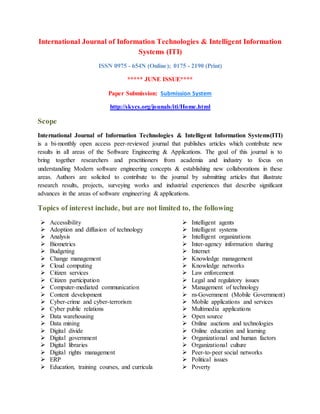
International Journal of Information Technologies & Intelligent Information
Systems (ITI)
ISSN 0975 - 654N (Online); 0175 - 2190 (Print)
***** JUNE ISSUE****
Paper Submission: Submission System
http://skycs.org/jounals/iti/Home.html
Scope
International Journal of Information Technologies & Intelligent Information Systems(ITI)
is a bi-monthly open access peer-reviewed journal that publishes articles which contribute new
results in all areas of the Software Engineering & Applications. The goal of this journal is to
bring together researchers and practitioners from academia and industry to focus on
understanding Modern software engineering concepts & establishing new collaborations in these
areas. Authors are solicited to contribute to the journal by submitting articles that illustrate
research results, projects, surveying works and industrial experiences that describe significant
advances in the areas of software engineering & applications.
Topics of interest include, but are not limited to, the following
 Accessibility
 Adoption and diffusion of technology
 Analysis
 Biometrics
 Budgeting
 Change management
 Cloud computing
 Citizen services
 Citizen participation
 Computer-mediated communication
 Content development
 Cyber-crime and cyber-terrorism
 Cyber public relations
 Data warehousing
 Data mining
 Digital divide
 Digital government
 Digital libraries
 Digital rights management
 ERP
 Education, training courses, and curricula
 Intelligent agents
 Intelligent systems
 Intelligent organizations
 Inter-agency information sharing
 Internet
 Knowledge management
 Knowledge networks
 Law enforcement
 Legal and regulatory issues
 Management of technology
 m-Government (Mobile Government)
 Mobile applications and services
 Multimedia applications
 Open source
 Online auctions and technologies
 Online education and learning
 Organizational and human factors
 Organizational culture
 Peer-to-peer social networks
 Political issues
 Poverty
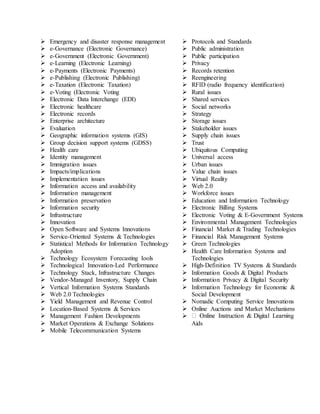
 Emergency and disaster response management
 e-Governance (Electronic Governance)
 e-Government (Electronic Government)
 e-Learning (Electronic Learning)
 e-Payments (Electronic Payments)
 e-Publishing (Electronic Publishing)
 e-Taxation (Electronic Taxation)
 e-Voting (Electronic Voting
 Electronic Data Interchange (EDI)
 Electronic healthcare
 Electronic records
 Enterprise architecture
 Evaluation
 Geographic information systems (GIS)
 Group decision support systems (GDSS)
 Health care
 Identity management
 Immigration issues
 Impacts/implications
 Implementation issues
 Information access and availability
 Information management
 Information preservation
 Information security
 Infrastructure
 Innovation
 Open Software and Systems Innovations
 Service-Oriented Systems & Technologies
 Statistical Methods for Information Technology
Adoption
 Technology Ecosystem Forecasting Iools
 Technological Innovation-Led Performance
 Technology Stack, Infrastructure Changes
 Vendor-Managed Inventory, Supply Chain
 Vertical Information Systems Standards
 Web 2.0 Technologies
 Yield Management and Revenue Control
 Location-Based Systems & Services
 Management Fashion Developments
 Market Operations & Exchange Solutions
 Mobile Telecommunication Systems
 Protocols and Standards
 Public administration
 Public participation
 Privacy
 Records retention
 Reengineering
 RFID (radio frequency identification)
 Rural issues
 Shared services
 Social networks
 Strategy
 Storage issues
 Stakeholder issues
 Supply chain issues
 Trust
 Ubiquitous Computing
 Universal access
 Urban issues
 Value chain issues
 Virtual Reality
 Web 2.0
 Workforce issues
 Education and Information Technology
 Electronic Billing Systems
 Electronic Voting & E-Government Systems
 Environmental Management Technologies
 Financial Market & Trading Technologies
 Financial Risk Management Systems
 Green Technologies
 Health Care Information Systems and
Technologies
 High-Definition TV Systems & Standards
 Information Goods & Digital Products
 Information Privacy & Digital Security
 Information Technology for Economic &
Social Development
 Nomadic Computing Service Innovations
 Online Auctions and Market Mechanisms

Aids
PaperSubmission
Authors are invited to submit papers for this journal through Submission System. Submissions
must be original and should not have been published previously or be under consideration for
publication while being evaluated for this Journal.
Important Dates
 Submission Deadline :June 27, 2020
 Notification :June 30, 2020
 Final Manuscript Due : June 06, 2020
 Publication Date : Determined by the Editor-in-Chief
TO SUBMIT YOUR PAPER, PLEASE CLICK THE FOLLOWING LINK Submission
System.
Contacts
Here's where you can reach us: itijnl@yahoo.com

Iti

  • 1.
    International Journal ofInformation Technologies & Intelligent Information Systems (ITI) ISSN 0975 - 654N (Online); 0175 - 2190 (Print) ***** JUNE ISSUE**** Paper Submission: Submission System http://skycs.org/jounals/iti/Home.html Scope International Journal of Information Technologies & Intelligent Information Systems(ITI) is a bi-monthly open access peer-reviewed journal that publishes articles which contribute new results in all areas of the Software Engineering & Applications. The goal of this journal is to bring together researchers and practitioners from academia and industry to focus on understanding Modern software engineering concepts & establishing new collaborations in these areas. Authors are solicited to contribute to the journal by submitting articles that illustrate research results, projects, surveying works and industrial experiences that describe significant advances in the areas of software engineering & applications. Topics of interest include, but are not limited to, the following  Accessibility  Adoption and diffusion of technology  Analysis  Biometrics  Budgeting  Change management  Cloud computing  Citizen services  Citizen participation  Computer-mediated communication  Content development  Cyber-crime and cyber-terrorism  Cyber public relations  Data warehousing  Data mining  Digital divide  Digital government  Digital libraries  Digital rights management  ERP  Education, training courses, and curricula  Intelligent agents  Intelligent systems  Intelligent organizations  Inter-agency information sharing  Internet  Knowledge management  Knowledge networks  Law enforcement  Legal and regulatory issues  Management of technology  m-Government (Mobile Government)  Mobile applications and services  Multimedia applications  Open source  Online auctions and technologies  Online education and learning  Organizational and human factors  Organizational culture  Peer-to-peer social networks  Political issues  Poverty
  • 2.
     Emergency anddisaster response management  e-Governance (Electronic Governance)  e-Government (Electronic Government)  e-Learning (Electronic Learning)  e-Payments (Electronic Payments)  e-Publishing (Electronic Publishing)  e-Taxation (Electronic Taxation)  e-Voting (Electronic Voting  Electronic Data Interchange (EDI)  Electronic healthcare  Electronic records  Enterprise architecture  Evaluation  Geographic information systems (GIS)  Group decision support systems (GDSS)  Health care  Identity management  Immigration issues  Impacts/implications  Implementation issues  Information access and availability  Information management  Information preservation  Information security  Infrastructure  Innovation  Open Software and Systems Innovations  Service-Oriented Systems & Technologies  Statistical Methods for Information Technology Adoption  Technology Ecosystem Forecasting Iools  Technological Innovation-Led Performance  Technology Stack, Infrastructure Changes  Vendor-Managed Inventory, Supply Chain  Vertical Information Systems Standards  Web 2.0 Technologies  Yield Management and Revenue Control  Location-Based Systems & Services  Management Fashion Developments  Market Operations & Exchange Solutions  Mobile Telecommunication Systems  Protocols and Standards  Public administration  Public participation  Privacy  Records retention  Reengineering  RFID (radio frequency identification)  Rural issues  Shared services  Social networks  Strategy  Storage issues  Stakeholder issues  Supply chain issues  Trust  Ubiquitous Computing  Universal access  Urban issues  Value chain issues  Virtual Reality  Web 2.0  Workforce issues  Education and Information Technology  Electronic Billing Systems  Electronic Voting & E-Government Systems  Environmental Management Technologies  Financial Market & Trading Technologies  Financial Risk Management Systems  Green Technologies  Health Care Information Systems and Technologies  High-Definition TV Systems & Standards  Information Goods & Digital Products  Information Privacy & Digital Security  Information Technology for Economic & Social Development  Nomadic Computing Service Innovations  Online Auctions and Market Mechanisms  Aids
  • 3.
    PaperSubmission Authors are invitedto submit papers for this journal through Submission System. Submissions must be original and should not have been published previously or be under consideration for publication while being evaluated for this Journal. Important Dates  Submission Deadline :June 27, 2020  Notification :June 30, 2020  Final Manuscript Due : June 06, 2020  Publication Date : Determined by the Editor-in-Chief TO SUBMIT YOUR PAPER, PLEASE CLICK THE FOLLOWING LINK Submission System. Contacts Here's where you can reach us: itijnl@yahoo.com