Sharing Photos and 
Images 
Chapter 9
WHAT IS A PHOTO SHARING SITE? 
•Photo sharing sites let users upload photos and 
other images for public or private consumption, 
allowing them to comment, rate and tag the 
pictures.
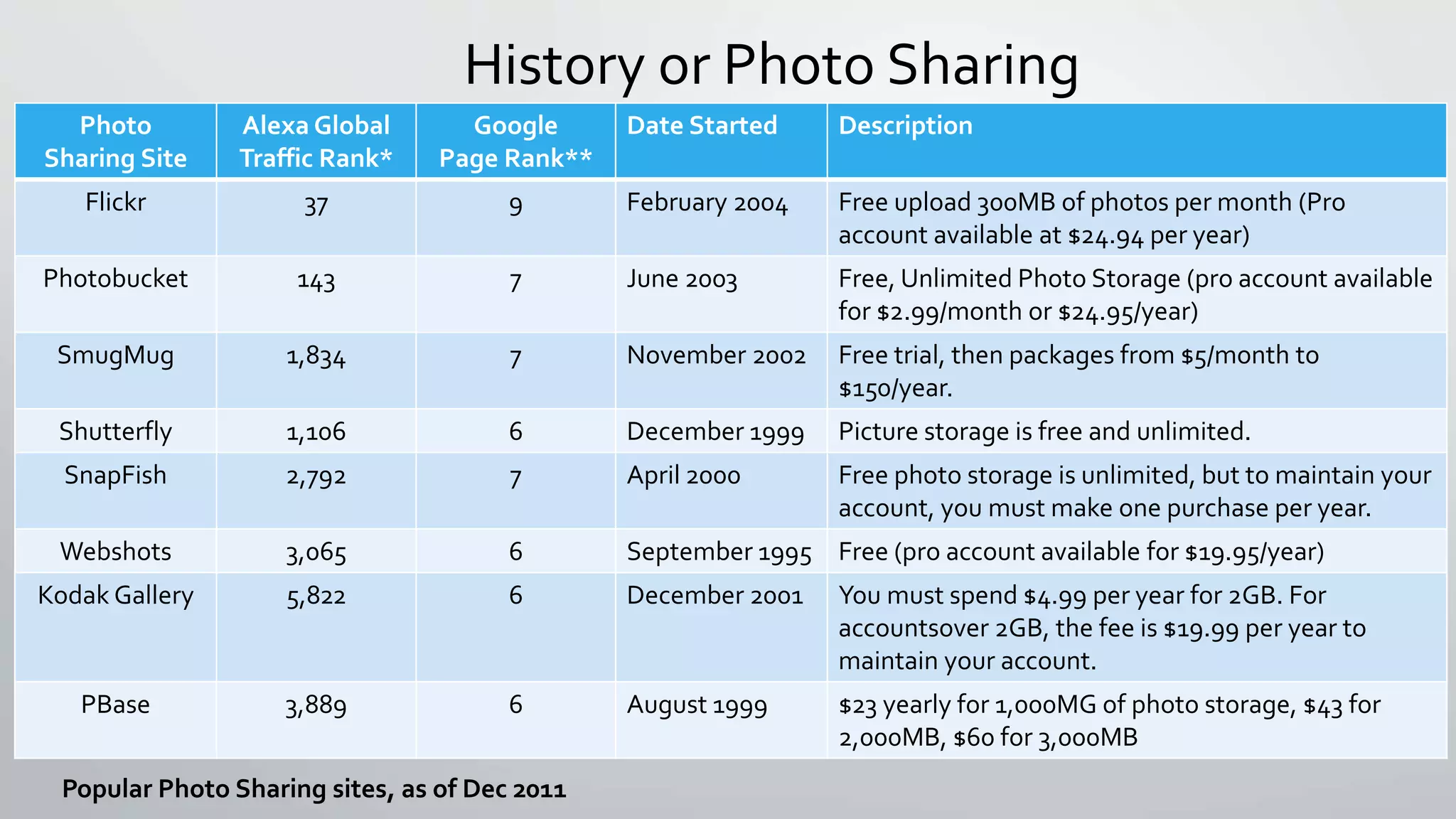
History or Photo Sharing 
Photo 
Sharing Site 
Alexa Global 
Traffic Rank* 
Google 
Page Rank** 
Date Started Description 
Flickr 37 9 February 2004 Free upload 300MB of photos per month (Pro 
account available at $24.94 per year) 
Photobucket 143 7 June 2003 Free, Unlimited Photo Storage (pro account available 
for $2.99/month or $24.95/year) 
SmugMug 1,834 7 November 2002 Free trial, then packages from $5/month to 
$150/year. 
Shutterfly 1,106 6 December 1999 Picture storage is free and unlimited. 
SnapFish 2,792 7 April 2000 Free photo storage is unlimited, but to maintain your 
account, you must make one purchase per year. 
Webshots 3,065 6 September 1995 Free (pro account available for $19.95/year) 
Kodak Gallery 5,822 6 December 2001 You must spend $4.99 per year for 2GB. For 
accountsover 2GB, the fee is $19.99 per year to 
maintain your account. 
PBase 3,889 6 August 1999 $23 yearly for 1,000MG of photo storage, $43 for 
2,000MB, $60 for 3,000MB 
Popular Photo Sharing sites, as of Dec 2011
Benefits of Marketing with Online Photos and 
Other Images 
1. Showcase a product 
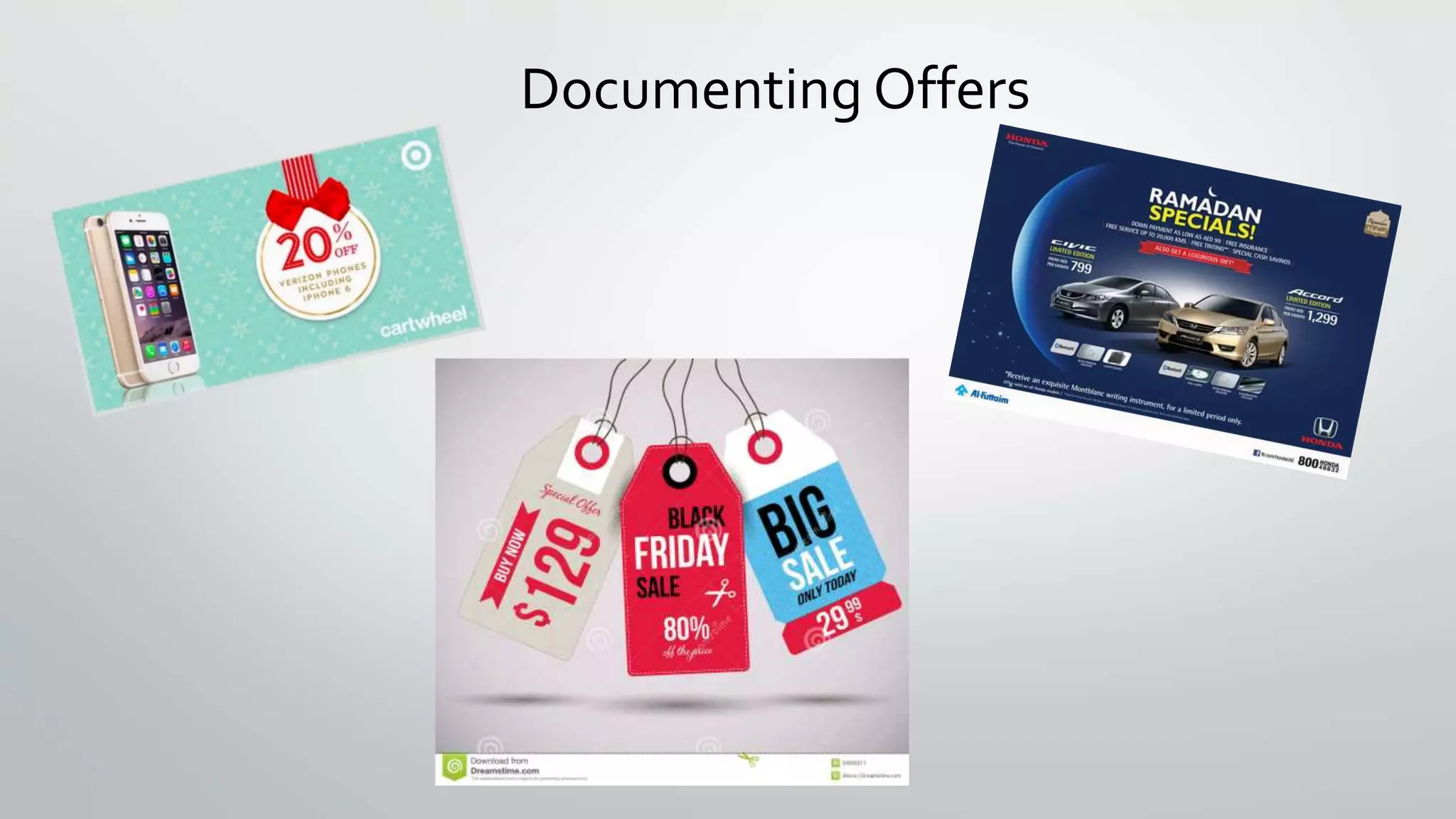
2. Document offers 
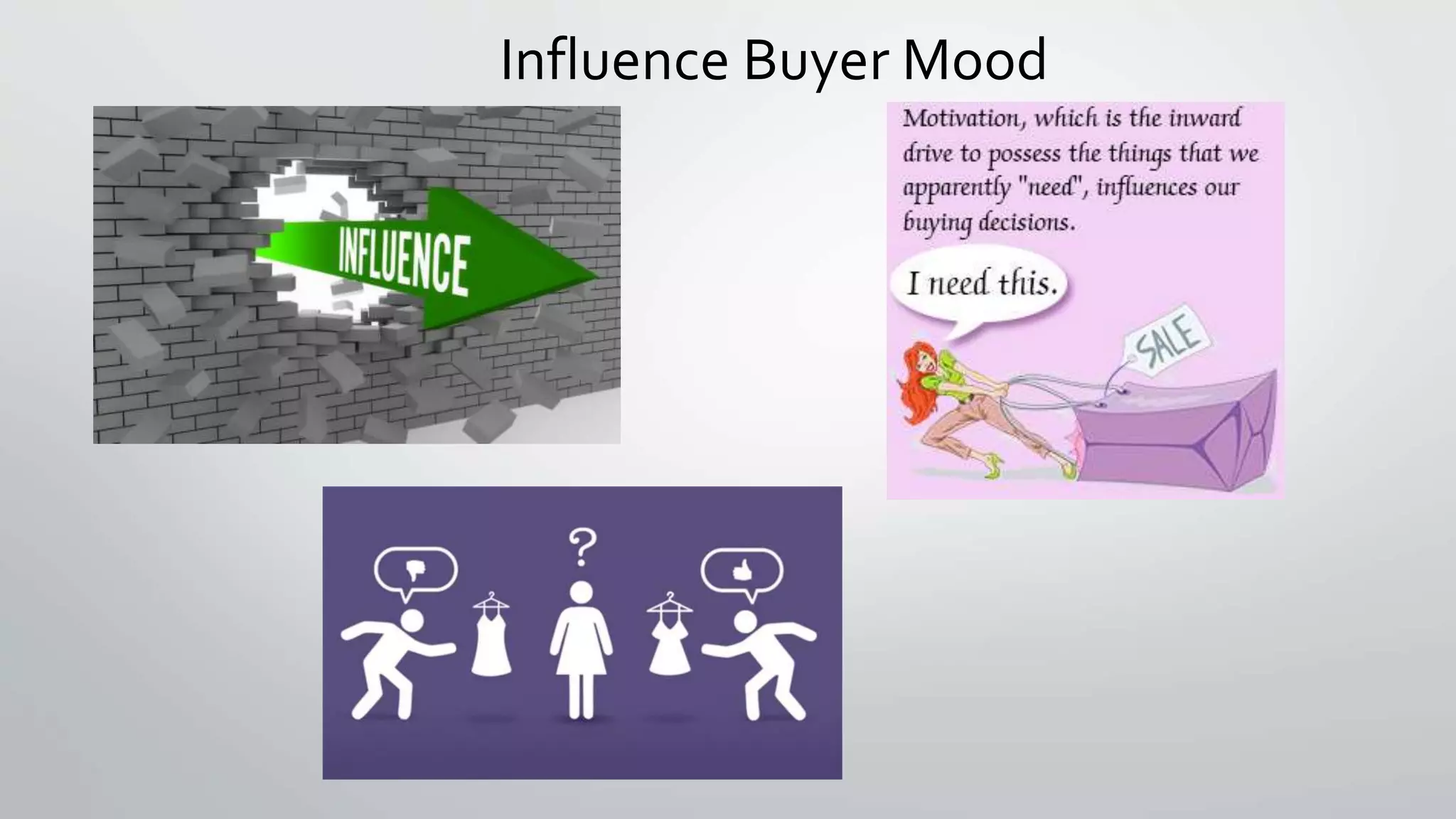
3. Influence buyer mood
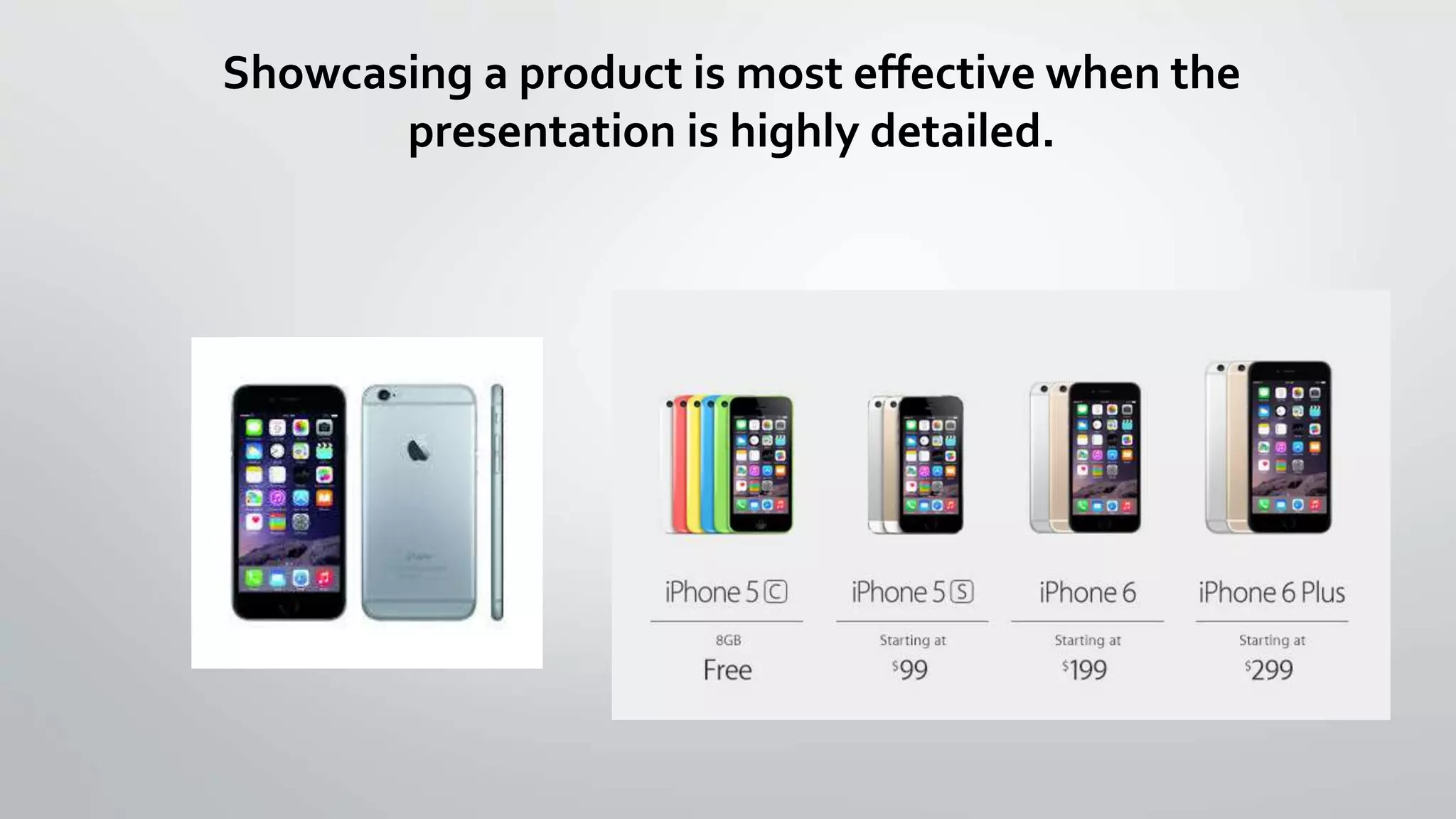
Showcasing a product is most effective when the 
presentation is highly detailed.
Documenting Offers
Influence Buyer Mood
Additional Benefits 
• Images can demonstrate a company’s values and beliefs which can persuade 
potential buyers without showcasing a product. 
• Drive web traffic towards a product website. 
• Photo market campaigns are low cost and low effort.
Disadvantage(s) of Marketing with Online Photos 
and Other Images? 
Some companies shy away from distributing product images and 
specifications, fearing that their trade secrets will be uncovered. 
Example 
Beauty of Nyn one of a 
kind custom earrings 
and accessories.
Marketing with Photo Sharing Sites 
• Determine the target market for images; Different photo sharing sites cater to 
different clientele. 
Demographic examples could include: 
• College-age viewers 
• Women 
• Professional photographers and artists 
Additionally… 
• Nature of images should be appropriate for the platform used. 
• Use of multiple photo sharing sites is a good idea to expand reach to different audiences
Stock Photos 
• Stock photos are professional and staged photographs produced 
by picture agencies or photo libraries. 
These photos are less likely to be shared on photo sharing sites than more 
unplanned and spontaneous images.
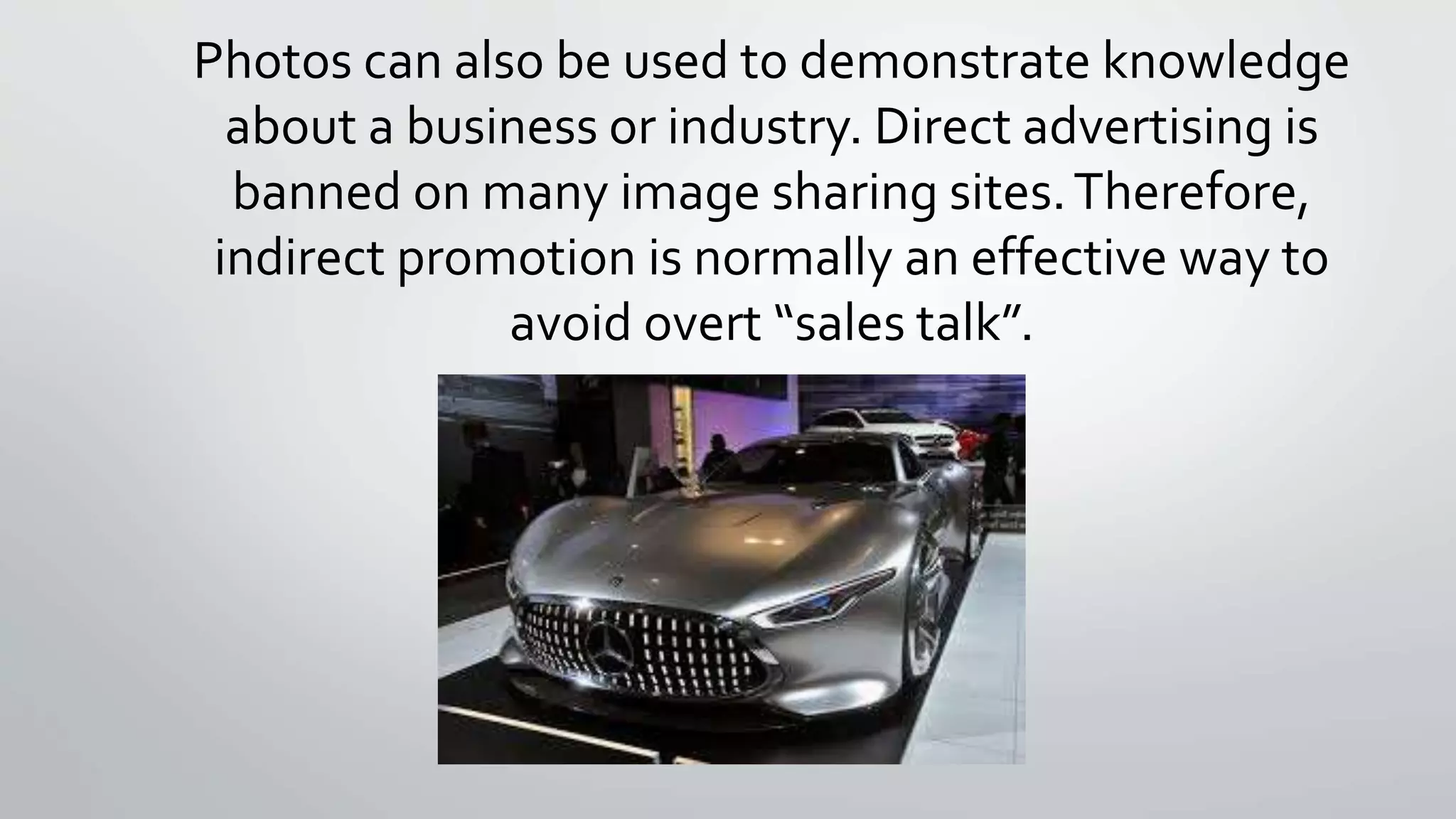
Photos can also be used to demonstrate knowledge 
about a business or industry. Direct advertising is 
banned on many image sharing sites. Therefore, 
indirect promotion is normally an effective way to 
avoid overt “sales talk”.
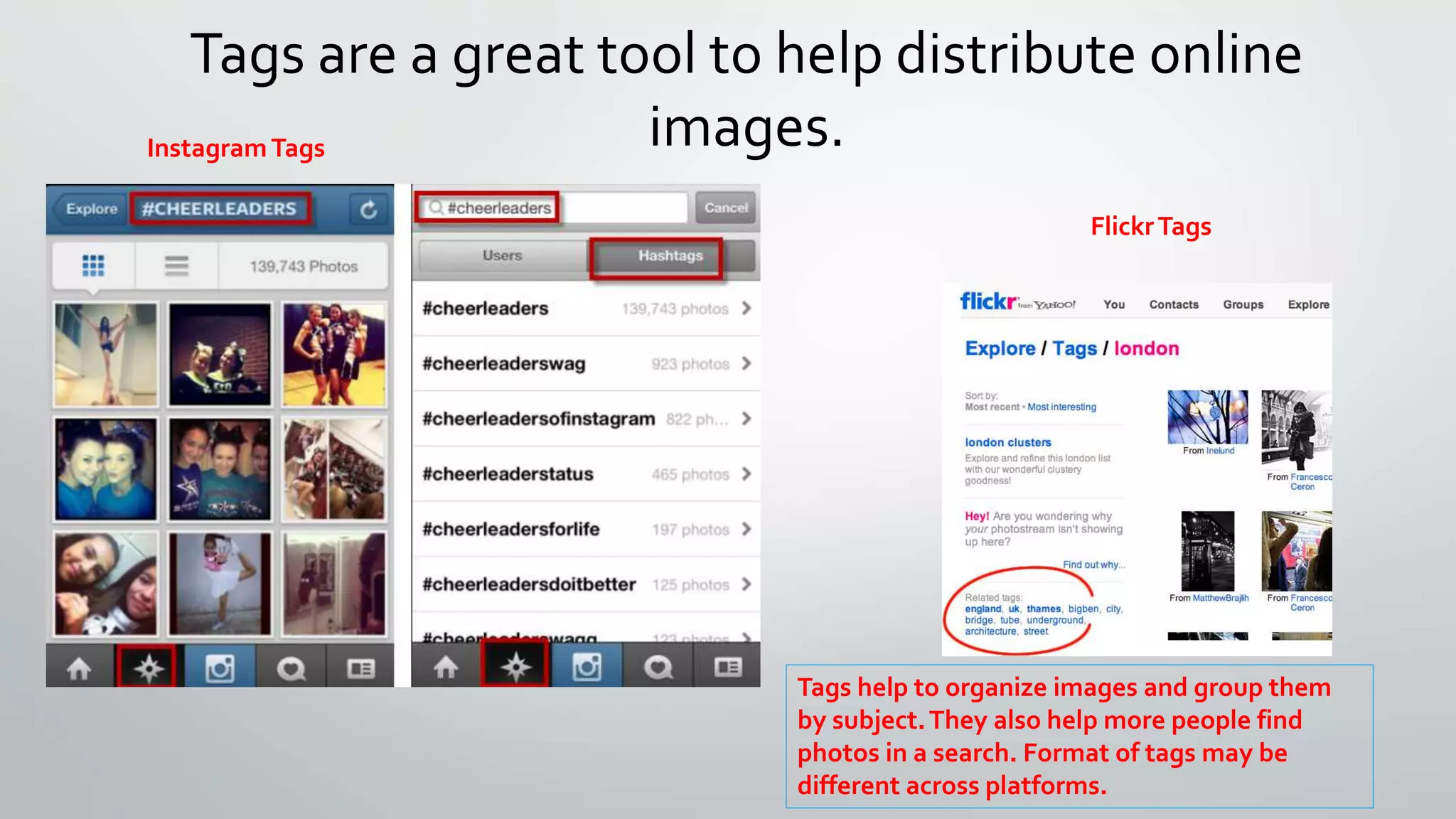
Tags are a great tool to help distribute online 
images. 
Tags help to organize images and group them 
by subject. They also help more people find 
photos in a search. Format of tags may be 
different across platforms. 
Instagram Tags 
Flickr Tags
Legal Permissions 
• Not every photo must be original content. However, when sharing unoriginal 
images, it’s important to keep legal issues in mind regarding permissions and 
attributions. 
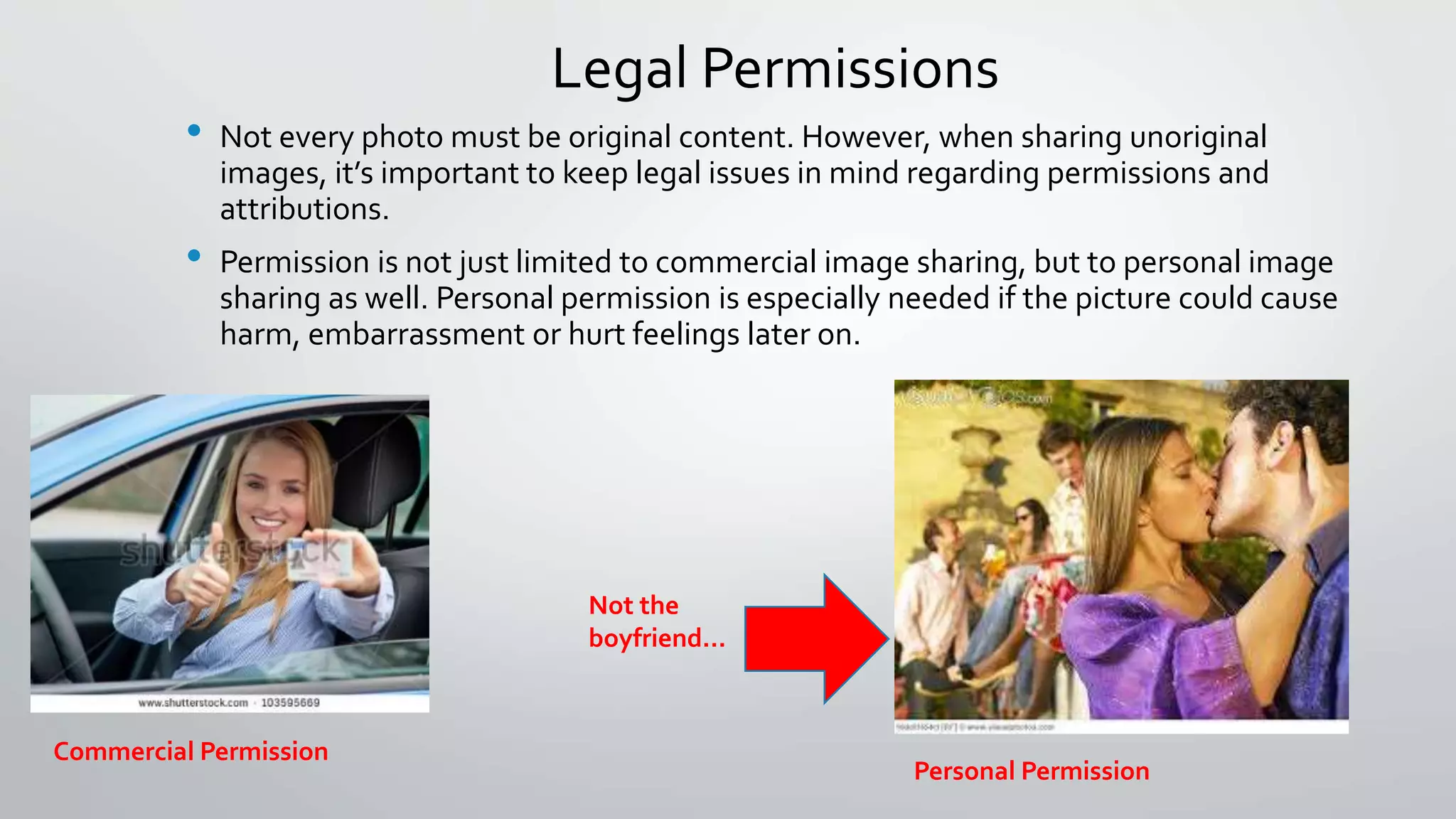
• Permission is not just limited to commercial image sharing, but to personal image 
sharing as well. Personal permission is especially needed if the picture could cause 
harm, embarrassment or hurt feelings later on. 
Not the 
boyfriend… 
Commercial Permission 
Personal Permission
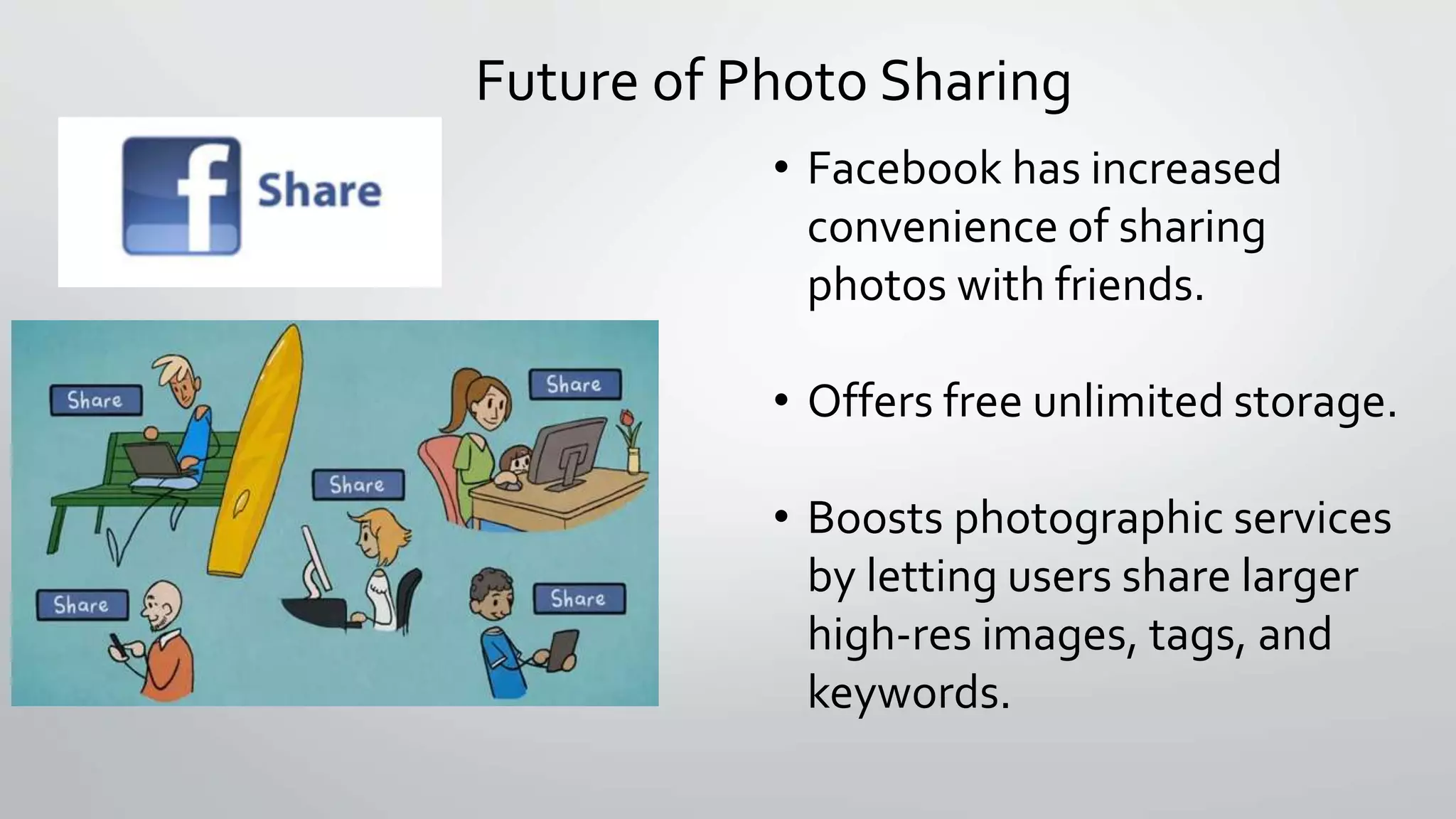
Future of Photo Sharing 
• Facebook has increased 
convenience of sharing 
photos with friends. 
• Offers free unlimited storage. 
• Boosts photographic services 
by letting users share larger 
high-res images, tags, and 
keywords.

Issues with social media

  • 1.
    Sharing Photos and Images Chapter 9
  • 2.
    WHAT IS APHOTO SHARING SITE? •Photo sharing sites let users upload photos and other images for public or private consumption, allowing them to comment, rate and tag the pictures.
  • 3.
    History or PhotoSharing Photo Sharing Site Alexa Global Traffic Rank* Google Page Rank** Date Started Description Flickr 37 9 February 2004 Free upload 300MB of photos per month (Pro account available at $24.94 per year) Photobucket 143 7 June 2003 Free, Unlimited Photo Storage (pro account available for $2.99/month or $24.95/year) SmugMug 1,834 7 November 2002 Free trial, then packages from $5/month to $150/year. Shutterfly 1,106 6 December 1999 Picture storage is free and unlimited. SnapFish 2,792 7 April 2000 Free photo storage is unlimited, but to maintain your account, you must make one purchase per year. Webshots 3,065 6 September 1995 Free (pro account available for $19.95/year) Kodak Gallery 5,822 6 December 2001 You must spend $4.99 per year for 2GB. For accountsover 2GB, the fee is $19.99 per year to maintain your account. PBase 3,889 6 August 1999 $23 yearly for 1,000MG of photo storage, $43 for 2,000MB, $60 for 3,000MB Popular Photo Sharing sites, as of Dec 2011
  • 4.
    Benefits of Marketingwith Online Photos and Other Images 1. Showcase a product 2. Document offers 3. Influence buyer mood
  • 5.
    Showcasing a productis most effective when the presentation is highly detailed.
  • 6.
  • 7.
  • 8.
    Additional Benefits •Images can demonstrate a company’s values and beliefs which can persuade potential buyers without showcasing a product. • Drive web traffic towards a product website. • Photo market campaigns are low cost and low effort.
  • 9.
    Disadvantage(s) of Marketingwith Online Photos and Other Images? Some companies shy away from distributing product images and specifications, fearing that their trade secrets will be uncovered. Example Beauty of Nyn one of a kind custom earrings and accessories.
  • 10.
    Marketing with PhotoSharing Sites • Determine the target market for images; Different photo sharing sites cater to different clientele. Demographic examples could include: • College-age viewers • Women • Professional photographers and artists Additionally… • Nature of images should be appropriate for the platform used. • Use of multiple photo sharing sites is a good idea to expand reach to different audiences
  • 11.
    Stock Photos •Stock photos are professional and staged photographs produced by picture agencies or photo libraries. These photos are less likely to be shared on photo sharing sites than more unplanned and spontaneous images.
  • 12.
    Photos can alsobe used to demonstrate knowledge about a business or industry. Direct advertising is banned on many image sharing sites. Therefore, indirect promotion is normally an effective way to avoid overt “sales talk”.
  • 13.
    Tags are agreat tool to help distribute online images. Tags help to organize images and group them by subject. They also help more people find photos in a search. Format of tags may be different across platforms. Instagram Tags Flickr Tags
  • 14.
    Legal Permissions •Not every photo must be original content. However, when sharing unoriginal images, it’s important to keep legal issues in mind regarding permissions and attributions. • Permission is not just limited to commercial image sharing, but to personal image sharing as well. Personal permission is especially needed if the picture could cause harm, embarrassment or hurt feelings later on. Not the boyfriend… Commercial Permission Personal Permission
  • 15.
    Future of PhotoSharing • Facebook has increased convenience of sharing photos with friends. • Offers free unlimited storage. • Boosts photographic services by letting users share larger high-res images, tags, and keywords.