Isotope Analysis in the Andes
ABSTRACTED FROM A CLASS LECTURE OF
Danielle S. Kurin
Department of Anthropology ● UC Santa Barbara
1
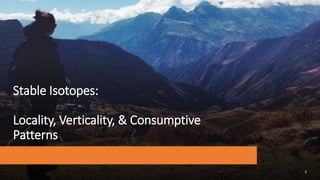
Stable Isotopes:
Locality, Verticality, & Consumptive
Patterns
2
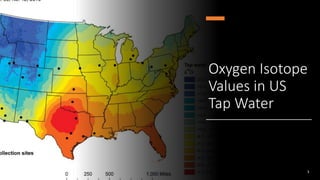
Oxygen Isotope
Values in US
Tap Water
3
4
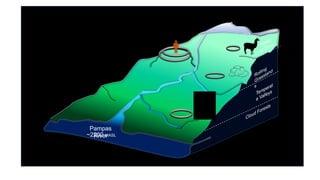
18Oapp reflects the latitude and
elevation of imbibed water
18Oxygenapp Isotope values in the sierra:
Hi & Dry = More negative values
Lo & Steamy = Less negative values
16O evaporates more easily than 18O
Pampas
River~2200 MASL
5
Pampas River
2200 MASL
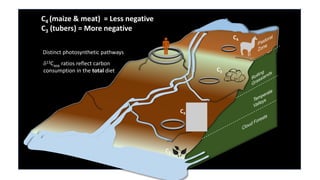
Carbon Isotope values in the sierra:
C4 (maize & meat) = Less negative
C3 (tubers) = More negative
C4
C4
C3
C3
13Capp ratios reflect carbon
consumption in the total diet
Distinct photosynthetic pathways
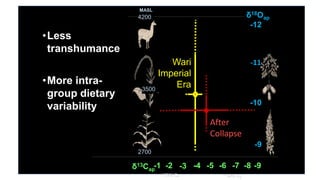
δ13Cap
-1 -2 -3 -4 -5 -6 -7 -8 -9
MASL
~75% C₄ ~50% C3
Wari
Imperial
Era
After
Collapse
-9
-10
δ18Oap
-12
4200
-11
•Less
transhumance
•More intra-
group dietary
variability
3500
2700
Carbon Values:
4200
2200
-1 -2 -3 -4 -5 -6 -7 -8 -9
~100% C₄
0
~50% C3
-9
-10
-11
Oxygen
Values
(offsets)
-12
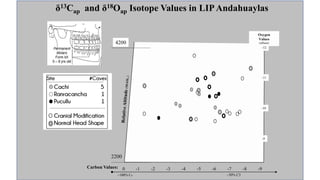
Cachi 5
Ranracancha1
Pucullu 1
Cranial Modification
Normal Head Shape
Site #Caves
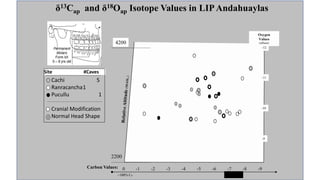
δ13Cap and δ18Oap Isotope Values in LIPAndahuaylas
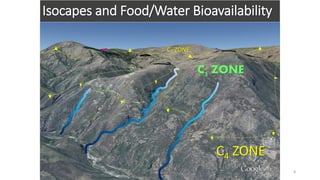
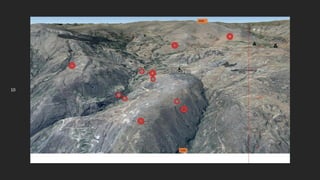
Isocapes and Food/Water Bioavailability
8
C4 ZONE
C4 ZONE
C3 ZONE
Carbon Values:
4200
2200
-1 -2 -3 -4 -5 -6 -7 -8 -9
~100% C₄
0
~50% C3
-9
-10
-11
Oxygen
Values
(offsets)
-12
δ13Cap and δ18Oap Isotope Values in LIPAndahuaylas
10
δ13Cap Values:
4200
2200
-1 -2 -3 -4 -5 -6 -7 -8 -9
~100% C₄
0
~50% C3
-9
-10
-11
δ18Oap Values
(offsets)
-12
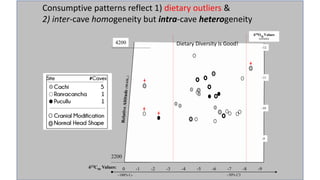
Consumptive patterns reflect 1) dietary outliers &
2) inter-cave homogeneity but intra-cave heterogeneity
Dietary Diversity is Good!

Isotope Analysis in the Andes

  • 1.
    Isotope Analysis inthe Andes ABSTRACTED FROM A CLASS LECTURE OF Danielle S. Kurin Department of Anthropology ● UC Santa Barbara 1
  • 2.
  • 3.
  • 4.
    4 18Oapp reflects thelatitude and elevation of imbibed water 18Oxygenapp Isotope values in the sierra: Hi & Dry = More negative values Lo & Steamy = Less negative values 16O evaporates more easily than 18O Pampas River~2200 MASL
  • 5.
    5 Pampas River 2200 MASL CarbonIsotope values in the sierra: C4 (maize & meat) = Less negative C3 (tubers) = More negative C4 C4 C3 C3 13Capp ratios reflect carbon consumption in the total diet Distinct photosynthetic pathways
  • 6.
    δ13Cap -1 -2 -3-4 -5 -6 -7 -8 -9 MASL ~75% C₄ ~50% C3 Wari Imperial Era After Collapse -9 -10 δ18Oap -12 4200 -11 •Less transhumance •More intra- group dietary variability 3500 2700
  • 7.
    Carbon Values: 4200 2200 -1 -2-3 -4 -5 -6 -7 -8 -9 ~100% C₄ 0 ~50% C3 -9 -10 -11 Oxygen Values (offsets) -12 Cachi 5 Ranracancha1 Pucullu 1 Cranial Modification Normal Head Shape Site #Caves δ13Cap and δ18Oap Isotope Values in LIPAndahuaylas
  • 8.
    Isocapes and Food/WaterBioavailability 8 C4 ZONE C4 ZONE C3 ZONE
  • 9.
    Carbon Values: 4200 2200 -1 -2-3 -4 -5 -6 -7 -8 -9 ~100% C₄ 0 ~50% C3 -9 -10 -11 Oxygen Values (offsets) -12 δ13Cap and δ18Oap Isotope Values in LIPAndahuaylas
  • 10.
  • 11.
    δ13Cap Values: 4200 2200 -1 -2-3 -4 -5 -6 -7 -8 -9 ~100% C₄ 0 ~50% C3 -9 -10 -11 δ18Oap Values (offsets) -12 Consumptive patterns reflect 1) dietary outliers & 2) inter-cave homogeneity but intra-cave heterogeneity Dietary Diversity is Good!