ISO/TC 176/SC 2/N1283
ISO 9001:2015
Risk-based thinking
1
ISO/TC176/SC2/N1283
To explain the concept of risk-based thinking in
ISO 9001:2015
Purpose of this presentation
2
ISO/TC176/SC2/N1283
This presentation
 Developed by the ISO subcommittee responsible
for ISO 9001
 Available for unrestricted public use
3
ISO/TC176/SC2/N1283
What is risk-based thinking?
 Risk-based thinking is something we all do
automatically and often sub-consciously to get
the best result
 The concept of risk has always been implicit in
ISO 9001 – this edition makes it more explicit
and builds it into the whole management system
 Risk-based thinking ensures risk is considered
from the beginning and throughout
 Risk-based thinking makes preventive action
part of strategic and operational planning
4
ISO/TC176/SC2/N1283
Where is risk addressed in
ISO 9001:2015?
5
ISO/TC176/SC2/N1283
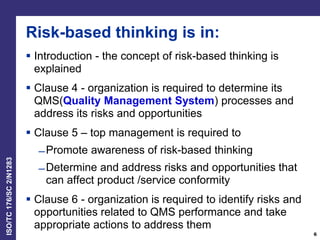
Risk-based thinking is in:
 Introduction - the concept of risk-based thinking is
explained
 Clause 4 - organization is required to determine its
QMS(Quality Management System) processes and
address its risks and opportunities
 Clause 5 – top management is required to
̶ Promote awareness of risk-based thinking
̶ Determine and address risks and opportunities that
can affect product /service conformity
 Clause 6 - organization is required to identify risks and
opportunities related to QMS performance and take
appropriate actions to address them
6
ISO/TC176/SC2/N1283
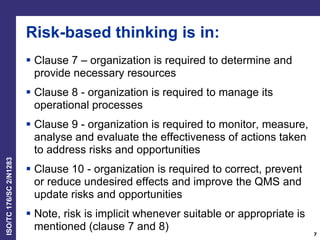
Risk-based thinking is in:
 Clause 7 – organization is required to determine and
provide necessary resources
 Clause 8 - organization is required to manage its
operational processes
 Clause 9 - organization is required to monitor, measure,
analyse and evaluate the effectiveness of actions taken
to address risks and opportunities
 Clause 10 - organization is required to correct, prevent
or reduce undesired effects and improve the QMS and
update risks and opportunities
 Note, risk is implicit whenever suitable or appropriate is
mentioned (clause 7 and 8)
7
ISO/TC176/SC2/N1283
Why use risk-based thinking?
Successful organizations intuitively apply risk-
based thinking because it brings benefits that:
 improve governance
 establish a proactive culture of improvement
 assist with compliance
 assure consistency of quality of products and
services
 improve customer confidence and satisfaction
8
ISO/TC176/SC2/N1283
How do I do it?
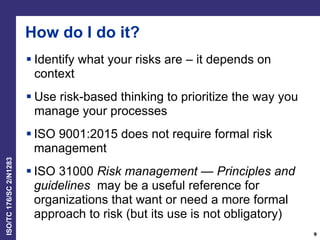
 Identify what your risks are – it depends on
context
 Use risk-based thinking to prioritize the way you
manage your processes
 ISO 9001:2015 does not require formal risk
management
 ISO 31000 Risk management — Principles and
guidelines may be a useful reference for
organizations that want or need a more formal
approach to risk (but its use is not obligatory)
9
ISO/TC176/SC2/N1283
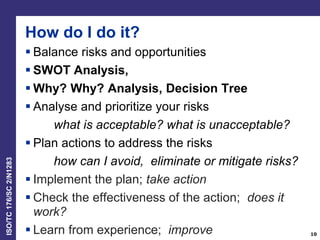
How do I do it?
 Balance risks and opportunities
 SWOT Analysis,
 Why? Why? Analysis, Decision Tree
 Analyse and prioritize your risks
what is acceptable? what is unacceptable?
 Plan actions to address the risks
how can I avoid, eliminate or mitigate risks?
 Implement the plan; take action
 Check the effectiveness of the action; does it
work?
 Learn from experience; improve 10
ISO/TC176/SC2/N1283
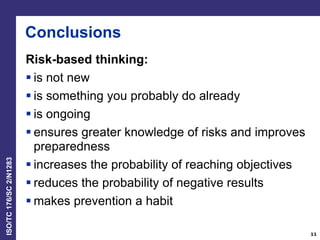
Conclusions
Risk-based thinking:
 is not new
 is something you probably do already
 is ongoing
 ensures greater knowledge of risks and improves
preparedness
 increases the probability of reaching objectives
 reduces the probability of negative results
 makes prevention a habit
11
ISO/TC176/SC2/N1283

Iso9001 2015 risk_based_thinking

  • 1.
    ISO/TC 176/SC 2/N1283 ISO9001:2015 Risk-based thinking 1
  • 2.
    ISO/TC176/SC2/N1283 To explain theconcept of risk-based thinking in ISO 9001:2015 Purpose of this presentation 2
  • 3.
    ISO/TC176/SC2/N1283 This presentation  Developedby the ISO subcommittee responsible for ISO 9001  Available for unrestricted public use 3
  • 4.
    ISO/TC176/SC2/N1283 What is risk-basedthinking?  Risk-based thinking is something we all do automatically and often sub-consciously to get the best result  The concept of risk has always been implicit in ISO 9001 – this edition makes it more explicit and builds it into the whole management system  Risk-based thinking ensures risk is considered from the beginning and throughout  Risk-based thinking makes preventive action part of strategic and operational planning 4
  • 5.
    ISO/TC176/SC2/N1283 Where is riskaddressed in ISO 9001:2015? 5
  • 6.
    ISO/TC176/SC2/N1283 Risk-based thinking isin:  Introduction - the concept of risk-based thinking is explained  Clause 4 - organization is required to determine its QMS(Quality Management System) processes and address its risks and opportunities  Clause 5 – top management is required to ̶ Promote awareness of risk-based thinking ̶ Determine and address risks and opportunities that can affect product /service conformity  Clause 6 - organization is required to identify risks and opportunities related to QMS performance and take appropriate actions to address them 6
  • 7.
    ISO/TC176/SC2/N1283 Risk-based thinking isin:  Clause 7 – organization is required to determine and provide necessary resources  Clause 8 - organization is required to manage its operational processes  Clause 9 - organization is required to monitor, measure, analyse and evaluate the effectiveness of actions taken to address risks and opportunities  Clause 10 - organization is required to correct, prevent or reduce undesired effects and improve the QMS and update risks and opportunities  Note, risk is implicit whenever suitable or appropriate is mentioned (clause 7 and 8) 7
  • 8.
    ISO/TC176/SC2/N1283 Why use risk-basedthinking? Successful organizations intuitively apply risk- based thinking because it brings benefits that:  improve governance  establish a proactive culture of improvement  assist with compliance  assure consistency of quality of products and services  improve customer confidence and satisfaction 8
  • 9.
    ISO/TC176/SC2/N1283 How do Ido it?  Identify what your risks are – it depends on context  Use risk-based thinking to prioritize the way you manage your processes  ISO 9001:2015 does not require formal risk management  ISO 31000 Risk management — Principles and guidelines may be a useful reference for organizations that want or need a more formal approach to risk (but its use is not obligatory) 9
  • 10.
    ISO/TC176/SC2/N1283 How do Ido it?  Balance risks and opportunities  SWOT Analysis,  Why? Why? Analysis, Decision Tree  Analyse and prioritize your risks what is acceptable? what is unacceptable?  Plan actions to address the risks how can I avoid, eliminate or mitigate risks?  Implement the plan; take action  Check the effectiveness of the action; does it work?  Learn from experience; improve 10
  • 11.
    ISO/TC176/SC2/N1283 Conclusions Risk-based thinking:  isnot new  is something you probably do already  is ongoing  ensures greater knowledge of risks and improves preparedness  increases the probability of reaching objectives  reduces the probability of negative results  makes prevention a habit 11
  • 12.