Introduction to the
Board of Directors
The Board of Directors plays a pivotal role in guiding the strategic direction of
our organization. Comprised of accomplished leaders from diverse
backgrounds, the board oversees key decisions and governance matters.
by Vansi Gunti
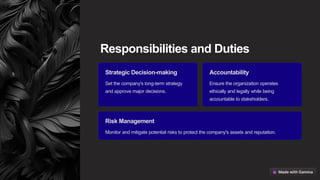
Responsibilities and Duties
Strategic Decision-making
Set the company's long-term strategy
and approve major decisions.
Accountability
Ensure the organization operates
ethically and legally while being
accountable to stakeholders.
Risk Management
Monitor and mitigate potential risks to protect the company's assets and reputation.
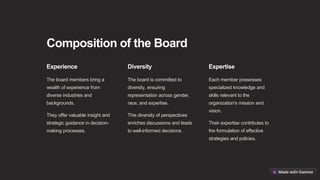
Composition of the Board
Experience
The board members bring a
wealth of experience from
diverse industries and
backgrounds.
They offer valuable insight and
strategic guidance in decision-
making processes.
Diversity
The board is committed to
diversity, ensuring
representation across gender,
race, and expertise.
This diversity of perspectives
enriches discussions and leads
to well-informed decisions.
Expertise
Each member possesses
specialized knowledge and
skills relevant to the
organization's mission and
vision.
Their expertise contributes to
the formulation of effective
strategies and policies.
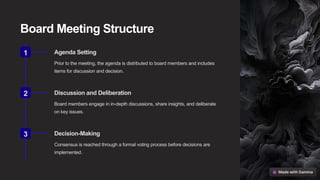
Board Meeting Structure
1 Agenda Setting
Prior to the meeting, the agenda is distributed to board members and includes
items for discussion and decision.
2 Discussion and Deliberation
Board members engage in in-depth discussions, share insights, and deliberate
on key issues.
3 Decision-Making
Consensus is reached through a formal voting process before decisions are
implemented.
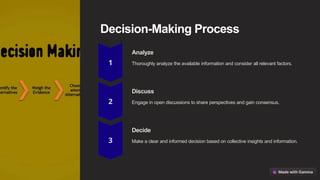
Decision-Making Process
Analyze
Thoroughly analyze the available information and consider all relevant factors.
Discuss
Engage in open discussions to share perspectives and gain consensus.
Decide
Make a clear and informed decision based on collective insights and information.
Board Committees
Board committees play a crucial role in overseeing specific areas of
governance and management, such as audit, compensation, and
nominating. Each committee consists of board members with expertise in the
relevant fields, ensuring comprehensive decision-making and strategic
direction.
The committees' functions involve in-depth analysis, review, and
recommendations to the full board, enabling structured and well-informed
decision-making processes.
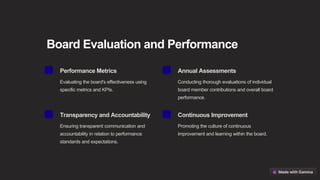
Board Evaluation and Performance
Performance Metrics
Evaluating the board's effectiveness using
specific metrics and KPIs.
Annual Assessments
Conducting thorough evaluations of individual
board member contributions and overall board
performance.
Transparency and Accountability
Ensuring transparent communication and
accountability in relation to performance
standards and expectations.
Continuous Improvement
Promoting the culture of continuous
improvement and learning within the board.
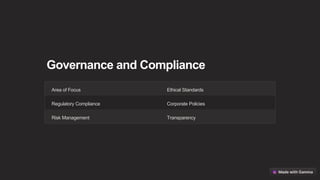
Governance and Compliance
Area of Focus Ethical Standards
Regulatory Compliance Corporate Policies
Risk Management Transparency
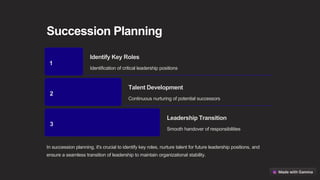
Succession Planning
1
Identify Key Roles
Identification of critical leadership positions
2
Talent Development
Continuous nurturing of potential successors
3
Leadership Transition
Smooth handover of responsibilities
In succession planning, it's crucial to identify key roles, nurture talent for future leadership positions, and
ensure a seamless transition of leadership to maintain organizational stability.
Conclusion and Next Steps
As we conclude, the Board of Directors plays a crucial role in guiding the organization toward success. The
next steps involve implementing the decisions made and continuously evaluating governance processes.
Effective succession planning is vital for the board's longevity and impact.

Introduction-to-the-Board-of-Directors.pptx

  • 1.
    Introduction to the Boardof Directors The Board of Directors plays a pivotal role in guiding the strategic direction of our organization. Comprised of accomplished leaders from diverse backgrounds, the board oversees key decisions and governance matters. by Vansi Gunti
  • 2.
    Responsibilities and Duties StrategicDecision-making Set the company's long-term strategy and approve major decisions. Accountability Ensure the organization operates ethically and legally while being accountable to stakeholders. Risk Management Monitor and mitigate potential risks to protect the company's assets and reputation.
  • 3.
    Composition of theBoard Experience The board members bring a wealth of experience from diverse industries and backgrounds. They offer valuable insight and strategic guidance in decision- making processes. Diversity The board is committed to diversity, ensuring representation across gender, race, and expertise. This diversity of perspectives enriches discussions and leads to well-informed decisions. Expertise Each member possesses specialized knowledge and skills relevant to the organization's mission and vision. Their expertise contributes to the formulation of effective strategies and policies.
  • 4.
    Board Meeting Structure 1Agenda Setting Prior to the meeting, the agenda is distributed to board members and includes items for discussion and decision. 2 Discussion and Deliberation Board members engage in in-depth discussions, share insights, and deliberate on key issues. 3 Decision-Making Consensus is reached through a formal voting process before decisions are implemented.
  • 5.
    Decision-Making Process Analyze Thoroughly analyzethe available information and consider all relevant factors. Discuss Engage in open discussions to share perspectives and gain consensus. Decide Make a clear and informed decision based on collective insights and information.
  • 6.
    Board Committees Board committeesplay a crucial role in overseeing specific areas of governance and management, such as audit, compensation, and nominating. Each committee consists of board members with expertise in the relevant fields, ensuring comprehensive decision-making and strategic direction. The committees' functions involve in-depth analysis, review, and recommendations to the full board, enabling structured and well-informed decision-making processes.
  • 7.
    Board Evaluation andPerformance Performance Metrics Evaluating the board's effectiveness using specific metrics and KPIs. Annual Assessments Conducting thorough evaluations of individual board member contributions and overall board performance. Transparency and Accountability Ensuring transparent communication and accountability in relation to performance standards and expectations. Continuous Improvement Promoting the culture of continuous improvement and learning within the board.
  • 8.
    Governance and Compliance Areaof Focus Ethical Standards Regulatory Compliance Corporate Policies Risk Management Transparency
  • 9.
    Succession Planning 1 Identify KeyRoles Identification of critical leadership positions 2 Talent Development Continuous nurturing of potential successors 3 Leadership Transition Smooth handover of responsibilities In succession planning, it's crucial to identify key roles, nurture talent for future leadership positions, and ensure a seamless transition of leadership to maintain organizational stability.
  • 10.
    Conclusion and NextSteps As we conclude, the Board of Directors plays a crucial role in guiding the organization toward success. The next steps involve implementing the decisions made and continuously evaluating governance processes. Effective succession planning is vital for the board's longevity and impact.