Introduction to Medical
Terminology
And
Medical Abbreviation
Medical terminology is language that is used to
describe anatomical structures, processes,
conditions, medical procedures, and treatments.
At first glance, medical terms may appear
intimidating, but once you understand the standard
structure of medical words and the definitions of
some common word elements, the meaning of
thousands of medical terms is easily unlocked.
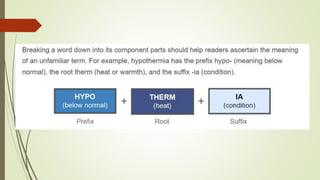
Most medical terms adhere to a fixed structure of a
prefix, a root, and a suffix. These word components
are assembled like building blocks to create a vast
vocabulary.
 Basic Term Structure
 Medical terms are composed of these standard word parts:
• Prefix: When included, the prefix appears at the beginning of a
medical term and usually indicates a location, direction, type, quality,
or quantity.
• Root: The root gives a term its essential meaning. Nearly all medical
terms contain at least one root. When a prefix is absent, the term
begins with a root.
• Suffix: The suffix appears at the end of a term and may indicate a
specialty, test, procedure, function, disorder, or status. Otherwise, it
may simply define whether the word is a noun, verb, or adjective.
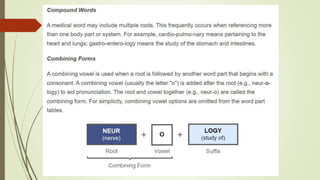
• Combining vowel: A combining vowel (usually the letter “o”) may be
added between word parts to aid in pronunciation.
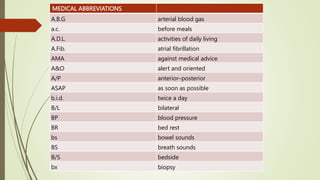
MEDICAL ABBREVIATIONS
A.B.G arterial blood gas
a.c. before meals
A.D.L. activities of daily living
A.Fib. atrial fibrillation
AMA against medical advice
A&O alert and oriented
A/P anterior–posterior
ASAP as soon as possible
b.i.d. twice a day
B/L bilateral
BP blood pressure
BR bed rest
bs bowel sounds
BS breath sounds
B/S bedside
bx biopsy
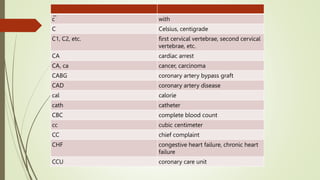
c̅ with
C Celsius, centigrade
C1, C2, etc. first cervical vertebrae, second cervical
vertebrae, etc.
CA cardiac arrest
CA, ca cancer, carcinoma
CABG coronary artery bypass graft
CAD coronary artery disease
cal calorie
cath catheter
CBC complete blood count
cc cubic centimeter
CC chief complaint
CHF congestive heart failure, chronic heart
failure
CCU coronary care unit
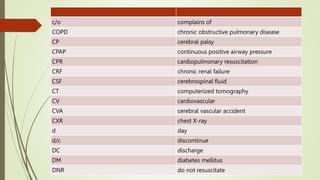
c/o complains of
COPD chronic obstructive pulmonary disease
CP cerebral palsy
CPAP continuous positive airway pressure
CPR cardiopulmonary resuscitation
CRF chronic renal failure
CSF cerebrospinal fluid
CT computerized tomography
CV cardiovascular
CVA cerebral vascular accident
CXR chest X-ray
d day
d/c discontinue
DC discharge
DM diabetes mellitus
DNR do not resuscitate
DOA dead on arrival
DOB date of birth
DOE dyspnea on exertion
d/t due to
Dx diagnosis
ECC, EKG electrocardiogram
ED emergency department
EEG electroencephalogram
EENT eyes, ears, nose, throat
EMG electromyogram
ENT ears, nose, throat
ER emergency room
ETOH ethanol (alcohol)
exam examination
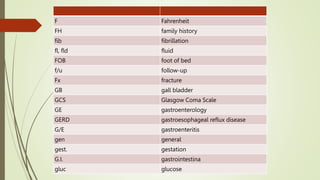
F Fahrenheit
FH family history
fib fibrillation
fl, fld fluid
FOB foot of bed
f/u follow-up
Fx fracture
GB gall bladder
GCS Glasgow Coma Scale
GE gastroenterology
GERD gastroesophageal reflux disease
G/E gastroenteritis
gen general
gest. gestation
G.I. gastrointestina
gluc glucose
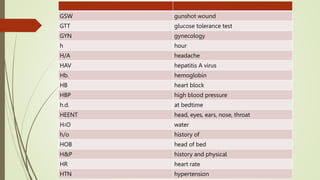
GSW gunshot wound
GTT glucose tolerance test
GYN gynecology
h hour
H/A headache
HAV hepatitis A virus
Hb. hemoglobin
HB heart block
HBP high blood pressure
h.d. at bedtime
HEENT head, eyes, ears, nose, throat
H2O water
h/o history of
HOB head of bed
H&P history and physical
HR heart rate
HTN hypertension
Hx history
Hz hertz (cycles/second)
ICCU intensive coronary care unit
ICP intracranial pressure
ICU intensive care unit
imp. impression
incr. increased(ing)
inf infusion, inferior
I&O intake and output
K potassium, kidney
med. medicine
mets. metastasis
MI myocardial infarction
min minute
MICU medical intensive care unit
MRI magnetic resonance imaging
Na sodium
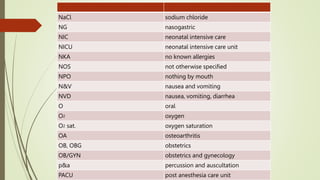
NaCl sodium chloride
NG nasogastric
NIC neonatal intensive care
NICU neonatal intensive care unit
NKA no known allergies
NOS not otherwise specified
NPO nothing by mouth
N&V nausea and vomiting
NVD nausea, vomiting, diarrhea
O oral
O2 oxygen
O2 sat. oxygen saturation
OA osteoarthritis
OB, OBG obstetrics
OB/GYN obstetrics and gynecology
p&a percussion and auscultation
PACU post anesthesia care unit
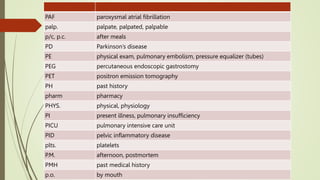
PAF paroxysmal atrial fibrillation
palp. palpate, palpated, palpable
p/c, p.c. after meals
PD Parkinson’s disease
PE physical exam, pulmonary embolism, pressure equalizer (tubes)
PEG percutaneous endoscopic gastrostomy
PET positron emission tomography
PH past history
pharm pharmacy
PHYS. physical, physiology
PI present illness, pulmonary insufficiency
PICU pulmonary intensive care unit
PID pelvic inflammatory disease
plts. platelets
P.M. afternoon, postmortem
PMH past medical history
p.o. by mouth
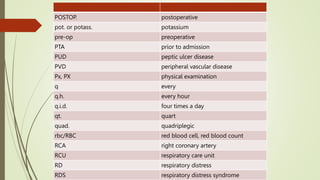
POSTOP. postoperative
pot. or potass. potassium
pre-op preoperative
PTA prior to admission
PUD peptic ulcer disease
PVD peripheral vascular disease
Px, PX physical examination
q every
q.h. every hour
q.i.d. four times a day
qt. quart
quad. quadriplegic
rbc/RBC red blood cell, red blood count
RCA right coronary artery
RCU respiratory care unit
RD respiratory distress
RDS respiratory distress syndrome
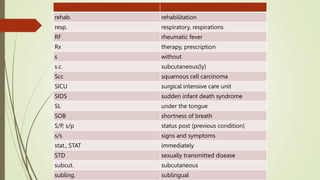
rehab. rehabilitation
resp. respiratory, respirations
RF rheumatic fever
Rx therapy, prescription
s without
s.c. subcutaneous(ly)
Scc squamous cell carcinoma
SICU surgical intensive care unit
SIDS sudden infant death syndrome
SL under the tongue
SOB shortness of breath
S/P, s/p status post (previous condition)
s/s signs and symptoms
stat., STAT immediately
STD sexually transmitted disease
subcut. subcutaneous
subling. sublingual
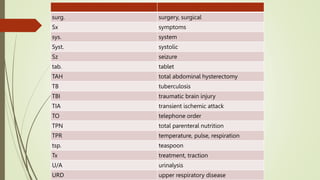
surg. surgery, surgical
Sx symptoms
sys. system
Syst. systolic
Sz seizure
tab. tablet
TAH total abdominal hysterectomy
TB tuberculosis
TBI traumatic brain injury
TIA transient ischemic attack
TO telephone order
TPN total parenteral nutrition
TPR temperature, pulse, respiration
tsp. teaspoon
Tx treatment, traction
U/A urinalysis
URD upper respiratory disease
UTI urinary tract infection
Via by way of
vit. vitamin
WNL within normal limits
y.o. years old
yrs. years

Introduction-to-Medical-Terminology.pptx

  • 1.
  • 2.
    Medical terminology islanguage that is used to describe anatomical structures, processes, conditions, medical procedures, and treatments. At first glance, medical terms may appear intimidating, but once you understand the standard structure of medical words and the definitions of some common word elements, the meaning of thousands of medical terms is easily unlocked. Most medical terms adhere to a fixed structure of a prefix, a root, and a suffix. These word components are assembled like building blocks to create a vast vocabulary.
  • 3.
     Basic TermStructure  Medical terms are composed of these standard word parts: • Prefix: When included, the prefix appears at the beginning of a medical term and usually indicates a location, direction, type, quality, or quantity. • Root: The root gives a term its essential meaning. Nearly all medical terms contain at least one root. When a prefix is absent, the term begins with a root. • Suffix: The suffix appears at the end of a term and may indicate a specialty, test, procedure, function, disorder, or status. Otherwise, it may simply define whether the word is a noun, verb, or adjective. • Combining vowel: A combining vowel (usually the letter “o”) may be added between word parts to aid in pronunciation.
  • 20.
    MEDICAL ABBREVIATIONS A.B.G arterialblood gas a.c. before meals A.D.L. activities of daily living A.Fib. atrial fibrillation AMA against medical advice A&O alert and oriented A/P anterior–posterior ASAP as soon as possible b.i.d. twice a day B/L bilateral BP blood pressure BR bed rest bs bowel sounds BS breath sounds B/S bedside bx biopsy
  • 21.
    c̅ with C Celsius,centigrade C1, C2, etc. first cervical vertebrae, second cervical vertebrae, etc. CA cardiac arrest CA, ca cancer, carcinoma CABG coronary artery bypass graft CAD coronary artery disease cal calorie cath catheter CBC complete blood count cc cubic centimeter CC chief complaint CHF congestive heart failure, chronic heart failure CCU coronary care unit
  • 22.
    c/o complains of COPDchronic obstructive pulmonary disease CP cerebral palsy CPAP continuous positive airway pressure CPR cardiopulmonary resuscitation CRF chronic renal failure CSF cerebrospinal fluid CT computerized tomography CV cardiovascular CVA cerebral vascular accident CXR chest X-ray d day d/c discontinue DC discharge DM diabetes mellitus DNR do not resuscitate
  • 23.
    DOA dead onarrival DOB date of birth DOE dyspnea on exertion d/t due to Dx diagnosis ECC, EKG electrocardiogram ED emergency department EEG electroencephalogram EENT eyes, ears, nose, throat EMG electromyogram ENT ears, nose, throat ER emergency room ETOH ethanol (alcohol) exam examination
  • 24.
    F Fahrenheit FH familyhistory fib fibrillation fl, fld fluid FOB foot of bed f/u follow-up Fx fracture GB gall bladder GCS Glasgow Coma Scale GE gastroenterology GERD gastroesophageal reflux disease G/E gastroenteritis gen general gest. gestation G.I. gastrointestina gluc glucose
  • 25.
    GSW gunshot wound GTTglucose tolerance test GYN gynecology h hour H/A headache HAV hepatitis A virus Hb. hemoglobin HB heart block HBP high blood pressure h.d. at bedtime HEENT head, eyes, ears, nose, throat H2O water h/o history of HOB head of bed H&P history and physical HR heart rate HTN hypertension
  • 26.
    Hx history Hz hertz(cycles/second) ICCU intensive coronary care unit ICP intracranial pressure ICU intensive care unit imp. impression incr. increased(ing) inf infusion, inferior I&O intake and output K potassium, kidney med. medicine mets. metastasis MI myocardial infarction min minute MICU medical intensive care unit MRI magnetic resonance imaging Na sodium
  • 27.
    NaCl sodium chloride NGnasogastric NIC neonatal intensive care NICU neonatal intensive care unit NKA no known allergies NOS not otherwise specified NPO nothing by mouth N&V nausea and vomiting NVD nausea, vomiting, diarrhea O oral O2 oxygen O2 sat. oxygen saturation OA osteoarthritis OB, OBG obstetrics OB/GYN obstetrics and gynecology p&a percussion and auscultation PACU post anesthesia care unit
  • 28.
    PAF paroxysmal atrialfibrillation palp. palpate, palpated, palpable p/c, p.c. after meals PD Parkinson’s disease PE physical exam, pulmonary embolism, pressure equalizer (tubes) PEG percutaneous endoscopic gastrostomy PET positron emission tomography PH past history pharm pharmacy PHYS. physical, physiology PI present illness, pulmonary insufficiency PICU pulmonary intensive care unit PID pelvic inflammatory disease plts. platelets P.M. afternoon, postmortem PMH past medical history p.o. by mouth
  • 29.
    POSTOP. postoperative pot. orpotass. potassium pre-op preoperative PTA prior to admission PUD peptic ulcer disease PVD peripheral vascular disease Px, PX physical examination q every q.h. every hour q.i.d. four times a day qt. quart quad. quadriplegic rbc/RBC red blood cell, red blood count RCA right coronary artery RCU respiratory care unit RD respiratory distress RDS respiratory distress syndrome
  • 30.
    rehab. rehabilitation resp. respiratory,respirations RF rheumatic fever Rx therapy, prescription s without s.c. subcutaneous(ly) Scc squamous cell carcinoma SICU surgical intensive care unit SIDS sudden infant death syndrome SL under the tongue SOB shortness of breath S/P, s/p status post (previous condition) s/s signs and symptoms stat., STAT immediately STD sexually transmitted disease subcut. subcutaneous subling. sublingual
  • 31.
    surg. surgery, surgical Sxsymptoms sys. system Syst. systolic Sz seizure tab. tablet TAH total abdominal hysterectomy TB tuberculosis TBI traumatic brain injury TIA transient ischemic attack TO telephone order TPN total parenteral nutrition TPR temperature, pulse, respiration tsp. teaspoon Tx treatment, traction U/A urinalysis URD upper respiratory disease
  • 32.
    UTI urinary tractinfection Via by way of vit. vitamin WNL within normal limits y.o. years old yrs. years