Introduction to
Baking
“The ingredients and techniques used in the bake
shop are incredibly versatile. The challenge to the
baker/pastry chef is to use them properly to get the
most perfect result.” – Thomas Vaccaro, Dean of
Baking and Pastry Studies, CIA
Learning Target
 To understand that the ingredients used in
baking function in specific ways and will
help determine the final texture, flavor and
color of baked goods.
 PT: Demonstrate understanding of
ingredients used in baking, as well as
measuring, mixing, shaping and baking
techniques for different types of baked
goods.
Standards
 PLC 8.0 Apply food preparation and cooking
techniques to execute standard recipes for
consumption.
Essential Questions
 What are the different ingredients
used in baking?
 How does each ingredient used in
baking affect the final outcome?
Before we begin…Is there a
difference between baking and
regular cooking?
 Yes!
1. No Changes to product can be made once
it goes into the oven
2. Requires more advanced planning- must
take into consideration cooling and serving
time
So this means – FOLLOW RECIPE AND
MEASURE INGREDIENTS PRECISELY!!!
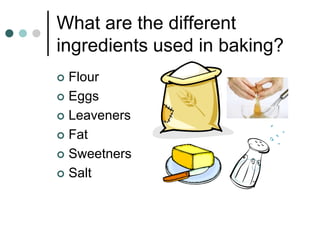
What are the different
ingredients used in baking?
 Flour
 Eggs
 Leaveners
 Fat
 Sweetners
 Salt
Flour
 Most important ingredient
 Amount of protein (gluten) and starch
determines how flour will behave in
recipe.
 Gluten – protein in flour that when
moistened and “worked” will develop
long, stretchy strands. These strands
become STRONGER the more your
dough is handled.
Kinds of Flour
 All-Purpose
 Most common type of flour
 Blend of low and high pro. wheat
 Bread
 Most appropriate for most yeast-bread recipes
 Has more pro. Than A-P
 Cake
 Used in most cake recipes, many cookie and muffin
recipes
 Provides less chewy, more tender texture
 Less pro. Than either A-P or bread flour
Storage
 Airtight container – use within 8 mo.
 Unopened – up to two years
Eggs
 Provides dough with moisture
 helps it stick together
 Water in eggs expand, help to rise
 Adds protein – firmer, drier product
 Egg yolks – rich, golden color to final
product
 Egg wash – glossy sheen (whites =
shine, whites+yolk = golden hue)
Leaveners
 Increases the volume of a dough or
batter by adding air or other gas
 3 types – organic, chemical, physical
Organic Leavener
 Yeast
 Tiny, single-celled organism
 Needs moisture, warmth and food
(usually sugar)
 Yeast cells give off CO2 and alcohol
when they grow and reproduce,
causing bread to rise
Chemical leavener
 Baking Powder
 Reacts to moisture and heat
 Releases CO2 to cause dough/batter to rise
 Baking Soda
 Similar to baking powder, but also needs an
acid.
 Sift with flour/other dry ingre. To break up
clumps/mixed well
 If not = tunnels or air pockets.
Physical Leaveners
 Steam
 Moisture from butter, eggs or other
liquids
 Liquids heat, turn to steam, expands
 Air
 Creaming/ whipping incorporate air
 Air trapped result in pockets that give
height as well as soft, spongy texture
Fat
 Contribute to:
 Flavor – some add own flavor (butter), encourages
browning – extra flavor
 Texture – type of fat and how it is worked into batter
or dough determines texture – smooth to brittle
• More fat = softer the batter/dough, causes spreading
• Texture contrast – crisp outside, soft inside
 Freshness
• Extends life of baked good by holding in moisture
 Fats – solid at room temp
 Oils – liquid at room temp
Kinds of Fats
 Butter
 Made from cream
 Adds flavor and flakiness to pastry/biscuits
 Lard
 Made from refined pork fat
 Unique flavor, makes flakey pastry
 Esp. good in pastry for savory dishes
 Shortening
 Made from vegetable oil – processed to make it solid at
room temp
 Lacks flavor, used like butter, adds extraordinary flakiness
 Margarine
 Similar to shortening
 Lacks flavor, used as substitute for butter
Kinds of Oils
 Neutral oil
 Canola, corn, safflower – lacks flavor
 Vegetable Oil
 Belnd of neutral oils – lacks flavor
 Flavored oils
 Nut oils (walnut, peanut, etc.)
 Olive oils
 Has a distinct flavor
Sweetners
 Add sweetness and flavor
 Provide texture, appealing color and
flavor when sugars carmelize
 Help products rise – attract moisture,
makes goods softer, longer lasting
Kinds of Sweetners
 Granulated Sugar – refined sugar
cane or beets
 ORDINARY white sugar
 Superfine aka castor/baker’s sugar
 Finely ground granulated sugar
 Confectioner’s aka Powdered Sugar
 Ground into a fine,white, easily
dissolveable powder
Kinds of Sweetners
 Brown
 Molasses + white sugar
 Molasses
 Byproduct of sugar refining
 Thick, sweet, brownish/black syrup
 Distinctive, slightly bitter flavor
 Honey – bee bypoduct
 Maple Syrup – boiled down maple tree sap
 Corn Syrup – made from cornstarch
Salt
 In small amounts:
 balances other flavors and makes
them more vivid
 Controls the growth of yeast
 In large amounts:
 Salt’s own flavor comes to the
forefront
 Will kill yeast
Summary
 Write 3-5 sentences summarizing
what you have learned.

introduction_to_baking.ppt

  • 1.
    Introduction to Baking “The ingredientsand techniques used in the bake shop are incredibly versatile. The challenge to the baker/pastry chef is to use them properly to get the most perfect result.” – Thomas Vaccaro, Dean of Baking and Pastry Studies, CIA
  • 2.
    Learning Target  Tounderstand that the ingredients used in baking function in specific ways and will help determine the final texture, flavor and color of baked goods.  PT: Demonstrate understanding of ingredients used in baking, as well as measuring, mixing, shaping and baking techniques for different types of baked goods.
  • 3.
    Standards  PLC 8.0Apply food preparation and cooking techniques to execute standard recipes for consumption.
  • 4.
    Essential Questions  Whatare the different ingredients used in baking?  How does each ingredient used in baking affect the final outcome?
  • 5.
    Before we begin…Isthere a difference between baking and regular cooking?  Yes! 1. No Changes to product can be made once it goes into the oven 2. Requires more advanced planning- must take into consideration cooling and serving time So this means – FOLLOW RECIPE AND MEASURE INGREDIENTS PRECISELY!!!
  • 6.
    What are thedifferent ingredients used in baking?  Flour  Eggs  Leaveners  Fat  Sweetners  Salt
  • 7.
    Flour  Most importantingredient  Amount of protein (gluten) and starch determines how flour will behave in recipe.  Gluten – protein in flour that when moistened and “worked” will develop long, stretchy strands. These strands become STRONGER the more your dough is handled.
  • 8.
    Kinds of Flour All-Purpose  Most common type of flour  Blend of low and high pro. wheat  Bread  Most appropriate for most yeast-bread recipes  Has more pro. Than A-P  Cake  Used in most cake recipes, many cookie and muffin recipes  Provides less chewy, more tender texture  Less pro. Than either A-P or bread flour
  • 9.
    Storage  Airtight container– use within 8 mo.  Unopened – up to two years
  • 10.
    Eggs  Provides doughwith moisture  helps it stick together  Water in eggs expand, help to rise  Adds protein – firmer, drier product  Egg yolks – rich, golden color to final product  Egg wash – glossy sheen (whites = shine, whites+yolk = golden hue)
  • 11.
    Leaveners  Increases thevolume of a dough or batter by adding air or other gas  3 types – organic, chemical, physical
  • 12.
    Organic Leavener  Yeast Tiny, single-celled organism  Needs moisture, warmth and food (usually sugar)  Yeast cells give off CO2 and alcohol when they grow and reproduce, causing bread to rise
  • 13.
    Chemical leavener  BakingPowder  Reacts to moisture and heat  Releases CO2 to cause dough/batter to rise  Baking Soda  Similar to baking powder, but also needs an acid.  Sift with flour/other dry ingre. To break up clumps/mixed well  If not = tunnels or air pockets.
  • 14.
    Physical Leaveners  Steam Moisture from butter, eggs or other liquids  Liquids heat, turn to steam, expands  Air  Creaming/ whipping incorporate air  Air trapped result in pockets that give height as well as soft, spongy texture
  • 15.
    Fat  Contribute to: Flavor – some add own flavor (butter), encourages browning – extra flavor  Texture – type of fat and how it is worked into batter or dough determines texture – smooth to brittle • More fat = softer the batter/dough, causes spreading • Texture contrast – crisp outside, soft inside  Freshness • Extends life of baked good by holding in moisture  Fats – solid at room temp  Oils – liquid at room temp
  • 16.
    Kinds of Fats Butter  Made from cream  Adds flavor and flakiness to pastry/biscuits  Lard  Made from refined pork fat  Unique flavor, makes flakey pastry  Esp. good in pastry for savory dishes  Shortening  Made from vegetable oil – processed to make it solid at room temp  Lacks flavor, used like butter, adds extraordinary flakiness  Margarine  Similar to shortening  Lacks flavor, used as substitute for butter
  • 17.
    Kinds of Oils Neutral oil  Canola, corn, safflower – lacks flavor  Vegetable Oil  Belnd of neutral oils – lacks flavor  Flavored oils  Nut oils (walnut, peanut, etc.)  Olive oils  Has a distinct flavor
  • 18.
    Sweetners  Add sweetnessand flavor  Provide texture, appealing color and flavor when sugars carmelize  Help products rise – attract moisture, makes goods softer, longer lasting
  • 19.
    Kinds of Sweetners Granulated Sugar – refined sugar cane or beets  ORDINARY white sugar  Superfine aka castor/baker’s sugar  Finely ground granulated sugar  Confectioner’s aka Powdered Sugar  Ground into a fine,white, easily dissolveable powder
  • 20.
    Kinds of Sweetners Brown  Molasses + white sugar  Molasses  Byproduct of sugar refining  Thick, sweet, brownish/black syrup  Distinctive, slightly bitter flavor  Honey – bee bypoduct  Maple Syrup – boiled down maple tree sap  Corn Syrup – made from cornstarch
  • 21.
    Salt  In smallamounts:  balances other flavors and makes them more vivid  Controls the growth of yeast  In large amounts:  Salt’s own flavor comes to the forefront  Will kill yeast
  • 22.
    Summary  Write 3-5sentences summarizing what you have learned.