MAJOR & MINOR BAKING
INGREDIENTS
Quarter 1-Module 1
Prepare and Produce
Bakery Products
TLE_HEBP9-12PB-Ia-f-1
OBJECTIVES:
Identify the major and
minor ingredients used
in baking
1
Select appropriate
ingredients for baking
Proper storing and
handling of baking
ingredients
2
Express the value of
using the appropriate
ingredients in preparing
bake products.
3
BAKING
• Is cooking by dry heat in an
oven or oven-type appliance.
It is a method of cooking
used in making breads,
cakes, pies, pastries, and
biscuits which everybody
enjoys eating.
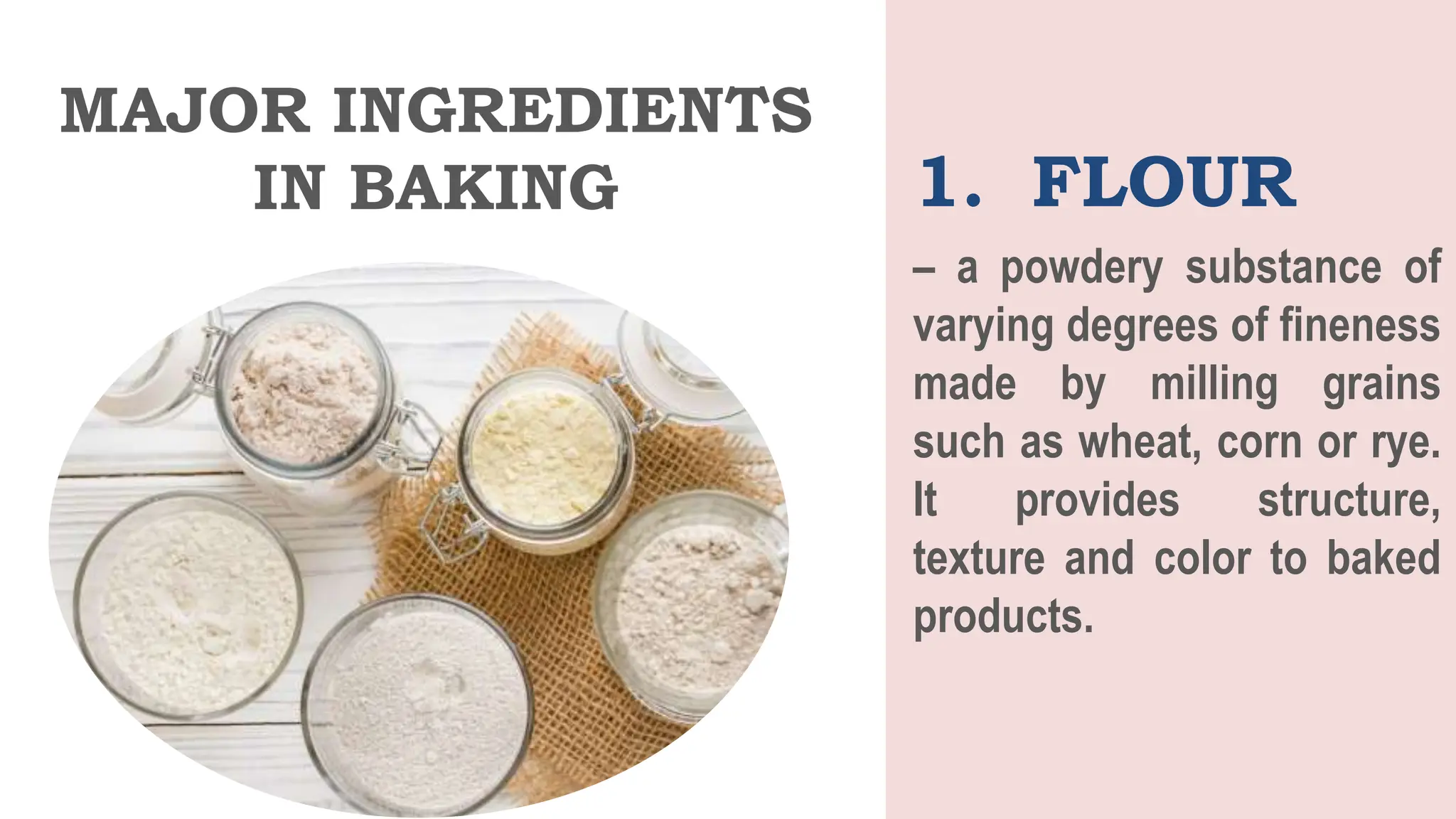
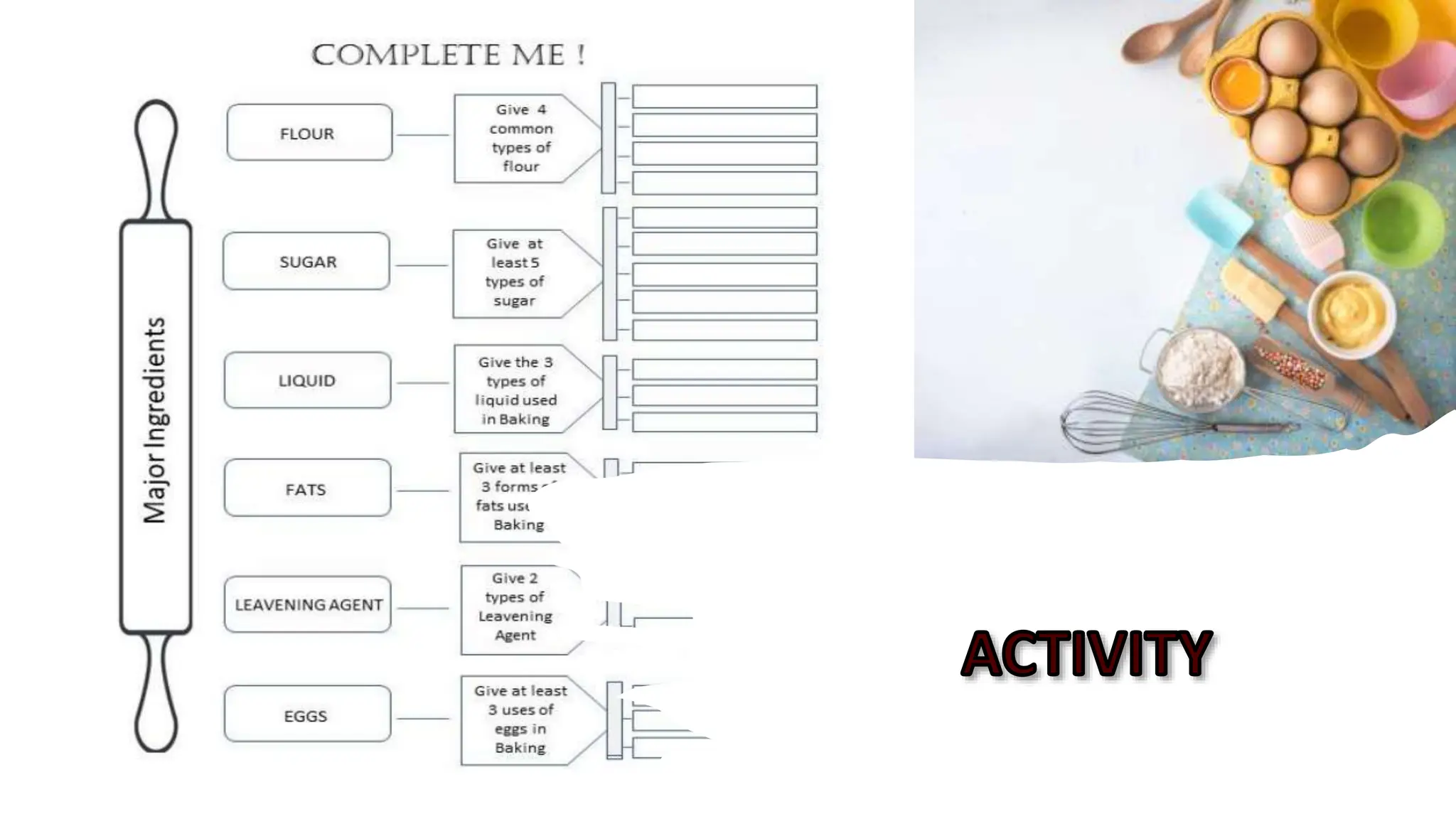
MAJOR INGREDIENTS
IN BAKING 1. FLOUR
– a powdery substance of
varying degrees of fineness
made by milling grains
such as wheat, corn or rye.
It provides structure,
texture and color to baked
products.
COMMON TYPES OF FLOUR
A. BREAD FLOUR
– Strong or hard wheat flour with 12-
14% protein content and has
the strongest gluten content.
B.ALL-PURPOSE FLOUR
- Family or general flour with 10-11% protein content and is
made from a blend of hard and soft bread flour.
C.PASTRY/SOFT FLOUR
– Comparatively low in gluten and so results
in a finer texture. It is usually made into
cake flour, which is the lowest in gluten
content, and pastry flour, which has slightly
more gluten than cake flour.
D. CAKE FLOUR
- Weak or Soft wheat flour with 7-9% protein content. It is
chlorinated, a bleaching process which leaves the flour
slightly acidic, sets a cake faster and distributes for more
evenly through the batter.
Slide Title
Product A
• Feature 1
• Feature 2
• Feature 3
Product B
• Feature 1
• Feature 2
• Feature 3
2.SUGAR
– A carbohydrate that provides the body with
energy and gives a sweet taste to foods. It also
serves as food for the yeast and contributes to
color and moisture content of baked products.
COMMON TYPES OF SUGAR
a. Muscovado -It is raw sugar called Demerara
or Turbinado. It is similar to brown sugar but
darker in color and has sticky texture because of
its content.
b. Brown Sugar - It consist caramel, molasses
and other impurities, which gives distinct flavor. This
is available in light brown and dark brown.
c. Washed Sugar –They are unwhitened crystals,
which is one step needed to
complete refining process. This is called
segunda in layman’s term.
d. Granulated Sugar – A regular white sugar
also known as table sugar or refined sugar.
e. Caster sugar - A granulated sugar with a smaller
sized crystal. It can be produced by processing regular
granulated sugar in a food processor for a few
moments. It dissolves quickly in liquids and produces
light and tender cakes.
f. Confectioner sugar – It is known as
icing sugar. To prevent lumping and caking,
about 3% cornstarch is added.
LIQUIDBAK
ING
a. Water – The cheapest liquid used in baking. It is important in the making of dough because of
its role in converting the flour protein into gluten.
b. Fruit Juice – It gives rich flavor and aroma in any baked products.
c. Milk – It provides texture, flavor, color, and nutritional value for baked products.
 FRESH MILK
 EVAPORATED MILK
 CONDENSED MILK
 SKIM MILK
Types of Liquid used in Baking
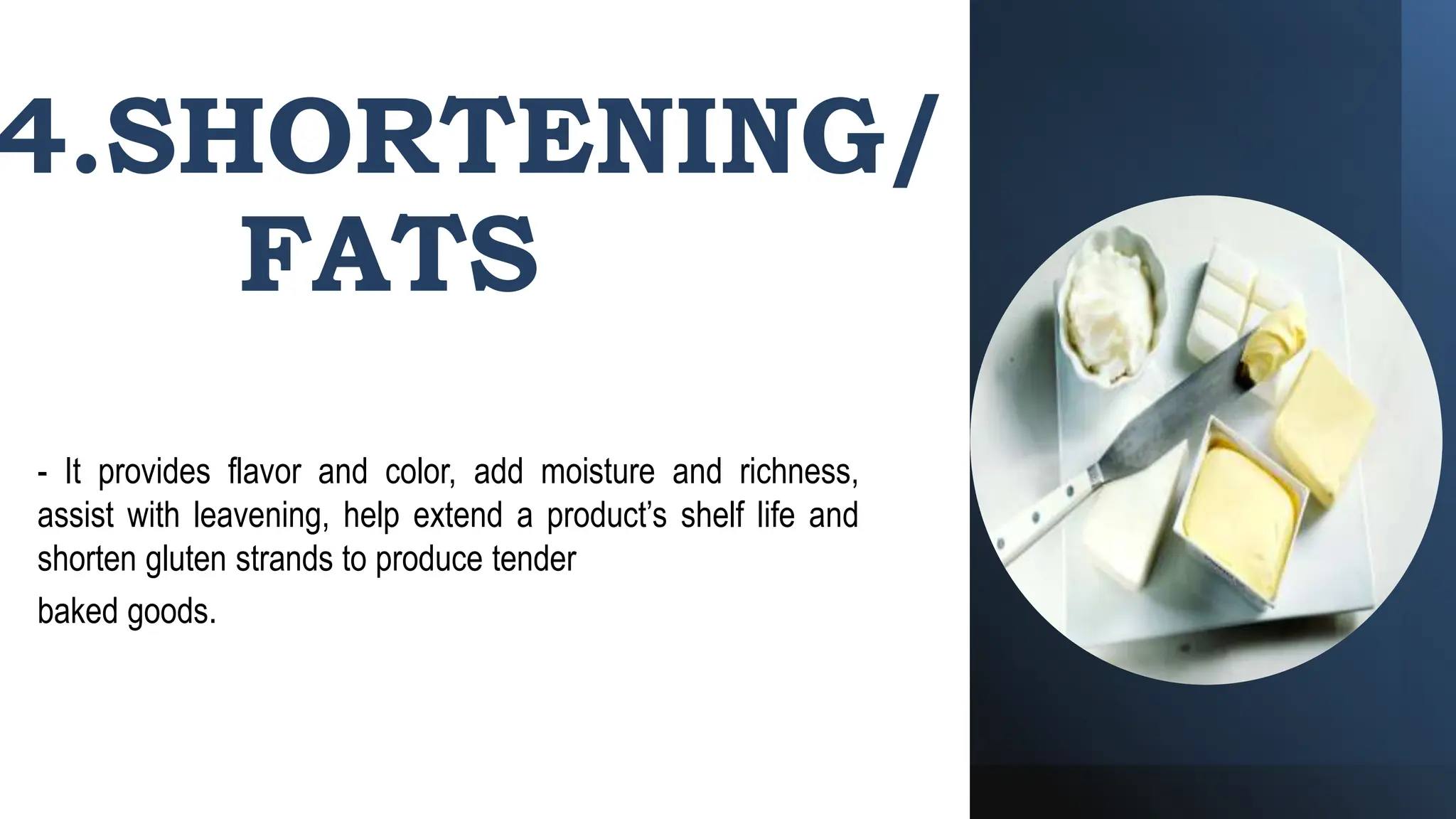
4.SHORTENING/
FATSBAKING
- It provides flavor and color, add moisture and richness,
assist with leavening, help extend a product’s shelf life and
shorten gluten strands to produce tender
baked goods.
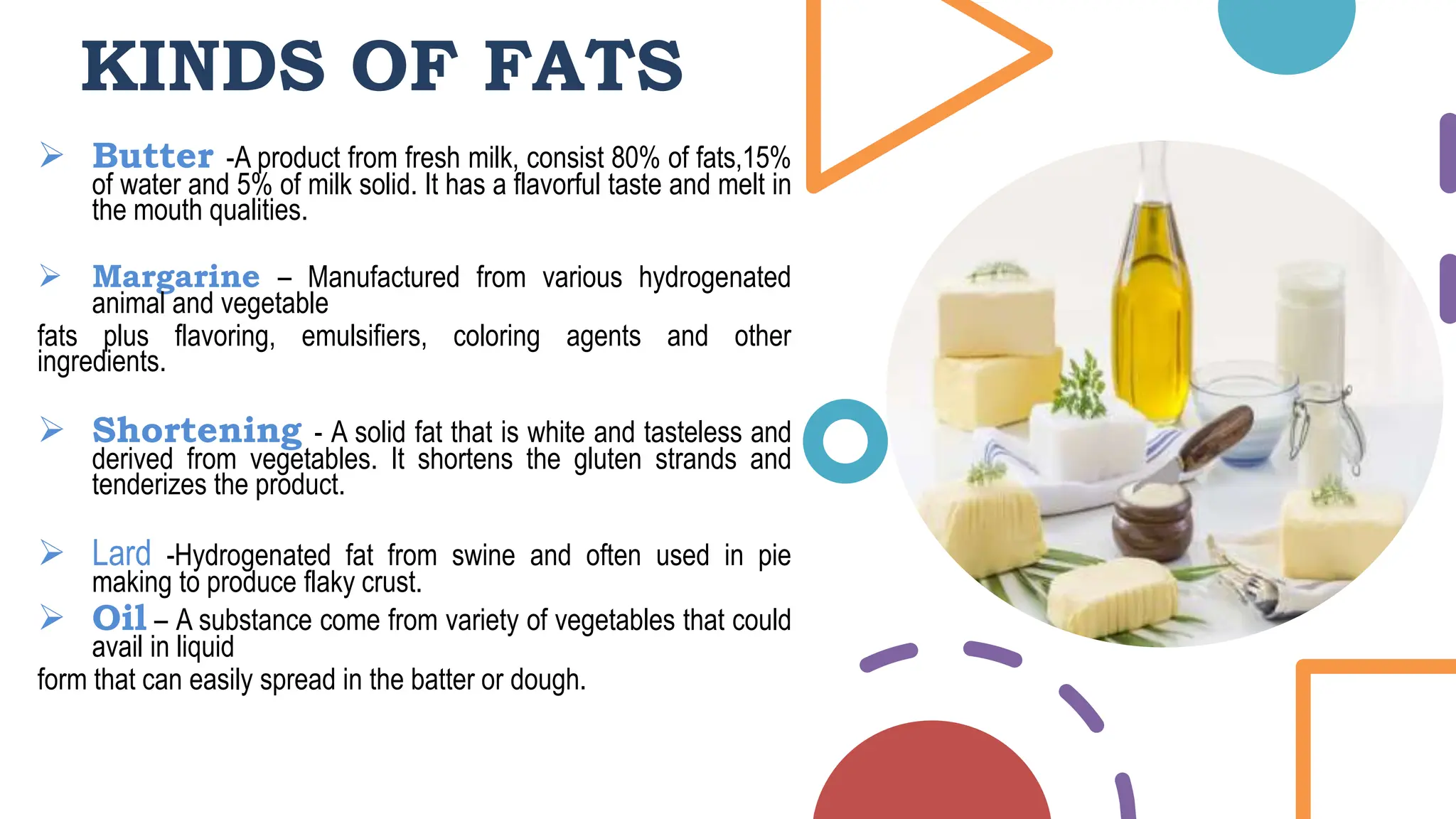
KINDS OF FATS
 Butter -A product from fresh milk, consist 80% of fats,15%
of water and 5% of milk solid. It has a flavorful taste and melt in
the mouth qualities.
 Margarine – Manufactured from various hydrogenated
animal and vegetable
fats plus flavoring, emulsifiers, coloring agents and other
ingredients.
 Shortening - A solid fat that is white and tasteless and
derived from vegetables. It shortens the gluten strands and
tenderizes the product.
 Lard -Hydrogenated fat from swine and often used in pie
making to produce flaky crust.
 Oil – A substance come from variety of vegetables that could
avail in liquid
form that can easily spread in the batter or dough.
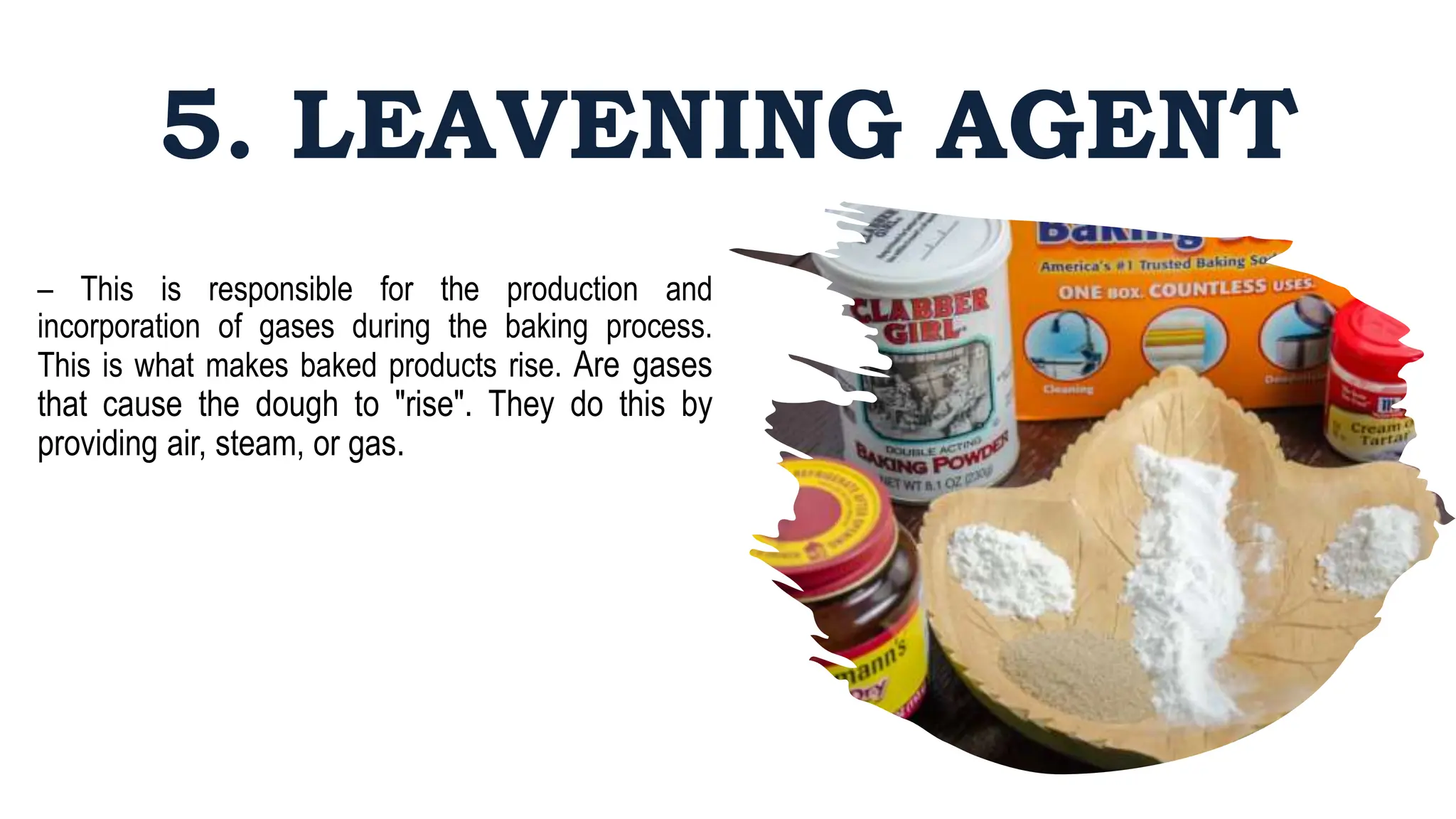
5. LEAVENING AGENT
– This is responsible for the production and
incorporation of gases during the baking process.
This is what makes baked products rise. Are gases
that cause the dough to "rise". They do this by
providing air, steam, or gas.
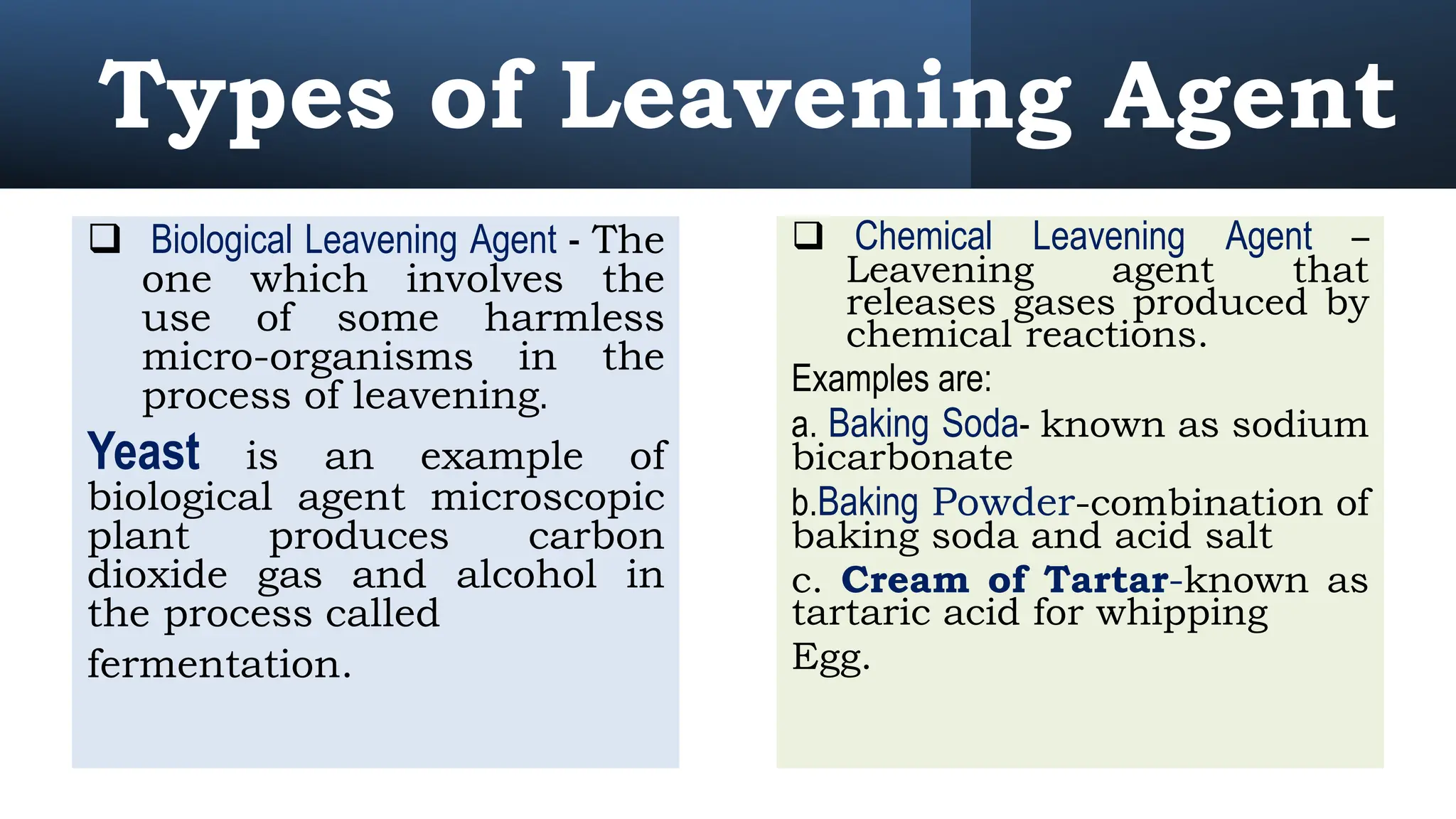
Types of Leavening Agent
 Biological Leavening Agent - The
one which involves the
use of some harmless
micro-organisms in the
process of leavening.
Yeast is an example of
biological agent microscopic
plant produces carbon
dioxide gas and alcohol in
the process called
fermentation.
 Chemical Leavening Agent –
Leavening agent that
releases gases produced by
chemical reactions.
Examples are:
a. Baking Soda- known as sodium
bicarbonate
b.Baking Powder-combination of
baking soda and acid salt
c. Cream of Tartar-known as
tartaric acid for whipping
Egg.
EGGS
• the backbone of many baked good
contribute to its structure.
• Eggs also provide steam for leaven
moisture for starch.
• Represent almost 50% of the total
cost of any baked product, thus
considered the baking ingredient
with the highest cost or expense.
USES OF EGGS
IN BAKING
 Leavening agent
 Color
 Richness
 Flavor
 Nutritive Value
They are the ingredients
that add distinction and
character to baked
goods.
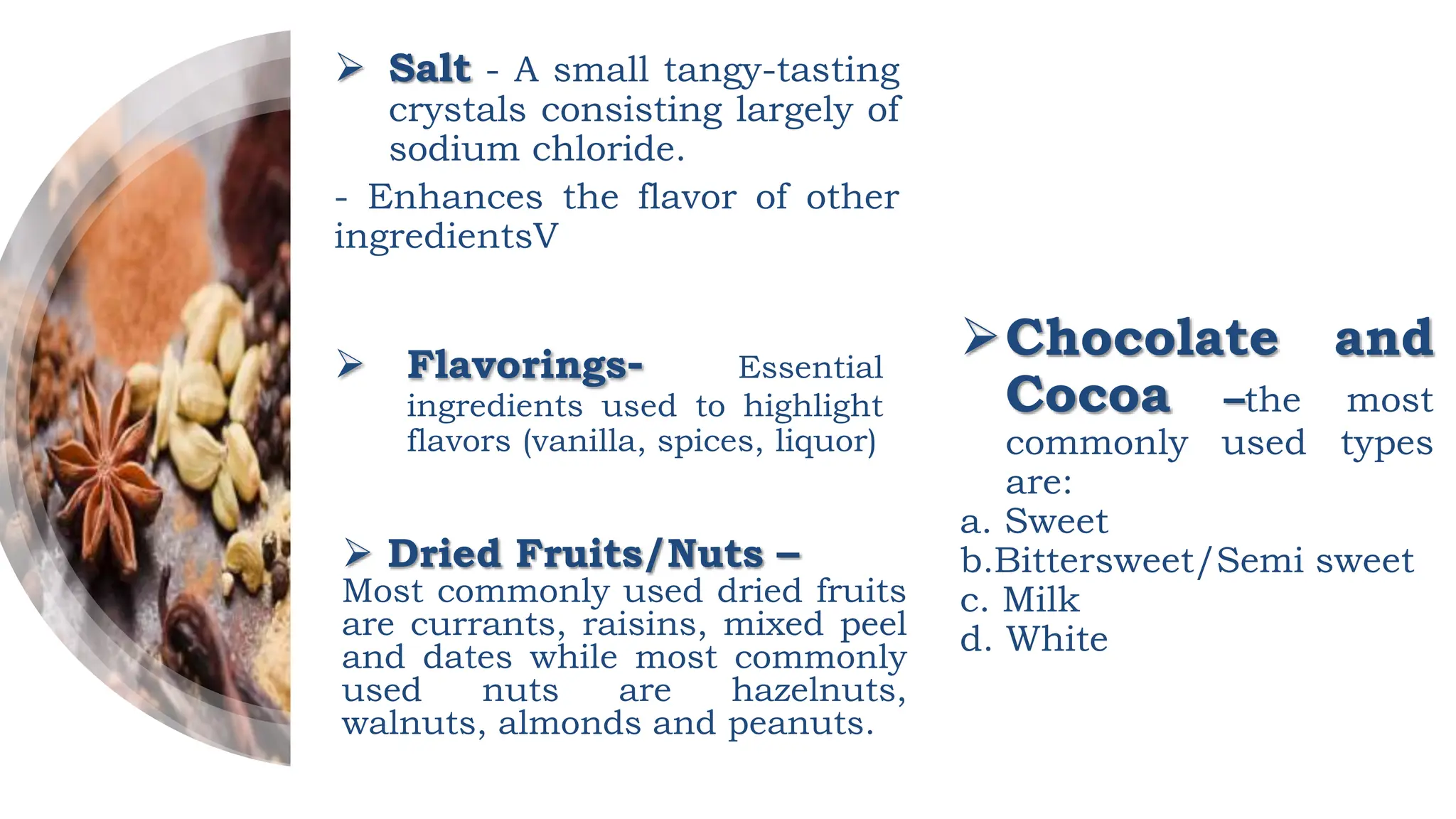
 Flavorings- Essential
ingredients used to highlight
flavors (vanilla, spices, liquor)
 Salt - A small tangy-tasting
crystals consisting largely of
sodium chloride.
- Enhances the flavor of other
ingredientsV
 Dried Fruits/Nuts –
Most commonly used dried fruits
are currants, raisins, mixed peel
and dates while most commonly
used nuts are hazelnuts,
walnuts, almonds and peanuts.
Chocolate and
Cocoa –the most
commonly used types
are:
a. Sweet
b.Bittersweet/Semi sweet
c. Milk
d. White
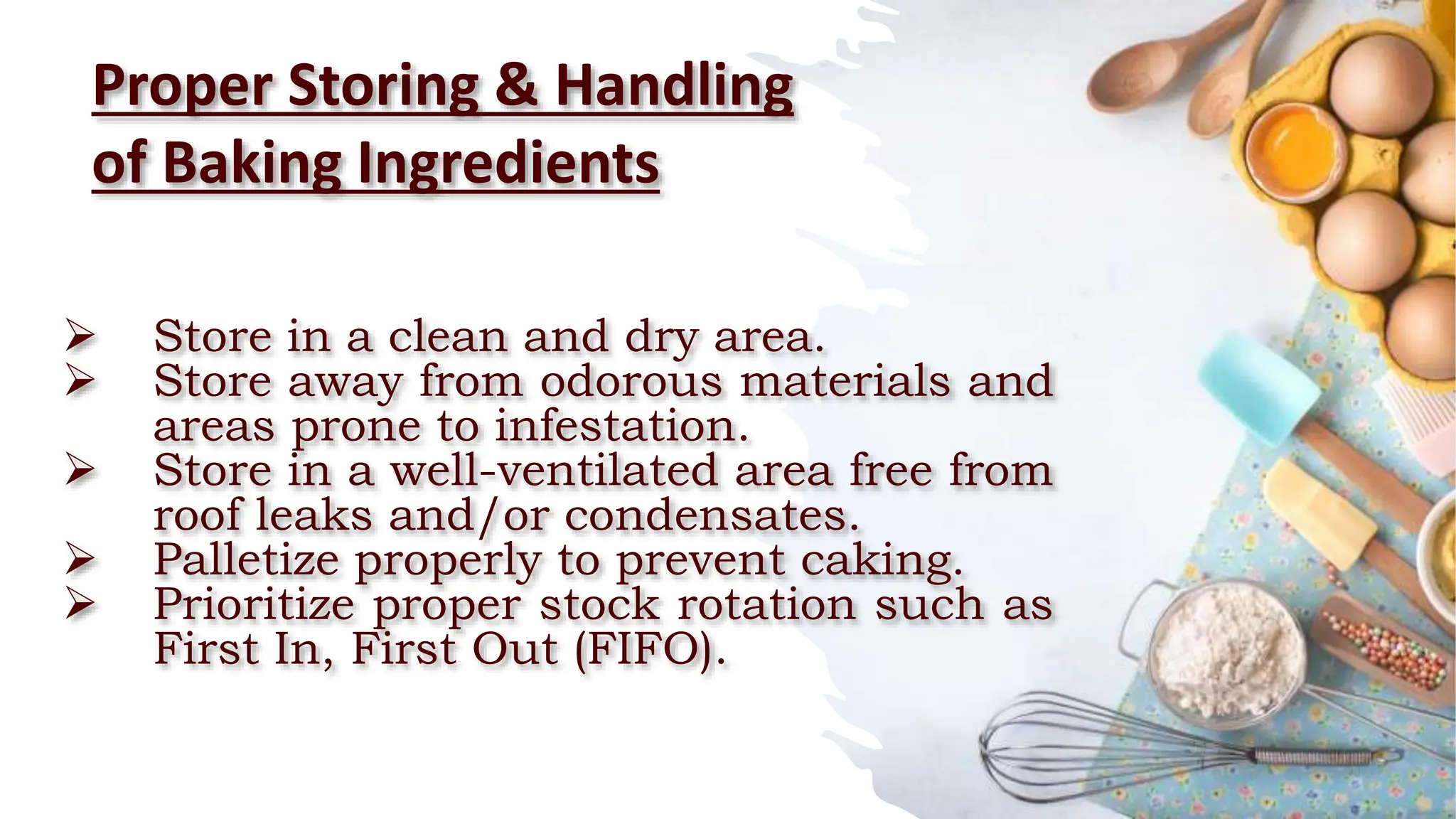
Proper Storing & Handling
of Baking Ingredients
 Store in a clean and dry area.
 Store away from odorous materials and
areas prone to infestation.
 Store in a well-ventilated area free from
roof leaks and/or condensates.
 Palletize properly to prevent caking.
 Prioritize proper stock rotation such as
First In, First Out (FIFO).
Q1M1 BAKING INGREDIENTSMAJOR ANDMINOR.pptx

Q1M1 BAKING INGREDIENTSMAJOR ANDMINOR.pptx

  • 1.
    MAJOR & MINORBAKING INGREDIENTS Quarter 1-Module 1 Prepare and Produce Bakery Products TLE_HEBP9-12PB-Ia-f-1
  • 2.
    OBJECTIVES: Identify the majorand minor ingredients used in baking 1 Select appropriate ingredients for baking Proper storing and handling of baking ingredients 2 Express the value of using the appropriate ingredients in preparing bake products. 3
  • 3.
    BAKING • Is cookingby dry heat in an oven or oven-type appliance. It is a method of cooking used in making breads, cakes, pies, pastries, and biscuits which everybody enjoys eating.
  • 4.
    MAJOR INGREDIENTS IN BAKING1. FLOUR – a powdery substance of varying degrees of fineness made by milling grains such as wheat, corn or rye. It provides structure, texture and color to baked products.
  • 5.
    COMMON TYPES OFFLOUR A. BREAD FLOUR – Strong or hard wheat flour with 12- 14% protein content and has the strongest gluten content. B.ALL-PURPOSE FLOUR - Family or general flour with 10-11% protein content and is made from a blend of hard and soft bread flour. C.PASTRY/SOFT FLOUR – Comparatively low in gluten and so results in a finer texture. It is usually made into cake flour, which is the lowest in gluten content, and pastry flour, which has slightly more gluten than cake flour. D. CAKE FLOUR - Weak or Soft wheat flour with 7-9% protein content. It is chlorinated, a bleaching process which leaves the flour slightly acidic, sets a cake faster and distributes for more evenly through the batter.
  • 6.
    Slide Title Product A •Feature 1 • Feature 2 • Feature 3 Product B • Feature 1 • Feature 2 • Feature 3
  • 7.
    2.SUGAR – A carbohydratethat provides the body with energy and gives a sweet taste to foods. It also serves as food for the yeast and contributes to color and moisture content of baked products.
  • 8.
    COMMON TYPES OFSUGAR a. Muscovado -It is raw sugar called Demerara or Turbinado. It is similar to brown sugar but darker in color and has sticky texture because of its content. b. Brown Sugar - It consist caramel, molasses and other impurities, which gives distinct flavor. This is available in light brown and dark brown. c. Washed Sugar –They are unwhitened crystals, which is one step needed to complete refining process. This is called segunda in layman’s term. d. Granulated Sugar – A regular white sugar also known as table sugar or refined sugar. e. Caster sugar - A granulated sugar with a smaller sized crystal. It can be produced by processing regular granulated sugar in a food processor for a few moments. It dissolves quickly in liquids and produces light and tender cakes. f. Confectioner sugar – It is known as icing sugar. To prevent lumping and caking, about 3% cornstarch is added.
  • 9.
  • 10.
    a. Water –The cheapest liquid used in baking. It is important in the making of dough because of its role in converting the flour protein into gluten. b. Fruit Juice – It gives rich flavor and aroma in any baked products. c. Milk – It provides texture, flavor, color, and nutritional value for baked products.  FRESH MILK  EVAPORATED MILK  CONDENSED MILK  SKIM MILK Types of Liquid used in Baking
  • 11.
    4.SHORTENING/ FATSBAKING - It providesflavor and color, add moisture and richness, assist with leavening, help extend a product’s shelf life and shorten gluten strands to produce tender baked goods.
  • 12.
    KINDS OF FATS Butter -A product from fresh milk, consist 80% of fats,15% of water and 5% of milk solid. It has a flavorful taste and melt in the mouth qualities.  Margarine – Manufactured from various hydrogenated animal and vegetable fats plus flavoring, emulsifiers, coloring agents and other ingredients.  Shortening - A solid fat that is white and tasteless and derived from vegetables. It shortens the gluten strands and tenderizes the product.  Lard -Hydrogenated fat from swine and often used in pie making to produce flaky crust.  Oil – A substance come from variety of vegetables that could avail in liquid form that can easily spread in the batter or dough.
  • 13.
    5. LEAVENING AGENT –This is responsible for the production and incorporation of gases during the baking process. This is what makes baked products rise. Are gases that cause the dough to "rise". They do this by providing air, steam, or gas.
  • 14.
    Types of LeaveningAgent  Biological Leavening Agent - The one which involves the use of some harmless micro-organisms in the process of leavening. Yeast is an example of biological agent microscopic plant produces carbon dioxide gas and alcohol in the process called fermentation.  Chemical Leavening Agent – Leavening agent that releases gases produced by chemical reactions. Examples are: a. Baking Soda- known as sodium bicarbonate b.Baking Powder-combination of baking soda and acid salt c. Cream of Tartar-known as tartaric acid for whipping Egg.
  • 15.
    EGGS • the backboneof many baked good contribute to its structure. • Eggs also provide steam for leaven moisture for starch. • Represent almost 50% of the total cost of any baked product, thus considered the baking ingredient with the highest cost or expense.
  • 16.
    USES OF EGGS INBAKING  Leavening agent  Color  Richness  Flavor  Nutritive Value
  • 17.
    They are theingredients that add distinction and character to baked goods.
  • 18.
     Flavorings- Essential ingredientsused to highlight flavors (vanilla, spices, liquor)  Salt - A small tangy-tasting crystals consisting largely of sodium chloride. - Enhances the flavor of other ingredientsV  Dried Fruits/Nuts – Most commonly used dried fruits are currants, raisins, mixed peel and dates while most commonly used nuts are hazelnuts, walnuts, almonds and peanuts. Chocolate and Cocoa –the most commonly used types are: a. Sweet b.Bittersweet/Semi sweet c. Milk d. White
  • 21.
    Proper Storing &Handling of Baking Ingredients  Store in a clean and dry area.  Store away from odorous materials and areas prone to infestation.  Store in a well-ventilated area free from roof leaks and/or condensates.  Palletize properly to prevent caking.  Prioritize proper stock rotation such as First In, First Out (FIFO).