Introduction:
Values, Cultures, and Changes
Seta A. Wicaksana
SETA A. Wicaksana
0811195343
wicaksana@humanikaconsulting.com
Business & Professional:
• Founder and CEO Humanika Consulting dan hipotest.com
• Lecturer and Researcher in Psychology Faculty Pancasila University
• Business Psychologist
• Head of Researcher in Business Psychology and Entrepreneur
Professional Certification:
• Certified of Assessor Talent Management (BNSP)
• Certified in Human Resources as a Business Partner (SHRM)
• Certified HR Manager (BNSP)
• Certified Risk Professional (BNSP)
• Certified Psychology HR Consultant (BNSP)
• Certified of HR Audit
Education:
• Doctoral Economic and Management from Universitas Pancasila
• Psychologist (S1&S2) from Universitas Indonesia
• National Cryptology Academy
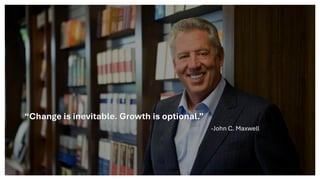
“Change is inevitable. Growth is optional.”
-John C. Maxwell
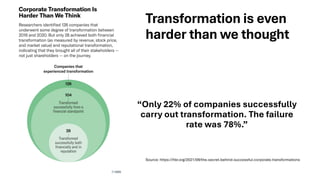
Transformation is even
harder than we thought
“Only 22% of companies successfully
carry out transformation. The failure
rate was 78%.”
Source: https://hbr.org/2021/09/the-secret-behind-successful-corporate-transformations
Purpose and Values in
Organizational Change
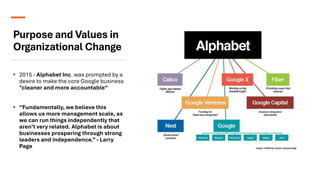
• 2015 - Alphabet Inc. was prompted by a
desire to make the core Google business
"cleaner and more accountable“
• “Fundamentally, we believe this
allows us more management scale, as
we can run things independently that
aren’t very related. Alphabet is about
businesses prospering through strong
leaders and independence.”- Larry
Page
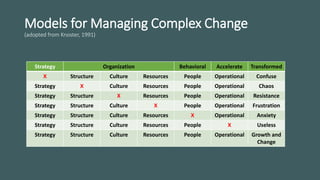
Models for Managing Complex Change
(adopted from Knoster, 1991)
Strategy Organization Behavioral Accelerate Transformed
X Structure Culture Resources People Operational Confuse
Strategy X Culture Resources People Operational Chaos
Strategy Structure X Resources People Operational Resistance
Strategy Structure Culture X People Operational Frustration
Strategy Structure Culture Resources X Operational Anxiety
Strategy Structure Culture Resources People X Useless
Strategy Structure Culture Resources People Operational Growth and
Change
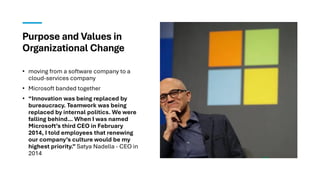
Purpose and Values in
Organizational Change
• moving from a software company to a
cloud-services company
• Microsoft banded together
• “Innovation was being replaced by
bureaucracy. Teamwork was being
replaced by internal politics. We were
falling behind… When I was named
Microsoft’s third CEO in February
2014, I told employees that renewing
our company’s culture would be my
highest priority.” Satya Nadella - CEO in
2014
Values
• Growing together: We work together to align personal and professional growth with
the need to sustain Nokia’s business growth.
• Leading lights: Our leaders create a working environment in which people can be
open, fearless, and empowered, developing themselves and their teams.
• We belong: We have a sense of belonging at Nokia and feel personally connected to
our colleagues and our work.
• Experience is everything: Our daily experiences enable each of us to be ourselves,
free to focus, create and innovate.
The Challenge of
Transformation is More
Cultural Than Technical
• Requires: resilient and adaptable.
• Need culture—the invisible enabler that allows a
broad set of changes
• Leaders don’t act as judges but as allies in removing
obstacles. Being coach teams and treating mistakes
as learning experiences, → feel confident and secure
in their decision-making.
• Culture as an effective guardrails to support teams
in their new-found autonomy, rather than restricting or
frustrating them in their efforts.
• Culture change begins when leaders model the
behavior they want the organization to emulate.
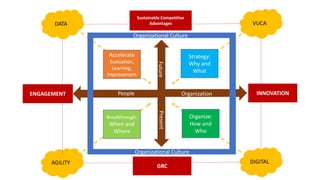
VUCA
DIGITAL
AGILITY
DATA
Organizational Culture
INNOVATION
GRC
ENGAGEMENT
Sustainable Competitive
Advantages
Organization
People
Future
Present
Strategy:
Why and
What
Organize:
How and
Who
Breakthrough:
When and
Where
Accelerate
Evaluation,
Learning,
Improvement
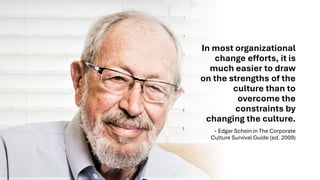
In most organizational
change efforts, it is
much easier to draw
on the strengths of the
culture than to
overcome the
constraints by
changing the culture.
- Edgar Schein in The Corporate
Culture Survival Guide (ed. 2009)
“We keep a change in place by helping to create a new,
supportive, and sufficiently strong organizational culture.”
— John P. Kotter
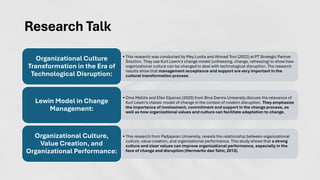
Research Talk
• This research was conducted by Mey Luvita and Ahmad Toni (2022) at PT Strategic Partner
Solution. They use Kurt Lewin's change model (unfreezing, change, refreezing) to show how
organizational culture can be changed to deal with technological disruption. The research
results show that management acceptance and support are very important in the
cultural transformation process.
Organizational Culture
Transformation in the Era of
Technological Disruption:
• Dina Mellita and Efan Elpanso (2020) from Bina Darma University discuss the relevance of
Kurt Lewin's classic model of change in the context of modern disruption. They emphasize
the importance of involvement, commitment and support in the change process, as
well as how organizational values and culture can facilitate adaptation to change.
Lewin Model in Change
Management:
• This research from Padjajaran University, reveals the relationship between organizational
culture, value creation, and organizational performance. This study shows that a strong
culture and clear values can improve organizational performance, especially in the
face of change and disruption (Hermarito dan Tahir, 2013).
Organizational Culture,
Value Creation, and
Organizational Performance:
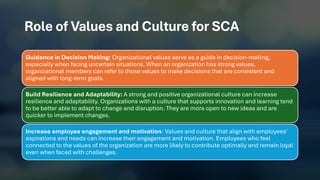
Role of Values and Culture for SCA
Guidance in Decision Making: Organizational values serve as a guide in decision-making,
especially when facing uncertain situations. When an organization has strong values,
organizational members can refer to those values to make decisions that are consistent and
aligned with long-term goals.
Build Resilience and Adaptability: A strong and positive organizational culture can increase
resilience and adaptability. Organizations with a culture that supports innovation and learning tend
to be better able to adapt to change and disruption. They are more open to new ideas and are
quicker to implement changes.
Increase employee engagement and motivation: Values and culture that align with employees'
aspirations and needs can increase their engagement and motivation. Employees who feel
connected to the values of the organization are more likely to contribute optimally and remain loyal
even when faced with challenges.
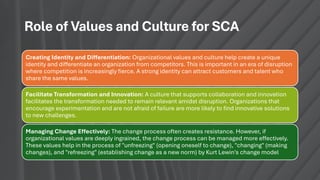
Role of Values and Culture for SCA
Creating Identity and Differentiation: Organizational values and culture help create a unique
identity and differentiate an organization from competitors. This is important in an era of disruption
where competition is increasingly fierce. A strong identity can attract customers and talent who
share the same values.
Facilitate Transformation and Innovation: A culture that supports collaboration and innovation
facilitates the transformation needed to remain relevant amidst disruption. Organizations that
encourage experimentation and are not afraid of failure are more likely to find innovative solutions
to new challenges.
Managing Change Effectively: The change process often creates resistance. However, if
organizational values are deeply ingrained, the change process can be managed more effectively.
These values help in the process of "unfreezing" (opening oneself to change), "changing" (making
changes), and "refreezing" (establishing change as a new norm) by Kurt Lewin's change model
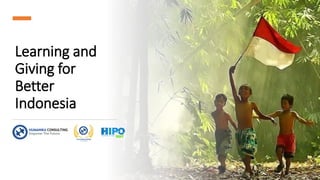
Learning and
Giving for
Better
Indonesia

Introduction - Values, Cultures, and Changes

  • 1.
    Introduction: Values, Cultures, andChanges Seta A. Wicaksana
  • 2.
    SETA A. Wicaksana 0811195343 wicaksana@humanikaconsulting.com Business& Professional: • Founder and CEO Humanika Consulting dan hipotest.com • Lecturer and Researcher in Psychology Faculty Pancasila University • Business Psychologist • Head of Researcher in Business Psychology and Entrepreneur Professional Certification: • Certified of Assessor Talent Management (BNSP) • Certified in Human Resources as a Business Partner (SHRM) • Certified HR Manager (BNSP) • Certified Risk Professional (BNSP) • Certified Psychology HR Consultant (BNSP) • Certified of HR Audit Education: • Doctoral Economic and Management from Universitas Pancasila • Psychologist (S1&S2) from Universitas Indonesia • National Cryptology Academy
  • 3.
    “Change is inevitable.Growth is optional.” -John C. Maxwell
  • 4.
    Transformation is even harderthan we thought “Only 22% of companies successfully carry out transformation. The failure rate was 78%.” Source: https://hbr.org/2021/09/the-secret-behind-successful-corporate-transformations
  • 5.
    Purpose and Valuesin Organizational Change • 2015 - Alphabet Inc. was prompted by a desire to make the core Google business "cleaner and more accountable“ • “Fundamentally, we believe this allows us more management scale, as we can run things independently that aren’t very related. Alphabet is about businesses prospering through strong leaders and independence.”- Larry Page
  • 6.
    Models for ManagingComplex Change (adopted from Knoster, 1991) Strategy Organization Behavioral Accelerate Transformed X Structure Culture Resources People Operational Confuse Strategy X Culture Resources People Operational Chaos Strategy Structure X Resources People Operational Resistance Strategy Structure Culture X People Operational Frustration Strategy Structure Culture Resources X Operational Anxiety Strategy Structure Culture Resources People X Useless Strategy Structure Culture Resources People Operational Growth and Change
  • 7.
    Purpose and Valuesin Organizational Change • moving from a software company to a cloud-services company • Microsoft banded together • “Innovation was being replaced by bureaucracy. Teamwork was being replaced by internal politics. We were falling behind… When I was named Microsoft’s third CEO in February 2014, I told employees that renewing our company’s culture would be my highest priority.” Satya Nadella - CEO in 2014
  • 8.
    Values • Growing together:We work together to align personal and professional growth with the need to sustain Nokia’s business growth. • Leading lights: Our leaders create a working environment in which people can be open, fearless, and empowered, developing themselves and their teams. • We belong: We have a sense of belonging at Nokia and feel personally connected to our colleagues and our work. • Experience is everything: Our daily experiences enable each of us to be ourselves, free to focus, create and innovate.
  • 9.
    The Challenge of Transformationis More Cultural Than Technical • Requires: resilient and adaptable. • Need culture—the invisible enabler that allows a broad set of changes • Leaders don’t act as judges but as allies in removing obstacles. Being coach teams and treating mistakes as learning experiences, → feel confident and secure in their decision-making. • Culture as an effective guardrails to support teams in their new-found autonomy, rather than restricting or frustrating them in their efforts. • Culture change begins when leaders model the behavior they want the organization to emulate.
  • 10.
    VUCA DIGITAL AGILITY DATA Organizational Culture Organizational Culture INNOVATION GRC ENGAGEMENT SustainableCompetitive Advantages Organization People Future Present Strategy: Why and What Organize: How and Who Breakthrough: When and Where Accelerate Evaluation, Learning, Improvement
  • 11.
    In most organizational changeefforts, it is much easier to draw on the strengths of the culture than to overcome the constraints by changing the culture. - Edgar Schein in The Corporate Culture Survival Guide (ed. 2009)
  • 12.
    “We keep achange in place by helping to create a new, supportive, and sufficiently strong organizational culture.” — John P. Kotter
  • 14.
    Research Talk • Thisresearch was conducted by Mey Luvita and Ahmad Toni (2022) at PT Strategic Partner Solution. They use Kurt Lewin's change model (unfreezing, change, refreezing) to show how organizational culture can be changed to deal with technological disruption. The research results show that management acceptance and support are very important in the cultural transformation process. Organizational Culture Transformation in the Era of Technological Disruption: • Dina Mellita and Efan Elpanso (2020) from Bina Darma University discuss the relevance of Kurt Lewin's classic model of change in the context of modern disruption. They emphasize the importance of involvement, commitment and support in the change process, as well as how organizational values and culture can facilitate adaptation to change. Lewin Model in Change Management: • This research from Padjajaran University, reveals the relationship between organizational culture, value creation, and organizational performance. This study shows that a strong culture and clear values can improve organizational performance, especially in the face of change and disruption (Hermarito dan Tahir, 2013). Organizational Culture, Value Creation, and Organizational Performance:
  • 15.
    Role of Valuesand Culture for SCA Guidance in Decision Making: Organizational values serve as a guide in decision-making, especially when facing uncertain situations. When an organization has strong values, organizational members can refer to those values to make decisions that are consistent and aligned with long-term goals. Build Resilience and Adaptability: A strong and positive organizational culture can increase resilience and adaptability. Organizations with a culture that supports innovation and learning tend to be better able to adapt to change and disruption. They are more open to new ideas and are quicker to implement changes. Increase employee engagement and motivation: Values and culture that align with employees' aspirations and needs can increase their engagement and motivation. Employees who feel connected to the values of the organization are more likely to contribute optimally and remain loyal even when faced with challenges.
  • 16.
    Role of Valuesand Culture for SCA Creating Identity and Differentiation: Organizational values and culture help create a unique identity and differentiate an organization from competitors. This is important in an era of disruption where competition is increasingly fierce. A strong identity can attract customers and talent who share the same values. Facilitate Transformation and Innovation: A culture that supports collaboration and innovation facilitates the transformation needed to remain relevant amidst disruption. Organizations that encourage experimentation and are not afraid of failure are more likely to find innovative solutions to new challenges. Managing Change Effectively: The change process often creates resistance. However, if organizational values are deeply ingrained, the change process can be managed more effectively. These values help in the process of "unfreezing" (opening oneself to change), "changing" (making changes), and "refreezing" (establishing change as a new norm) by Kurt Lewin's change model
  • 17.