Introduction to
the Respiratory
System
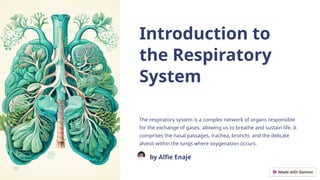
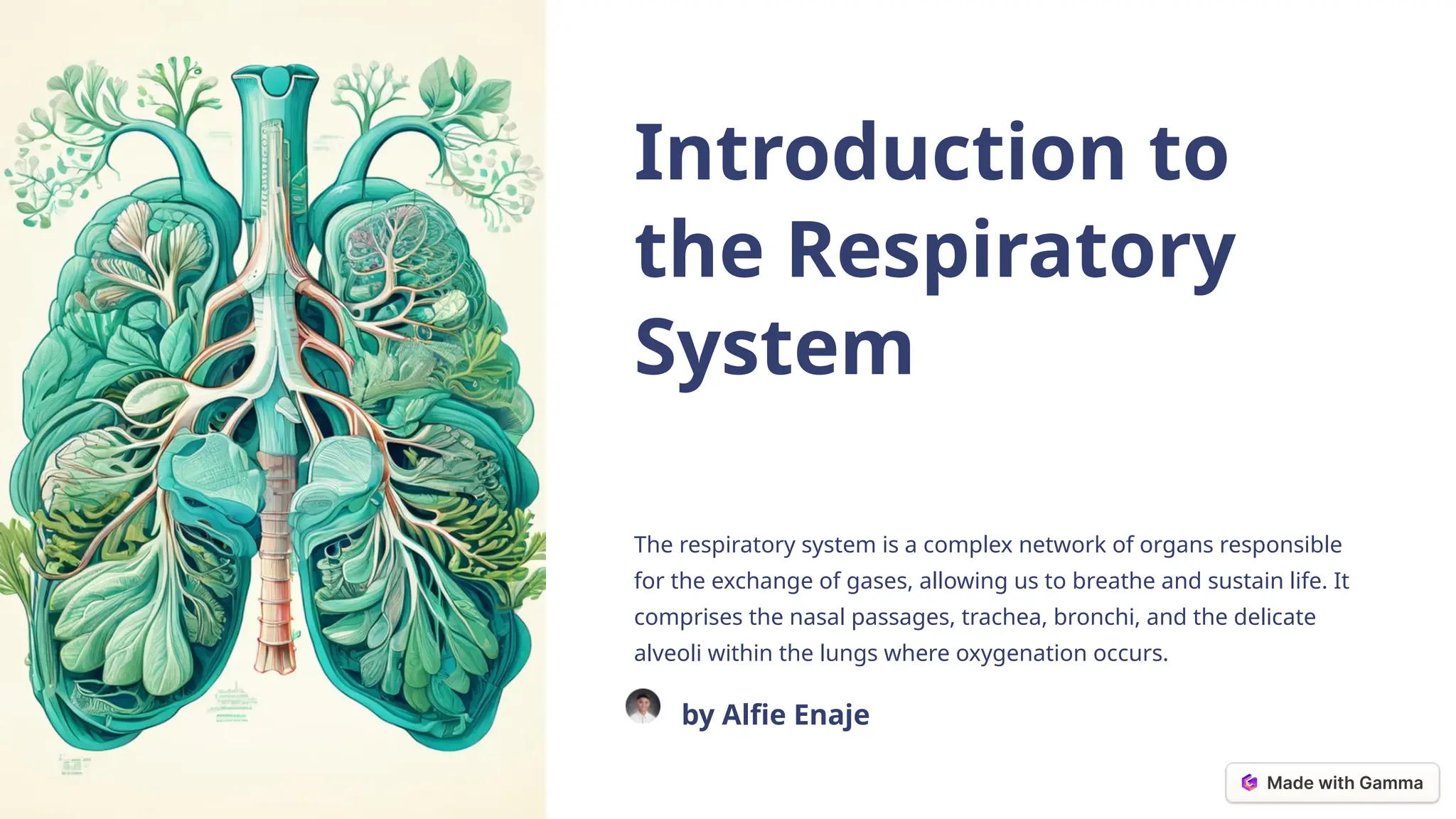
The respiratory system is a complex network of organs responsible
for the exchange of gases, allowing us to breathe and sustain life. It
comprises the nasal passages, trachea, bronchi, and the delicate
alveoli within the lungs where oxygenation occurs.
by Alfie Enaje
Anatomy of the Respiratory System
Upper Respiratory Tract
The upper respiratory tract
includes the nose, nasal cavities,
pharynx, and larynx. These
structures filter, warm, and
humidify the air as it enters the
body.
Lower Respiratory Tract
The lower respiratory tract consists
of the trachea, bronchi,
bronchioles, and the alveoli in the
lungs. This is where gas exchange
takes place.
Respiratory Muscles
The diaphragm and intercostal
muscles work together to facilitate
the inhalation and exhalation of air,
allowing us to breathe.
Respiratory Mechanics
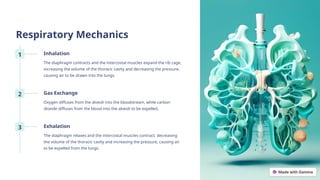
1 Inhalation
The diaphragm contracts and the intercostal muscles expand the rib cage,
increasing the volume of the thoracic cavity and decreasing the pressure,
causing air to be drawn into the lungs.
2 Gas Exchange
Oxygen diffuses from the alveoli into the bloodstream, while carbon
dioxide diffuses from the blood into the alveoli to be expelled.
3 Exhalation
The diaphragm relaxes and the intercostal muscles contract, decreasing
the volume of the thoracic cavity and increasing the pressure, causing air
to be expelled from the lungs.
Gas Exchange in the Lungs
Alveoli
The alveoli are tiny air sacs located
at the end of the bronchioles. This
is where the exchange of oxygen
and carbon dioxide takes place.
Capillaries
Surrounding the alveoli are
capillaries, which allow oxygen to
diffuse into the bloodstream and
carbon dioxide to diffuse out.
Diffusion
Gases move in and out of the
bloodstream and alveoli by the
process of diffusion, driven by the
concentration gradient.
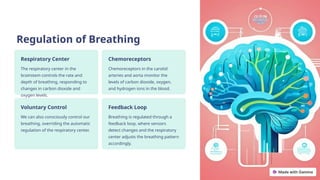
Regulation of Breathing
Respiratory Center
The respiratory center in the
brainstem controls the rate and
depth of breathing, responding to
changes in carbon dioxide and
oxygen levels.
Chemoreceptors
Chemoreceptors in the carotid
arteries and aorta monitor the
levels of carbon dioxide, oxygen,
and hydrogen ions in the blood.
Voluntary Control
We can also consciously control our
breathing, overriding the automatic
regulation of the respiratory center.
Feedback Loop
Breathing is regulated through a
feedback loop, where sensors
detect changes and the respiratory
center adjusts the breathing pattern
accordingly.
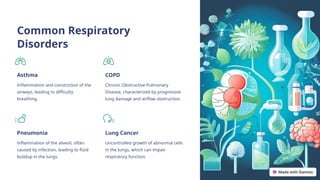
Common Respiratory
Disorders
Asthma
Inflammation and constriction of the
airways, leading to difficulty
breathing.
COPD
Chronic Obstructive Pulmonary
Disease, characterized by progressive
lung damage and airflow obstruction.
Pneumonia
Inflammation of the alveoli, often
caused by infection, leading to fluid
buildup in the lungs.
Lung Cancer
Uncontrolled growth of abnormal cells
in the lungs, which can impair
respiratory function.
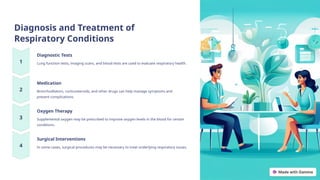
Diagnosis and Treatment of
Respiratory Conditions
Diagnostic Tests
Lung function tests, imaging scans, and blood tests are used to evaluate respiratory health.
Medication
Bronchodilators, corticosteroids, and other drugs can help manage symptoms and
prevent complications.
Oxygen Therapy
Supplemental oxygen may be prescribed to improve oxygen levels in the blood for certain
conditions.
Surgical Interventions
In some cases, surgical procedures may be necessary to treat underlying respiratory issues.
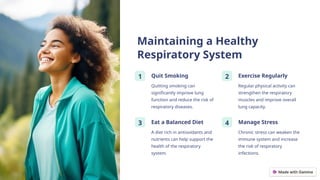
Maintaining a Healthy
Respiratory System
1 Quit Smoking
Quitting smoking can
significantly improve lung
function and reduce the risk of
respiratory diseases.
2 Exercise Regularly
Regular physical activity can
strengthen the respiratory
muscles and improve overall
lung capacity.
3 Eat a Balanced Diet
A diet rich in antioxidants and
nutrients can help support the
health of the respiratory
system.
4 Manage Stress
Chronic stress can weaken the
immune system and increase
the risk of respiratory
infections.

Introduction-to-the-Respiratory-System.pptx

  • 1.
    Introduction to the Respiratory System Therespiratory system is a complex network of organs responsible for the exchange of gases, allowing us to breathe and sustain life. It comprises the nasal passages, trachea, bronchi, and the delicate alveoli within the lungs where oxygenation occurs. by Alfie Enaje
  • 2.
    Anatomy of theRespiratory System Upper Respiratory Tract The upper respiratory tract includes the nose, nasal cavities, pharynx, and larynx. These structures filter, warm, and humidify the air as it enters the body. Lower Respiratory Tract The lower respiratory tract consists of the trachea, bronchi, bronchioles, and the alveoli in the lungs. This is where gas exchange takes place. Respiratory Muscles The diaphragm and intercostal muscles work together to facilitate the inhalation and exhalation of air, allowing us to breathe.
  • 3.
    Respiratory Mechanics 1 Inhalation Thediaphragm contracts and the intercostal muscles expand the rib cage, increasing the volume of the thoracic cavity and decreasing the pressure, causing air to be drawn into the lungs. 2 Gas Exchange Oxygen diffuses from the alveoli into the bloodstream, while carbon dioxide diffuses from the blood into the alveoli to be expelled. 3 Exhalation The diaphragm relaxes and the intercostal muscles contract, decreasing the volume of the thoracic cavity and increasing the pressure, causing air to be expelled from the lungs.
  • 4.
    Gas Exchange inthe Lungs Alveoli The alveoli are tiny air sacs located at the end of the bronchioles. This is where the exchange of oxygen and carbon dioxide takes place. Capillaries Surrounding the alveoli are capillaries, which allow oxygen to diffuse into the bloodstream and carbon dioxide to diffuse out. Diffusion Gases move in and out of the bloodstream and alveoli by the process of diffusion, driven by the concentration gradient.
  • 5.
    Regulation of Breathing RespiratoryCenter The respiratory center in the brainstem controls the rate and depth of breathing, responding to changes in carbon dioxide and oxygen levels. Chemoreceptors Chemoreceptors in the carotid arteries and aorta monitor the levels of carbon dioxide, oxygen, and hydrogen ions in the blood. Voluntary Control We can also consciously control our breathing, overriding the automatic regulation of the respiratory center. Feedback Loop Breathing is regulated through a feedback loop, where sensors detect changes and the respiratory center adjusts the breathing pattern accordingly.
  • 6.
    Common Respiratory Disorders Asthma Inflammation andconstriction of the airways, leading to difficulty breathing. COPD Chronic Obstructive Pulmonary Disease, characterized by progressive lung damage and airflow obstruction. Pneumonia Inflammation of the alveoli, often caused by infection, leading to fluid buildup in the lungs. Lung Cancer Uncontrolled growth of abnormal cells in the lungs, which can impair respiratory function.
  • 7.
    Diagnosis and Treatmentof Respiratory Conditions Diagnostic Tests Lung function tests, imaging scans, and blood tests are used to evaluate respiratory health. Medication Bronchodilators, corticosteroids, and other drugs can help manage symptoms and prevent complications. Oxygen Therapy Supplemental oxygen may be prescribed to improve oxygen levels in the blood for certain conditions. Surgical Interventions In some cases, surgical procedures may be necessary to treat underlying respiratory issues.
  • 8.
    Maintaining a Healthy RespiratorySystem 1 Quit Smoking Quitting smoking can significantly improve lung function and reduce the risk of respiratory diseases. 2 Exercise Regularly Regular physical activity can strengthen the respiratory muscles and improve overall lung capacity. 3 Eat a Balanced Diet A diet rich in antioxidants and nutrients can help support the health of the respiratory system. 4 Manage Stress Chronic stress can weaken the immune system and increase the risk of respiratory infections.