Introduction to
Landscape
Architecture
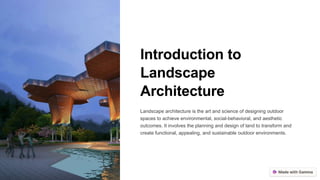
Landscape architecture is the art and science of designing outdoor
spaces to achieve environmental, social-behavioral, and aesthetic
outcomes. It involves the planning and design of land to transform and
create functional, appealing, and sustainable outdoor environments.
Definition and Scope of Landscape
Architecture
Designing
Outdoor Spaces
Landscape architecture
entails designing
outdoor areas to
harmonize with natural
and built environments
while meeting specific
needs and purposes.
Multidisciplinary
Field
It combines elements of
art, architecture,
environmental science,
and urban planning to
create attractive and
functional outdoor
spaces.
Enhancing Quality
of Life
The scope includes
enhancing the
aesthetics, functionality,
and sustainability of
outdoor environments
to improve people's
well-being.
Historical Development of
Landscape Architecture
Early Influences
Rooted in ancient
gardens, landscape
architecture drew
inspiration from early
civilizations and their use
of natural elements in
outdoor spaces.
The Renaissance
Era
Landscape architecture
evolved during the
Renaissance, reflecting a
balance between human
culture and natural
landscapes.
Modern Influences
The field expanded
further in the modern era,
with a focus on
environmental awareness
and sustainable design
principles.
Elements of Landscape
Architecture
Natural Elements
Plants, water features, and landforms form
the foundation of natural elements in
landscape architecture, creating a
harmonious and sustainable environment.
Built Elements
Paths, structures, and materials are
essential in shaping the built environment
within the outdoor space, providing
functionality and aesthetics.
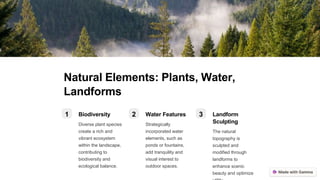
Natural Elements: Plants, Water,
Landforms
1 Biodiversity
Diverse plant species
create a rich and
vibrant ecosystem
within the landscape,
contributing to
biodiversity and
ecological balance.
2 Water Features
Strategically
incorporated water
elements, such as
ponds or fountains,
add tranquility and
visual interest to
outdoor spaces.
3 Landform
Sculpting
The natural
topography is
sculpted and
modified through
landforms to
enhance scenic
beauty and optimize
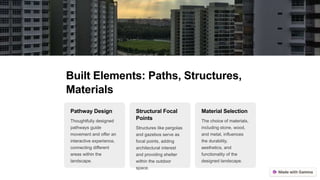
Built Elements: Paths, Structures,
Materials
Pathway Design
Thoughtfully designed
pathways guide
movement and offer an
interactive experience,
connecting different
areas within the
landscape.
Structural Focal
Points
Structures like pergolas
and gazebos serve as
focal points, adding
architectural interest
and providing shelter
within the outdoor
space.
Material Selection
The choice of materials,
including stone, wood,
and metal, influences
the durability,
aesthetics, and
functionality of the
designed landscape.
Principles of Landscape
Architecture
1 Functionality and Usability
Landscape architecture aims to create functional spaces that facilitate human
activities while fostering an emotional connection with nature.
2 Aesthetics and Visual Appeal
Emphasis is placed on the visual aspect of outdoor spaces, integrating art and
design principles to evoke sensory pleasure and delight.
3 Sustainability and Environmental Considerations
Landscape designs prioritize environmental sustainability by integrating
ecological principles to minimize impact and promote conservation.
Functionality and Usability
Activity Zones
Distinct zones catering
to various activities,
such as relaxation,
social gatherings, and
recreation, are
strategically integrated
into the landscape
design.
Accessibility and
Safety
Design considerations
prioritize creating
accessible and safe
environments, ensuring
ease of movement and
mitigating potential
hazards.
User Experience
Landscape architecture
aims to enhance the
overall experience of
users, focusing on
comfort, functionality,
and engagement with
the surroundings.
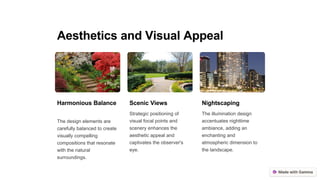
Aesthetics and Visual Appeal
Harmonious Balance
The design elements are
carefully balanced to create
visually compelling
compositions that resonate
with the natural
surroundings.
Scenic Views
Strategic positioning of
visual focal points and
scenery enhances the
aesthetic appeal and
captivates the observer's
eye.
Nightscaping
The illumination design
accentuates nighttime
ambiance, adding an
enchanting and
atmospheric dimension to
the landscape.
Sustainability and Environmental
Considerations
Eco-Friendly
Practices
Landscape architecture
integrates eco-friendly
practices like native plant
use, water conservation,
and ecological restoration
to promote environmental
sustainability.
Climate Adaptation
The design accounts for
climate resilience, utilizing
features like green
infrastructure and
permeable paving to adapt
to changing environmental
conditions.
Regenerative
Design
Emphasis is placed on
regenerative design
principles that aim to
restore and enhance
ecosystems, benefiting
both nature and human
well-being.

Introduction-to-Landscape-Architecture.pptx

  • 1.
    Introduction to Landscape Architecture Landscape architectureis the art and science of designing outdoor spaces to achieve environmental, social-behavioral, and aesthetic outcomes. It involves the planning and design of land to transform and create functional, appealing, and sustainable outdoor environments.
  • 2.
    Definition and Scopeof Landscape Architecture Designing Outdoor Spaces Landscape architecture entails designing outdoor areas to harmonize with natural and built environments while meeting specific needs and purposes. Multidisciplinary Field It combines elements of art, architecture, environmental science, and urban planning to create attractive and functional outdoor spaces. Enhancing Quality of Life The scope includes enhancing the aesthetics, functionality, and sustainability of outdoor environments to improve people's well-being.
  • 3.
    Historical Development of LandscapeArchitecture Early Influences Rooted in ancient gardens, landscape architecture drew inspiration from early civilizations and their use of natural elements in outdoor spaces. The Renaissance Era Landscape architecture evolved during the Renaissance, reflecting a balance between human culture and natural landscapes. Modern Influences The field expanded further in the modern era, with a focus on environmental awareness and sustainable design principles.
  • 4.
    Elements of Landscape Architecture NaturalElements Plants, water features, and landforms form the foundation of natural elements in landscape architecture, creating a harmonious and sustainable environment. Built Elements Paths, structures, and materials are essential in shaping the built environment within the outdoor space, providing functionality and aesthetics.
  • 5.
    Natural Elements: Plants,Water, Landforms 1 Biodiversity Diverse plant species create a rich and vibrant ecosystem within the landscape, contributing to biodiversity and ecological balance. 2 Water Features Strategically incorporated water elements, such as ponds or fountains, add tranquility and visual interest to outdoor spaces. 3 Landform Sculpting The natural topography is sculpted and modified through landforms to enhance scenic beauty and optimize
  • 6.
    Built Elements: Paths,Structures, Materials Pathway Design Thoughtfully designed pathways guide movement and offer an interactive experience, connecting different areas within the landscape. Structural Focal Points Structures like pergolas and gazebos serve as focal points, adding architectural interest and providing shelter within the outdoor space. Material Selection The choice of materials, including stone, wood, and metal, influences the durability, aesthetics, and functionality of the designed landscape.
  • 7.
    Principles of Landscape Architecture 1Functionality and Usability Landscape architecture aims to create functional spaces that facilitate human activities while fostering an emotional connection with nature. 2 Aesthetics and Visual Appeal Emphasis is placed on the visual aspect of outdoor spaces, integrating art and design principles to evoke sensory pleasure and delight. 3 Sustainability and Environmental Considerations Landscape designs prioritize environmental sustainability by integrating ecological principles to minimize impact and promote conservation.
  • 8.
    Functionality and Usability ActivityZones Distinct zones catering to various activities, such as relaxation, social gatherings, and recreation, are strategically integrated into the landscape design. Accessibility and Safety Design considerations prioritize creating accessible and safe environments, ensuring ease of movement and mitigating potential hazards. User Experience Landscape architecture aims to enhance the overall experience of users, focusing on comfort, functionality, and engagement with the surroundings.
  • 9.
    Aesthetics and VisualAppeal Harmonious Balance The design elements are carefully balanced to create visually compelling compositions that resonate with the natural surroundings. Scenic Views Strategic positioning of visual focal points and scenery enhances the aesthetic appeal and captivates the observer's eye. Nightscaping The illumination design accentuates nighttime ambiance, adding an enchanting and atmospheric dimension to the landscape.
  • 10.
    Sustainability and Environmental Considerations Eco-Friendly Practices Landscapearchitecture integrates eco-friendly practices like native plant use, water conservation, and ecological restoration to promote environmental sustainability. Climate Adaptation The design accounts for climate resilience, utilizing features like green infrastructure and permeable paving to adapt to changing environmental conditions. Regenerative Design Emphasis is placed on regenerative design principles that aim to restore and enhance ecosystems, benefiting both nature and human well-being.