Introduction to IoT
What is IoT?
• Definition: Internet of Things(IoT) refers to the
network of hardware devices that can connect
and exchange information with each other using
the internet
• Importance in modern technology
• Key applications across industries.
Strategic Planning
Understanding the Vision :
• Define the purpose and goals of
the IoT application
• Identify target users and market
needs
Market Research :
• Analyze competitors and market
trends
• Determine potential challenges
and opportunities
Designing the IoT Application
Architecture Design :
• Select appropriate hardware and
software components
• Design scalable and secure system
architecture
User Experience (UX) Design :
• Create user-friendly interfaces
• Prototype design for user feedback
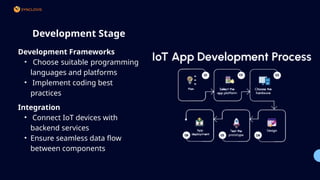
Development Stage
Development Frameworks
• Choose suitable programming
languages and platforms
• Implement coding best
practices
01
Integration
• Connect IoT devices with
backend services
• Ensure seamless data flow
between components
Testing
Types of Testing :
• Functional Testing: Verify features and
functionalities
• Performance Testing: Assess responsiveness
and load handling
Security Testing :
• Identify vulnerabilities and secure data
transmission
• Ensure compliance with industry standards
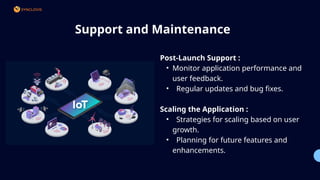
Support and Maintenance
Post-Launch Support :
• Monitor application performance and
user feedback.
• Regular updates and bug fixes.
Scaling the Application :
• Strategies for scaling based on user
growth.
• Planning for future features and
enhancements.
01
02
Conclusion
Summary of IoT Development Process
• Emphasis on strategic planning, design, development,
and support.
0
Website: https://www.synclovis.com/
Contact Number: 9606058600
03 04

Introduction to IoT Application Development

  • 2.
    Introduction to IoT Whatis IoT? • Definition: Internet of Things(IoT) refers to the network of hardware devices that can connect and exchange information with each other using the internet • Importance in modern technology • Key applications across industries.
  • 3.
    Strategic Planning Understanding theVision : • Define the purpose and goals of the IoT application • Identify target users and market needs Market Research : • Analyze competitors and market trends • Determine potential challenges and opportunities
  • 4.
    Designing the IoTApplication Architecture Design : • Select appropriate hardware and software components • Design scalable and secure system architecture User Experience (UX) Design : • Create user-friendly interfaces • Prototype design for user feedback
  • 5.
    Development Stage Development Frameworks •Choose suitable programming languages and platforms • Implement coding best practices 01 Integration • Connect IoT devices with backend services • Ensure seamless data flow between components
  • 6.
    Testing Types of Testing: • Functional Testing: Verify features and functionalities • Performance Testing: Assess responsiveness and load handling Security Testing : • Identify vulnerabilities and secure data transmission • Ensure compliance with industry standards
  • 7.
    Support and Maintenance Post-LaunchSupport : • Monitor application performance and user feedback. • Regular updates and bug fixes. Scaling the Application : • Strategies for scaling based on user growth. • Planning for future features and enhancements. 01 02
  • 8.
    Conclusion Summary of IoTDevelopment Process • Emphasis on strategic planning, design, development, and support. 0 Website: https://www.synclovis.com/ Contact Number: 9606058600 03 04