NAME : D. SARTHAK
SECTION: IT-D
ROLL NO: 238R1A12L6
SUBJECT: ELCS LAB
TOPIC: ICE BREAKING ACTIVITY
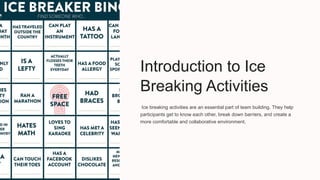
Introduction to Ice
Breaking Activities
Ice breaking activities are an essential part of team building. They help
participants get to know each other, break down barriers, and create a
more comfortable and collaborative environment.
Importance of Ice Breaking in Team
Building
1 Builds Trust
Ice breakers encourage open
communication and vulnerability,
leading to stronger interpersonal
connections.
2 Fosters Collaboration
Shared experiences from ice
breakers promote teamwork and a
sense of unity.
3 Increases Engagement
Fun, interactive ice breakers energize participants and get them actively involved.
Types of Ice Breaking Activities
Icebreaker Games
Classic activities like two
truths and a lie, scavenger
hunts, and would you rather
questions.
Team Challenges
Collaborative problem-
solving tasks that promote
communication and critical
thinking.
Personal Sharing
Prompts that encourage
participants to share
information about
themselves and their
interests.
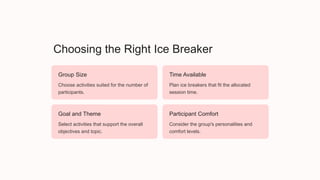
Choosing the Right Ice Breaker
Group Size
Choose activities suited for the number of
participants.
Time Available
Plan ice breakers that fit the allocated
session time.
Goal and Theme
Select activities that support the overall
objectives and topic.
Participant Comfort
Consider the group's personalities and
comfort levels.
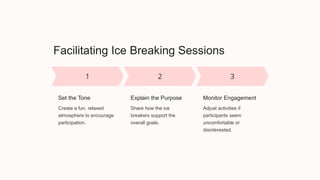
Facilitating Ice Breaking Sessions
Set the Tone
Create a fun, relaxed
atmosphere to encourage
participation.
Explain the Purpose
Share how the ice
breakers support the
overall goals.
Monitor Engagement
Adjust activities if
participants seem
uncomfortable or
disinterested.
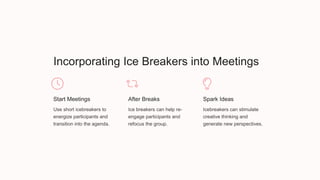
Incorporating Ice Breakers into Meetings
Start Meetings
Use short icebreakers to
energize participants and
transition into the agenda.
After Breaks
Ice breakers can help re-
engage participants and
refocus the group.
Spark Ideas
Icebreakers can stimulate
creative thinking and
generate new perspectives.
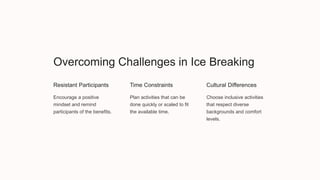
Overcoming Challenges in Ice Breaking
Resistant Participants
Encourage a positive
mindset and remind
participants of the benefits.
Time Constraints
Plan activities that can be
done quickly or scaled to fit
the available time.
Cultural Differences
Choose inclusive activities
that respect diverse
backgrounds and comfort
levels.
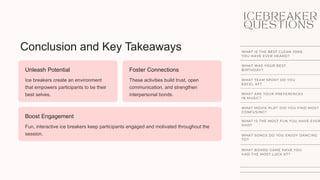
Conclusion and Key Takeaways
Unleash Potential
Ice breakers create an environment
that empowers participants to be their
best selves.
Foster Connections
These activities build trust, open
communication, and strengthen
interpersonal bonds.
Boost Engagement
Fun, interactive ice breakers keep participants engaged and motivated throughout the
session.
Introduction-to-Ice-Breaking-Activities.pptx

Introduction-to-Ice-Breaking-Activities.pptx

  • 1.
    NAME : D.SARTHAK SECTION: IT-D ROLL NO: 238R1A12L6 SUBJECT: ELCS LAB TOPIC: ICE BREAKING ACTIVITY
  • 2.
    Introduction to Ice BreakingActivities Ice breaking activities are an essential part of team building. They help participants get to know each other, break down barriers, and create a more comfortable and collaborative environment.
  • 3.
    Importance of IceBreaking in Team Building 1 Builds Trust Ice breakers encourage open communication and vulnerability, leading to stronger interpersonal connections. 2 Fosters Collaboration Shared experiences from ice breakers promote teamwork and a sense of unity. 3 Increases Engagement Fun, interactive ice breakers energize participants and get them actively involved.
  • 4.
    Types of IceBreaking Activities Icebreaker Games Classic activities like two truths and a lie, scavenger hunts, and would you rather questions. Team Challenges Collaborative problem- solving tasks that promote communication and critical thinking. Personal Sharing Prompts that encourage participants to share information about themselves and their interests.
  • 5.
    Choosing the RightIce Breaker Group Size Choose activities suited for the number of participants. Time Available Plan ice breakers that fit the allocated session time. Goal and Theme Select activities that support the overall objectives and topic. Participant Comfort Consider the group's personalities and comfort levels.
  • 6.
    Facilitating Ice BreakingSessions Set the Tone Create a fun, relaxed atmosphere to encourage participation. Explain the Purpose Share how the ice breakers support the overall goals. Monitor Engagement Adjust activities if participants seem uncomfortable or disinterested.
  • 7.
    Incorporating Ice Breakersinto Meetings Start Meetings Use short icebreakers to energize participants and transition into the agenda. After Breaks Ice breakers can help re- engage participants and refocus the group. Spark Ideas Icebreakers can stimulate creative thinking and generate new perspectives.
  • 8.
    Overcoming Challenges inIce Breaking Resistant Participants Encourage a positive mindset and remind participants of the benefits. Time Constraints Plan activities that can be done quickly or scaled to fit the available time. Cultural Differences Choose inclusive activities that respect diverse backgrounds and comfort levels.
  • 9.
    Conclusion and KeyTakeaways Unleash Potential Ice breakers create an environment that empowers participants to be their best selves. Foster Connections These activities build trust, open communication, and strengthen interpersonal bonds. Boost Engagement Fun, interactive ice breakers keep participants engaged and motivated throughout the session.